Animal Anatomy and Physiology: General and Levels of Structural Development
 Call Kai
 Learn
Learn Practice Test
 Spaced Repetition
 Match
Match Flashcards
 Knowt Play
1/18

There's no tags or description
Looks like no tags are added yet.
Name | Mastery | Learn | Test | Matching | Spaced | Call with Kai |
|---|
No analytics yet
Send a link to your students to track their progress
19 Terms
What is Anatomy and Physiology?
Anatomy & Physiology encompasses the study of the structure and function of the bodies of farm animals, including ruminant like cattle, goats, and sheep, as well as non-ruminants like pigs, horses, and poultry.
Anatomy
is the scientific study of the structure of animals, encompassing their internal and external organs, tissues, and how they are organized, helping us understand how animals function, adapt, and evolve.
Physiology
is the scientific study of the functions and processes that sustain animal life, examining how animals work at various levels of organization, from cells to whole organisms, and how they respond to their environment
Body Systems
Reproductive
Gonads: Testes (Male) Ovaries (Female)
Female: oviduct, uterus, vagina, cervix
Male: epididymis, vas deferens, penis
Hormones from the Pituitary and Hypothalamus glands
Creates offspring
Integumentary
Skin, hair, nails
Protect the body and regulate temperature
Skeletal
Bones
Provide support & structure
Protects vital organs
Muscular
Enables movement and maintain posture
Nervous
Comprised of the brain, spinal cord, and nerves
Control body functions and respond to stimuli
Endocrine
Glands that produce hormones that regulate various bodily functions including growth and reproduction
Cardiovascular
Heart and blood vessels
Circulates blood, delivering oxygen and nutrients to tissues
Urinary
Kidneys and bladder
Filter waste from the blood
Respiratory
Lungs and airways
Facilitate gas exchange (oxygen in, carbon dioxide out)
Digestive
Stomach, intestines, and associated organs break down food and absorb nutrients
Lymphatic
A network of vessels and nodes that filter lymph and play a role in immunity
Immune
Body’s defense system against pathogens and foreign substances
Mammary
Udder, secretory tissue with alveoli, ductal system, cisterns, and teats
Feeding offspring
Levels of Structural Development
Cells
Tissues
Organs
Organ System
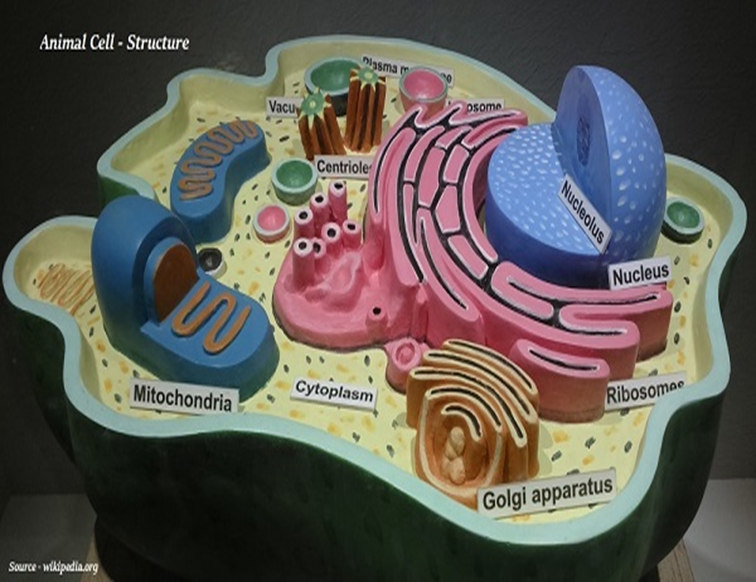
Cells
Basic structural unit of life
Tissues
A group of cells that are similar in structure and function and work together to perform specific tasks within an organism.
Organs
A structure composed of two or more different types of tissues that work together to perform specific functions.
Organ Systems
A group of organs that work together to perform coordinated functions & carry out specific physiological processes within an organism.
Cell Characteristics:
Smallest independently functioning unit of an organism that can carry out all the processes necessary for life.
Enclosed by a membrane & contains genetic material (DNA) & various organelles
Perform a wide range of functions such as metabolism, growth, reproduction, and response to stimuli.
What are the 4 types of tissues?
Epithelial Tissue
Connective Tissue
Muscle Tissue
Nervous Tissue
Epithelial Tissue
Covers surfaces, lines cavities, and forms glands. Serves as a protective covering for both external and internal surfaces. Covers organs, secretory cells of glands, and lines viscera and blood vessels.
Connective Tissue
Provides support, connects, and protects other tissues and organs. Provides mechanical support, a place for metabolite exchange, a place for energy storage, a place for inflammation, and a place for fibrosis-healing. Carries RBCs – carries O2 to & CO2 from the body’s tissues, WBCs – manufactured in bone marrow. Pass through the blood to connective tissue for defense, and platelets – act in blood clotting.
Muscle Tissue
Contracts to produce movement.
Responsible for generating force & producing movement.
3 Types: Smooth, Skeletal, and Cardiac
Nervous Tissue
Transmits & processes nerve impulses.
Specialized for transmitting electrical impulses & coordinating sensory perception, motor function, and higher cognitive processes.
Provides transmission, reception, and integration of electrical impulses.
Organs Characteristics:
More complex than tissues & often have a characteristic shape and organization.
Each organ typically has a primary function or set of functions essential for the organism’s survival and well being.
Organs Examples:
Heart
Lungs
Liver
Brain
Kidneys
Stomach
Skin
Intestines
Organ Systems Characteristics:
Organized hierarchically, with each system comprising multiple organs that collaborate to maintain homeostasis and support the overall health of the organism.
Organ Systems Examples:
Cardiovascular
Respiratory
Digestive
Nervous
Endocrine
Musculoskeletal
Integumentary
Urinary
Reproductive

