AP Bio Unit 2.1-2.5 College Board Questions
 Studied by 0 people
 Call with Kai
 Learn
Learn Practice Test
 Spaced Repetition
 Match
Match Flashcards
 Knowt Play
1/27

There's no tags or description
Looks like no tags are added yet.
Name | Mastery | Learn | Test | Matching | Spaced | Call with Kai |
|---|
No analytics yet
Send a link to your students to track their progress
28 Terms
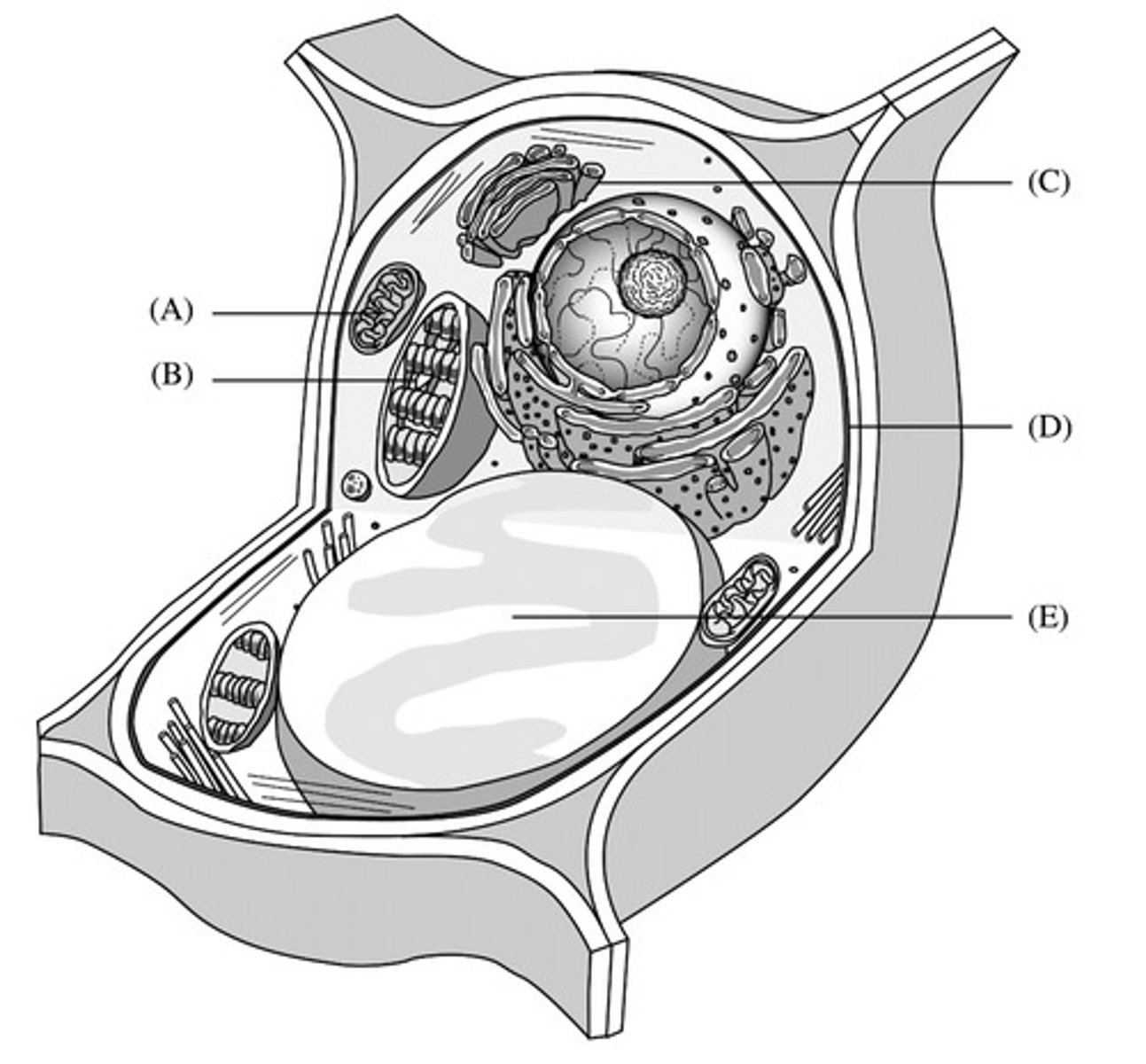
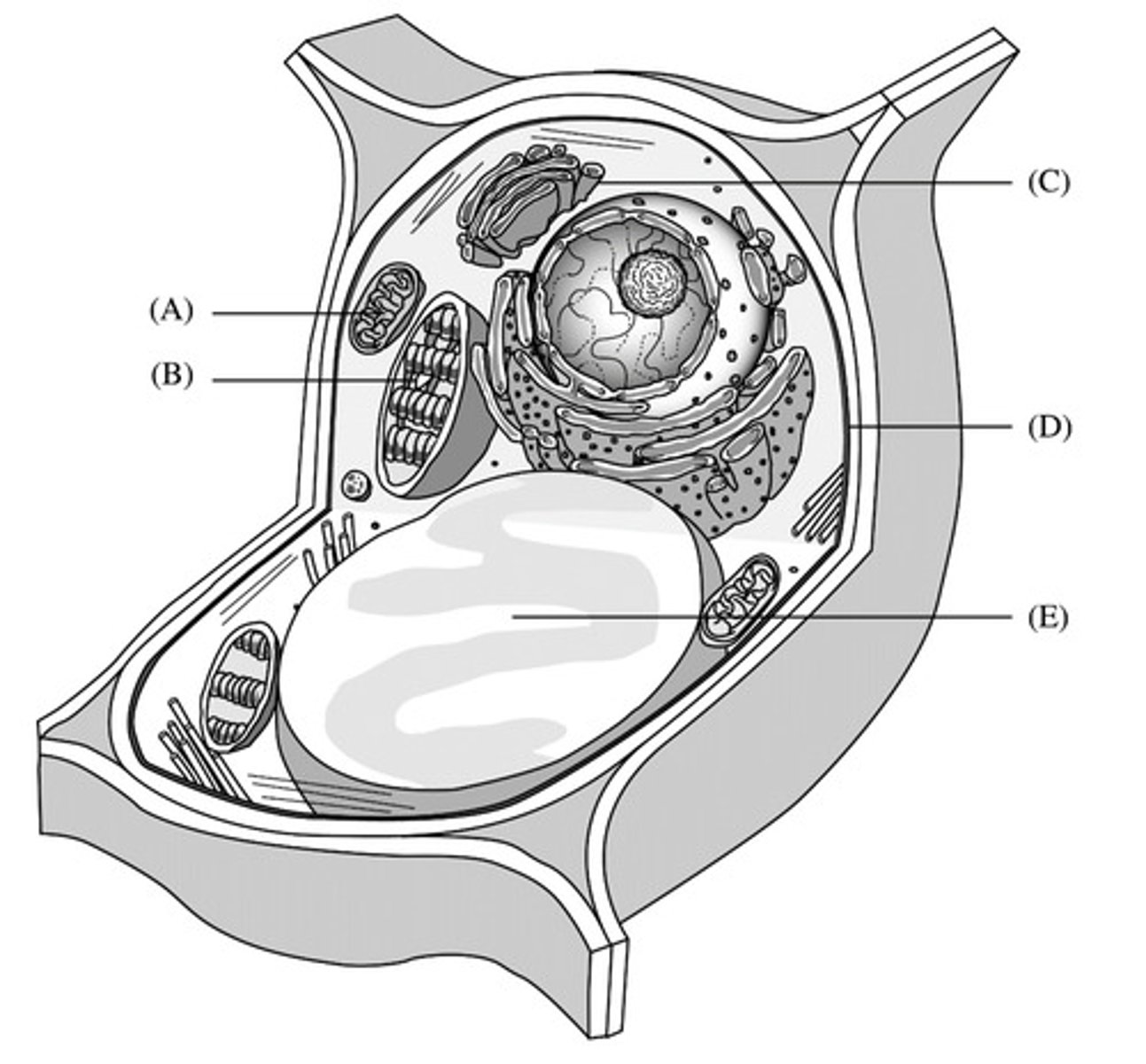
The following questions refer to the following diagram. For each phrase or sentence, select the labeled part to which it is most closely related. Each option may be used once, more than once, or not at all for each group.
Site of modification and packaging of proteins and lipids prior to export from the cell
C
Which of the following is evidence that eukaryotes and prokaryotes share a common ancestor?
All eukaryotes and prokaryotes contain ribosomes.
All eukaryotic cells contain at least one Golgi complex, typically located in the cytoplasm and near the endoplasmic reticulum.
Which of the following best describes a process that occurs within the Golgi complex?
Enzymatic modification of newly synthesized integral membrane proteins
Which of the following organelles modifies and packages for secretion the materials produced by the ribosomes?
The Golgi apparatus
Biological compound synthesized at the ribosome
Proteins
Individuals with an inherited autosomal recessive disorder called primary ciliary dyskinesia (PCD) often have severe respiratory problems due to defective cilia. Males with PCD are often sterile because they produce sperm with defective flagella.
Which of the following most likely explains the effect of the recessive allele?
The cells do not produce functional motor proteins in flagella and cilia.
Liver cells manufacture glycoproteins, while adipose cells store fat. Which of the following subcellular structures is likely to be more prominent in liver cells than in adipose cells?
Golgi apparatus
Contains hydrolytic enzymes associated with the intracellular digestion of macromolecules
Lysosome
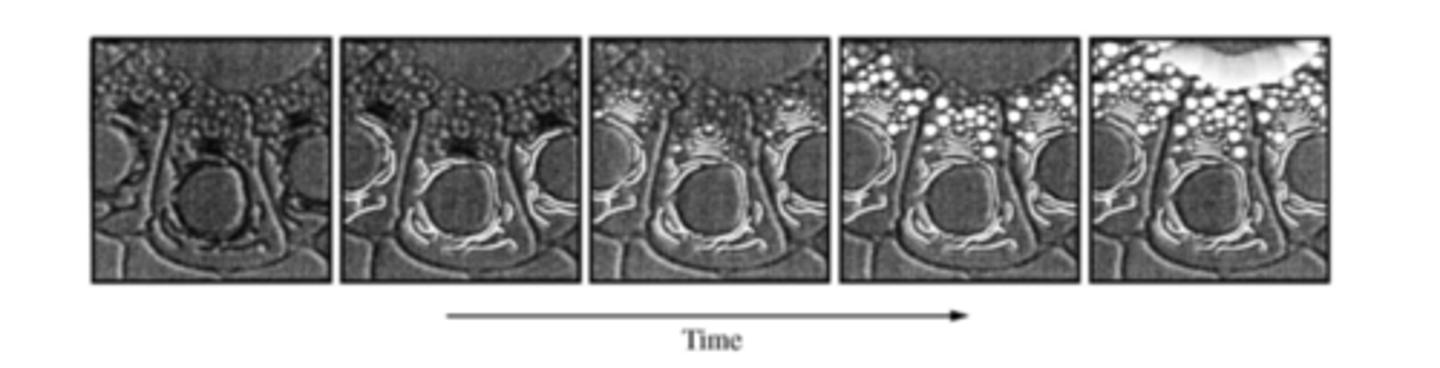
The figure above shows a series of microscope images taken over time of ovalbumin production in chick oviduct cells in response to stimulation with estrogen. The ovalbumin protein was detected using a fluorescent dye as shown by the white areas in the time-lapse sequence.
The microscope images indicate that ovalbumin
crosses the endoplasmic reticulum membrane as it is translated, then moves to the Golgi apparatus, then to vesicles from which it is secreted
Prokaryotic and eukaryotic cells generally have which of the following features in common?
Ribosomes
For following group of questions first study the description of the situation or data and then choose the one best answer to each question following it and fill in the corresponding oval on the answer sheet.
In the first step of an experiment, rat liver cells were exposed for 5 minutes to amino acids labeled with a radioactive isotope. The cells were then washed to stop any further incorporation of radioactive amino acids. The cells were sampled periodically thereafter, and the radioactivity of a certain protein (protein X) was measured in various cell components, as shown below.
An enzyme that participates in the degradation and recycling of cell components
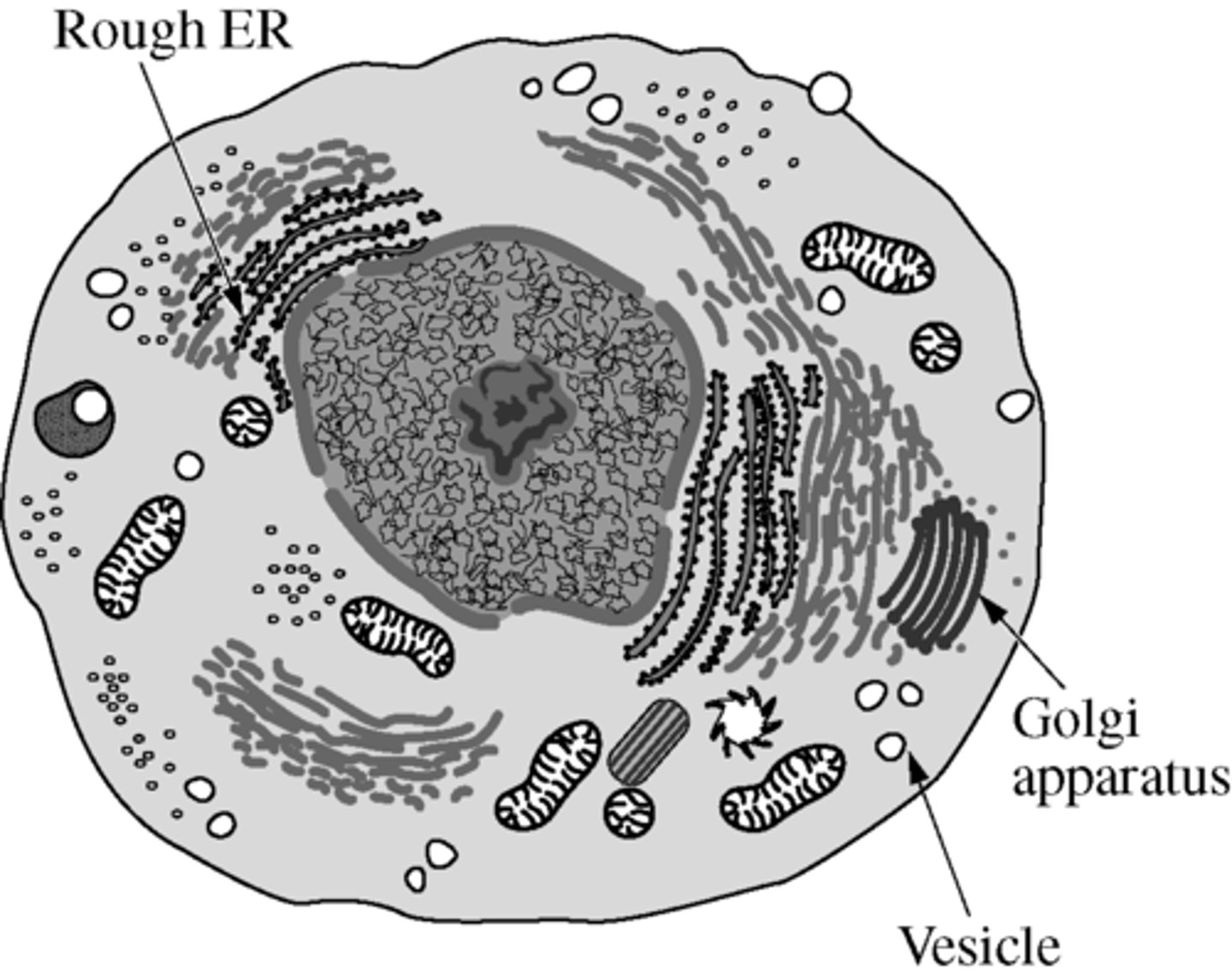
The figure below illustrates a eukaryotic cell. Which of the following best describes how the three structures indicated by the arrows work together?
Rough ER
Golgi apparatus
Vesicle
To synthesize and isolate proteins for secretion or for use in the cell
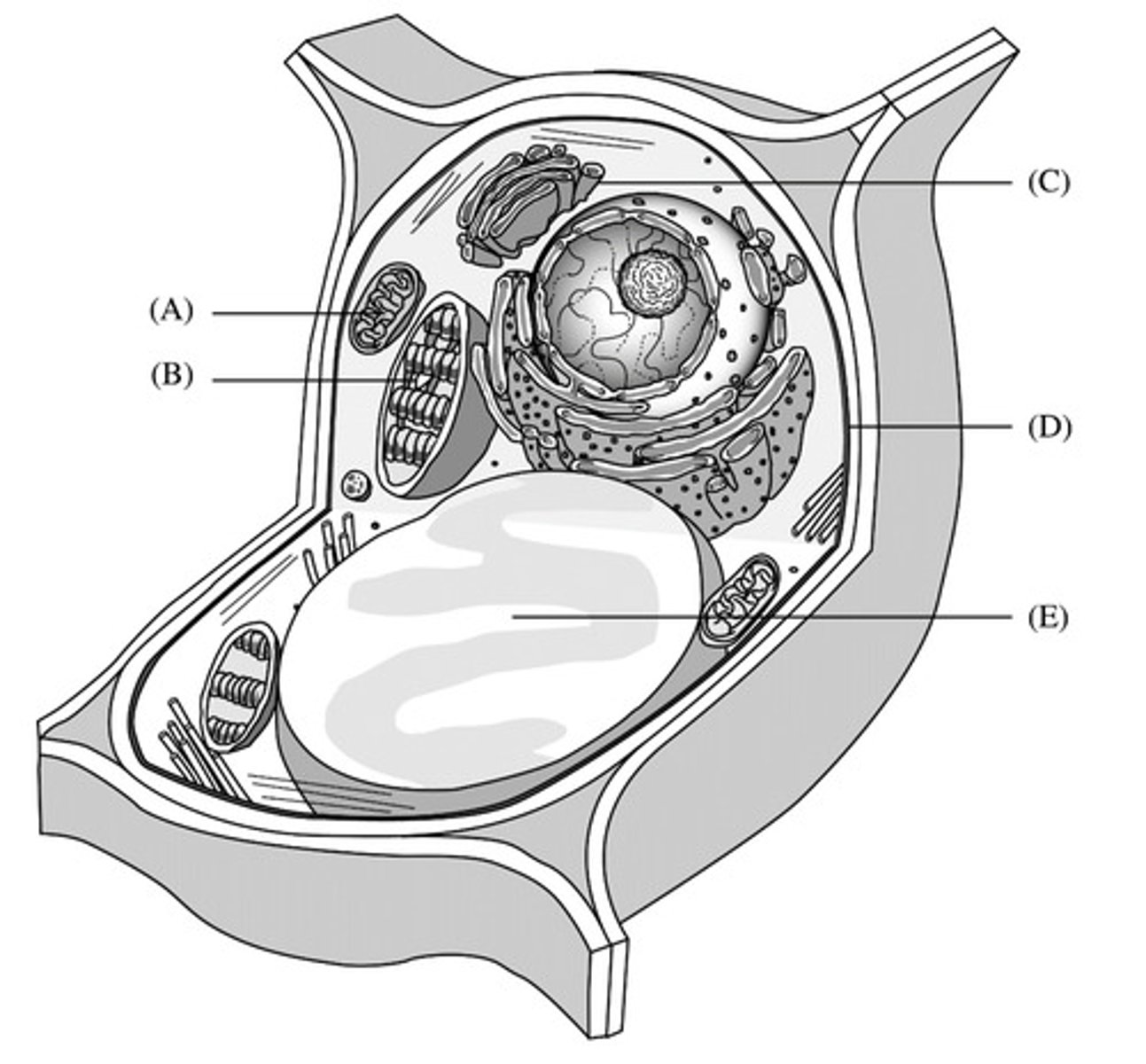
The following questions refer to the following diagram. For each phrase or sentence, select the labeled part to which it is most closely related. Each option may be used once, more than once, or not at all for each group.
Site of glucose synthesis
B
A cell is treated with a drug that prevents the formation of new lysosomes. The cell continues to transcribe the genes that code for the hydrolytic enzymes that are normally found in lysosomes and continues to translate the mRNAs for those proteins on membrane-bound ribosomes.
The hydrolytic enzymes are most likely to accumulate in which of the following cellular structures?
Golgi complex
The organelle that is a major producer of ATP and is found in both heterotrophs and autotrophs is the
mitochondria
Which of the following correctly shows the order in which protein X moves through the cell?
Endoplasmic reticulum -> Golgi apparatus -> lysosomes
The same procedure was repeated with a second protein (protein Y). If the function of Y is protein processing and packaging, the most radioactivity would be found in the
Golgi apparatus
In graphing the data from this experiment, the sampling time would be shown on the x-axis because
sampling time is the independent variable
Simple cuboidal epithelial cells line the ducts of certain human exocrine glands. Various materials are transported into or out of the cells by diffusion. (The formula for the surface area of a cube is 6 X S2, and the formula for the volume of a cube is S3, where S = the length of a side of the cube.)
Which of the following cube-shaped cells would be most efficient in removing waste by diffusion?
10
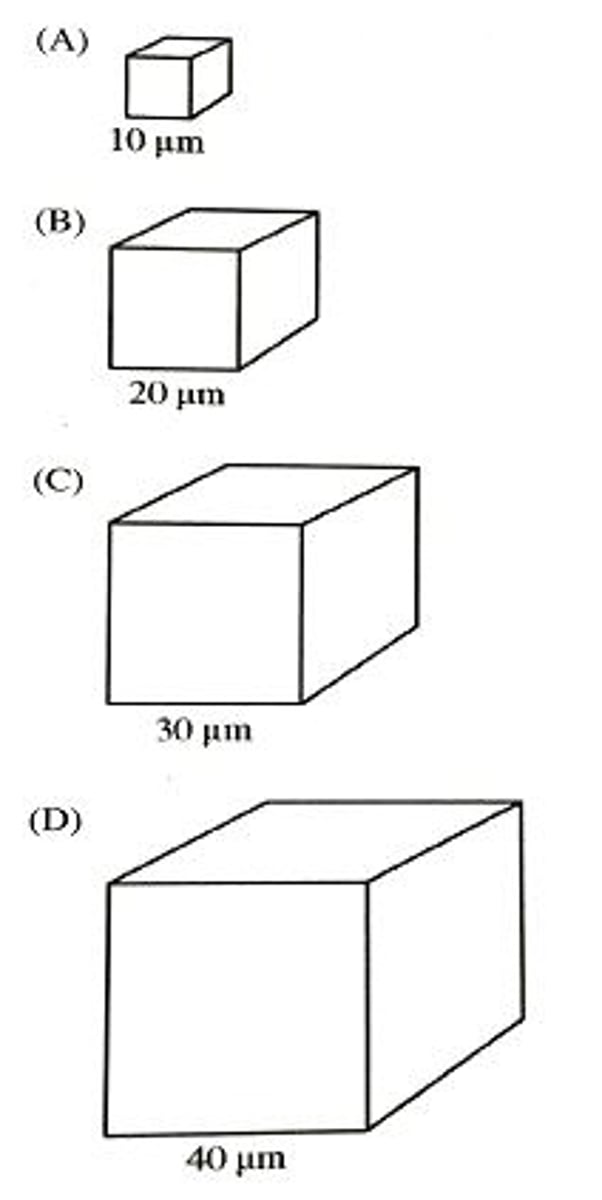
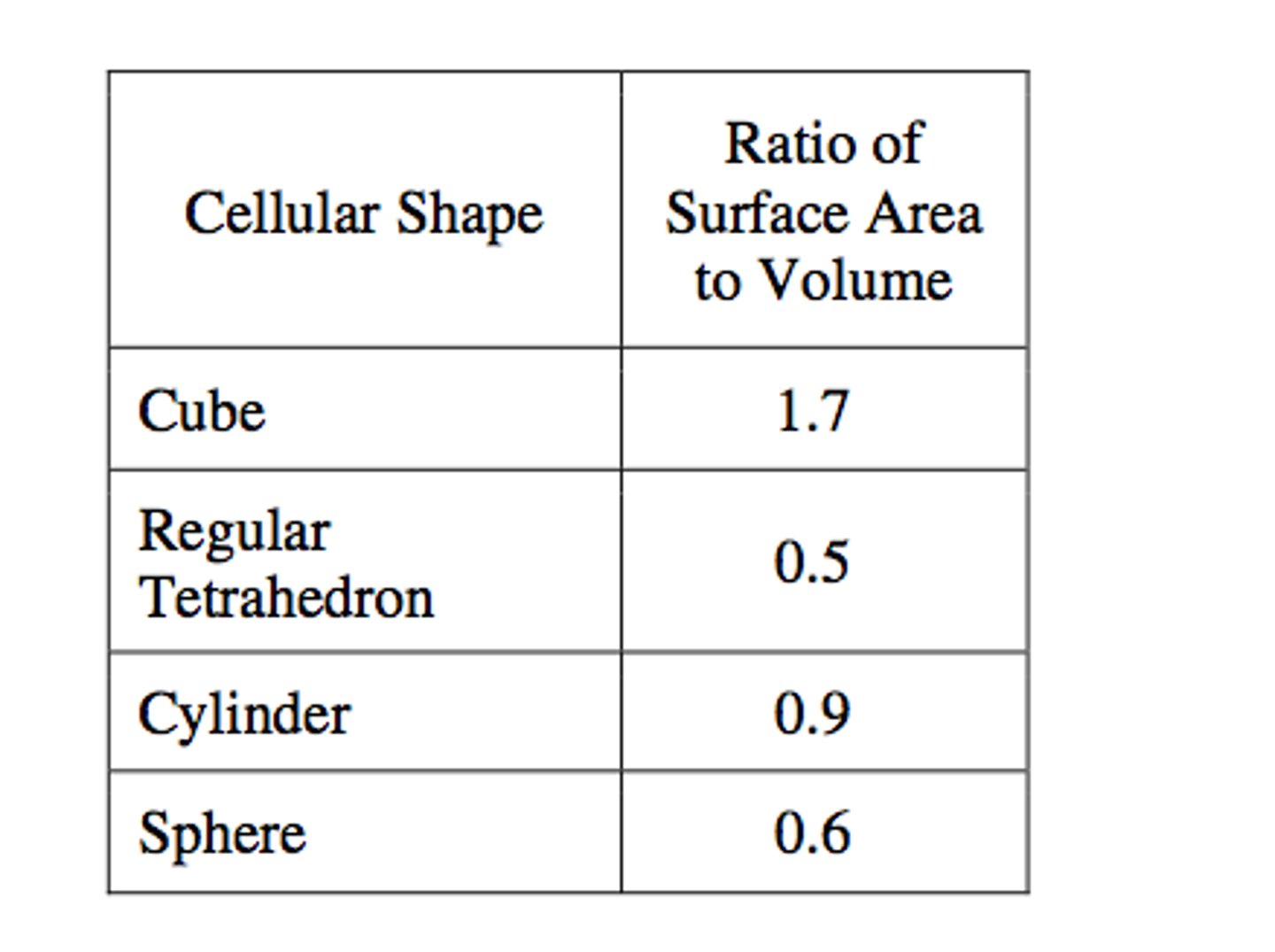
In an experiment, the efficiency of oxygen exchange across the plasma membrane is being assessed in four artificial red blood cells. The table above lists some properties of those artificial cells. Other conditions being equal, which artificial cell is predicted to be the most efficient in exchanging oxygen with the environment by diffusion?
The cuboidal cell
Researchers propose a model to explain variation in phytoplankton cell sizes in a marine environment. They base their model on the idea that smaller cells absorb nutrients more efficiently. The researchers predict that the mean diameter of phytoplankton cells will change by 50 micrometers for every 5-kilometer increase in distance from the shore because of a gradual decrease in nutrient availability. To test their model, the researchers determine that the phytoplankton cells found closest to shore have a mean diameter of 900 micrometers.
Based on the model, what will be the mean diameter of the phytoplankton cells that are found 25 kilometers from shore?
650 micrometers
Aquaporins are channel proteins that facilitate the transport of water across the cell membrane. One group of researchers hypothesizes that without functional aquaporins, no water will be able to enter the cell. A different group proposes an alternative hypothesis, stating that even with nonfunctional aquaporins, a small amount of water will still cross the cell membrane. An experiment is set up in which plant cells with mutated (nonfunctional) aquaporins and plant cells with normally functioning aquaporins are both placed in distilled water.
Which of the following data would support the alternative hypothesis?
Cells with mutated aquaporins exhibit moderate turgor pressure and are hypertonic.
Plant cell walls are composed of cellulose, while fungal cell walls are composed of chitin. A group of scientists hypothesize that this difference means the cell wall has largely different functions in plant cells and fungal cells. Alternatively, another group of scientists hypothesize that despite their biochemical differences, plant and fungal cell walls serve similar functions.
Which of the following observations would best support the alternative hypothesis described above?
In both plant cells and fungal cells, the cell wall surrounds the outside of the cell membrane.
The following questions refer to the following diagram. For each phrase or sentence, select the labeled part to which it is most closely related. Each option may be used once, more than once, or not at all for each group.
Site of transport of materials into and out of the cell
D
Carbon dioxide most likely enters a cell through which of the following processes?
Simple diffusion through the membrane
Which of the following best explains how molecules such as O2 and CO2 can move across the membrane of a cell?
The majority of the cell membrane is nonpolar, which allows small, nonpolar molecules to freely cross.
Which of the following statements is true regarding the movement of substances across cell membranes?
Ions are unable to move through the phospholipid bilayer because the nonpolar tail regions of the phospholipids are hydrophobic.
A team of biologists develop a new drug, and one team member hypothesizes that the drug is incapable of freely passing across the plasma membrane and requires the help of membrane proteins to enter cells. Alternatively, another biologist on the team hypothesizes that the drug can diffuse passively across the plasma membrane like O2 and CO2 can.
Which of the following, if true about the drug, best supports the alternative hypothesis that the new drug will exhibit simple diffusion across plasma membranes?
The drug is a small nonpolar molecule.
 Note
Note  Flashcards (25)