Topic 27: Regulated Proteolysis & Apoptosis
 Call Kai
 Learn
Learn Practice Test
 Spaced Repetition
 Match
Match Flashcards
 Knowt Play
1/29

There's no tags or description
Looks like no tags are added yet.
30 Terms
explain contact-mediated signaling in regards to drosophila nerve cells
drosophila nerve cells signal to their neighbors not to become neurons
delta (transmembrane inhibitory signal protein) signals to notch (receptor protein)
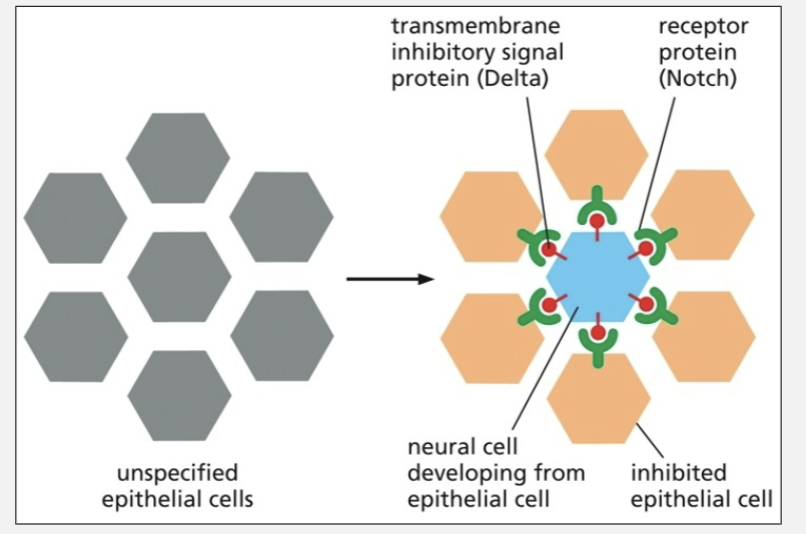
What is cell-mediated signaling?
direct contact between signaling cell and cell receiving signal
What does delta binding trigger? What is released as a result?
triggers proteolysis of Notch releasing a gene regulatory fragment
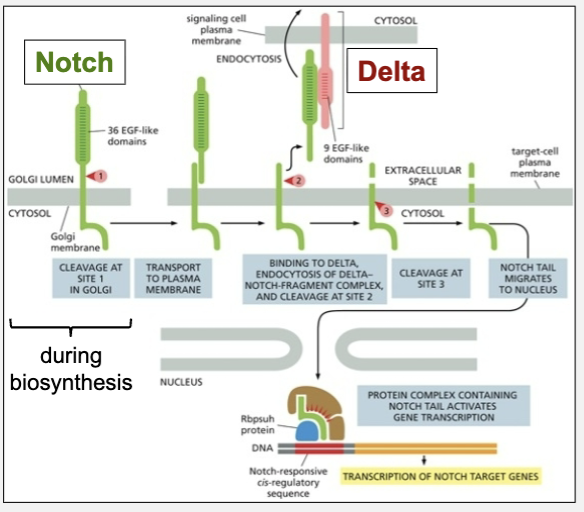
What are notch target genes frequently involved in?
regulating differentiation
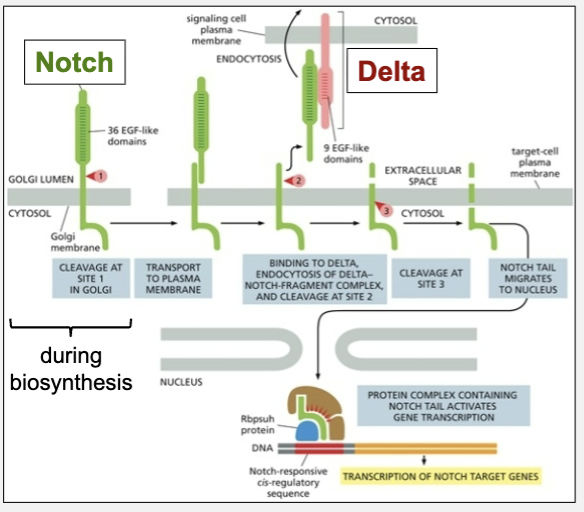
The activation of notch by the binding of delta can be viewed as a form of what?
mechanotransduction
what is mechanotransduction?
the conversion of applied force to an intracellular signal
ex: delta signal applied pulling force on notch
The first 3 steps in regulated proteolysis pathway (notch/delta) are referred to as what?
proteolytic steps (cleavage)
What can activating notch mutations cause?
T-cell leukemia
leukemic T-cells invading liver
What do the notch mutations in human T-cell leukemias generate?
generate fragments resembling the notch cytoplasmic domain
What is Wnt signaling an example of?
example if signaling by regulatory proteolysis
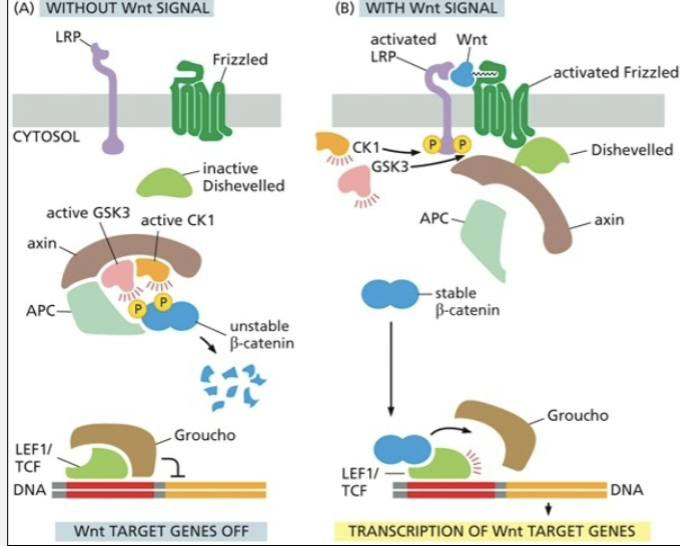
What is Beta-catenin in the Wnt pathway?
another rapidly synthesized, rapidly degraded signaling molecule
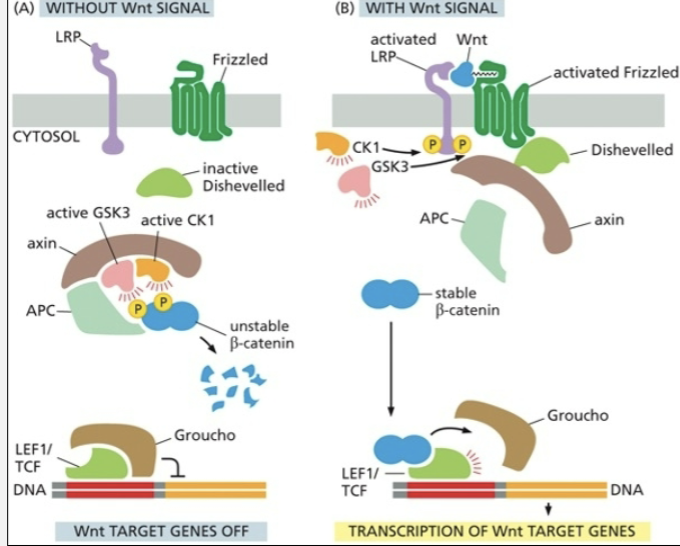
In Wnt pathway, what happens to APC in early stages of colon cancer progression?
it is often lost
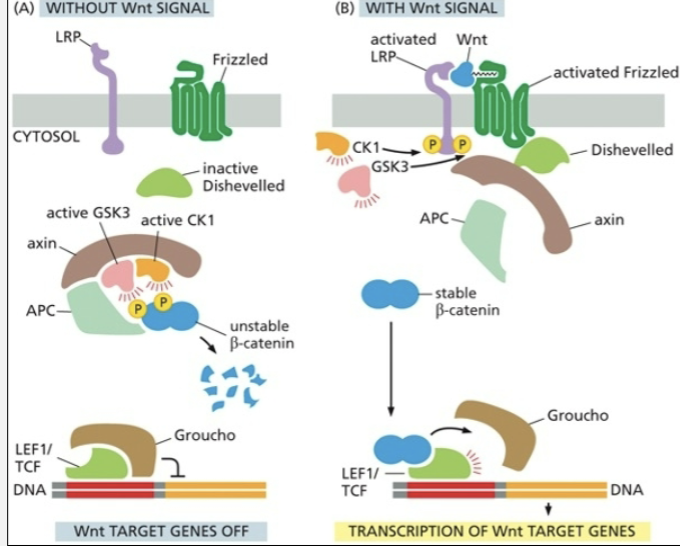
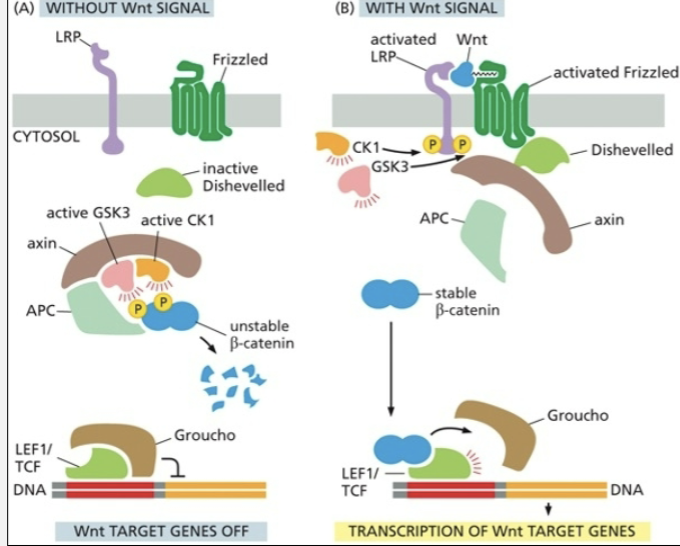
what is the difference between pathways with Wnt signal and one without?
With Wnt signal: transcription of Wnt target genes
activated frizzled
stable Beta-catenin
active dishevelled
CK1 and GSK3 activity on activawted LRP
Without Wnt signal: Wnt target genes off
frizzeled not activated
unstable beta-catenin
inactive dishevelled
CK1 and GSK3 activity on axin
What is apoptosis?
regulated form of cell death that differs from necrosis and lysis
it is controlled form of death, a highly regulated program of dismantling cell structures
What are the Hallmarks of apoptosis? (5)
Blebbing: formation of bubble-like bulges in plasma membrane caused by breakdown of cytoskelton forcing the membrane to detach and swell outwards
Rounding
Cytochrome C release
externalization of phosphatidylserine
fragmentation of nuclei
what does apoptosis physiologically do to cells no linger needed or that have become dangerous?
removes the cells
What types of things does apoptosis eliminate?
temporary structures
excess cells
infected cells
transformed cells
how is apoptosis initiated?
initiated by activating proteases called caspases
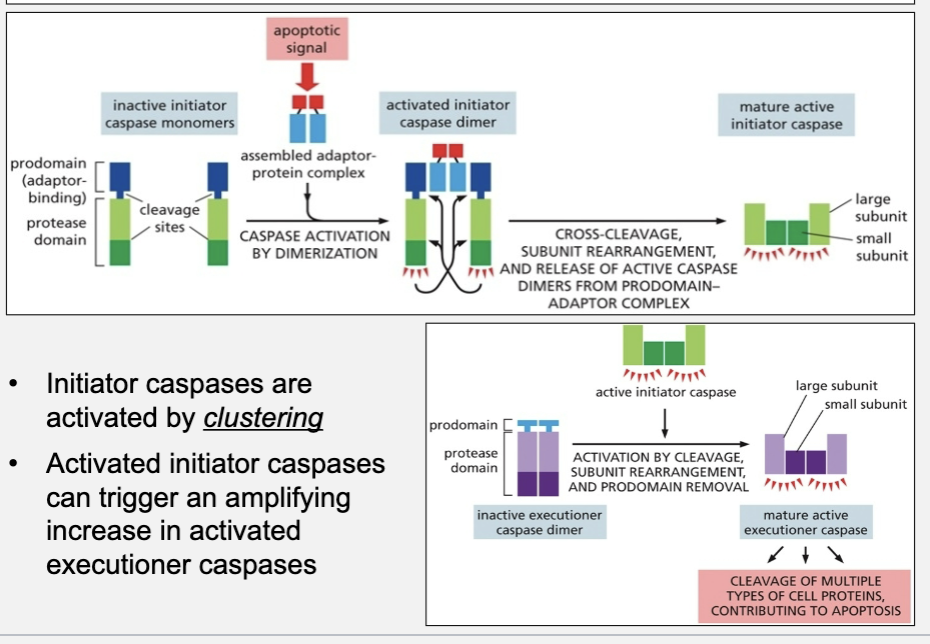
How are initiator caspases activated?
by clustering
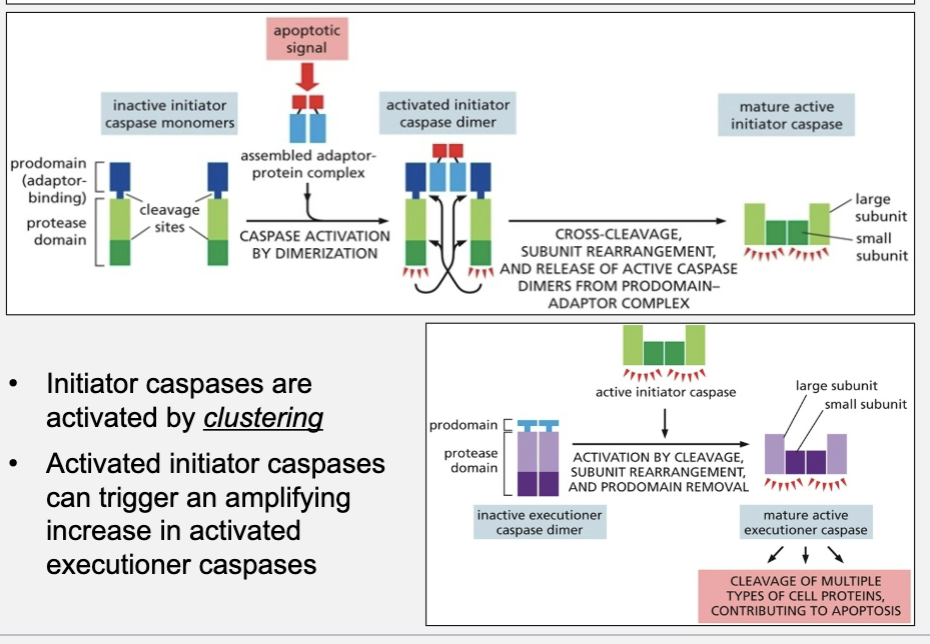
What can activated initiator caspases trigger?
can trigger an amplifying increase in activated executioner caspases
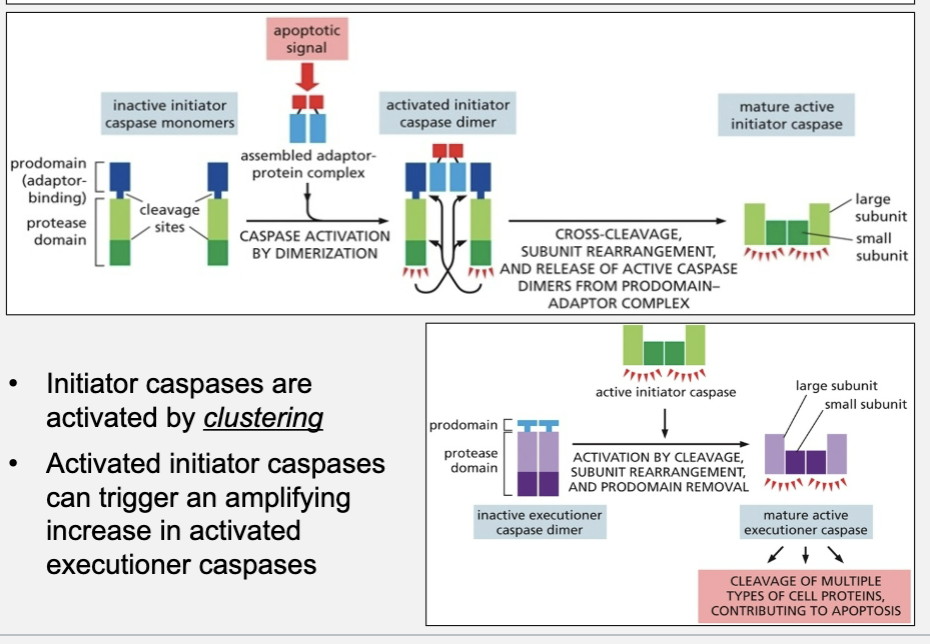
how can apoptosis be monitored?
by visualizing DNA fragmentation in gels and in vivo
The ladder effect in gels results from what?
results from cleavages between nucleosomes
What is the TUNEL method?
nick end labeling
What happens to nick ends in nick end labeling?
they can be labeled in tissue to reveal apoptotic cells
Caspase activation leads to a release of _____ in which cuts the genome into many small fragments.
nuclease
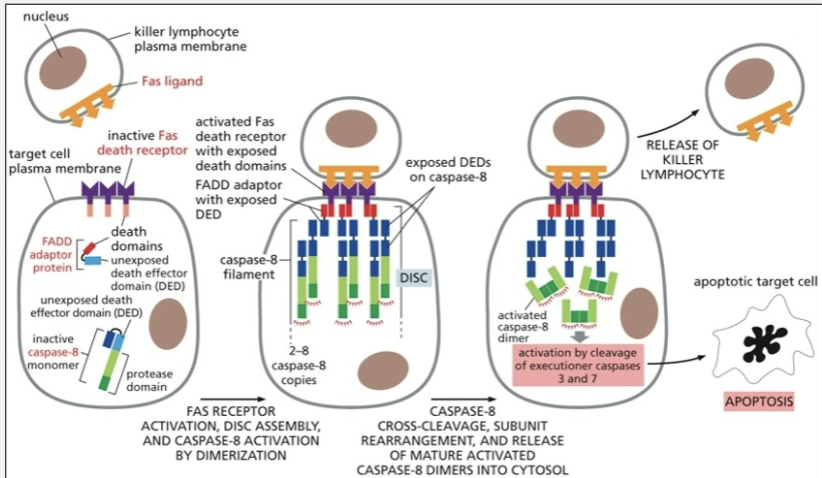
Extrinsic pathways of apoptosis
clusters initiator caspases via ligand binding to “death receptors”
extraceullular death cues
Extracellular death cues can results in what?
the formation of “death inducing signaling complex” (DISC) that clusters and activated caspase 8
Intrinsic pathway of apoptosis
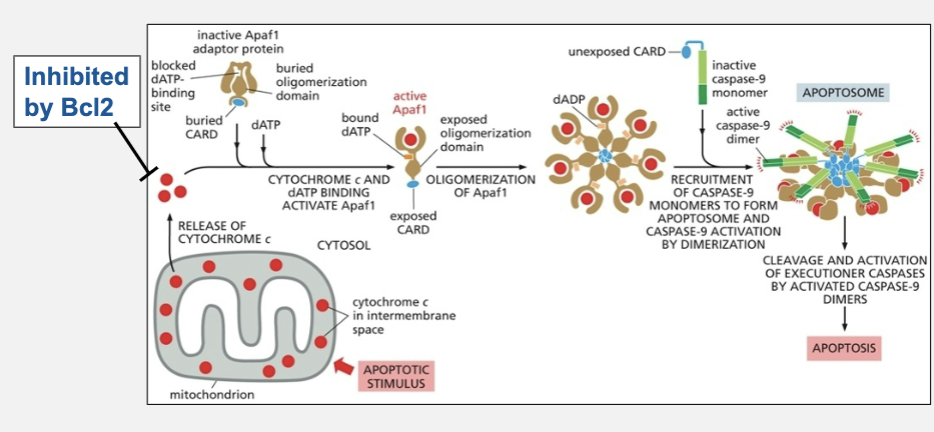
clusters initiator caspases by cytochrome C release & Apaf oligomerization
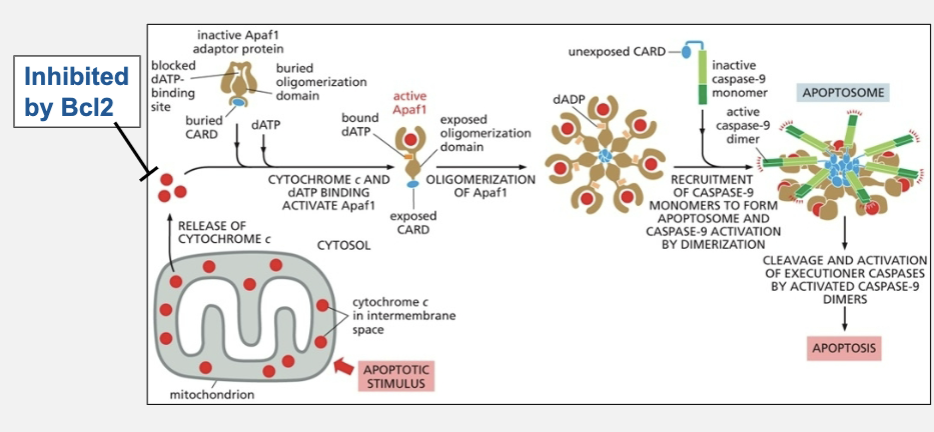
What does the cytochrome C release from mitochondria cause in intrinsic pathway?
causes apoptosis, clustering & activation of caspase 9
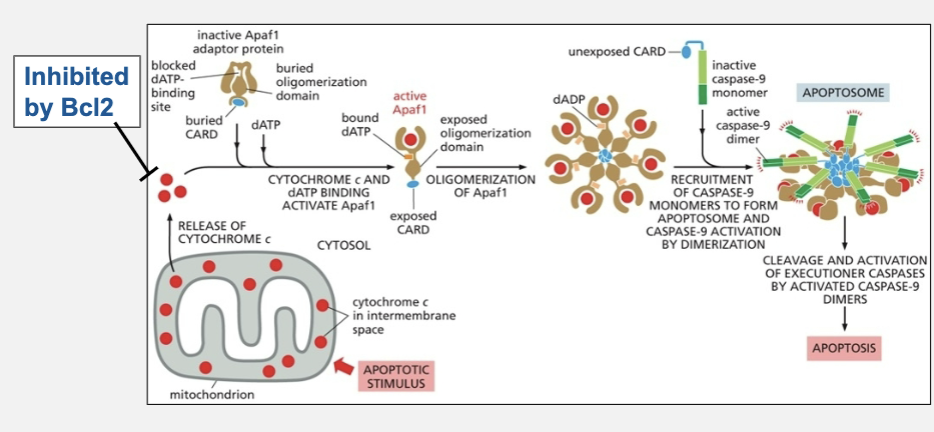
In intrinsic pathway: what can inhibit cytochrome C?
BcI2