2️⃣the tubehead, what’s inside it, and how it’s kept safe/cool 2️⃣
 Studied by 0 people
 Call Kai
 Learn
Learn Practice Test
 Spaced Repetition
 Match
Match Flashcards
 Knowt Play
1/11

There's no tags or description
Looks like no tags are added yet.
Name | Mastery | Learn | Test | Matching | Spaced | Call with Kai |
|---|
No analytics yet
Send a link to your students to track their progress
12 Terms
What is the tubehead housing in a dental x-ray machine, and what does it do?
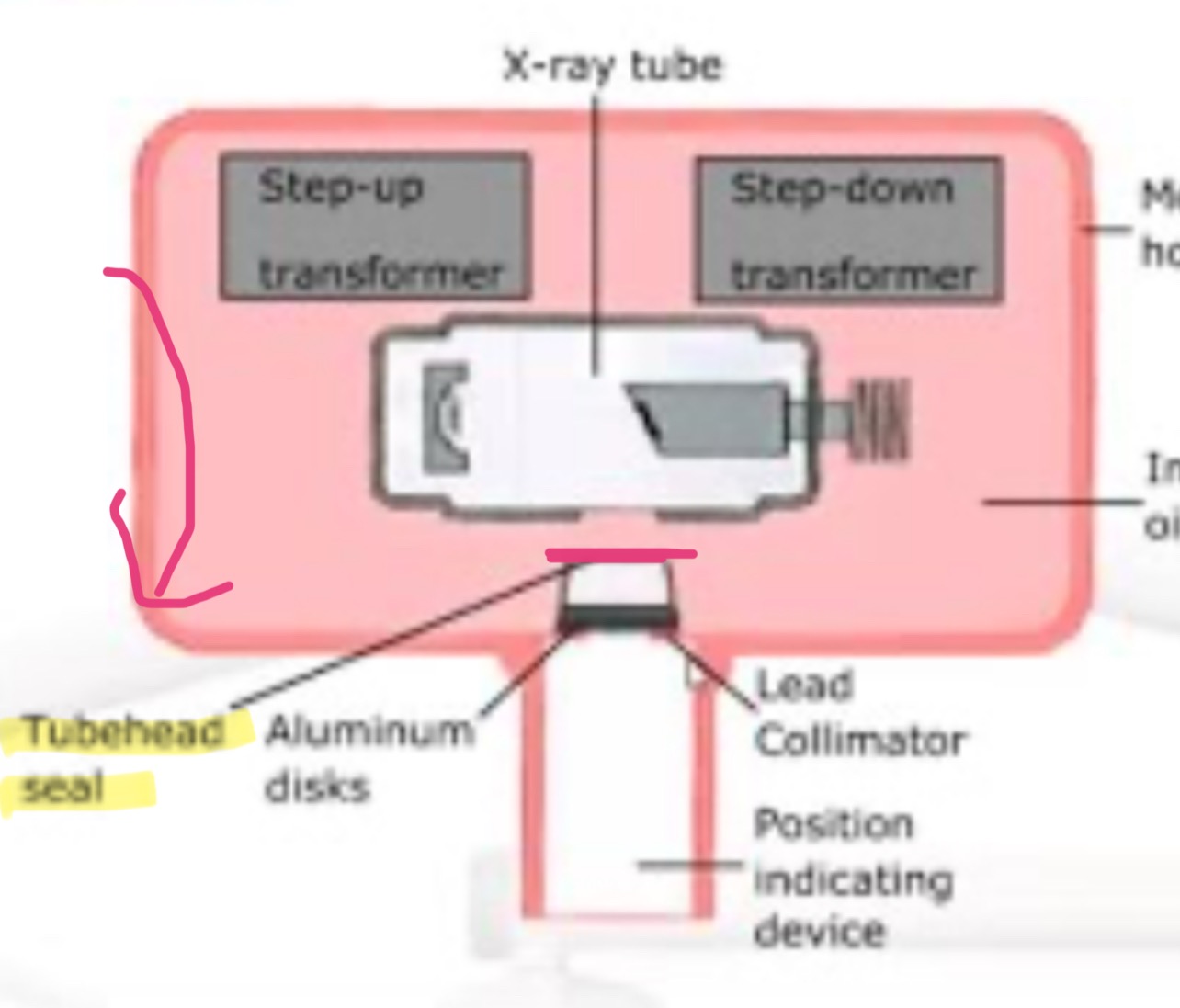
A protective, tightly-sealed metal covering that encases the x-ray tube and electrical components.
Purpose: Shields against radiation and contains insulating oil to keep the tube cool.
Contains:
The x-ray tube (where x-rays are produced).
High/low-voltage transformers that control the voltage of incoming current.
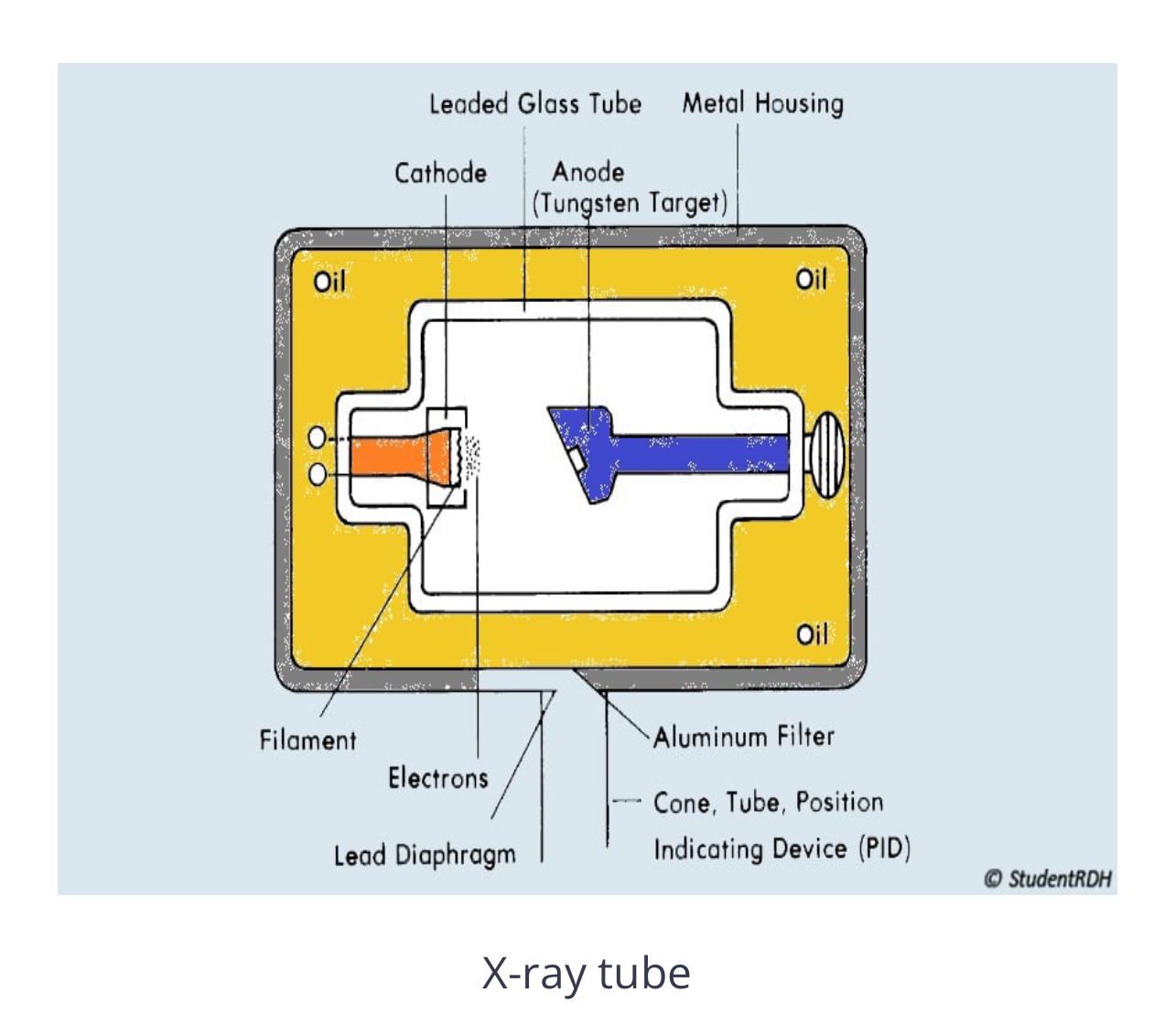
What is inside the tubehead and what is its function?
Filled with oil to absorb heat (because 99% of the energy turns into heat, only 1% becomes X-rays!).
The tubehead seal (leaded glass or aluminum) keeps oil in and filters out weak X-rays.
Which material in the tubehead keeps the insulating oil contained, filters out weak x rays and allows X-rays to exit?
Tube head seal either Leaded glass or aluminum seal!
What is the X-ray tube, including its lead-glass vacuum housing, size, and purpose, and how does the vacuum help produce strong, focused X-rays?
where x-rays are produced. It is enclosed in a lead-glass vacuum housing, which is about 6 inches long and 1 inch in diameter. The vacuum contains no air, allowing electrons to travel freely without bumping into air particles, resulting in strong, focused X-ray production.
During x-ray production, heat generated at the anode must be dissipated to prevent damage. Which of the following correctly lists the path of heat flow from first to last?
Tungsten target gets hot
Copper stem
Insulating oil absorbs the heat next
Metal housing releases it last
Position Indicating Device
It’s that tube that sticks out of the X-ray machine — the part you point toward the patient’s face.
Its job is to aim, shape, and clean up the X-ray beam before it hits the patient and the image receptor.
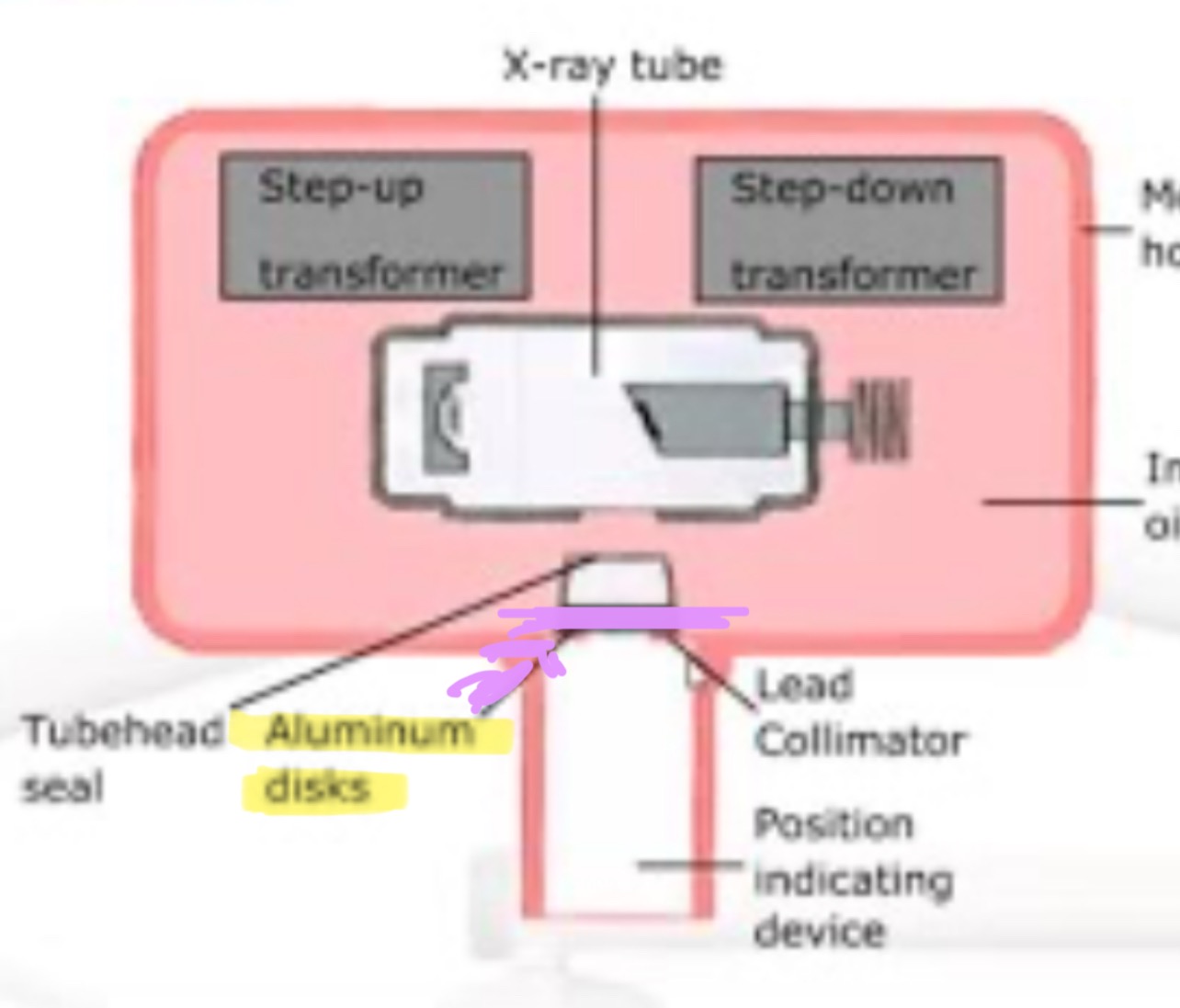
The PID attaches to the opening of the
opening of the metal housing (the end of the tubehead).
final pathway for the X-rays to reach the patient.
Shapes: Cylinder or rectangle (rectangle = less exposure).
Collimator: Lead plate limits beam size.
ALUMINUM filter: Inside BEFORE PID; removes weak, long-wavelength rays.
Placement: Open end rests on patient’s face during exposure.
Length: Long PID = less scatter, clearer image.
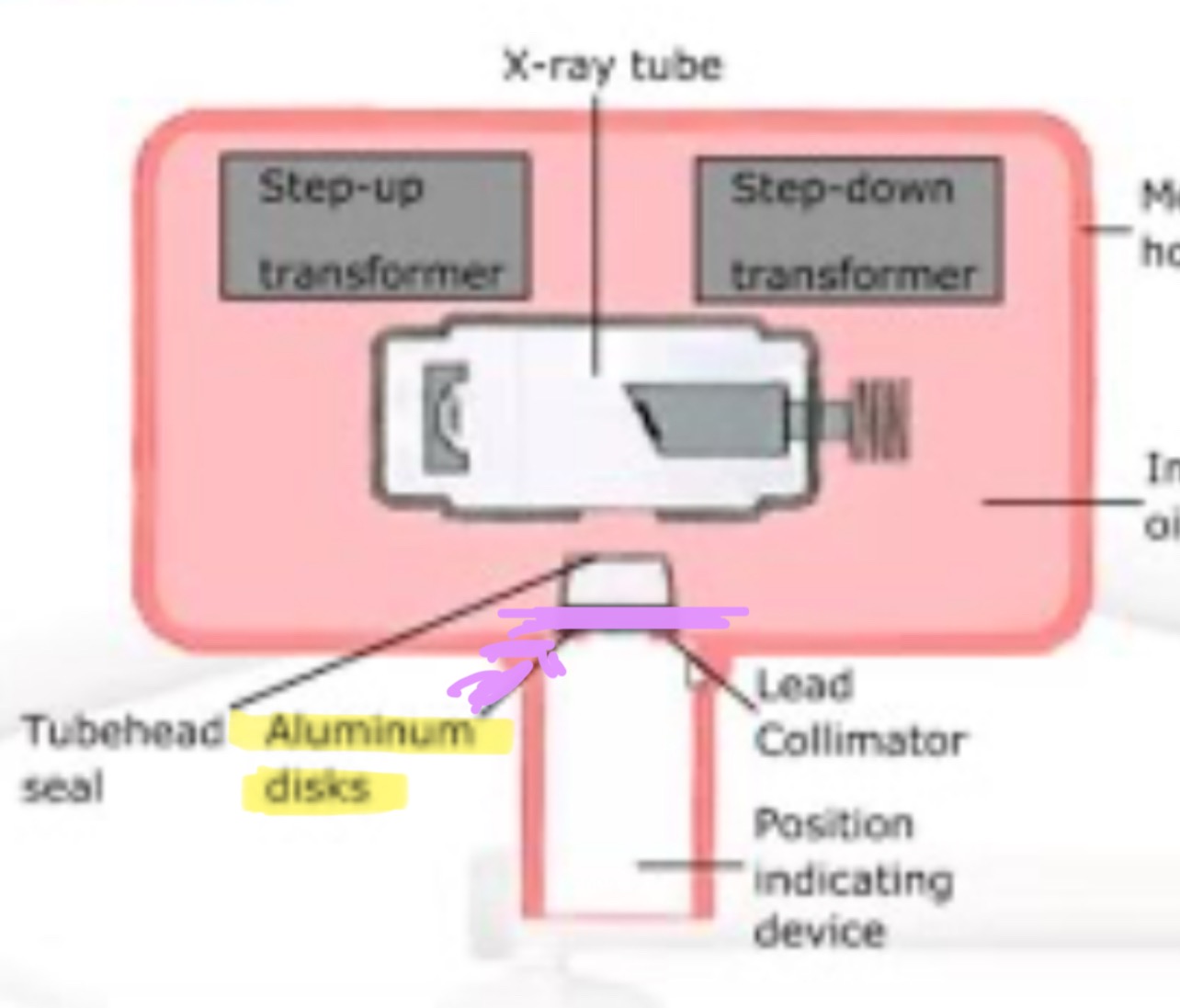
Aluminum filter in PID
removes weak, long-wavelength rays
Which structure in the anode helps dissipate the excess heat produced?
The copper stem of the anode helps dissipate the excess heat away from the tungsten target
Which of the following structures helps dissipate the heat created in the dental x-ray unit? From da
copper stem conducts this heat away from the target to prevent damage in dental unit from da
Which of the following structures is NOT part of the anode?
the tungsten filament and molybdenum focusing cup.
Which structure can further restrict the size of x-ray beams?
The collimator lead diaphragm
 Note
Note  Flashcards (36)