PL_LESSON 4: PHYLUM ANNELIDA
 Studied by 0 people
 Call Kai
 Learn
Learn Practice Test
 Spaced Repetition
 Match
Match Flashcards
 Knowt Play
1/60

There's no tags or description
Looks like no tags are added yet.
Name | Mastery | Learn | Test | Matching | Spaced |
|---|
No study sessions yet.
61 Terms
PHYLUM ANNELIDA
“Segmented worms”
PHYLUM ANNELIDA
Marine, freshwater, and terrestrial
PHYLUM ANNELIDA
Free-living, symbiotic, or ecto-parasitic
PHYLUM ANNELIDA
Vermiform
Metamerism
segmentation
PHYLUM ANNELIDA
The coelom is well-developed
PHYLUM ANNELIDA
Muscular body walls (circular and longitudinal muscles)
circular muscle
Surrounded by a muscular body wall. The outer wall
longitudinal muscles
inside
Setae
used for locomotion
parapodia
Hair structures on their ___(appendages found in each of their body segment, which they can also use for respiration)
PHYLUM ANNELIDA
Respiration through the skin, gill, and the parapodia
PHYLUM ANNELIDA
Closed circulatory system
They have blood vessels and a heart
PHYLUM ANNELIDA
Hydrostatic skeleton
Hydrostatic skeleton
Allows to change shape but not its volume, which allows them to successfully crawl, swim, or burrow on the ground
PHYLUM ANNELIDA
Digestive system complete
PHYLUM ANNELIDA
They have a mouth and a pharynx
nephridia
The excretory system typically consists of a pair of ___(organs of excretion) per segment
asexual reproduction
Separate sexes or hermaphroditic individuals can also perform ____(fission or fragmentation)
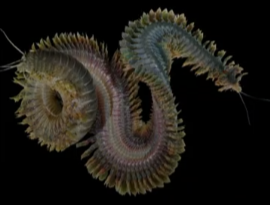
Nereis sp.
Rag worms or clam worms
Nereis sp.
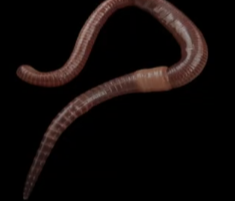
Lumbricus terrestris
Earthworm
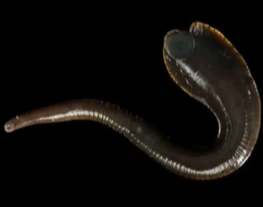
Hirudo medicinalis
Leech
Lumbricus terrestris
Hirudo medicinalis
CLASS ERRANTIA
Known as Errant polychaetes/clamworms
CLASS ERRANTIA
Aquatic and can tolerate a wide range of environmental salinity
CLASS ERRANTIA
Well-differentiated head
CLASS ERRANTIA
Parapodia on most segments, with setae
CLASS ERRANTIA
Bears cirri (tentacles)
CLASS ERRANTIA
Found in the head or tail
Most are nocturnal
Have about 200 body segments and are capable of growing up to 30-40 cm in length
Notopodium
Dorsal lobe
Neuropodium
Ventral lobe
CLASS SEDENTARIA
Earthworms and leeches
CLASS SEDENTARIA
Order Clitellata
Family Lumbricidae
Genus Lumbricus
Species Lumbricus terrestris
CLASS SEDENTARIA
Order Gnathobdellida
Family Hirudinidae
Genus Hirudo
Speces Hirudo medicinalis
CLASS SEDENTARIA
Includes many species that live in tubes or burrow, or as ecto parasites
CLASS SEDENTARIA
Very slow movers or a sedentary lifestyle
CLASS SEDENTARIA
Unlike Class Errantia
But they have developed more cirri or tentacles or food capture
Parapodia
are often very small or they have lost them completely
ORDER CLITELLATA
Earthworms
ORDER CLITELLATA
Found in moist, rich soil
Mostly emerge at night to scavenge for food. On rainy days, they stay near the surface and expose parts of the body. When it is hot, they often burrow down deep and coiled themselves to remain normal
clitellum
ORDER CLITELLATA Bears' reproductive structure, called the
ORDER CLITELLATA
Well-developed layers of circular and longitudinal muscles for crawling - peristaltic waves of contraction
ORDER CLITELLATA
Divided internally into segments by septa
ORDER CLITELLATA
Lacks parapodia, but setae are present
ORDER CLITELLATA
Hermaphrodites
Monoecious
bears both male and female reproductive organs
Prostomium
contains the mouth
Clitellum
cocoon formation for reproduction
ORDER GNATHOBDELLIDA
Leeches
ORDER GNATHOBDELLIDA
Occur in freshwater habitats, a few are marine, and some have been found in warm, moist terrestrial habitats
ORDER GNATHOBDELLIDA
Carnivores or temporary/permanent parasites
ORDER GNATHOBDELLIDA
Lack setae completely
ORDER GNATHOBDELLIDA
Possess anterior and posterior suckers
ORDER GNATHOBDELLIDA
Dorsoventrally flattened
ORDER GNATHOBDELLIDA
Clitellum appears only during the breeding season
 Note
Note  Flashcards (30)