basics of photosynthesis
 Call Kai
 Learn
Learn Practice Test
 Spaced Repetition
 Match
Match Flashcards
 Knowt Play
1/11

There's no tags or description
Looks like no tags are added yet.
Name | Mastery | Learn | Test | Matching | Spaced | Call with Kai |
|---|
No analytics yet
Send a link to your students to track their progress
12 Terms
what is the basics photosynthesis equation
6CO2+6H2O+light energy→C6H12O6+6O2
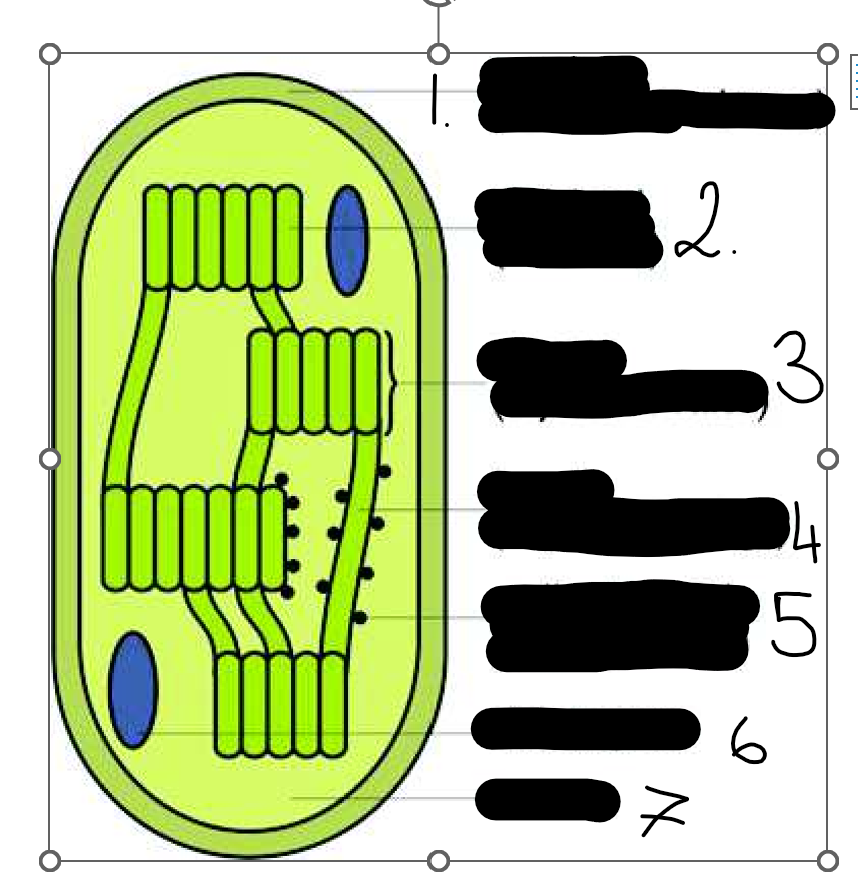
envelope or double membrane
thylakoid disk (one disk)
granum thylakoid stack
lamella
stalked particles
starch brain
stroma
list adaptations of the leaf for photosynthesis
broad and thin providing large surface area for maximum light absorption
leaves are very thin this means that there is a short diffusion for the CO2 to reach the palisade ells where photosynthesis occurs.
waxy cuticle is translucent allowing light through to the palisade
Stomata for gas exchange
xylem to bring water to the cells
palisade near the top so exposed to higher light intensity
how is the chloroplast adapted for photosynthesis
rod shaped to increase surface area
thylakoid is arranged into stacks called grana which increases the surface area which light can be absorbed. And increases the surface area for electron carrier and etc
contain DNA + ribosomes to enable them to make needed protein quickly
chloroplast contain a large range of pigments to increase the overall light energy absorbed.
what is a photosystem and what does it do
A photosystem has a funnel like structure with several hundred chlorophyll molecules plus accessory pigments like carotene. It absorbs light energy and transfers it to a reaction centre to drive the light-dependent reactions of photosynthesis. There embedded in the thylakoid membrane.
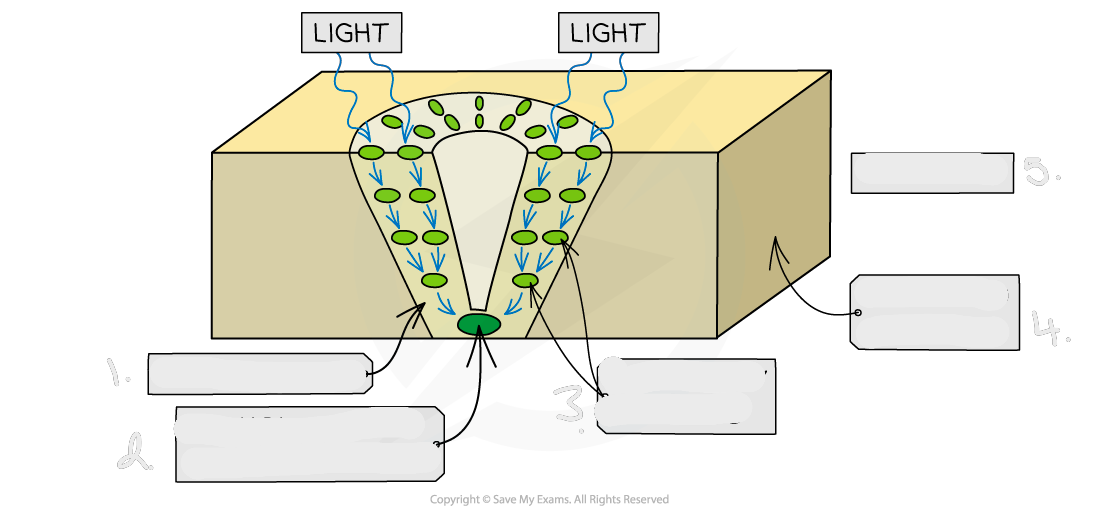
photosystem
primary pigment reaction centre
accessory pigments
thylakoid membrane
thylakoid
reaction system
A region within a photosystem containing a pair of chlorophyll a molecules that absorb light energy, become excited, and release high-energy electrons to an electron transport chain in the light-dependent reactions of photosynthesis.
how many different photosystem and why are there different one
there are 2 photosystem 1 and 2
there activated by different wave length meaning the plant can absorb a larger range of light waves
list the 3 main pigments and there colours
chlorophyll there are 2 types A= blue green and B= yellow green
carotenoids
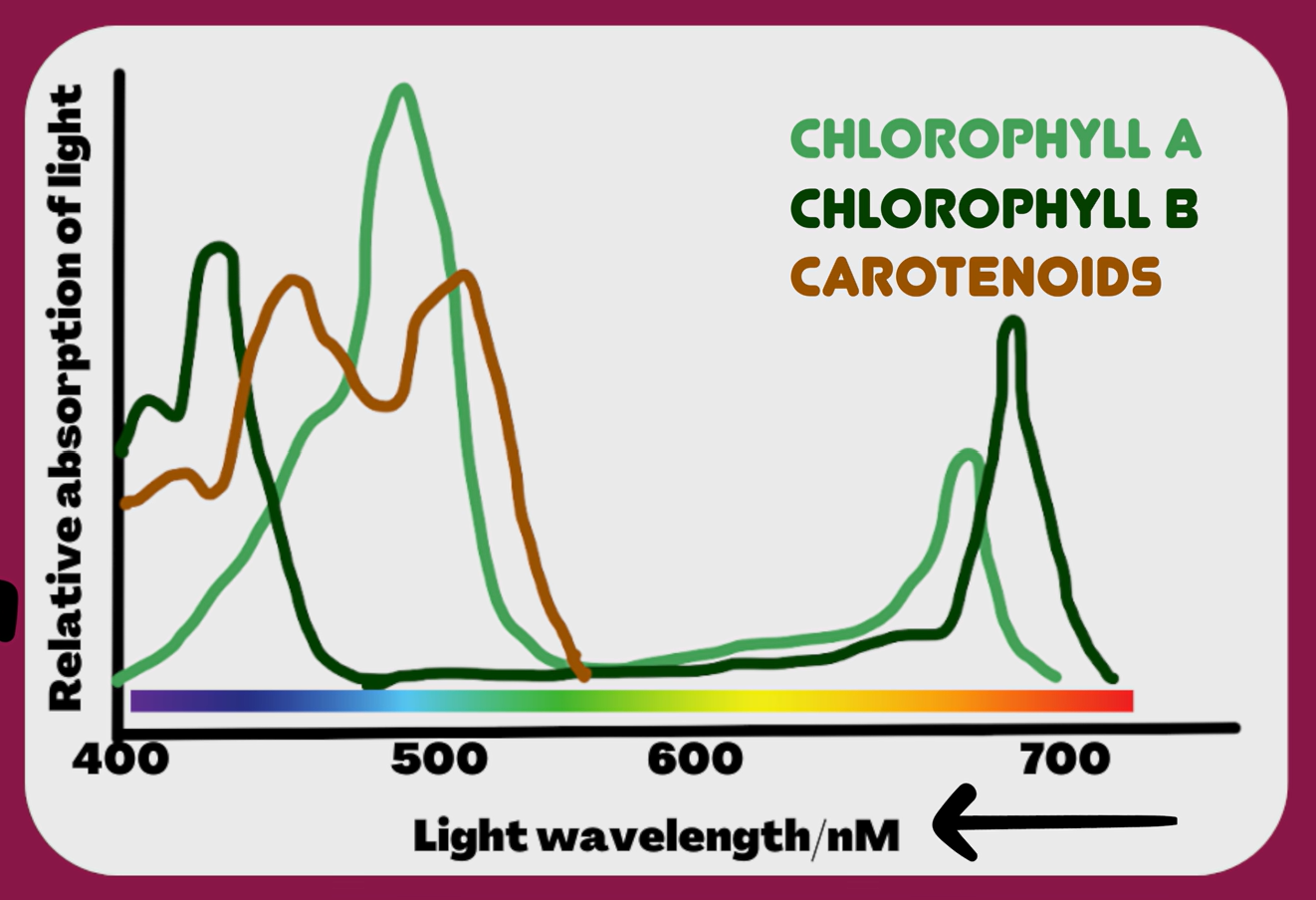
what does an absorption spectra show
What it shows: The amount (absorbance) of light absorbed by specific photosynthetic pigments (chlorophyll a, b, carotenoids) at different wavelengths.
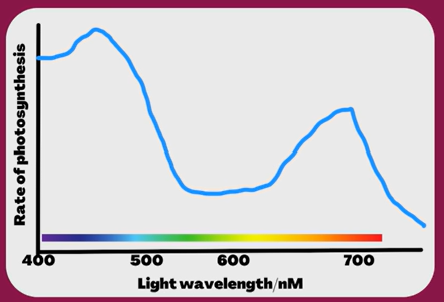
action spectra
action spectrum shows which wavelengths are most effective for photosynthesis due to the combined absorption of all pigments.
key point = Action spectra do not measure absorption directly.
They measure rate of photosynthesis (e.g. oxygen production) at different wavelengths.
what do lamella do
increase surface area connect grana

