NPTE Peds
 Studied by 0 people
 Call Kai
 Learn
Learn Practice Test
 Spaced Repetition
 Match
Match Flashcards
 Knowt Play
1/50

There's no tags or description
Looks like no tags are added yet.
Name | Mastery | Learn | Test | Matching | Spaced | Call with Kai |
|---|
No analytics yet
Send a link to your students to track their progress
51 Terms
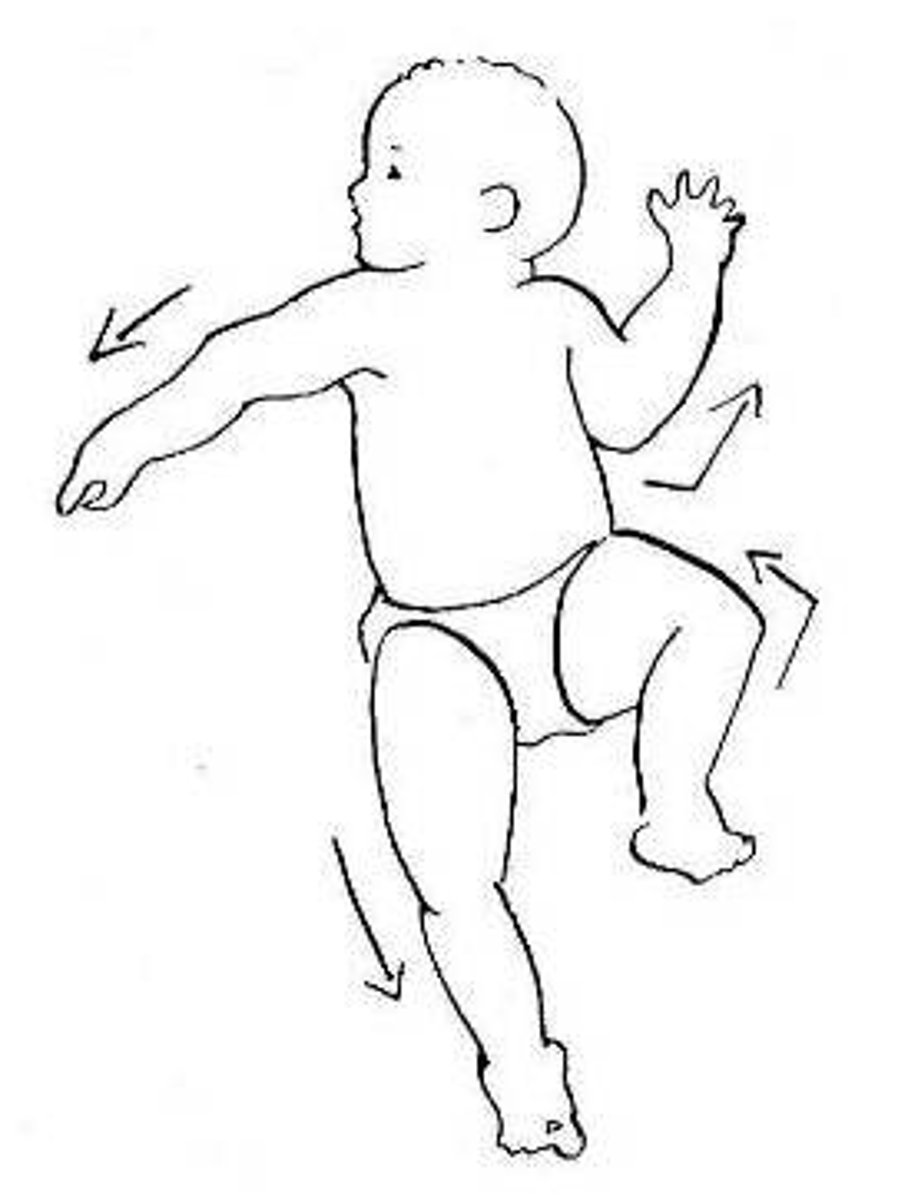
ATNR (Asymmetrical tonic neck reflex)
Stim: rotate head to one side
Response: flexion of skull arm and extension of jaw arm (fencing position)
Onset: birth
Integration: 4-6 months
Prolonged/persists= scoliosis or subluxation of hip potentially
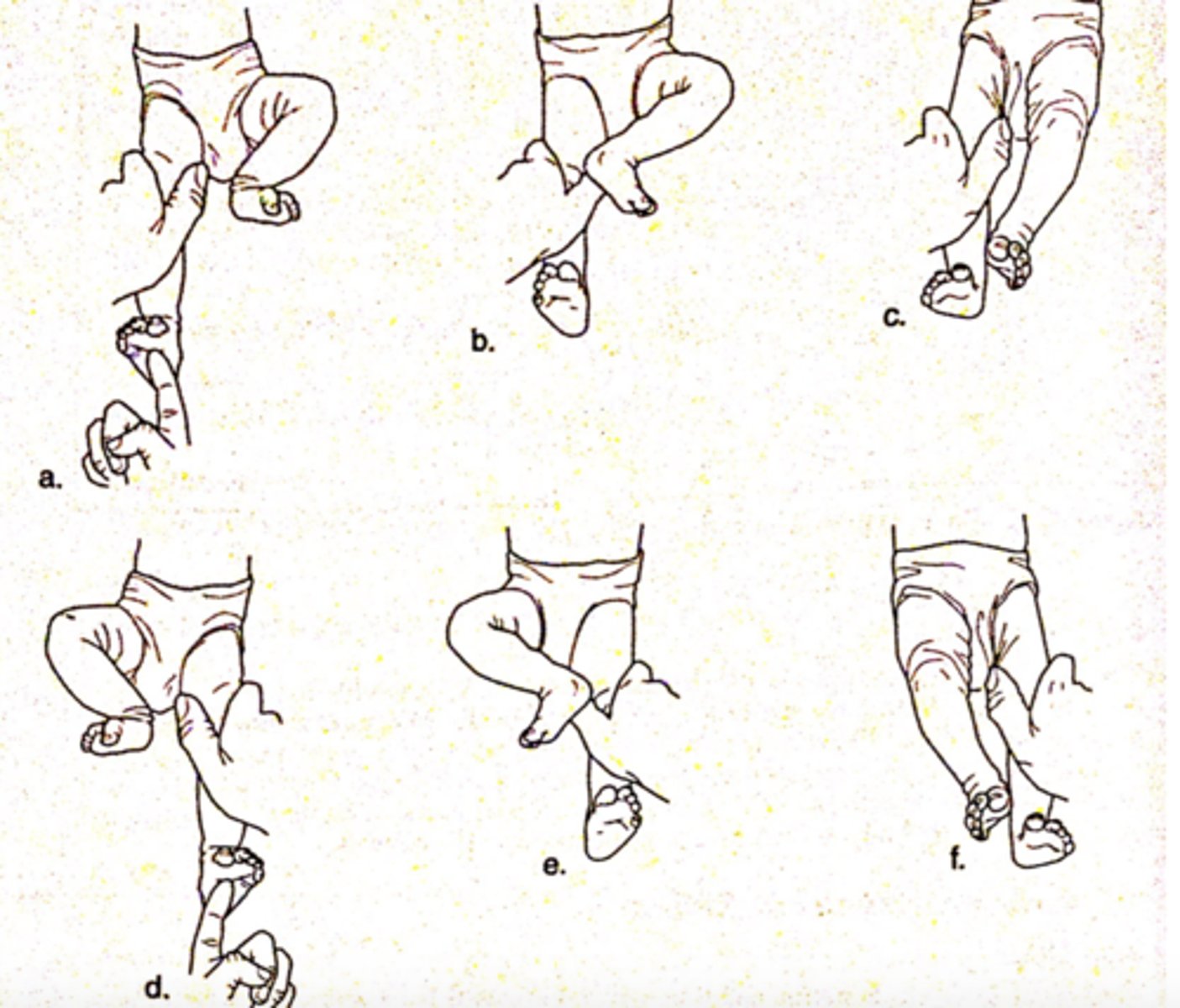
Crossed extension reflex
Stim: noxious stim to the ball of LE fixed in extension
Response: opp LE flexes, ADD and extends
-Pt with hemiplegia, lifting uninvolved leg off ground in gait results in in creased extensor tone of involved leg
Onset: 28 weeks gestation
Integration: 1-2 months
Equilibrium Reactions
Stim: displace COG by tilting or moving support surface
Response: curvature of trunk toward upward side and extension/ABD of extremities; protective extension on downward side
Onset: 6 mo and sequentially development
-prone 6 mo
-supine 7-8 mo
-sitting 7-8 mo
-kneeling 9-12 mo
-standing 12-21 mo
Integration: persists

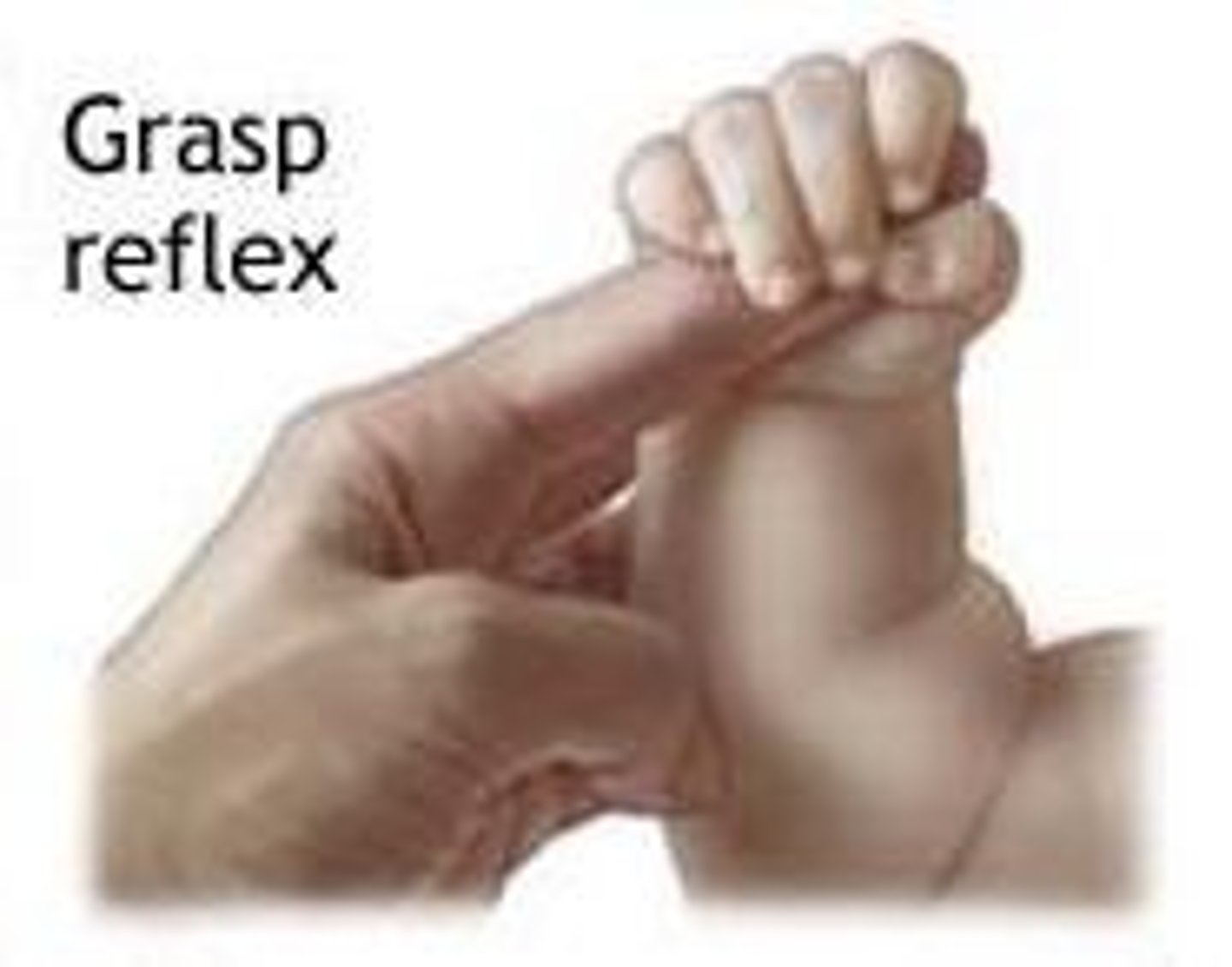
Grasp Reflex
Stim: pressure to palm or plantar/ball of foot
Response: curling of toes or grasping with fingers
Onset:
-Palmar: Birth
-Plantar: 28 weeks gestation
Integration:
-Palmar: 4-6 mo
-Plantar 9 mo
Landau's Reflex
Stim: lift child under thorax in prone
Response: head/back and legs extend
-if head is pushed into flexion all extensor tone disappears
Onset: 3 mo
Integration: 2 years
(absent in those with strong flexor spasticity)
Moro reflex (startle reflex)
Stim: sudden head change in relation to the trunk (drop backward from sitting to supine)
Response: extension and ABD of UE with open hands and crying
-followed by flexion, ADD and arms crossed
Onset: 28 weeks gestation
Integrated: 5-6 mo
Optical and labyrinthine righting reflexes
Stim: alter body position by tipping body in all directions (labyrinthine- vision is occluded)
Response: head orients to vertical position and mouth horizontal
Onset: 2 mo
Integrated: persists

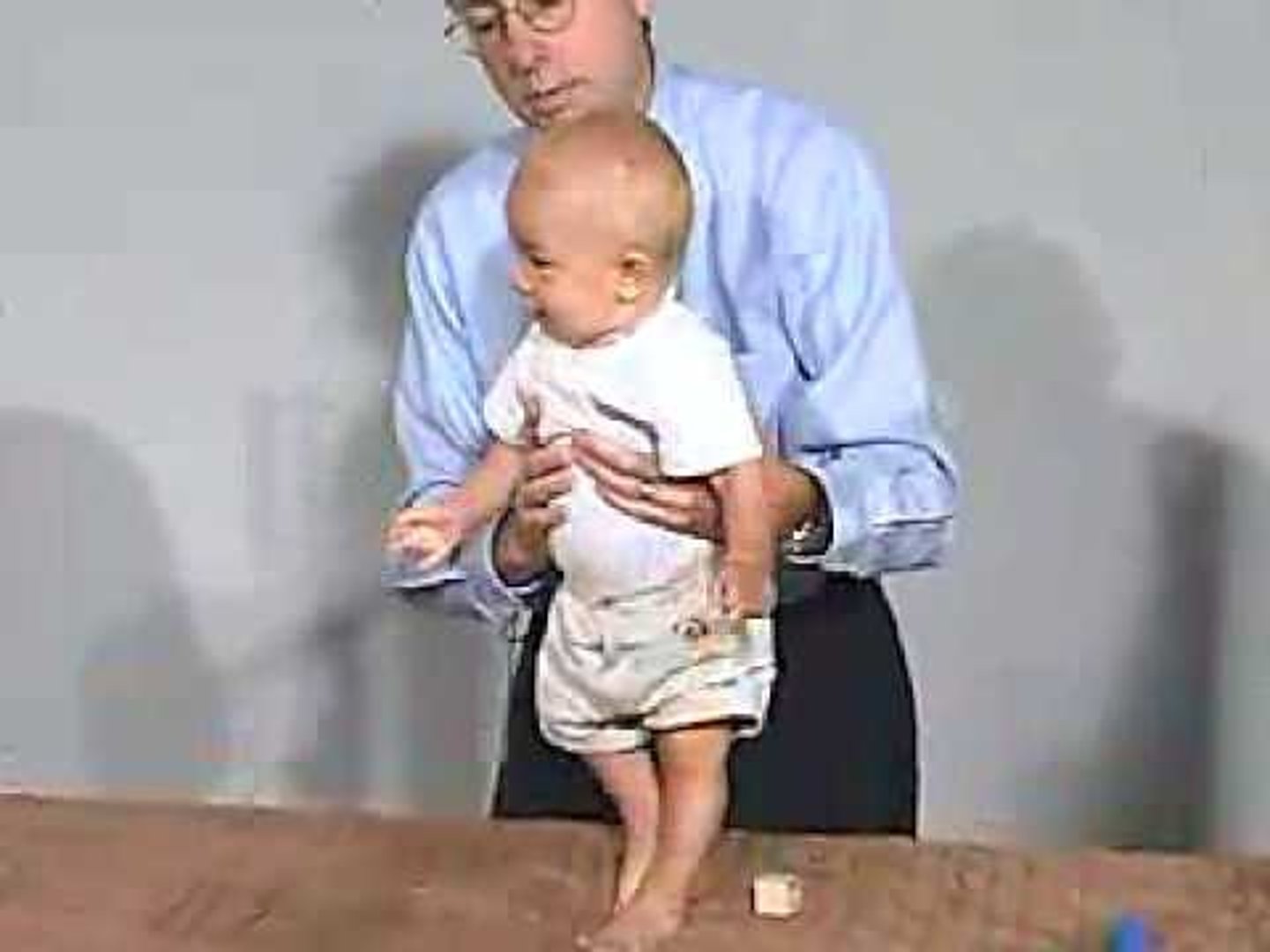
Positive Supporting Reaction
Stim: contact to ball of the foot in upright standing posture
Response: rigid extension of LE with ankle PF and inversions, toes clawing and hip IR
Onset: birth
Integration: 6 mo
Variations:
-CP= adductor spasticity
-hemiplegia pt, may produce hip ABD
-ambulation will be disrupted by inability to DF to foot or properly move leg joints
Protective Extension Reaction
Stim: displace COG outside BOS
Response: arms or legs extend and ABD to support and protect body
-Parachute reflex for downward protection occurs first, then forward, lateral and backwards is last
Onset:
Arms: 4-6 mo
Legs: 6-9 mo
Integrated: persists
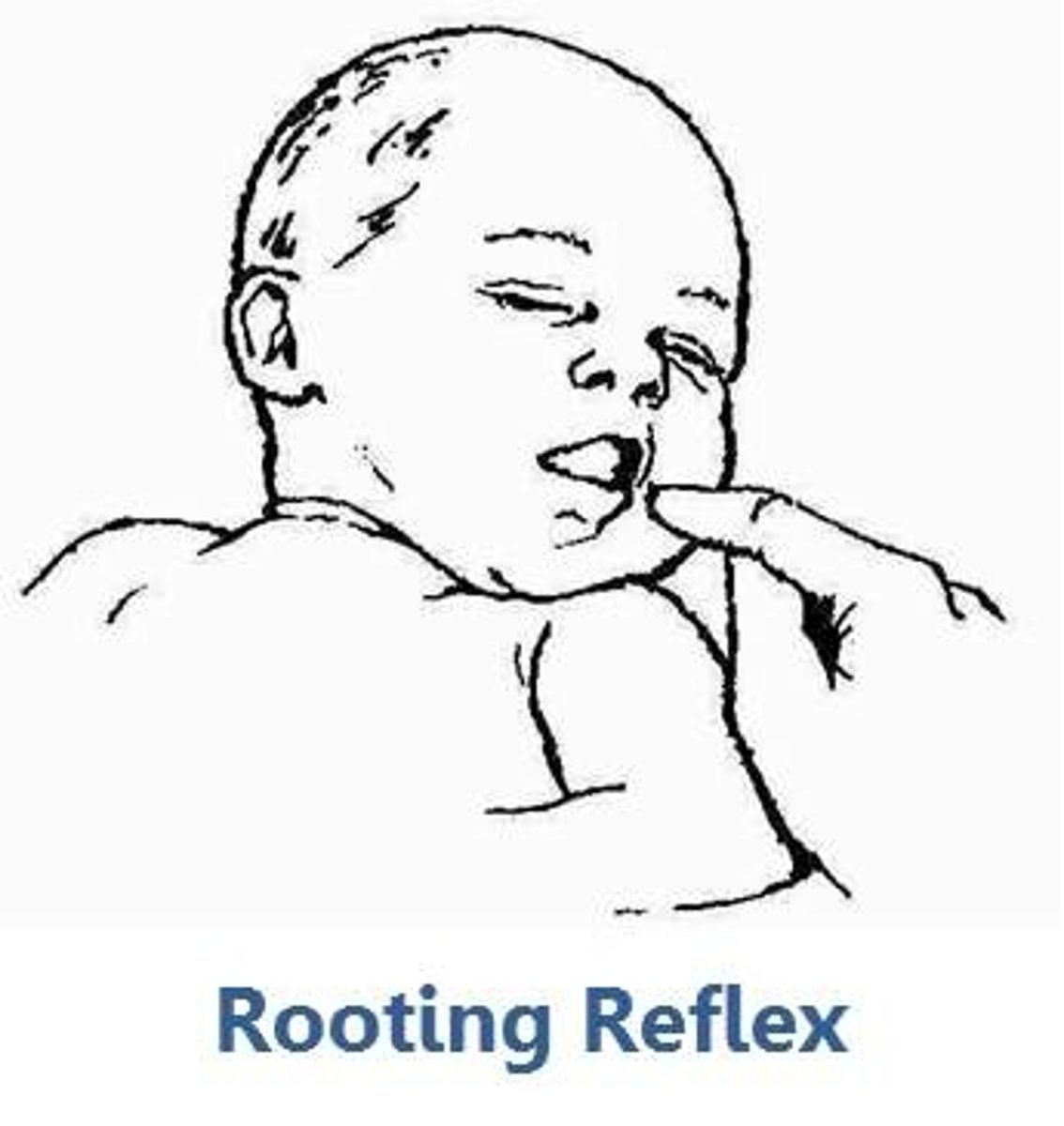
Rooting Reflex
Stim: touch to side of face with LT
Response: infant turns head and opens mouth to suck
Onset: present in premature infants
Integrates: 3 mo
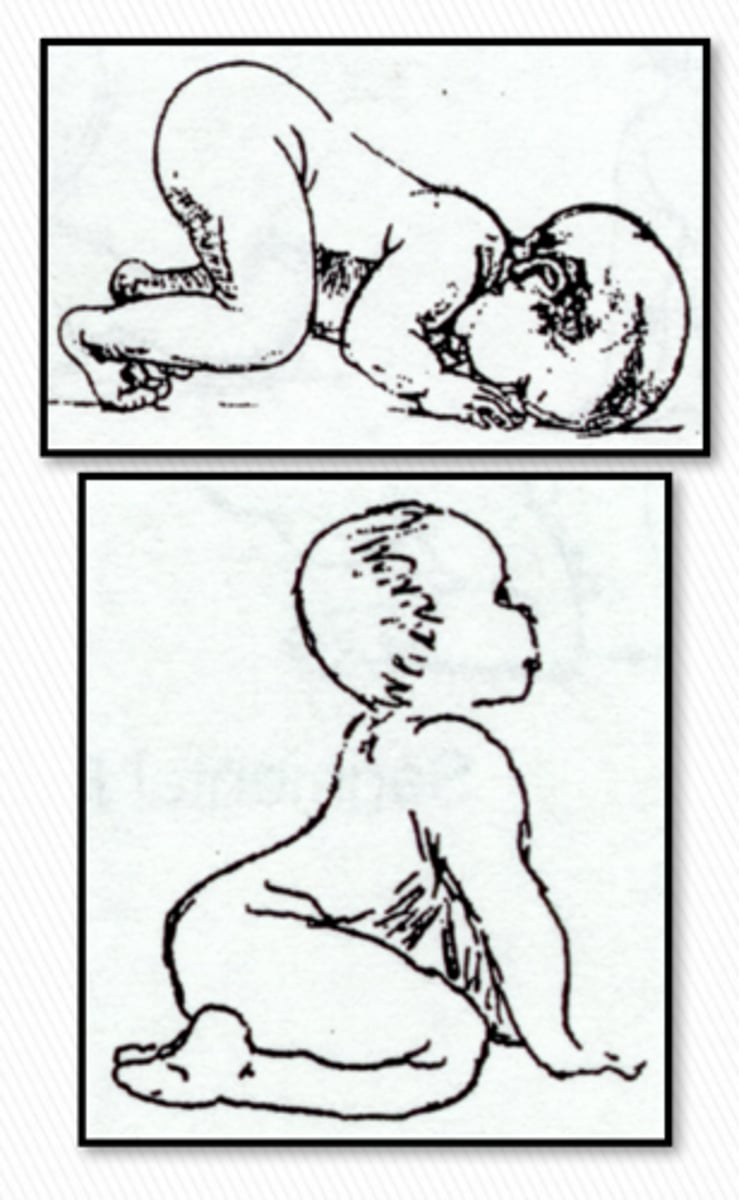
STNR (symmetrical tonic neck reflex)
Stim: flexion or extension of head
Response:
-Head Flexion: UE flexion and LE extension
-Head Extension: UE extension and LE flexion
Onset: 4-6 mo
Integration: 8-12 mo
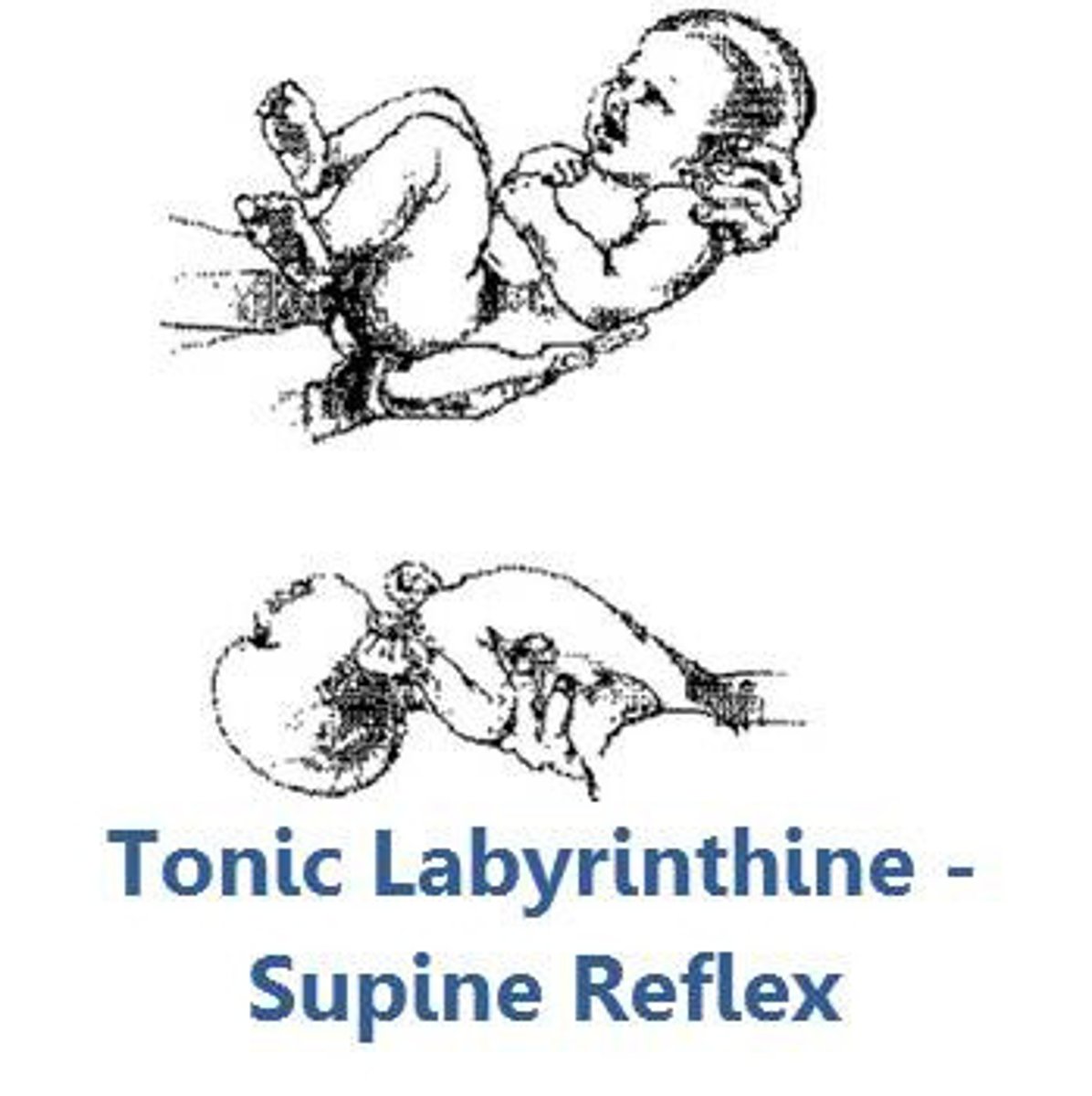
Tonic Labyrinthine Reflex
Stim: prone or supine position
Response:
-Prone: increased flexor tone
-Supine: increased extensor tone
Onset: Birth
Integrated: 6 mo
May be impossible to be sidelying due to extensor tone limits flexion of shoulder and hip on one side needed for rolling
Traction Reflex (pull to sit)
Stim: grasp forearms and pull from supine to sitting
Response:
-grasp and total flexion of upper extremity and head will lag behind
Onset: 28 weeks gestation
Integrated: 2-5 mo
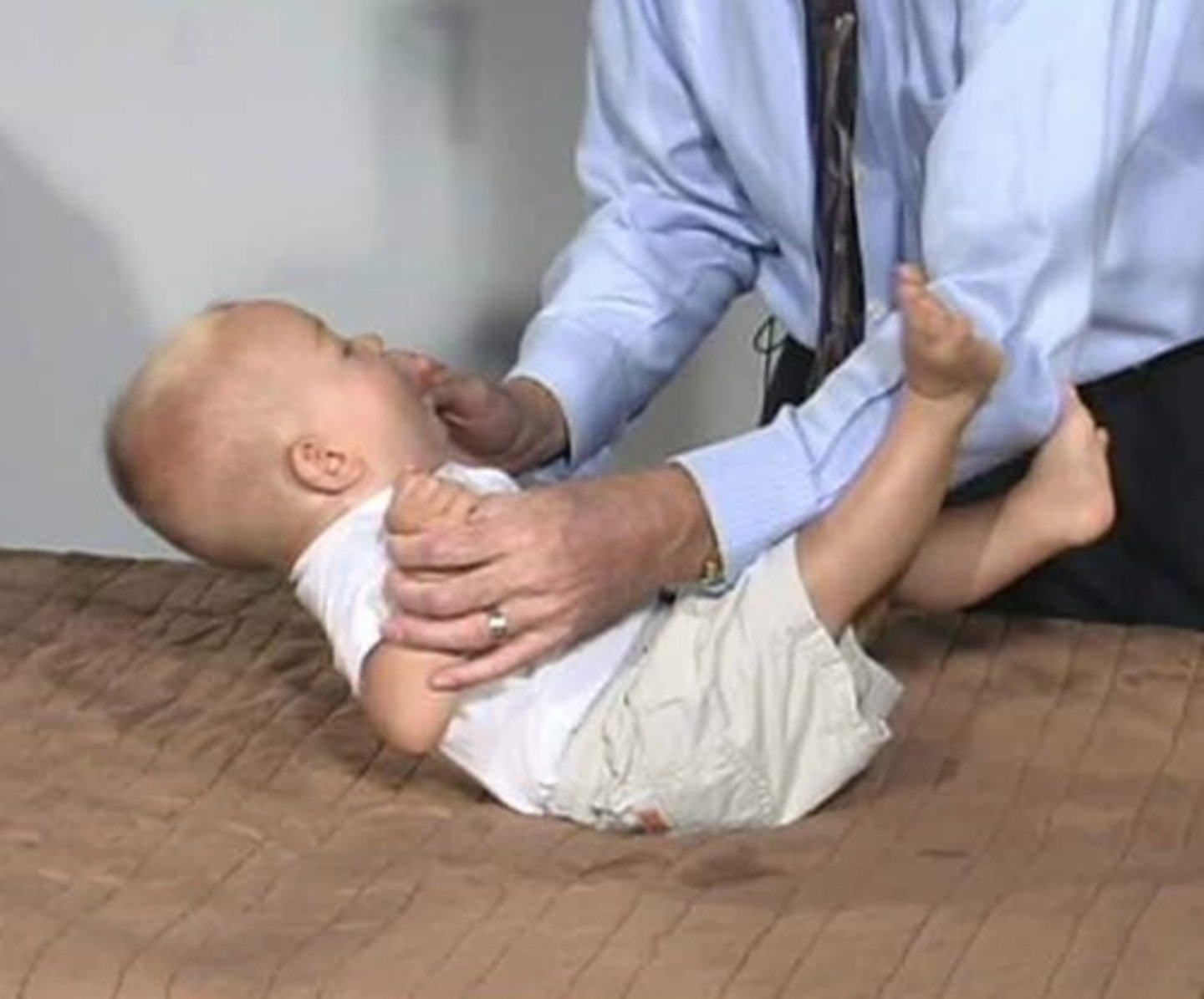
Developmental Behaviors: 1 months
-lifts head
-follows moving object
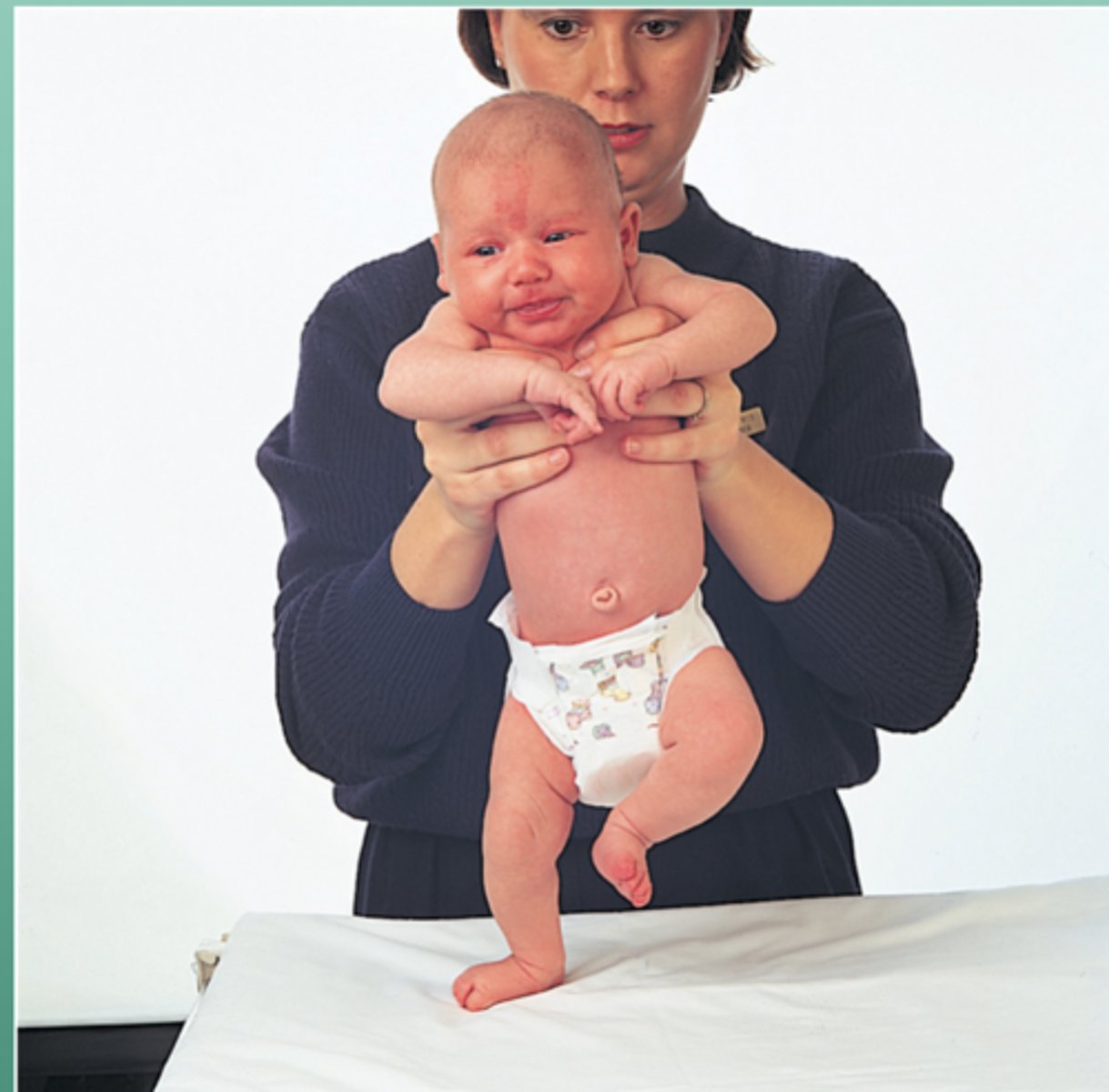
-Stepping reflex
-Positive support reflex
-Decreased flexion (from physiological flexion at birth)
-hands fisted with indwelling thumb
-Reciprocal and symmetrical kicking and neonatal reaching
Developmental Behaviors: 2 months
-45 deg head lift
-head lags on pull to sit
-smiles
-begins prone on elbows with elbows behind shoulders
-head bob in supported sitting
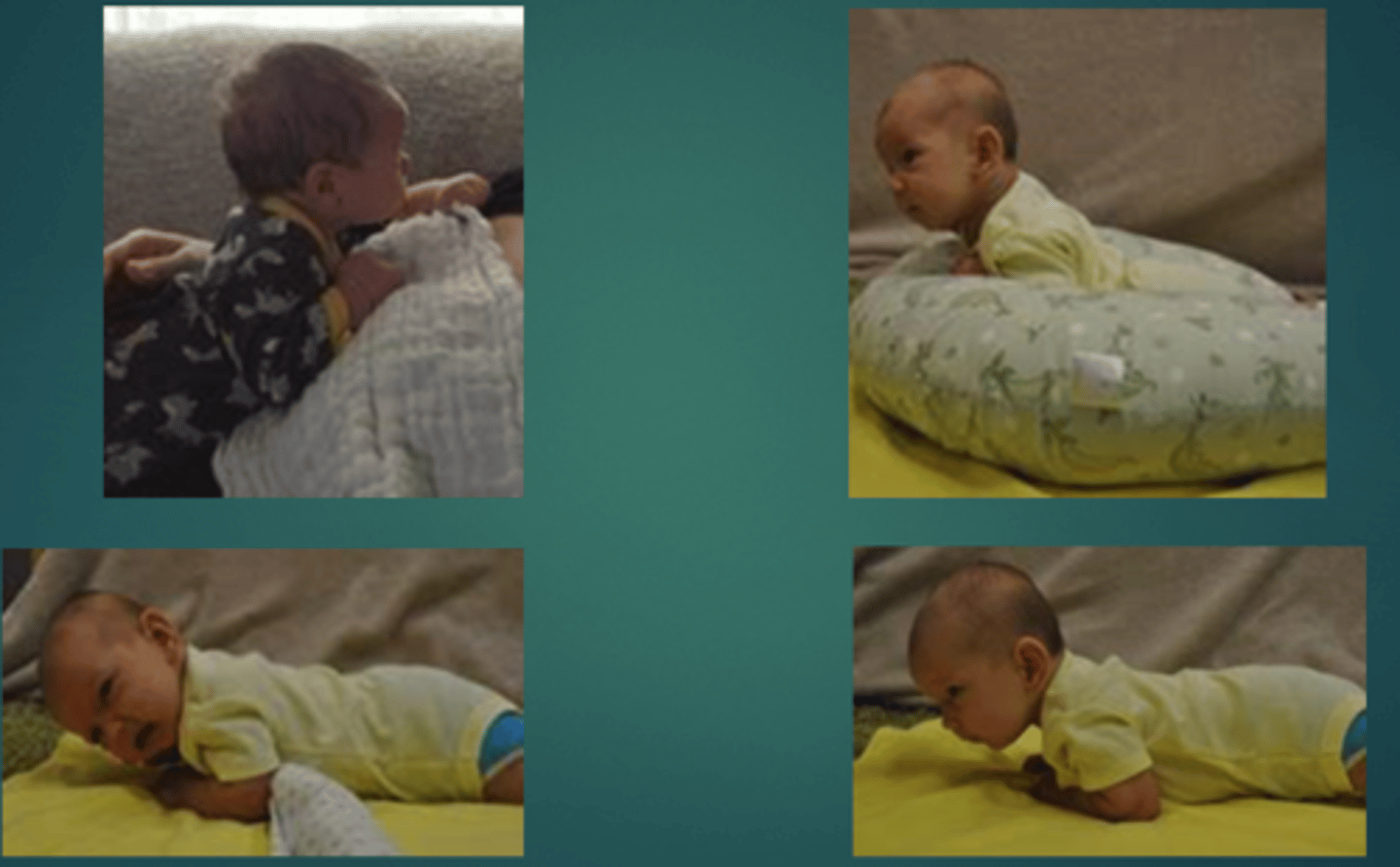
Developmental Behaviors: 3 months
-head lift to 90 deg
-prop self on elbow in prone with weight in forearms
-takes weight with toes curled in supported standing
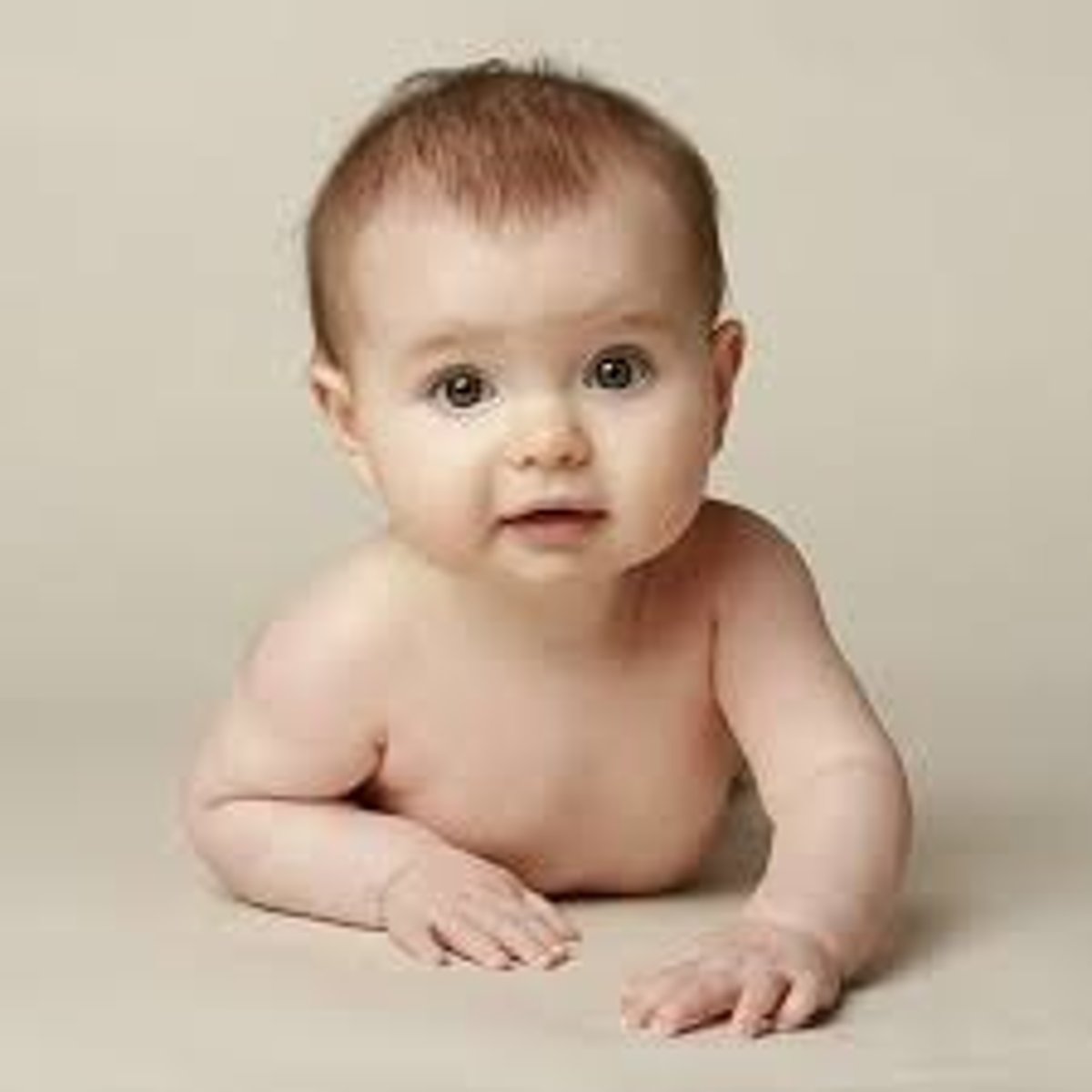
Developmental Behaviors: 4 months
-no head lag with pull to sit
-Sits with support
-Laughs
-Rolls prone to side, supine to side
-Optical and labyrinthine reflex present
-ulnar palmar grasp
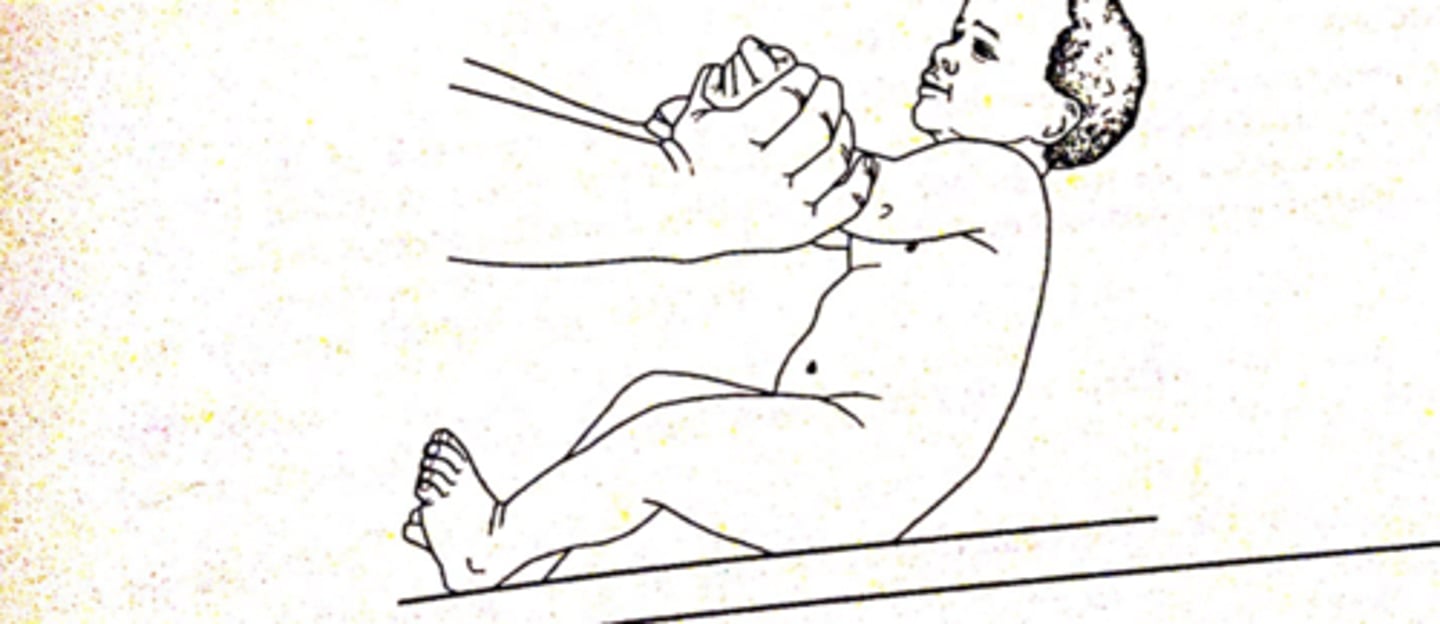
Developmental Behaviors: 5 months
-roll to from prone to supine
-Head control in supported sitting
-weight shift onto one forearm in prone

Developmental Behaviors: 6 months
-Independent sitting
-rolls supine to prone
-pulls to stand
-prone on hands

Developmental Behaviors: 7 months
-Quadruped position
-pivots on belly
-prone extension
-Prone Pivot
-trunk rotation in sitting
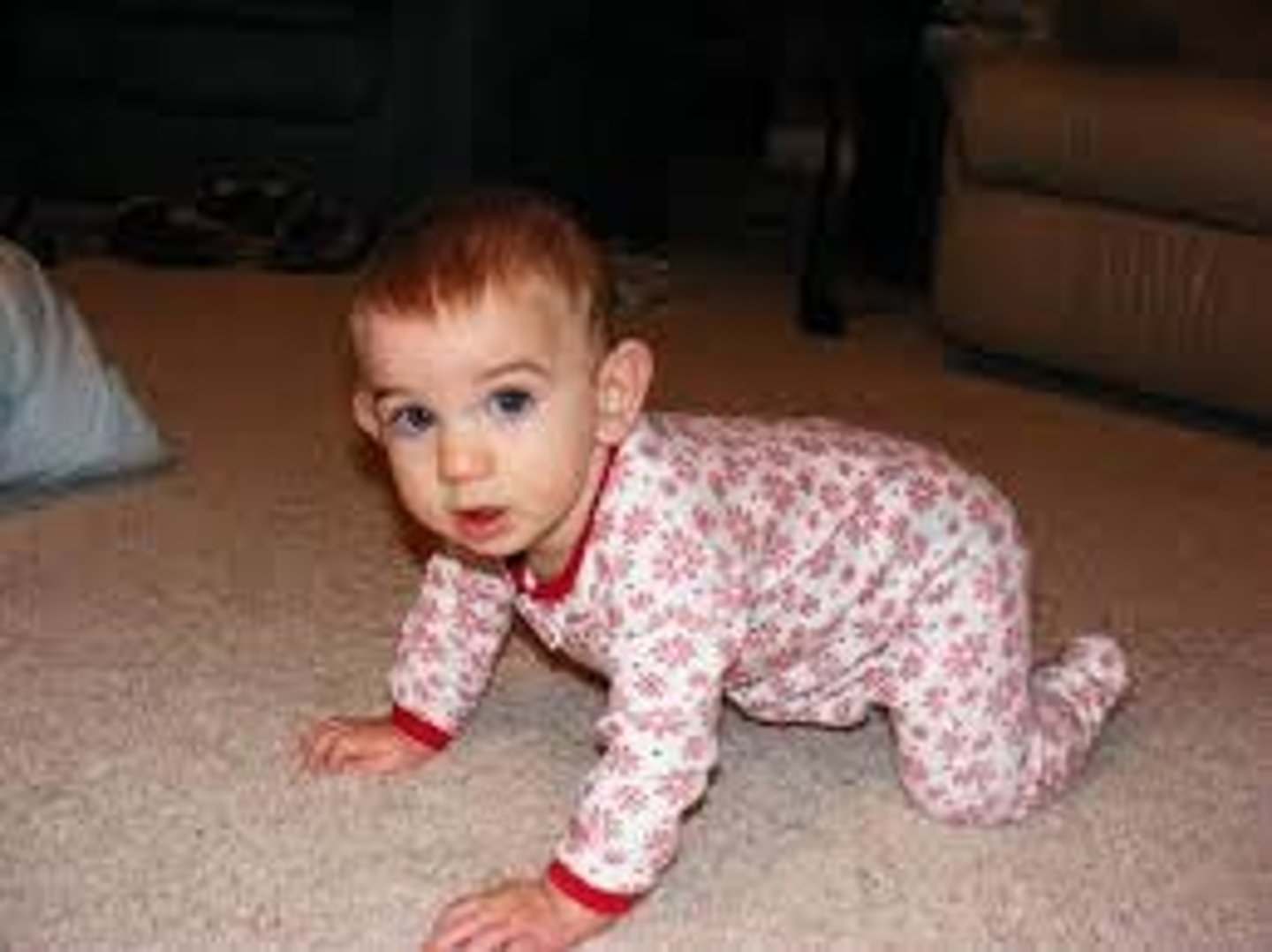
Developmental Behaviors: 8-9 months
-belly crawls
-quadruped creep
-side-sitting
-pulls to stand through kneeling
-Cruising
-stand alone
-pincer grasp
-object transfer between hands
-quadruped to sitting
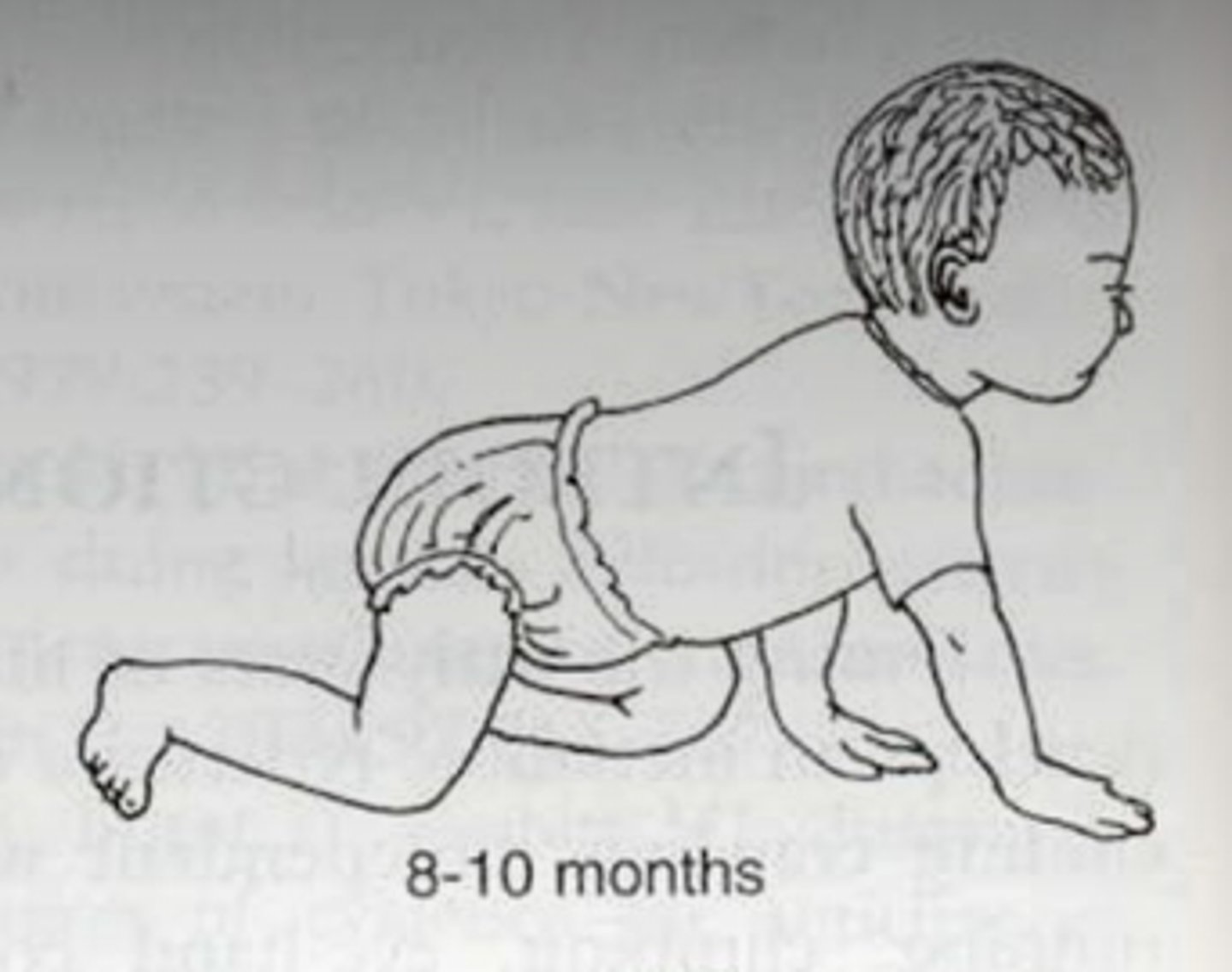
Developmental Behaviors: 10-15 months
-stands and begins walking
-self-feeding
-searches for hidden objects
-Reaches in supination
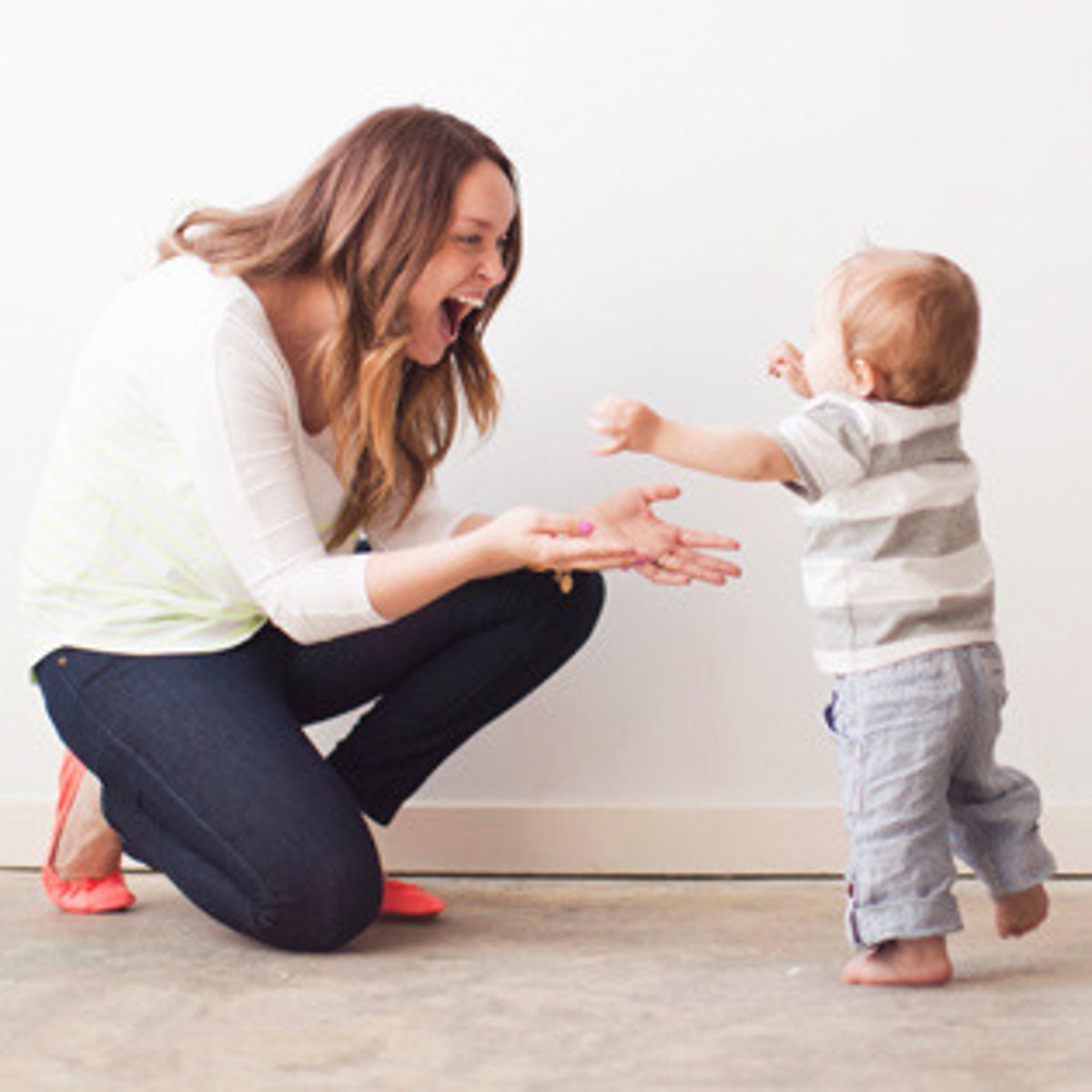
Developmental Behaviors: 18-20 months
-walk up and down stairs with assistance
-ascends with step to pattern
-sit on small chairs
-Running begins
-Jumps off bottom step
-Plays make-believe
Developmental Behaviors: 2 years
-Runs well
-Up with reciprocal gait
-active/restless
-tantrums
Developmental Behaviors: 3 years
-up AND down stairs with reciprocal gait
-rides trike
-catch ball
-jumps with 2 feet
-sharing
-SL briefly
Developmental Behaviors: 3.5 years
-Hops on one foot
-Kicks ball
Developmental Behaviors: 4 years
-hops on one foot several times
-climbs
-throws overhand
-stands on tiptoes
-relates to friends

Developmental Behaviors: 5 years
-Skips
-kicks ball well
-dresses and undresses self

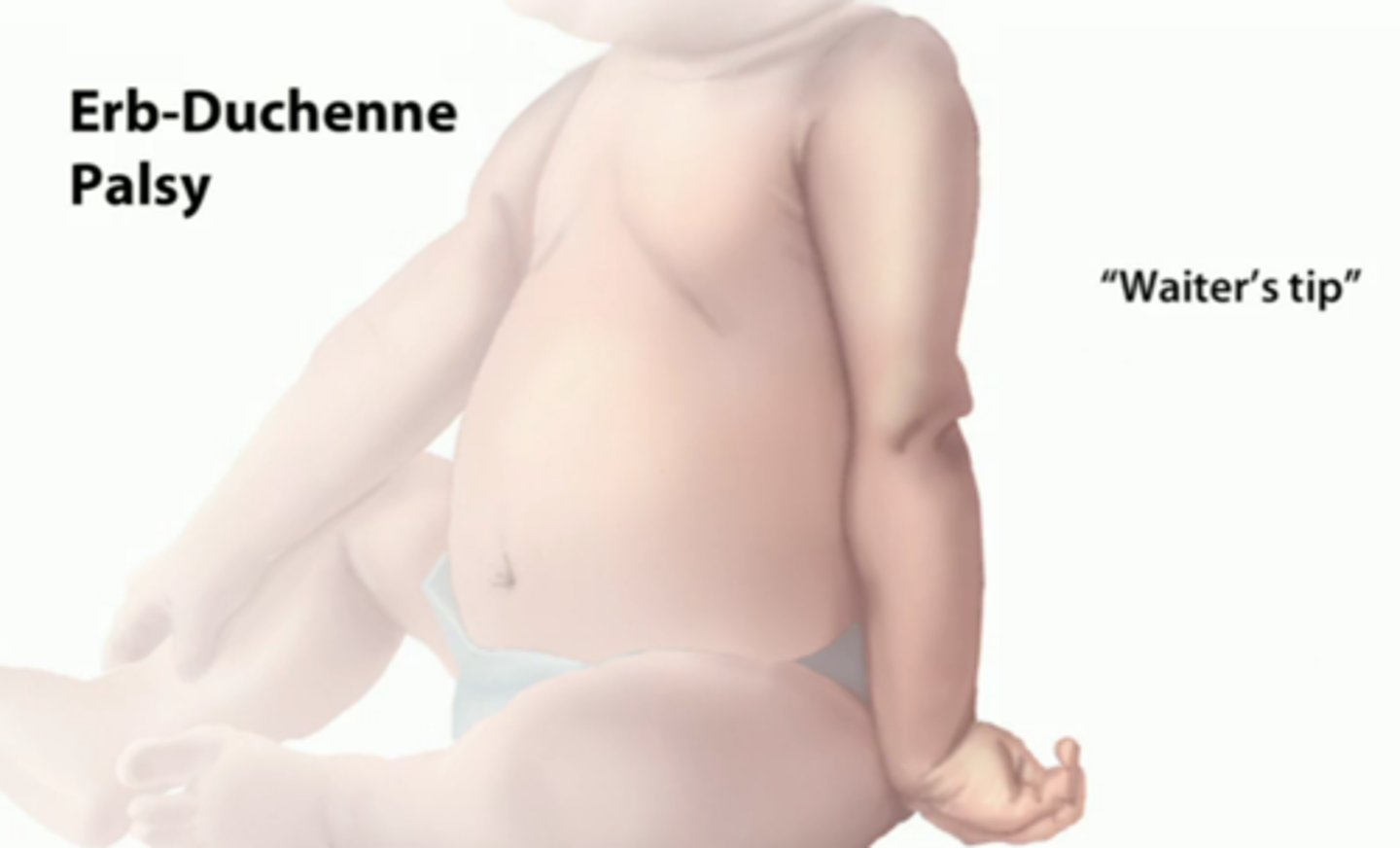
Erb's Palsy (upper)
What: C5-C6 nerve root stretched during birthing process
Clinical presentation
-decreased shoulder girdle function with 1:1 humeroscapular movement
-weakness in scapular stabilizers, GH ABD and ER and elbow flexion and supination
-Posture = arm is ADD and IR (waiter's tip)
Klumpke's paralysis (lower)
What: C8-T1 nerve roots stretched during birthing process
Clinical presentation:
-Decreased wrist and hand function
-Weakness in wrist flexors, finger flexors, hand/thumb and finger intrinsic muscles
-Posture - claw hand and mainly affects hand function (Ulnar nerve root distribution and Ulnar nerve does a lot of hand fxn)

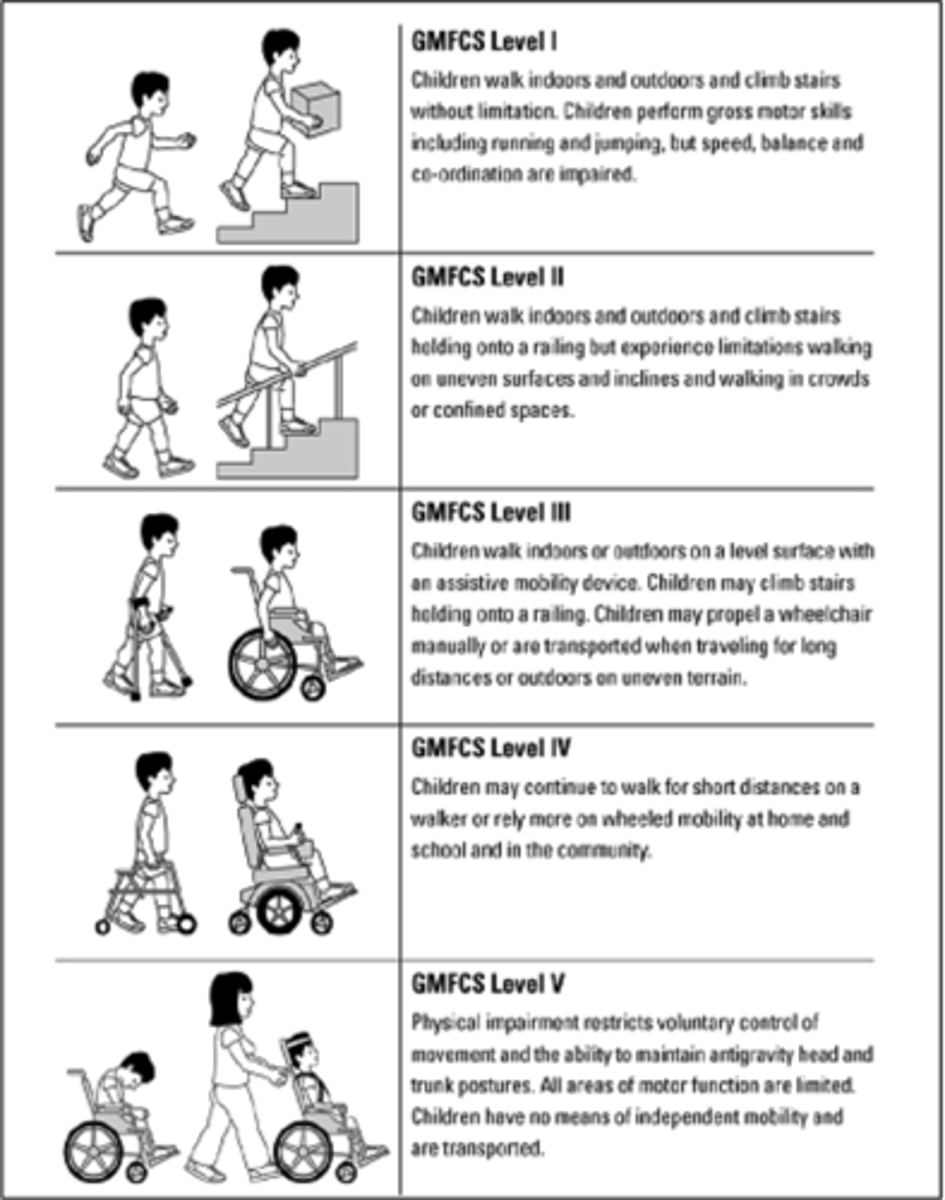
GMFCS
What: Gross Motor Function Classification System used for standardized comparing of children with CP
Level 1: Walks without limitation
Level 2: Walks with limitation but no AD
Level 3: Walks using hand-held mobility device
Level 4: Self-mobility with limitations, may use powered mobility
Level 5: Transported in manual w/c
Down Syndrome Atlantoaxial Instability
increased distance between C1 and C2 joints. medical clearance for sports. cervical spine xray including lateral view. restricted from contact sports. DS w/o instability - low impact sports until 3-5 years of age
-no forward rolls and no trampolines
Kiddos with Down Syndrome ambulate by roughly what month of age?
30 month
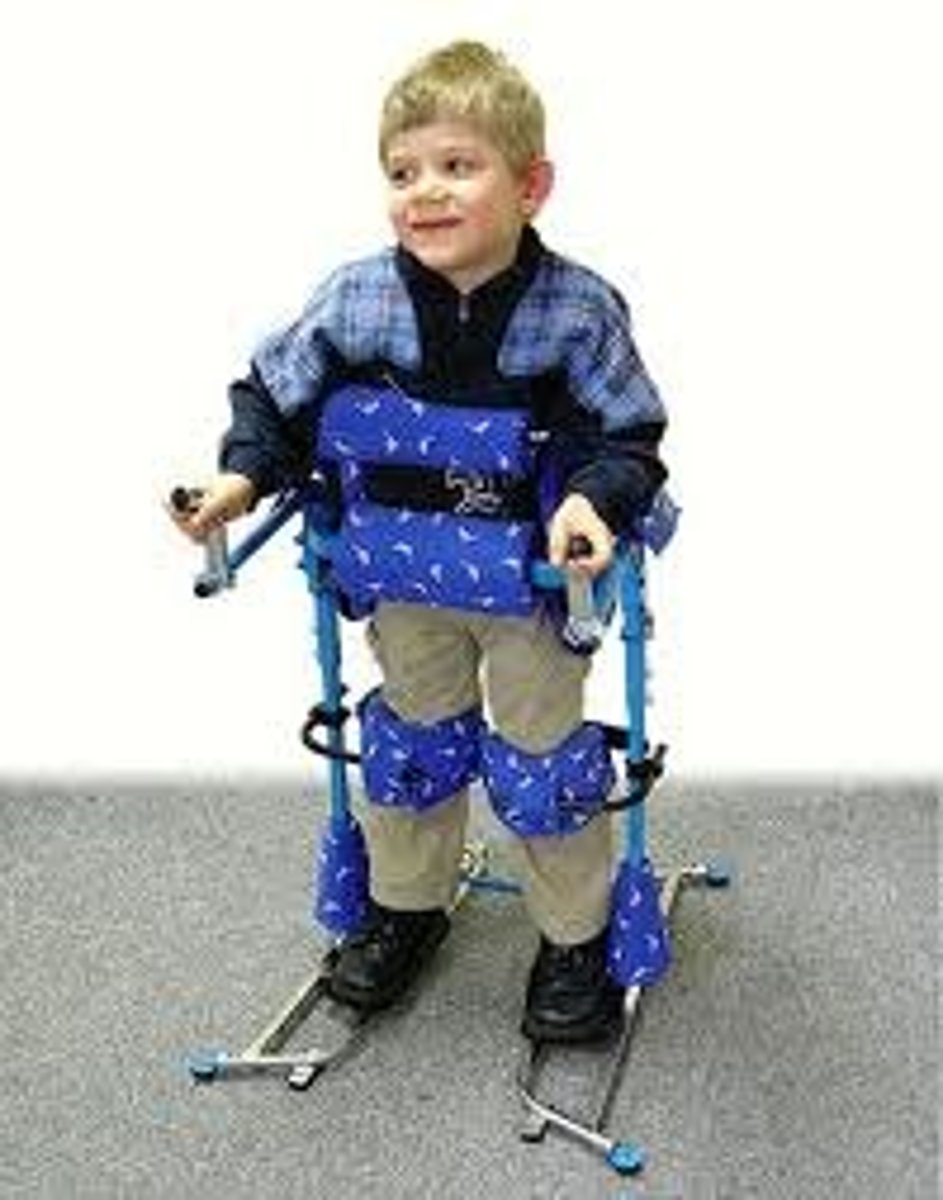
Spina Bifida: Thoracic level
-May use THKAFO or HKAFO for standing
-Parapodium
-W/c long term use
Spina Bifida: L1-L2
-May use KAFO or RGO with walker or crutches for short household distances
-w/c Long term
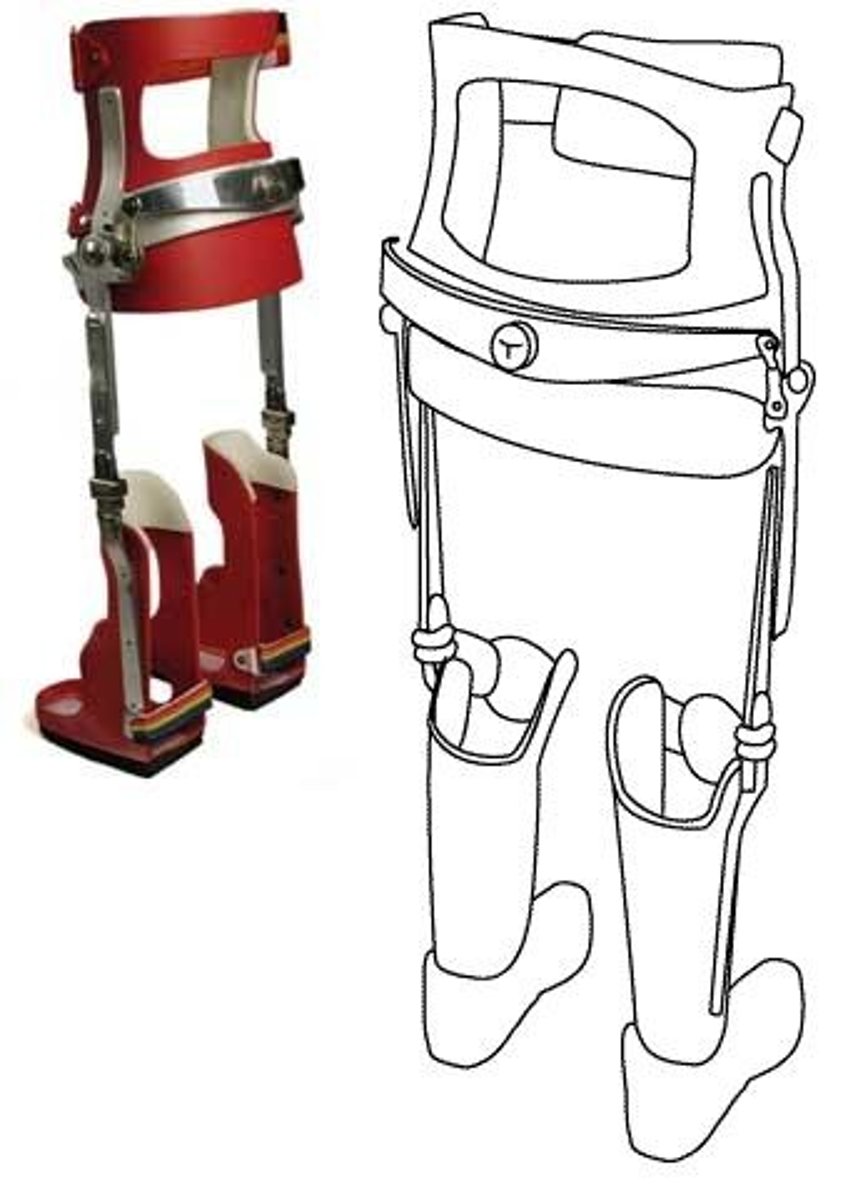
Spina Bifida: L3 (-L4)
-Mya use KAFO with walker or crutches for short household distances or in community
-w/c long term
Spina Bifida: L4
-Use AFO and crutches in community
-Community ambulator but w/c for long distances
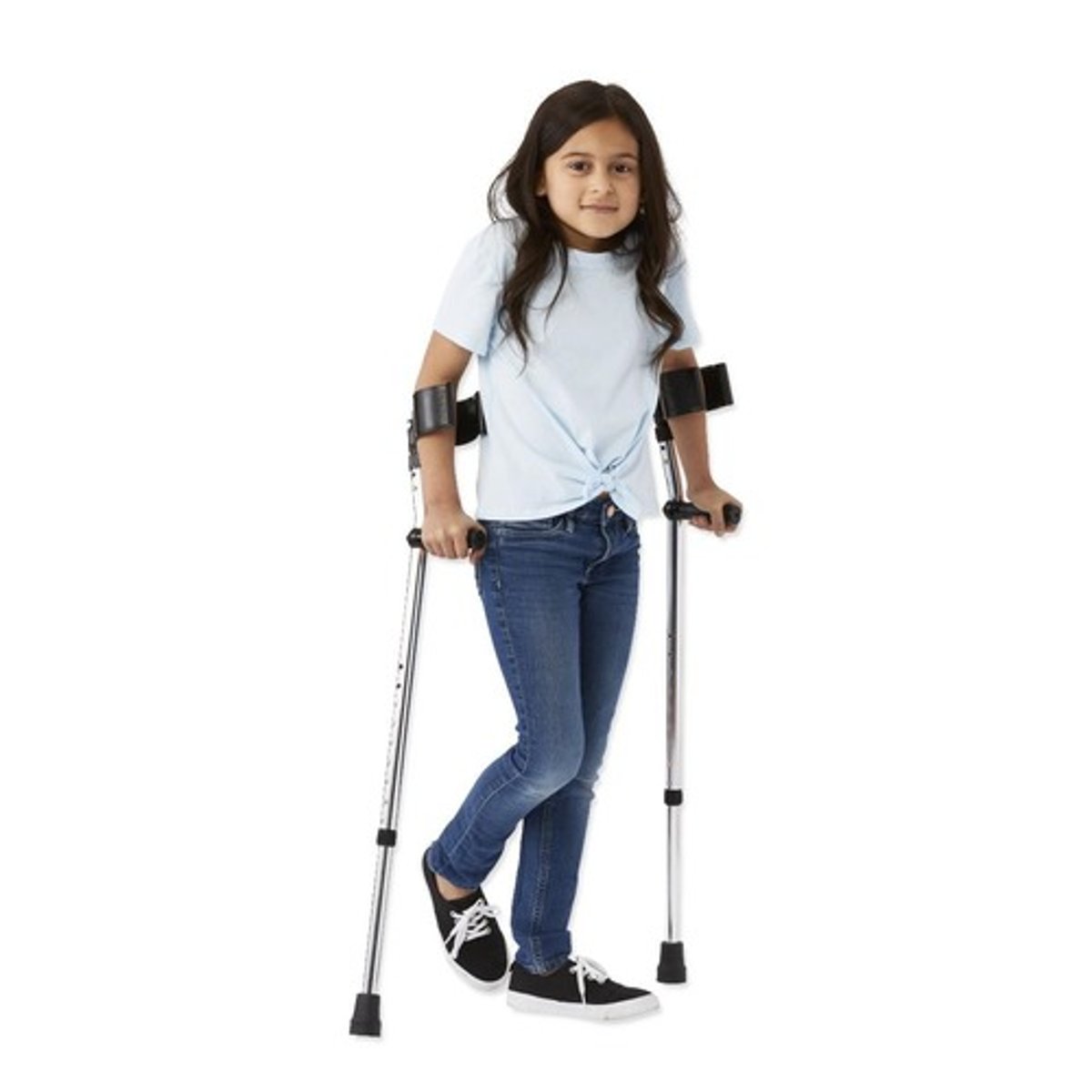
Spina Bifida: L5
-May or may not AFO or FO in community, crutches for long distances
-Community ambulator but w/c for sports
Spina Bifida: Sacral
-May or may not use FO in community or SMOs
-Community ambulator
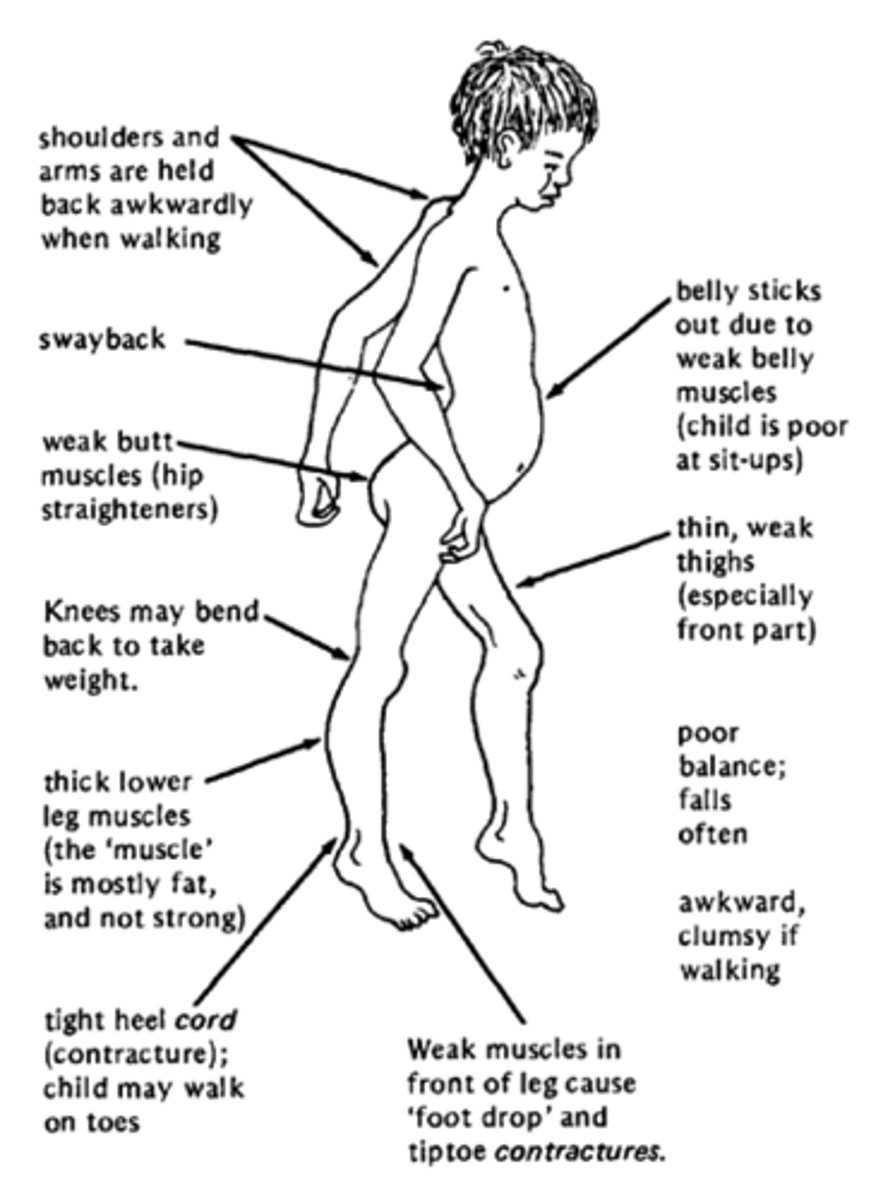
DMD (Duchenne's Muscular Dystrophy)
What: genetic, progressive disease that affects males and causes destruction of muscle cells (X-linked carried by mothers)
Hallmark sign: WEAKNESS
-these kiddos start to not be able to do ADLs and normal things (parents see regression of skills/difficulty doing skills already mastered)
Clinical presentation
-(+) Gower's sign
-increased lordosis
-Lack heel strike
-waddling gait
-hanging on Y ligament
Tx:
-maintain flexibility (selective stretching)
-allow compenstations
-identify when need to transition to w/c but keep them walking as long as possible
-Avoid eccentric and max resistive exercises (increase muscular breakdown)
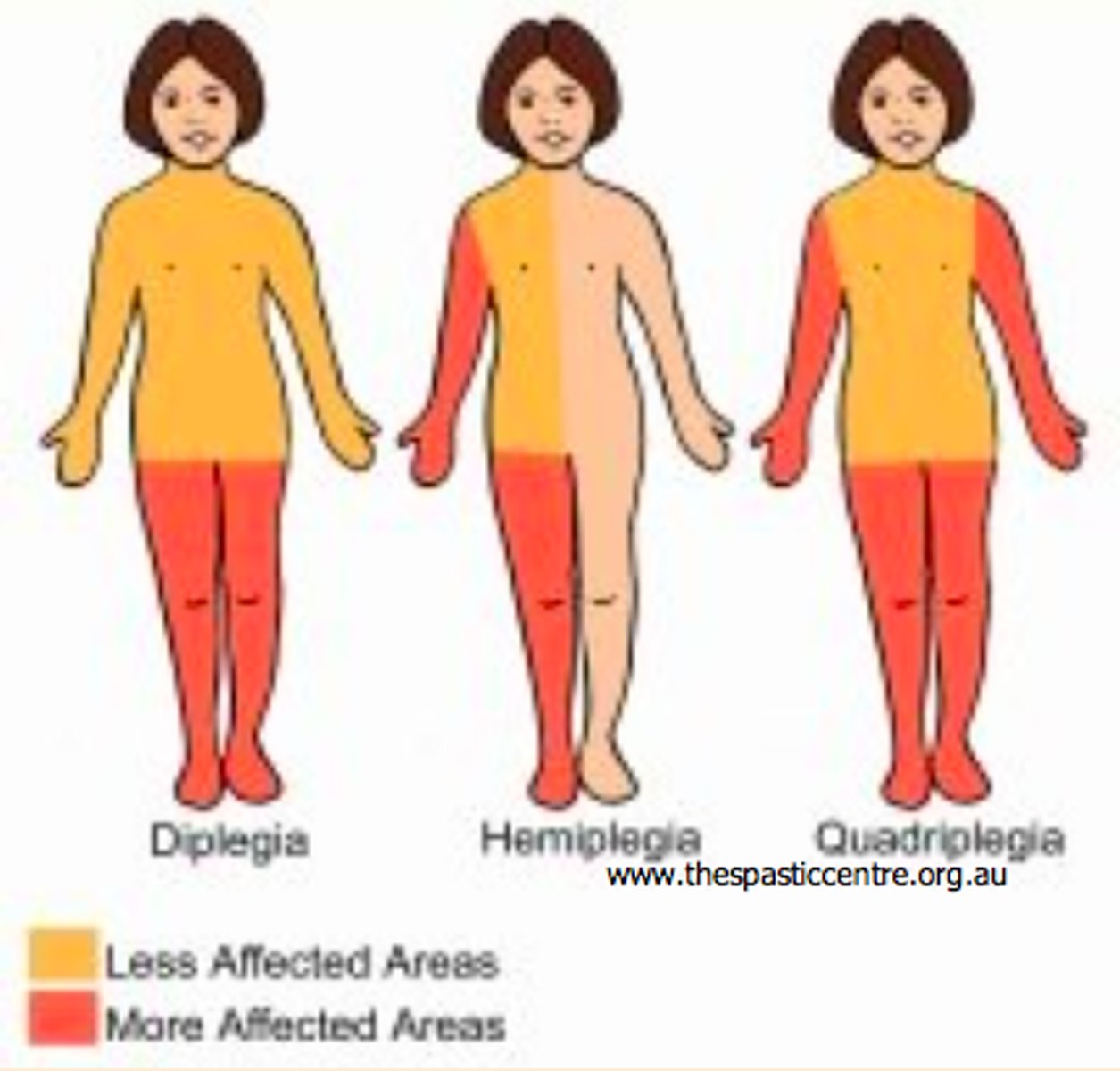
Classifications of CP
Diplegia: two limbs
1 UE and 1 LE on same side: Hemiplegia
All 4 limbs: quadriplegia
Movement Disorders of CP: Athetosis
-Fluctuating muscle tone, involuntary slow writhing movements
-Lesion of the basal ganglia
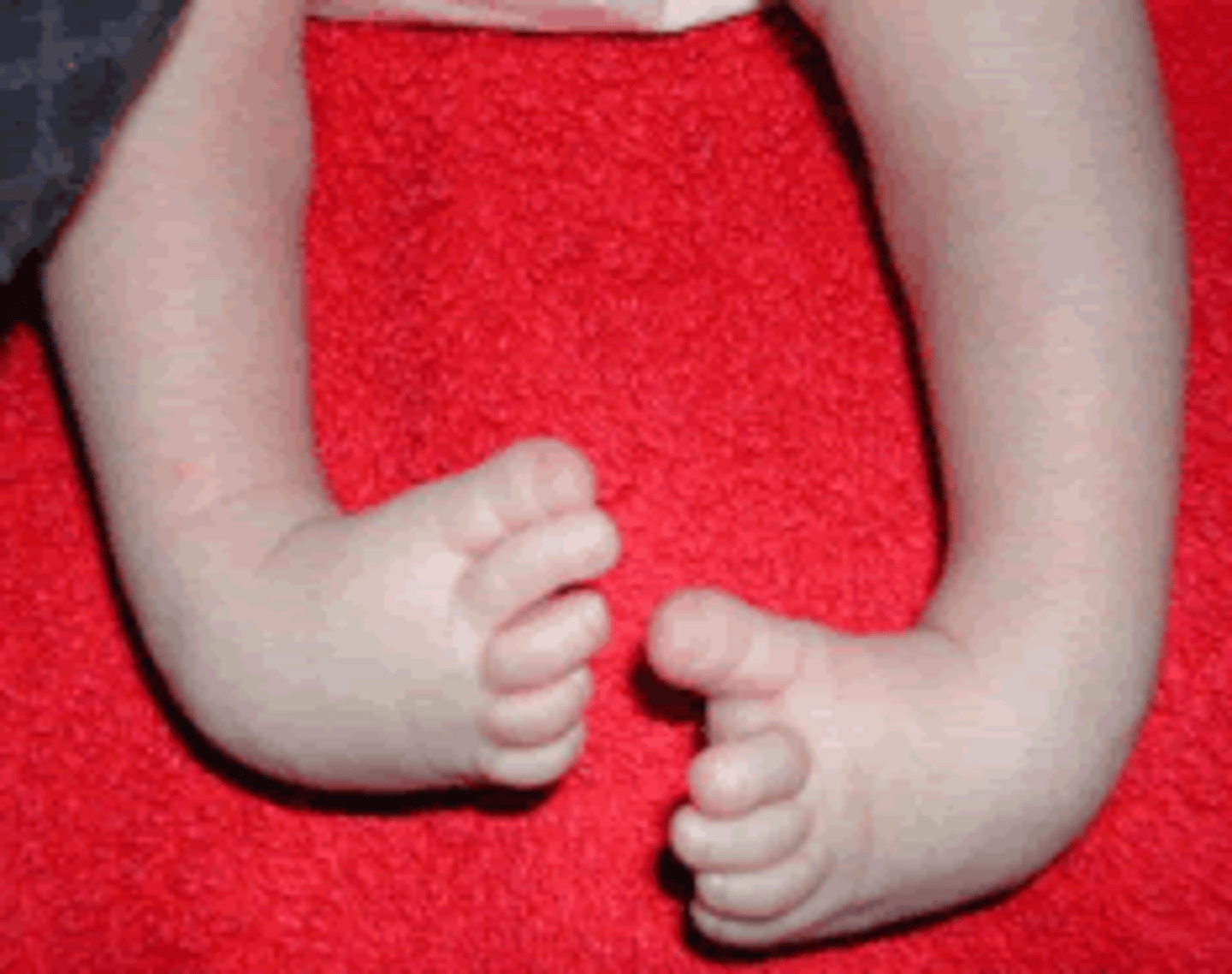
Talipes Equinovarus
Clubbed foot
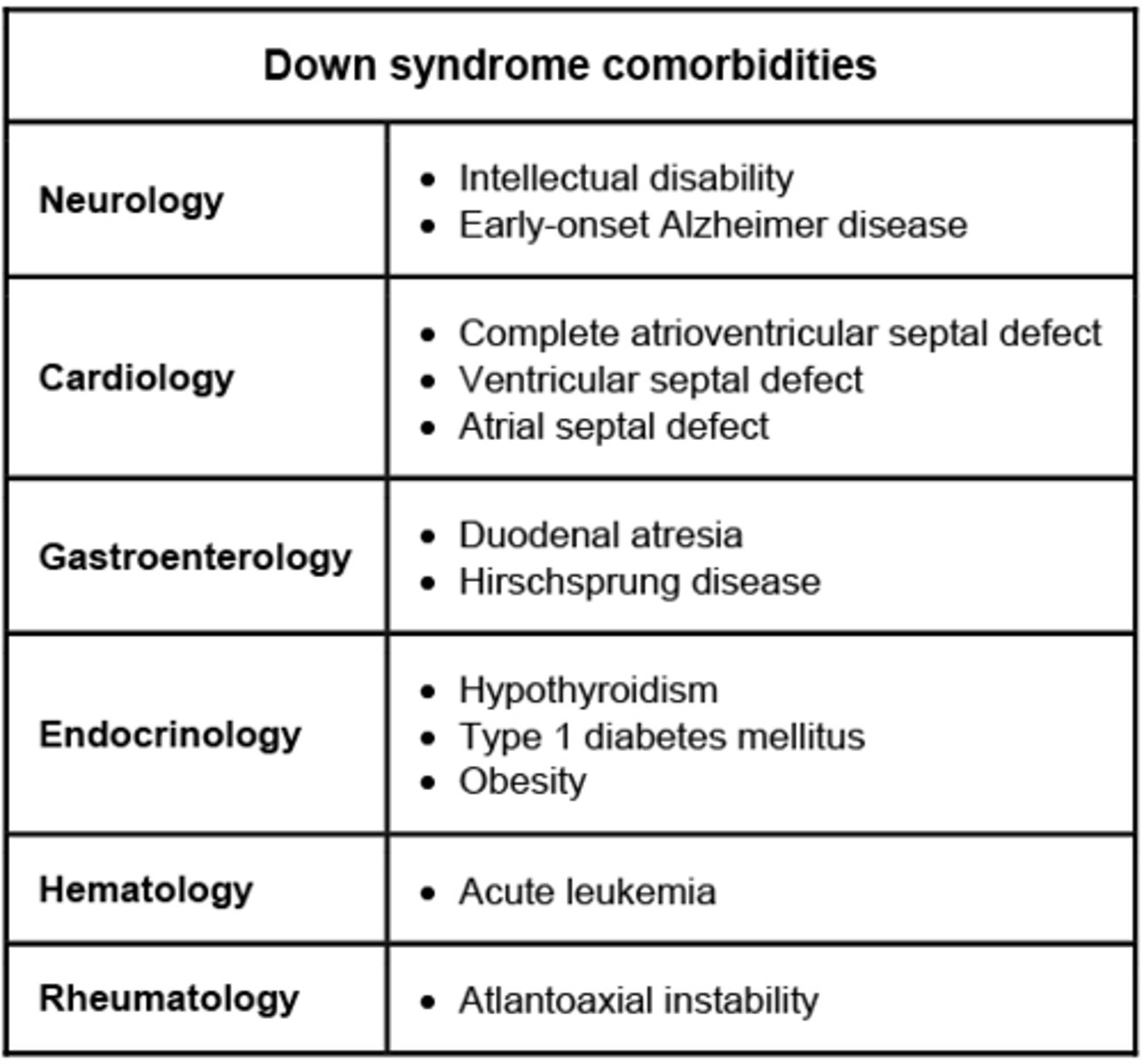
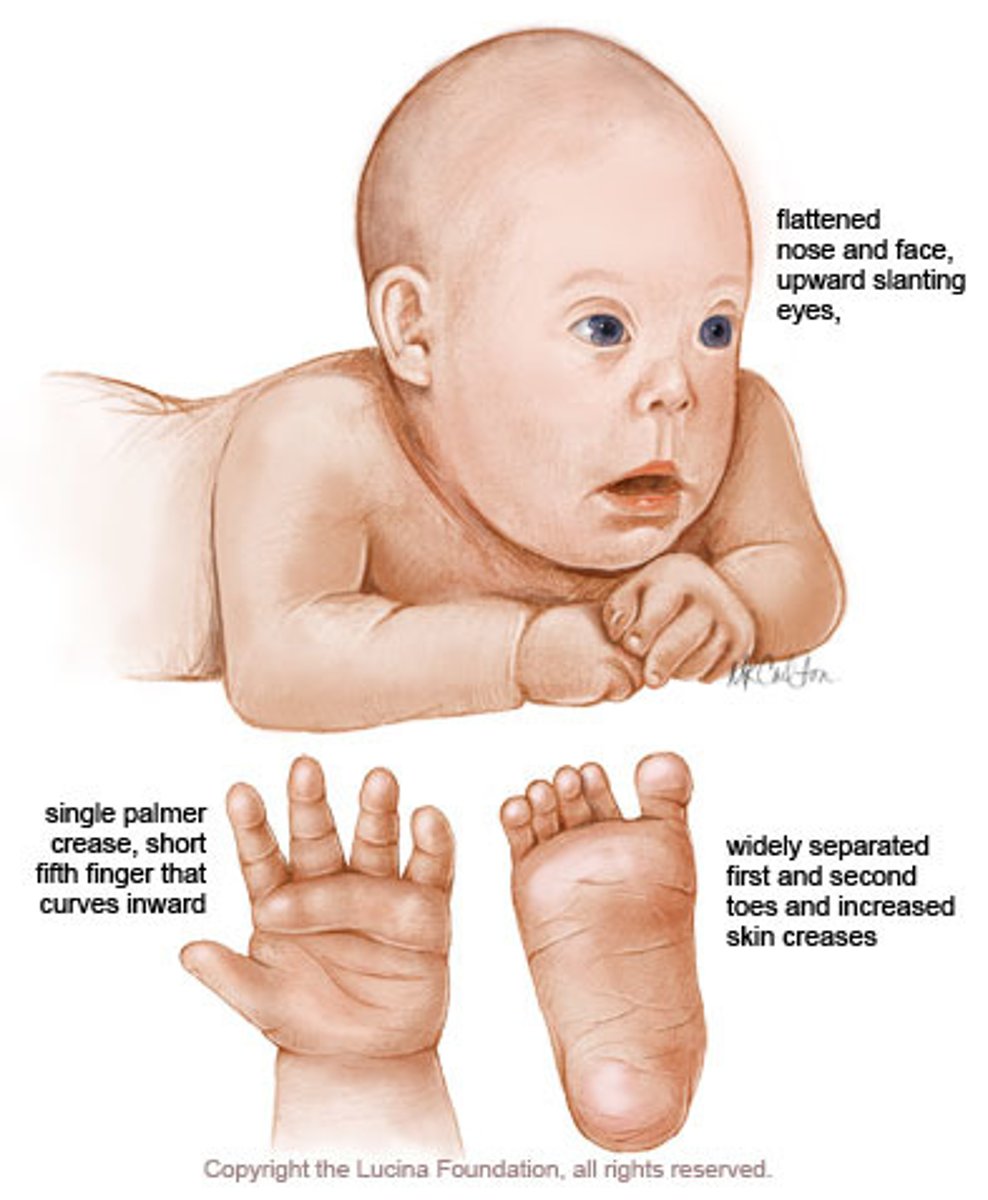
Down Syndrome
What: Trisomy 21
Clinical presentation:
-hypotonia
-decreased force generation of muscles
-delayed gross motor development
-congenital heart defects
-hypermobility of limbs
Condensed Major Milestones in months 0-5
2-3 months: prone on elbows and head lift in prone
3-4 months: supine to sidelying
4-5 months: Prone to supine roll, pull to sit w/p head lag, sitting w/ UE support, feet to mouth
Integration of flexor withdrawal, crossed extension, rooting and traction reflex
Condensed Major Milestones in months 6-7 months
6-7 months: Supine to prone, quadruped transitions in and out to sitting, INDEP sitting, trunk rotate in sitting
8-9 months: Quadruped creep (hands and knees and belly off the ground), cruising, can stand indep briefly, improving gasping, pass toys between hands
10-15 moths: walking, transitions in an out of squatting, floor to stand, pincer grasp, stacks 2 cubes
Integration of reflexes:
6 mon: Palmar, ATNR, Moro, TLR, Positive support (PAM TP)
9 mon: Plantar
12: BS - Babinski and STNR
Neonatal reflex integration short way to remember:
1-2 months: infants only flex and extend (flex withdrawal and crossed extension
3 months: lips look like a 3 therefore rooting integrates at 3 months
2-5 months: cervical traction requires 25# of pull for joint distraction, traction reflex integrates between 2-5 months
6 months: PAM had a 6 month stash of TP during covid
Palmart grasp, ATNR, Moro, TLR and Positive Support
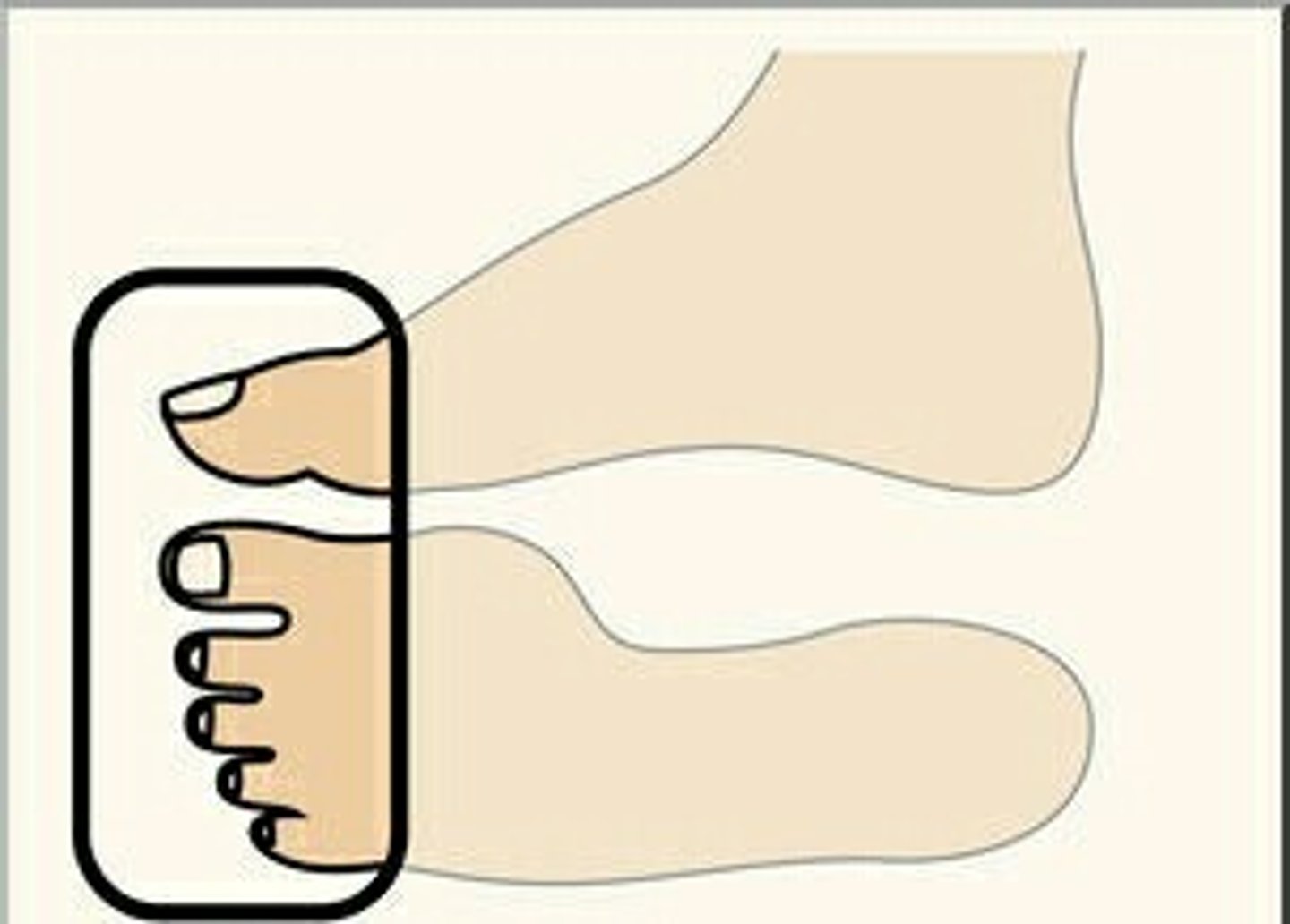
9 months: Toes look like 9s so Plantar grasp integrates at 9 months
12 months- seeing babies grow up so fast is BS - Babinski and STNR
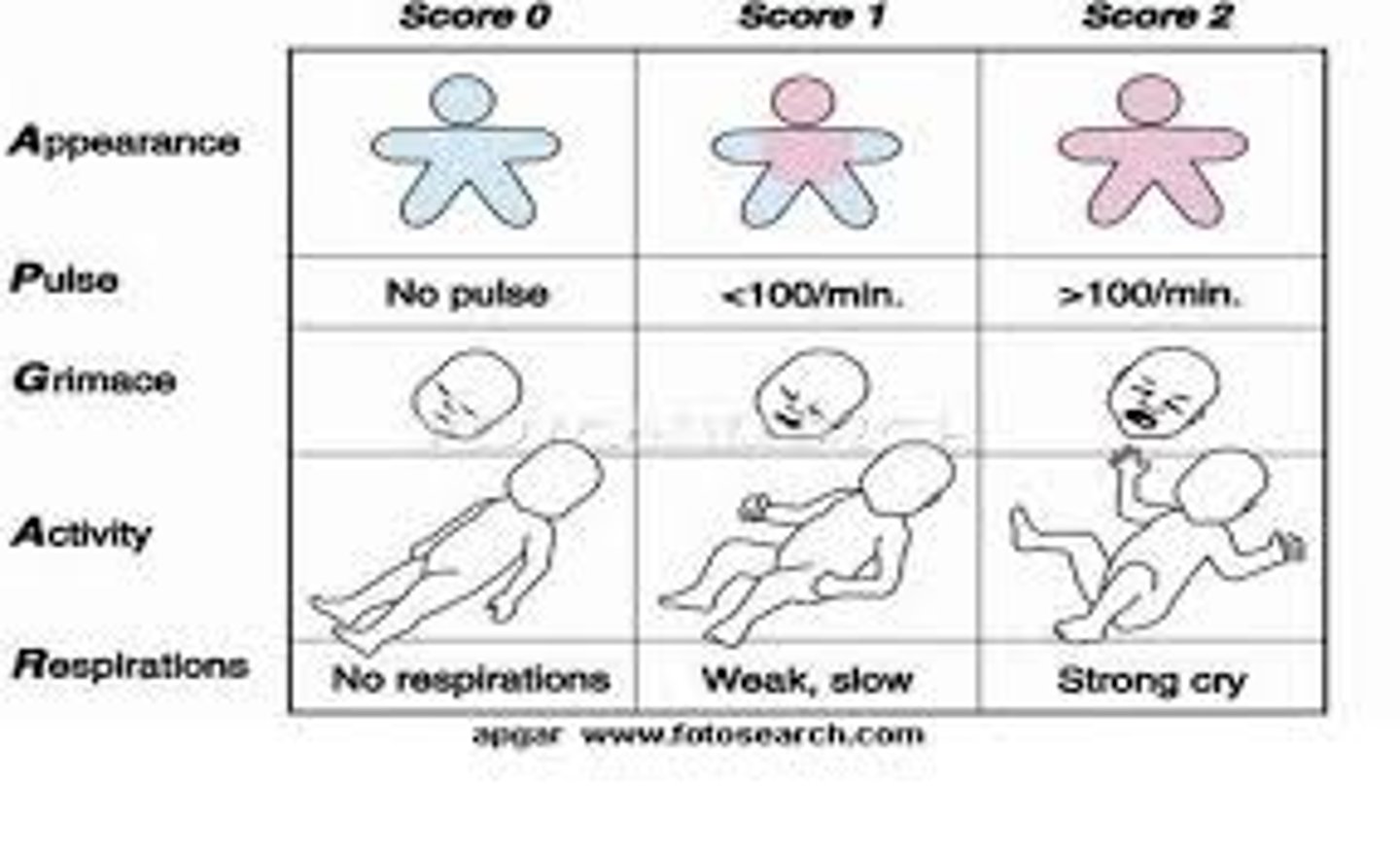
APGAR scale
What: standard measure for infant assessment at 1 min and 5 min post birth (sometimes 10 min)
Scoring:
-low= not good
-high= better
-7/10 is normal baby
Appearance:
-0= Blue
-1= blue extremities by normal core
-2= no blue
Pulse:
-0= Absent
-1= <100 bpm
-2= 100-140 bpm
Grimace (reflex irritability):
-0= No response
-1= Grimace
-2= Cry and/or withdrawal
Activity (muscle tone):
-0= Flaccid
-1= Some flexion
-2= Active motion of extremities
Respiration:
-0= Absent
-1= Weak cry and hypoventilation
-2= Strong loud cry
Corrected Age or Adjusted age
1st: Subtract weeks born at from 40 weeks = how early infant was born
2nd: subtract number weeks early from chronological age= adjusted age for milestones and expectations
Only adjust till age 2
Plagiocephaly will be _______ (opposite/same) of the side of torticollis.
Plagiocephaly will be opposite of the side of torticollis.
Ex
R torticollis = L plagiocephaly
Sheuermann's Disease
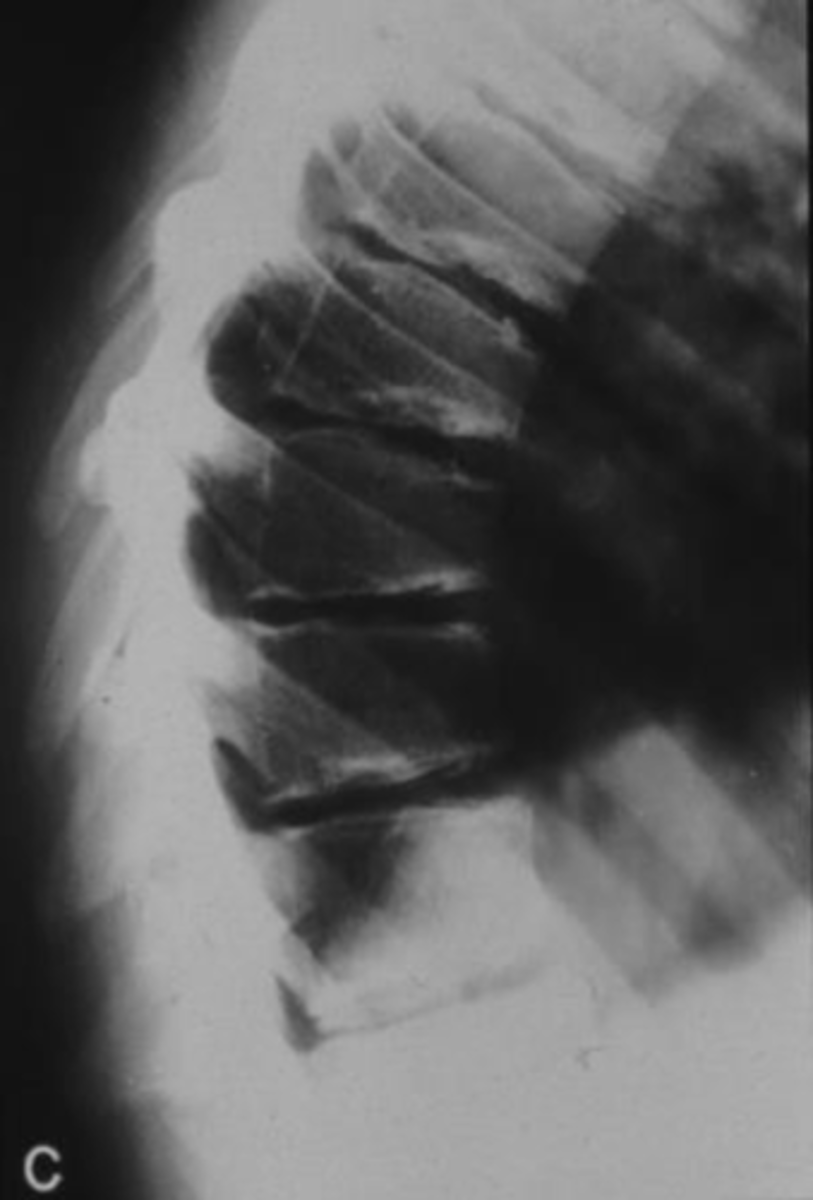
Scheuermann's
What: Anterior angled/wedge shaped vertebrae causing severe thoracic kyphosis
Who: Teenage boys
Clinical Presentation:
-Schmorl Nodes
-Pain with thoracic extension and rotation
-aggravation with long periods of standing and sitting or PA
Treatment:
-Schroth method
-Stretch pecs, strengthen thoracic extensors and scap stabilizers
Sch, Sch, Sch
 Note
Note  Flashcards (94)