Oxides
 Studied by 2 people
 Call Kai
 Learn
Learn Practice Test
 Spaced Repetition
 Match
Match Flashcards
 Knowt Play
1/43

There's no tags or description
Looks like no tags are added yet.
Name | Mastery | Learn | Test | Matching | Spaced | Call with Kai |
|---|
No analytics yet
Send a link to your students to track their progress
44 Terms
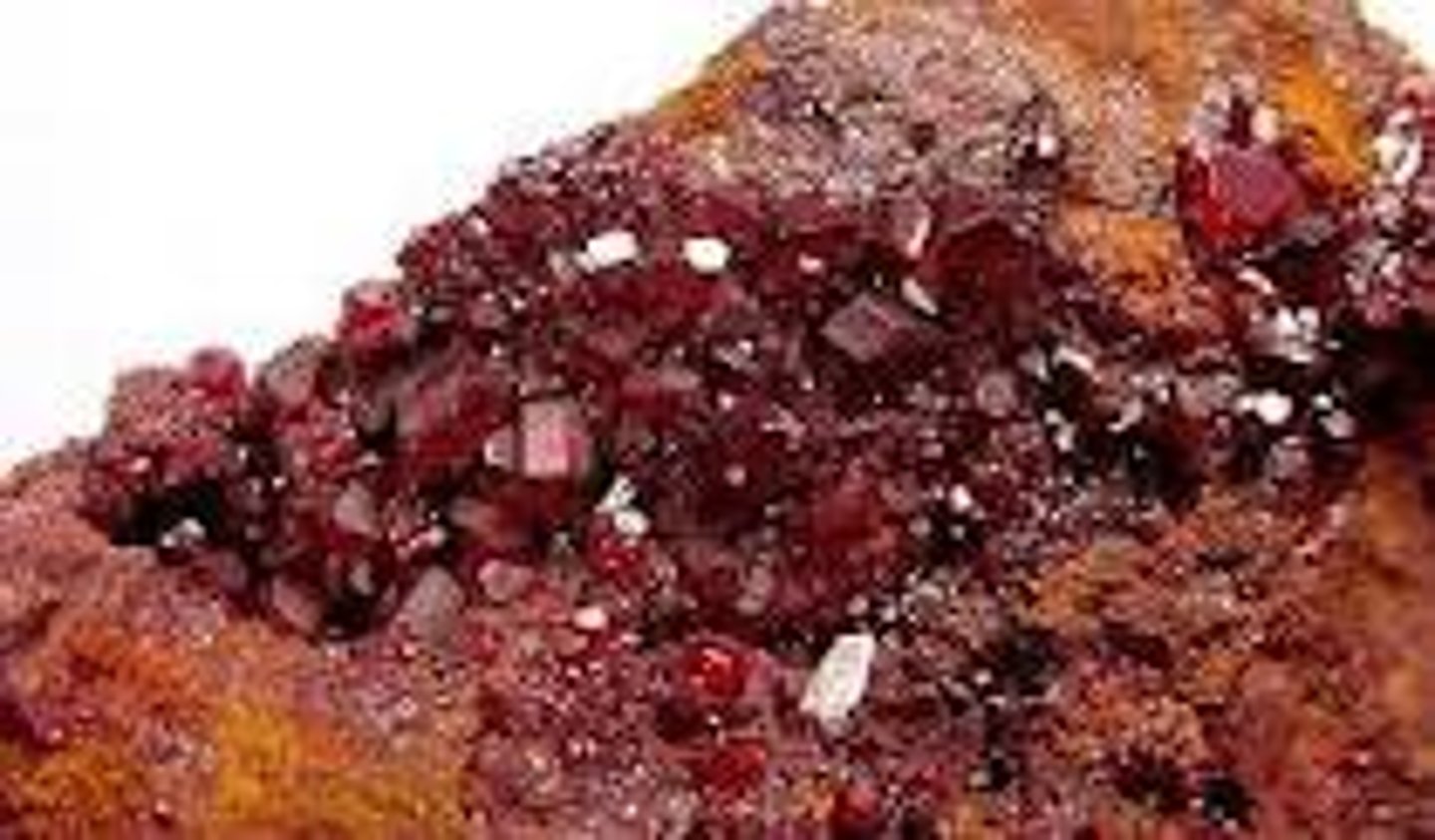
Cuprite
X2O and XO group.
Isometric.
Elongated capillary crystals (plush copper or chalcotrichite).
H = 3.5-4
SG = 6.1
Metallic-adamantine luster.
Color = various shades of red; ruby-red.
Streak = brownish-red.
Associated with limonite.
Tenorite (CuO)
Specie that is similar to cuprite.
Black.
Supergene mineral.
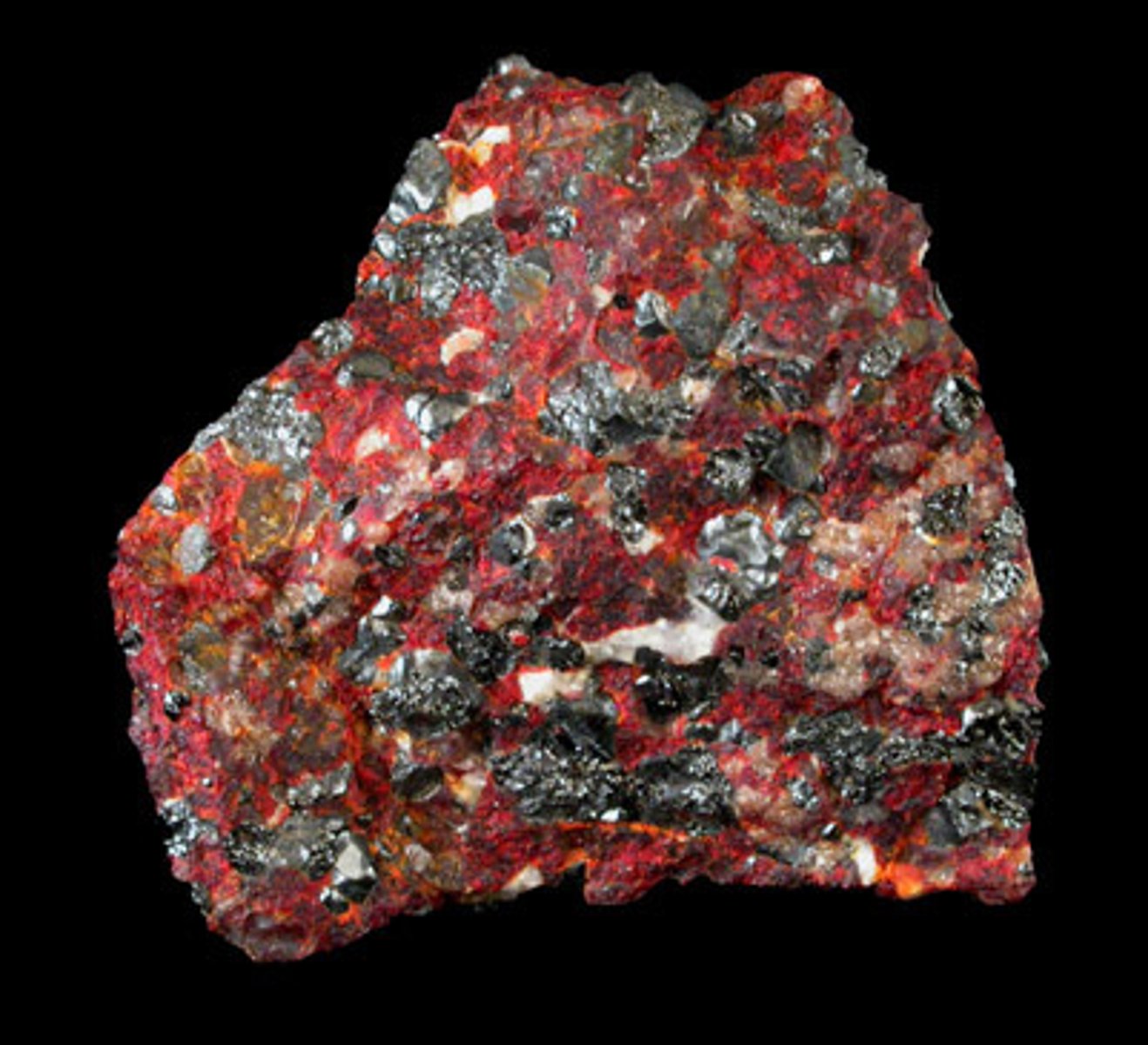
Zincite
X2O and XO group.
Hexagonal
Massive with platy or granular appearance.
H = 4
SG = 5.68
Translucent.
Sub-adamantine luster.
Color = deep red to orange-yellow
Streak = orange-yellow
Associated with franklinite and willemite.
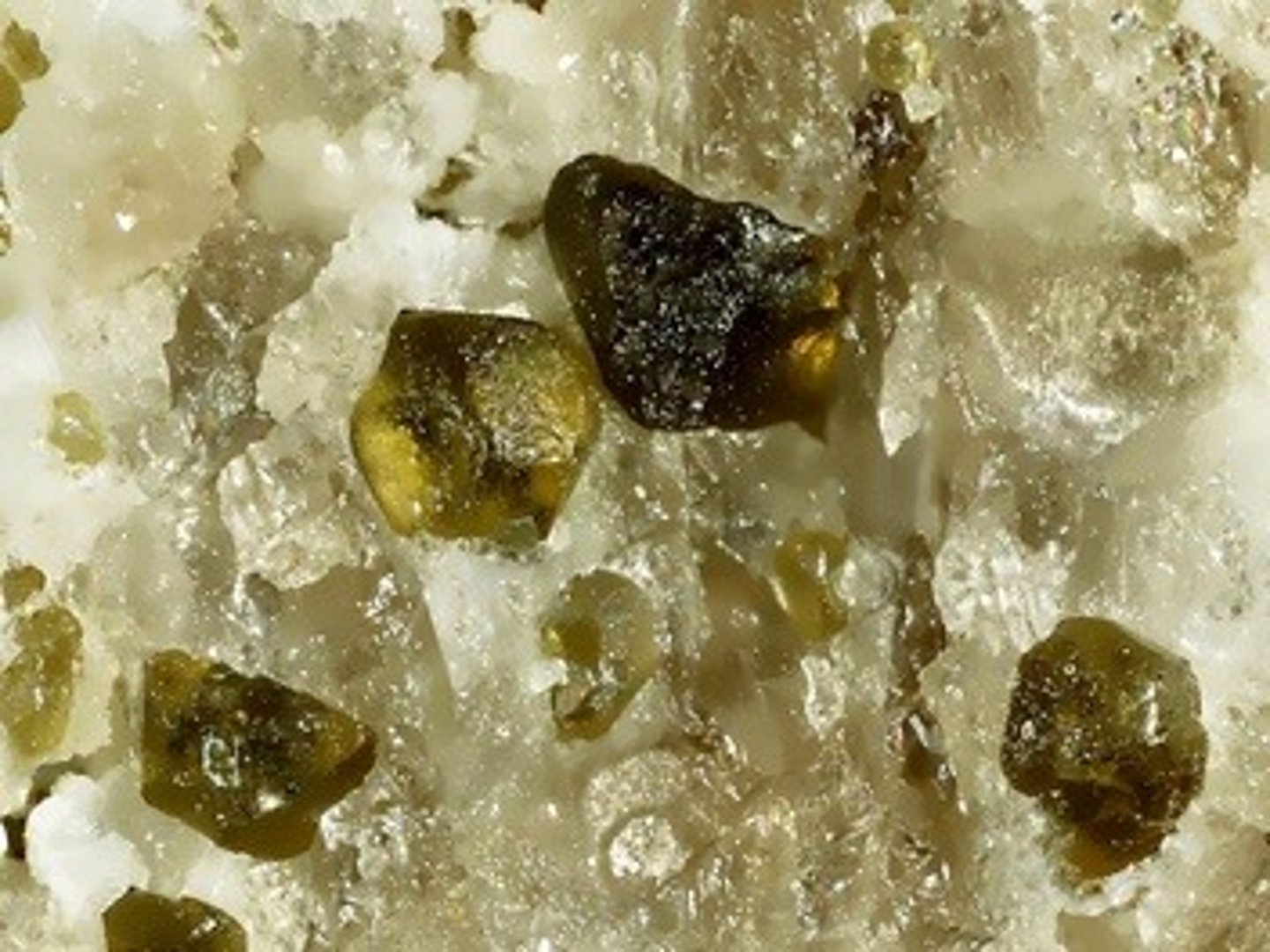
Periclase (MgO)
Same structure with zincite.
Found in contact metamorphosed Mg-rich limestones.
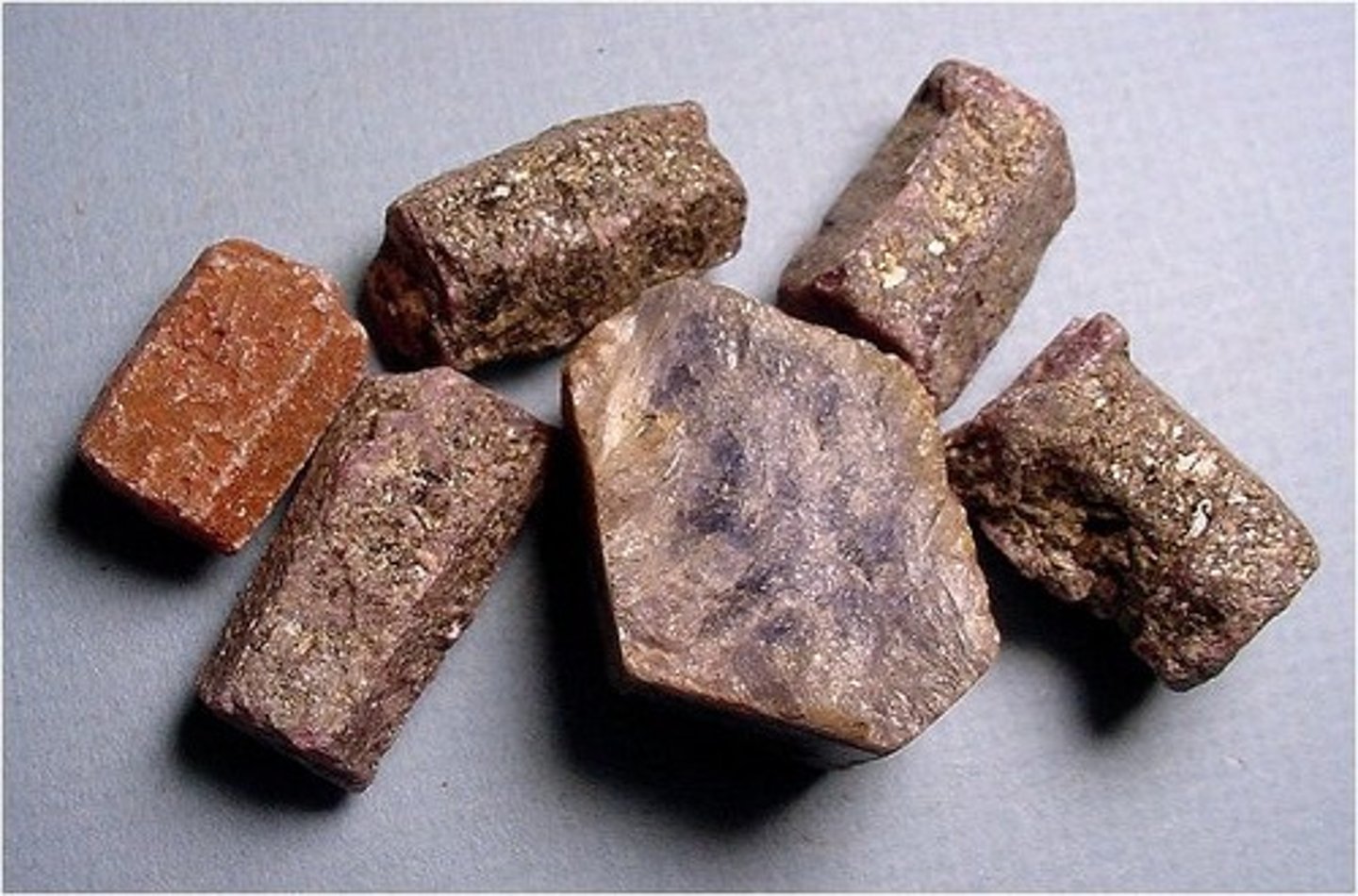
Corundum
Hematite group.
Hexagonal.
Massive, coarse or fine granular.
H = 9
SG = 4.02
Transparent to translucent.
Adamantine to vitreous luster.
Color = shade of brown, pink, blue, colorless.
Alters to mica.
Common in metamorphic rocks and undersaturated igneous rocks.
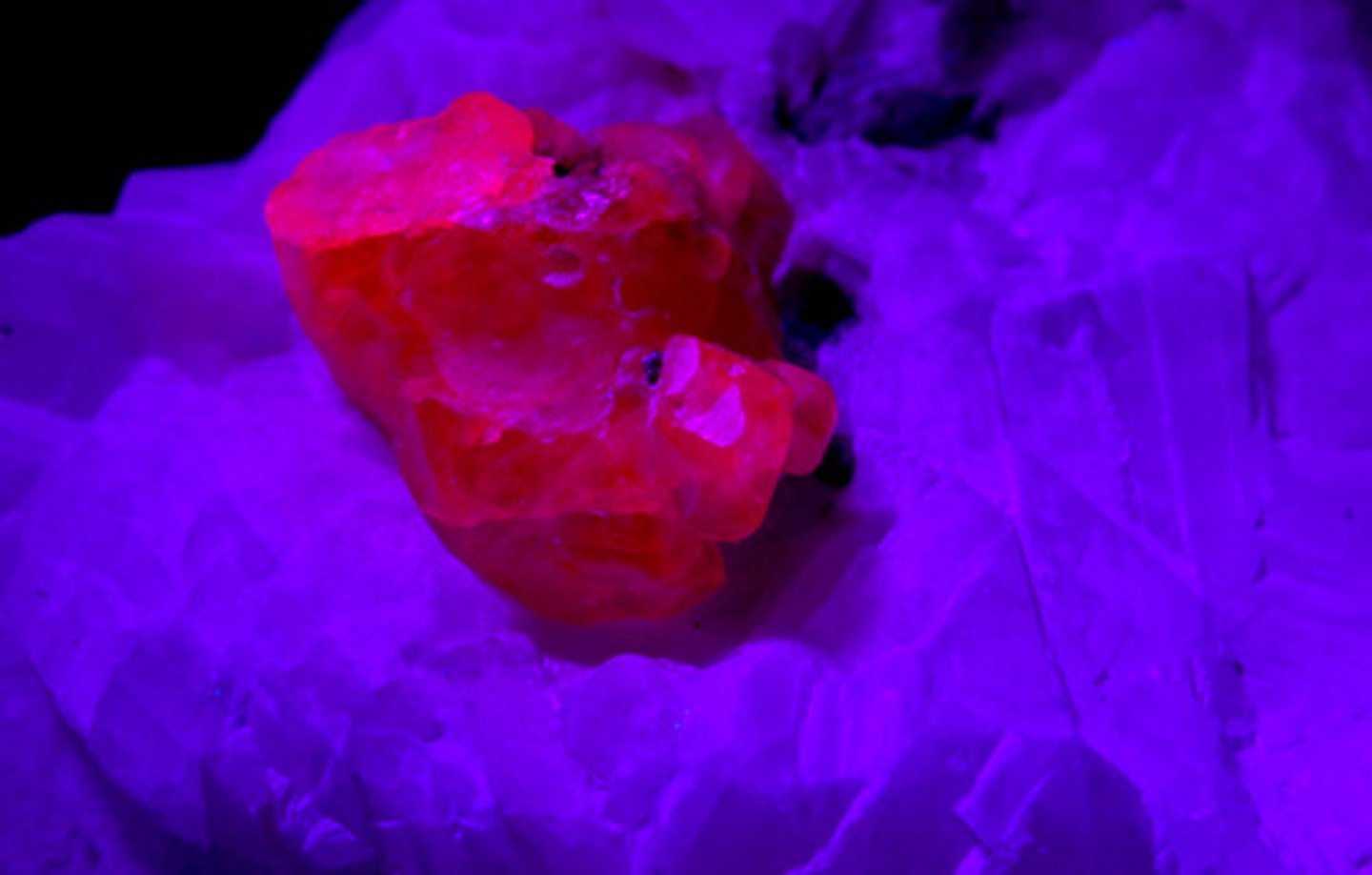
Ruby
Red variety of corundum.
Finest ones from Burma (Mogok).
Contain trace amounts of Cr as coloring agent.
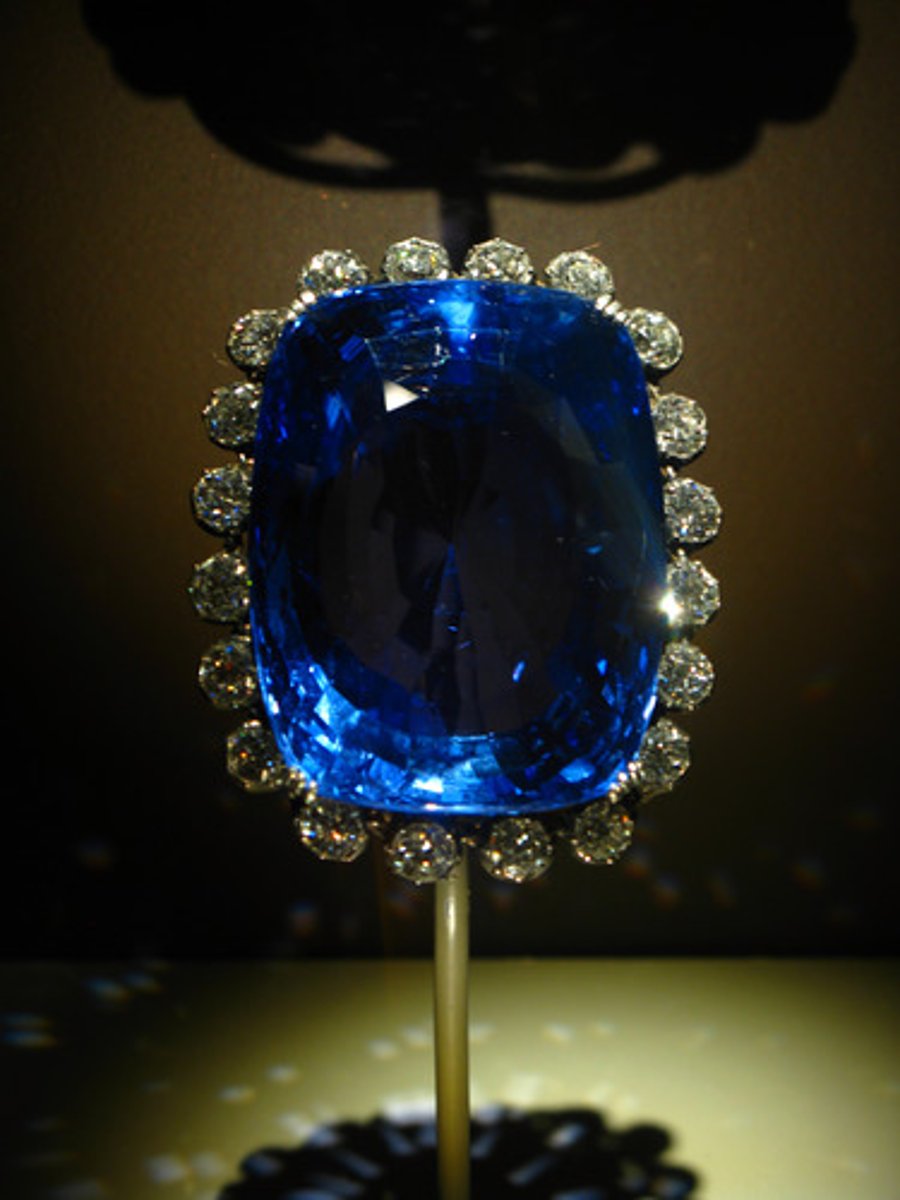
Sapphire
Blue variety of corundum.
Found in alluvial deposits of Thailand, Sri Lanka, and Cambodia.
Cornflower blue is the most valuable.
Colored by trace amounts of Ti and Fe.
Hematite
Hematite group.
Hexagonal
Thick to thin tabular, rosettes, botryoidal or reniform, specular, earthy (martite).
H = 5.5-6.5
SG = 5.26
Translucent.
Metallic to dull-earthy luster.
Color = reddish-brown to black.
Streak = light to dark red (becomes black on heating).
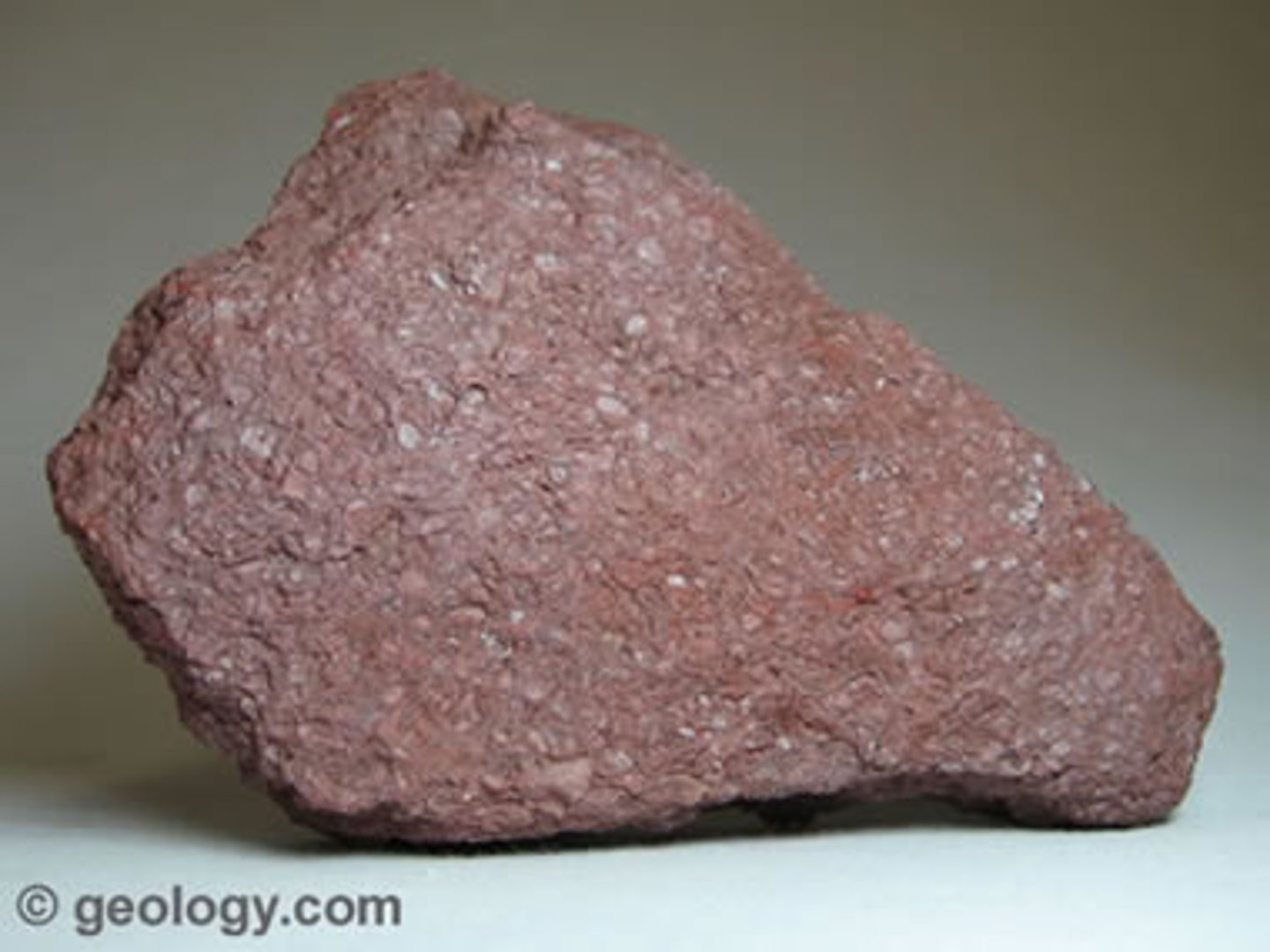
Taconite
A flint like rock that contains smaller iron minerals.
Low-grade silica-rich Fe formation from which high-grade Fe deposits are derived.
Contain 25% Fe.
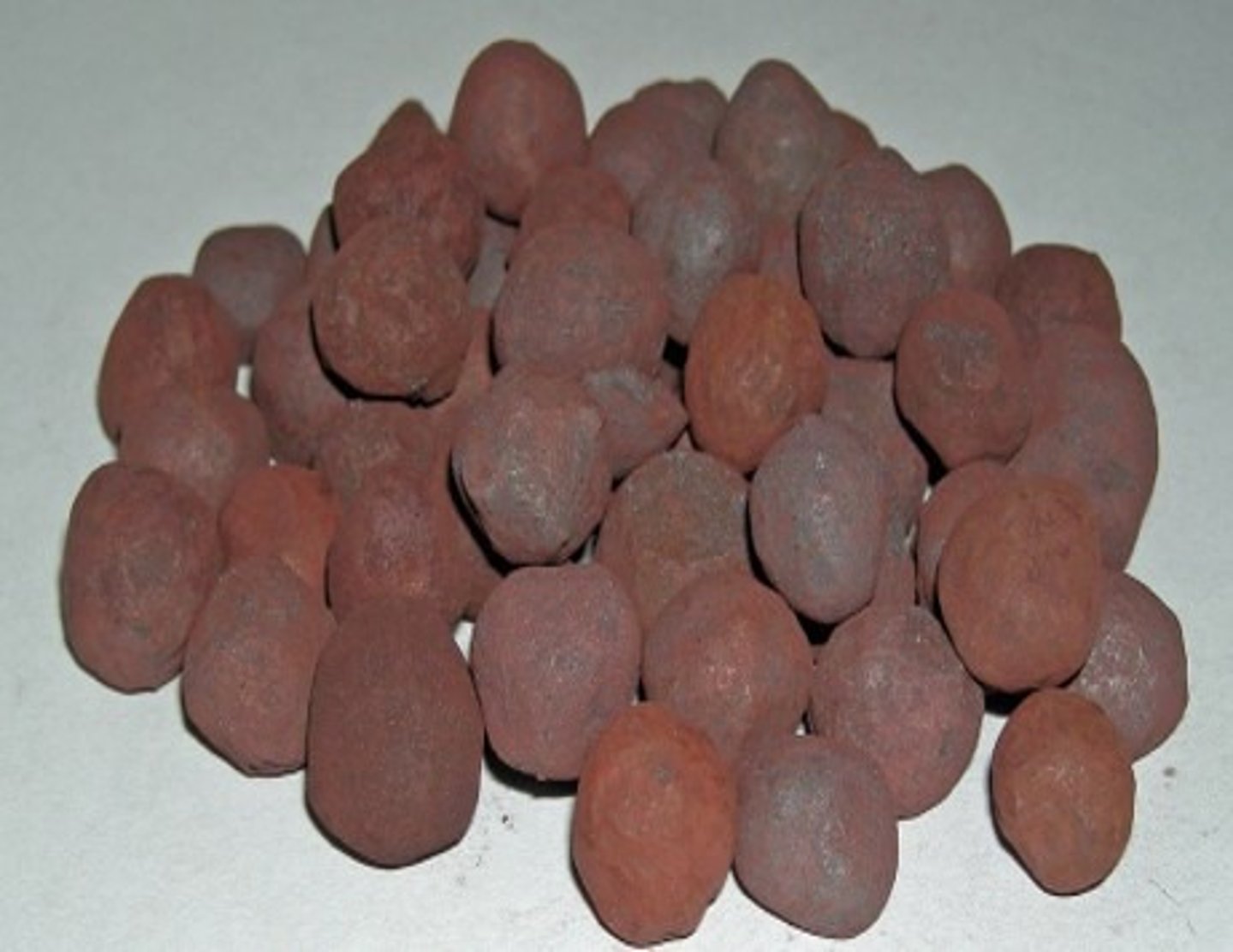
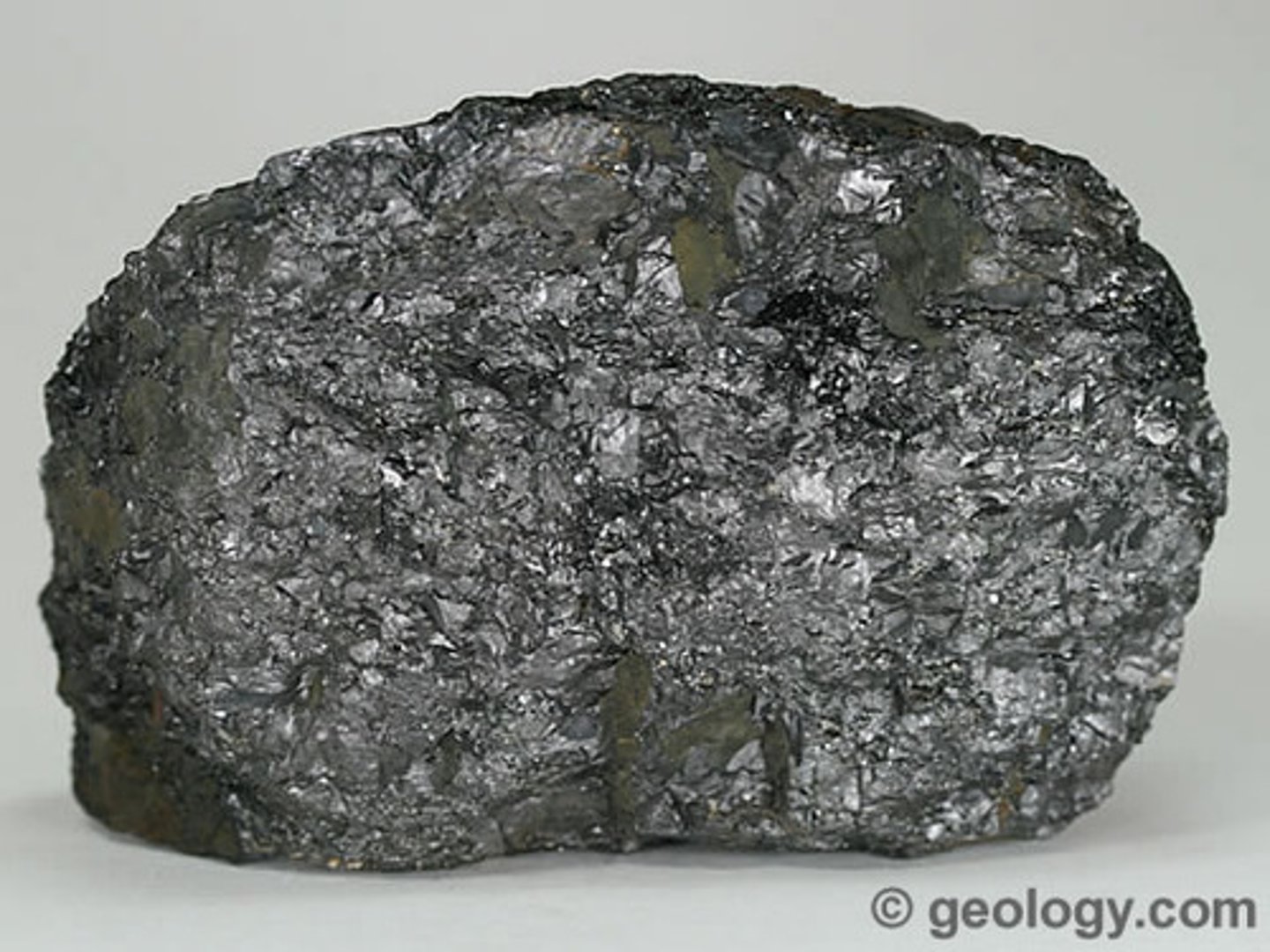
Ilmenite
Hematite group.
Hexagonal.
Thick tabular, thin plates, massive, compact, grains.
H =5.5-6
SG = 4.7
Metallic to sub-metallic luster.
Color = iron-black.
Streak = black to brownish-red.
Can be magnetic without heating.
Geikeilite (MgTiO3)
Pyrophanite (MnTiO3)
Similar specie with ilmenite.
Mg and Mn substitution.
Perovskite (CaTiO3)
Pseudocubic Ti mineral found usually in nepheline syenites and carbonatites.
Pseudobrookite
Fe2TiO5.
Solid solution with Ferropseudobrookite (FeTi2O5).
Occur in igneous rocks, kimberlites, and meteorite-impacted basalts.
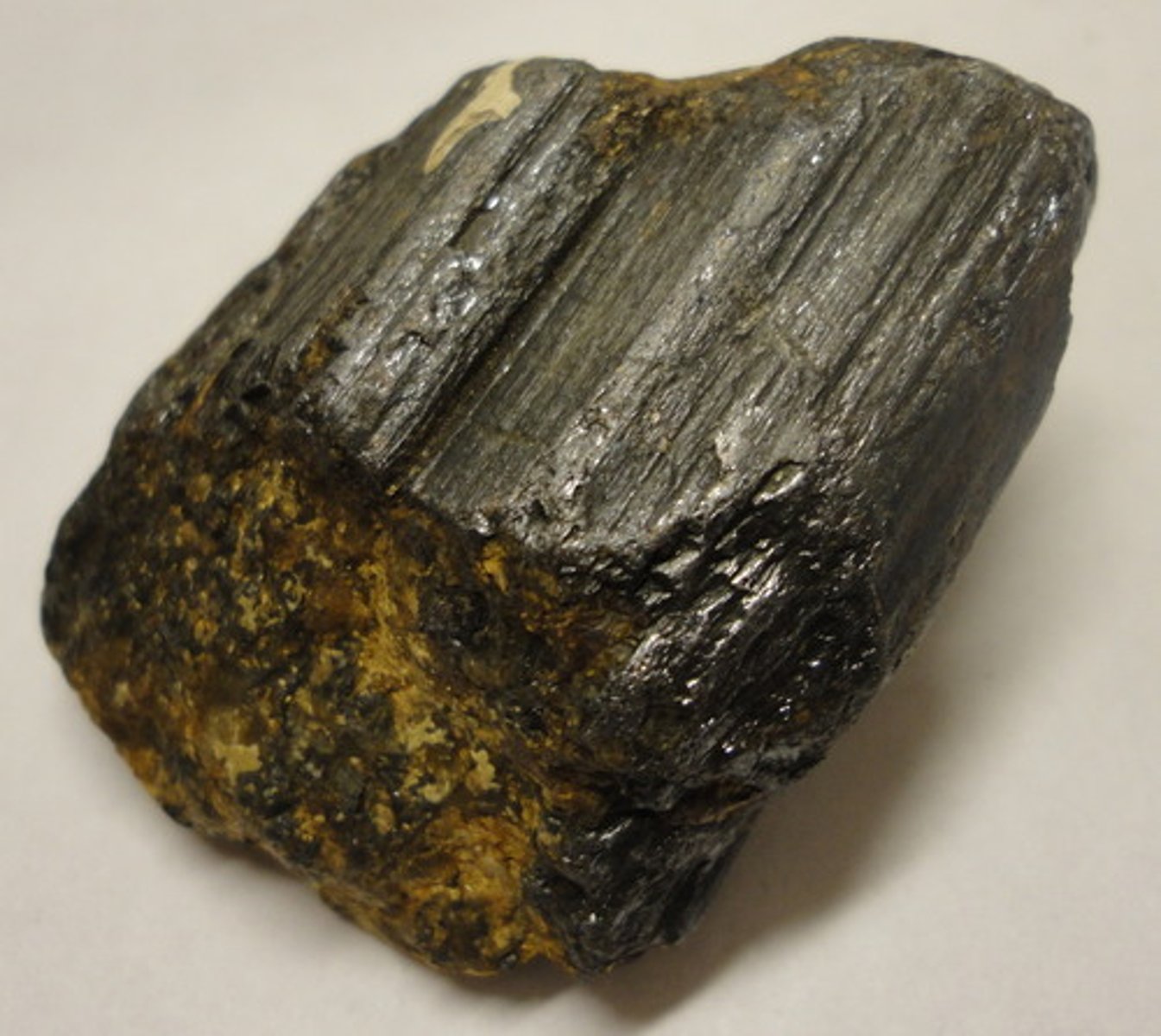
Rutile
Rutile group.
Tetragonal.
Slender acicular, also massive and compact.
H = 6-6.5
SG = 4.18-4.25
Transparent to sub-translucent.
Adamantine to sub-metallic luster.
Color = red, reddish-brown to black
Streak = pale brown.
Solid solution with anatase (tetragonal) and brookite (orthorhombic).
Isostructural with stishovite.
Leucoxene
Fine-grained, yellow to brown alteration product of minerals high in Ti.
Consist mainly of rutile, less commonly anatase.
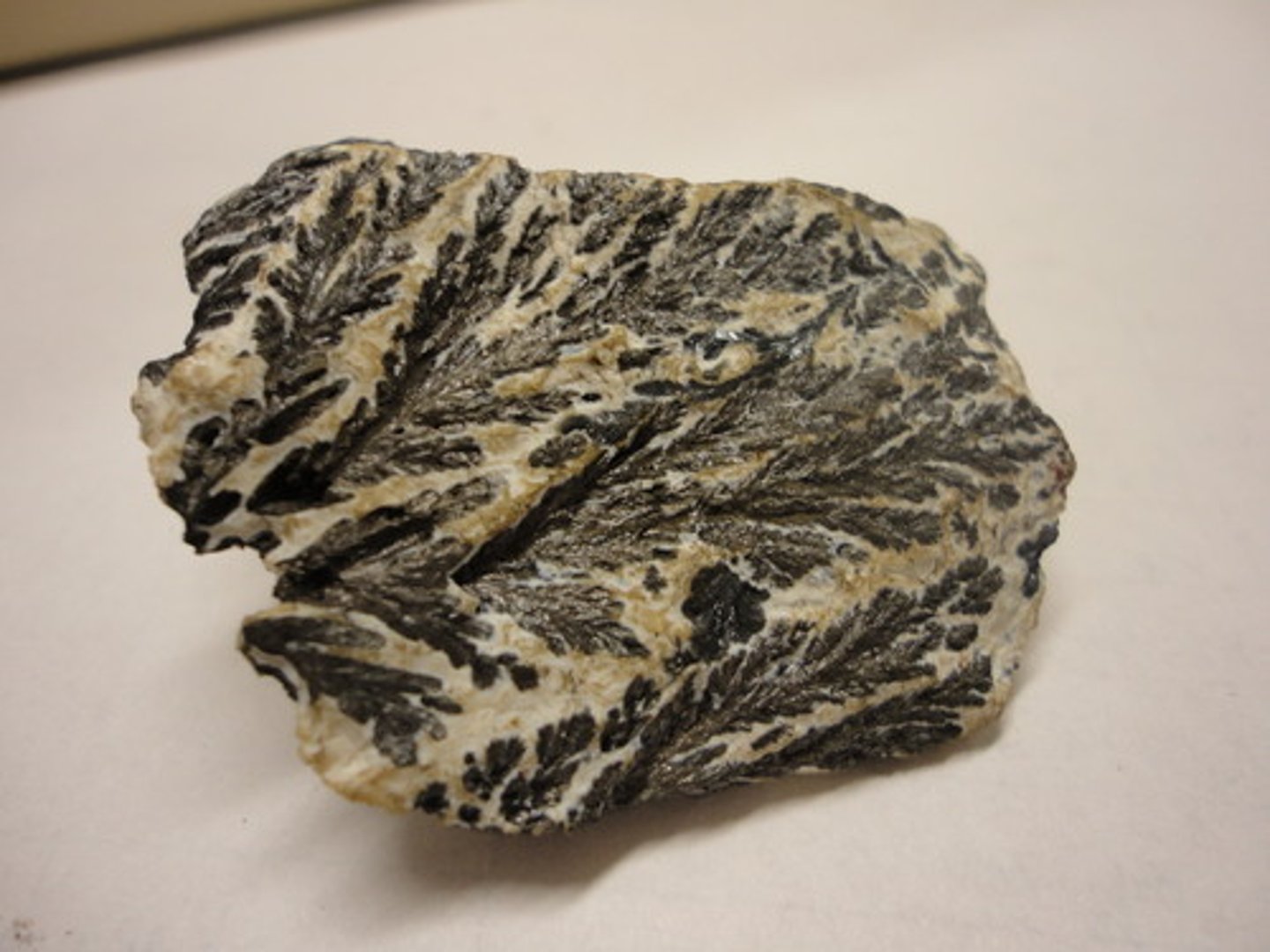
Pyrolusite
Rutile group.
Tetragonal.
Radiating fibers or columns, granular massive, reniform or dendritic.
H = 6-6.5
SG = 4.75
Splintery fracture.
Metallic luster.
Iron-black.
Alabandite (MnS)
Rare, associated with sulfides in veins.
Similar specie with pyrolusite.
Wad
Mn ore composed of an impure mixture of hydrous Mn-oxides.
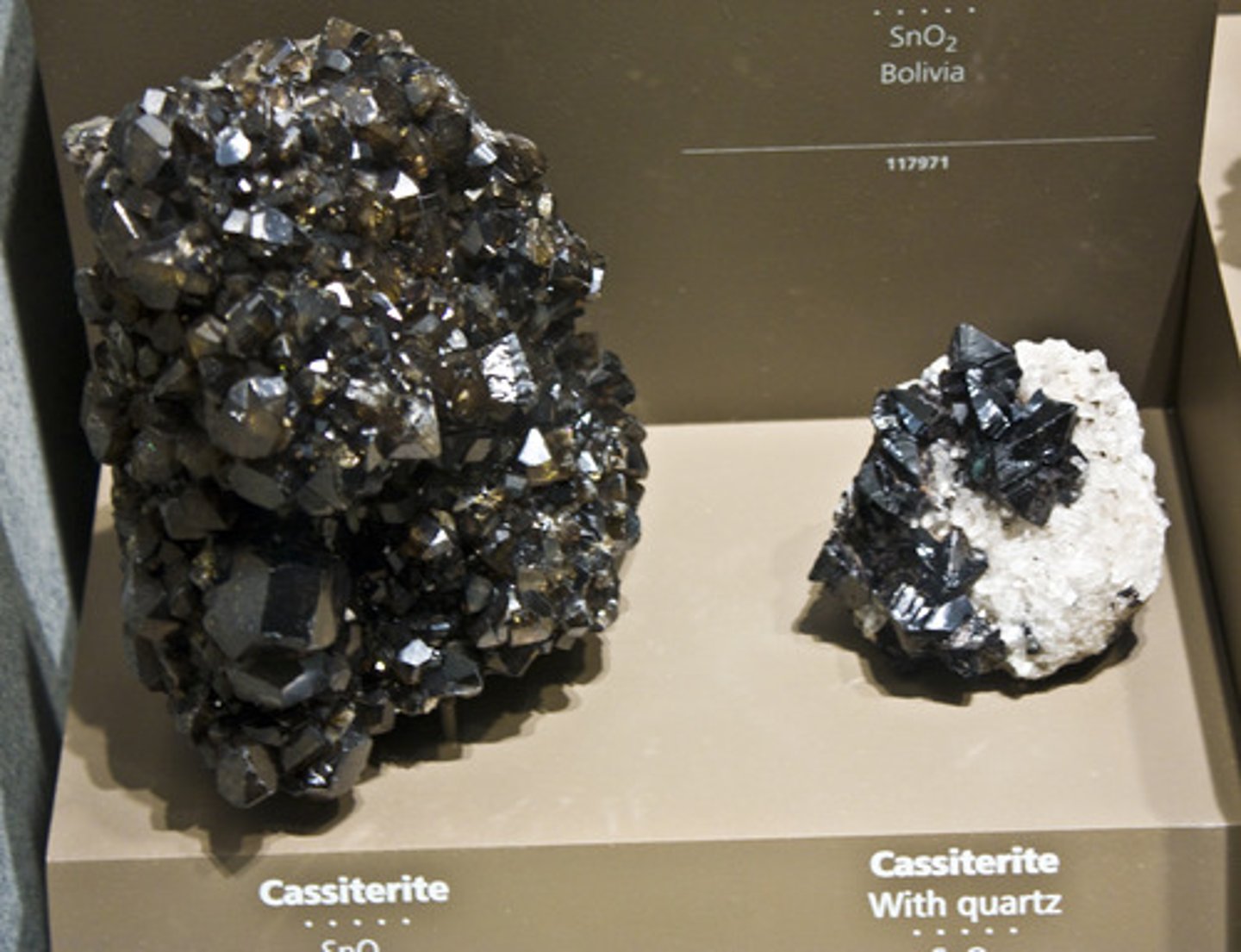
Cassiterite
Rutile group.
Tetragonal.
Massive granular, reniform, radiating wood appearance (wood tin). Also called visor tin.
H = 6-7
SG = 6.8-7.1
Translucent (rarely transparent).
Adamantine to sub-metallic and dull luster.
Color = brown or black; rarely yellow or white.
Streak = white.
Stannite (Cu2FeSnS4).
Similar specie with cassiterite.
Structurally similar to chalcopyrite and sphalerite.
Minor ore of Sn.
Uraninite
Rutile group.
Isometric.
Massive or botryoidal with banded structure.
H = .5
SG = 7.5-9.7 (crystals) and 6.5-9 (pitchblende).
Transparent to sub-translucent.
Sub-metallic to pitchlike, dull luster.
Color = black.
Streak = brownish-black.
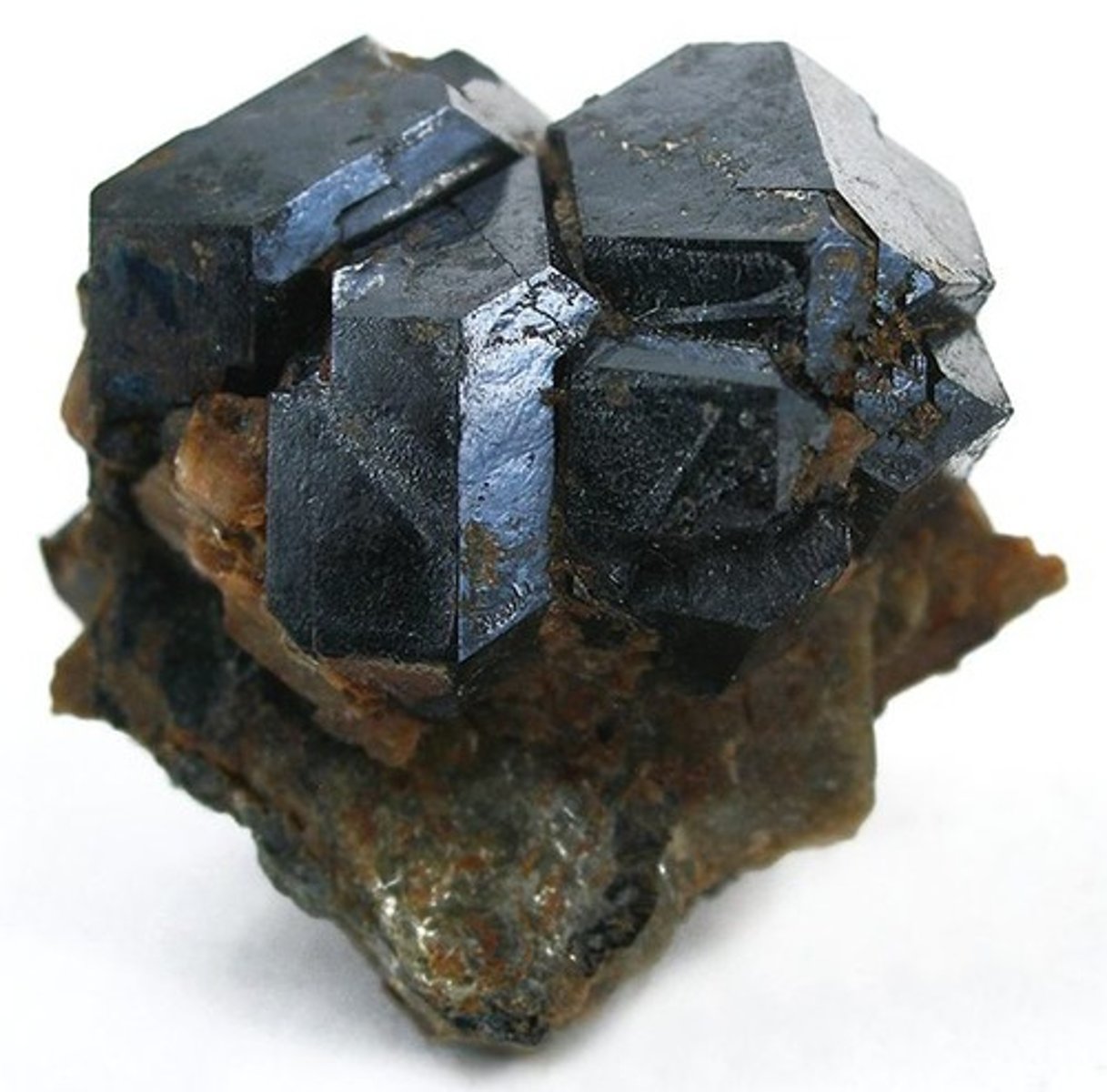
Thorianite (ThO2)
Similar specie with uraninite.
Sub-metallic luster.
Dark gray to black.
Found in pegmatites and as water-worn crystals in stream gravels.
Cerianite [(Ce,Th)O2]
Extremely rare.
Same structure as thorianite (fluorite structure).
Spinel
Spinel group.
Isometric.
Octahedral crystals, massive and irregular grains.
H = 8
SG = 3.5-4.1
Translucent (can be transparent).
Vitreous luster.
Color = white, red, lavender, blue, green, brown, black.
Streak = white.
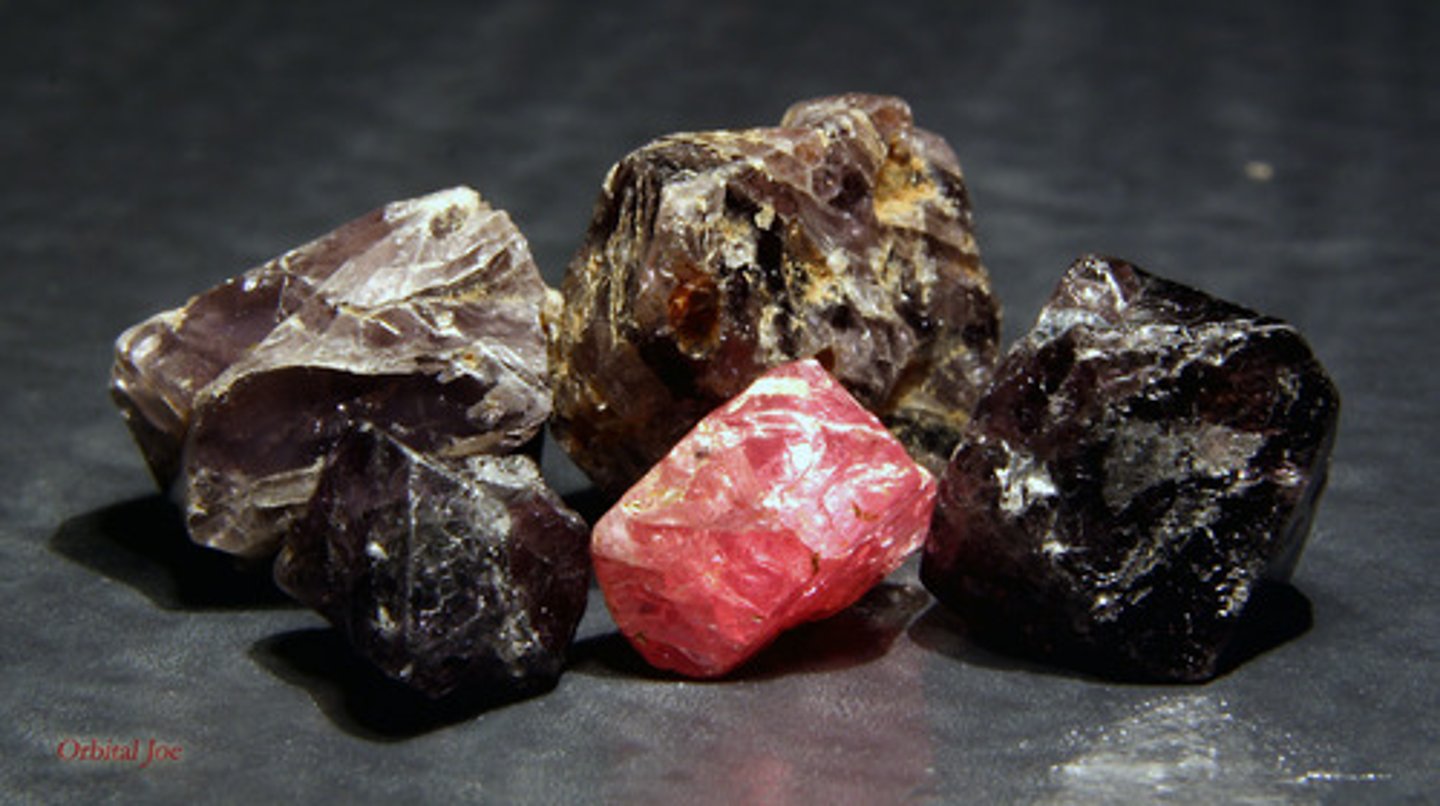
Ruby spinel
Balas ruby.
Clear red.
Nearly pure magnesian.
Ferroan spinel
Dark green to black.
Intermediate between spinel and hercynite (FeAl2O4).
Chromian spinel
Yellowish to greenish-brown.
Intermediate between hercynite and chromite (FeCr2O4).
Emery
Black or dark gray impure form of the mineral corundum.
Mixed with magnetite, hematite, or hercynite.
Hercynite (FeAl2O4)
Associated with corundum in some emery.
Also found with andalusite, sillimanite, and garnet.
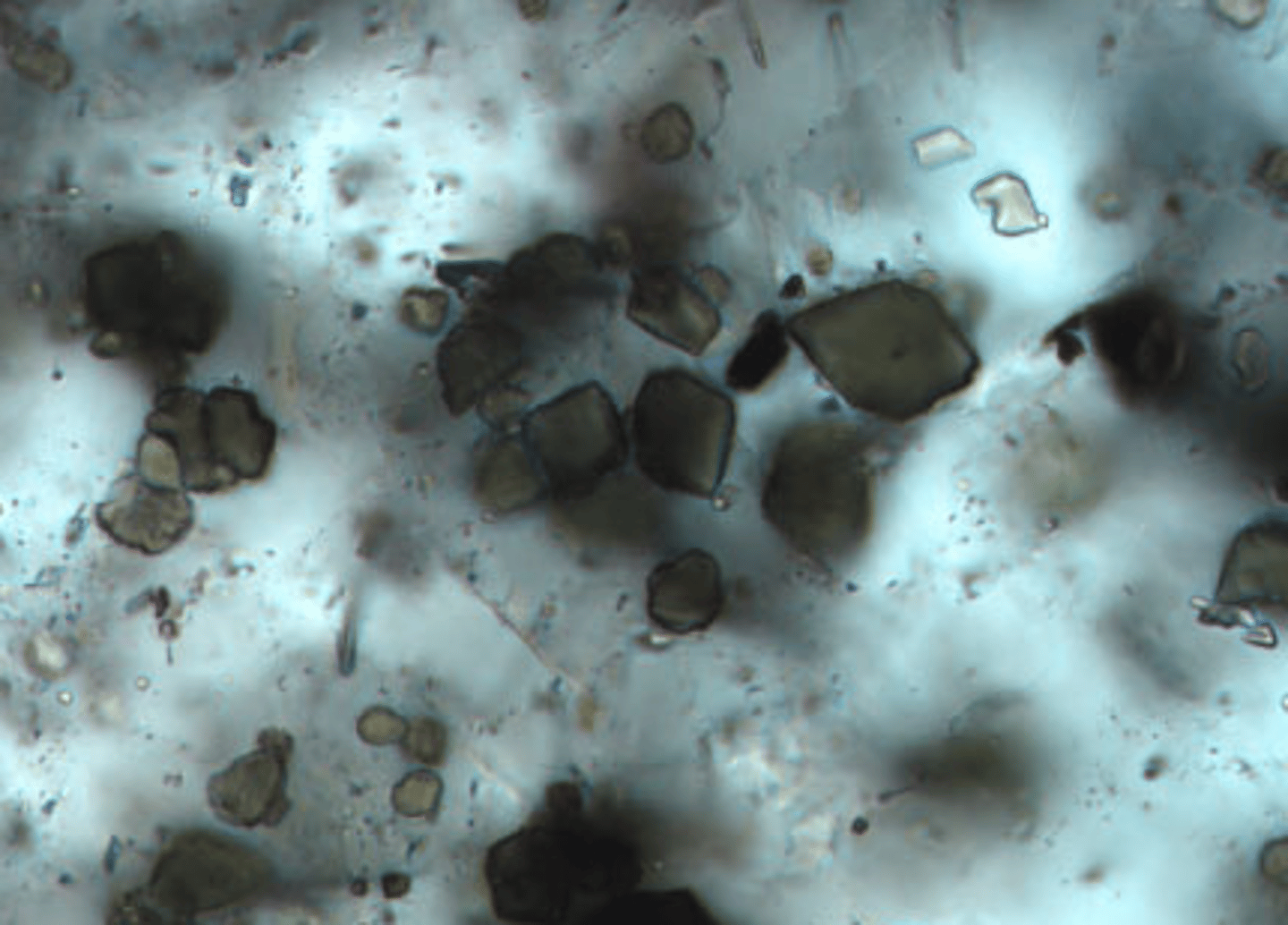
Galaxite (MnAl2O4)
Similar specie with spinel.
Fe-rich variety called ferroan galaxite.
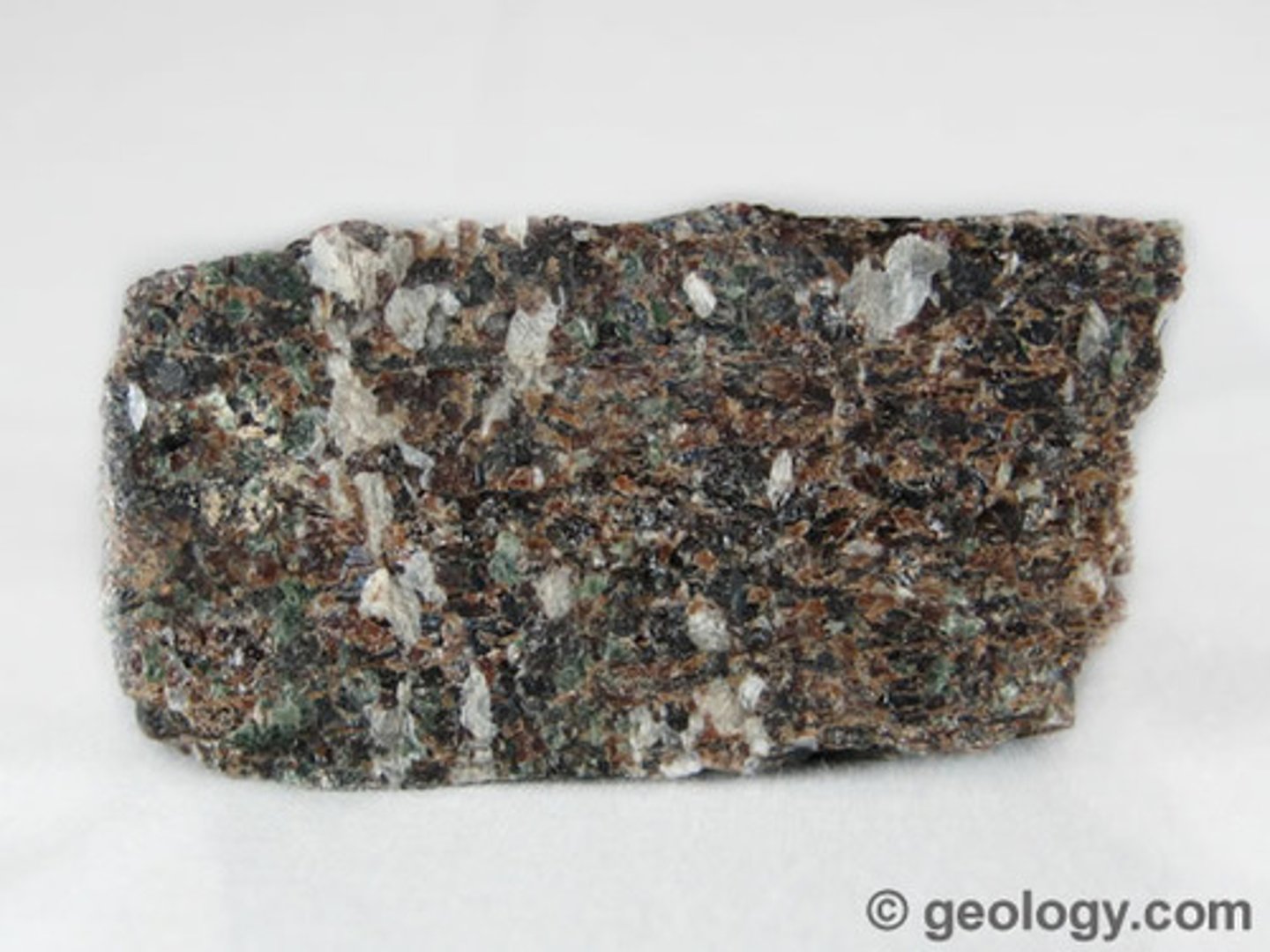
Gahnite
Spinel group.
Isometric.
Striated octahedrons.
H = 7.5-8
SG = 4.55
Translucent.
Vitreous luster.
Color = dark green.
Streak = grayish.
Rare.
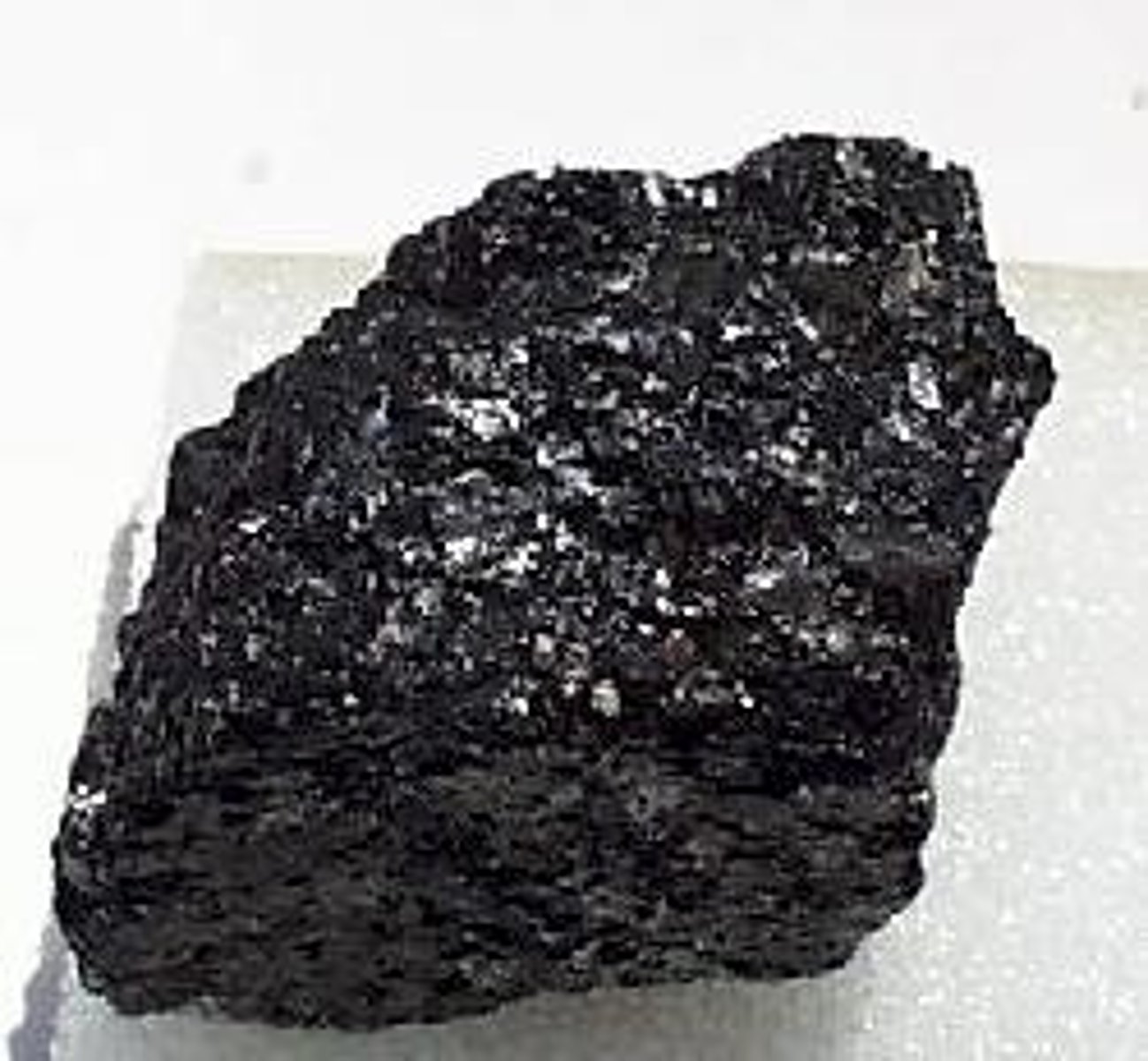
Magnetite
Spinel group.
Isometric.
Granular, massive, coarse- or fine-grained.
H = 6
SG = 5.18
Strongly magnetic (lodestone).
Metallic luster.
Color = iron-black.
Streak = black.
In solid solution with ulvospinel.
Magnesioferrite
Similar specie with magnetite.
Inverse spinel structure.
Rare, commonly found in fumaroles.
MgFe2O4.
Jacobsite
Similar specie with magnetite.
Inverse spinel structure.
Rare, found in Langban, Sweden.
MnFe2O4.
Ulvospinel
In solid solution with magnetite.
Inverse spinel structure.
Not uncommonly present as exsolution blebs and lamellae within magnetite.
Fe2TiO4.
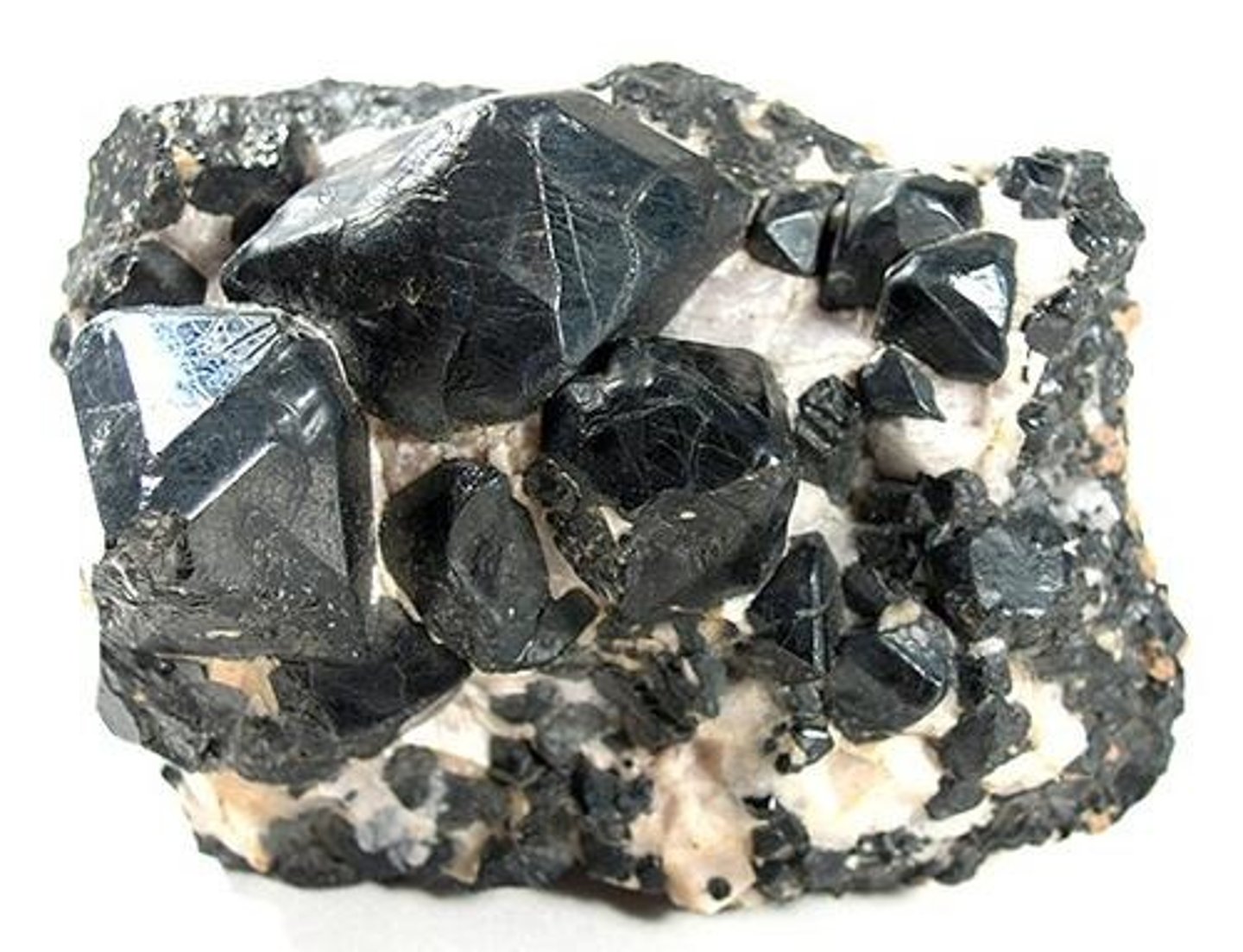
Franklinite
Spinel group.
Massive, coarse, or fine granular, in rounded grains.
Granular, massive, coarse- or fine-grained.
H = 6
SG = 5.15
Slightly magnetic.
Metallic luster.
Color = iron-black.
Streak = reddish brown to dark brown.
Spiegeleisen
Alloy of Fe and Mn.
Chromite
Spinel group.
Isometric.
Massive, granular, to compact.
H = 5.5
SG = 4.6
Sub-translucent.
Metallic to submetallic, frequently pitchy luster.
Color = iron-black to brownish black.
Streak = dark brown.
Nichrome
An alloy of nickel, chromium, and iron that has a higher resistance than most metals.
Chrysoberyl
Spinel group.
Orthorhombic
Pseudohexagonal appearance due to twinning.
H = 8.5
SG = 3.65-3.8
Vitreous luster.
Color = various shades of green, brown, yellow; may be red in by transmitted light.
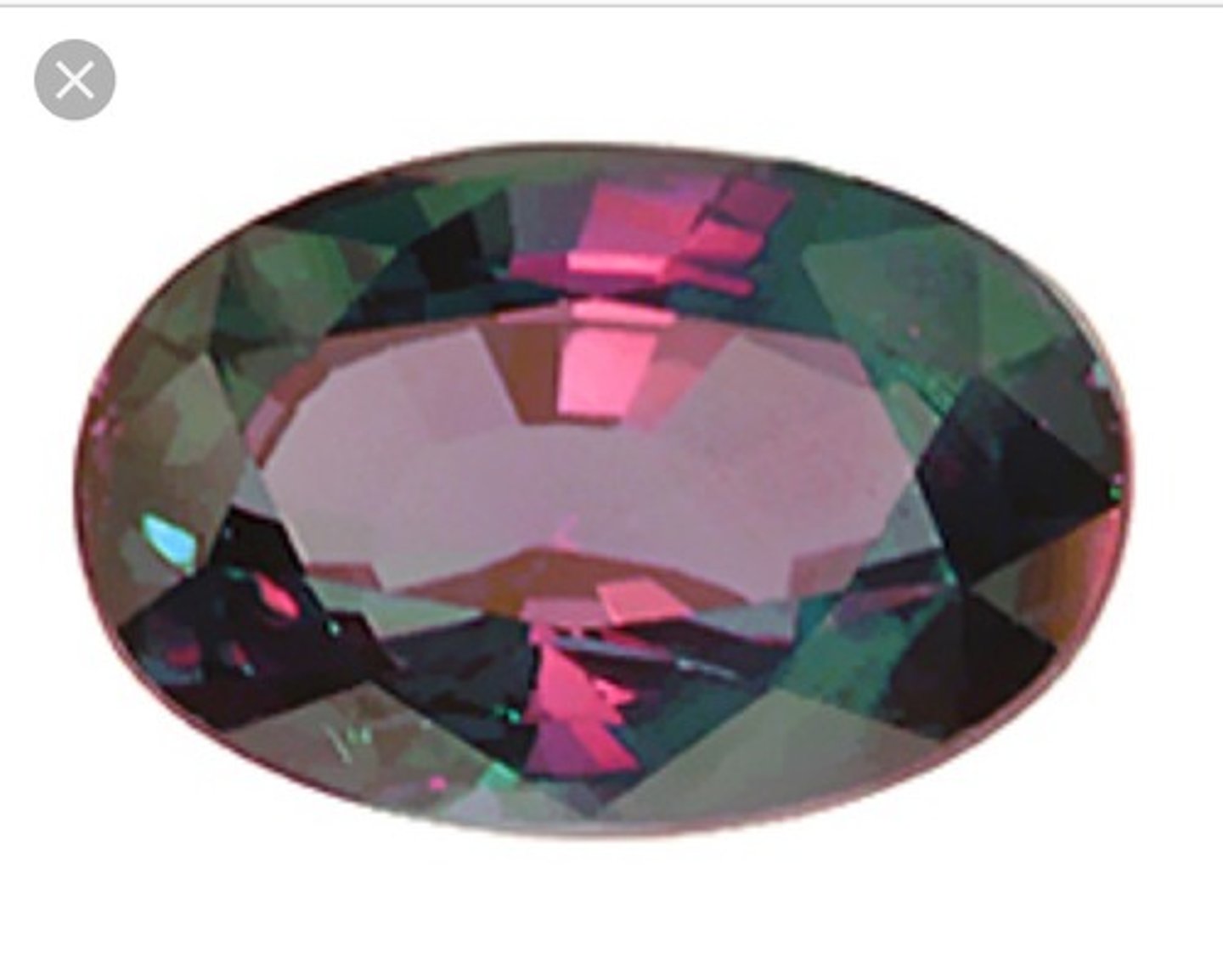
Alexandrite
A gem variety of chrysoberyl that appears green in daylight and red in artificial light.
From Ural Mountains and Brazil.
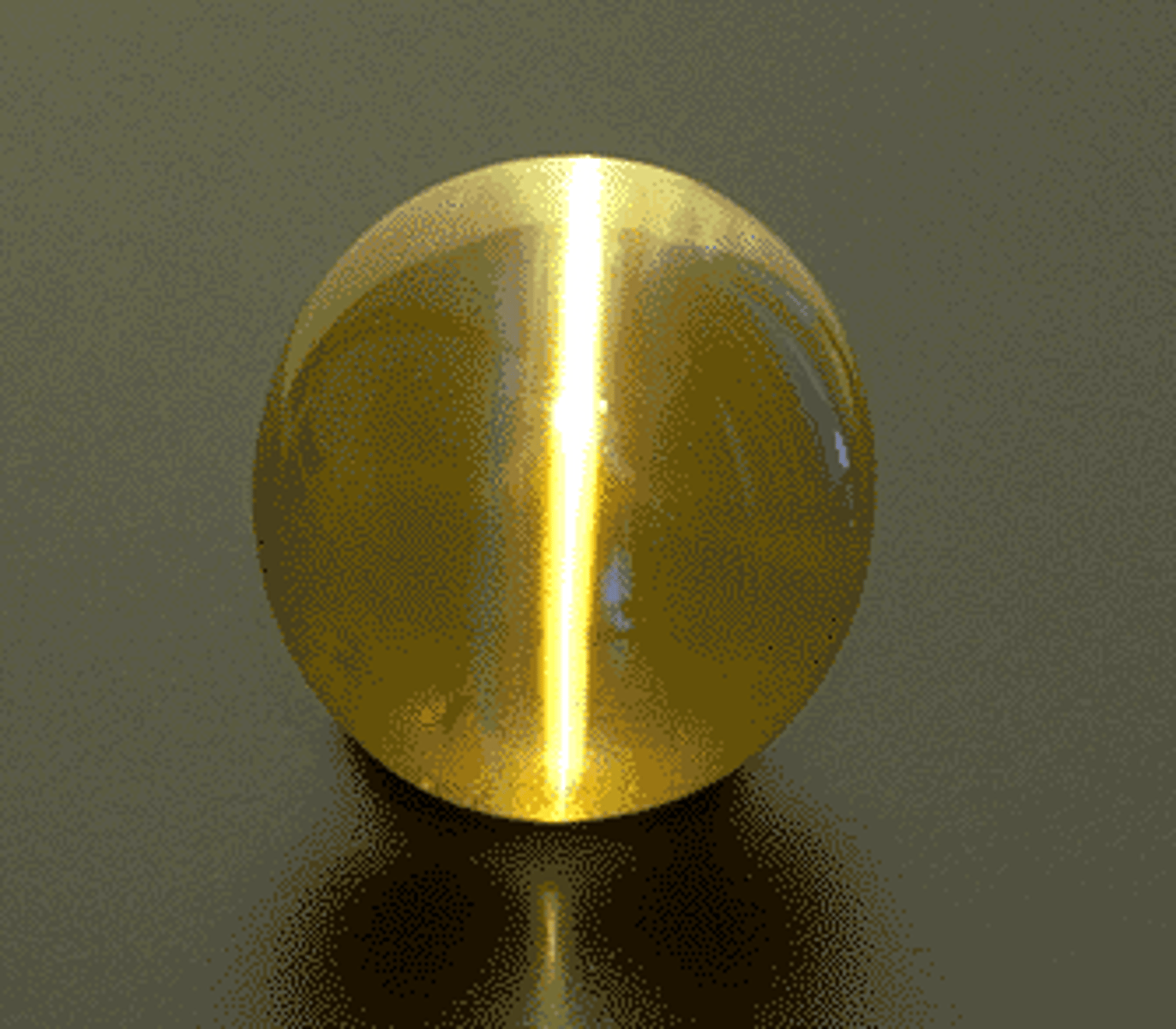
Cymophane
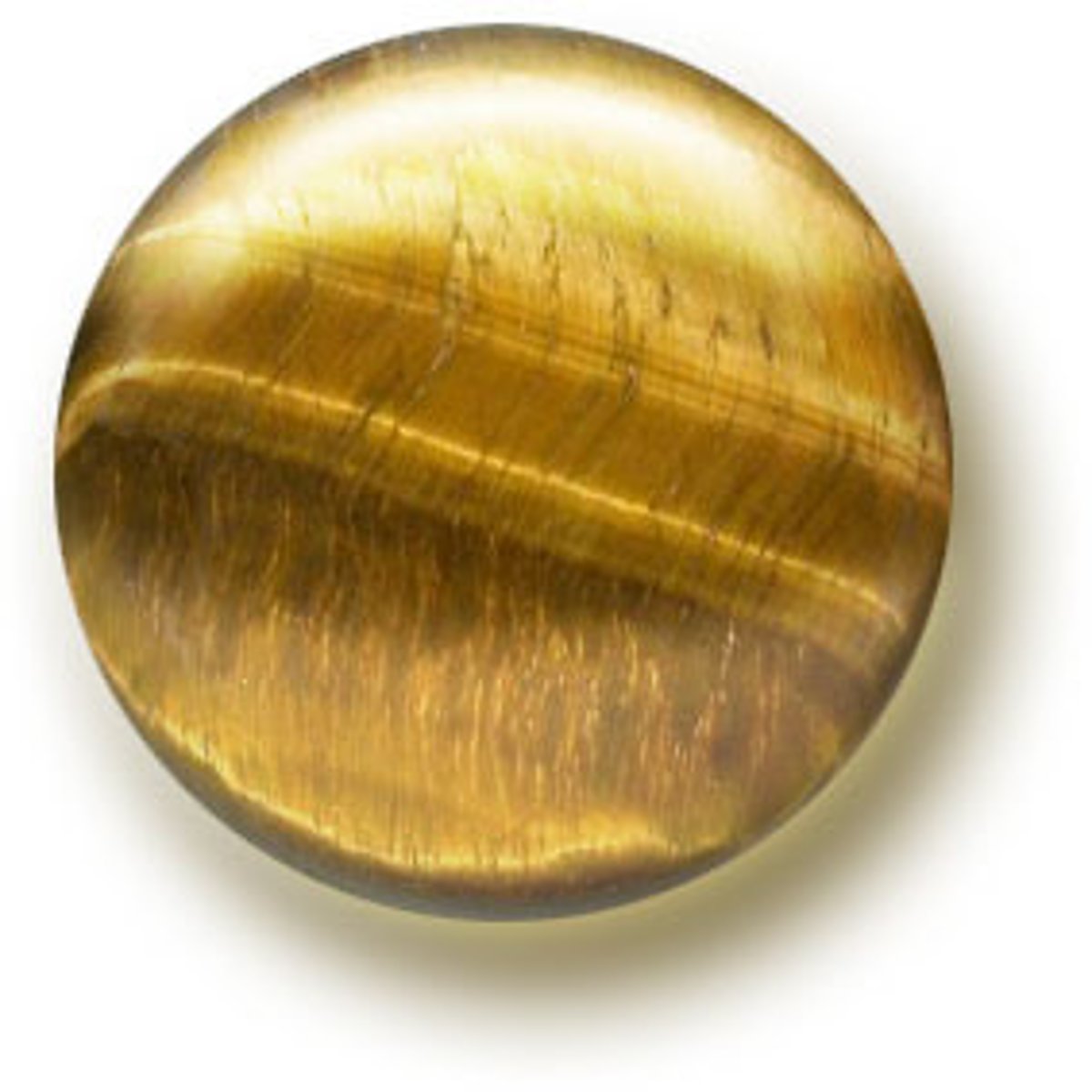
Waving light, chatoyant chrysoberyl is sometimes called this.
Columbite-Tantalite
Orthorhombic.
Short prismatic or thin tabular.
H = 6
SG = 5.2-7.9 (depending on Ta2O5 content).
Sub-translucent.
Submetallic luster.
Color = iron-black.
Streak = dark red to black.
Microlite, Pyrochlore, and Fergusonite
Mineral species similar to columbite and tantalite.
 Note
Note  Flashcards (50)