Patient Care in Imaging Technology (Torres’) - Chapter 7
 Call Kai
 Learn
Learn Practice Test
 Spaced Repetition
 Match
Match Flashcards
 Knowt Play
1/121

There's no tags or description
Looks like no tags are added yet.
Name | Mastery | Learn | Test | Matching | Spaced | Call with Kai |
|---|
No analytics yet
Send a link to your students to track their progress
122 Terms
Pediatric patients range in age from infancy to 6 years old; true or false?
False; they range in age from infancy to 15 years old

Radiographers must use age-appropriate methods of communication for children; true or false?
True
Pediatric patient(s) include:
- Neonates
- Infants
- Toddlers
- Preschoolers
- School-age children

Neonates
A newborn infants up to 1 month of age
What developmental stage are neonates at?
Senses respond to the environmental conditions
Infants
A newborn up to 1 year of age
3 multiple choice options
What is the age range for infants?
1-12 months old
What developmental stage are infants at?
Have limited language — not fearful of strangers
Toddlers
Young child learning to walk
3 multiple choice options
What is the age range of toddlers?
1-3 years old
What developmental stage are toddlers at?
Follow simple commends — initial fear of strangers
Preschooler
A child who is not old enough to attend kindergarten
What age range are preschoolers?
3-6 years old
What developmental stage are preschoolers at?
Age of initiative — socialization and verbally activity increases
School-age children
Age at which the child who is considered to attend school
3 multiple choice options
What is the age range for school-age children?
6-12 years old
What developmental stage are school-age children at?
A period of cognitive growth; can solve problems and understands cause and effect
Adolescence
The period of life beginning at puberty and ending with physical maturity
What is the age range of adolescents?
12-19 years old
What developmental stage are adolescents at?
Age of identity; able to use abstract concepts
What percentage of hospital stays are of children and adolescents 17 years or younger?
18%
Neonates are kept in the hospital after birth because of:
- Respiratory problems
- Infections
- Complications from hemolytic jaundice
- Pre-maturity
- Birth defects
Neonates are kept in the NICU after birth if there are any complications; what does the NICU stand for?
Neonatal intensive care unit
3 multiple choice options
What are the basic preventative measures used to reduce infections in the pediatric patient?
Proper hand washing and hygiene
3 multiple choice options
What are the most common causes of admission to the hospital with pediatric patients?
Infectious diseases and asthma
Adolescents in the emergency department usually come in due to:
Injuries to extremities due to sports or drug poisoning
Small children are usually not frightened when entering the imaging department; in fact, they are usually excited; true or false?
False; they may be frightened entering the department and seeing the massive equipment

What is the best way to approach a pediatric patient in the radiography department?
- Be honest and friendly
- Maintain a comfortable distance to allow the child to become accustomed to the radiographer
- Explain what is going to happen before and during the procedure
- Give an estimate on how long the procedure will last
- If the child is to receive contrast media or medications, the method of administration needs to be explained to both the guardian(s) and child
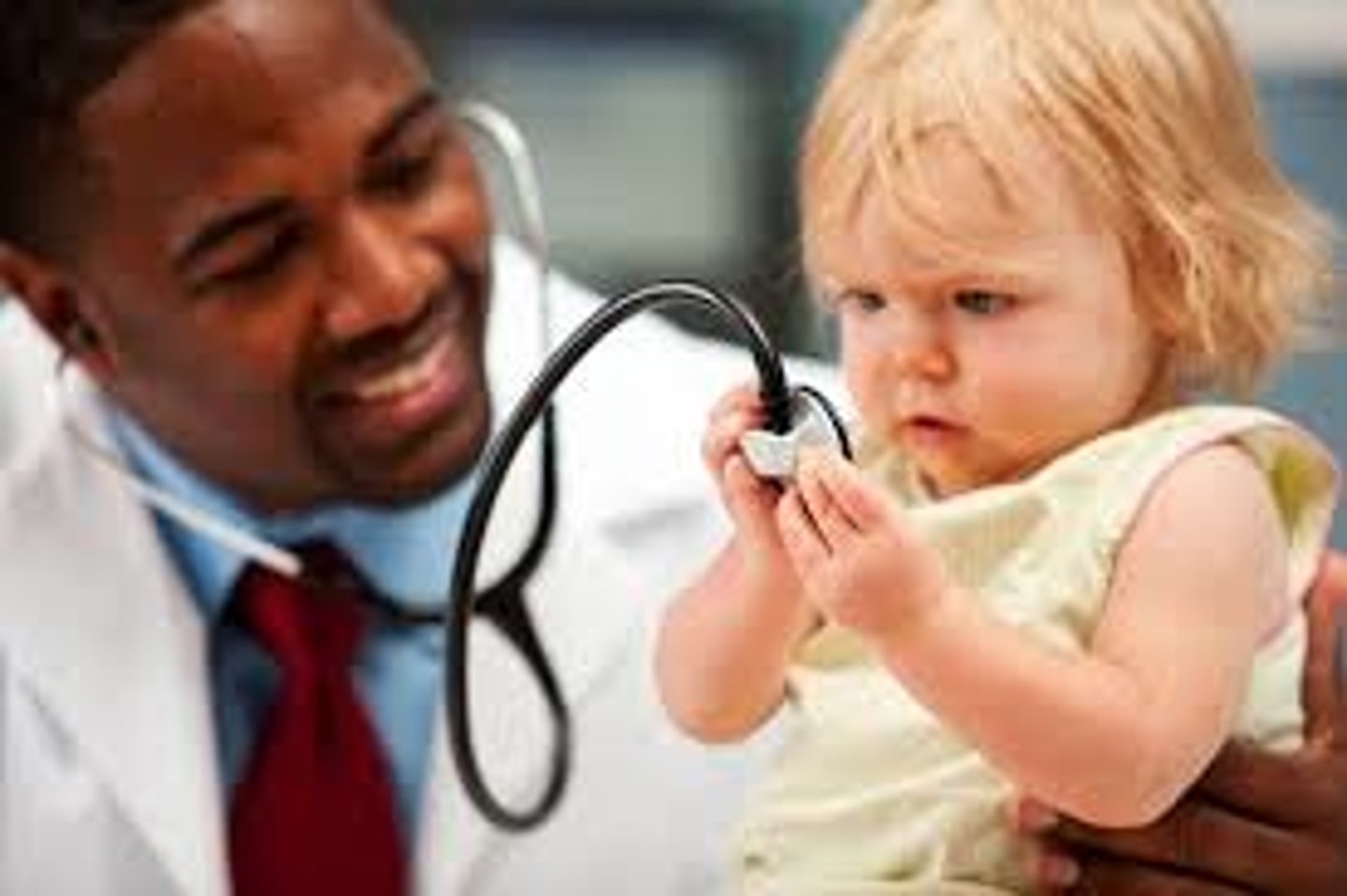
The radiographer should speak to the child at eye level, even if they must sit or stoop down to do so; true or false?
True
The technologist does not have to worry about hypothermia with a pediatric patient as they have abnormally high body temperatures; true or false?
False; must guard against allowing any child to become chilled; especially infants, because they rapidly lose body heat
Hypothermia
Significant loss of body heat below 98.6 F
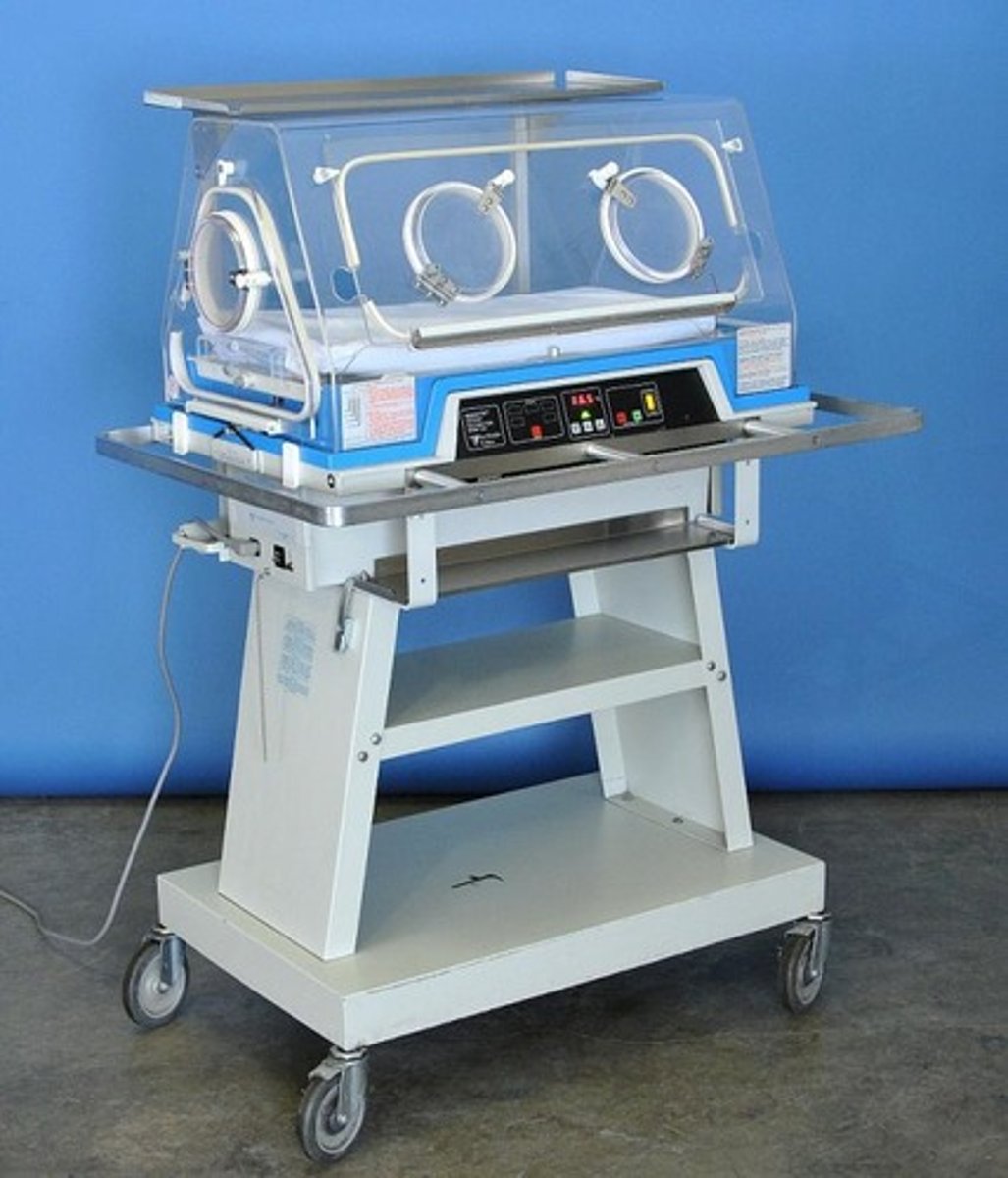
Isolette
A special enclosed unit used in newborn intensive care to keep babies warm and protected from the environment
A NICU patient has an immature immune system and is more susceptible to infection; true or false?
True
What is required of all healthcare personnel entering the NICU? (Hint: to reduce the spread of infection!)
A surgical scrub
How long is a surgical scrub performed?
2 minutes
3 multiple choice options
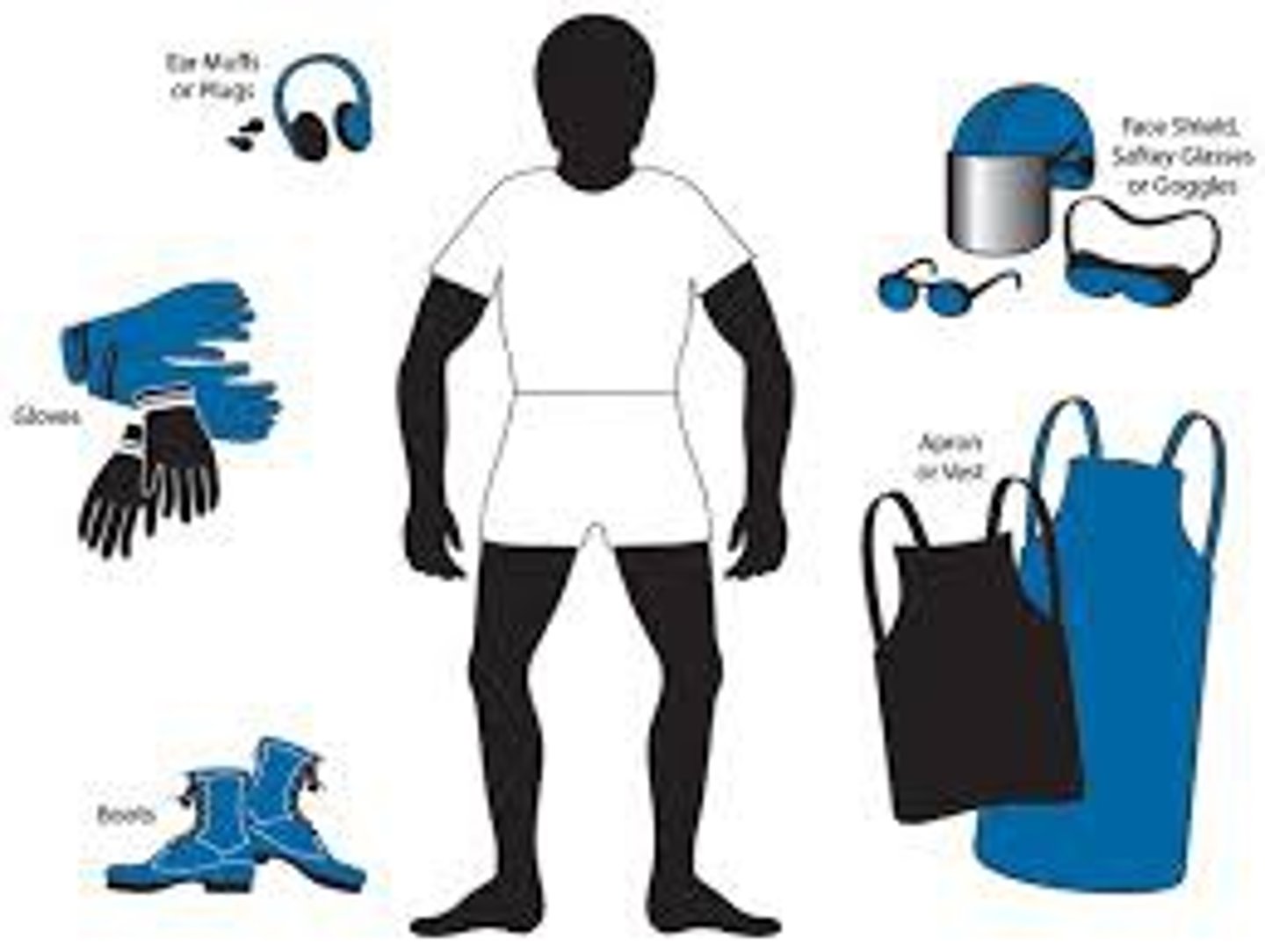
____________ ______________ ______________ such as gowns, gloves, masks, and eye protection may be required in the NICU.
Personal protective equipment (PPE)
The mobile machine must be wiped clean with a disinfectant solution and be free of dust before entering the nursery; true or false?
True
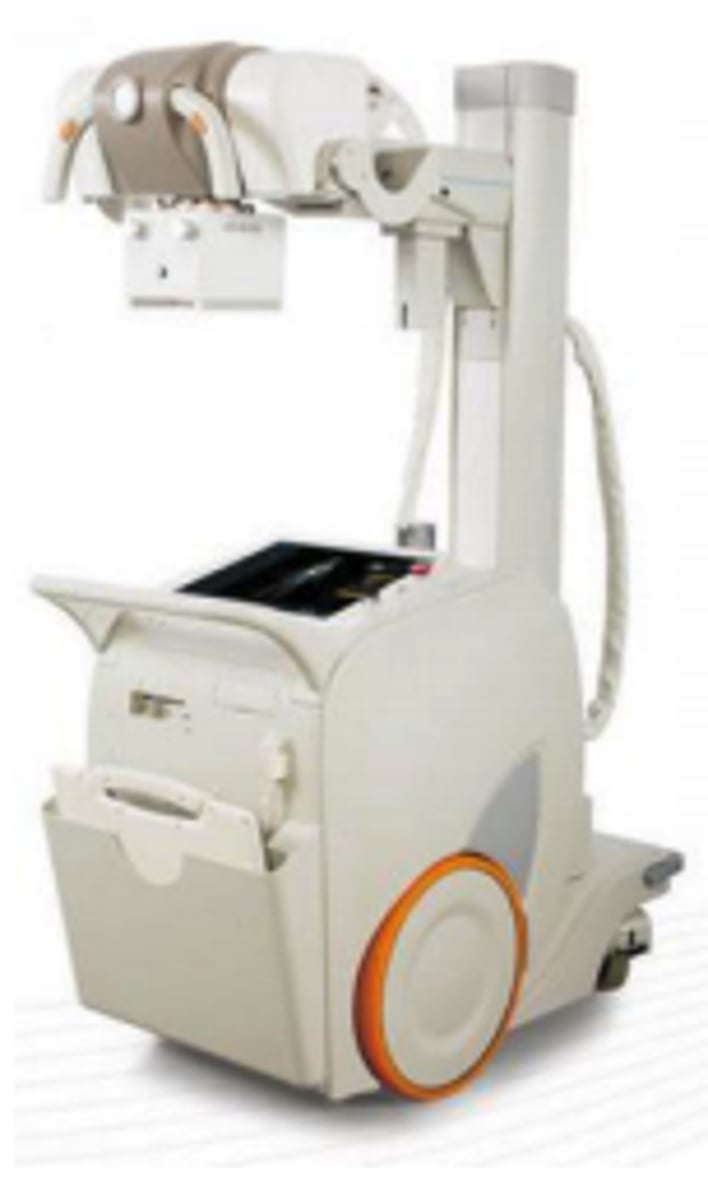
Disinfectant
A solution capable of destroying pathogenic microorganisms or inhibiting their growth

A radiographer has a cut on their hand that is starting to amass a green crust and ooze puss. A NICU order comes in and they have to go do it. What should be done in this situation?
Another technologist should be asked to take the NICU assignment to prevent introduction of infectious microorganisms
3 multiple choice options
Code Pink
A hospital code used to convey an infant or child abduction
It is safe to carry infants and very small children for long distances; true or false?
False; under certain circumstances, infants and small children can be carried for SHORT distances
Children must never be left alone or unattended in the imaging department; true or false?
True
How should infants or very small children be held? (Hint: two methods!)
Horizontal hold or upright position
How is an infant held in the horizontal hold?
Support against your the body with head supported at the elbow

How is an infant held in the upright position?
Buttocks resting on your arm with other arm around the infant supporting the back and neck

The nurse in charge does not have to be notified when a child returns from the imaging department because they should be nearby anyways due to their protocol(s); true or false?
False; charge nurses should always be notified when their patient returns to their room, regardless of proximity
Why is immobilization of a child sometimes necessary to complete a radiographic exam?
Reduces the possibility of motion and additional exposure to the child
Immobilizers should be used only when no other means are safe or logical; true or false?
True
What are some immobilization aids or devices that can be used to completely secure an infant?
- Pig-O-Stat
- Pedia-Poser chair
- Sheet immobilized (Ex: Mummy-Style Sheet Wrap)
- Sandbags
- Plexiglass
- Tape
- Velcro
- Lead aprons
Pigg-O-Stat
A device that has an adjustable seat with two plastic supports on either side that allow for the arms to be up and out of the way
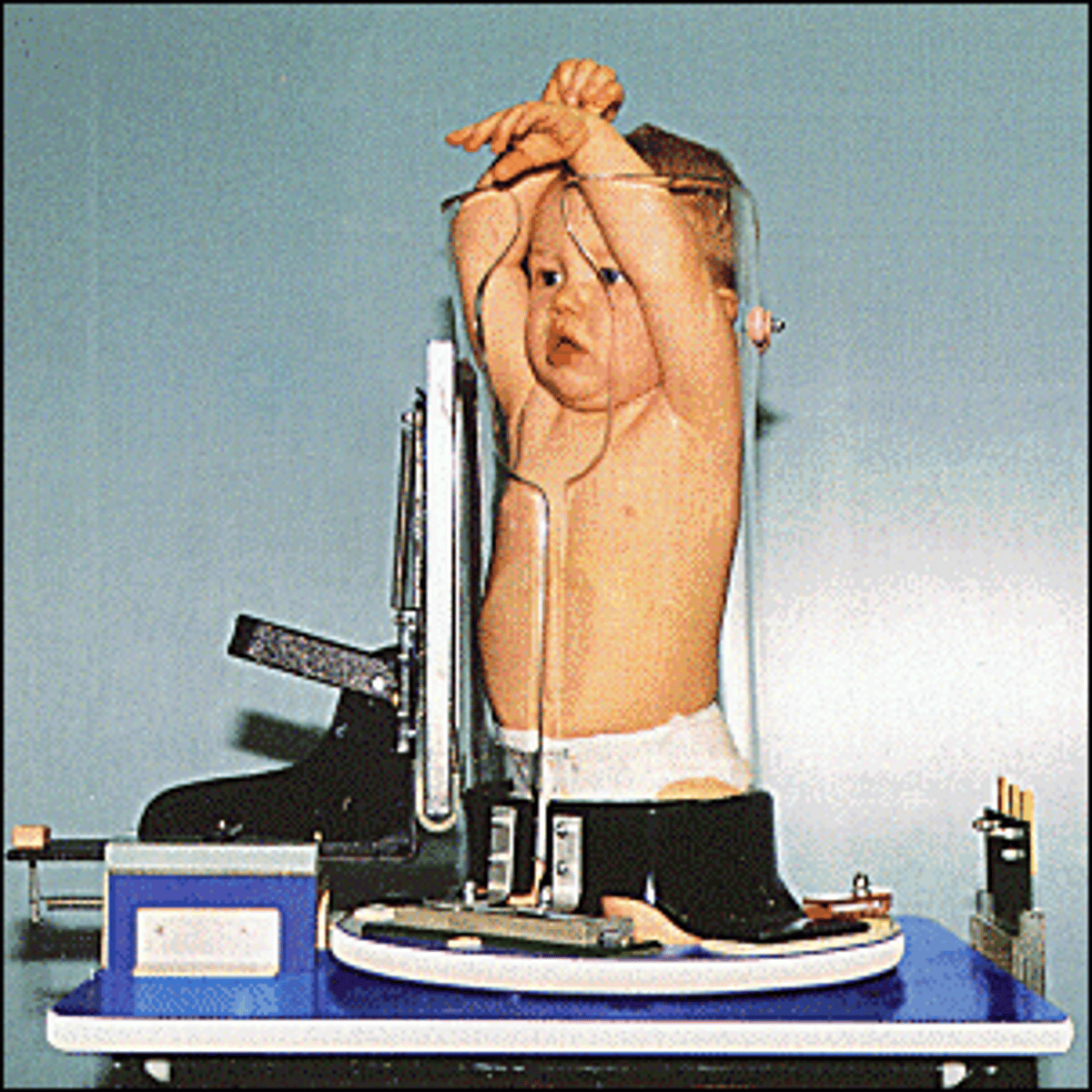
What child immobilizer is commonly used during chest radiography? (Hint: device is no longer used consistently!)
Pigg-O-Stat
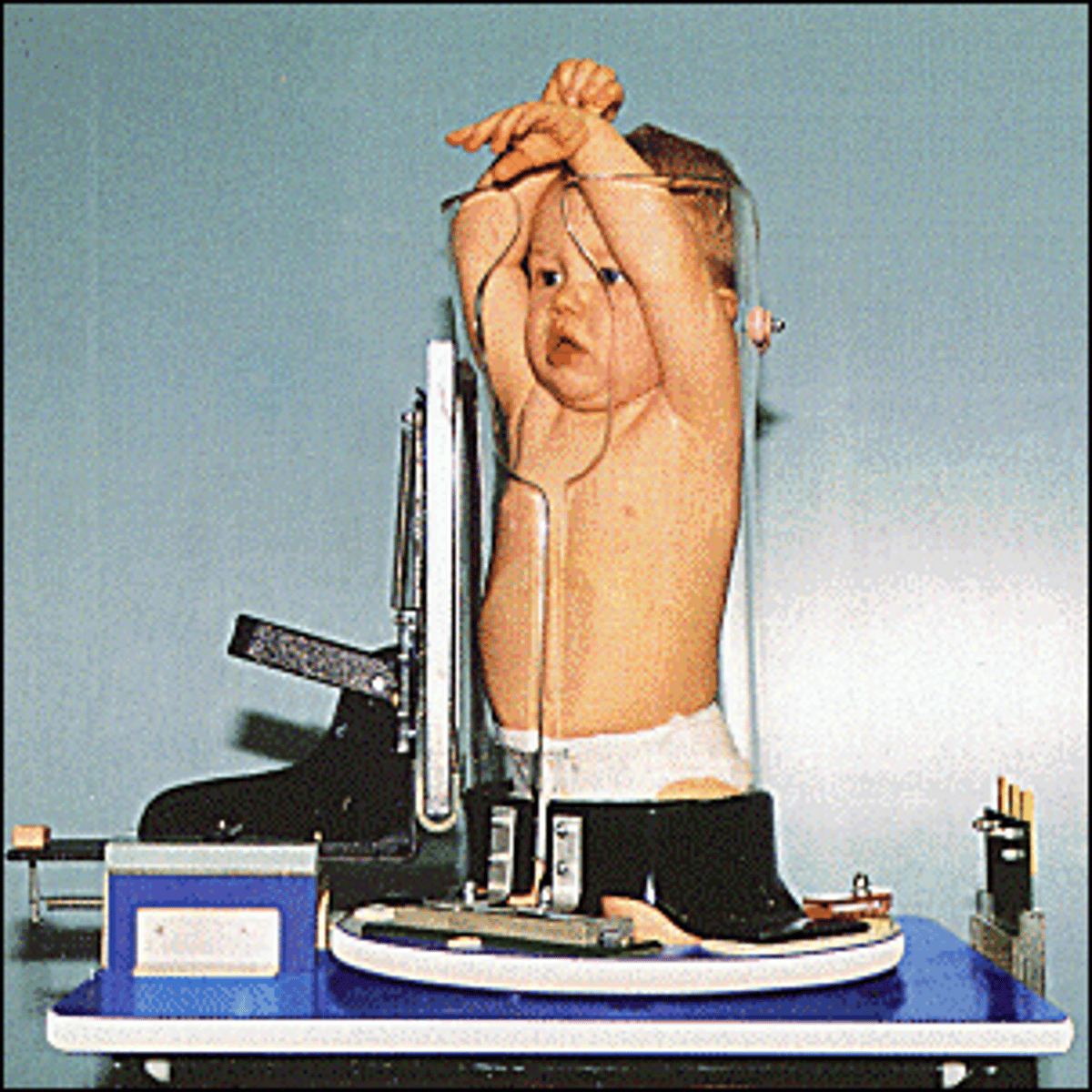
Why is it good if a child cries for a chest radiograph? (Hint: this is not sadistic!)
Their lungs will fill with air and give the needed inspiration
Pedia-Poser chair
A chair-like seat that can be adjusted to accommodate an infant or child up to 4 years old
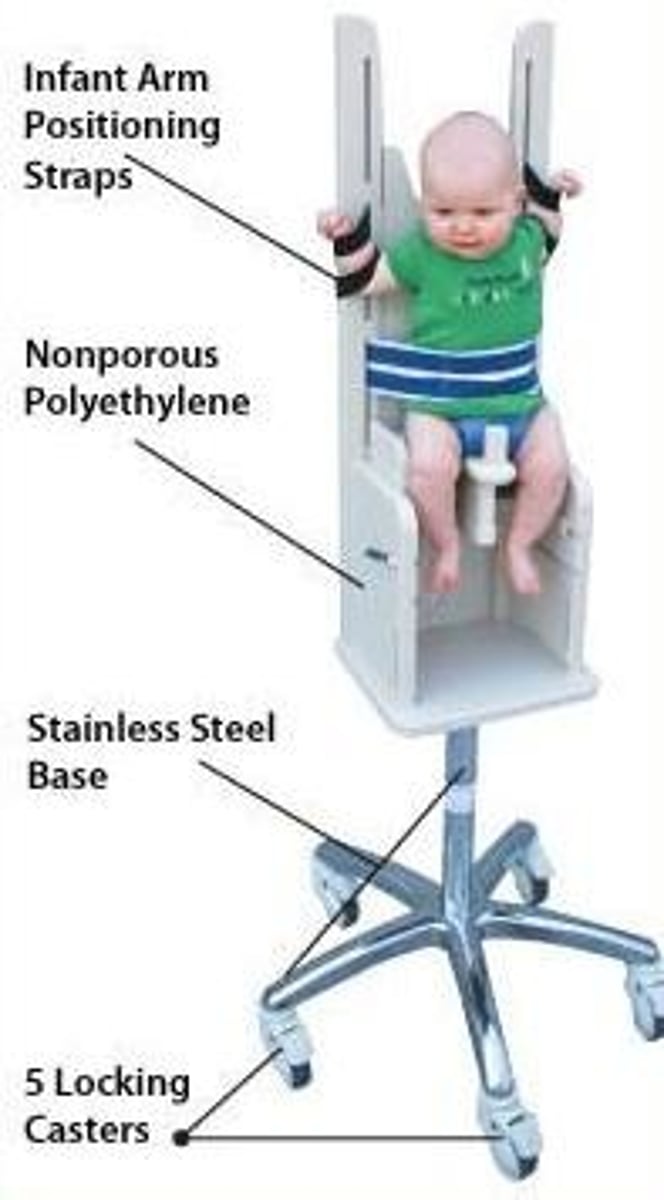
Why is it not ideal to lay a baby flat or recumbent when taking a chest radiograph?
This position does not allow the lungs to expand fully
It is okay to use undue force when immobilizing a child; true or false?
False; it is better to use a sheet or commercial immobilizer than to use force
An infant is having trouble remaining still for a skull x-ray, what can be used to prevent them from rolling their head?
Support their head with sponges on either side, making sure to exert no pressure on their ears or fontanelles
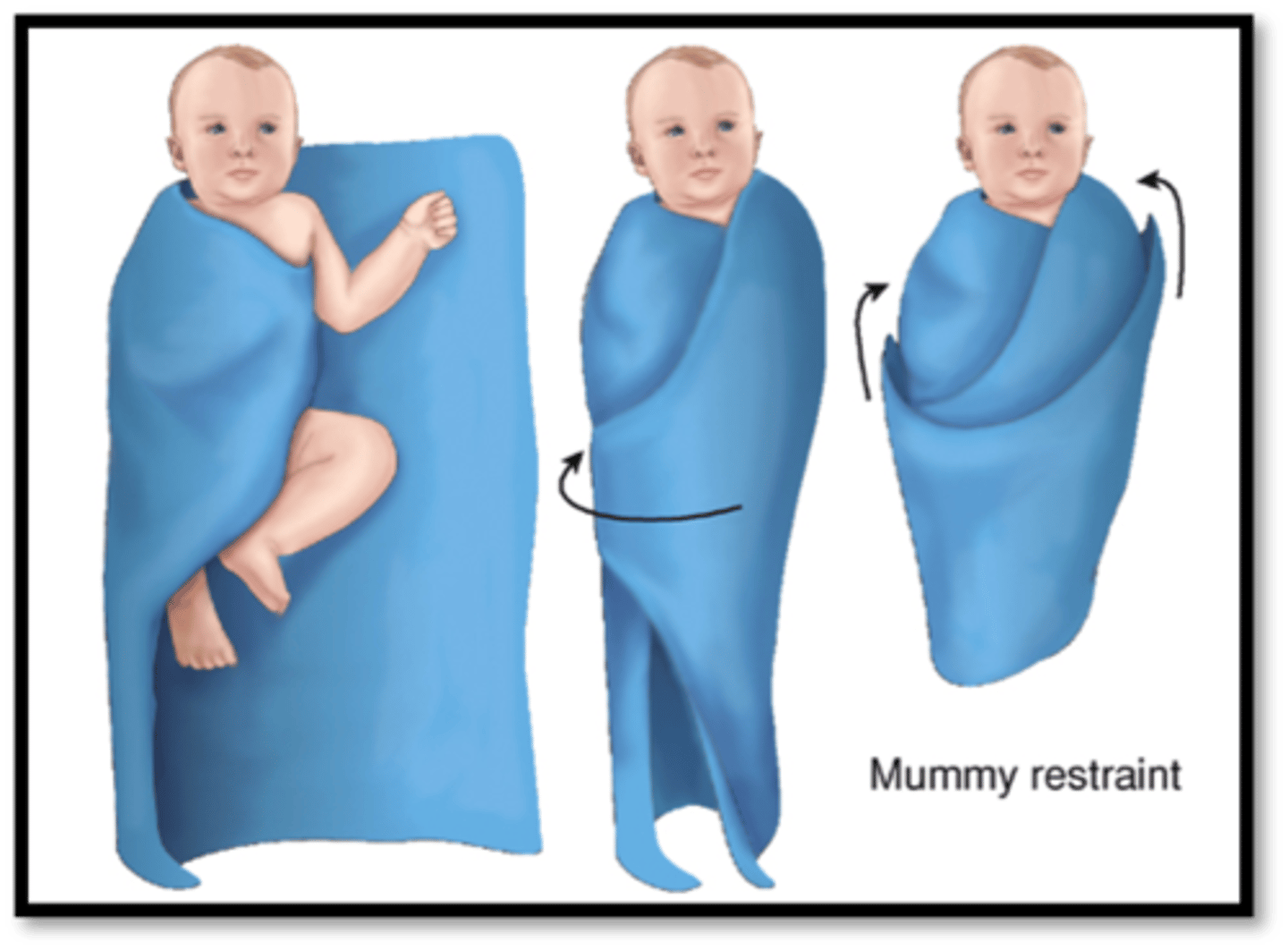
Mummy-Style Sheet Wrap Immobilizer
A blanket or sheet wrapped in a special way to enclose a child's body to prevent movement during a procedure
Shielding is not required for pediatric procedures due to the extremely low dose from DR; true or false?
False; shielding should be implemented for all pediatric procedures
ALARA
As Low As Reasonably Achievable
3 multiple choice options
Image Gently
A campaign initiated to bring awareness and promote radiation protection in the imaging of children

When was Image Gently founded?
2007
A technologist can administer contrast media to patients under 18 years of age; true or false?
Partially true; that is only if a registered nurse is not available and the technologist has the proper education and certification to administer
Child abuse
The psychological, emotional, and sexual abuse of a child
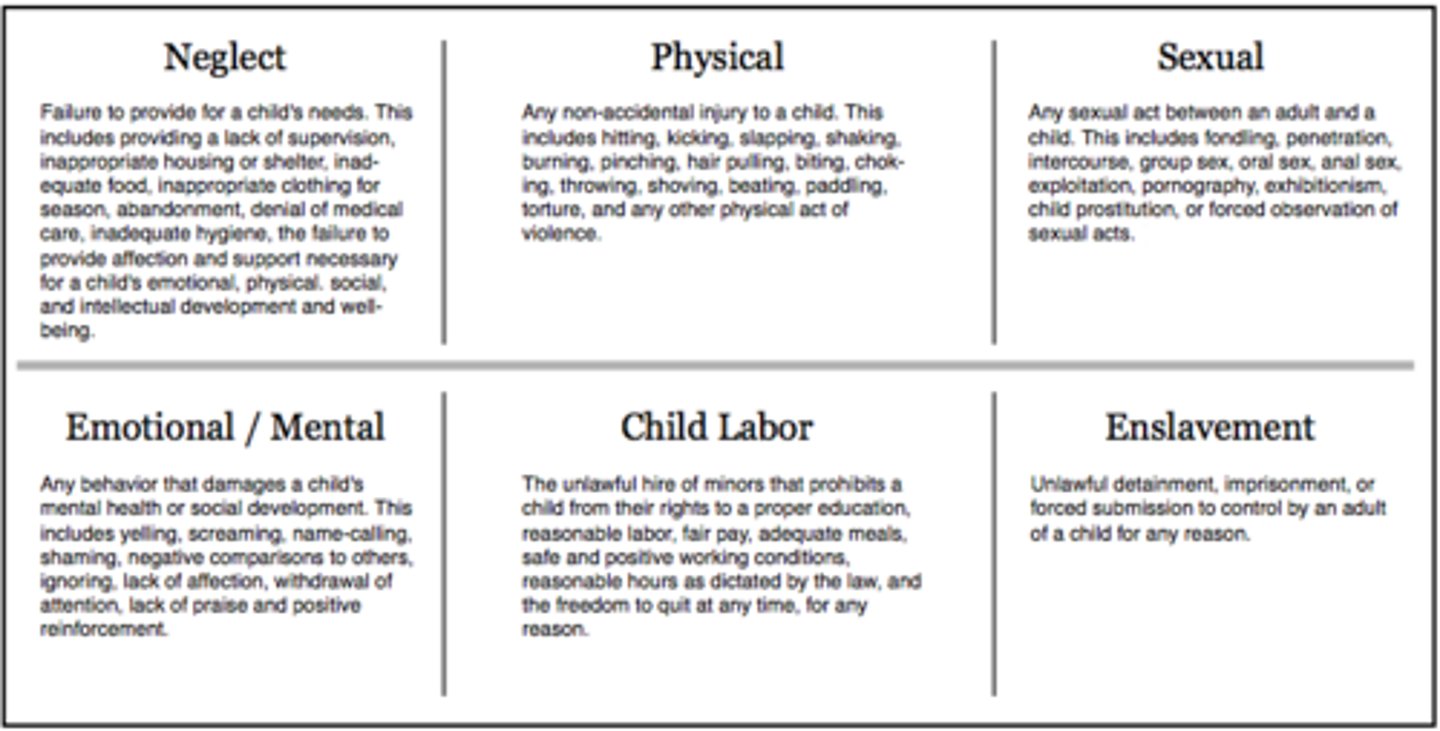
What is any act of admission or commission that endangers or impairs a child's physical or emotional health and development?
Child abuse
Which pediatric age group experiences the highest rate of abuse?
Babies less than a year old
Physical abuse
Occurs when a someone is purposely, physically injured by another person
Neglect
Failure to provide adequate food, shelter, affection, supervision, education, or medical care
Emotional abuse
Injuring someone's self-esteem or emotional well-being through isolation, ignoring, or rejecting the child; constant belittlement or beratement
Sexual abuse
Any sexual activity without consent, such as fondling, oral-genital contact, intercourse, exploitation, or exposure to child pornography
Medical abuse
Occurs when someone gives false information about illness that requires medical attention, putting the person of interest at risk
Child abuse is usually not a single act of physical abuse, neglect, or molestation, but is typically a repeated pattern of behavior; true or false?
True
In 2020, ______ of the U.S. population was 65 years or older.
16.5%
What is the average life expectancy as of 2020?
79.83 years old
On average, people who reach age 65 years can expect to live nearly ______ more years.
15
People 65 years or older are about three times more likely to be hospitalized than individuals in younger age groups; true or false?
True
Heart disease, cancer, and strokes are the cause of ______ of deaths in persons aged over 65 years.
80%
Depression
A morbid sadness, dejection, or melancholy

Dementia
Organic mental syndrome characterized by general loss of intellectual abilities involving impairment of memory, judgment, and abstract thinking
Alzheimer disease
An illness characterized by dementia, confusion, memory failure, disorientation, restlessness, speech disturbances, and an inability to carry out purposeful movements
What disease is not part of the normal aging process but growing older is the single greatest risk factor for it?
Alzheimer disease
Risk for specific diseases increases with age, but it is incorrect to make assumptions about diseases or cognitive function based solely on age; true or false?
True
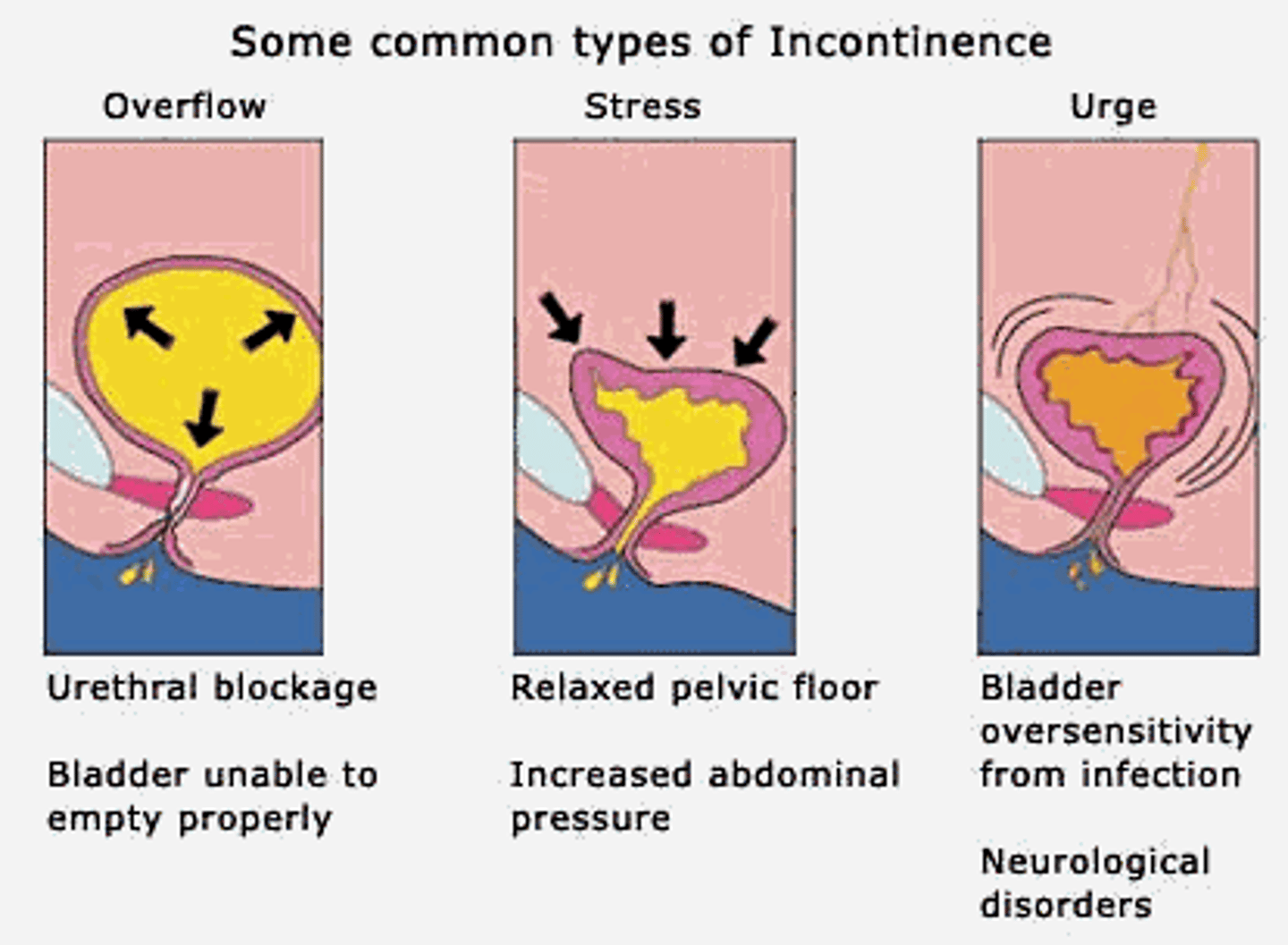
Urinary incontinence
Inability to control urinary functions
How does the skin change with age?
- Skin wrinkles, becomes lax, and dries out
- Skin becomes thin and fragile
- Veins enlarge
- Nails lose their luster and may yellow and thicken
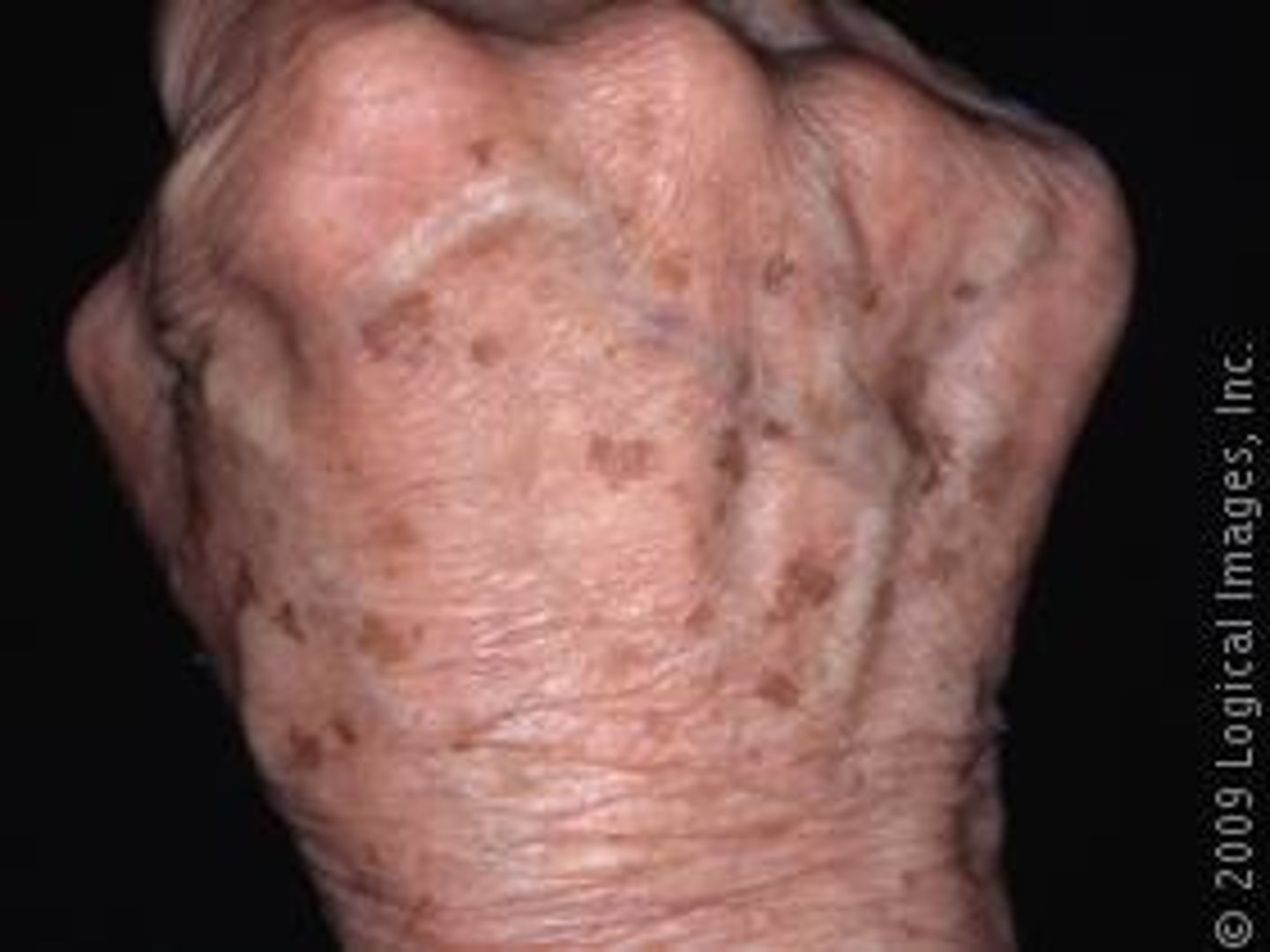
Actinic keratosis
A precancerous skin growth that occurs on sun-damaged skin
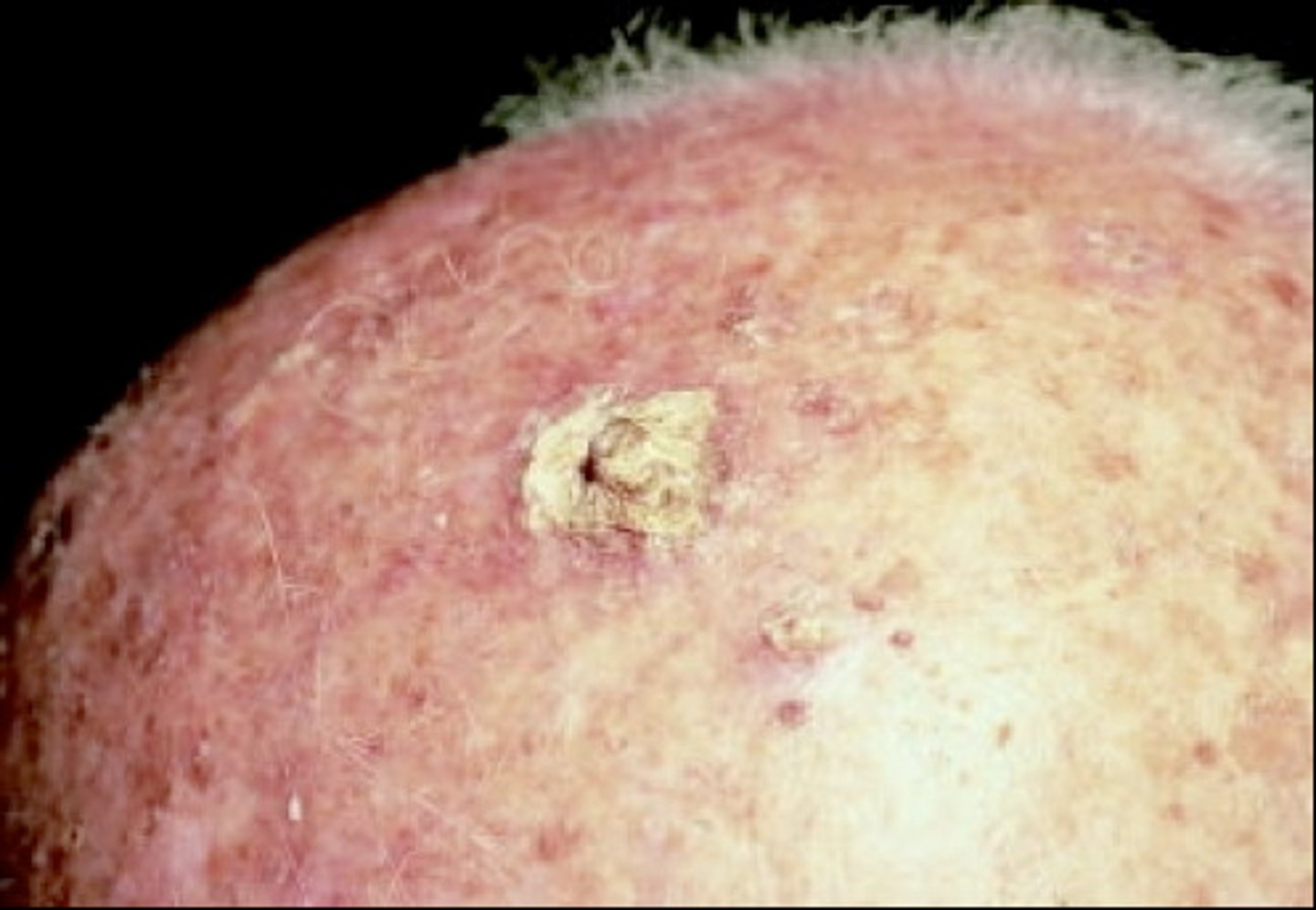
Which age group is most vulnerable to skin infections?
Geriatric patients
How do sensory functions change with age?
- Mild loss of visual acuity, partially presbyopia
- Age-related macular degeneration
- Cataracts and glaucoma
- Lens of the eye thickens, making pupils appear smaller
- Light-sensing threshold is affected and adaptions from light to dark and color perception diminishes
- Tear production is either reduced or increased
- Skin of the eyelid loosens
- Hearing loss is common
- Taste and smell decrease
What is the leading cause of vision loss in the elderly?
Macular degeneration
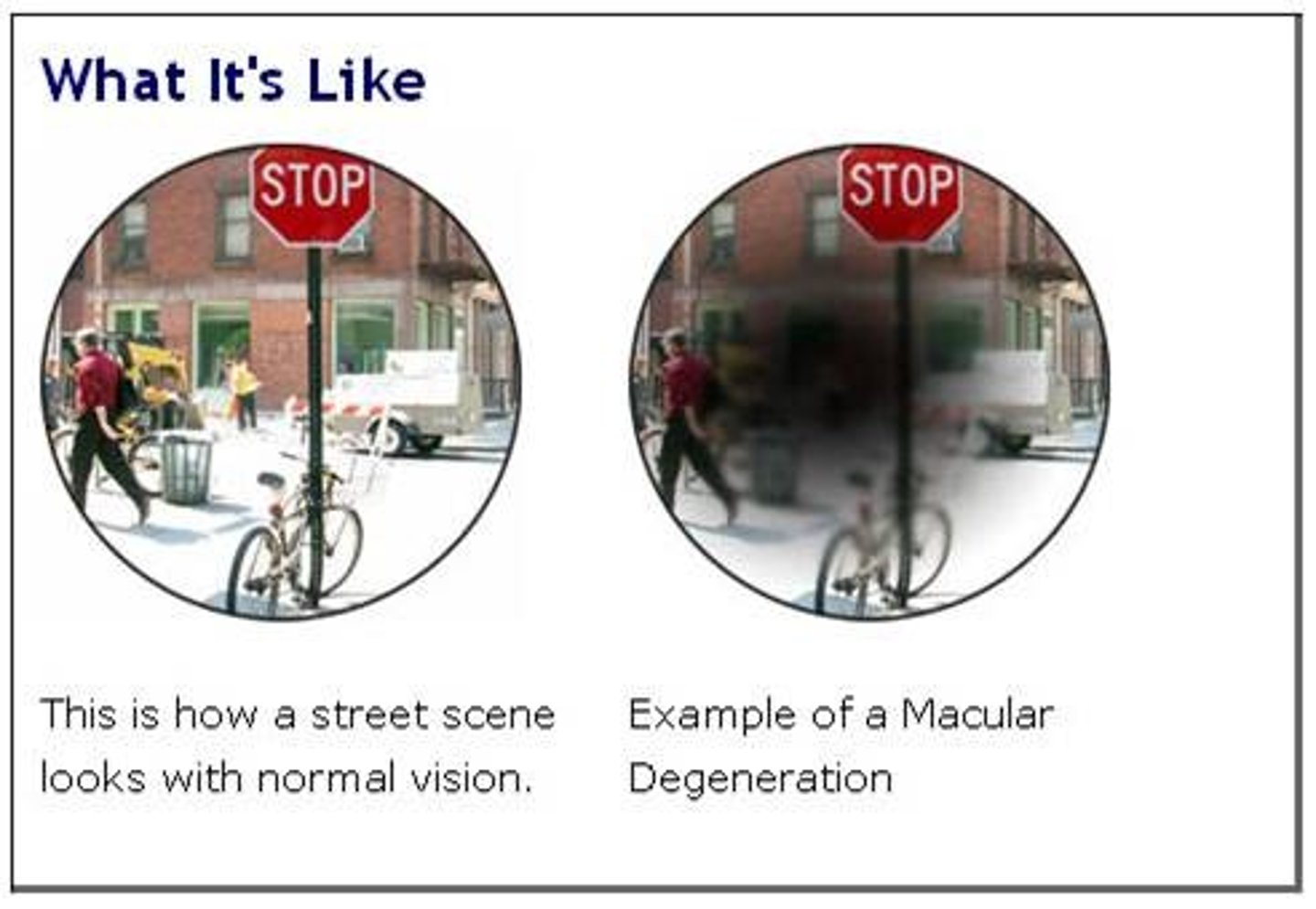
Macular degeneration
Progressive damage to the macula of the retina resulting in loss of central vision
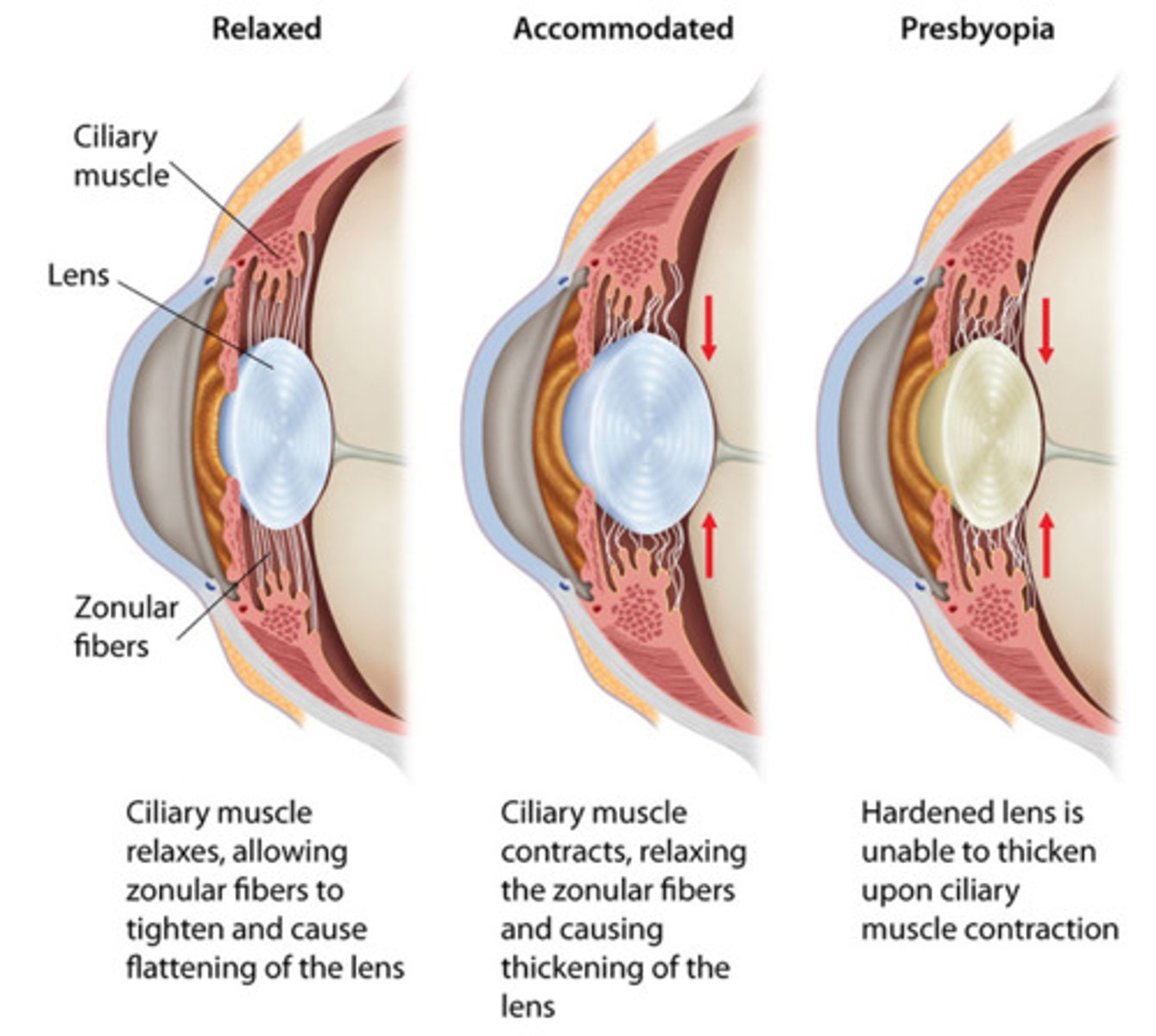
Presbyopia
Farsightedness caused by loss of elasticity of the lens of the eye
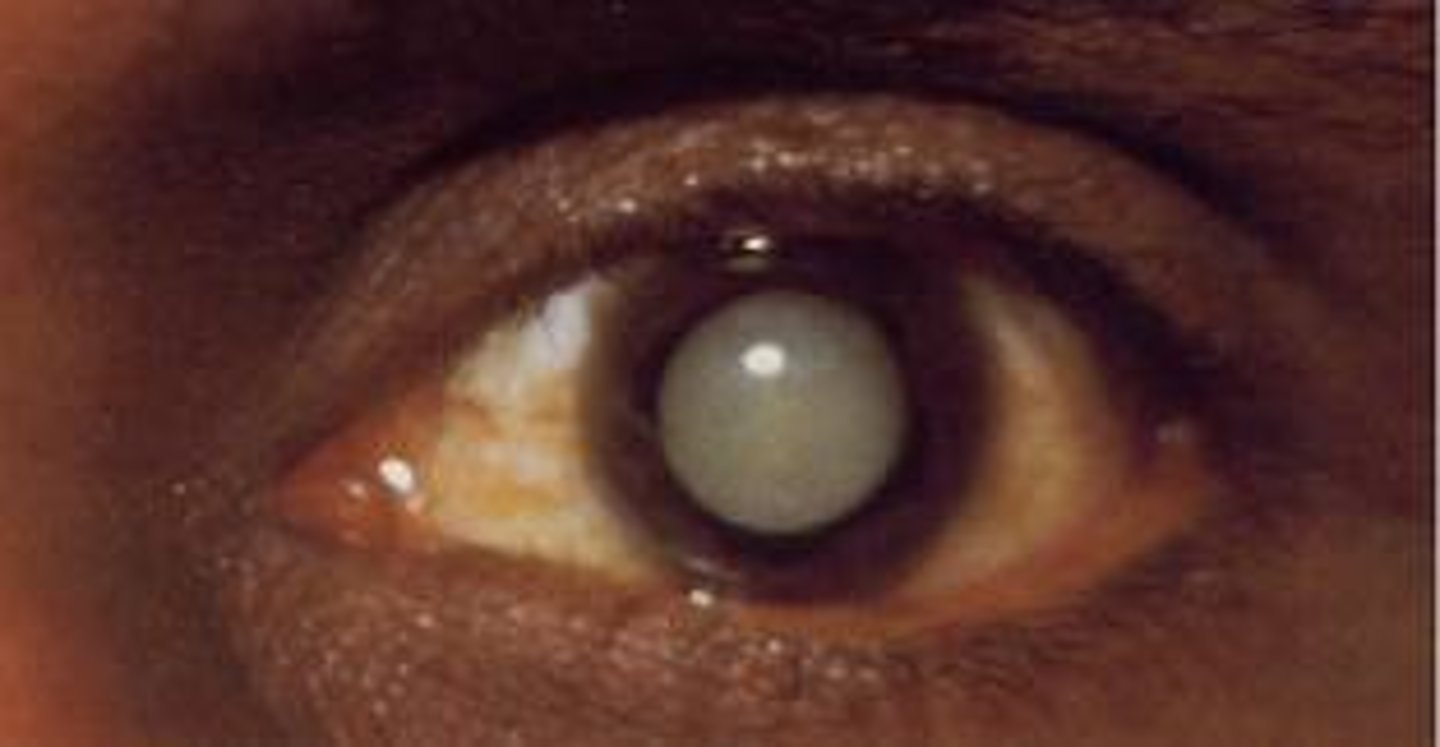
Cataracts
Clouding of the lens
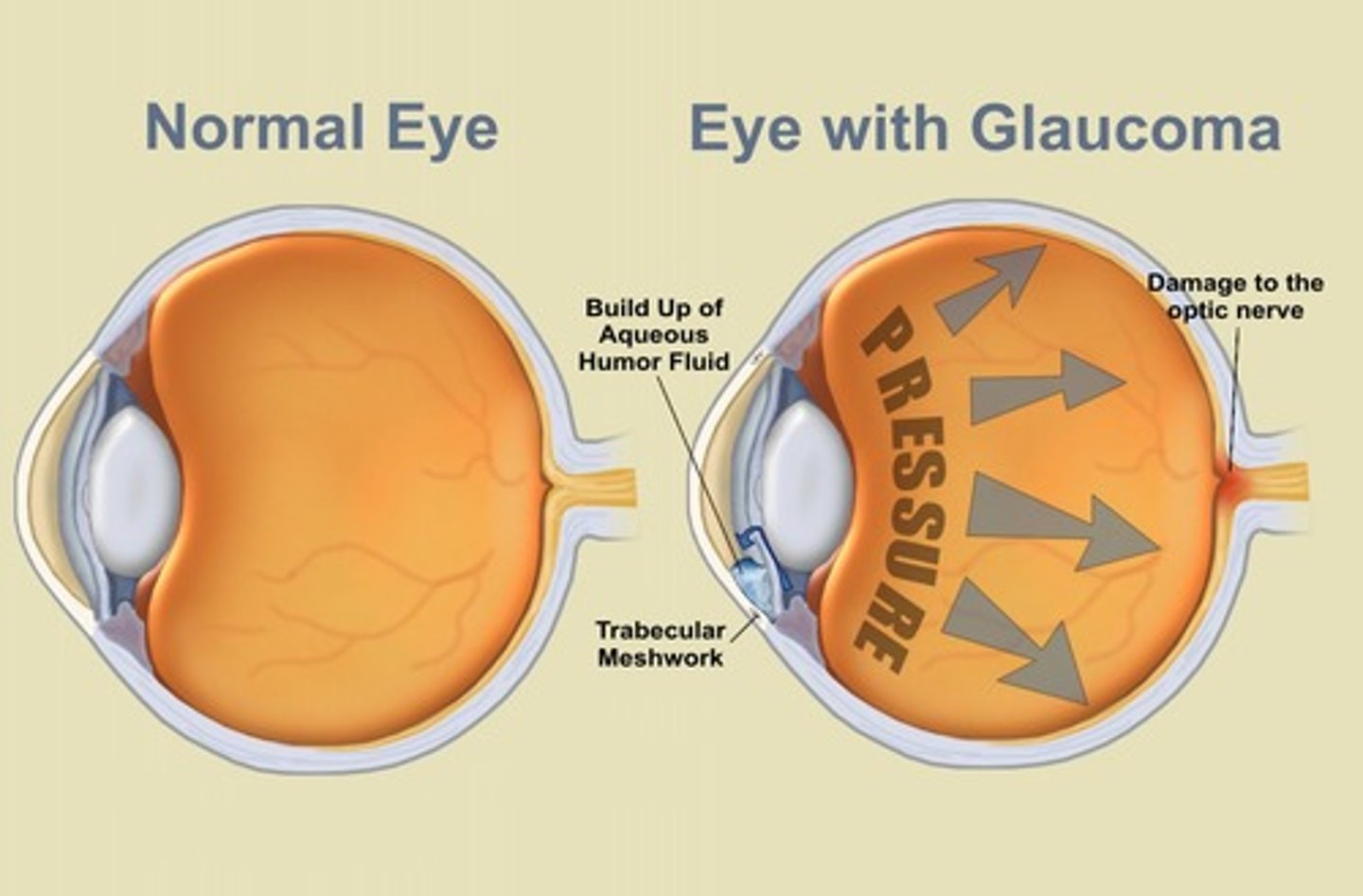
Glaucoma
Increased intraocular pressure results in damage to the retina and optic nerve with loss of vision
How do pulmonary functions change with age?
- Lung capacity diminishes because of stiffening of the chest wall
- Cough reflex becomes less effective
- Normal respiratory defense mechanisms lose effectiveness
- COPD or emphysema is seen more often due to abuse of the lungs from smoking or the environment
- Lung cancer is more common
What cancer causes more deaths than any other cancer in geriatric patients?
Lung cancer
How do cardiovascular functions change with age?
- Structural changes occur in the heart
- Coronary arteries calcify and lose elasticity
- Heart pumps the same amount of blood, but there is a decline in coronary blood flow
- The aorta and its branches dilate and elongate; heart valve thickens
- Hypertension is common and can lead to other processes such as chronic heart failure (CHF) or stroke
About ______ of patients over the age of 80 years old have cardiovascular disease (CVD).
85%
Because of decreased circulation, what are elderly patients at risk of?
Hypothermia or complaints of feeling cold
Postural hypotension
Sudden drop in blood pressure upon standing for 1 to 2 minutes

How do gastrointestinal functions change with age?
- Gastric secretion, absorption, and motility decrease
- Dryness in the mouth
- Swallowing reflex becomes less effective
- Abdominal muscles weaken
- Many do not have teeth or they are decayed / diseased
- Esophageal motility declines
- Diverticulitis and pancreatitis are common
- Loss of sphincter control
What is the second highest cause of cancer in elderly patients? (Hint: pancreas, stomach, and colon!)
Gastrointestinal (GI) cancer
How do genitourinary functions change with age?
- Muscle tone and bladder capacity decrease
- Pubic hair becomes sparse
- Vaginal atrophy occurs
- Involuntary bladder contractions increase
- Prostate gland enlarges
- Size of the penis and testes decrease
- Urinary incontinence is common

