14. Introduction to ecology
 Call Kai
 Learn
Learn Practice Test
 Spaced Repetition
 Match
Match Flashcards
 Knowt Play
1/48

There's no tags or description
Looks like no tags are added yet.
Name | Mastery | Learn | Test | Matching | Spaced | Call with Kai |
|---|
No analytics yet
Send a link to your students to track their progress
49 Terms
What is ecology?
the scientific study of the interactions between organisms and the environment
the interactions determine distribution of organisms and their abundance
ecology reveals the richness of the biosphere
Ecology derived from: Oikos = home & Logos = study
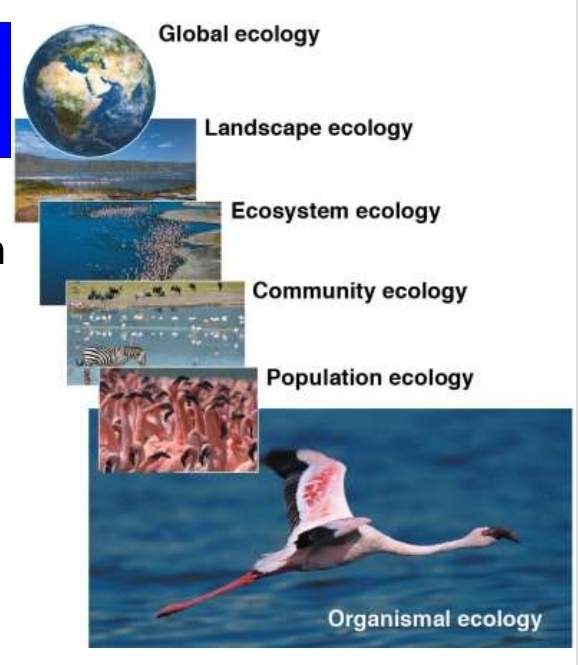
Levels of Ecology
Ecologist work at levels ranging from individual organisms to the planet:
Global, landscape, ecosystem, community, population, organismal
organismal ecology
this ecology studies how an organism's structure, physiology and behaviour (for animals) meet environmental challenges
What is a population?
A population is a group of individuals of the same species living in an area
population ecology
Population ecology focuses on factors affecting how many individuals of a species live in an area
What is a community?
A community is a group of populations of different species in an area
COmmunity Ecology
Community ecology deals with the whole array of interacting species in a community
What is an ecosystem?
An ecosystem is the community of organisms in an area and the physical facors with which they interact
Ecosystem ecology
Ecosystem ecology emphasizes energy flow and chemical cycling among the various biotic and abiotive components
What is a landscape?
A landscape is a mosaic of connected ecosystems
Landscape ecology
Landscape ecology deals with arrays of ecosystems and how they are arranged in a geographic region
What is the biosphere?
The biosphere is the global ecosystem
essentially the sum of all the planet's ecosystems
Global ecology
Global ecology examines the influence of energy and material on organisms across the biosphere
The ecological levels of organization
organisms → population → community → ecosystem → landscape → biosphere
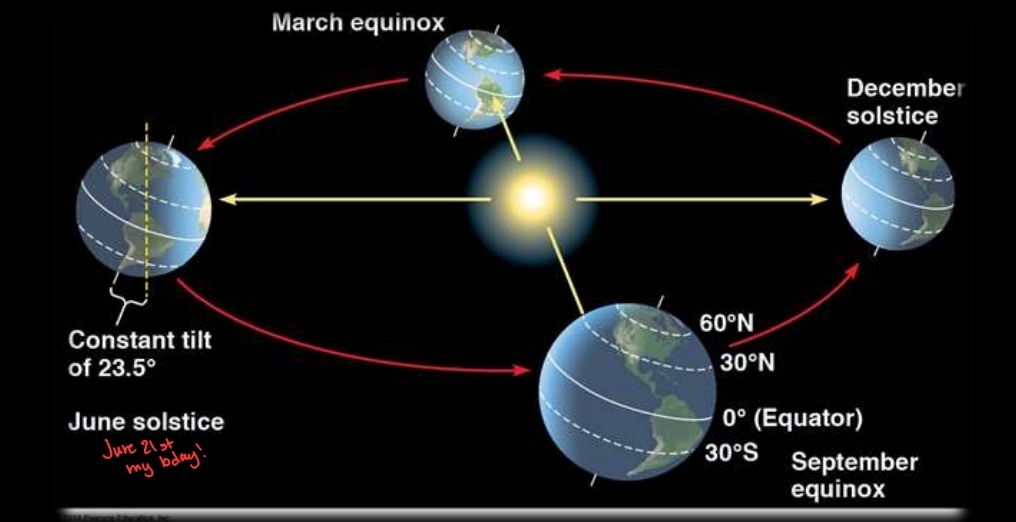
Regional effects on climate: Seasonality
In middle to high latitudes, Earth's tilted acis of rotation and it's annual passage around the sun cause strong seasonal cycles in day length, solar radiation and temperature
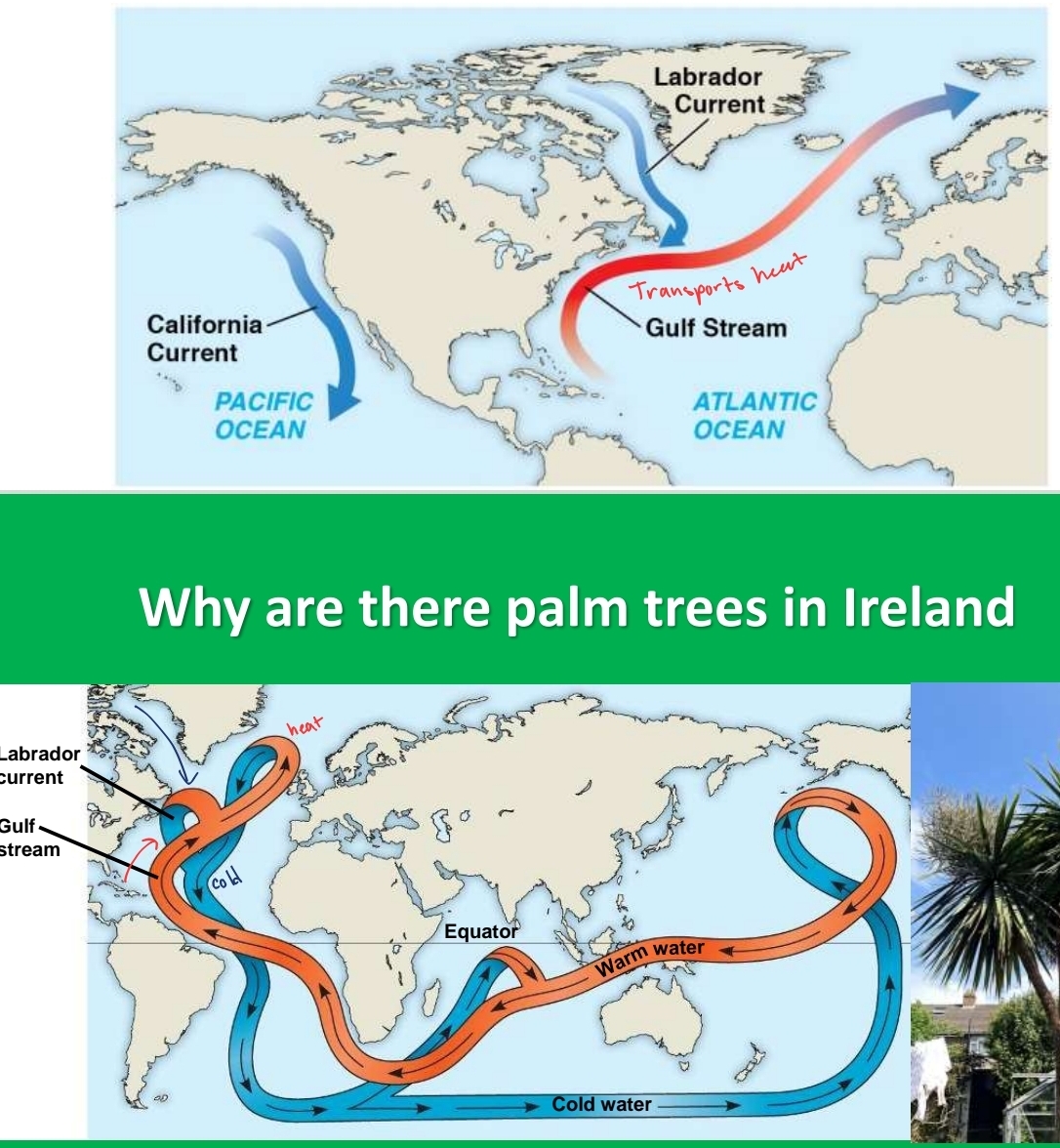
Regional effects on climate: bodies of water
Ocean currents influence climate along the coasts of continents by HEATING or COOLING overlying air masses that pass across the land
coastal regions are also generally wetter than inland regions
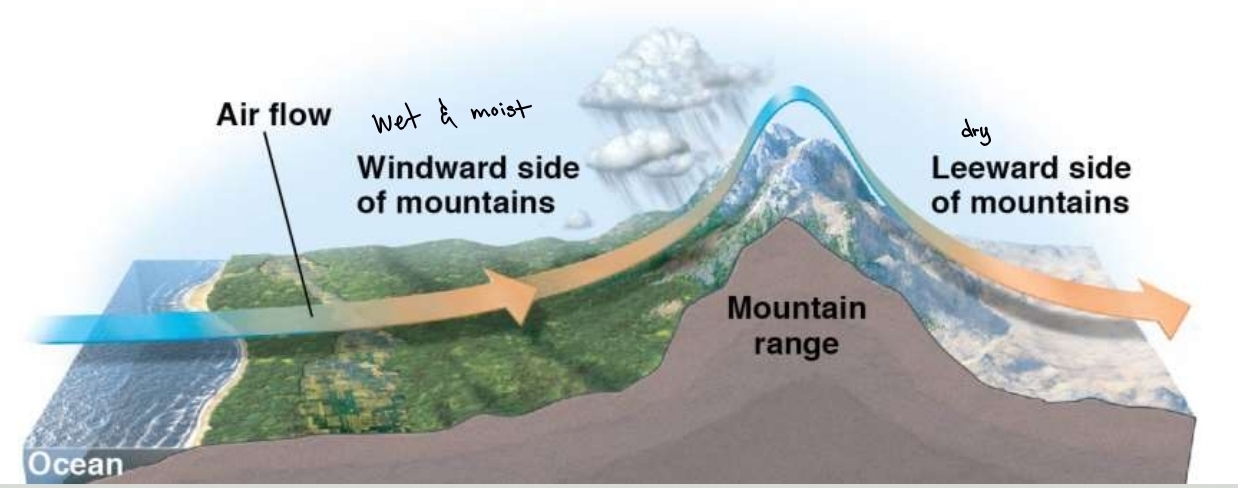
Regional effects on climate: Mountains
Mountains influence air flow over land
As warm, moist air approaches a mountain it is released on the windward side
This causes the leeward side to be dry
Biomes
These are the major ecological associations that occupy broad geographic regions of land or water
Varying combinations of biotic and abiotic factors determine the nature of biomes
Includes terrestrial and aquatic
Terrestrial biomes Features
these are defined by vegetation type
Terrestrial biomes are named for major physical or climatic features and for their dominant vegetation
Vertical layering of vegetation is an important feature
layering of vegetation creates different habitats for animals
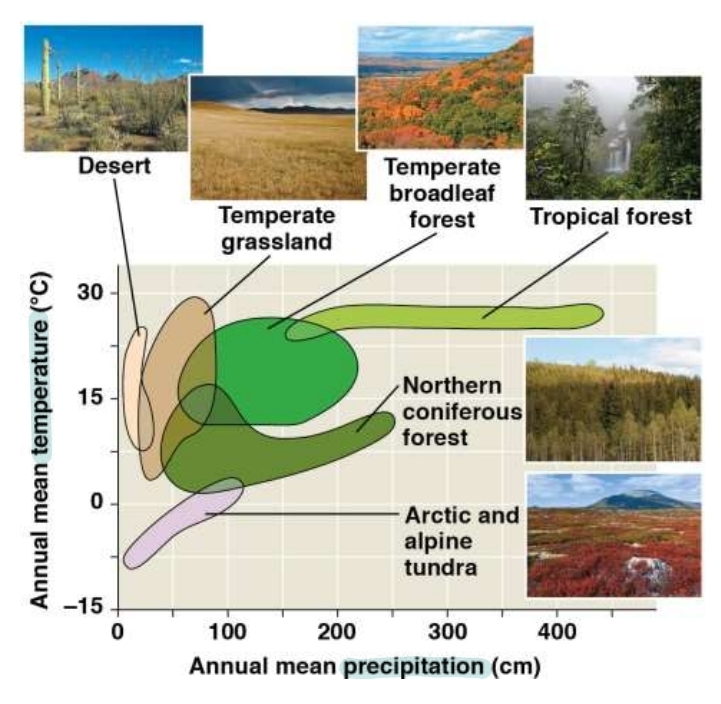
Climograph
Shows how climate affects the distribution of biomes .
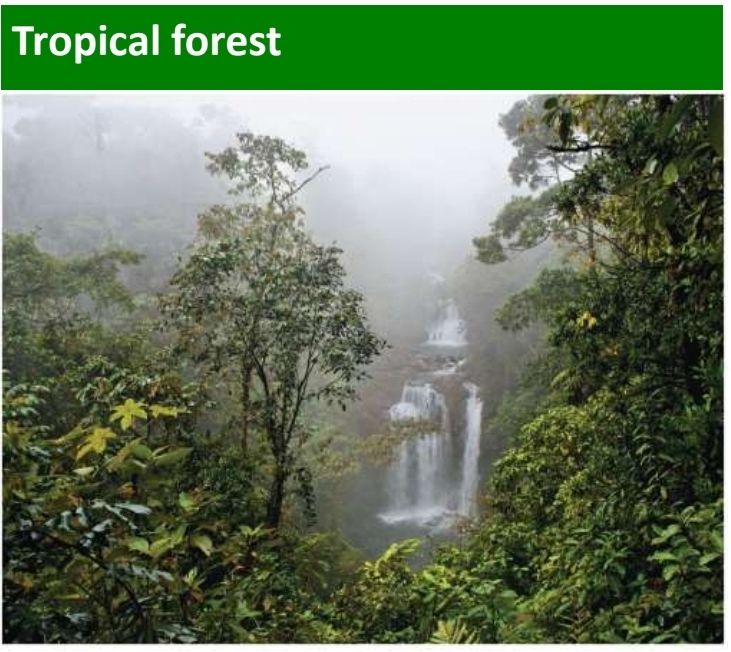
Tropical forests
Climate: Temp is usually high.
Rain forests get 200-400cm of rain annually
Dry forests get 150-200 cm annually
Organisms: Vertically layered forests and plants compete for light
Tropical forests is home to millions of species
has the highest animal diversity than any other terrestrial biome
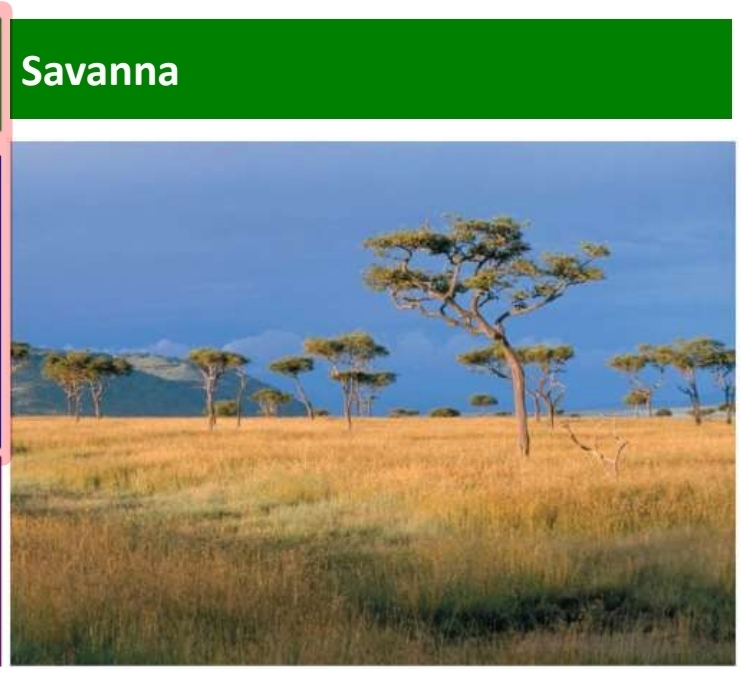
Savanna
Climate: Temp averages 14-19 degrees C
Rainfall averages 3-50 cm per year and is seasonal
Organisms: Scattered trees that are often thorny
Fires are common in dry season and dominant plant species are fire adapted
Grasses and forbs primary ground cover
Large herbivores mammals and their predators are common
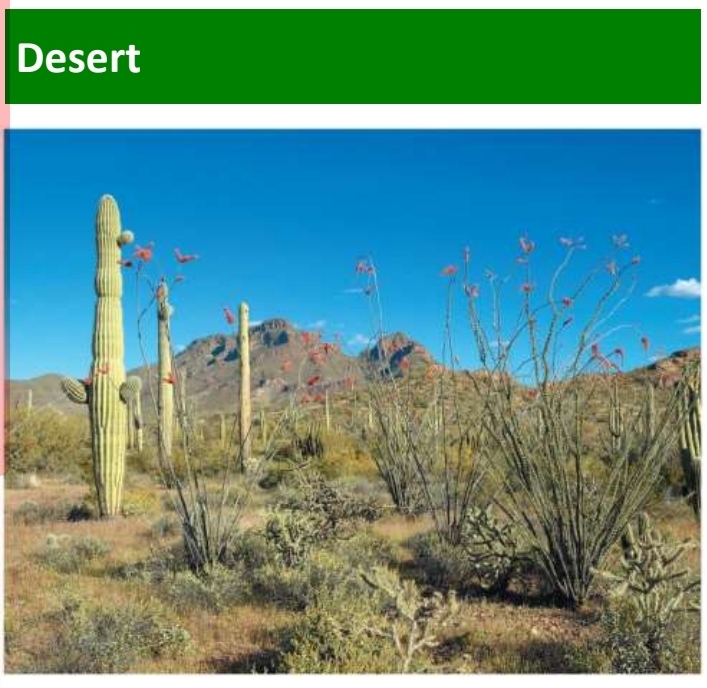
Desert
Climate: Temp varies seasonally & daily
>50 degrees in hot deserts
<30 degress in cold deserts
Organisms: Dominated by low widely scattered vegetation
Plant adaptations: tolerance to heaet, water storage, reduced leaf area, physical defenses against herbivores
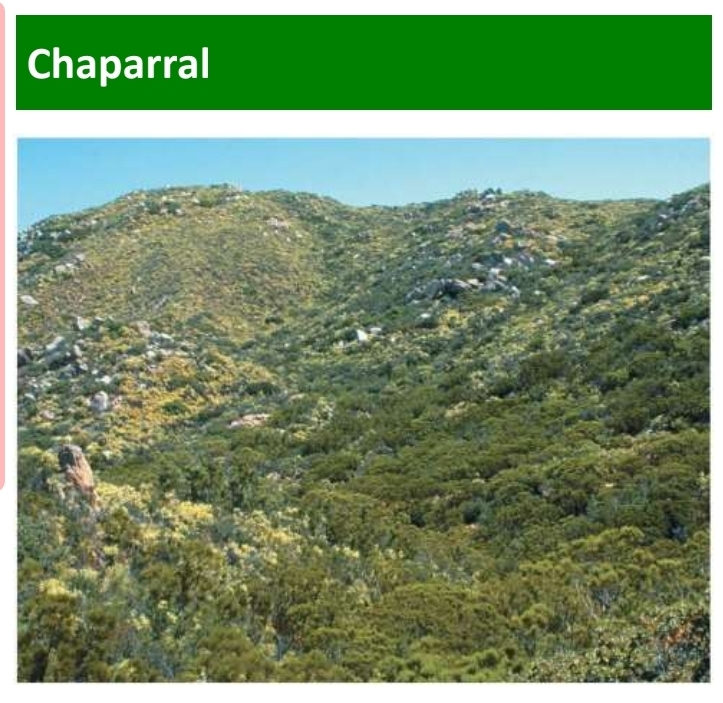
Chaparral
Climate: Annual precipitation 30-50cm
Has rainy winters and dry summers
fires occur routinely
Organisms: Dominated by shrubs, small trees that are fire adapted
Some shrubs germinate only after fires and are adapted to drought
Animals include broswers such as deer and goats; many insects, small mammals, amphibians and birds
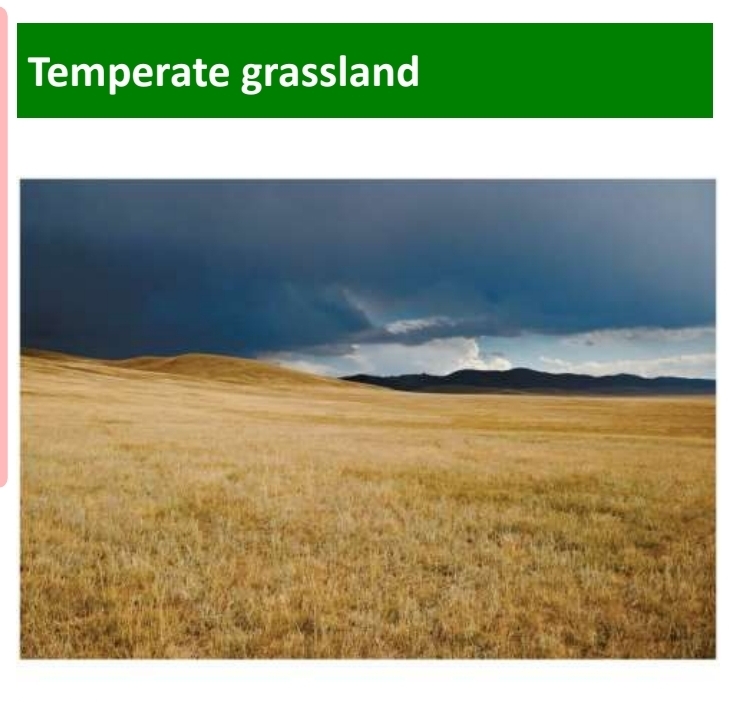
Temperate grassland
Climate: Annual precipitation 30-100cm
has dry winters and wet summers
Organisms: Dominated by grasses and forbs
Grassland plants are adapted to drought & fire
Grazing by large animals, such as bisons & wild horses, prevent establishment of trees
Burrowing animals are common
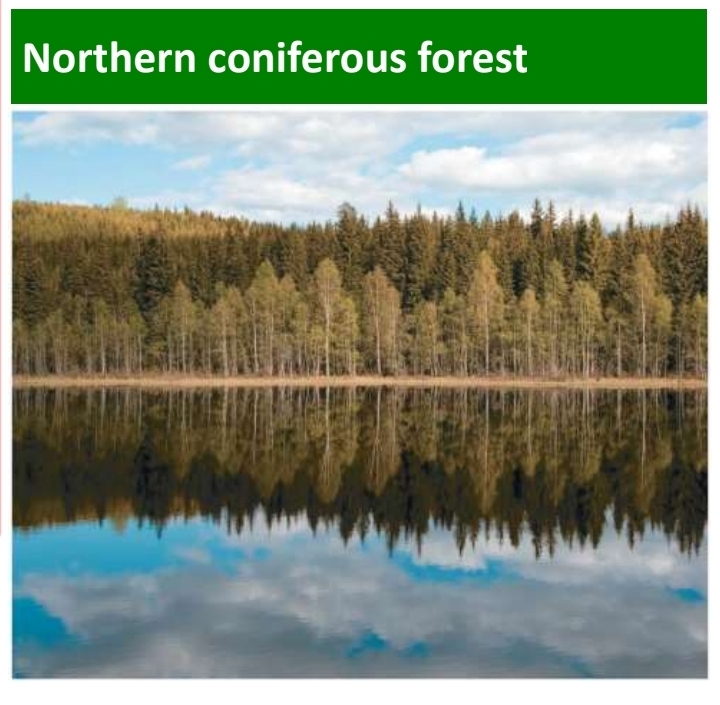
Northern coniferous forest
Climate: Annual precipitation 30-70cm
winters are cold and has a large annual temp range
Organisms: Conifers are common and some depend of fire to regenerate
Plant diversity lower than broadleaf forests
Many migratory birds nest in coniferous forests
Mammals include moose, brown bears and siberian tigers
Insect outbreaks can kill trees
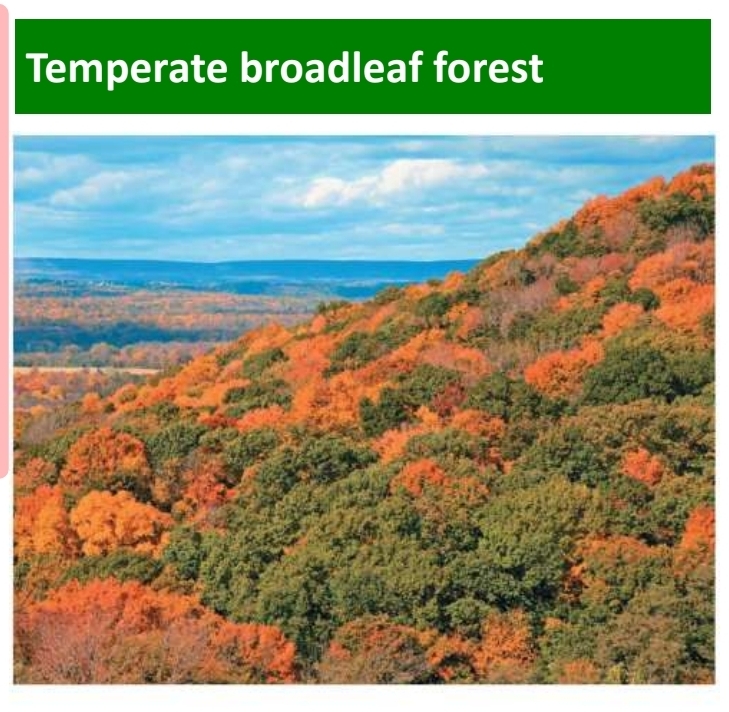
Temperate broadleaf forest
Climate: Annual precipitation 70-200cm
winter low to about 0 degrees and has humid summers up to 35 degrees
Organisms: Dominant plants are deciduous trees
In Austrailia, evergreen eucalyptus trees are common
In the northern hemisphere, many mammals hibernate while birds migrate south
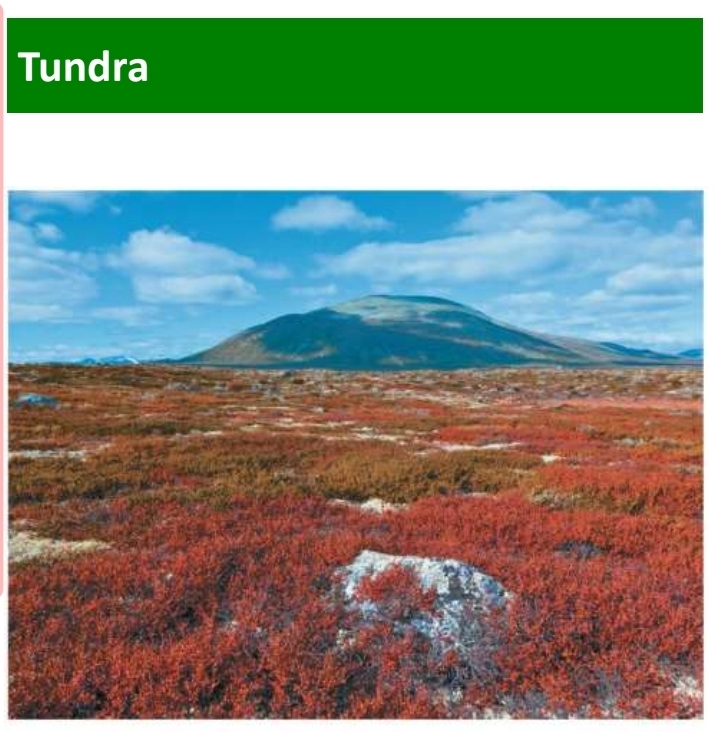
Tundra
Climate: Annual precipotation 20-60 cm in arctic tundra and up to 100cm in alpine tundra
Winters are cold while summers only reach 10 degrees
Organisms: Vegetation mostly herbaceous, such as mosses, grasses and forbs
Musk oxen resident; migratory caribou
Predators include: bears, wolves, foxes and snowy owls
Many migratory birds breed on tundra in the summer
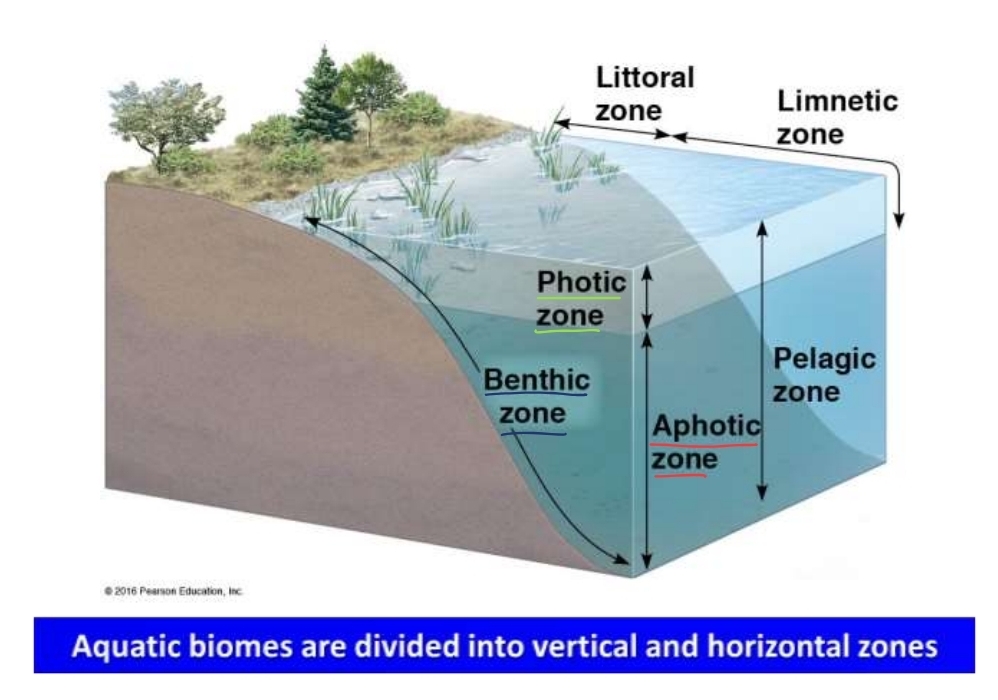
Aquatic biomes Vertical zones
Called the Pelagic Zone
Photic zone - the top layer with the most light penetration
Aphotic Zone - Below the photic zone and has the least light penetration
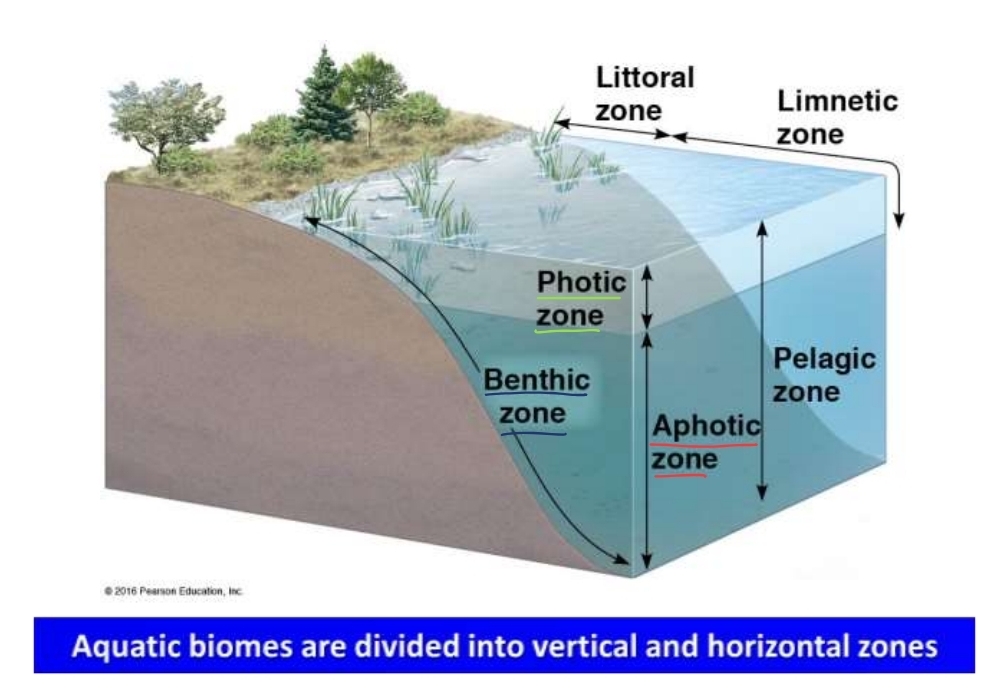
Aquatic Biomes Horizontal zones
Called the Benthic zone
Littoral zone - closest to the shore and touches it
Limnetic zone - past the littoral zone
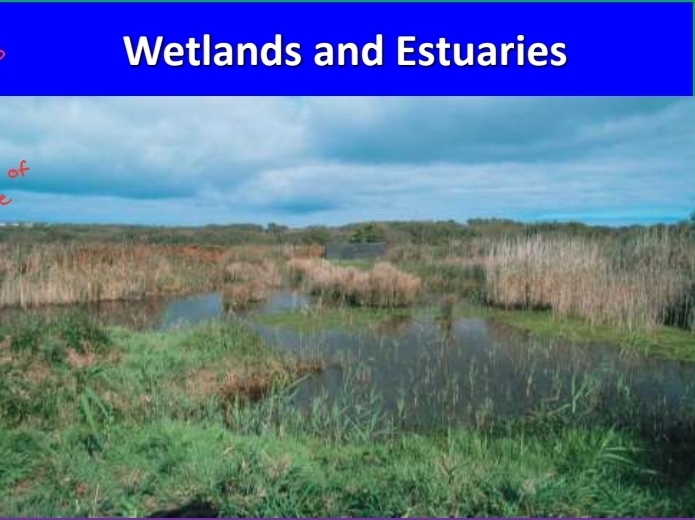
Wetlands and Estuaries
Physical Environment: Wetlands has water at least some of the year
Wetlands can develop shallow basins, along flooded river banks, or on the coasts of large lakes and seas
Estuary is a transition between river and sea
They are highly productive habitats
Organisms:
Water saturated soils favour growth of plants such as cattails & sedges
Herbivores include: crustaceans, aquatic insect larvae, muskrats
Predators include: dragonflies, frogs, alligators and herons
Estuaries support oysters, crabs and fish
Why are wetlands good?
Wetlands act like giant sponges
they soak up rain and snowmelt and release water in drier season
they reduce soil erosion and flooding and filter water
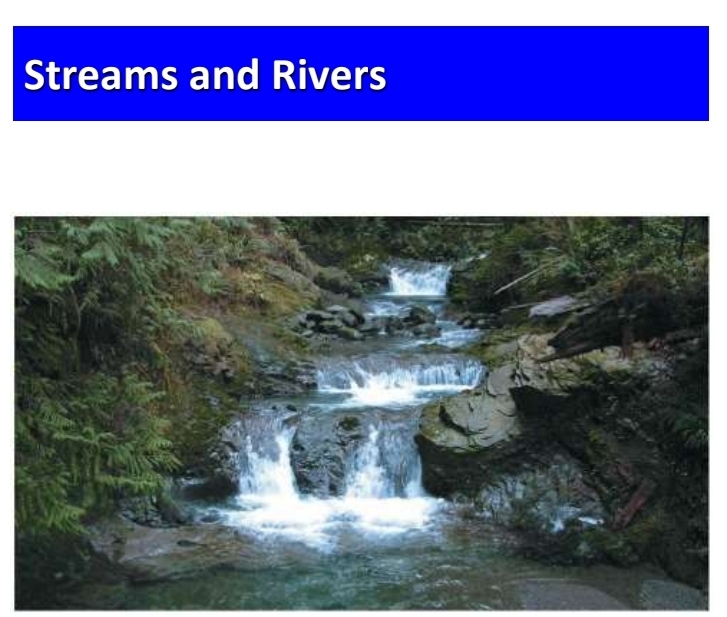
Streams and Rivers
Physical environment: Headwaters clear and cold, downstream water is warmer and more turbid
Organisms: Headwaters may be rich in phytoplankton or rooted aquatic plants
Diverse fishes and invertebrates inhabit unpolluted streams and rivers
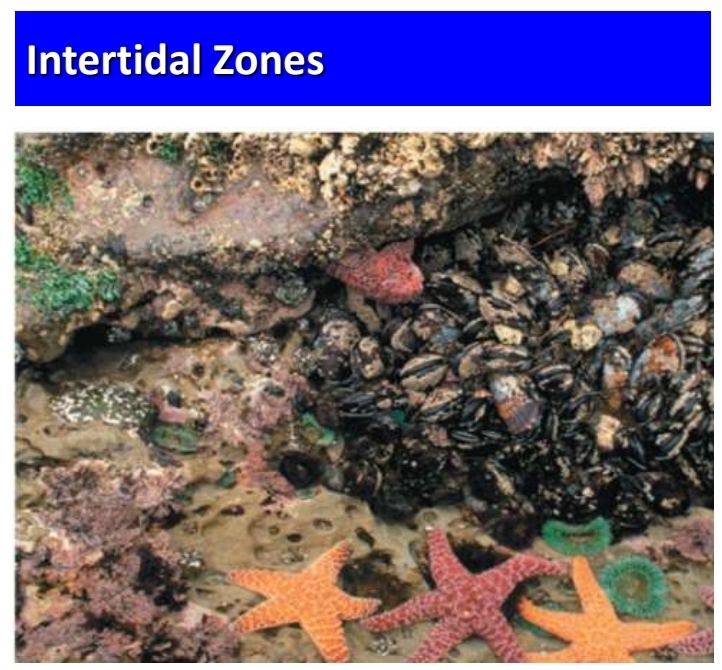
Intertidal Zones
Physical environment: Periodically submerged by tides twice daily
upper strata experience more exposure to air and greater variations in temp & salinity
Organisms: Includes diverse marine algae while sandy zones lack attached plants or algae
Some animals adapted to attaching to rocks
many bury themselves in sandy or muddy areas and feed on rising tides
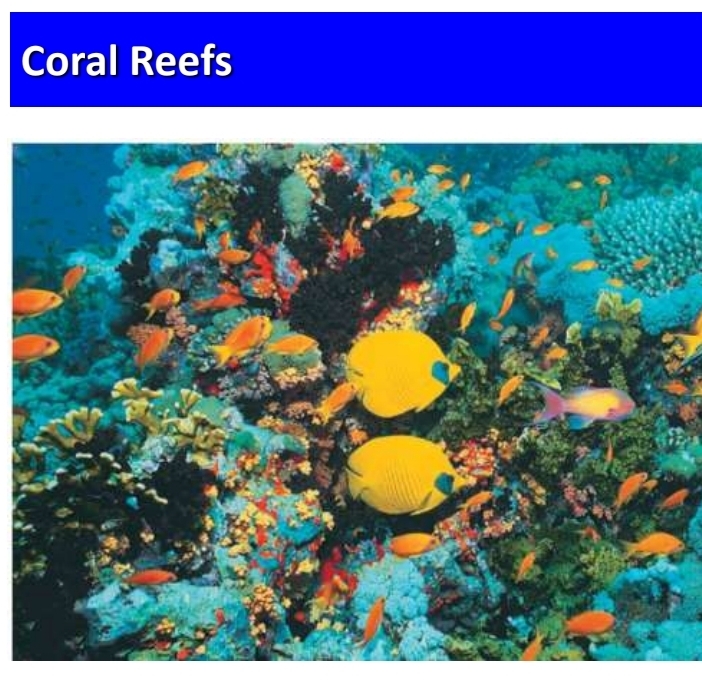
Coral Reefs
Physical Environment: formed largely from calcium carbonate skeletons of corals
Shallow reef building corals live in clear photic zone of tropical seas
Organisms: Unicellular algae live within tissues of corals in mutualism that provides coral with organic molecules
Fish and invertebrate density on corals exceptionally high
Species diversity rivals tropical forests
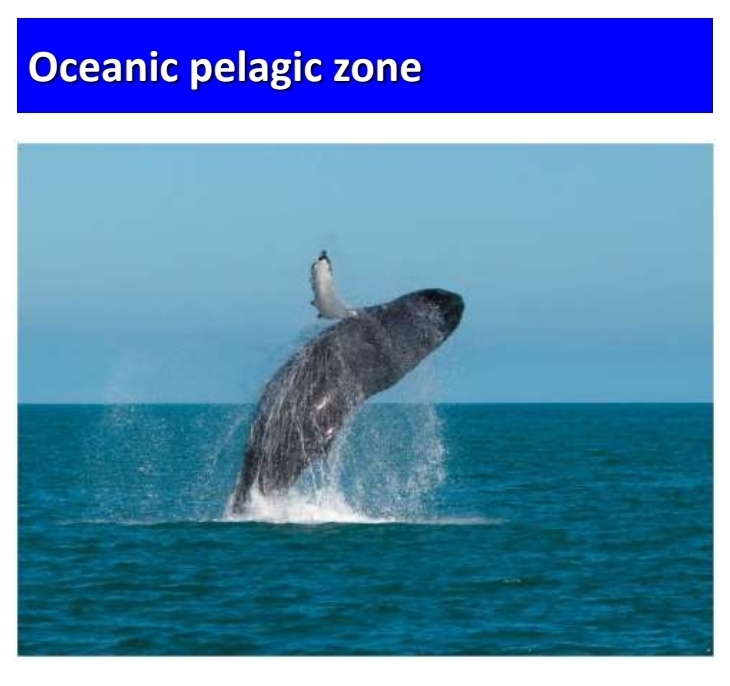
Oceanic pelagic zone
Physical environment: The vast realm of open blue water
surface constantly mixed by wind-driven currents
covers 70% of Earth
Organisms: Dominant photosynthetic organisms are bacteria and other phytoplankton
they accound for half of global productivity
Zooplankton eat phytoplankton
Free-swimming animals include squid, fish, sea turtles and sea mammals
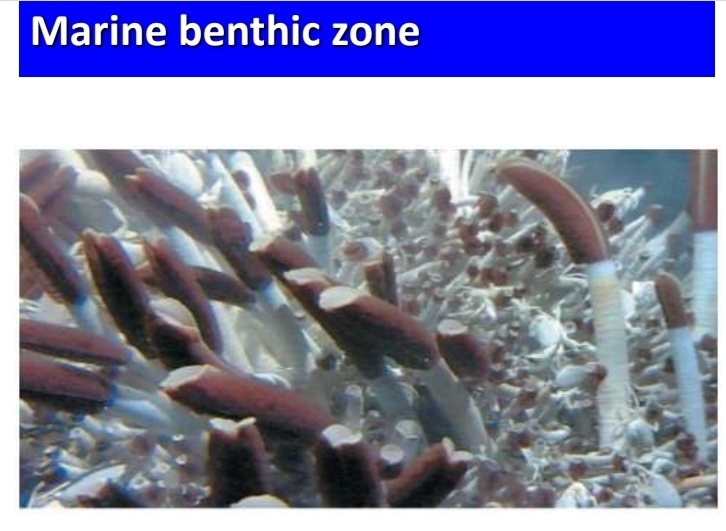
Marine Benthic zone
Physical environment: The sea floor
Temp declines and pressure increases with depth
Organisms: Seaweeds live in shallow benthic areas
At deep sea vents, prokaryotes are food producers
Coastal benthic communities include invertebrates and fishes
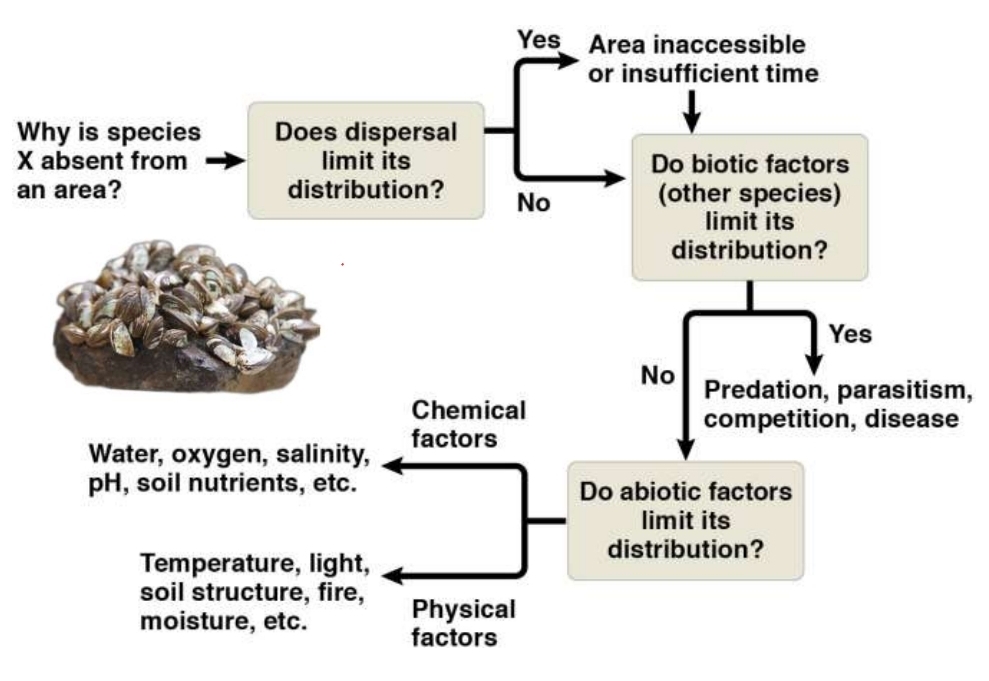
Why is a species absent from an area?: Does dispersal limit it's distribution?
Yes - area inaccessible or insufficient tim
No - Do biotic facters limit it's distribution?
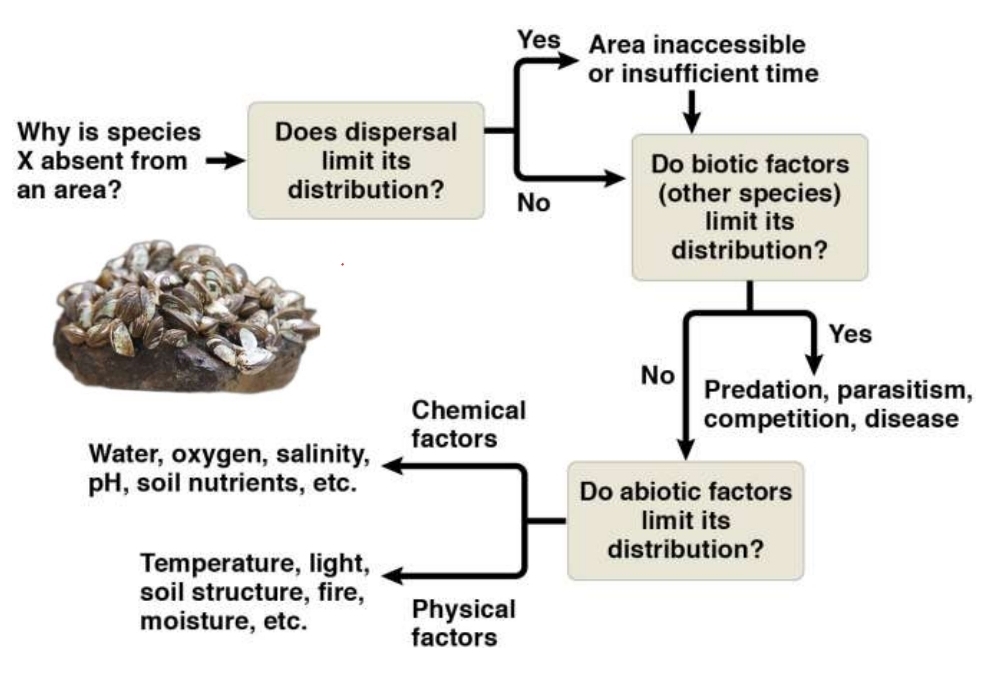
Why is a species absent from an area?: Do biotic factors (other species) limit its distribution?
Yes - due to predation, parasitism, competition, disease
No - do abiotic factos limit it's distribution?
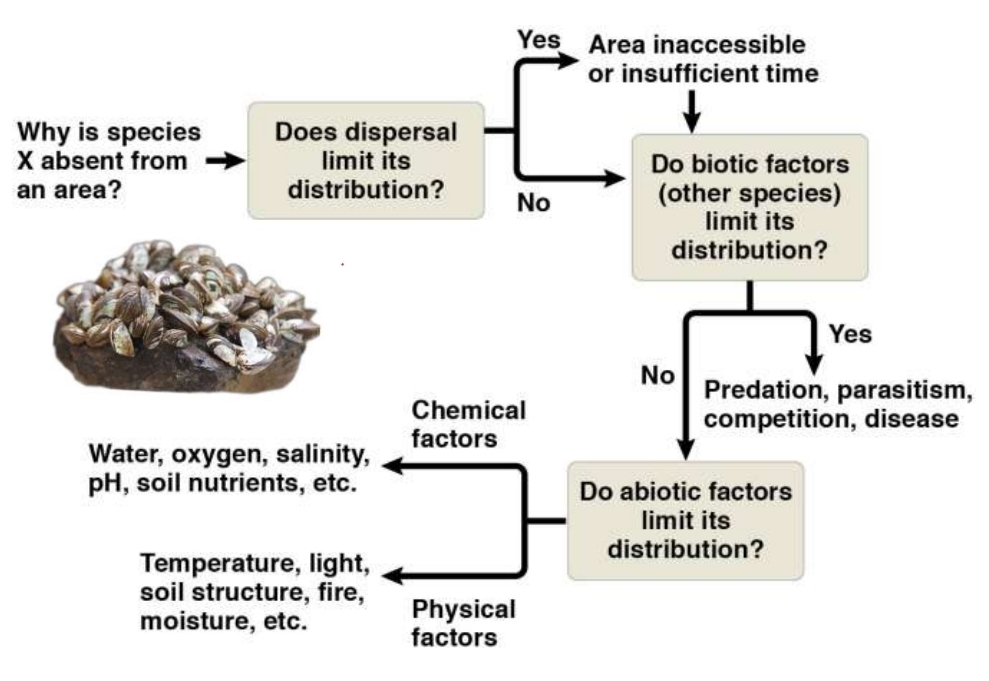
Why is a species absent from an area?: Do abiotic factors limit it's distribution?
Chemical factors - Water, oxygen, salinity, pH, soil nutrients, etc.
Physical Factors - Temperature, light, soil structure, fire, moisture, etc.
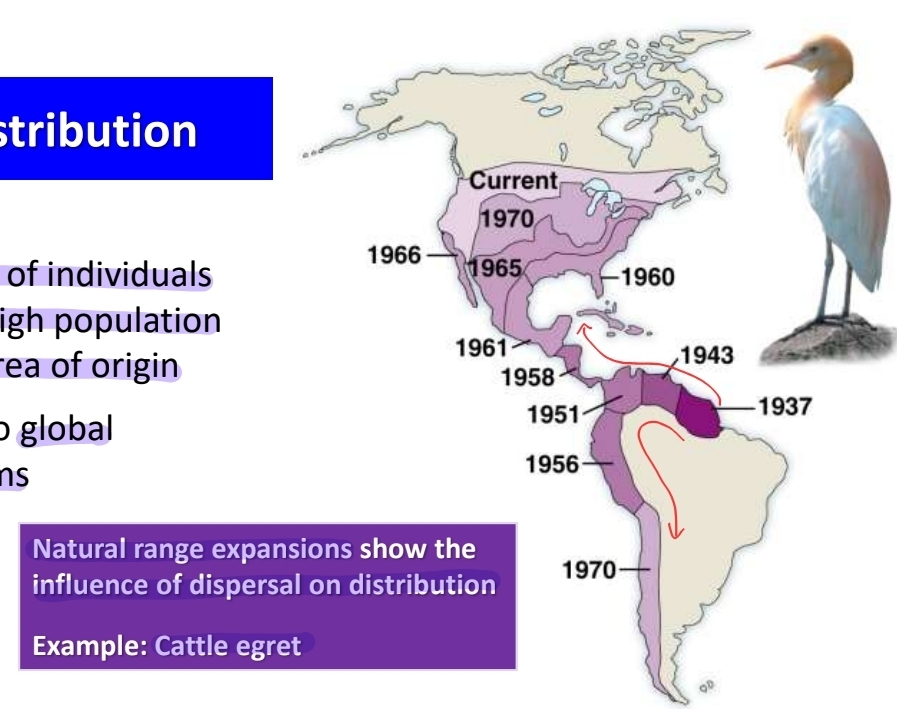
Dispersal
Is the movement of individuals away from centers of high population density or from their area of origin
this contributes to global distrubution of organisms
Species transplants
This occurs when new species are introduced into a habitat
Includes organisms that are intentionally or accidentlly relocated from their original location
this can disrupt communities or ecosystems to which they have been introduced
Biotic factors affecting the distribution of organisms
Interactions with other species
Predation
Competition
if balance is unkept will cause a species to rapidly increase while another decreases
Abiotic factors affecting distribution of organisms
Temperature
Water and oxyfen
Salinity
Sunlight
Rocks and soil
Temperature
Environmental temperature is an important factor in distribution of organisms because of it's effects on biological processes
Cells may freeze and rupture below 0 degress, while most proteins denature abobe 45 degrees
Mammals and birds expend energy to regulate their internal temperature
Water and Oxygen
Water availability in habitats is another important factor
Desert organisms exhibit adaptations for water conservation
Salinity
Salt concentration affects water balance of organisms through osmosis
Few terrestrial organisms are adapted to high-salinity habitats
Sunlight
Light intensity and quality affect photosynthesis
Water absorbs light, thus in aquatic environments most photosynthesis occurs near the surace
In deserts, high light levels increase temperature and can stress plants & animals
Rocks & soil
Many chaaracteristics of soil limit distribution of plants which the animals feed on.
Includes:
Physical structure
pH
Mineral Composition

