L18 - Gene Therapy II
 Call Kai
 Learn
Learn Practice Test
 Spaced Repetition
 Match
Match Flashcards
 Knowt Play
1/35

Earn XP
Description and Tags
Biotech Exam II
Name | Mastery | Learn | Test | Matching | Spaced | Call with Kai |
|---|
No analytics yet
Send a link to your students to track their progress
36 Terms
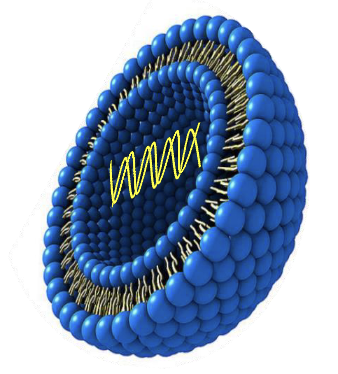
What are liposomes?
lipid bilayer formed in a sphere
cationic, used to transfer negatively charged DNA into cells
Disadvantages of lipisomes
low efficiency of transfer
foreign gene does not integrate into host genome
high liposome and DNA concentrations required
What are PEGylated liposomes?
liposomes with improved half-life
What are transferrin-conjugated liposomes?
contains transferrin that can bind to transferrin receptors found on human cells
What are antibody-modified liposomes?
liposome with antibody coating for specificity
What are sendai (HVJ) viral proteins?
can be added to liposome to allow DNA to escape the endosome into the cytosol intact by disrupting endosomal membrane
What are nanoparticles?
polymer (PGA or PLGA) + DNA
protects the DNA from degradation
What percentage of injected naked DNA is degraded by extracellular nucleases?
99%, need large amounts of DNA
low gene transfer efficiency and protein expression
How can transduction efficiency of naked DNA be increased?
by electric impulse or gene gun
What is a biolistic gene gun
uses kinetic energy to deliver nucleic acids inside cells
5-10% transduction efficiency
only used for exposed targets, not for deep tissues
What are advantages of non viral vectors?
low immunogenicity
can be made to be non toxic
easy to synthesize
potentially targetable
no limit on plasmid size
no integration, can be administered as drugs
Disadvantages of non viral vectors
low transfection efficacy
no natural tropism, endosomal escape, or nuclear transport mechanisms
What are some clinical applications of non viral vectors?
cancer
Parkinson’s disease
restenosis
retinal disorder
cystic fibrosis
hemophilia genetic defects
severe combine immune deficiency (SCID)
What is adenosine deaminase deficiency?
autosomal recessive condition
selective toxicity to WBCs from accumulation of metabolites of deoxyadenosine
What is X-linked SCID?
absence of functional T cell and NK cells caused by deficiency in IL2RG gene ( y subunit of cytokine IL2 receptor)
What is cystic fibrosis?
mutation in CFTR gene that normally codes for channel protein found epithelial cell membranes
symptoms: impaired lung function, chronic resp. infection, airway inflammation
What disease characteristics are ideal for gene therapy?
single gene defect
recessive condition
pathology location is accessible
progressive disease that provides a therapeutic window from symptom to treatment
What is hemophilia B?
x-linked genetic disorder
abnormal bleeding due to defective coagulation factor IX
current treatment - factor IX infusion (expensive, needs to be given continuously)
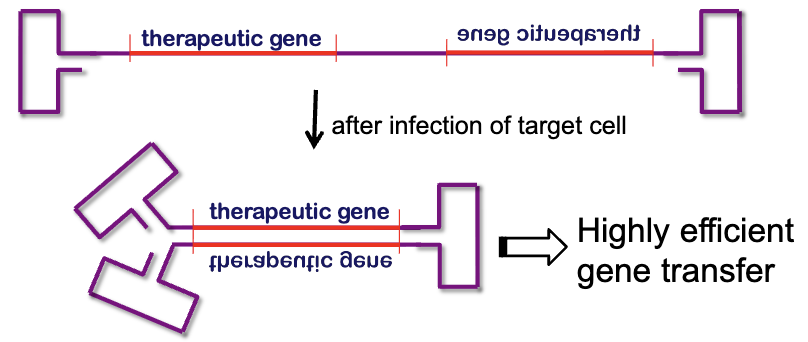
new treatment - using sc-AAV
What is hemophilia A?
x-linked disorder, 5x more common than hemophilia b
caused by mutation on factor VIII gene
good target for gene therapy as even a low level of secreted protein expression can prevent symptoms
What are other applications of gene therapy?
leber’s congenital amaurosis (LCA) - caused by mutation in RPE65 gene that affects the retina
parkinson’s disease - cell death in substantia negra region of brain, resulting in lack on dopamine
lysosomal storage diseases
What are the three broad approaches to selection of a therapeutic agent in Parkinson’s disease?
restoration of dopamine synthesis in the dorsal striatum
modulation of activity in the basal ganglia downstream of the striatum
modification of disease progression by neuroprotection
Vectors associated with gene therapy for Parkinson’s
GDNF - nigrostriatal dopamine terminal protection
Ad-GDNF - protect dopaminergic neurons and imrpove dopamine-dependent behavior
AAV-2 - transduces neurons within the CNS
What is restenosis?
re narrowing of a coronary artery after treatment with stenting
can be prevented by coating stent with PLGA nanoparticles containing VEGF gene
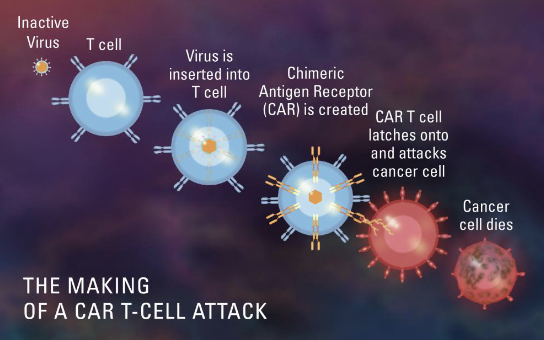
What is CAR-T cell therapy?
t cells engineered to recognize tumor antigens
Suicide gene therapy
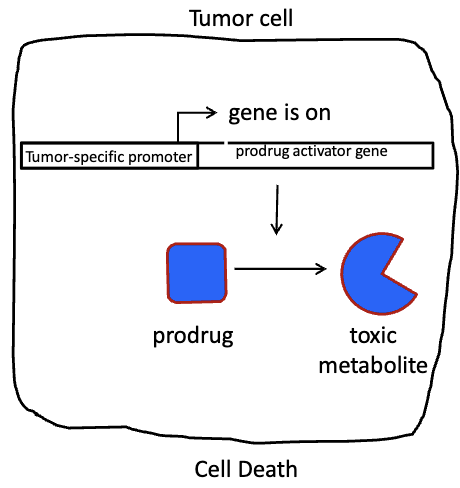
introduction of viral or bacterial genes into tumor cells, which convert a non toxic prodrug into a toxic one
non toxic prodrug is administered systemically
advantages of suicide gene therapy
requires short term gene expression
safety in clinical trials
bystander tumor killing via gap-junction delivery of drug
enhances sensitivity to conventional therapy
Limitation to suicide gene therapy
limited spatial distribution of gene transfer vectors
poor gene-transfer efficiency into tumor cells in vivo
inability to target dispersed tumor cells
What is in vivo CRISPR editing?
the editing of genes directly inside the human body by using lipid nanoparticles to deliver CRISPR components to the diseased area
What is base and prime editing?
allow for precise correction of single-letter genetic mutations without cutting the DNA
What are the two components of CRISPR-Cas9?
RNA guided DNA endonuclease Cas9
chimeric single guid RNA - derived from crRNA and tracrRNA
CRISPR-cas9 mechanism
sgRNA binds to Cas9 and directs it to locus of interest via base pairing to the genomic target
Cas9 binds to PAM sequence on DNA
Two nuclease domain of Cas9 → leads to double stranded break
homology directed repair or nonhomologous end joining
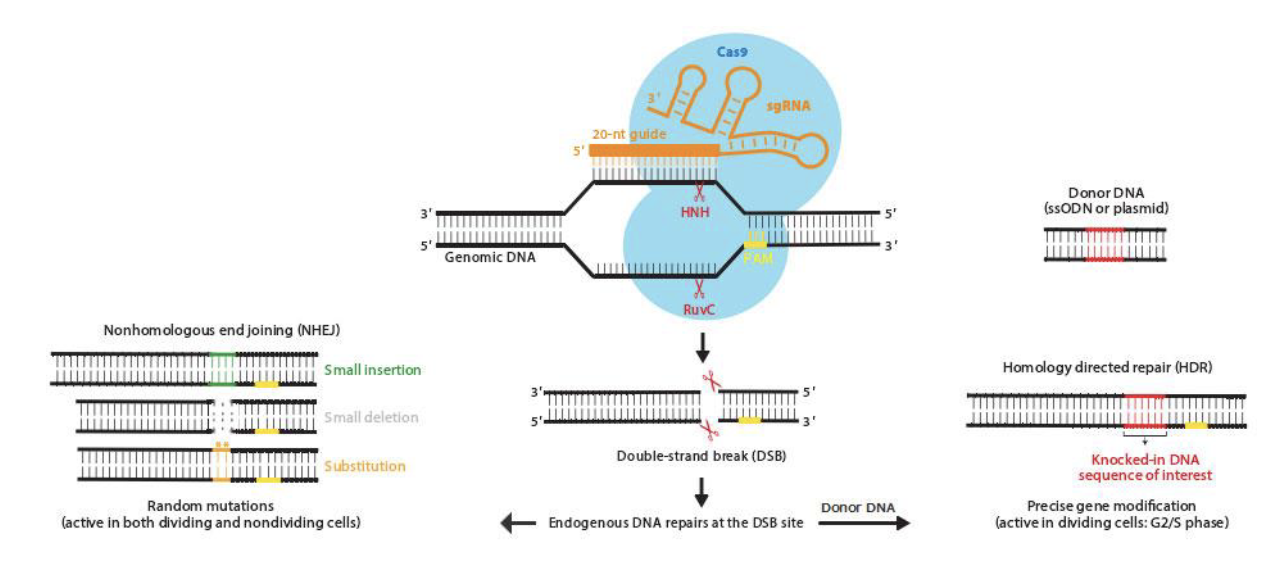
What are the two nuclease domains of Cas9?
HNH domain - cuts target strand
RuVC domain - cuts non-target strand
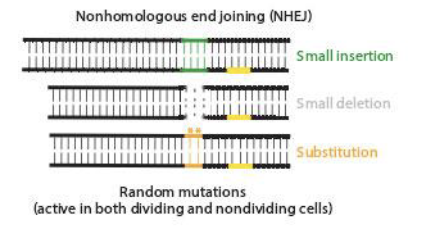
What is nonhomologous end joining (NHEJ)?
error prone
causes insertions or deletions
What is homology directed repair (HDR)?
requires donor DNA template
gene insertion, precise mutations
Disadvatages of CRISPR technology
ethical concerns about germline gene editing
lack of specificity in targeting and incomplete targeting
modified organisms could endanger biodiversity
What are potential complications of gene therapy?
gene silencing - repression of promoter
genotoxicity
phenotoxicity - complications from overexpression of gene
immunotoxicity
risk of horizontal transmission - shedding of infectious vector into environment
risk of vertical (germline) transmission

