unit 4 endocrine secretion
 Call Kai
 Learn
Learn Practice Test
 Spaced Repetition
 Match
Match Flashcards
 Knowt Play
1/91

Earn XP
Description and Tags
Name | Mastery | Learn | Test | Matching | Spaced | Call with Kai |
|---|
No analytics yet
Send a link to your students to track their progress
92 Terms
what is a hormone
chemical made and/or released by endocrine cells
what do hormones usually travel through the body in
blood
neurosecretory/neuroendocrine cells
neurons that release hormones
hypothalamus makes and releases gonadotropin-releasing hormone (GnRH)
neurosecretory/neuroendocrine cell example
nonneural endocrine cells/epithelial endocrine cells
may be stimulated by another hormone; not excitable, but still releases hormones
pancreatic islet B cells make and release insulin, stimulation to release this insulin can come from gastric inhibitory peptide (GIP) hormone, the nervous system, and detection of blood sugar levels
nonneural endocrine cells/epithelial endocrine cells example
paracrine cells
influence functions of NEARBY cells
autocrine cells
influence functions of the SAME cell
paracrine and autocrine cells
release hormones that do not have to enter the blood to cause an effect
testosterone exerts widespread effects throughout body as a hormone AND functions as a paracrine signal within testes supporting spermatogenesis
paracrine/autocrine cells example
hydrophobic hormones usually bind to
intracellular receptors in the cytosol or nucleus
hydrophobic hormones influence
gene expression
hydrophilic hormones usually bind to
cell-surface receptors embedded in the plasma membrane
some steroid hormones (cortisol and some estrogens) can bind to
cell-surface membranes
hydrophilic hormones can exert ________ effects
rapid non-genomic
what are some rapid non-genomic effects
regulate ion-channel permeabilities, induce 2nd messenger cell signaling, etc
insulin is
hydrophilic, released from pancreas B cells
preparation for hibernation depends in part on insulin, what effects do they have on bears during this time
-stimulates body cells, uptake of glucose, amino acids, and fatty acids
-promotes synthesis of glycogen, triglycerides, and protein
insulin and glucagon are
peptide hormone examples
what do amine hormones come from
a single amino acid
what amino acid does melatonin (released by pineal glands in the brain) come from
tryptophan
what amino acid do catecholamines (dopamine, epinephrine, and norepinephrine) and iodothyronines (thyroxine/T4 and triiodothyronine/T3) come from
tyrosine
iodothyronines (T4 and T3) are released by the
thyroid gland
catecholamines (dopamine, epinephrine, and norepinephrine) are released by the
adrenal glands on top of kidneys
most amine hormones are
hydrophilic
T3 and T4 are
hydrophobic
steroid hormones in vertebrates are produced by
gonads and adrenal glands
steroid hormones are derived from
cholesterol
enzymes involved in the synthesis of steroid hormones are in the
mitochondria and smooth ER
steroid hormones are synthesized and secreted on demand
true
many endocrine gland secretions are controlled by hormones made in
the hypothalamus
the hypothalamus exerts
neural control and neurosecretory control
anterior vs posterior location based on this picture
anterior = left, posterior = right
neural control of neurosecretory cells are by the
hypothalamus and POSTERIOR pituitary glands
posterior pituitary gland is also called
neurohypophysis
structure of posterior pituitary gland
neural tissue made from bundles of neurons that originate in the hypothalamus
the posterior pituitary gland releases WHAT hypothalamic hormones into the capillaries
-vasopressin/antidiuretic hormone (ADH)
-oxytocin
vasopresin and oxytocin are in the same family of
9-peptide molecules
vasopressin (ADH) function
limits production of dilute urine by causing an increase in water retention from the kidneys, water returned back to blood, urine is more concentrated
oxytocin function
uterus contraction during birth, milk ejection by mammary glands during suckling
neurosecretory control of endocine cells is by
anterior pituitary gland
structure of anterior pituitary gland
made up of nonneural endocine-secreting cells
when does the anterior pituitary gland synthesize and secrete hormones
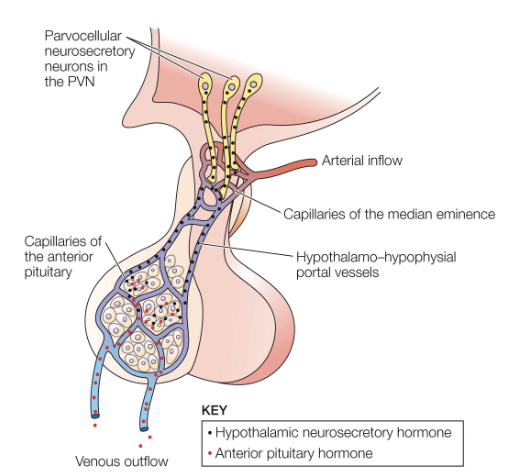
only when stimulated by specific hypothealamus’s releasing/inhibiting hormones
the anterior pituitary gland receives hypothalamus hormones through the
hypothalamo-hypophysial portal blood vessels
direct acting hormones are a type of
anterior pituitary gland hormone
direct acting hormones function
exert effects on non endocrine tissues; certain trophic hormones encourage growth/metabolism in target cells
growth hormone (GH) is produced when the hypothalamus makes/releases growth hormone releasing hormone (GHRH)
direct acting hormone example
tropic hormones come from
anterior pituitary gland
when stimulated from the hypothalamus, tropic hormones can be released that target
other endocrine tissues or tropins
thyroid-stimulating hormone (TSH) causes the thyroid to make/release T3 and T4 hormones
tropic hormone example
adrenicorticotropic hormone (ACTH) results in the adrenal glands making/releasing cortisol
tropic hormone example
stress response hormones include
glucocorticoids (cortisol, cortisone)
metabolism hormones
insulin, glucagon
metamorphosis hormones
ecdysone, juvenile hormone (JH)
process of releasing cortisol during a stress response
hypothalamus makes/secretes corticotropin-releasing hormone (CRH)
anterior pituitary gland makes/secretes adrenocorticotropic hormone (ACTH)
adrenal gland cortex makes/secretes the steroid cortisol
role of cortisol in metabolism
promotes an increase in blood glucose levels
two stress responses triggered by life threatening or challenging situations
sympathetic nervous system (fight or flight) or hypothalamus-pituitary-adrenal cortex (HPA) axis
early effects of the activation of sympathetic nervous system (and secretion of norepinephrine and epinephrine) do to stress
-stimulation of the immune system
-higher levels of glucocorticoids keeps immune system from overacting
-interactions between nervous, endocrine, and immunity/lymphatic systems
early physiological effects of the activation of sympathetic nervous system (and secretion of norepinephrine and epinephrine)
-increased heart rate
-increased ventilation
-increased vasoconstriction of specific regions
-decreased digestion
-increased glucagon
-increased fat catabolism
-decreased insulin
-glucose released from muscle and liver
steps for how the HPA axis can promote immunity
neutrophils and natural killer cells detect bacterial and viral pathogens
leukocytes release cytokines
cytokines travel to all areas in the body including the hypothalamus, and bind to CRH-secreting cells and promote glucocorticoid secretion
what are the results of the HPA axis helping a wounded animal that escaped a predator and promoted immunity
-mobilization of energy stores
-inhibit production of agents that would promote inflammation and make the animal sicker
delayed effects of glucocorticoids and the stress response
-glucocorticoids reinforce actions of the sympathetic nervous system
-inhibit growth hormone and thyroid-stimulating hormone production
-inhibit gonadotrophin hormones
delayed physiological effects of the glucocorticoids due to stress
-oppose actions of insulin
-increase muscle/bone protein catabolism
-increase amino acids
-increase liver gluconeogenesis and glucose
-inhibit TSH, gonadotropins, GH
-increase fat catabolism
-increase free fatty acids and glycerol
long term effects of stress can be deleterious
-hypertension
-muscle wasting and bone thinning due to reduced GH, T3, and T4 levels
-suppressed reproductive function due to reduced LH and FSH levels
synergism
one hormone amplifies the other
antagonism
one hormone opposes the action of another
permissiveness
presence of one hormone required for another hormone to exert its effects
what are the hormone modulations that control hormone levels
-synergism and antagonism (glucagon, insulin, epinephrine)
-permissiveness (cortisol, glucagon)
glucagon and epinephrine amplify each others effectiveness
synergism example
insulin stimulates cells to take up glucose and reduce glucose in the blood, what happens when insulin’s actions are opposed
glucose concentration in blood remains high
anatagonism is exhibited when insulin signaling is opposed by either
glucagon alone or epinephrine alone
how does insulin work to control absorbed blood glucose levels
insulin binding to insulin receptor molecules triggers signaling cascade to incorporate GLUT4 transporter molecules into cell membrane
GLUT membrane proteins in the small intestines function
aid in absorption of carbohydrates into blood
factors that will stimulate pancreas B cells to increase secretion of insulin
-increased blood glucose levels
-little to no cortisol
-parasympathetic nervous system activity
main function of glucagon
increase blood glucose levels
factors that stimulate pancreas a cells to synthesize and release glucagon
-lower blood glucose levels
-high levels of amino acids
-increased cortisol levels that act permissively to assist stimulation of glucose formation
pancreas a cells glucagon effect
-stimulate liver cells to breakdown glycogen
-promote lipid breakdown
-increase gluconeogenesis in liver cells
with high protein meals, insulin levels will also rise. insulin promotes incorporation of absorbed amino acids into body proteins. this suggests without insulin
glycogen, lipid, and protein breakdown would occur at heightened rates
insect metamorphosis involves molting to shed the exoskeleton, what are the two types
gradual metamorphosis and dramatic metamorphosis
gradual metamorphosis
hemimetabolous (incomplete) development → gradual
dramatic metamorphosis
homometabolous (complete) development → one to the next quickly
insect metamorphosis is driven by hormones
-prothoracicotropic hormone (PTTH): small peptide neurohormone made in brain
-juvenile hormone (JH): fatty acid derivative, terpene
-20-hydroxycdysone (20E): cholesterol derivative, steroid, active form of ecdysone
neurosecretory cells in the brain make and secrete _____ into the corpus allata blood supply
prothoracicotropic hormone (PTTH)
target of the prothoracicotropic hormone (PTTH)
prothoracic gland, which secretes and releases ecdysone hormone
neurosecretory cells in the brain make and secrete prothoracicotropic hormone (PTTH) into the corpus allata blood supply. in response, the corpus allatum cells make and secrete
-ecdysone
-juvenile hormone (JH)
function of ecdyson
promotes digestion of old cuticle and synthesis of a new one
corpus allatum cells perform neurosecretory release of _____ and is a _____ that secretes JH
PTTH; nonneural endocrine gland
inka cells of tracheae tubing function
secrete and release ecdysis triggering hormone (ETH) and pre-ecdysis triggering hormone (PETH)
function of ETH and PETH
coordinate muscle contractions for exiting old cuticle during every molt stage
hormonal process of metamorphosis
PTTH initiates molting process, ecdysone converteed to 20E promotes synthesis of new cuticle and digetion of old cuticle
ETH and PETH promote muscle contractions to exit old cuticle
JH exerts effects after 2nd instar stage and nymph stages
PTTH continued release allows for 20E production
ETH and PETH still being released
corpora allata cells become inactive during last larval/nymphal instar
20E production with low JH, adult or pupal structures
JH and 20E important for successful reproduction as adult
JH secretion in adults results in
-act as a gonadotropin hormone to support production of fertile eggs and sperm
-stimulate production of pheromones
ovary secretion during insect metamorphosis
20E, stimulates production of yolk proteins to incorporate into eggs

