quasi experimental designs
 Call Kai
 Learn
Learn Practice Test
 Spaced Repetition
 Match
Match Flashcards
 Knowt Play
1/29

There's no tags or description
Looks like no tags are added yet.
Name | Mastery | Learn | Test | Matching | Spaced | Call with Kai |
|---|
No analytics yet
Send a link to your students to track their progress
30 Terms
why do researchers sometimes prefer to study behaviour in a more “natural setting”
bc although experiments w experimental control are high in internal validity, they can also produce artificial behaviours
what are some trade-offs to studying behaviours “in the field”
the loss of control over extraneous variables
researcher can’t randomly assign participants to conditions → groups in the study are non-equivalent from the start
you no longer have a true experiment when … → you have a …
full experimental control of the IV & random assignment to conditions isn’t possible
quasi-experiment
a quasi-experiment attempts to…
examine cause-and-effect relationships in spite of not having random assignment or proper manipulation of IV
with non-equivalent groups, there’s always the possibility that differences observed are caused by …
initial group differences
how are quasi-experiments helpful
can provide valuable insights in spite of not being true experiments
useful for investigating situations where it’s impossible/unethical for researchers to assign participants to groups
i.e. natural experiments such as observations of prosocial behaviour before & after 9/11
LOF studies are used to assess … in neuroscience
necessity
natural experiments
the experimental & control conditions are determined by a natural/historical event
usually before vs after comparisons → but can also be between subjects
examples of natural experiments
ecological, social & clinical research before, during & after COVID contingencies
people suffering from specific strokes vs matched controls
interrupted time series design
DV is measured @ several points in time (i.e. traffic accidents b4 & after the introduction of breathalyzer tests in the UK)
interruption refers to introduction of an IV that separates the multiple measures of the DV
how is an interrupted time series design helpful
having pre- and post-data may allow researchers to rule out the influence of confounding variables → to a certain extent (i.e. people driving less, less drinking)
i.e. comparing social development before & after COVID restrictions
all studies can fall into one of three classifications:
true experimental
quasi-experimental
non-experimental
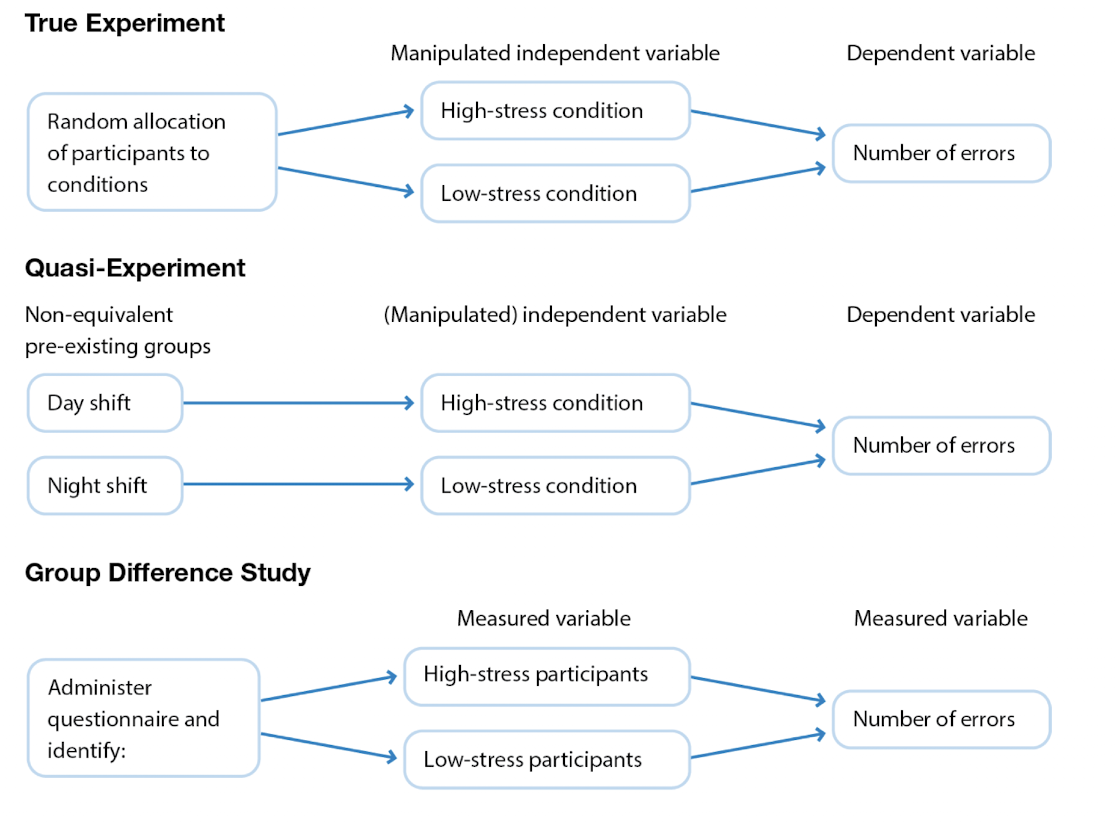
true experimentation demands … and this is best achieved in …
careful control of all variables
a laboratory setting
criticisms of laboratory work (control & validity)
narrowness of IV & DV
inability to generalize
artificiality
what’s observed in lab setting may not necessarily reflect what happens outside the lab → results in laboratory artifact → may look like true expt but is in fact an unintentional effect caused by expt setting
bc of strict control required → may only be able to study a very narrow aspect of phenomenon in a given study
effects discovered in lab may be even more dramatic irl
pros of lab experimentations (control & validity)
extremely useful/effective esp. where basic research is concerned
expt control allows researchers to rule out alt. hypotheses. that might account for observed results
findings from highly controlled experiments can help refine theories & point to further hypotheses to be explored
if theory is valid → it should also apply outside of lab settings → this further validates it
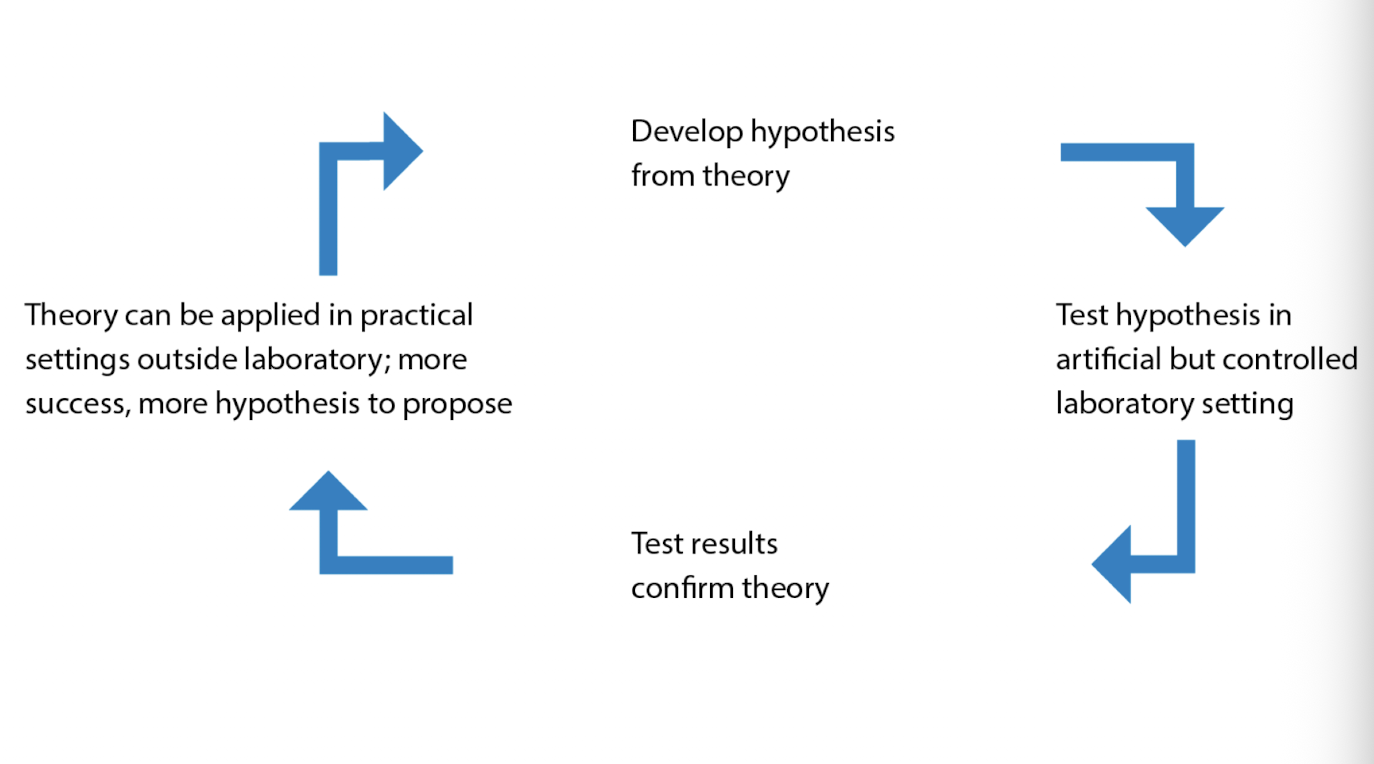
mundane realism
expt resembles everyday life → not always necessary in research
experimental realism
study evokes experiences/behaviours one would see in everyday life → is necessary in research
why should a good lab expt strive for experimental realism
it will reduce artificiality & demand characteristics → participant might not start thinking abt the objectives of the study
three major types of comparison studies
cross-sectional studies
longitudinal studies
cross-cultural studies
pros of cross-sectional studies
quick to do
low risk of attrition
cons of cross-sectional studies
cohort effects
cannot observe how people change overtime → bc groups are made up of different members
cohort effect
confounding effect in cross-sectional studies that occurs when differences across sections are large enough that effects observed by researchers may be due to diff experiences (social, political, etc.)
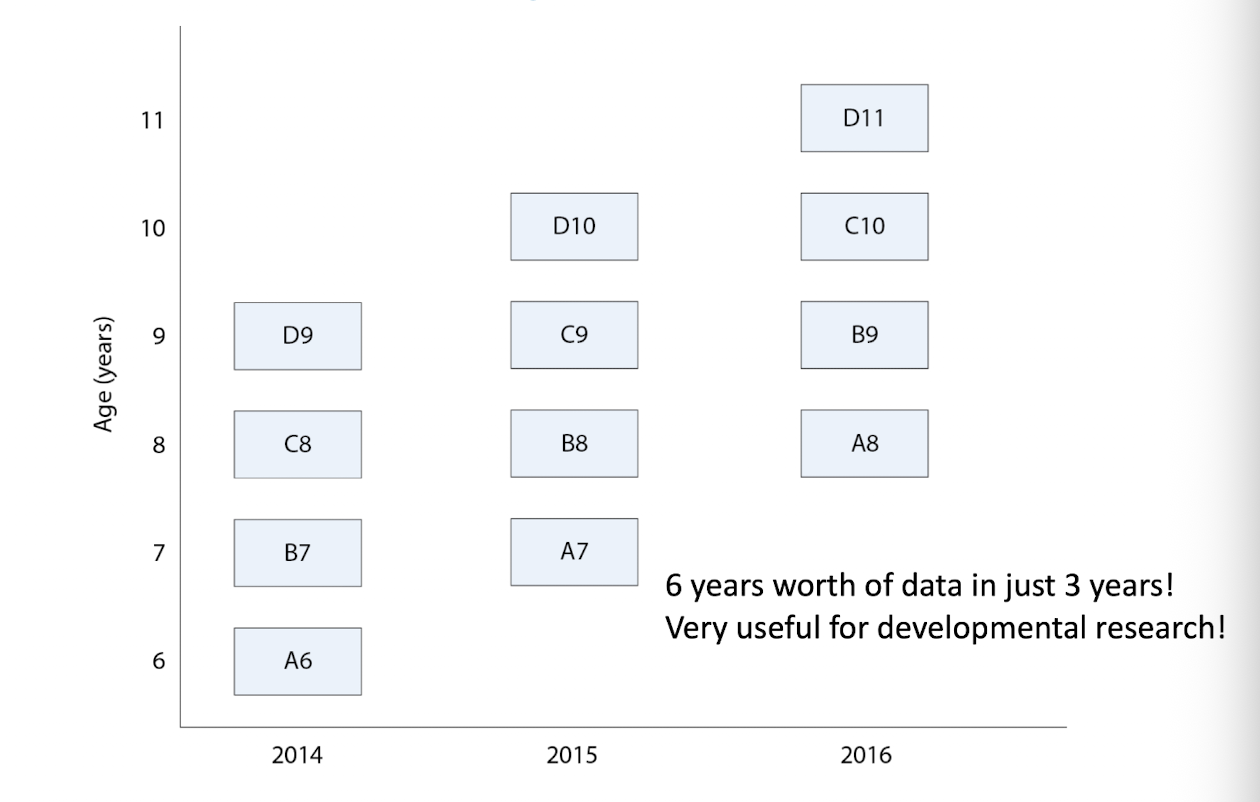
cross-sectional short-term longitudinal study
researchers can study cross-section of groups @ diff intervals over short period of time
cross-cultural research
to determine if findings that emerge can extend to other cultures
involves comparing two or more different societies or social/ethnic subgroups on diff variables of interest
can shed light on universality of psychological concepts → while highlighting cultural factors that moderate diff phenomena
have to mindful of ethnocentrism
ethnocentrism
biased view of another cultural in comparison to one’s own
can result in false interpretations of behaviour
biological determinism & research bias
positions biological explanations as inherently more valid than other explanations
fails to account for social, economic, and cultural factors as intervening variables
has historically resulted in erroneous conclusions with potentially dangerous consequences
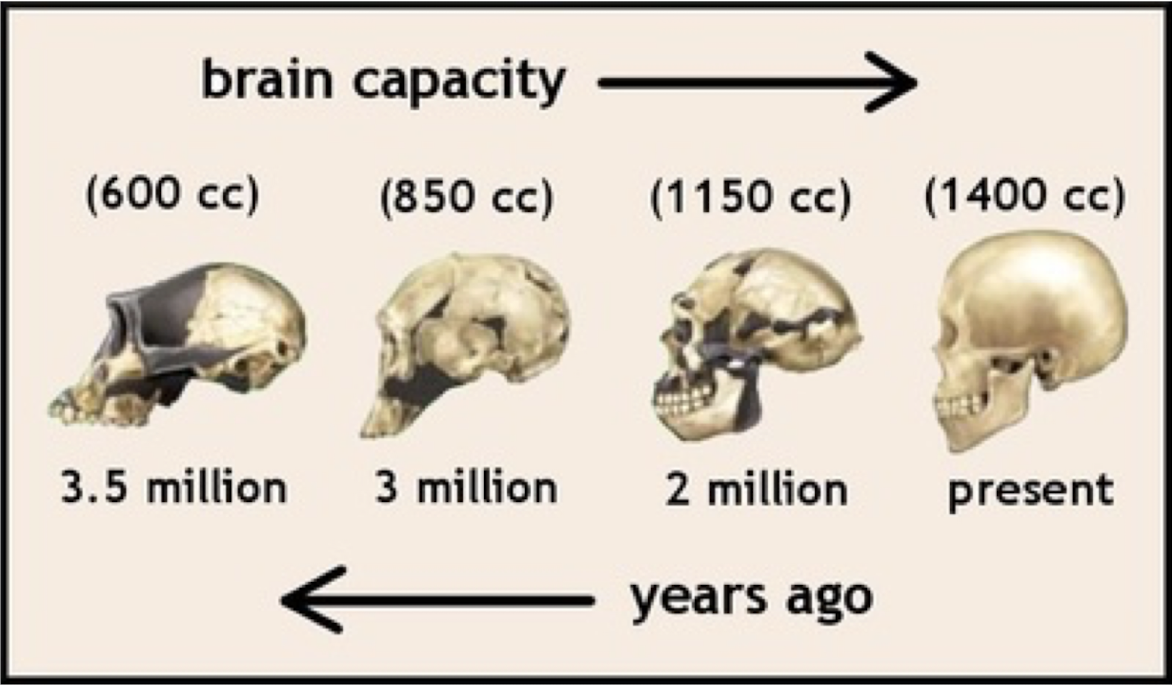
broca’s problematic claim
brain volume determines intelligence
biased questions:
do diff races have diff brain volumes?
do poor ppl have smaller brains than rich ppl?
underlying assumptions:
some races are smarter than others
economic success is solely determined by intelligence
recent cross-cultural studies have:
moved away from ethnocentrism
adopted stance of cultural relativity
led to an appreciation of individualistic & collectivist dimensions as a means of framing cultural differences
cultural relativity
idea that a person’s behaviour & characteristics can only be understood through that person’s own cultural environment
laboratory artifact
may look like true expt but is in fact an unintentional effect caused by expt setting
Explore top notes

