PSYC post-quiz 3 content
 Studied by 0 people
 Call Kai
 Learn
Learn Practice Test
 Spaced Repetition
 Match
Match Flashcards
 Knowt Play
1/92

There's no tags or description
Looks like no tags are added yet.
Name | Mastery | Learn | Test | Matching | Spaced |
|---|
No study sessions yet.
93 Terms
odorant + 3 requirements
odour-inducing chemical
small and volatile
hydrophobic
fat soluble
near sense (retronasal olfaction)
odorants in mouth reach receptors through throat
distance sense (orthonasal olfaction)
odorants in air reach receptors through nostrils
describe the anatomy of the nasal cavity (2)
septum separates right and left nasal cavities
3 turbinates warm and humidify air to promote olfaction
olfactory sensory neurons (3 functions)
project (10-20) cilia into overlying mucus
have axons (unlike neurons from other systems)
fat-soluble molecules bind to odourant receptors
what 2 sensory systems have neurons with axons
olfactory and somatosensory
describe split of 800 odorant receptor genes in humans
half are functional
half are pseudogenes (present, but odorant receptors are not produced)
specific amnosia
inability to smell a specific odorant; due to absence of specific odorant receptor protein
amnosia + 3 causes
inability to smell
caused by infection, disease/drugs, head trauma
how is amnosia caused with COVID (3)
support cells in olfactory epithelium are infected
inflamed support cells blocks odorant receptor expression in OSNs
recovery may be fast due to turnover in OSNs every 28 days
amblyopia
poor visual acuity in an otherwise healthy eye that cannot be corrected with lenses
3 causes of amblyopia
due to abnormal visual experience during development
congenital cataract (cloudy lens)
strabismus (misaligned eyes)
anisometropia (unequal refractive errors in both eyes)
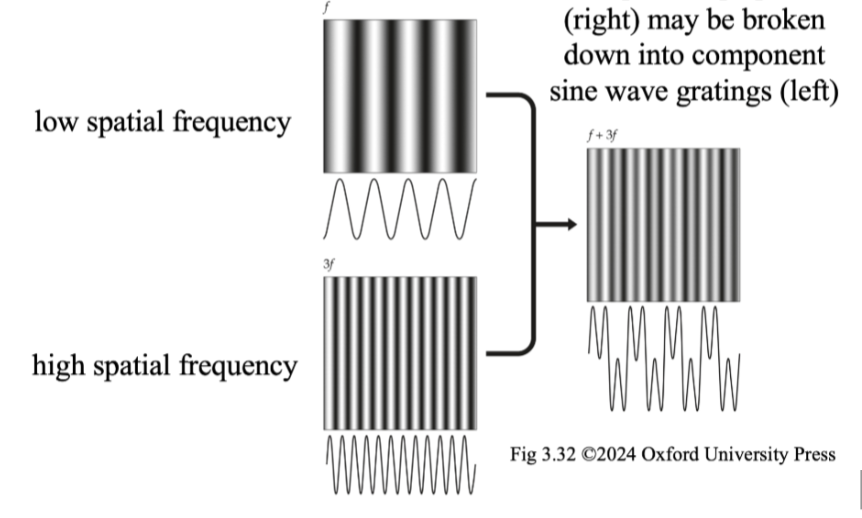
Fourier’s theorem and analysis + how it can describe visual stimuli
theorem: sine wave is basic unit — makes complex patterns
analysis: procedure for separating a complex pattern into component waves that vary over space
with visual stimuli: complex scenes can be described as a set of component sine waves
olfactory epithelium function + components (2)
tissue lining the upper nasal cavity; senses smell
odorant sensory neurons: project cilia into overlying mucus; have axons (unlike neurons from other systems)
odorant receptors: protein molecules in cilia membrane; fat soluble molecules bind to them
describe steps of olfactory transduction (5)
odorant binds with same type of odorant receptors and send their axons to the same glomerulus pair
G protein activated
increase in cAMP
sodium channel opens
neuron depolarizes (fires action potentials until odorant is swept away)
what brain regions process olfactory information
olfactory bulb (axons of mitral and tufted cells) —> primary olfactory cortex (piriform), amygdala, etorhinal cortex —> all 3 synapse in orbitofrontal cortex
something to note about the process of olfactory information in brain
olfaction doesn’t synapse in the thalamus before cortex
connections between olfactory sensory neurons and the olfactory bulb
Axons of OSNs form the olfactory nerve (cranial I)
Olfactory nerve synapses with mitral and tufted cells in glomeruli in ipsilateral olfactory bulb
2 techniques for assessing vision in human infants
forced-choice preferential-looking: show two stimuli, see what babies respond to more
VEP (visually evoked electric potential) experiment: measure changes in brain electrical activity caused by a changing stimulus image
shape-pattern theory of odour-coding
Each odorant may bind to several different types of odorant receptor + each receptor may bind several different odorants
Produces specific pattern of glomerular activity in olfactory bulb
This is how we can identify thousands of different odours with only 350 receptors
lock and key theory of odour-coding
7 primary odours
Odorant receptors are keys and odorants are locks; transduction initiated when odorant molecule of correct shape binds with particular odorant receptor
Shape determines odour perceived
vibration theory of odour-coding + example of similar vibrational frequency odours
Every odorant has a molecular vibrational frequency; odorants with same frequency smell the same
E.g. all citrus odors have a similar vibrational frequency
Odorants with the same shape can smell different (e.g. methyl alcohol and methyl sulfide; sweet vs. rotten)
Electron tunnelling: vibrational frequencies (not shape) of odorants activate odorant receptors
specific anosmia + shape-pattern vs. vibration theory
Relates to shape-pattern theory:
30% of people can’t smell androstenone, some smell it sweet, more smell it urinous
Due to genetic differences in odorant receptor (shape-pattern)
Vibration theory does not explain this because vibrational patterns for androsterone are constant
stereoisomers + shape-pattern vs. vibration theory
Molecules with different arrangements, but the same vibrational frequencies, smell different
so this doesn’t support vibration theory
what is vibration theory supported by
perfume industry (create similar smells with different molecules) and studies in fruit flies (can detect difference b/w same shape/diff frequency molecules)
how does sex affect olfactory detection
females have higher sensitivity (especially during ovulation but not during pregnancy)
due to hormones + more neurons in olfactory bulbs
how does age affect olfactory detection
OSNs are not replaced as quickly as they die; 50% of the population becomes anosmic after 85
how does experience affect olfactory detection
can develop ability to detect androstenone with repeated exposure
how does attention affect olfactory detection
less olfactory sensitivity during demanding visual tasks
how does the specific odorant affect olfactory detection
easier to detect odorants with longer carbon chains
olfactory discirmination JND
judge change in intensity of odorant (difficult)
JND is 18-25%, drops to 7% if olfactometer is used (tool for proper control of stimuli)
olfactory recognition + how difficult, how long, emotion
knowing you’ve smelled it before
requires 3x more odorant molecules than detection
durable up to over a year
memory is better when initial exposure is associated with emotion
olfactory identification: sex and age factors
females better
peaks at 20, declines after 50
3 reasons for the disconnect between our sense of smell and language
olfactory processing occurs in right side of brain, language in left
competition between odour and language processing in brain (e.g. word recognition impaired when odorant presented at same time)
MEG activation differences: more activation when recognizing words without odour
self-adaptation
Prolonged exposure to a particular odorant reduces sensitivity to, or perceived intensity of, that odorant (smell of something good or bad disappears after a while)
Difference b/w this and cognitive habituation is this is short-term (sensation can return quick if stimulus is taken away, put back)
cross-adaptation
Sensitivity for odorant reduced after exposure to different but similar odorant (e.g. picking out perfumes at store – same odorant receptors)
mechanisms for self and cross-adaptation
Short-term biochemical phenomenon that occurs after continuous exposure to an odorant for 15 min
Odorant receptor is internalised into cell body of OSN, emerges again after several min (receptor adaptation/recycling)
cognitive habituation
After long-term exposure to an odorant, no longer able to detect that odorant or has very diminished detection ability
E.g. going out of town, coming back to house with funny smell or smelling strong fragrance that person wearing it cannot smell
mechanism for cognitive habituation
Odorant receptors in cell bodies may be hindered after continuous exposure, take longer to recycle
Odorant molecules may be absorbed into bloodstream and transported to OSN via nasal capillaries, causing adaptation to continue
developmental evidence that odorant preferences are learned
Infants and children have different preferences (e.g. infants like smell of feces)
Preferences can come from in utero exposure (if mother eats lots of garlic, baby may like its smell)
cross-cultural evidence that odorant preferences are learned
cultural likes vs. dislikes (e.g. natto, cheese)
evolutionary evidence that odorant preferences are learned
Innate odour responses are adaptive for special species
Innate odour responses could be disadvantageous for general species (humans, rats, cockroaches, etc.)
Learned taste aversions: humans and rats avoid, based on smell, substances that have been paired with gastric illness
2 caveats about odorant preferences being learned
Potential variability in receptor genes and pseudogenes expressed across individuals may influence perceived odour intensity and therefore pleasantness
Trigeminally-irritating odorants (concentrated chemicals like ammonia, capsaicin) may elicit pain responses — we have an innate drive to avoid pain, so these aren’t “learned” responses
example of odorant you can feel + sensory receptors involved
hot peppers, onions
Stimulation of free nerve endings (dendrites of trigeminal nerve) in mouth and nose is responsible for the feeling; warning about potentially harmful substances
pheromones
chemicals for animal communication (not necessarily odorants)
secreted through urine and sweat glands
trigger physiological/behavioural response in another member of same species
type of pheromone: releasers
trigger immediate, specific behavioural response
attracting mates, mother recognition, swarming
type of pheromone: primers
trigger slow physiological change
new queen production, accelerates puberty in animals, period syncing (possibly)
neural structures involved in pheromone communication
VNOs (vomeronasal organs): detect pheromones in many animals
project to accessory olfactory bulbs (AOBs)
no AOB in humans (we use olfactory epithelium)
evidence for pheromones and chemosignals
chemosignals: chemicals emitted by humans that are detected by olfactory system
evidence: smelling shirts of ovulating women increase testosterone levels, smelling women’s tears decreases
evidence: body odour carries info about potential partners (gender, sex orientation)
groups had faster response to body odour of preferred sex
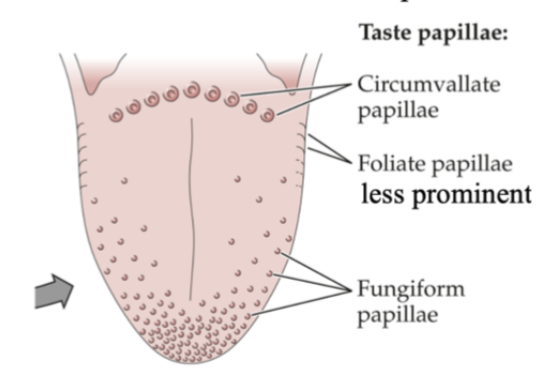
name and locate the 4 types of papillary on the tongue
circumvallate
foliate (more in children)
fungiform
filiform (only one with no taste receptors)
describe taste receptor cells
3000-12000 taste buds in mouth
50-100 TRCs per taste bud
have microvilli that are replaced every 10 days from basal cells
no axons, but release neurotransmitters
salty
salts (NaCl+) dissolve into cation (Na+) and anion (CI-)
saltiness is due to cation
need sodium for nerve and muscle function
sour
acidic substances dissolve into hydrogen ions
at high concentrations, will damage both external and internal body tissues at high concentrations
bitter
compounds contain nitrogen
many bitter substances are poisonous for survival (bitter sensitivity increases during pregnancy)
sweet
evoked by sugars: carbon, hydrogen, oxygen
principle energy source
artificial sweeteners mimic chemical structure of sugars; sometimes activate bitter receptors
umami
some say not one of 5 taste classes because we are not born with like or dislike for it
claimed to be nutritionally important — bodies naturally manufacture it though
protein molecules too large to stimulate taste/odorant receptors; protein detection occurs in gut, not mouth
transduction of salty tastants
enter through cation (Na+) channel
transduction of sour tastants
enter through H+ channel or as acid (dissociates into H+ inside cell)
transduction of sweet, bitter, umami tastants
involves G-protein coupled receptors
type I taste quality
most taste bud cells, mainly housekeeping
type II taste quality
no synapses, but depolarize in response to sweet, bitter and umami tastants
then release ATP that acts on adjacent receptor cells or nerve fibres
type III taste quality
depolarize in response to sour tastants
then release serotonin
neural code for taste intensity (higher concentration = ?)
higher concentration = more neurons fire + faster
labelled line theory + 2 supports
each taste fibre carries a particular taste quality
some taste fibres do seem to be tuned to specific tastes
sweet tastes can temporarily knocked out in humans by gymnema sylvestre (tastes nasty)
pattern-coding theory
taste quality is carried by the firing pattern across many taste fibres (olfactory, colour vision)
Similar across-fibre firing pattern for ammonium and potassium chloride, should taste similar
Different pattern for sodium chloride, should taste different
Study done in rats:
Electric shock trained rats to avoid potassium chloride, ammonium chloride also avoided (might taste the same) but did not avoid sodium chloride (might taste different)
how does temperature affect absolute threshold for taste
sweet is sensitive at high temp
salty/bitter is sensitive at low temp
sour has little effect from temp
how does area affect absolute threshold for taste
larger areas of the tongue are more sensitive
how does duration affect absolute threshold for taste
longer durations of stimulation increase sensitivity
how does location affect absolute threshold for taste
Primary taste qualities are not exclusively associated with particular tongue locations but slight variation in absolute threshold occurs for different locations
Middle of tongue has no taste buds (even for suprathreshold concentrations)
how does substance being tasted affect sensitivity for taste
less sensitivity for sweet tastes
most sensitivity to bitter tastes
self-adaptation taste example
detection thresholds for salt increase during continued stimulation of tongue with same tastant
cross-adaptation taste example
when threshold for one tastant increases after exposure to a different tastant with the same quality
e.g. adapting to NaCl raises threshold and reduces saltiness of other salty substances
modification taste example
special type of cross-adaptation; exposure to one tastant alters the quality of a different tastant (e.g. toothpaste affects taste of oranges)
PTC for nontasters vs tasters
nontasters: no taste
tasters: bitter
PROP for taster vs. nontaster
bitter chemical used for taste studies
inherited trait:
nontasters: have 2 recessive alleles
tasters: have 1 or both dominant alleles expressing specific bitter receptor
supertasters vs. medium tasters anatomy difference
supertasters have lots more fungiform papillae
health consequences for supertasters and nontasters
supertasters: higher risk of colon cancer (avoid bitter veggies), lower risk of cardiovascular cancer (avoid fatty substances)
nontasters: more likely to smoke/consume alcohol
supertaster
experiences strong sensations of (all) taste, favour, texture, and oral burn
thresholds for bitterness
Perceived intensity for suprathreshold bitter taste quality grows more slowly than for other taste qualities, but we are more sensitive to bitter at low concentrations
cross-modality matching
match intensity of sensations that come from different sensory modalities
E.g. match loudness of sound to brightness of light to intensity of taste
Perceived bitterness increases from nontasters to medium to supertasters
taste discrimination ability
very poor compared to other sensory modalities (for all tastes)
specific hungers theory + evidence for (2) and against (2)
ideas that a nutrient deficiency will produce a craving for that specific nutrient
for: studies of cravings associated with sugar or salt deficiencies
for: study of infants allowed to choose their food —- chose healthy variety
against: BUT all food choices were healthy so they chose variety out of boredom
against: this is only true for sugars and salt (things we have taste receptors for); study: Vitamin B deficient rats don’t seek it out without sensory cue (taste)
MMI: difference between taste and flavour
flavour is determined by the odours stimulating smell receptors while eating (retro nasal sensations)
that’s why flavour is reduced by illness or plugging nose
MMI: where do flavour sensations actually come from
perceived to come from the mouth BUT transduction occurs in olfactory epithelium (mislocalization due to taste and tactile sensations from mouth when eating)
MMI: where do flavours of odorants that stimulate the trigeminal system come from + example
nose AND mouth; e.g. Wasabi
MMI: evidence that the brain knows whether odorant is for smell vs. flavour
fMRI showed orthonasal (nostrils) vs. retronasal (mouth) delivery of food odorants (e.g. chocolate) but not non-food odorants (e.g. lavender)
activated different brain regions
MMI: evidence that flavour is reduced without taste and touch
patient with normal olfaction, but impaired taste and oral touch, can smell lasagna but it has no flavour while eating
MMI: evidence that flavour is reduced when taste is removed
Intensity of blueberry flavour yogurt is reduced (but still present) when taste is removed by anaesthetising chorda tympani
MMI: how can we make foods taste more sugary/salty without actually adding those tastants
retronasal olfactory input (volatiles) can enhance sweetness/saltiness, or inhibit bitterness
analytic vs synthetic sense
analytic: a high and low note played simultaneously can be analyzed out of the mix and perceived separately
synthetic: if we mix red and green lights, we see yellow - cannot analyze red and green
is olfaction a synthetic or analytic sense
both but primarily synthetic
we perceive odorant mixtures synthetically, but some degree of analytical perception is possible; ability varies with prior training and the odorants
the more odorants in the mixture, the more undistinguishable they become
Binaural rivalry: when two odours are presented to either nostril, we alternate in our ability to smell either one (evidence for analytic)
Describe how emotional associative learning can affect odour hedonics
Anecdotal evidence:
Methyl salicylate (wintergreen) is pleasant in north america but disliked in britain
Britain: wintergreen is associated with medicine, especially analgesics in WWII
United states: wintergreen is with candy which is nice and sweet
Perceived odour pleasantness is a function of learned association between the odor and the emotions experienced at that time
Explain aromatherapy effects based on odour-evoked memories
Odours can elicit emotional and intense personal memories compared to verbal or visual representations
Odours alter mood, performance, well-being and physiology correlates of emotion in a druglike automatic manner
But mainly just due to associated emotions
 Note
Note  Flashcards (20)