4.5 - Canadian Government
 Call Kai
 Learn
Learn Practice Test
 Spaced Repetition
 Match
Match Flashcards
 Knowt Play
1/20

There's no tags or description
Looks like no tags are added yet.
Name | Mastery | Learn | Test | Matching | Spaced | Call with Kai | Chat |
|---|
No analytics yet
Send a link to your students to track their progress
21 Terms
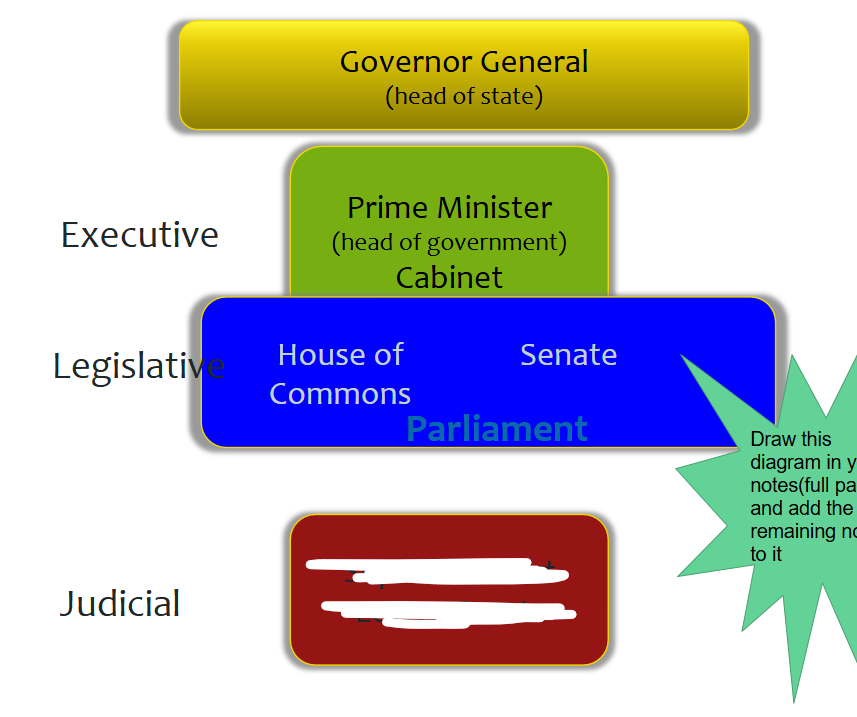
name that part of gov’t
those are the supreme and lower courts
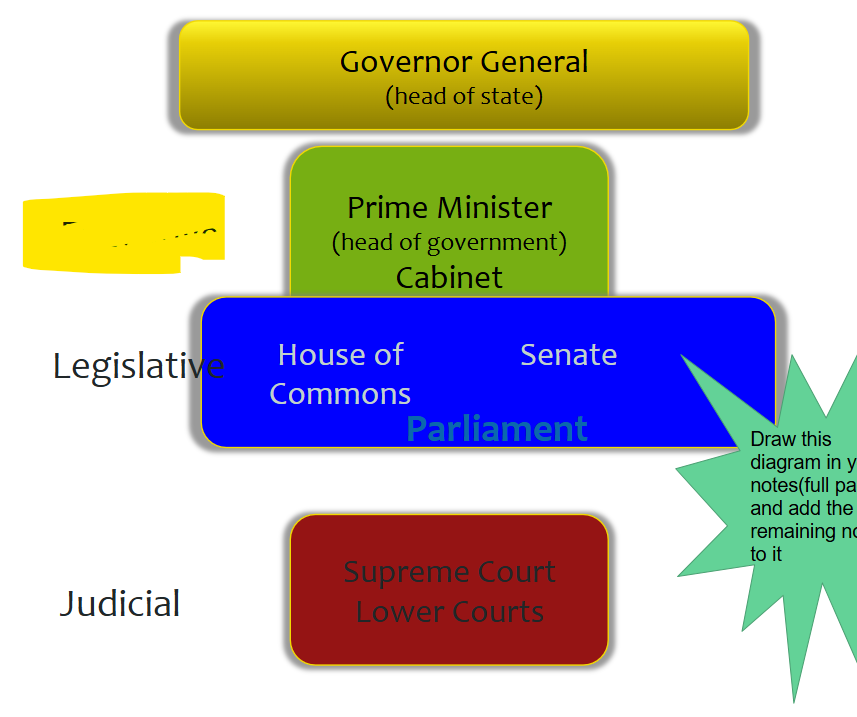
name that part of gov’t
that’s the executive branch (includes the PM and the cabinet)
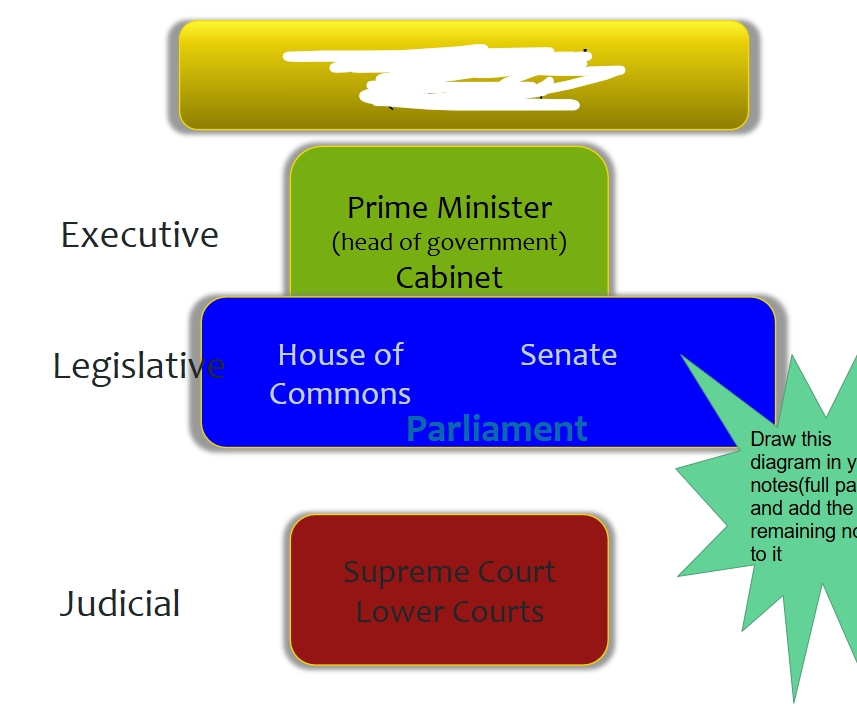
name that part of gov’t
thats the governor general, our head of state
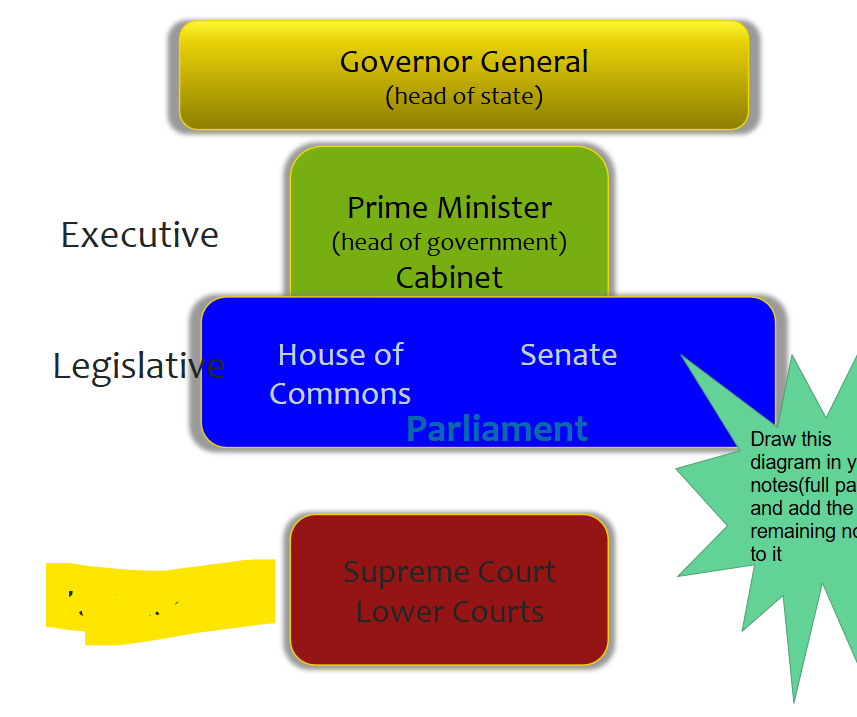
name that part of gov’t
that the judicial branch
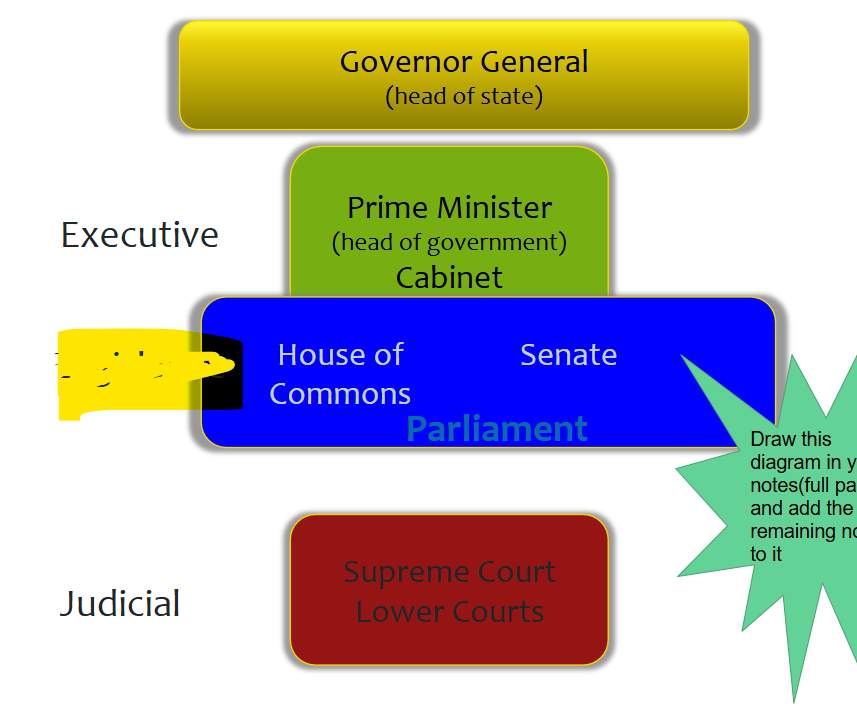
name that part of gov’t
that’s the legislative branch
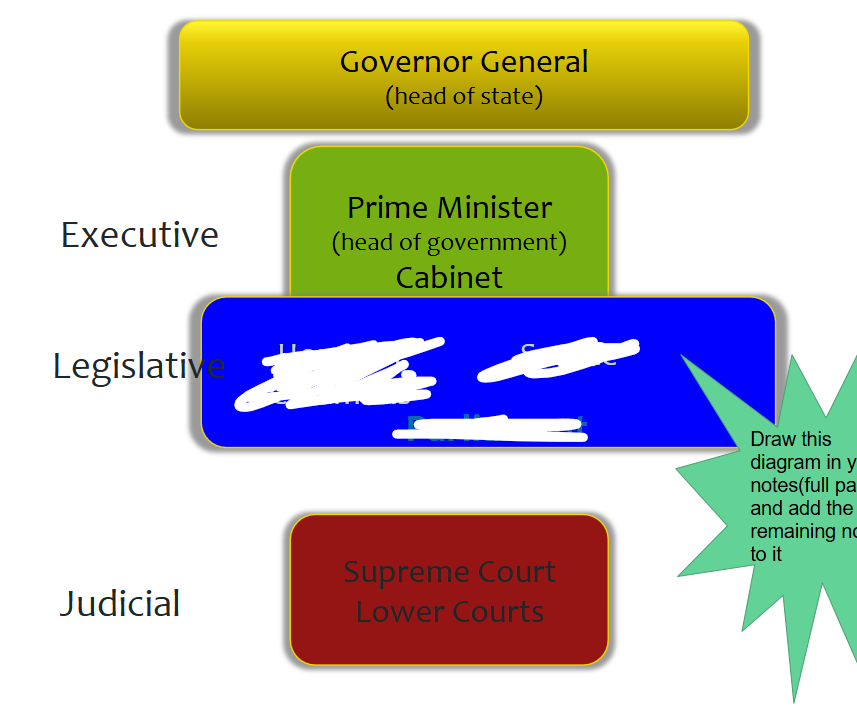
name that part of gov’t
thats parliament, which includes the house of commons and the senate
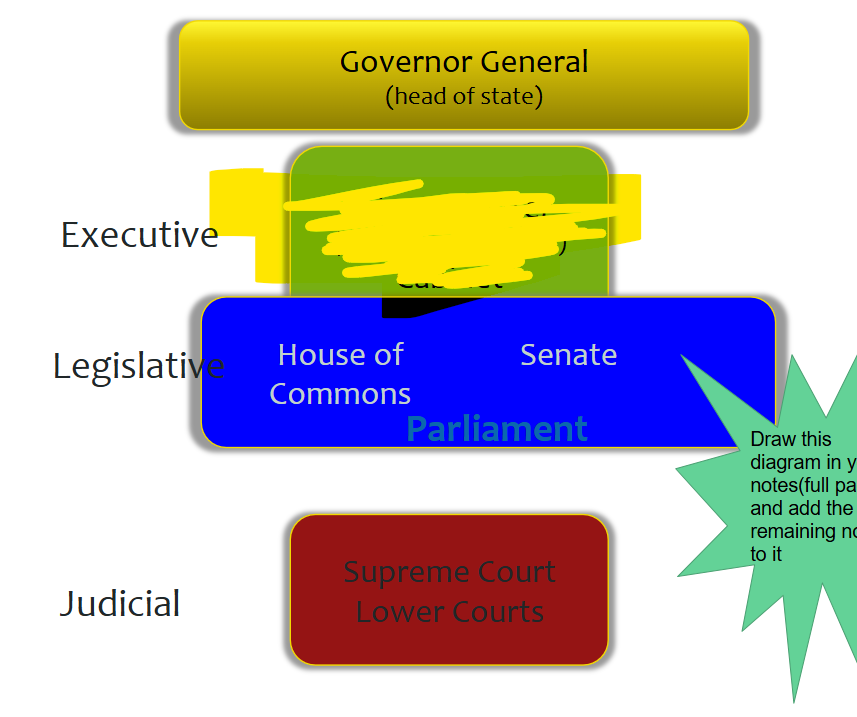
name that part of gov’t
that’s the PM and their chosen cabinet (make up the executive)
canada is a constitutional monarchy, watdatmean?
means that the king is our head of state, who is represented by our governor general, but we still conduct our affairs according to our constitution
what’s the constitution?
-The highest law in the country- a “blueprint” for how a country is to be governed
-All other laws must agree with the constitution
-Complicated and difficult to change
- Written and unwritten
what are the written and unwritten parts of the constitution
the written parts are obv the parts that are written, like rights and freedoms, etc.
the unwritten parts are the thing we do just because that’s how its always been, like having a PM. it could’ve been a president or some other title but that’s what we have
canada is also a parliamentary democracy, watdatmean?
associated with the House of Commons
means that that executive(PM and Cabinet) is responsible to the elected chamber
Responsible Government – the executive must respond to the wishes of the legislative branch (have the confidence of the legislature)
Responsible government- laws and made and taxes are levied by a body that answers to citizens, NOT the monarch or his representatives.
The PM has no real power without the support of their party(“first among equals”)
cabinet ministers
given special responsibilities to ensure laws within their portfolio are followed
Appointed by the PM, usually MPs of the government caucus (party)
Portfolio – the responsibilities of a specific department (Finance, Defence, etc.)
non-confidence votes/motions
bills of importance (budgets, anything the government deems to be a matter of confidence) must be passed or executive must step down
In other words: if a government (usually in a minority situation) can’t pass a bill they want, they must step down and we have another election
This is partly why minority governments last 18-24 months
party/cabinet solidarity
practice of party members to publicly support policy
Caucus – meeting of all members of party
Party Whip – responsible for discipline
So: if you are part of a particular caucus, you do not speak ill of your party’s policies or the whip will deal with you. This is even more important if you are in Cabinet
bicameral legislature
The practice of having two houses to pass laws and do the work of government.
Helps ensure checks and balances.
we share this idea with the states
the house of commons (legislative)
Ruling body in government
Members of Parliament (MPs) are voted in the constituencies across Canada to represent their ridings and parties in government
Single Member Constituencies: one person from each riding is elected based on having received the most votes
Pass bills (introduced by the Cabinet) into law
½ of our bicameral legislature system
the senate
Appointed by the federal government (not elected)
Amend bills, delay legislation.
Cannot permanently stop government measures from becoming law
2/2 of our bicameral legislature
rules to being in the senate
must be older than 30
must own property
mandatory retirement at 75
selections are also based on regional representation:
NFLD, PEI, NS, NB – 24 + 6
QU – 24
ON – 24
MB, SK, AB, BC – 24
what does patronage mean in a government context?
when elected officials give favours to those who have supported them. this often looks like appointed positions going to people who helped the PM lots
the supreme court
Judges are appointed by the federal government
Civil laws are primarily provincial, criminal laws are primarily federal
Judges are appointed until 75 years of age
highest court in the country
only hears cases of national importance and determines whether or not the law will stand or be “struck down”
ideas shared between Canada and US
Federalism – a system where levels of government share powers and have their own responsibilities (in Canada local: municipal, regional: provincial, central: federal)
Patronage – to gain special favors by supporting the political party that becomes government
Civil Servant – a person who works for the government but is not an elected official
Pluralism – to have many (ideas, political parties)