Head and Neck
 Call Kai
 Learn
Learn Practice Test
 Spaced Repetition
 Match
Match Flashcards
 Knowt Play
1/92

There's no tags or description
Looks like no tags are added yet.
Name | Mastery | Learn | Test | Matching | Spaced | Call with Kai |
|---|
No analytics yet
Send a link to your students to track their progress
93 Terms
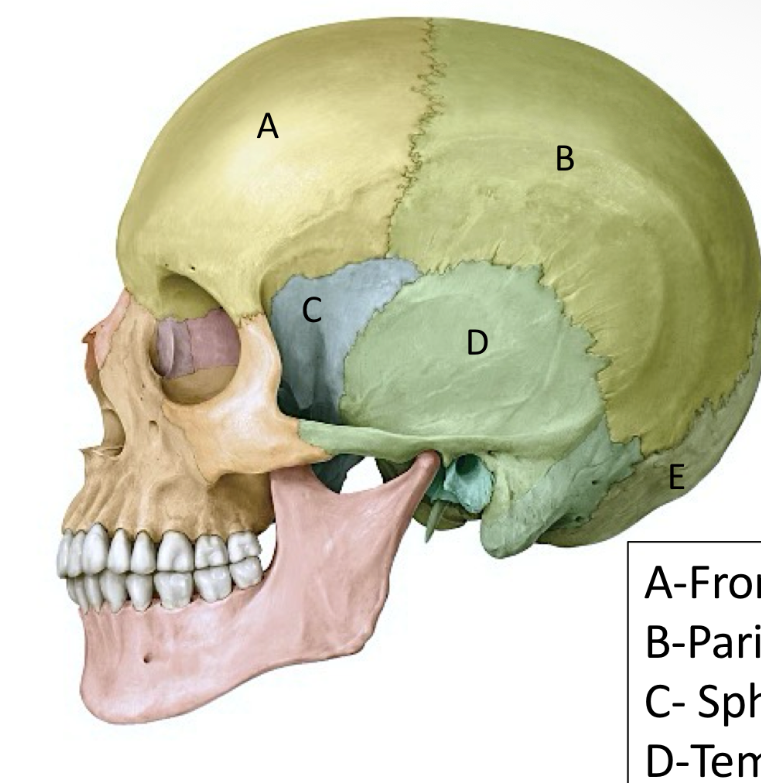
Name and these bone belong to?
Neurocranium
A-Frontal
B-Parietal (2)
C- Sphenoid
D-Temporal (2)
E- Occipital
F-Ethmoid
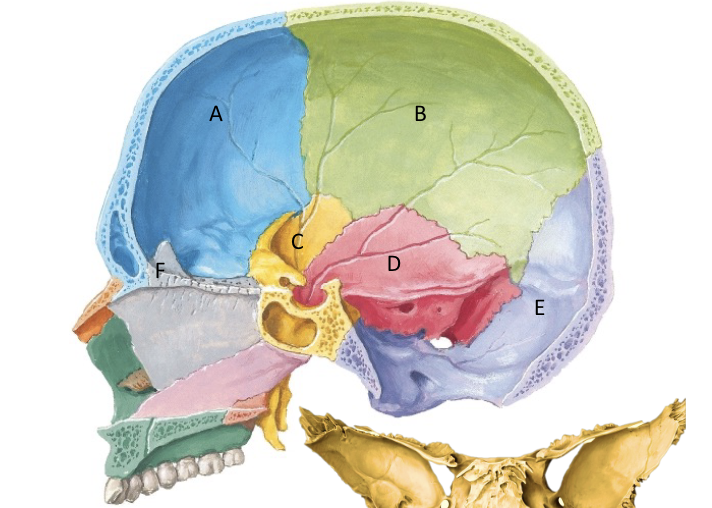
Name and these bone belong to?
Neurocranium
A-Frontal
B-Parietal (2)
C- Sphenoid
D-Temporal (2)
E- Occipital
F-Ethmoid
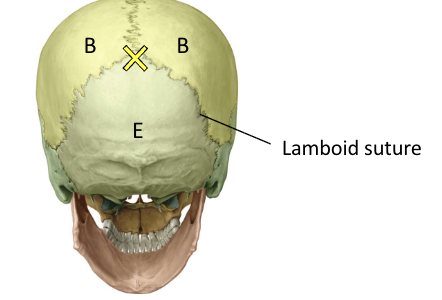
Lamboid suture is between?
Parietal and Occipital bone
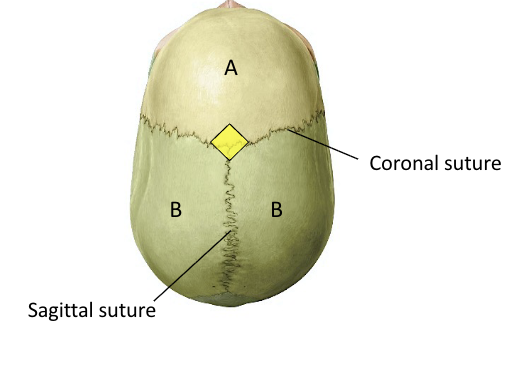
Coronal suture is between?
Frontal and Parietal bone
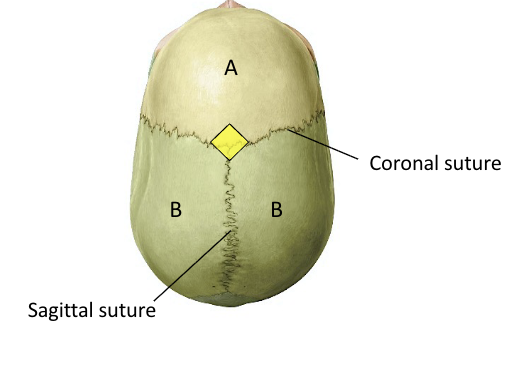
Sagittal suture is between?
Parietal and Parietal bone
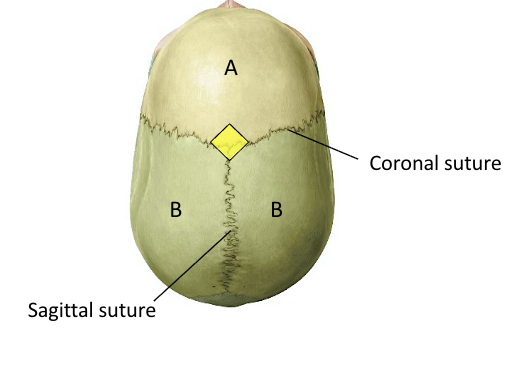
Very thin compare to back of skull and susceptible to injury:
Pterion (star)
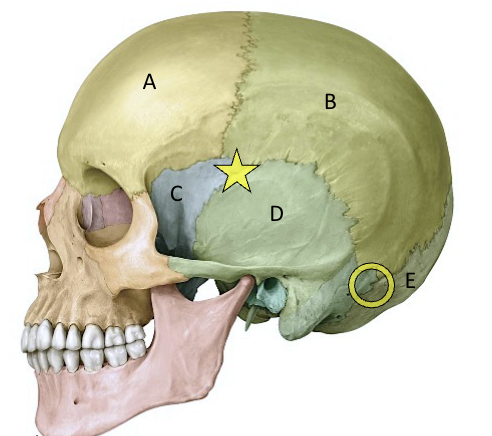
Craniometric point: 2 parietal bone and occipital bone
Lambda (x area)
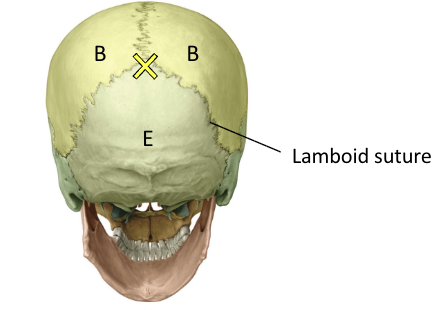
Craniometric point: Parietal, occipital, and Temporal
Asterion (circle)
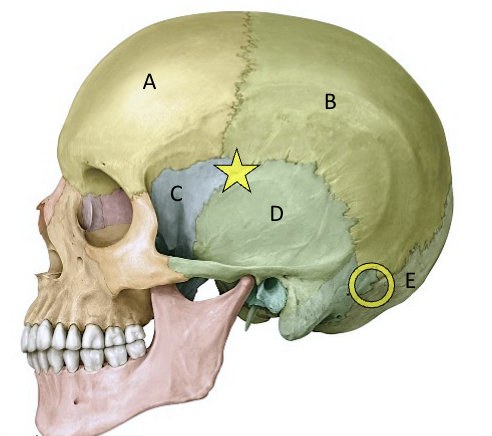
Craniometric point: Frontal, Parietal, sphenoid, temporal
Pterion (star)
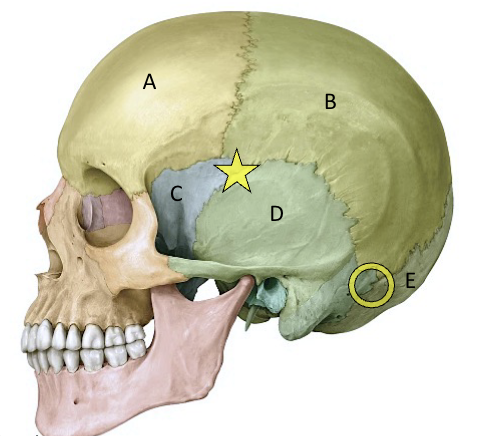
Craniometric point: Frontal and 2 parietal bone
Bregma (triangle)
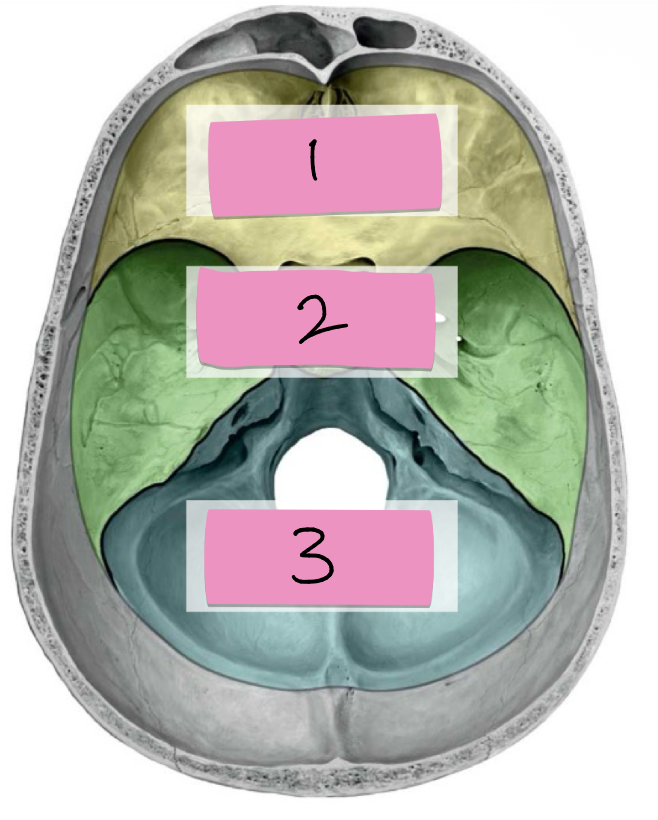
Name 1 and what bone part of this region:
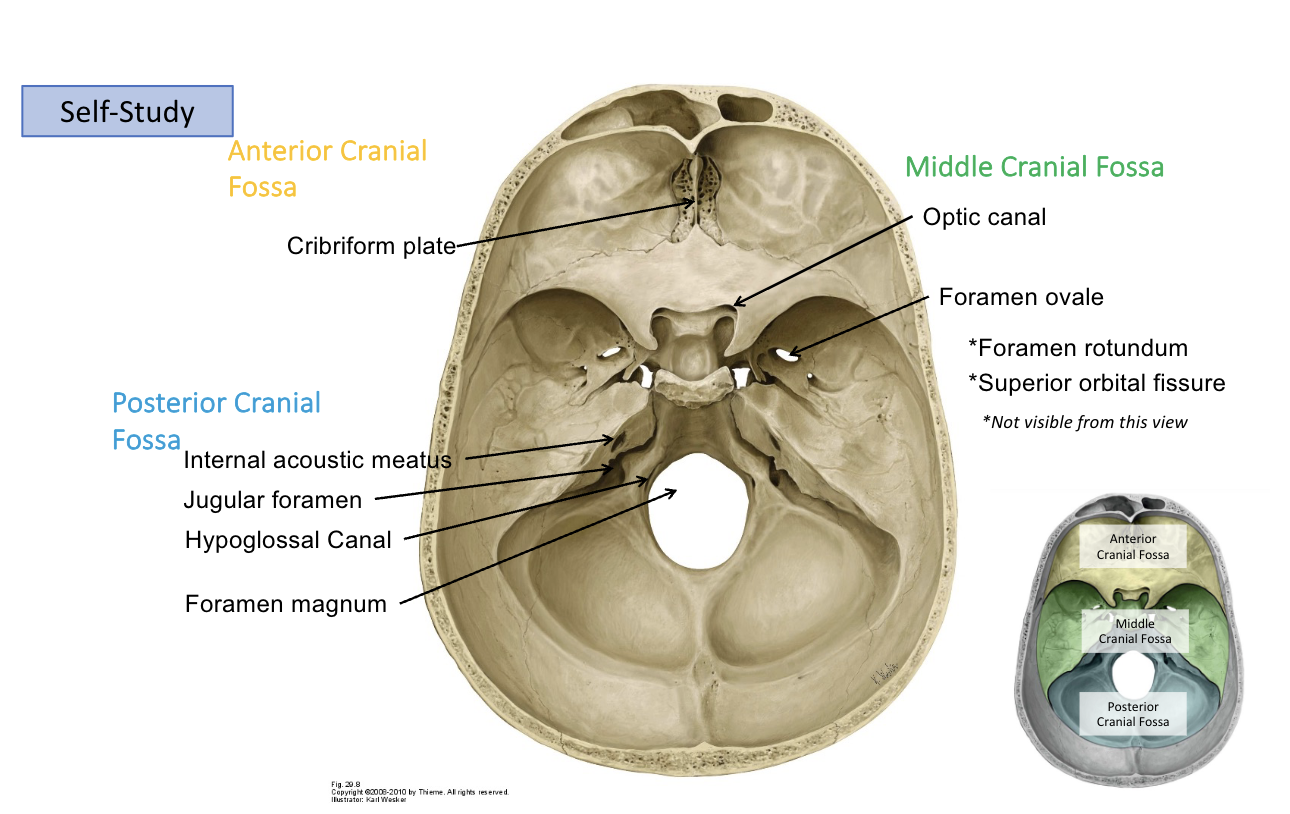
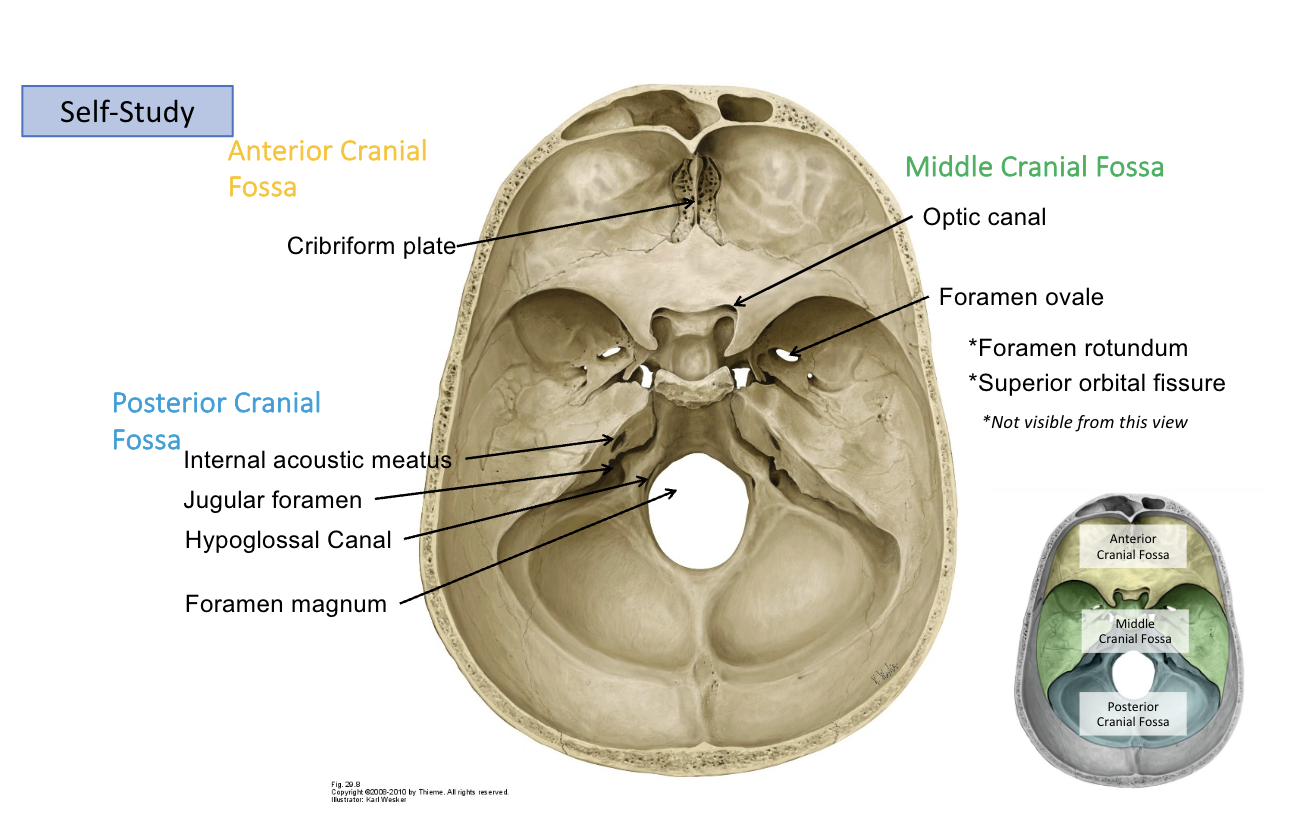
Anterior cranial fossa:
2 Frontal bone
Ethmoid
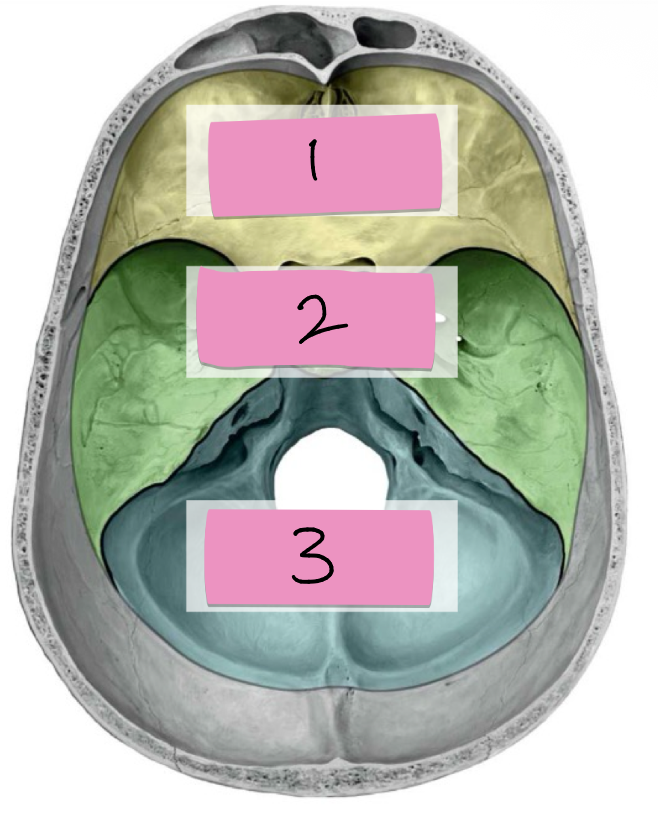
Name 2 and what bone part of this region:
Middle cranial fossa:
Sphenoid (2)
Temporal (2)
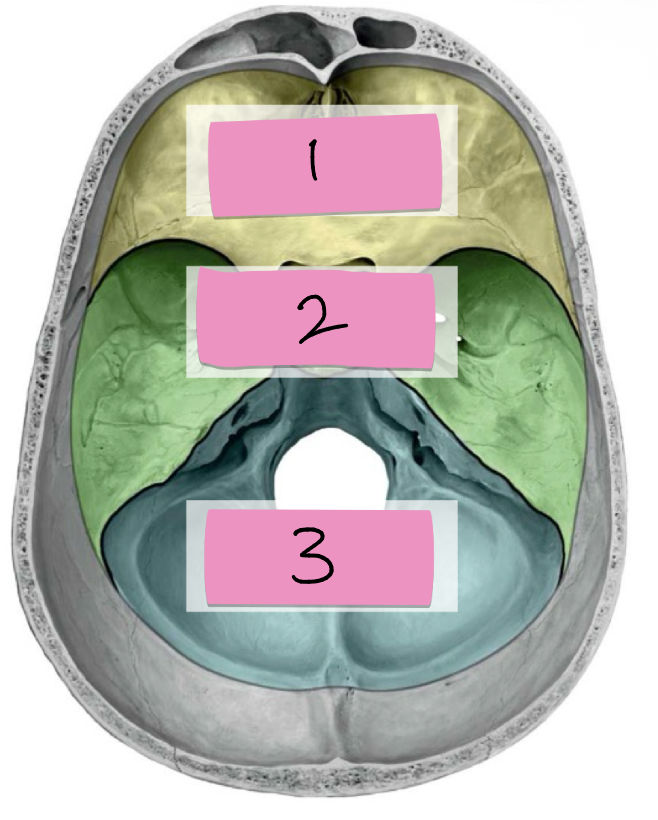
Name 3 and what bone part of this region:
Posterior Cranial Fossa:
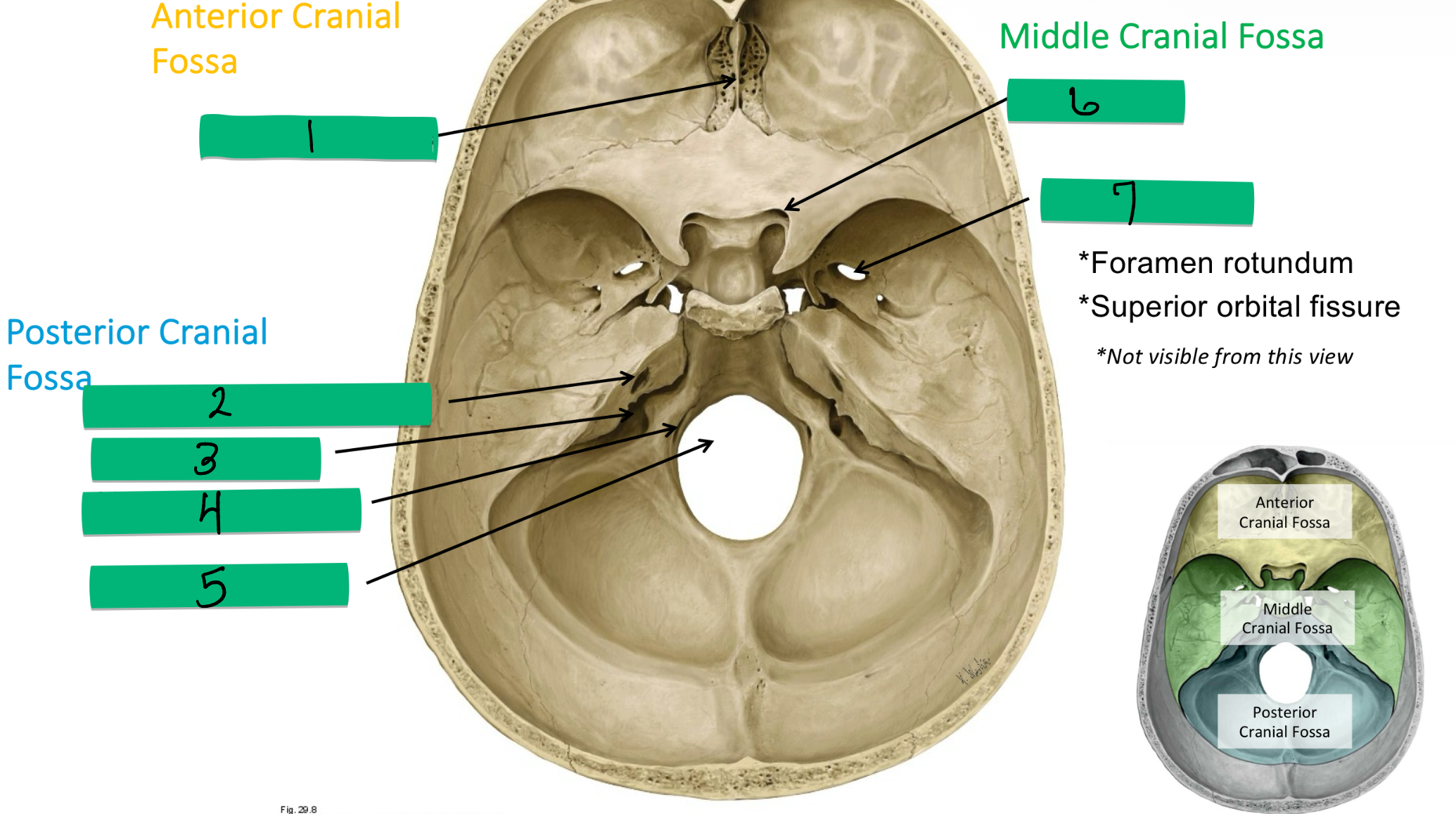
Name 1 and nerve
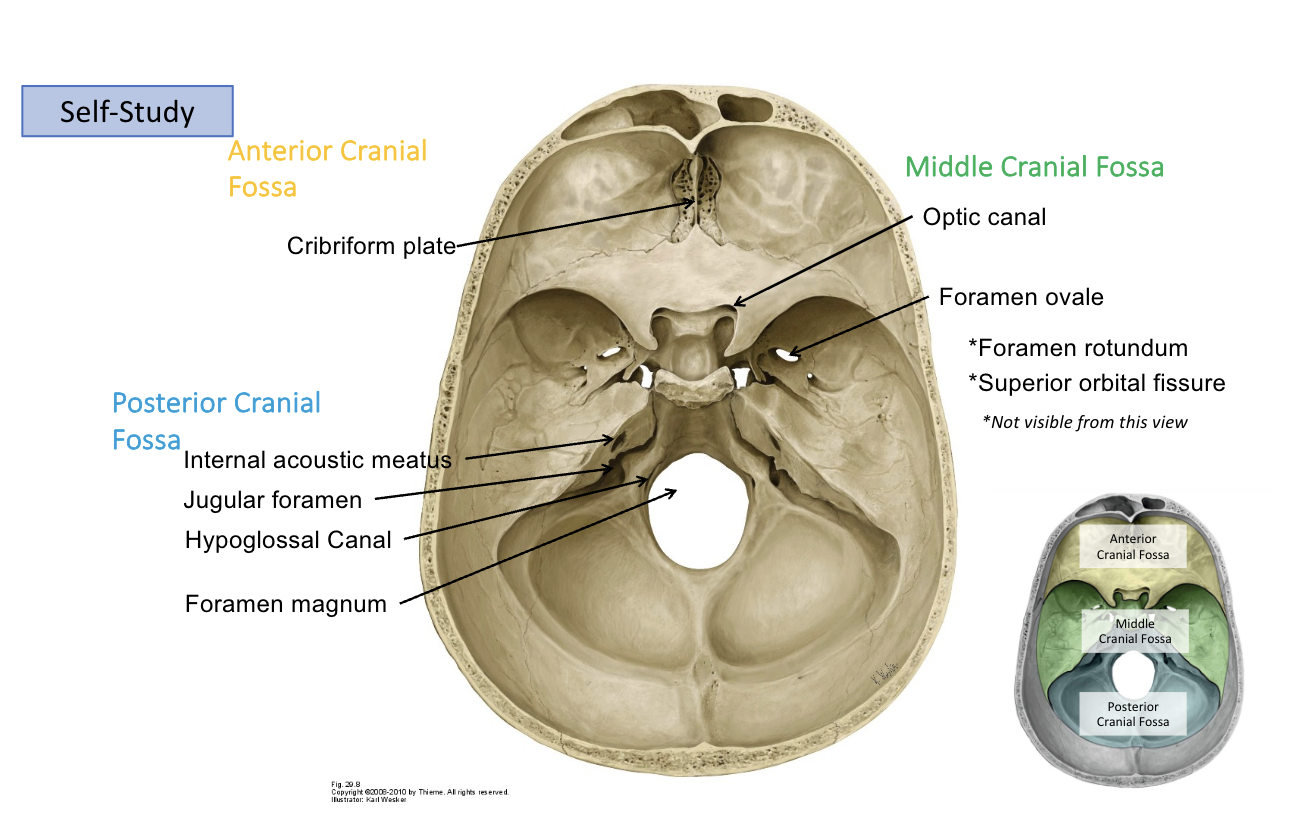
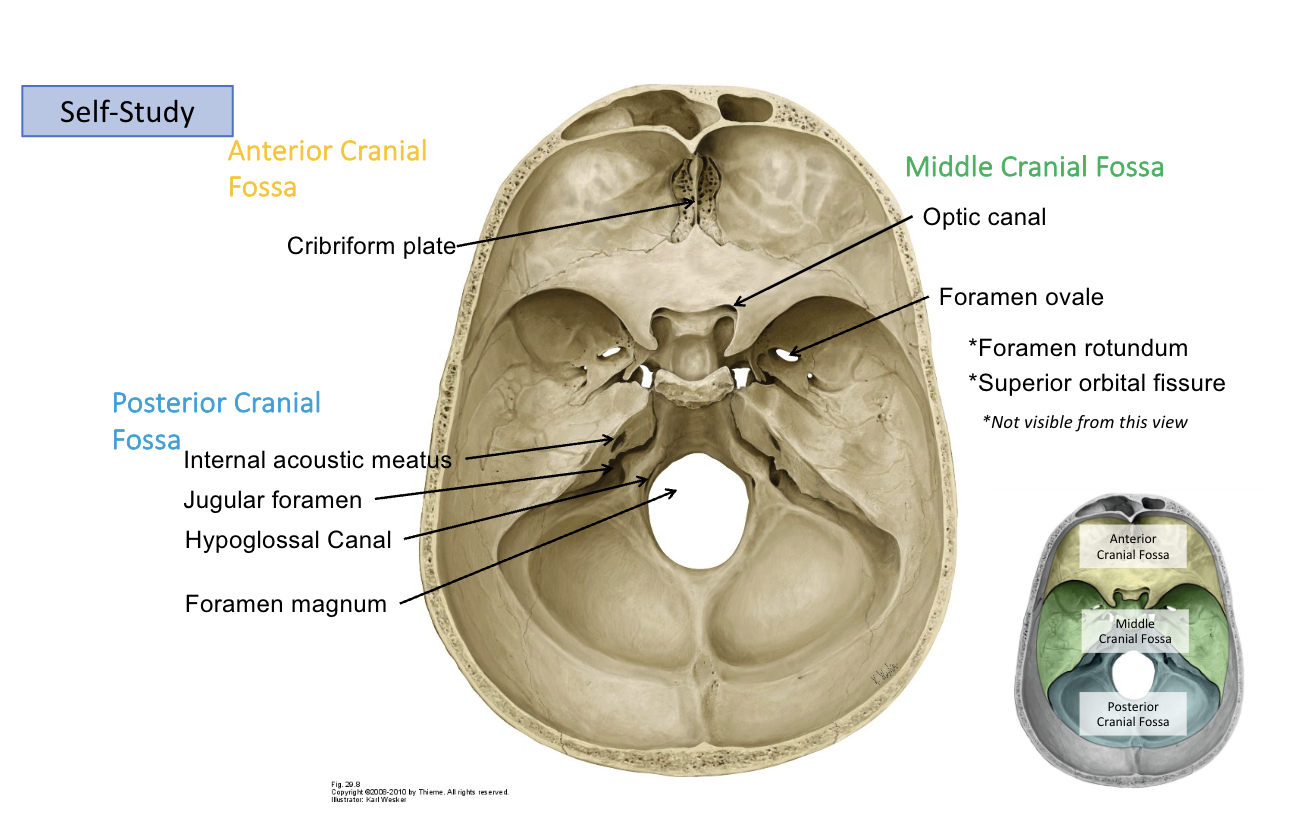
Cribriform plate: CN I
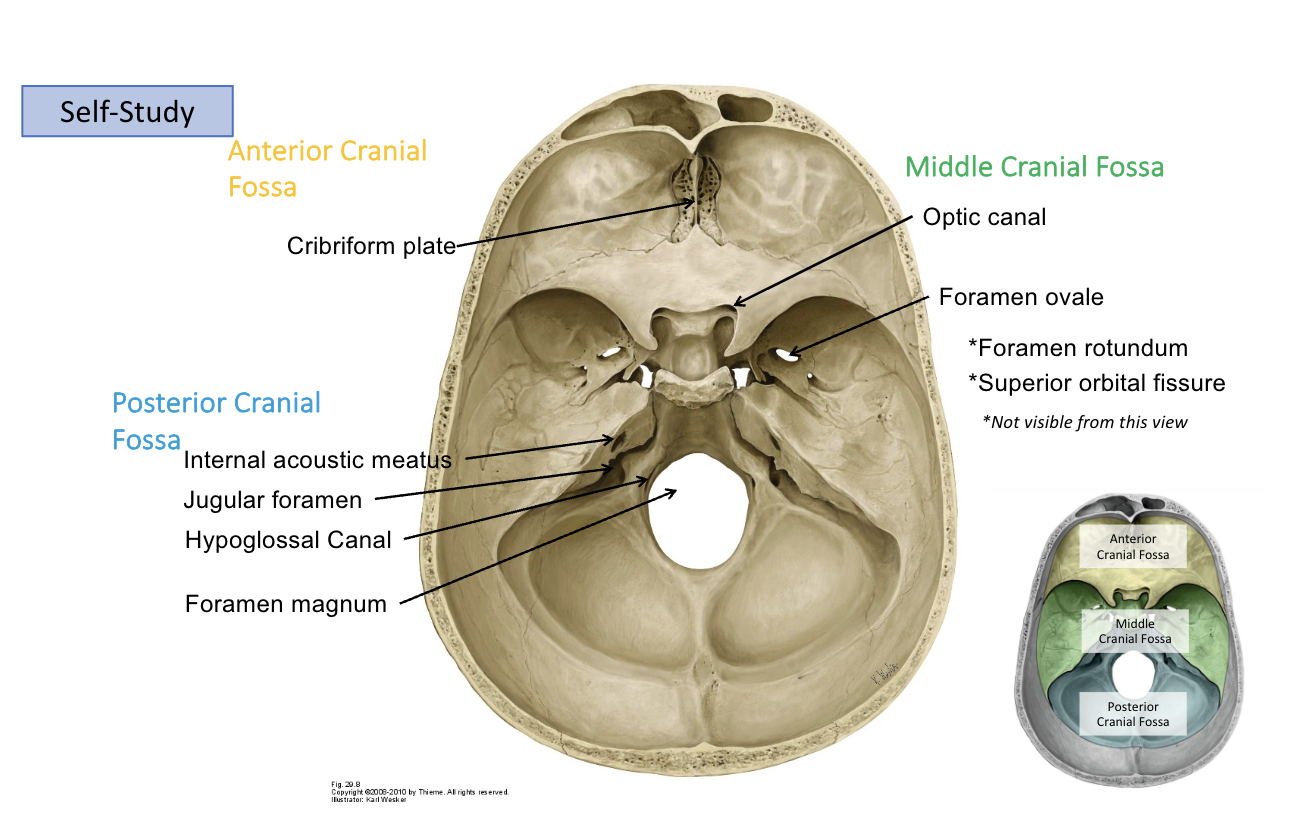
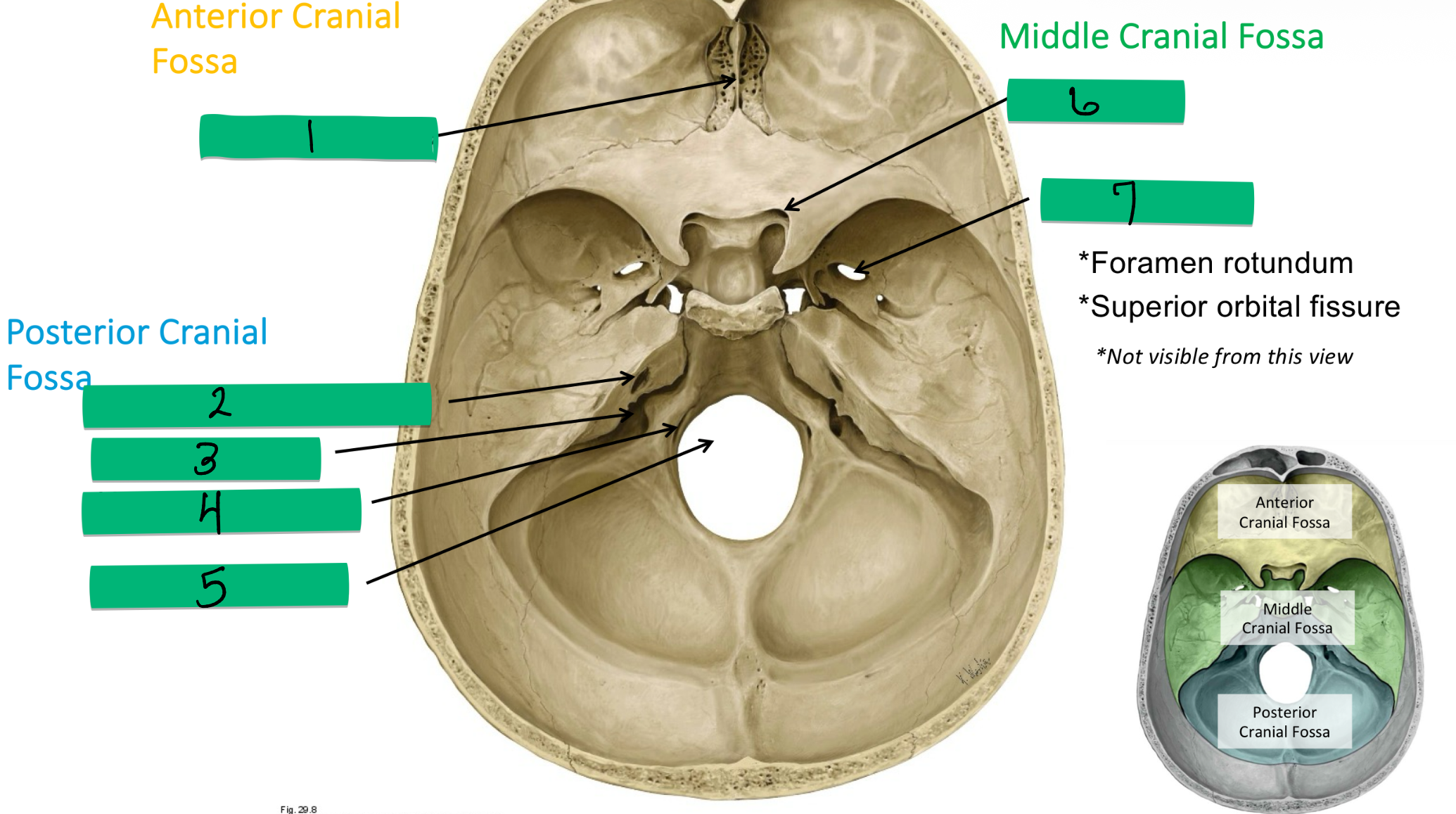
Name 2 and nerve
Internal acoustic meatus: CN VII and VIII
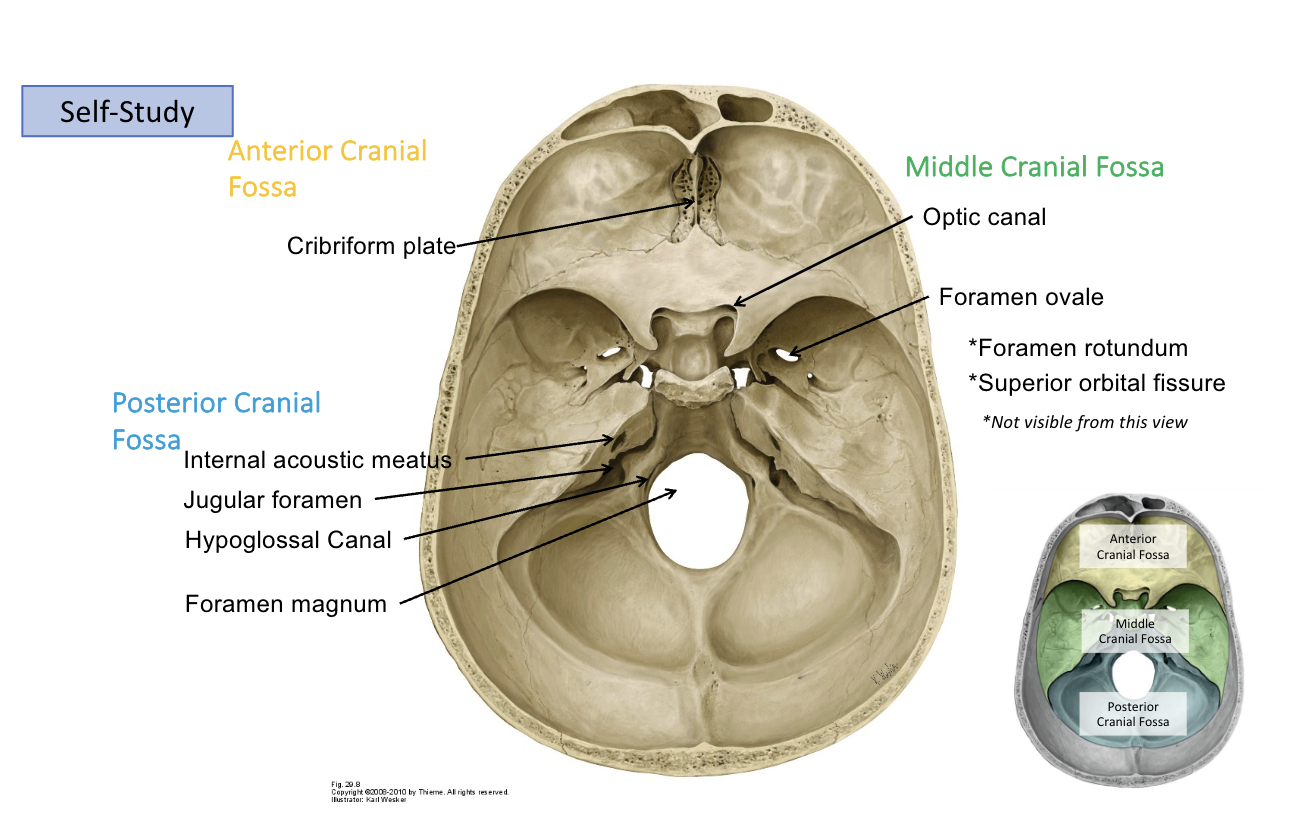
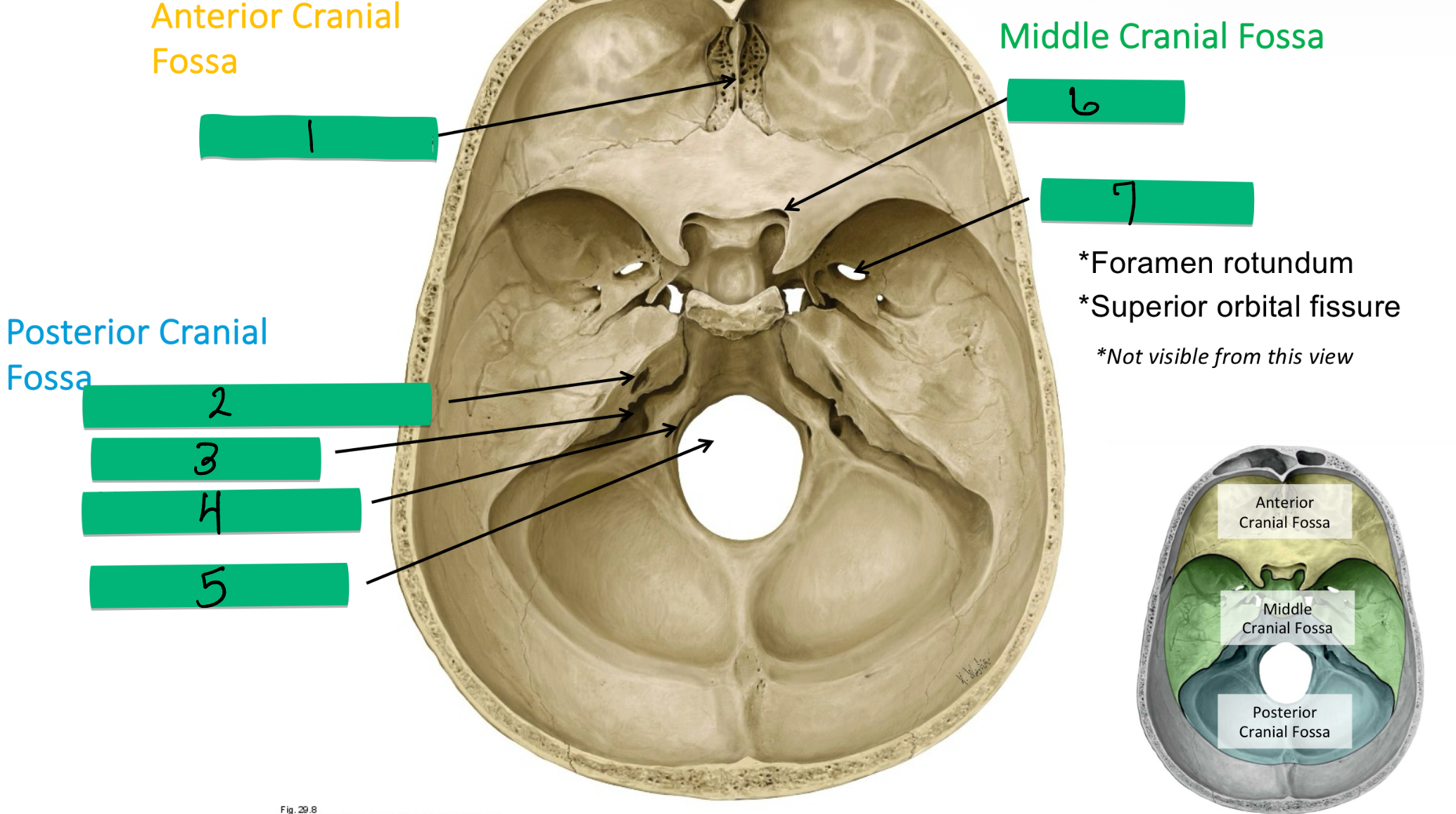
Name 3 and nerve
Jugular foramen: CN IX, X, XI, Internal jugular vein
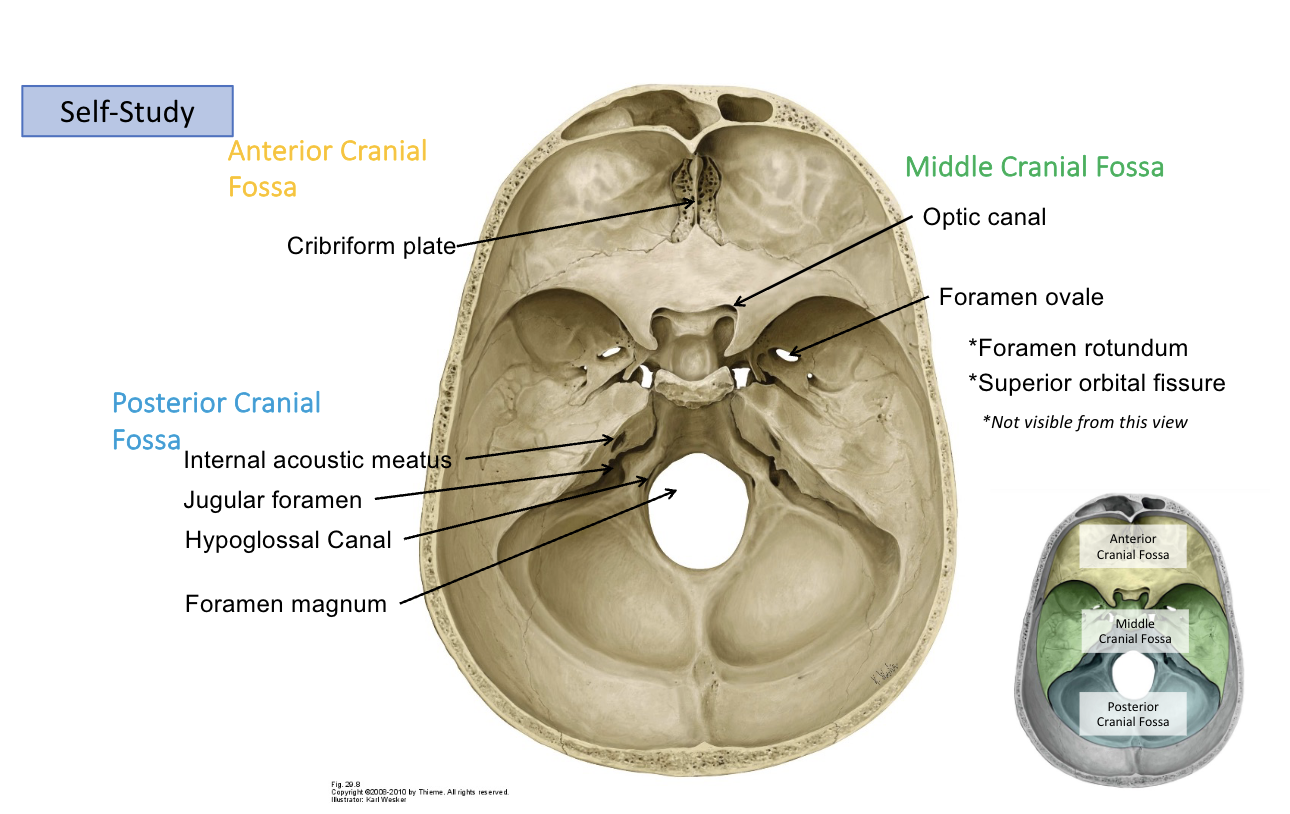
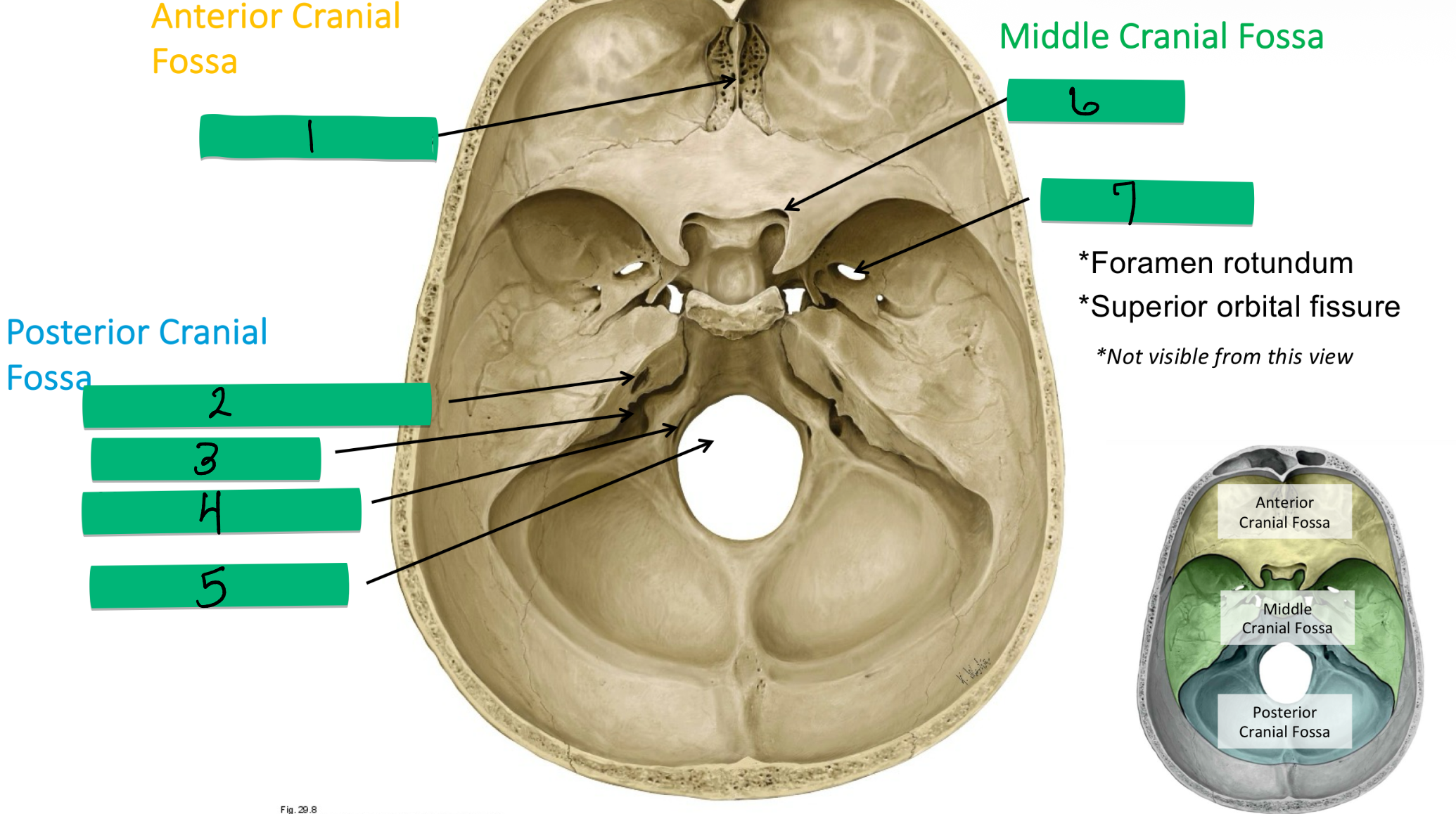
Name 4 and nerve
Hypoglossal Canal: CN XII
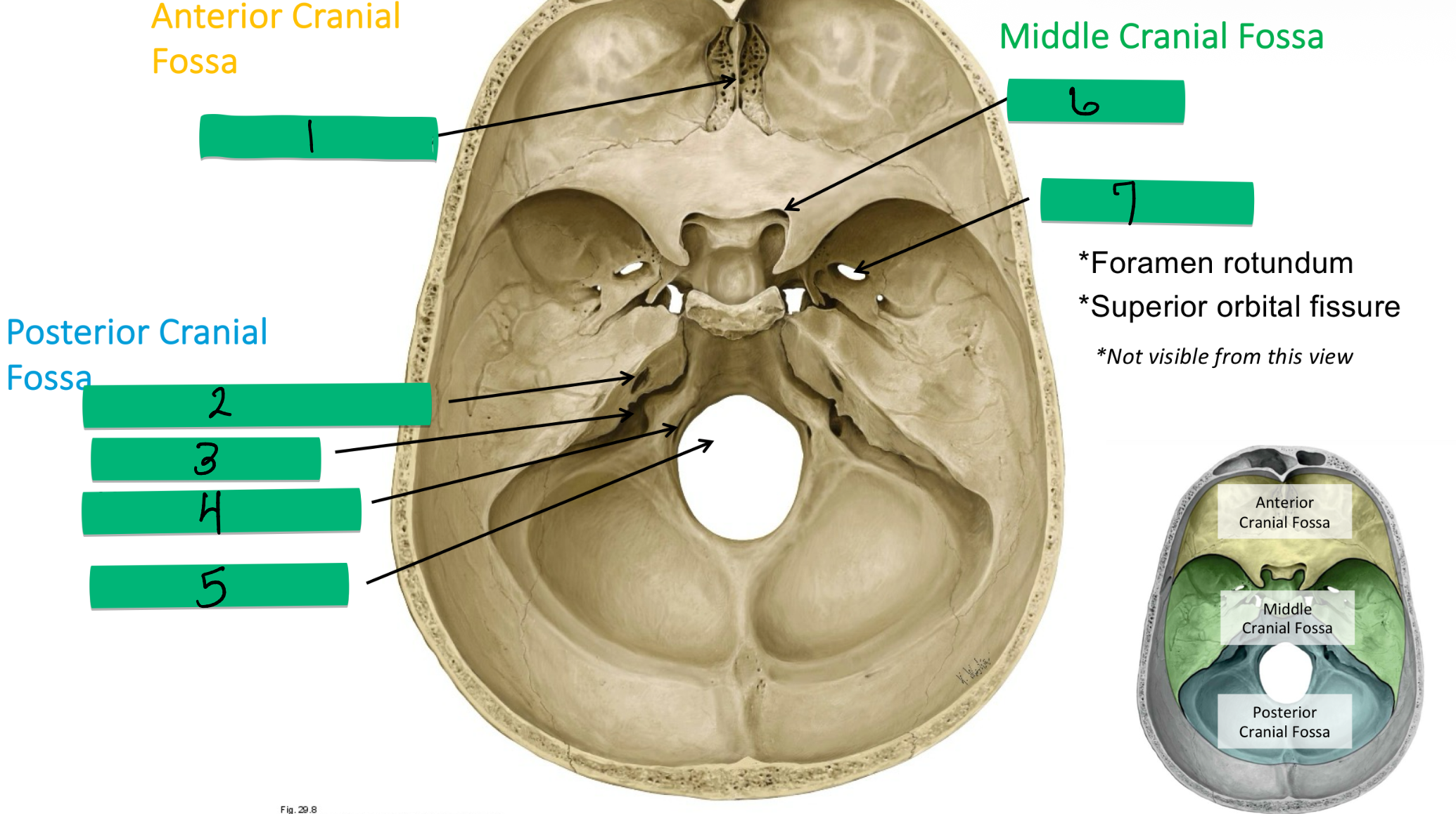
Name 5 and nerve
Foramen magnum: CN XI
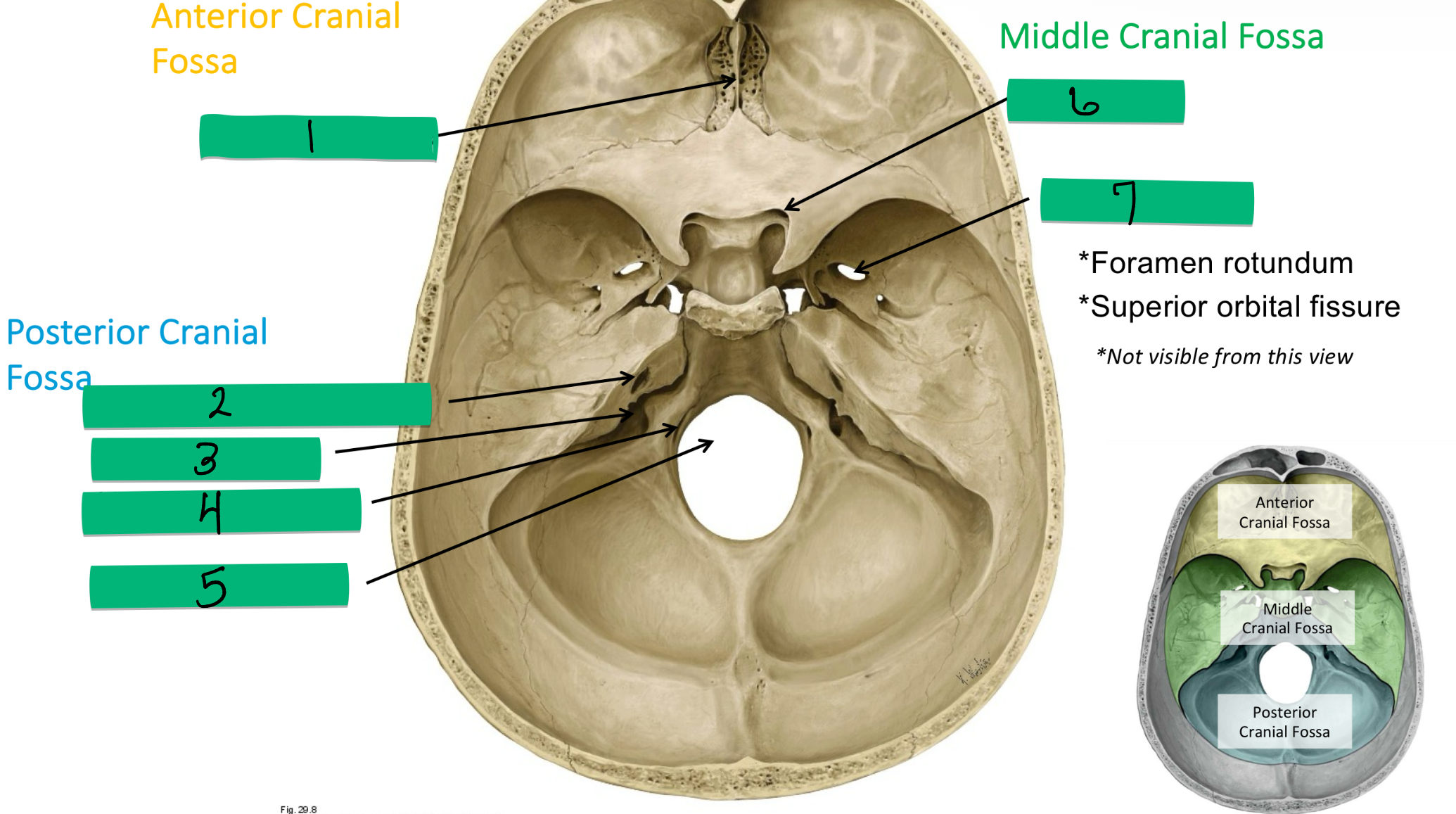
Name 6 and nerve
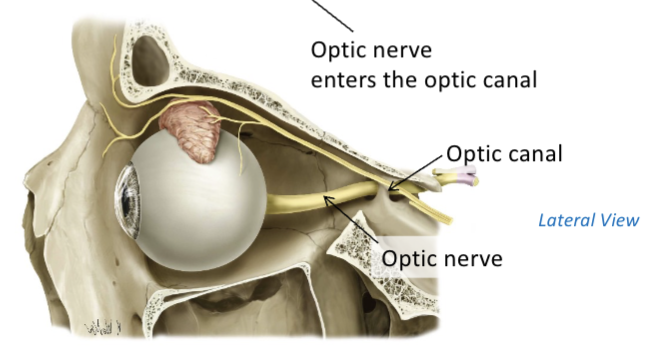
Optic canal: CN II
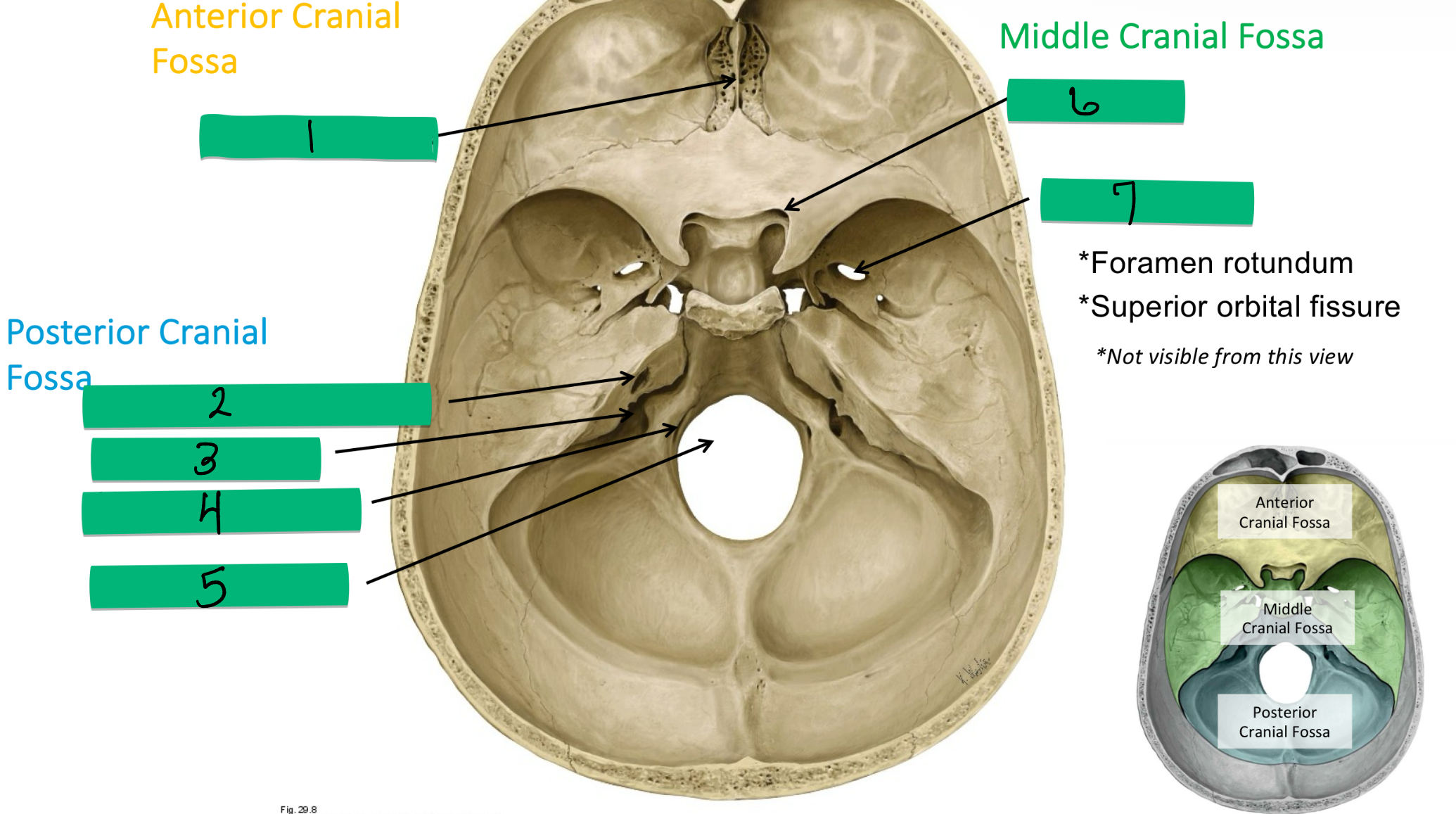
Name 7 and nerve
Foramen ovale: CN V3
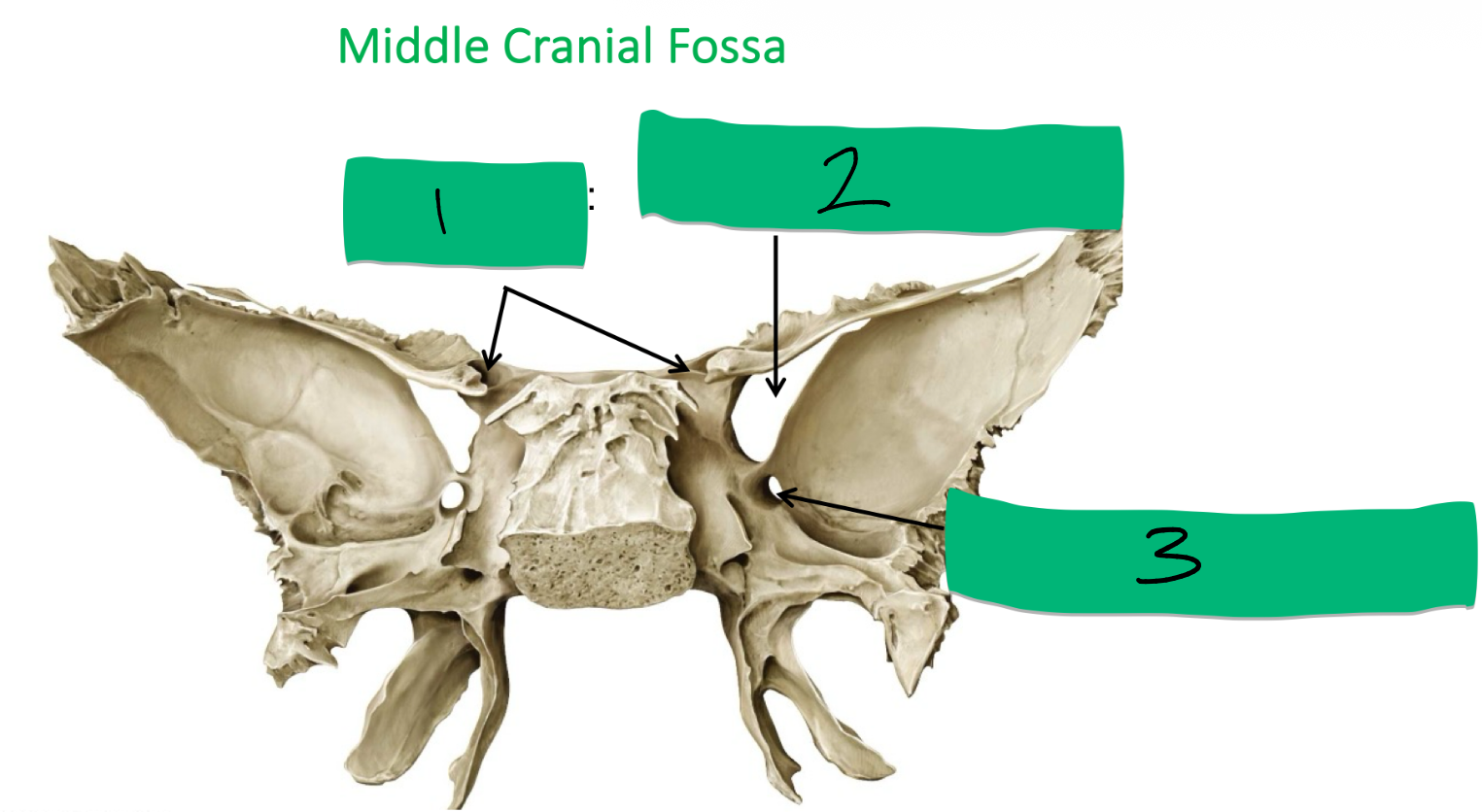
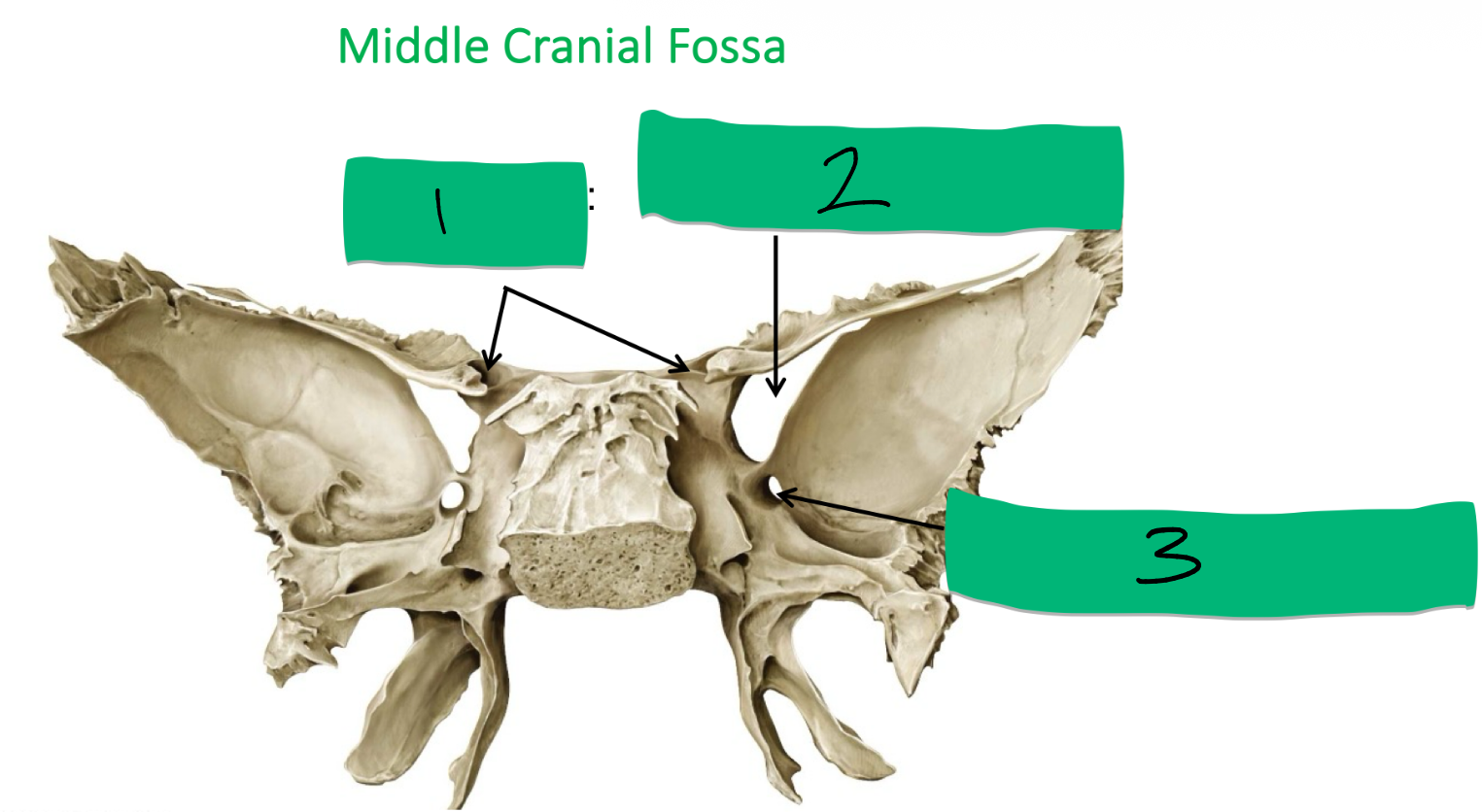
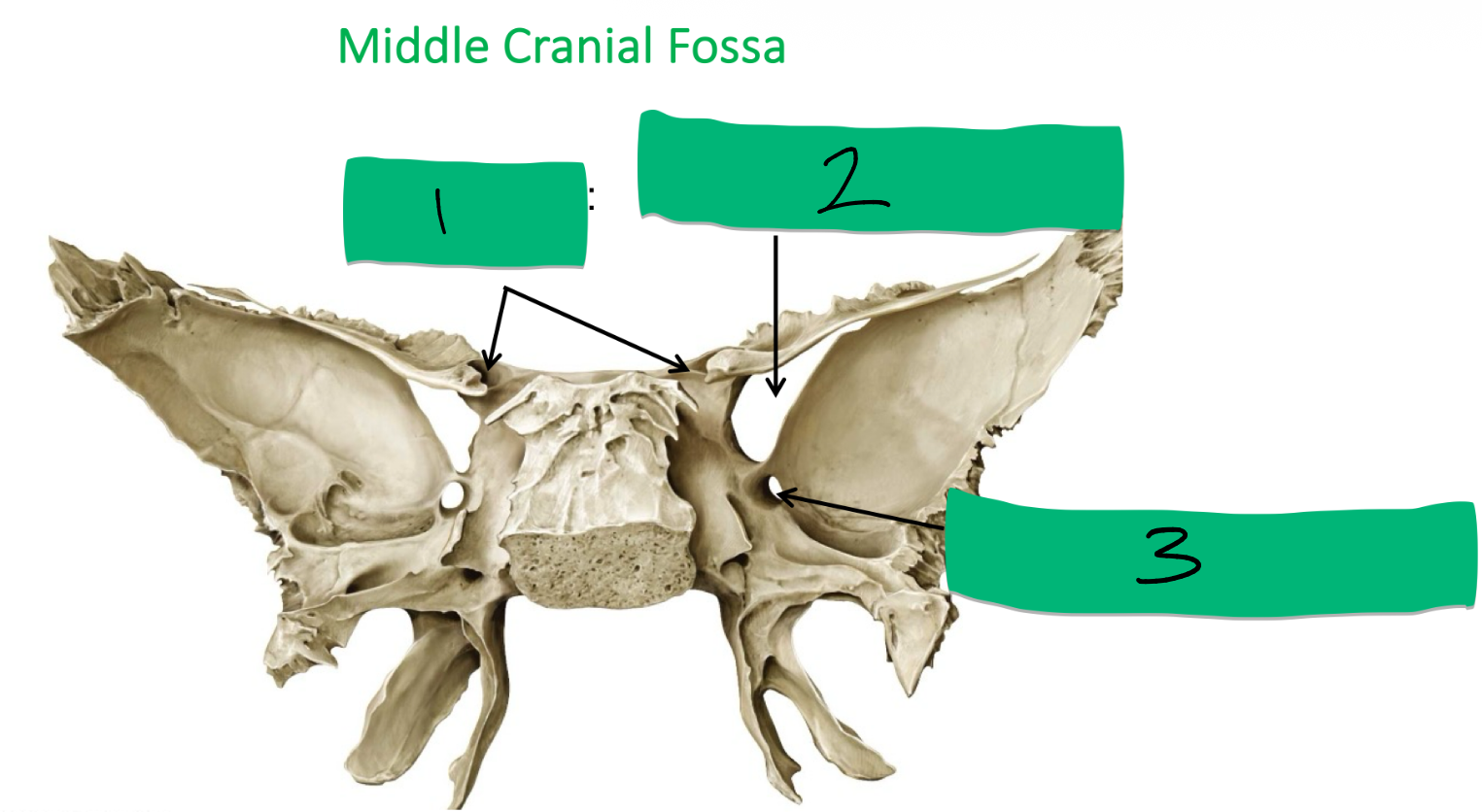
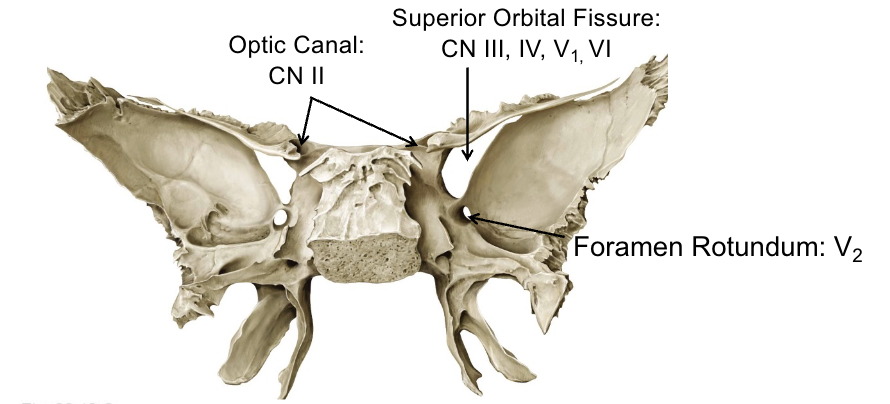
1
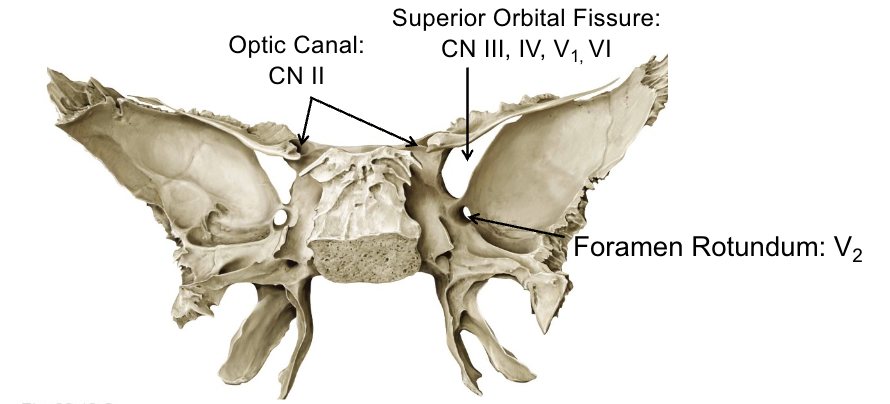
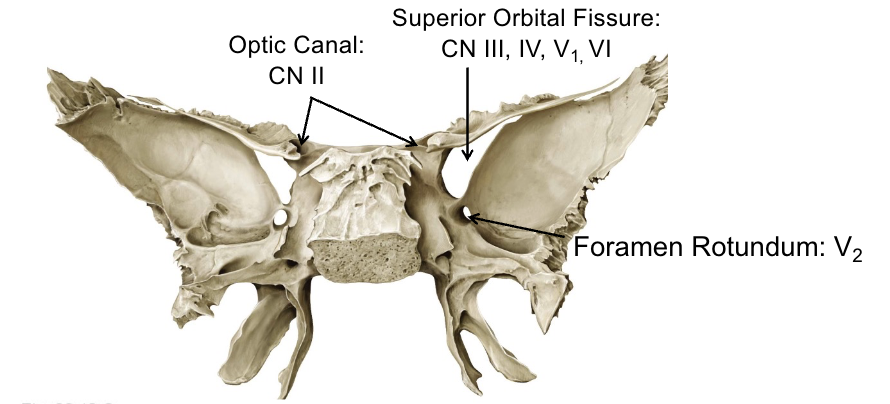
Optic Canal: CN II
2
Superior Orbital Fissure: CN III, IV, V1, VI
3
Foramen Rotundum: V2
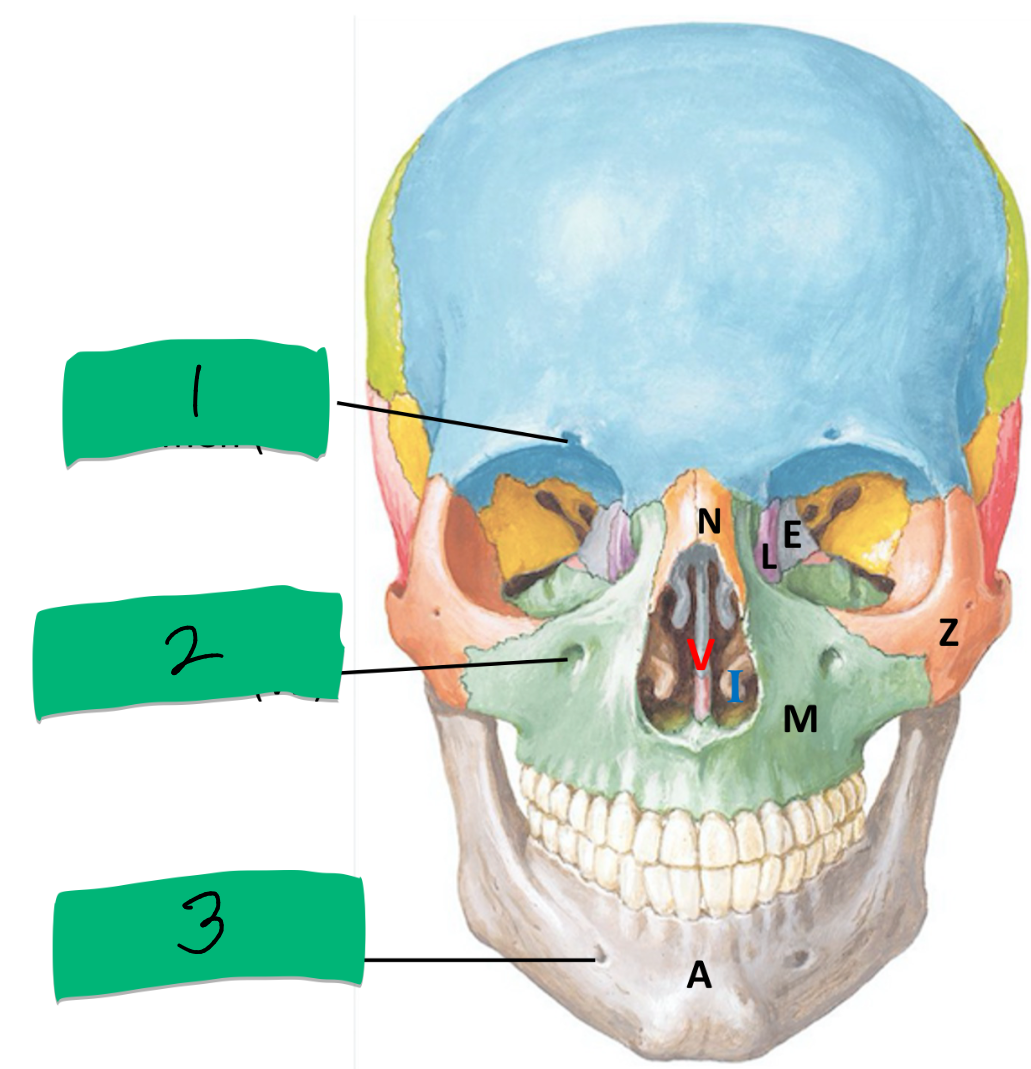
Name and these bone belong to?
Viscerocranium:
Supraorbital Foramen (V1)
Infraorbital Foramen (V2)
Mental Foramen (V3)
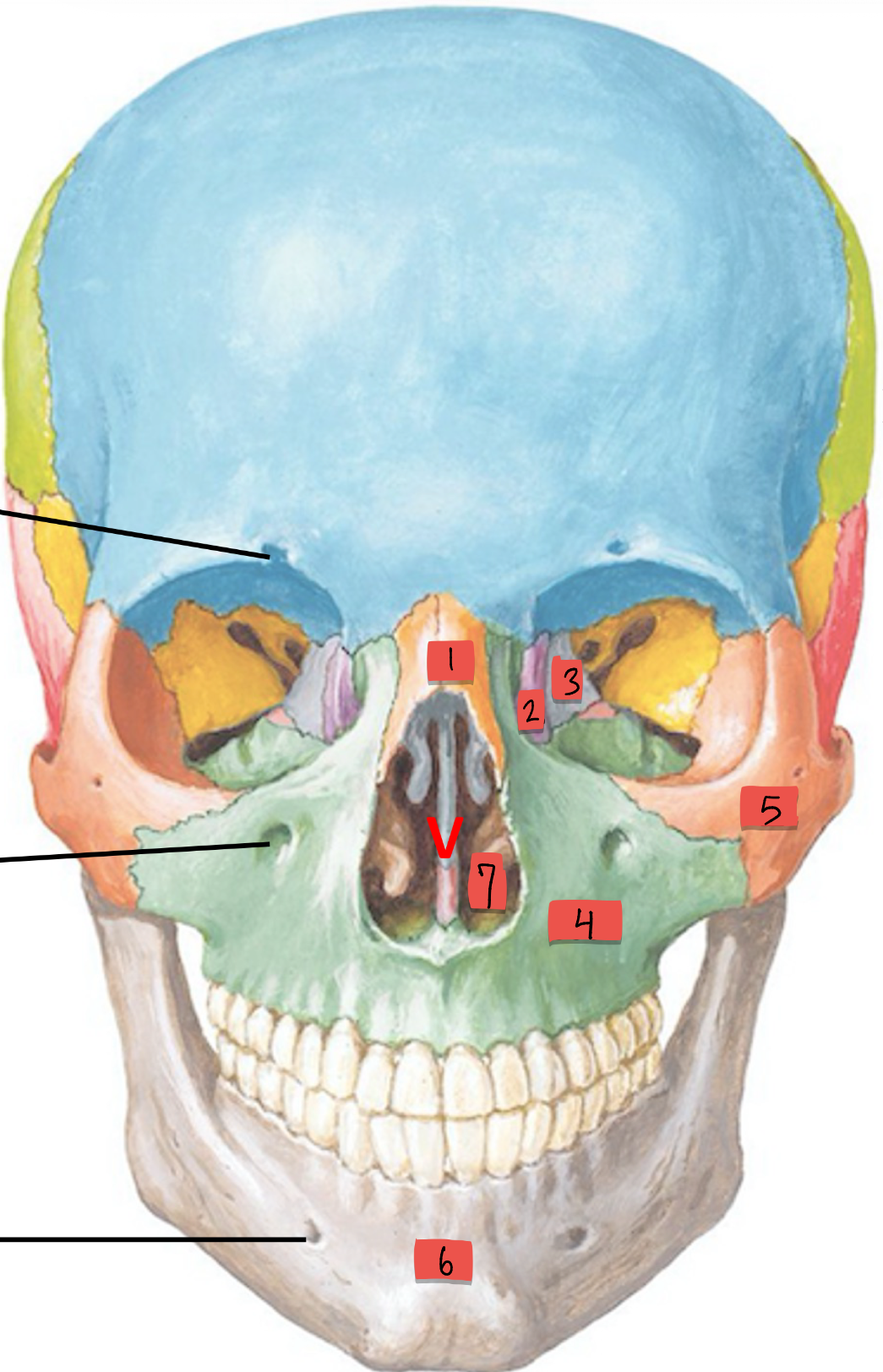
Name the bone and what
Viscreocranium:
Nasal (2)
Lacrimal (2)
Ethmoid (1)
Maxilla
Zygomatic
Mandible
Inferior Nasal Concha
General function of special sensory nerve:
smell, sight, taste, hearing/balance
General function of visceral sensory:
Afferent from organ
General function of (somatic) sensory:
touch, temperature, pain, pressure (skin and mucosal membrane)
General function (somatic) motor:
voluntary (skeletal, striated) muscle movement
General function of visceral motor (Parasympathetic)
smooth muscle, cardiac muscle, gland
CN I is what type of nerve? and is it (sensory, motor, mixed?)
Olfactory nerve: sensory
CN II is what type of nerve? and is it (sensory, motor, mixed?)
Optic Nerve: sensory
CN III is what type of nerve? and is it (sensory, motor, mixed?)
Oculomotor nerve: motor
CN IV is what type of nerve? and is it (sensory, motor, mixed?)
Trochlear Nerve: motor
CN V is what type of nerve? and is it (sensory, motor, mixed?)
Trigeminal nerve: mixed
CN VI is what type of nerve? and is it (sensory, motor, mixed?)
Abducens Nerve: motor
CN VII is what type of nerve? and is it (sensory, motor, mixed?)
Facial nerve: mixed
CN VIII is what type of nerve? and is it (sensory, motor, mixed?)
Vestibulocohlear Nerve: sensory
CNIX is what type of nerve? and is it (sensory, motor, mixed?)
glossopharyngeal nerve: mixed
CNX is what type of nerve? and is it (sensory, motor, mixed?)
Vagus Nerve: mixed
CNXI is what type of nerve? and is it (sensory, motor, mixed?)
Accessory Nerve: Motor
CNXII is what type of nerve? and is it (sensory, motor, mixed?)
Hypoglossal Nerve: motor
Name 3 cranial nerves that carry parasympathetic fibers
CNIII- Oculomotor Nerve
CNIX- Glossopharyngeal Nerve
CNX- Vagus Nerve
CN I: Olfactory Nerve function and exit:
smell and cribriform plate
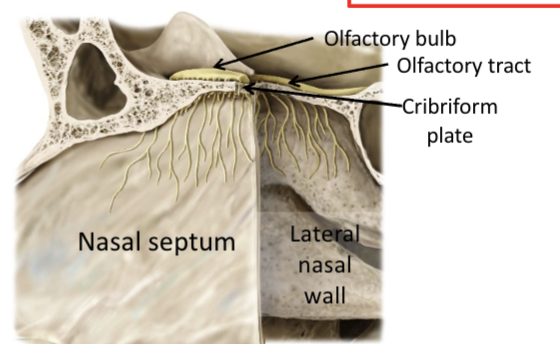
CN II – Optic Nerve function and exit:
Vision and optic canal
Oculomotor n. (CN III) function and exit:
GENERAL MOTOR: 5 extraocular muscles
VISCERAL MOTOR (Parasympathetic):
Sphincter pupillae and Ciliary muscles
Superior orbital fissure
Trochlear n. (CN IV) function and exit:
GENERAL MOTOR: Superior oblique m.
Superior orbital fissure
Abducens n. (CN VI) function and exit:
GENERAL MOTOR: Lateral Rectus m.
superior orbital fissure
Major sensory nerve of Head and Neck. Only motor component of
this nerve is part of the Mandibular Division
CN V- Trigeminal Nerve
What makes up the CN V- Trigeminal Nerve?
Opthalmic divison (V1)
Maxillary divison (V2)
Mandibular divison (V3)
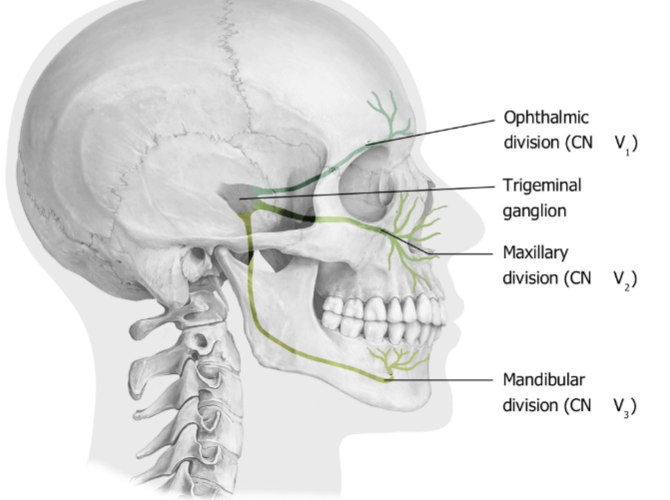
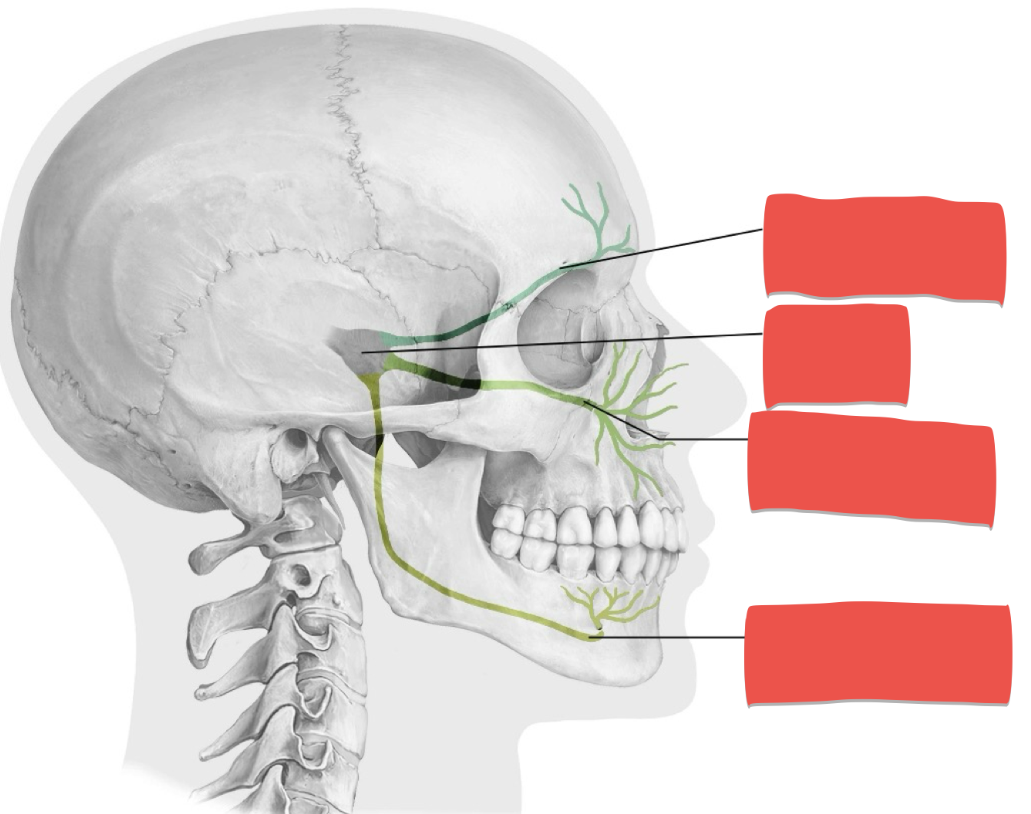
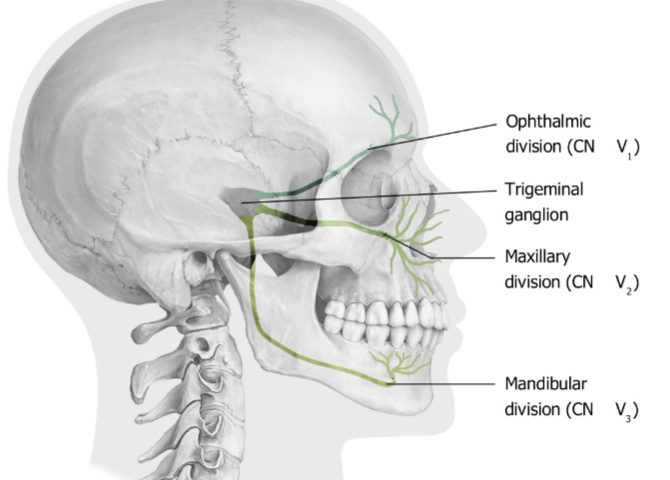
CN V1 – Ophthalmic Division function and exit:
GENERAL SENSORY: Cornea, conjunctiva, nose, upper eyelid, forehead, anterior scalp
Superior orbital fissure
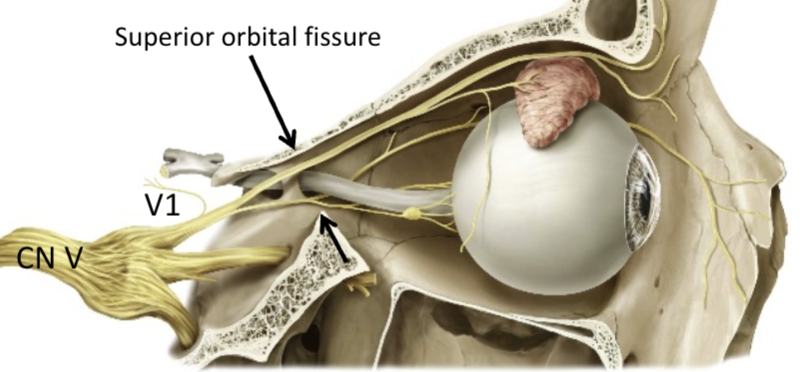
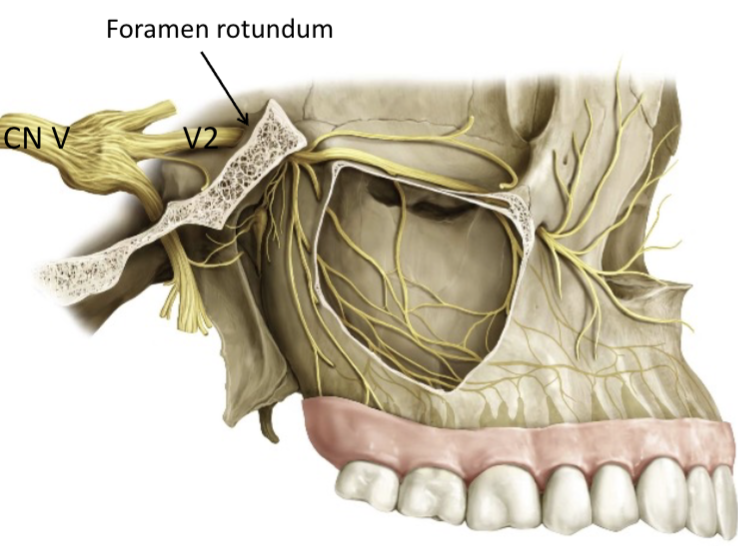
CN V2 Maxillary Division function and exit:
GENERAL SENSORY: Nasal mucosa, palate, nasopharynx, maxillary sinus, maxillary gums & teeth, cheeks, lower eyelid, upper lip
Foramen rotundum
CN V3 – Mandibular Division function and exit:
GENERAL SENSORY: Anterior 2/3 tongue, skin of chin, mandible, lower teeth, anterior ear, temple
GENERAL MOTOR: Muscles of mastication
Foramen ovale
CN VII – Facial Nerve function and exit:
GENERAL MOTOR: Muscles of facial expression, posterior belly of digastric & stylohyoid muscle
SPECIAL SENSORY
Taste from anterior 2/3 tongue
VISCERAL MOTOR (PARASYMPATHETIC):
Increases secretions from lacrimal, submandibular, sublingual glands, and nasal & palate mucosa
Internal acoustic meatus
CN VIII-Vestibulocochlear Nerve function and exit:
SPECIAL SENSORY: Vestibular branch: Balance & Equilibrium Cochlear branch: Hearing
Internal acoustic meatus
CN IX – Glossopharyngeal Nerve function and exit:
GENERAL SENSORY: Sensation from posterior 1/3 of tongue, most of the pharynx
SPECIAL SENSORY: Taste from posterior 1/3 of tongue
GENERAL MOTOR: Stylopharyngeus muscle
VISCERAL MOTOR (Parasympathetic): Parotid Gland
Jugular foramen
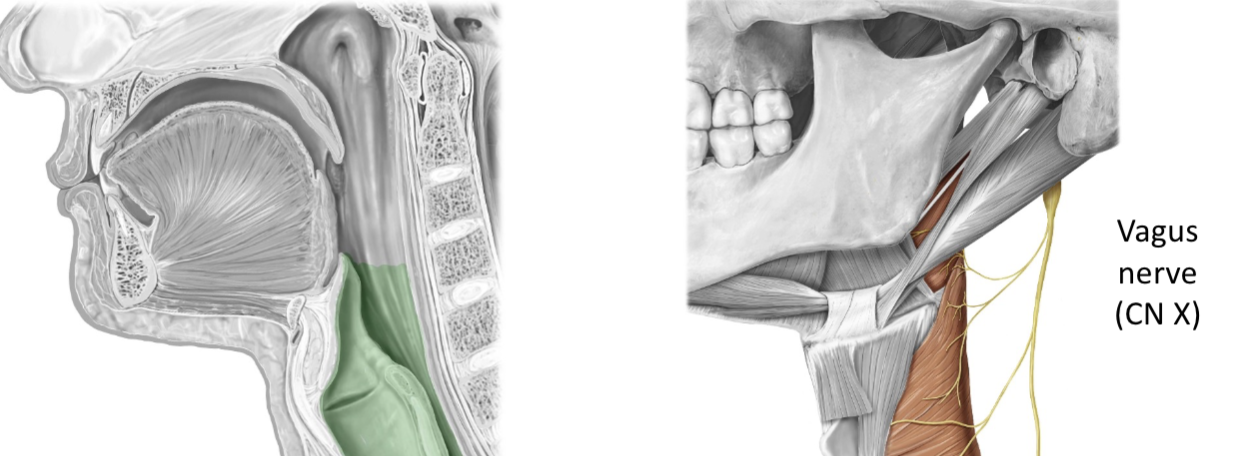
CN X – Vagus Nerve
SPECIAL SENSORY: Taste from epiglottis and pharynx
GENERAL SENSORY: From pharynx and larynx
GENERAL MOTOR: Most pharynx muscles, most soft palate muscles and all larynx muscles
VISCERAL MOTOR (Parasympathetic): Smooth muscle of most of the GI tract, cardiac muscle, and glands in lungs, pharynx, larynx, trachea, and most abdominal organs
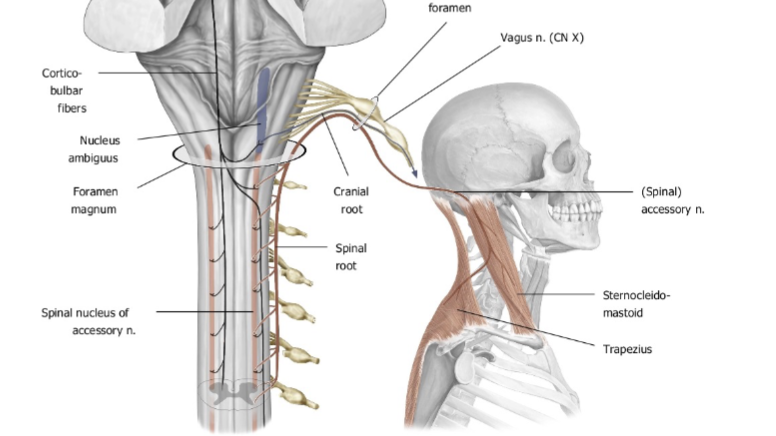
CN XI – Spinal Accessory Nerve
GENERAL MOTOR:
Trapezius and Sternocleidomastoid muscle
CN XII – Hypoglossal Nerve
GENERAL MOTOR: All intrinsic muscles and most extrinsic muscles of the tongue
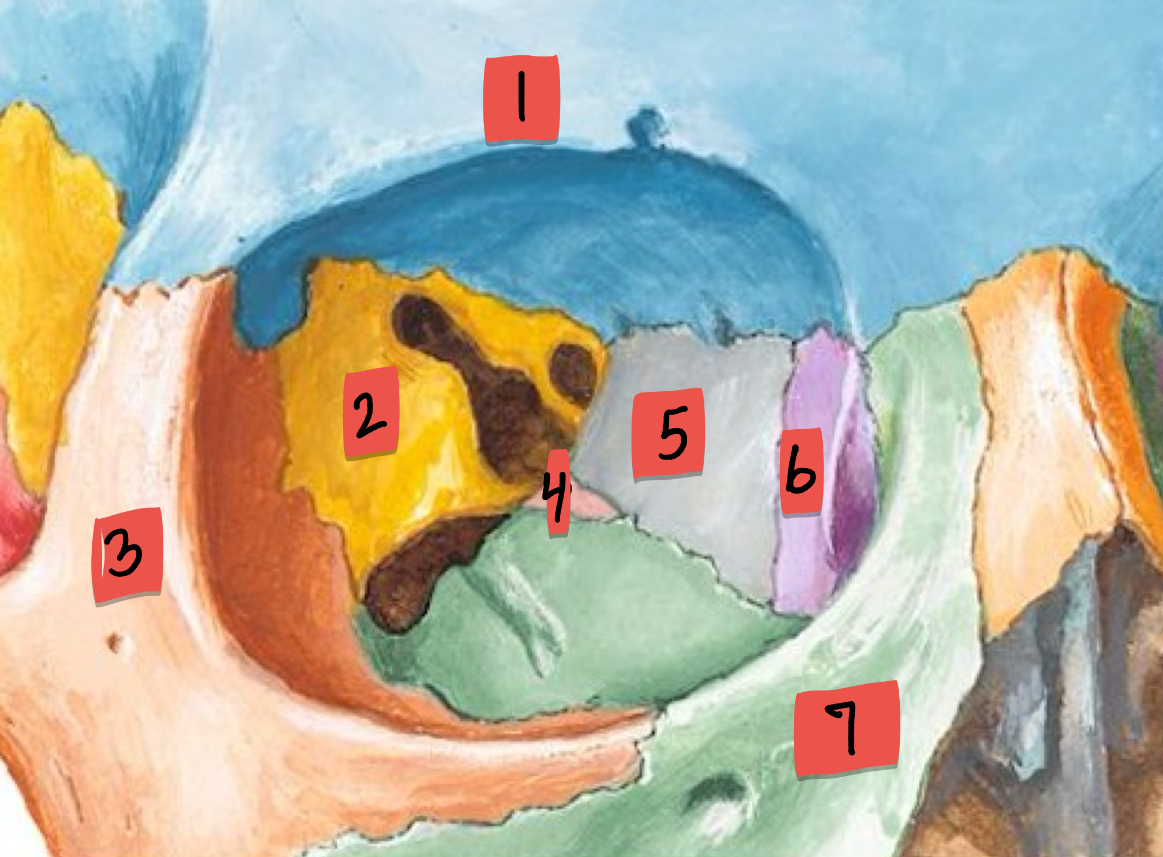
What is this and name each bone
Orbit
Frontal
Sphenoid
Zygomatic
Palatine
Ethmoid
Lacrimal
Maxilla
Fierce Zebras Sprint Past Every Lazy Monkey
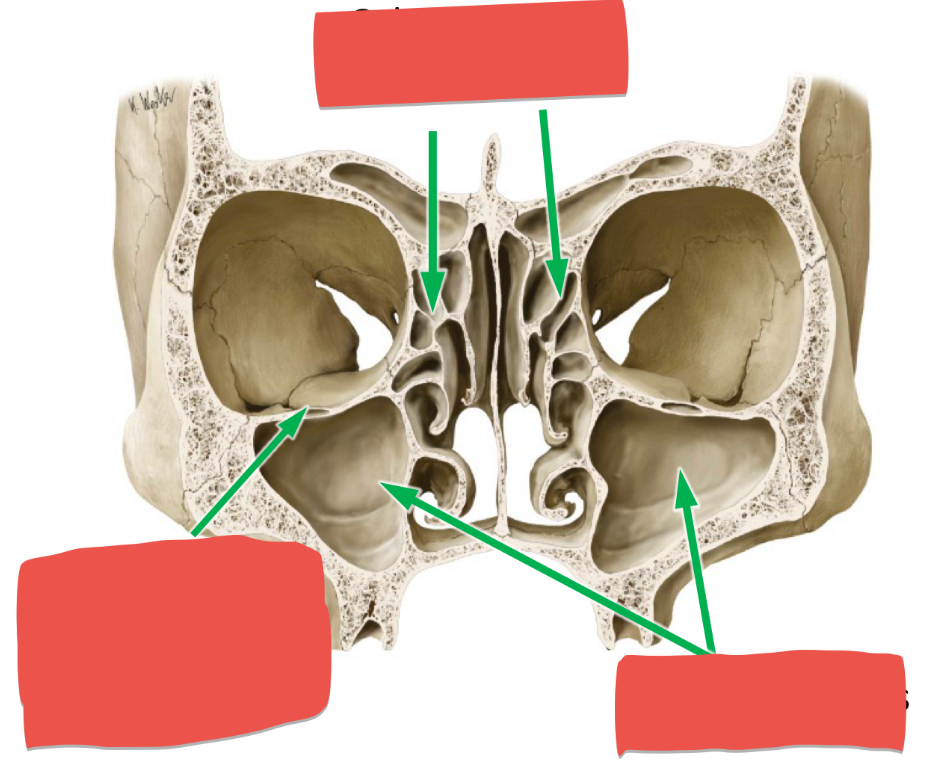
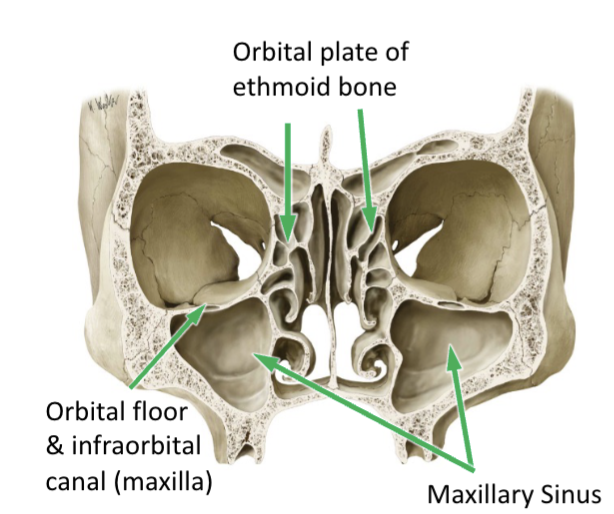
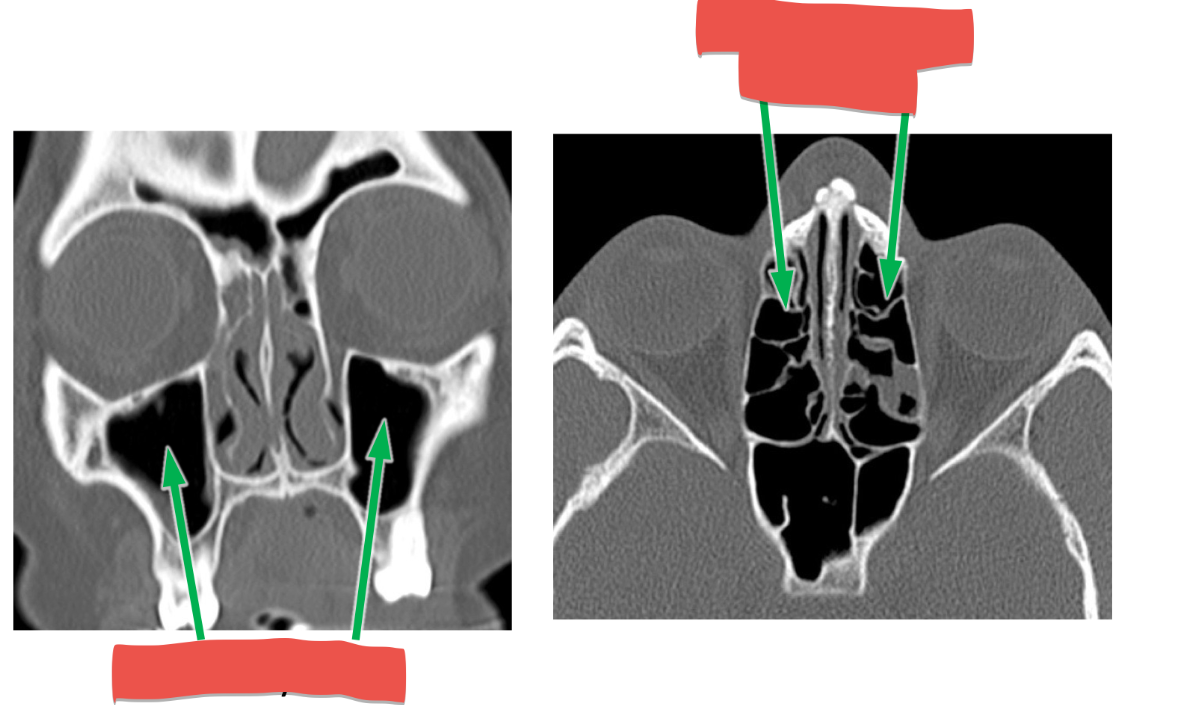
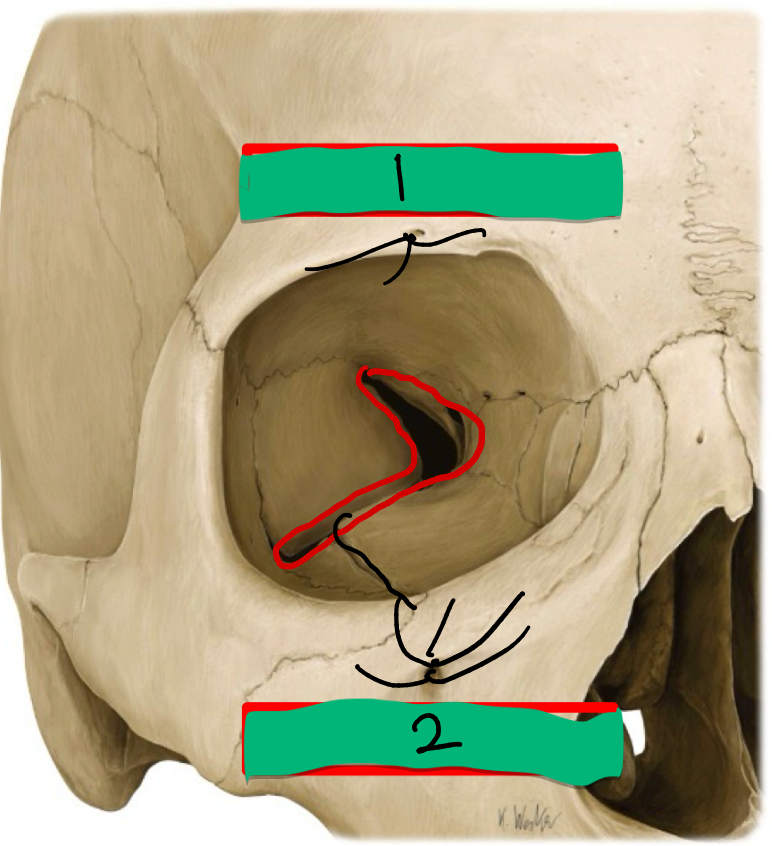
What’s 1 and what nerve does it transmit?
Supraorbital foramen- transmits supraorbital n. (CN V1)
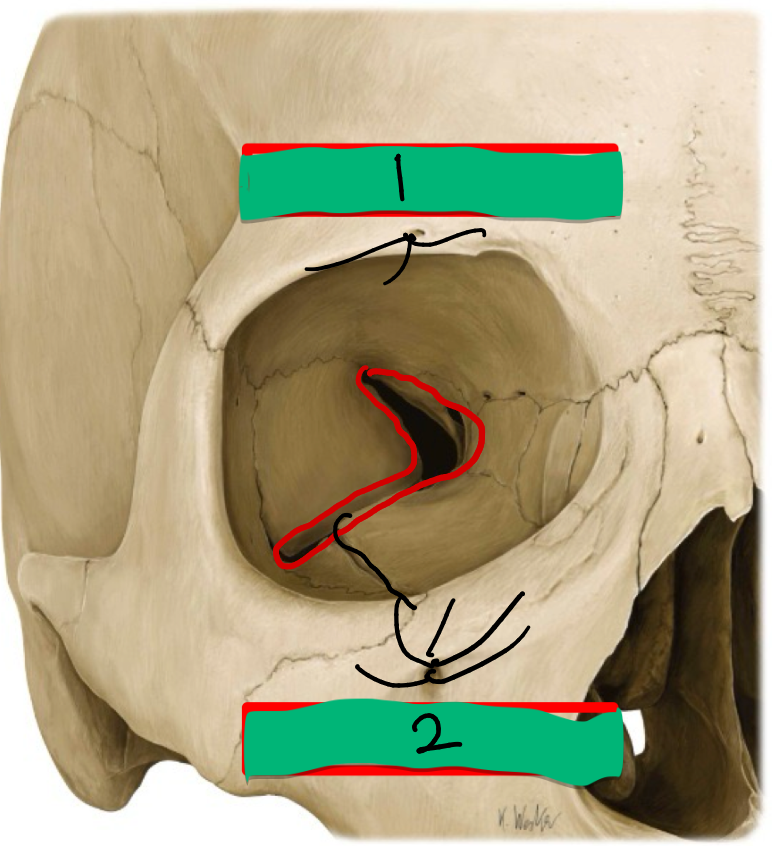
What’s 2 and what nerve does it transmit?
Infraorbital foramen-transmits Infraorbital n (CN V2)
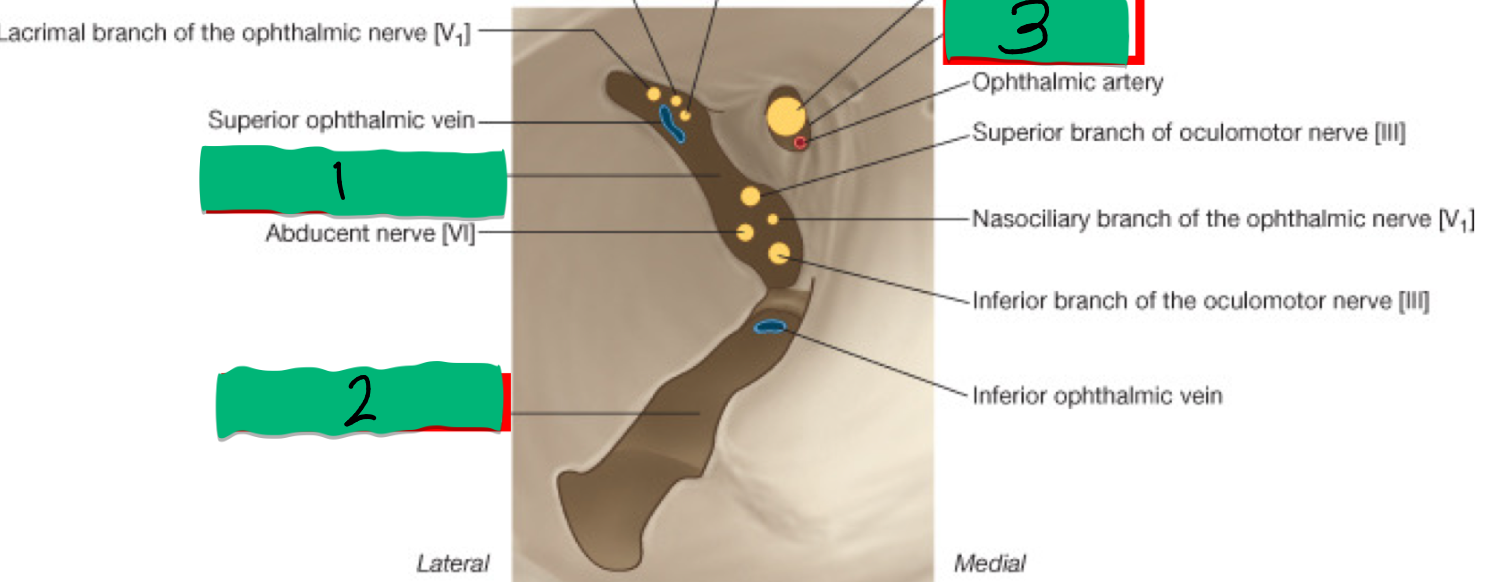
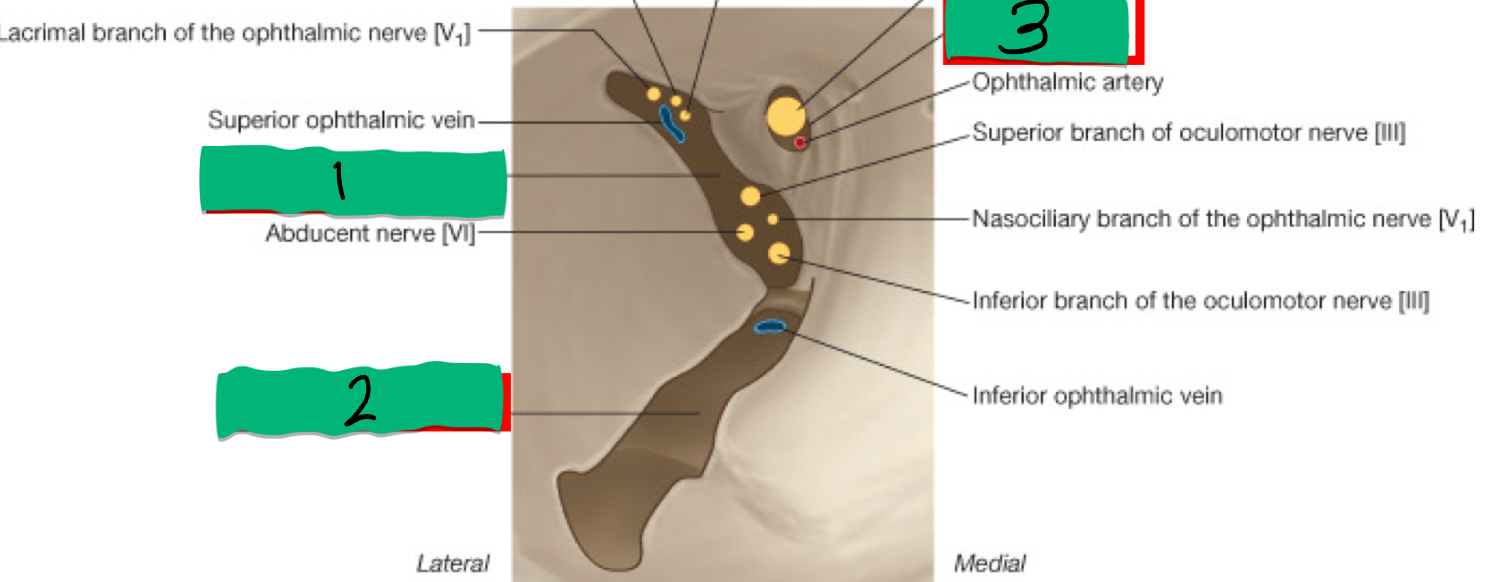
What’s 1 and what nerve does it transmit?
Superior Orbital Fissure: transmits CN V1, CN III, IV, VI & Ophthalmic v
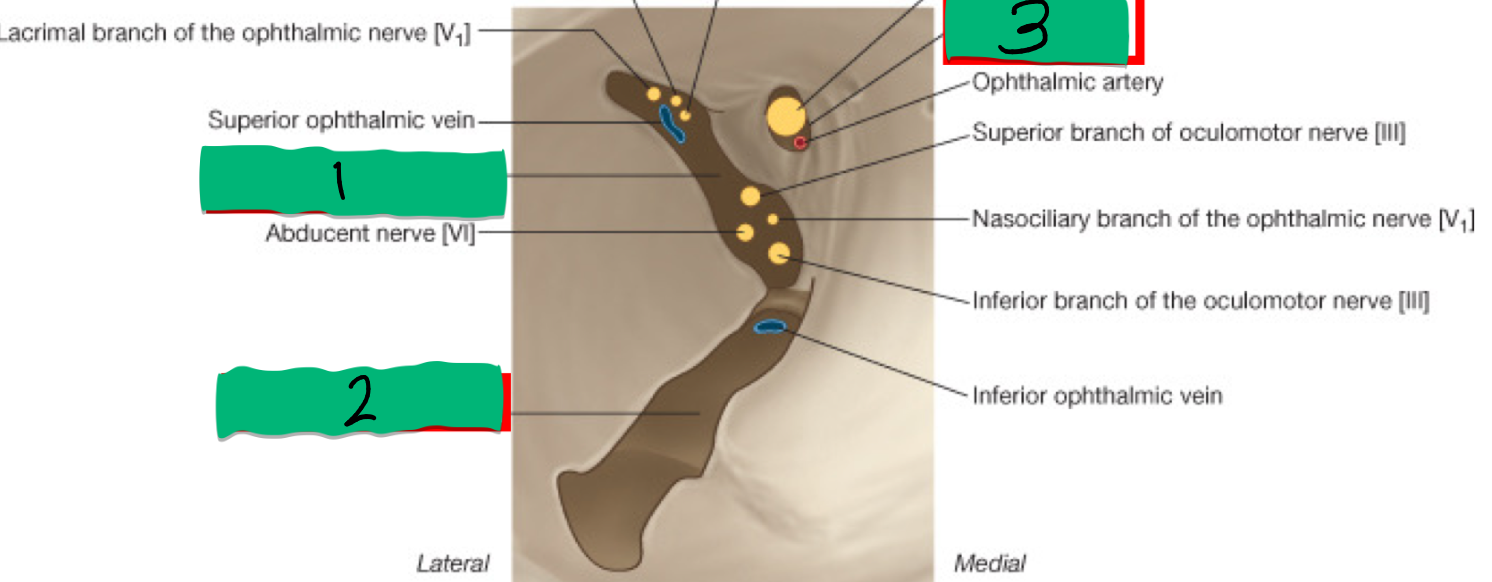
What’s 2 and what nerve does it transmit?
Inferior Orbital Fissure: transmits the Infraorbital nerve (CN V2)
What’s 3 and what nerve does it transmit?
Optic Canal: transmits Ophthalmic a. & CN II
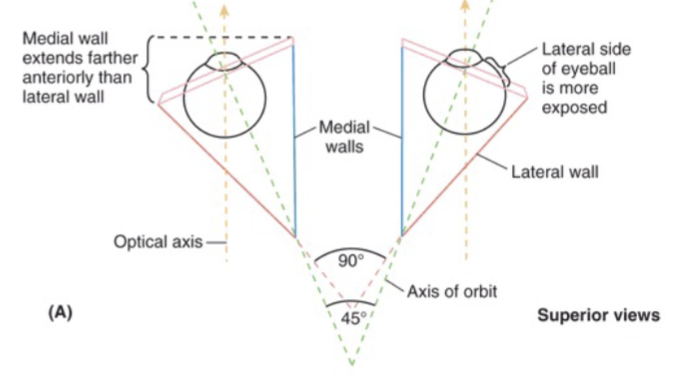
“looking directly ahead” which is the anatomical position of the eye- known as what axis?
Optical axis
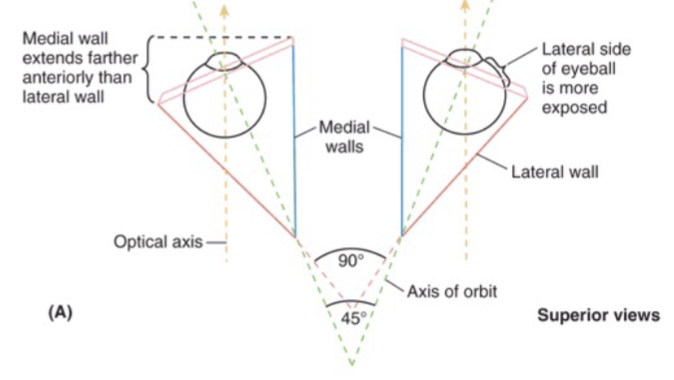
anatomical alignment from the apex of the orbits which is at 45 degrees from each other.
Orbital axis
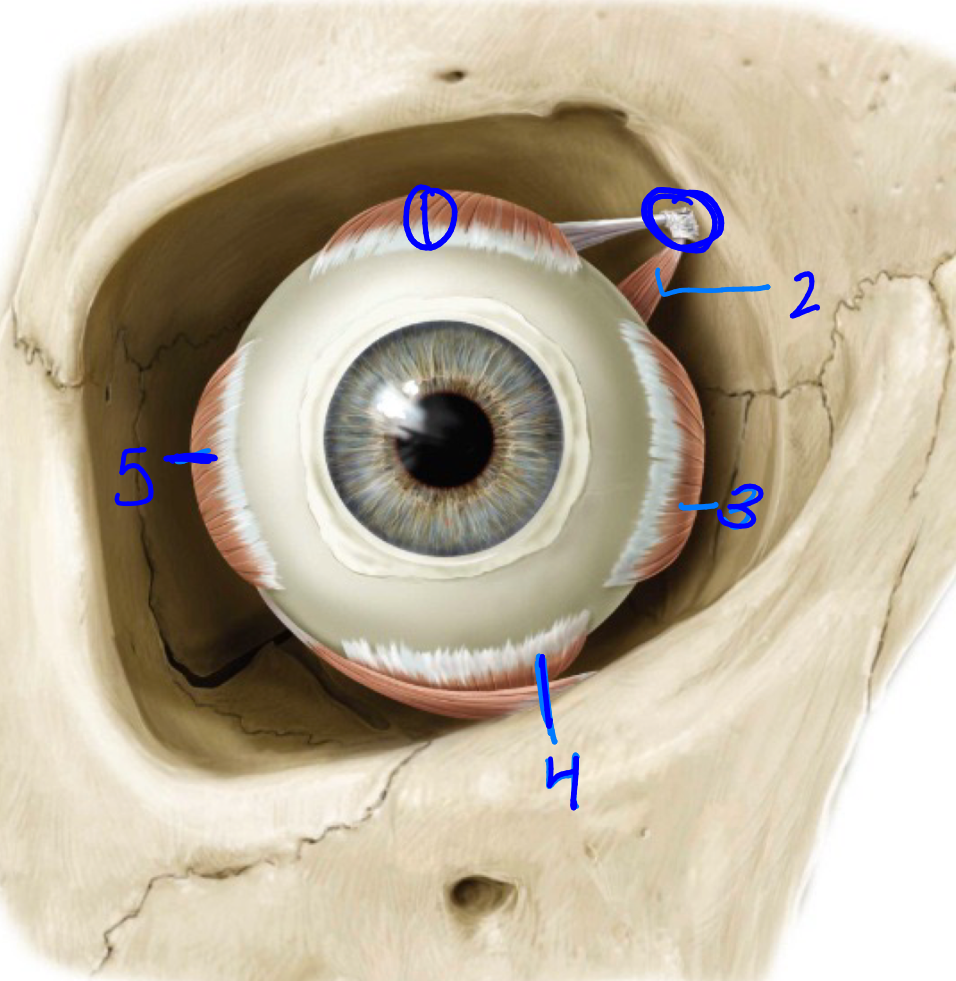
Name 1 and its nerve
Superior rectus: CN III
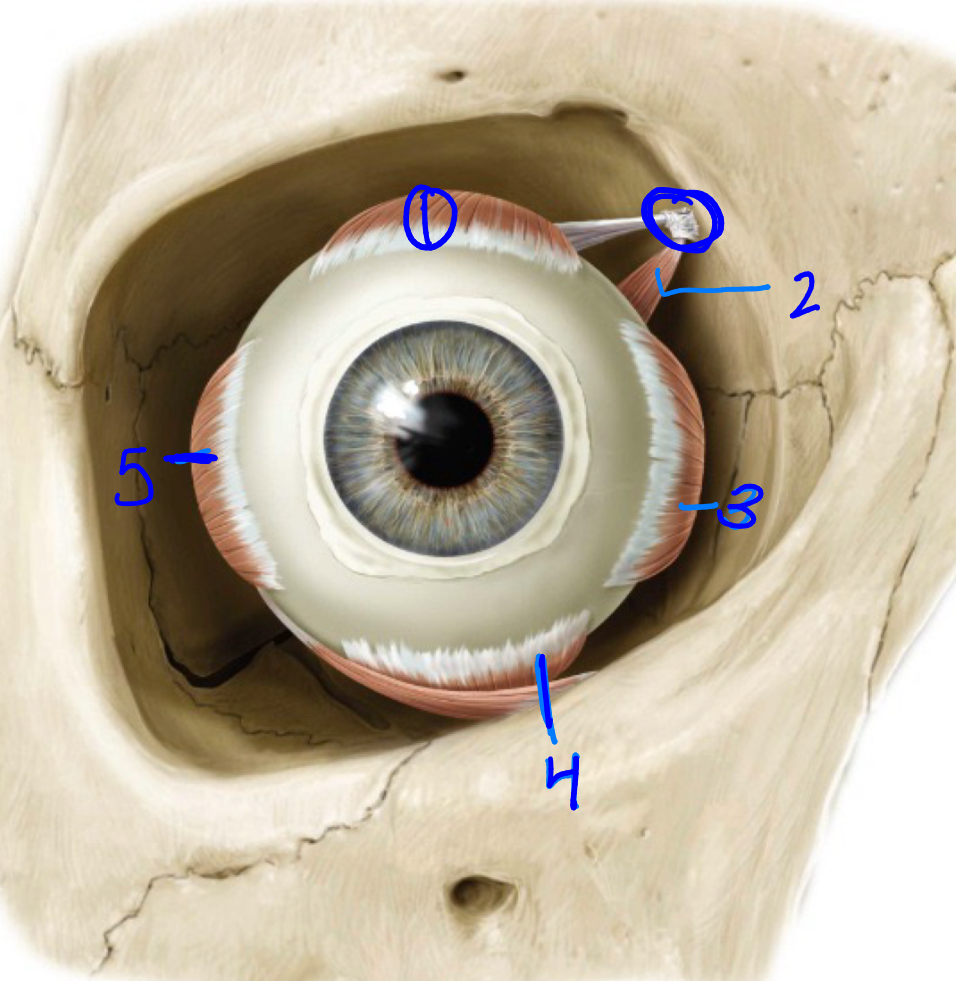
Name 2 and its nerve:
superior oblique: CN IV (Trochlear nerve)
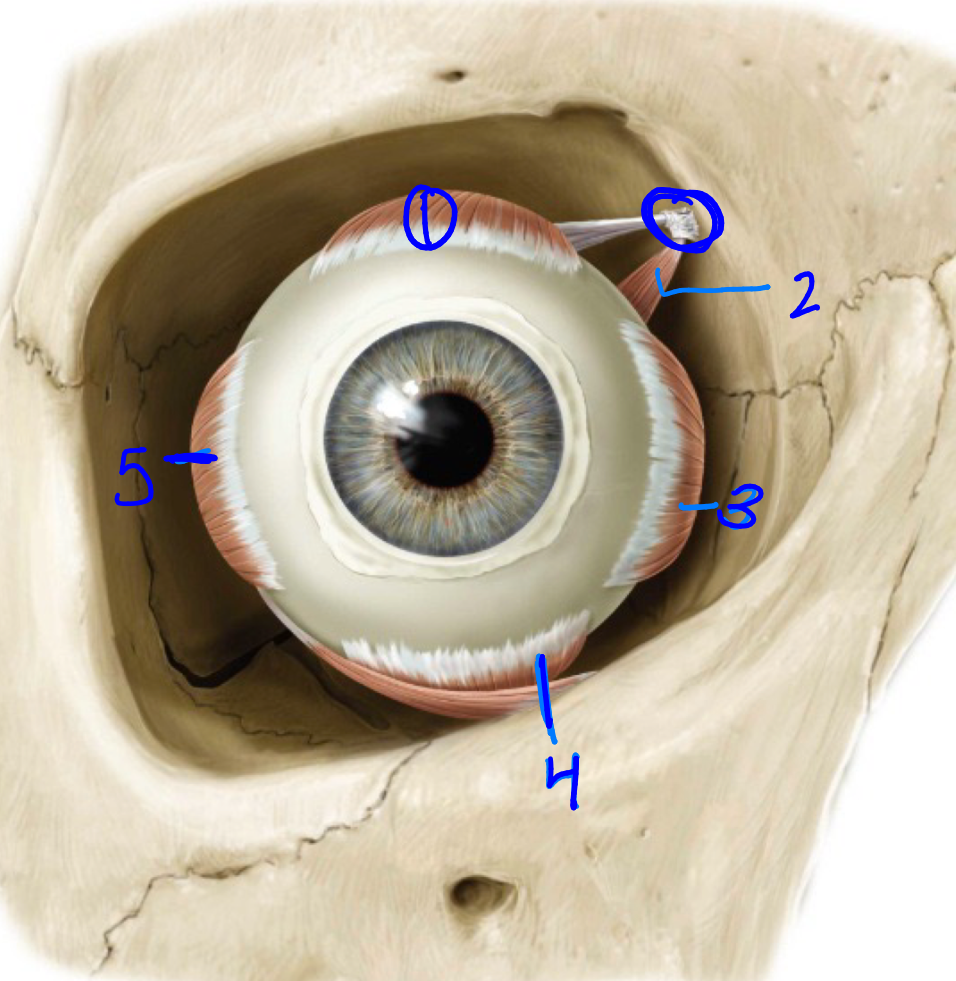
Name 3 and its nerve:
Medial Rectus: CN III (oculomotor nerve)
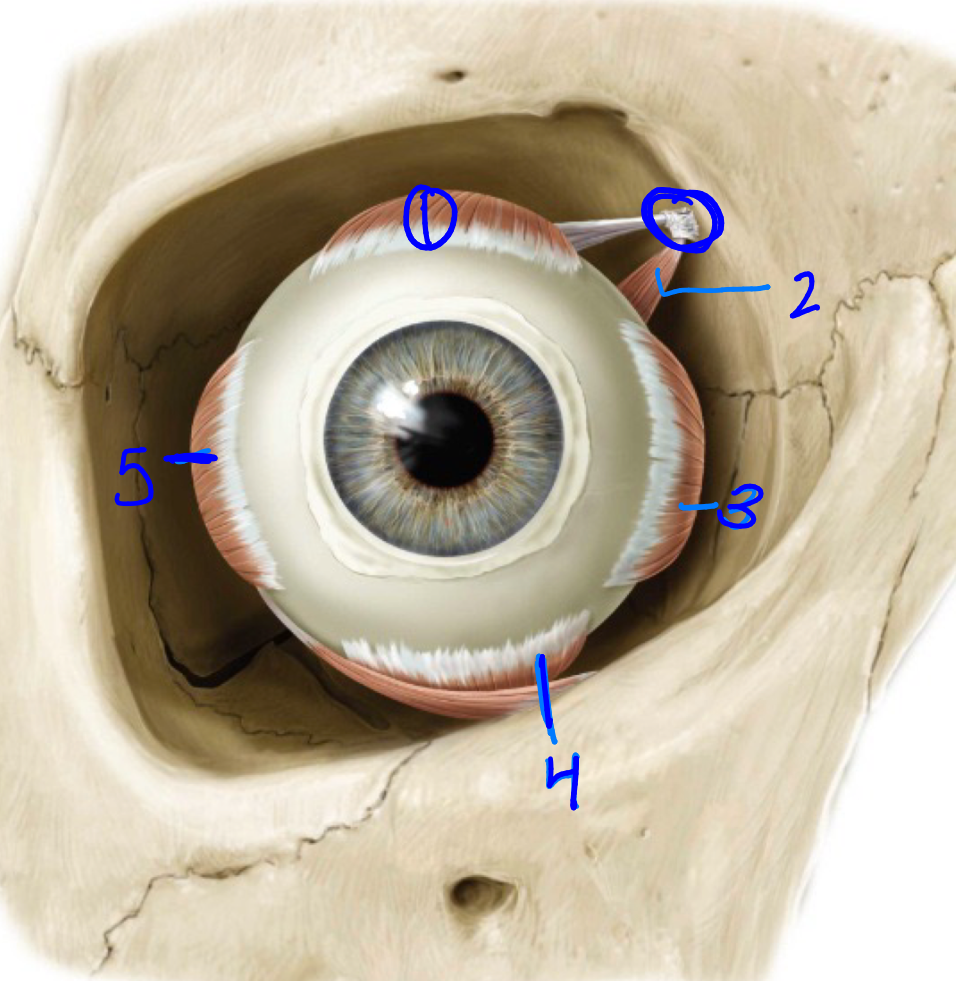
Name 4 and its nerve:
Inferior Rectus: CN III (oculomotor nerve)
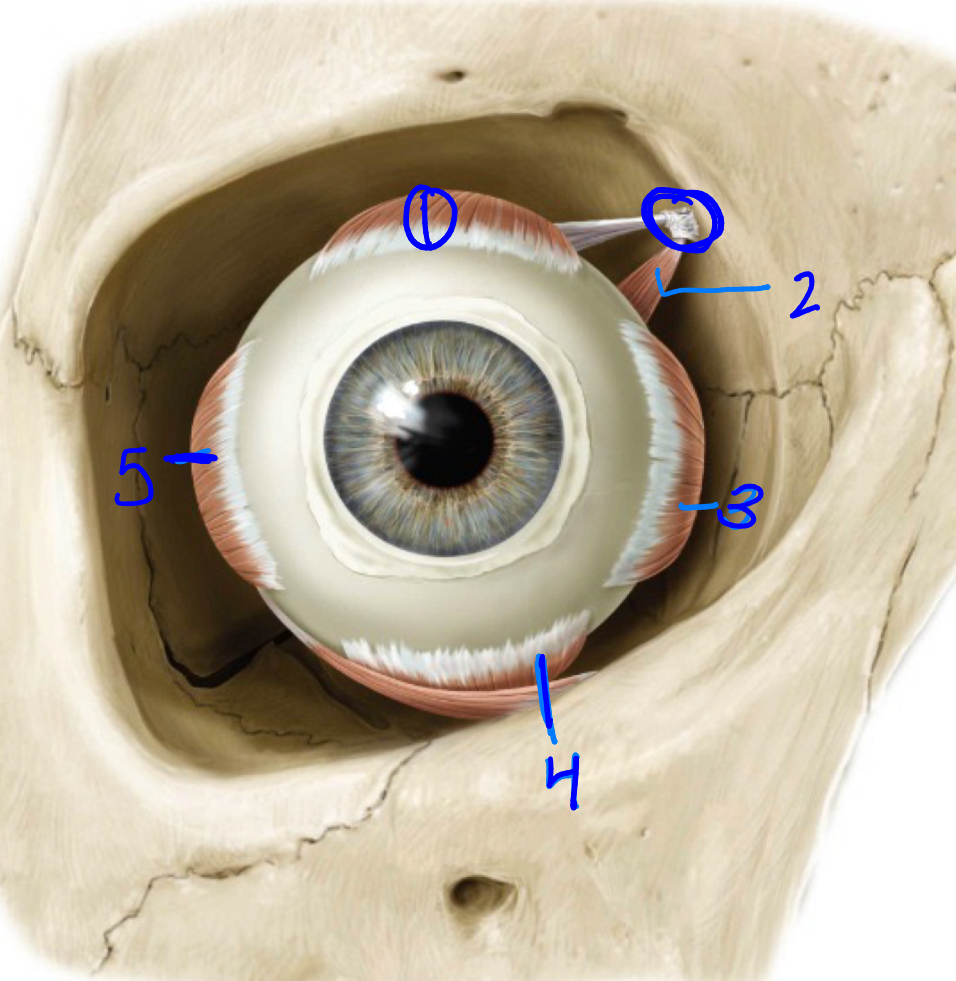
Name 5 and its nerve:
Lateral Rectus: CN VI (Abducens nerve)
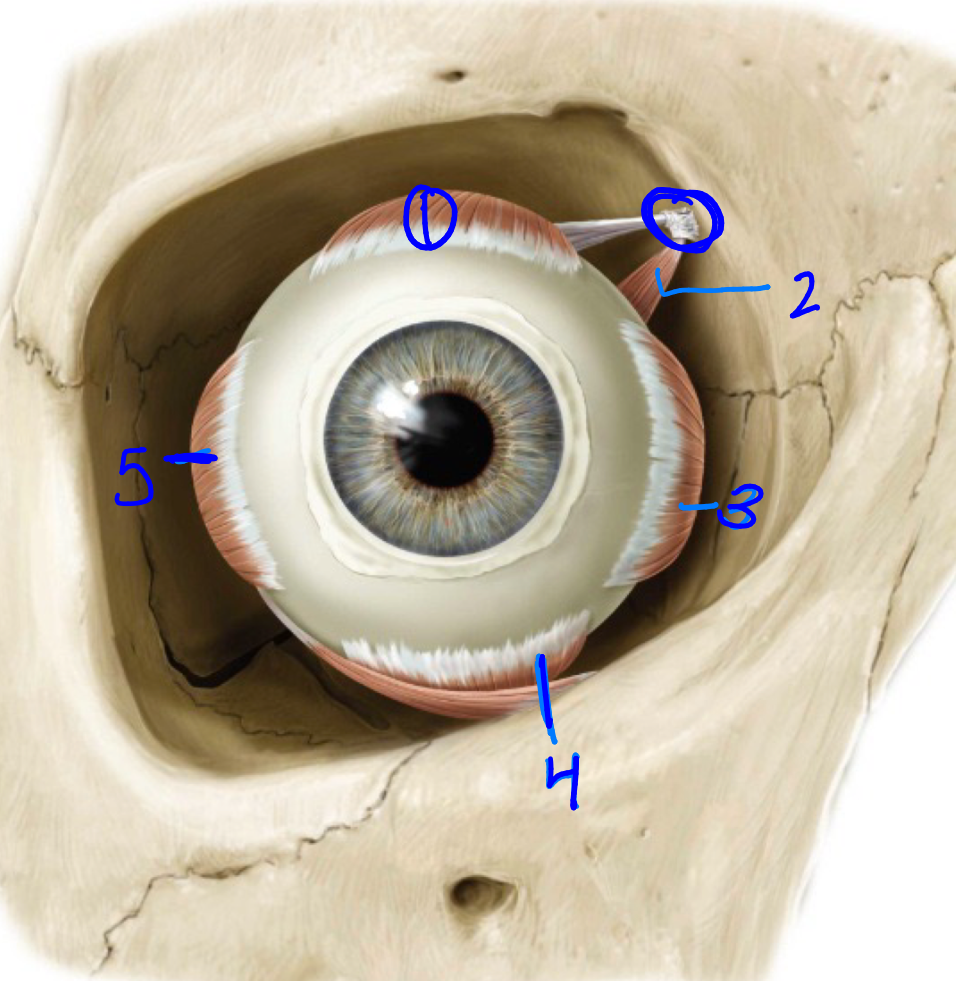
Name the circle region
Trochlea
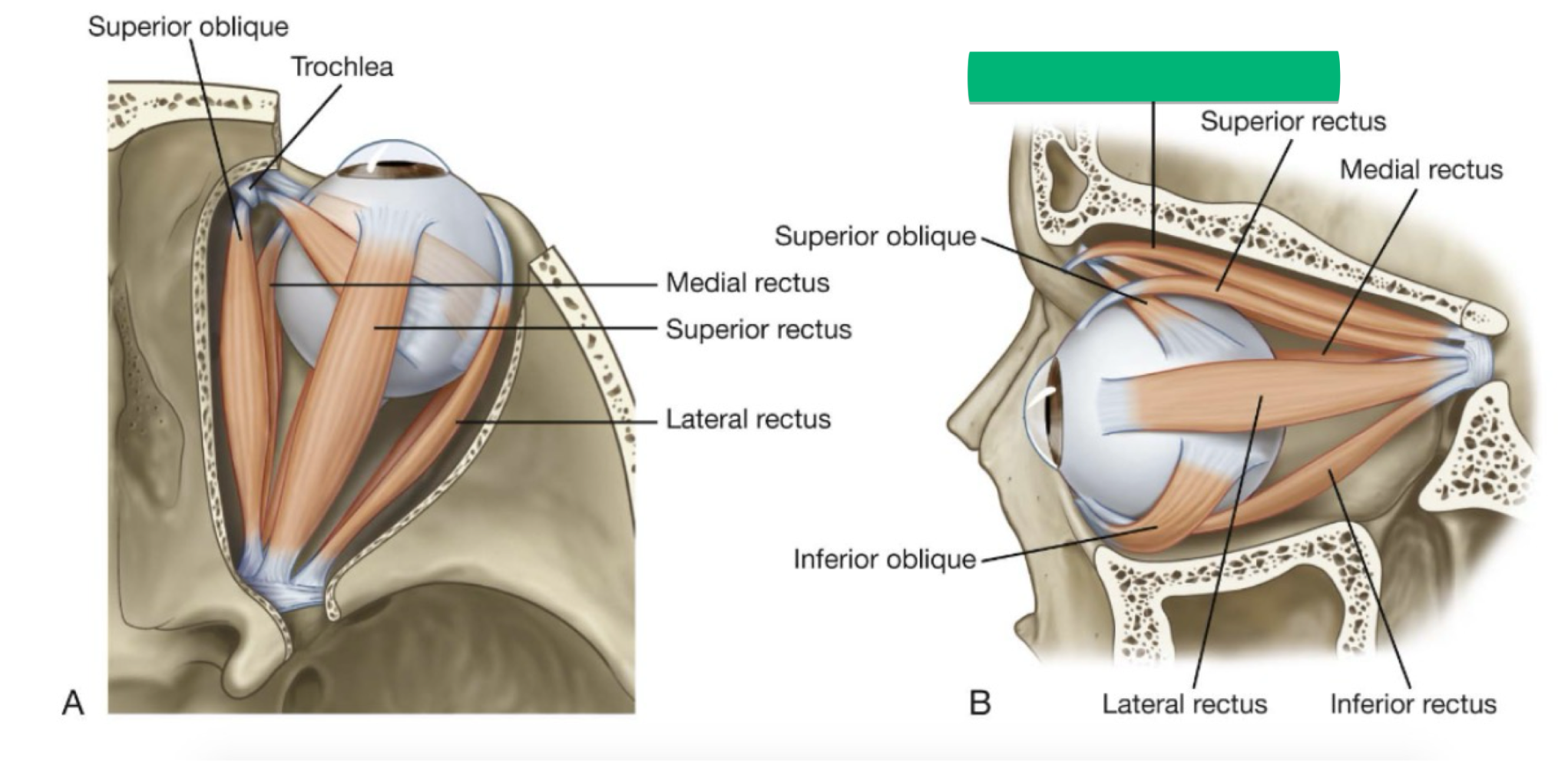
What’s this muscle, its function, nerve
M: Levator palpebrae superioris
F: moves eyelid
N: CN III
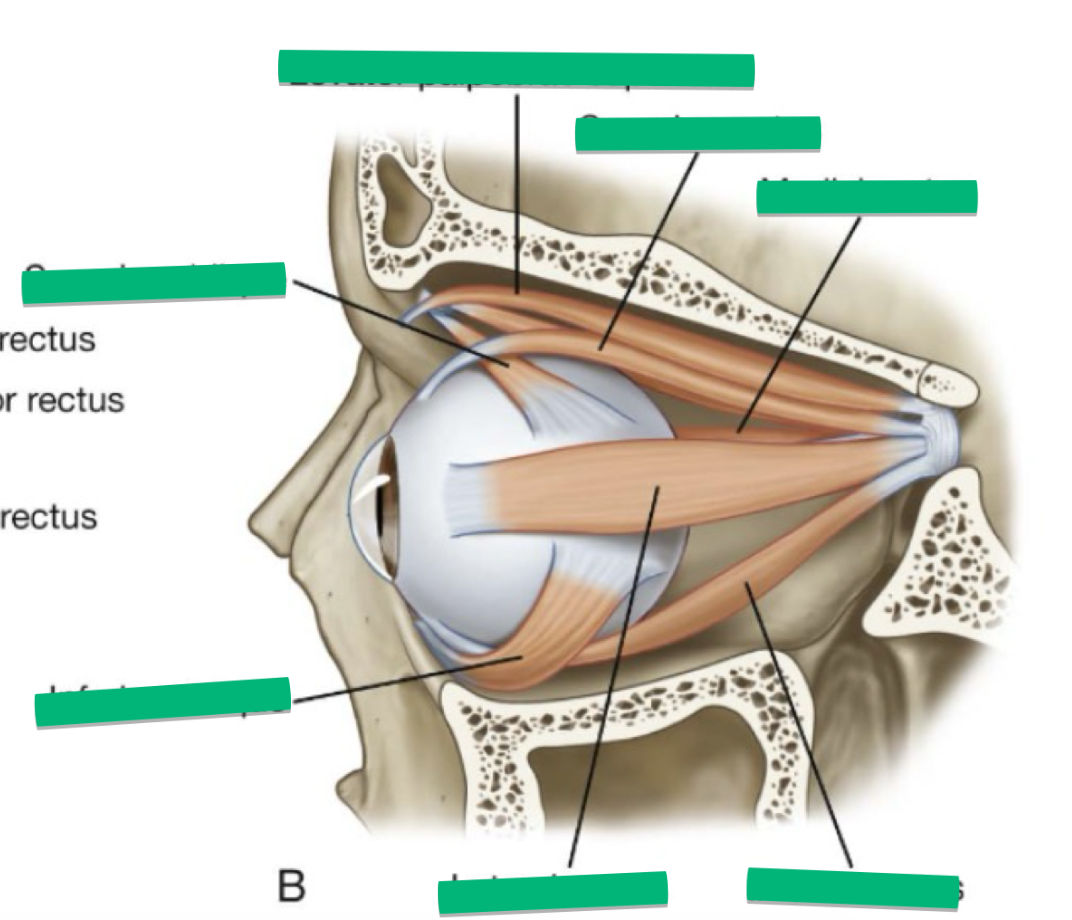
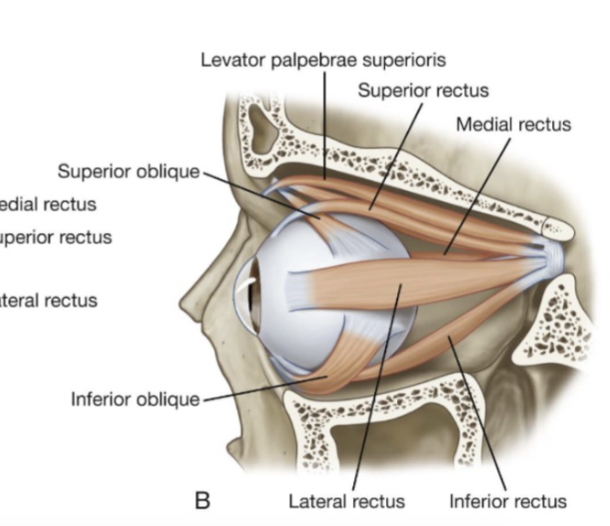
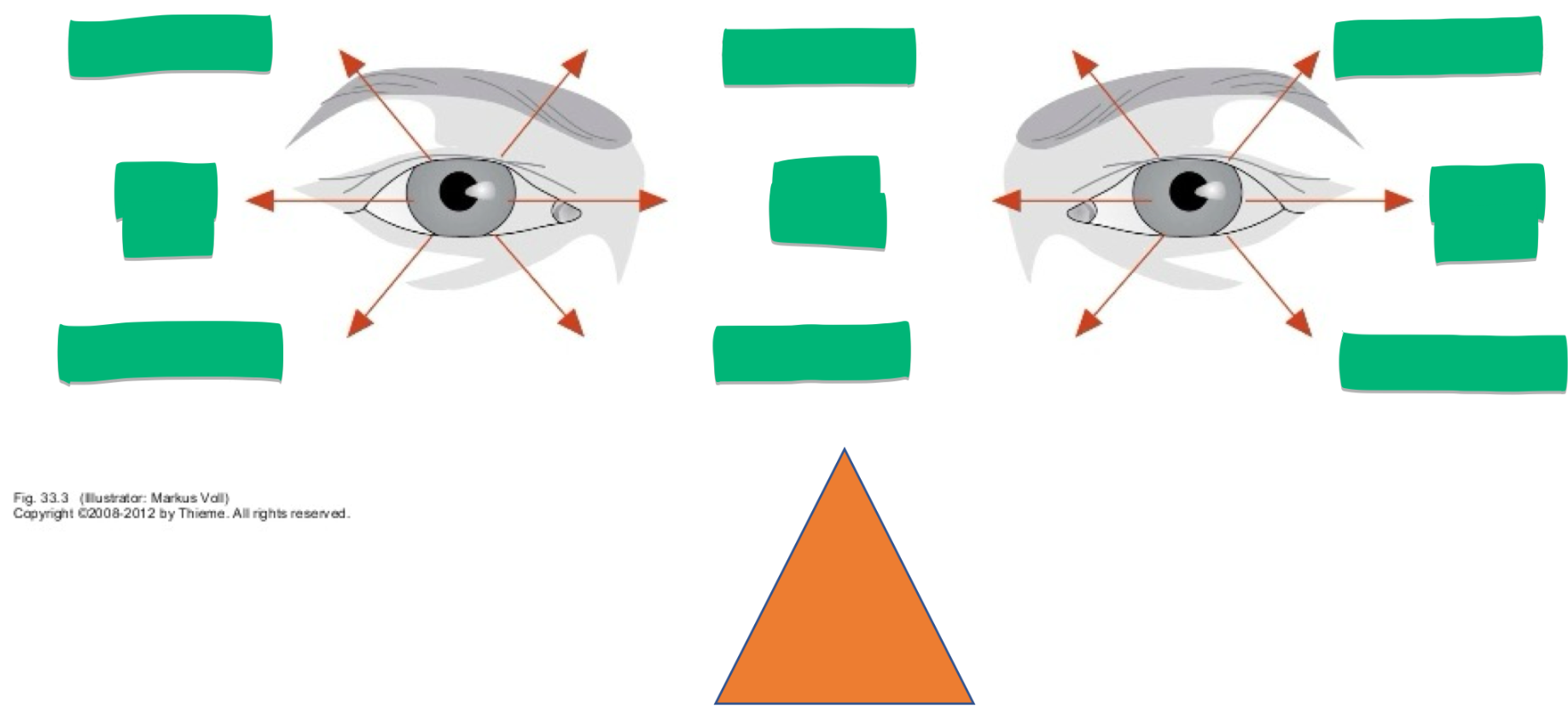
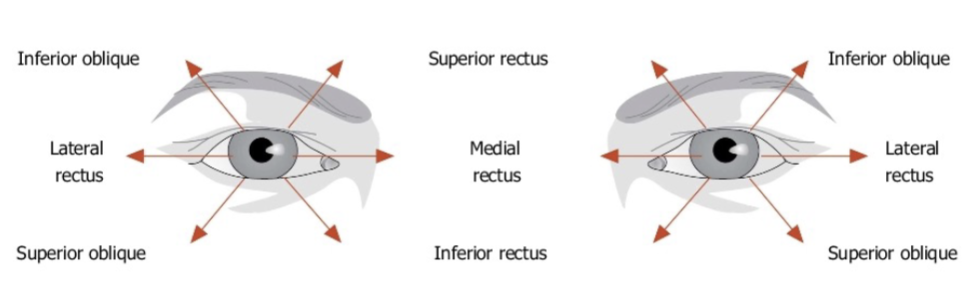
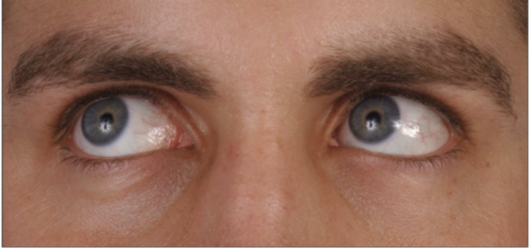
Control movement of eye
Inferior oblique
Superior Rectus
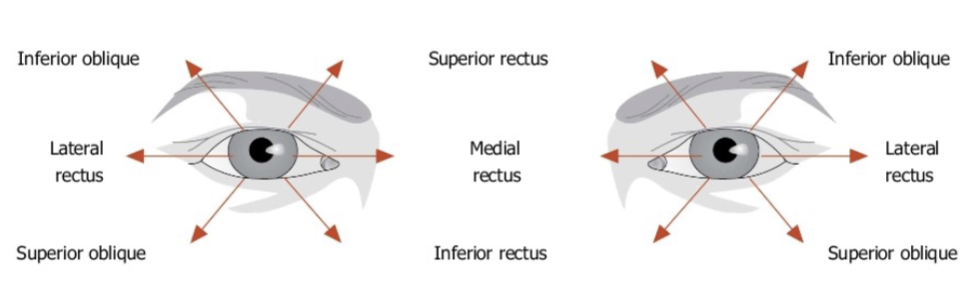
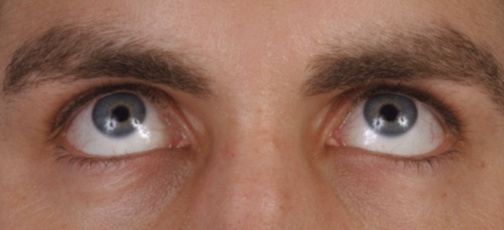
Superior rectus
Inferior Oblique
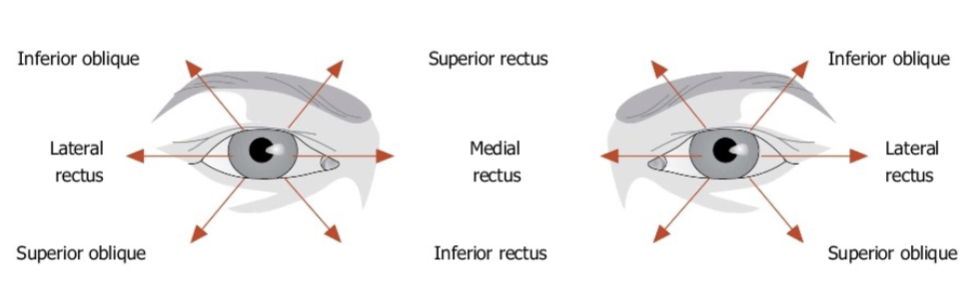
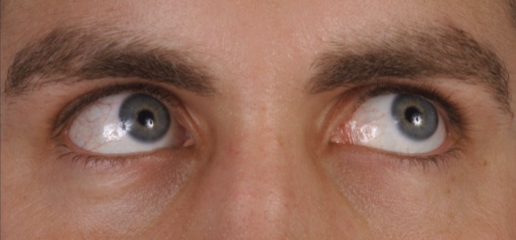
Superior rectus
Inferior Oblique
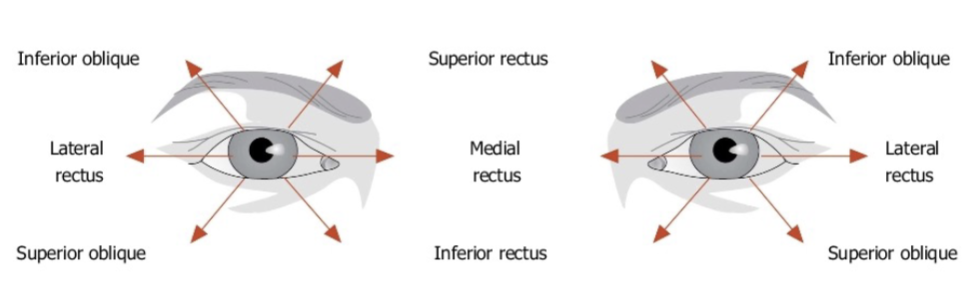
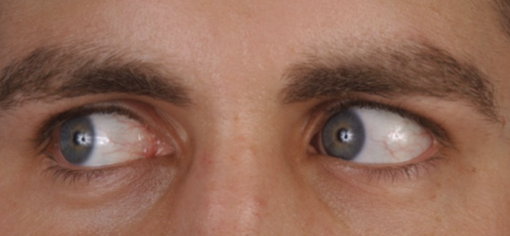
Lateral rectus
Medial Rectus
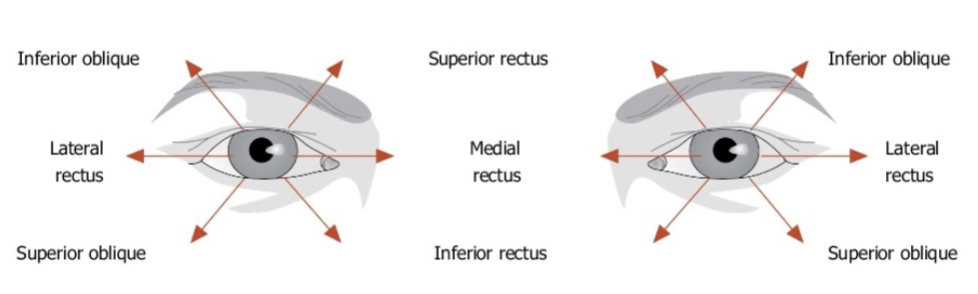
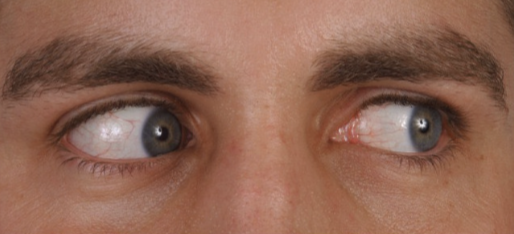
Medial Rectus
Lateral Rectus
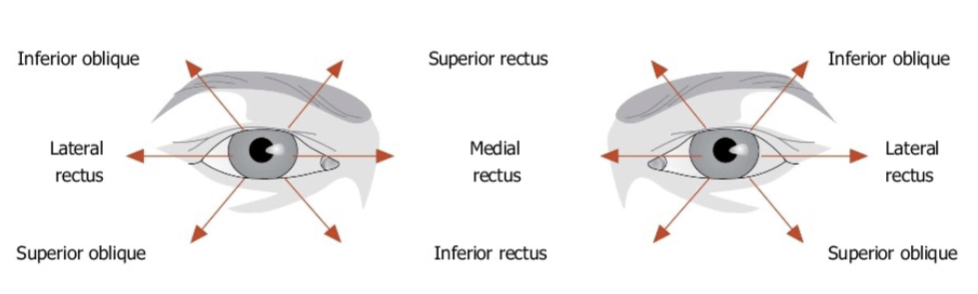
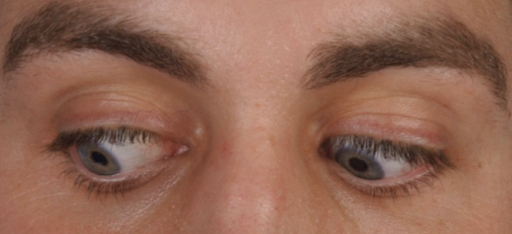
Superior Oblique
Inferior Rectus
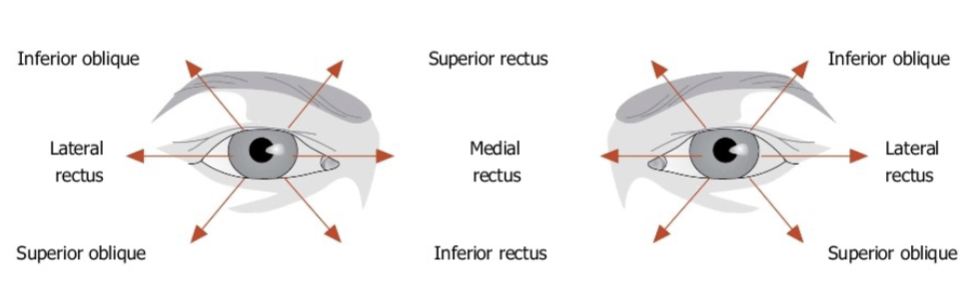
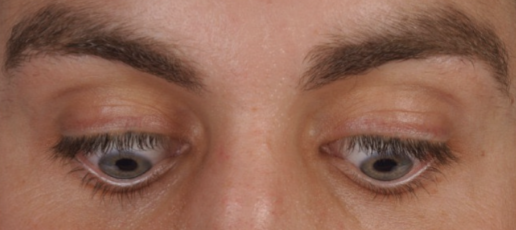
Superior oblique
Inferior rectus
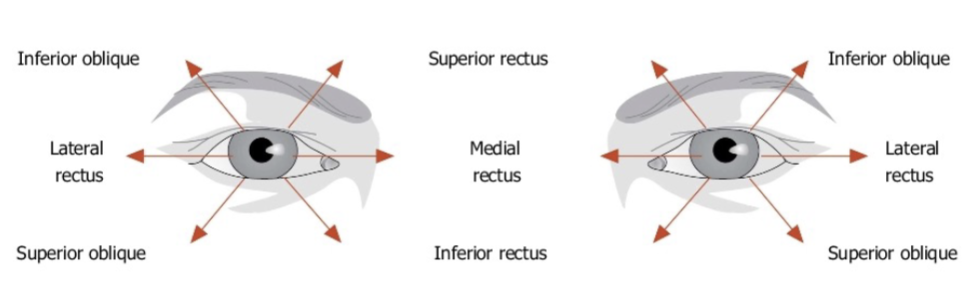
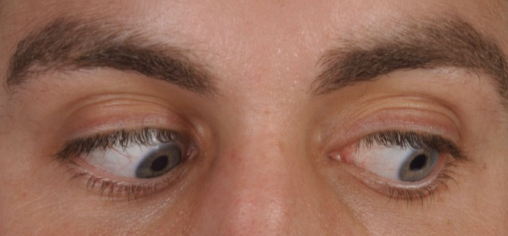
Inferior rectus
Superior oblique
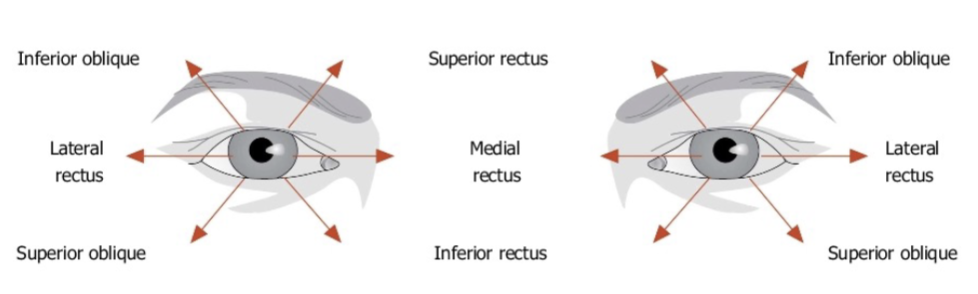
Name 3 intrinsic muscle of eye that control movement of the lens and pupil
Ciliary muscle
Sphincter pupillae
Dilator pupillae
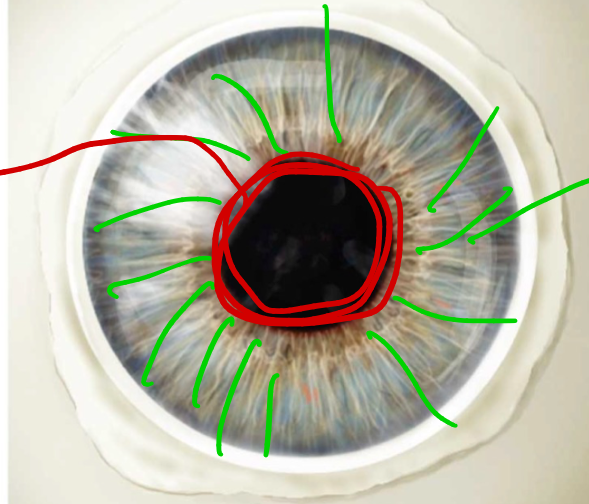
Green —> is under what control and what does it do?
Sympathetic control:
—> dilate pupil
Widened eye
• Superior tarsal (Muller’s) muscle
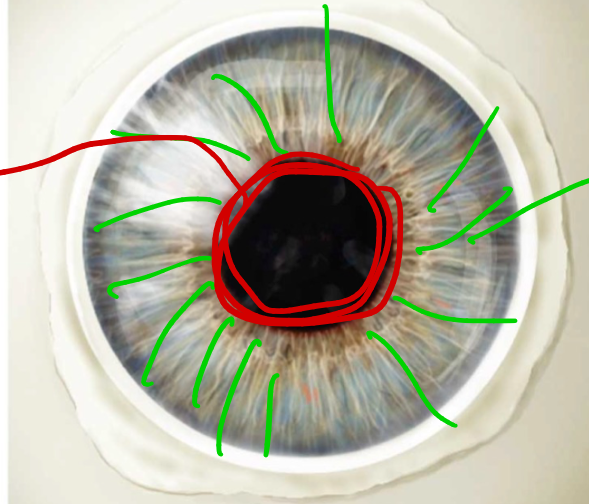
Red—>is under what control and what does it do?
Parasympathetic Control:
Constricts pupil
• Sphincter pupillae muscle
• Rounds/thickens lens for near vision
• Ciliary muscle
What muscle maintain the opening of the palpebral fissure. Also produces
additional widening of the palpebral fissure during excitement/fear?
Superior tarsal muscle assists levator palpebrae superioris (CNIII)
muscle to do this
Muscle responsible for miosis
Dilator pupilae
Muscle responsible for ptosis (drooping eyelid)
Superior torsal muscle

