prelim 2 - stsci 2150
 Studied by 0 people
 Call Kai
 Learn
Learn Practice Test
 Spaced Repetition
 Match
Match Flashcards
 Knowt Play
1/43

There's no tags or description
Looks like no tags are added yet.
Name | Mastery | Learn | Test | Matching | Spaced | Call with Kai |
|---|
No analytics yet
Send a link to your students to track their progress
44 Terms
significance level, a
a probability used as a criterion either reject or accept the null hypothesis
if the p value is less than the significance value
you reject the null hypothesis
if the p value is greater than the significance value
you accept the null hypothesis
What is a Poisson distribution?
A distribution that models the probability of a certain number of events happening in a fixed interval, given a known average rate and independence of events.
Example: Counting the number of customers arriving at a coffee shop per hour, given an average rate of arrivals.
When would you use a Uniform distribution?
Use it when every outcome within a range is equally likely.
Example: Rolling a fair die (each side has a 1/6 chance) or selecting a random number between 1 and 10, where each number is equally likely.
What is a Proportional distribution?
Describes situations where probabilities are assigned proportionally based on certain weights or factors, though not a strict probability distribution on its own.
Example: Allocating budget based on the size of each department (larger departments receive a proportionally higher share).
What is a Binomial distribution?
A distribution that models the number of successes in a fixed number of trials, each with the same probability of success and two possible outcomes (success or failure).
Example: Counting the number of heads in 10 coin flips, where each flip has a 50% chance of landing heads.
standard deviation
how much do observations vary
measures the amoubt of variability in the sample data
unbiased estimator
how much sample means would vary if we repeatedly drew samples and found the mean repeatedly
standard deviation of the sampling distribution
standard error
p-value
the probability under the null hypothesis of obtaining data as extreme or more extreme than the observed data
type 1 error
rejecting a true null hypothesis
false positive
basically saying that the null is false when in reality the null is true
type 2 error
not rejecting a false null hypothesis
saying that the null is true when in reality it is false
confidence interval
provide a plausible range of values for the parameter. this is more information than one get from a hypothesis test
hypothesis test
only tell us whether one particular value is plausible for the parameter or not
dbinom()
gives the probability of a specific number of successes
pbinom()
gives the probability of a number of successes or fewer
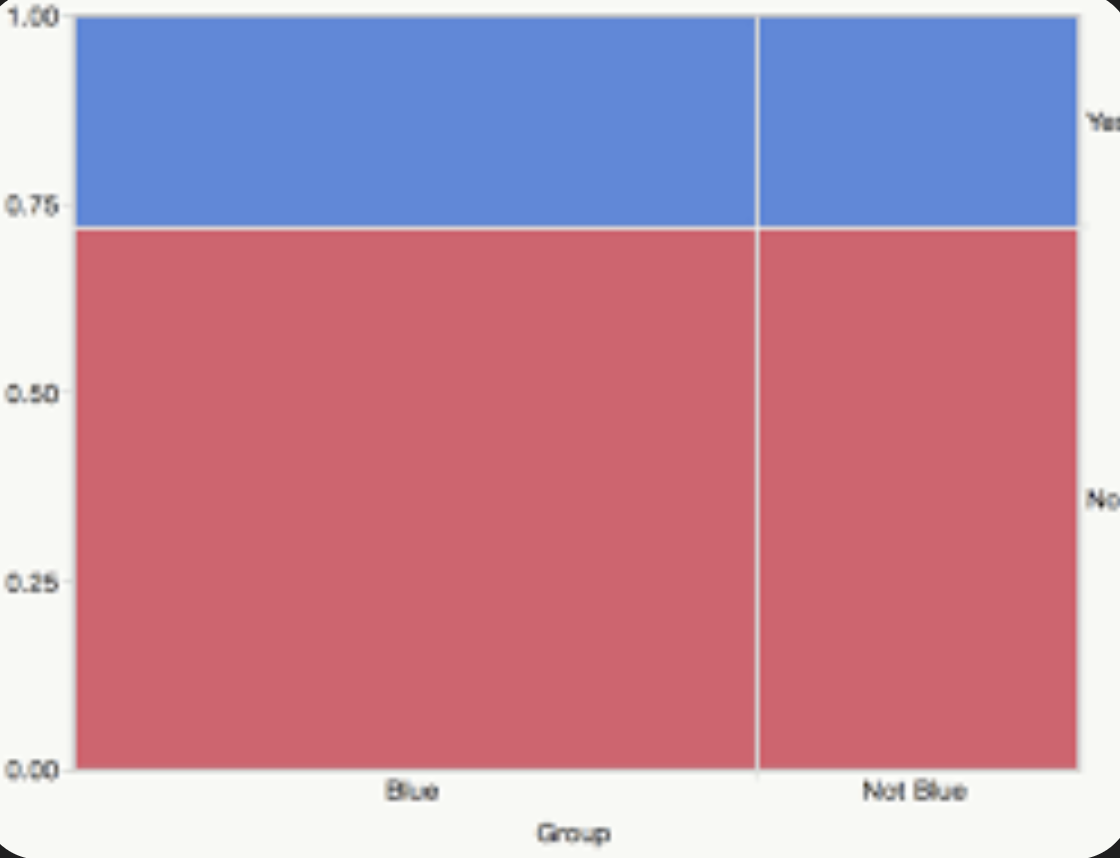
contingency analysis
2 categorical variables
whats the relationshop
are they independent or not
how strong is the relationship
indenpendent
no association
relative risk
ratio of probabilities fo teh event for two groups
pr(worse outcomes in group 1)/pr (worse outcome in group 2)
odds ratio
ratio of odds for the event for two groups
o1/o2 = odds1)/odds(event in group 2)
how do you interpret relative risk
the probability of _____ is ___ times greater in _____ than in _____
odds
probability of success/probability of failure = p/1-p
odds interpretation
the odds of disease after being exposed are 1.5 times greater than the odds of disease if you were not exposed
null value for odds ration
1
odds in one group are similar to odds in another group
degrees of freedom for contingency test
(row-1)(column-1)
test of single proportion
test statistic is x, number of successes out of n trials
null distribution s the binomial distribution
test of association
test statistic is x² =
null distribution is chi-squre distribution with df =
p value in r
1 - pchisq(test statistic = 20, df = 1)
critical value in r
qchisqu(.99, df=1)
interpret the null value for a 95% confidence interval
0
if the nterval has 0, it is. not significant
degree of freedom for proportional and uniform distributions
df = #categories -1
degree of freedom for poisson distribution
df = #categories - 2
poisson distribution in biology
successes occur randomly and independently in time or space
clumped events
excess observed values compared to expected in the high counts
dispersed events
excess of observed in middle categories
binomial has a
fixed upper bound
poisson has
no success or failure paradigm
no upper bound
uniform
pr(ith category) = 1/k with k categories
goodness of fit test qualities
one categorical variable
does the data fit the probability model
expected based on probability model
test of association qualities
two categorical variables
is there an association between two variables
r for finding areas under the curve
greater than
1 - pnorm (x, mean, standard deviation)
r for finding areas under the curve
less than
pnorm (x, mean, standard deviation)
r for finding a specific number that falls into a percentile
qnorm( q, mean, standard deviation)
sketching sampling distribution
standard deviation = initial standard deviation/ sqr(n)
 Note
Note  Flashcards (63)