circuits 1
 Call Kai
 Learn
Learn Practice Test
 Spaced Repetition
 Match
Match Flashcards
 Knowt Play
1/36

There's no tags or description
Looks like no tags are added yet.
Name | Mastery | Learn | Test | Matching | Spaced | Call with Kai |
|---|
No analytics yet
Send a link to your students to track their progress
37 Terms
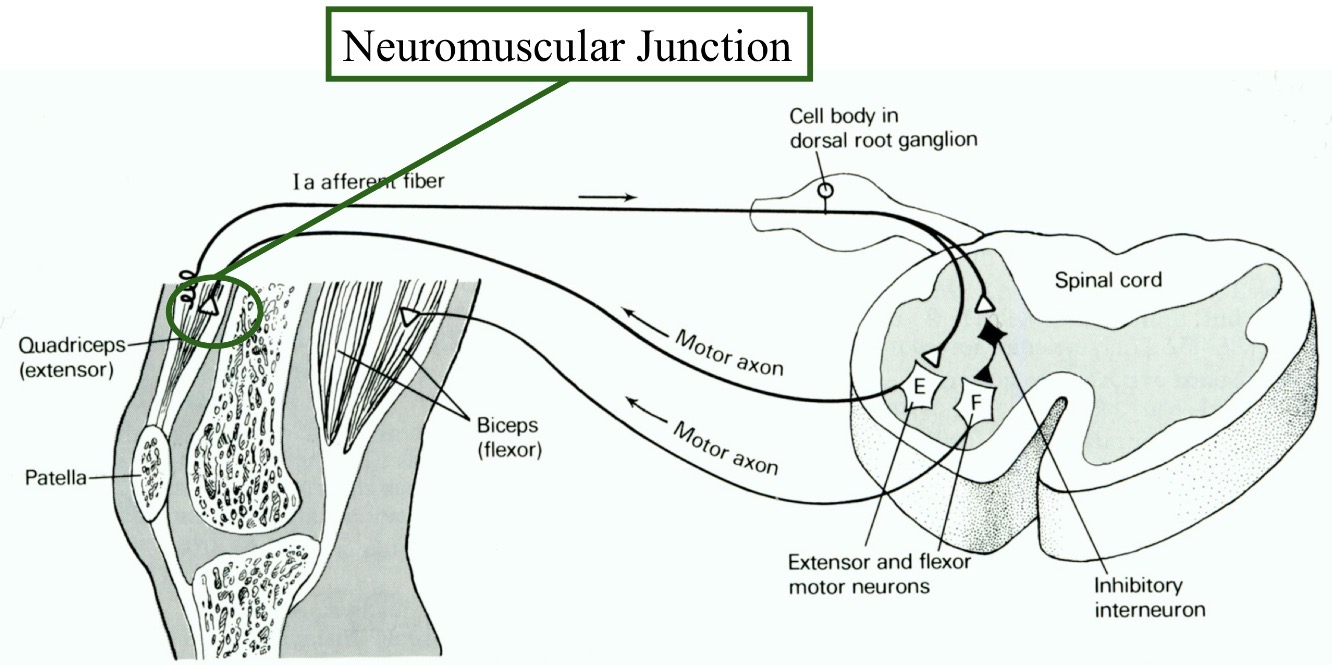
The Myotatic (Stretch) reflex/Simple Reflex “Arc”
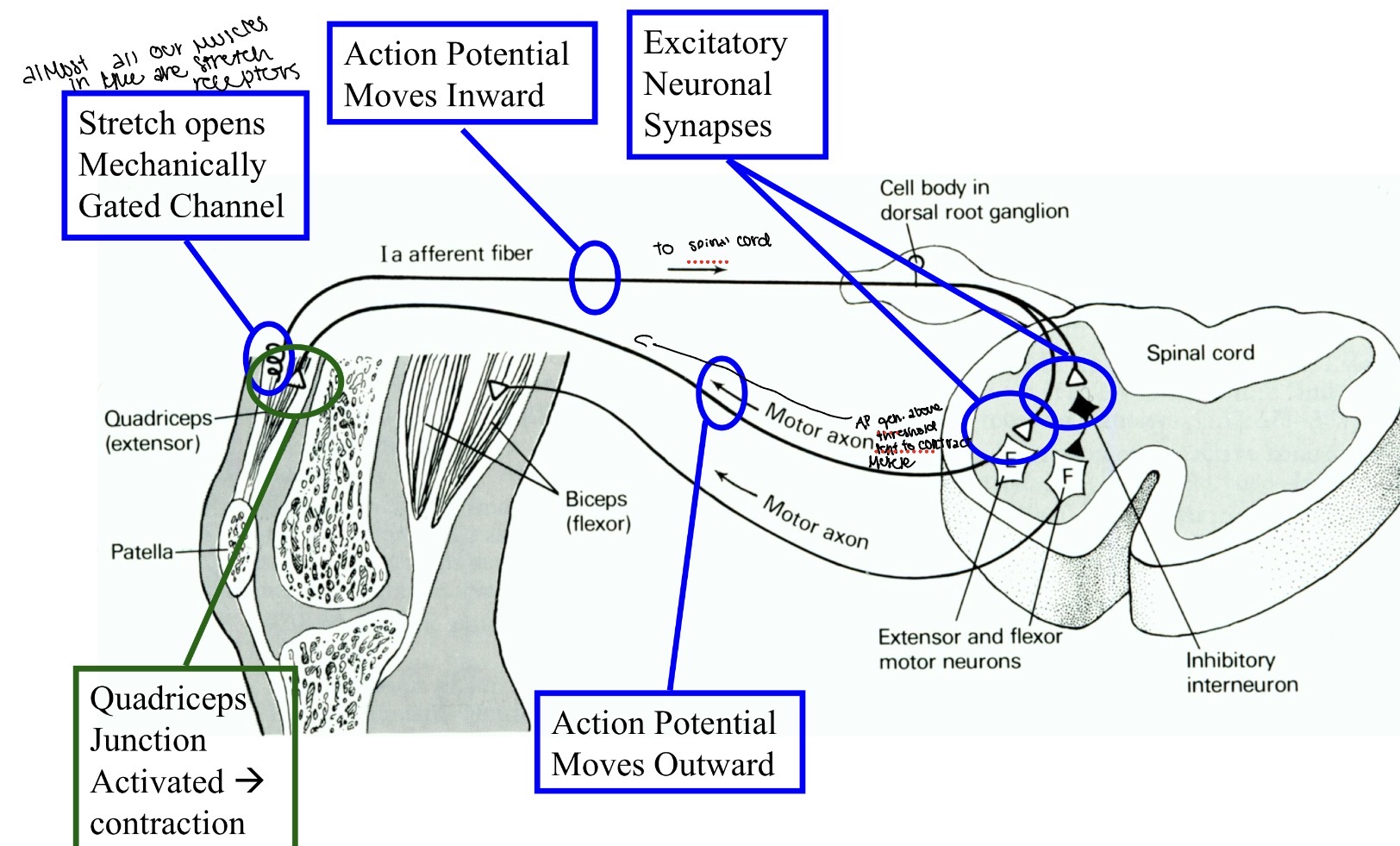
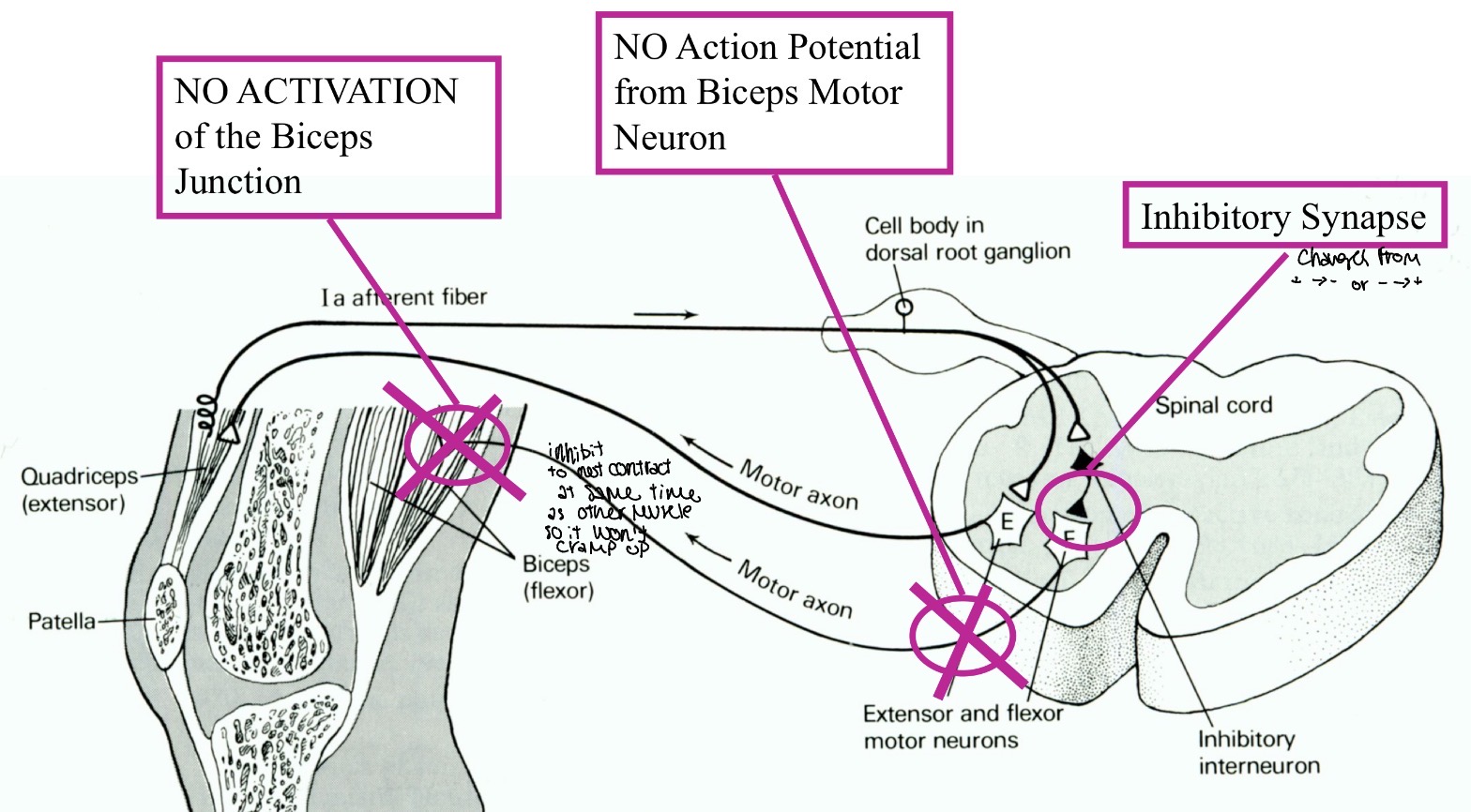
Simple Reflex “Arc” No activation
Ach
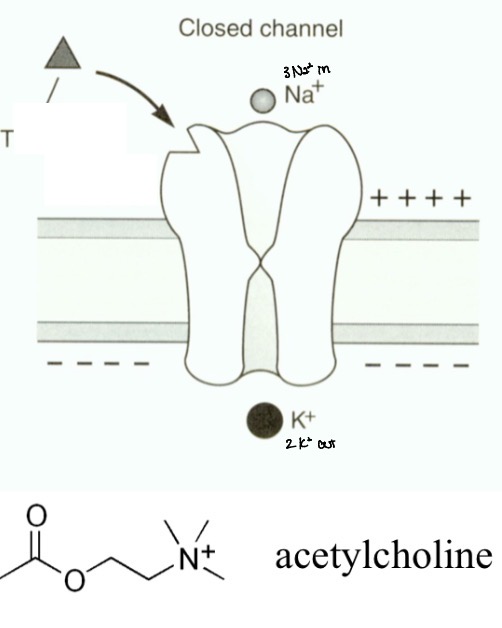
is the Neurotransmitter at the Neuromuscular Junction
Is the nicotinic acetylcholine receptor an ionotropic or a Metabolic receptor?
Ionotropic aka when ligand binds channel protein opens
Nicotinic Acetylcholine Receptor
nicotine (acts as a receptor agonist)
3x more permeable to Na+ than K+
What the heck was Voltage Clamp again?
Holding the membrane potential of neurons or muscle cells at a set voltage, so we can measure currents through the membrane.
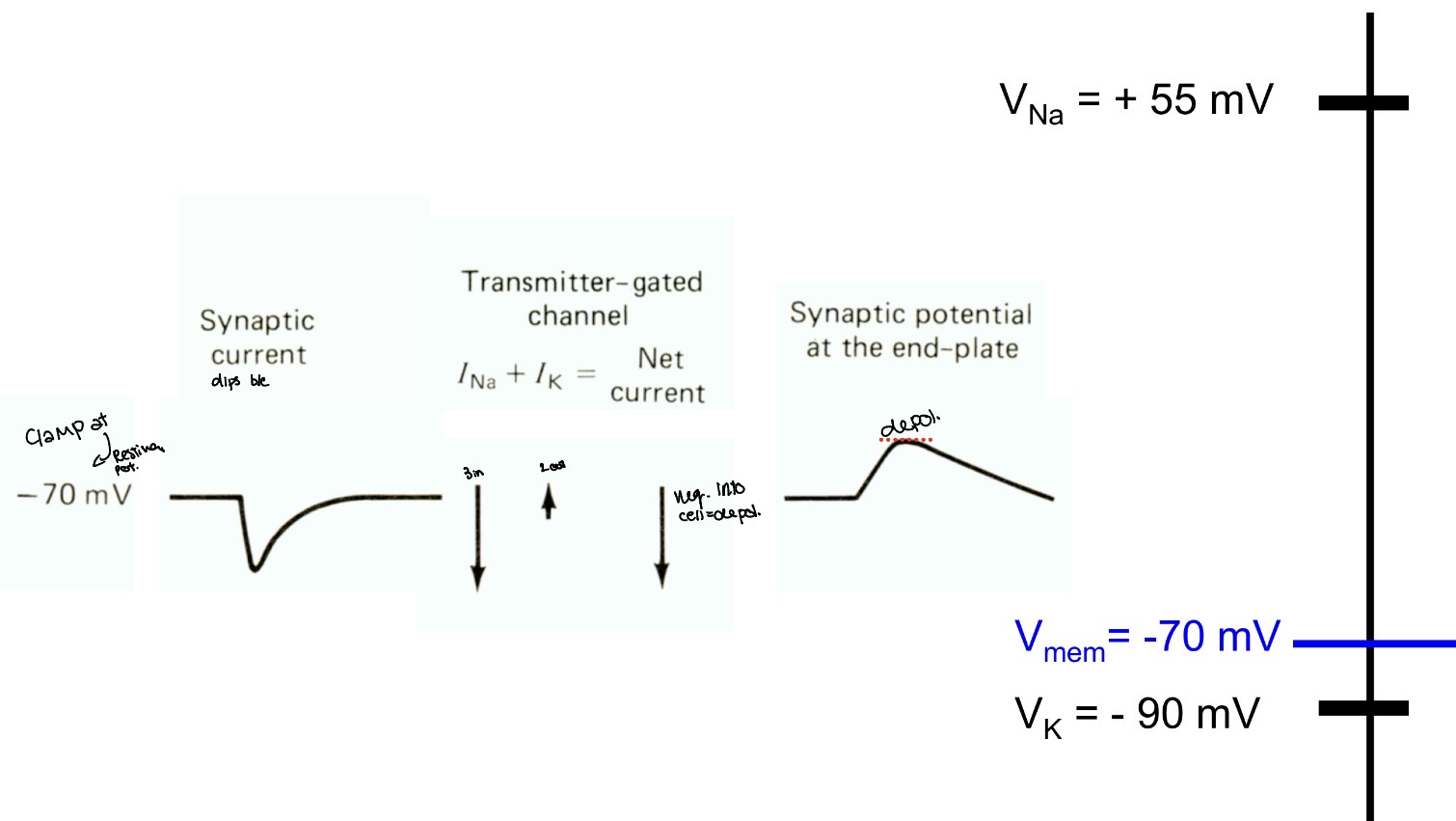
Now, let’s activate the ACh Receptor under Voltage Clamp conditions:
a) At the resting membrane potential
Close to potassium ion potential so little movement of it out and lots of sodium moving in
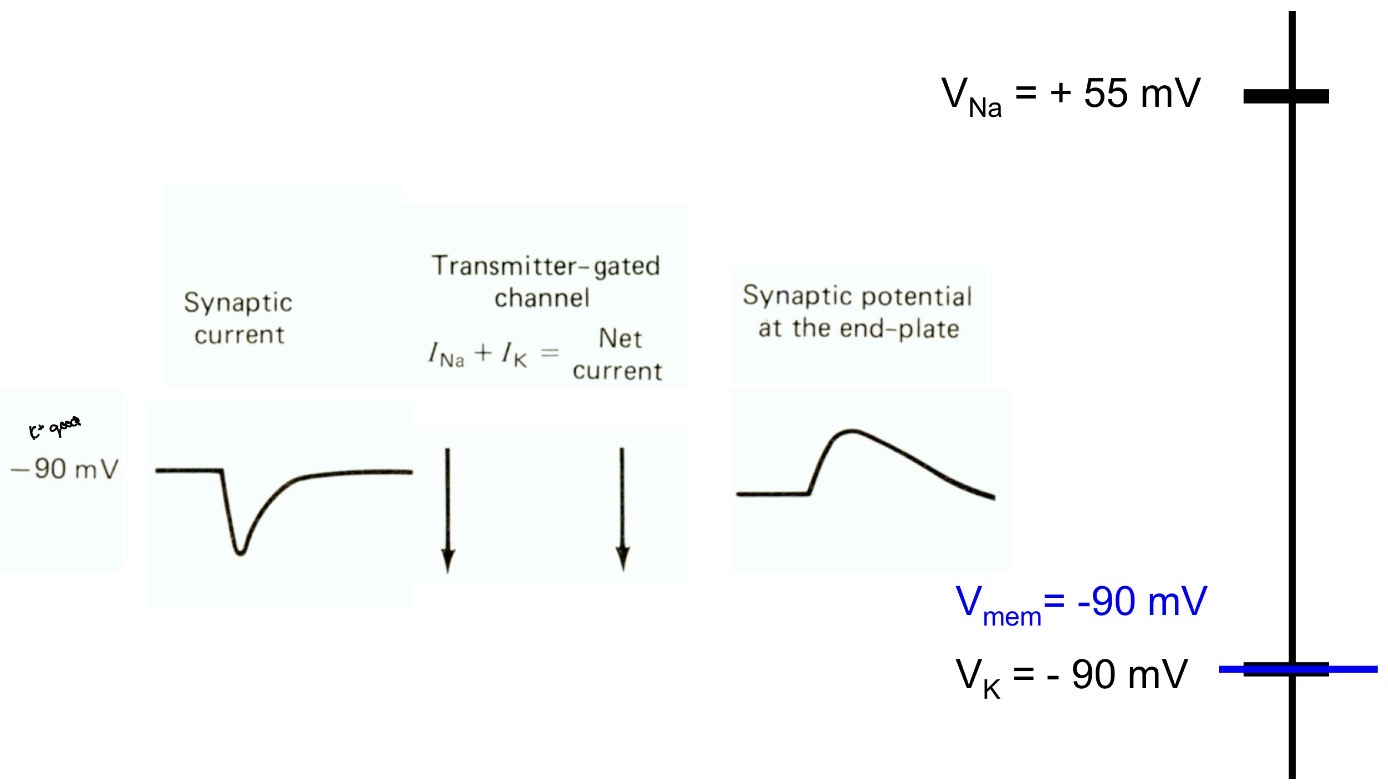
b) At the Equilibrium Potential for K+
No potassium movement because it’s at equilibrium but there is sodium movement
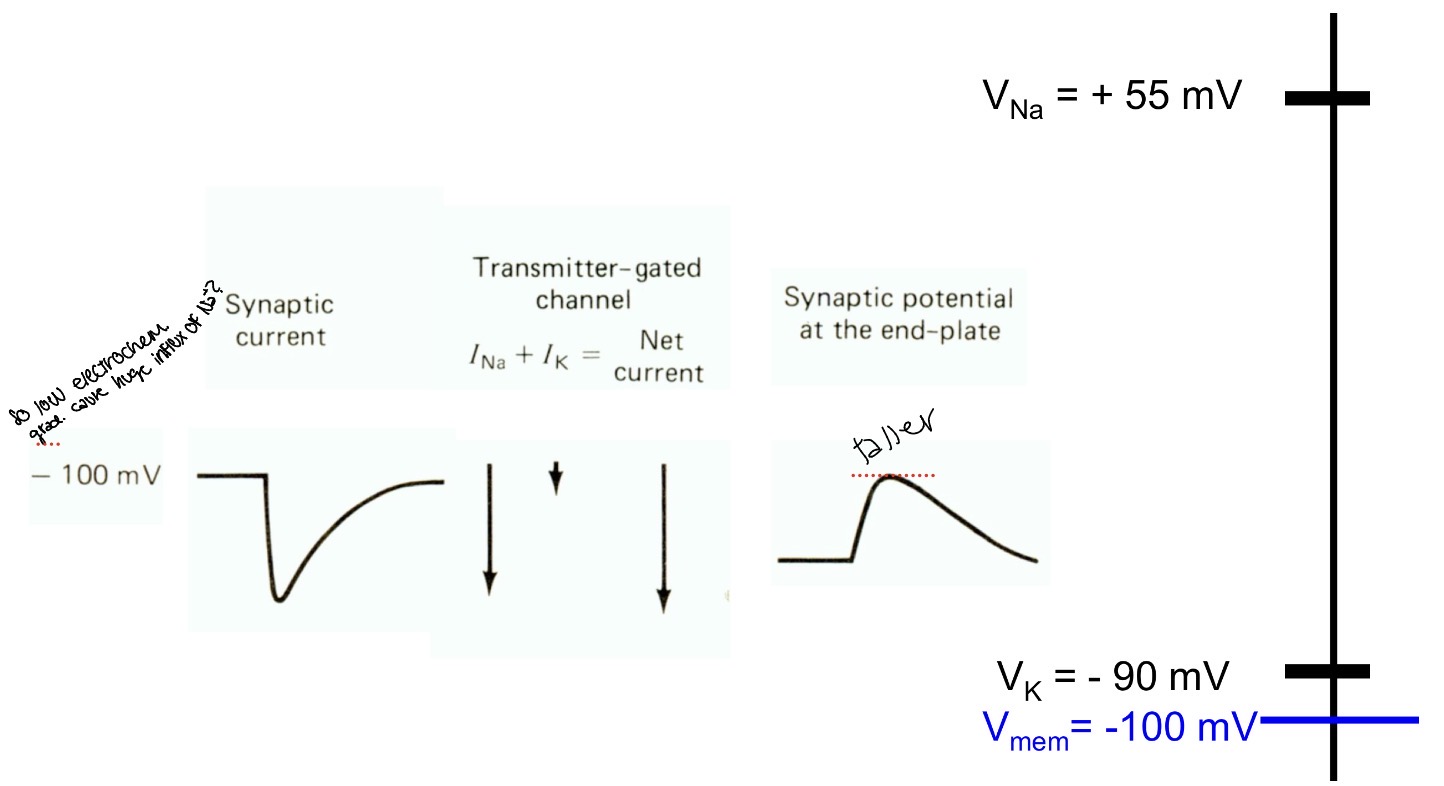
c) Below the Equilibrium Potential for K+
Lots of sodium moves in little potassium moves out
d) At a Somewhat Intermediate Potential
Potential is more positive than before so there is a small net influx
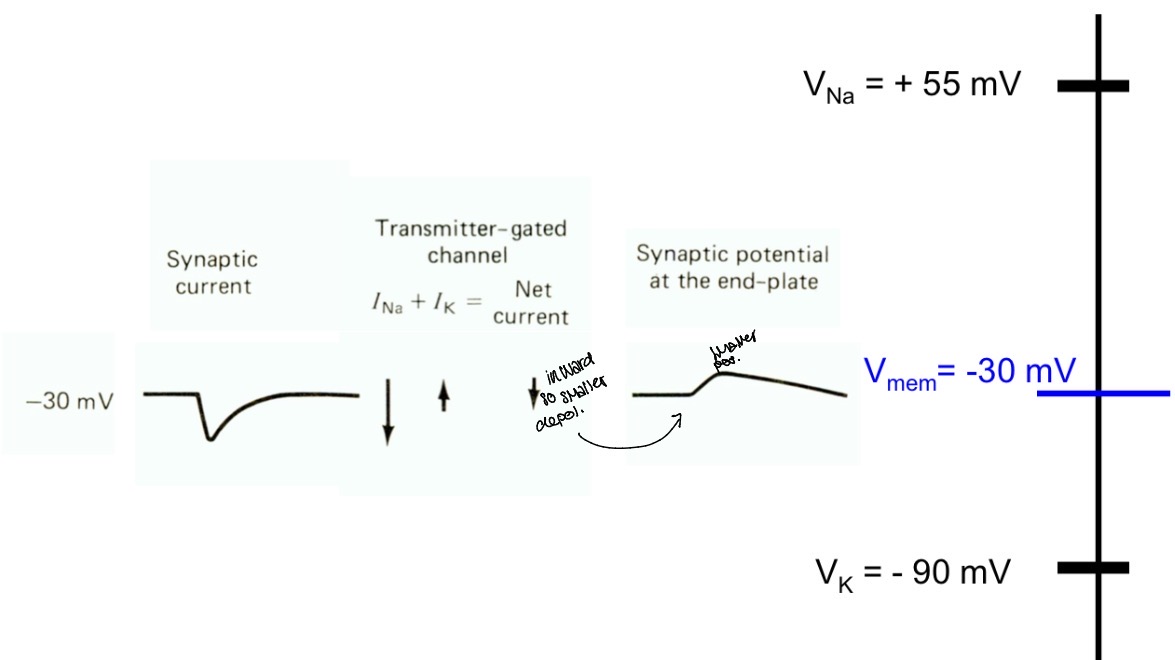
At the Equilibrium or “Reversal Potential” for the ACh Receptor
Sodium and potassium movement is the same so no net movement
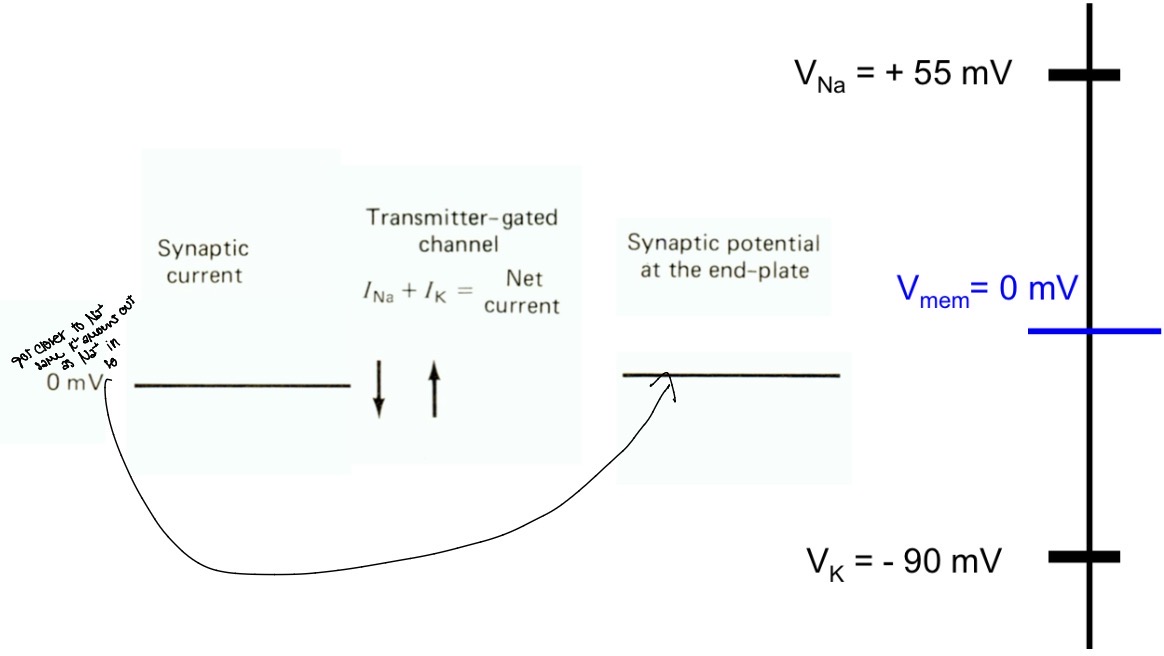
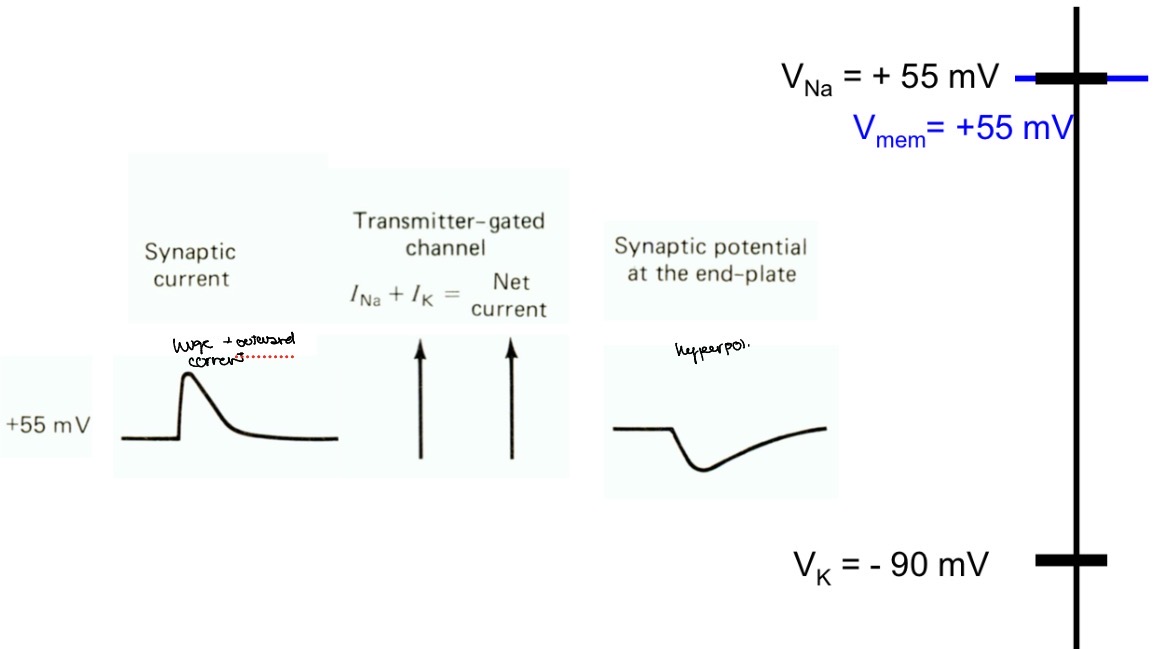
f) At the Equilibrium Potential for Na+
Potassium movement and net movement the same and no sodium movement because it is at equilibrium
Glutamate (Glu) is the Neurotransmitter in the Reflex Arc
Excitatory
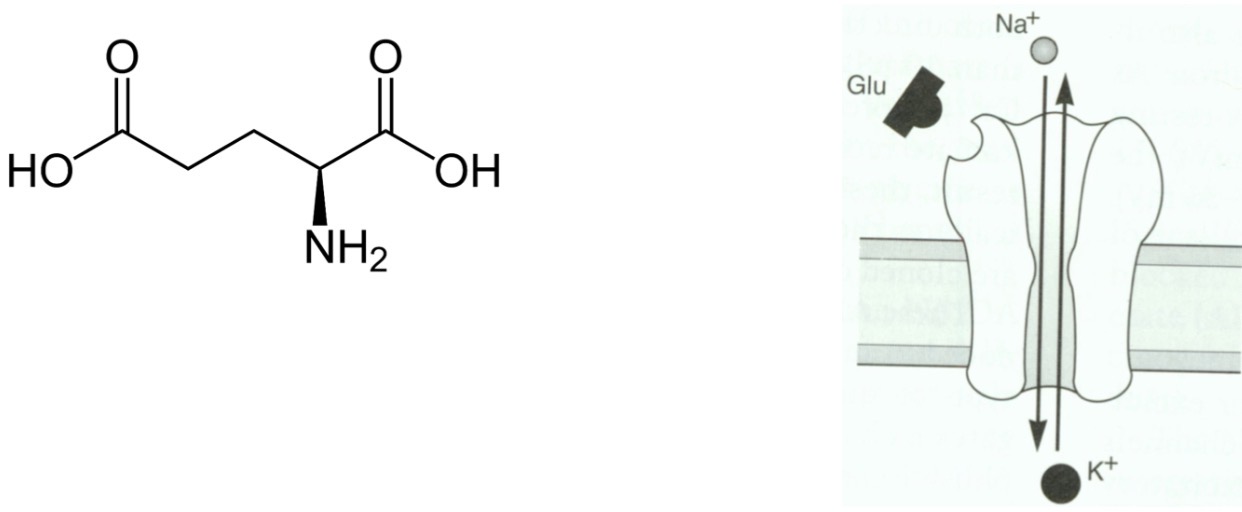
The Neurotransmitter Glutamate and the Ionotropic Glutamate (Glu) Receptor
The amino acid glutamic acid, when negatively charged, is called glutamate.
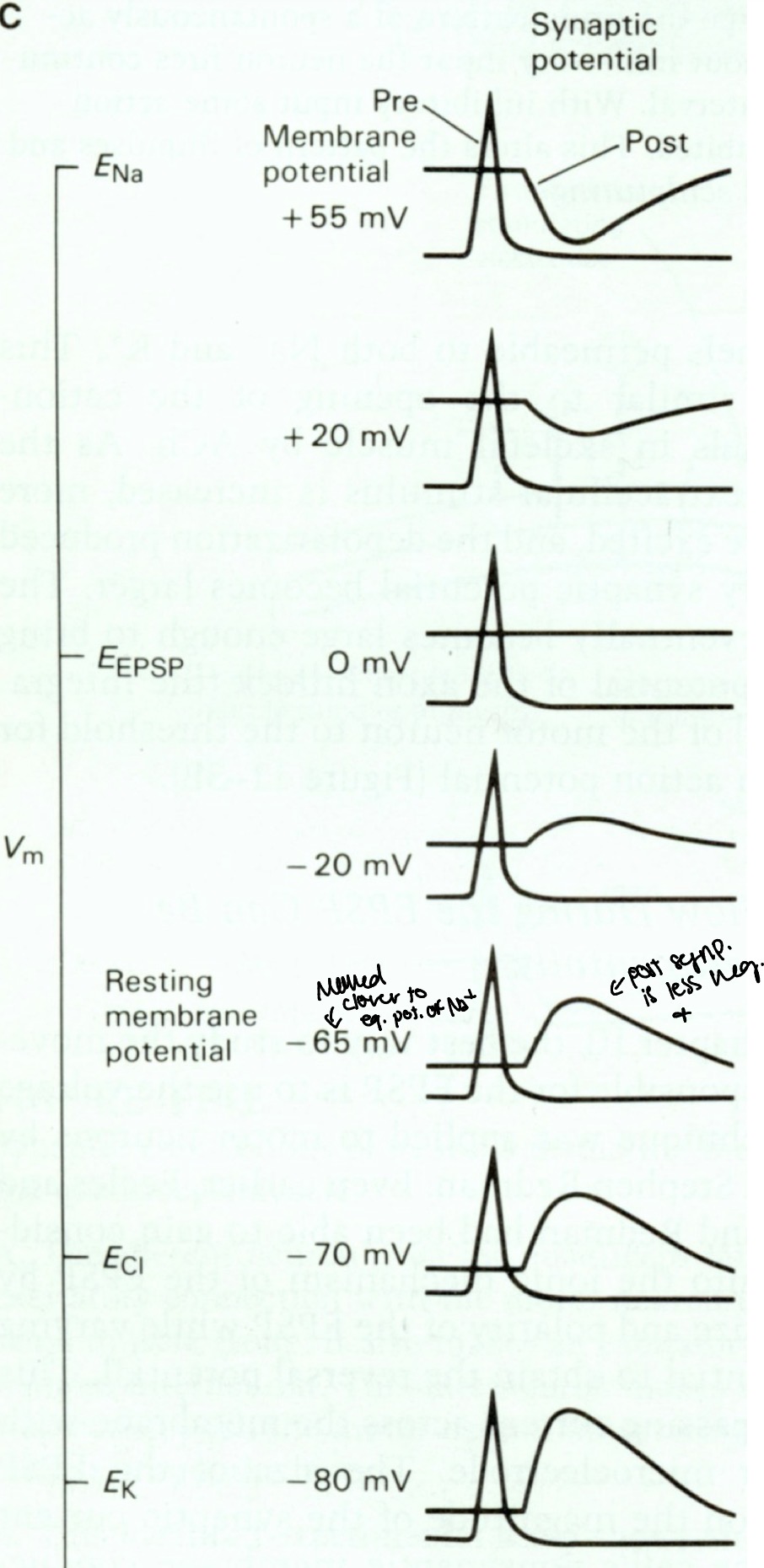
The Glu receptor is permeable to both Na+ and K+ (3:1), when glutamate is bound.
What is the equilibrium (“reversal”) potential for the Glu receptor channel?
a) On the Left
b) On the Right
c) Neither
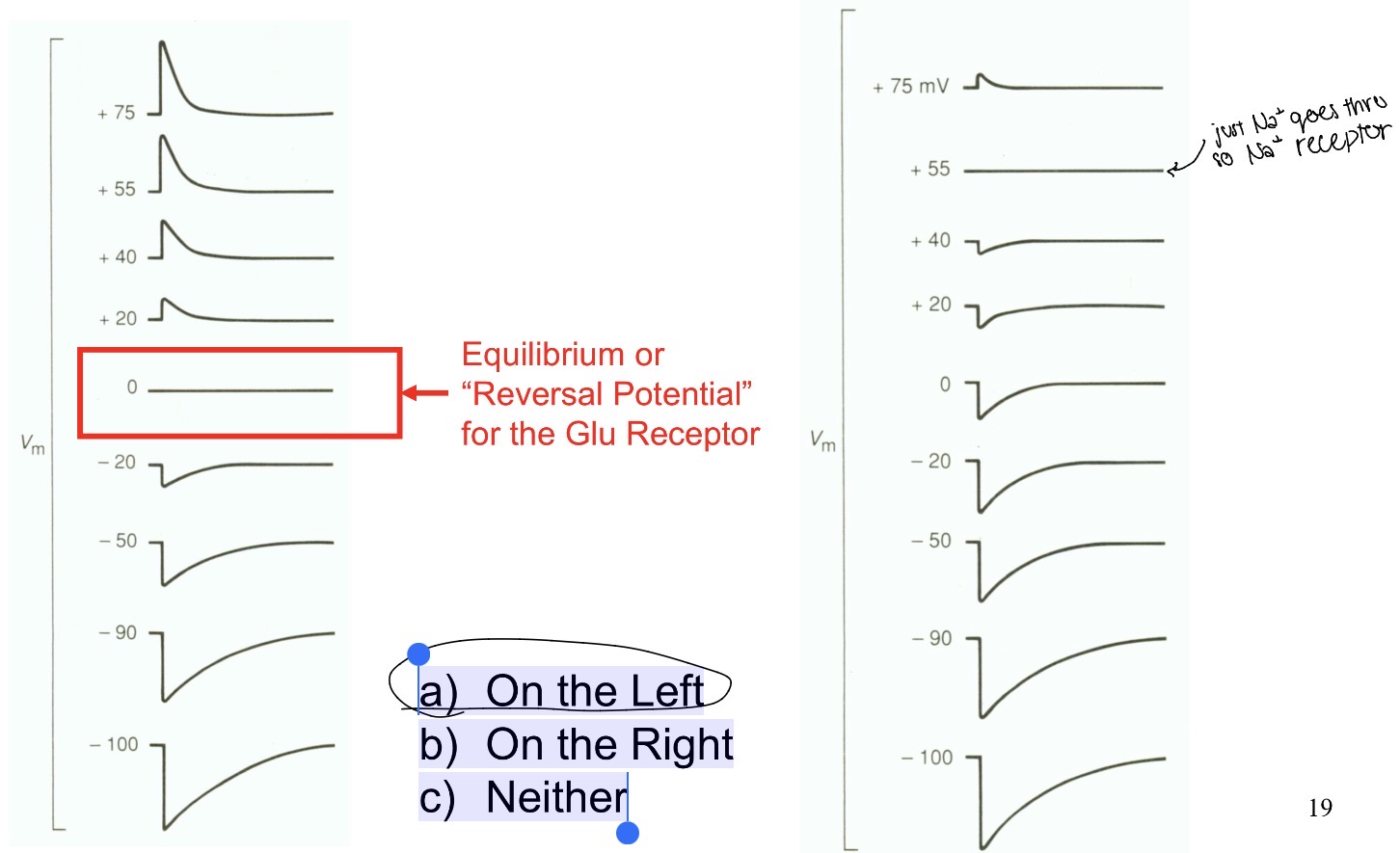
Will the ionotropic glutamate receptor depolarize or hyperpolarize the cell at -65 mV?
Depolarize because moves closer to equilibrium potential of sodium
Post synaptic is less negative
Glycin is the Neurotransmitter in the Reflex Arc
Excitatory
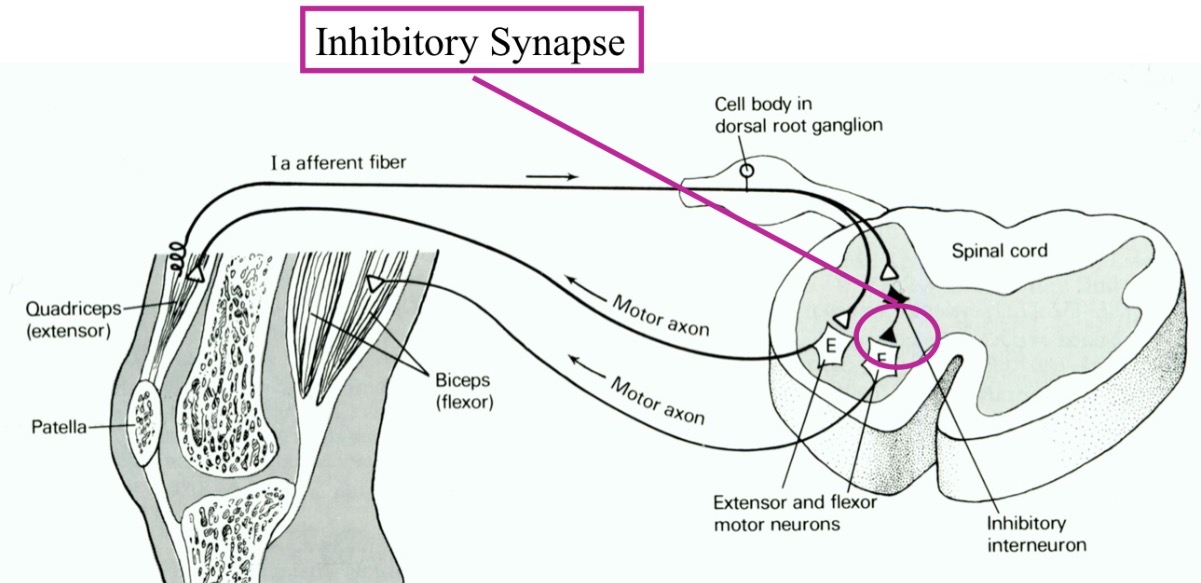
Two Major Inhibitory Neurotransmitters
1. Glycine (the amino acid itself)
2. GABA (made from glutamate)
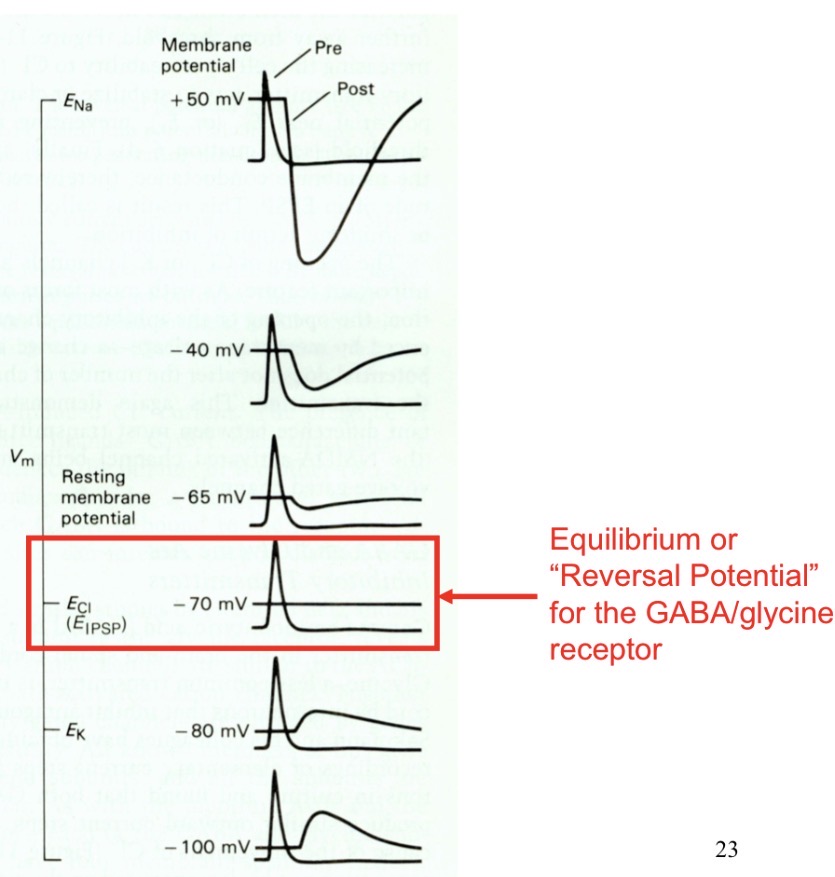
Ionotropic Inhibitory Receptors are Permeable to
Chloride, it has no leak channels so equilibrium potential is the same as resting membrane potential -70
Ligand-gated Cl- Channel
• GABA
• Glycine
Withdrawal/Escape Responses
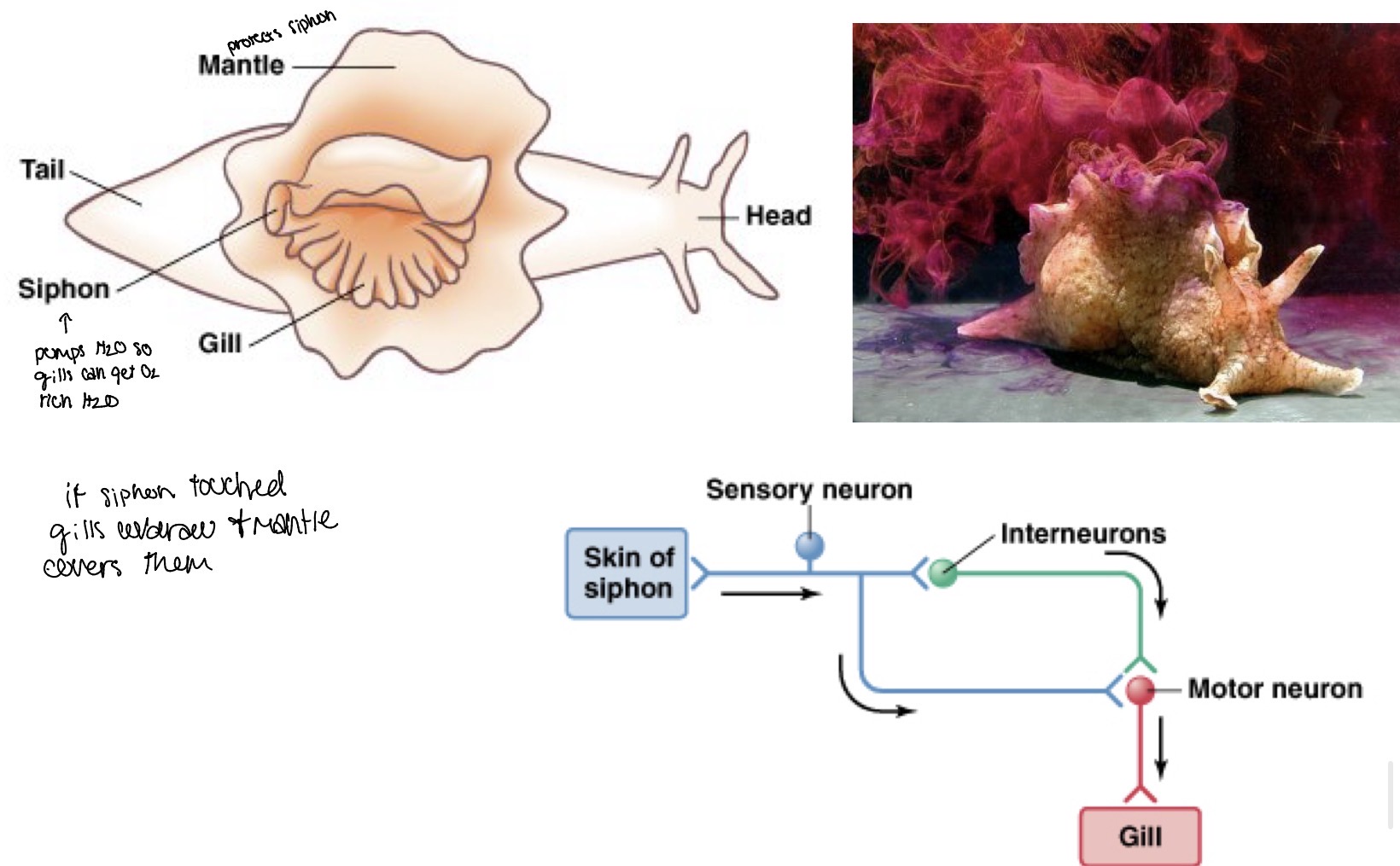
1. Gill Withdrawal Response in the sea slug Aplysia
2. Mauthner Cell Escape Response in fishes and amphibians
3. Crayfish tailflip escape response
1. Gill Withdrawal Reflex in the Sea Slug Aplysia
Siphon pumps water so gills can get oxygen rich water
If he siphon is touched gills withdraw and mantle covers siphon
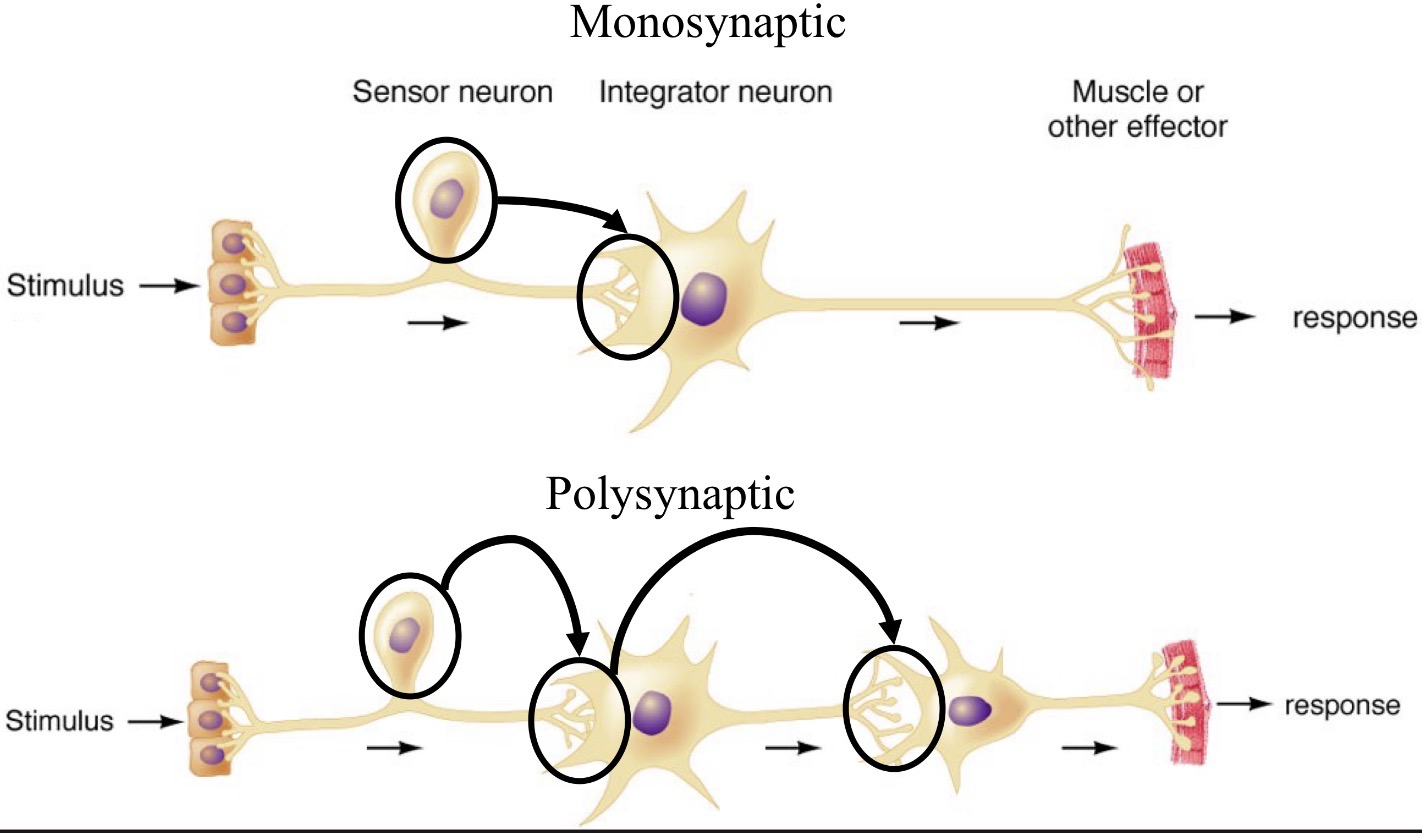
Mono- vs. Polysynaptic Signal Transmission
Mono: no interneurons
Poly: one or more interneurons
Interneurons can change from positive to negative and noise versa
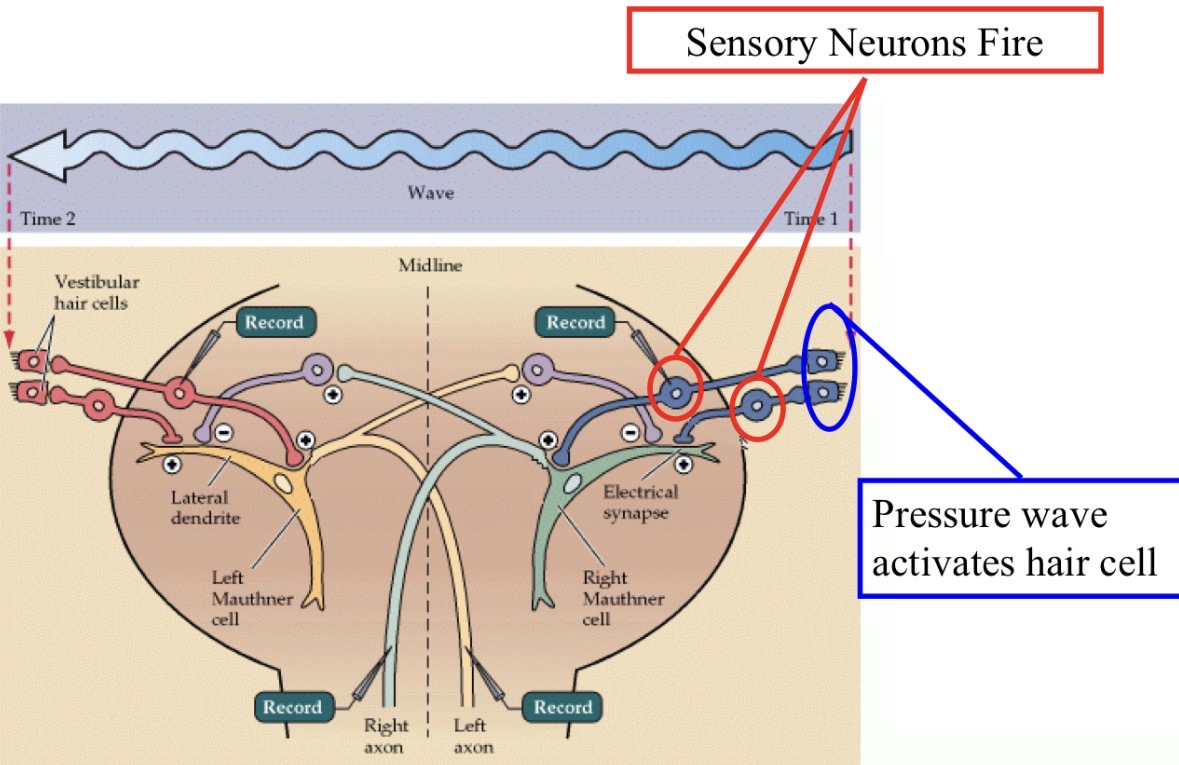
2. C-Start Escape Reflex in Teleost Fishes
1. The reflex has directionality
2. Response is very fast
3. Convergence leads to a “decision”
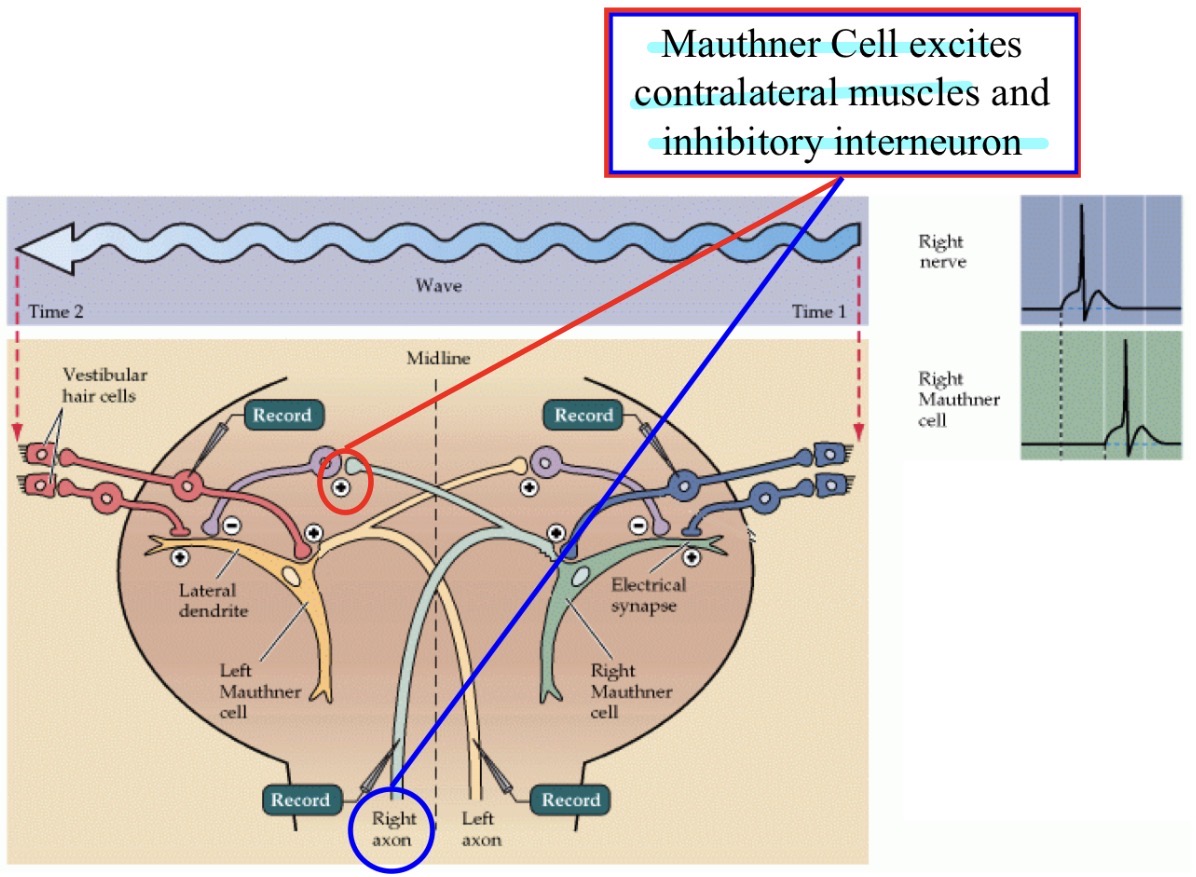
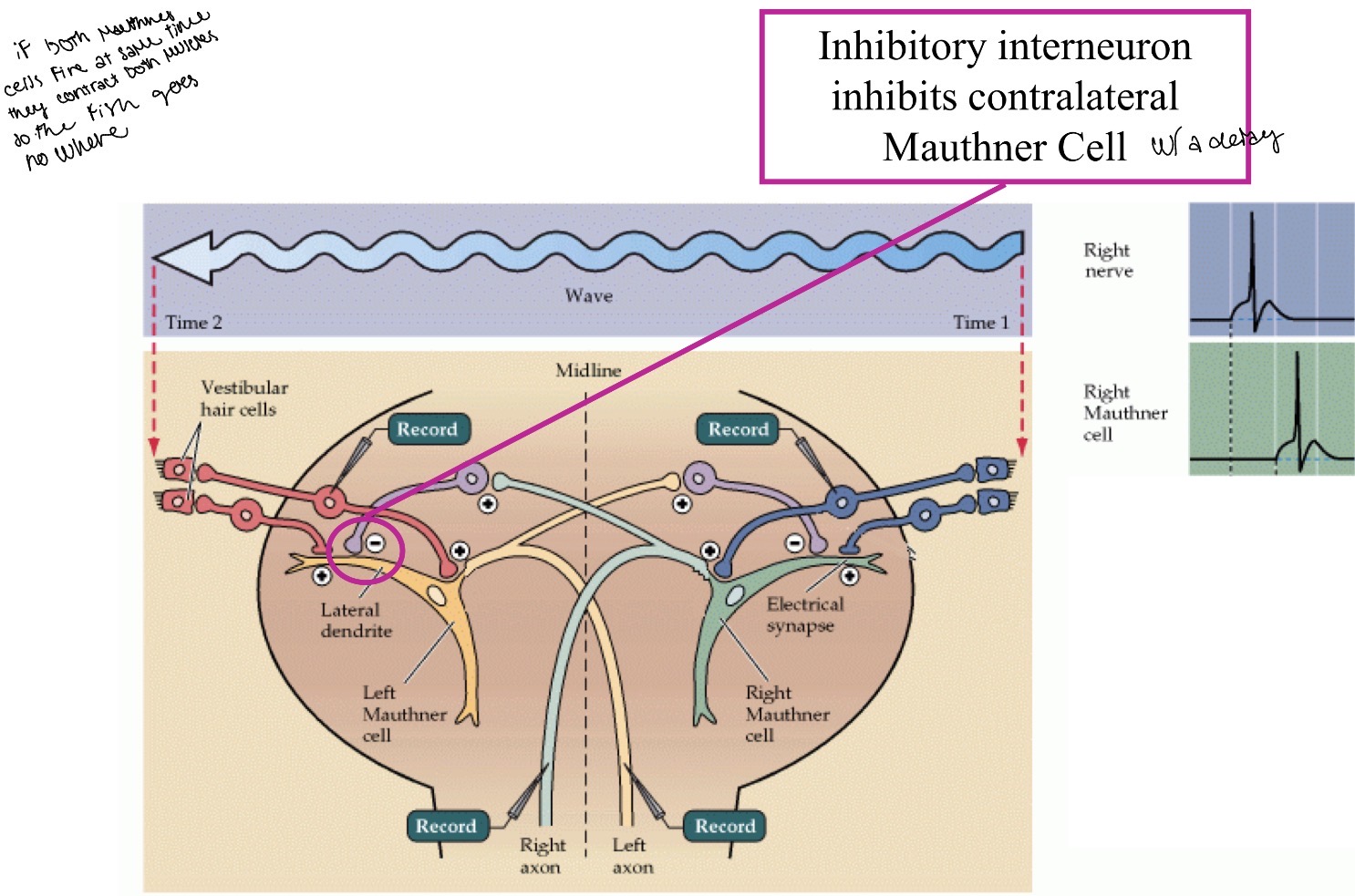
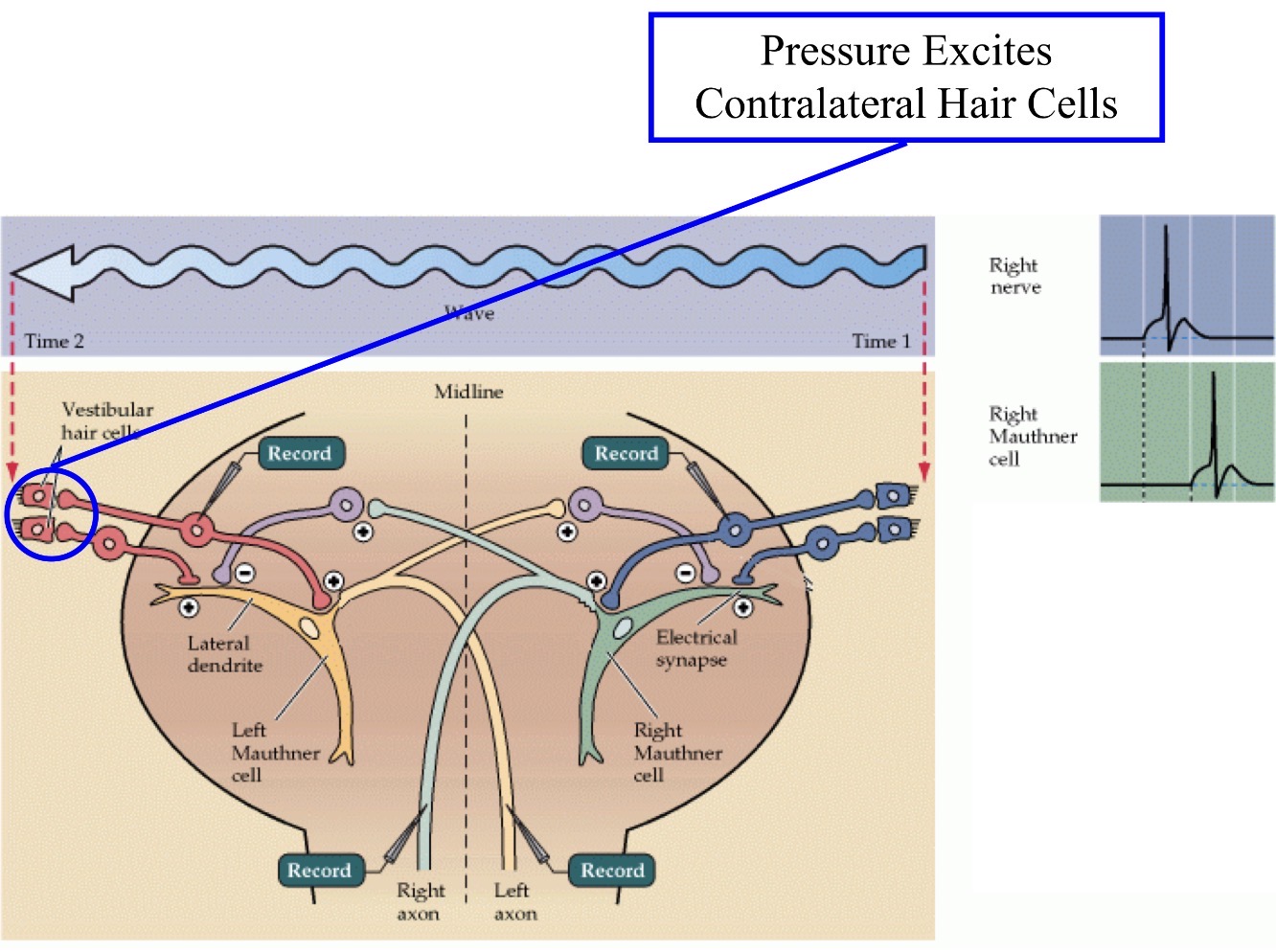
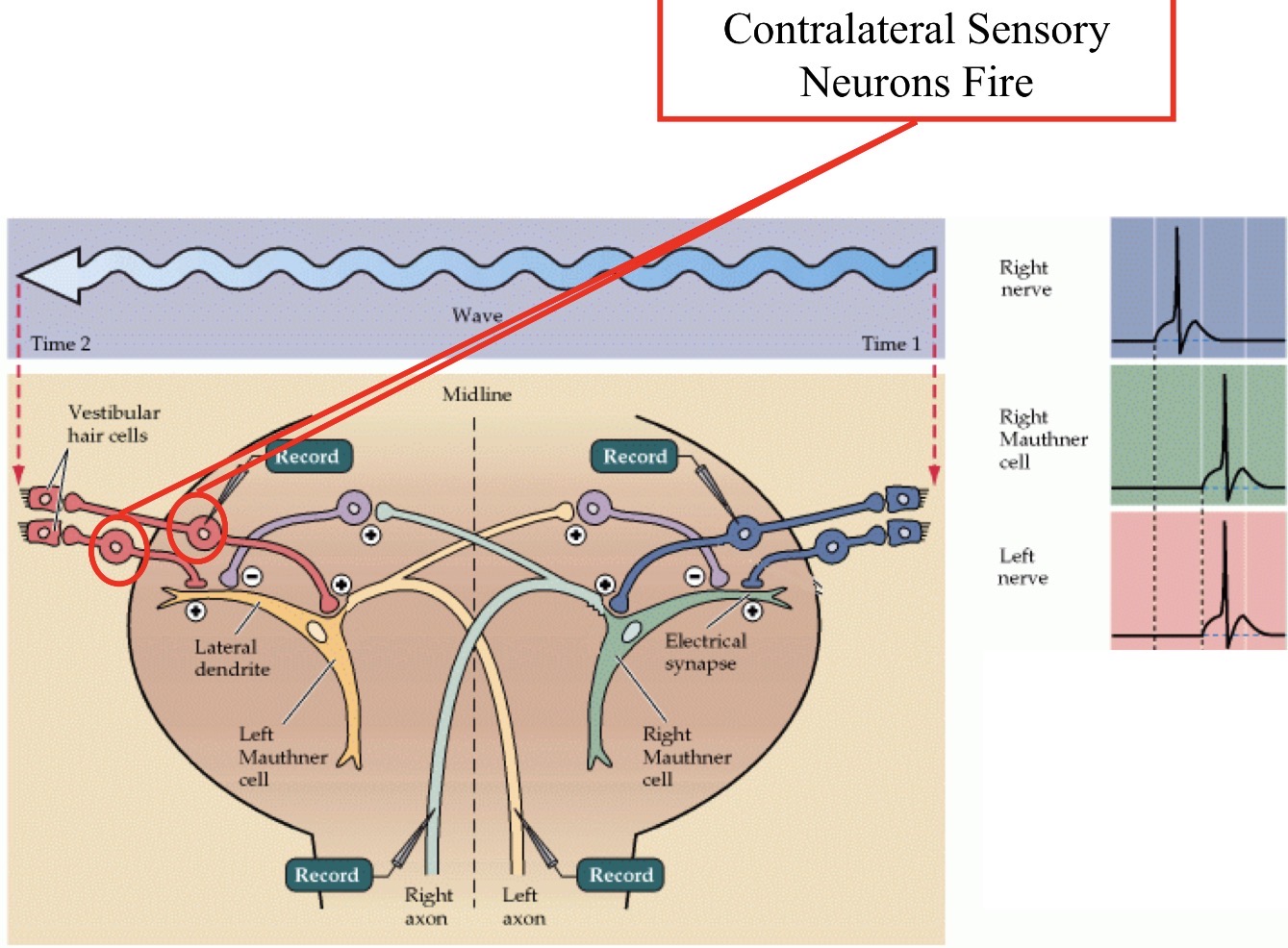
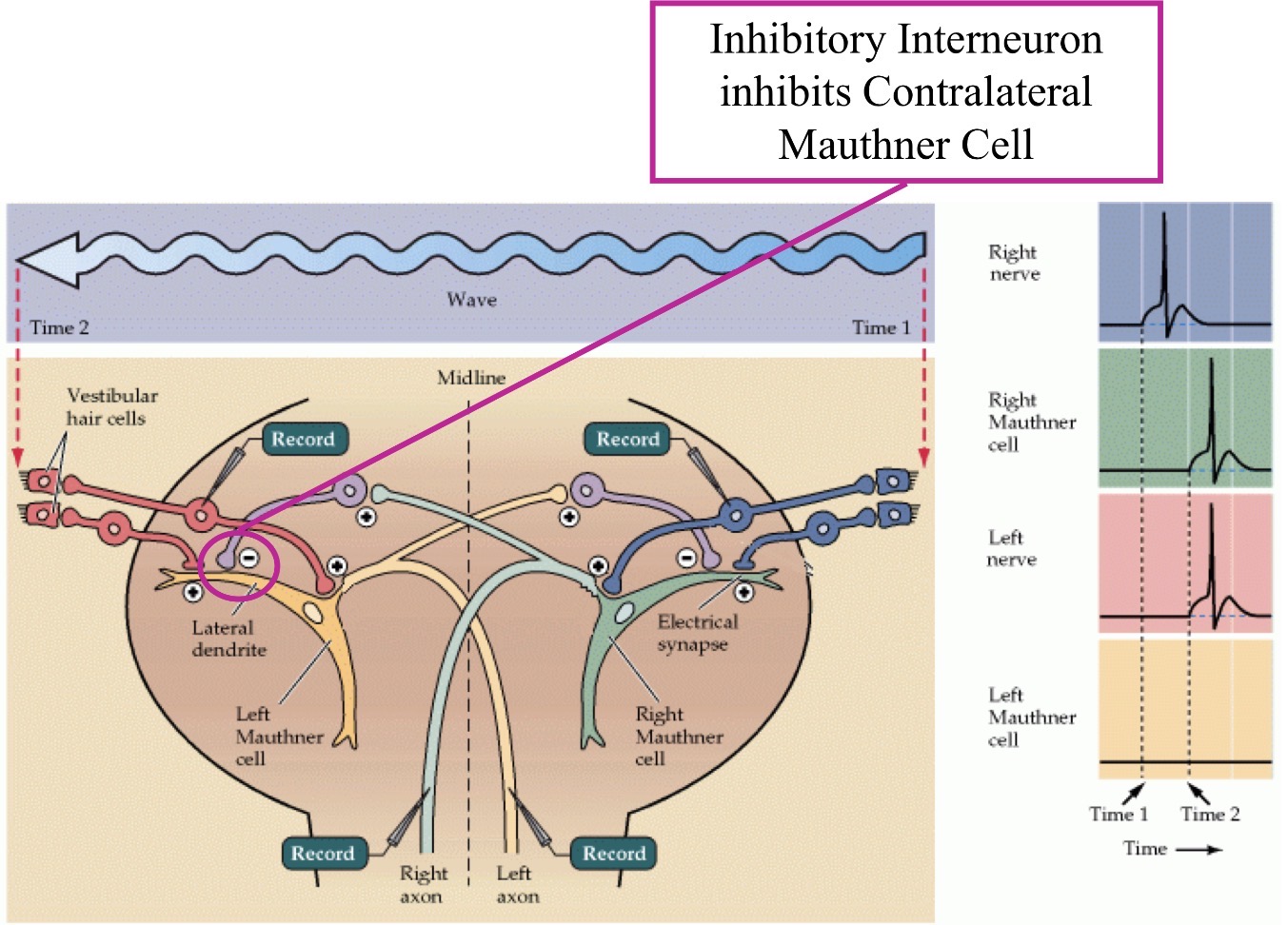
Wave hits left side of fish and right side contracts for,inc c shape before fish takes off

Escape in Fish is Controlled by the
Mauthner Cell Circuit
Maury we cell circuit 1
Mauthner cell circuit 2
Mauthner cell circuit 3
Mauthner cell circuit 4
Mauthner cell circuit 5
Mauthner cell circuit 6
Mauthner cell circuit 7
Mauthner cell circuit 8
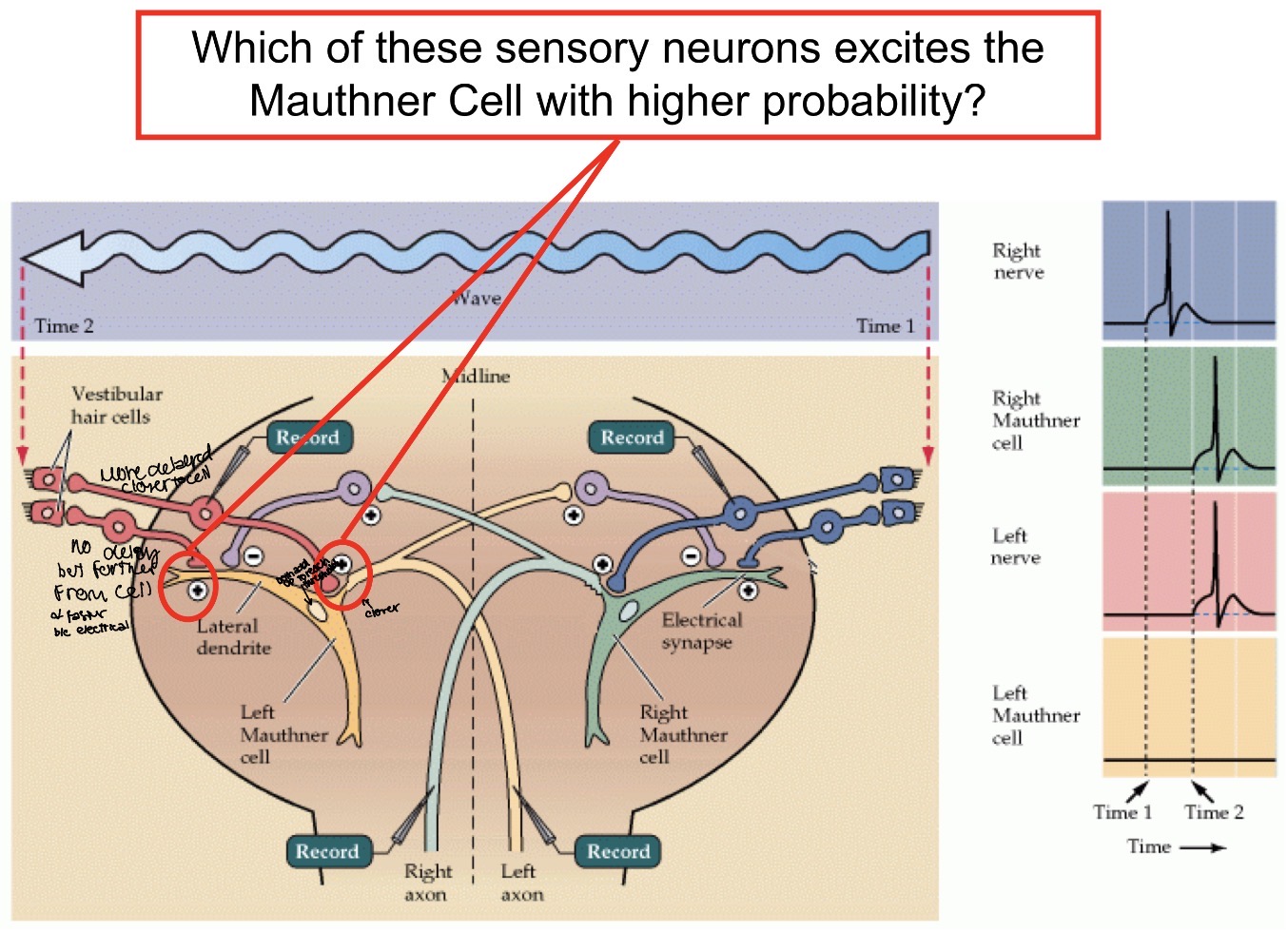
2. C-Start Escape Reflex in Teleost Fishes
1. The Reflex has Directionality
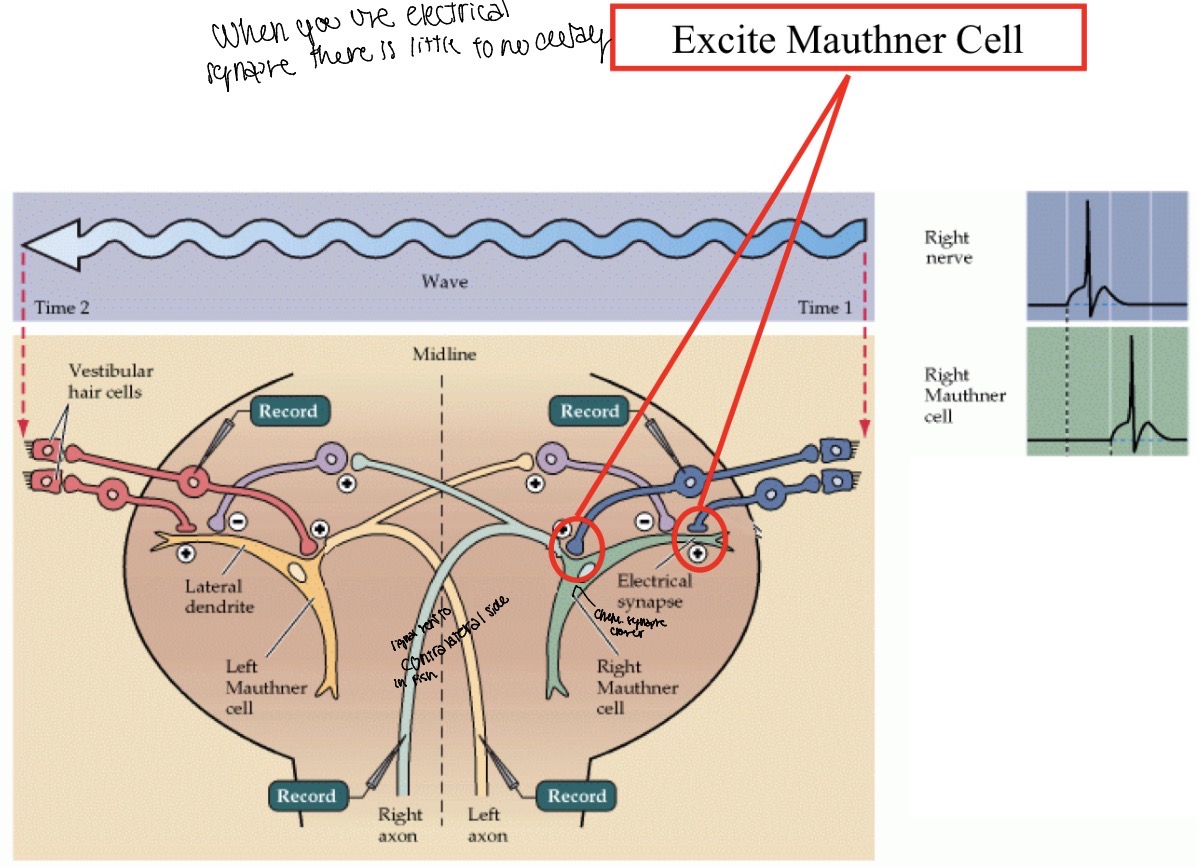
• contralateral (opposite side) inhibition of the Mauthner cells makes it such that when one fires the other cannot
2. The Response is Very Fast
• Electrical synapses
• Large diameter fibers
3. Convergence Leads to a Decision
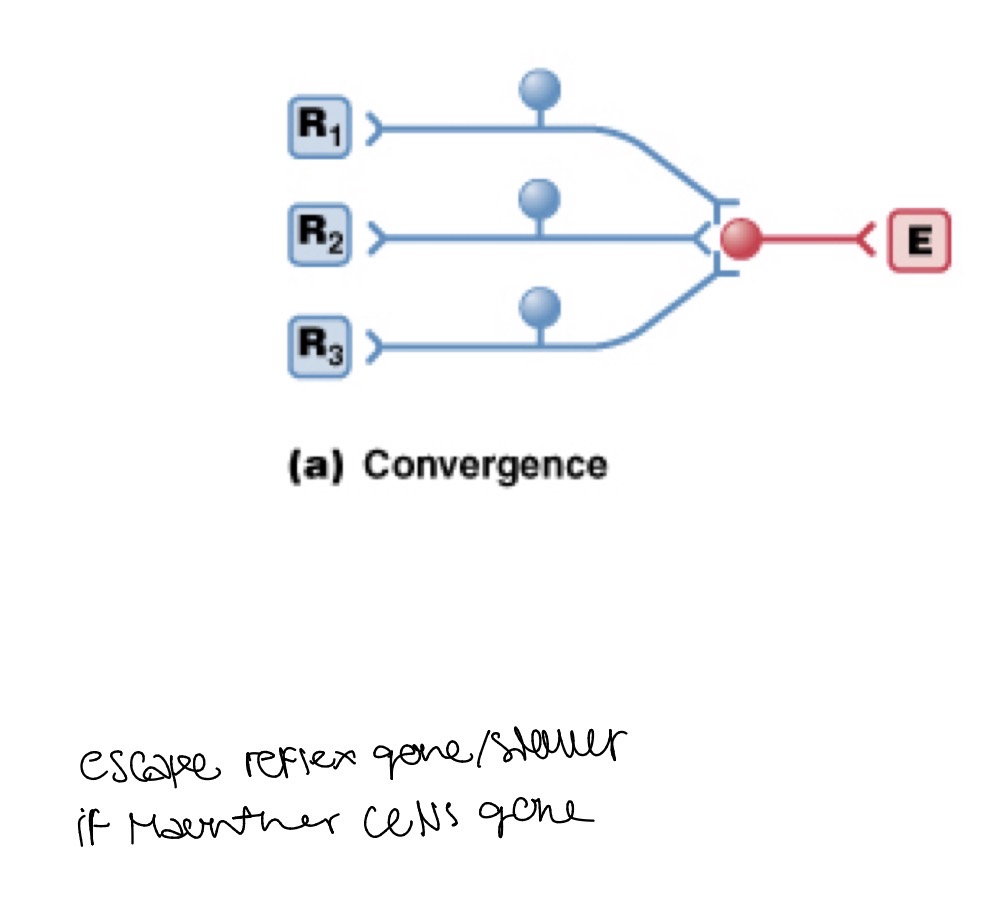
• Several neurons send inputs to the Mauthner Cell...if it fires an action potential, then the fish is moving its all or nothing
Mauthner Cells are Found in Most Fishes and Amphibian Larvae Why Not in Terrestrial Vertebrates!?
Because there is no resistance in air compared to water
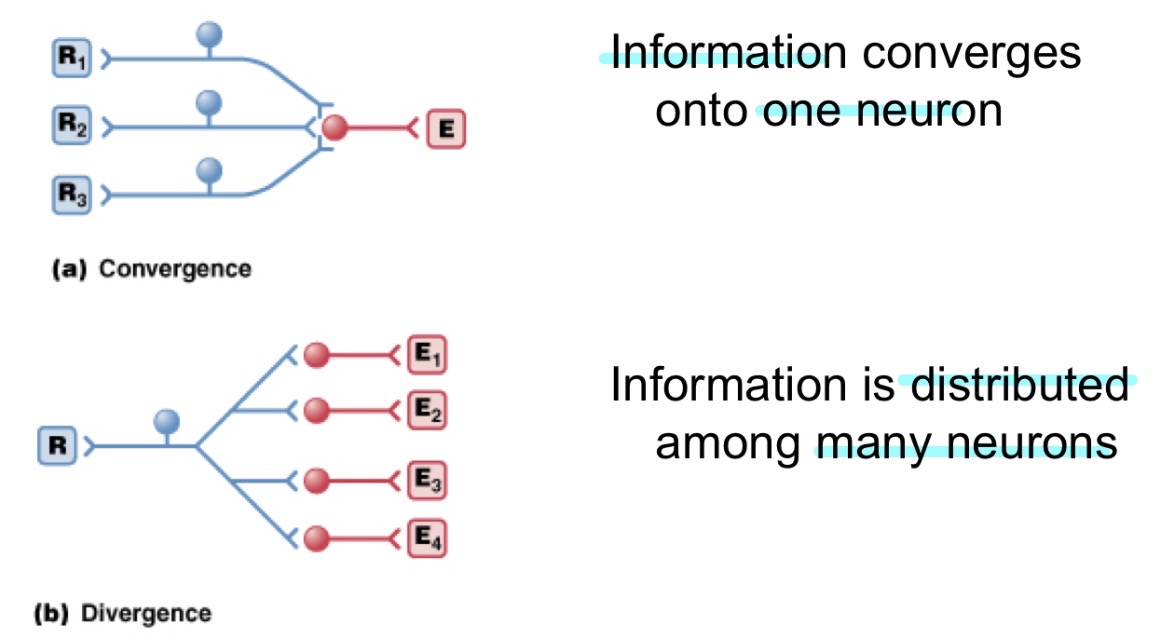
Convergence in the Nervous System
Information converges From different receptors onto one neuron
“Command” Neuron Concept
Some neurons represent “focal” points of a circuit:
Input from many neurons converges onto them
When they fire an action potential(s), there is a coordinated, complex motor output!
Such a command neuron must fulfill these conditions:
a) Necessary for the behavioral output
b) Sufficient for the behavioral output
Command neurons sensu stricto are rare (at least in vertebrates), but they illustrate remarkable convergence in the nervous system
Convergence vs. Divergence in the Nervous System