L7_Basic Helicopter Aerodynamics
 Studied by 0 people
 Call Kai
 Learn
Learn Practice Test
 Spaced Repetition
 Match
Match Flashcards
 Knowt Play
1/98

There's no tags or description
Looks like no tags are added yet.
Name | Mastery | Learn | Test | Matching | Spaced | Call with Kai |
|---|
No analytics yet
Send a link to your students to track their progress
99 Terms
Thrust
Drag
Lift
Weight
4 Aerodynamic Forces
power and flight controls
Understanding aerodynamic forces work and knowing how to control them with the use of _____ and _____ are essential to flight.
Thrust
forward force produced by the power plant/propeller or rotor. It opposes or overcomes the force of drag.
It acts parallel to the longitudinal axis.
Drag
rearward, retarding force caused by disruption of airflow by the wing, rotor, fuselage, and other protruding objects.
It opposes thrust and acts rearward parallel to the relative wind.
Weight
combined load of the aircraft itself, the crew, the fuel, and the cargo or baggage. Weight pulls the aircraft downward because of the force of gravity.
It opposes lift and acts vertically downward through the aircraft’s center of gravity (CG).
Lift
opposes the downward force of weight, is produced by the dynamic effect of the air acting on the airfoil, and acts perpendicular to the flightpath through the center of lift.
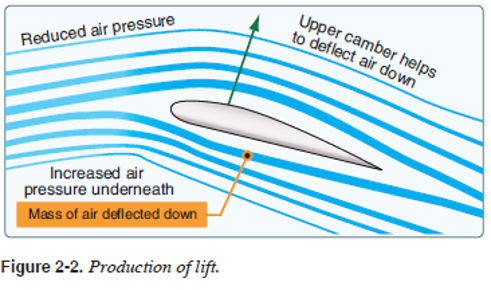
Lift
generated when an object changes the direction of flow of a fluid or when the fluid is forced to move by the object passing through it.
lift
When the object and fluid move relative to each other and the object turns the fluid flow in a direction perpendicular to that flow, the force required to do this work creates an equal and opposite force that is ____.
AOA
angle at which the airfoil meets the oncoming airflow (or vice versa).
rotor blade
In the case of a helicopter, the object is the _____ (airfoil) and the fluid is the air.
Lift
produced when a mass of air is deflected, and it always acts perpendicular to the resultant relative wind.
Speed of the airflow
Density of the air
Total area of the segment or airfoil
Angle of attack (AOA) between the air and the airfoil
Lift generated by an airfoil depends on such factors as: (4)
Weight
is thought of as being a known, fixed value, such as the weight of the helicopter, fuel, and occupants.
lift
To lift the helicopter off the ground vertically, the rotor system must generate enough _____ to overcome or offset the total weight of the helicopter and its occupants.
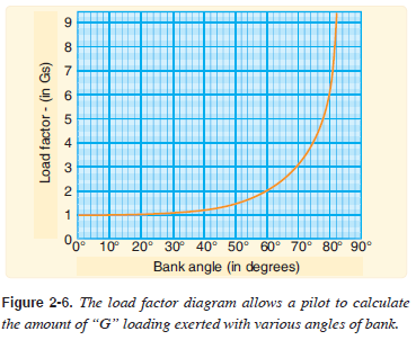
“G” load or load factor
The weight of the helicopter can also be influenced by aerodynamic loads.
When you bank a helicopter while maintaining a constant altitude, the _____ increases.
Thrust, like lift
generated by the rotation of the main rotor system.
thrust
In a helicopter, _____can be forward, rearward, sideward, or vertical.
resultant lift and thrust
determines the direction of movement of the helicopter.
tail rotor
also produces thrust.
The amount of thrust is variable through the use of the antitorque pedals and is used to control the helicopter’s yaw.
Drag
force that resists the movement of a helicopter through the air and is produced when lift is developed.
Drag
must be overcome by the engine to turn the rotor.
Drag
always acts parallel to the relative wind.
profile
induced
parasite
Total drag is composed of three types of drag:
Profile drag
develops from the frictional resistance of the blades passing through the air.
Profile drag
does not change significantly with the airfoil’s AOA, but increases moderately when airspeed increases.
form drag
skin friction
Profile drag is composed of (2)
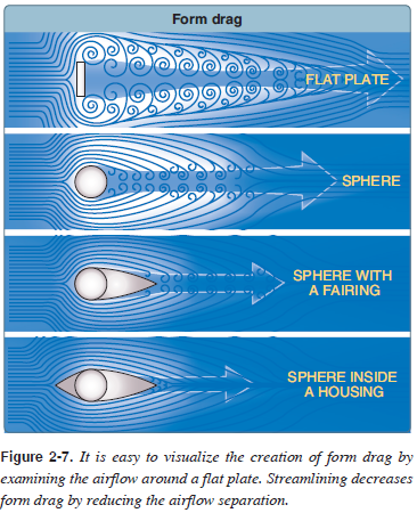
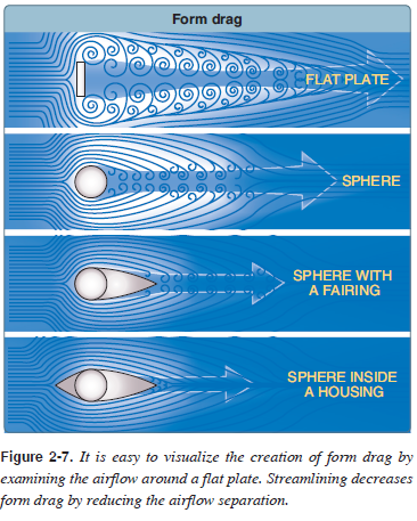
Form drag
results from the turbulent wake caused by the separation of airflow from the surface of a structure.
The amount of drag is related to both the size and shape of the structure that protrudes into the relative wind.
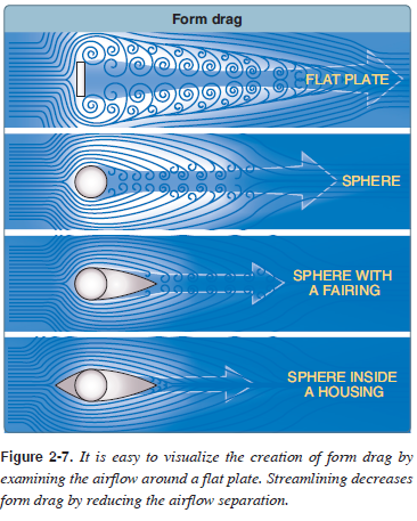
Skin friction
is caused by surface roughness.
Induced drag
generated by the airflow circulation around the rotor blade as it creates lift.
spiral, or vortex
vortices
downwash
The high pressure area beneath the blade joins the low pressure area above the blade at the trailing edge and at the rotor tips.
This causes a _____, which trails behind each blade whenever lift is being produced.
These _____deflect the airstream downward in the vicinity of the blade, creating an increase in _____.
pressure differential
As the air _____ increases with an increase in AOA, stronger vortices form, and induced drag increases.
induced drag
Since the blade’s AOA is usually lower at higher airspeeds, and higher at low speeds, _____ decreases as airspeed increases and increases as airspeed decreases.
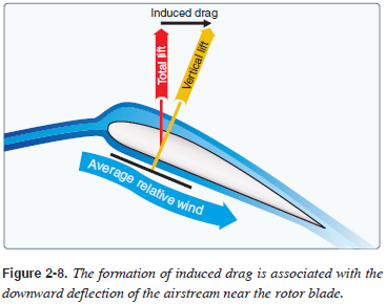
Induced drag
major cause of drag at lower airspeeds.
Parasite drag
is present any time the helicopter is moving through the air.
This type of drag increases with airspeed.
Non-lifting components of the helicopter, such as the cabin, rotor mast, tail, and landing gear, contribute to this drag.
parasite drag
Any loss of momentum by the airstream, due to such things as openings for engine cooling, creates additional _____.
parasite drag
Because of its rapid increase with increasing airspeed, _____is the major cause of drag at higher airspeeds.
Total drag
sum of all three drag forces.
parasite drag
induced drag
As airspeed increases, _____increases, while _____decreases.
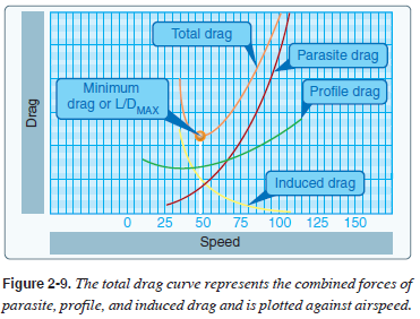
Profile drag
lift-to-drag ratio
_____remains relatively constant throughout the speed range with some increase at higher airspeeds. Combining all drag forces results in a total drag curve.
The low point on the total drag curve shows the airspeed at which drag is minimized. This is the point where the _____ is greatest.
At this speed, the total lift capacity of the helicopter, when compared to the total drag of the helicopter, is most favorable. This is an important factor in helicopter performance.
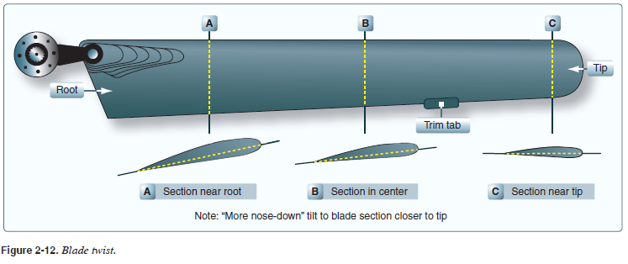
Blade Twist
change in blade incidence from the root to the outer blade.
rotational
Because of lift differential due to differing _____ relative wind values along the blade, the blade should be designed with a twist to alleviate internal blade stress and distribute the lifting force more evenly along the blade.
higher
lower
Blade twist provides _____ pitch angles at the root where velocity is low and _____ pitch angles nearer the tip where velocity is higher.
This increases the induced air velocity and blade loading near the inboard section of the blade.
Relative Wind
airflow relative to an airfoil.
Movement of an airfoil through the air creates relative wind.
moves in a parallel but opposite direction to movement of the airfoil.
Rotational Relative Wind (Tip-Path Plane)
rotation of rotor blades as they turn about the mast produces rotational relative wind (tip-path plane).
flows opposite the physical flightpath of the airfoil, striking the blade at 90° to the leading edge and parallel to the plane of rotation; and it is constantly changing in direction during rotation.
Resultant Relative Wind
nclined downward at some angle and opposite the effective flightpath of the airfoil, rather than the physical flightpath.
serves as the reference plane for development of lift, drag, and total aerodynamic force (TAF) vectors on the airfoil.
Induced Flow
airflow which is forced through a rotor disk perpendicular to the disc.
caused by the deflection of air by the passage of a rotor blade.
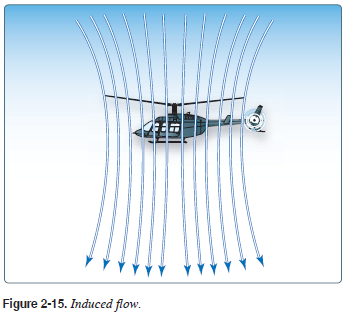
blade pitch angle
As _____ is increased, the rotor system induces a downward flow of air through the rotor blades creating a downward component of air.
Because the blades are moving horizontally, some of the air is displaced downward.
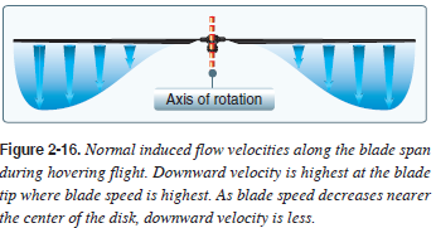
Ground effect
increased efficiency of the rotor system caused by interference of the airflow when near the ground.
The air pressure or density is increased, which acts to decrease the downward velocity of air.
Ground effect
permits relative wind to be more horizontal, lift vector to be more vertical, and induced drag to be reduced.
These conditions allow the rotor system to be more efficient.
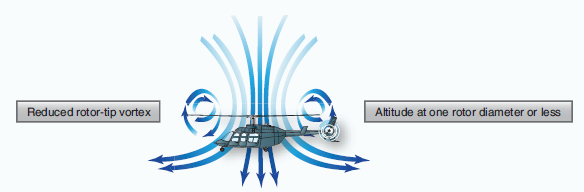
Maximum ground effect
achieved when hovering over smooth hard surfaces.
Rotor efficiency
increased by ground effect to a height of about one rotor diameter (measured from the ground to the rotor disk) for most helicopters.
IGE
The benefit of placing the helicopter near the ground is lost above _____ altitude.
Above this altitude, the power required to hover remains nearly constant, given similar conditions (such as wind). Induced flow velocity is increased, resulting in a decrease in AOA and a decrease in lift.
IGE
A higher blade pitch angle is required to maintain the same AOA as in _____ hover.
The increased pitch angle also creates more drag.
This increased pitch angle and drag requires more power to hover OGE than IGE.
tip-path plane or plane of rotation
In powered flight (hovering, vertical, forward, sideward, or rearward), the total lift and thrust forces of a rotor are perpendicular to the _____ or _____ of the rotor.
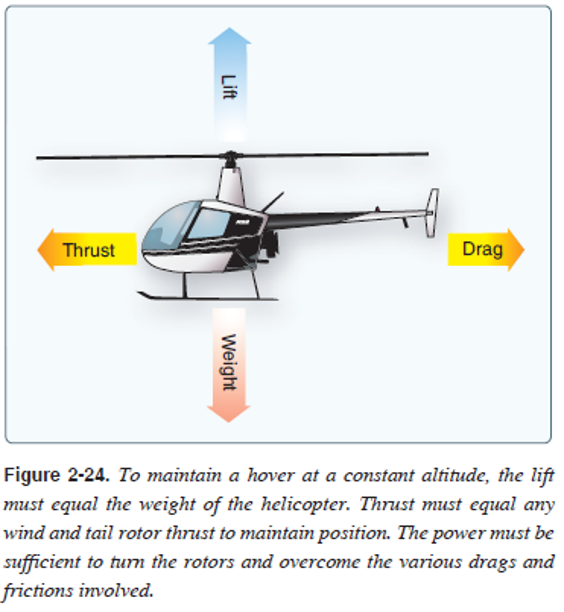
Hovering
means that it is in flight at a constant altitude, with no forward, aft, or sideways movement.
a helicopter must be producing enough lift in its main rotor blades to equal the weight of the aircraft.
Hovering
most challenging part of flying a helicopter.
This is because a helicopter generates its own gusty air while in a hover, which acts against the fuselage and flight control surfaces.
The end result is constant control inputs and corrections by the pilot to keep the helicopter stable.
cyclic
used to eliminate drift in the horizontal plane, controlling forward, backward, right and left movement or travel.
collective
used to maintain altitude.
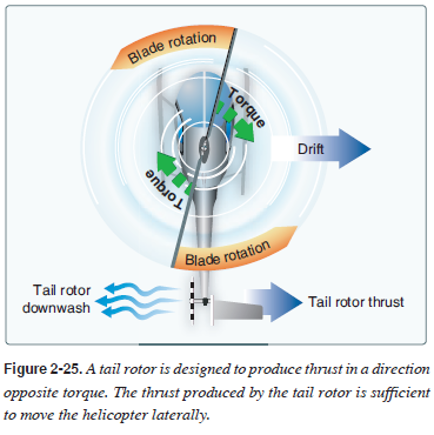
translating tendency
During hovering flight, a single main rotor helicopter tends to move in the direction of tail rotor thrust.
This lateral (or sideward) movement is called _____.
main transmission
rotor disk
Ways to counteract Translating Tendency (Counterclockwise rotating main rotor)
The _____ is mounted at a slight angle to the left (when viewed from behind) so that the rotor mast has a built-in tilt to oppose the tail rotor thrust.
Flight controls can be rigged so that the _____ is tilted to the left slightly when the cyclic is centered. Whichever method is used, the tip-path plane is tilted slightly to the left in the hover.
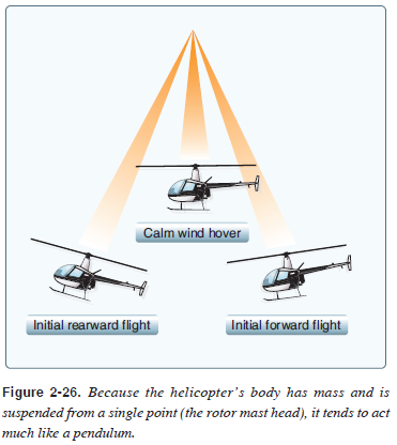
pendulum
Since the fuselage of the helicopter, with a single main rotor, is suspended from a single point and has considerable mass, it is free to oscillate either longitudinally or laterally in the same way as a _____.
pendular action
can be exaggerated by overcontrolling; therefore, control movements should be smooth and not exaggerated.
Coning
upward sweeping angle of the rotor blades as a result of lift and centrifugal force.
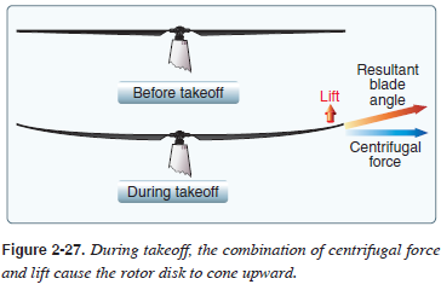
centrifugal force
lift
mast
rotor disk
As lift on the blades is increased (in a takeoff, for example), two major forces are acting at the same time, _____ acting outward, and _____ acting upward.
The result of these two forces is that the blades assume a conical path instead of remaining in the plane perpendicular to the _____.
This can be seen in any helicopter when it takes off; the _____ changes from flat to a slight cone shape.
Coriolis Effect (Law of Conservation of Angular Momentum)
states that the value of angular momentum of a rotating body does not change unless an external force is applied.
Coriolis Effect (Law of Conservation of Angular Momentum)
a rotating body continues to rotate with the same rotational velocity until some external force is applied to change the speed of rotation.
angular momentum
shrinks
Coriolis Effect
The rotor blade rotating about the rotor hub possesses _____.
As the rotor begins to cone due to G-loading maneuvers, the diameter or the rotor disk _____.
conservation of angular momentum
Due to _____, the blades continue to travel the same speed even though the blade tips have a shorter distance to travel due to reduced disk diameter.
The action results in an increase in rotor rpm which causes a slight increase in lift.
gyroscope
The spinning main rotor of a helicopter acts like a _____.
precession
Main rotor has the properties of gyroscopic action, one of which is _____.
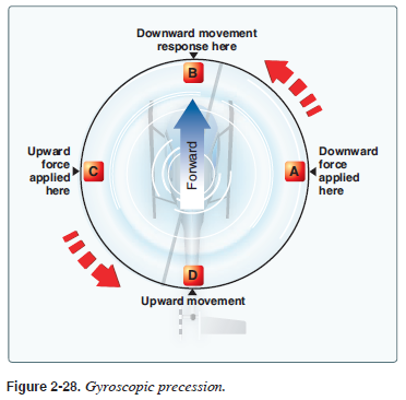
Gyroscopic precession
resultant action or deflection of a spinning object when a force is applied to this object.
This action occurs approximately 90° in the direction of rotation from the point where the force is applied (or 90° later in the rotation cycle).
Hovering
element of vertical flight.
Hovering
Increasing the angle of incidence of the rotor blades (pitch) while keeping their rotation speed constant generates additional lift and the helicopter ascends.
Decreasing the pitch causes the helicopter to descend.
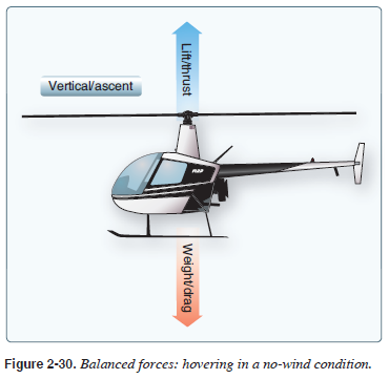
no-wind condition
Vertical Flight
In a _____ in which lift and thrust are less than weight and drag, the helicopter descends vertically.
If lift and thrust are greater than weight and drag, the helicopter ascends vertically.
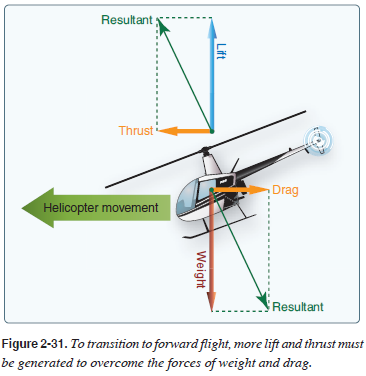
steady forward flight
In _____, with no change in airspeed or vertical speed, the four forces of lift, thrust, drag, and weight must be in balance.
Once the tip-path plane is tilted forward, the total lift-thrust force is also tilted forward.
This resultant lift-thrust force can be resolved into two components—lift acting vertically upward and thrust acting horizontally in the direction of flight.
lose
translational lift
excess power
As the helicopter moves forward, it begins to ____- altitude because lift is lost as thrust is diverted forward.
However, as the helicopter begins to accelerate from a hover, the rotor system becomes more efficient due to _____.
The result is _____ over that which is required to hover.
Continued acceleration causes an even larger increase in airflow, to a point, through the rotor disk and more excess power.
3 o’clock
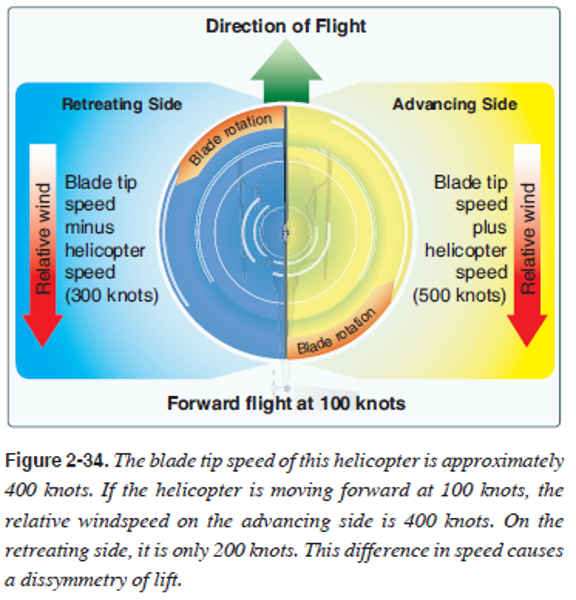
As the relative wind speed of the advancing blade increases, the blade gains lift and begins to flap up.
It reaches its maximum upflap velocity at the _____ position, where the wind velocity is the greatest.
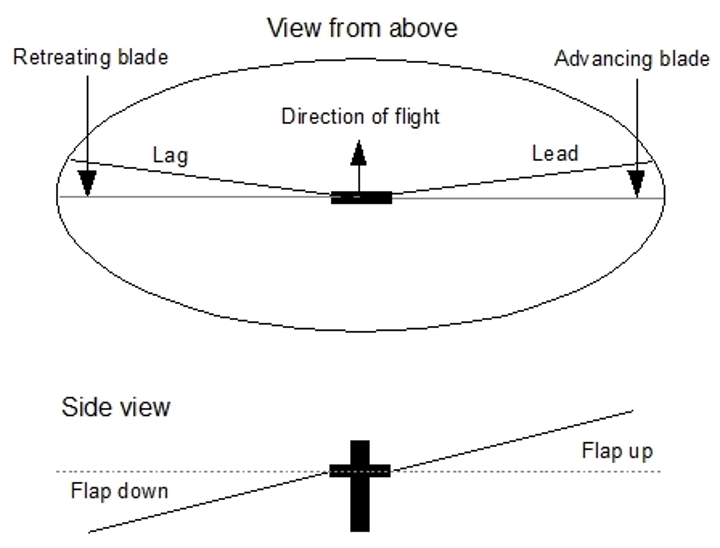
upflap
creates a downward flow of air and has the same effect as increasing the induced flow velocity by imposing a downward vertical velocity vector to the relative wind which decreases the AOA.
9 o’clock
As relative wind speed of the retreating blade decreases, the blade loses lift and begins to flap down.
It reaches its maximum downflap velocity at the _____ position, where wind velocity is the least.
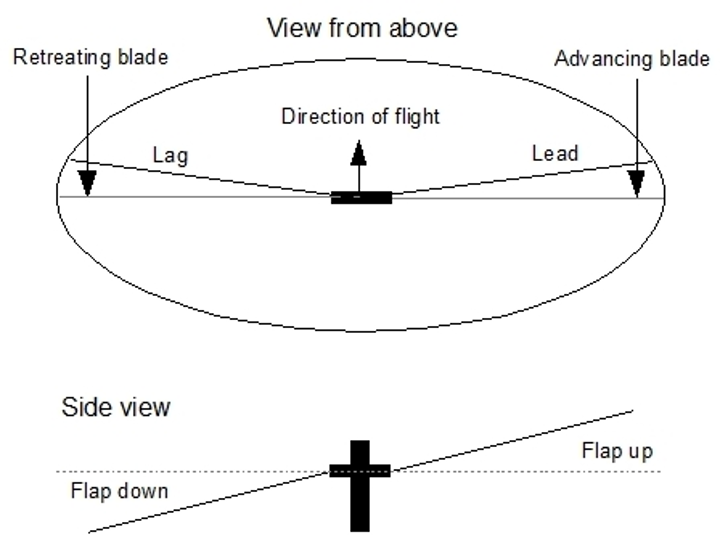
downflap
creates an upward flow of air and has the same effect as decreasing the induced flow velocity by imposing an upward velocity vertical vector to the relative wind which increases the AOA.
Dissymmetry of lift
differential (unequal) lift between advancing and retreating halves of the rotor disk caused by the different wind flow velocity across each half.
advancing
retreating
Dissymmetry of lift would cause the helicopter to be uncontrollable in any situation other than hovering in a calm wind.
There must be a means of compensating, correcting, or eliminating this unequal lift to attain symmetry of lift.
Therefore, as a result of the relative wind speed, the _____ blade side of the rotor disk can produce more lift than the ____ blade side.
CCW
If Dissymmetry of lift were allowed to exist, a helicopter with a _____ main rotor blade rotation would roll to the left because of the difference in lift.
In reality, the main rotor blades flap and feather automatically to equalize lift across the rotor disk.
translational lift
Improved rotor efficiency resulting from directional flight is called _____.
surface wind
The efficiency of the hovering rotor system is greatly improved with each knot of incoming wind gained by horizontal movement of the aircraft or _____.
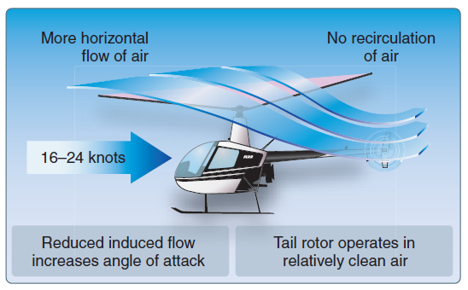
hover to forward flight
As the incoming wind produced by aircraft movement or surface wind enters the rotor system, turbulence and vortices are left behind and the flow of air becomes more horizontal.
In addition, the tail rotor becomes more aerodynamically efficient during the transition from _____ to _____.
Translational thrust
occurs when the tail rotor becomes more aerodynamically efficient during the transition from hover to forward flight.
antitorque thrust
As the tail rotor works in progressively less turbulent air, this improved efficiency produces more _____, causing the nose of the aircraft to yaw left (with a main rotor turning counterclockwise) and forces the pilot to apply right pedal (decreasing the AOA in the tail rotor blades) in response.
induced flow
transverse flow effect
As the helicopter accelerates in forward flight, _____ drops to near zero at the forward disk area and increases at the aft disk area.
These differences in lift between the fore and aft portions of the rotor disk are called _____.
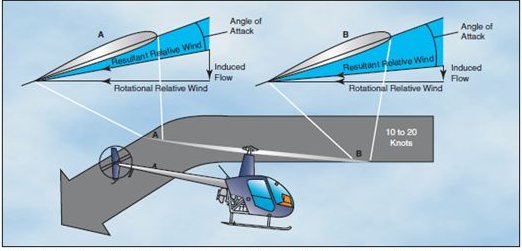
Transverse Flow Effect
This increases the AOA at the front disk area causing the rotor blade to flap up, and reduces AOA at the aft disk area causing the rotor blade to flap down.
Because the rotor acts like a gyro, maximum displacement occurs 90° in the direction of rotation.
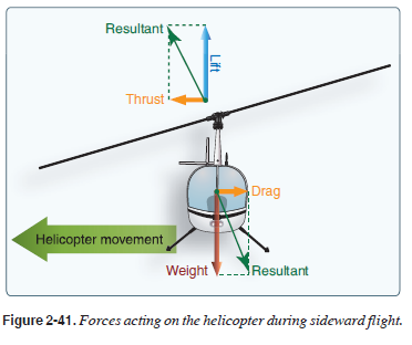
tip-path plane
In sideward flight, the _____ is tilted in the direction that flight is desired.
This tilts the total lift-thrust vector sideward.
In this case, the vertical or lift component is still straight up and weight straight down, but the horizontal or thrust component now acts sideward with drag acting to the opposite side.
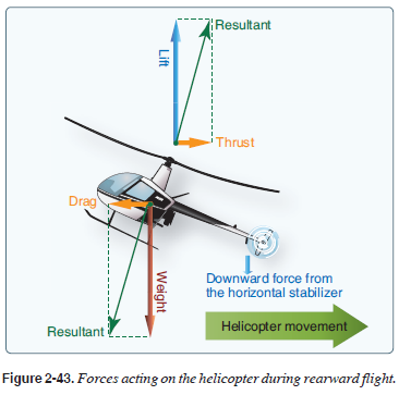
lift-thrust vector
For rearward flight, the tip-path plane is tilted rearward, which, in turn, tilts the _____ rearward.
Drag now acts forward with the lift component straight up and weight straight down.
Autorotation
state of flight where the main rotor system of a helicopter is being turned by the action of air moving up through the rotor rather than engine power driving the rotor.
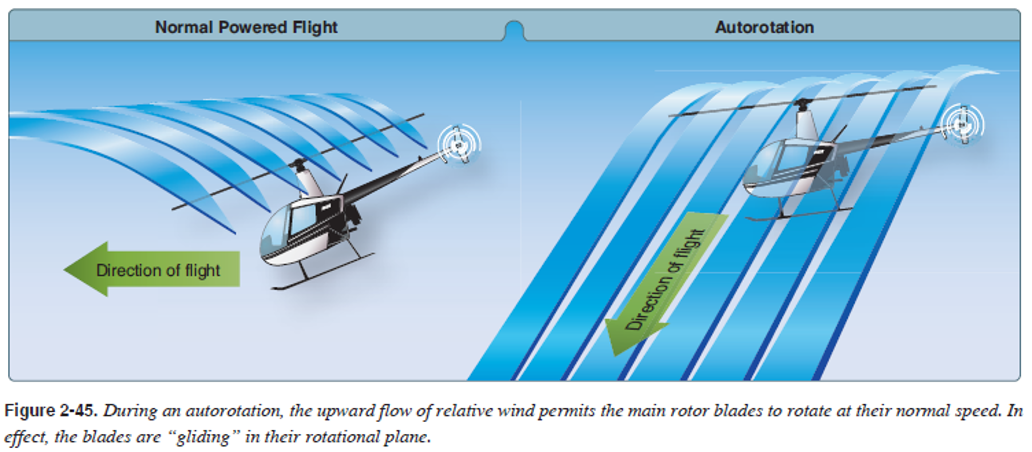
autorotation
In normal, powered flight, air is drawn into the main rotor system from above and exhausted downward, but during _____, air moves up into the rotor system from below as the helicopter descends.
Autorotation
permitted mechanically by a freewheeling unit, which is a special clutch mechanism that allows the main rotor to continue turning even if the engine is not running.
Relative Wind
Rotational Relative Wind
Resultant Relative Wind
Airflow in the rotor system (3)
Rotor efficiency
is increased by ground effect to a height of about one rotor diameter. (In ground effect)
increased
Under out of ground effect, Induced flow velocity is _____, resulting in a decrease in AOA and a decrease in lift.
Autorotation
allows the main rotor to continue turning even if the engine is not running, it is very useful in an engine failure scenario.
 Note
Note  Flashcards (20)