Radiation Effects on Organ Systems: Stochastic, Early, and Late Tissue Reactions
 Call Kai
 Learn
Learn Practice Test
 Spaced Repetition
 Match
Match Flashcards
 Knowt Play
1/127

There's no tags or description
Looks like no tags are added yet.
Name | Mastery | Learn | Test | Matching | Spaced | Call with Kai |
|---|
No analytics yet
Send a link to your students to track their progress
128 Terms
What are late effects of radiation exposure?
Long-term results of radiation exposure, such as cataracts, leukemia, and genetic mutations.
What is epidemiology?
A science that deals with the incidence, distribution, and control of disease in a population.
How do scientists predict cancer risk from radiation exposure?
By comparing natural cancer rates in the general population with those in irradiated populations.
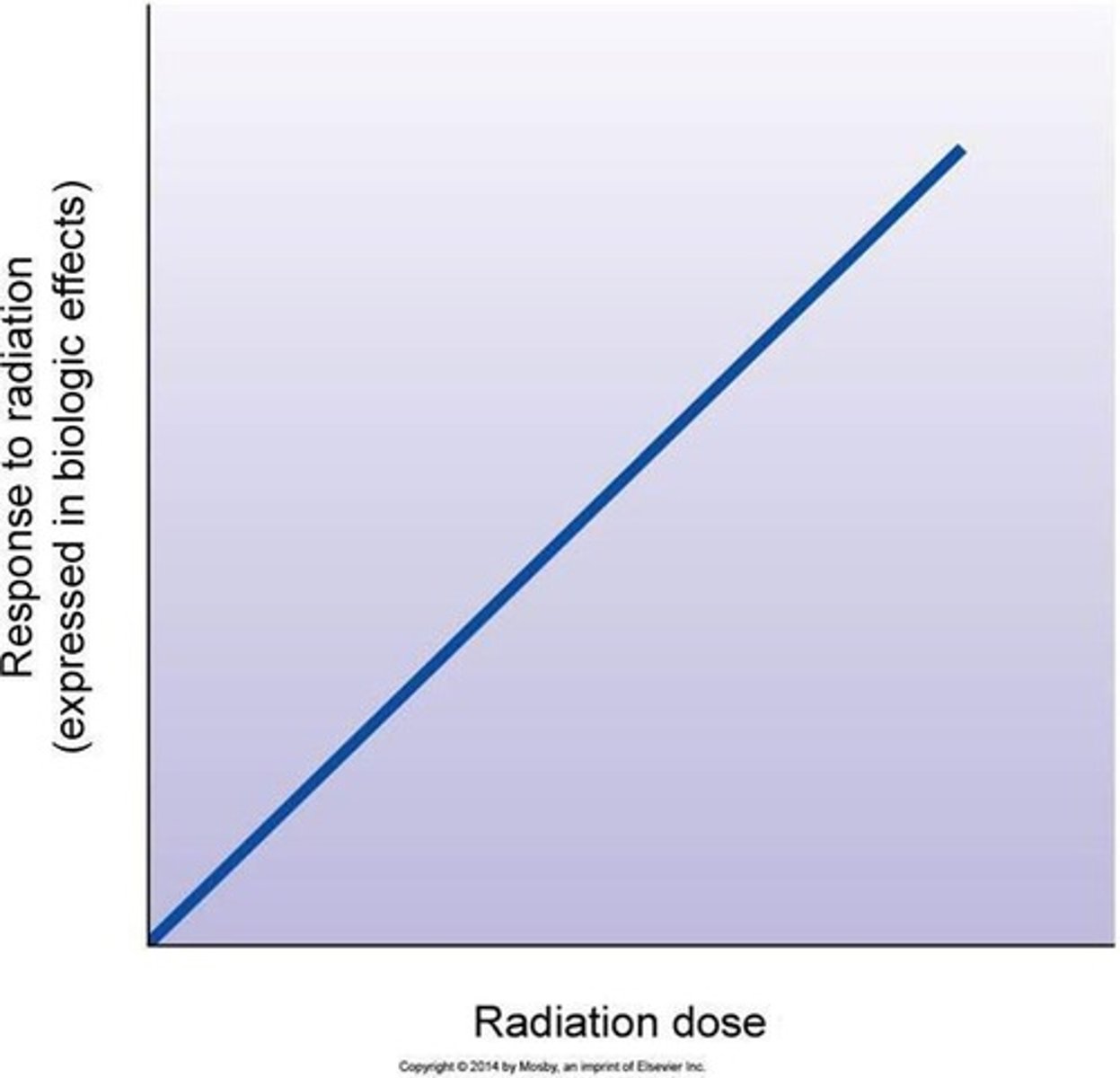
What is the significance of the linear dose-response model?
It is used by regulatory agencies for establishing radiation protection standards.
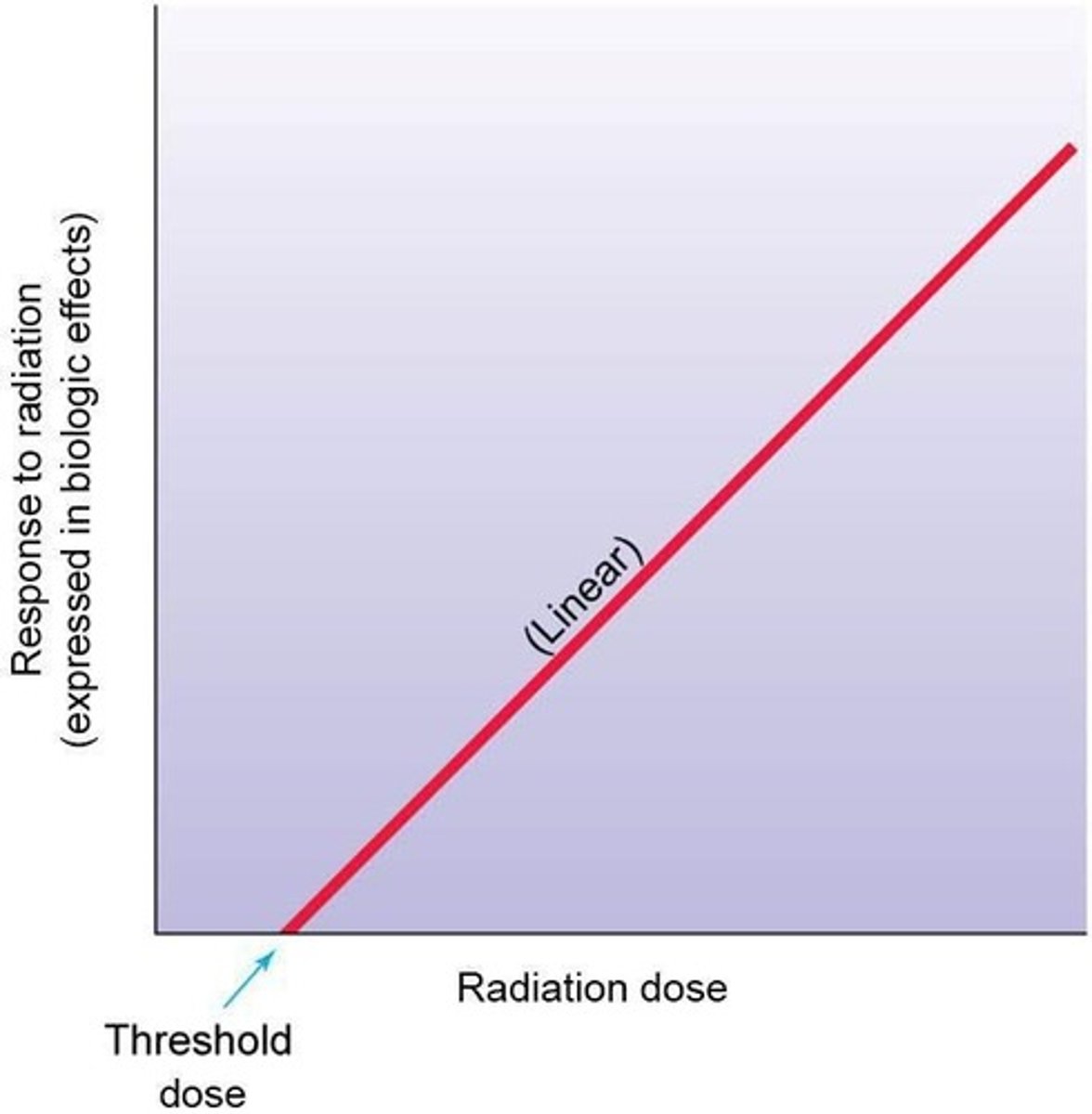
What is the difference between threshold and nonthreshold relationships in radiation exposure?
Threshold indicates no biological effects below a certain dose, while nonthreshold suggests any dose can produce effects.
What is a stochastic effect of ionizing radiation?
An effect, such as cancer, that occurs randomly and does not have a threshold.
What does the radiation dose-response curve illustrate?
The relationship between the observed effects of radiation exposure and the dose received.
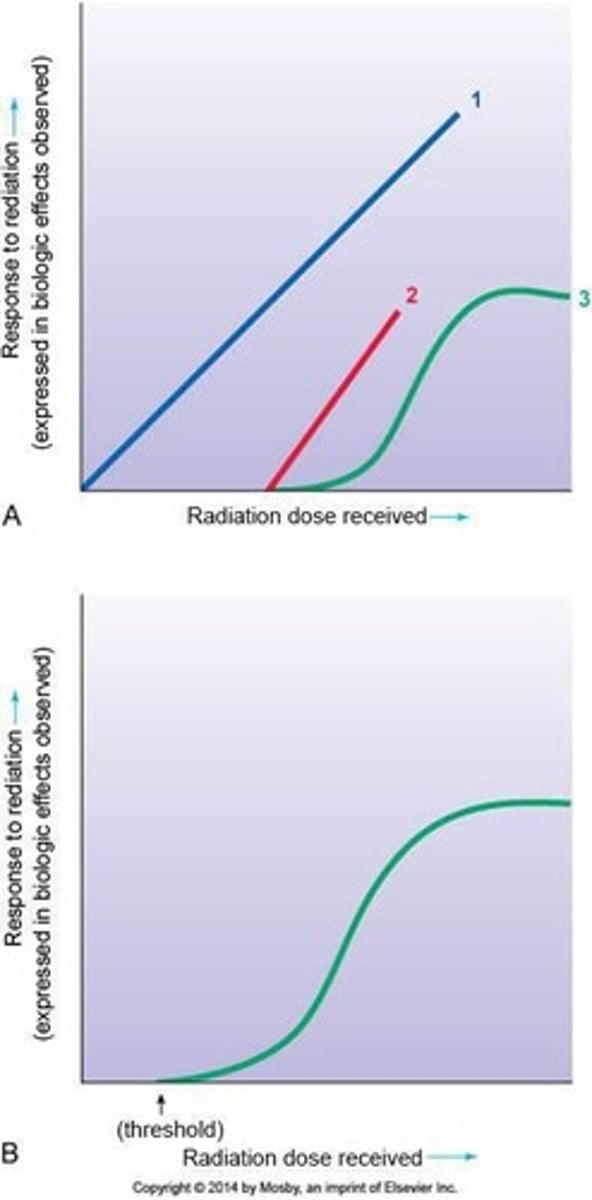
What are the characteristics of a linear nonthreshold curve?
Biological effects are directly proportional to the dose received, with no safe level of exposure.
What is the doubling dose concept?
The concept that the number of mutations increases as the dose of radiation increases.
What is the linear-quadratic nonthreshold curve (LQNT)?
A model suggesting that stochastic effects from low-dose radiation follow a specific curve, particularly for leukemia and breast cancer.
What is the purpose of risk models in radiation exposure?
To estimate the risk of radiation-induced malignancies and heritable damage.
What are the late tissue reactions to radiation exposure?
Long-term biological effects that can include organ damage and increased cancer risk.
What is the significance of the BEIR committee's findings?
They revised risk estimates, indicating that radiation exposure risk is higher than previously thought.
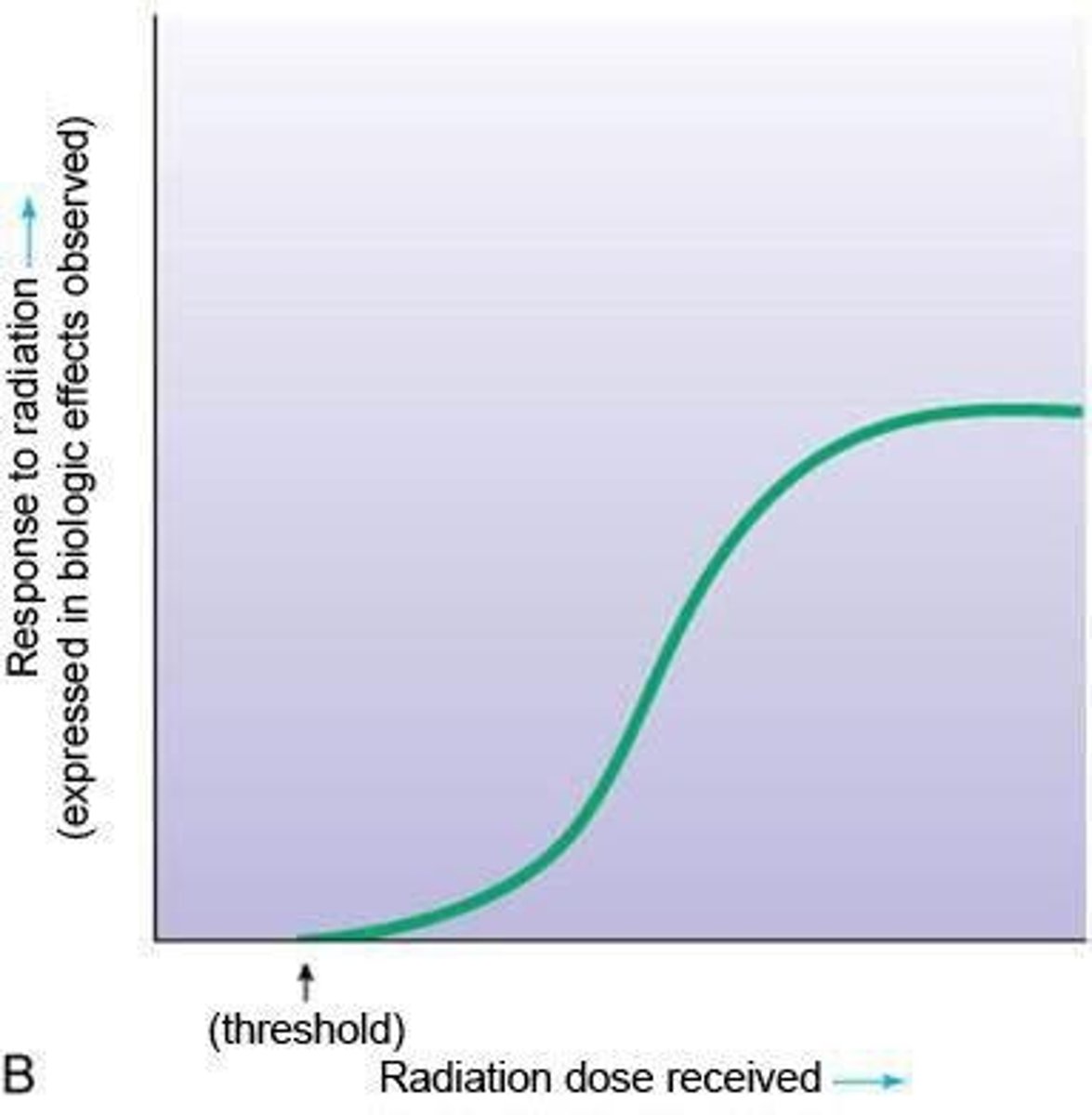
What does a sigmoid dose-response curve represent?
It is used in radiation therapy to show high-dose cellular responses.
What is the implication of no radiation dose being absolutely safe?
All radiation exposure levels have the potential to cause biological damage.
What is the relationship between dose and biological effects in a linear nonthreshold model?
Biological responses increase directly with the magnitude of the absorbed dose.
What type of radiation is associated with high-LET effects?
Neutrons and alpha rays, which have significant effects at higher doses.
What is the role of statistical analysis in epidemiologic studies of radiation?
To analyze data on disease incidence within groups exposed to radiation.
What is a threshold curve in radiation dose-response?
A curve indicating that biological effects occur only after a specific dose level is reached.
What are spontaneous mutations?
Mutations that occur naturally without exposure to radiation.
How do dominant and recessive gene mutations differ?
Dominant mutations manifest in the phenotype with one copy, while recessive mutations require two copies to express.
What is the significance of the linear threshold dose-response curve?
It is used to predict acute reactions from significant radiation exposure.
What is the purpose of aggressive radiation safety measures?
To minimize the risk of biological damage during diagnostic imaging procedures.
What is the relationship between high-dose cellular response and radiation therapy?
High-dose cellular responses are demonstrated through specific dose-response curves in radiation therapy.
What is the potential exaggeration risk of using the linear dose-response model?
It may exaggerate the seriousness of radiation effects at lower dose levels.
What are the measurable late biological damages from radiation exposure?
Cataracts, leukemia, and genetic mutations.
What does the term 'stochastic effects' refer to?
Effects that occur by chance and are not dose-dependent, such as cancer.
What is the conservative approach taken by regulatory agencies in establishing radiation protection standards?
To use a model that may overestimate risk but is not expected to underestimate risk.
What are somatic effects of radiation exposure?
Biologic damage sustained by living organisms due to radiation exposure.
What are the two main classifications of somatic effects?
Stochastic effects and tissue reactions.
What defines stochastic effects?
The probability of the effect occurring depends on the received dose, but the severity does not.
Give an example of a stochastic effect.
Occurrence of cancer.
What are tissue reactions?
Effects where both the probability and severity depend on the dose.
Provide an example of a tissue reaction.
Cataracts.
What are late somatic effects?
Consequences of radiation exposure that appear months or years after exposure.
What can cause late somatic effects?
Previous whole- or partial-body acute exposure, high radiation doses, or long-term low-level doses.
What are teratogenic effects?
Effects that cause embryonic, fetal, or neonatal death, congenital malformations, or disturbances in growth and development.
What is the current understanding of cancer risk from low-level radiation exposure?
The risk is controversial, with no conclusive proof that exposure below 0.1 Gy significantly increases malignancy risk.
What are the three categories of adverse health consequences that require study at low levels of exposure?
Cancer induction, damage to the unborn from irradiation in utero, and genetic effects.
What is the absolute risk model?
Predicts a specific number of excess cancers per unit of radiation dose, regardless of natural cancer incidence.
How does the relative risk model differ from the absolute risk model?
It predicts that radiation exposure will multiply the natural incidence of cancer by a certain factor.
What is the assumption of the absolute risk model?
Radiation adds a fixed, additional risk to the background cancer rate.
What is the assumption of the relative risk model?
The risk is proportional to the baseline cancer rate.
What are the key differences between absolute and relative risk models?
Absolute risk adds a fixed number of cases, while relative risk scales with the baseline cancer incidence.
What is the significance of the linear nonthreshold dose-response relationship in radiation protection?
It assumes that risk exists even at low doses and extrapolates from high-dose data.
What are the major types of late effects of radiation exposure?
Stochastic effects, carcinogenesis, cataractogenesis, and embryologic effects.
What is the relationship between high radiation doses and cancer risk?
At high doses, the risk of cancer is measurable in exposed populations.
What is the significance of epidemiologic studies in radiation exposure?
They suggest that the benefits of imaging procedures greatly exceed the minimal theoretical risk of cancer development.
What is the impact of tissue reactions associated with high skin doses?
They usually occur weeks or months after exposure, but extreme reactions may persist longer.
What is the role of cells that survive initial irradiation?
They may incur damage that could lead to stochastic effects, such as malignancy or hereditary disorders.
What is the effect of low-level radiation exposure on cancer risk?
The risk may be negligible or even nonexistent.
What are the potential outcomes of teratogenic effects from radiation exposure?
Increased stillbirths, infant mortality, childhood malignancy, and childhood mortality.
What is the significance of the risk estimates for cancer at low doses?
They are not directly measurable in population studies due to overshadowing by other cancer causes.
What is the impact of background cancer rates on the relative risk model?
Higher background rates lead to a greater total risk increase from radiation exposure.
What are the two models used for extrapolating cancer risk from high-dose to low-dose data?
Linear and linear-quadratic models.
What model did the 1989 BEIR V report support for leukemia?
The linear-quadratic model.
What model did the BEIR V Committee recommend for cancers other than leukemia?
The linear model.
What does the linear model imply about cancer risk per centigray?
The risk is constant and follows a straight-line progression throughout the dose range.
What is a potential issue with the linear model at low doses?
It may overestimate the risk.
How does the linear-quadratic model differ from the linear model?
It includes additional terms that reduce the relative increase in risk at low doses.
What evidence supports the conclusion that radiation induces cancer?
Laboratory experiments with animals and statistical studies of human populations exposed to ionizing radiation.
How long may it take for radiation-induced cancer to develop in humans?
5 or more years.
How does cancer caused by radiation appear compared to cancer caused by other agents?
It does not appear different.
What is the significance of the Chernobyl disaster in relation to thyroid cancer?
Iodine-131 released increased thyroid cancer incidence among children in affected regions.
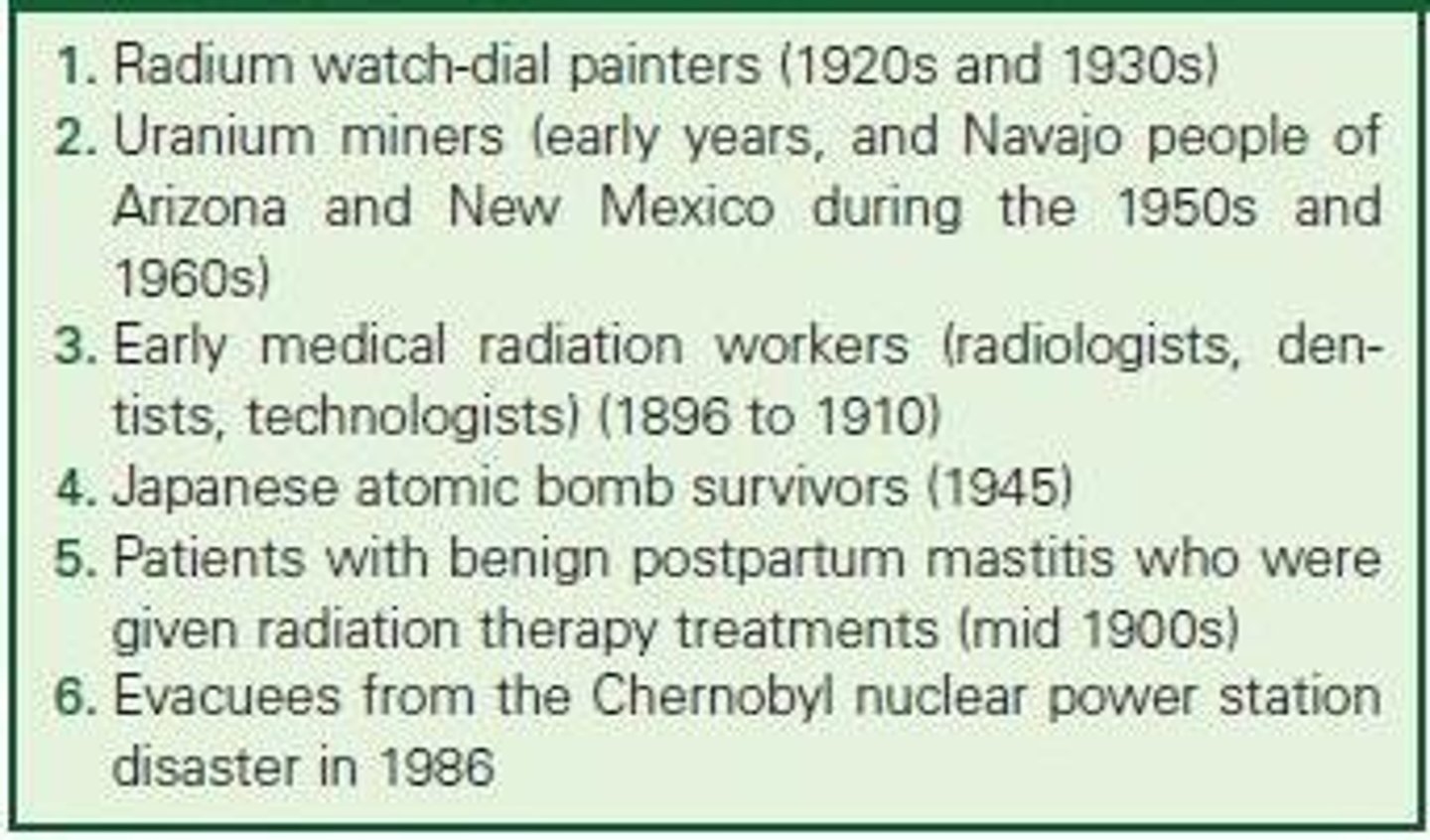
What is the threshold dose for inducing cataracts from radiation?
Approximately 2 Gyt.
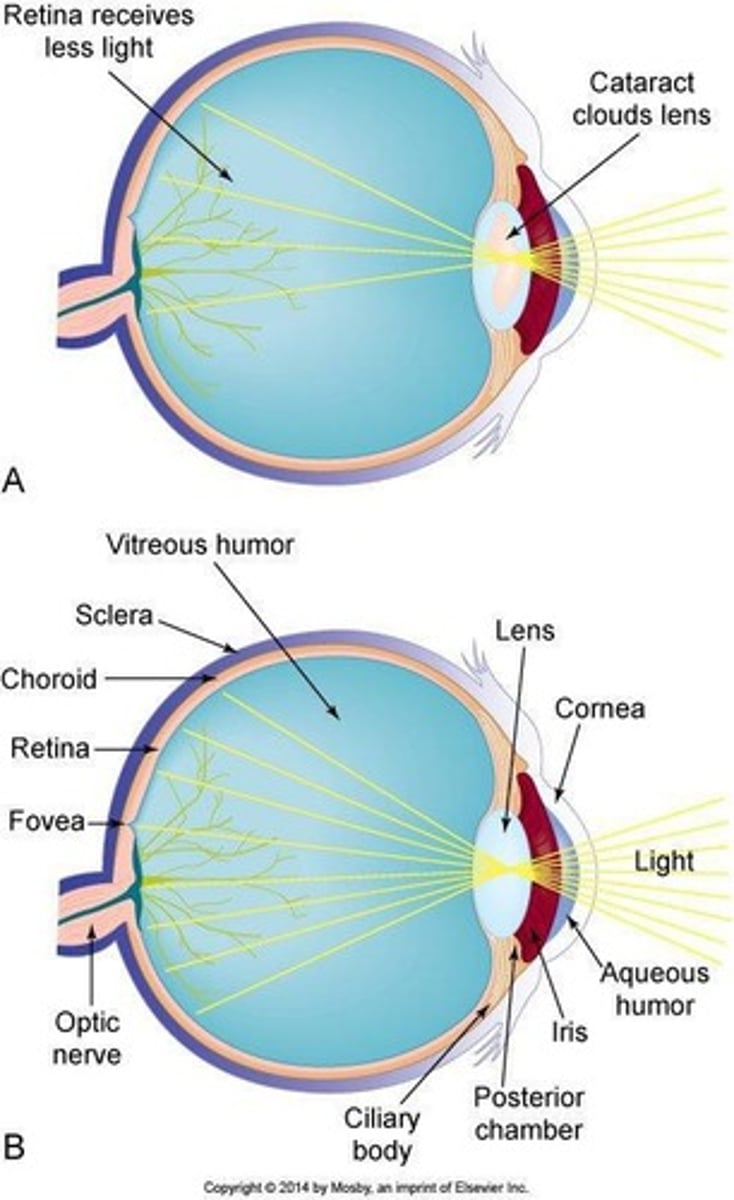
What is the result of radiation-induced cataracts?
Partial or complete loss of vision.
What groups provide evidence for human radiation cataractogenesis?
Japanese atomic bomb survivors, nuclear physicists, and patients undergoing radiation therapy.
What are the stages of gestation in humans?
Preimplantation (0-9 days), Organogenesis (10 days to 12 weeks), Fetal stage (12 weeks to term).
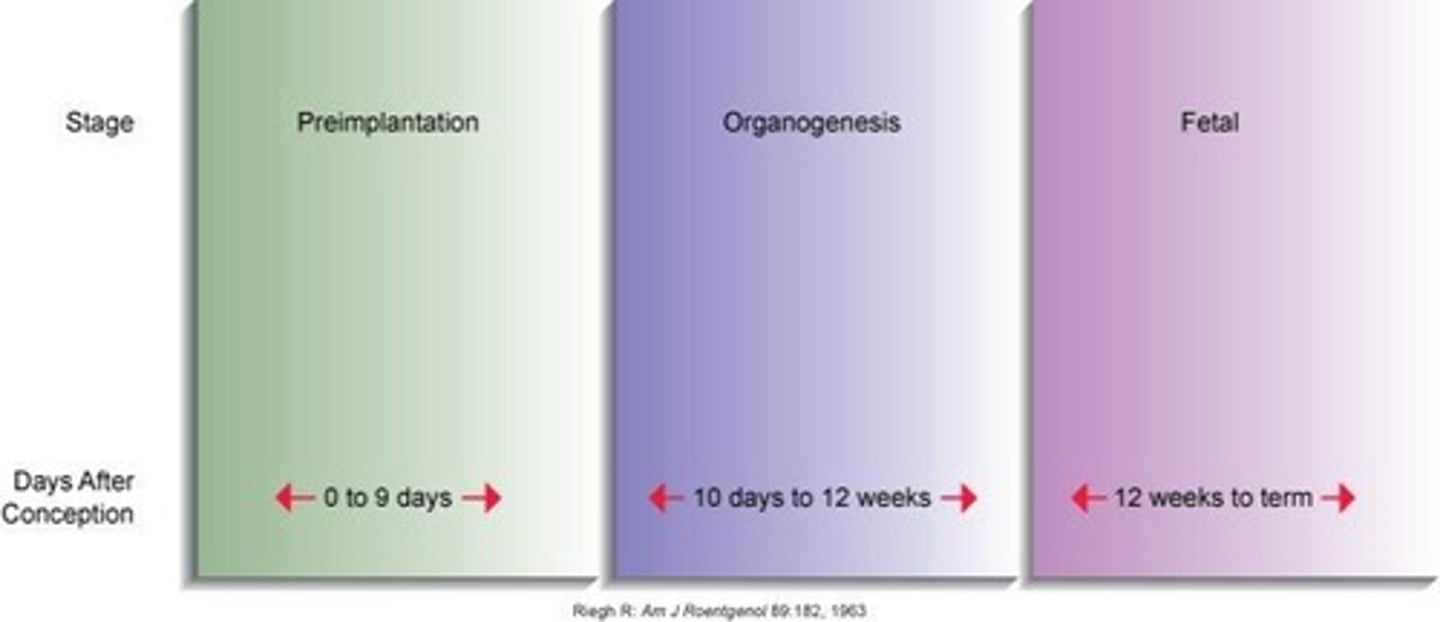
When is the most crucial period for harmful consequences from radiation exposure during pregnancy?
The first trimester.
What are potential consequences of high radiation doses to the embryo within 2 weeks of fertilization?
Fetal death or severe congenital abnormalities.
What types of congenital abnormalities can result from radiation exposure during organogenesis?
Growth inhibition, intellectual disability, microcephaly, genital deformities, sensory organ damage.
What is the impact of radiation exposure during the late stages of organogenesis?
It may cause neonatal death or skeletal damage.
What are genetic (hereditary) effects of ionizing radiation?
Biologic effects on future generations due to mutations in DNA.
What is the result of mutant genes in the context of genetic diseases?
They cannot govern normal chemical reactions or protein synthesis correctly.
What is an example of a genetic disease caused by a mutation?
Sickle cell anemia, caused by a defect in hemoglobin synthesis.
What does the data from fruit fly experiments suggest about genetic effects of radiation?
Genetic effects do not have a threshold dose; even small doses can cause hereditary damage.
What are the two categories of radiation effects?
Deterministic (predictable) and Stochastic (random)
What are somatic effects of radiation?
Effects upon the body that was irradiated.
What are genetic effects of radiation?
Effects upon future generations due to irradiation of germ cells in previous generations.
What distinguishes early somatic effects from late somatic effects?
Early effects occur soon after exposure, while late effects appear later.
What is Acute Radiation Syndrome (ARS)?
A collection of symptoms that occur after the whole body has received large doses of ionizing radiation over a short period.
What is the threshold in relation to early tissue reactions?
The point at which early tissue reactions begin to appear, below which they are absent.
What are some high-dose effects of ionizing radiation?
Fever, dry and moist desquamation, nausea, vomiting, fatigue, erythema, epilation, blood disorders, intestinal disorders.
What whole-body dose can result in acute radiation syndrome manifestations?
A dose of 6 Gyt.
What are the stages of Acute Radiation Syndrome?
Prodromal, Latent, Manifest, Recovery or Death.
What are the symptoms of the prodromal stage of ARS?
Severe nausea, vomiting, and diarrhea.
What is the latent stage of ARS?
A period where symptoms disappear before returning along with additional symptoms.
What historical events provided data on ARS?
Atomic bomb survivors of Hiroshima and Nagasaki, Marshall Islanders during atomic tests, Chernobyl disaster victims.
What is the significance of the dose received in relation to early tissue reactions?
The amount of biologic damage depends on the actual absorbed dose of ionizing radiation.
What is the impact of high-level fluoroscopy on human skin?
It can cause significant damage when utilized for extended periods during procedures.
What is cytogenetics?
The study of chromosomes and how cytogenetic analysis may be accomplished.
What is karyotyping?
The process of evaluating chromosome damage caused by radiation exposure during a specific phase of cell division.
What are two types of chromosomal aberrations caused by ionizing radiation?
Chromosomal breaks and exchanges.
What is the energy range of Grenz rays?
Grenz rays have a low energy range, typically used in treating skin diseases.
What is orthovoltage radiation therapy?
A treatment method that uses intermediate energy X-rays to target tumors, affecting human skin.
What are the three layers of human skin?
Epidermis, dermis, and subcutaneous tissue.
What is the initial manifestation of radiation-induced skin erythema?
It appears within 24 to 48 hours after exposure to a specific absorbed dose.
What is the difference between moderate and large radiation doses regarding epilation?
Moderate doses may cause temporary hair loss, while large doses can lead to permanent hair loss.
What are some consequences of high radiation exposure on local tissues?
Local tissue damage can include burns, necrosis, and impaired healing.
What is the cumulative effect of repeated radiation injuries?
Cells exposed to sublethal doses may recover, but repeated injuries can lead to increased damage over time.

