ankle and foot
 Studied by 0 people
 Call Kai
 Learn
Learn Practice Test
 Spaced Repetition
 Match
Match Flashcards
 Knowt Play
1/33

There's no tags or description
Looks like no tags are added yet.
Name | Mastery | Learn | Test | Matching | Spaced |
|---|
No study sessions yet.
34 Terms
function of ankle and foot
support body weight, control and stabilize lower leg, adjust to irregular surfaces, provide shock absorption
name for ankle joint
talocrural joint
talocrural joint composed of
tibi, fibula, and talus
what kind of joint is talocrural joint
hinge "mortise" with 1 degree of freedom
rearfoot joint
subtalar joint, between calcaneus and talus, very mobile
midfoot joint
formed by talocalcaneonavicular joint, calcaneocuboid joint, and intertarsal joint
forefoot joints
tarsometatarsal, intermetatarsal, metatarsophalangeal, interphalangeal
motions of ankle (talocrural joint)
dorsiflexion and plantarflexion
motions of foot
inversion/eversion abduction/adduction and supination/pronation
supination
Adduction, Plantarflexion, Inversion
ADD Plants IN Soup
prontation
eversion, abduction, and dorsiflexion
(lateral) fibular collateral ligaments
supports lateral aspect of foot:anterior talofibular ligament, posterior talofibular ligament, and calcaneofibular ligament
anterior talofibular ligament
thin and most commonly injured
medial (tibial/deltoid) collateral ligaments
tibionavicular, tibiocalcaneal, anterior tibiotalar, posterior tibiotalar
medial (tibial/deltoid) collateral ligaments function
broader and stronger, covers more, supports medial aspect of foot
plantar calcaneonavicular
"spring ligament"; supports the arch
long plantar ligament
- calcaneus to the cuboid to the bases of the 2nd-4th metatarsals, supports all foot structures
- longest of the ligaments of the tarsus
plantarflexors of foot
Gastrocnemius
soleus
tibialis posterior
Flexor digitorum longus
flexor hallucis longus
fibularis longus
fibularis brevis
plantaris (assists only)
anterior dorsiflexors of foot
tibialis anterior
extensor hallucis longus
extensor digitorum longus
eversion of foot
fibularis longus
fibularis brevis
extensor digitorum longus
inversion of foot
tibialis posterior
flexor digitorum longus
flexor hallucis longus
tibialis anterior
extensor hallucis longus
arches of foot
Medial longitudinal arch
Lateral longitudinal arch
Transverse arch
Medial longitudinal arch
gives the shape of your foots arch
plantar aponeurosis
thick fascia tissue supporting both arches, fans out in 5 bands to each toe
plantar ligament
ligament at bottom of foot to give arch, helps prevent subluxation of foot
pes cavus
high arch, doesn't absorb forces well, congenital or neuromuscular condition
rigid pes planus
Arch dropped in weight bearing and non-weight bearing
flexible/supple pes planus
arch is shown in non-weight bearing and arch goes away in weight bearing
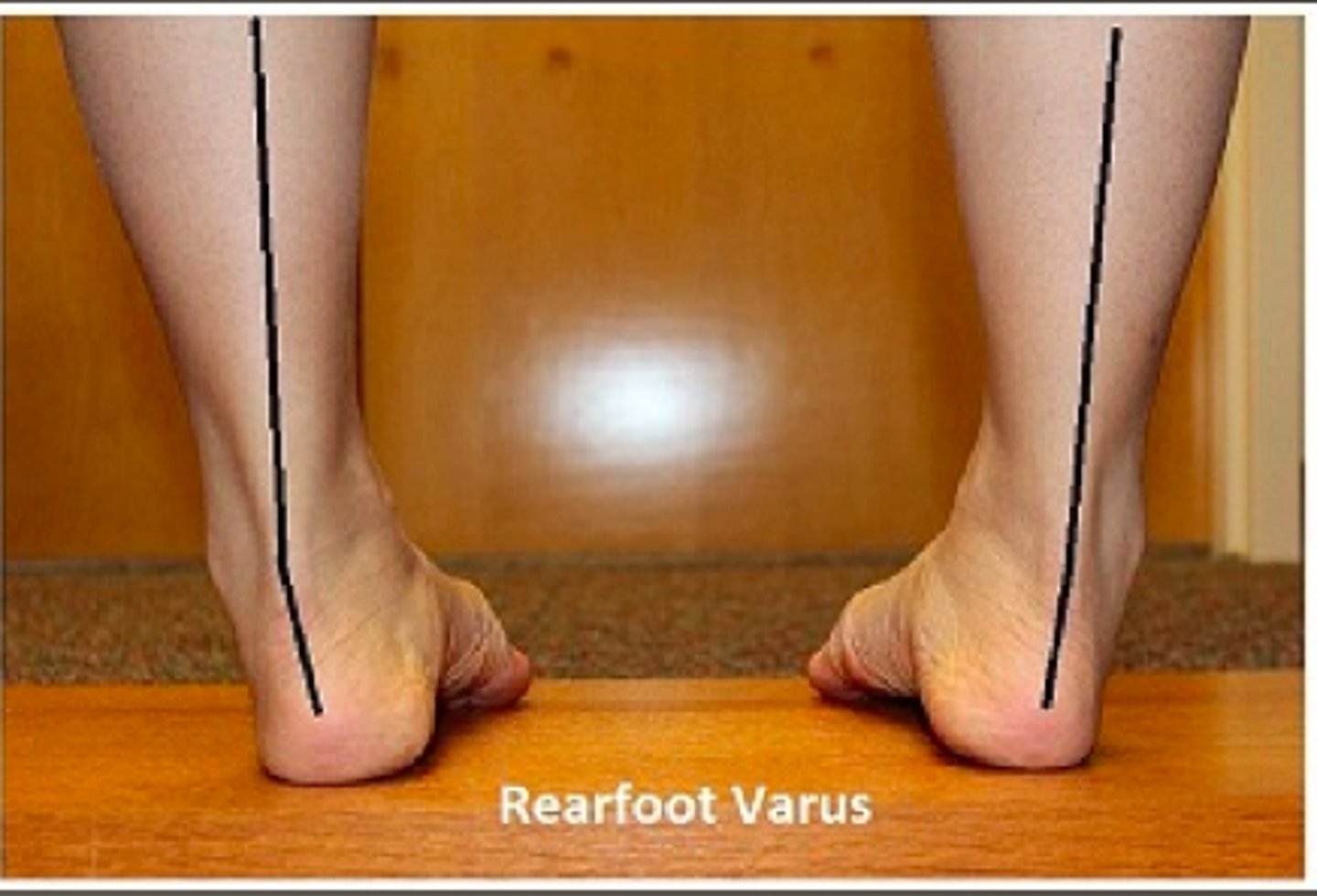
rearfoot varus
LCL at risk of damage, deviates medially
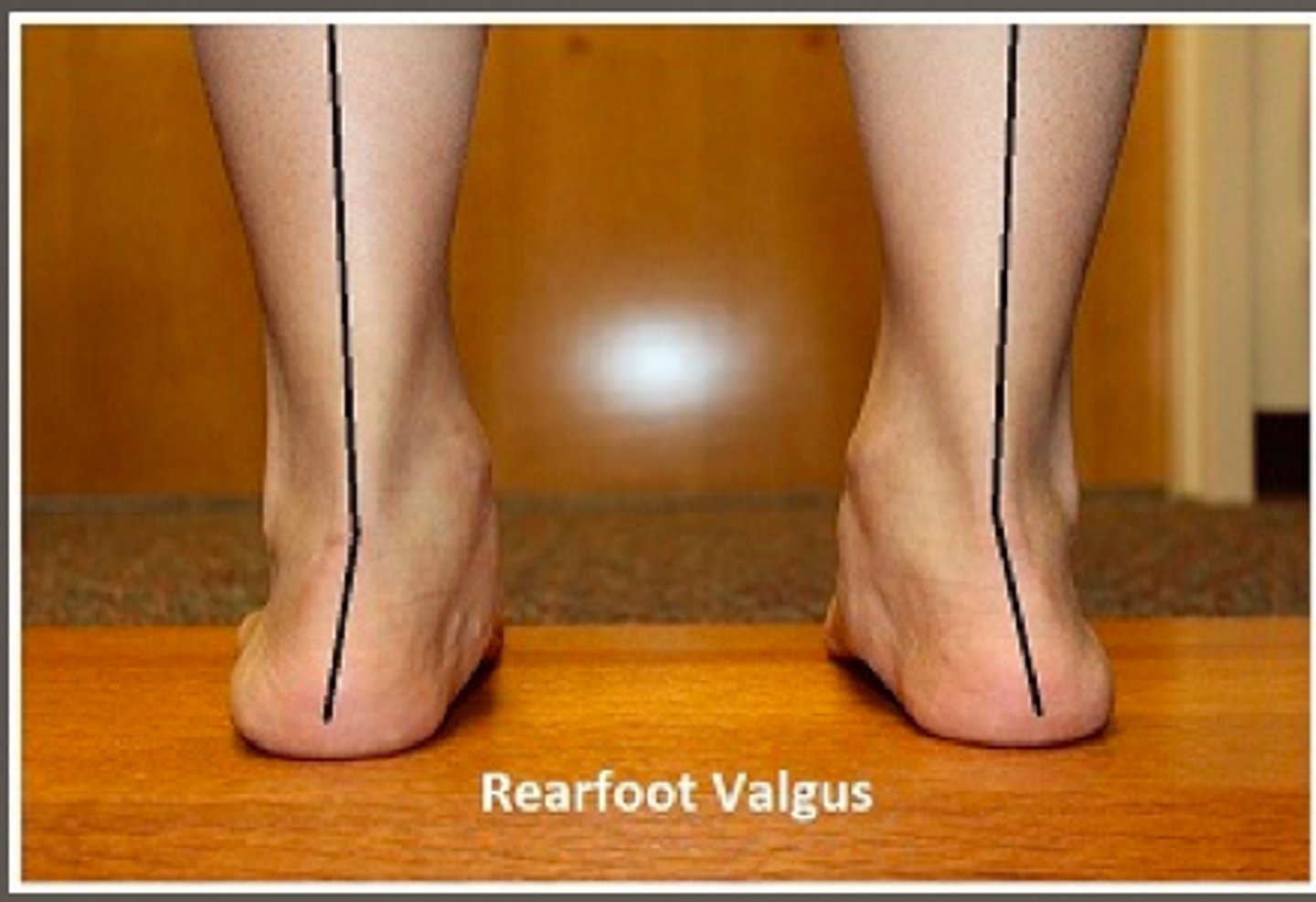
rearfoot valgus
MCL at risk of damage, deviates laterally
talipes equinovarus "clubfoot"
congenital deformity of one or both feet in which the foot is pulled downward and laterally to the side
hallux valgus
lateral deviation of the great toe "bunyon"
claw toes
toes dig down, middle and distal joints are flexed
hammer toes
flexion of middle joint and distal joint is either in extension or normal
 Note
Note  Flashcards (37)