3.1 Plate tectonics
 Call Kai
 Learn
Learn Practice Test
 Spaced Repetition
 Match
Match Flashcards
 Knowt Play
1/18

There's no tags or description
Looks like no tags are added yet.
Name | Mastery | Learn | Test | Matching | Spaced | Call with Kai |
|---|
No analytics yet
Send a link to your students to track their progress
19 Terms
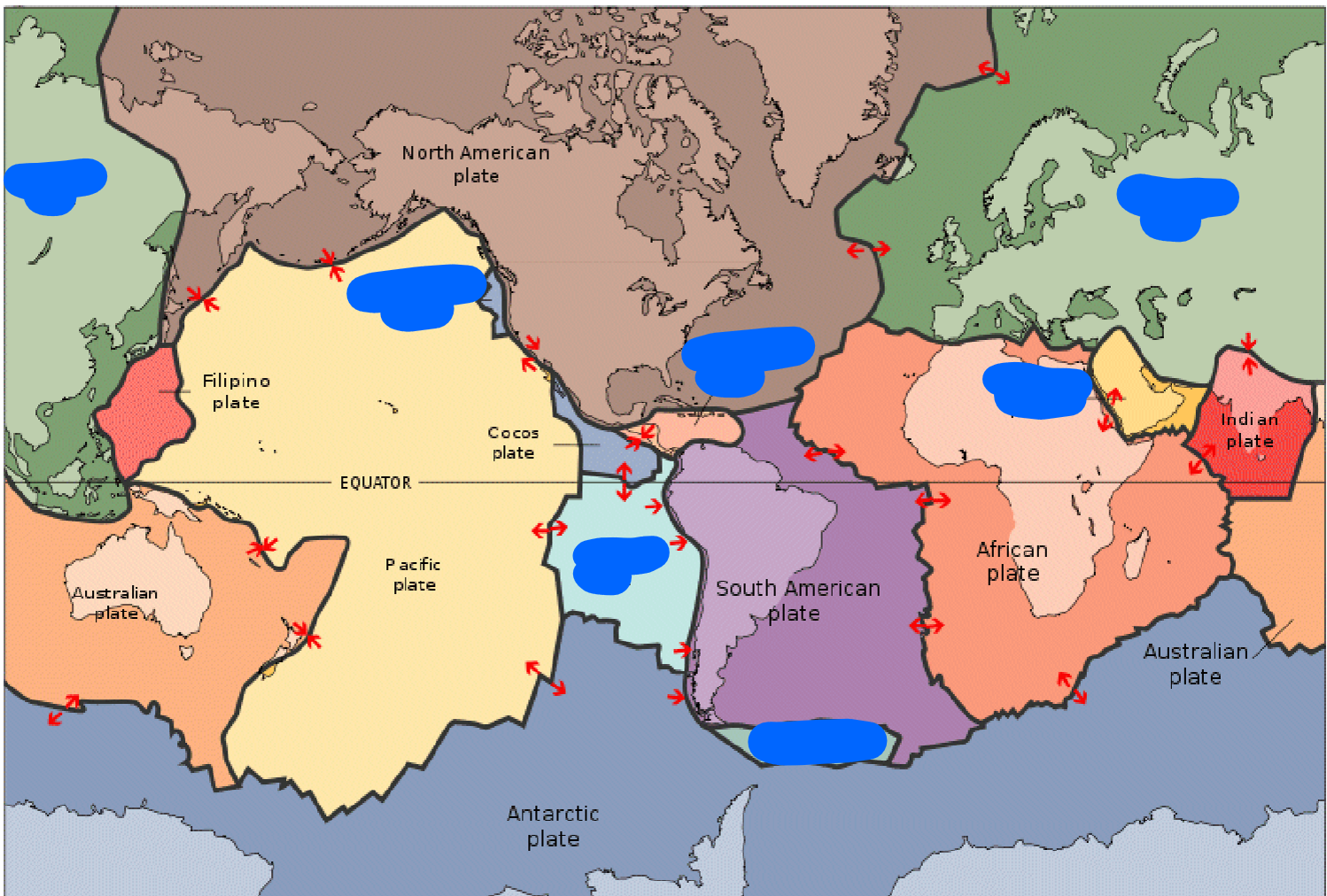
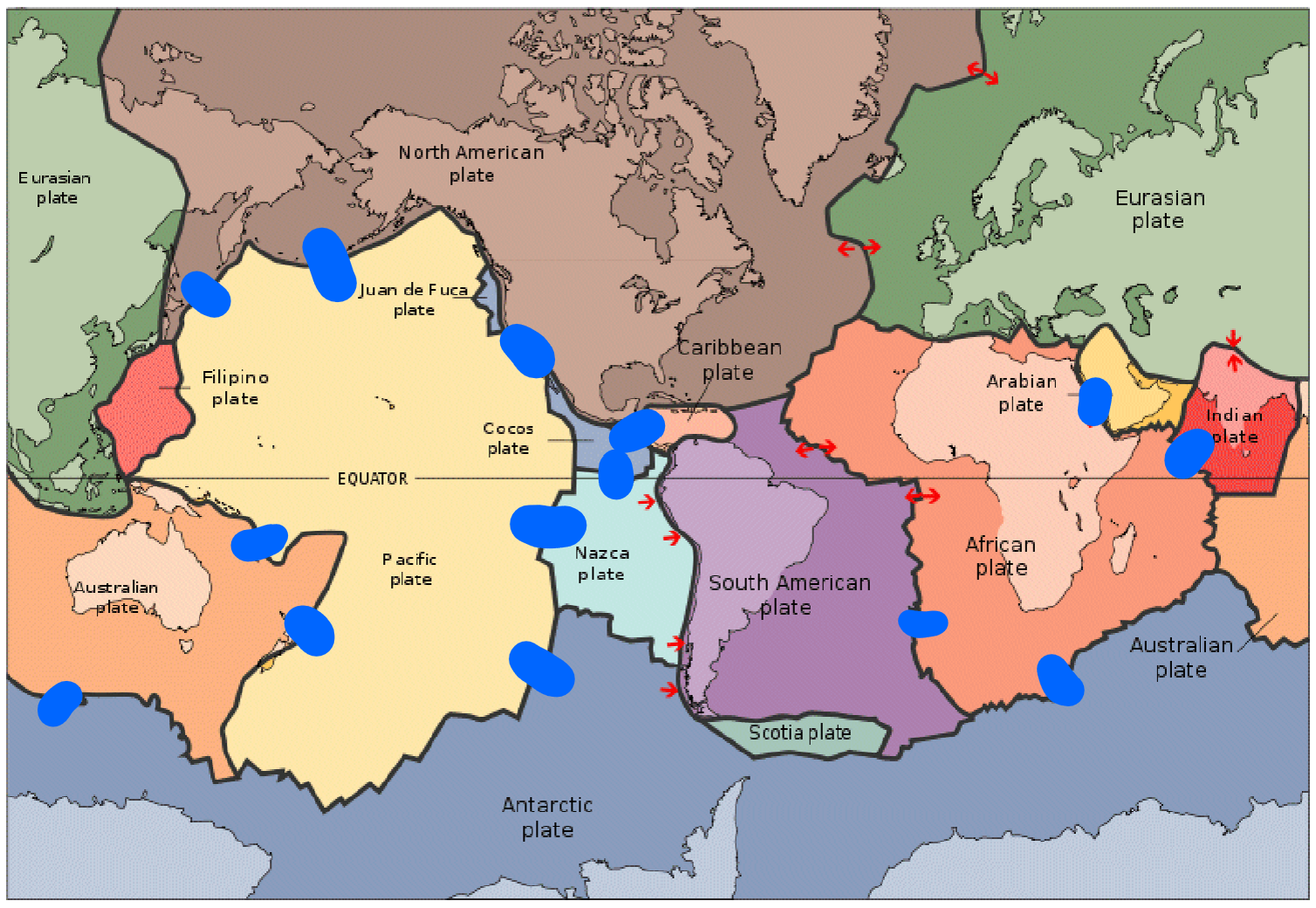
Name the covered plates
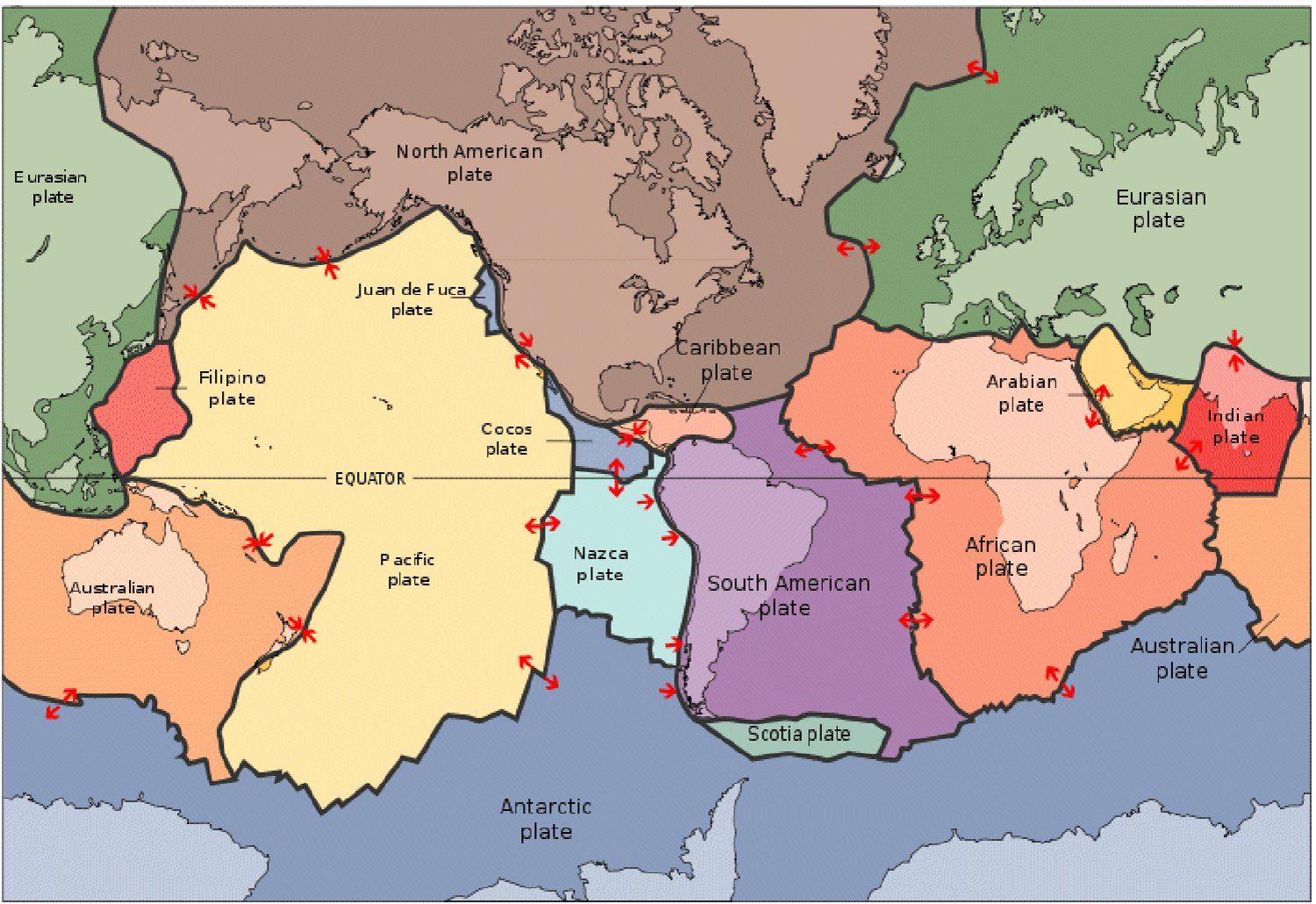
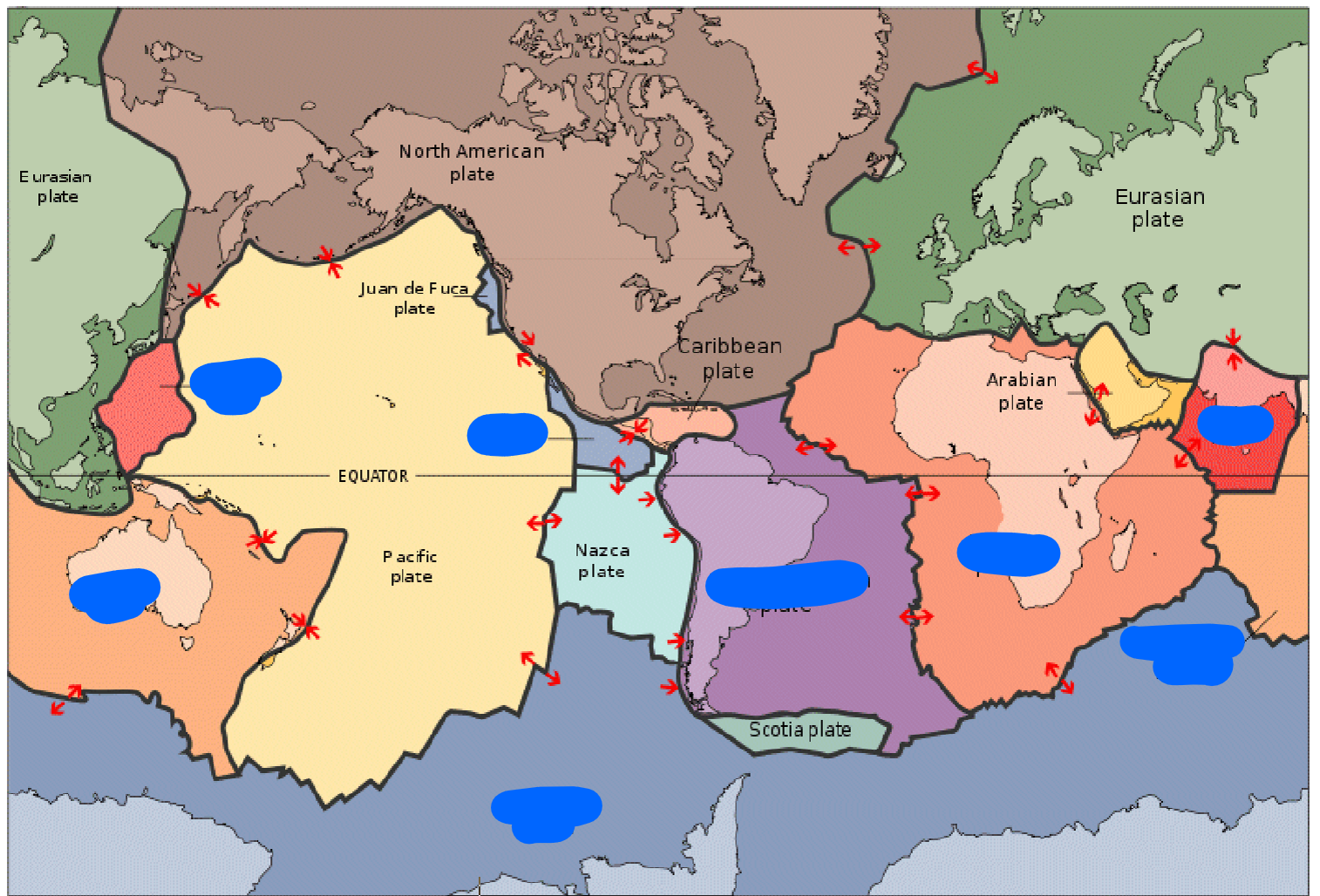
Name the covered plates
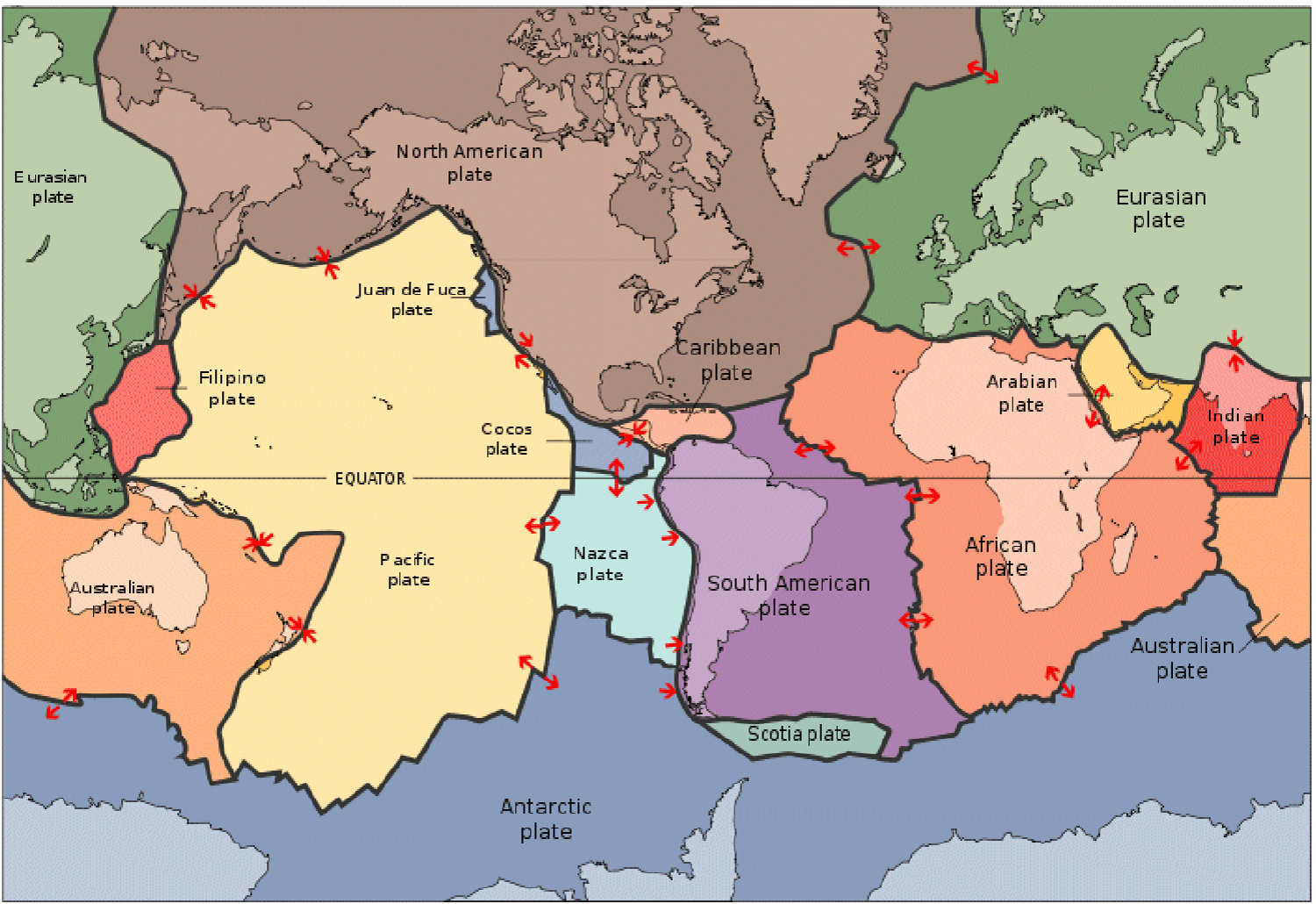
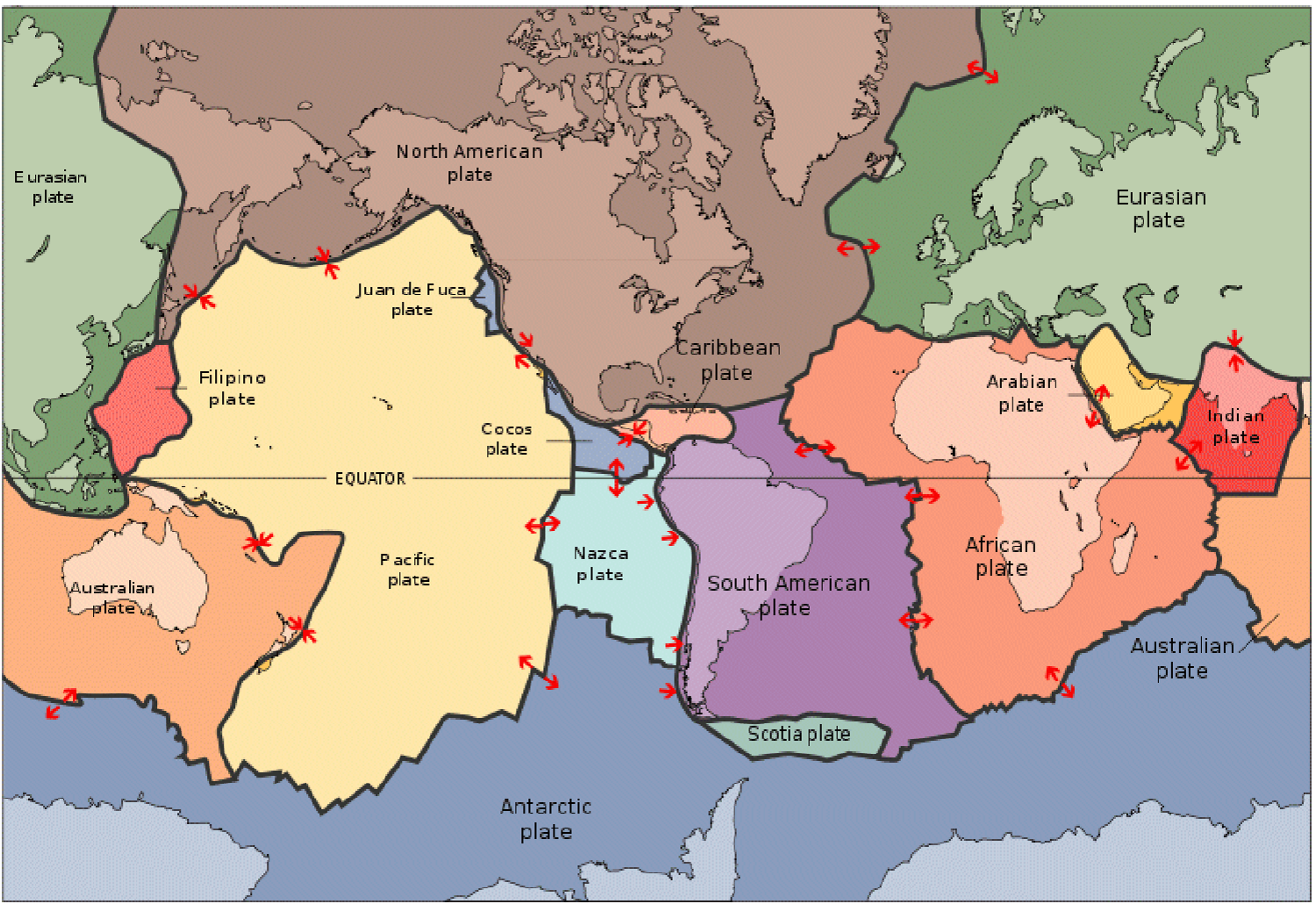
What direction do the covered plates go?
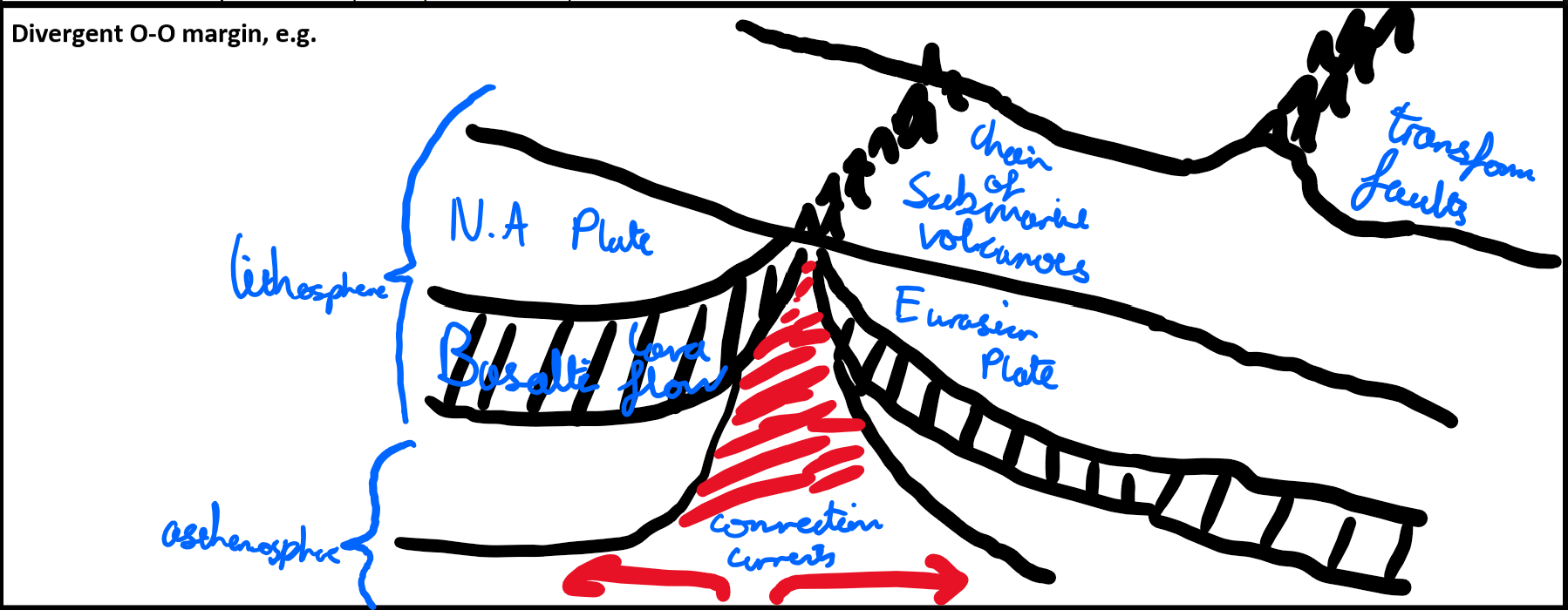
Draw a divergent O-O margin.
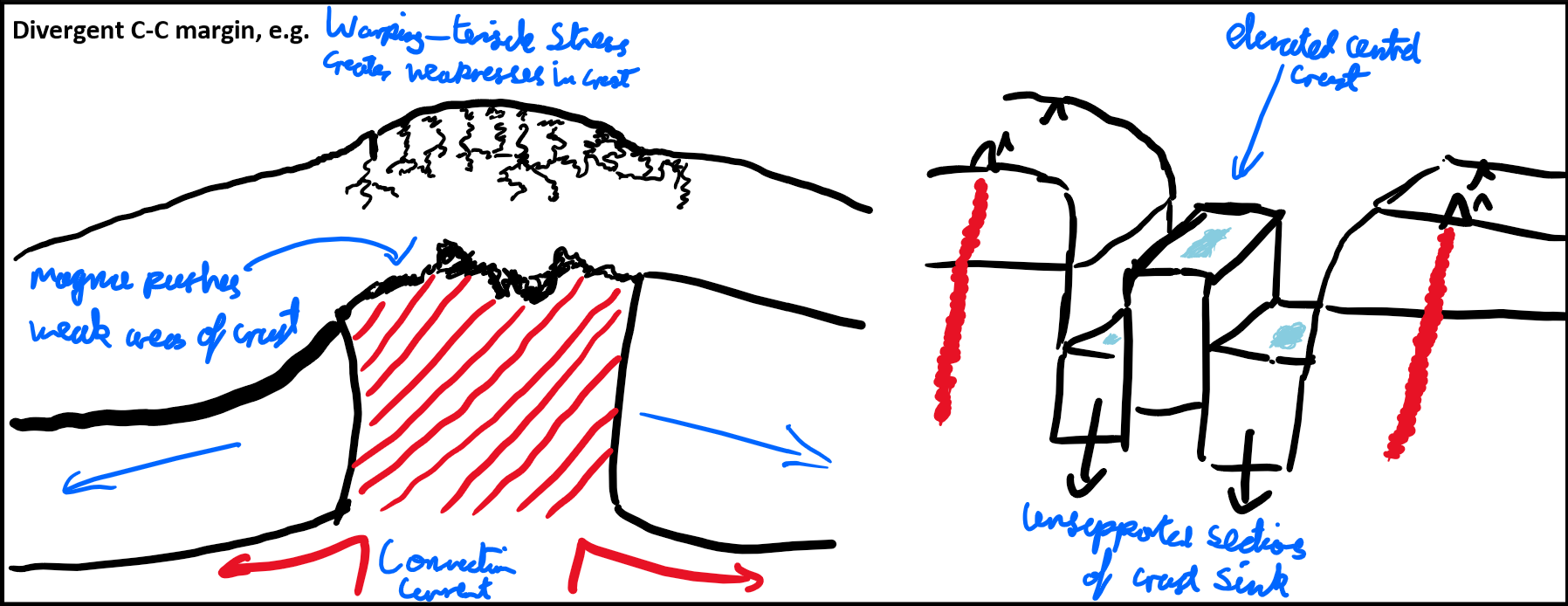
Draw a divergent C-C margin.
Draw a convergent O-O margin.
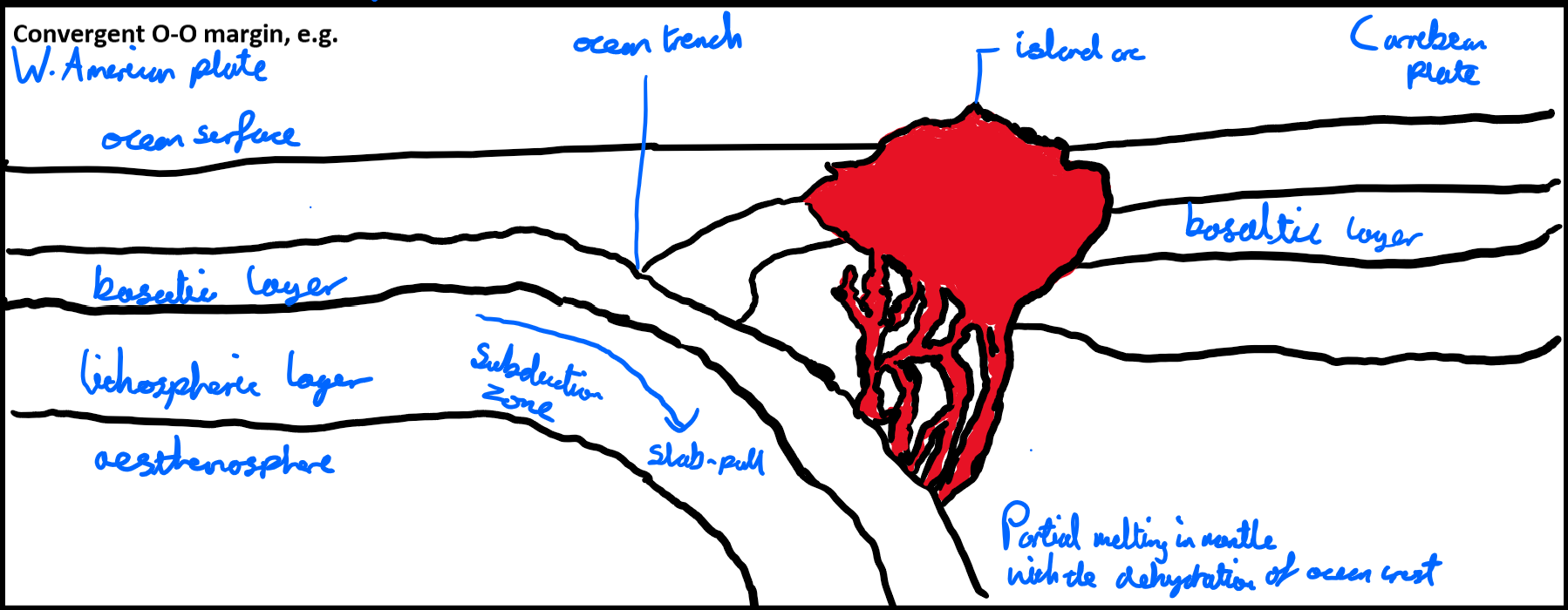
Draw a convergent O-C margin.
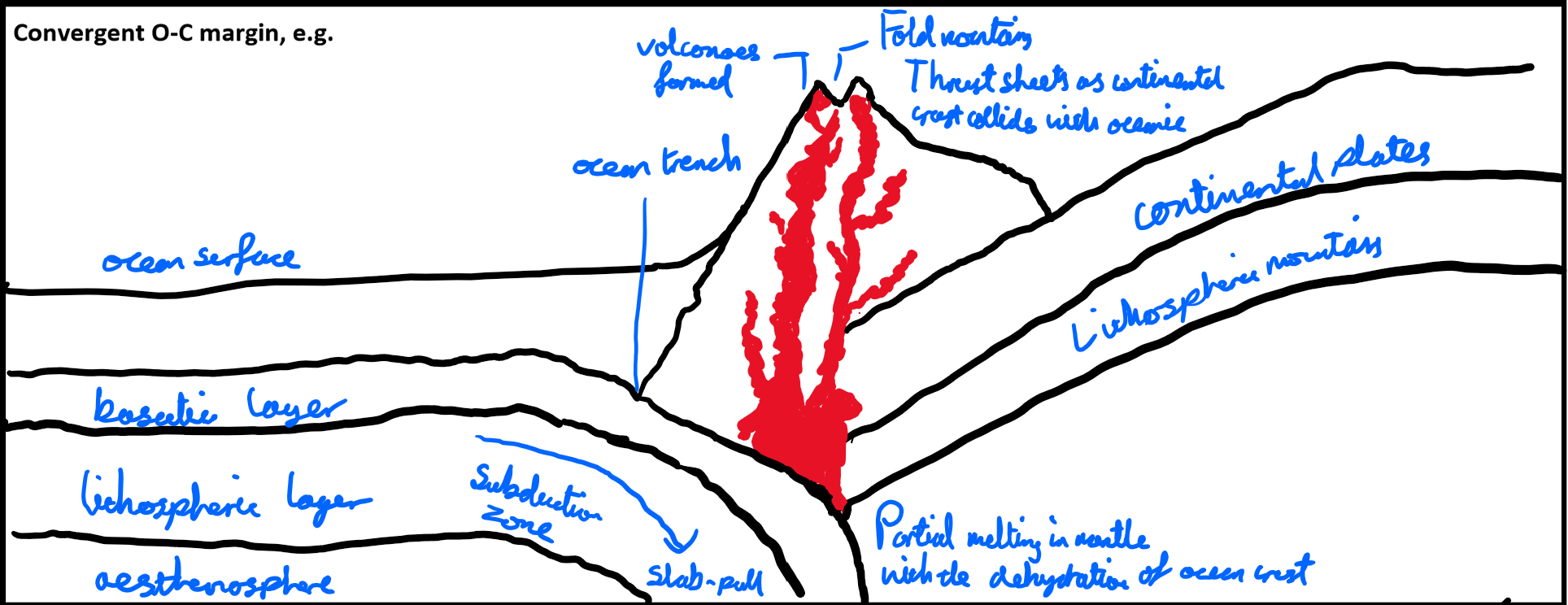
Draw a convergent C-C margin.
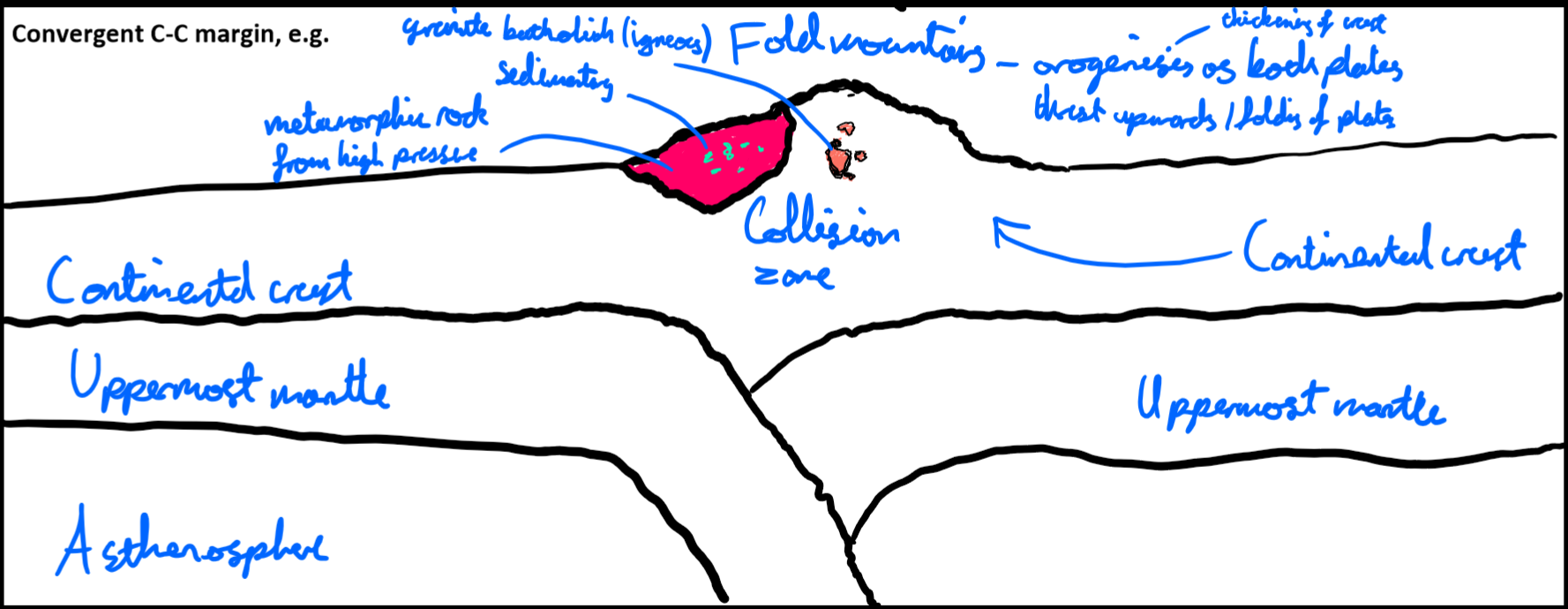
Draw a conservative margin.
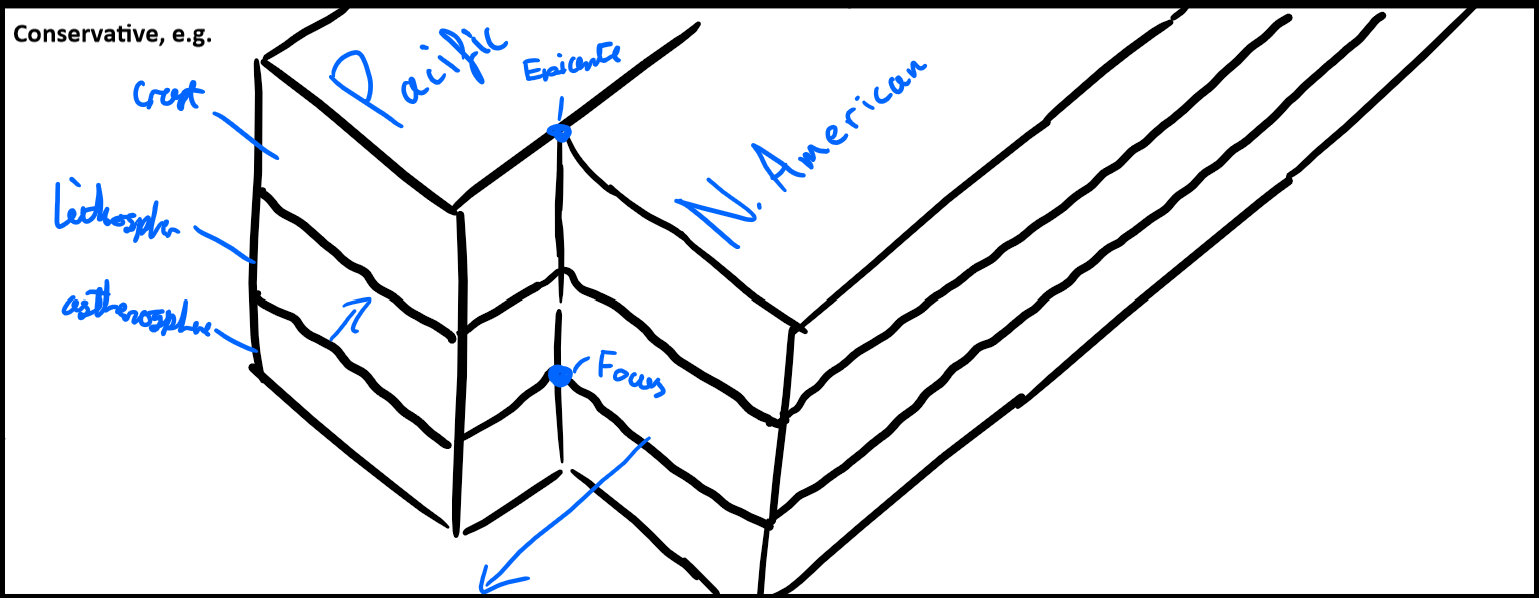
What is oceanic crust’s thickness, density, rock type, and age?
6-10km, 3.0-3.9g/cm3, basaltic, 200 million years old
What is continental crust’s thickness, density, rock type, and age?
30-70km, 2.7g/cm3, granite, mainly above 1.5 billion years old
What are the rates of plate movement?
Plates move slowly, typically between about 1–15 cm per year. Oceanic plates tend to move faster (especially at mid-ocean ridges), while continental plates generally move more slowly.
Why do rates and directions of plate movement vary and why is this important?
Plate movement varies due to differences in mantle convection and plate type. This variation is important because it influences the type and intensity of tectonic activity, such as earthquakes and volcanic activity at different plate boundaries.
What is the Continental Drift Theory?
The theory proposed by Alfred Wegener in 1915 to support the notion that the continents had changed position through geological time.
What is the 'Jigsaw fit' of continents, and how are gaps or overlaps explained?
The similarity in the coastline shapes of certain continents. Gaps or overlaps may be explained by.
Coastal erosion since continental separation
Coastal deposition since continental separation
Rises in sea level (eustatic change) since continental separation
Changes in land level (isostatic change) since continental separation
What are four pieces of evidence for continental drift?
Fossils of the same species are found in areas extremely far apart with varying climate
Fossilised species of plant highly unfit for the climate of the area they were found in (tropical in polar climates)
Different mountain ranges from one continent 'fit together' with other continents
Different mountain ranges that have the same rock types.
Give an example of a fossil which supports continental drift.
For example, remains of Mesosaurus, a freshwater crocodile-like reptile , are found solely in Southern Africa and Eastern South America. It would have been physiologically impossible for Mesosaurus to swim between the continents. This suggests that South America and Africa were joined.
Explain how Palaeomagnetism explains plate tectonics.
New rocks created at divergent plate boundaries. Iron oxides solidify and align to magnetic North. Periods of reverse polarity can be seen in the ocean floor. This shows that new rock must be being created and formed. This supports the idea of plate movement and rising magma.
What is the evidence for sea floor spreading from the age of oceanic rocks?
Ocean floor rocks are youngest at mid-ocean ridges and become progressively older with distance from the ridge. This pattern shows that new crust is created at the ridge and spreads outward over time.

