Exam 2 SLHS
 Call Kai
 Learn
Learn Practice Test
 Spaced Repetition
 Match
Match Flashcards
 Knowt Play
1/87

There's no tags or description
Looks like no tags are added yet.
Name | Mastery | Learn | Test | Matching | Spaced | Call with Kai |
|---|
No analytics yet
Send a link to your students to track their progress
88 Terms
Describe the role of articulation system for speech production
has lots of anatomical and physiological systems
gives us sound contrasts
gives sound quality
many different systems
all supraglottal (area above vocal cords)
helps create variety of sounds
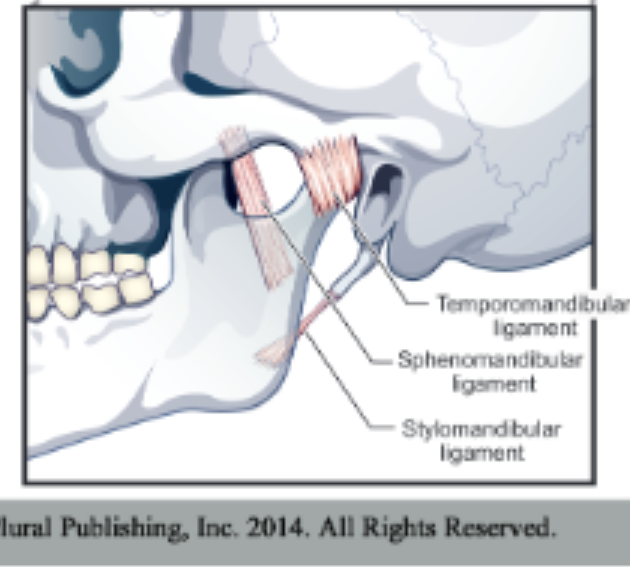
Describe the types of movements that the temporomandibular joints are responsible for
connects temporal bone to mandible
3 ligaments form the joint (temp, styro, spheno)
mvmt w occlusion, lowering, moving forward, and lateral movement
What is the oral cavity?
anterior to the pharyngeal cavity
superior to the tongue
posterior to the lips
primary resonant space for speech production
What is the tongue?
bundles of muscles and tissue
contains intrinsic and extrinsic muscles
muscular activity allows for wide range of movements
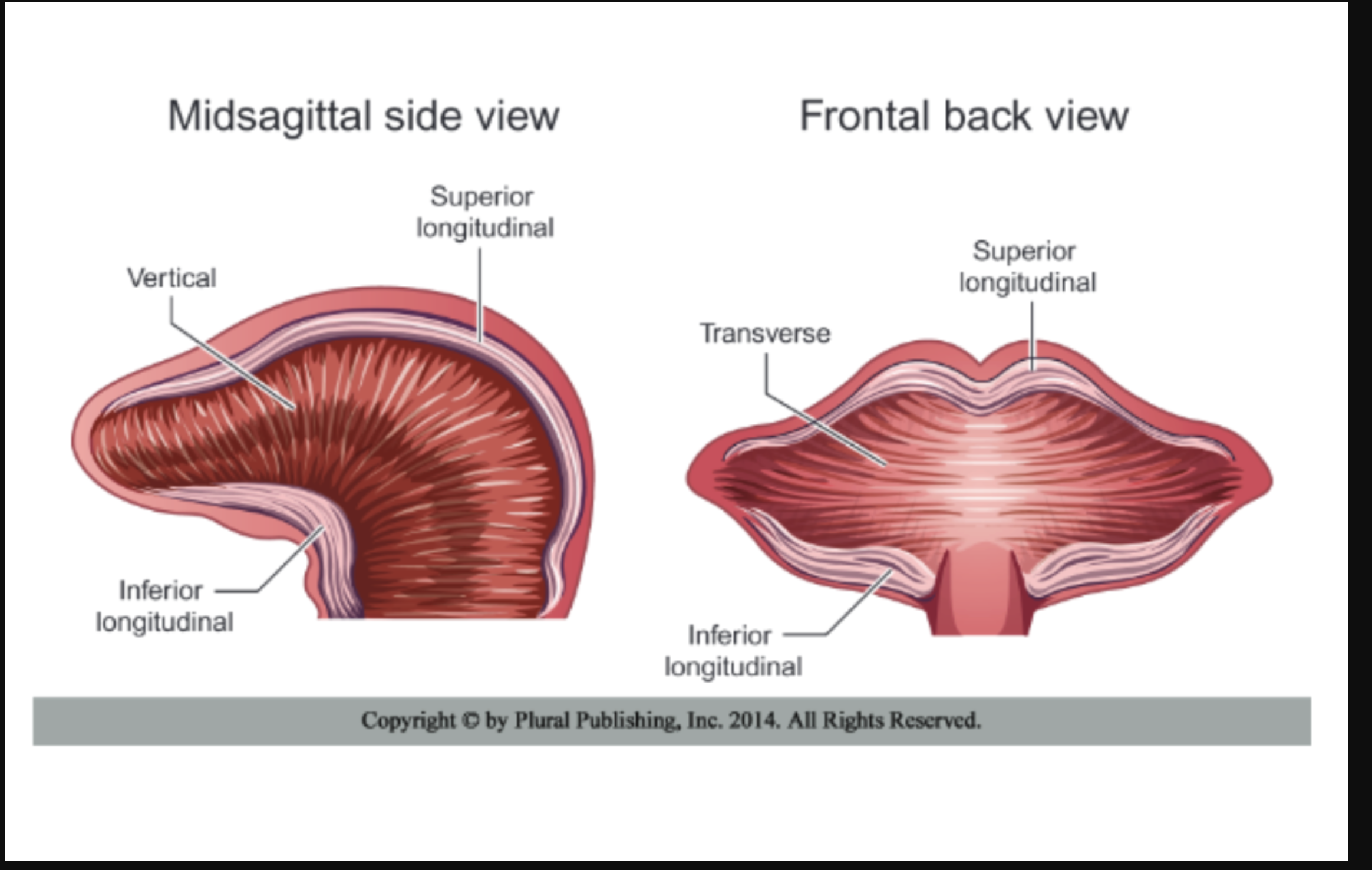
What are instrinsic muscles?
vertical muscle, flattens the tongue
inferior longitudinal pulls the tongue tip downward
transverse (narrows and elongates the tongue)
superior longitudinal (shortens the tongue and makes it bunch in the back)
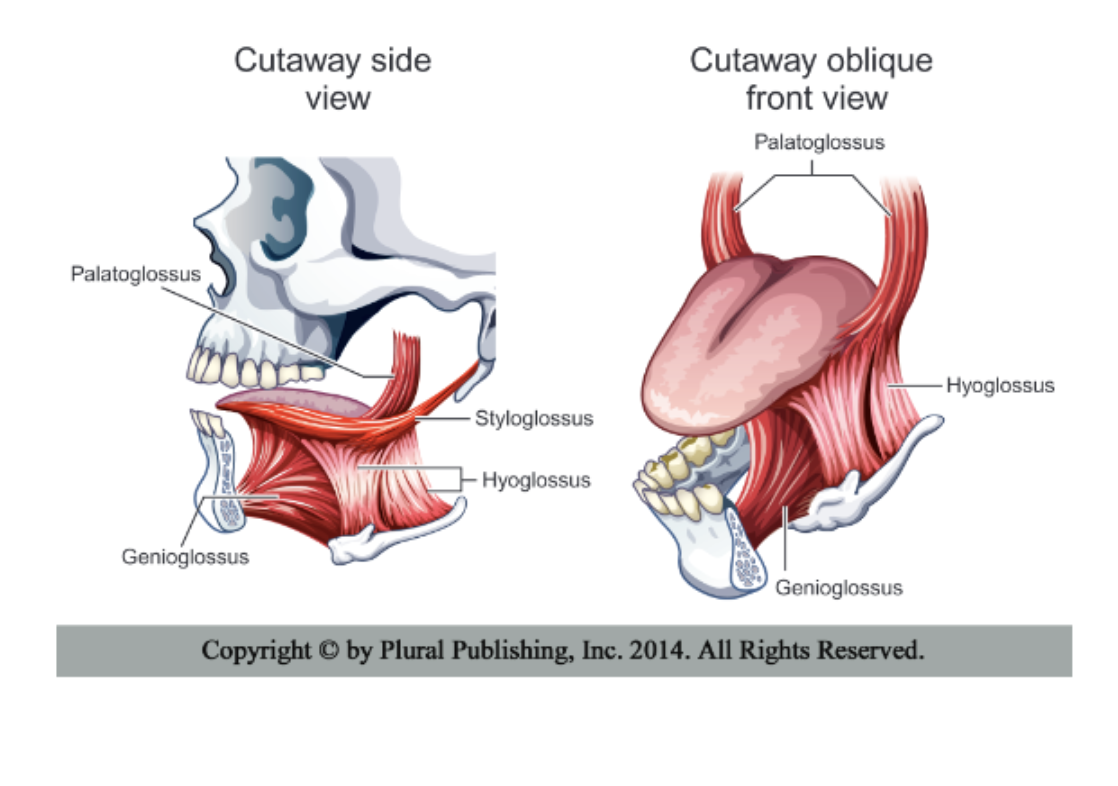
What are extrinsic muscles?
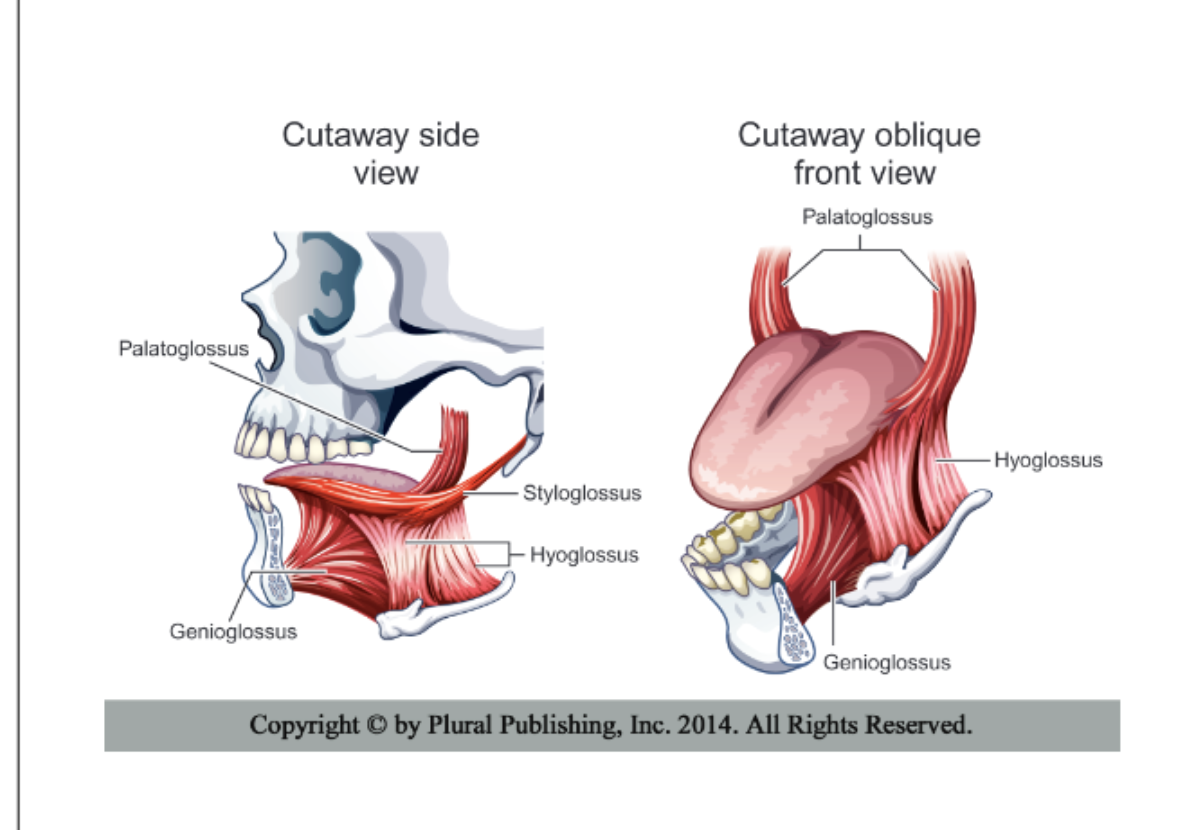
palatoglossus (draws tongue up and back)
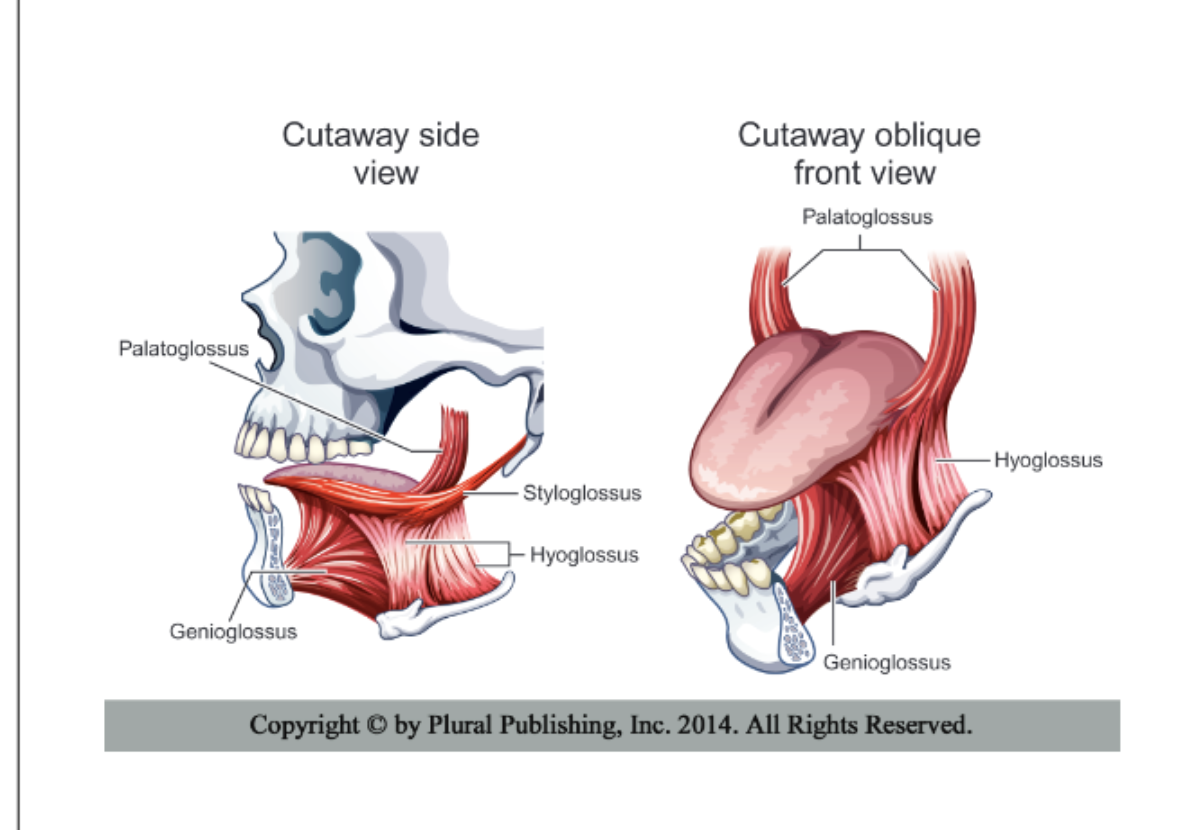
styloglossus (draws tongue up and back)
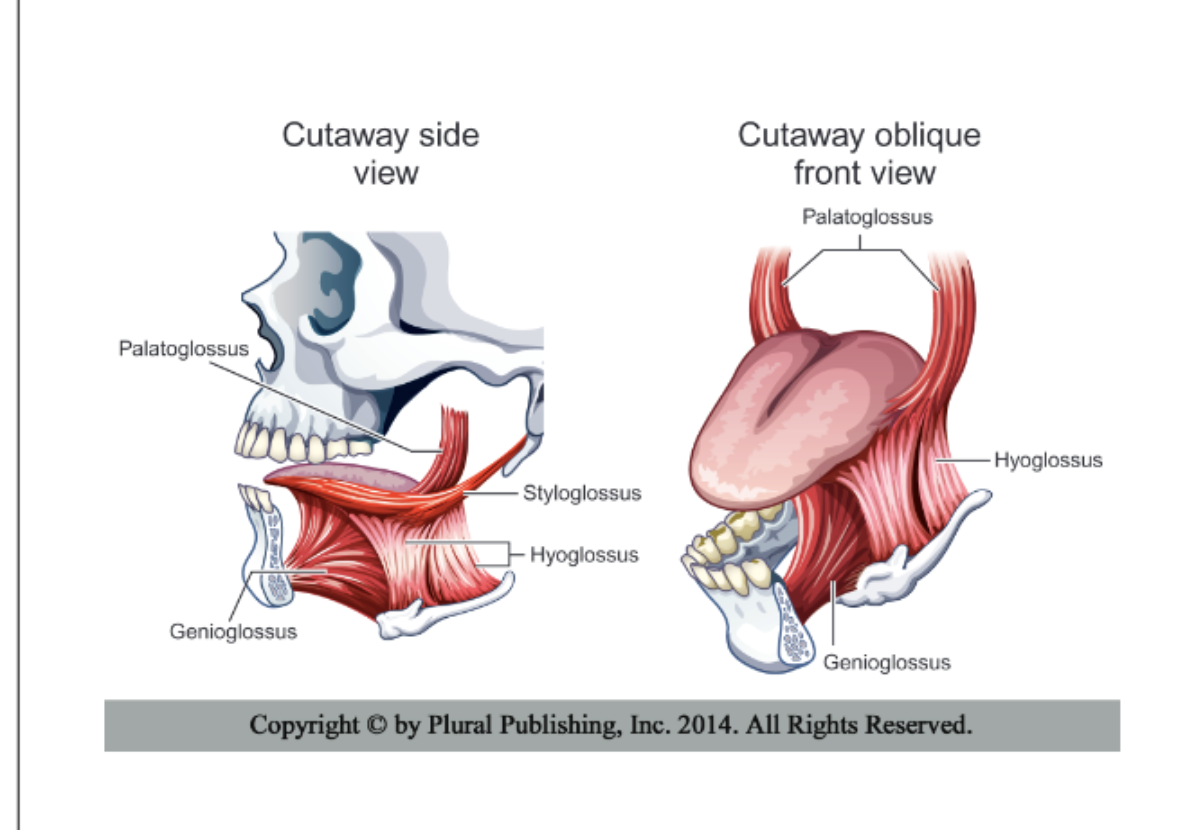
hyoglossus (draws tongue down and back)
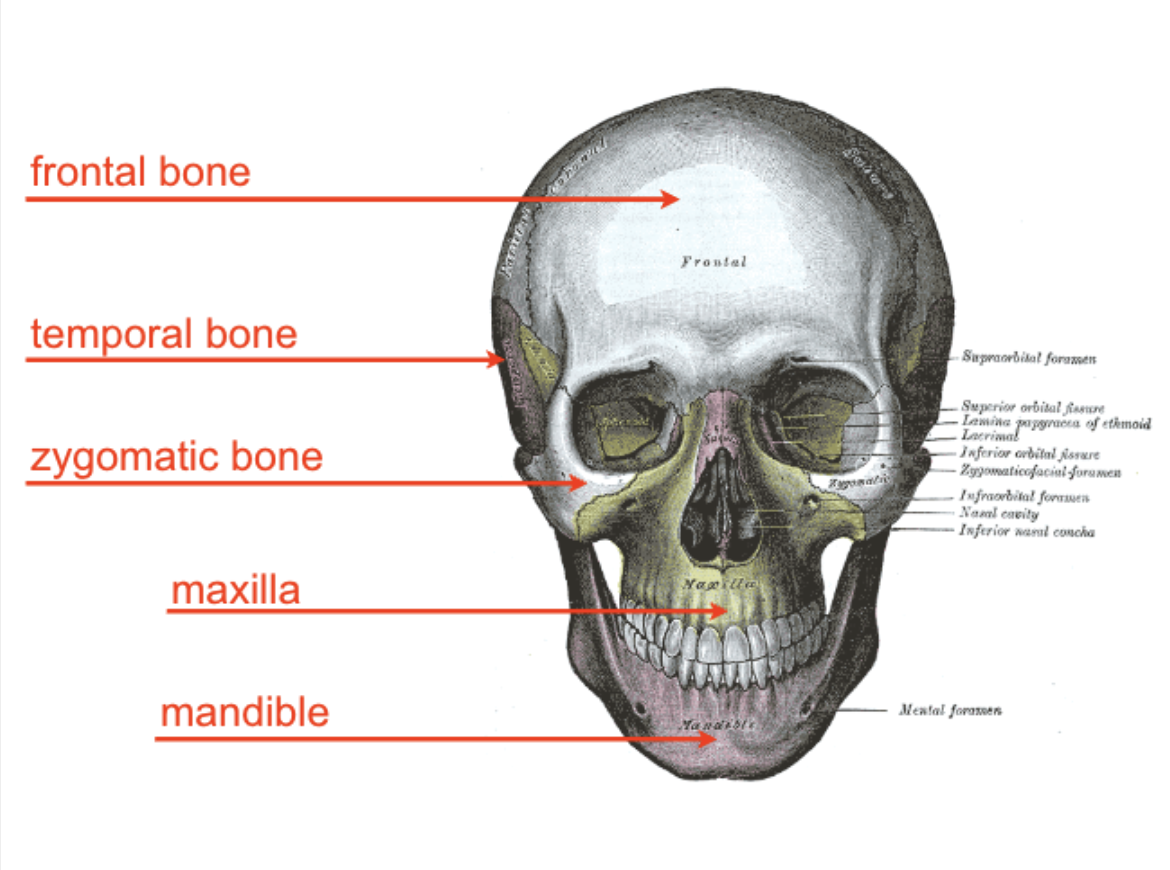
genioglossus ( can move tongue forward, backward, and downward)
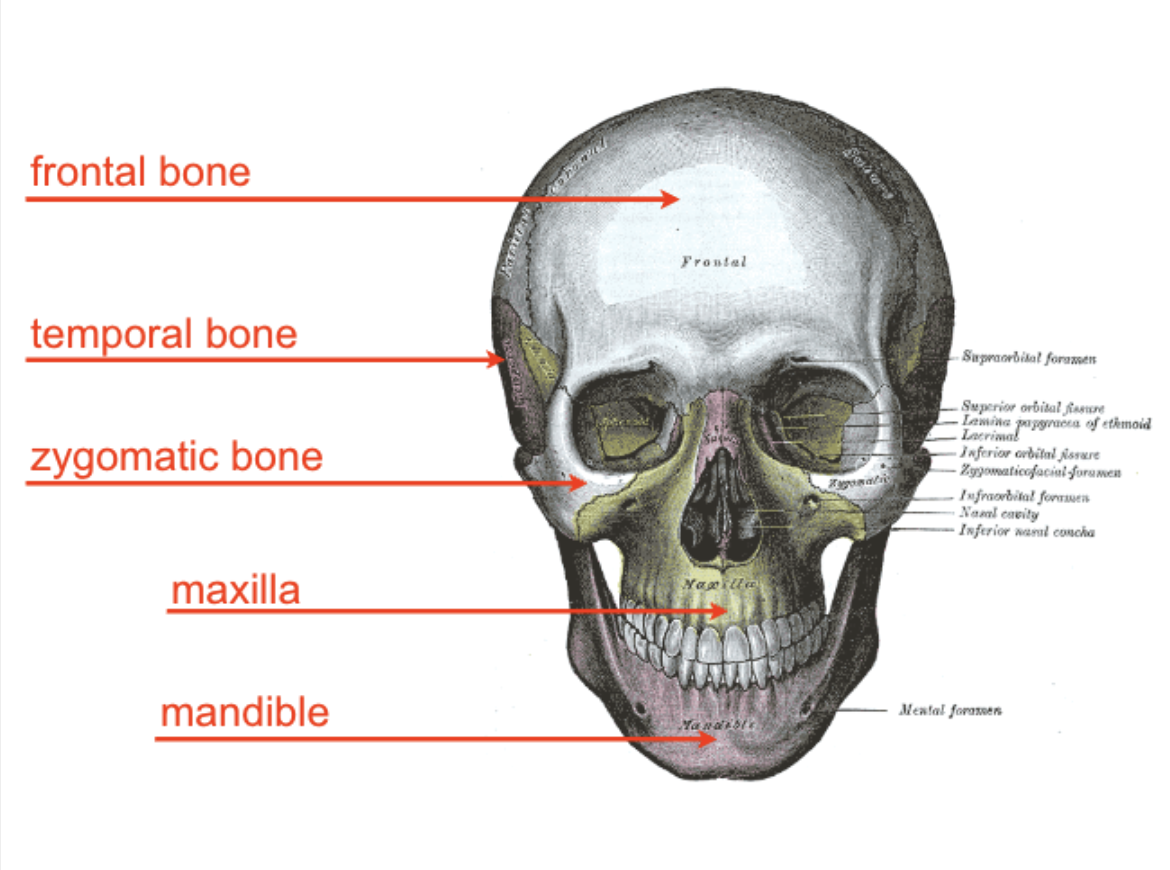
Name identify and describe the maxilla
a paired, pyramidal-shaped bone forming the center of the face, the roof of the mouth (hard palate), the floor of the eye socket (orbit), and the sides of the nose.
its also a part of ur skull
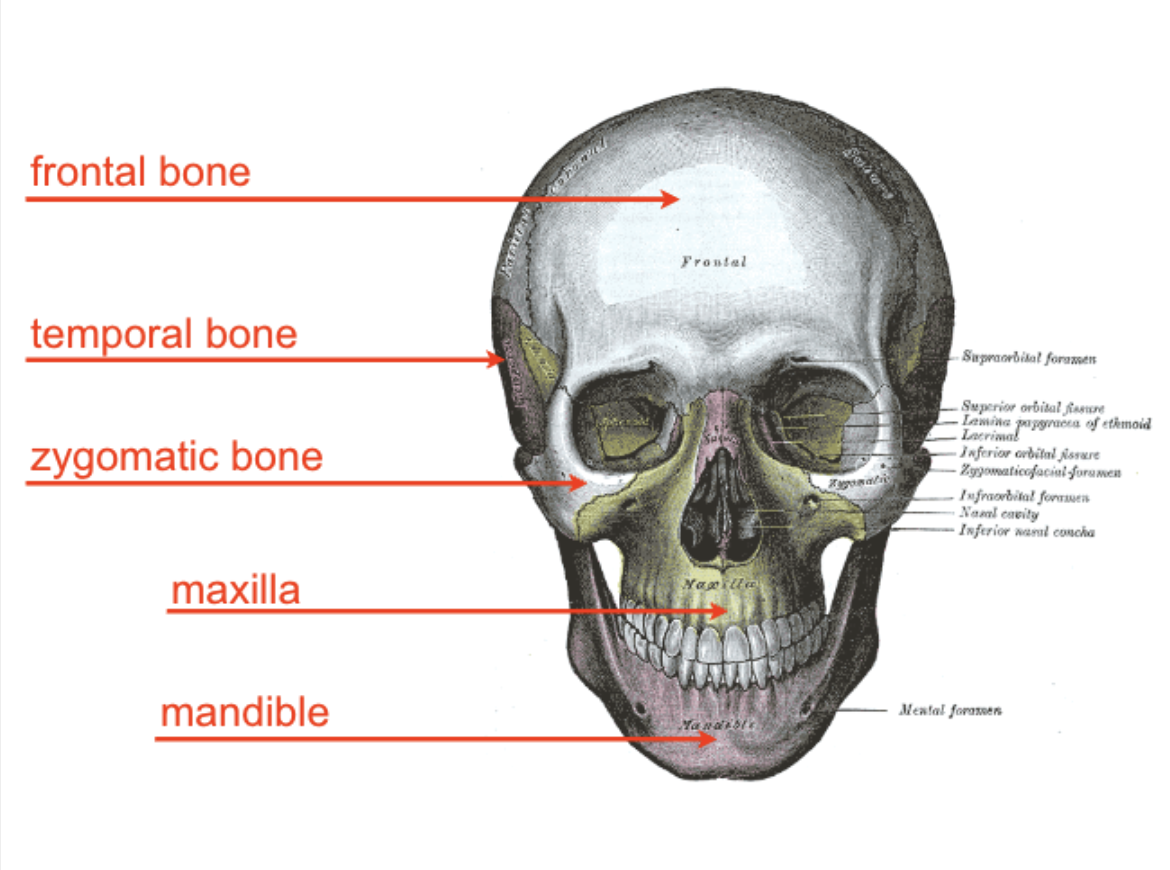
teeth
Vital part of the speech and mastication mechanism
– Located within the alveoli of the maxillae and mandible
– Have roots and crowns
– Exposed tooth surface covered with enamel that overlies
ivory of the tooth
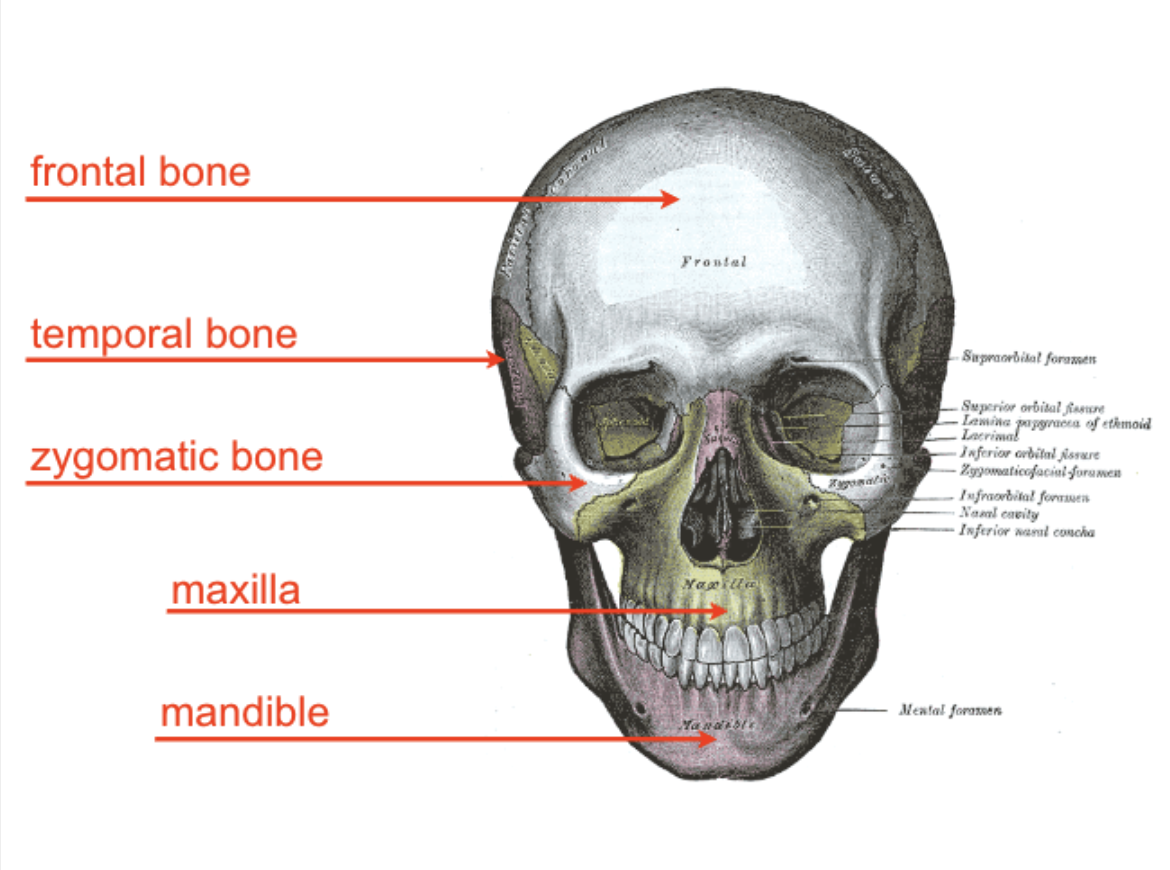
mandible
The largest, strongest, and only movable bone in the human skull, forming the lower jaw and housing the lower teeth. Shaped like a U or horseshoe, it connects to the skull at the bilateral temporomandibular joints (TMJ), enabling essential functions like chewing, speaking, and breathing.
Risorius muscle
responsible for spreading the lips
orbicularis oris muscle
responsible for rounding the lips
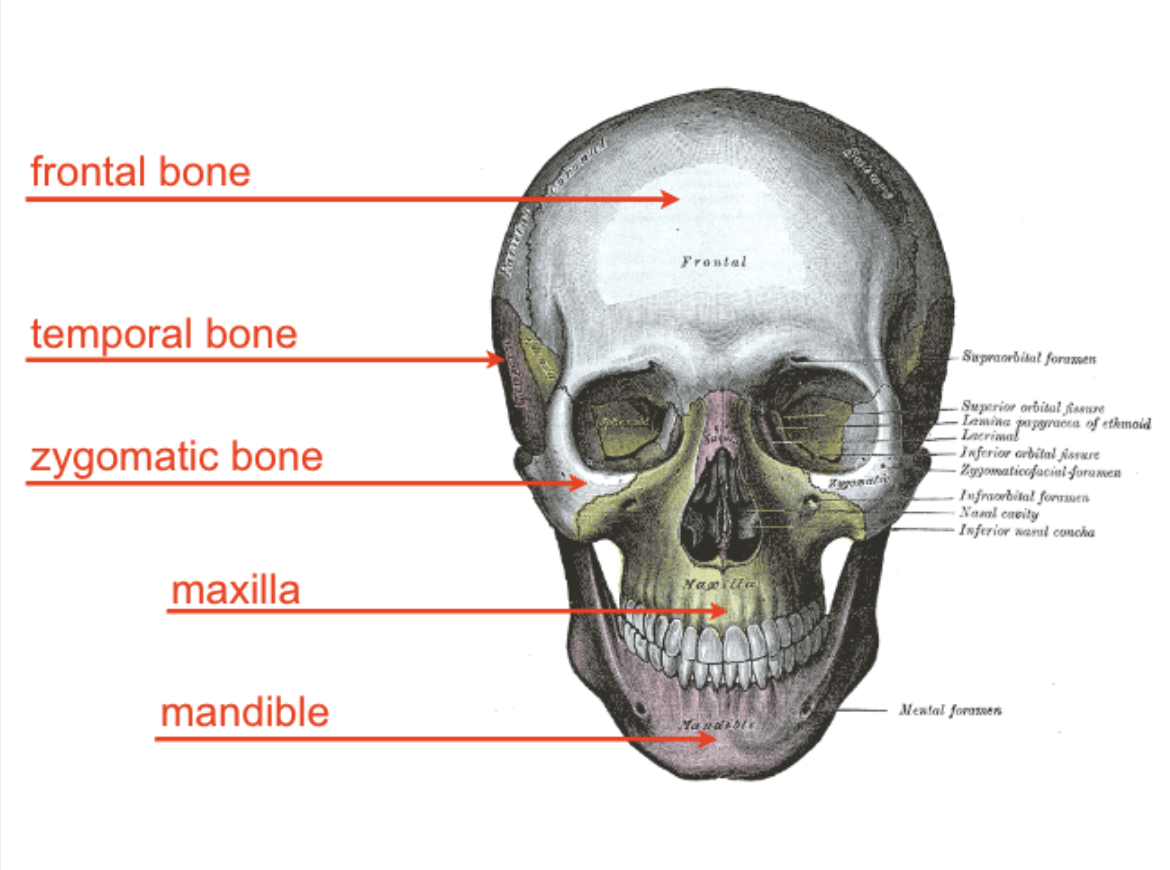
frontal bone
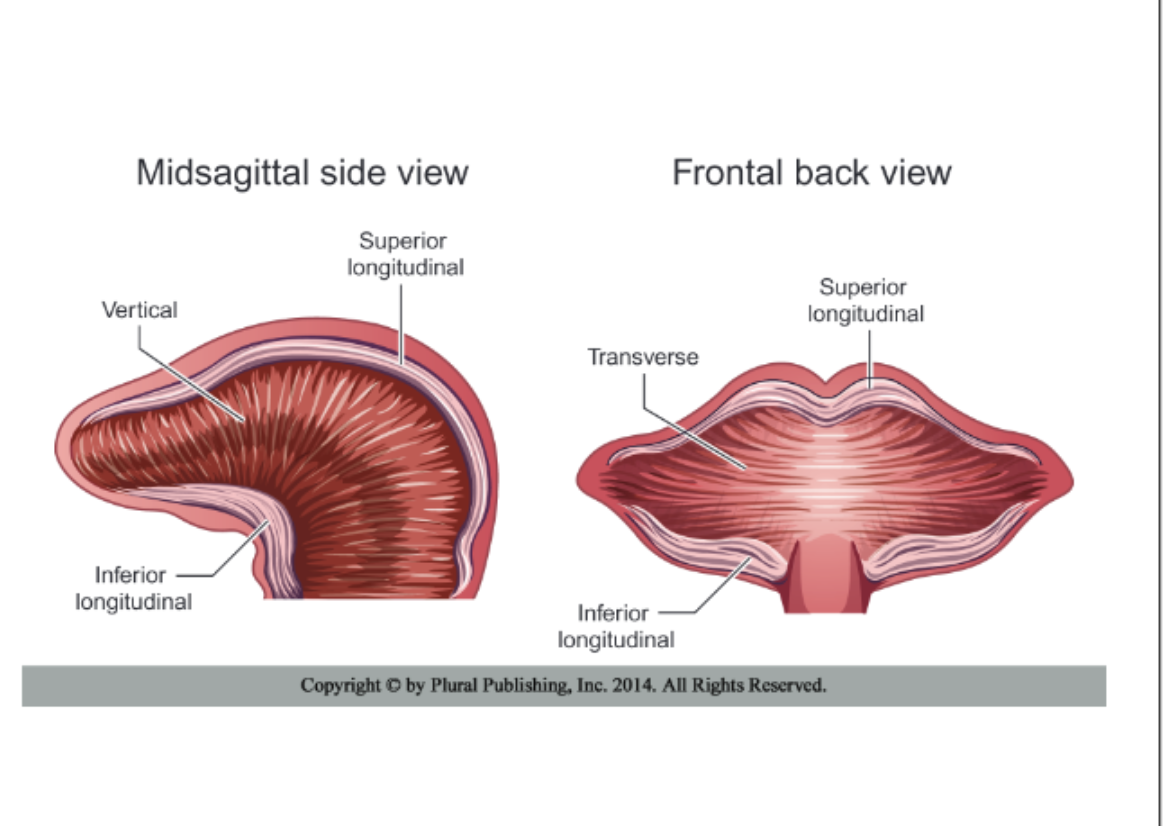
Vertical muscle
flattens the tongue
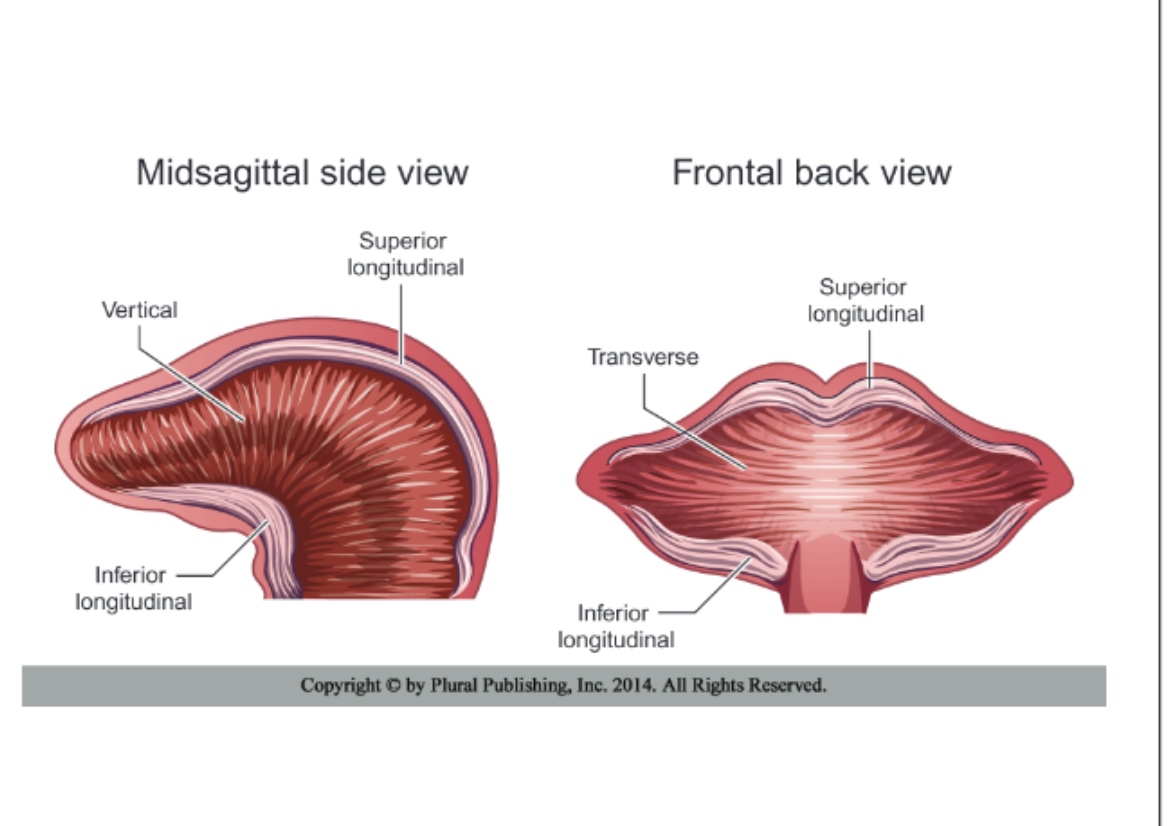
Inferior longitudinal
pulls the tongue tip downward
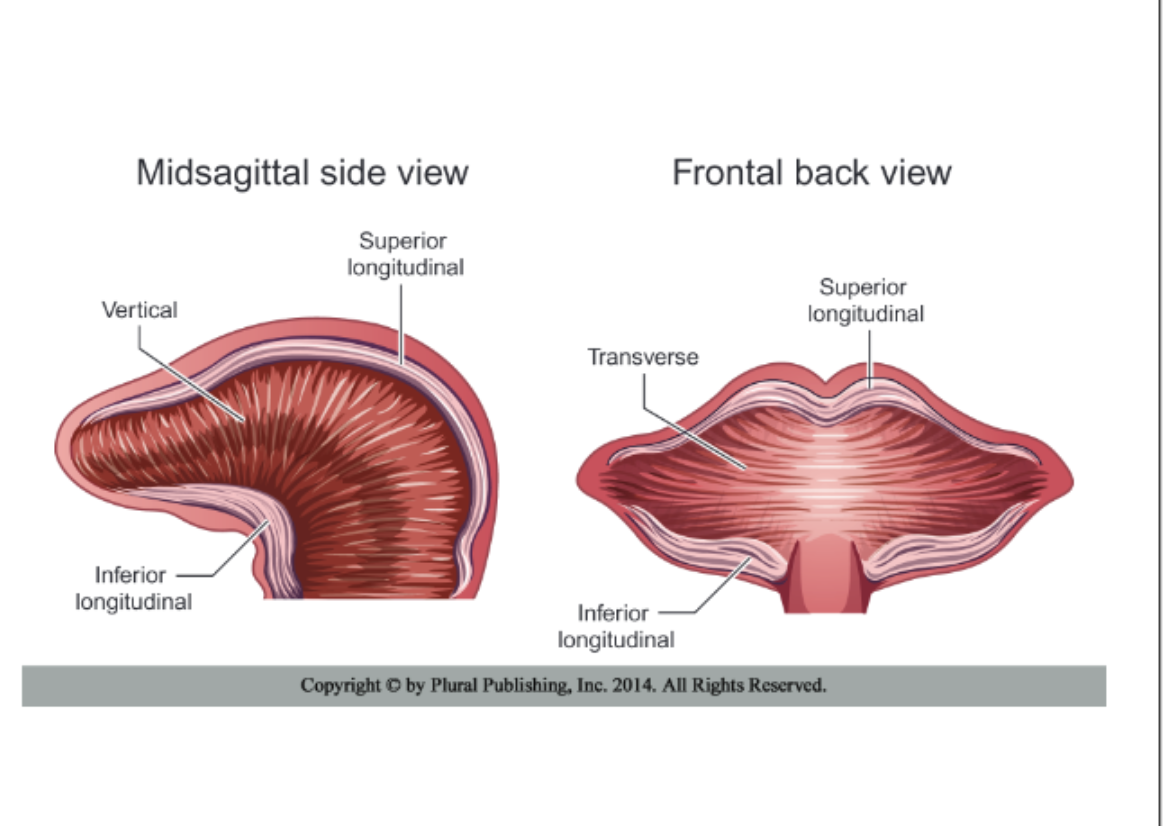
superior longitudinal
shortens the tongue and makes it bunch in the back
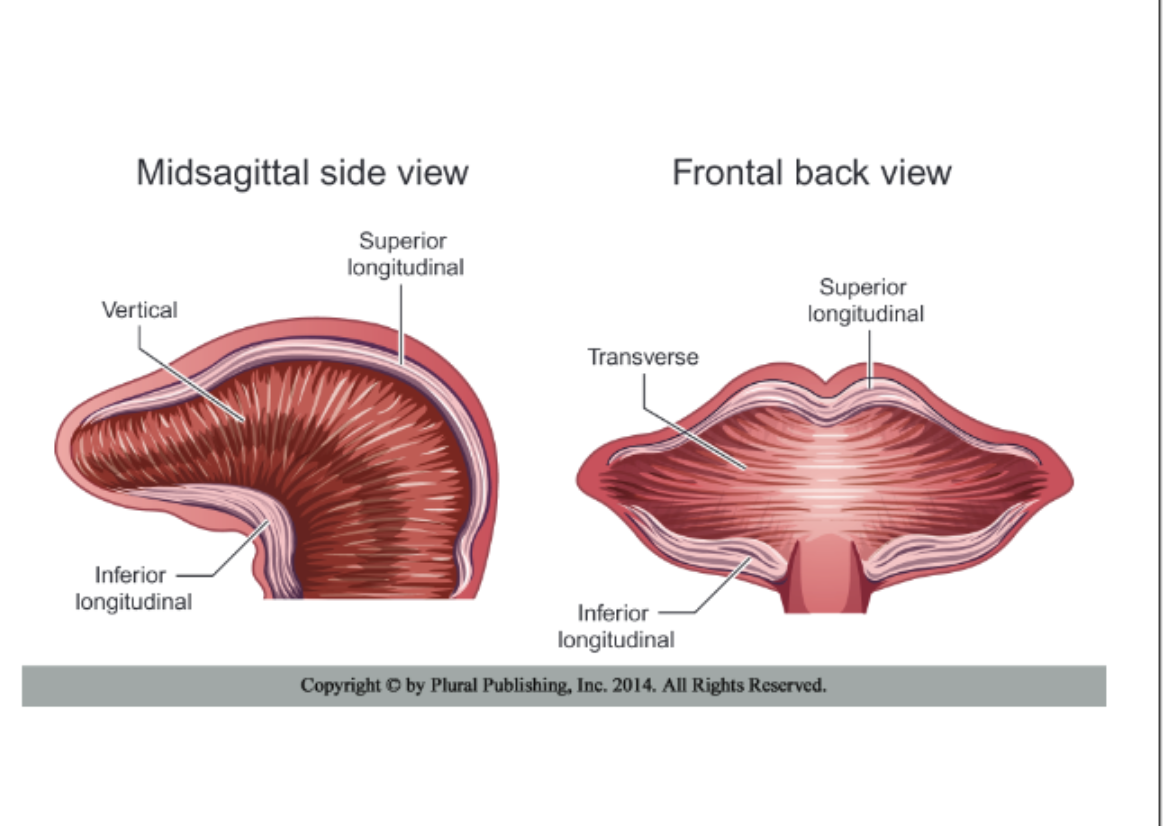
transverse
narrows and elongates the tongue
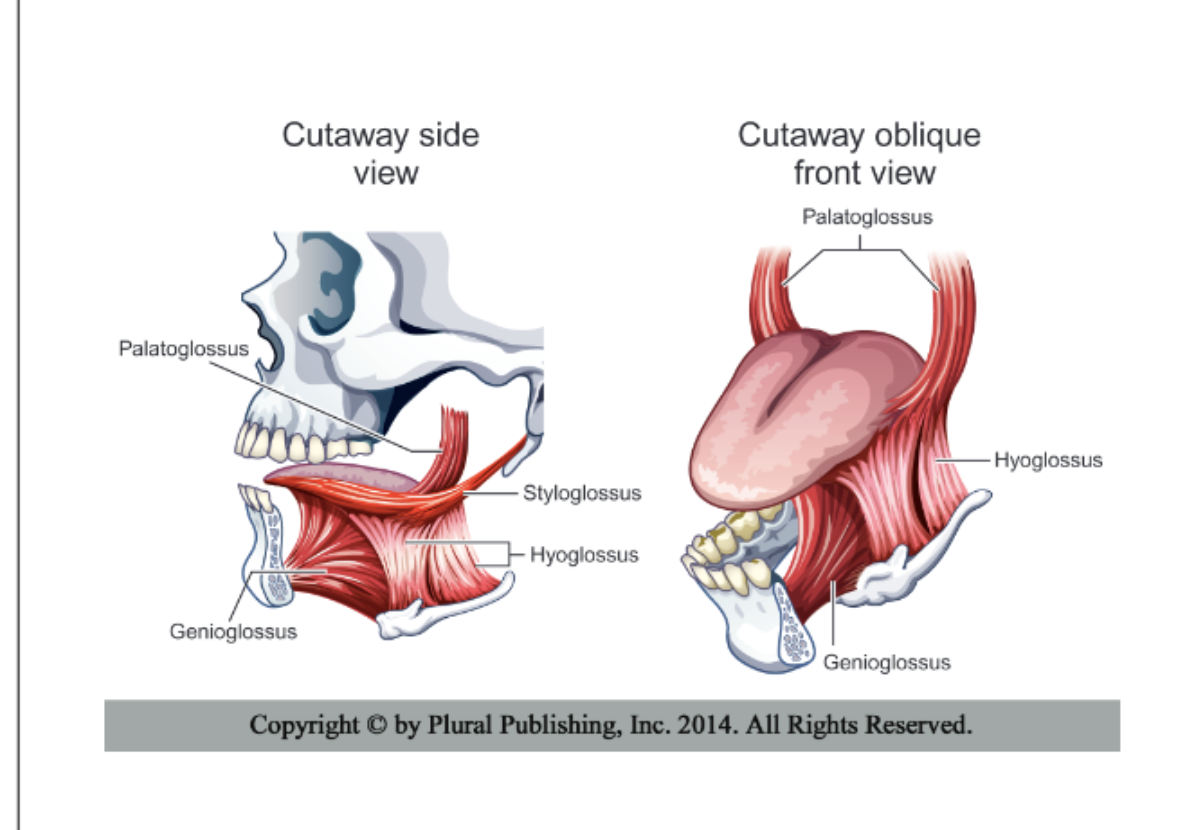
palatoglossus
draws tongue up and back
styloglossus
draws tongue up and back
hyoglossus
draws tongue down and back
genioglossus
can move tongue forward, backward, and downward
zygomatic bone
a paired diamond-shaped facial bone forming the cheek prominence, part of the lateral orbital wall, and the floor of the eye socket
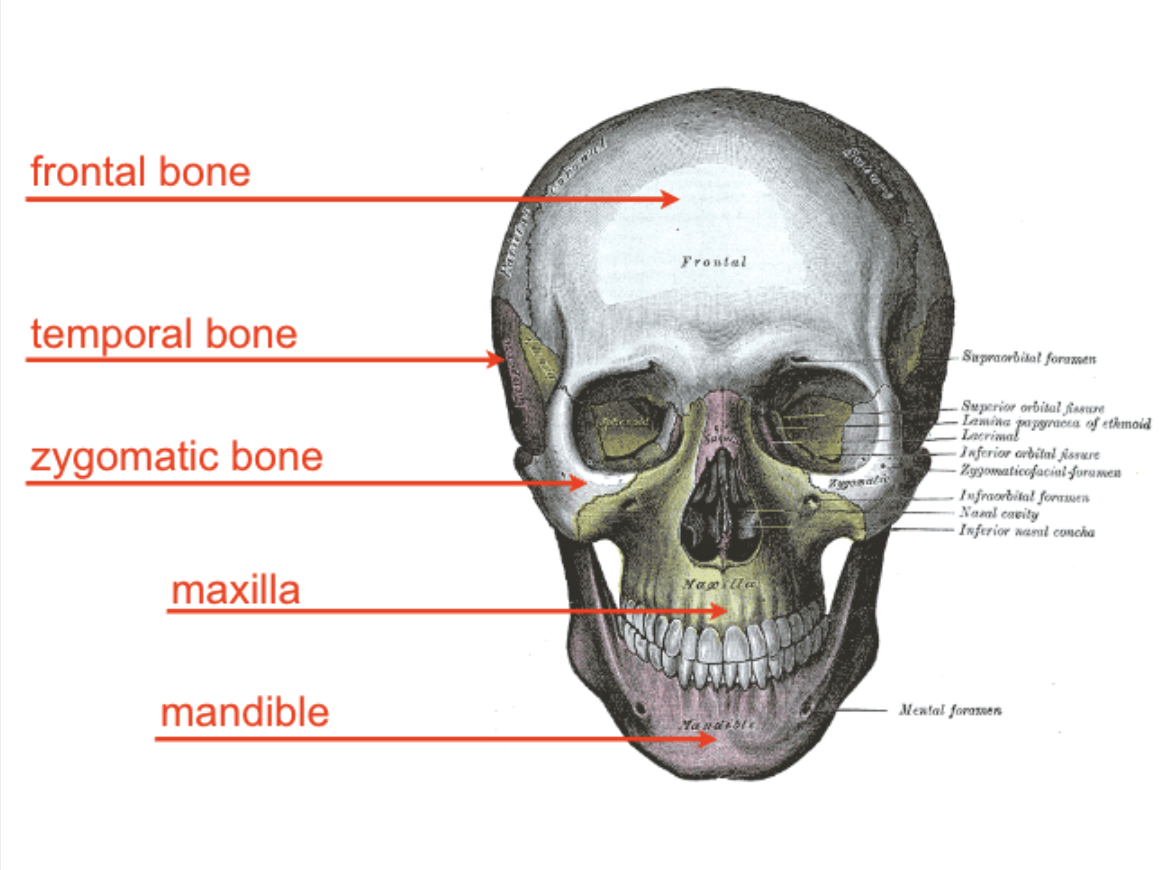
nasal bone
two small, paired, oblong bones located in the upper-middle face that join to form the bridge of the nose, separating the nasal cavity from the outside
epicranial muscle
raises forehead and pulls scalp backward
Corrugator supercilli
draws eyebrows medially frowning
risorius muscle
smile widely
mentalis muscle
a paired, central muscle on the lower jaw that originates from the mandible and inserts directly into the skin of the chin, acting as the primary elevator of the lower lip and the "pouting" muscle (raises chin and protrudes lower lip)
buccinator
moves bolus of food
orbicularis oculi
a sphincter muscle surrounding the eye, crucial for closing the eyelids, blinking, winking, and squinting (closes eye)
levator labii superioris
a facial muscle of the oral group, originating at the infraorbital margin and inserting into the upper lip (raises upper lip)
depressor labii inferioris
a small, quadrilateral facial muscle located on the chin, originating on the mandible and inserting into the lower lip (lowers lower lip)
depressor anguli oris
a paired facial muscle located on the lower chin/cheek, essential for facial expression (lowers angle of mouth)
orbicularis oris
closes or purses lips
temporal bone
a paired, complex bone located at the sides and base of the skull, protecting the brain's temporal lobe and housing essential structures for hearing and balance.
What is the physiology of the pharynx?
tube of tendon and muscle, extends from the base of the skull to the end of the cervical vertebrae
upper end is solely connective tissue
lower end is solely muscular
widest at the top and narrows toward bottom
The pharynx is divided into what 3 general regions?
Nasopharynx, ooropharynx, and larygnopharynx
What specific muscles do the pharynx consist of?
Hard Palate
Velum
Tonsils
Back Wall of ooropharynxthe oropharynx
anterior and posterior faucial pillars
What is the Velum?
Hanging flap
consists of soft palate and the uvula
located in the back of the throat
What is the content of the nasal cavities?
have complex formations of passages and cavities
have 3 shell like structures: superior, middle, and inferior concha
what are the 6 muscles that influence the cross section of the pharynx?
superior, middle, and inferior constrictors
palatopharyngeus
stylopharyngeus
salpingopharyngeus
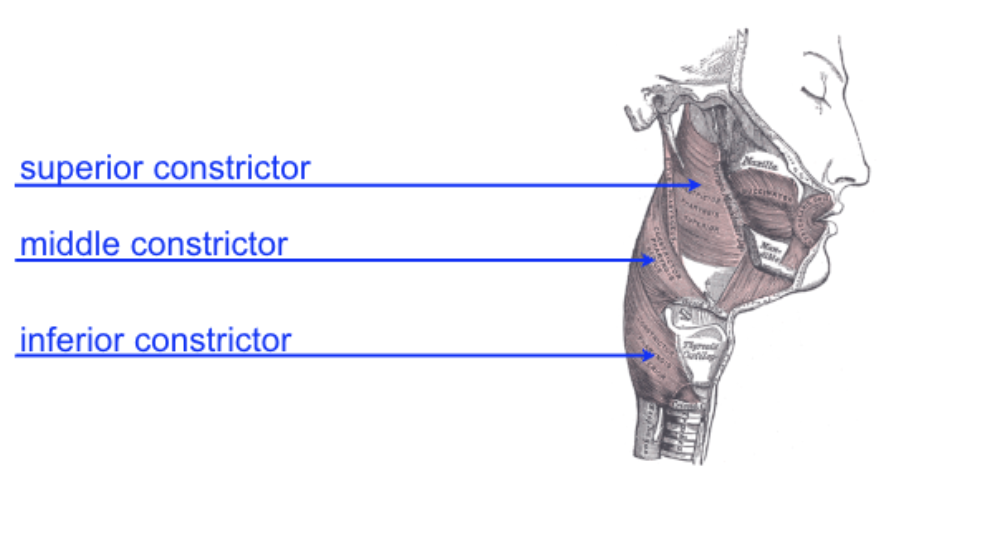
superior, inferior, and middle constrictors
constrict!
Salpingopharyngeus
pulls the lateral
walls upward and inward; narrows
Stylopharyngeus
pulls upward and
towards the side; widens
Palatopharyngeus
pulls walls inward;
narrows
5 muscles that influence position and
configuration of the velum
Palatal levator
Palatal tensor
Uvulus
Glossopalatine
Pharyngopalatine
Palatal levator
lifts velum up and back
Palatal tensor
pulls velum toward the
side
Uvulus
shortens and lifts, increases
thickness
Glossopalatine
pulls down and forward
Pharyngopalatine
pulls down and back
How do the muscles of the pharynx influence movement?
is a highly mobile tube, capable
of lengthening and shortening as well as
moving inward and outward
How do the muscles of the velum affect movement?
Velum movement limited to up/back and
down/forward path
Velum changes shape when it moves!
What is the importance of Velopharyngeal (VP) Function in Speech?
controls airflow between the oral cavity (mouth) and nasal cavity (nose). It determines whether sound and air exit through the mouth, nose, or both—so it’s essential for speech clarity and sound production.
what happens when vp closes?
The soft palate (velum) elevates and closes off the nasal cavity
Air is directed only through the oral cavity
allows pressure to be built up
for the production of some consonants
(including stops)
what happens when vp opens?
The velum lowers, opening the nasal cavity
Air flows through the nose
what are some clinical considerations for speech disorders?
laryngneal function (how voice box works)
velopharyngeal function (control airlfow btw nose and mouth)
measurement (how to test)
typical pathology (what can go wrong)
what are some larnygeal disorders?
Laryngeal trauma (e.g., intubation)
Neuromotor disorders
TBI
Parkinson disease
ALS
stroke
how to measure velopharyngeal function?
direct visualization
X-Ray imaging
Acoustic Observations
Direct visualization
Can observe outer nose, nasal cavities,
velum, posterior wall, and lateral
pharyngeal walls
X-Ray
Limited to bone (?)
• Microbeam system
• More difficult to utilize than other
measurement protocols
Acoustic Observations
Marked characteristics of nasal emission
in the acoustic speech signal
what is nasalance?
ratio of nasal to oral signal strength
How to measure nasalance?
a baffle between the nose and mouth separates nasal from
oral airflows
• Microphones placed on both sides of baffle
• Ratio of nasal to oral signal strength = nasalance
• Correlates with perceived nasality in speech
Mirror under the nose
• Subject produces stop consonants
• Look for air on the mirror
“mirror under the nose technique,” know what it
measures, and be able to identify strengths and weaknesses of this technique
A technique where a subject produces stop consonants while a mirror is held under the nares; it measures nasal emission of air. A strength is its simplicity, but it provides only a basic qualitative indicator of airflow.
What are some Velopharyngeal (VP) disorders?
range of severity that reflects VP control
there are functional and also organic disorders
Functional disorders
phoneme-specific
nasal emission, some apraxias, more
general oral motor issues
Organic disorders
cleft palate, surgical
removal of adenoids, large pharynx
What is the cleft palate?
Structural damage to the hard palate, soft palate, lips, or a combination, occurring during embryological development. Impairment to the VP mechanism leads to hypernasality and problems maintaining oral pressure for consonants like stops and fricatives.
Hard Palate
anterior 2/3
Stationary
• Purpose is to separate the oral and
nasal cavitiespremaxillary bone
maxillary bone
palatine bone
What happens during the cleft palate?
Occurs due to damage during
embryological development of the face
and the palate
• Occurs when the fusion process
between the maxillary processes and
fontal/nasal processes are interrupted
• Can be unilateral or bilateral
• Can be complete or incomplete
What can it be caused by?
Genetic factors (over 400 different
genetic syndromes)
• Chromosomal aberrations
• Environmental toxins
• Mechanically induced abnormalities
(e.g., mother’s anatomy)
How can cleft palate present as?
• Hyper-nasality, due to VPI
• Too much nasal resonance, not enough
oral resonance
• Problems with oral pressure (i.e., nasal
emission during consonant production)
Sounds commonly affected include
stops, affricates, fricatives
• Compensatory articulation errors
pervade the phonetic inventory (e.g.,
glottal stops)
When do u use endoscopy for cleft palate?
To confirm that an articulation disorder is caused by a structural problem (etiology), clinicians must directly examine the speech structures. In cases like cleft palate, this often involves endoscopy to visualize velopharyngeal function.
What is the proper definition for articulation?
process of joining 2 elements together
Process of bringing two or more moveable speech
structures together to form the sounds of speech
Structures used to produce sounds of speech
can be a SOURCE and a FILTER
What are some mobile structures?
Tongue, lips, pharynx, mandible, velum
Immobile structures?
Teeth, hard palate, alveolar ridge
What is the source filter theory of vowel production?
Describes how oral cavity shapes speech
– States that a voicing source is generated by vocal folds,
routed through vocal tract, and then shaped into sounds of
speech
What is the vocal tract?
oral cavity, pharynx,
and nasal cavity
Vocal tract purpose?
linkage provides the variable resonating
cavity that produces sound
! Can be used to FILTER sound from the larynx
as well as to generate sound SOURCE
! Source-filter theory depends on cavities of the
vocal tract to shape the speech sound
Articulation depends on 3 important systems
Lips, tongue, velum
articulation system of tongue
Occupies floor of the mouth
– Can act as an organ of expression
– Movement depends on its own musculature
– Contains taste buds to convey different tastes
! Taste buds located in papillae on tongue
articulation system for lips
Movement for speech depends on muscles of face
! Important in both facial expression and speech
! Richly invested with vascular supply
articulation system of Velum
elevate structure to completely separate
oral and nasal areas
– Muscles are elevated during most speaking time and when
swallowing
– Muscles depressed only when using a few speech sounds
in English
What are the 4 primary activators in speech?
1. The lips
2.The lower jaw (mandible)
3.The tongue
4.The velum
separate sets of muscles control each activator
rest of organs are passive
what is the articulatory speed for the tongue tip, Mandible, Back of tongue, Velum, and Lips?
Tongue tip is the highest!! 7.2 - 9.6 movements per second
5.9-8.4
5.4- 8.9
5.2-7.8
5.7-7.7

