taxis and kinesis
 Studied by 0 people
 Call Kai
 Learn
Learn Practice Test
 Spaced Repetition
 Match
Match Flashcards
 Knowt Play
1/9

There's no tags or description
Looks like no tags are added yet.
Name | Mastery | Learn | Test | Matching | Spaced | Call with Kai |
|---|
No analytics yet
Send a link to your students to track their progress
10 Terms
how do organisms increase their chance of survival?
by responding to stimuli via diff response mechanisms
what is a taxis? in what organisms may it occur?
directional response to a stimulus, leading to movement towards or away from a stimulus
occurs in motile organisms
give an example of taxis:
earthworms and woodlice show -ve phototaxis
to avoid dehydration/predators and find food
what is kinesis? in what organisms can it occur?
non-directional response to a stimulus
occurs in motile organisms
for kinesis, what affects the speed/rate of movement/turning?
intensity of the stimulus
give an example of kinesis:
woodlice - respond to humidity
dry conditions but close to moist - move faster, turning increases (increasing the likelihood that moist conditions will be reached)
dry conditions but far from moist - move faster, turning decreases until close to moist conditions
moist conditions - slow down, turning constant so stay in favourable conditions
this helps them survive - keeps them in/helps them to reach environments better suited to their needs i.e. avoid dessication
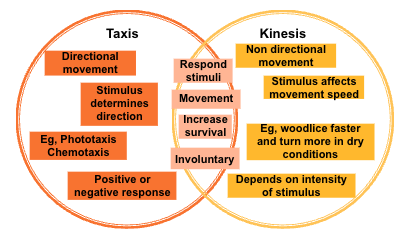
give 3 differences between taxis and kinesis:
taxis = directional, kinesis = non directional
taxis - stimulus determines direction, kinesis - stimulus affects movement speed
taxis - +ve/-ve response, kinesis - response dependent on intensity of stimulus
give 4 similarities between taxis and kinesis:
both are responses to stimuli
both involve movement
both increase survival
both are involuntary
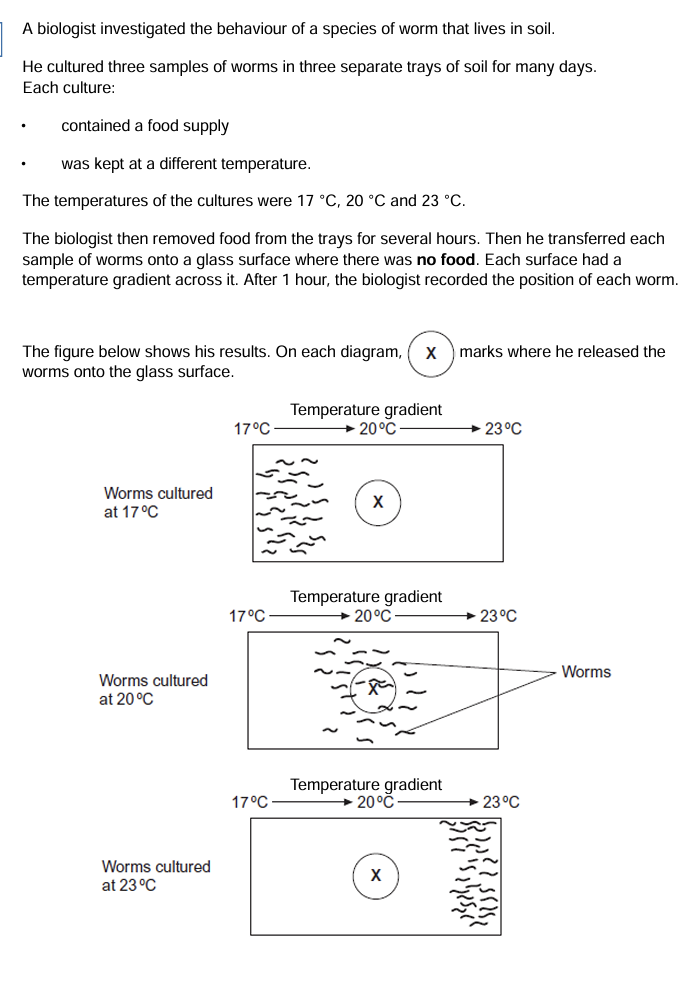
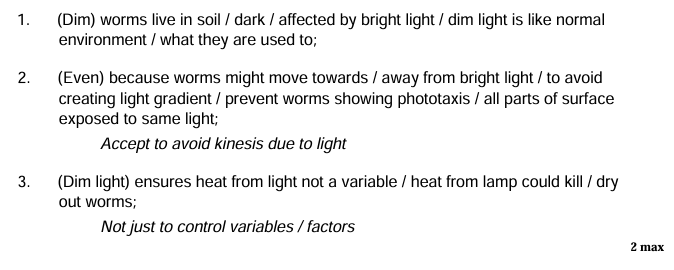
in each experiment, the biologist exposed the surfaces to light that was dim and even, so that he could see where the worms went.
apart from seeing where the worms went, suggest 2 reasons why it was important that the light was dim and even (2)
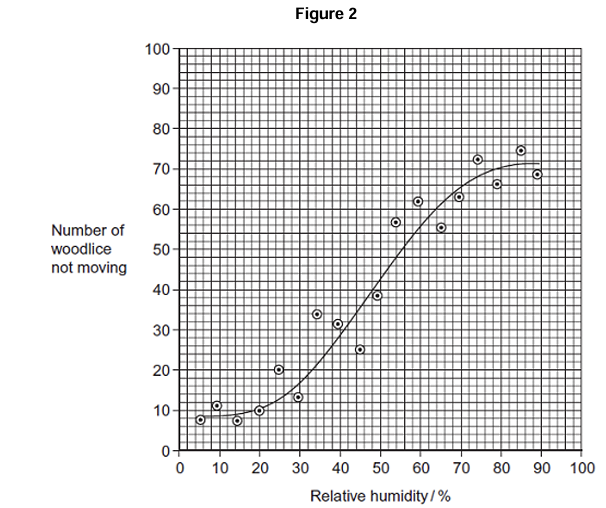
the movement of the woodlice in low relative humidity is an advantage to their survival - explain how (2)

 Note
Note  Flashcards (43)