AQA GCSE History: Industrial Medicine
 Studied by 0 people
 Call Kai
 Learn
Learn Practice Test
 Spaced Repetition
 Match
Match Flashcards
 Knowt Play
1/138

There's no tags or description
Looks like no tags are added yet.
Name | Mastery | Learn | Test | Matching | Spaced | Call with Kai |
|---|
No analytics yet
Send a link to your students to track their progress
139 Terms
"Self Help"
A book published by Jeremy Bentham and Samuel Smiles, which said it was upto the individual to look after their own conditions and work, NOT the government
Life Expectancy
How long someone is expected to live, on average. In East London in 1842, rich people were expected to live until aged 45, whilst poor labourers were expected to live to the ripe old age of 16
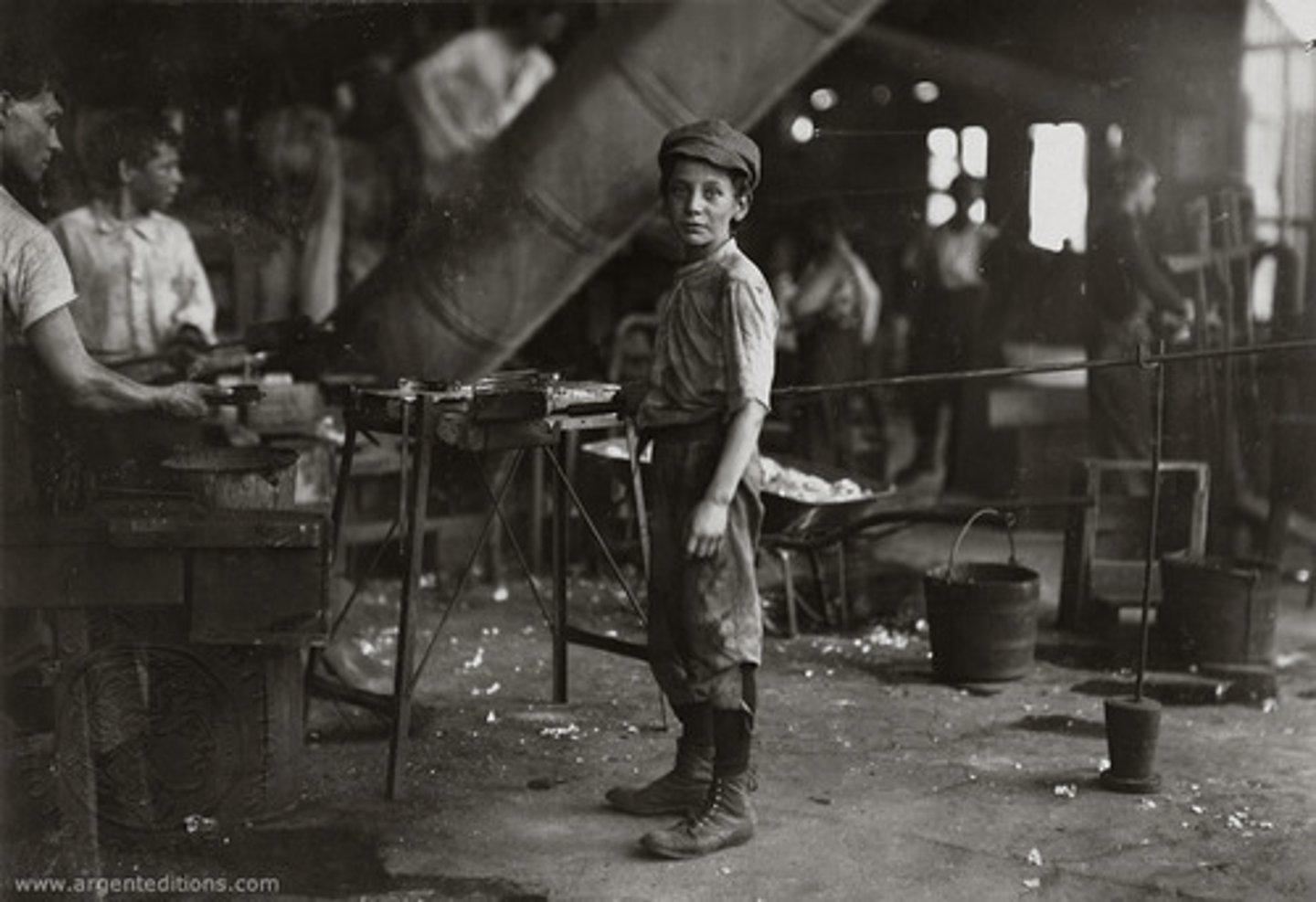
Child poverty
Young children would work, and be dressed in rags as they didn't make much money and they were poor. Many children did dangerous jobs for long hours and little pay and could not afford much food or clothing. This meant that they were under nourished and unhealthy making them more likely to catch diseases.
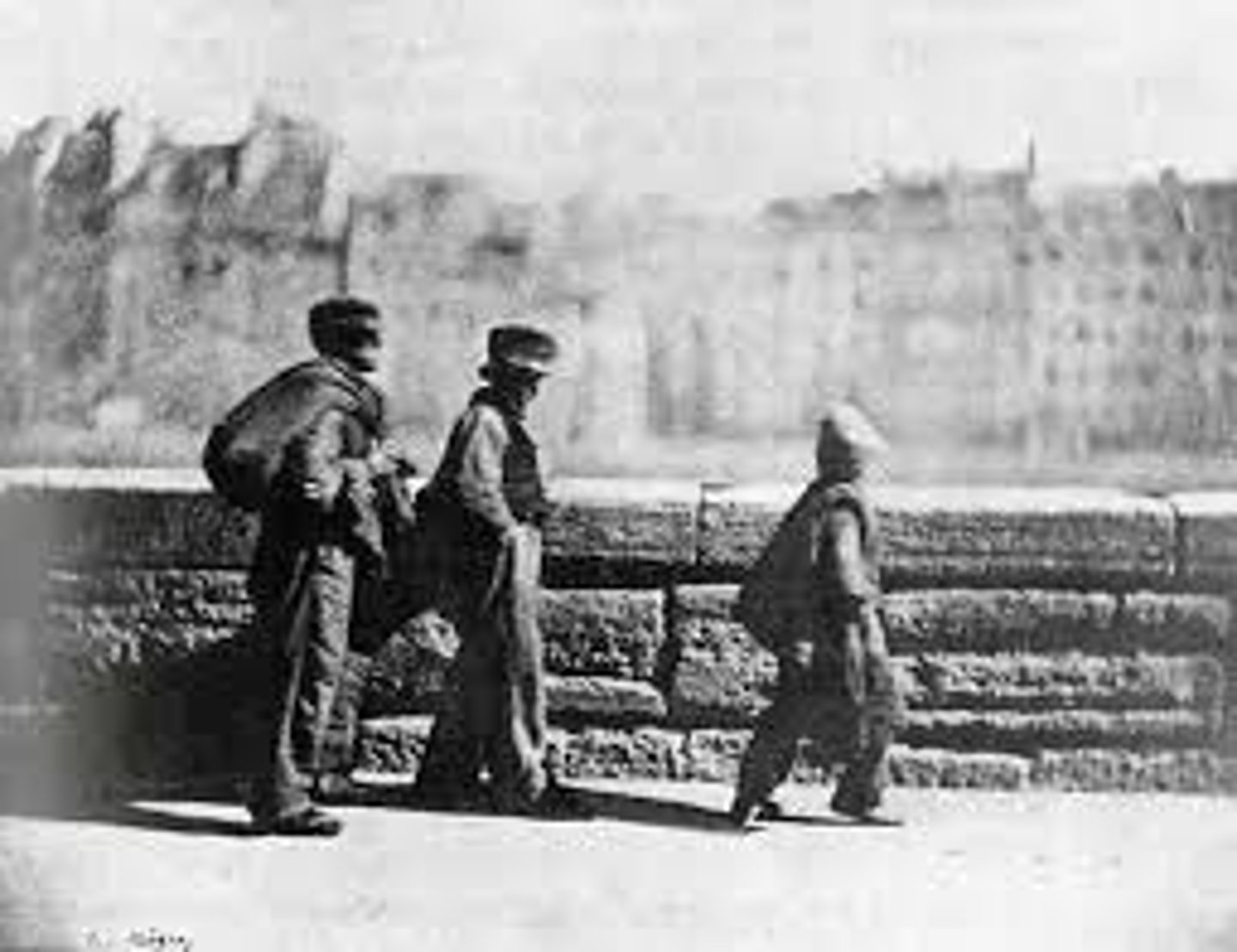
Chimney Sweeps
Often young boys because they could fit up chimneys. The air outside was full of soot/smong and chimney sweeps commonly got testicular cancer
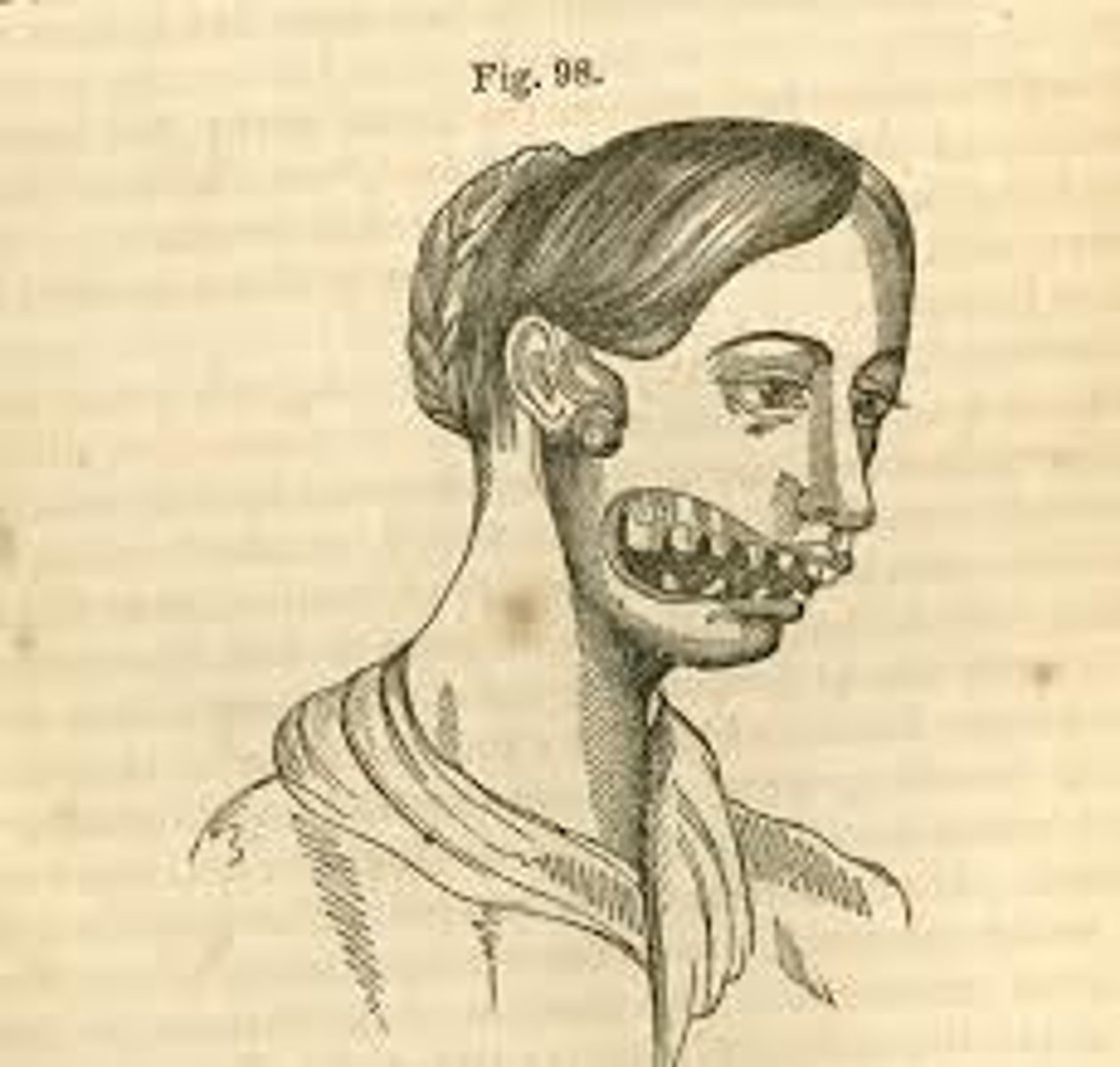
Phossy Jaw
A condition that girls working in the match factories got where the phospherous fumes rotted the flesh in the jaw
Food and Safety standards
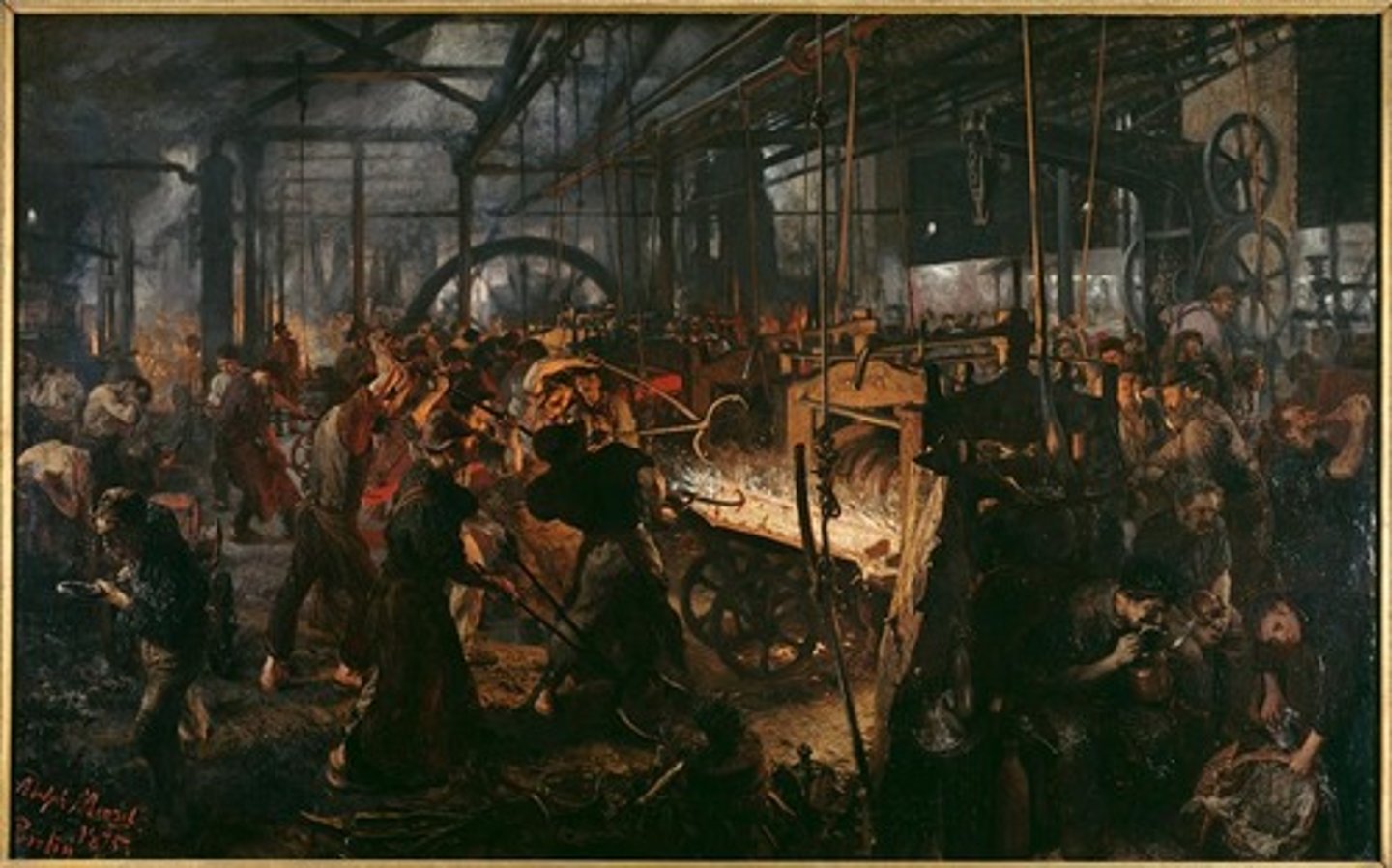
No standards existed. For example, food was packed out with sawdust and chalk and many factories had daily accidents resulting in mutilation or, even death.
Public Lodging Houses
Many strangers would share dirty, cramped rooms meaning that diseases could spread quickly and as people moved around the country they would spread the disease further.

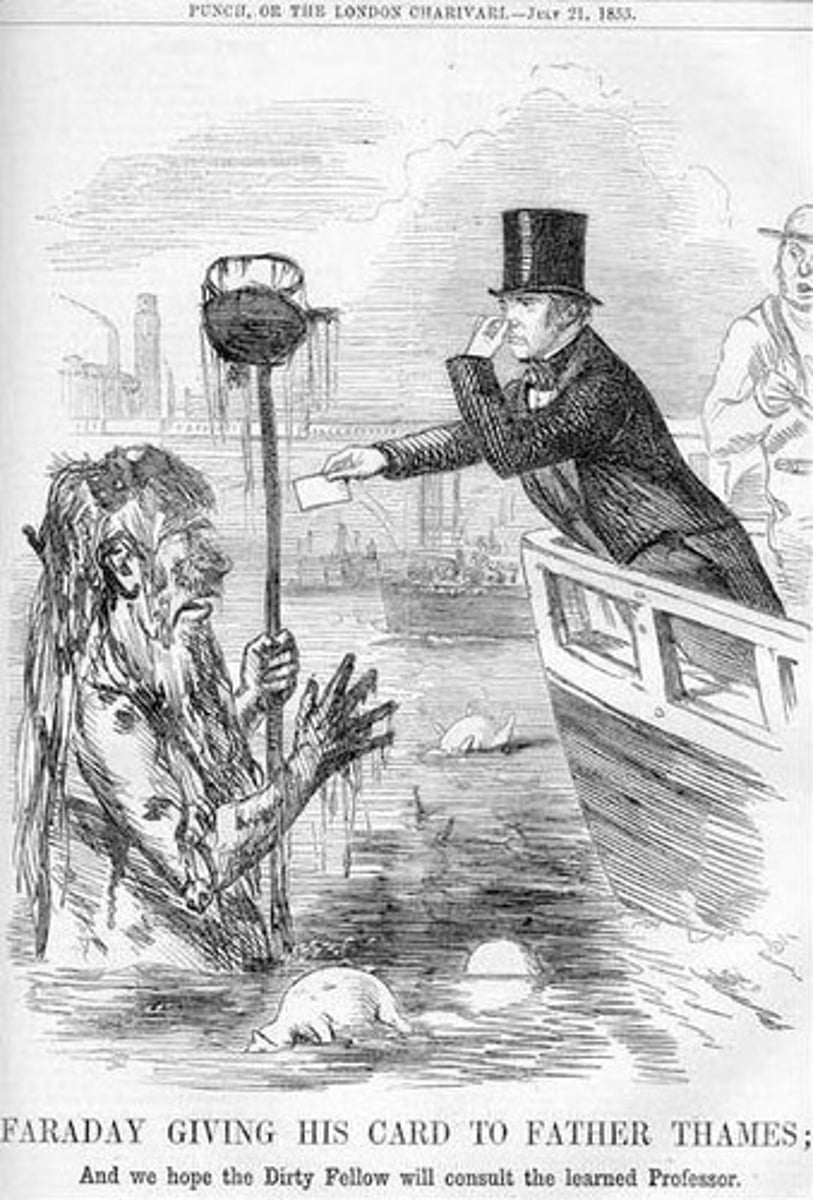
The Great Stink (1858)
The summer weather led to the River Thames drying up, exposing the effluent at the bottom and releasing a gut-wrenching smell. The rich and powerful left London for the summer and returned in winter supporting ideas about improving the sewage and waste disposal situation
Effluent
A seperate flow of a sunstance within a river or stream. In the case of the Thames, sewage, industrial waste and litter

Miasma theory
The idea that bad smells carry disease - still wideley believed in the Industrial Era
Joseph Bazalgette
Employed to construct sewers in London. Completed by 1865. Still used in parts of London today.
Urbanisation
More people moved to towns during the industrial revolution in search of jobs. Small workshops in the countryside weren't competitive anymore.

The 'Big 6'
The 'Big 6' diseases of industrian towns; Tuberculosis, Influenza, Diphtheria, Typhoid, Typhus and Cholera
"The English Disease"
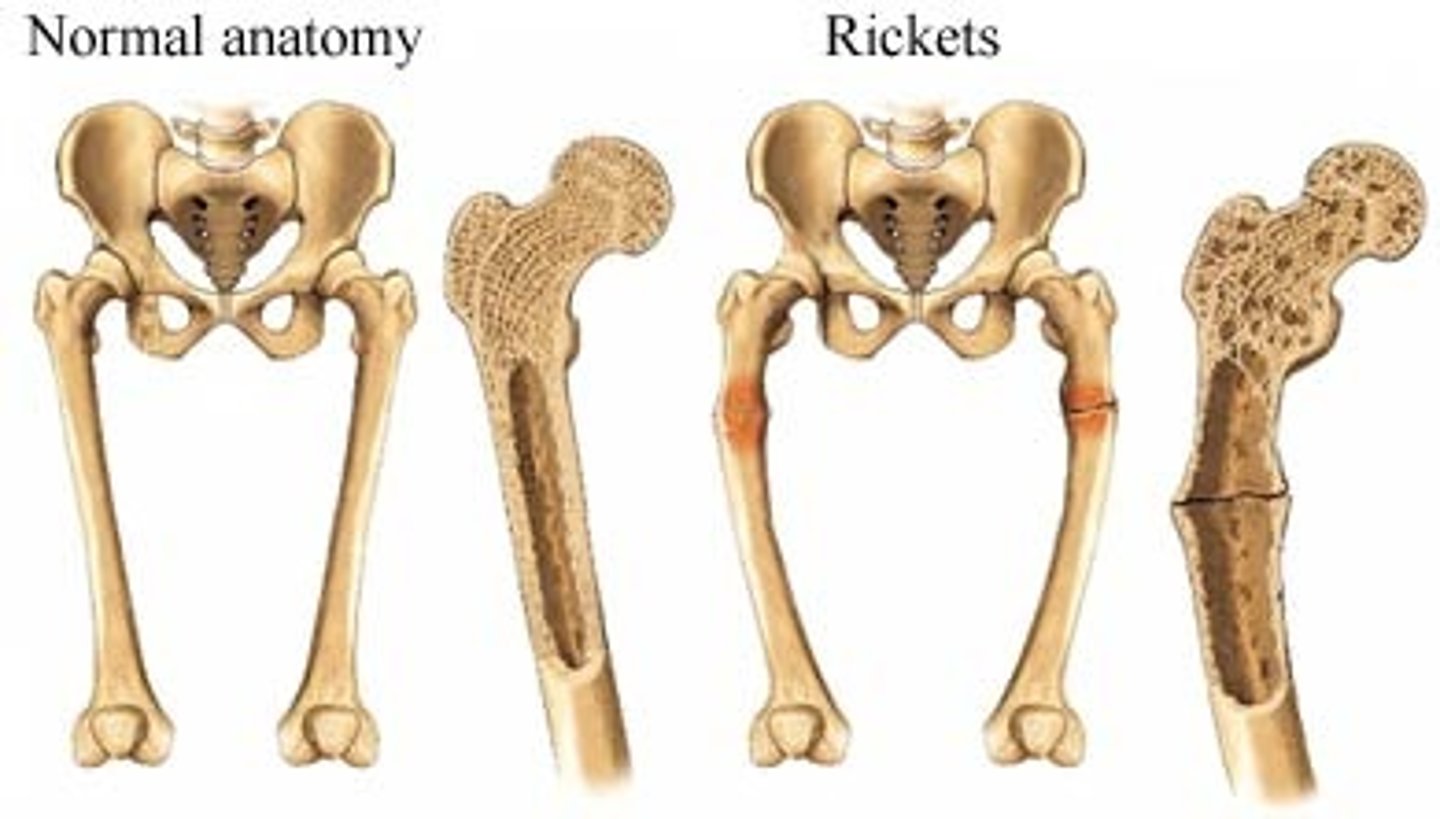
Rickets was a common bone disease, due to lack of calcium, found in English people. People abroad wrote of it.
Terraced housing
Many Londoners lived in shared housing with 1 privvy per 10 people. This meant diseases travelled fast in clusters of people.

Lassaiz-Faire
When a government has a hands-off approach. This was the case with public health in the early 1800s
Poverty taxes
Most rich people were not taxed enough for the government to actually make improvements to public health, as this hadn't been a concern in previous eras to the same extent.

Slum Clearances
Some slums such as those in Spitalfields, London, were cleared from 1891 onwards and replaced with a higher standard of housing.

Cholera
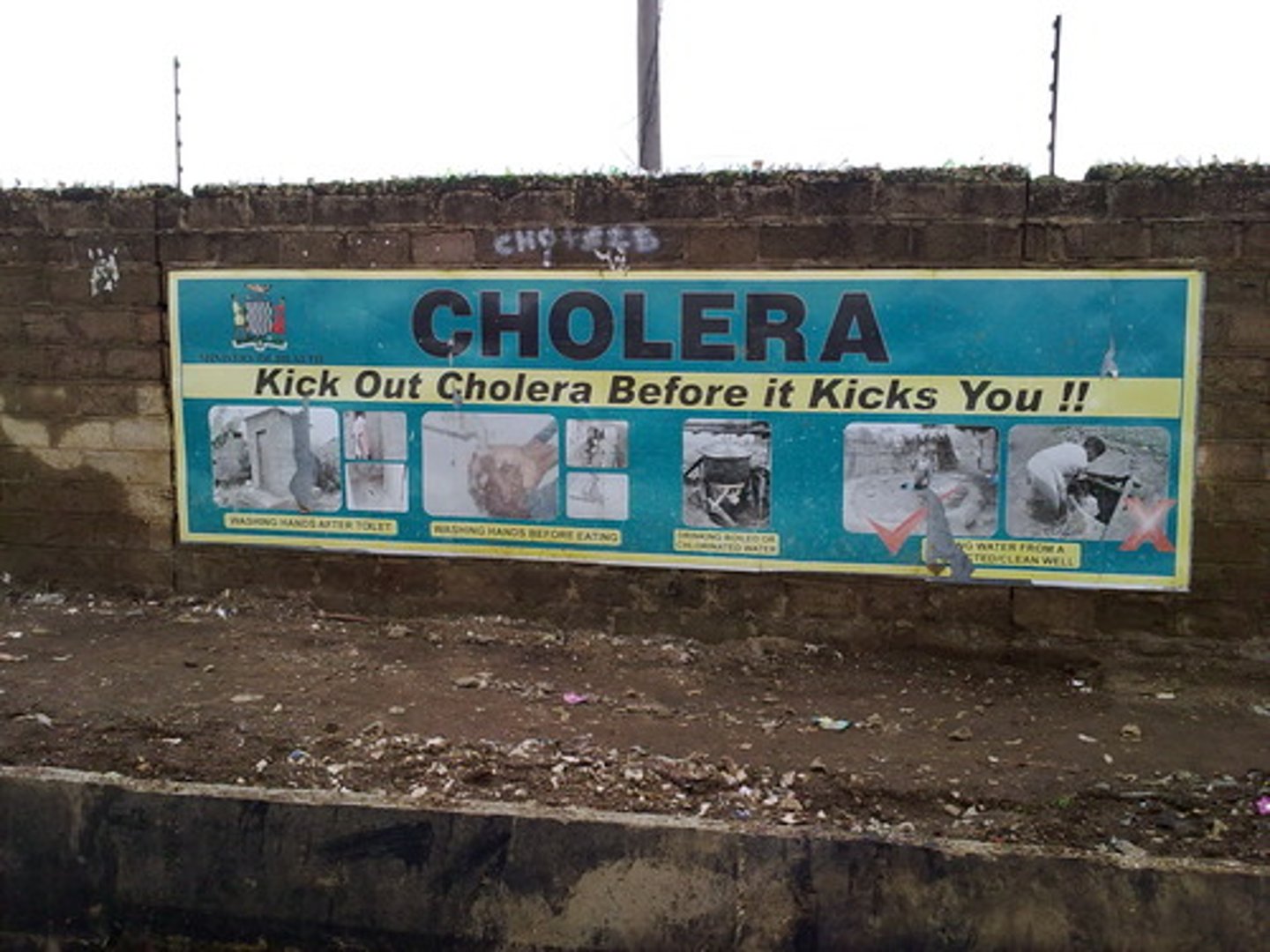
A 'silent killer' water borne disease which causes death by creating dehydration, leading to the blood becoming thicker and blood vessels rupturing under the skin. Thought to have arrived with Indian sailors from Bengal in 1831
John Snow
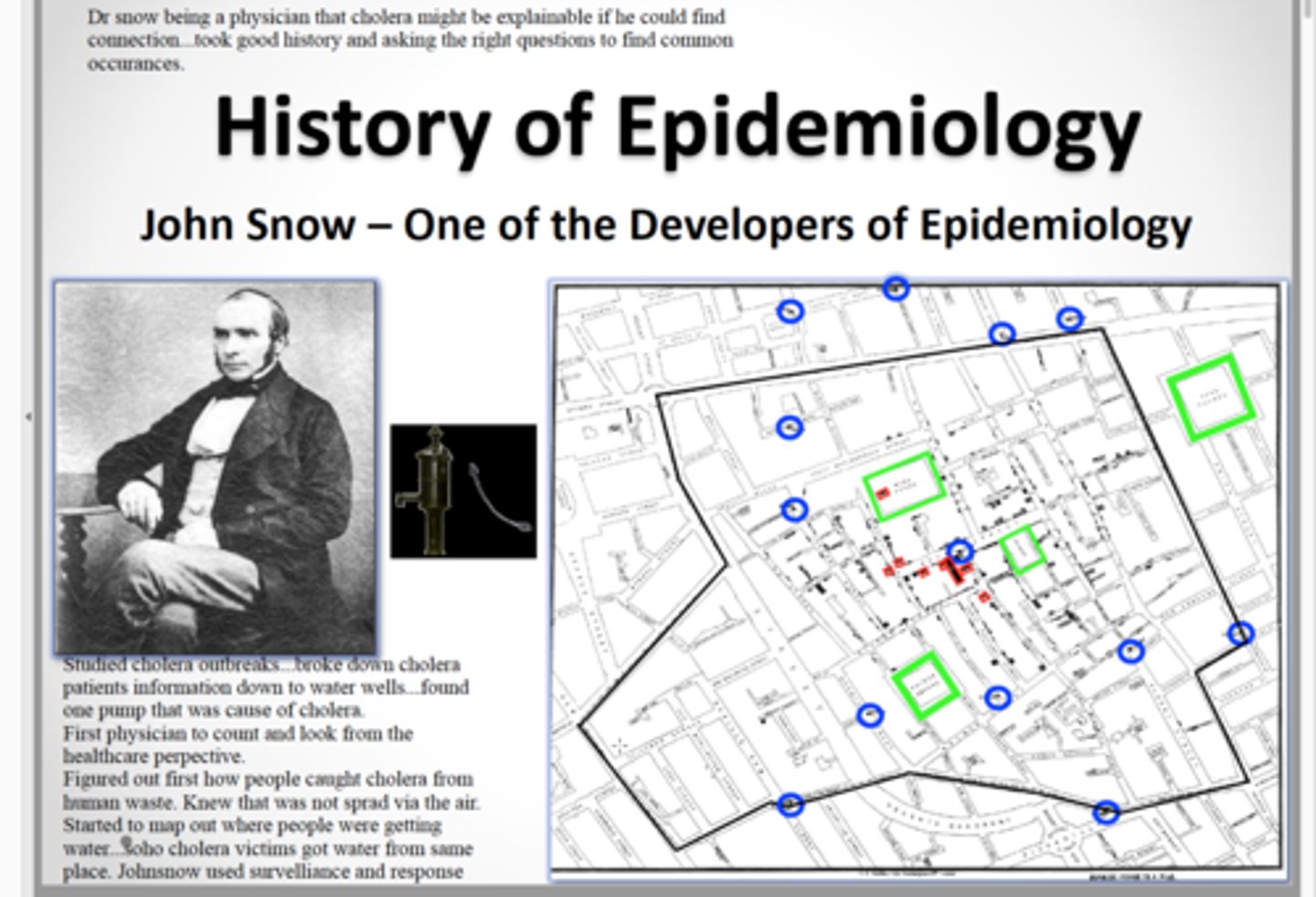
A well respected surgeon with a surgery in Broad Street, London. He discovered and proved how Cholera was transmitted, something which led to improvements in Public Health
On the Mode of Communication of Cholera (1848)
He published this study a year after the 1848 outbreak of Cholera suggesting it could be dirty water and not the miasma theory. He was ignored at first, but proved his idea in 1854 (next few terms)
Epidemics
A disease at its most infectious points. With Cholera these were 1831-32, 1848, 1854 and 1865-66
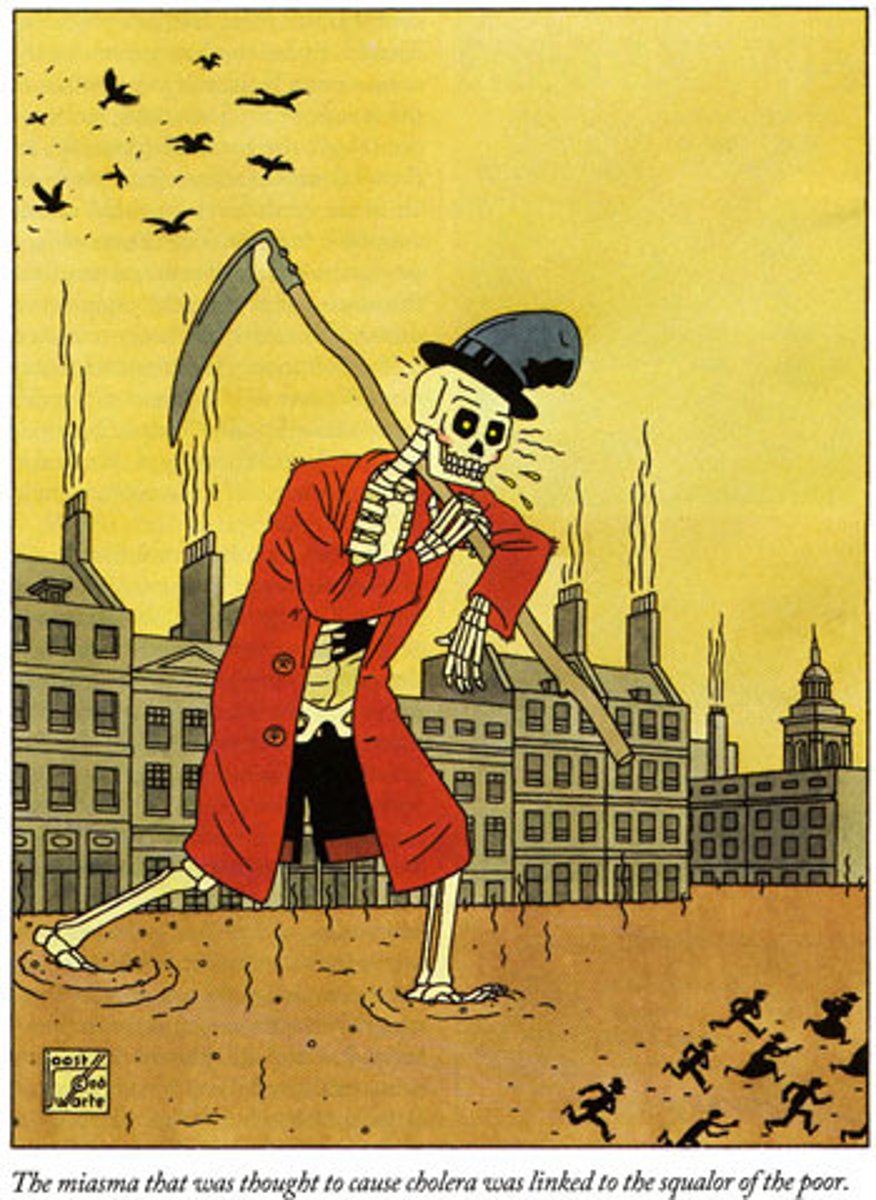
Death Toll
The amount of people, overall, who die as a result of a particular cause. It is estimated that, during the epidemics, these outbreaks killed over 100,000 people
Soho (1854)
A heavily populated area of London that saw the 1854 outbreak of Cholera. Broad Street is in this area.
Hypothesis
An idea to be tested. In the 1854 outbreak Snow hypothesised that the Broad Street pump was causing the deaths through dirty water
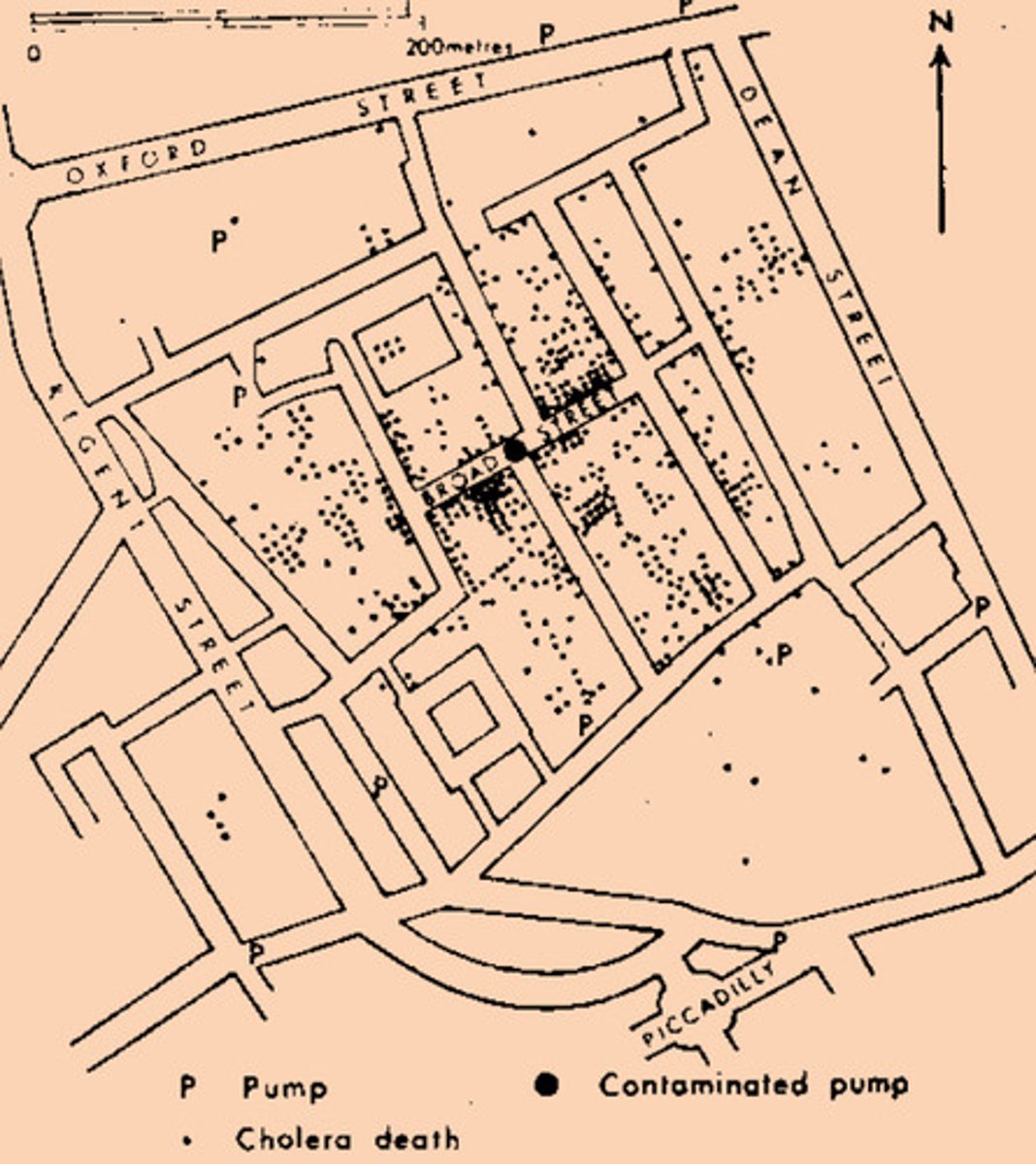
Spot Map
In this case Snow mapped out where patients were dying around Broad Street (using lists from the general registry) by marking the locations they died. These clustered around the water pump and after removing the pump the deaths dropped drastically.
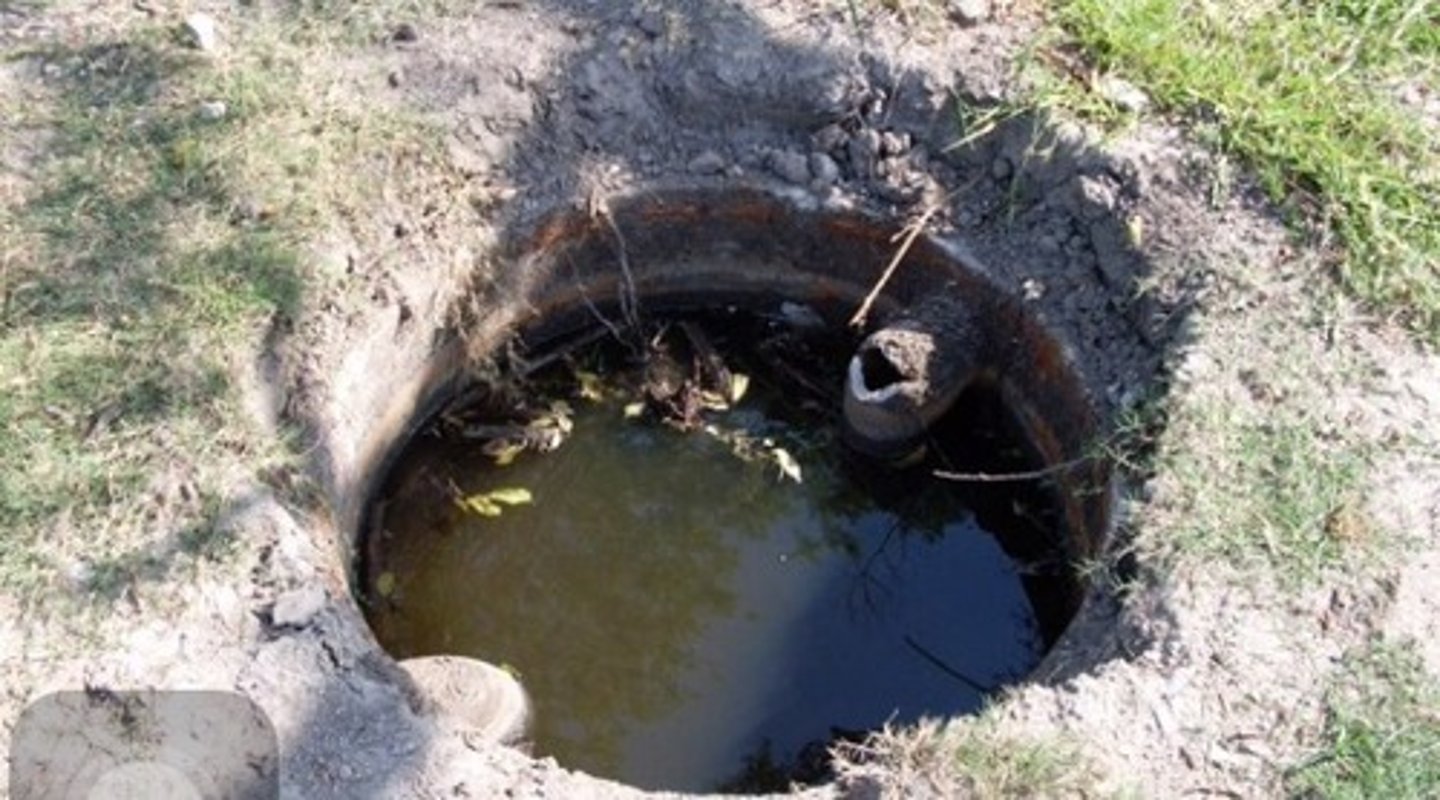
Cesspit
A place where human waste is stored. It was later found that a cesspit was leaking into the Broad Street pump water supply from less than 1m away
Transmission
How a disease is passed on. In the case of Cholera there is person to person, fecal to oral (like the water) or fomites (soiled clothes, bed linens etc)
Incubation Period
How long it takes for a disease to show symptoms. With Cholera it was 24-48 hours, which is why over 700 people died in the first 10 days of the outbreak in 1854.
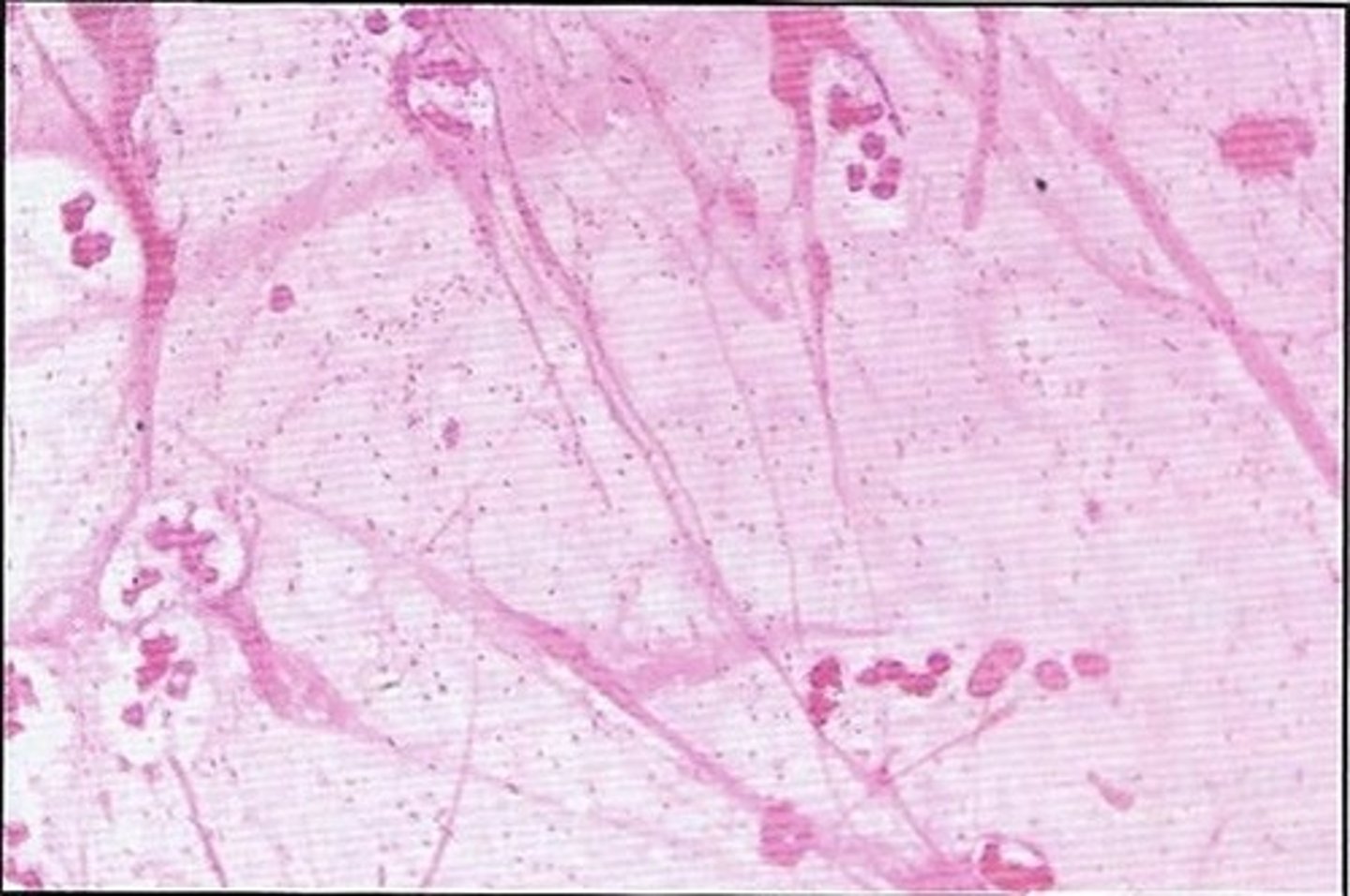
House of Commons Committee
A select group of MPs (often with a special focus) who hear what experts have to say. In this case Snow presented his findings to them in 1855. Though it wasn't until 1861 when Pasteur proved why (Germ Theory)
William Farr
A public health reformer who took John Snow's findings and helped advise Edwin Chadwick's famous report which shaped the Public Health Act (1875) and other measures
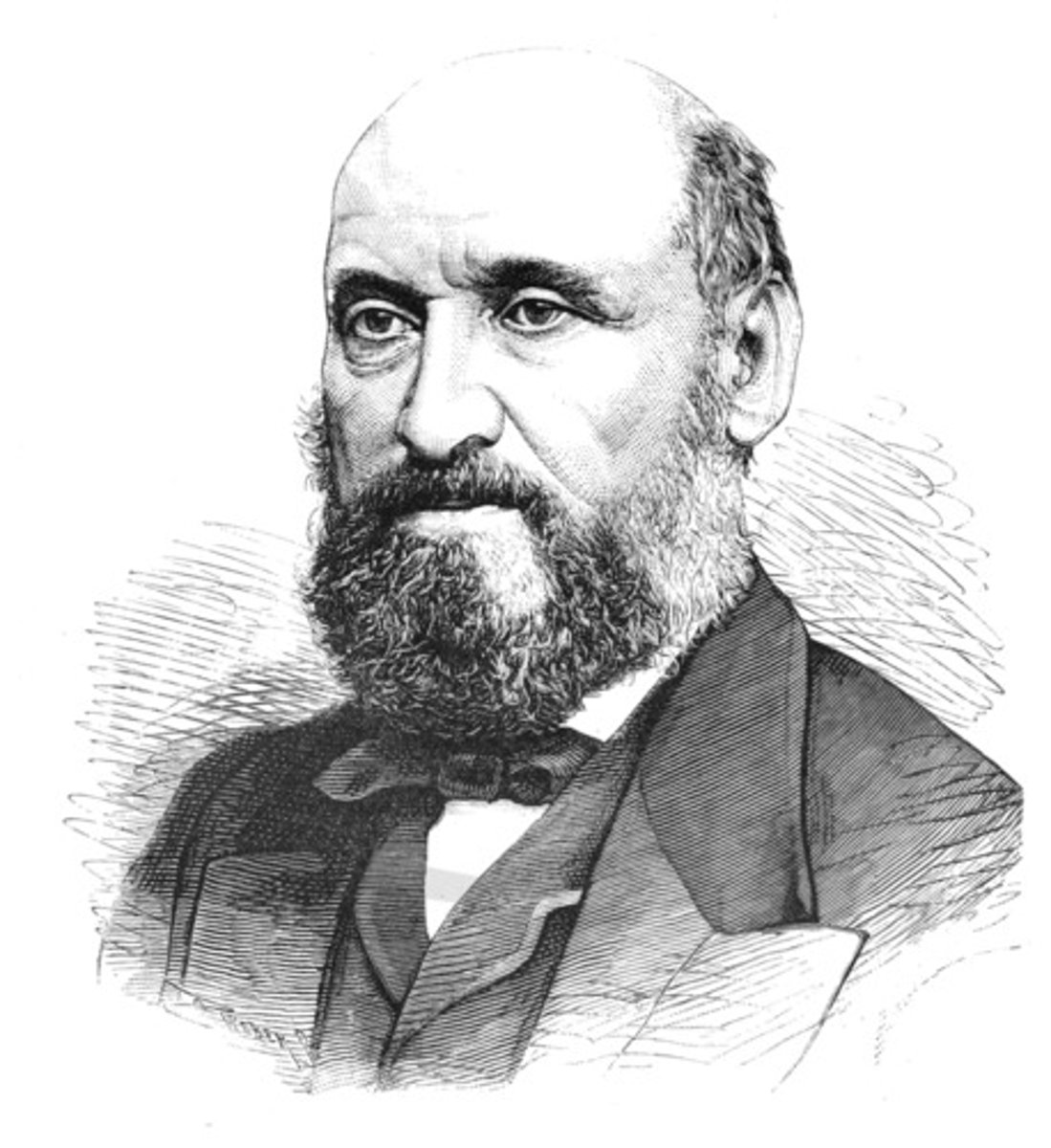
William Farr
A civil servant who, in 1837, managed to get control of births, deaths and marriages into the hands of government instead of the church. Requires doctors to record the cause of death.
Southwood Smith
Studied connections between poverty and disease at the London Fever Hospital - he passed his data to Edwin Chadwick
Edwin Chadwick
In 1842 he produced the 'Report on the Sanitary Conditions of the Labouring Population' which showed connections between poverty, poor public health and death
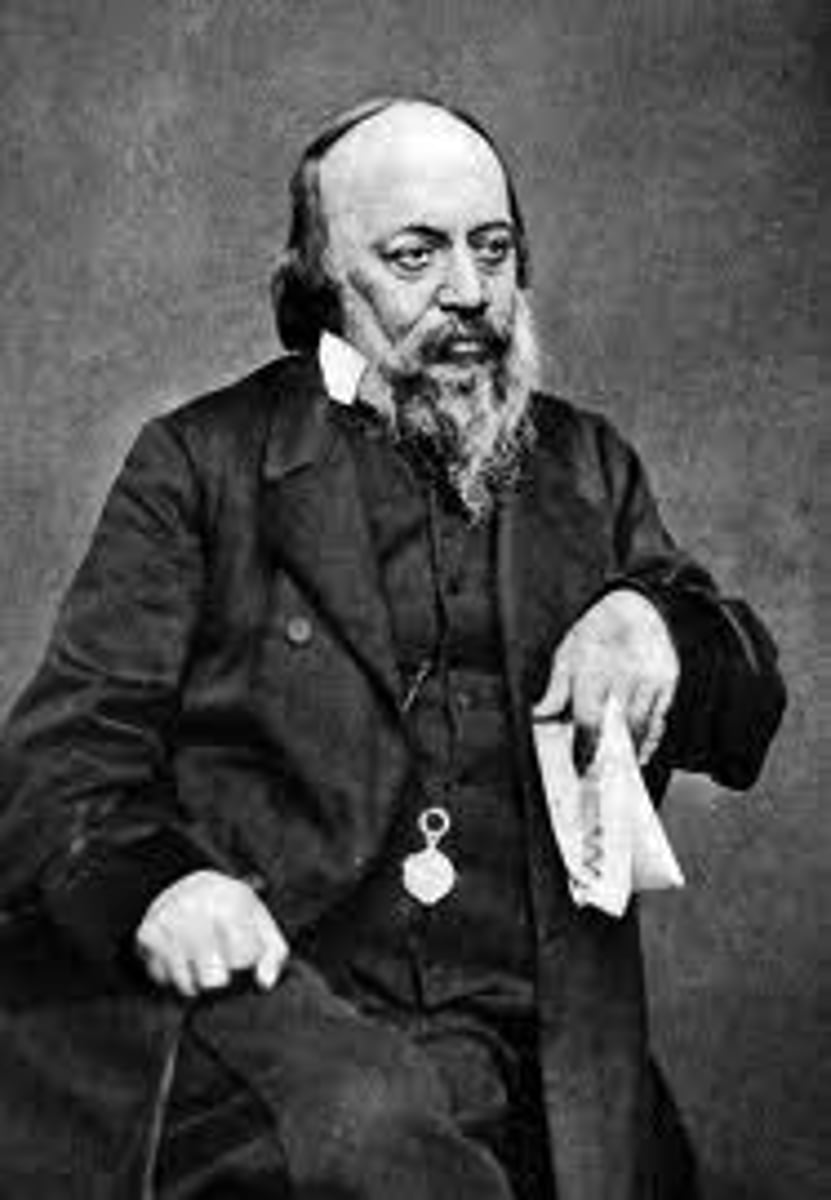
The 'Clean Party' (1844)
Chadwick and Smith set up the Health of Towns Association to push for improved conditions in towns by providing sewers, clean streets and medical officers
The 'Dirty Party'
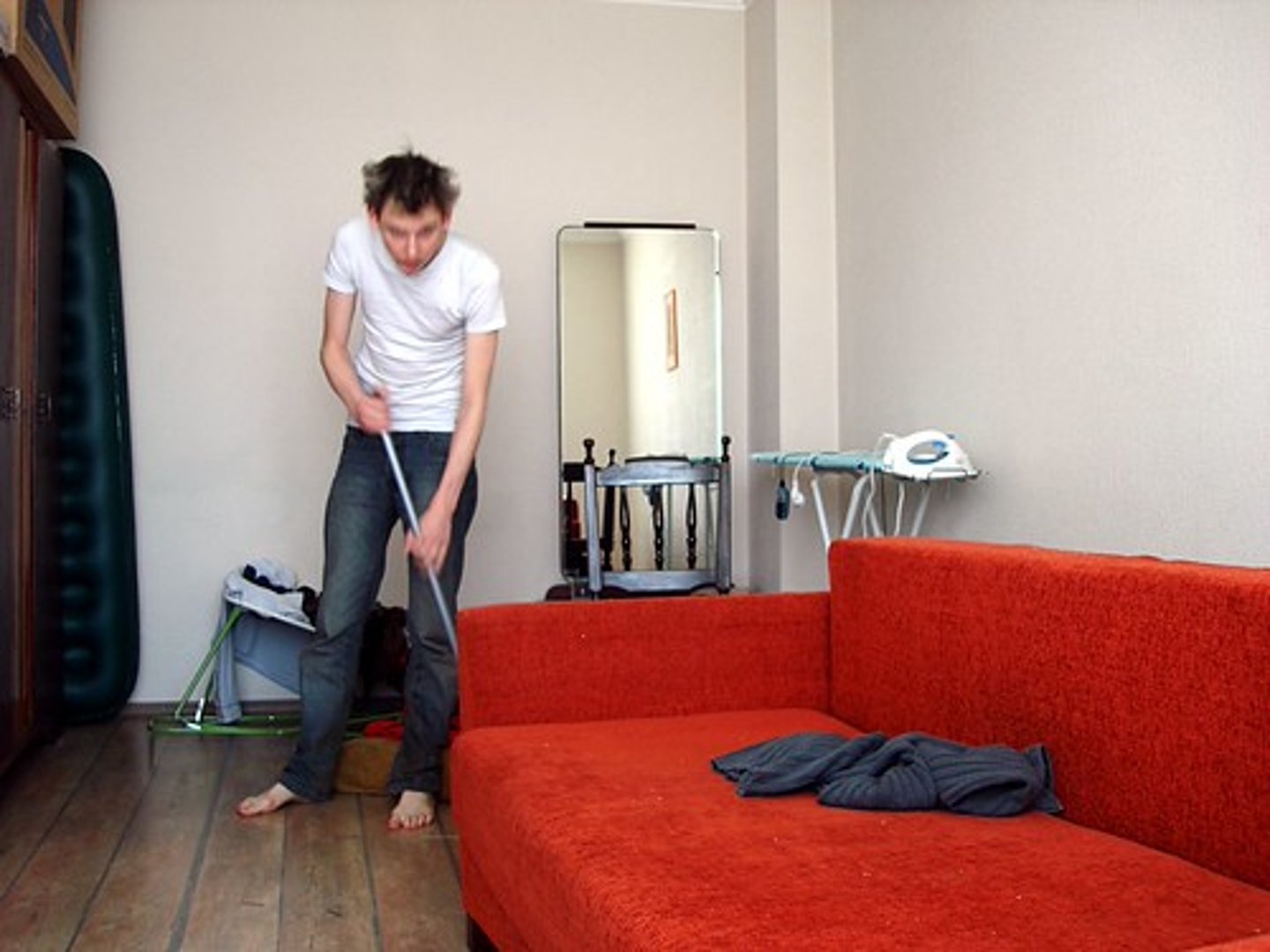
Those who were rich and didn't want to pay to improve conditions through taxes

Dr Barnardo
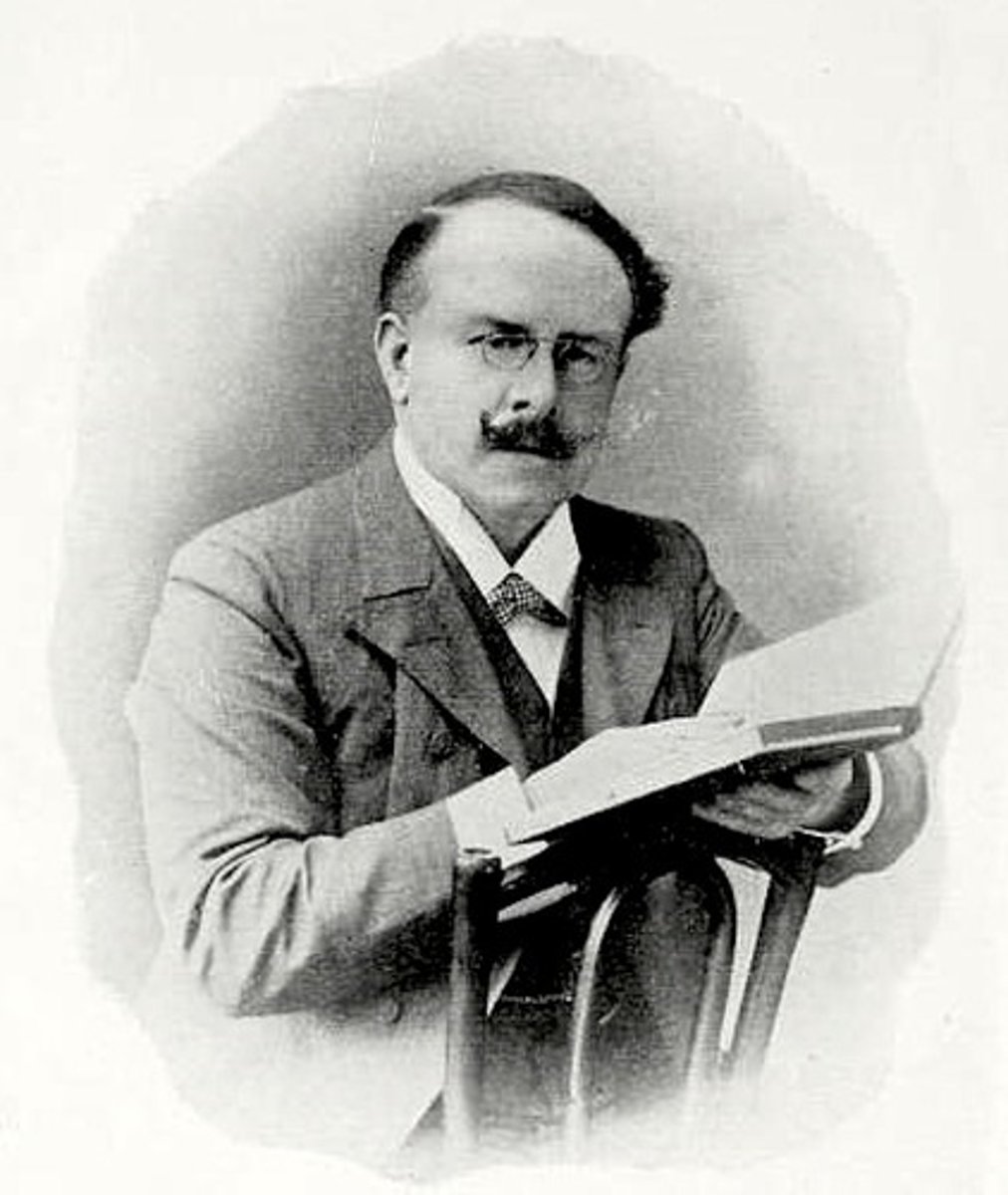
Set up the Ragged School where hungry children were provided with breakfast and the unemployed with meals. This is Dr. Barnado's charity for children today.
Ragged School
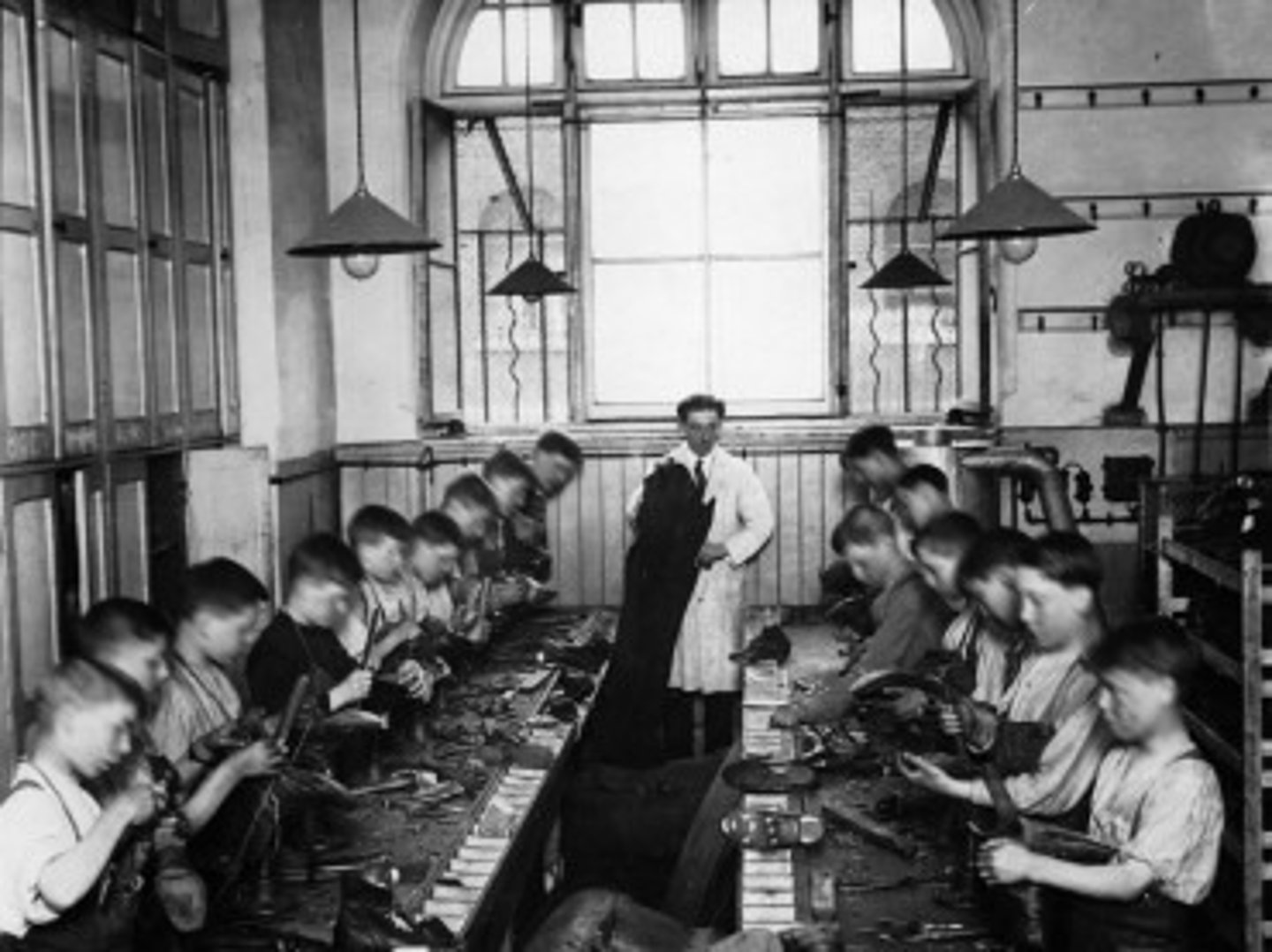
No Destitute child ever turned away' was its slogan. It trained the most needy children and orphans skills so they could get a job. The 'City Messenger's Brigade' and 'Factory Girls' Club' are 2 examples. They also sent children abroad to do farm work
Public Health Act of 1848 (Permissive)
Allowed councils to raise money to improve conditions in their town. It was voluntary unless the death rate was high. However, only 50 councils had a Medical Officer by 1872.
The Great Stink (1858)
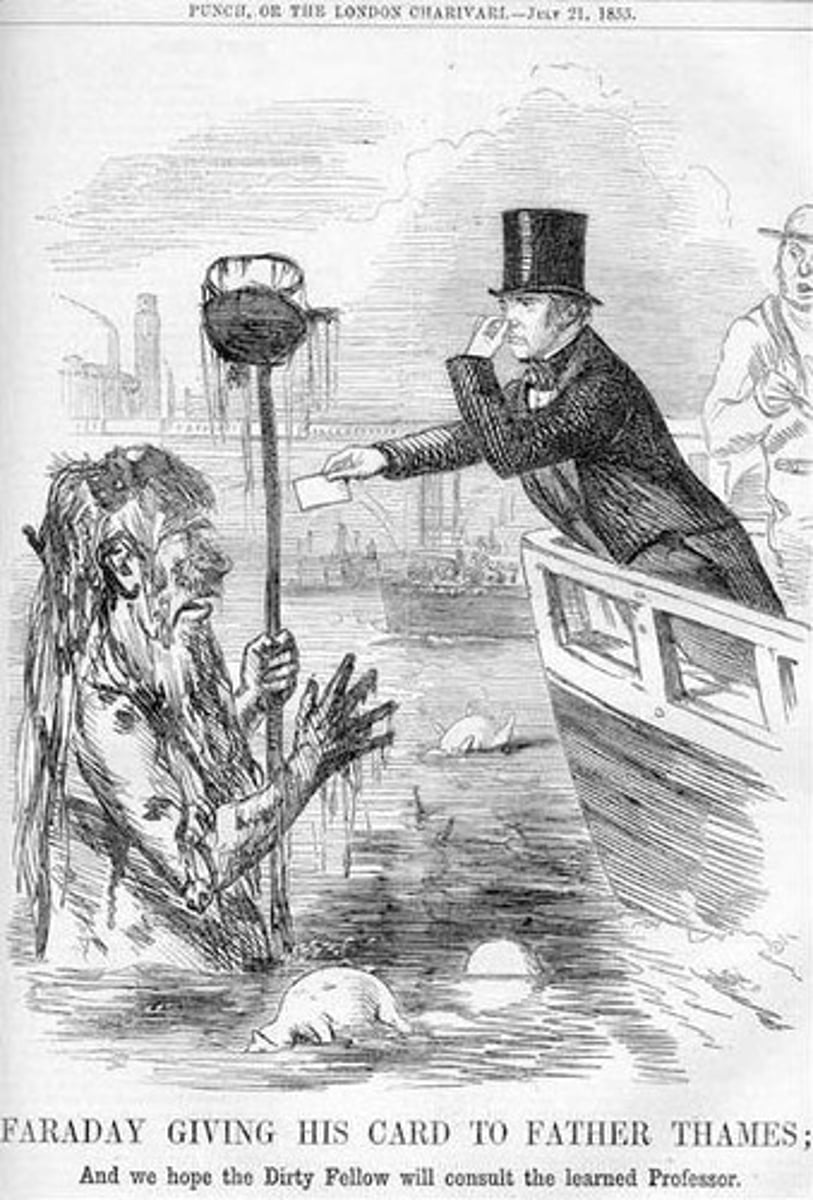
The summer weather led to the River Thames drying up, exposing the effluent at the bottom and releasing a gut-wrenching smell. The rich and powerful left London for the summer and returned in winter supporting ideas about improving the sewage and waste disposal situation
Miasma theory
The idea that bad smells carry disease - still wideley believed in the Industrial Era
Joseph Bazalgette
Employed to construct sewers in London. Completed by 1865. This proved a model for sewers in other cities around the country.
Factory Act (1864)
Unhealthy conditions in factories became illegal
Sanitary Act (1866)
Local authorities because responsible for sewers, water and street cleaning

The 'Great Clean Up'
A term given to vast improvements to public health in the Industrial Era
Food and Drugs Act (1875)
Regulated food and medicine with thousands of rules to ensure that companies had to meet minimum standards
Public Health Act of 1875 (Compulsory)
Compulsory. It forced local councils to appoint Sanitation Inspectors to ensure clean water, keep sewers maintained, collect rubbish, provide street lighting. All councils had to have Medical Officers.
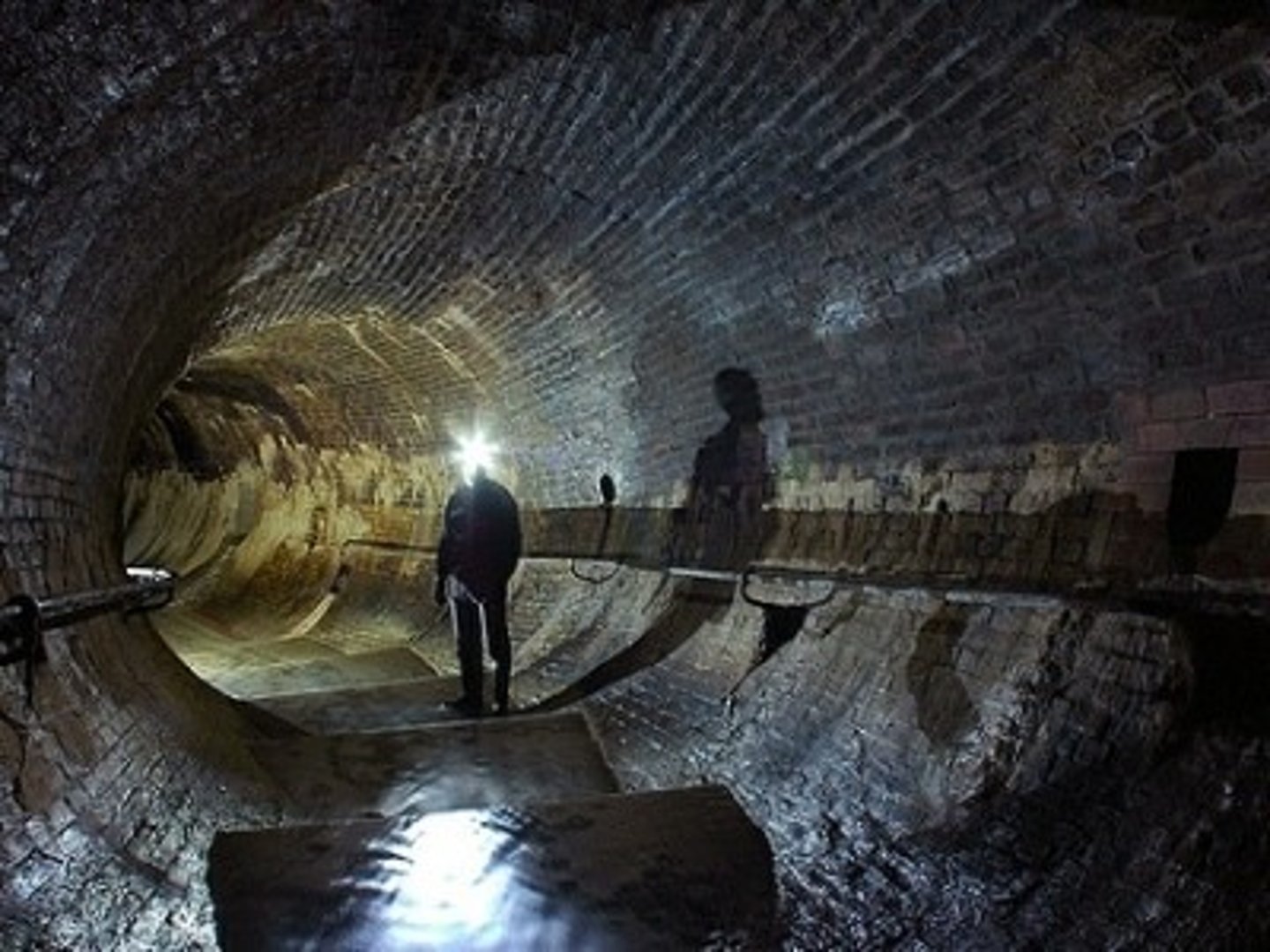
Lincoln Corporation
Took over the waterworks, sewerage, gas and electicity supplies of Lincoln in 1871. They put profits ahead of people.
River Witham
Was Lincoln's main supply of water in 1879. Although the Medical Officer for Lincoln had raised contamination with the Council, they and the Lincoln Corporation ignored it.
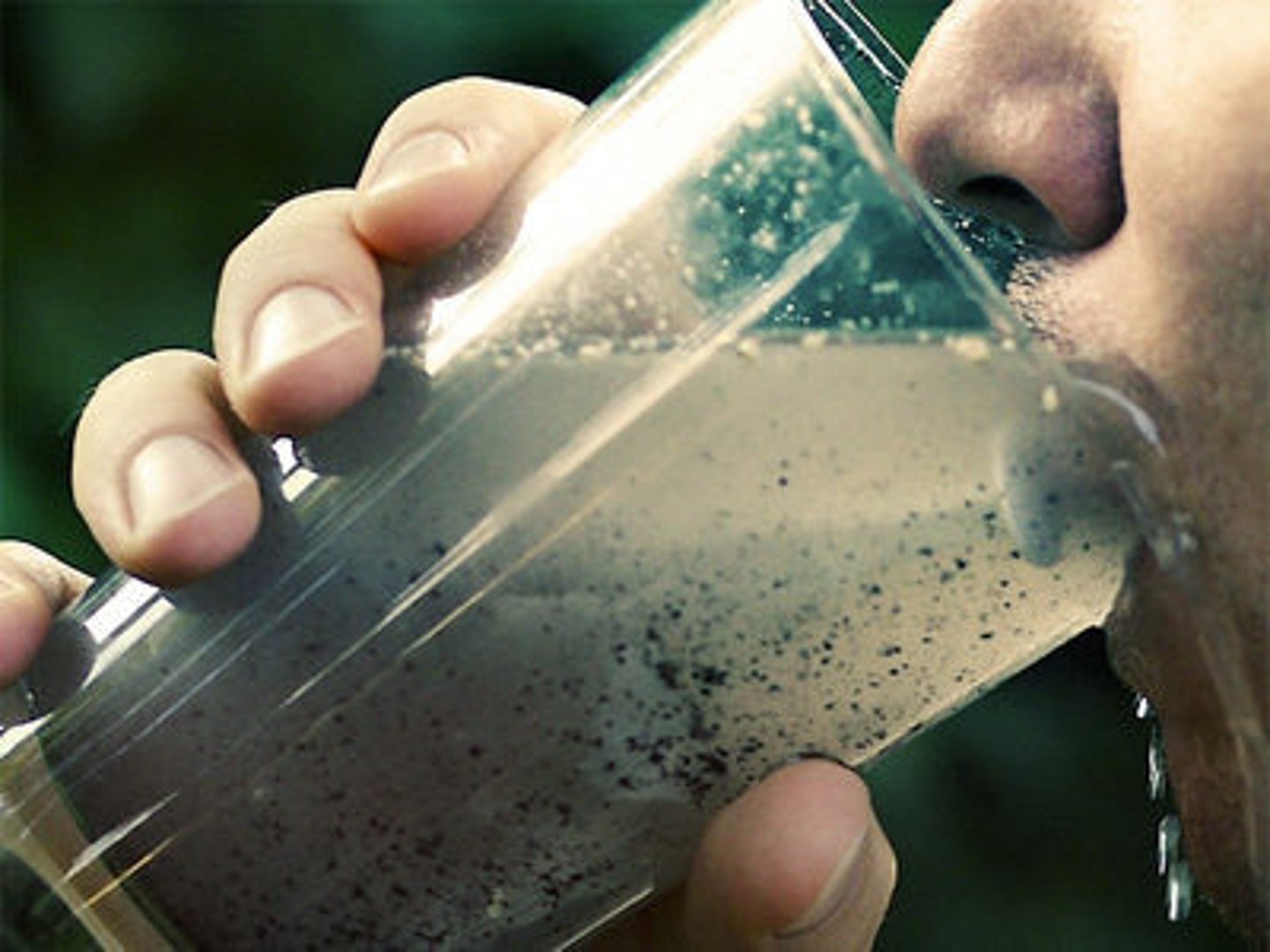
Contaminated
When water has something dangerous in. In 1879 the water coming to Lincoln was contaminated with raw sewage 30 miles upriver.
Typhoid
A bacterial infection that spreads through contaminated water and food. It causes problems with organs and, if untreated, organ failure, and death.
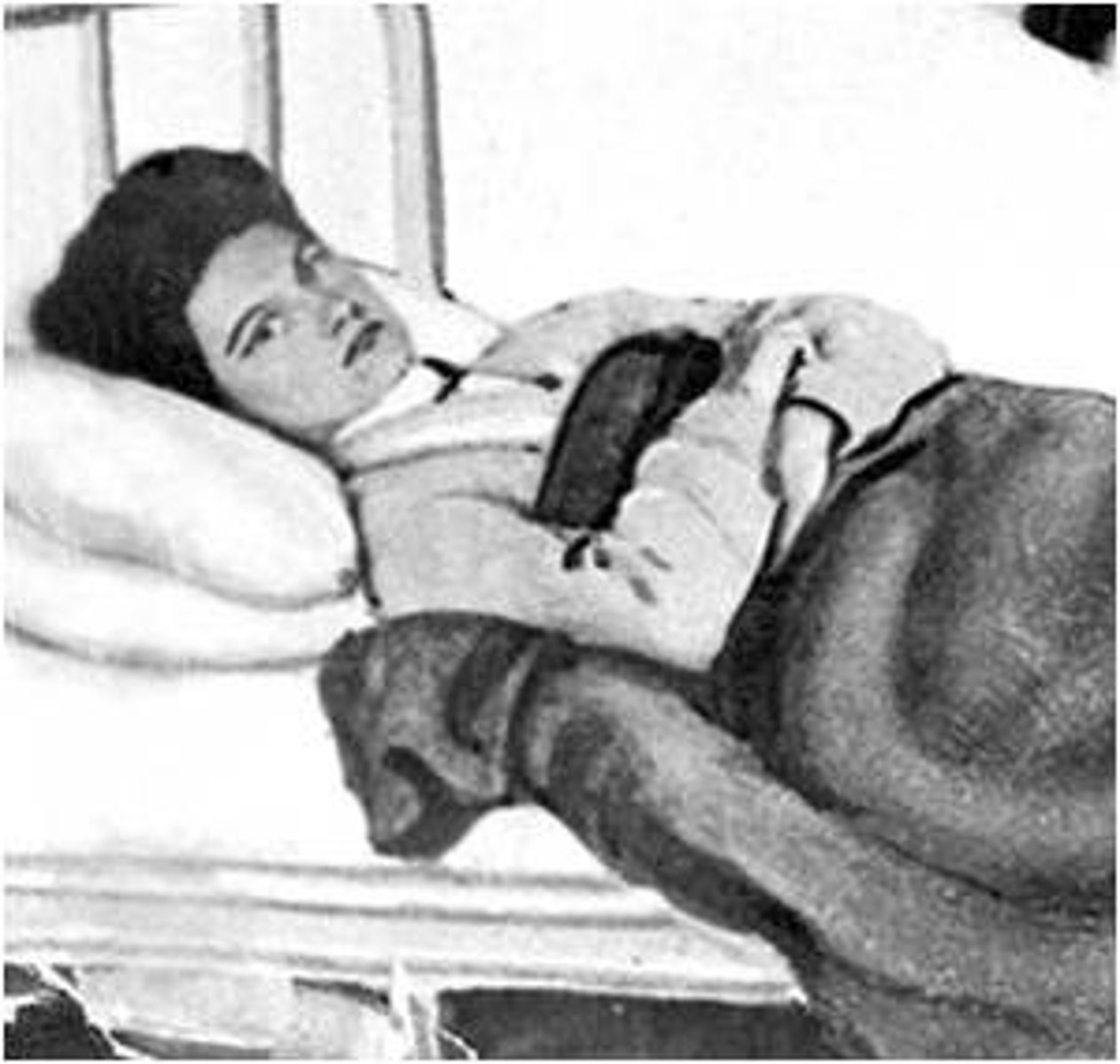
Lincoln's Typhoid Epidemic (1905)
They had over 1000 cases and 102 deaths by April 1905. This was linked to the poor quality of water the Public Health and, now dead, Sanitary Inspector had warned of.
Distress Fund
An emergency pot of donated money set up to help the victims of disaster, as in Lincoln in 1905
Solutions to the Typhoid Epidemic
A big cleanup of the streets, privies, animal waste and gardens took place. The council paid £200,000 to pump water in from Elkesly in Nottinghamshire. By 1911 a new water supply was completed.
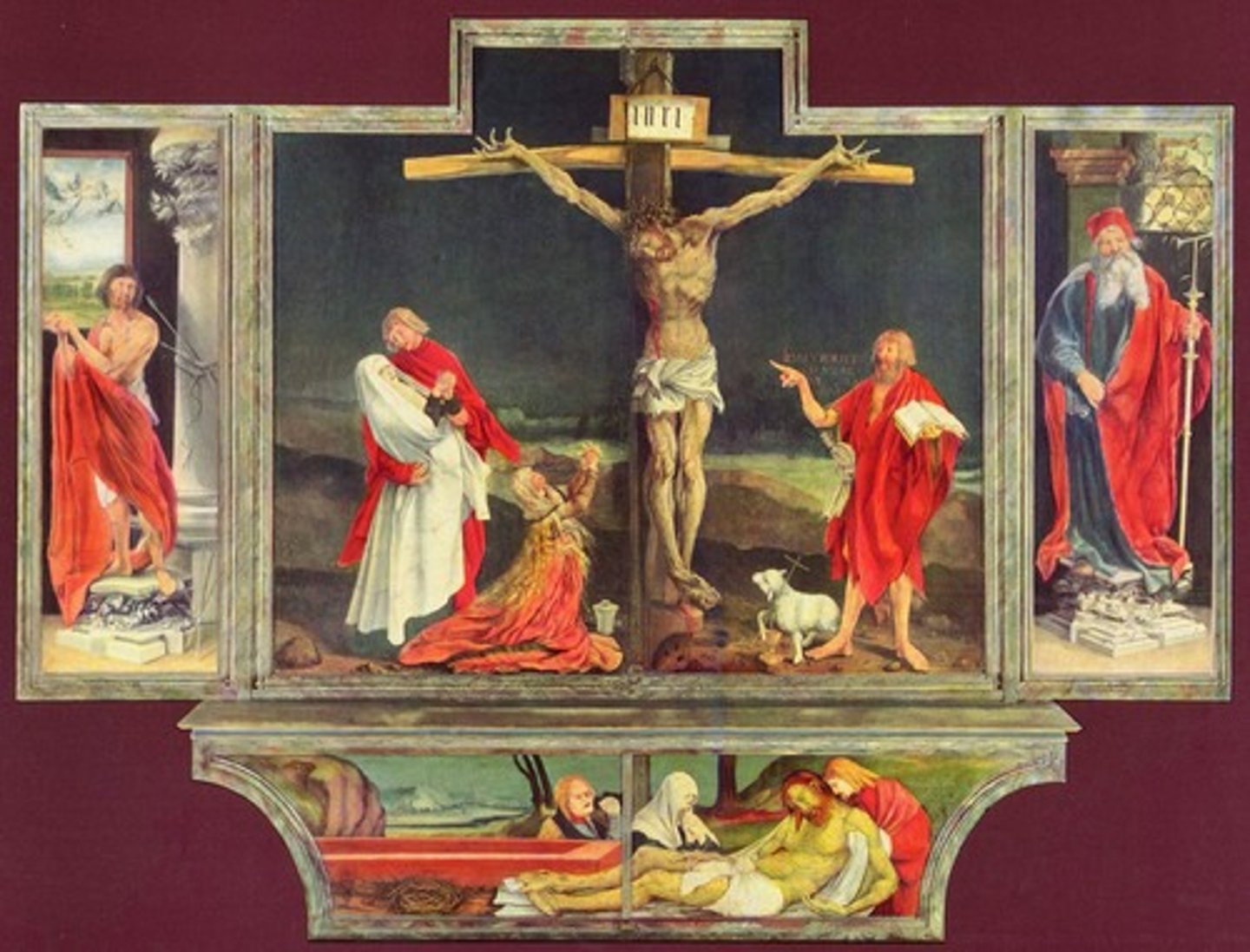
'Divine' pain
The idea that God sends pain to remind us of the suffering of Jesus was used by some as opposition to painkillers.
Anaesthetic
Painkiller. Before 1800 the only common painkillers were alcohol and opium, both of which weren't very effective
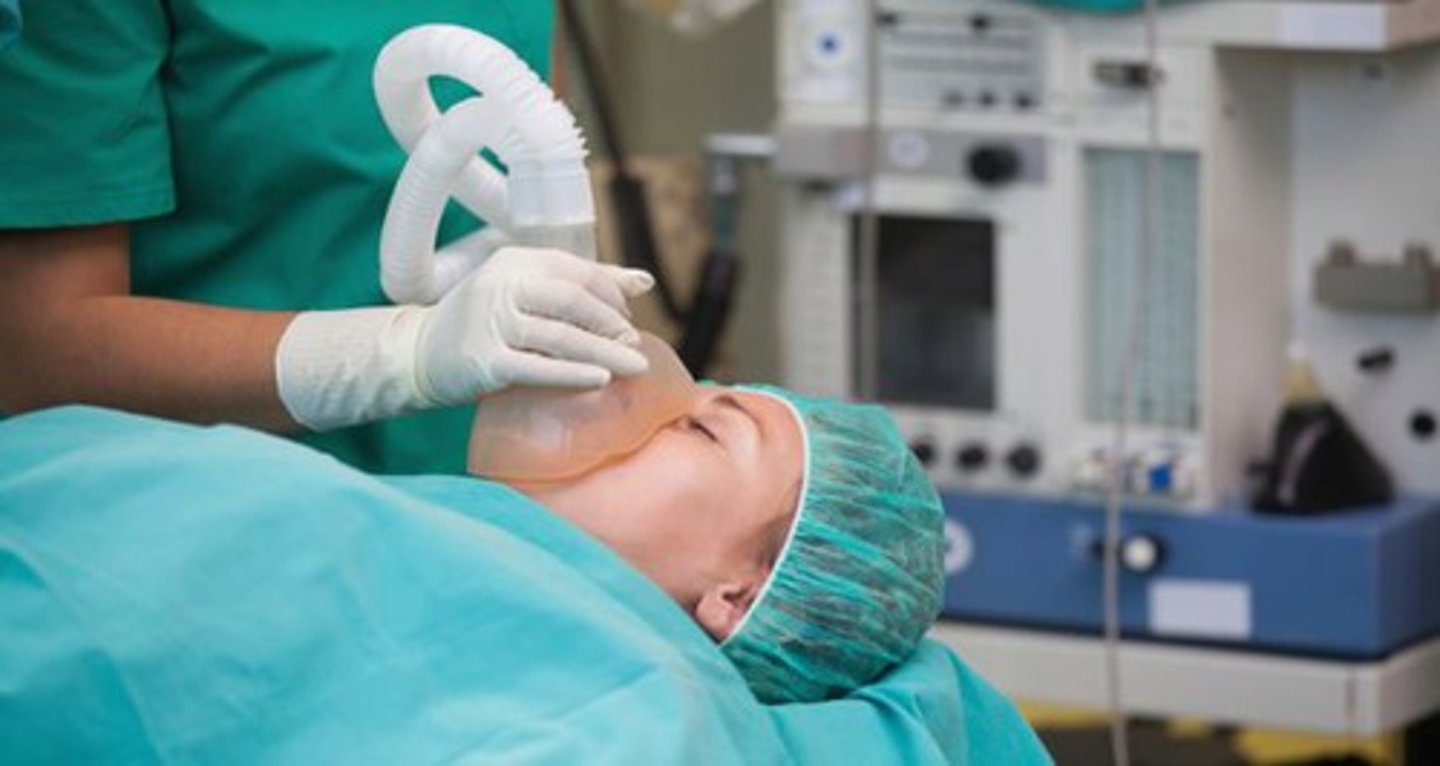
Humphry Davy
Invented the Miner's Safety Lamp in 1815 which ran from Nitrous Oxide (laughing gas) and he and his friends experimented inhaling it.
Nitrous Oxide
Laughing gas was used as ana anaethetic for pulling teeth and other minor operations, but it doesn't last long or restrict movement, so needs a steady dosage over time
Robert Liston
The first surgeon in Britain who used Ether in 1846 during an amputation after reading about an American dentist called William Morton who used Ether (discovered originally by William E Clarke)
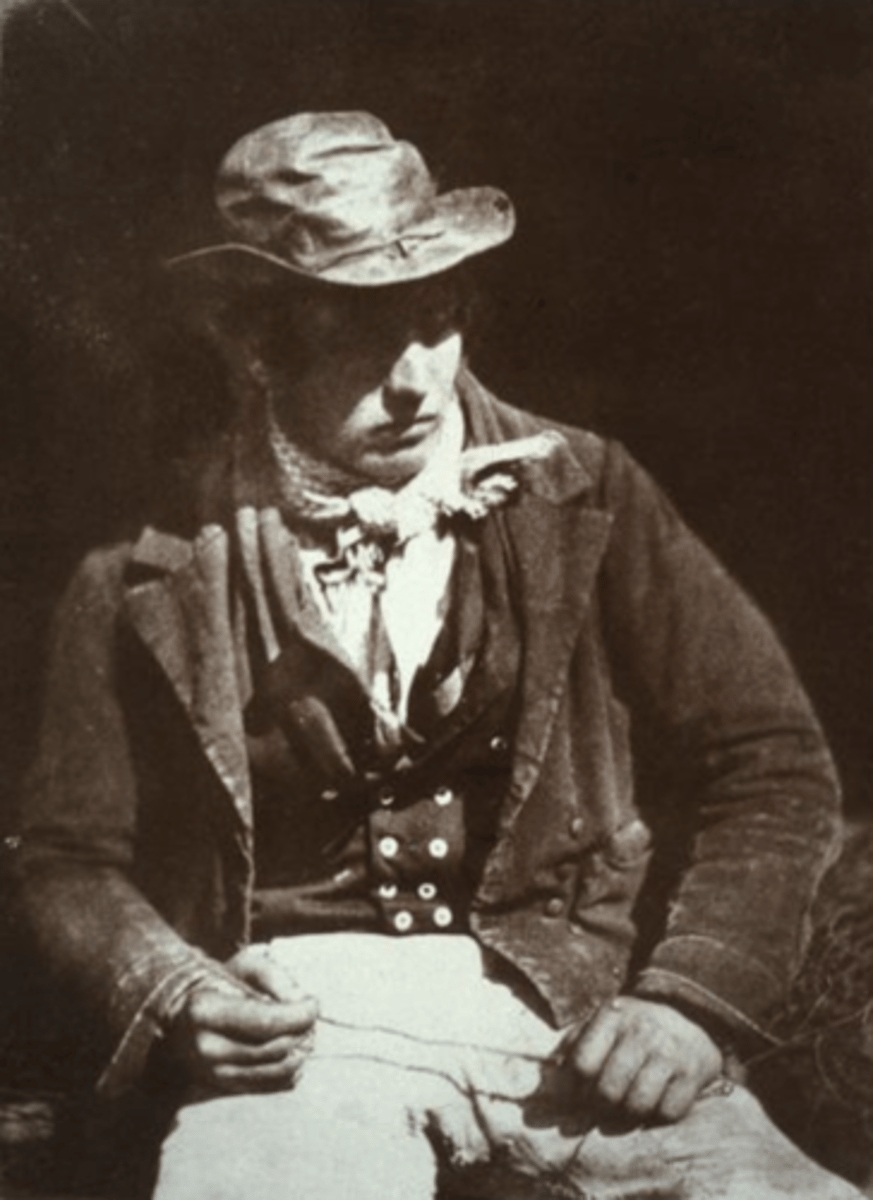
"the fastest knife on West End"
Robert Liston was a fast surgeon who could amputate a leg in less than 2 minutes (once in 28 seconds). However, in one operation he moved so fast that he accidentally slit the throat of one assistant (died) and cut the fingers off another (later died of infection). The only 300% mortality rate operation on record.
Ether
An anasethetic used for major operations. However, if was flamable, irritated the lungs and was unpredictable with dosage, meaning sometimes the patient would wake mid-operation
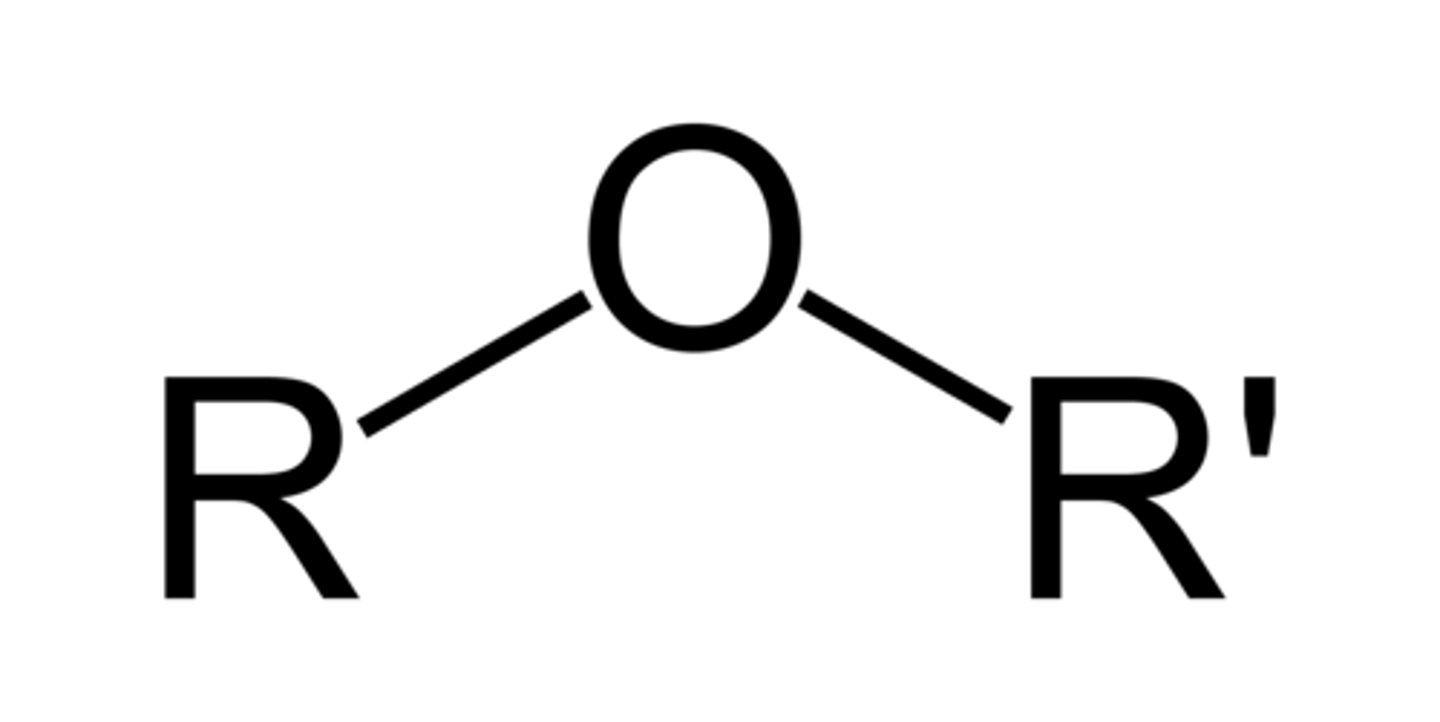
James Simpson
Discovered Chloroform when experimenting with himself and friends inhaling chemicals. He was found passed out at his dining room table. He realised this could be used during childbirth.
Chloroform
An anesthetic that can be used for major procedures and childbirth. In 1853, Queen Victoria used it during the birth of Leopold and praised it. It became popular. It could impact the heart and cause death in some people or with high doses
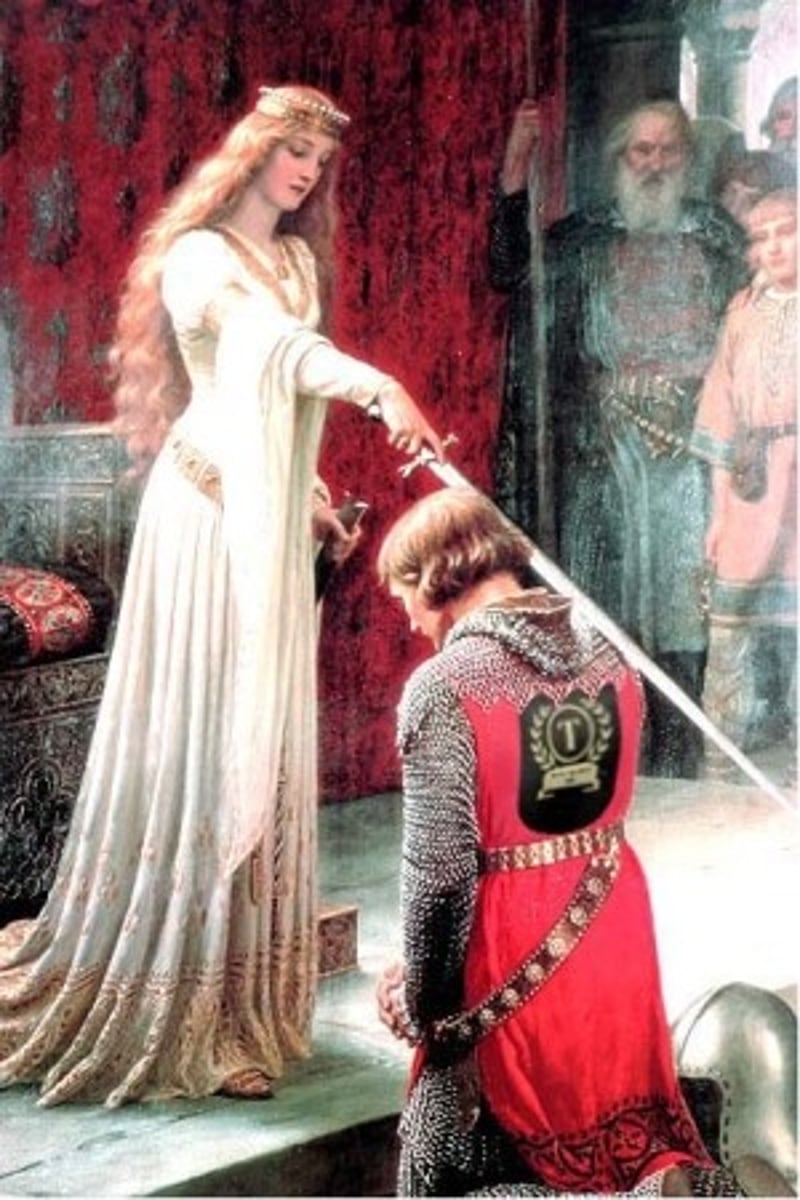
Knighted
When someone receives a title as a personal honour from the King/Queen. James Simpson was knighted for his discovery; the first person to be knighted for services to medicine
Hannah Greener
A girl who died in 1848 from Choloform during an operation. It was widely reported on
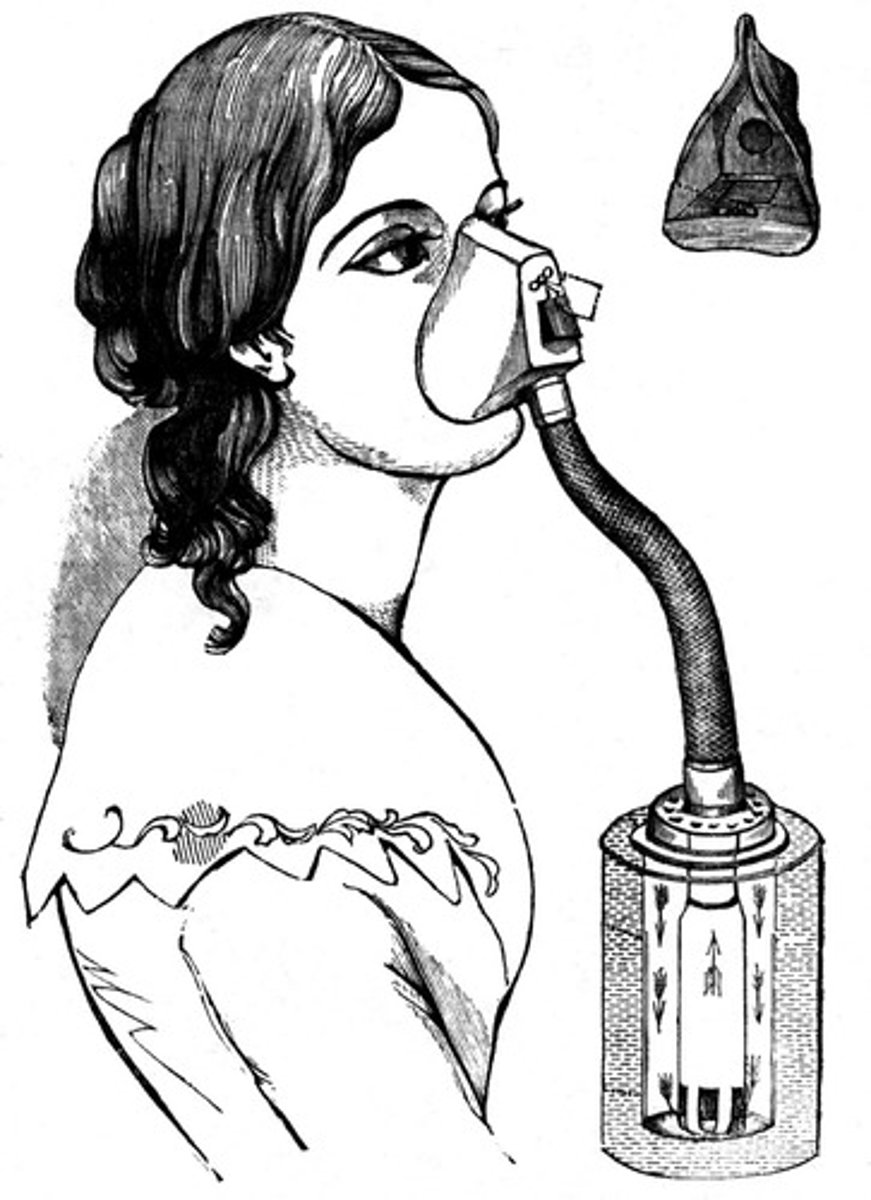
Cocaine
A now illegal drug that was first used in the 1850s as a local anaesthetic, put in as eye droplets or rubbed in the affected area. Novocaine is one variation that wasn't addictive.
Nepotism
When someone is given a job based on who they know, not how good they were. ie) Bransby Blake Cooper, a doctor who did a bladder stone operation in 1hr instead of 6 minutes. The patient died. A report suggested he had been employed because he was the nephew of a good surgeon and wasn't well qualified himself.
General Medical Council (1858)
Created to put rules in place and oversee who was employed / set rules

Institutional Sexism
When an organisation in an industry / sector / area of government discriminates against or doesn't employ the opposite gender, as with the medical profession in the 1800s

Elizabeth Garrett Anderson (Education and barriers)
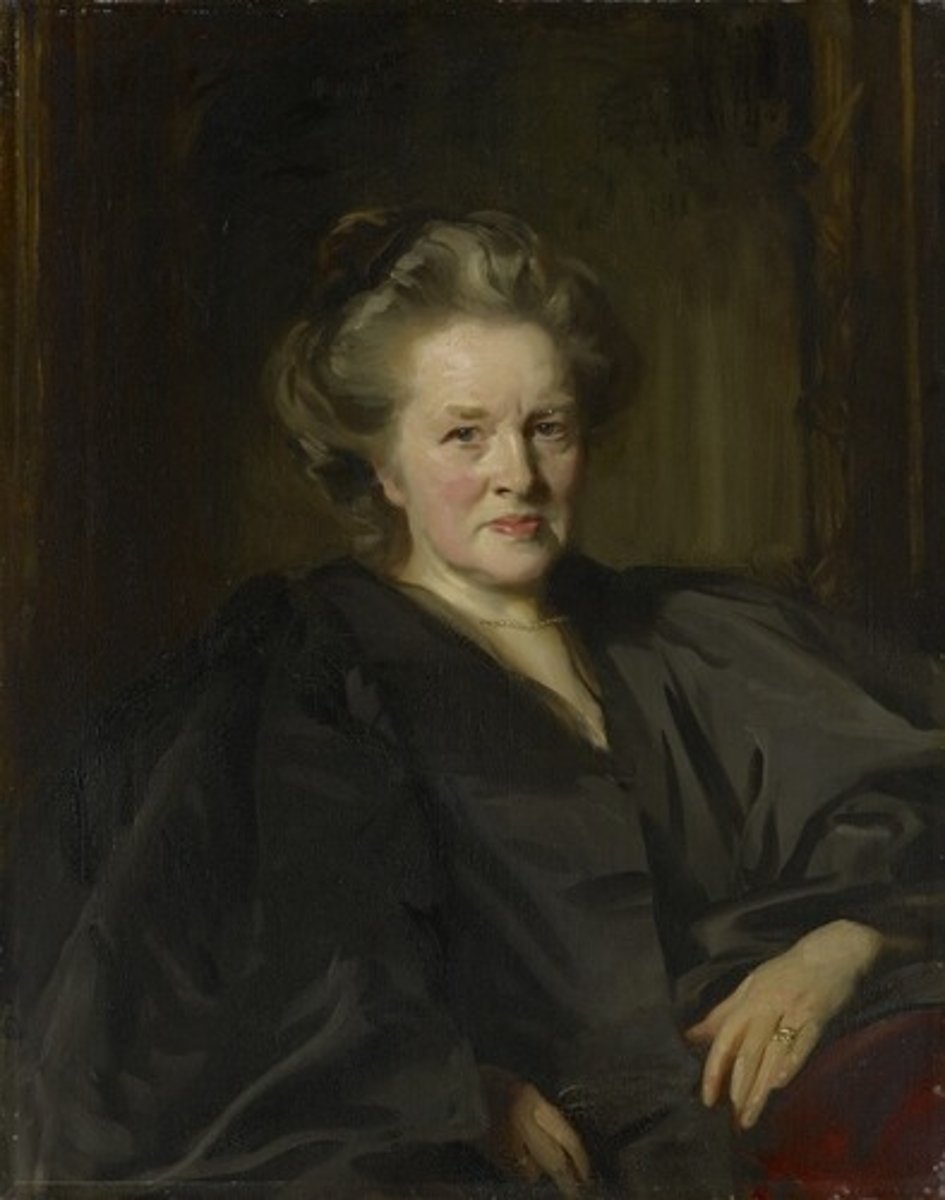
Got a medical education privately due to British universities rejecting her. Passed the Society of Apothacaries exam to get a license - they changed the rules to block others. Learnt French to get her medical degree in France. Was the only female member of the British Medical Association for 20 years.
Elizabeth Garrett Anderson (Achievements)
Opened the New Hospital for Women and Children in 1872 and The London School of Medicine for Women in 1874. Total of 495 women on the medical register by 1911.
Sophia Jex-Blake (UK Education and barriers)
Applied to Edinburgh Uni to study medicine and was rejected until she gathered another 6 women - together labelled the Ediburgh 7. Pelted with mud and rubbish by male peers at the Surgeon's Hall Riot in 1870. University then refused to issue degrees to them upon completion
Sophia Jex-Blake (Achievements)
She studied in Switzerland to get her medical degree in 1877. Became the 3rd female doctor in the Uk in 1878. Worked with Elizabeth Garrett Anderson and set up equivalent in Edinburgh.
Antiseptics
A liquid or spray that kills germs ie) bleach
Ignatz Semmelweiss
A Hungarian doctor in Vienna General Hospital in Austria who showed that washing things in Calcium Chloride solution reduced the death rate from 35% to 1%. He was largely ignored and ended up out on the street.
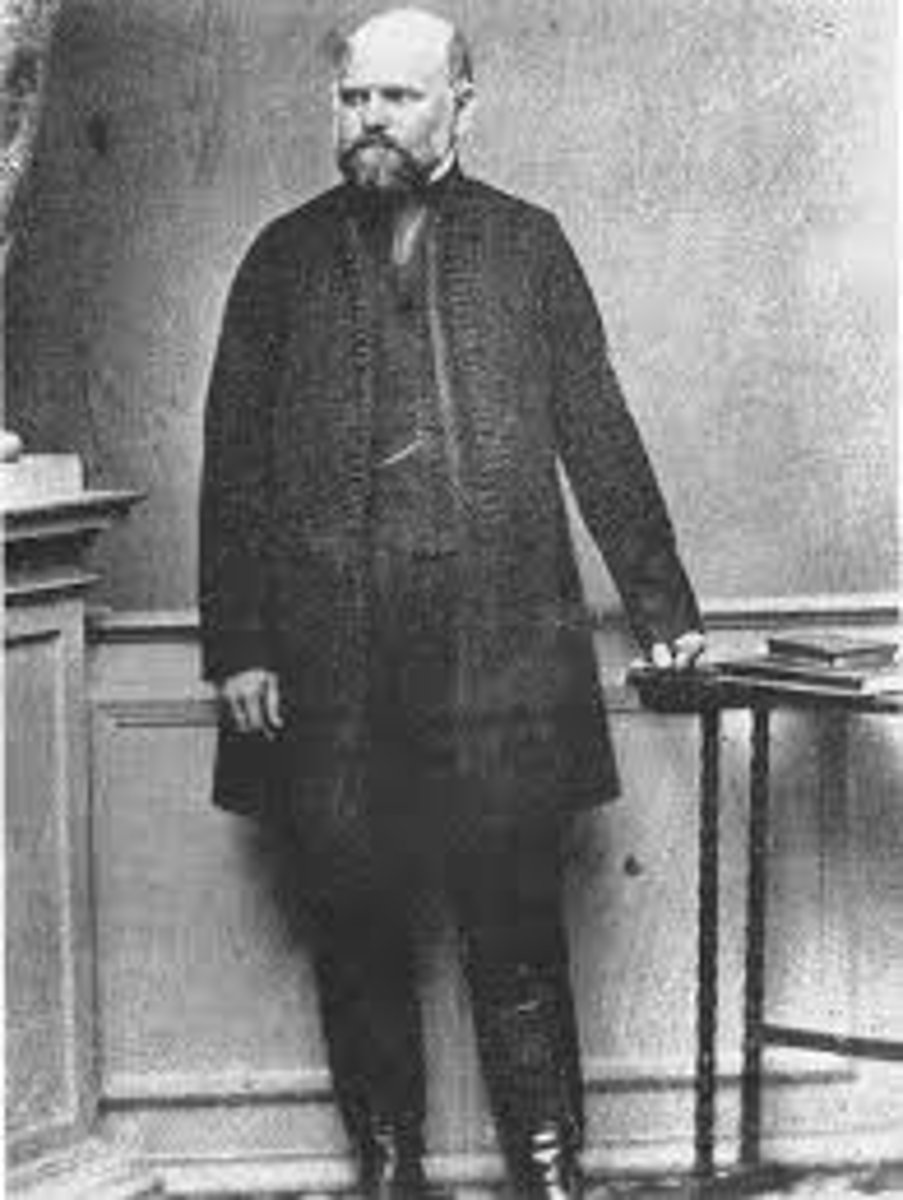
Joseph Lister's Dad
How Lister's dad had a large effect on the medical world because he was a medical pioneer who improved microscopes to enhance magnification and the engineering process
Germ Theory
The theory that backed up Lister's need for aseptic surgery (Pasteur). This was furthered when Koch discovered the microbe that caused Septicemia in 1878 using his dye technique.
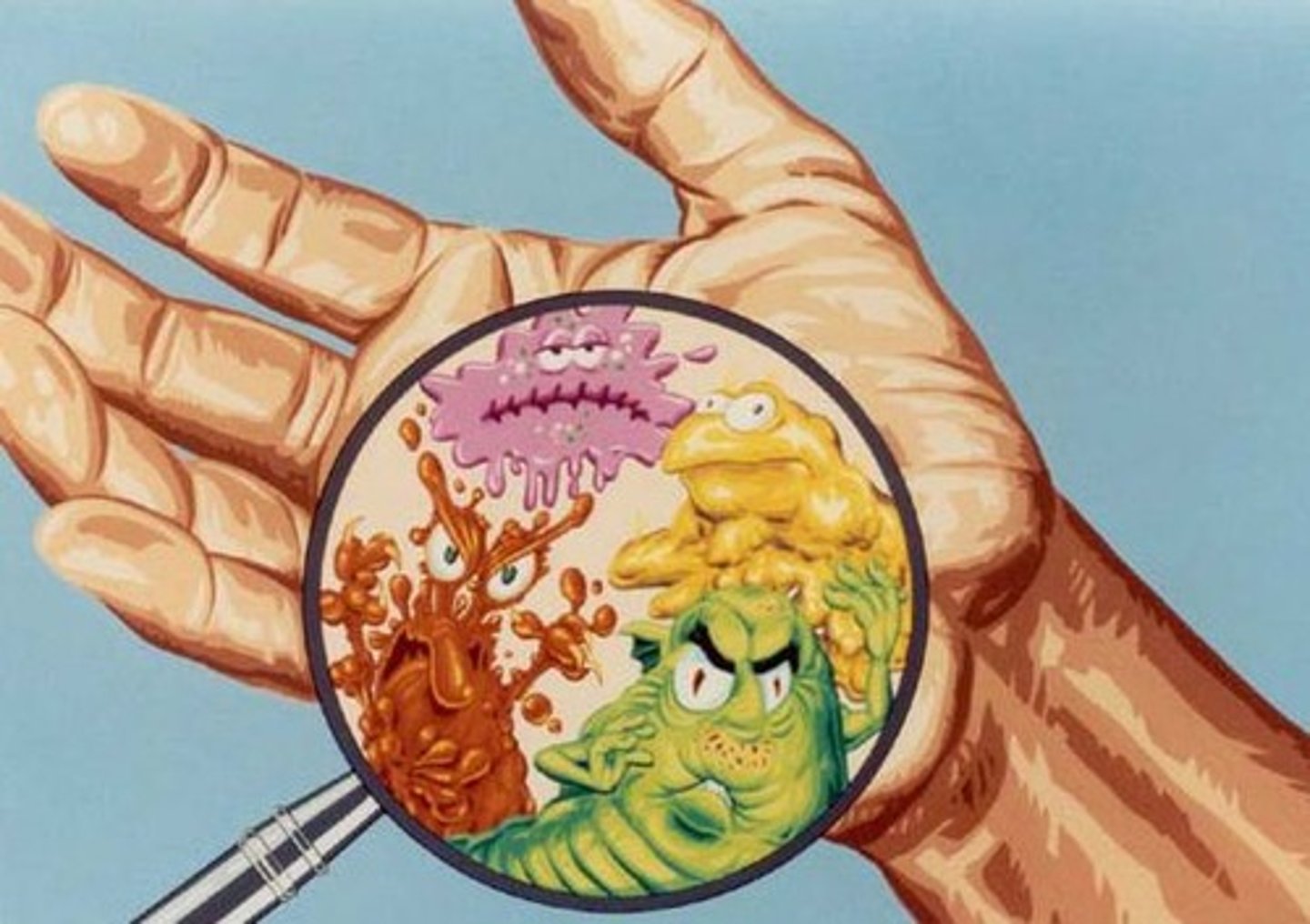
Septicemia Microbe
Causes a serious bloodstream infection (blood poisoning). It is a bacterial infection that can lead to fever, breathing difficulties, confusion, blood circulation issues. It can be life-threatening.
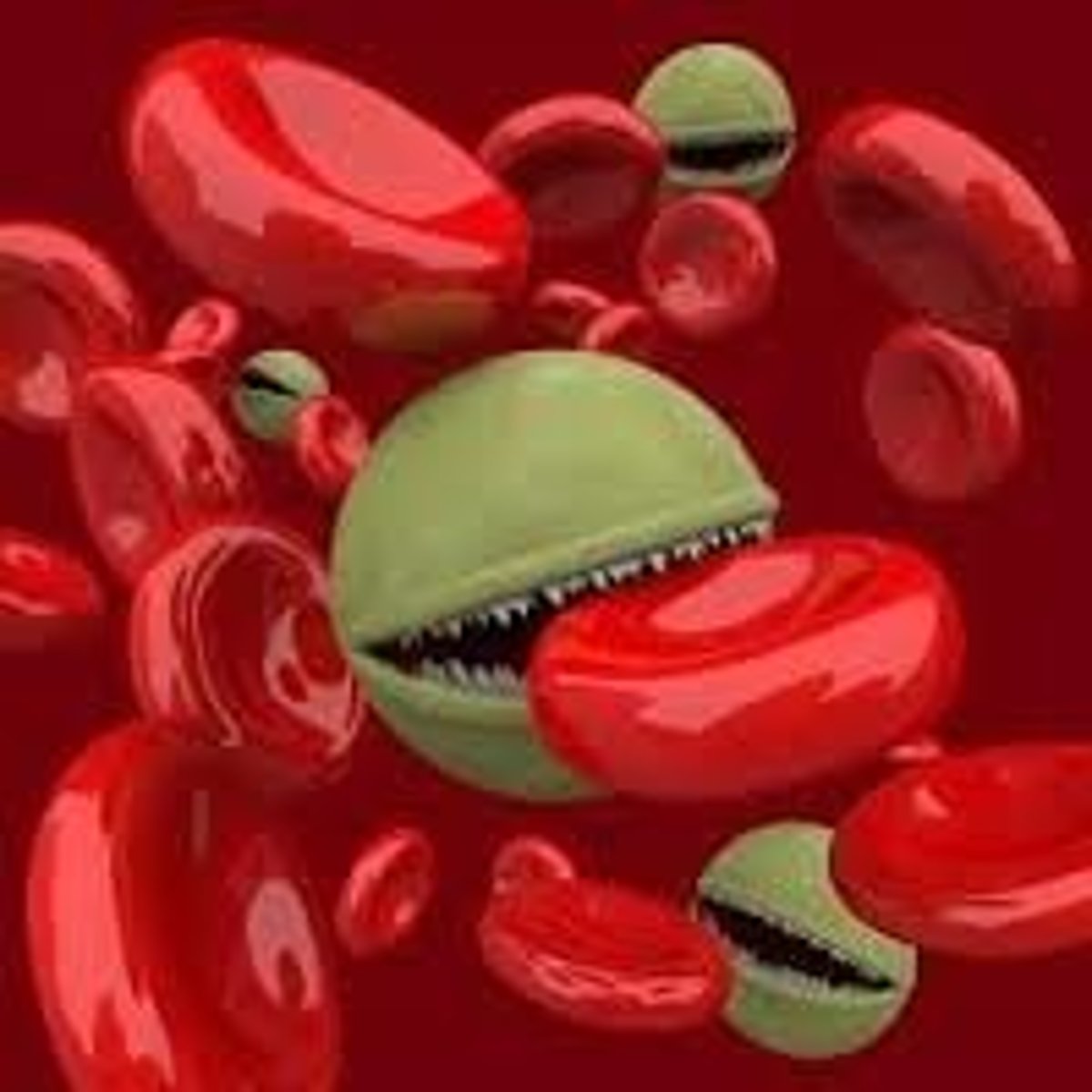
Gangrene
A common condition where a limb dies and the rot spreads to other limbs
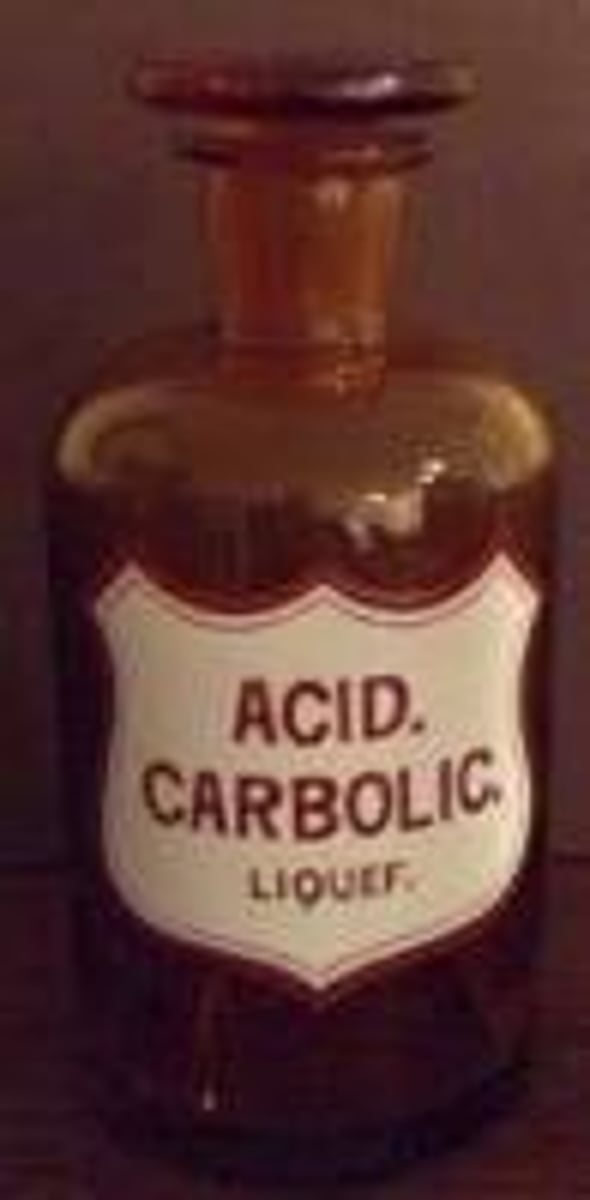
Carbolic Acid
Lister started experimenting with this in operations to kill germs in 1865. He started experimenting with cold blooded animals, so he could monitor the effects at a more gradual speed.
Statistical Data
By keeping records of the outcomes of his operations Lister proved that his use of antiseptics worked. Deaths after surgery fell from 46% to 15% in 3 years
Sterilised
When germs on an object have been killed by an antiseptic
Carbolic Acid Opposition
Initially there was opposition because it made the surgery wet, smelled terrible (causing difficulties breathing) and caused the skin on the hands to rapidly dry out and crack. Also Lister was terrible at communicating or even rude, meaning some people disliked him.
Carbolic Spray (1871)
In 1871 Lister developed a sprayer which meant the acid could be applied in a more diluted and light-touch way
Sterilised Catgut Ligatures
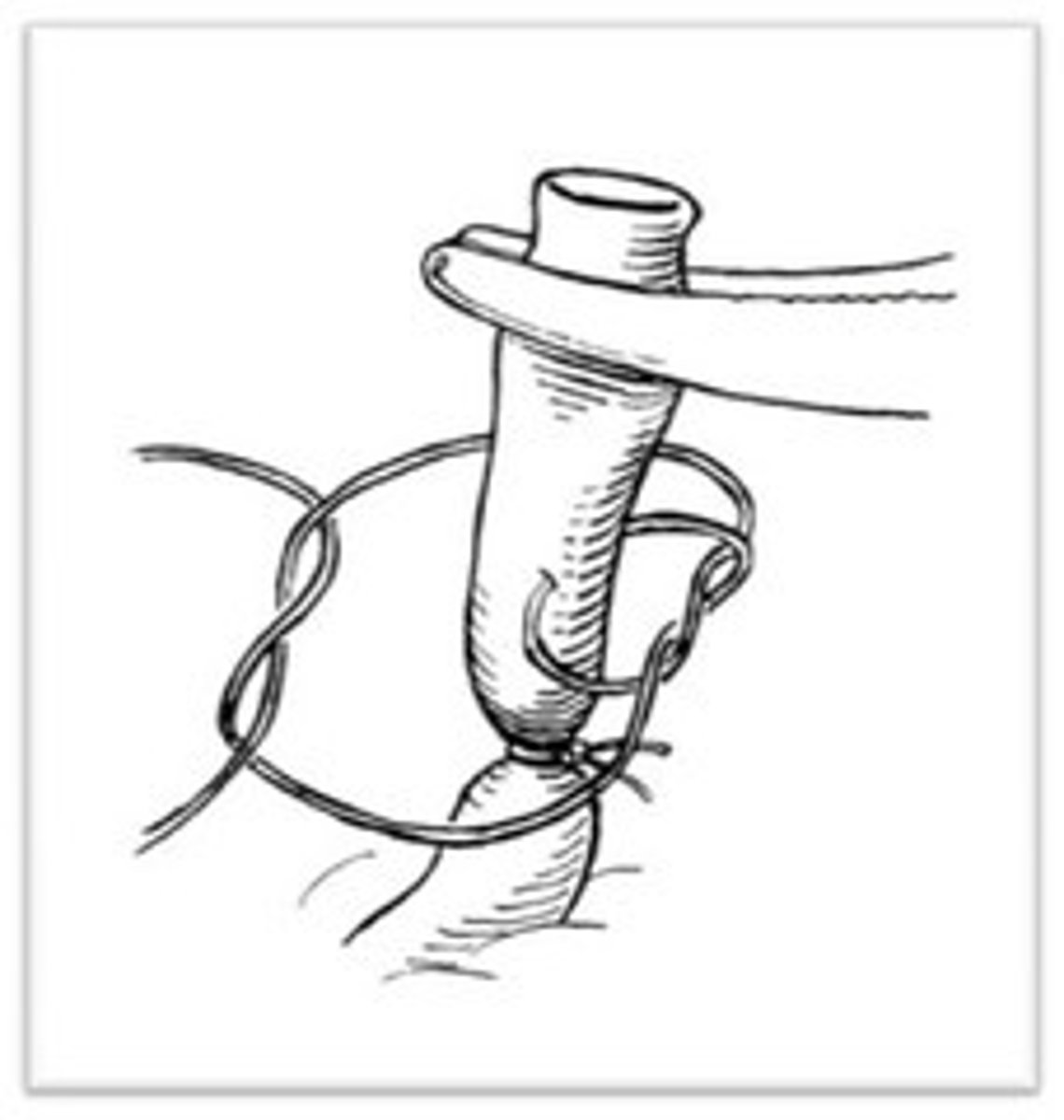
Lister used ligatures that had been soaked in carbolic acid as ligatures to stem bleeding during surgery
Steam Steriliser (1881)
Charles Chamberland invented a machine that heated objects at 140 degrees for 20 minutes, removing all germs

Sterile Operating Theatre (1886)
Gustav Neuber had his operating theatre scrubbed and even the air sterilised before operating. His works were published in 1886 and set the gold standard for aseptic (germ free) surgery
Surgical Clothing
Surgical rubber gloves were used by William Halsted in America, manufactured by Goodyear. Berkeley Moyniham was the first surgeon in Britain to wear gloves for an operation and then change clothes between operations. His wife was once presented with a bouquet made of rubber gloves

Epidemiologist
Are scientists who trace the spread of disease through population
Microorganism
Another name for a microbe. This is any organism that is microscopic ie) virus or bacteria
Microbes
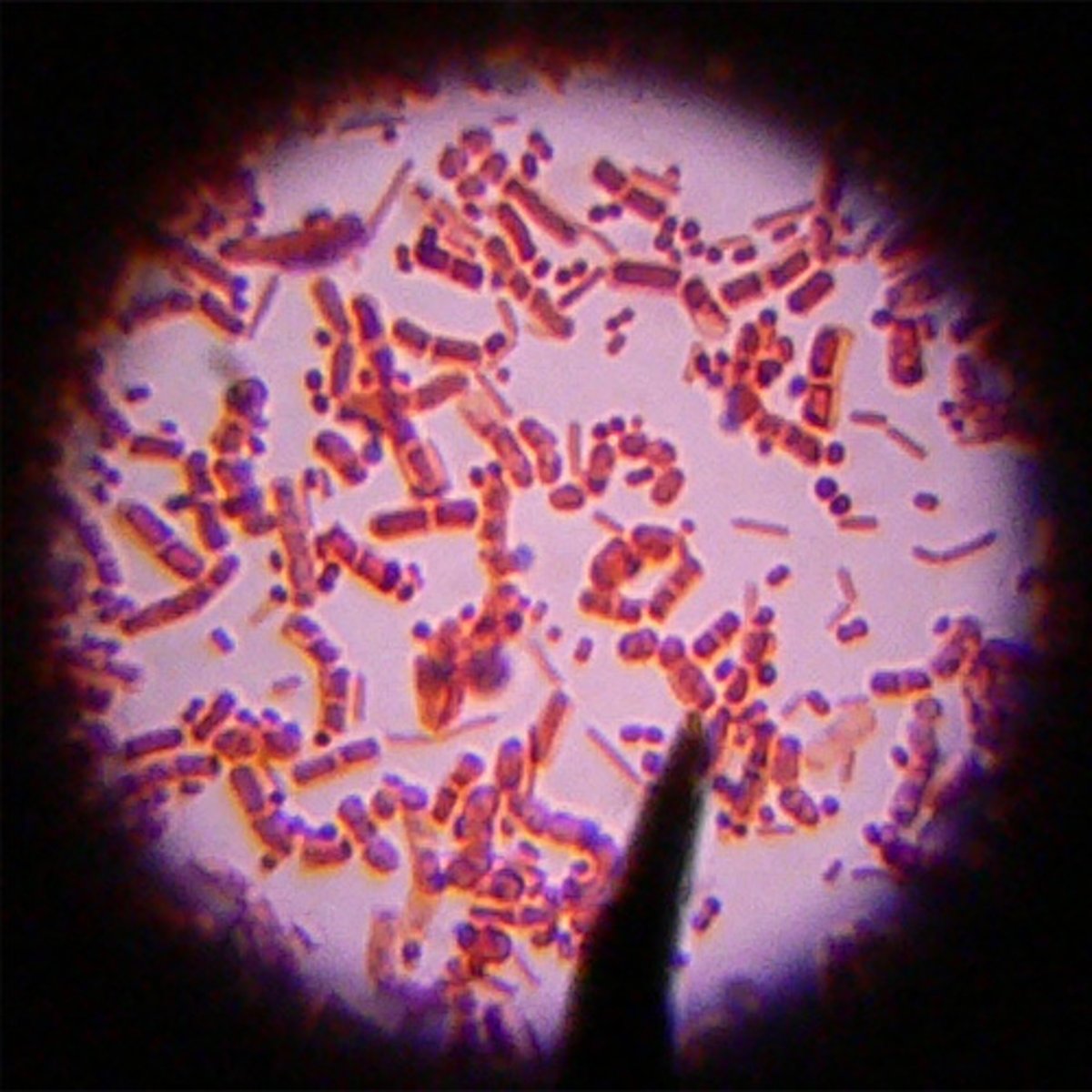
Microscopic organisms - can only be seen with a microscope
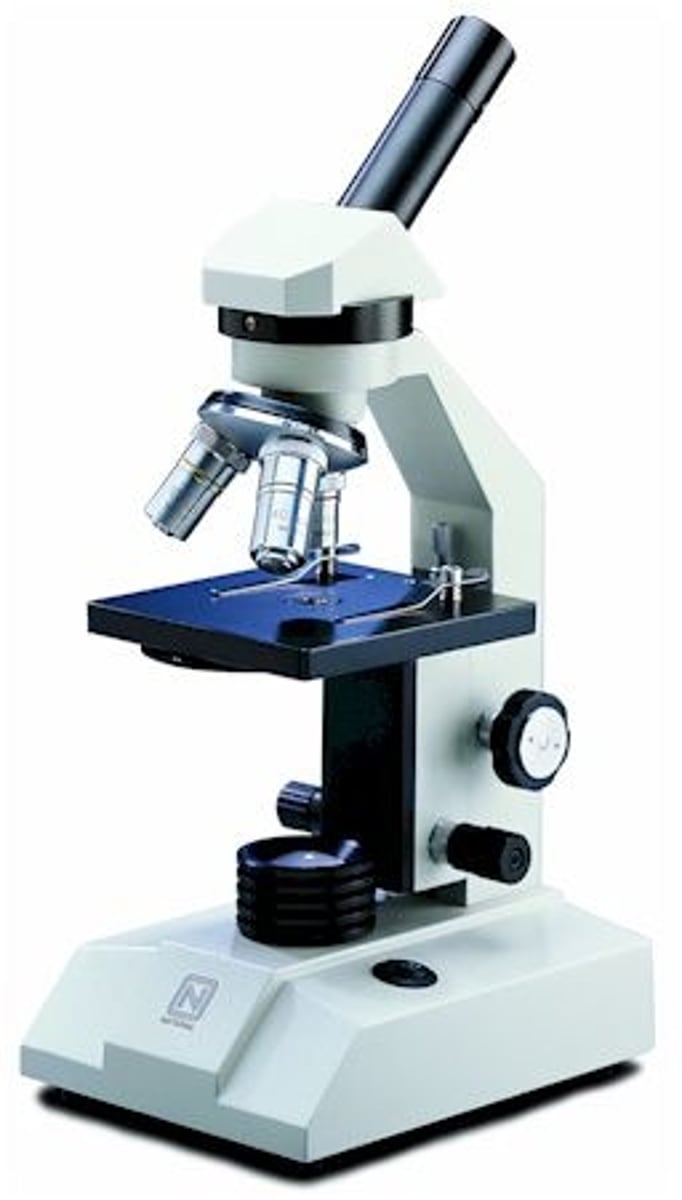
Microscope
Technology that lead to the development of the Germ Theory
Germ Theory
The theory that infectious diseases are caused by certain microbes (Germs)
Louis Pasteur
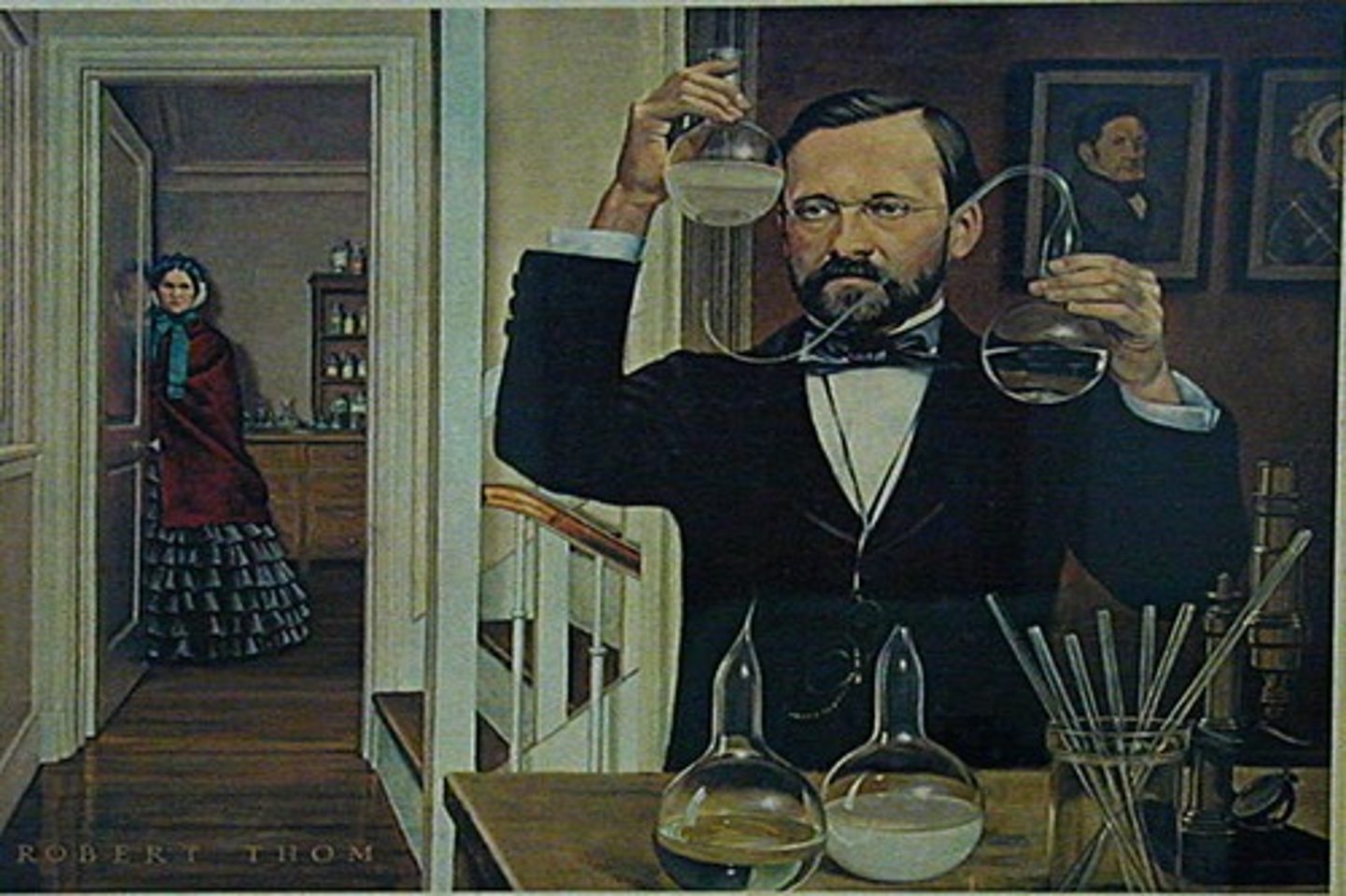
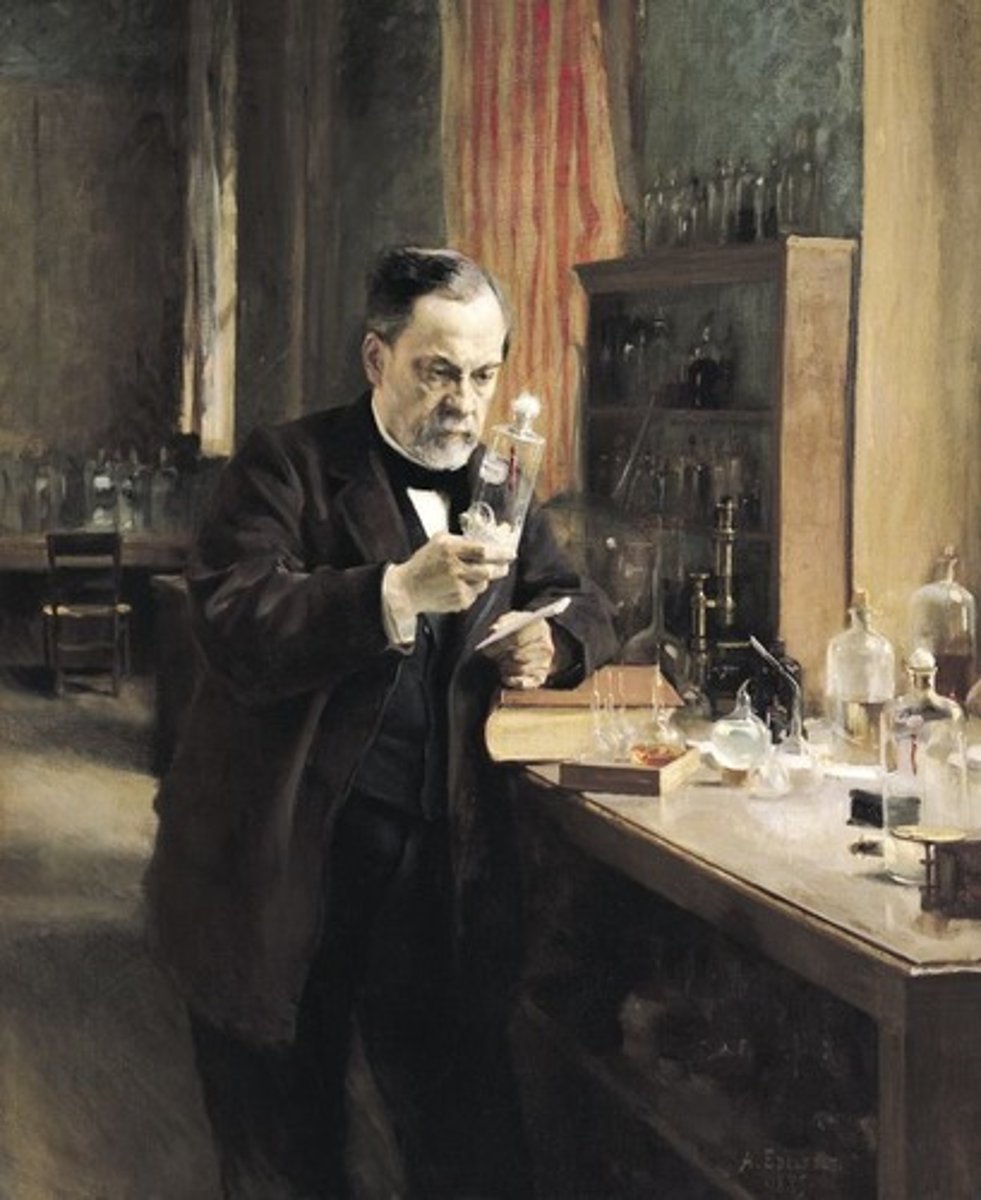
A French scientist (the father of microbiology) who proved the link between germs and disease and proved. Developed Vaccines for Chicken Cholera, Anthrax, and Rabies after using Koch's methods
Spontaneous Generation
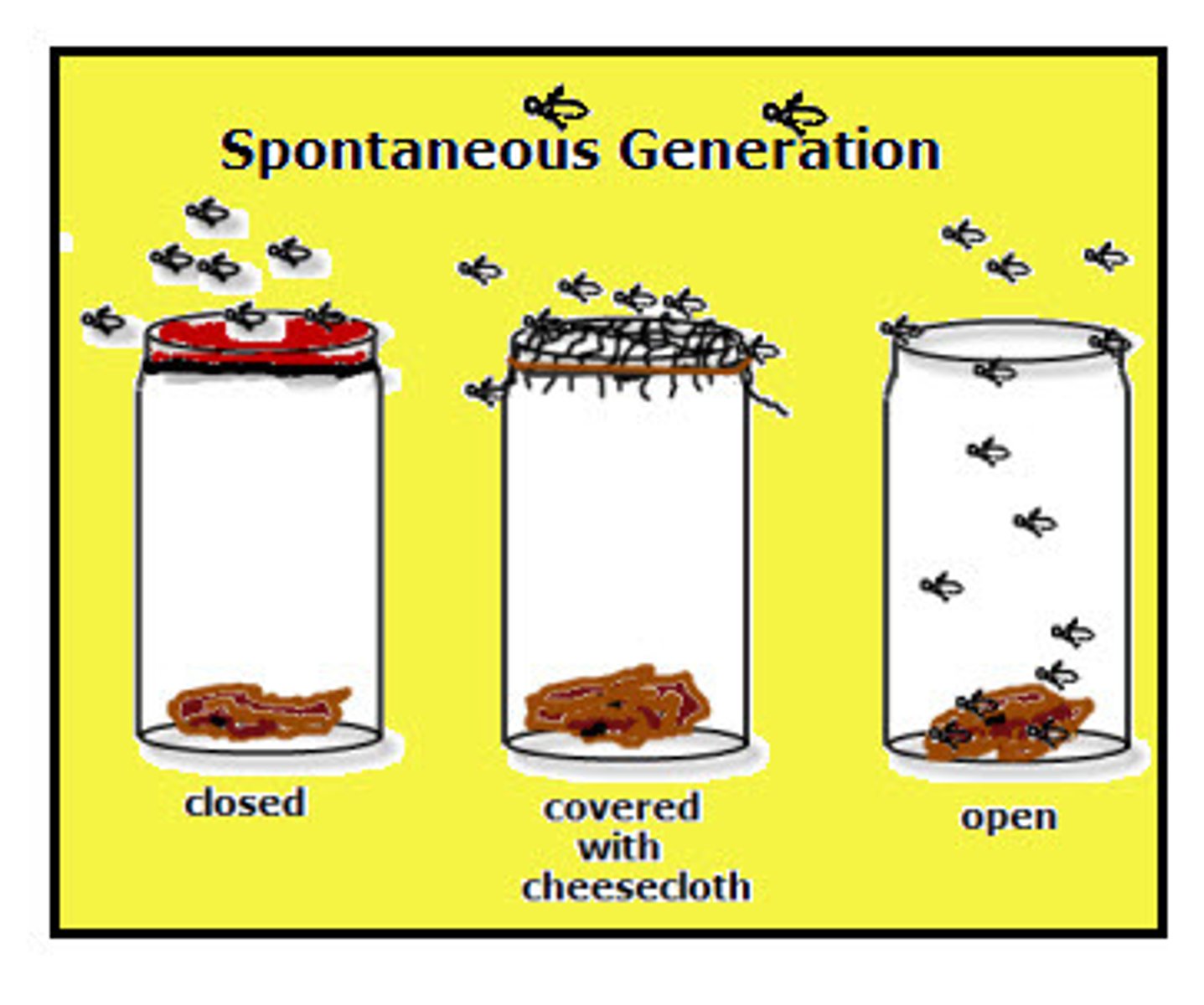
The main theory that Pasteur was trying to prove wrong. The idea that a living thing could be spawned from a non-living thing ie) maggots from something that was decaying. They didn't understand that bacteria existed before Pasteur.
Pasteurisation
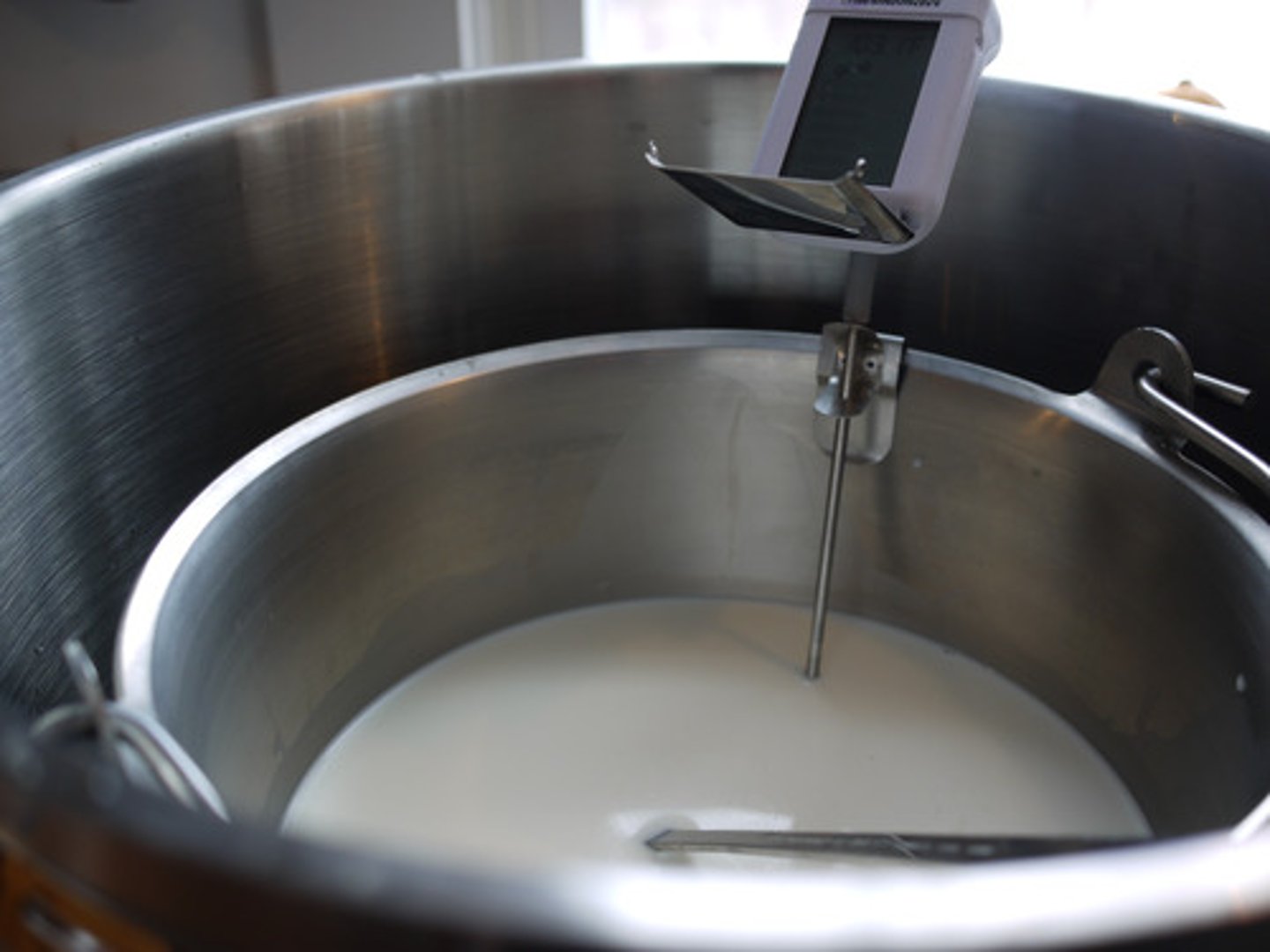
Rapidly eating a liquid and preventing the air from coming into contact with it can preserve it longer. Used for milk.
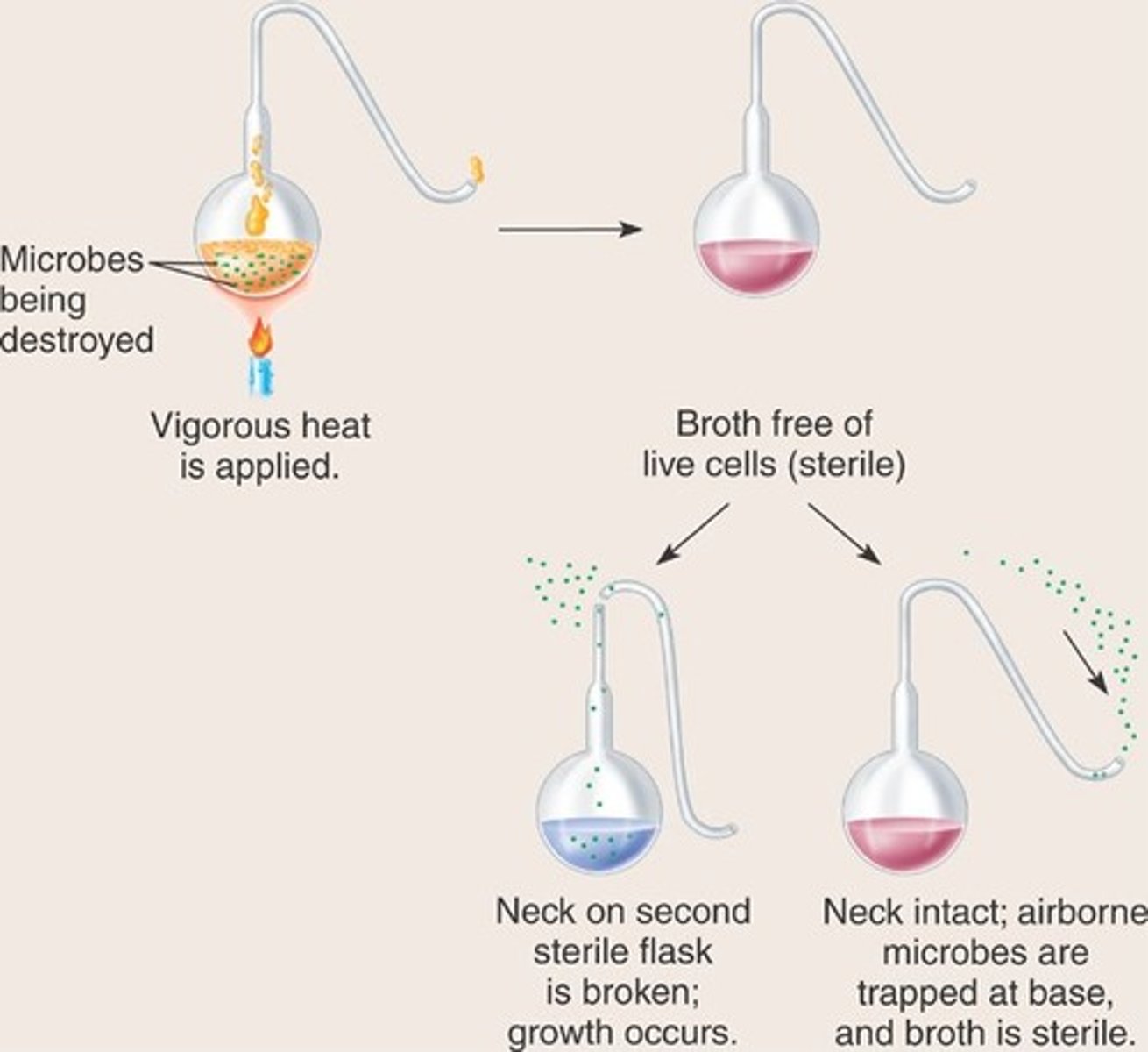
Swan-neck Flask Experiment
Discovered that germs living in the air can cause food to go off when employed by a wine trader to solve problem of soured wine. Heated 2 broths and allowed 1 to be open to the air. The non-contact broth didn't turn.
Silkworms
Pasteur discovered that silkworms (create silk) were being killed by microbes

Rivalry
When people try and beat each other. Pasteur (French) and Koch (German) were in competition with each other. Their countries had recently been at war, to it made them more competitive.

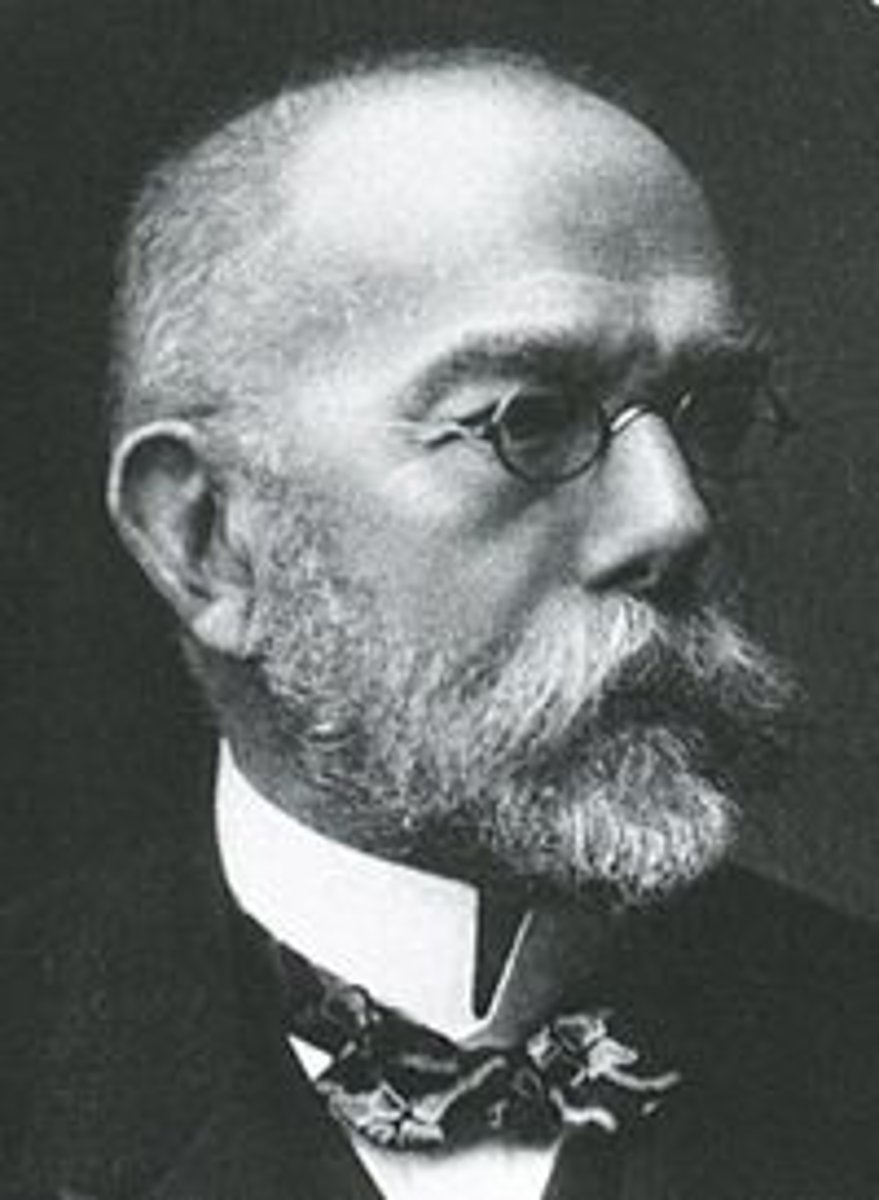
Robert Koch
Researched how specific germs led to specific diseases. Used dye to discover microbes that caused Anthrax (1876), Diphtheria, Typhoid, Pneumonia, Plague, TB (1882), Cholera (1883) and Whooping Cough after reading Pasteur's works. Won Nobel Peace Prize in 1905
 Note
Note  Flashcards (73)