Climate Change (3.1)
 Call Kai
 Learn
Learn Practice Test
 Spaced Repetition
 Match
Match Flashcards
 Knowt Play
1/23

There's no tags or description
Looks like no tags are added yet.
Name | Mastery | Learn | Test | Matching | Spaced | Call with Kai |
|---|
No analytics yet
Send a link to your students to track their progress
24 Terms
Climate Change: Global Surface Temperature: How much has earth warmed since 1850? What is the warming rate since 1980?
0.11°F per decade, about 2 F in total. Rate has tripled since 1980.
Climate Change: Global Surface Temperature: Where is the warming the strongest?
In the Arctic (spatial variation)
Caused by Human Activity: CO2 Emissions: What are two ways we contribute to climate change?
Burning fossil fuels releases greenhouse gases mainly CO2; Deforestation is responsible for a quarter of global greenhouse gas emissions (and removing diversity of photosynthesizers)
Where does continuous release of CO2 gas come from?
Anthropogenic activity (cities) and wildfire
What are anthropogenic emissions?
Human-caused CO2 emissions from industry, cities, and wildfires
Impacts of Warming & Increasing Atmospheric CO2: How does climate change affect weather patterns? (An increase in evaporation equals an increase in what?)
Changing wind patterns are producing more extreme storms (precipitation); flooding, and extreme disturbances
Impacts of Warming & Increasing Atmospheric CO2: What is desertification? (happens due to a decrease in what)
Land becoming drier and less productive (decrease in percipitation)
Impacts of Warming & Increasing Atmospheric CO2: What is the cryosphere? Why is loss of the cryosphere important?
Solid (frozen) water including glaciers and ice sheets; Leads to increased warming due to reduced reflection (increased absorption)
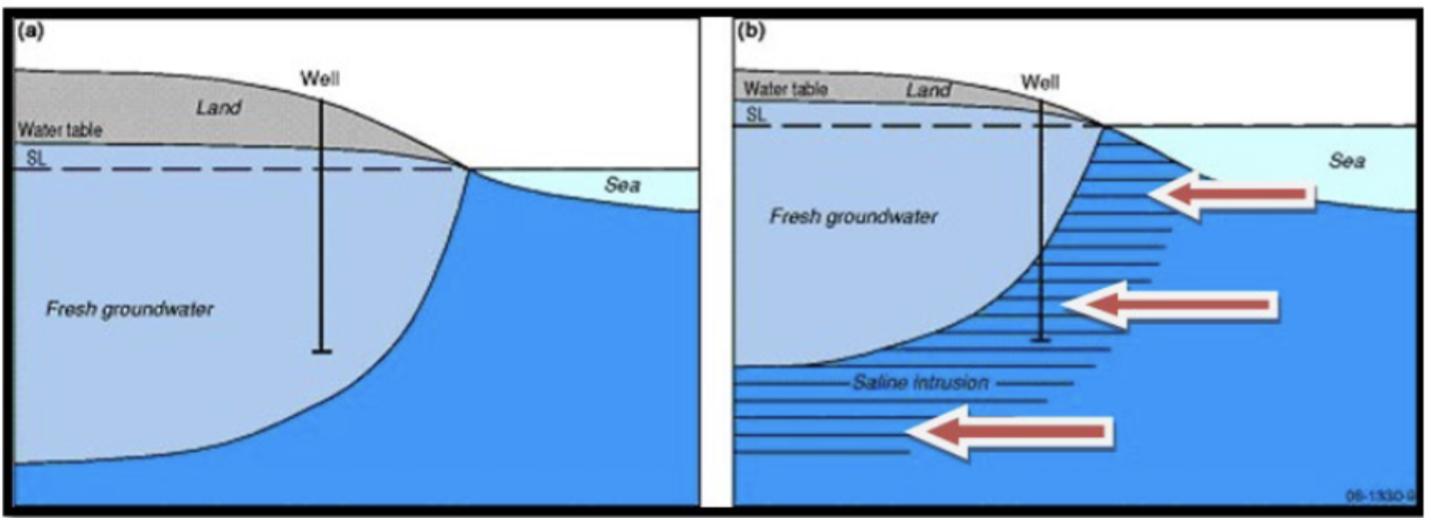
Impacts of Warming & Increasing Atmospheric CO2: What are impacts of sea level rise?
Loss of coastal habitats → increase in erosion and sedimentation; Salt intrusion → decrease in salt water and increase in flooding
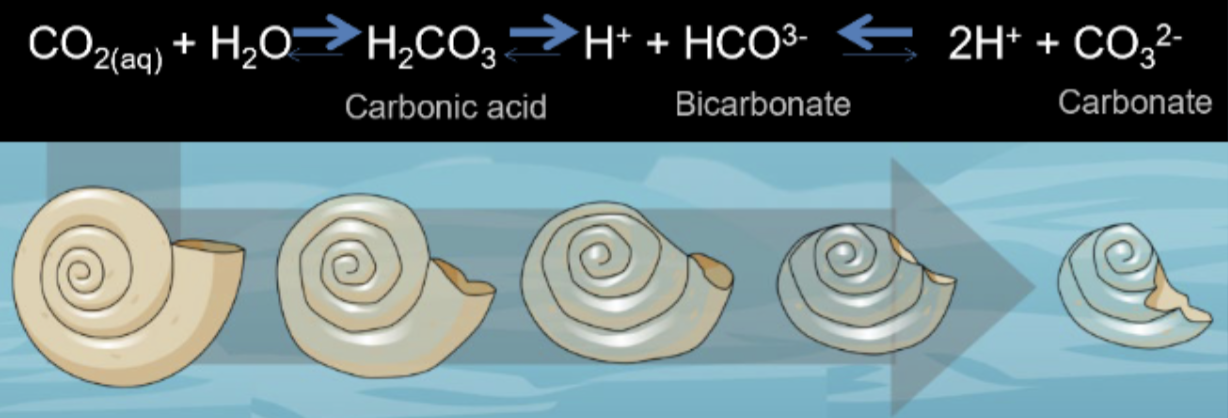
Impacts of Warming & Increasing Atmospheric CO2: What is ocean acidification? Why is it harmful? What is carbon sequestration?
CO2 increases H+ in oceans, lowering pH; Disrupts calcium carbonate shell formation; Storage of carbon in organisms or ecosystems
Seven Ways a Warming Climate Can Kill the Boreal Forest (CASE STUDY 1): What is a boreal forest?
A northern forest ecosystem sensitive to climate change, also referred to as taiga
CS1: What is an ecotone and what are they vulnerable to?
Transitional zone, boundary between terrestrial biomes; especially vulnerable to climate change
CS1: What are range shifts and how do temperate species replace boreal species? Give an example
A change in the temperature a species is usually able to tolerate; Warming favors southern species; Balsam fir (boreal species) getting replaced by sugar maple (temperate species)
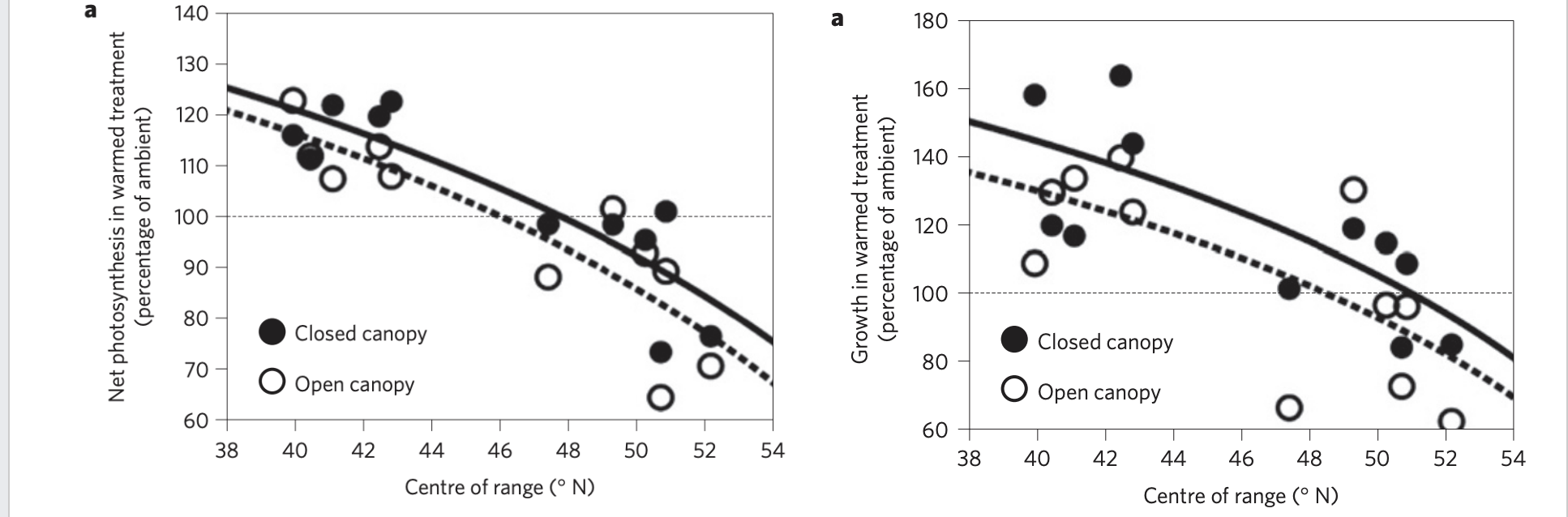
CS1: How does latitude impact growth and photosynthetic rate?
100 - same, ambient did better - below the line, warmed treatment - above the line; Southern species boosted by warming, northern species harmed
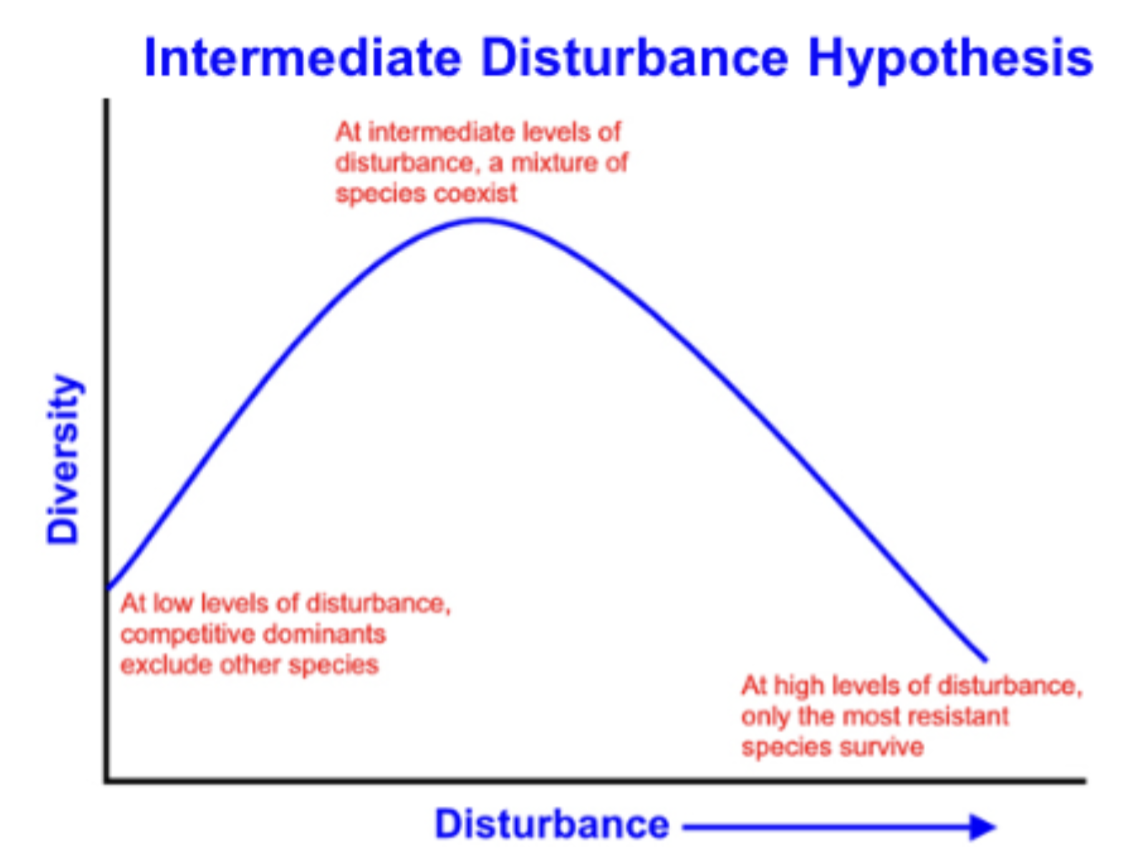
CS1: Temperate trees can ___ replace boreal species? What is disturbance-mediated succession? And how do they work together?
Abruptly; Disturbances speed up species replacement; Greater intensity disturbances levels boreal forest canopy → Temperate forest understory rises to dominate through disturbance mediated accelerated succession
CS1: How does drought affect ecosystems?
Drought stress from longer, hotter summers → water evaporating, high mortality
CS1: What are compounding disturbances? What is secondary succession and how does it apply here?
Multiple disturbances (e.g., wind + fire) increasing damage. More frequent windstorms topple adult trees and dry, warm wind → creates fuel for fires that kill seedlings
Secondary succession → Recovery of ecosystems after disturbance; temperate species experiencing range shift take over via. secondary succession
CS1: What is phenology? Give an example of phenological disturbance?
Phenology → cyclical, seasonal patterns of biological phenomena; Example → warm springs cause boreal conifers to lose frost-hardiness, and then get their needles killed by late frosts
CS 1: How do warmer winters affect insects? Give an example.
Insect outbreaks following warmer winters (usually they would’ve been killed off); Mountain pine beetle outbreak makes white bark pine susceptible to fungal infections
Climate Change Adaptation (Case Study 2): What did the coral case study test? What is the behavior of small and large pools (usually)?
Whether variable environments increase thermal tolerance; Small pools - much more variable in temperature (not a lot of water, able to be heated easily); large pools - moderate temps
CS 2: What role do symbionts (sym) play in corals? And examples.
They influence heat tolerance; D = heat resistant, C2 = heat sensitive
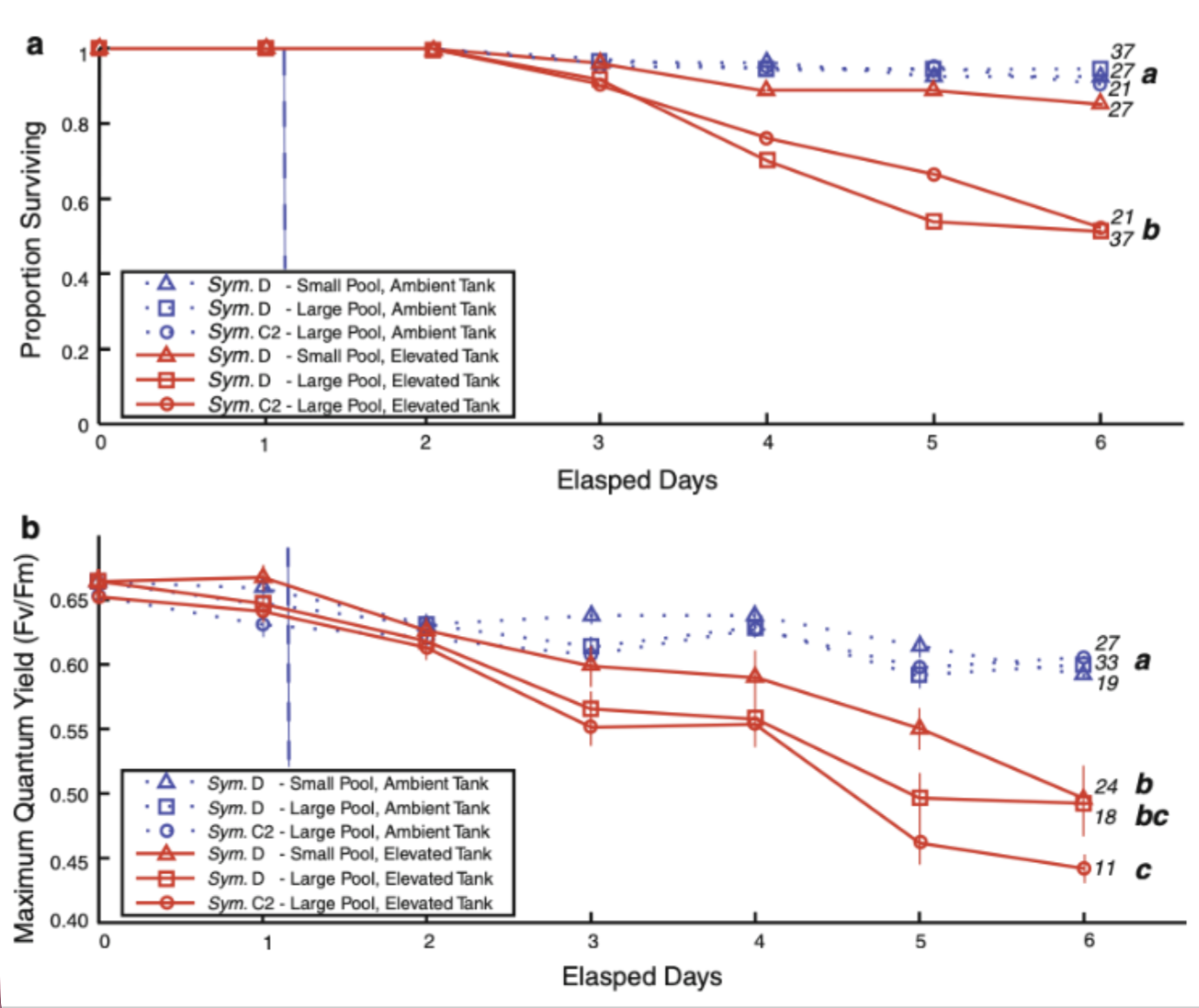
CS 2: Results from case study
Small-pool corals survival not significantly harmed by the warming; Heat resistant symbionts (D) lose less photosynthetic efficient when warmed
Who benefits most from climate change?
Warm-adapted and generalist species
Who is most harmed by climate change?
Cold-adapted and specialist species
Explore top notes

