PSYCH 210 EXAM 2
 Call Kai
 Learn
Learn Practice Test
 Spaced Repetition
 Match
Match Flashcards
 Knowt Play
1/54

There's no tags or description
Looks like no tags are added yet.
Name | Mastery | Learn | Test | Matching | Spaced | Call with Kai |
|---|
No analytics yet
Send a link to your students to track their progress
55 Terms
CHAPTER 6: AVERSIVE CONTROL
Negative punishment
contingent removal of a stimulus that results in a decrease in the future p of that response
Negative reinforcement
when the removal, prevention, or attenuation of some stimulus results in an increase in the future of p of the response
Positive punishment
contingent presentation of a stimulus that results in a decrease in the future p of that response
GOLDEN NUGGET
We define punishers functionally. That is, by their effect on behavior
Positive reinforcement
any event that increases operant behavior by its removal, prevention, or attention
Discriminated avoidance
A warning signal precedes the aversive stimulus
Aversive Stimulus: Getting a ticket
Result: a car flashes its headlights at you. You slow down and avoid a ticket
Aversive Stimulus: Car engine failure
Result: Take it to a shop or mechanic; why? Because there was a signal given
Non discriminated avoidance
No warning signals that precede the aversive stimulus
EXAMPLES
Aversive Stimulus: Getting sick or being sick
The goal is to AVOID that, so we take vitamin C (THE AVOIDANCE), but it’s usually taken when sick, that’s the ESCAPE
Aversive stimulus: computer freeze
Result: avoiding future crashes by repeatedly saving the file
Escape
when an aversive stimulus is present, and a response terminates that stimulus. The difference between the conditions with and without the aversive stimulus is an immediate one.
EXAMPLE: car stereo playing loud music, alarm clock
Be able to identify which cells from the contingency matrix define “aversive control”
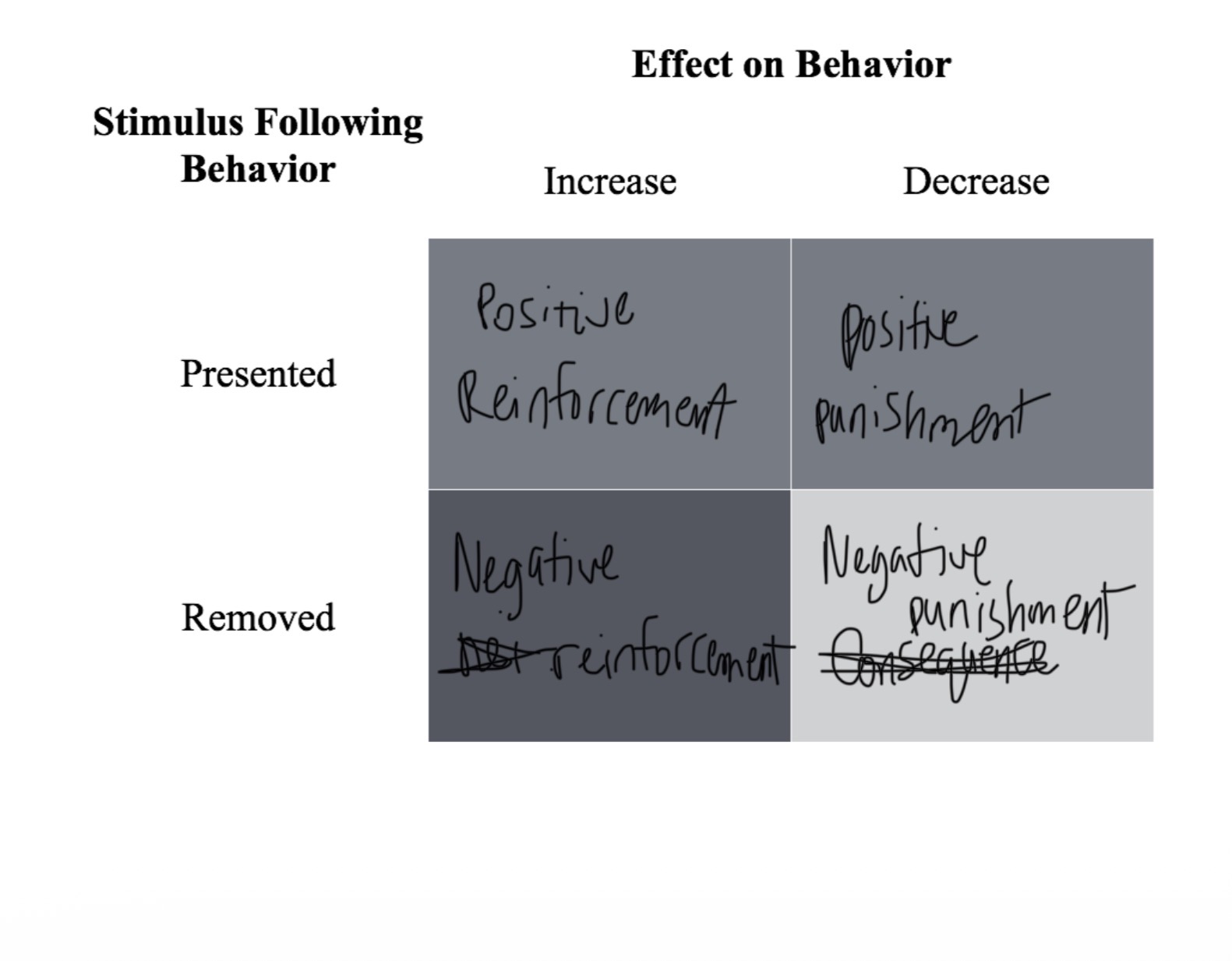
Be able to identify examples of escape, avoidance, and non discriminated avoidance
know the variables relating to the effectiveness of punishment
understand the Sloman and how it might explain why parents continue to deliver reprimands
Parents continue to reprimand their kids’ behavior even though they shouldn’t
Children tend to stop problematic behavior after a parent reprimands them
BUT, delivering reprimands starts a vicious cycle of behavior. PARENTS can make behavior stop, but have to keep delivering reprimands
It’s preferred that parents use other means to address problematic behavior and get it to stop.
Be able to distinguish between reinforcement and punishment. Noting that we must look to future behavior to make this determination. Be able to distinguish between extinction and punishment.
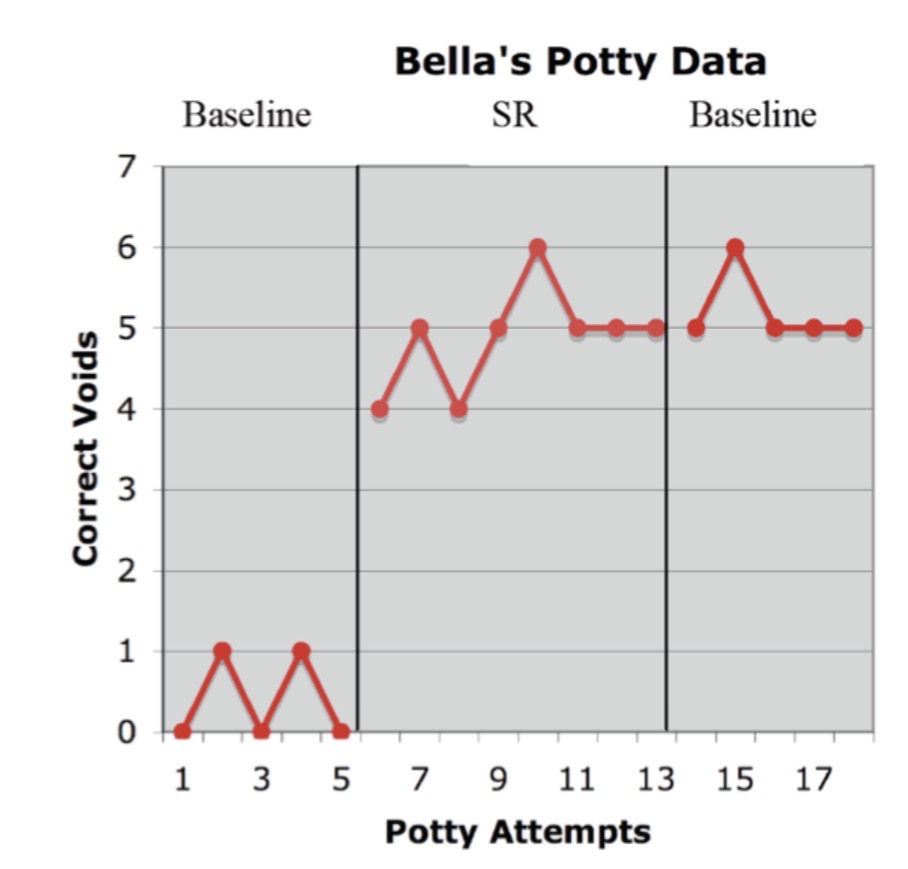
Understand how the potty training example illustrates the importance of contrived reinforcers to establish behavior and the transfer of control to “other” reinforcers, once the behavior has been established.
When a child (or parent) decided to try big kid underpants, we might begin simply: Just let the child wear them. We will call this baseline (BL).
Certain reinforcers for going: potty sticker chart, iPad, treasure box, high fives/praises
Very few correct voids. This means we have to do something to establish use of the toilet.
Only used reinforcement tactics when necessary
We deliver reinforcers correct voids and being on the toilet. Doing these things increases the number of correct voids. It worked! Affects of reinforcement are temporary
3. We remove all those reinforcers for correct voids. Notice what happens to correct voids. They do not decrease; they stay the same.
Does someone wait outside the bathroom to give you a gold star?
All of our reinforcers were necessary to get the behavior going.
Those reinforcers were necessary, AND worked!
But now (in #3), others take control. For example, it’s more comfortable to be in dry, rather than wet, underpants.
Understand the Sidman Avoidance procedure and how to interpret the likelihood of esatablishing avoidance given specific RS and SS values
AN EXAMPLE OF NON DISCRIMINATED AVOIDANCE
2 independent timing cycle:
The shock-shock SS interval: determines the time between successive shocks if a response does not occur
The response-shock RS interval: determines the time between a response and a shock
PT 2 OF SS AND RS INTERVALS
In a Sidman avoidance procedure, ALL can be avoided
When the response delays the aversive stimulus (RS interval) for a period of time that is longer than the time between scheduled shocks (SS interval), conditioning is enhanced
If the R-S interval is 30 s, when you make a response, you delay the next shock by 30 s. If the S-S interval is 20 s, then making a response (R-S interval) buys you more time than NOT making a response.
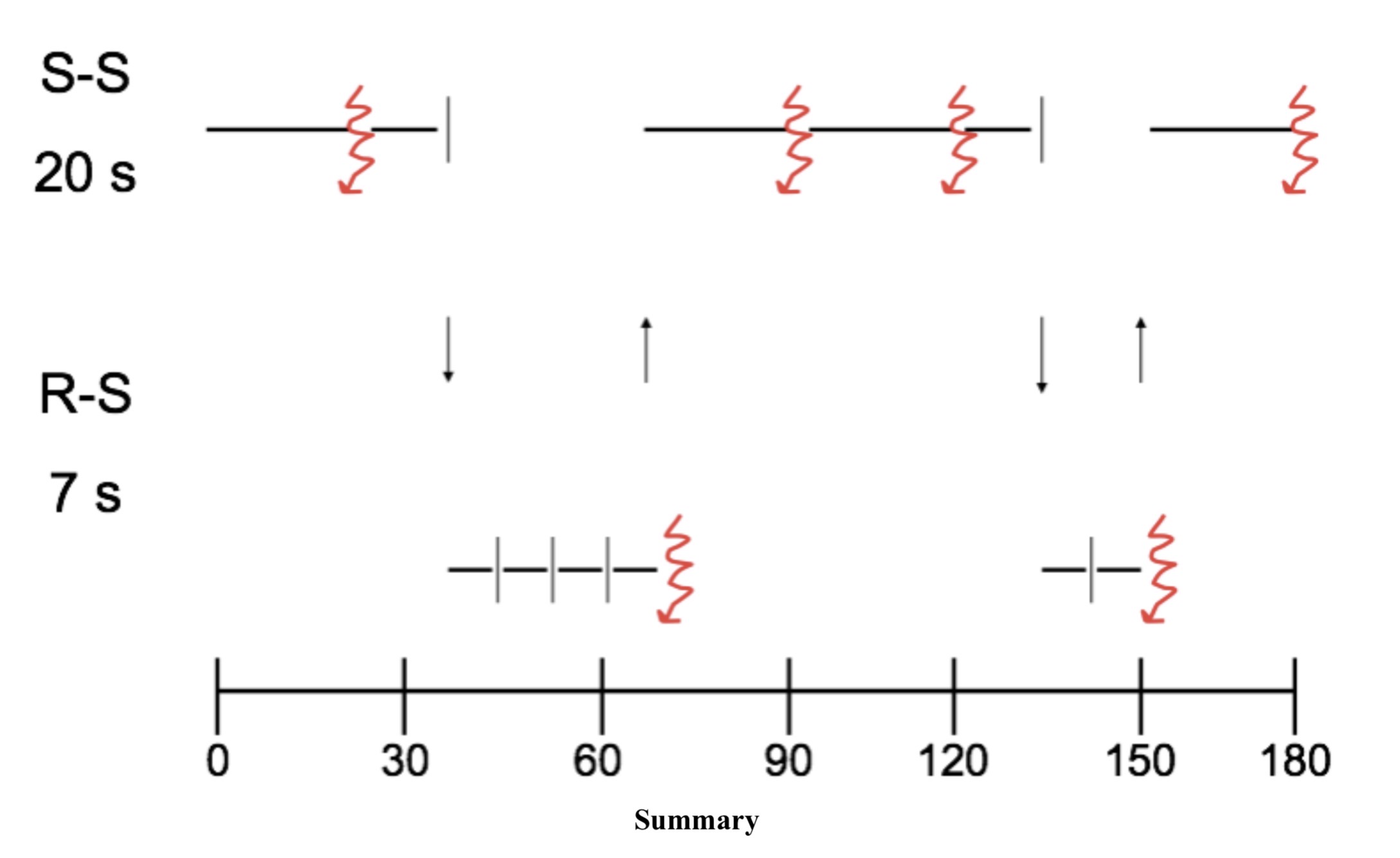
In the schematic below, note that the SS interval is 20 and the RS interval is 7 s. Based on what we have discussed, this type of arrangement will be very challenging for establishing non-discriminated avoidance responding. The reason: A lever press makes a shock occur sooner relative to taking a shock.
GOLDEN NUGGET
Punishment is the decrease in behavior that we observe with the contingent presentation of a punisher, or the removal of a reinforcer
We don’t punish (or reinforce) people
We always need to state the response explicitly. That is, state what was punished
CHAPTER 7: SHAPING
shaping
the method of successive terminal response
Play doh or clay
Skinner Video about pigeons
shaping permits us to start with a small requirement that we can “build” (shape) into a very (very) large requirement
Shaping is an ontogenic parallel to phylogenic selection.
SHAPING CAN OCCUR NATURALLY OR ARTIFICIALLY
differential reinforcement
the process by which responses that fall within a specific class are reinforced, and other are not
Ex. Ways to greet the Professor
Reinforced- professor, dr. Borerro
Extinguished- Sup! Ayo! My man, Johnny B
What we consider “acceptable”. If it’s “acceptable” we’ll reinforce it
DRO
differential reinforcement of other behavior
A reinforcer is delivered if t seconds have passed without the specified target response
particularly useful when we don’t want to use punishment, but we do want to eliminate a response (completely)
DRL
differential reinforcement of low rates
a response is reinforced only if some minimum amount of time has passed since the last response
can be very useful when the goas is to reduce the rate of behavior without completely eliminating it
GOLDEN NUGGET
For both DRL and the DRH, a target must occur, to receive a reinforcer
DRH
differential reinforcement of high rates
a response is reinforced if at least n responses were emitted during the last t seconds.
can be very useful when the goal is to improve both speed and accuracy
Descriptive operant
The behavior that is reinforced
What the experimenter defines as the “rules” for earning reinforcers
functional operant
The behavior generated by delivery of reinforcers
What the organism actually does
operant class
A group of responses that are affected by the way in which they operate on the environment
induction
The spread of the effect of reinforcement to other responses not included in the reinforced class
differentiation
responses closely conform to the boundaries of the class of reinforced responses
understand the importance of variability to the shaping process
understand the relation between shaping and ontogeny and selection and phylogeny
be able to provide examples of natural and artificial shaping
be able to describe the real world application of shaping
be able to provide examples and interpret the examples of DRO, DRL, DRH
be able to describe the types of responses that appropriate for using DRO,DRH, DRL
CHAPTER 8: STIMULUS CONTROL
discriminative stimulus (SD)
sets the occasion for the reinforcement of operant behavior
(Example: Come in were open sign)
s delta (S∆)
is an extinction stimulus and tell us that reinforcers will not be delivered
(EX. do not breathe underwater sign)
controlling stimulus
one that changes the probability of an operant across subsequent occasions
(EX: LIGHT)
correlated stimulus
aspects of responding that are correlated with reinforcement or EXT.
contextual stimulus
features that remain relatively constant throughout an experiment
discrimination
specifying the conditions under which organisms come to behave one way in the presence of some stimuli, and a different way in the presence of others.
stimulus control
the discriminative control of behavior, or, a change in behavior that occurs when either an SD or an S∆ is presented.
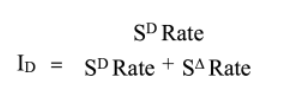
discrimination index
positive behavioral contrast
generalization
that behavior will occur under a variety of conditions. its a “looser” form of stimulus control
stimulus generalization
behavior that is emitted in the presence of the SD is also emitted in the presence of other stimuli.
generalization gradient
describes the relationship between the probability of a response and a stimulus
EDT
Errorless discrimination training
the S∆ and SD are initially very different, and then differences between the stimuli are gradually as training progresses.
be a calculate discrimination index and interpret the value of the calculation (in terms of what it means for interpreting stimulus control)
understand the experiment by terrace (1963)
Remember how we tested whether a rat could tell the difference between green and red.
If you just throw the rat in the chamber and let it figure it out, this could take a while—and the rat will make many mistakes, at first.

