Electron transport chain

0.0(0)
studied byStudied by 0 people
0.0(0)
full-widthCall Kai
learnLearn
examPractice Test
spaced repetitionSpaced Repetition
heart puzzleMatch
flashcardsFlashcards
GameKnowt Play
Card Sorting

1/11

encourage image

There's no tags or description

Looks like no tags are added yet.

Study Analytics
Name
Mastery
Learn
Test
Matching
Spaced

No study sessions yet.

12 Terms

1
New cards

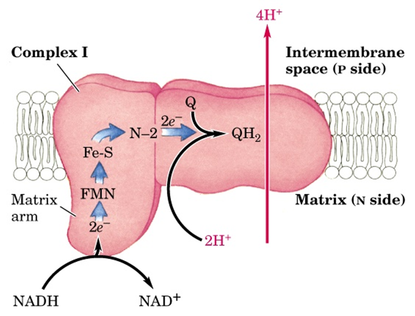
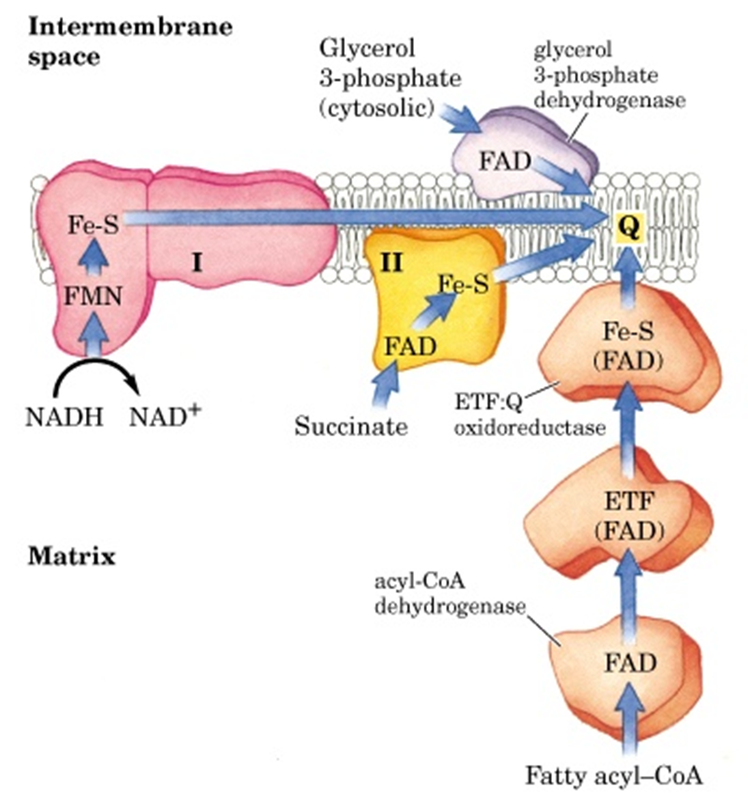
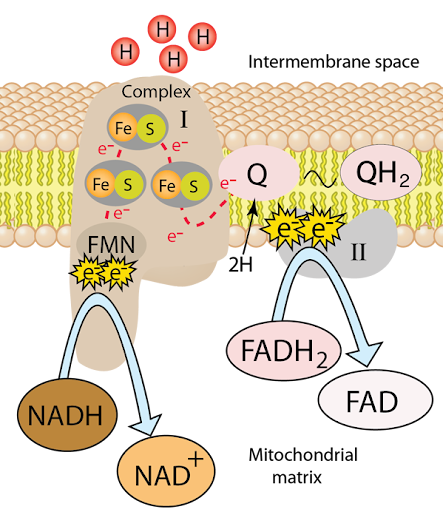
Complex 1

  • 2 electrons will be accepted from NADH

  • Transfers them to Coenzyme Q

  • Pumps 4 H+ into the inter membrane 

  • NADH turns into NAD+

<ul><li><p>2 electrons will be accepted from NADH</p></li><li><p>Transfers them to Coenzyme Q</p></li><li><p>Pumps 4 H<sup>+</sup>&nbsp;into the inter membrane&nbsp;</p></li><li><p>NADH turns into NAD+</p></li></ul><p></p>
2
New cards

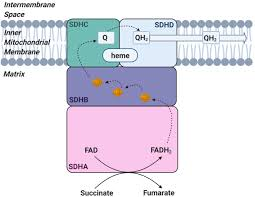
Complex 2/ Succinate Dehydrogenase

  • Accepts electrons from FADH2 

  • Transfer them to Coenzyme Q 

  • Does not pump protons 

  • FADH2 turned FAD

<ul><li><p>Accepts electrons from FADH<sub>2</sub>&nbsp;</p></li><li><p>Transfer them to Coenzyme Q&nbsp;</p></li><li><p>Does not pump protons&nbsp;</p></li><li><p>FADH<sub>2 </sub> turned FAD</p></li></ul><p></p>
3
New cards

Coenzyme Q/Ubiquinone

  • carriers electrons from Complex 1 & 2 into complex 3
<ul><li><p>carriers electrons from Complex 1 &amp; 2 into complex 3</p></li></ul><p></p>
4
New cards

Complex 3/Cytochrome Bc complex

  • Transfer electrons from Coenzyme Q to cytochrome C

  • Pumps 4 H+

<ul><li><p>Transfer electrons from Coenzyme Q to cytochrome C</p></li><li><p>Pumps 4 H<sup>+</sup> </p></li></ul><p></p>
5
New cards

Cytochrome C

  • Carriers electron one at a time from complex 3 & 4
<ul><li><p>Carriers electron one at a time from complex 3 &amp; 4 </p></li></ul><p></p>
6
New cards

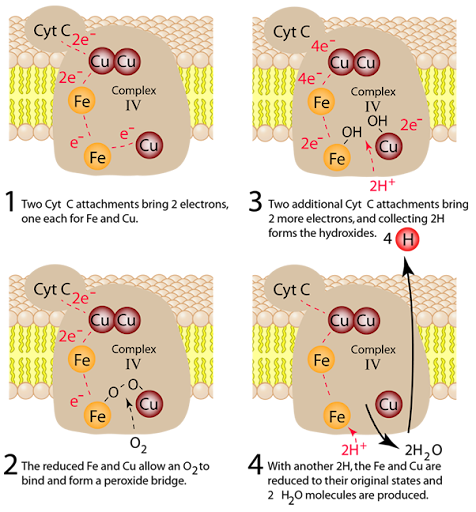
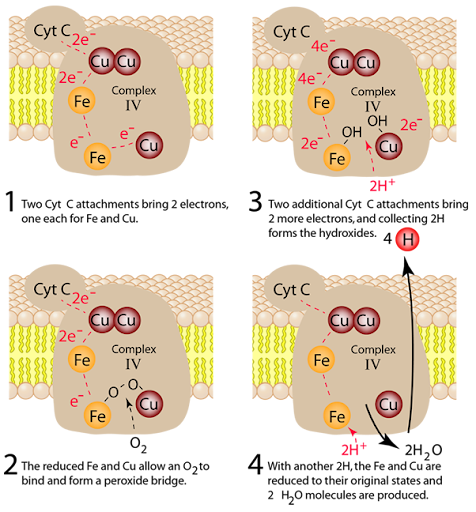
Complex 4/Cytochrome C oxidase

  • Transfer electrons to molecular oxygen(final electron acceptor

  • Reduces o2 to h2 O 

  • pumps 2 H+ per pair of electrons 

<ul><li><p>Transfer electrons to molecular oxygen(final electron acceptor</p></li><li><p>Reduces o<sub>2</sub> to h<sub>2</sub>&nbsp;O&nbsp;</p></li><li><p>pumps 2 H<sup>+</sup>&nbsp;per pair of electrons&nbsp;</p></li></ul><p></p>
7
New cards

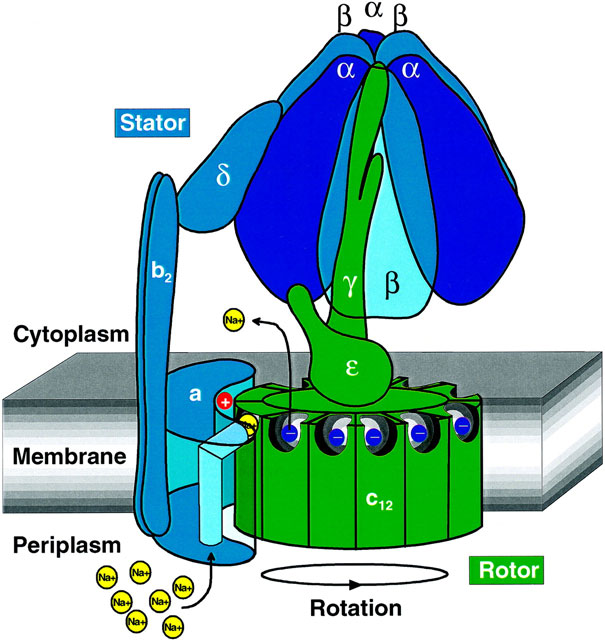
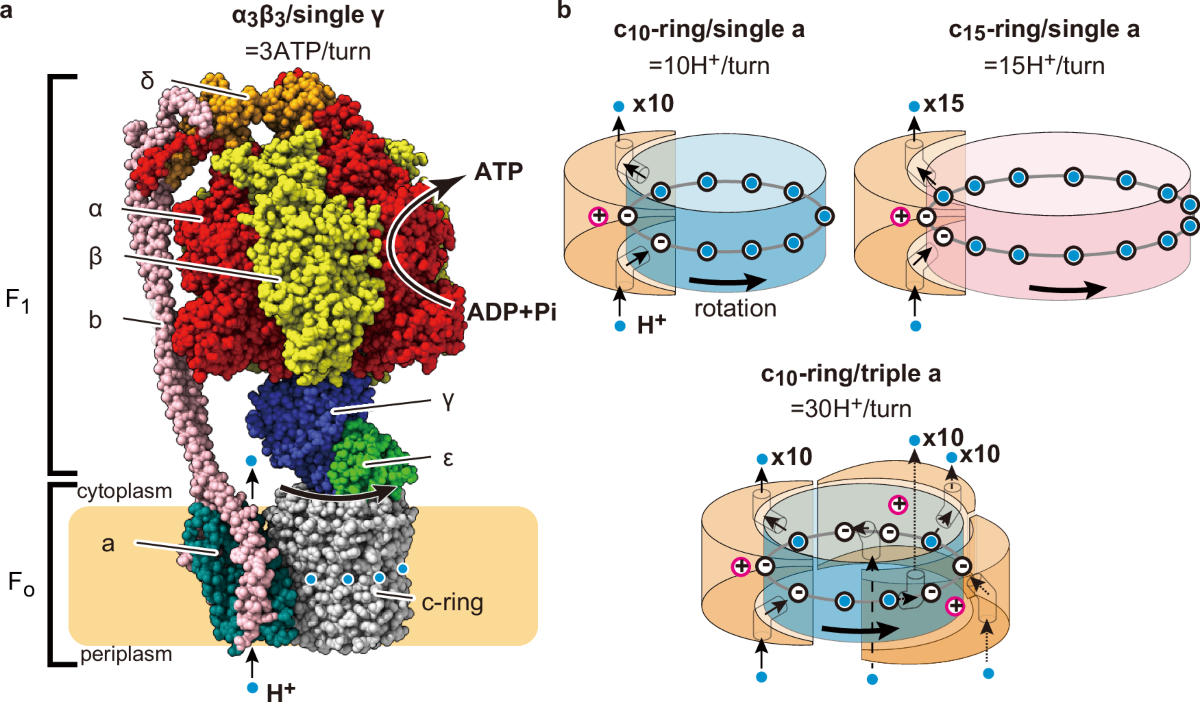
Structure of ATP Synthase( F 0 and F1)

  • F₀ (membrane-embedded motor)

    • Forms a proton channel that allows H⁺ ions to flow down their electrochemical gradient.

    • Contains a c-ring of subunits that rotates when protons pass through.

    • Acts like an electric motor, converting proton motive force into mechanical rotation.

  • F₁ (catalytic headpiece)

    • Located on the matrix side (mitochondria) or stroma side (chloroplasts).

    • Composed of α₃β₃ hexamer (three α and three β subunits arranged alternately).

    • The β subunits contain the catalytic sites for ATP synthesis.

    • Connected to F₀ by a central stalk (γ and ε subunits) and a stator (b subunits) that hold the α₃β₃ hexamer stationary
<ul><li><p><strong><span>F₀ (membrane-embedded motor)</span></strong></p><ul><li><p><span>Forms a </span><strong><span>proton channel</span></strong><span> that allows H⁺ ions to flow down their electrochemical gradient.</span></p></li><li><p><span>Contains a </span><strong><span>c-ring</span></strong><span> of subunits that rotates when protons pass through.</span></p></li><li><p><span>Acts like an </span><strong><span>electric motor</span></strong><span>, converting proton motive force into mechanical rotation.</span></p></li></ul></li><li><p><strong><span>F₁ (catalytic headpiece)</span></strong></p><ul><li><p><span>Located on the matrix side (mitochondria) or stroma side (chloroplasts).</span></p></li><li><p><span>Composed of </span><strong><span>α₃β₃ hexamer</span></strong><span> (three α and three β subunits arranged alternately).</span></p></li><li><p><span>The </span><strong><span>β subunits</span></strong><span> contain the catalytic sites for ATP synthesis.</span></p></li><li><p><span>Connected to F₀ by a central stalk (γ and ε subunits) and a stator (b subunits) that hold the α₃β₃ hexamer stationary</span></p></li></ul></li></ul><p></p>
8
New cards

Structure of ATP Synthase(Rotary)

  • Proton flow through F₀ drives rotation of the c-ring and central stalk (γ subunit).

  • This rotation induces conformational changes in the β subunits of F₁:

    • One β subunit binds ADP + Pi.

    • Another β subunit synthesizes ATP.

    • The third β subunit releases ATP.

<ul><li><p><strong><span>Proton flow</span></strong><span> through F₀ drives rotation of the c-ring and central stalk (γ subunit).</span></p></li><li><p><span>This rotation induces </span><strong><span>conformational changes</span></strong><span> in the β subunits of F₁:</span></p><ul><li><p><span>One β subunit binds ADP + Pi.</span></p></li><li><p><span>Another β subunit synthesizes ATP.</span></p></li><li><p><span>The third β subunit releases ATP.</span></p></li></ul></li></ul><p></p>
9
New cards

Structure of ATP Synthase(key structure)

  • Stator arm: Prevents the α₃β₃ hexamer from rotating with the stalk.

  • Rotor (c-ring + γ subunit): Rotates with proton flow.

  • Catalytic sites: Located in the β subunits of F₁.

  • Coupling: Mechanical rotation → chemical synthesis.
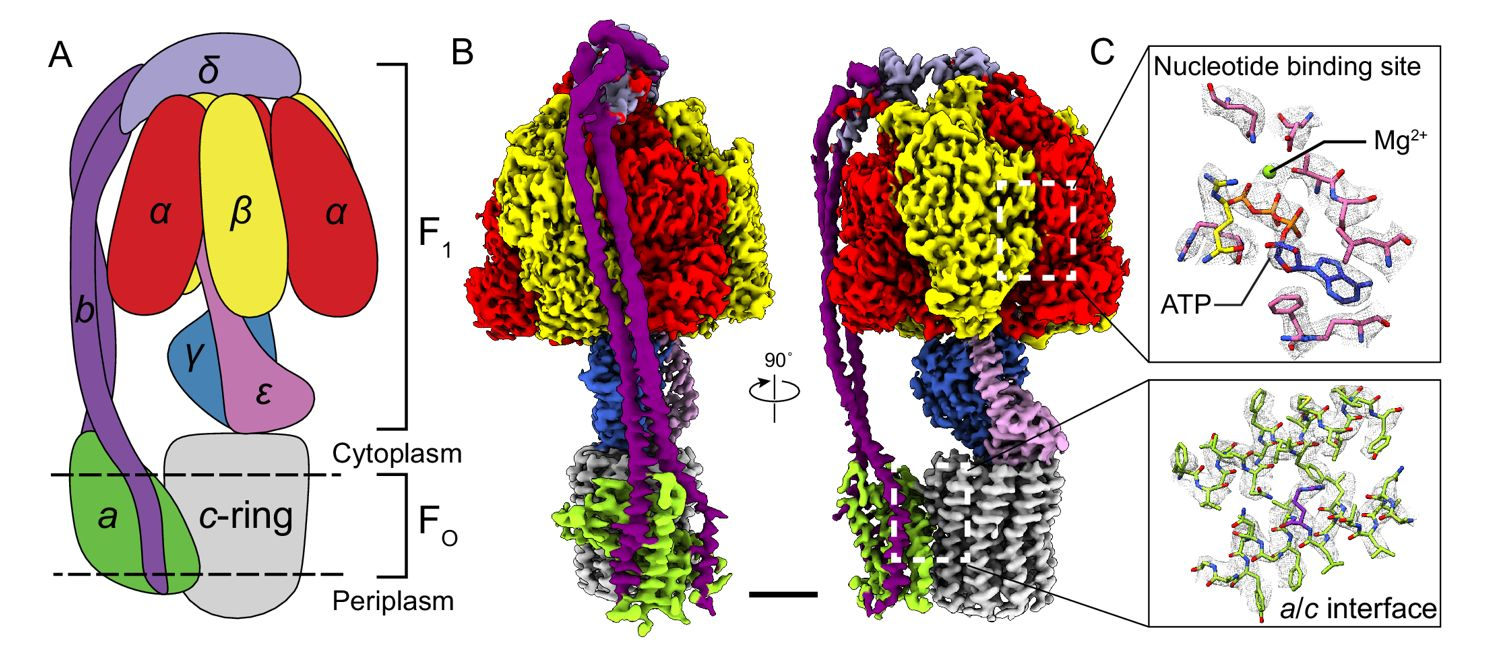
<ul><li><p><strong><span>Stator arm:</span></strong><span> Prevents the α₃β₃ hexamer from rotating with the stalk.</span></p></li><li><p><strong><span>Rotor (c-ring + γ subunit):</span></strong><span> Rotates with proton flow.</span></p></li><li><p><strong><span>Catalytic sites:</span></strong><span> Located in the β subunits of F₁.</span></p></li><li><p><strong><span>Coupling:</span></strong><span> Mechanical rotation → chemical synthesis.</span></p></li></ul><p></p>
10
New cards

net inputs

NADH, FADH2, O2, ADP + Pi

11
New cards

Net outputs

ATP, H2O, NAD, FAD

12
New cards

Location of ATP Synthase

inner mitochondrial membrane
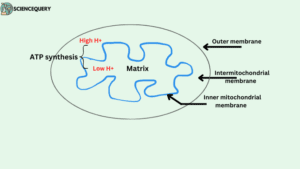
<p>inner mitochondrial membrane</p>