African art history final
 Studied by 0 people
 Call Kai
 Learn
Learn Practice Test
 Spaced Repetition
 Match
Match Flashcards
 Knowt Play
1/52

There's no tags or description
Looks like no tags are added yet.
Name | Mastery | Learn | Test | Matching | Spaced | Call with Kai |
|---|
No analytics yet
Send a link to your students to track their progress
53 Terms
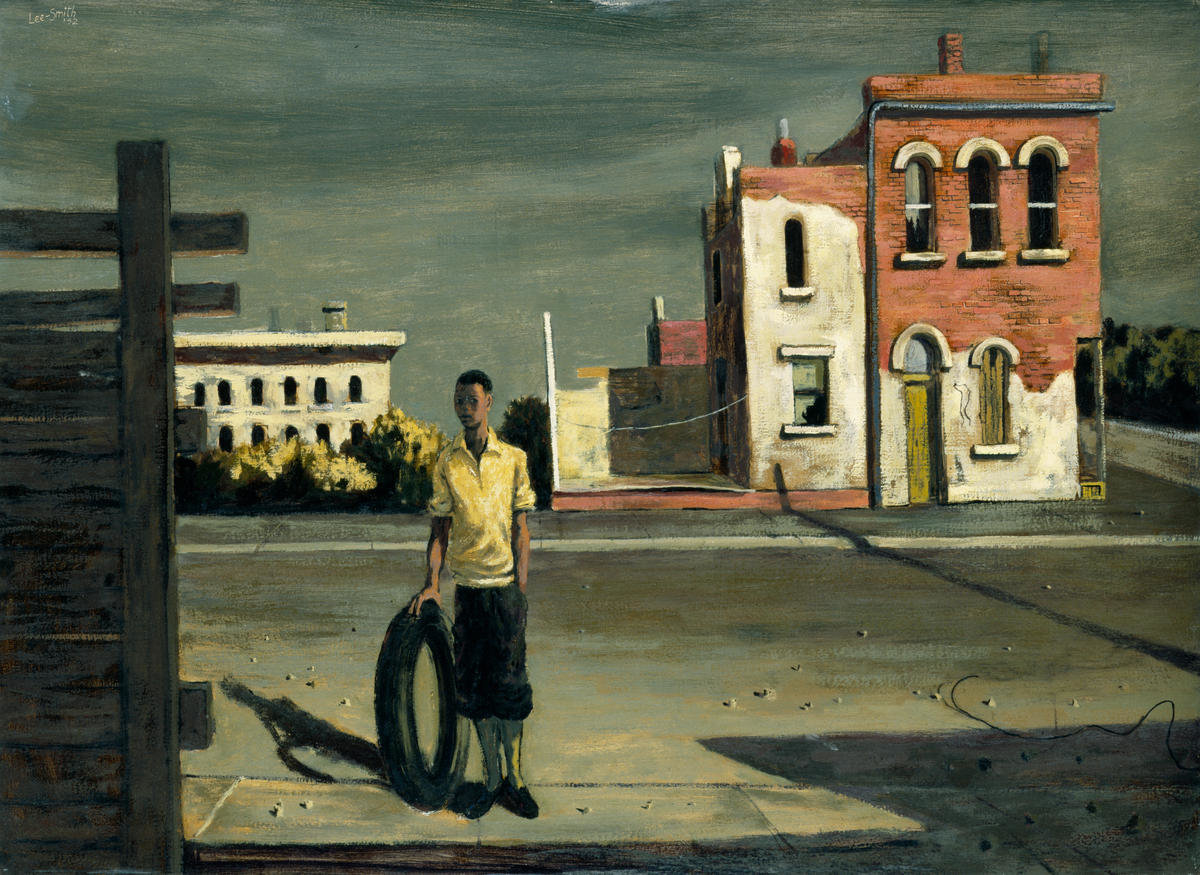
Hughie Lee-Smith (1915- 1999) Boy with Tire, 1952, oil on wood panel, Detroit Institute of Art
Solitary, ideas of landscape and the places he grew up,
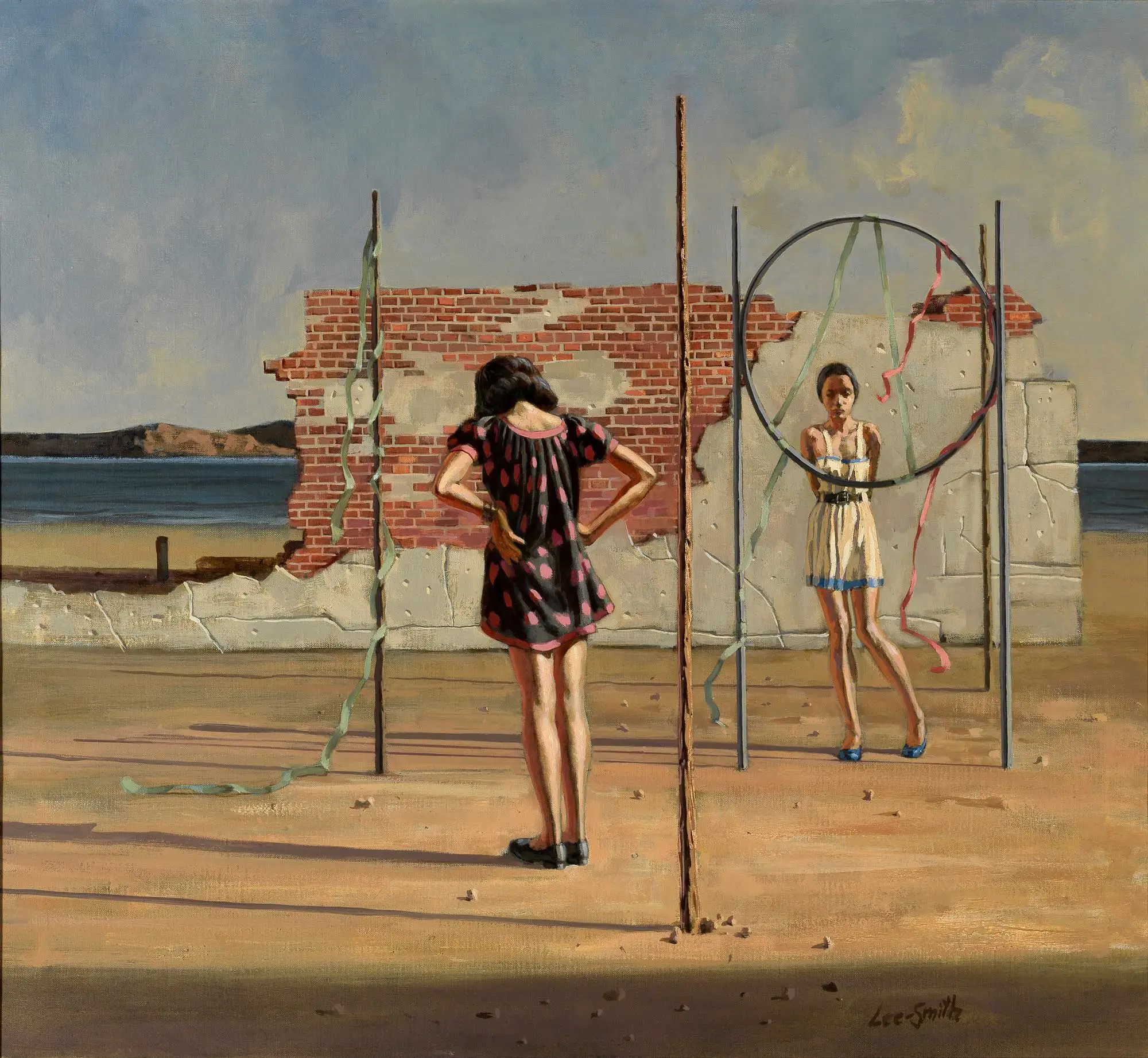
Hughie Lee-Smith (1915- 1999) Confrontation, ca. 1970, oil on canvas, Smithsonian American Art Museum,
engagement with memory, loss, and social observation.
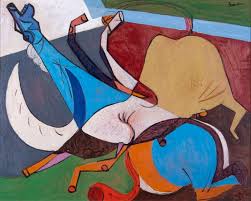
Romare Bearden (1911-1988) Now the Dove and the Leopard Wrestle, 1946, oil on
s: conflict and harmony, African-American experiences across time and space, and a synthesis of abstraction with figuration.
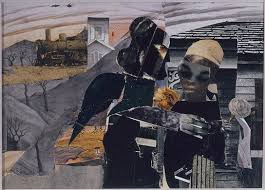
Romare Bearden (1911-1988) Prevalence of Ritual: Tidings, 1964, collage of various papers with graphite on cardboard, collection of Stéphane Janssen, Arizona
Collage aspect, It represents Romare Bearden’s synthesis of memory, culture, and innovative form, capturing the rhythms, struggles, and joys of Black life while advancing collage as a critical modern art language. It stands as a testament to the enduring power of cultural ritual as visual narrative.
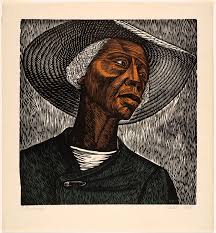
Elizabeth Catlett (1915-2012) Sharecropper, 1968, color linoleum cut on paper, private collection
Elizabeth Catlett combined aesthetic innovation with deep political consciousness, offering a lasting tribute to African American laborers’ perseverance and the broader struggles for racial and economic justice.

Elizabeth Catlett (1915-2012) Homage to My Young Black Sisters, 1968, Cedar, Private Collection
, symbolic representation of Black female resilience, and its role within Catlett’s lifelong commitment to social justice and aesthetic innovation, embodying the intersection of activism, feminism, and modernist sculpture
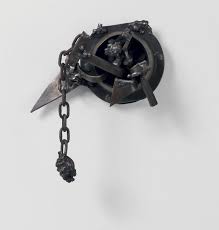
Melvin Edwards (*1937) Some Bright Morning, 1963, welded steel, private collection
Its significance rests in its ability to merge abstract form with the charged realities of African American experiences, pioneering a path for socially conscious abstraction in contemporary art.
Melvin Edwards (*1937) Resolved, 1986, welded steel, private collection
The work exemplifies the intersection of form, material, and message that characterizes his contributions to modern sculpture.
Melvin Edwards (*1937) Whispers, 1991, welded steel, Mott- Warsh collection
The work exemplifies the intersection of form, material, and message that characterizes his contributions to modern sculpture.
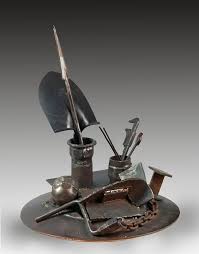
Melvin Edwards (*1937) Tambo, 1993, welded steel, Smithsonian American Art Museum, Washington, D.C.
The piece functions as both an artistic and historical testament to the fight against apartheid and the broader African diasporic experience.
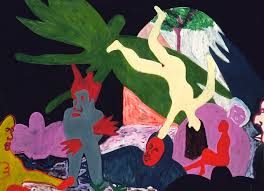
Bob Thompson (1937-1966) The Spinning, Spinning, Turning, Directing, 1963, oil on canvas, Smithsonian American Art Museum, Washington, D.C.
African-American and wider American art history, highlighting his capacity to reinterpret tradition into contemporary metaphoric narratives.
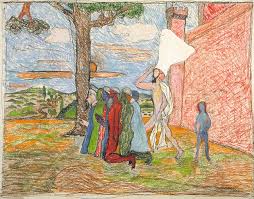
Bob Thompson (1937-1966) Prayers in a Landscape (from Piero Della Francesca, the Legend of the Cross: Hercules Bringing the Cross to Jerusalem, 1966, crayon on canvas, Smithsonian American Art Museum, Washington, D.C.
The painting stands as a testament to Thompson’s brief yet prodigious career and his enduring dialogue with art history, spirituality, and social consciousness.
Richard Mayhew (1923-2024) Trees, ca. 1960-65, lithograph onpaper, Smithsonian American Art Museum, Washington, D.C.
A medium for experimenting with lithography, demonstrating his versatility and sensitivity to form, color, and atmosphere.
Richard Mayhew (1923-2024) Sanctuary, 1998, oil on canvas, private collection
The private collection housing this work reflects both its aesthetic and cultural value, marking it as an indispensable part of Mayhew’s legacy.
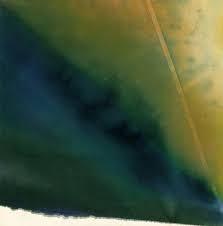
Sam Gilliam (1933-2022) Light Fan, 1966, acrylic on canvas, Smithsonian American Art Museum, Washington, D.C.
It showcases his early mastery of color and gesture, anticipates innovations in the physical and conceptual handling of canvas, and situates him as a transformative figure in American abstraction whose work melds personal expression with radical formal experimentation.
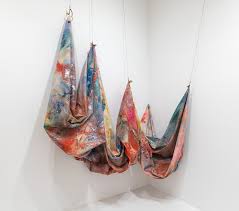
Sam Gilliam (1933-2022) Swing, 1969, acrylic and aluminum on canvas, Smithsonian American Art Museum, Washington, D.C.
Introduces draping and suspending techniques, transforming canvas into sculptural space.
Demonstrates experimental interaction between chance, color, and materiality.
Symbolically engages with rhythm, improvisation, and cultural resonance.
Anticipates the fusion of painting, sculpture, and installation that would shape contemporary art practice.
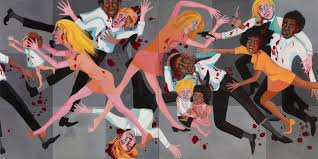
Faith Ringgold (1930-2024) Die, from American People series, 1967, oil on canvas
Bold confrontation of racial violence during the civil rights era.
Strategic appropriation and transcendence of canonical European modernist aesthetics.
Emphasis on collective experience rather than individual narrative.
Impact on both public and scholarly understanding of Black American art, bridging activism, personal witness, and formal innovation.
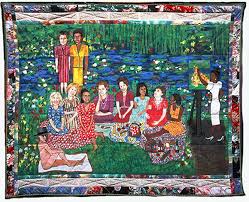
Faith Ringgold (1930-2024) The French Collection Part 1, #3: Picnic at Giverny, acrylic on canvas with pieced fabric border
Black women artists—to occupy spaces from which they were historically excluded. The work is emblematic of Ringgold’s enduring mission to reclaim visibility, celebrate Black female creativity, and employ storytelling as a transformative, didactic, and liberatory practice.
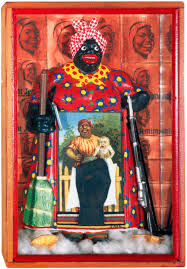
Betye Saar (*1926) Liberation of Aunt Jemima, 1972, mixed media
The piece embodies a seminal moment in American art where mixed media and assemblage become tools of social justice, cultural reclamation, and visual rhetoric, reinforcing the revolutionary potential of art in confronting systemic oppression.
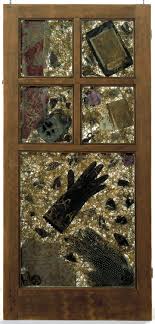
Betye Saar (*1926) Wishing for Winter, 1989, mixed media: pine, glass, fabric, iron, chicken wire, staples, keys, belt buckle, hinge, window catch, pin, change purse, glove, book, wallpaper, vegetable fibers, feathers, and butterfly wing fragments,
Smithsonian American Art Museum, Washington, D.C.In refrence to objects of her childhood, assemblage art and as a meditative exploration of memory, heritage, and temporal experience. Through its careful juxtaposition of materials and objects, the work embodies her lifelong engagement with personal, cultural, and spiritual narratives, solidifying her role as a transformative figure in contemporary art and African American visual culture.
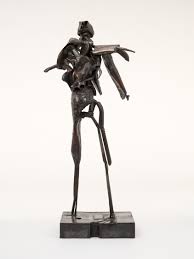
Richard Hunt (1935-2023) Hero construction, 1958, found steel, welded and chromed,
Art Institute of Chicago. It symbolizes his emergence as a transformative figure in modern American sculpture and highlights his lifelong engagement with themes of heroism, human potential, and artistic freedom.
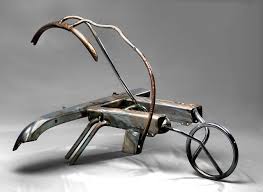
Richard Hunt (1935-2023) The greatest obstacle to being heroic is the doubt whether one may not be going to prove one's self a fool; the truest heroism, is to resist the doubt; and the profoundest wisdom, to know when it ought to be resisted, and when to be obeyed."--Nathaniel Hawthorne, The Blithedale Romance, 1852. From the series Great Ideas., 1975, chromed and welded steel, Smithsonian American Art Museum, Washington, D.C.
His contribution to American art, civil rights consciousness, and public sculpture renders the work significant not only aesthetically but also as a cultural and philosophical testament: in art and in life, heroism requires the courage to confront one’s doubts thoughtfully.
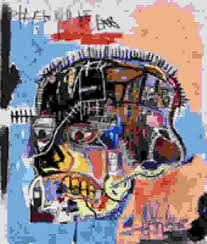
Jean-Michel Basquiat (1960-1988) Untitled (Head) 1981. Acrylic and mixed media on canvas.
The Eli and Edythe L. Broad Collection, Los Angeles. It synthesizes street art energy, Neo-Expressionist technique, African diasporic heritage, and complex symbolic language to interrogate mortality, identity, and society. This painting solidifies Basquiat’s status as a transformative figure in 20th-century art, encapsulating the urgency, innovation, and introspection that defined his brief but monumental career.
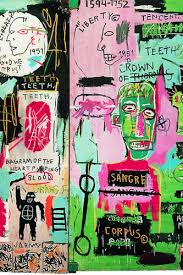
Jean-Michel Basquiat (1960-1988) In Italian, 1983. Acrylic, oil paintstick, and marker on canvas mounted on wood supports, two panels.
The Stephanie and Peter Brant Foundation, Greenwich, Connecticut. It demonstrates the fusion of street sensibilities with high-art ambition, marking a key point in Basquiat's meteoric rise and enduring legacy.
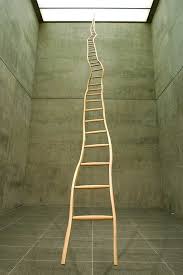
Martin Puryear (*1941) Ladder, for Booker T. Washington, 1996, Ash and maple, Modern Art Museum of Forth Worth
It functions as both a study in form, space, and perception and a contemplative metaphor for racial and personal progress, honoring Booker T. Washington’s legacy while opening wider interpretive possibilities.
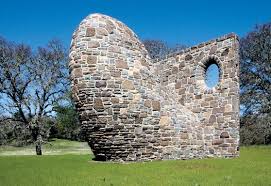
Martin Puryear (*1941) Untitled, 1994-94, Mortared fieldstone sculpture, Oliver Ranch
craft mastery, abstract formal logic, site-specific awareness, and conceptual subtlety. It illustrates how Puryear transforms traditional materials and structural ingenuity into poetic, ambiguous forms that invite imaginative engagement and highlight his enduring impact on contemporary sculpture.
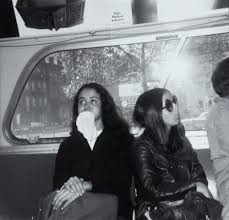
Adrian Piper (*1948) Catalysis III, 1970, Black and white photograph, Private Collection
Its significance lies in provoking reflection on social norms, activating audience perception, and integrating philosophical and artistic inquiry into a single, catalytic experience.
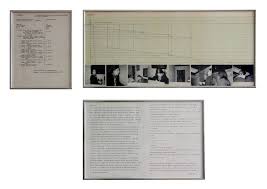
Adrian Piper (*1948) Hypothesis: Situation #14, 1969; photo- diagram collage: graph paper, B&W photographs, ink diagrams, vintage mimeographed forms with typescript text, vintage photo offset two-page essay, "Hypothesis" (1968)
Quantifies her subjective experience in space-time coordinates.
Combines photography, diagram, and text to investigate consciousness.
Integrates formal experimentation with emerging political awareness around race, gender, and identity.
Demonstrates the interplay between idea and object, defining her early practice and influencing the trajectory of political conceptual art.
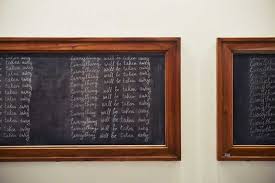
Adrian Piper (*1948) Everything will be taken away # 21 (Installation view), 2010-2013, Four school blackboards
By materializing loss, impermanence, and the fading of perception, Piper forces viewers to reflect on existential vulnerability, societal inequities, and the subtle, often overlooked structures that shape cognition and identity.
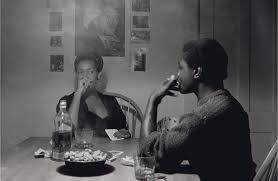
Carrie Mae Weems (*1953) The Kitchen Table Series, 1990, black and white photograph
Through black-and-white photographic performance and textual narrative, Weems repositions the everyday kitchen table as a stage where intimacy, power, and selfhood converge, creating a universally resonant and enduring work of contemporary art.
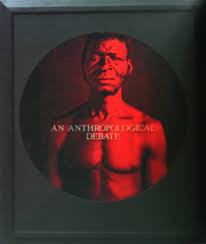
Carrie Mae Weems (*1953) From Here I Saw What Happened and I Cried, 1995-1996, 33 toned prints
The work transforms historic visual records of African Americans from instruments of oppression into a powerful narrative of reclamation, dignity, and critical reflection on race, identity, and memory in the United States.
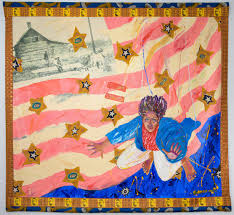
Emma Amos (1938 - 2020) Equals, 1992, cloth, photograph and acrylic on canvas, private collection
powerful visual statement on equality, historical consciousness, and the African American experience, combining painting, photography, and textile art to challenge traditional artistic hierarchies and advocate for social justice. Through its personal and political narrative, the work exemplifies Amos’s innovative approach to art-making, blending formal experimentation with incisive cultural critique.
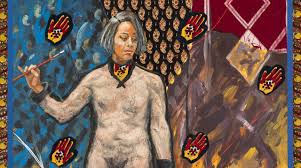
Emma Amos (1938 - 2020) Worksuit, 1994, private collection
Its significance lies in its interrogation of racial and gender norms, its innovative fusion of materials, and its position within Emma Amos’s ongoing project of reclaiming Black female subjectivity in art. This work exemplifies her postmodern practice of blending personal narrative, diasporic references, and historical critique to reshape the discourse of contemporary art.
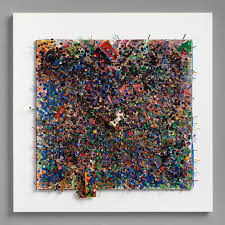
Howardena Pindell (*1943) Untitled, 1974, mixed media on paper, private collection
a critical blend of method, materiality, and abstraction, laying the groundwork for her influential contributions to both contemporary abstraction and art addressing systemic social inequities. Its significance lies in the intersection of innovative technique, personal expression, and socio-political consciousness, marking it as a foundational work in her oeuvre.
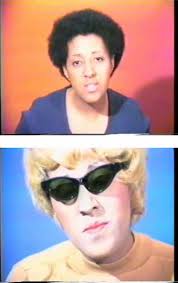
Howardena Pindell (*1943) Free, White and 21, 1980, video, collection of the artist
is a landmark video that merges personal autobiography with pointed social critique. Through dual on-screen personas and performative strategies, it interrogates race, gender, and artistic marginalization, establishing Pindell as an innovator in video art and as a profound chronicler of Black women’s experiences in late 20th-century America. Its significance lies in both its historical context and its enduring relevance to conversations about systemic inequities.
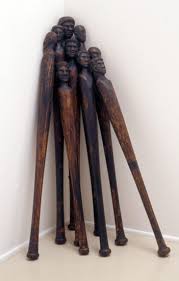
Alison Saar (*1956) Bat Boyz, 2001, Baseball bats and pitch, Yale University Art Gallery
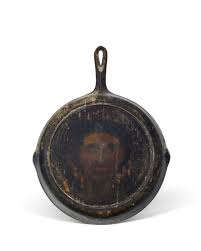
Alison Saar (*1956) Lyona, Skillet Series, 2000, oil on cast iron skillet, private collection
The work embodies Saar’s pursuit of telling overlooked stories while engaging viewers in a reflective dialogue about history, identity, and cultural continuity. In essence, it is both an homage and a reclamation—safeguarding narratives that have long been marginalized.
Alison Saar (*1956) Afro-di(e)ty 2000 Mixed-media installation comprising wood figure with hammered copper and found objects, ink-jet on fabric
cultural memory, spiritual symbolism, materiality, and social commentary. Through her wooden figurines, Saar creates a tactile and contemplative space that honors African diasporic heritage, explores the dynamics of identity and gender, and activates the transformative potential of art as both a spiritual and sociopolitical medium.
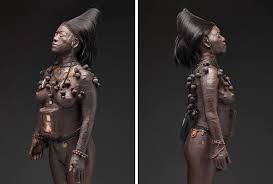
Renée Stout (*1958) Fetish No. 2, 1988, Mixed Media, Dallas Museum of Art
personal biography, African diasporic spirituality, and socio-political commentary. Through the interplay of found objects, ritual symbolism, and self-representation, the piece asserts Black female agency, explores ancestral legacies, and situates the artist at the forefront of late 20th-century African-American contemporary art.
Renée Stout (*1958) Kinley's Drug Store, 1999, Mixed Media
the interplay of spirituality, African diasporic heritage, urban African-American life, and social commentary. Through mixed-media assemblage, Stout creates a space that is both literal and allegorical, offering a lens through which to examine community resilience, ritual practice, and the possibilities of empowerment within constrained social structures.
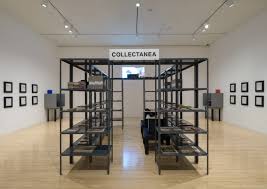
Renée Green (*1959) Import/Export Funk Office, 1992, Installation with audio, video, and reading materials, Dimensions variable, The Museum of Contemporary Art, Los Angeles
It foregrounds the circulation and contestation of Black cultural knowledge globally, challenges institutional conventions, and situates hip hop, jazz, and African American intellectual traditions within complex transnational frameworks. Green’s work synthesizes aesthetics, activism, and curation, offering a model for multidisciplinary art that simultaneously thinks through culture, memory, and power.
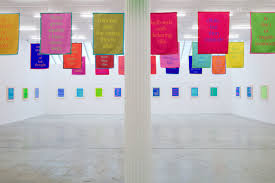
Renée Green (*1959) Space Poem #7, 2020, Poly Duck Fabric, Bortolami Gallery
It transforms a literary source into a highly embodied, multi-sensory encounter, probing the fluidity of meaning, poetics of color, and relational experience. The work affirms Green’s position as a multidisciplinary thinker at the intersection of visual art, literature, and cultural critique, emphasizing both the playful and profound potentials of language visualized in space.
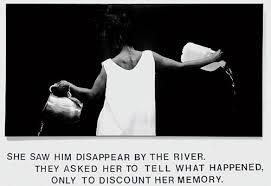
Lorna Simpson (*1960) Waterbearer, 1986 , Gelatin silver print, vinyl lettering.
Black women at the intersection of history, culture, and visual representation, making it a critical work for understanding the politics of race, gender, and narrative in contemporary art. It exemplifies Simpson’s ability to provoke critical reflection without prescribing a single interpretation, emphasizing instead the multiplicity of meaning inherent in visual culture.
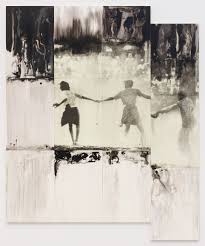
Lorna Simpson (*1960)
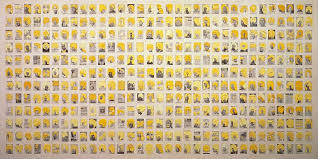
Ellen Gallagher (*1965) Pomp Bang, 2003, paper, ink, plasticine and polymer on canvas
multifaceted practice that merges formal innovation with critical cultural engagement. Her integration of Afrofuturism, historical deconstruction, and experimental techniques has expanded the language of painting and multimedia, inspiring new generations of artists to interrogate race, identity, and history within and beyond the aesthetic framework. She exemplifies how contemporary art can serve as a site of rigorous formal exploration while addressing socially and politically charged themes.
Ellen Gallagher (*1965)
multifaceted practice that merges formal innovation with critical cultural engagement. Her integration of Afrofuturism, historical deconstruction, and experimental techniques has expanded the language of painting and multimedia, inspiring new generations of artists to interrogate race, identity, and history within and beyond the aesthetic framework. She exemplifies how contemporary art can serve as a site of rigorous formal exploration while addressing socially and politically charged themes.
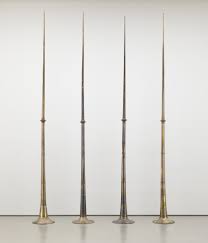
Terry Adkins (1953-2014) Last Trumpet, 1995, Brass and sousaphone and trombone bells, four parts (Left: installation view at Venice Biennale),
Museum of Modern Art, New York, merging sound, sculpture, history, and ritual into a deeply immersive and meaningful form. It demonstrates his innovative vision of art as living, performative, and historically resonant, leaving a profound mark on the landscape of American and African American art.
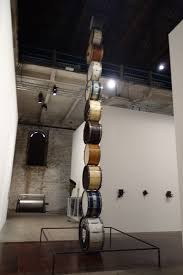
Terry Adkins (1953-2014) Muffled Drums (Installation view), 2003, from the series Darkwater, Bass drums and muffler (with "last trumpet," 1995, in the background)
Engagement with African American historical memory
Transformation of quotidian objects into platforms for intellectual and aesthetic inquiry
Intersection of musical, social, and sculptural practice into a coherent conceptual framework
Abstraction as a vehicle for historical and cultural portraiture
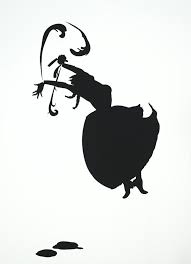
Kara Walker (*1969) Cut, 1998. Cut paper and adhesive on wall, Collection of Donna and Cargill MacMillan
fusion of historical craft, large-scale pictorial narrative, and incisive socio-cultural critique. It confronts viewers with uncomfortable truths about race, gender, and power while pioneering a medium that elegantly marries visual beauty with incisive social commentary, marking a pivotal moment in Walker's oeuvre and contemporary art history.
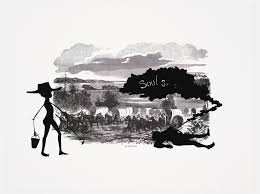
Kara Walker (*1969) Harper's Pictorial History of the Civil War (Annotated): An Army Train, 2005, Offset Lithography/Silkscreen, LeRoy Neiman Center for Print Studies New York
Walker’s series exemplifies how contemporary art can serve as both an aesthetic and ethical intervention, providing a means to interrogate, reframe, and confront the complexities of American history. Her work underscores that history is not a neutral record but a site of ongoing cultural negotiation and critical reinterpretation.
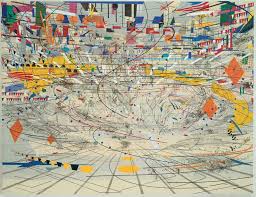
Julie Mehretu (*1970) Stadia II 2004, ink & acrylic on canvas,
Carnegie Museum of Art, Pittsburgh, visual complexity and formal innovation but also for its conceptual interrogation of collective human experience, sociopolitical structures, and historical legacies. It exemplifies the capacity of contemporary abstraction to mediate between visual spectacle and critical inquiry, transforming stadiums, flags, and symbols into sites of both celebration and critique. The painting functions as a mirror of globalized life, simultaneously vibrant, chaotic, and deeply reflective.
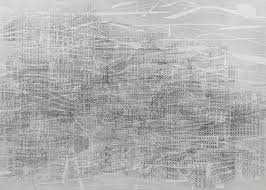
Julie Mehretu (*1970) Berliner Plätze 2007-09, ink and acrylic on canvas
offering a layered meditation on architecture, memory, and sociopolitical change. The interplay of drawing, painting, layering, and erasure embodies her broader engagement with the consequences of war, urban transformation, and diasporic consciousness. It stands as both an aesthetic achievement in abstract painting and a historically and ethically resonant commentary on the cyclical nature of destruction and renewal in urban spaces.
 Note
Note  Flashcards (114)