6 viruses
 Call Kai
 Learn
Learn Practice Test
 Spaced Repetition
 Match
Match Flashcards
 Knowt Play
1/30

There's no tags or description
Looks like no tags are added yet.
Name | Mastery | Learn | Test | Matching | Spaced | Call with Kai |
|---|
No analytics yet
Send a link to your students to track their progress
31 Terms
virus
infect hosts and form virions; intracellular parasites
all domains susceptible
ubiquitous
non filterable
nucleic acid in protein shell →capsid of repeating protein units (capsomeres)
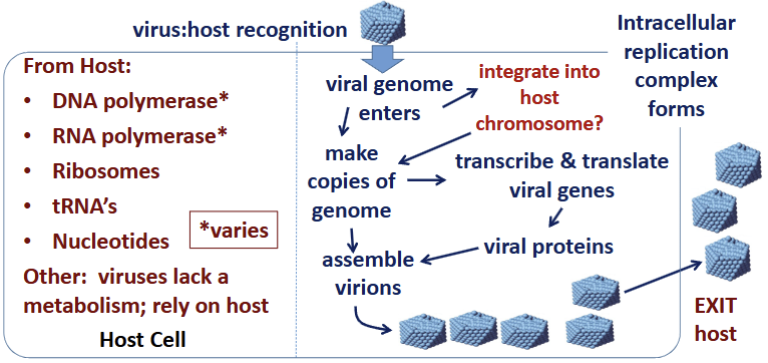
viral reproduction
viral genome enters → make copies of genome → transcribe/translate viral genes → assemble virions
infectivity
each species infects range of hosts
broad - rabies
narrow - hiv
animal - tissue specificity
structure
symmetrical: icosahedral or filamentous capsid; minimizes genes
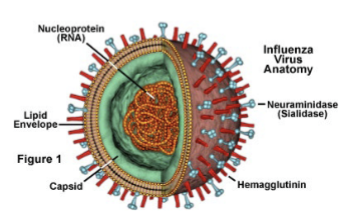
enveloped: surrounds capsid and derived from host membrane
glycoprotein spikes
host recognition and attachment
filamentous virus
capsid: long protein tube with coiled genome inside
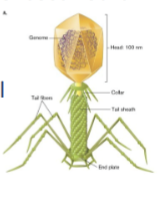
tailed virus
genome delivery devise to icosahedral head
t4 bacteriophages: helical
asymmetrical virus
influenza
lack capsid symmetry
viral genomes
‒ Small viruses: ≤ ten genes
– Large viruses: > 100 genes
zika virus: Non-segmented, single-stranded (+) RNA genome, 10000 bases
influenza virus: Segmented, single-stranded (-) RNA genome; 8 segments, 11 proteins encoded; 13,500 nt bases total
viroids
infectious rna moleculres
no capsid around rna
replicated by host rna polymerase
does not encode proteins
catalytic ability
infect plants
prions
no nucleic acid component
degenerative brain disease
misfolded brain cell protein that infects animals
produces harmful aggregates
highly resistant to physical/chemical components
classifications
genome, capsid symmetry, envelope, host range, virion size
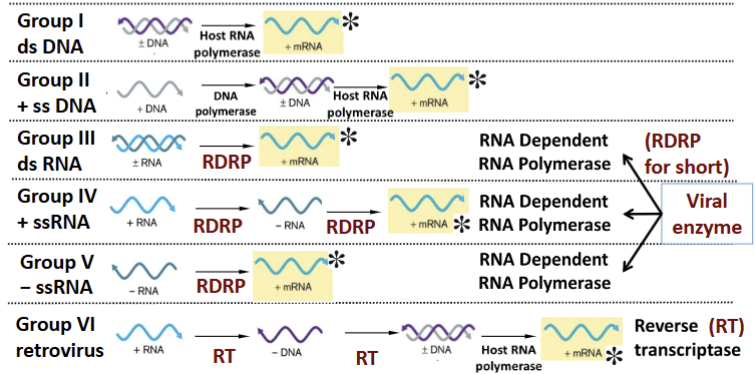
+rna = mrna = sense rna
baltimore class
Group I (dsDNA): use host enzymes (RNA polym) to make mRNA.
Group II (+ssDNA): use a DNA polym to make complementary double strand → mRNA
Group III (dsRNA): RDRP uses negative strand of pair as a template to transcribe + mRNA.
Group IV (+ssRNA): make more of genome, uses RDRP to produce more + mRNA.
Group V (-ssRNA): carry a negative/antisense strand. use RDRP to flip negative strand to +mRNA strand before making proteins
Group VI (Retrovirus): use enzyme Reverse Transcriptase (RT) to turn RNA into DNA. DNA integrates host's genome and uses machinery to make mRNA.
life cycle
(1) Host recognition & attachment
(2) genome entry
(3) synthesis & virion assembly
(4) exit & transmission
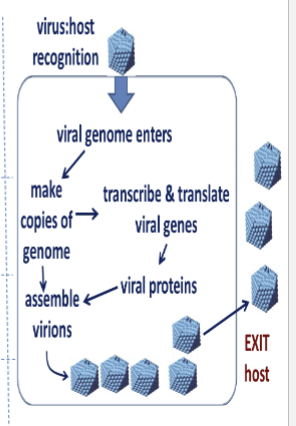
(1) Host recognition & attachment
recognition/binding of
viral capsid proteins, enve-
lope proteins, or glycoproteins
to host cell surface proteins or
glycoproteins
(2) genome entry
entire capsid + genome
enters host cell, or only the
genome may enter
(3) synthesis & virion assembly
Genome replication, protein
synthesis; assembly of virions
(4) exit & transmission
Release from host cell
progeny infect more host cells
bacteriophage life cycle
lytic phage: t even phages; phage replicates and kills host cell (lytic burst)
lysogenic cycle: lambda; temperate phages; do not kill host immediately; integrates into chromosome as prophage; can reactivate to be lytic; env cues when lysogeny → lytic cycle
lysis and lysogeny
virulent phages carry out lytic cycle
temperate phages: cycle in between (lambda)
slow release bacteriophages
m13 filamentous phage
phage particle reproduce and exit cell
host cells grow slowly
host defenses
genetic resistance: altered receptor proteins
restriction endonucleases: cleave viral DNA sequences lacking methylation on cytosine nucleotides
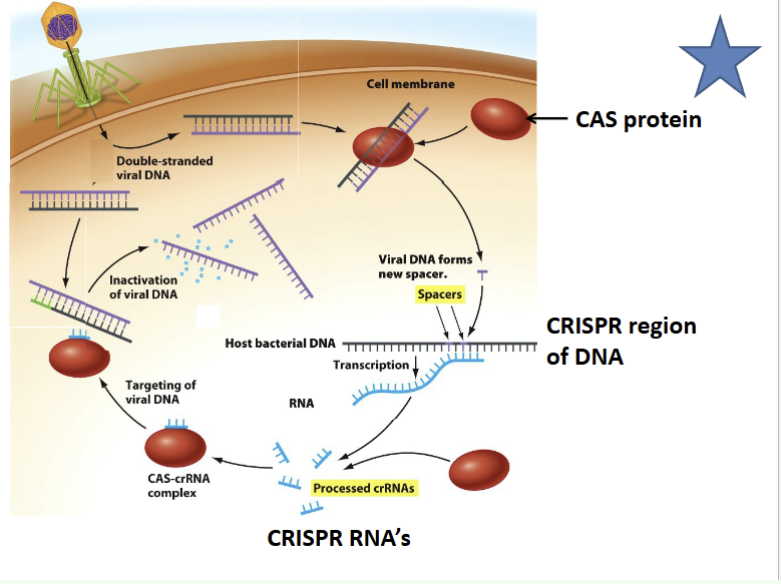
crispr
bacterial immune system
Host cleaves phage DNA, inserts fragment into chromosome as a “spacer”
Phage re-infectionCRISPR sequences transcribed; crRNAs target phage DNA
animal virus
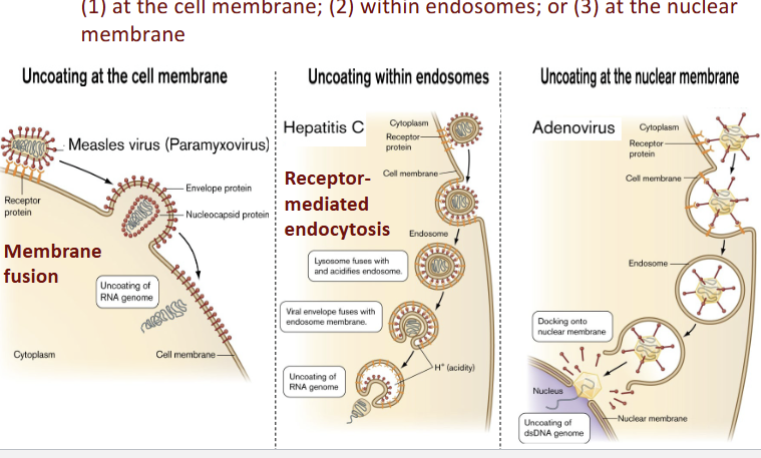
bind to receptor proteins that determine viral tropism
replication depends on genome form: dna can use host replication machinery; rna possess dept polymerase to transcribe mrna; retrovirus use reverse transcriptase to copy sequence into dna for host chromosome
enter as virions: undergo uncoating (genome released from capsid)
use ribosome to form protein: Assembly of new virions; Enveloped viruses: envelope proteins are inserted into the plasma membrane or organelle membrane; Release of virions from host via lysis or budding
dna viruses
• Genome replication in
nucleus
• Synthesis of viral proteins
outside the nucleus
• Entry of viral proteins into
nucleus
• Viral assembly in nucleus
rna viruses
Genome replication,
synthesis of viral proteins,
and viral assembly, all occur
outside the nucleus
genome of rna virus
(+) rna - template for translation
(-) rna - mrna synthesis
retrovirus - dna synthesis
retrovirus rna
enveloped RNA virus; has 2 identical (+) RNA strands
infects helper t cells
uncoating releases rna genome and enzumes (Reverse transcriptase): forms provirus, may remain latent; provirus can be transcribed into rna and translated into proteins; synthesized glycoproteins insert into membrane and exit by budding after virus assembly
animal/plant host defense
genetic resistance: hosts experience mutations
rna interference: widespread; complimentary rna to genome → shuts down viral gene expression
immune system: innate immunity (interferon produced by infected cells and induces production of antiviral proteins → protect from infection); adaptive immunity antibody to virus
viral ecology
limit host pop density, recycle nutrients, increase diversity, gene transfer
marine: nutrient cycling
viral shunt
viral shunt
viral infection convert hosts to detritus (rich in molecules)

