002/003 Cells & tissues
 Call Kai
 Learn
Learn Practice Test
 Spaced Repetition
 Match
Match Flashcards
 Knowt Play
1/31

There's no tags or description
Looks like no tags are added yet.
Name | Mastery | Learn | Test | Matching | Spaced | Call with Kai |
|---|
No analytics yet
Send a link to your students to track their progress
32 Terms
cells - what, make up & function
building blocks of all living things
made up of microscopic organelles that have diff functions (metabolise, digest food, dispose wastes, reproduce, grow, move, respond to stimuli)
carry out all chemical activities needed to sustain life
3 main things cells need to survive
O2
H2O
nutrients (glucose & minerals)
3 basic parts of human cells
plasma membrane – flexible outer boundary
cytoplasm – intracellular fluid containing organelles
nucleus – DNA-containing control centre
cell/plasma membrane
semi-permeable
controls what enters & leaves the cell
mitochondria + cellular respiration
site of cellular respiration
provides ATP for cellular energy
C6H12O6 + 6O2 → 6CO2 + 6H2O + ATP
nucleus
control centre – contains DNA
dictates the kinds & amount of proteins that need to be made by the cell
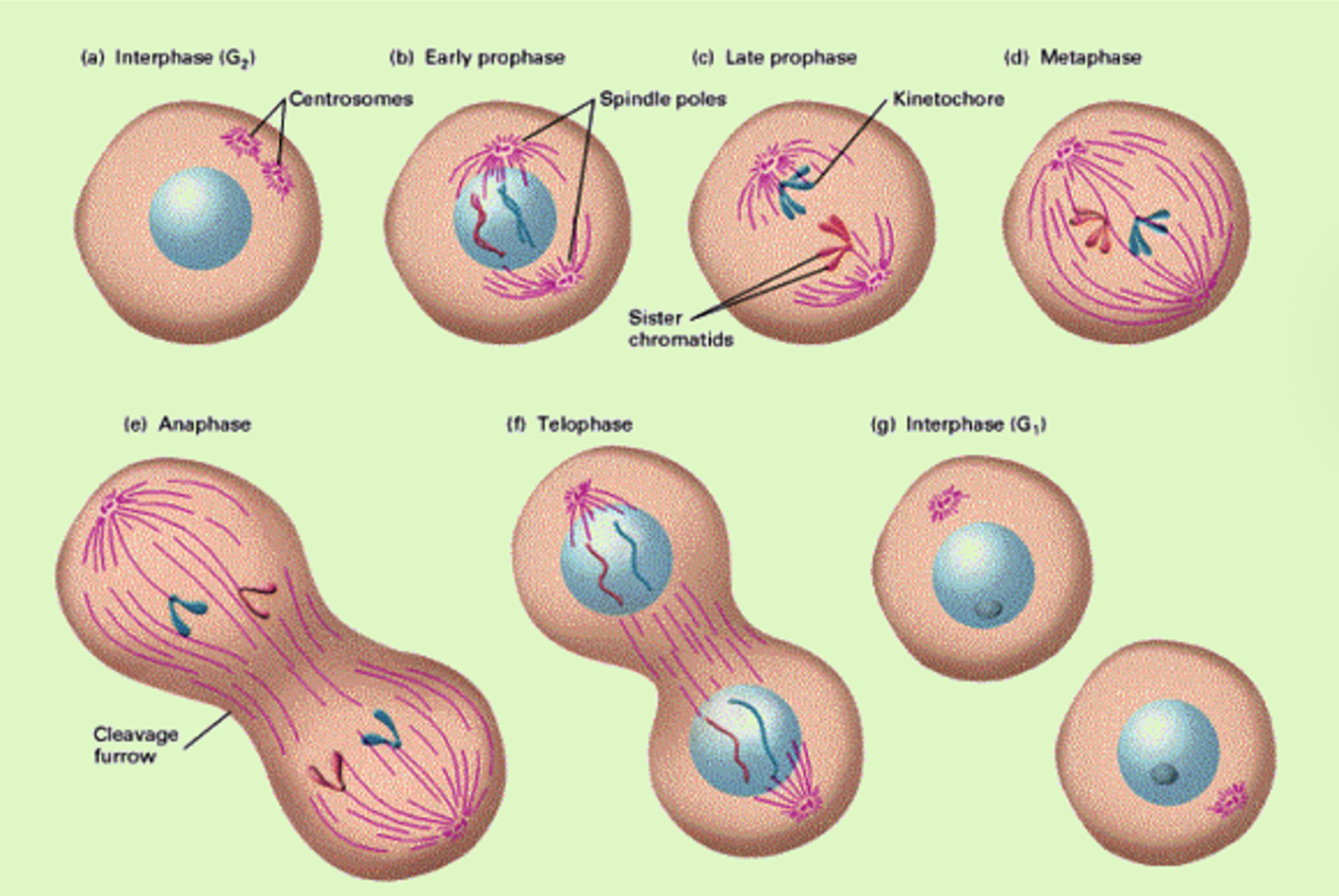
cell division - what, function, process
cell replicates itself
function: produce more cells for growth and repair process
genetic material in nucleus is duplicated and readies a cell for division into 2 cells
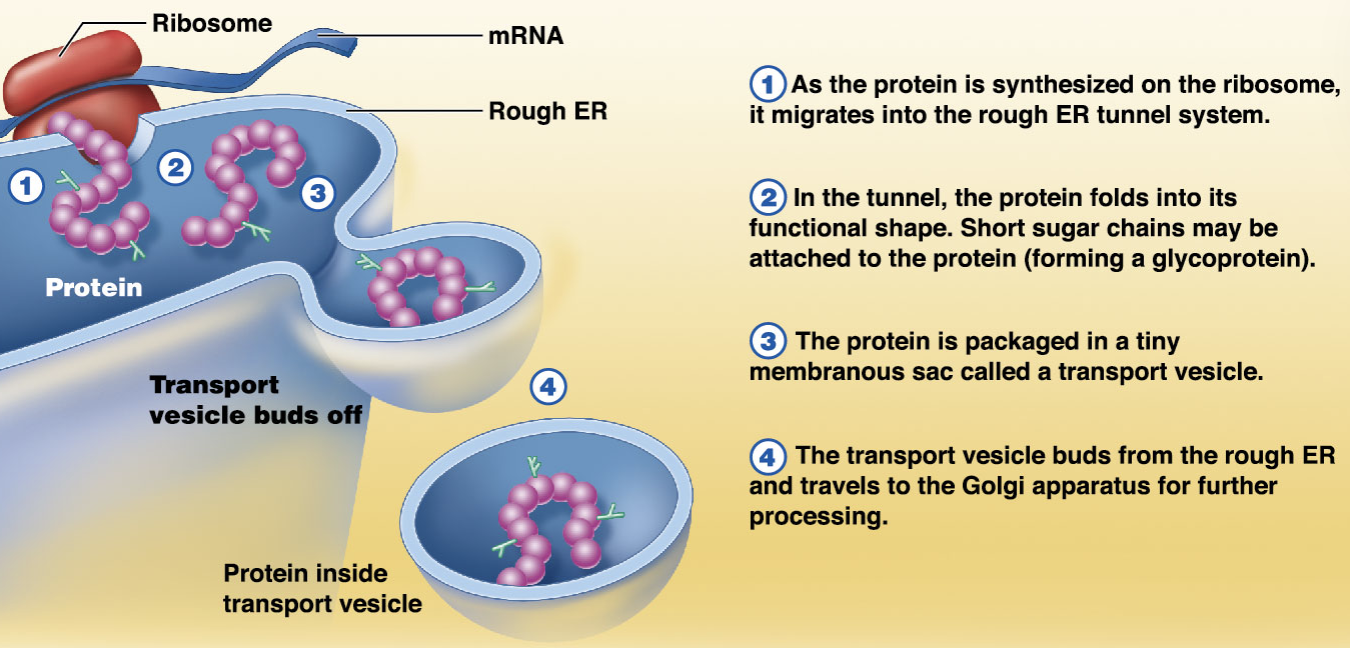
endoplasmic reticulum - smooth & rough
fluid-filled tunnels that carry substances w/in cell
smooth – lacks ribosomes; site of lipid synthesis, metabolism & drug detoxification
rough – studded w/ ribosomes; synthesises proteins; transport vesicles move protein w/in cell
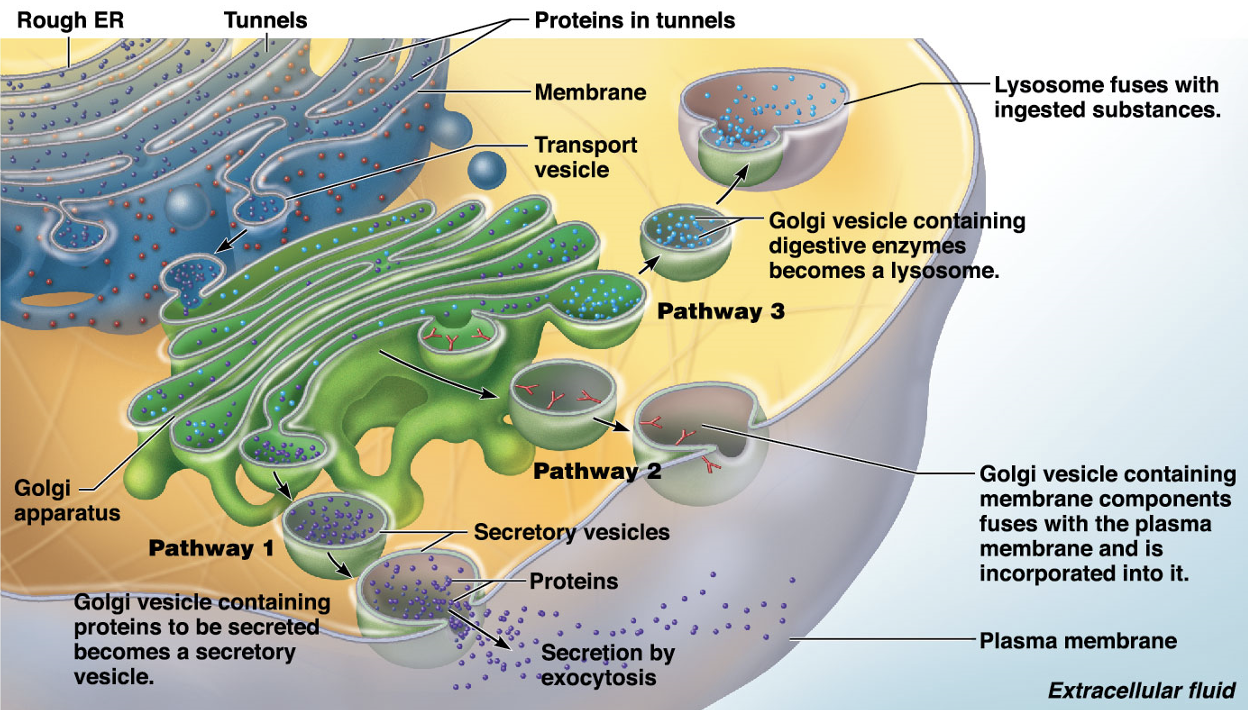
golgi complex
packages and sends proteins within and out of the cell
ribosomes
location of protein synthesis
cytoplasm
gel-like fluid where the cell’s organelles are housed
lysosomes
contain enzymes that digest worn-out or non-usable materials
if cell is injured or starved of O2, lysosome membrane ruptures & cell self-digests
cell extensions
flagella
propel the cell
sperm - only human cell that has flagella
cilia
hair-like organelles that move materials across cell surface
located in respiratory system - mucus, dust, bacteria
microvilli
finger-like projections that ↑ SA to do its job
found in intestine (help w/ nutrient absorption) & kidney tubule cells
cells ageing
larger & less able to divide and multiply
lose ability to function or function abnormally
many tissues lose mass – atrophy
some tissues become lumpy (nodular) or more rigid
neoplasms/tumours - define, types
abnormal mass of tissue that occurs when cells divide more than usual
benign – not cancerous, slow growth, doesn’t spread, encapsulated
malignant – cancerous, rapid growth, abnormal cells, metastasises, recurrence common
causes of death with malignant tumours
infection
organ failure
severe physiological disruption
haemorrhage
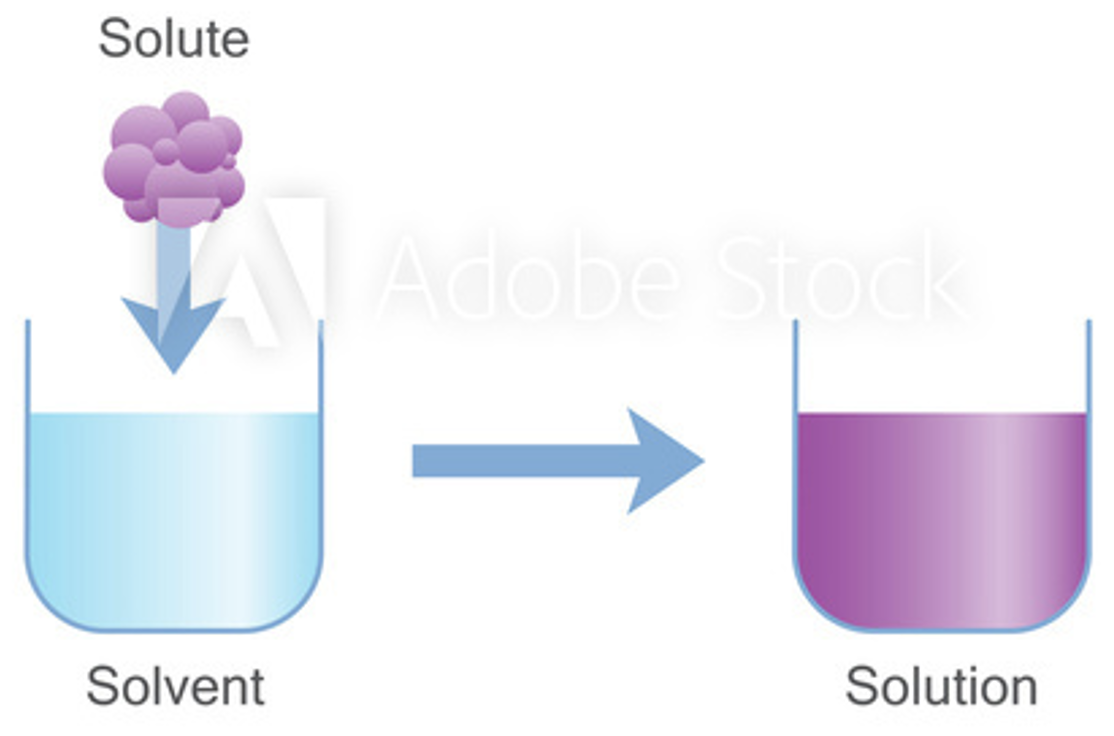
solution, solvent & solutes
solution: liquid mixture of 2 or more components
solvent: dissolving medium present in larger quantity; body’s main solvent is H2O
solutes: components in smaller quantities w/in solution
intracellular fluid
nucleoplasm & cytosol
solution containing gases, nutrients & salts dissolved in water
extracellular fluid (interstitial fluid)
fluid on the exterior of the cell
contains nutrients, hormones, NTs, salts & waste products
2 basic methods of membrane transport
passive process: substances are transported across the membrane w/o input from the cell
diffusion: simple, osmosis, facilitated
filtration
active process: use energy (ATP) provided by the cell
active transport
vesicular transport: exocytosis, endocytosis
diffusion (passive)
movement of molecules from higher to lower concentration
occurs b/c of kinetic energy of molecules; no ATP
particles tend to. distribute themselves evenly within a solution
size of molecules and temp affect the speed of diffusion
major e.g. gas exchange at the alveoli & gas exchange for cellular respiration
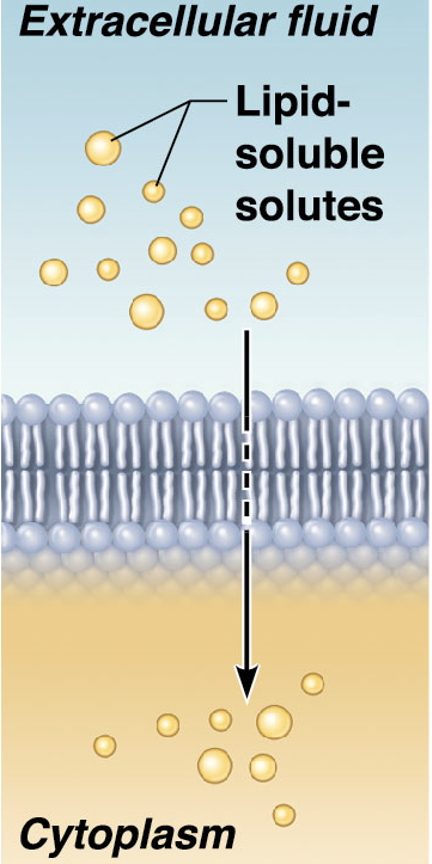
simple diffusion
unassisted process
solutes are lipid-soluble or small enough to pass through membrane pores
e.g. O2 and CO2
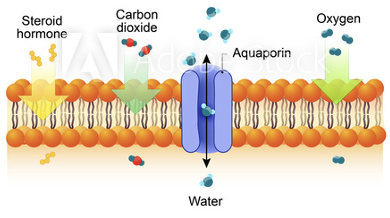
osmosis
simple diffusion of water across a selectively permeable membrane
highly polar water molecules easily cross the plasma membrane through aquaporin (specific channel protein)
water moves from a high concentration of water to a lower concentration of water
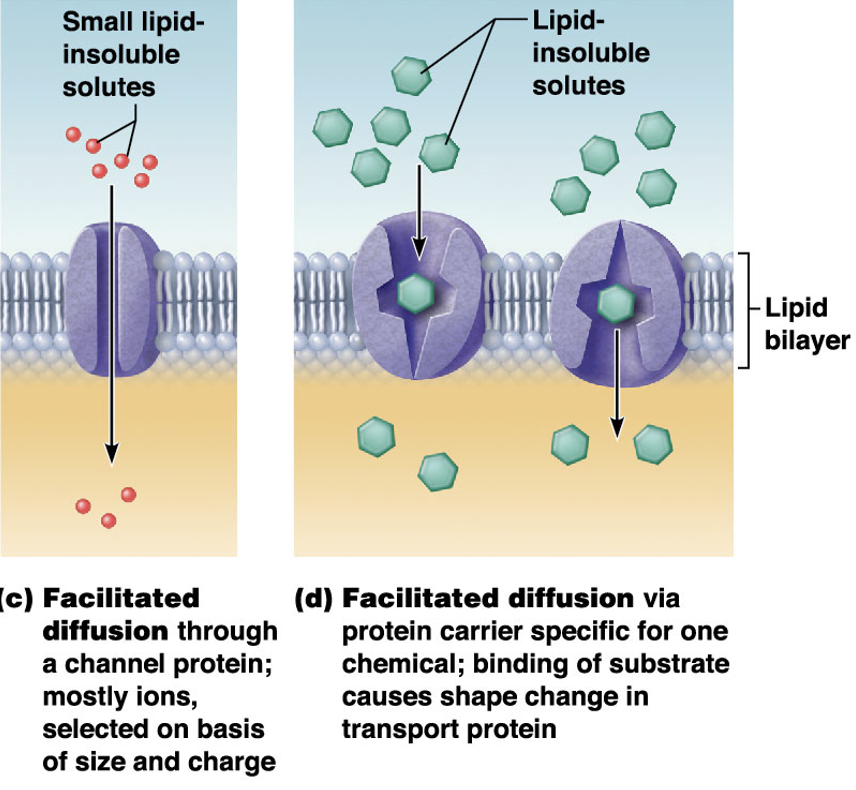
facilitated diffusion
transports lipid-insoluble & large substances that cannot simply diffuse
protein membrane channels or protein molecules that act as carriers are used, e.g. glucose
small water-soluble material cross through water-filled channels, e.g. Na, K, Ca
filtration
water and solutes are forced through a membrane (i.e. capillary wall) into a different compartment by fluid or hydrostatic pressure
the fluid moves from a HIGH to a LOWER-pressure area
in the body, hydrostatic pressure is usually exerted by the blood, e.g. movement of fluid from capillaries into extracellular fluid
Unlike simple diffusion (driven by concentration), filtration uses hydrostatic pressure to force fluid across a membrane.
active processes
when a cell uses ATP to move substances across the membrane
Substances that move actively are usually unable to pass by diffusion:
too large to pass through membrane channels
membrane may lack special protein carriers for its transport
unable to dissolve in the fat core
move against their concentration gradients
active transport AKA solute pumping
similar to facilitated – requires protein carriers to transport across the membrane
difference – facilitated uses kinetic energy of the diffusing molecules, whereas active transport uses ATP to energise its protein carriers (solute pumps)
E.g.
reabsorption of amino acids, glucose & salts by the kidney (against concentration gradient)
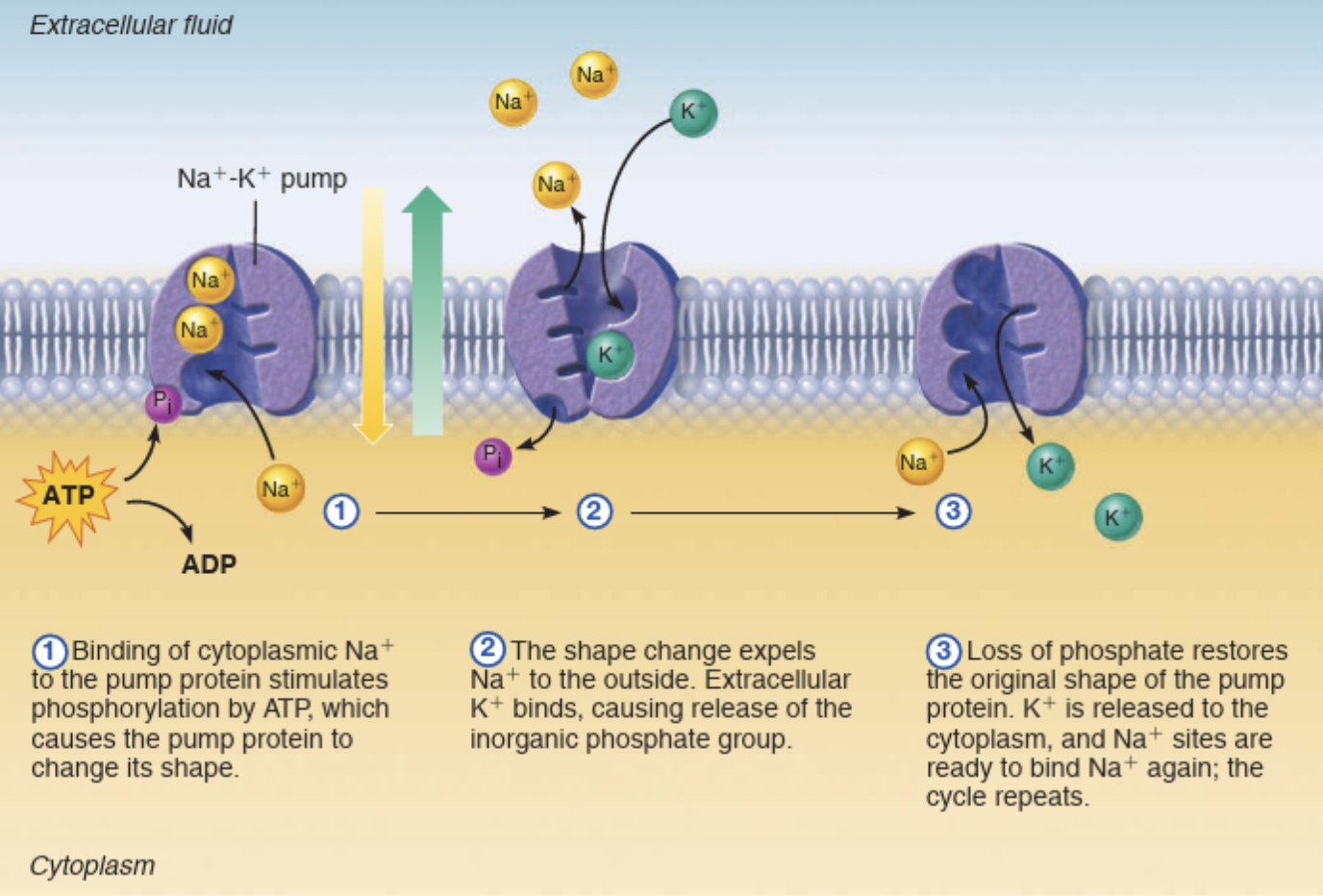
sodium-potassium pump in cell membranes (esp. nerve cells) – carries Na+ ions out of & K+ ions into the cell (necessary for transmission of nerve impulses
vesicular transport
cannot get thru plasma membrane by passive or active transport
ATP fuses or separates membrane vesicles & cell membrane, to move substances into/out of cell in bulk w/o crossing plasma membrane directly
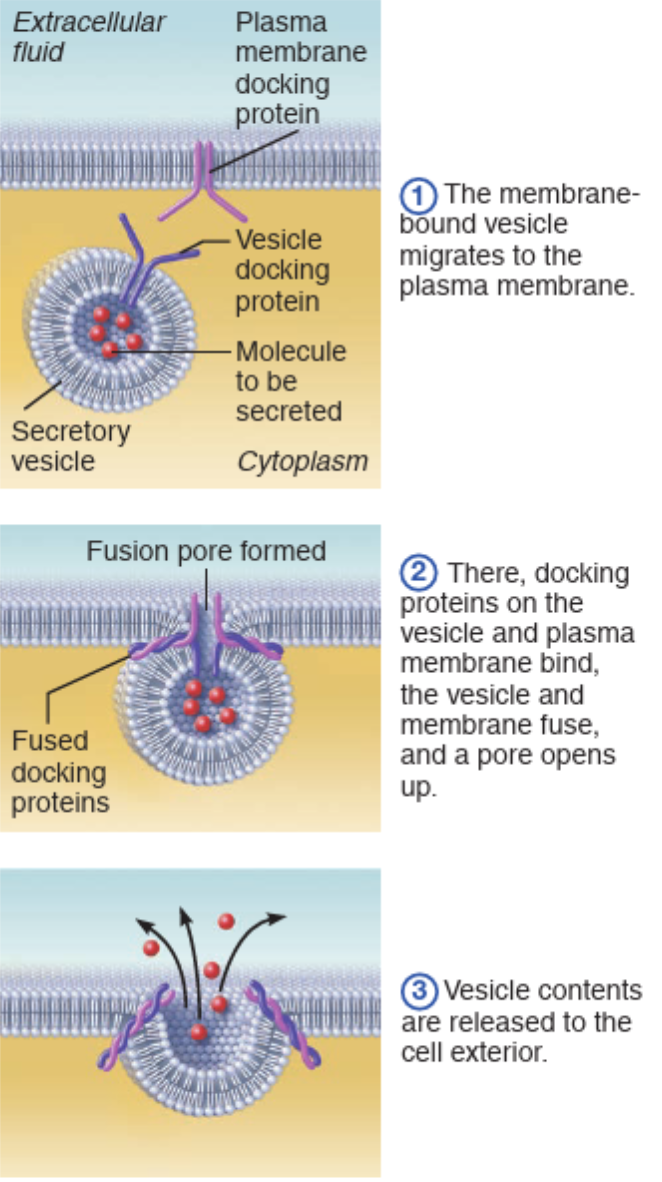
exocytosis
actively moves hormones, mucus & other cellular wastes out of the cell
Packaged by the Golgi apparatus into a secretory vesicle
Vesicle migrates to plasma membrane, fuses w/ it & then ruptures, spilling its content out of the cell
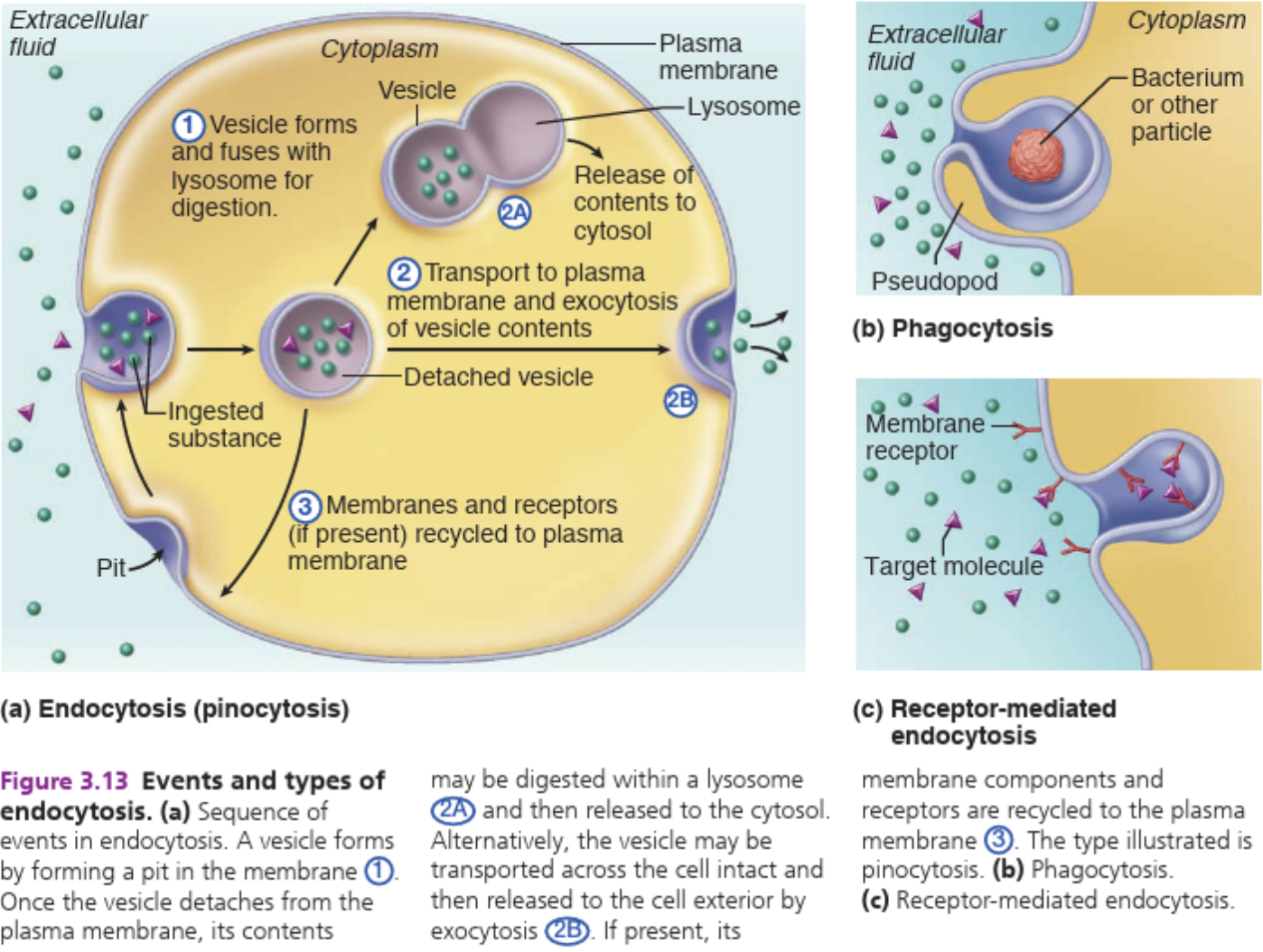
endocytosis
engulf extracellular substances by enclosing them in a vesicle
Vesicle detaches from plasma membrane and moves into cytoplasm, where it usually fuses w/ lysosome & lysosomal enzymes digest its content
Vesicle travels to opposite side of cell & releases its contents by exocytosis
phagocytosis (bacteria or dead cells)
pinocytosis (solutes)
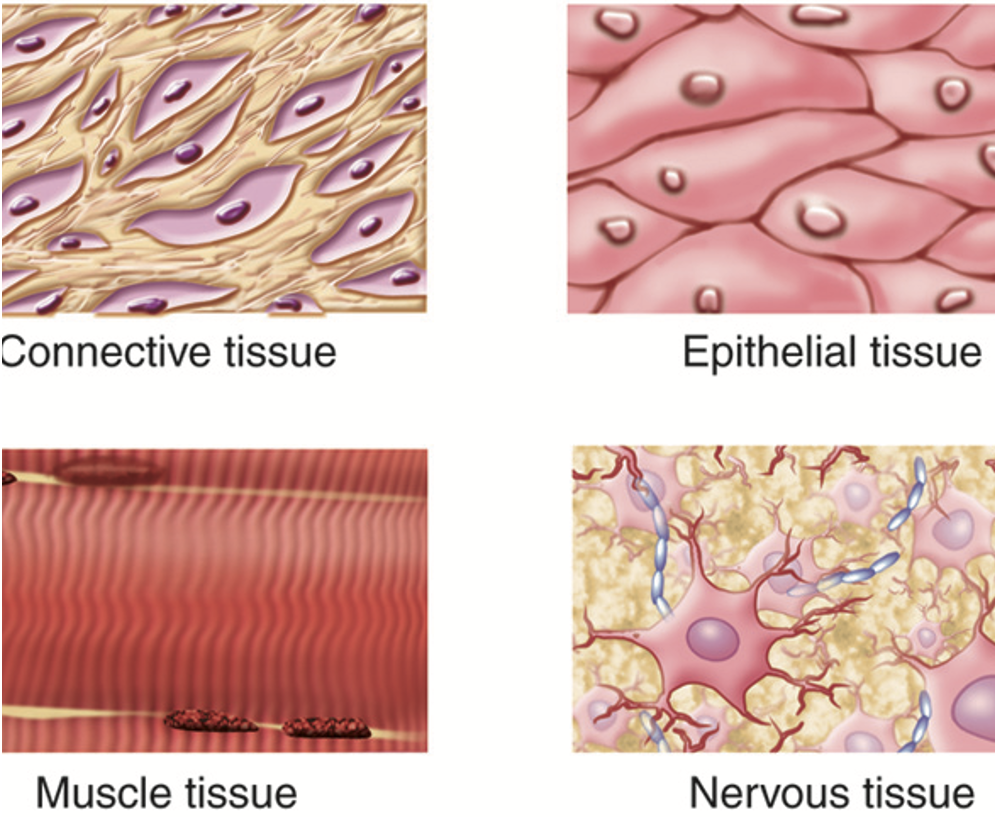
body tissues - define & types
tissues: groups of cells that are similar in structure and function