usa 4 revolution and the founding of a country
 Studied by 0 people
 Call Kai
 Learn
Learn Practice Test
 Spaced Repetition
 Match
Match Flashcards
 Knowt Play
1/13

There's no tags or description
Looks like no tags are added yet.
Name | Mastery | Learn | Test | Matching | Spaced | Call with Kai |
|---|
No study sessions yet.
14 Terms
the 13 colonies of Great Britain in North America
later became states; they all had independent relations with the British crown; Virginia, Massachusetts, New Hampshire, New York, Maryland, Connecticut, Rhode Island, Delaware, New Jersey, North Carolina, South Carolina, Pennsylvania, Georgia
French and Indian War 1756-63
long-running war between France and Britain over various territories in NA; Britain mainly victorious but accrued much debt and began imposing more taxes and less favorable trade terms on their colonies to recoup their losses
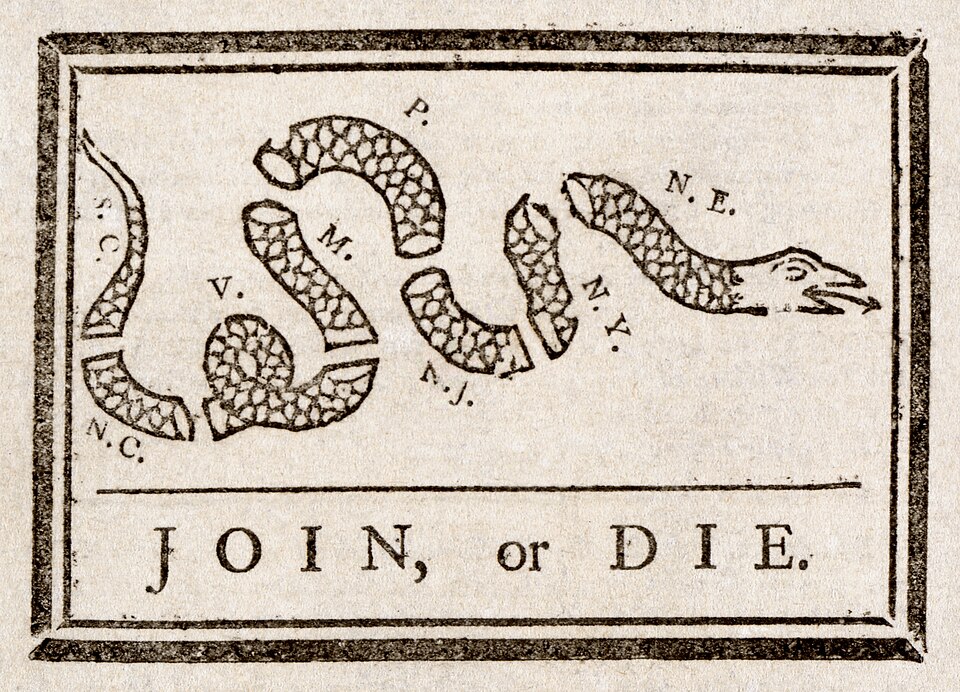
Benjamin Franklin’s “Join, or Die”
the earliest extant image depicting the concept of the British colonies uniting against the French during the French and Indian War (later became a powerful symbol for the American Revolution)
Navigation Acts (17th-18th centuries)
a series of laws which required the colonies to trade exclusively with British entities
Stamp Act (1765)
made most paper products eligible for tax; used to fund the British troops quartered in the colonies
“No taxation without representation”
a powerful slogan during the American Revolution, signifying the American colonists’ belief that they should not be taxed by the British without having any voice or vote in Parliament
Boston Massacre (1770)
British soldiers shot into a Bostonian crowd harassing them, killing 3 and wounding 8; escalated tensions over British taxes
Boston Tea Party (1773)
act of defiance during which Americans disguised as Indians (group “The Sons of Liberty”) dumped a shipment of tea into Boston Harbour in protest of the Tea Tax which was denounced upon, not agreed upon (no taxation without representation)
Coercive (Intolerable) Acts (1774)
punitive British laws passed in retaliation to the Boston Tea Party: Boston Harbour closed; restricted local governance (more power to the British governor); allowed British officials to be tried outside of local courts; permitted British troops to quarter or reside in private residences
the battles of Lexington and Concord (1775)
the first battles of the American Revolution; British soldiers were ordered to take stockpiles of weapons in Concord and were confronted by assembled colonials called Minutemen (they could be called up in a minute’s notice) warned by Paul Revere
Olive Branch Petition
following the battles of Concord and Lexington, the Continental Congress featuring members from all 13 colonies convened in Philadelphia to work out next steps; tense disagreements over appeasement or war led to the Olive Branch petition which the King rejected and ultimately helped unite the colonies against the Crown (pushing America closer to the Declaration of Independence)
Thomas Paine “Common Sense” (1776)
passionate pamphlet that argued for American independence from Great Britain; reprinted throughout the colonies upon publication and across Europe; provided some of the intellectual impetus leading to the Declaration of Independence; A GOVERNMENT OF OUR OWN IS OUR NATURAL RIGHT
the Declaration of Independence (1776)
the foundational U.S. document announcing the 13 American colonies’ separation from Great Britain, outlining universal principles of human rights and listing grievances against King George III; established American colonies as free and independent states
the Battle of Yorktown (1781)
the decisive battle of the American Revolution securing American independence and establishing the United States as a new nation
 Note
Note  Flashcards (120)