11. Photosynthesis in Higher Plants
 Call Kai
 Learn
Learn Practice Test
 Spaced Repetition
 Match
Match Flashcards
 Knowt Play
1/223

Earn XP
Description and Tags
Recommended: read the chapter at least once and study the concepts properly, then use flashcards to revise all the way till exams. Suitable for IAT, NEST, NEET, etc. All flashcards are directly from NCERT. Question mode: Flashcards only. Answer mode: Answer with definition. Recommended: Spaced Repetition. Good luck with exams!
Name | Mastery | Learn | Test | Matching | Spaced | Call with Kai | Chat |
|---|
No analytics yet
Send a link to your students to track their progress
224 Terms
Photosynthesis is a __________ reaction.
(catabolic / anabolic)
anabolic
All living forms on earth depend on _________ for energy. [from NCERT]
(plants / sunlight / O2 / archaebacteria)
sunlight
Which simple experiment proves that green parts of the plant as well as sunlight are essential for photosynthesis?
A variegated leaf or a leaf that was partially covered with black paper, is exposed to light. On testing these leaves for the presence of starch it was clear that photosynthesis occurred only in the green parts of the leaves in the presence of light.
A variegated leaf or a leaf that was partially covered with black paper, is exposed to light. On testing these leaves for the presence of starch it was clear that photosynthesis occurred only in the green parts of the leaves in the presence of light.
Why is de-starching of leaves necessary at the beginning of this experiment?
By de-starching we remove all the stored food that was previously produced by photosynthesis. After the experiment, presence of starch indicates that photosynthesis was performed during the course of the experiment itself.
Which simple experiment proves that CO2 is necessary for photosynthesis?
A part of a leaf is enclosed in a test tube containing some KOH soaked cotton (which absorbs CO2), while the other half is exposed to air. The setup is then placed in light for some time. On testing for the presence of starch later in the two parts of the leaf, the exposed part of the leaf tested positive for starch while the portion that was in the tube, tested negative. This showed that CO2 was required for photosynthesis.
Joseph Priestly performed experiments to prove what?
The essential role of air in the growth of green plants.
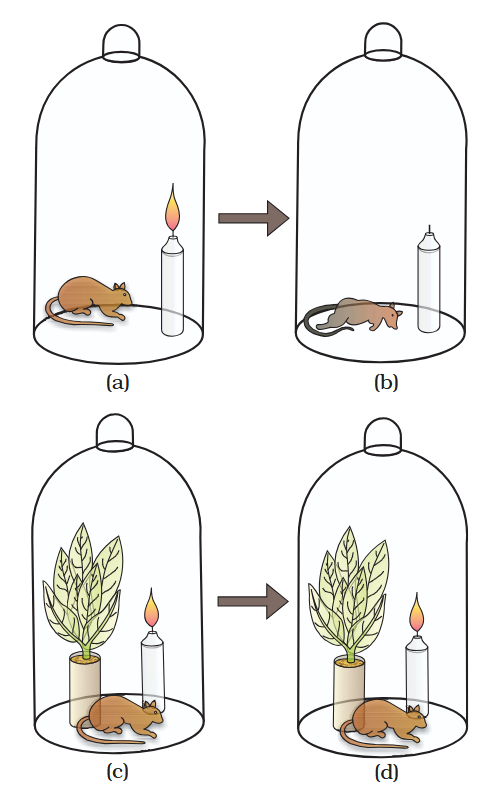
Who conducted this experiment?
Joseph Priestly
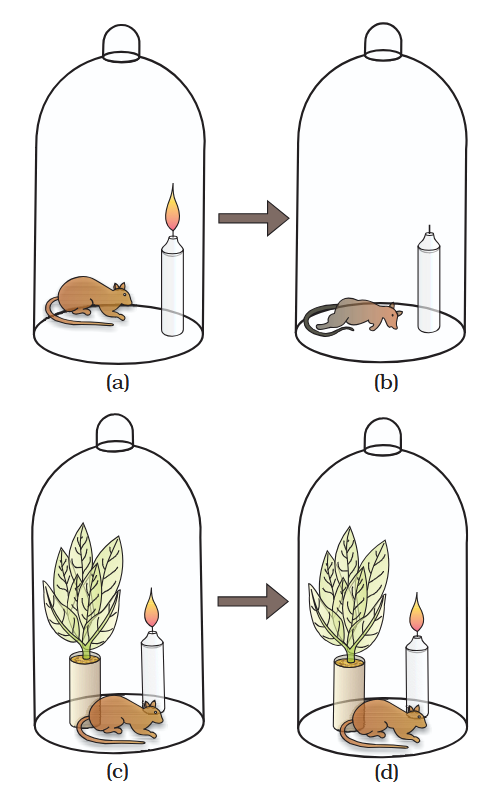
What did this experiment prove?
Plants restore to the air whatever breathing animals and burning candles remove.
What were the experiments carried out by Joseph Priestly?
Priestley observed that a candle burning in a closed space – a bell jar, soon gets extinguished. Similarly, a mouse would soon suffocate in a closed space. He concluded that a burning candle or an animal that breathe the air, both somehow, damage the air. But when he placed a mint plant in the same bell jar, he found that the mouse stayed alive and the candle continued to burn.
Priestley hypothesised as follows: Plants restore to the air whatever breathing animals and burning candles remove.
Jan Ingenhousz performed an experiment to prove what?
He showed that sunlight is essential to the plant process that somehow purifies the air fouled by burning candles or breathing animals.
What was the experiment performed by Jan Ingenhousz?
Ingenhousz in an elegant experiment with an aquatic plant showed that in bright sunlight, small bubbles were formed around the green parts while in the dark they did not. Later he identified these bubbles to be of oxygen. Hence he showed that it is only the green part of the plants that could release oxygen.
Who provided evidence for production of glucose when plants grow?
Julius von Sachs
Julius von Sachs provided evidence for what?
Julius von Sachs provided evidence for production of glucose when plants grow.
Julius von Sachs provided evidence for production of glucose when plants grow.
Glucose is usually stored as starch. His later studies showed that the green substance in plants (_______ as we know it now) is located in special bodies (later called _______) within plant cells. He found that the green parts in plants is where glucose is made, and that the glucose is usually stored as starch.
Julius von Sachs provided evidence for production of glucose when plants grow.
Glucose is usually stored as starch. His later studies showed that the green substance in plants (chlorophyll as we know it now) is located in special bodies (later called chloroplasts) within plant cells. He found that the green parts in plants is where glucose is made, and that the glucose is usually stored as starch.
Julius von Sachs provided evidence for production of glucose when plants grow.
Glucose is usually stored as starch. His later studies showed that the green substance in plants (chlorophyll as we know it now) is located in special bodies (later called chloroplasts) within plant cells. He found that the green parts in plants is where ________ is made, and that it is usually stored as starch.
Julius von Sachs provided evidence for production of glucose when plants grow.
Glucose is usually stored as starch. His later studies showed that the green substance in plants (chlorophyll as we know it now) is located in special bodies (later called chloroplasts) within plant cells. He found that the green parts in plants is where glucose is made, and that the glucose is usually stored as starch.
What was the experiment performed by T.W Engelmann?
Using a prism he split light into its spectral components and then illuminated a green alga, Cladophora, placed in a suspension of aerobic bacteria. The bacteria were used to detect the sites of O2 evolution. He observed that the bacteria accumulated mainly in the region of blue and red light of the split spectrum.
Using a prism, T.W Engelmann split light into its spectral components and then illuminated a green alga, Cladophora, placed in a suspension of aerobic bacteria. The bacteria were used to detect the sites of O2 evolution. He observed that the bacteria accumulated mainly in the region of blue and red light of the split spectrum.
A first action spectrum of photosynthesis was thus described.
Which other spectra does this resemble?
It resembles roughly the absorption spectra of chlorophyll a and b.
What is the empirical equation representing the total process of photosynthesis for oxygen evolving organisms?

![<p>What is the common name of [CH<sub>2</sub>O] here?</p>](https://assets.knowt.com/user-attachments/4c55301f-9a04-44fd-a3e4-ea98c2ecff68.png)
What is the common name of [CH2O] here?
carbohydrate
Cornelius van Niel, based on his studies of purple and green bacteria, demonstrated what?
He demonstrated that photosynthesis is essentially a light-dependent reaction in which hydrogen from a suitable oxidisable compound reduces carbon dioxide to carbohydrates.
Cornelius van Niel, based on his studies of purple and green bacteria, demonstrated that photosynthesis is essentially a light-dependent reaction in which hydrogen from a suitable oxidisable compound reduces carbon dioxide to carbohydrates.
Express this process in equation form.


What can A here be?
sulphur S or oxygen O
Photosynthesis is essentially a light-dependent reaction in which hydrogen from a suitable oxidisable compound reduces carbon dioxide to carbohydrates.
What is the hydrogen donor in green plants?
H2O
Photosynthesis is essentially a light-dependent reaction in which hydrogen from a suitable oxidisable compound reduces carbon dioxide to carbohydrates.
What is the hydrogen donor in purple and green sulphur bacteria?
H2S
Photosynthesis is essentially a light-dependent reaction in which hydrogen from a suitable oxidisable compound reduces carbon dioxide to carbohydrates.
What is the oxidation product formed in purple and green sulphur bacteria?
sulphur or sulphate depending on the organism
Which scientist inferred that the O2 evolved by the green plant comes from H2O, not from carbon dioxide?
Cornelius van Niel
What is the equation that represents the overall process of photosynthesis?


The oxygen released comes from which of the two substrates?
water
Where are chloroplasts usually aligned in mesophyll cells?
Usually the chloroplasts align themselves along the walls of the mesophyll cells, such that they get the optimum quantity of the incident light.
Which part of a chloroplast is responsible for trapping light energy?
the membrane system (grana)
Which part of a chloroplast is responsible for the synthesis of ATP and NADPH?
the membrane system (grana)
Which part of a chloroplast is responsible for the synthesis of sugar?
stroma
What sort of molecules are synthesized during light reactions?
ATP and NADPH and O2
What sort of molecules are synthesized during dark reactions?
sugars (glucose / starch)
Why is “dark reaction” a misnomer?
The reactions are not directly light-dependant, though they depend on the products of the light reaction
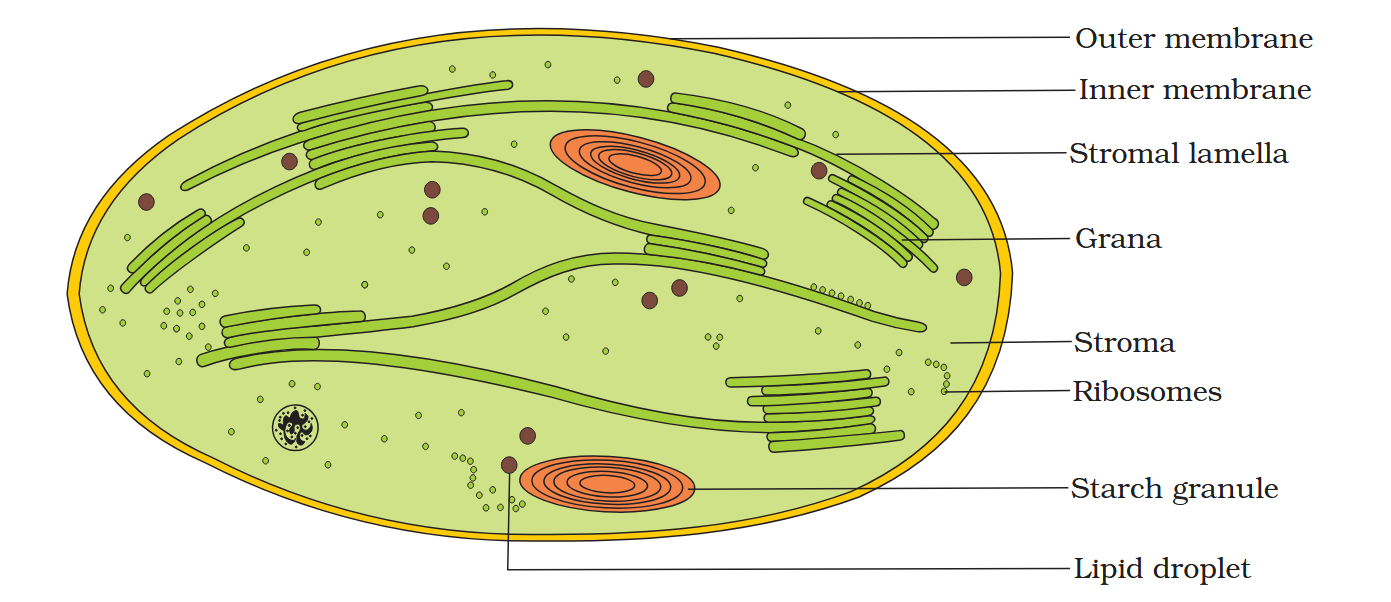
outer membrane
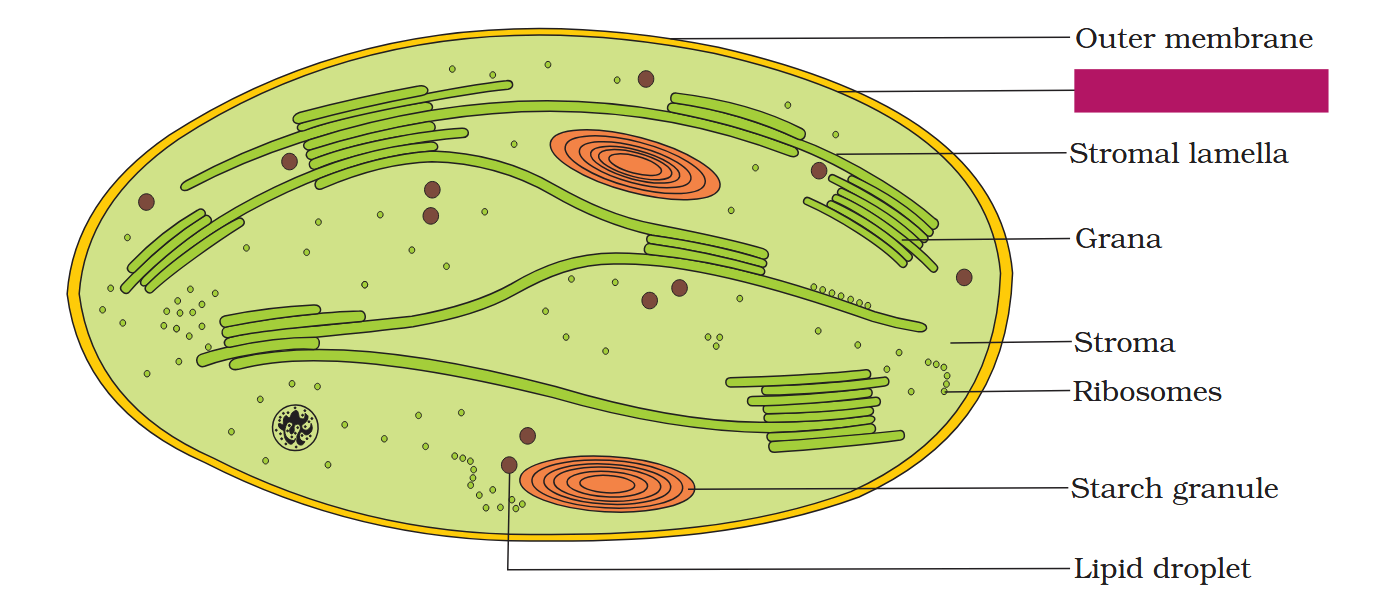
inner membrane
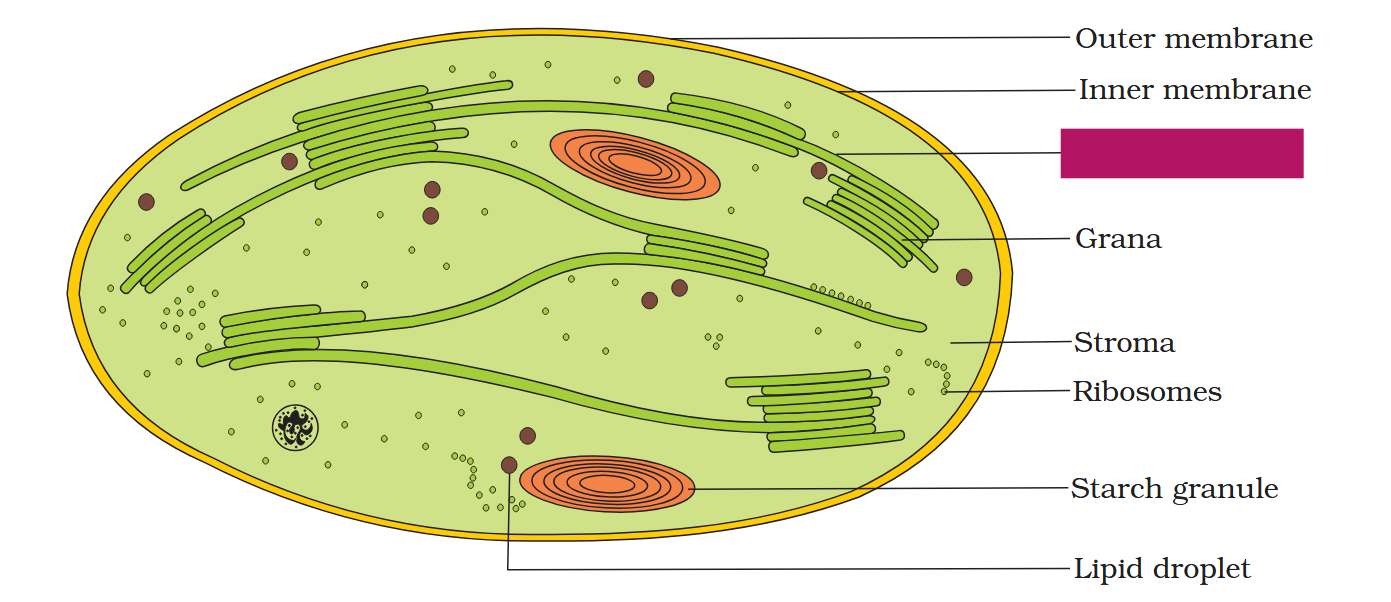
stroma lamella
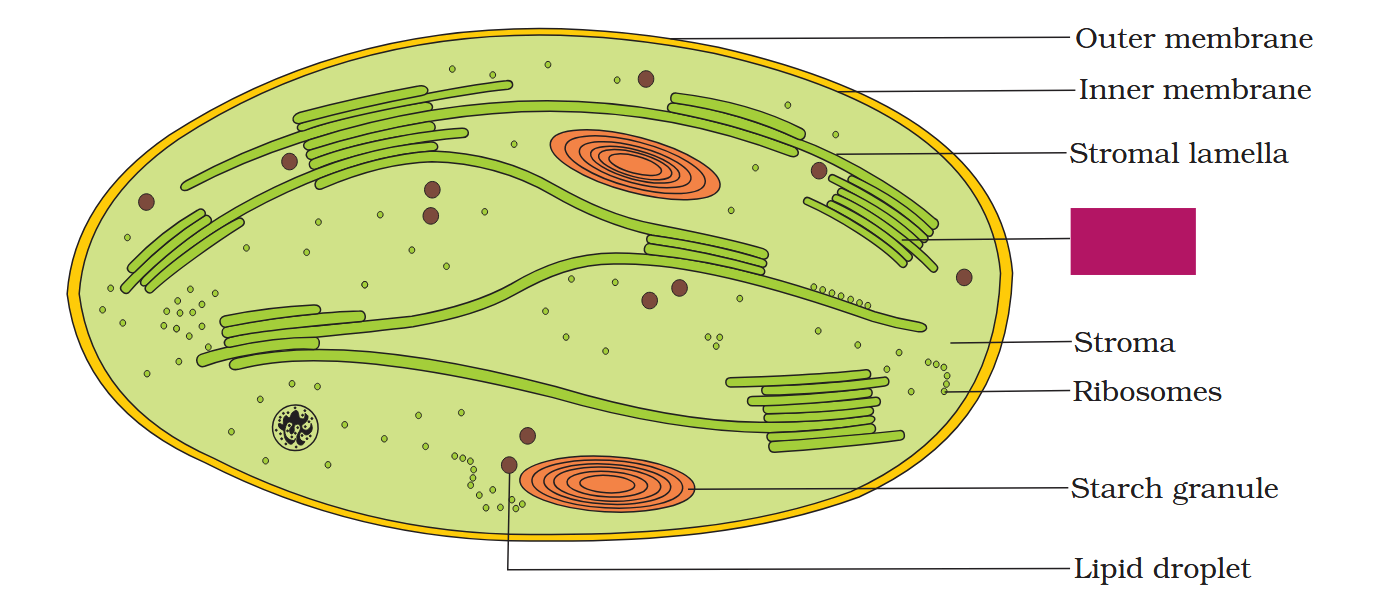
grana
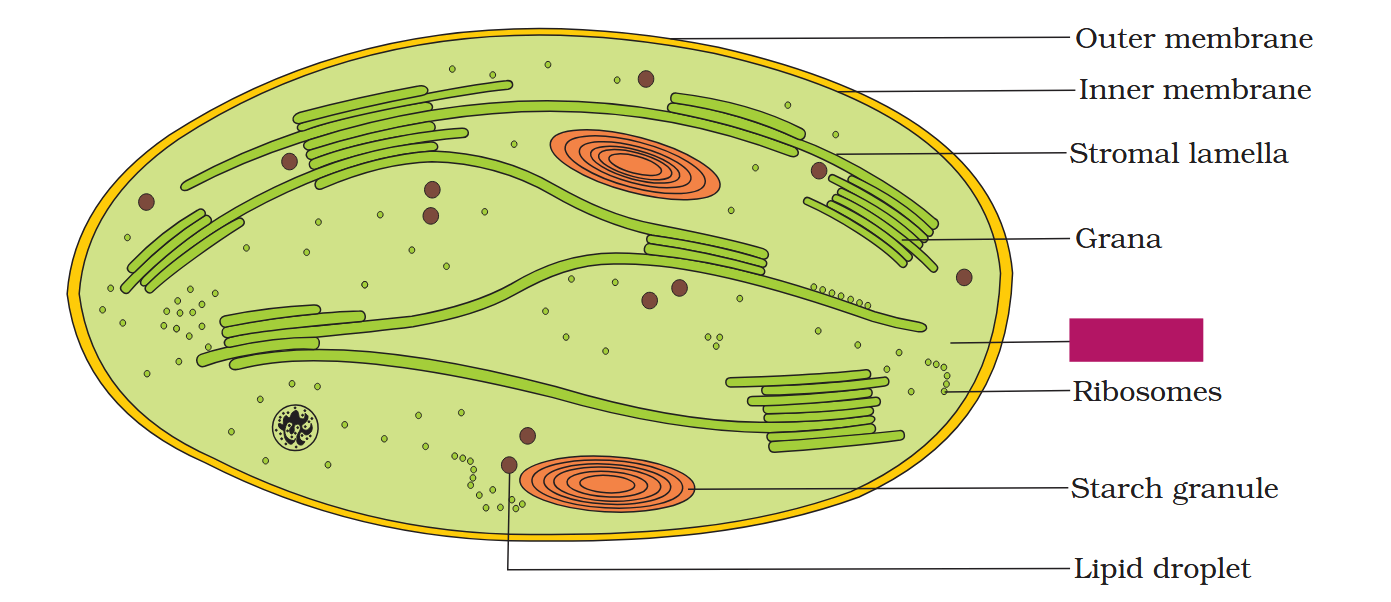
stroma
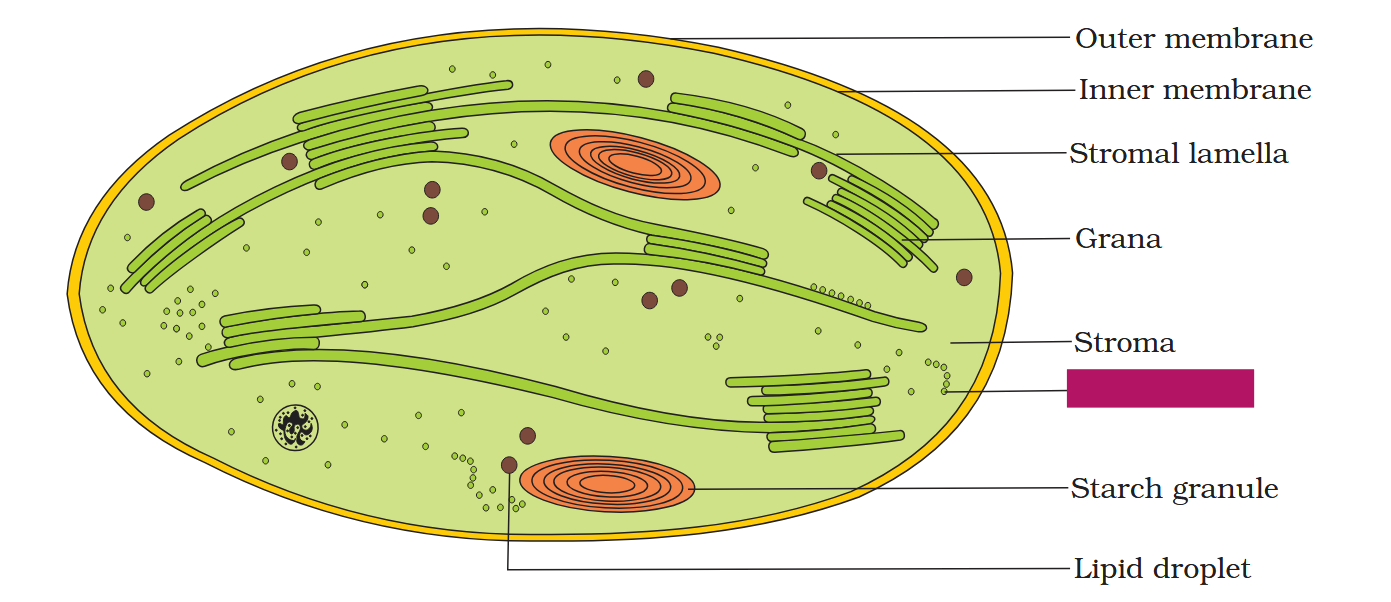
ribosomes
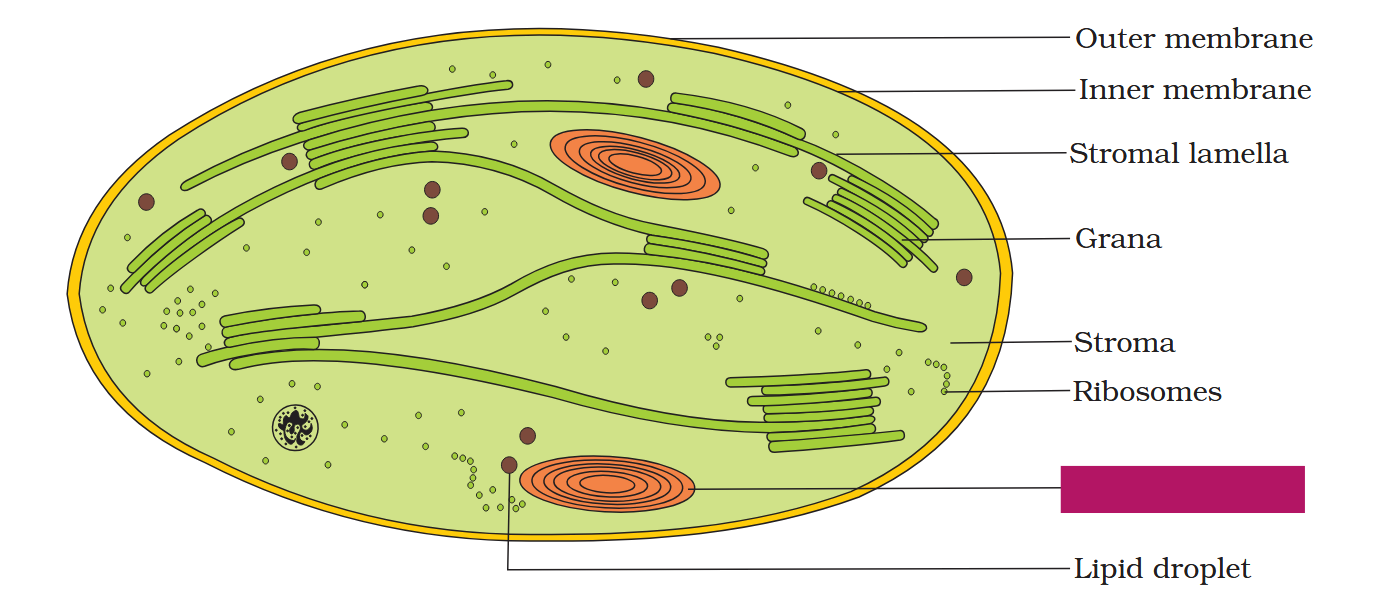
starch granule
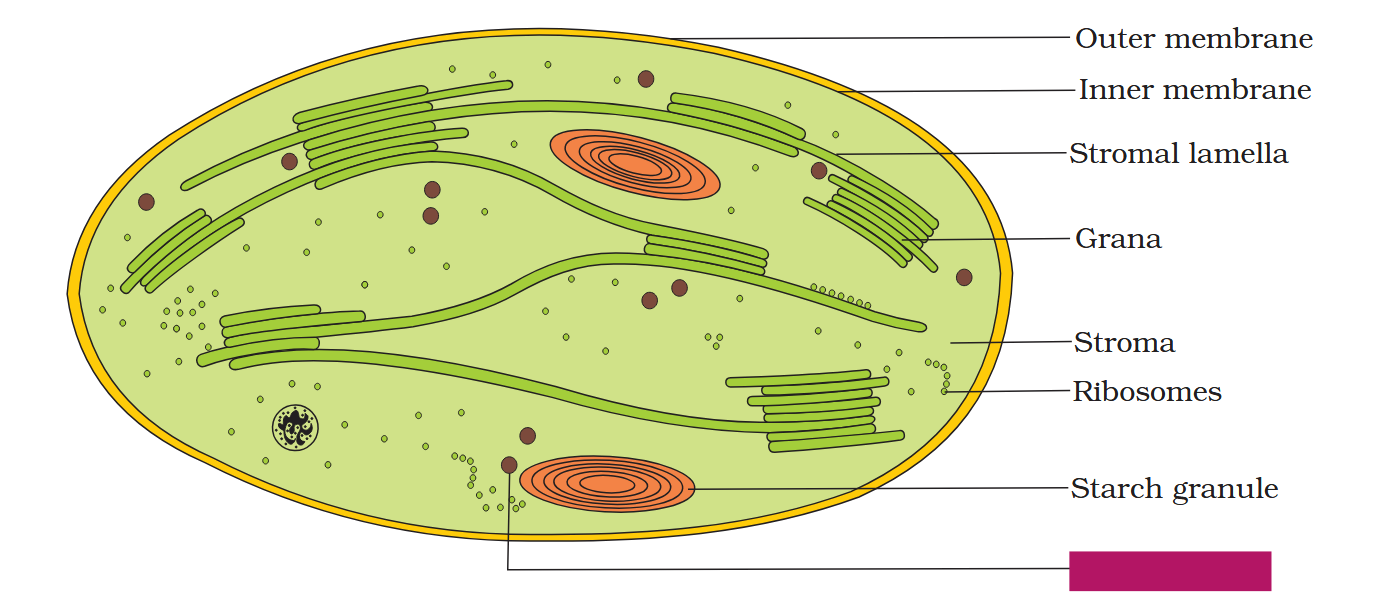
lipid droplet
Which 4 pigments impart colour to green plants?
chlorophyll a
chlorophyll b
xanthophylls
carotenoids
What is the colour shown by chlorophyll a in a chromatogram?
bright or blue green
What is the colour shown by chlorophyll b in a chromatogram?
yellow green
What is the colour shown by xanthophylls in a chromatogram?
yellow
What is the colour shown by carotenoids in a chromatogram?
yellow to yellow-orange
What are pigments?
Pigments are substances that have an ability to absorb light, at specific wavelengths.
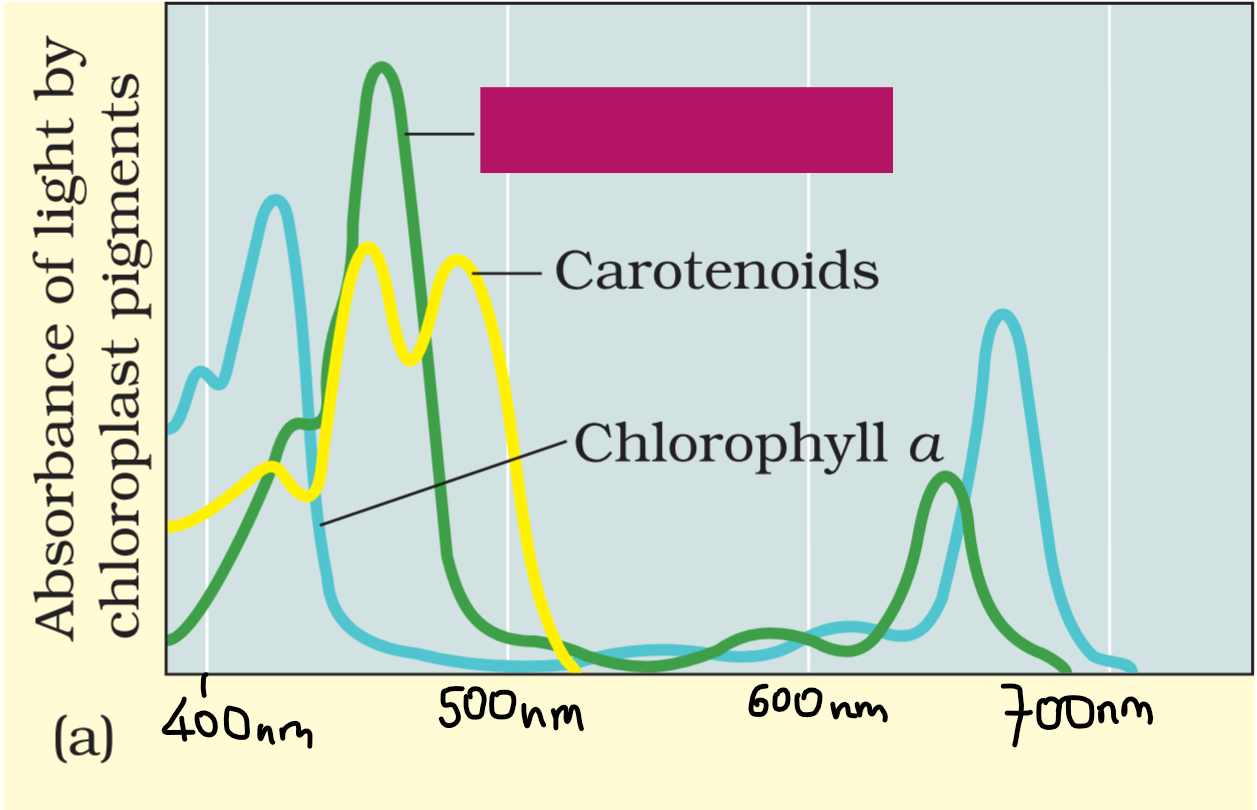
chlorophyll b
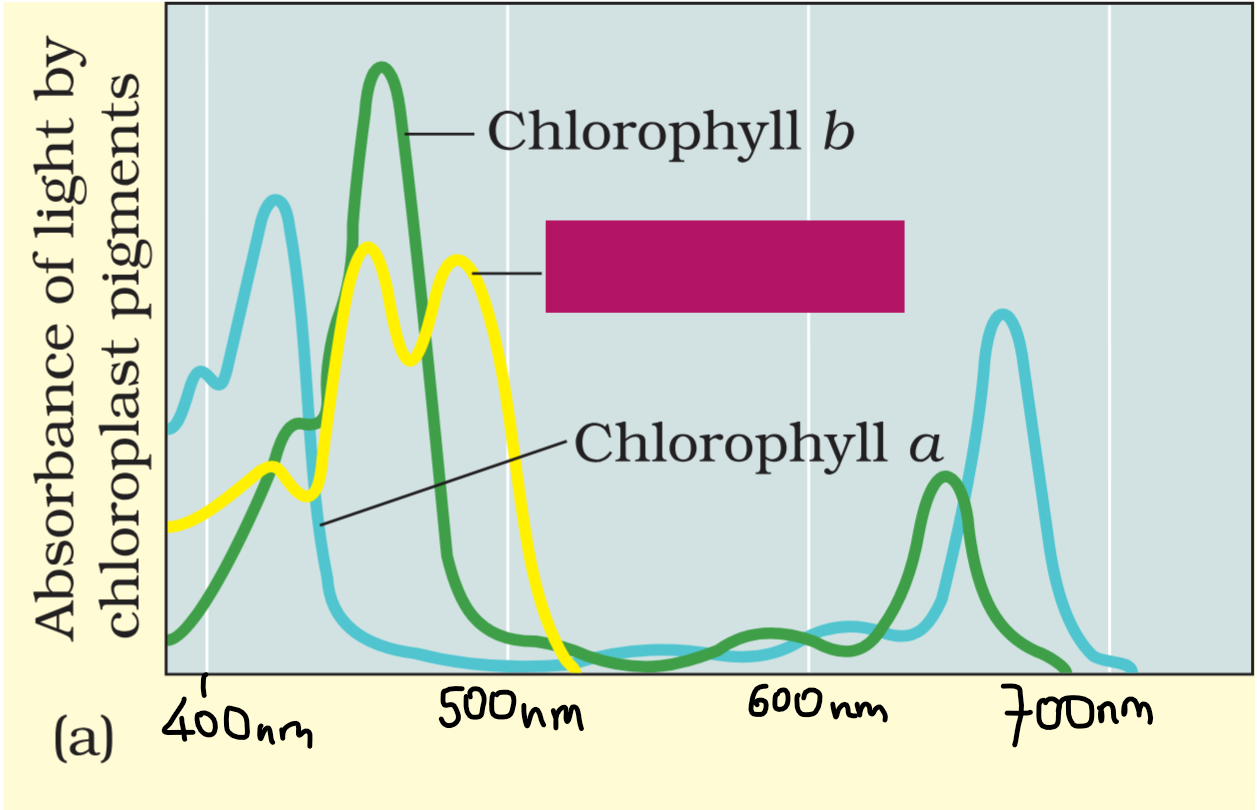
carotenoids
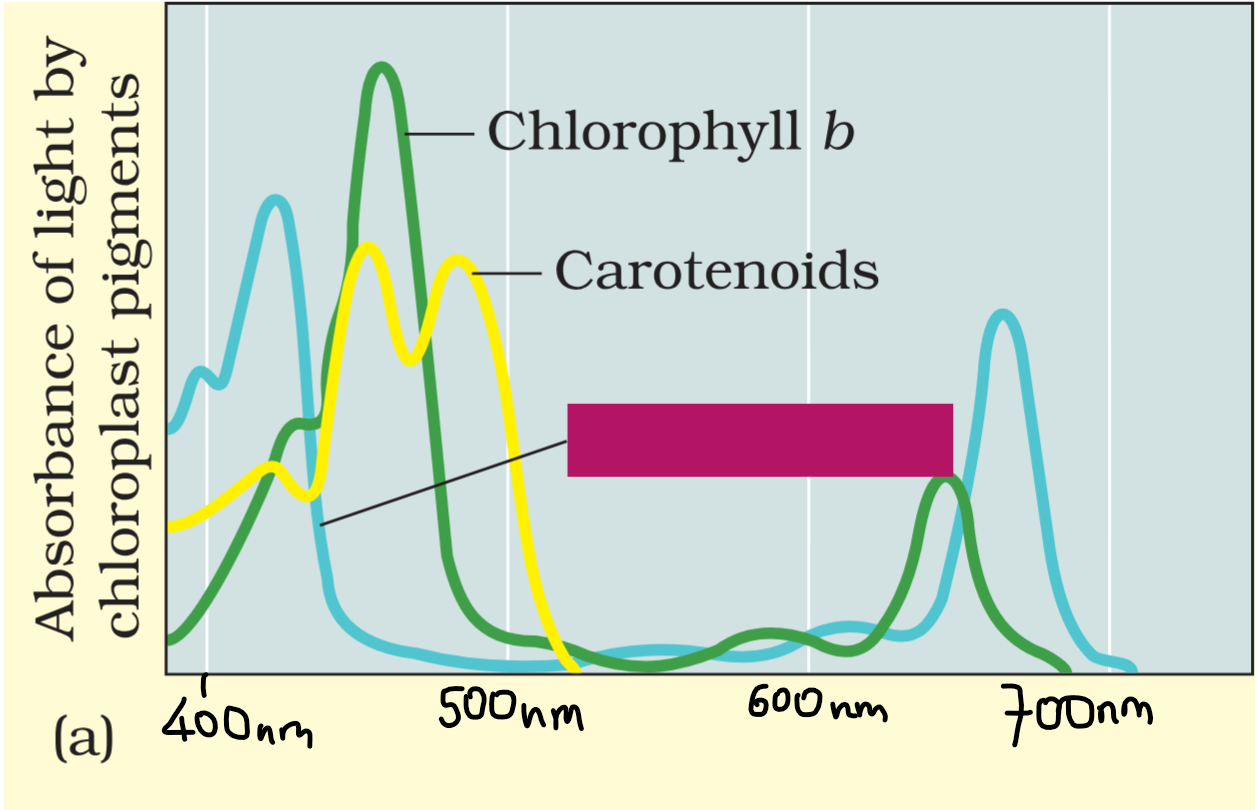
chlorophyll a
What does a comparison graph of rate of photosynthesis and absorption of light look like?
almost the same
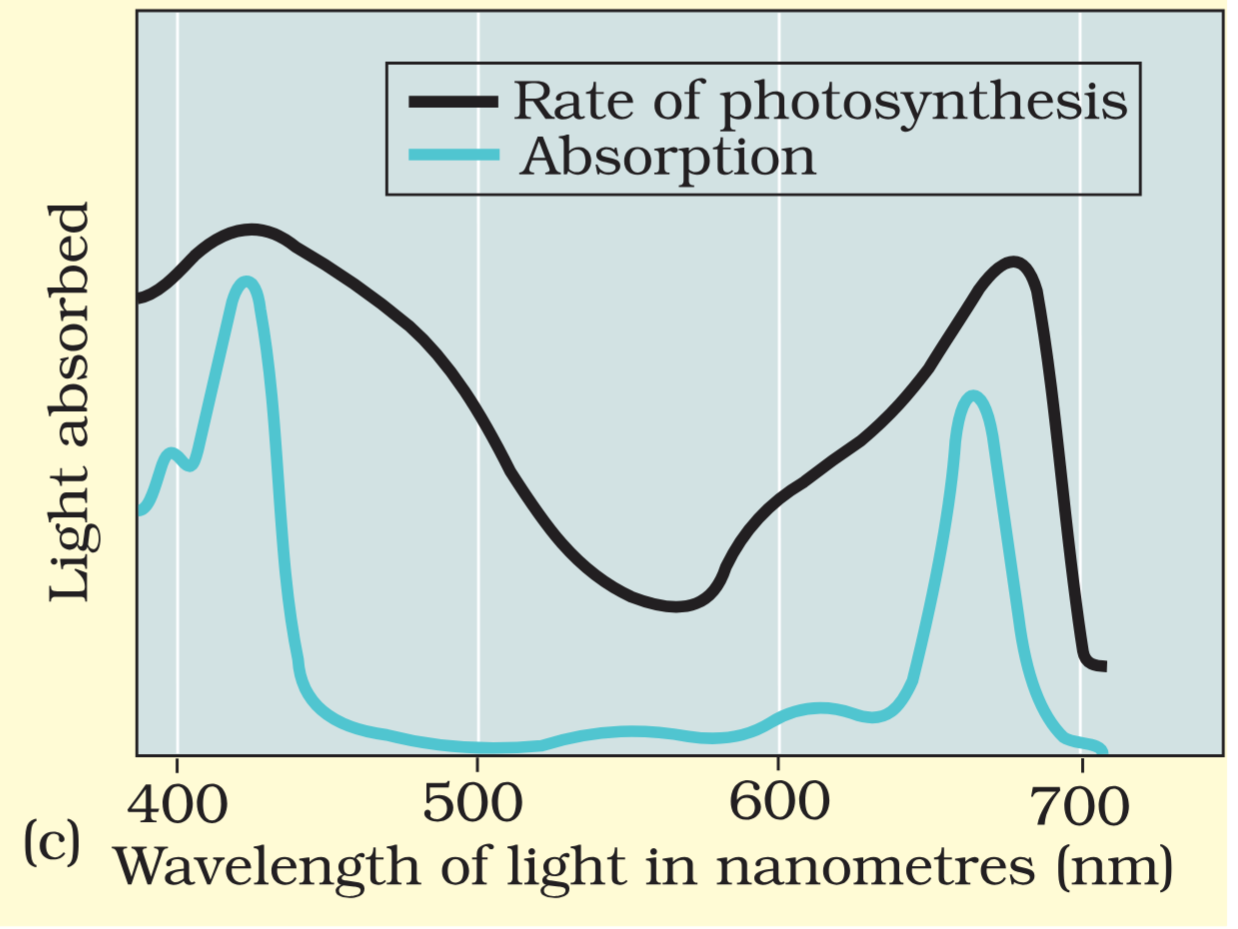
Most of the photosynthesis takes place in the _____ and _____ regions of the spectrum; some photosynthesis does take place at the other wavelengths of the visible spectrum.
(colour)
Most of the photosynthesis takes place in the blue and red regions of the spectrum; some photosynthesis does take place at the other wavelengths of the visible spectrum.
Which is the major pigment involved in photosynthesis?
chlorophyll a
Which pigments are accessory pigments in most green plants?
chlorophyll b
xanthophylls
carotenoids
Where are pigments present in chloroplasts?
In the thylakoids.
What do accessory pigments do?
They absorb different wavelengths of light and transfer the energy to chlorophyll a.
They protect chlorophyll a from photo-oxidation.
Light reactions are a _________ process.
(photochemical / biochemical)
photochemical
Dark reactions are a __________ process.
(photochemical / biochemical)
biochemical
What are the four major phases of light reaction in photosynthesis?
absorption of light
water splitting
oxygen release
formation of high-energy chemical intermediates (ATP and NADPH)
What is an LHC (light-harvesting complex)?
The LHC are made up of hundreds of pigment molecules bound to proteins.
Each photosystem has all the pigments other than the one molecule of chlorophyll a.
True or false?
true
Each photosystem has all the pigments (except one molecule of chlorophyll a) forming a light harvesting system also called __________.
Each photosystem has all the pigments (except one molecule of chlorophyll a) forming a light harvesting system also called antennae.
What constitutes the “reaction centre” in photochemical processes involved in photosynthesis?
pigment molecule: chlorophyll a
The reaction centre is same in both photosystem 1 and photosystem 2.
True or false?
false, the reaction centre is different in both the photosystems.
What is the difference between the reaction centres in photosystem 1 and 2?
In PS I the reaction centre chlorophyll a has an absorption peak at 700 nm, hence is called P700, while in PS II it has absorption maxima at 680 nm, and is called P680.
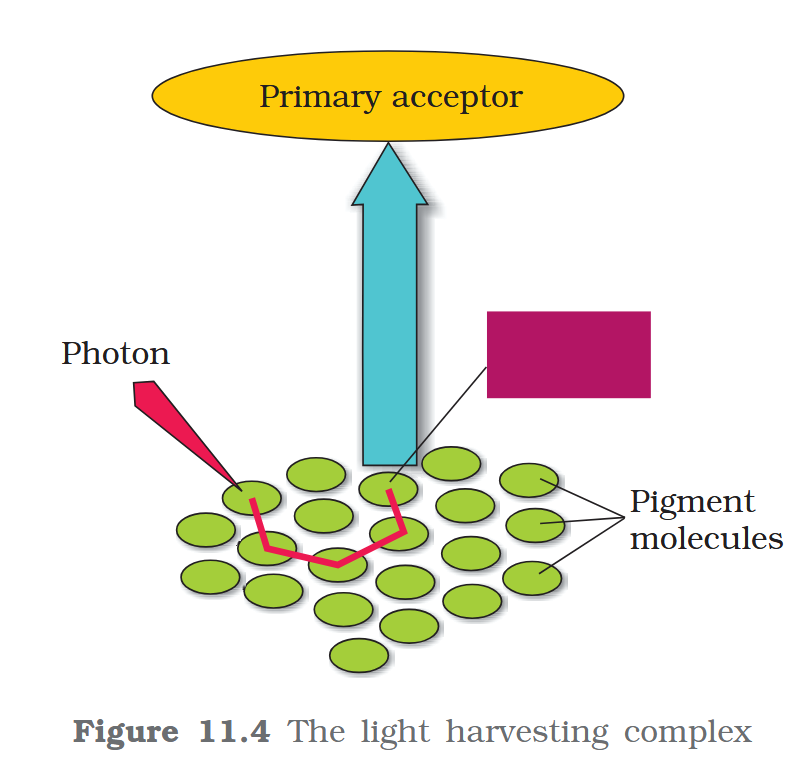
reaction centre
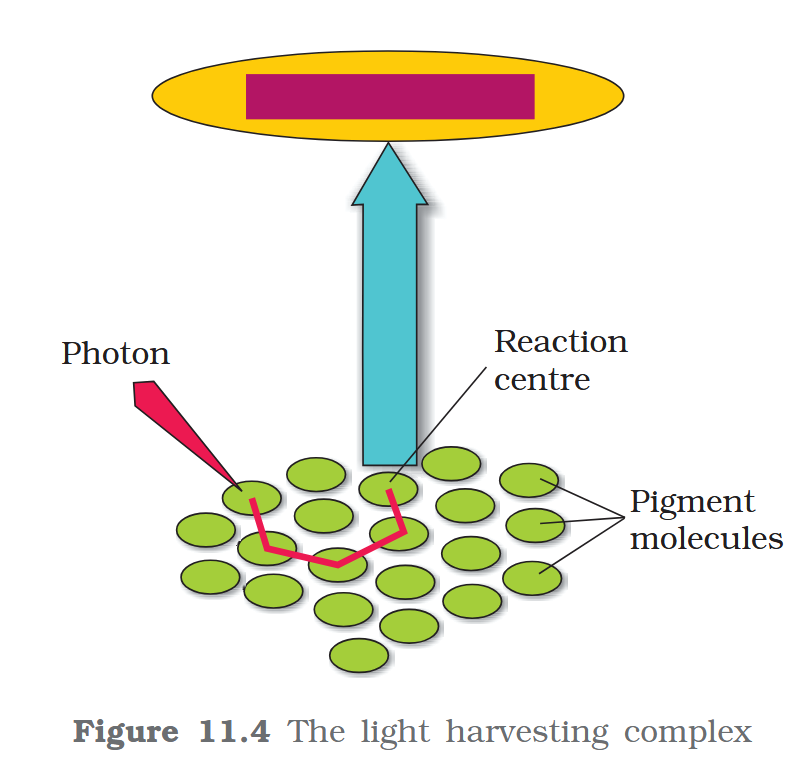
primary acceptor
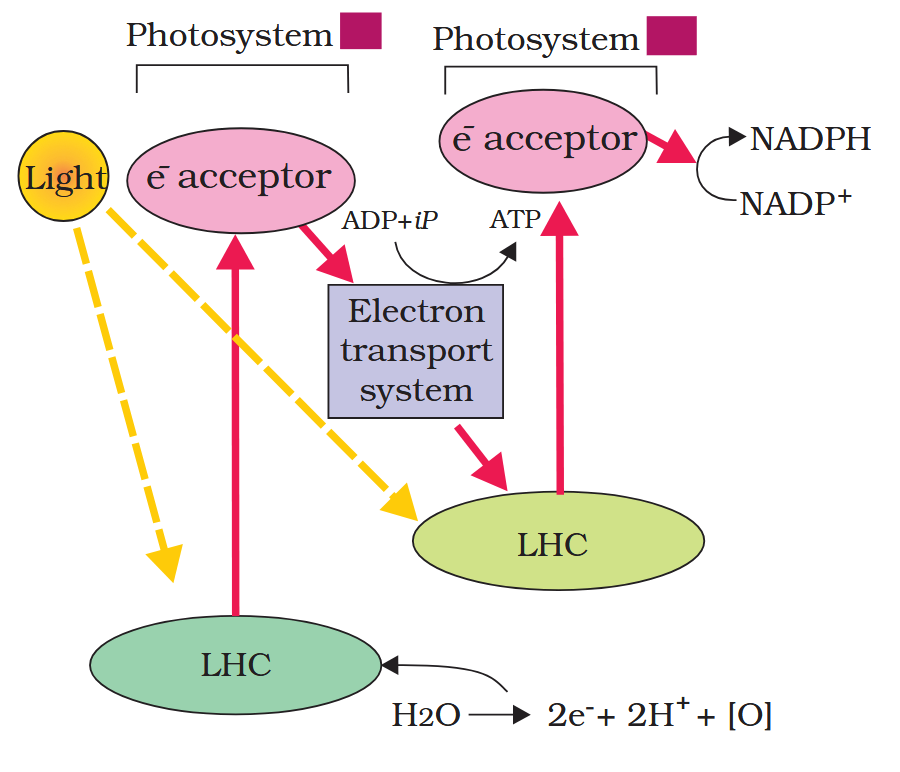
Which is photosystem I and photosystem II?
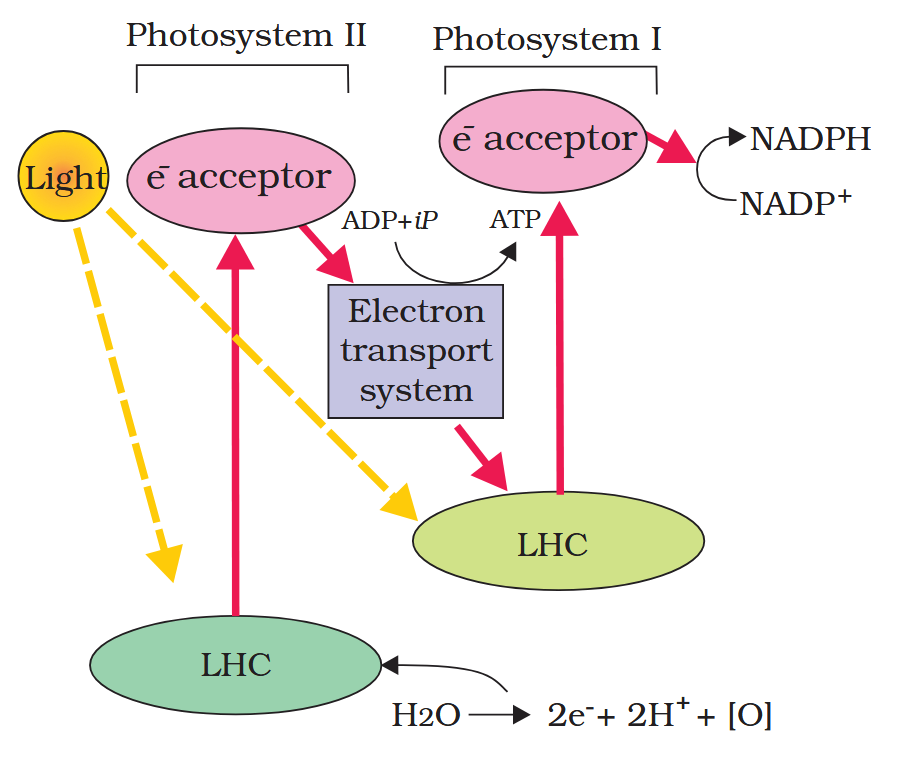
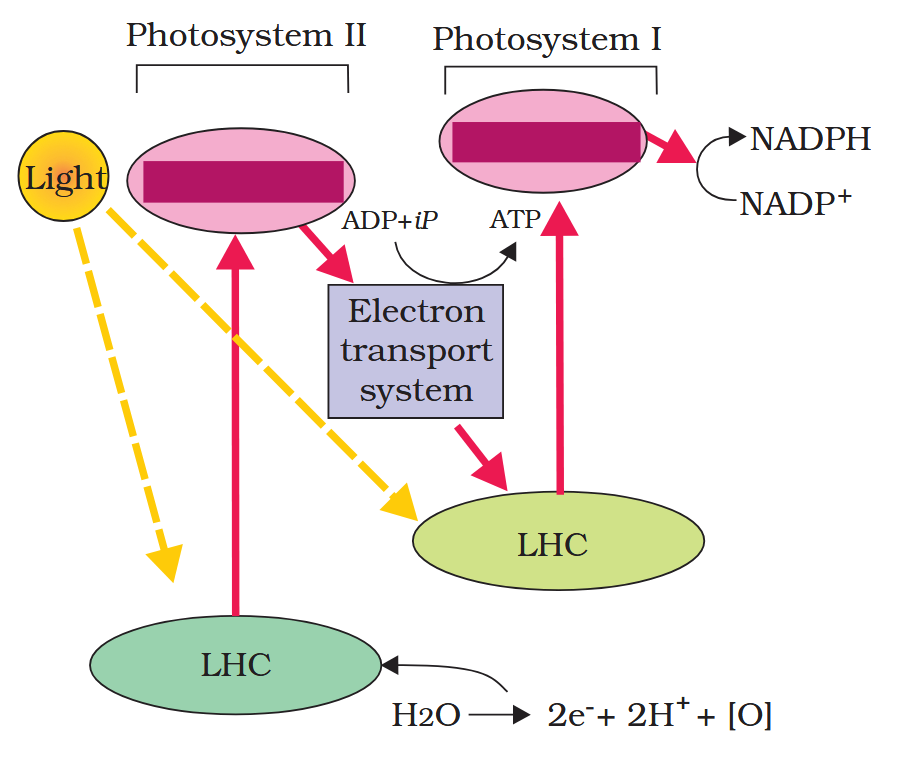
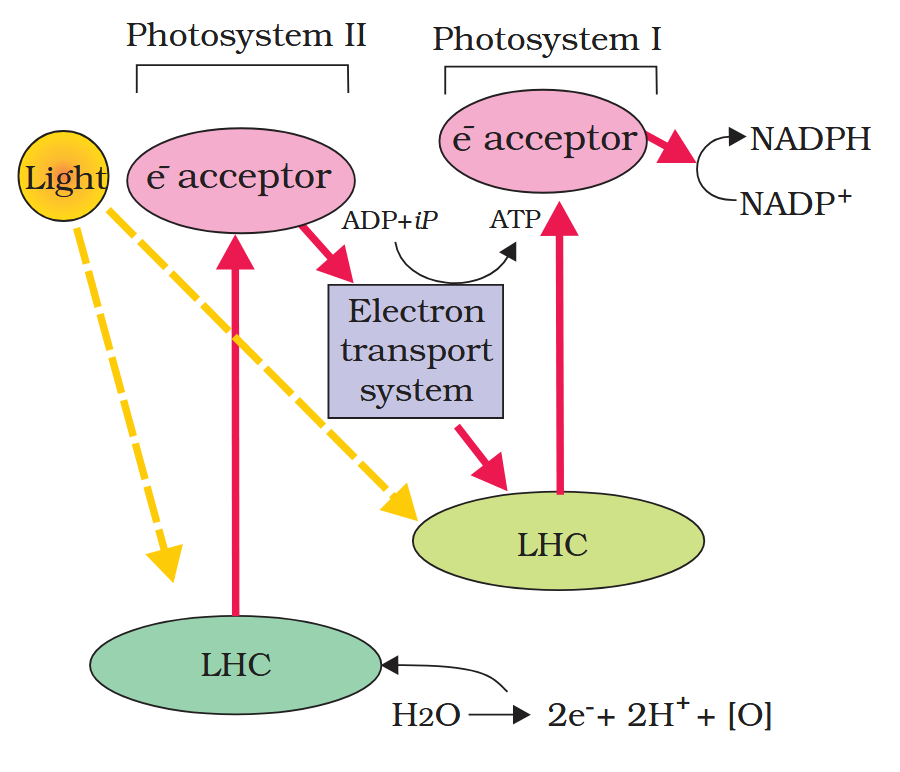
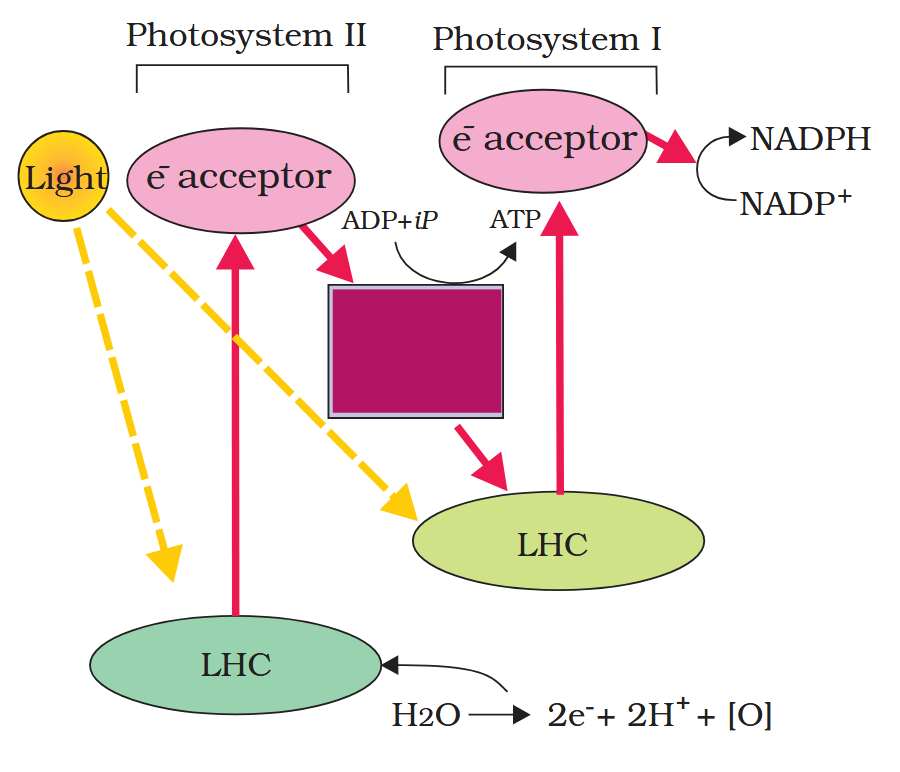
electron transport system
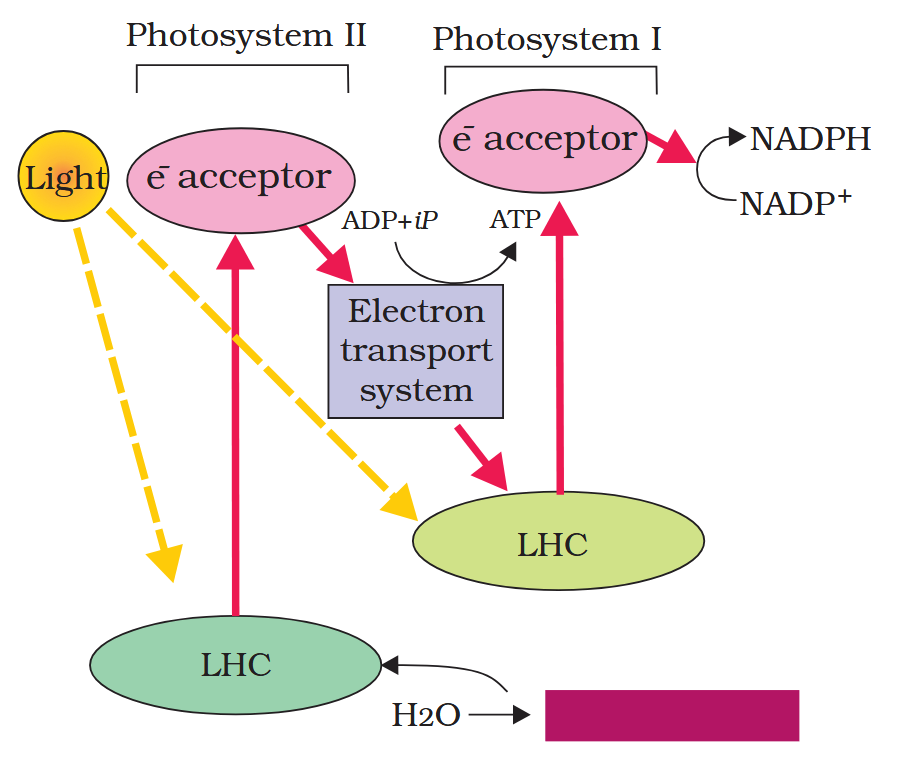

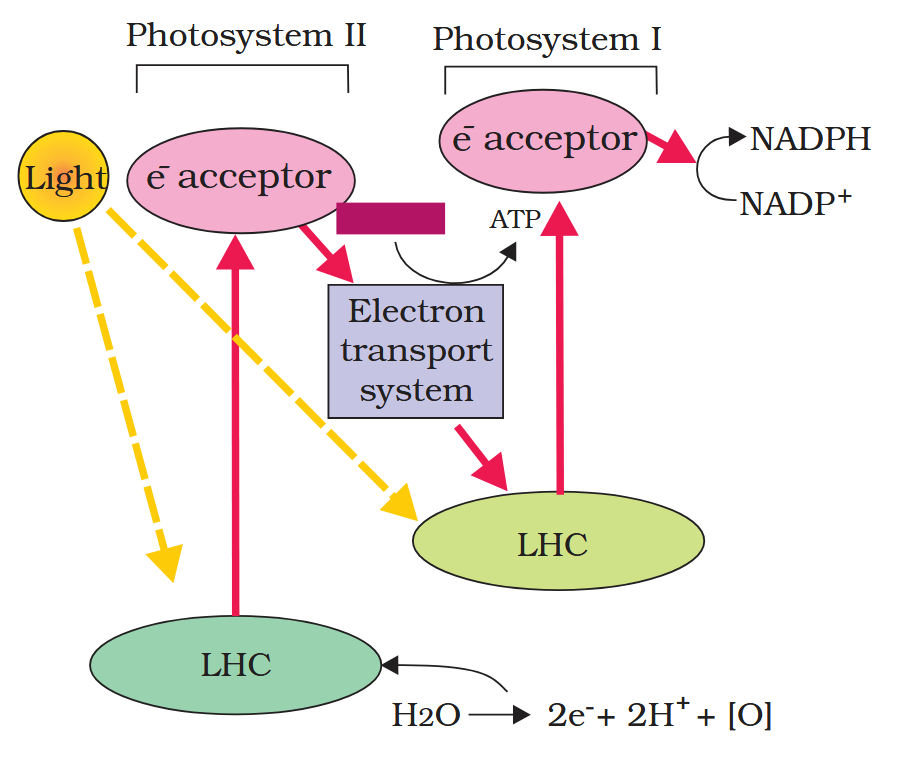
ADP + iP
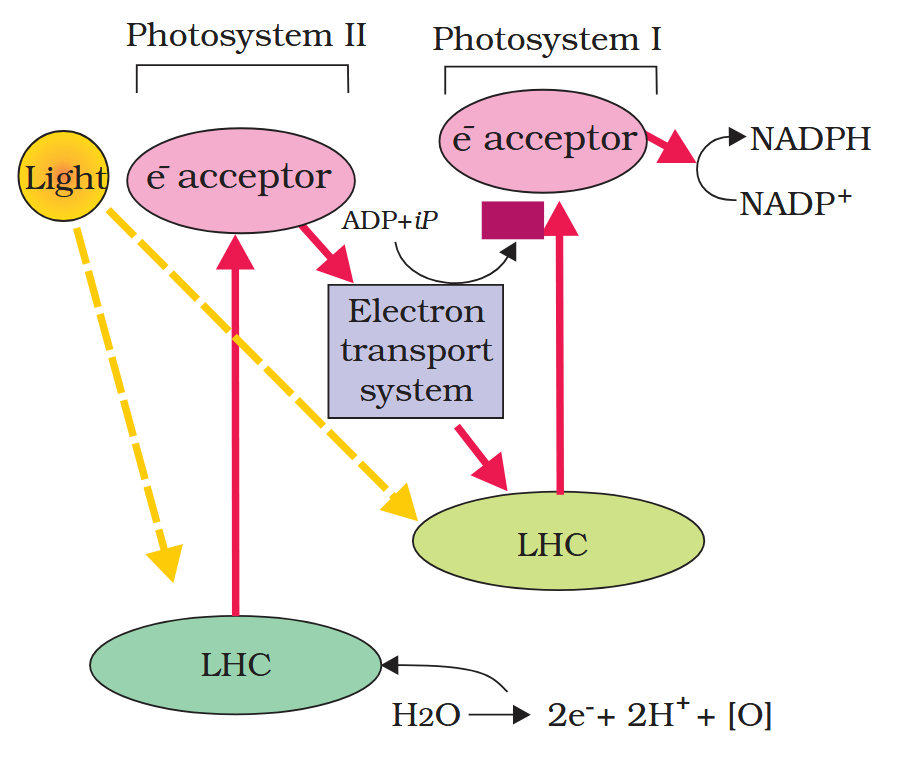
ATP
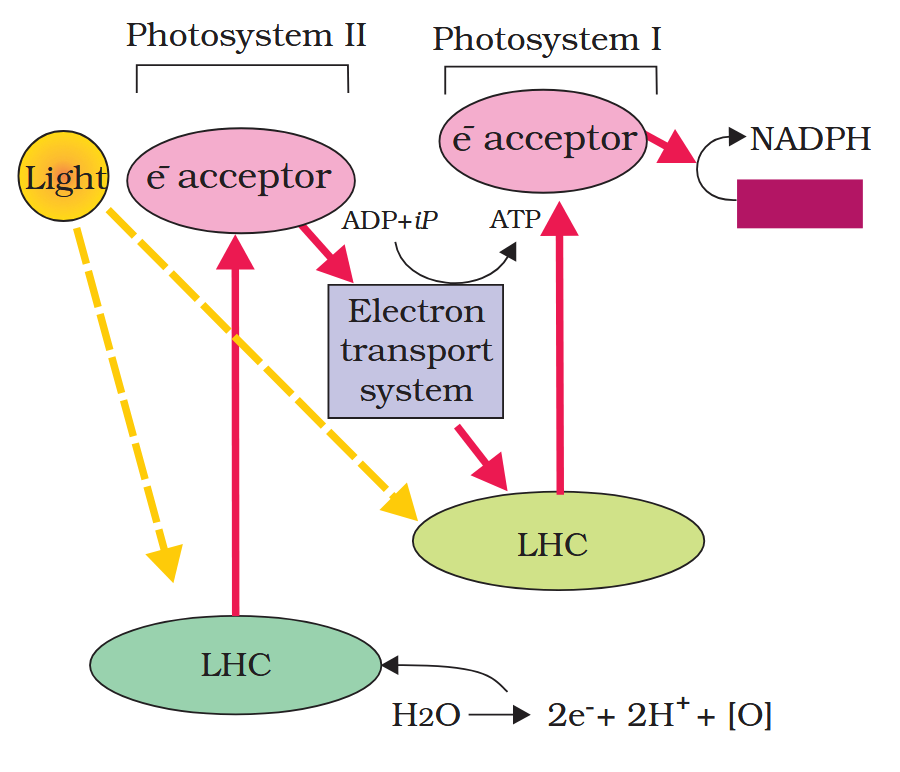
NADP+
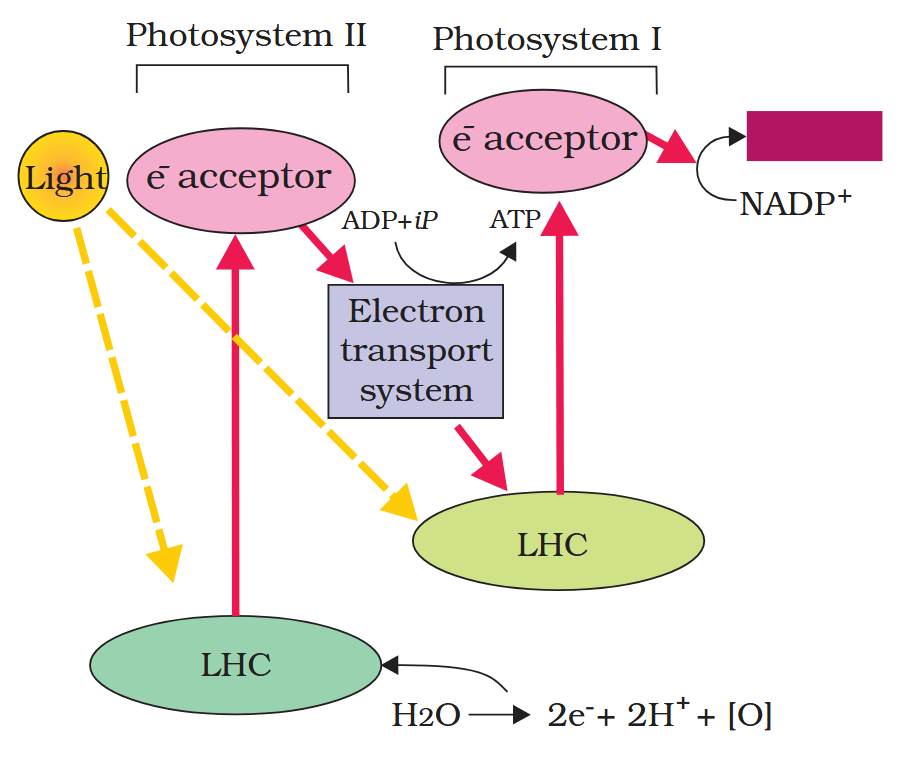
NADPH
What colour is 680 nm wavelength light?
red
In photosystem II the reaction centre chlorophyll a absorbs 680 nm wavelength of red light causing electrons to become excited.
What happens directly after this?
The electrons jump into an orbit farther from the atomic nucleus. These electrons are picked up by an electron acceptor which passes them to an electrons transport system.
What does the electron transport system in light reactions consist of?
cytochromes
In photosystem II the reaction centre chlorophyll a absorbs 680 nm wavelength of red light causing electrons to become excited.
The electrons jump into an orbit farther from the atomic nucleus. These electrons are picked up by an electron acceptor which passes them to an electrons transport system.
This movement of electrons is downhill.
What does “downhill” mean in this context? These movements are depicted according to which scale?
oxidation-reduction or redox potential scale
Electrons from LHCs are used up during non-cyclic photophosphorylation.
True or false?
False.
The electrons are not used up as they pass through the electron transport chain, but are passed on to the pigments of photosystem PS I.
Which electron accepter has more potential, the one associated with Photosystem I or Photosystem II?
Photosystem I
What are the products formed after photosystem II in non-cyclic photophosphorylation?
ATP
What are the products formed after photosystem I in non-cyclic photophosphorylation?
NADPH
Depict non-cyclic photophosphorylation in a diagram using redox potential scale. (Z-scheme)
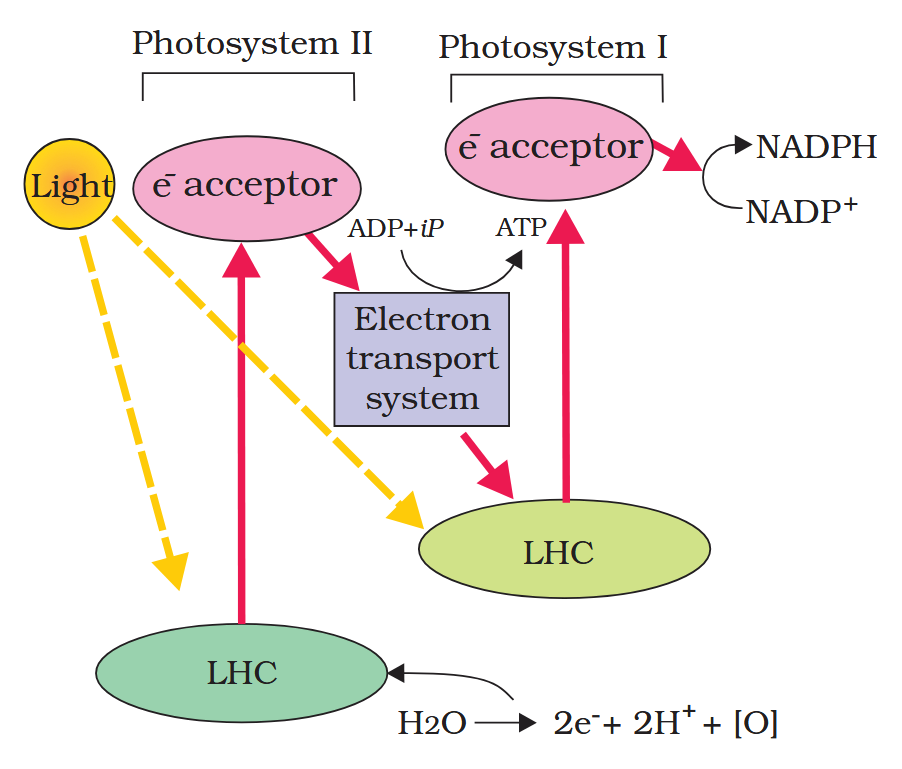
Where does the photosystem II obtain electrons to pass to electron acceptors?
Water is split into oxygen, protons, and electrons.
Depict the splitting of water in photosystem II in equation form.


Where are the protons and O2 formed likely to be released – in the lumen? or on the outer side of the membrane?
in the lumen
What is phosphorylation?
The process through which ATP is synthesised by cells (in mitochondria and chloroplasts) is termed phosphorylation.
What is photophosphorylation?
Photo-phosphorylation is the synthesis of ATP from ADP and inorganic phosphate in the presence of light.
When the two photosystems work in a series, first PS II and then the PS I, a process called _________ photo-phosphorylation occurs.
(cyclic / non-cyclic)
When the two photosystems work in a series, first PS II and then the PS I, a process called non-cyclic photo-phosphorylation occurs.
When the two photosystems work in a series, first PS II and then the PS I, a process called non-cyclic photo-phosphorylation occurs.
How are the two photosystems connected?
Through an electron transport chain
When the two photosystems work in a series, first PS II and then the PS I, a process called non-cyclic photo-phosphorylation occurs.
What happens when only PS I is functional?
When only PS I is functional, the electron is circulated within the photosystem and the phosphorylation occurs due to cyclic flow of electrons.
Where is Photosystem II located?
On the inner membrane of thylakoids / grana
Where is Photosystem I located?
On the outer membrane of thylakoids / grana, and on stroma lamellae.
Where can non-cyclic photophosphorylation occur?
On the inner and outer membranes of thylakoids / grana inside chloroplasts
Where can cyclic photophosphorylation occur?
On stroma lamellae inside chloroplasts
In which parts of a chloroplast is the NADP reductase enzyme present?
the outer surface of membrane or lamellae of the grana / thylakoids
When only PS I is functional, the electron is circulated within the photosystem and cyclic photophosphorylation occurs. What are the products of this cycle?
just ATP, no NADPH.