CONSUMERBEHAVIOR FINAL EXAM PREP (L9-13)
 Studied by 0 people
 Call Kai
 Learn
Learn Practice Test
 Spaced Repetition
 Match
Match Flashcards
 Knowt Play
1/33

There's no tags or description
Looks like no tags are added yet.
Name | Mastery | Learn | Test | Matching | Spaced | Call with Kai |
|---|
No study sessions yet.
34 Terms
L9: Name the 4 main patterns of decision making, explain, and give example
Husband dominated decisions
Where husbands decision stronger than wifes (EX: Picking car models or home repair tools= husb dominated)
Wife dominated decisions
Where wifes decision stronger than husbands (EX: Buying groceries, home decor, kids items/clothes= wife dominated)
Joint decisions
Where both partners have an equal say (EX: Buying a home, planning a vacation, getting big home appliances like fridges/washing machines= joint decisions)
Autonomic decisions
Where husband or wife make the decision independantly without needing each other’s input (EX: Buying personal stuff like clothing, hobbies, gadgets, etc on their own)
L9: Name the 5 childrens influence tactics & explain + example
Pressure tactic- where the child demands, tries to intimidate or threaten parents into buying (causing a fit/tantrum in public/retail area)
Exchange tactic- where the child negotiates/promises something in return to parents if they buy (promises to clean room or behave good)
Rational tactic- where the child uses logical arguments or factual evidence to persuade parents into buying (this laptop can really help me study and do schoolwork better)
Consultation tactic- where the child involves parent in buying decision (lets check options or alternatives together/ which one do you think looks better) - pretty effective method as it involves parent opinion and respect for them
Ingration tactic- where the child tries to get parents in a good mood before requesting to buy item (giving compliments, helping out/doing chores, acting extra sweet prior to asking)
L9: Explain in order the 5 family life cycle stages
Bachelorhood (single) stage - independant income, most likely college educated, young adult and spend on fashion, travel, entertainment
Honeymooners (married) stage - dual income, higher spending, new couples and spend on housing, travel, lifestyle
Parenthood (longest stage) stage - married couples with kids, lasts from kids in preschool to college years and spend on childrens costs, education
Post-parenthood stage - parents with children that left home, increased time & disposable income, decreased expenses and spend on travel, luxury-goods, leisure activities
Dissolution stage - when 1 spouse dies, surviving partners life-style becomes simpler & more economical now, relying on external financial or social support
L9: explain social status and example
Social status is where we think we stand in society and to asess that standing point, we compare ourselves and what we have to others and what they have
EX: Someone may feel they belong to a higher societal statis if they have an expensive home/car/closet etc.
L9: Whats Financial deprivation
the sense of not having as much money as peers have (even if basic needs are met)
L9: Explain status consumption + example
Where people buy products not just for what they do and its less about the purpose, but what they represent and more about showcasing success or a lifestyle to others. The product expresses identity and signals someones place in society
EX: by purchasing and sharing luxury items/experiences online, people often seek social recognition/validation that they’re successful or living a “desireable life”.
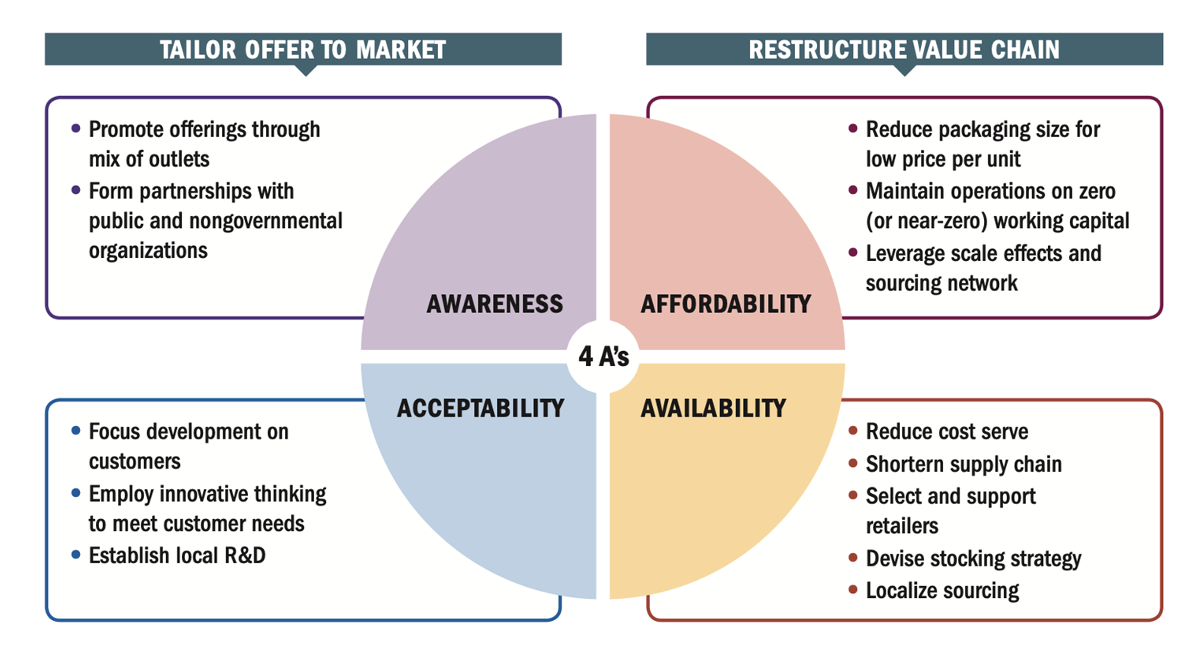
L9: Define, explain methods, and give real examples for THE 4 A’s of Addressing Low-Income Consumers
AWARENESS- finding ways to spread product awareness, where companies may use different communication channels: advertising, social media, or school/ngo partnerships
EX: Panasonic donated 1000 lanterns to Sumba island villages with the help of an NGO supporting sustainable communities
ACCEPTABILITY- designing products which meet local consumer needs/preferences/demands where organisations may adapt products to fit local cultures, tastes, environment and may involve making the product locally bc of this
EX: (Example of making a product suitable for local needs) Nokia made phones with dust proof keypads, long battery, and built-in flashlights for rural areas in countries like India & Nigeria that have limited electricity/mobile infrastructure
AFFORDABILITY- is a major factor for low income consumers where products can be made affordable through smaller package sizes, reducing unnecessary features, and using cost-effective materials/packaging
EX: India UNILEVER sold single-use shampoo sachets for only 1 rupee, making it an affordable product for low-income consumers
AVAILABILITY- where a product can only succeed if people can easily buy them through conveniently available products from local shops/markets. Companies can make products accessible by working with local sellers, shortening delivery routes, sourcing materials nearby to reduce costs and improve access
EX: In Africa, coca-cola used MDCs (manual distribution centers), relying on local entrepreneurs to distribute products with bikes/carts, helping reach small head-to-access shops/villages
L9: Define and Explain the Role of Consumption in Social Justice
Purpose driven consumers- choose products/brands fitting their values
Social responsibility- consumptions at the core of many economic inequalities and to address this:
Businesses can improve access to bottom-of-pyramid consumers and invest in cause related marketing
Society can form grassroot community organisations
Governments may enact policy changes and educational opportunities for upward social mobility
Non-profit organisations can fund social programs
L10: Define culture systems and ethnography (ex)
Culture systems- a society’s personality, shared meanings, norms and traditions and the “lens” through which people view products
Ethnography- immersing yourself into the group/culture/community to understand why certain products/brands mean a lot
ex: joining a sneakerhead community to get why owning/collecting shoes for them may feel like status symbols, cultural artifacts or even investments.
+ + +
Products arent just functional tools we use, they carry symbolic meanings reflecting our identity, values, and cultural norms
L10: Explain the 3 dimensions of culture
Ecology- where people live and what’s around them
Social structure- how society is organized
Ideology- what people behave and value (enculturation and acculturation)
Ideological differences ex: people focused on personal achievements/success and individual goals compared to people who value community, helping other and prioritizing group wellbeing over personal gain.
L10: EXPLAIN the 6 Dimensions of National Culture
Power distance:
High- more accepting of hierarchy, rarely questioned authority
Low- emphasis on equality, encourages people to question authority and speak up
Individualism
Individualism- focuses on personal goals and independance
Collectivism- focus on group goals, family, and community loyalty
Masculinity
Masculinity- value competititon, achievemnt, success
Femininity- value quality of life, cooperation, caring for others
Uncertainty avoidance
High- avoid uncertainty with strict rules, planning and risk-aversion
Low- more comfortable with ambiguity, change and flexible rules
Long-term orientation
Long- focus on future rewards: saving, persistence, adaptability
Short- focus on quick immediate results, tradition, social norms
Indulgence vs Restraint
Indulgence- allows people to enjoy life, have fun, express themselves and seek happiness
Restraint- limits gratification through strict social norms and self-discipline
L10: Define subculture and give example
A subculture is a smaller group sharing certain beliefs, values anc customs, coming from ethnicity, religion, geographic area, age or gender (while also being part of a larger society)
EX: gamers, kpop fans, skateboarders, environmental activists
L11: Define global brands and give examples
They are brands with high market share in their home country and other countries
EX: nike, samsung, starbucks
L11: explain the 3 global brand characteristics and give examples of global vs local brands
Quality signal- consumers see global brands as more innovative and as a signal of quality, as many people are buying from those brands
Global myth- when consumers buy from these brands, they feel like connected citizens of the world
Social responsibility- consumers expect them to be ethical and the brands are held to a higher level of social responsibility for their operations/products
ex of global vs local brands: Padini vs Zara, Old town coffee vs starbucks, beryl’s chocolate vs cadbury dairy milk
L11: define cross-cultural analysis
a form of marketing research that examines differences and similarities among consumers in different countries
L11: Explain the 4 intra-country consumer segments
global citizens- use a companies worldwide success as proof of its quality and innovation
global dreamers- see global brands as high quality and desirable but less concerned about the company being socially responsible
antiglobals- think global brands may be higher quality but they distrust them, dislike brands promoting the western values and avoid buying from them
global agnostics- see global and local brands same with no preferences and the only importance being the product itself
L11: Name the several frameworks for asessing consumption related cultural differences + examples
How consumers judge quality of a country’s products
EX: if people think japanese electronics are more reliable than others
Willingness to buy products from another country
EX: some may be open to foreign brands, others may prefer buying local
Ethnocentrism, how much people prefer buying local products over imported ones
Perceptions of a country’s consumption culture
EX: what people think of American fast food/Korean beauty products
Accultuation, how much consumers identify with a countries culture
EX: following western fashion trends
Ethnic self-identification, how connected people feel to their ethic group
National self-identification, how strongly people identify with their own country and its values
L11: Explain acculturation and the acculturation dual learning process, provide a real life example
Acculturation is the process of learning about another culture, its values, beliefs, and customs through cross-cultural analysis which marketers use this knowledge for adapting their products, messages, and strategies when entering international markets.
EX: L’oreal paris started learning abt asian womens culrures, beauty ideas, skincare habits and routines through research where their standards were more about having fair, smooth, radiant skin contrasting to western tan, sunkissed skin standards. So they released whitening/brightening creams to align with local beauty preferences
The dual learning process involves:
Marketers learn everything relevant about the product in the chosen market like what people value, how they live, influences of their buying habits
Marketers must persuade/teach the markets consumers to adopt something
EX: L’oreal began educating consumers on skin brightening science, explaining that its really about getting healthy, glowing skin and not about changing one’s skin tone through bleaching while introducing western-style skincare routines, encouraging multi-step skincare
L12: Explain the 2 Primary consumer decision making systems
SYSTEM 1 (familiar, routine decisions): fast, unserious, automatic, everyday decisions, error prone
SYSTEM 2 (careful well thought-out approach): slow, conscious, effortful, complex decisions, reliable
L12: Explain all 5 stages in the consumer decision making process
Problem recognition: can happen when current state declines (laptop slows down) or when consumer sees a better, ideal state (new phone out)
Information search: online, prepurchase/ongoing search, internal/external searches
Evaluation of Alternatives: can be evoked set (options that consumer is aware of) or consideration set (options consumer seriously considers)
Product choice: the final decision of choosing the best overall product
Outcomes: where the consumer evaluates experience and decides if product met expectations (this stage affects future decisions, brand loyalty, word of mouth communication)
L12: Whats Diffusions of Innovations and its 4 KEY ELEMENTS (include examples)
is the macro process where the acceptance of an innovation takes place among members of a social system over time (ex: a new product, new service, new idea, new practice)
4 KEY ELEMENTS:
the innovation- new product/model/service introduced (EV’s, smartphone devices, plant based meat alts, etc)
the channels of communication- can be formal/informal, can be through personal interactions, or impersonal sources (ads)
the social system- group/market segments where the innovation spreads (health-focused, sustainability, tech-savvy, etc)
time- period it takes for innovation to be adopted/accepted by group members ( telehealth services)
L12: Explain the innovation adoption process, and the 5 steps of the innovation process
The innovation adoption process focuses on the stages that the individual consumer goes through when deciding to accept/reject a new product (unlike diffusion focusing on bigger groups’ or societies acceptance, innovation is a micro-process with stages for individuals’ decision-making journey)
PROCESS:
Awareness- where consumer sees ads, notices them online, hearing from friends and its where consumer first becomes aware that innovation exists
Interest- where they begin searching for details, review reading, video watching and the consumer becomes ineterested in innovative product/service
Evaluation- consumer weighs pros/cons, thinks whether product is worthy trying, imagining benefits of it and they perform a “mental trial od the innovation”
Trial- demo version, free sample, short term experience where consumer tries the innovation (also if trial disappoints, the stages stop here)
Adoption- if satisfied, consumer decides to regularly use the innovation or not to use it again
L12: EXPLAIN the Key 5 Characteristics of influence adoption + EXAMPLES
Relative advantage- whether a new product is better than existing alts (smartphones>flip phones)
Compatability- how well new product fits into consumers’ present needs, values, lifestyle (varies across culture however)
EX: plant based meat alternatives are quickly accepted in health conscious markets but in places where traditional meat is part of culture, adoption takes more time)
Complexity- how difficult a new product is to use/understand. the easier to use, then the more likely its accepted
EX: HIGH TECH PRODUCTS
Trial ability- how easily consumers can try products before fully comitting
EX: Free samples/trials, demo versions all help consumers being more likely to adopt the products
Observability- how visible products benefits/attributes are to others
EX: like when people see others using/enjoying products, they’re more likely to want it as well like trendy clothes, shoes, new gadgets but more private products like deodarant spread more slowly.
L13: Explain whats exploratory research and its purpose
Its an examination of resources and materials that already exist (secondary data) including previous reports/articles/info that can be valuable to the research
purpose: to help researchers define objectives of longer, more expensive studies
L13: Explain 2 types of secondary data + examples
INTERNAL: info collected within the organization
ex: sales audits, customer service call records, customer inquiry letters, etc)
EXTERNAL: sources outside the organization and it varies for acessibility and cost
ex: gov data, periodicals, syndicated market research, consumer panels, etc)
L13: State advantages of secondary data
It can solve the research problem (if company needs # of people in an area, it can save money and use government data instead of making an expensive survey)
it can clarify and redefine objectives of the primary study (if a beverage company wants 2 know abt energy drink consumption, they can review existing marketing reports to discover energy drinks are more popular among 18-25 year olds so they can focus research more on that age group instead of wasting time surveying everyone)
Its cheaper & quicker than primary data
Secondary data helps identify difficulties likely to occur during a full-scale study (if a company plans 2 conduct a nationwide survey, previous research can show them phone responses in rural areas have low response so they can adjust their method to online surveys maybe.)
L13: state disadvantages/limitations of secondary data
categorization of units may not match what researcher seeks
EX: a company may want data on specific age groups, but the used report may have broader categories that dont align
it may not be accurate, errors can be made in data collection or analysis
EX: survey responses may be recorded wrong, data may be entered wrong leading to wrong insight
data could be out of date
EX: OLD data collected years ago may not reflect the current situation like smartphone preferences from 5 years ago wouldnt be useful today bc tech/consumer trends have shifted
L13: EXPLAIN qualitative vs quantitaive research and methods for both
Qualitative methods: if a company needs new ideas for products or promotional themes qualitative research
METHODS:
depth interview- lengthly, unstructured interview to uncover consumers underlying attitudes
focus groups- 8-10 participants meeting with researchers/analysts to explore a product
projective techniques- they apply psychoanalytic theory
Quantitative research method: used for:
- acceptance of products, brands, promo messages
- capture satisfaction/unmet needs
- predict future needs or behavior
- experimentation, surveys, observation
- descriptive and empirical
- studies requiring measurable data and statistical analysis
L13: whats validity and reliability
validity- the extend to which a measure actually collects appropriate data needed to answer the questions or objectives stated in the start of the research process (ORRRR its the extent to which a study accurately measures or reflects the specific concept it intends to investigate.)
reliability- a measure has reliability if the same questions asked of a similar sample, produce the same findings
L13: Explain the observational method and the 3 types + examples
Its a research technique where researchers watch/record consumer behavior
3 types:
Human ob. - carefully watching consumers as they buy/use products like in stores, malls, while watching tv
Mechanical ob. - uses tools to automatically record behavior with no need for an observer
ex: electronic traffic counters, video recordings, data from shoppers, meters
Physiological ob. - involves monitoring how consumers process info
ex: eye-tracking cameras, electronic head sensors for monitoring brain activity/attention levels
L13: Explain casual research and examples
Its for identifying the cause-and-effect relationships among variables
EX: marketers can test sales appeal of different package designs, price points, or promo offers by manipulating 1 variable at a time with everything else constant.
Testing happens in: relative sales of manyy types of variables: test marketing & lab experiments (Both are used to test many types of variables:
Price
Packaging
Promotion
Product features
Store layout)
choosing the right method depends on the research objectives, target audience and available resources
!!!! Causal research identifies cause-and-effect relationships by manipulating one variable at a time while keeping others constant, often using experiments such as test marketing or lab experiments.
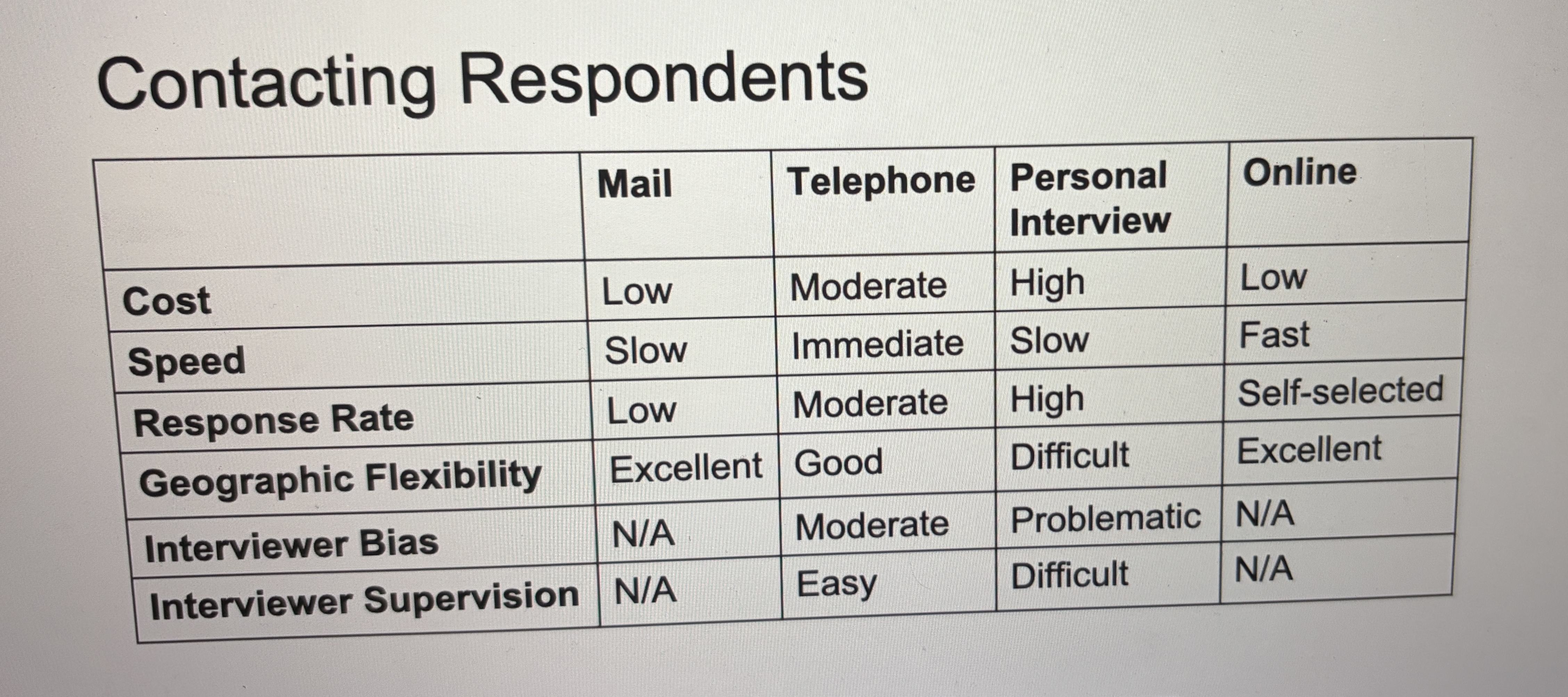
L13: Name surveys and their types
personal interview surveys (face to face, in public, retail areas)
telephone surveys (calling to ask questions)
mail surveys (sent to homes)
email surveys (fast and inexpensive)
internet surveys (via ads or invitations)
L13: Explain the societal marketing concepts + examples AND WHAT IS MARKETING ETHICS
It requires marketers to satisfy the needs/wants of their target audience in ways that improve, preserve, and enhance society’s well-being while also meeting their business objectives
ex: a company making eco-friendly products which meets customer demands and also contributes to environmental sustainability
ex: fast food places: they should serve food with less fat and sugar and marketers shouldn’t encourage overeating among young people
MARKETING ETHICS: moral principles designed to guide marketers’ behavior
L13: Explain the 2 privacy laws and CARU
Privacy laws:
federal trade commission
Blocking tracking
(CARU) childrens advertising review unit:
No misleading ads about product performance/behavior
No exploiting their imagination or creating unrealistic expectations
No encouraging unsafe or innappropriate behavior
and marketers shouldn’t promote unhealthy foods with misleading claims, embedding ads in games, encouraging children to share ads, offering brand related items or giving prizes for signing up on websites
 Note
Note  Flashcards (38)