1.2.1 (d. Scheduling: round robin, first come first served, multi-level feedback queues, shortest job first and shortest remaining time)
 Call Kai
 Learn
Learn Practice Test
 Spaced Repetition
 Match
Match Flashcards
 Knowt Play
1/12

There's no tags or description
Looks like no tags are added yet.
Name | Mastery | Learn | Test | Matching | Spaced | Call with Kai |
|---|
No analytics yet
Send a link to your students to track their progress
13 Terms
What is scheduling?
- A single CPU can only process instructions for one application at a time
- The Operating System must schedule when each application can use the CPU
- This gives the illusion of multi-tasking - multiple applications appear to be running simultaneously
What are the aims of scheduling?
- To provide an acceptable response time to all users
- To maximise the time the CPU is usefully engaged
- To ensure fairness on a multi-user system
What is round robin?
- Each job is allocated equal processor time (time slices) By FIFO
- If the job has not completed by the end of its time slice, the next job is allocated a time slice
- Allows for multi tasking as it switches between active tasks
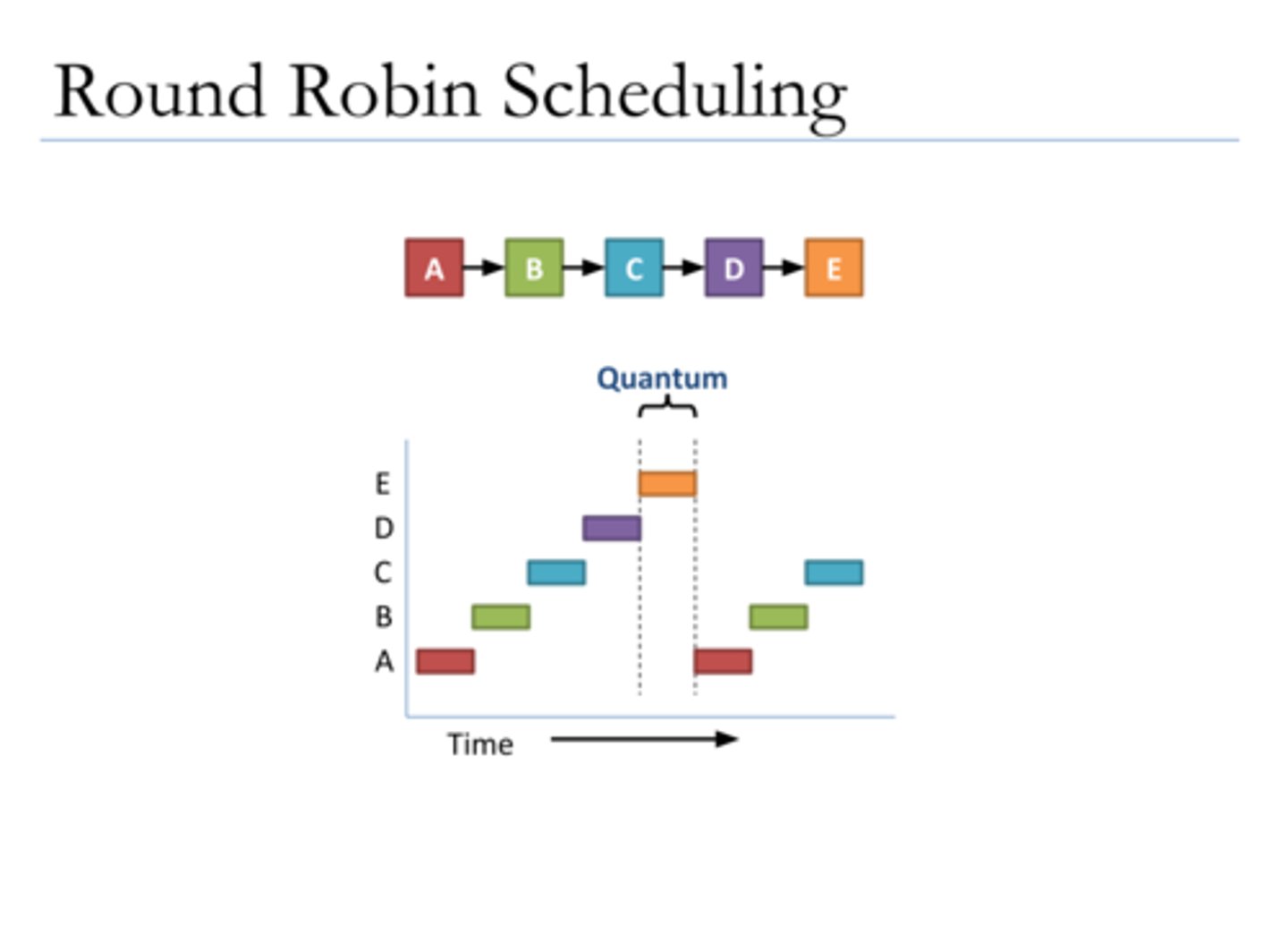
What are drawbacks of round robin?
inefficiency for processes with varying priorities or lengths
What is first come first served?
The first job to arrive is executed until it completes
What are the drawbacks of first come first served?
a long process can cause many short ones to wait, leading to high average waiting times
What is shortest remaining time?
-The time to completion is estimated as each new job arrives
-The job with the shortest remaining time to completion is executed, meaning that a shorter new job can take over from the current process.
Shortest remaining time is pre-emptive. What does this mean?
the currently running process can be interrupted and moved from the CPU if a new process arrives with a shorter time left to complete
What is drawbacks of shortest remaining time?
potential for process starvation, where long processes may never get to run if a continuous stream of short processes arrives
What is shortest job first?
- the total execution time of each job is estimated by the user
- The waiting job with the smallest total execution time is executed when the current job completes
What are the drawbacks of shortest job first?
Potential for starvation, where long processes may never get to run if there's a constant stream of short jobs
What are multi-level feedback queues?
- Multiple queues are created with different
priority levels
- If a job uses too much CPU time it is moved to a lower priority queue
- Processes can also be moved to a higher priority queue if they have waited a long time
What are drawback of multi level feedback queues?
its complexity, the potential for process starvation in lower-priority queues

