Neurons and Neuroglia Histology

5.0(1)
studied byStudied by 62 people
call kaiCall Kai
learnLearn
examPractice Test
spaced repetitionSpaced Repetition
heart puzzleMatch
flashcardsFlashcards
GameKnowt Play
Card Sorting

1/23

encourage image

There's no tags or description

Looks like no tags are added yet.

Last updated 7:39 PM on 4/13/24
Name
Mastery
Learn
Test
Matching
Spaced
Call with Kai

No analytics yet

Send a link to your students to track their progress

24 Terms

1
New cards

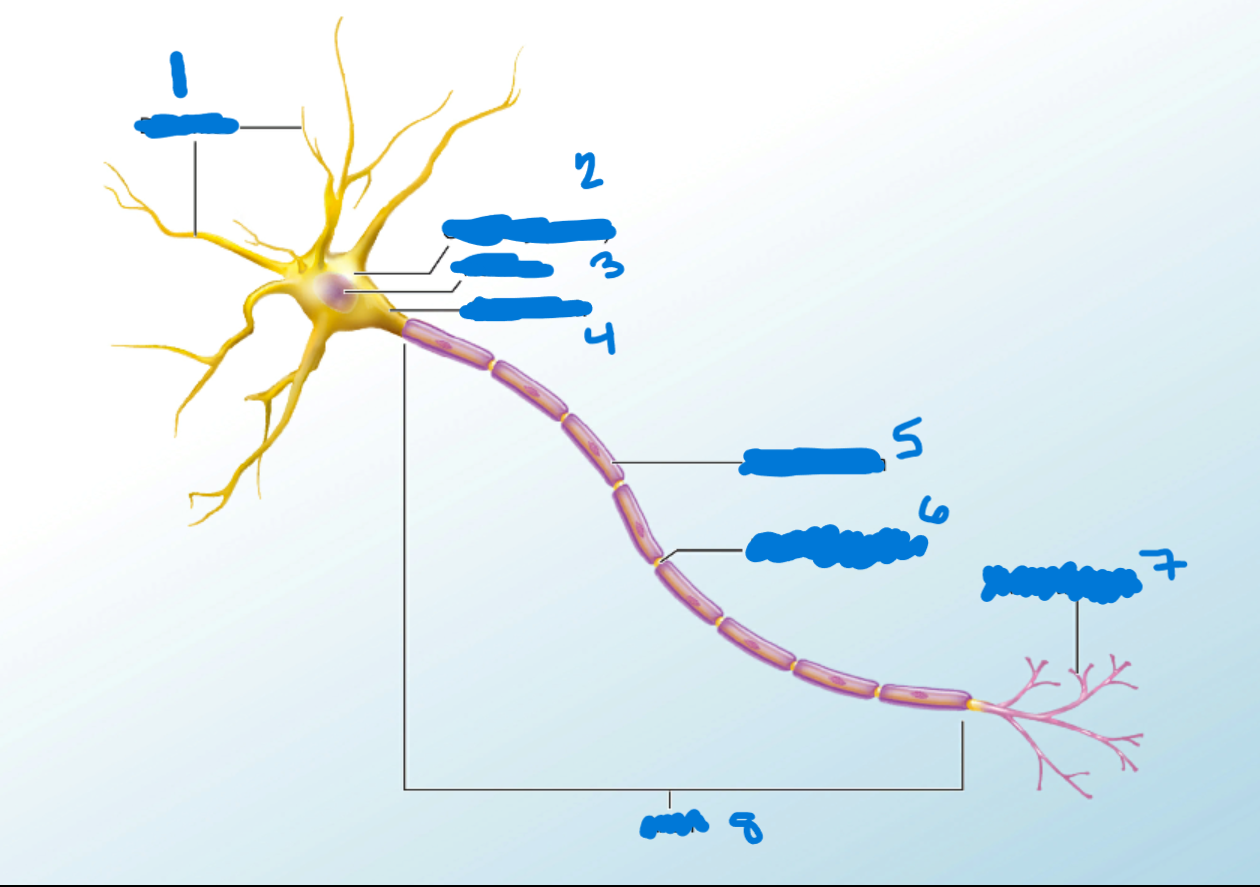
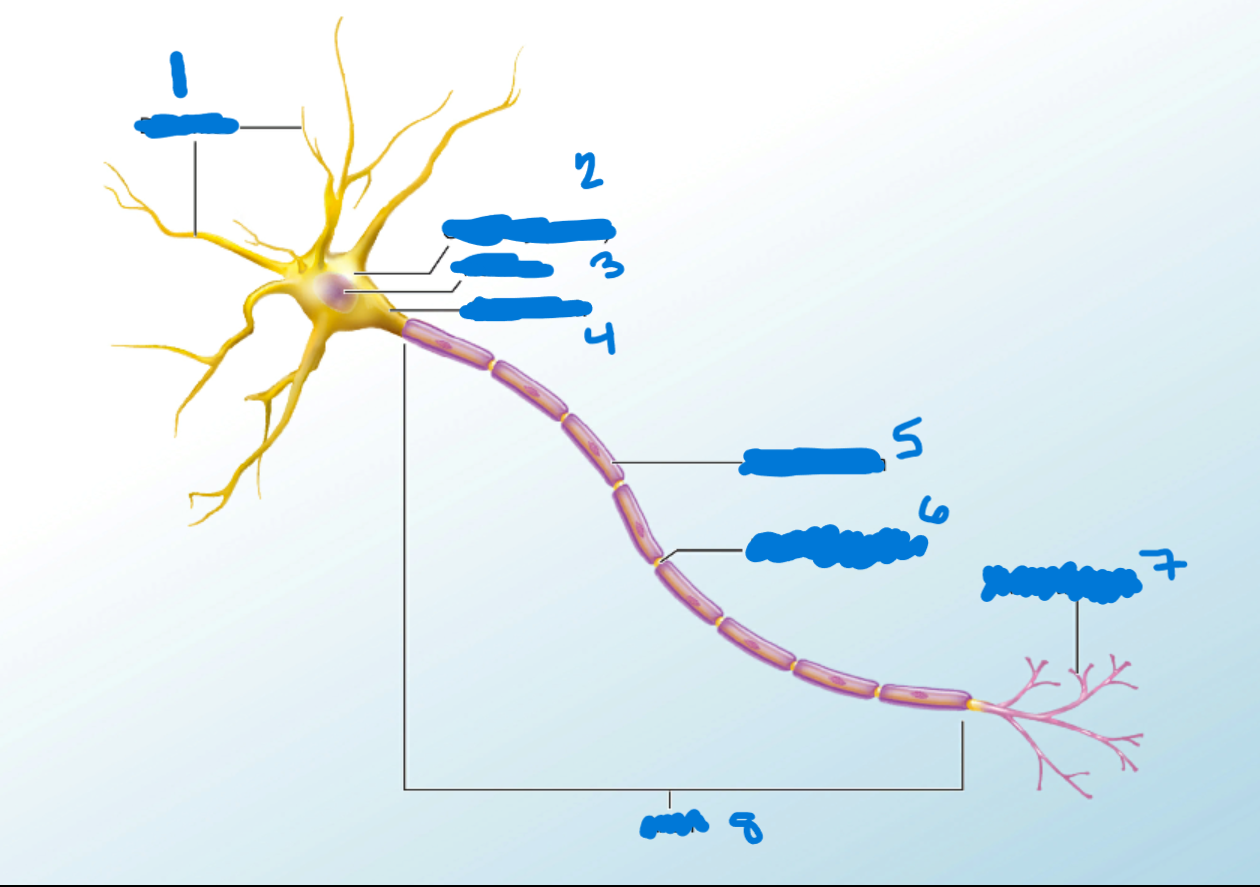
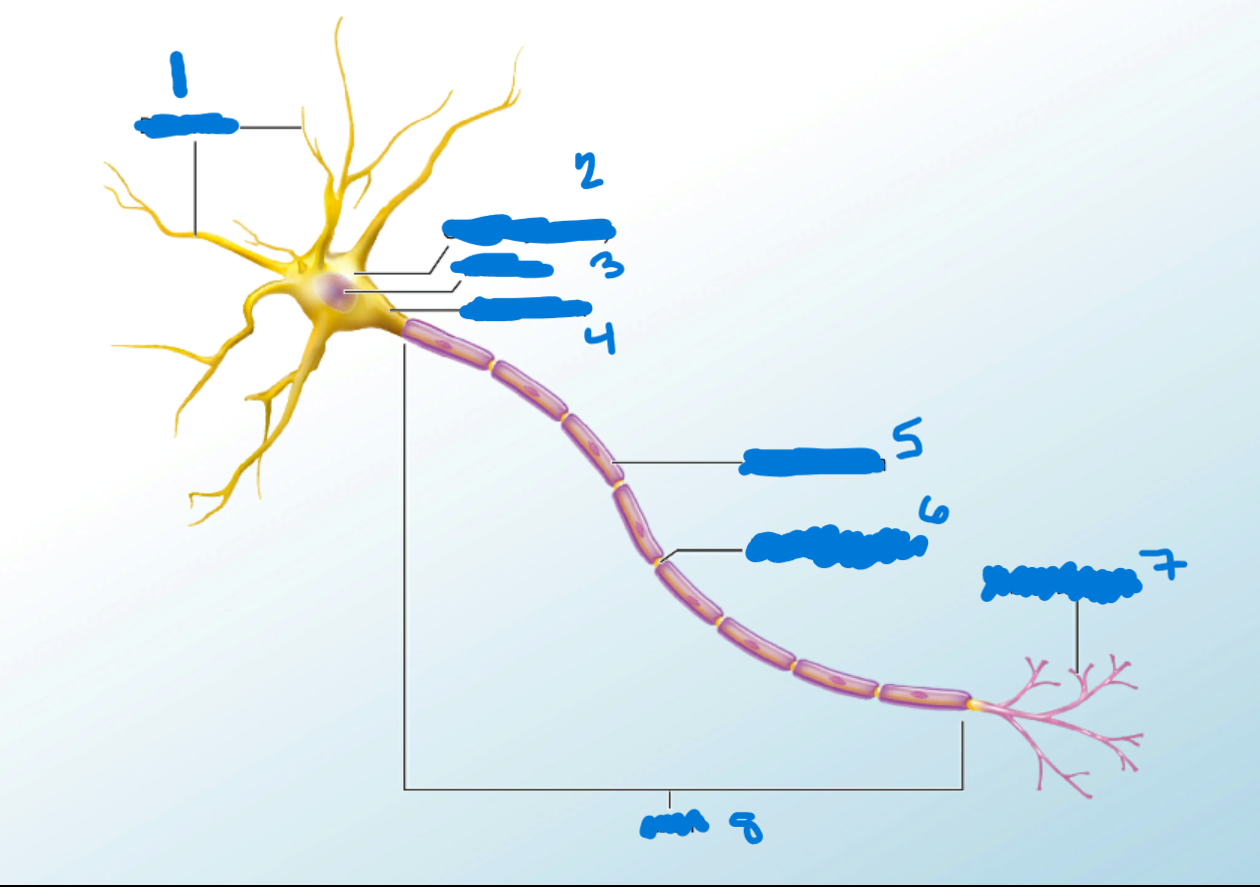
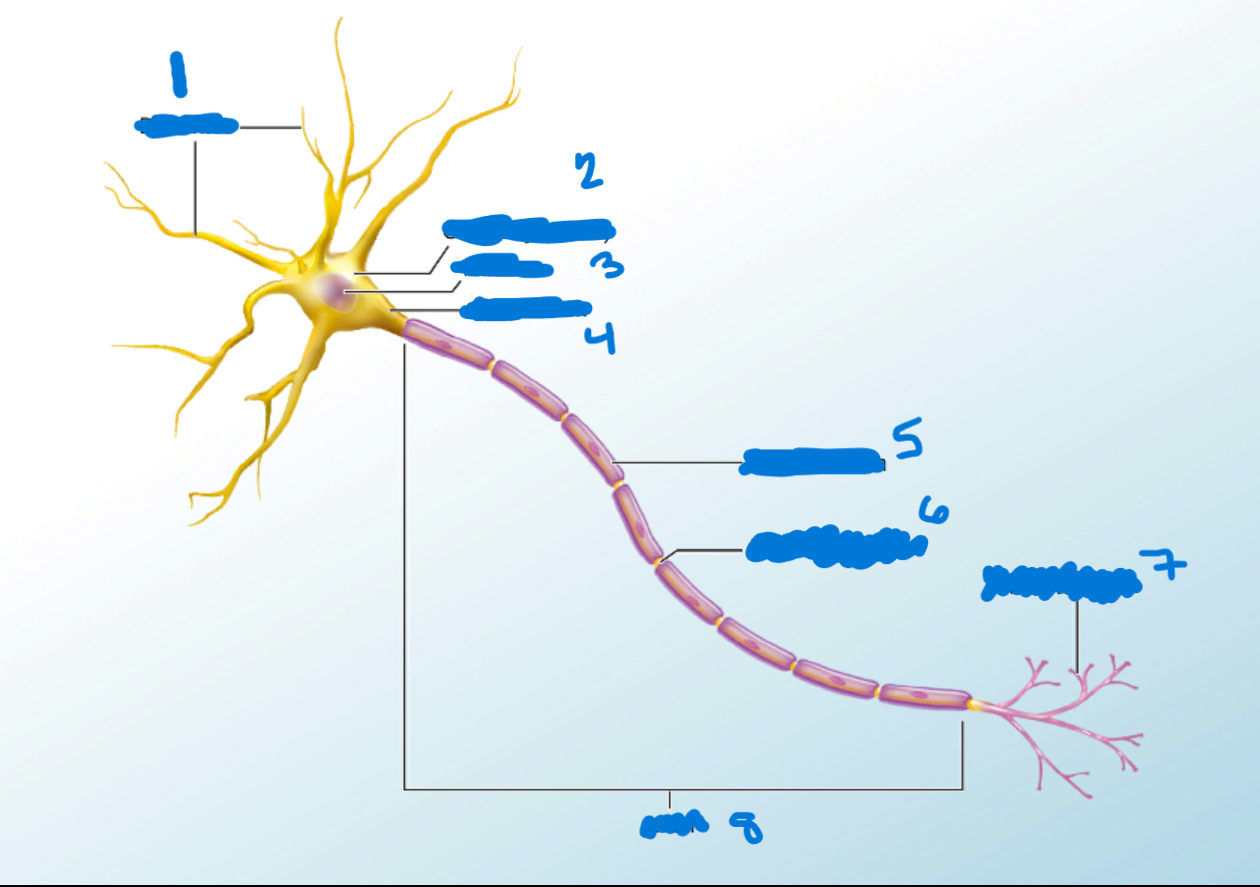
Dendrites

What is #1?

  • Branchlike processes that extends from the neuron cell body and functions as a contact for incoming signals (synapses) from other neurons or sensory cells.
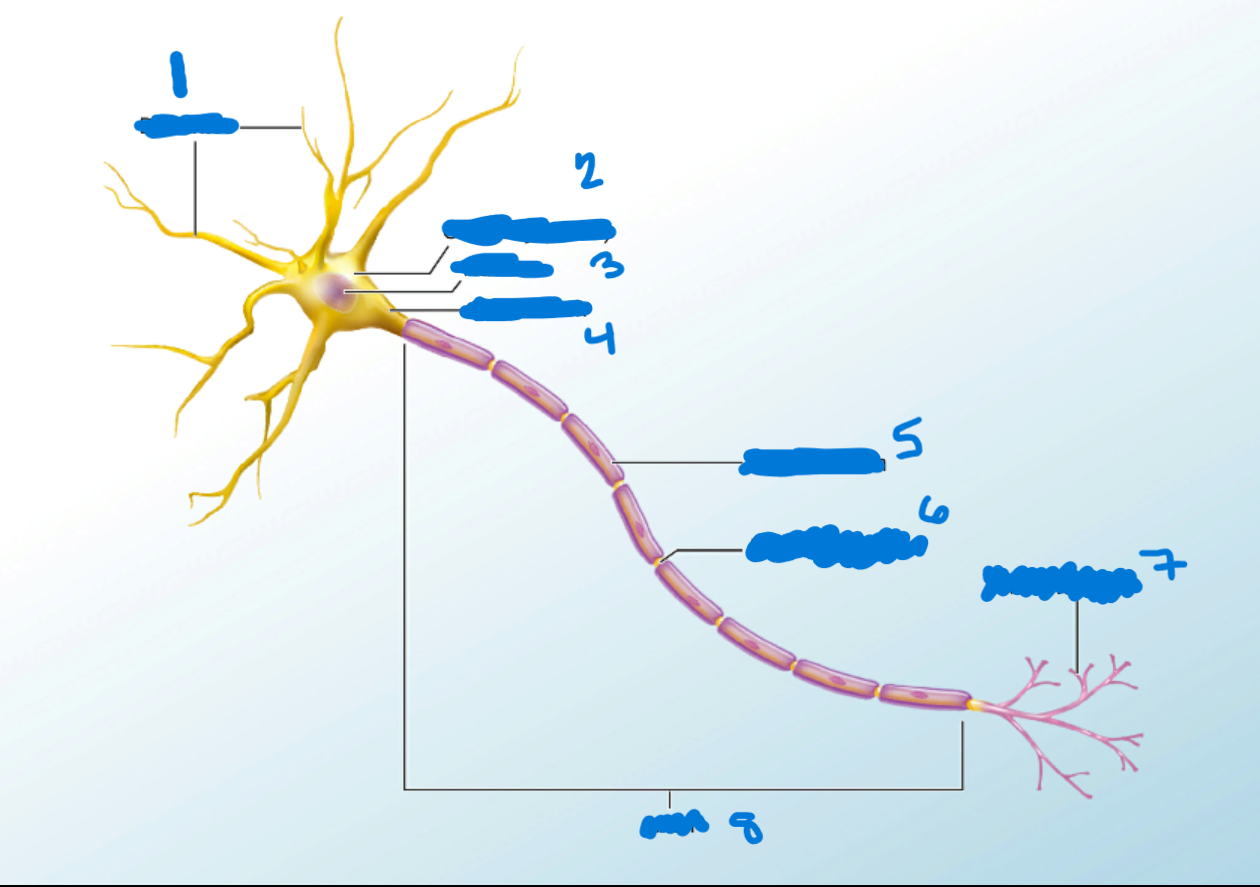
<p>What is #1?</p><ul><li><p>Branchlike processes that extends from the neuron cell body and functions as a contact for incoming signals (synapses) from other neurons or sensory cells.</p></li></ul>
2
New cards

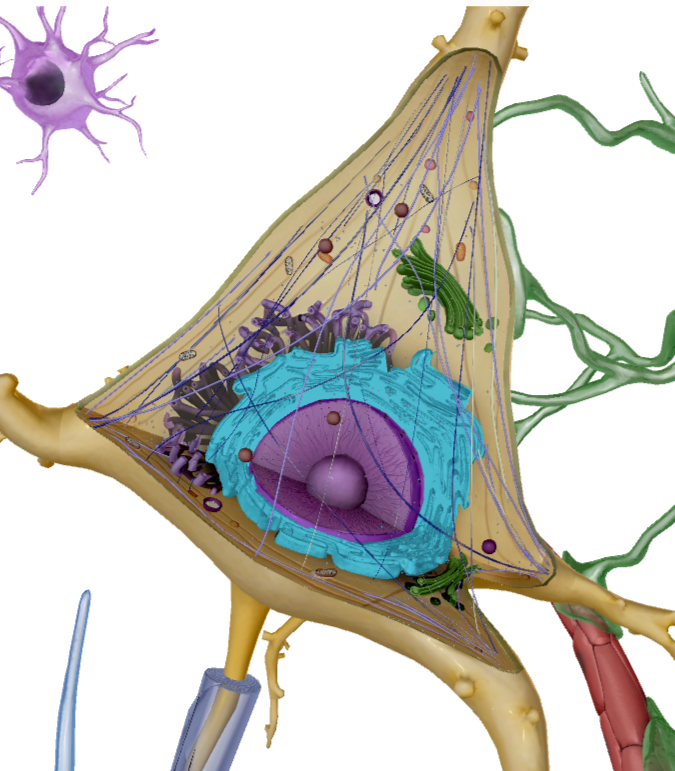
Soma

What’s #2?

  • Portion of the cell that contains the nucleus; the cell body as opposed to the cell processes (axon and dendrites)
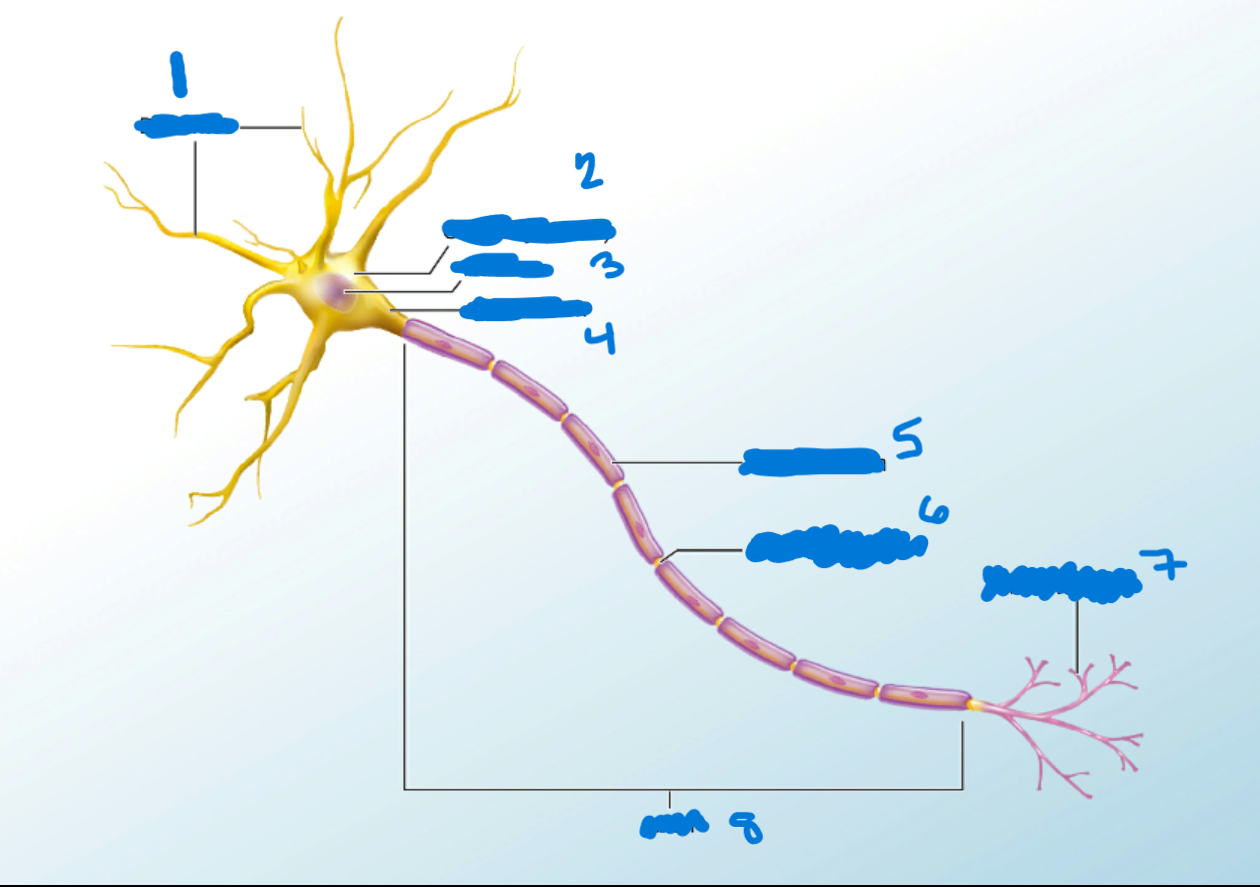
<p>What’s #2?</p><ul><li><p>Portion of the cell that contains the nucleus; the cell body as opposed to the cell processes (axon and dendrites)</p></li></ul>
3
New cards

Nucleus

What’s #3?

  • A localized collection of neuron cell bodies that are functionally related; a “center” of neural function.
<p>What’s #3?</p><ul><li><p>A localized collection of neuron cell bodies that are functionally related; a “center” of neural function.</p></li></ul>
4
New cards

Myelination

When a neuron has a myelin sheath.

5
New cards

Axon Hillocks

What’s #4?

  • Tapering of the neuron cell body that gives rise to the axon.
<p>What’s #4?</p><ul><li><p>Tapering of the neuron cell body that gives rise to the axon.</p></li></ul>
6
New cards

Myelin Sheath

What’s #5?

  • Lipid-rich layer of insulation that surrounds an axon, formed by oligodendrocytes in the CNS and Schwann Cells in the PNS; facilitates the transmission of electrical signals.
<p>What’s #5?</p><ul><li><p>Lipid-rich layer of insulation that surrounds an axon, formed by oligodendrocytes in the CNS and Schwann Cells in the PNS; facilitates the transmission of electrical signals.</p></li></ul>
7
New cards

Node of Ranvier

What’s #6?

  • Gap between two myelinated regions of an axon, allowing for strengthening of the electrical signal as it propagates down the axon.
<p>What’s #6?</p><ul><li><p>Gap between two myelinated regions of an axon, allowing for strengthening of the electrical signal as it propagates down the axon.</p></li></ul>
8
New cards

Axon Terminal

What’s #7?

  • End of the axon, where there are usually several branches extending toward the target cell.
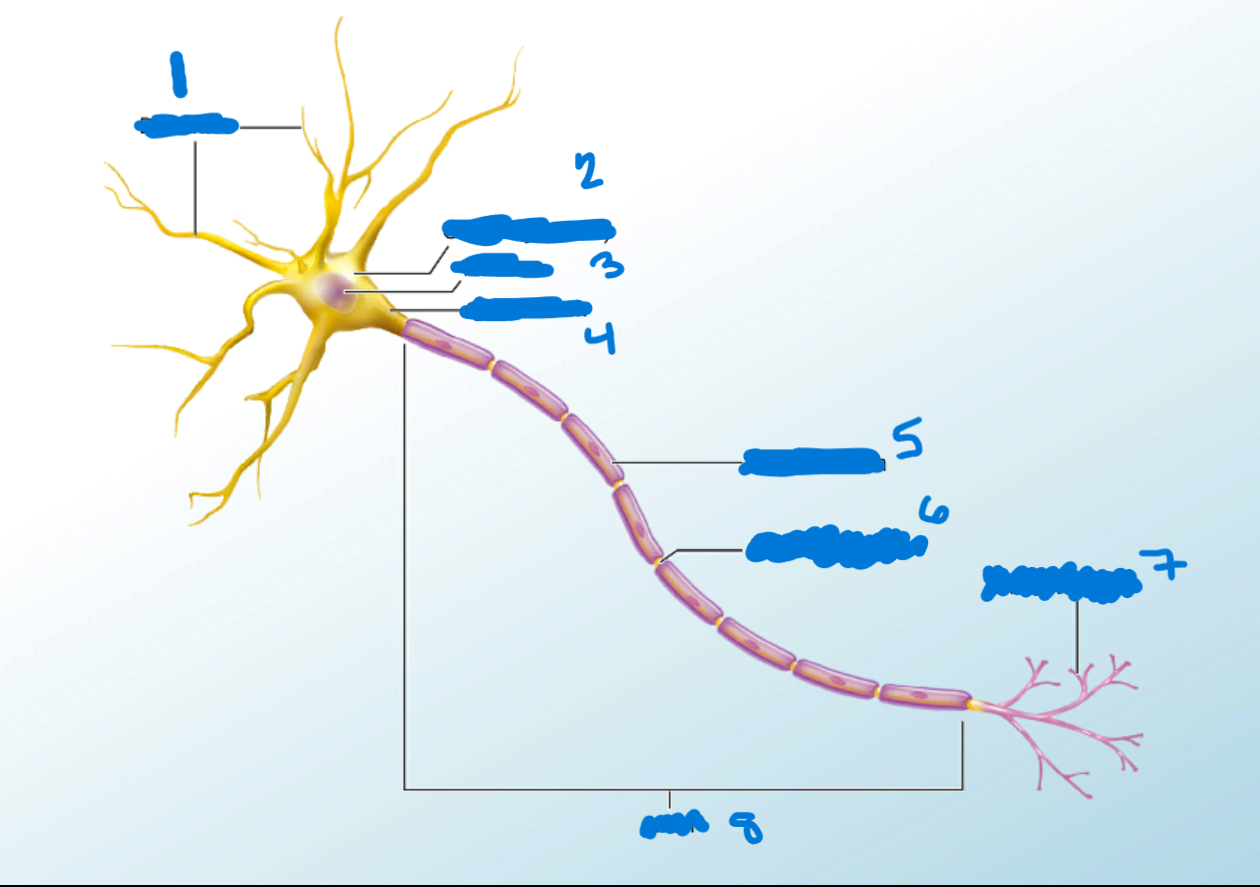
<p>What’s #7?</p><ul><li><p>End of the axon, where there are usually several branches extending toward the target cell.</p></li></ul>
9
New cards

Axon

What’s #8?

  • Single process of the neuron that carries an electrical signal (action potential) away from the cell body toward a target cell.
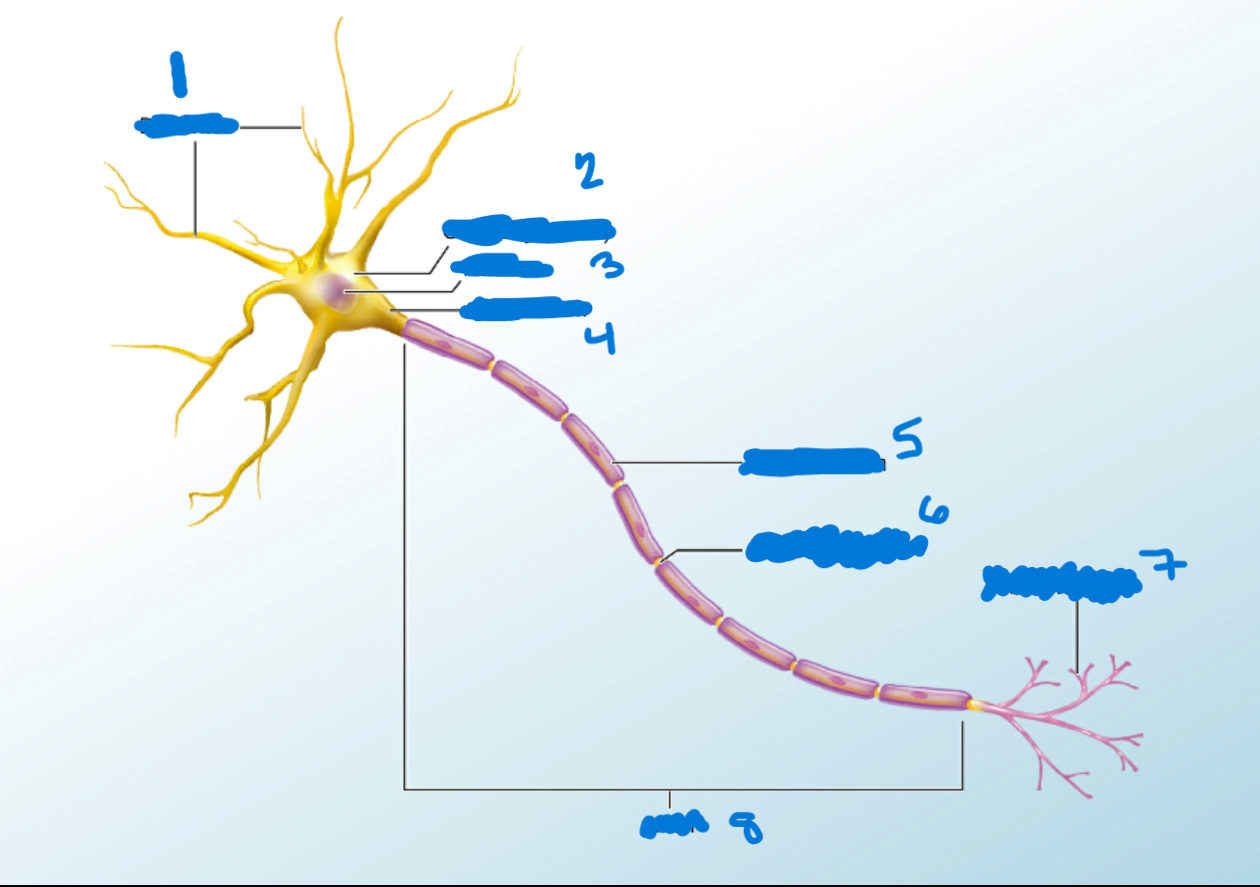
<p>What’s #8?</p><ul><li><p>Single process of the neuron that carries an electrical signal (action potential) away from the cell body toward a target cell.</p></li></ul>
10
New cards

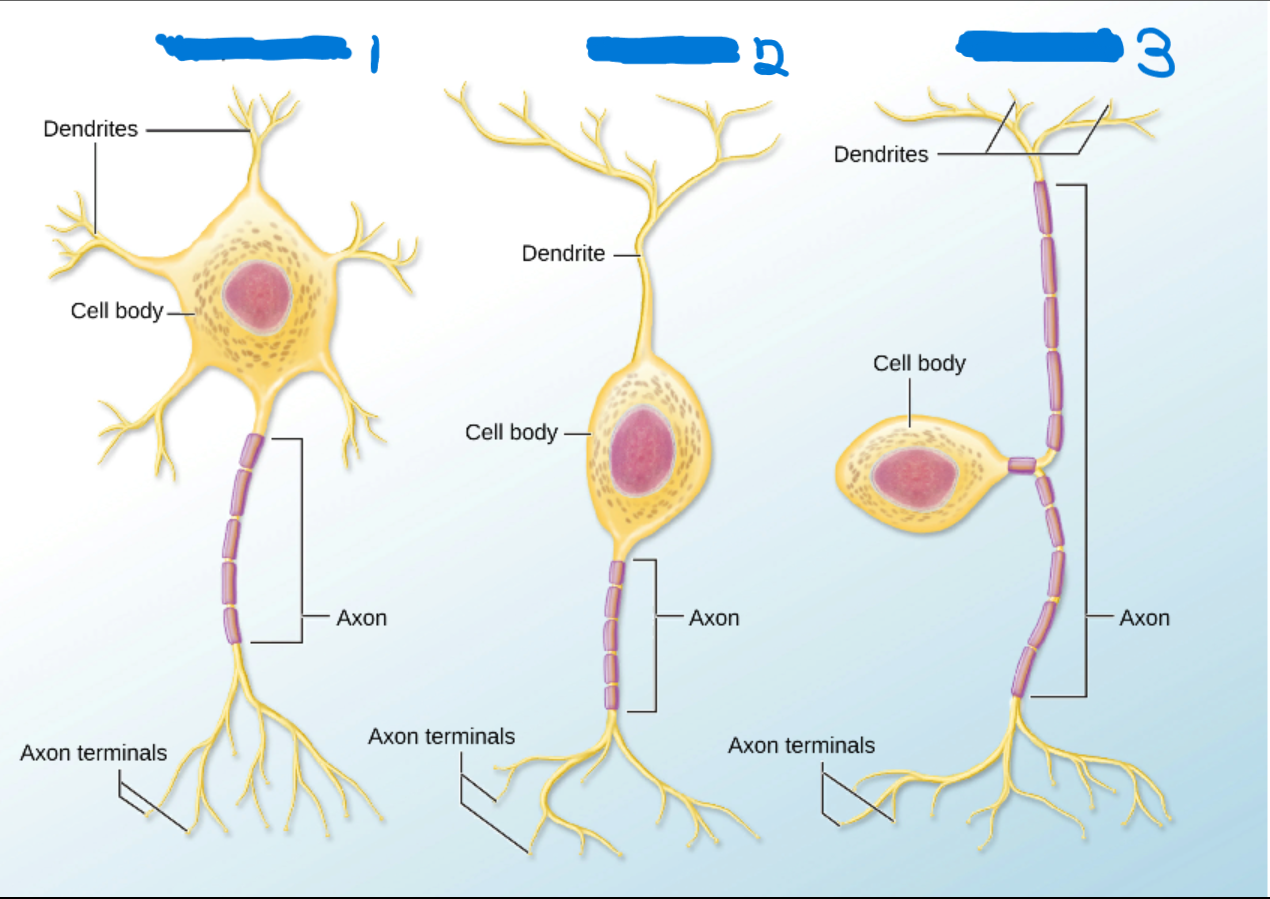
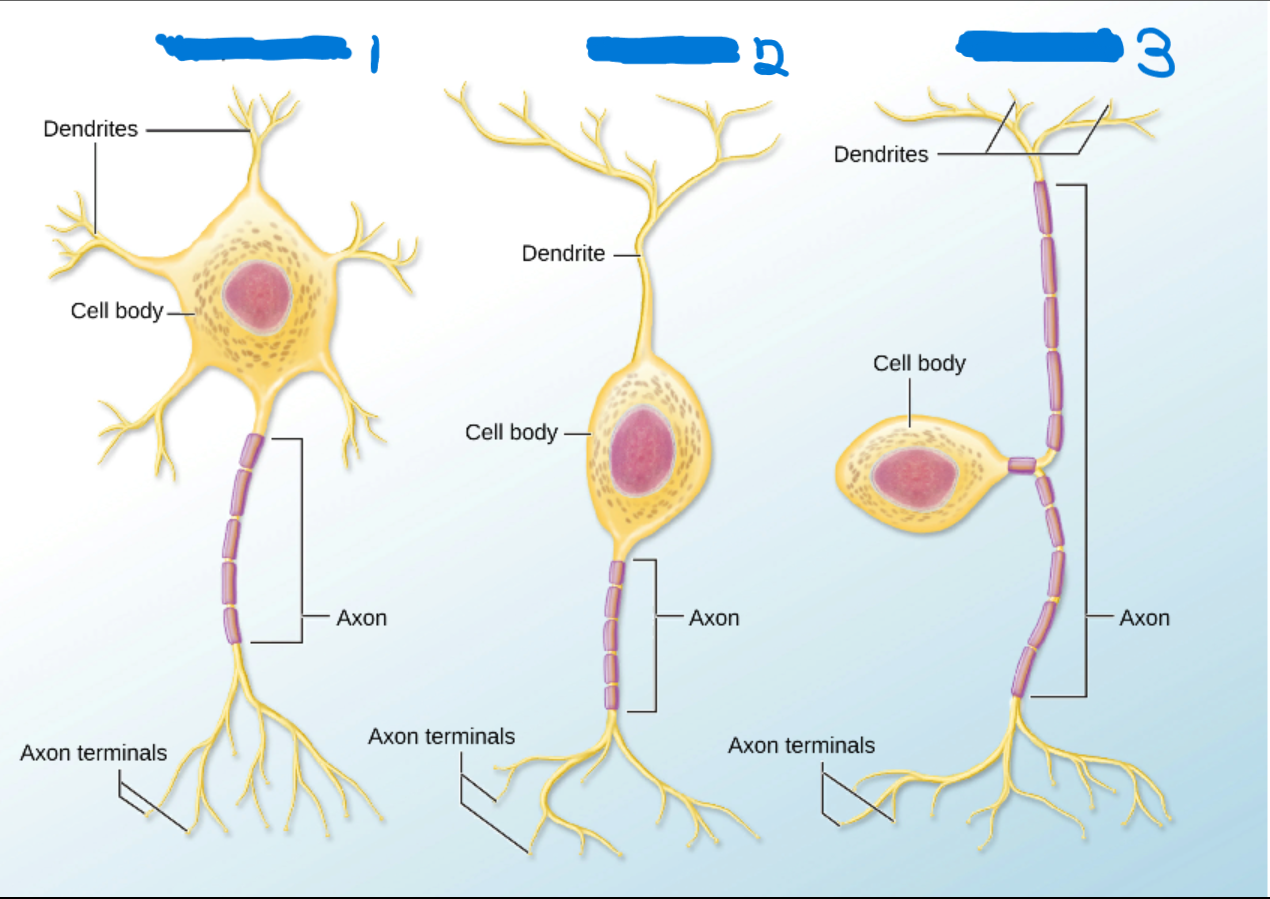
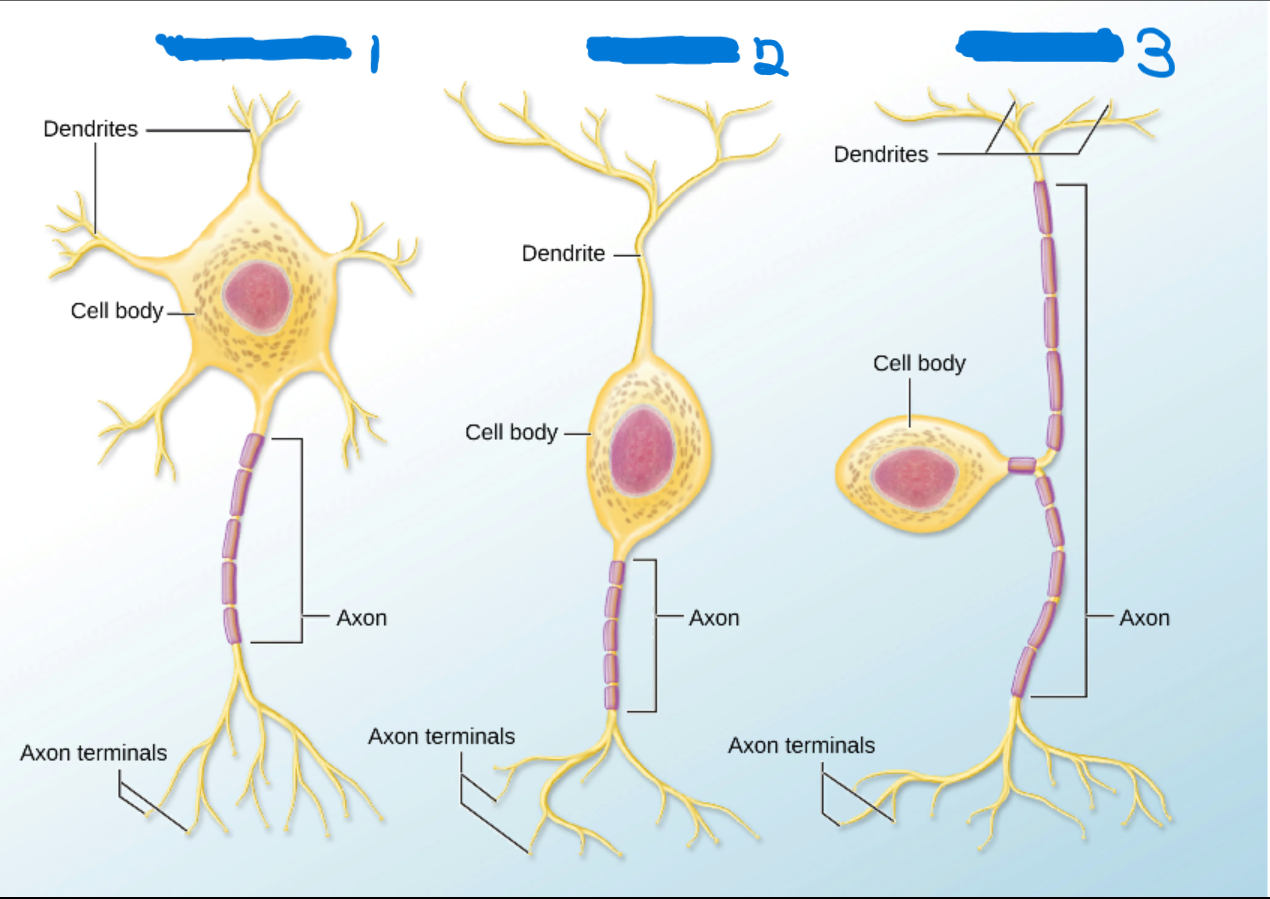
Multipolar

What’s #1?

  • 1 Axon

  • Many dendrites

<p>What’s #1?</p><ul><li><p>1 Axon</p></li><li><p>Many dendrites</p></li></ul>
11
New cards

Bipolar

What’s #2?

  • 1 Axon

  • 1 Dendrites

  • Sensory Organs

<p>What’s #2?</p><ul><li><p>1 Axon </p></li><li><p>1 Dendrites</p></li><li><p>Sensory Organs</p></li></ul>
12
New cards

Unipolar

What’s #3?

  • Axon splits into two branches that attach to the cell body.

  • Sensory Neuron

<p>What’s #3?</p><ul><li><p>Axon splits into two branches that attach to the cell body.</p></li><li><p>Sensory Neuron</p></li></ul>
13
New cards

Neuron

Excitable neural cell that transfer nerve impulses.

14
New cards

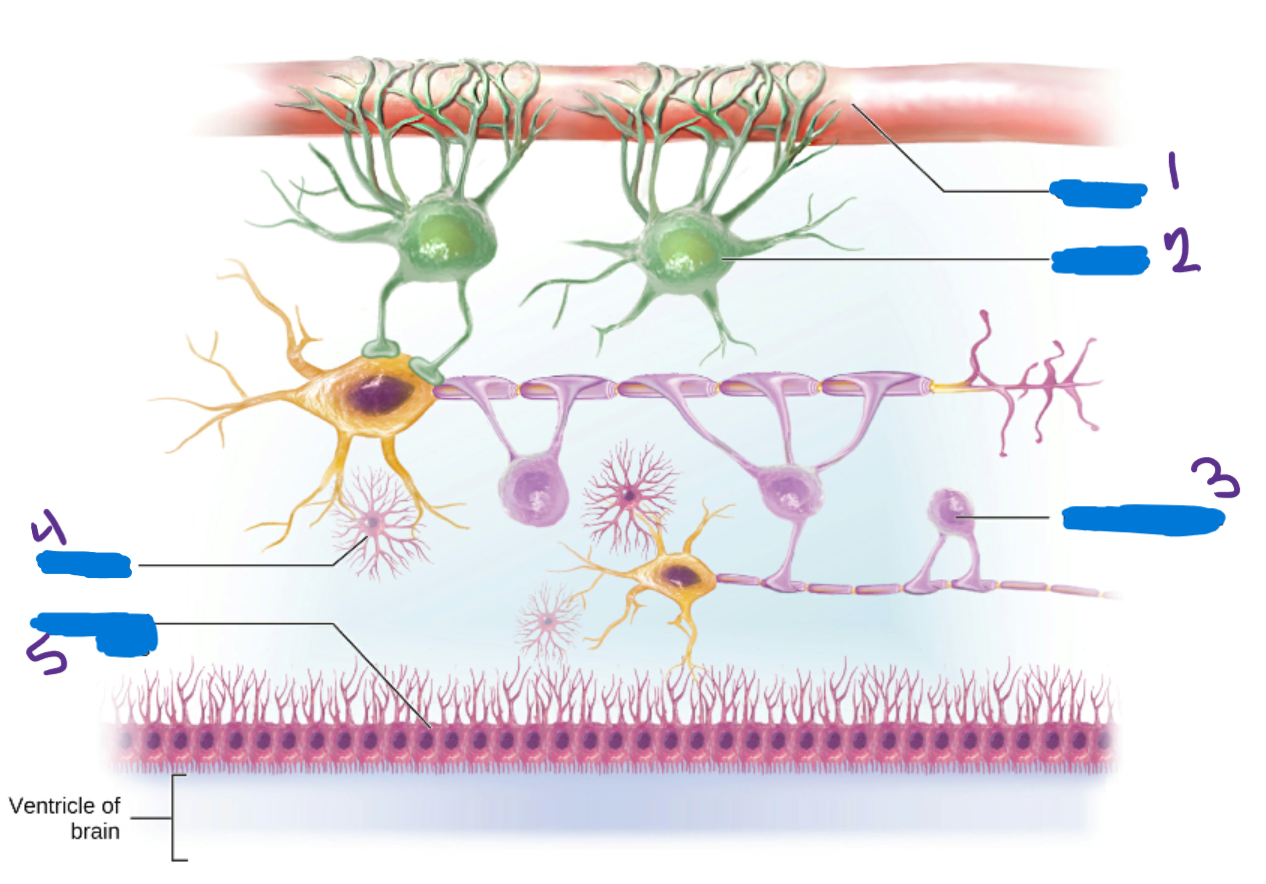
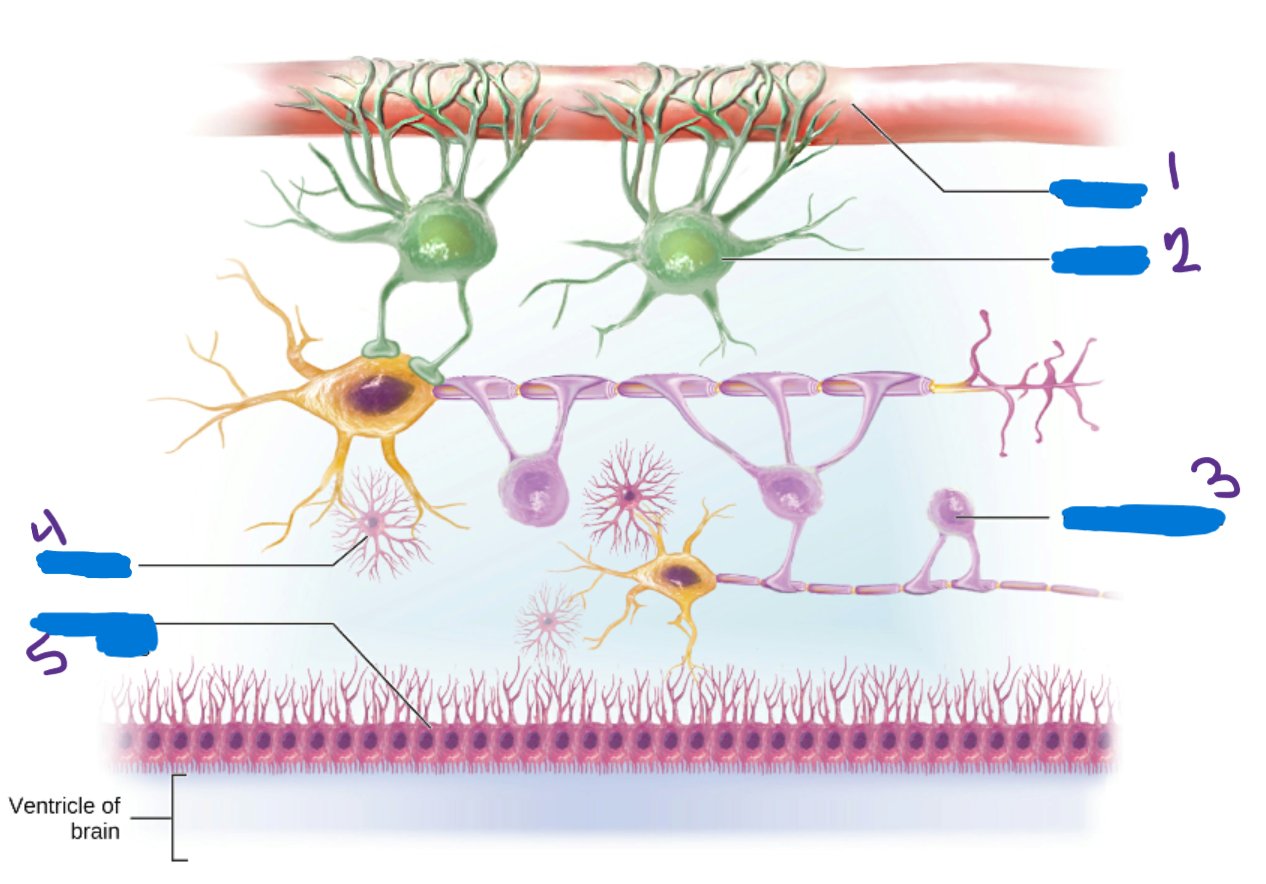
Astrocytes

What’s #2?

  • Connect neurons to blood supply capillaries and help provide support.

  • CNS

<p>What’s #2?</p><ul><li><p>Connect neurons to <strong>blood supply</strong> capillaries and help provide support.</p></li><li><p><strong>CNS</strong></p></li></ul>
15
New cards

Oligodendrocytes

What’s #3?

  • in the CNS create myeline sheaths that protect neurons and increase the conduction speed of the neural impulse

  • CNS

<p>What’s #3?</p><ul><li><p>in the <strong>CNS</strong> create<strong> myeline sheaths</strong> that protect neurons and increase the conduction speed of the neural impulse</p></li><li><p><strong>CNS</strong></p></li></ul>
16
New cards

Microglia

What’s #4?

  • Provide immune system support by removing pathogens that pass through the blood-brain barrier

  • CNS

<p>What’s #4?</p><ul><li><p>Provide <strong>immune</strong> <strong>system</strong> <strong>support</strong> by removing pathogens that pass through the blood-brain barrier</p></li><li><p><strong>CNS</strong></p></li></ul>
17
New cards

Ependymal Cells

What’s #5?

  • Cells help produce and circulate cerebrospinal fluid

  • CNS

<p>What’s #5?</p><ul><li><p>Cells help produce and circulate<strong> cerebrospinal fluid</strong></p></li><li><p><strong>CNS</strong></p></li></ul>
18
New cards

Schwann Cells

Produce the myelin sheaths in the PNS

19
New cards

Satellite Cells

Glial cell types in the PNS provide support for neurons in the ganglia.

20
New cards

Neuroglia

  • Nervous Tissue

  • Support Neurons

    • Ependymal Cells

    • Oligodendrocytes

    • Astrocytes

    • Microglia

  • Surround and protect neurons in the CNS.

21
New cards

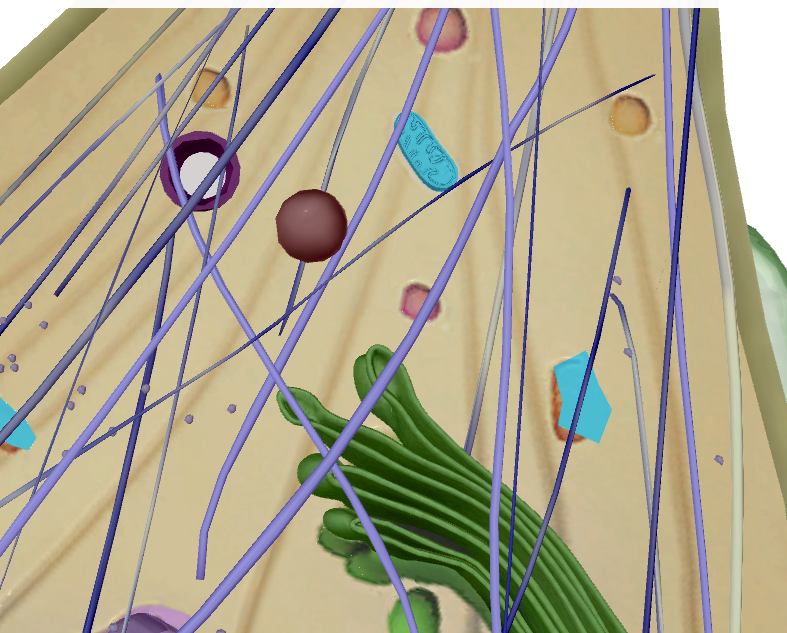
Nucleolus

What is this?

  • Contains genetic information of the cell
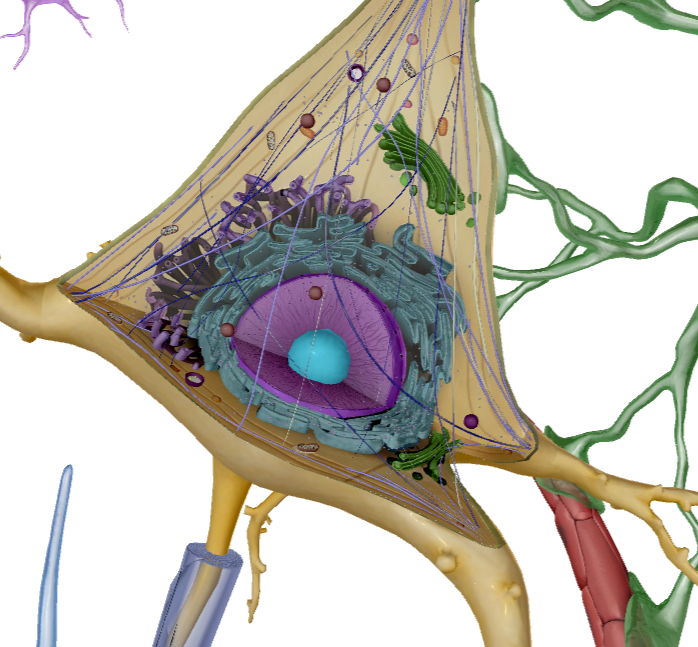
<p>What is this?</p><ul><li><p>Contains genetic information of the cell</p></li></ul>
22
New cards

Mitochondria

What is this?

  • Creates energy known as ATP

<p>What is this?</p><ul><li><p>Creates energy known as ATP</p></li></ul>
23
New cards

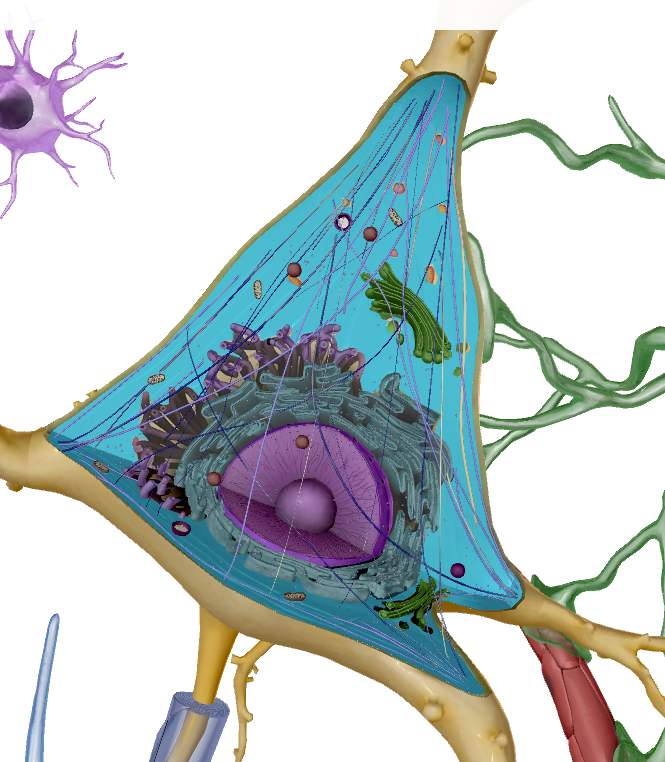
Nissi Bodies

What is this?

<p>What is this?</p>
24
New cards

Cytoplasm

What is this?

<p>What is this?</p>