Anatomy and Physiology: Respiratory System
 Call Kai
 Learn
Learn Practice Test
 Spaced Repetition
 Match
Match Flashcards
 Knowt Play
1/15

There's no tags or description
Looks like no tags are added yet.
Name | Mastery | Learn | Test | Matching | Spaced | Call with Kai |
|---|
No analytics yet
Send a link to your students to track their progress
16 Terms
Respiratory System (Apparatus Respirators)
Uses the nose, nasal cavity, pharynx, larynx, trachea, bronchi, and smaller passageways to bring air to the alveoli or sites of gaseous exchange within the lungs.
Various structures associated with these passageways modify or regulate the flow of air, serve as olfactory receptors, facilitate water and heat exchange, and make phonation possible.
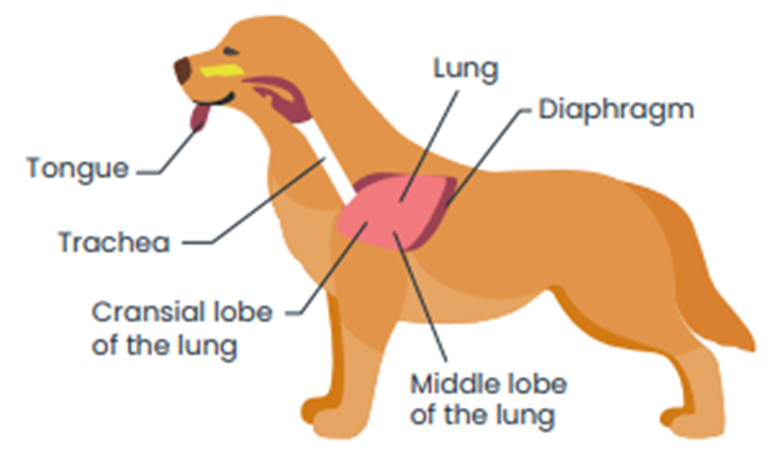
Parts of the Respiratory System
For Air Conduction:
Nasal Cavity
Nasopharynx
Larynx
Trachea
Bronchi
Bronchioles
For Gas Exchange:
Alveoli
Functions of the Respiratory System
Includes inspiration and expiration
Provides an exchange of respiratory gases (oxygen and carbon dioxide)
Warms, cleans, and humidifies air
Aids olfaction and phonation
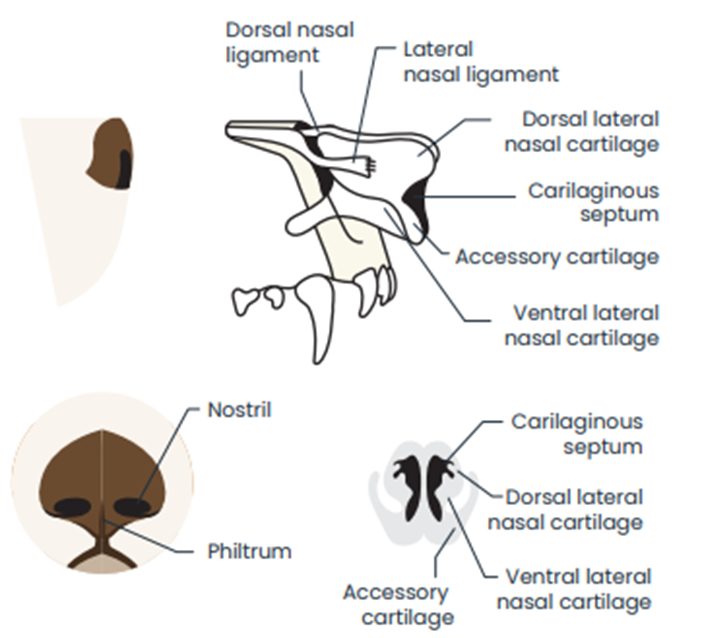
Nasal Cavity
The entry point for air, lined with mucous membranes that help filter and humidify the air.
Contains nasal turbinates, bony structures covered with mucous membrances, which increase the surface area for air conditioning.
Goblet cells secrete mucus, while ciliated cells help move mucus and trapped particles toward the throat.
Pharynx (throat)
Serves as a common passage for air and food
Divided into 3 parts: Nasopharynx (connected to the nasal cavity), oropharynx (connected to the mouth), and the laryngopharaynx (connected to the larynx).
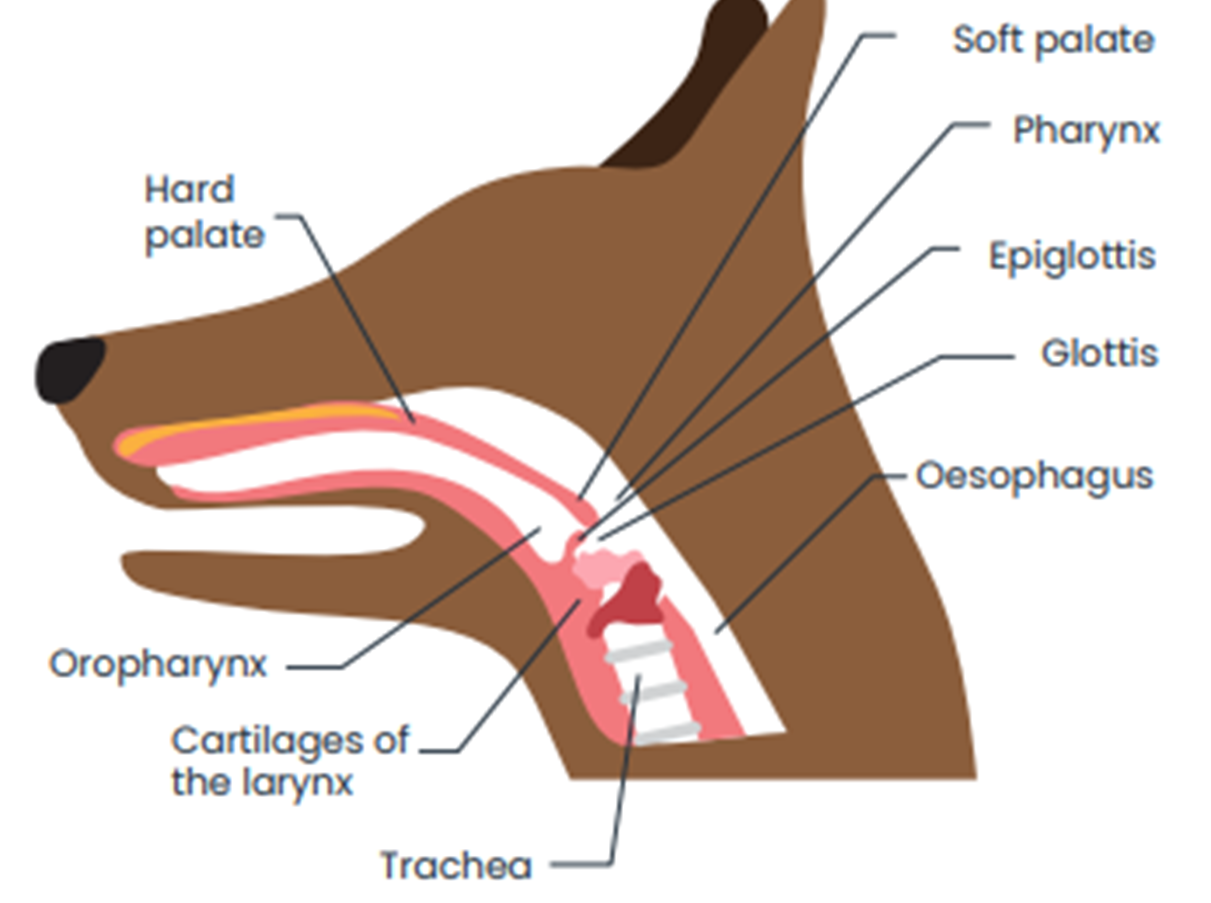
Larynx (voice box)
Contains the vocal cords that produce sound during vocalization
Composed of cartilaginous structures like thyroid cartilage, cricoid cartilage, and arytenoid cartilages.
Epiglottis prevents food from entering the respiratory tract during swallowing.
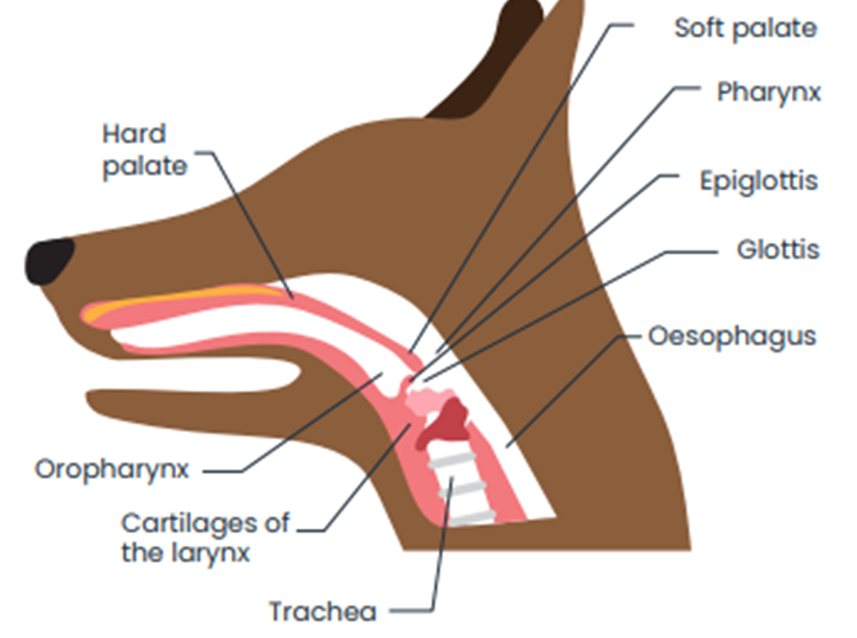
Trachea (windpipe)
Tubular structure made of c-shaped cartilage rings for support
Conducts air from the larynx into the bronchi and lungs
Tracheal smooth muscle allows for some degree of constriction or dilation to regulate airflow.
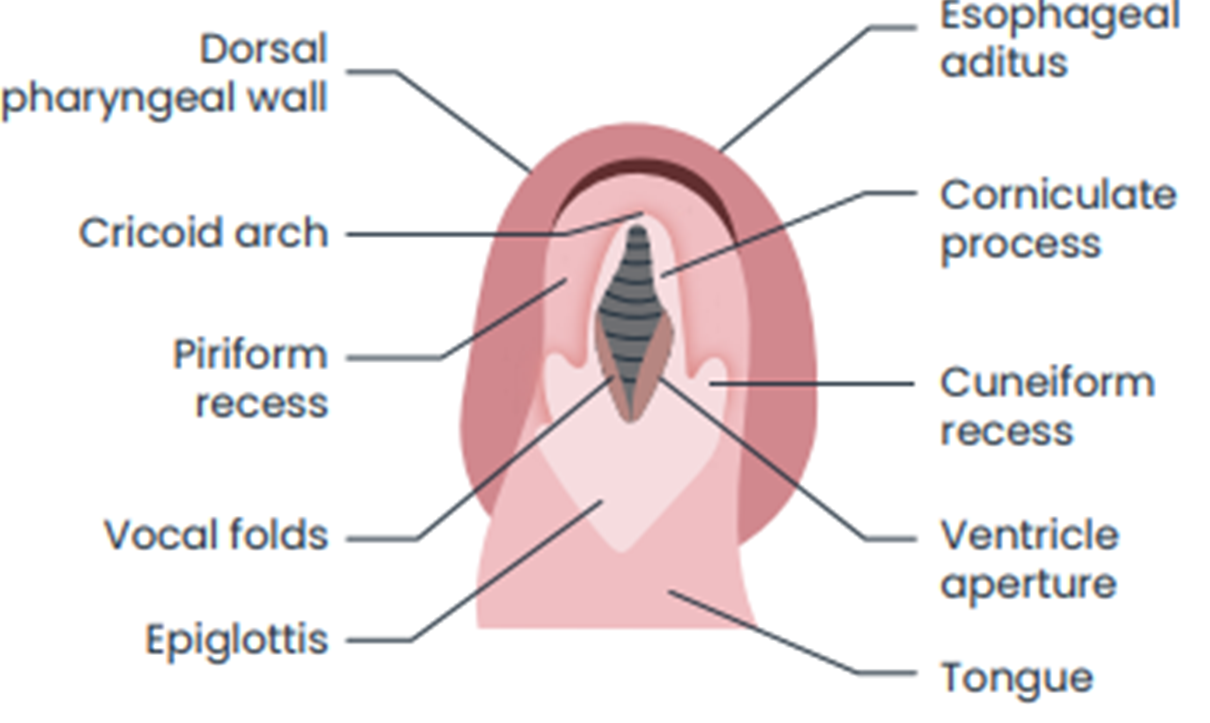
What are the two main parts that the trachea is divided into?
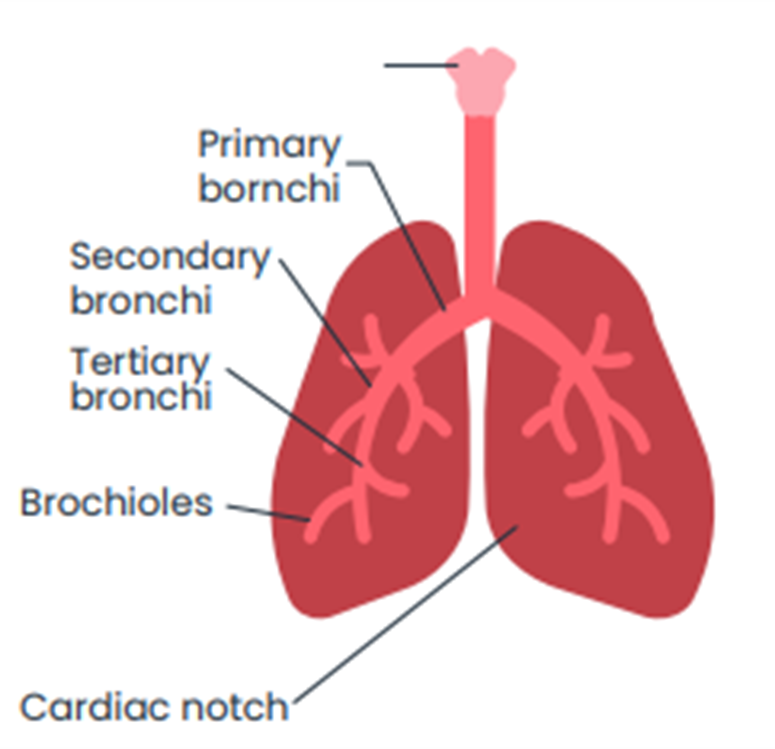
Trachea divides into two main bronchi, one entering each lung
Bronchi
Bronchioles
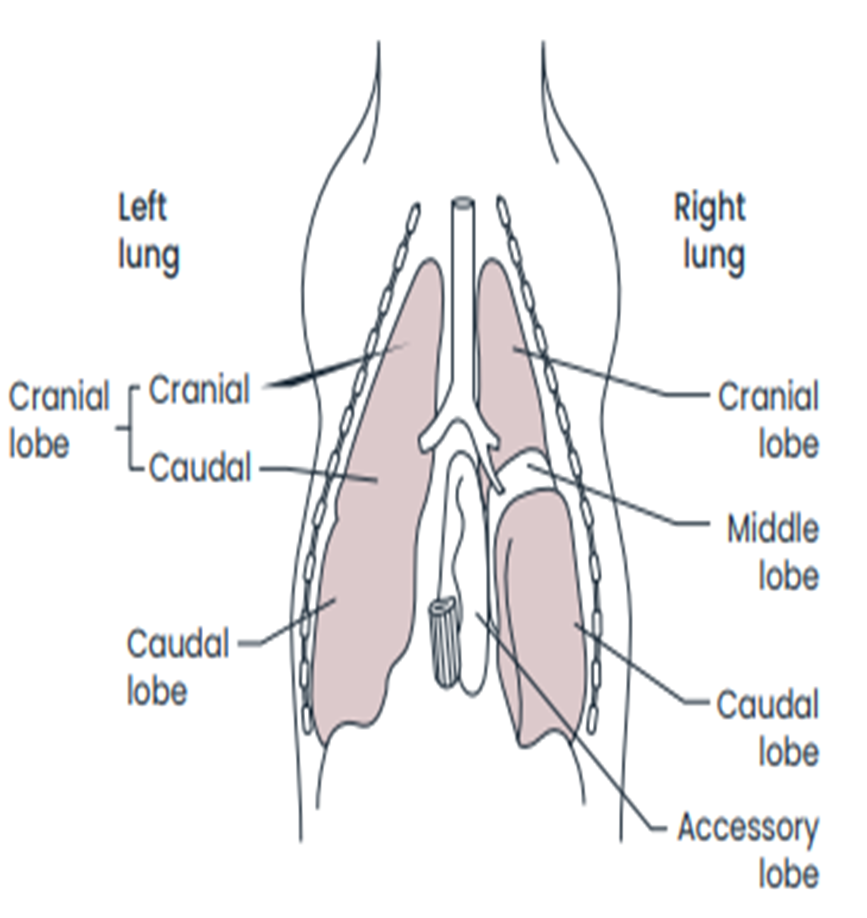
Bronchi
Bronchi further divide into smaller bronchioles, lacking cartilage and surrounded by smooth muscle
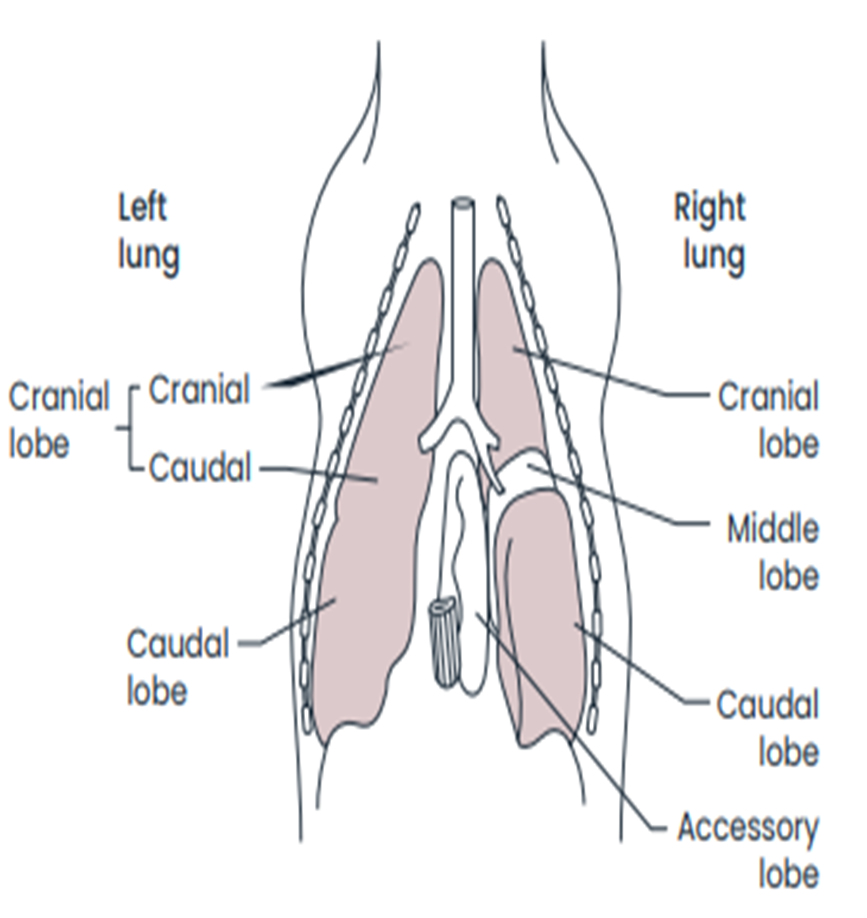
Bronchioles
Bronchioles continue branching into smaller passages, leading to terminal bronchioles and ultimately alveolar ducts.
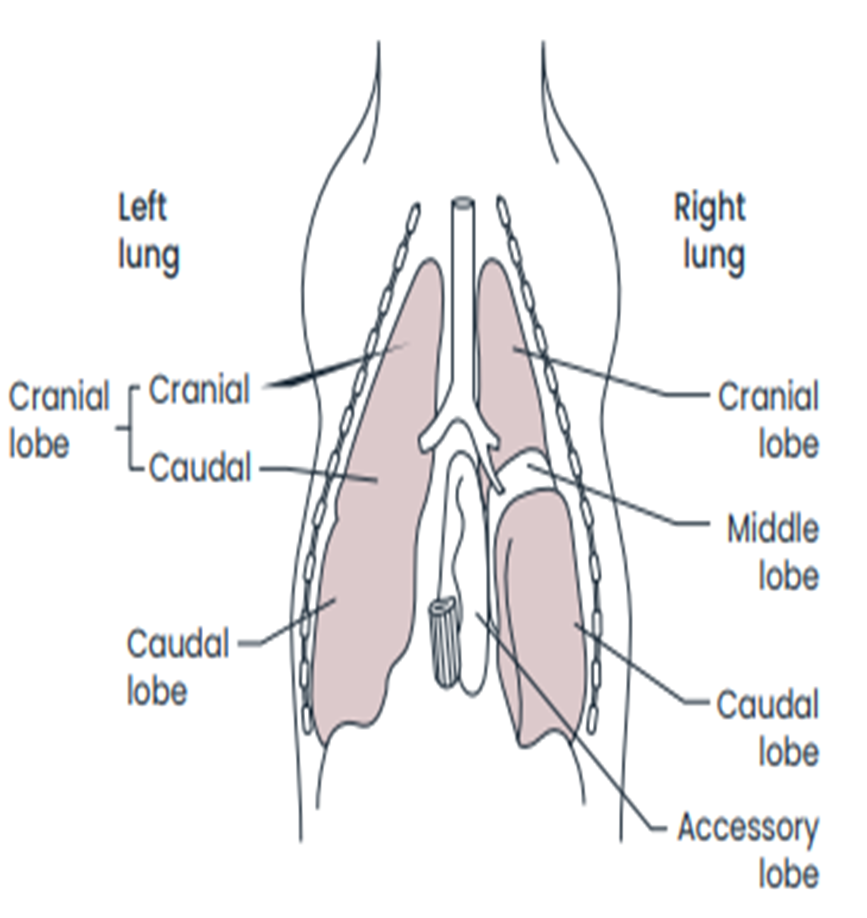
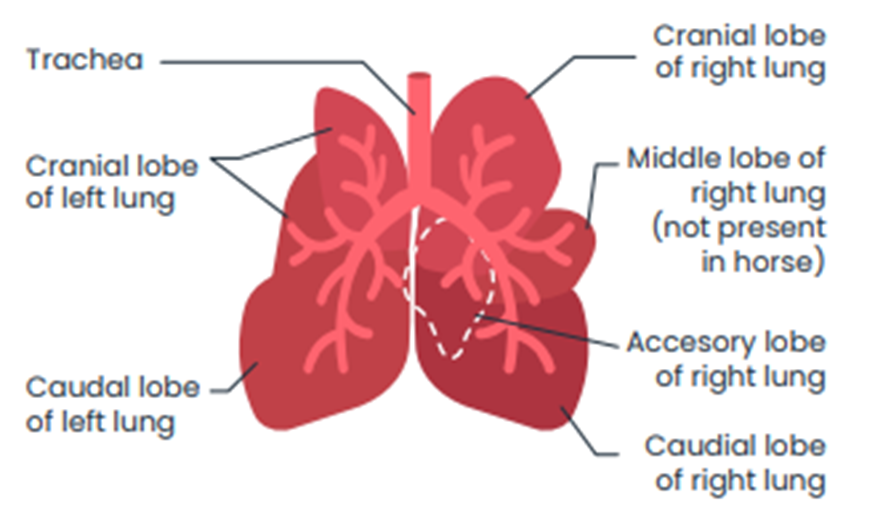
Lungs
Paired organs enclosed within the thoracic cavity by pleural membranes
Each lung contains lobes separated by fissures
Alveoli, located at the end of bronchioles, facilitate gas exchange between air and blood.
Pleura
the pleura is a thin, double layered membrane surrounding each lung and lining the chest cavity
Visceral
Ventilation
Gas Exchange
Transport of Gases
Respiratory Defense Mechanisms

