Lecture 1: Emotion Theory
 Studied by 3 people
 Call Kai
 Learn
Learn Practice Test
 Spaced Repetition
 Match
Match Flashcards
 Knowt Play
1/17

There's no tags or description
Looks like no tags are added yet.
Name | Mastery | Learn | Test | Matching | Spaced | Call with Kai |
|---|
No analytics yet
Send a link to your students to track their progress
18 Terms
What is the problem with defining emotions?
People know what emotions are, but they are hard to define / explain
What changes are emotions associated with?
Changes in expressive behaviour (e.g. facial expressions,
Changes in subjective feeling
Changes in sense of purpose (e.g. readying for action) → Emotions can guide our behaviour
Changes in bodily responses (physiological activation)
When we feel threatened, we feel fear. But usually this subsides after a time. How does that work in anxiety?
There is an exaggerated sense of threat even in non-life threatening situations
What are the most basic emotions according to the lecture?
Joy
Anger
Sadness
Fear (Anxiety)
Shame
Other emotions can be peeled back to these basic emotions
Anxiety is an emotion, as it has all the components that other emotions have. But an emotion is more than a feeling, and different emotions can be associated with similar physiological responses. What is an example of this?
Heart racing = Just before an exam, going on a rollercoaster
Explain the differences between moods, attitudes, emotions and temperament?
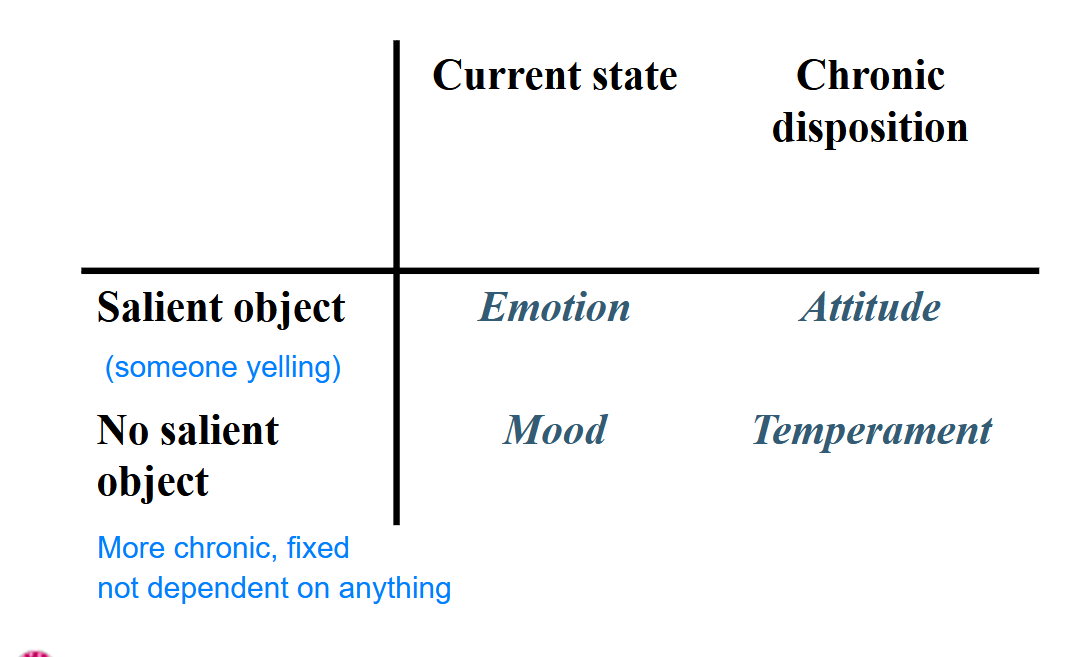
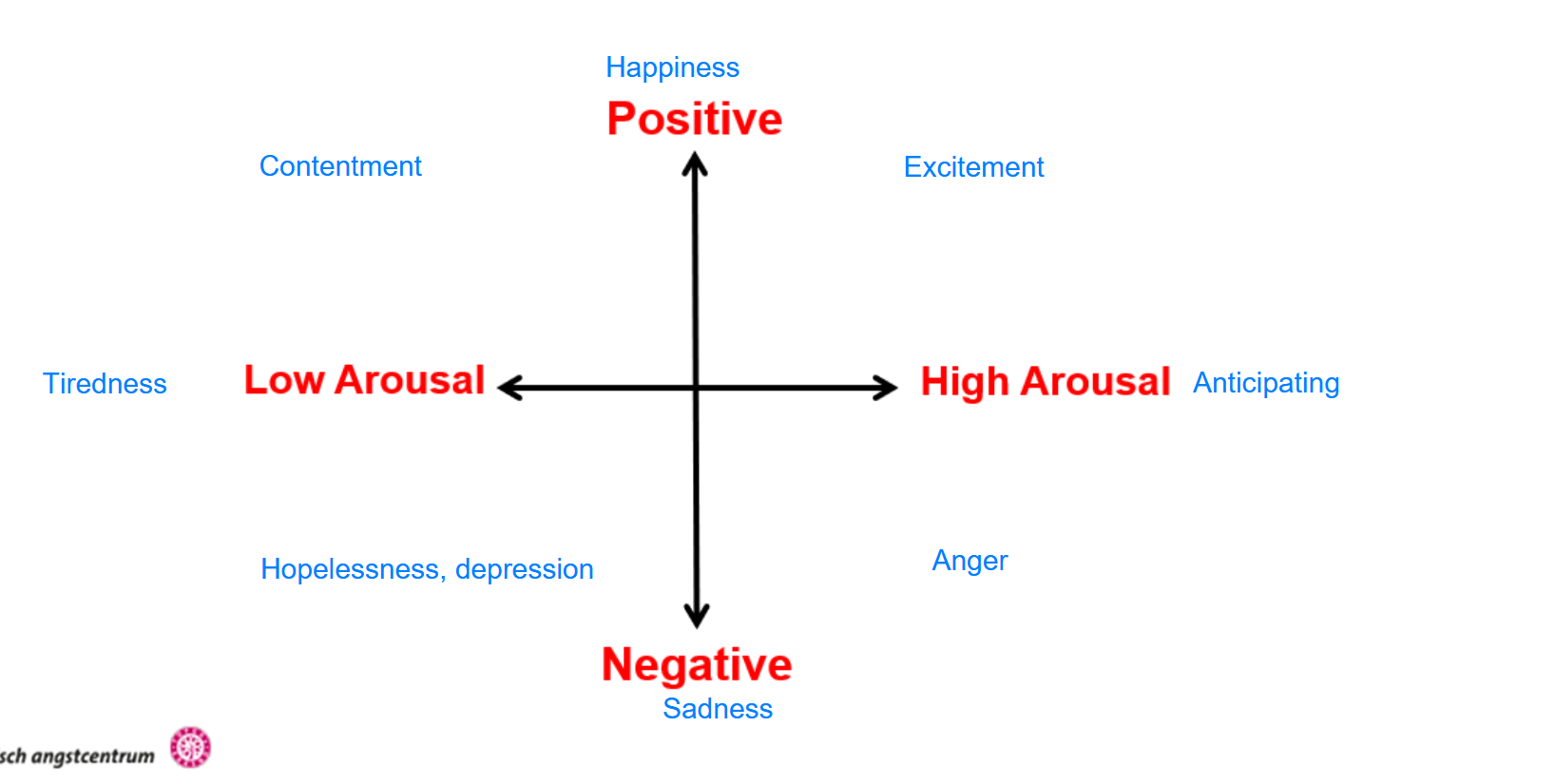
Give an example of emotions in places on the valence / arousal spectrum
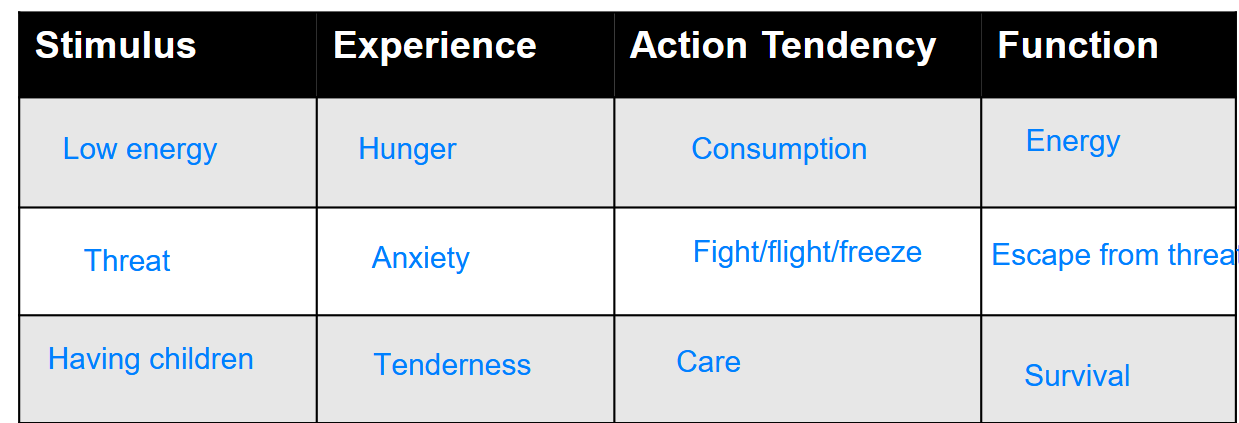
What vital functions do emotions serve?
When ‘vital interests’ are at stake.
Survival of self and offspring
Give an example of a stimulus, experience, action tendency and function?
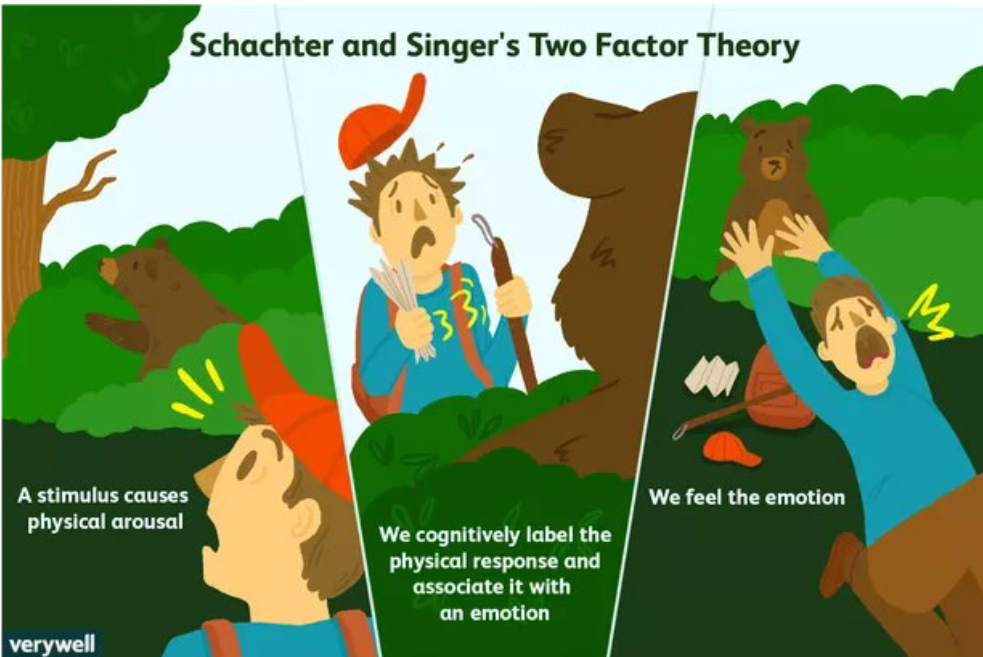
What is the Schlachter-Singer theory of emotion? (two-factor)
Emotions are the result of an interaction between physiological arousal and a cognitive interpretation
Neuroticism is a vulnerability factor for anxiety. But what is it?
A personality trait that is associated with: High stress reactivity, more intense fluctuations of emotions, more intense negative emotions
Overthinking, self-consciousness, need for control > higher physiological arousal, more negative
mental states
It is genetically transmitted, a “higher-order” trait and closely associated with many DSM-V disorders
What disorders is high neuroticism a vulnerability factor for?
Depressive, anxiety, trauma and OCD and related disorders
What makes an anxiety disorder “abnormal”?
The intensity and disproportionate nature of the threat response compared to the threat actually present
a lot of people fear specific things (e.g. snakes) more than other things. What can this specific anxiety response be explained by?
Vicarious learning - fear learning from others
Latent inhibition - having a less fearful response to something if you’ve had positive experiences with them in the past
Preparedness - the idea that we are evolutionarily ready for some threats
What is a common response to anxiety?
Avoidance and safety behaviours (doing the feared situation but having a safety mechanism in place)
What is the model of extinction in exposure therapy? (inhibitory learning model)
Learn that CS (heart racing) does not equal US (heart attack) through experiencing CS without US multiple times
What is habituation in exposure therapy?
The idea that threat response will go down after some time
Do we need a theory for exposure therapy?
Yes, because it guides us for further research. Knowing (e.g. that avoidance behaviours maintain anxiety disorders) will help you realise why treatment is not working and guide you to useful treatment options and future research
 Note
Note  Flashcards (24)