arch 250 - exam 2 - klein
 Call Kai
 Learn
Learn Practice Test
 Spaced Repetition
 Match
Match Flashcards
 Knowt Play
1/65

There's no tags or description
Looks like no tags are added yet.
Name | Mastery | Learn | Test | Matching | Spaced | Call with Kai |
|---|
No analytics yet
Send a link to your students to track their progress
66 Terms
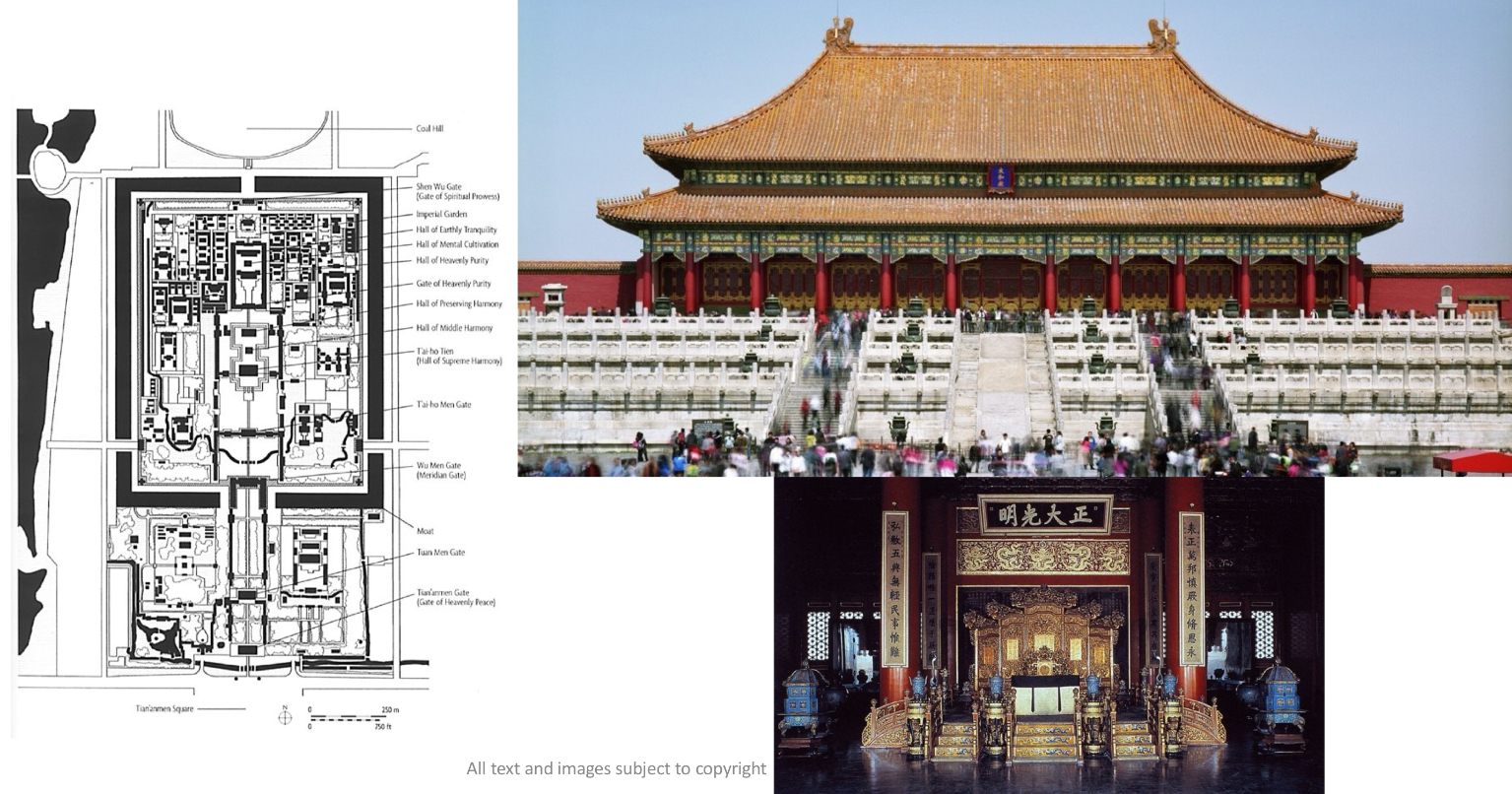
name/location
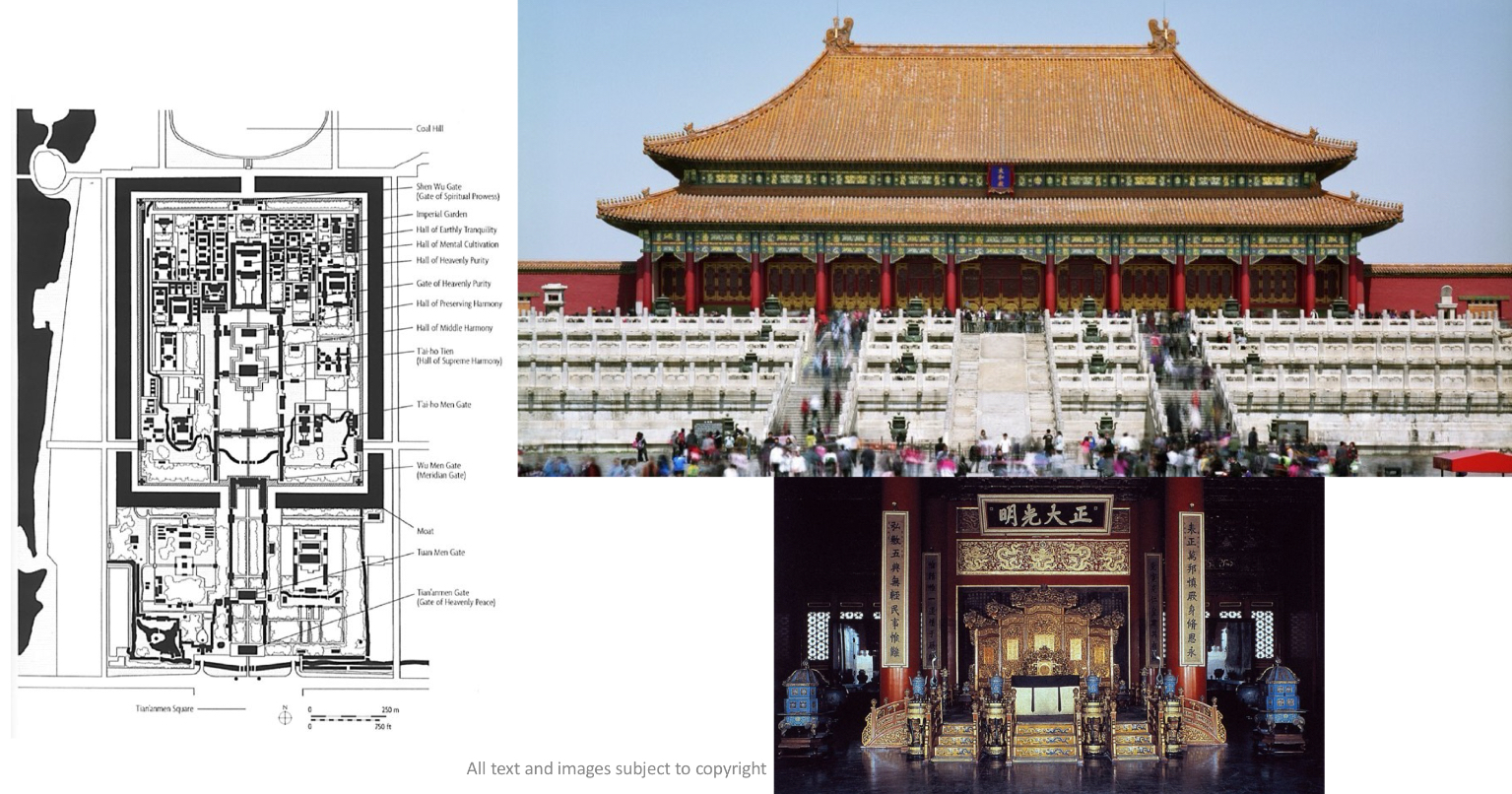
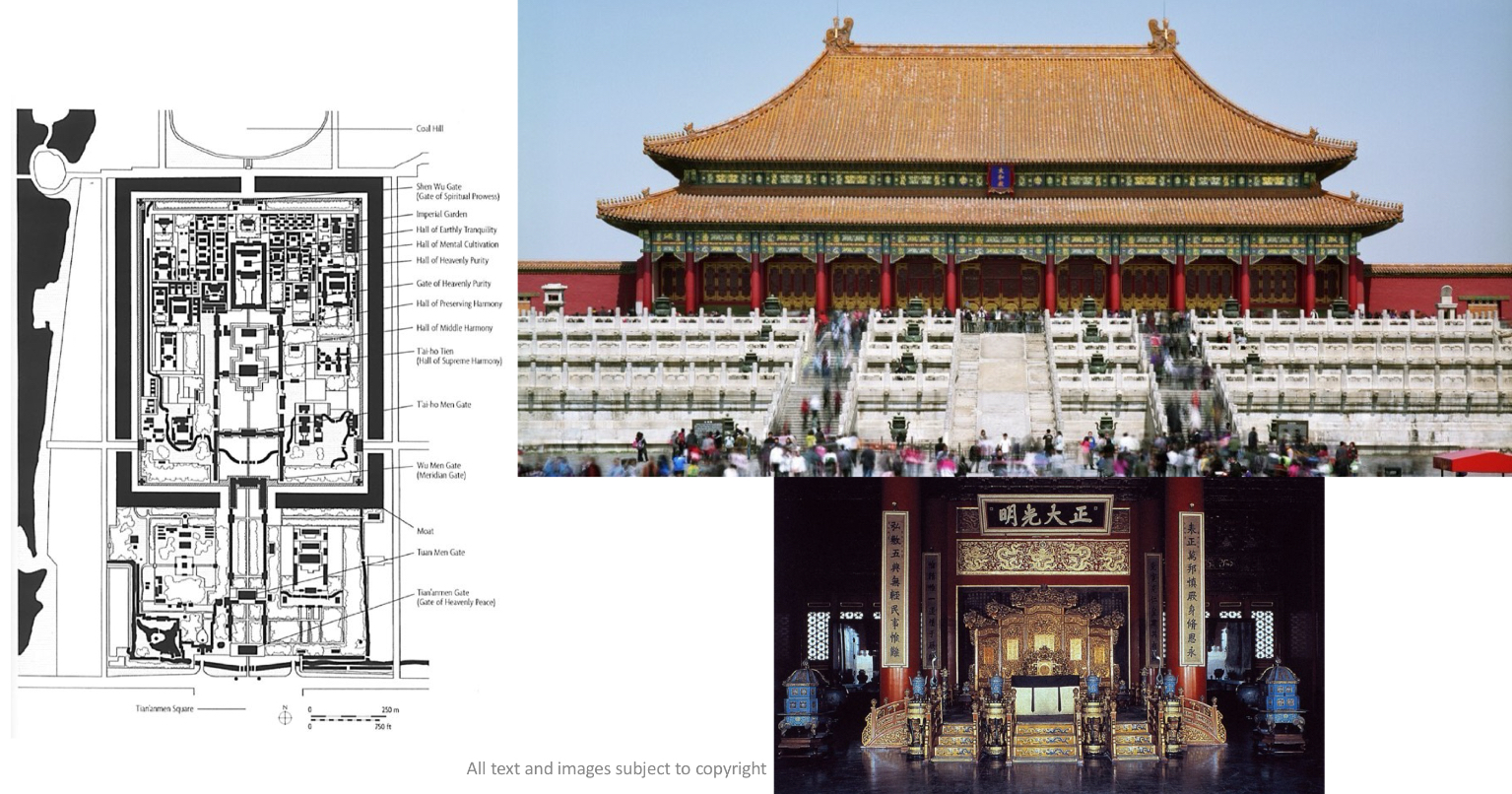
Forbidden City, Hall of Supreme Harmony
Beijing, China, 15th cen
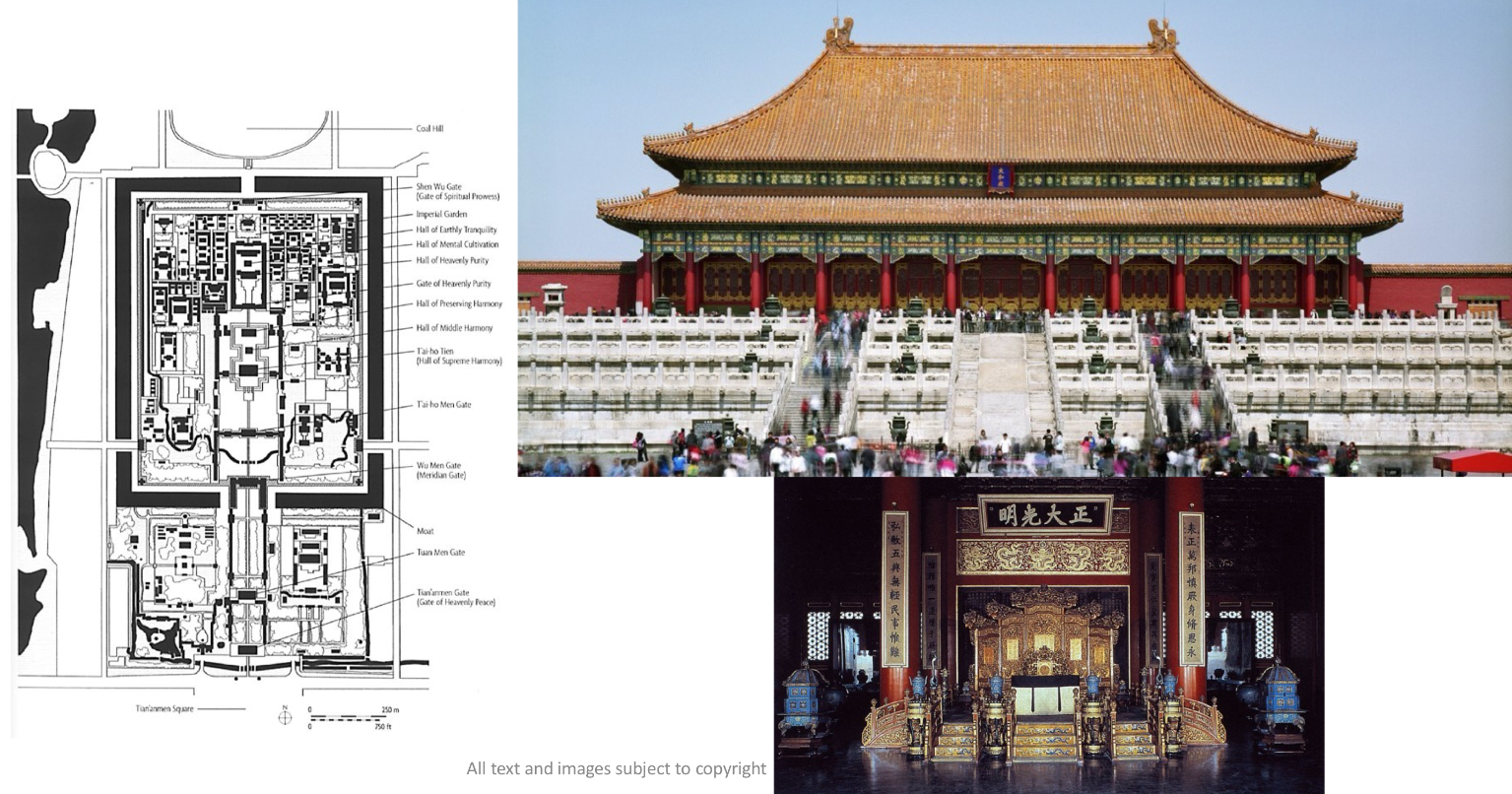
date + culture
15th century, Ming Dynasty
Forbidden City, Hall of Supreme Harmony
Beijing, China
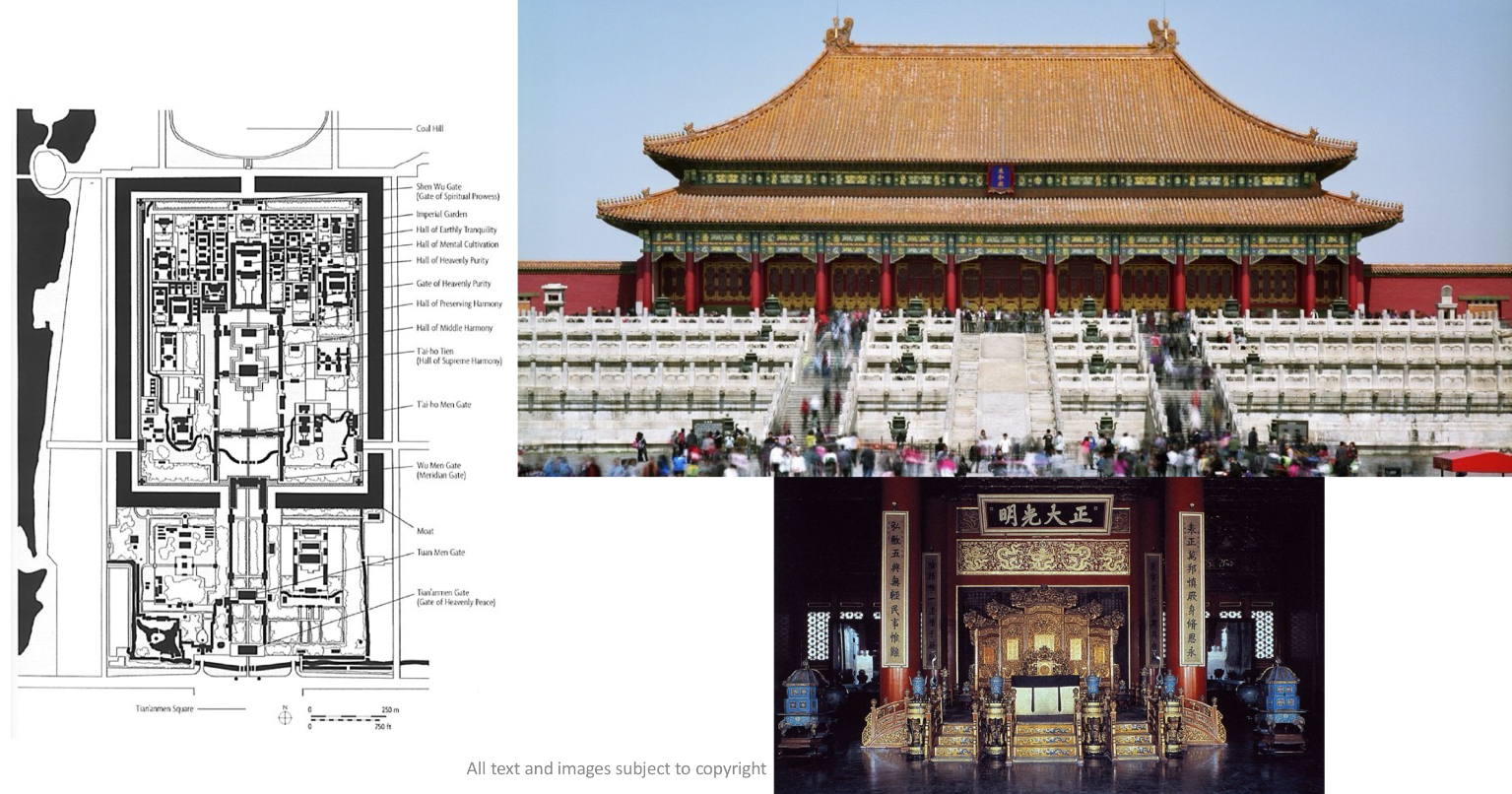
architect, patron
craftsmen from hereditary artisan family-guilds
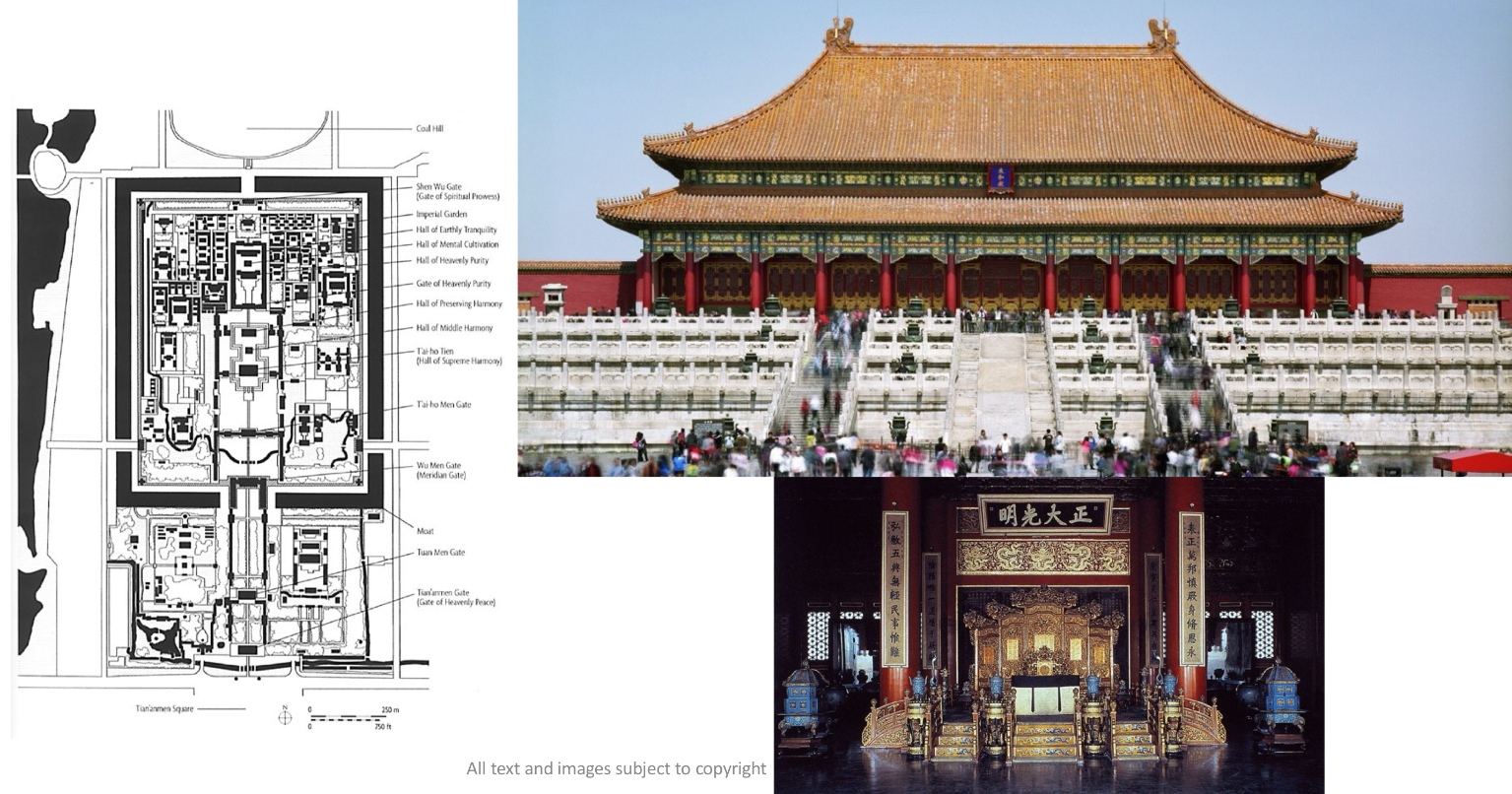
building function + style
Confucian style (respect authority = imp of emperor)
axial planning
symmetrical & orthogonal planning = Chinese cosmos
sequencing from S→N (least to most imp)
ceremonial, ritual, living space
techniques/materials
Yingzao-fashi techniques
defensive characteristics: wall w one gate on each side, towers @ corners, moat
What is the Yingzao-fashi and how does it contribute to our knowledge about traditional Chinese
architecture?
book of Chinese building principles (to est. state control over construction in China)
foundation platform of brick/stone
timber frame (post-lintel) w columns & brackets
wooden purlins (roof beams)
decorative roof (terracotta tiles)
What are some of the philosophical and geomantic principles that have influenced traditional Chinese
architecture?
Philosophical
indigenous (life after death, ancestor worship, animism)
daoism (harmony of human action & world through nature)
confucianism (respect for authority as est. by state, axiality & HIERARCHY)
Geomantic: divination by signs derived from earth
good (south) & evil (north) influences operate on places & ppl within them
Feng Shui: spirit influences in landscapes
What kind of complex is the Forbidden City? Why is it called this?
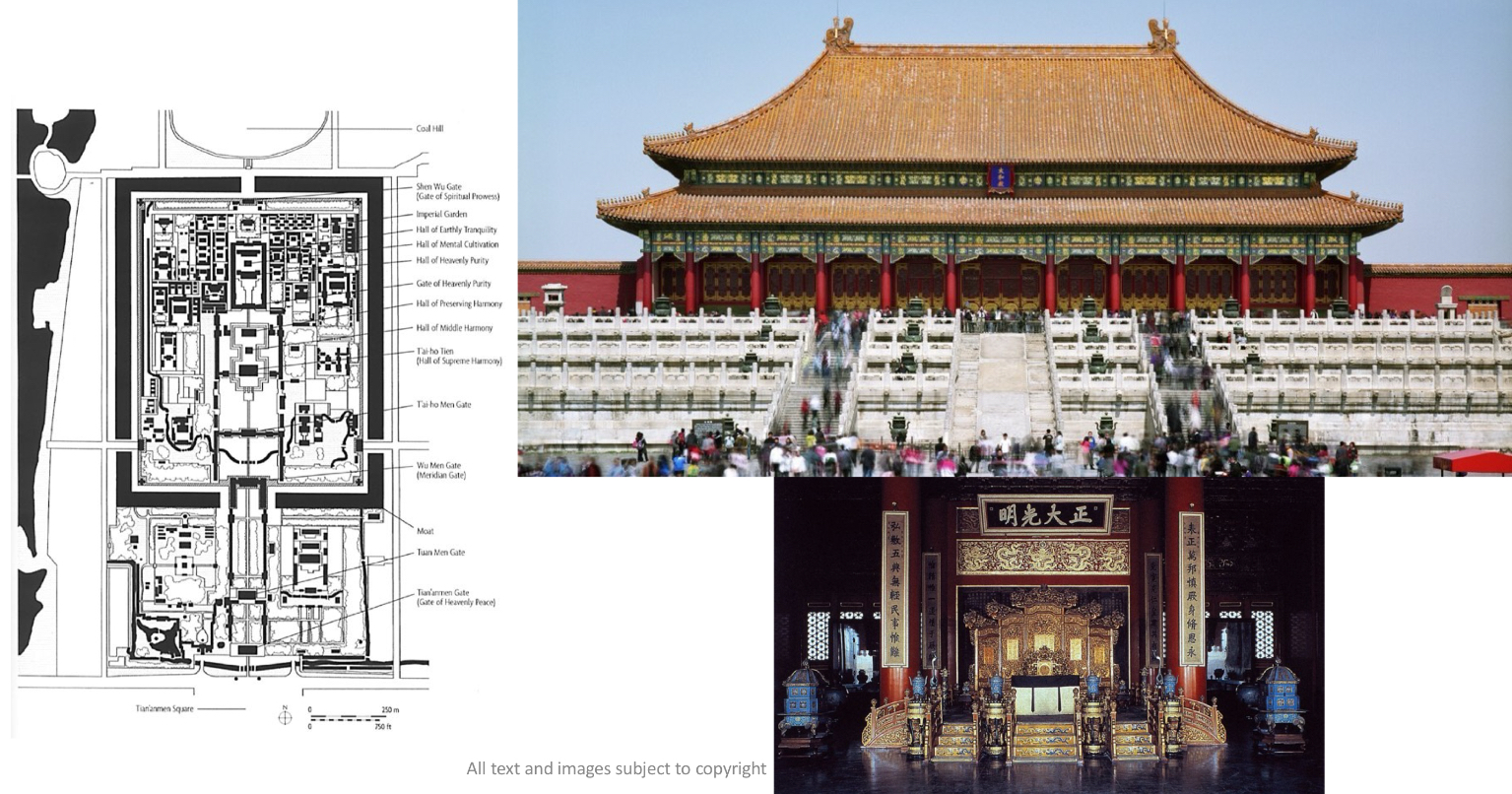
Imperial Palace complex
“Forbidden City” bc access restricted to emperor + state officials
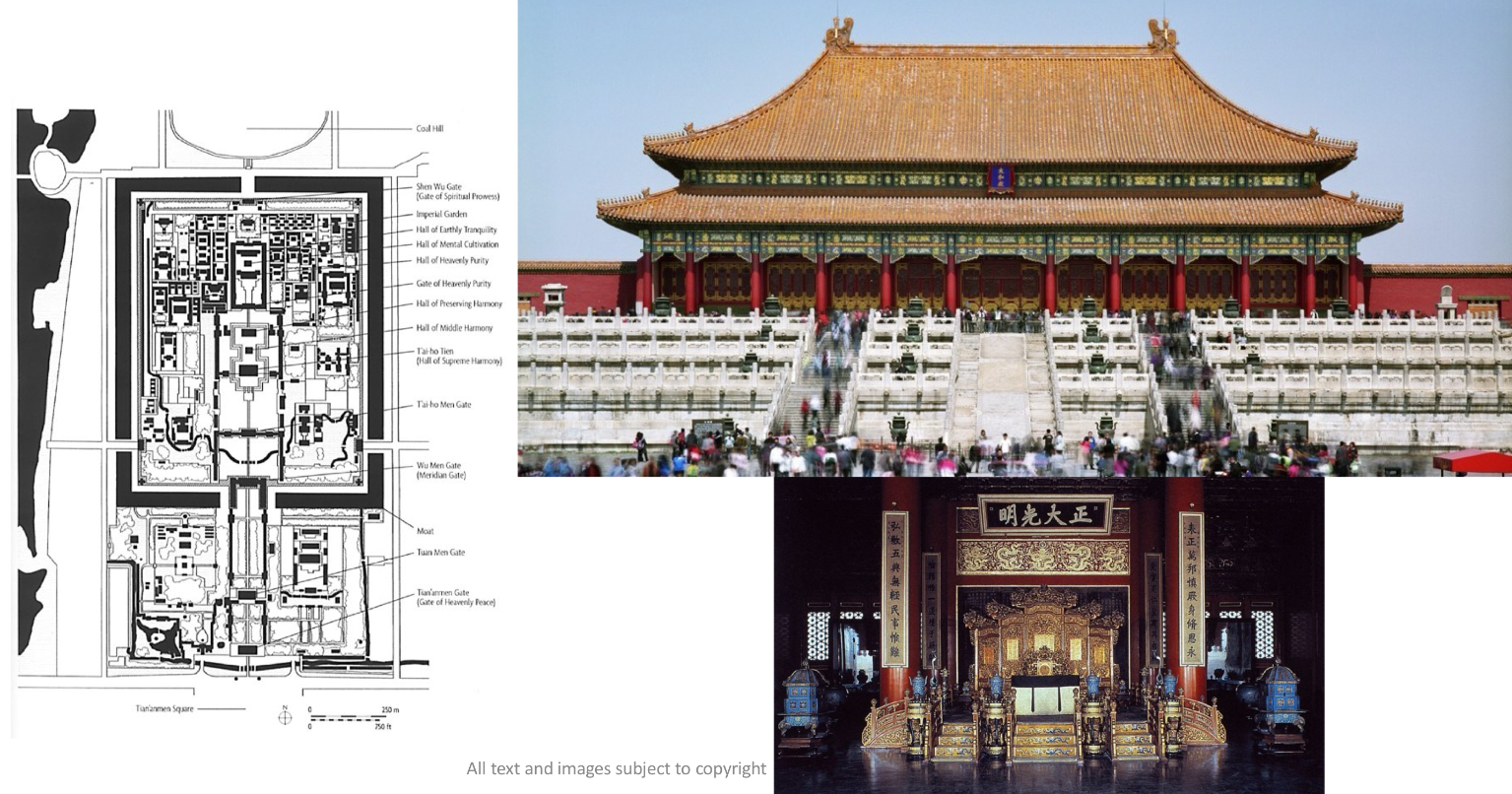
How does its design reflect axial planning and spatial sequencing?
Confucian principles (respect for authority)
sequence of courtyards + halls = emphasizes privacy
S→N axis = most imp hall @ N end (Hall of Supreme Harmony)
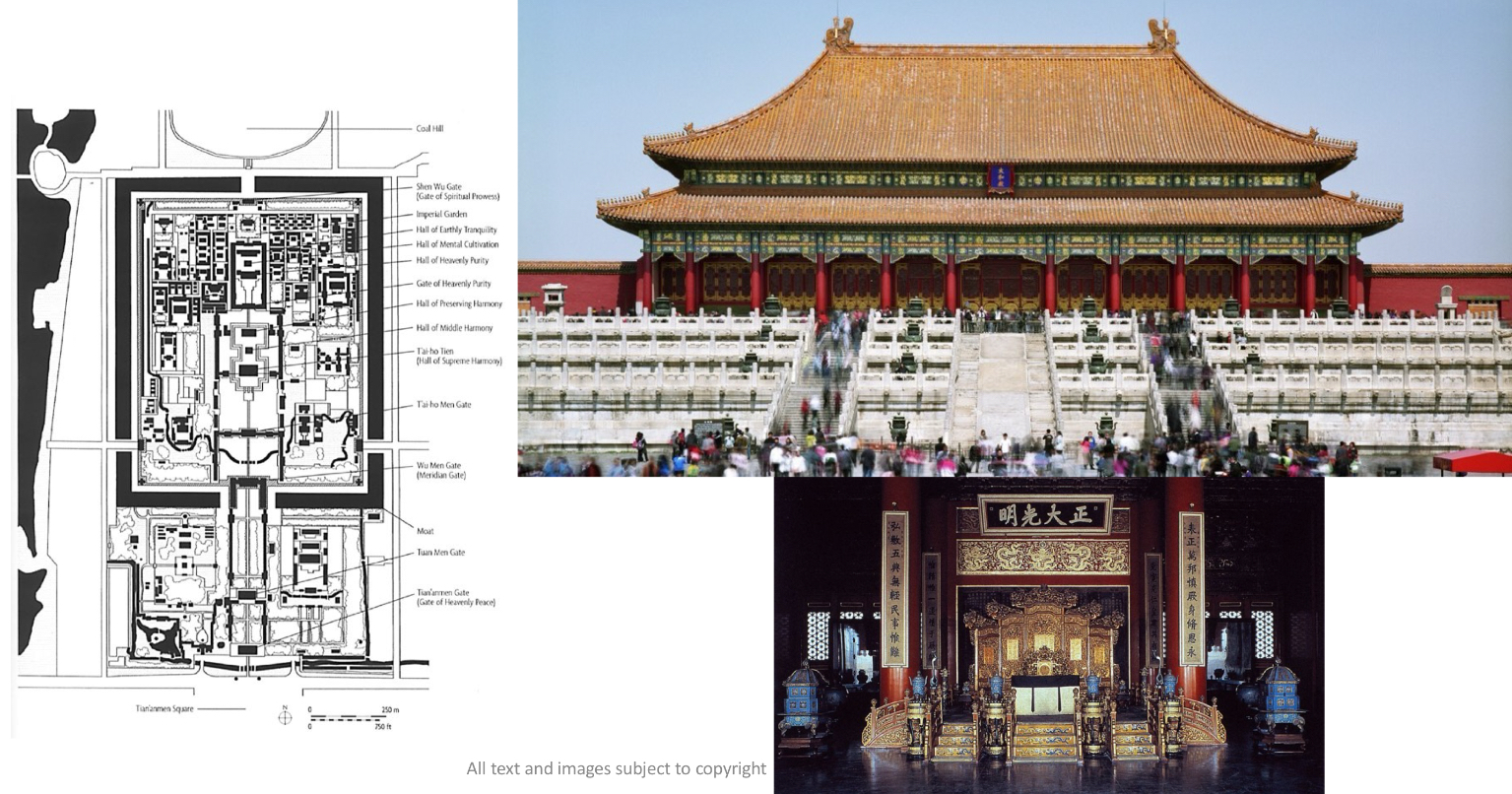
What are some of the buildings found inside the Forbidden City and what purposes do they serve?
Administrative
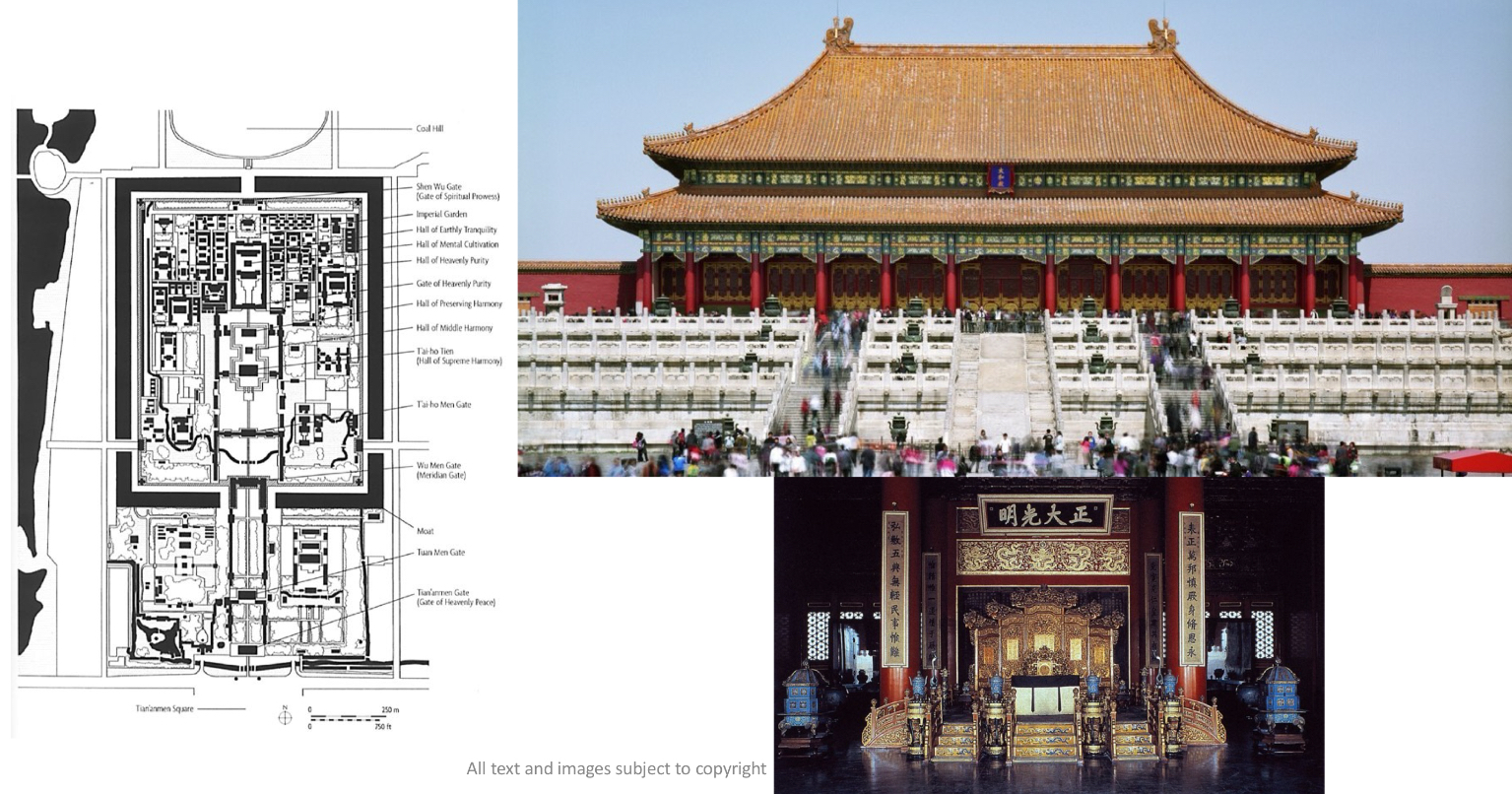
Hall of Supreme Harmony (throne room w “dragon throne”, state receptions)
Middle Harmony
Preserving Harmony (state banqueting room)
Residential
hall of heavenly purity
earthly tranquility (N end of axis)
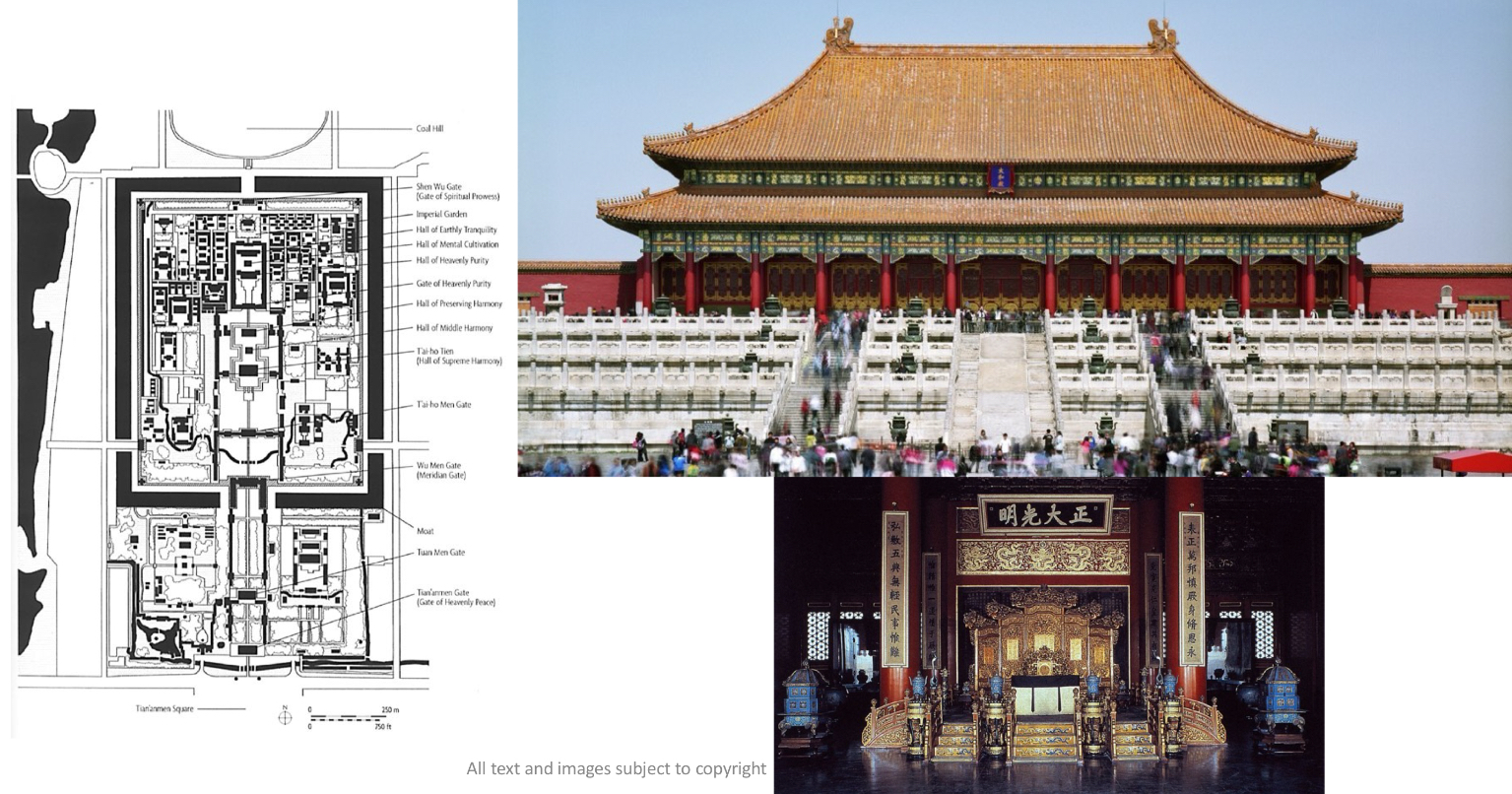
What was the Hall of Supreme Harmony used for and how does its architectural design reflect its function and importance?
for state receptions
“dragon throne” of emperor in center on elevated golden platform
higher, taller, bigger, best decoration = most important room
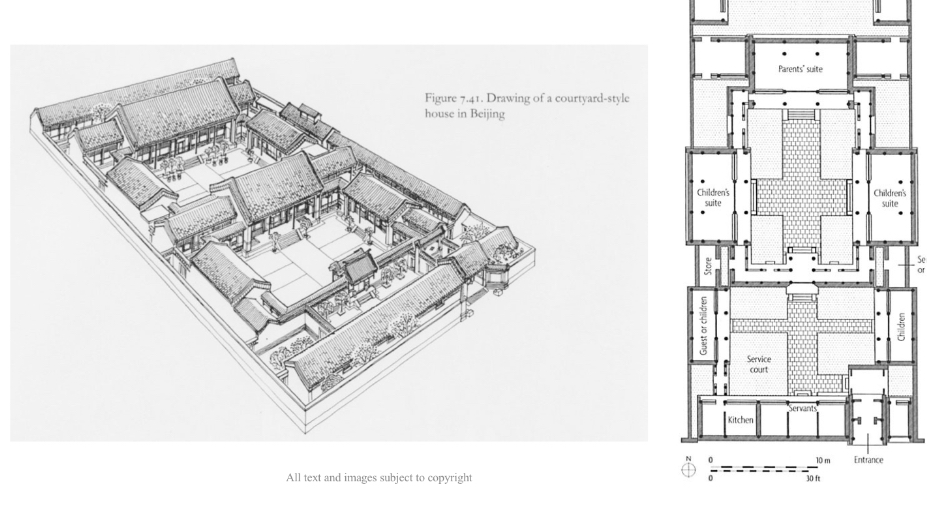
name/location
Traditional Courtyard House, Beijing, China, 15th cen
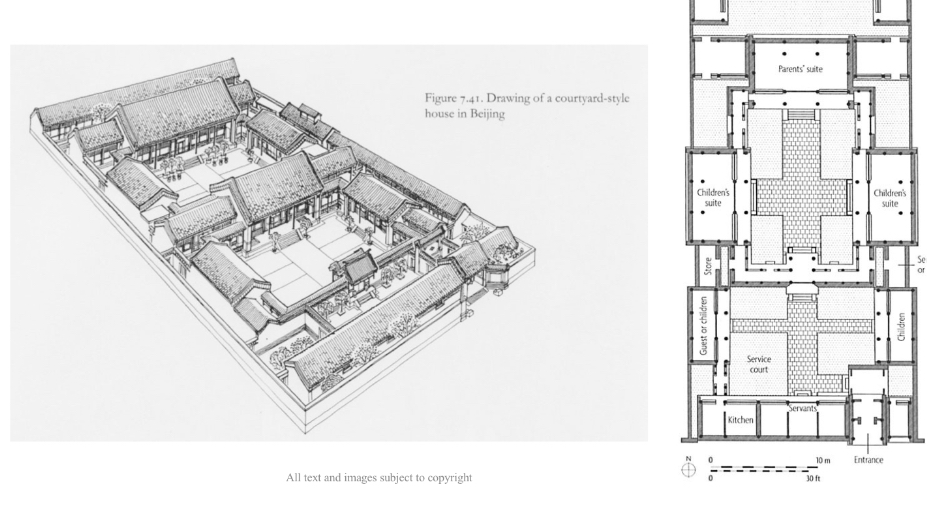
date + Culture
15th cen, Confucian principles (respect authority)
Traditional Courtyard House, Beijing, China
architect + patron
-
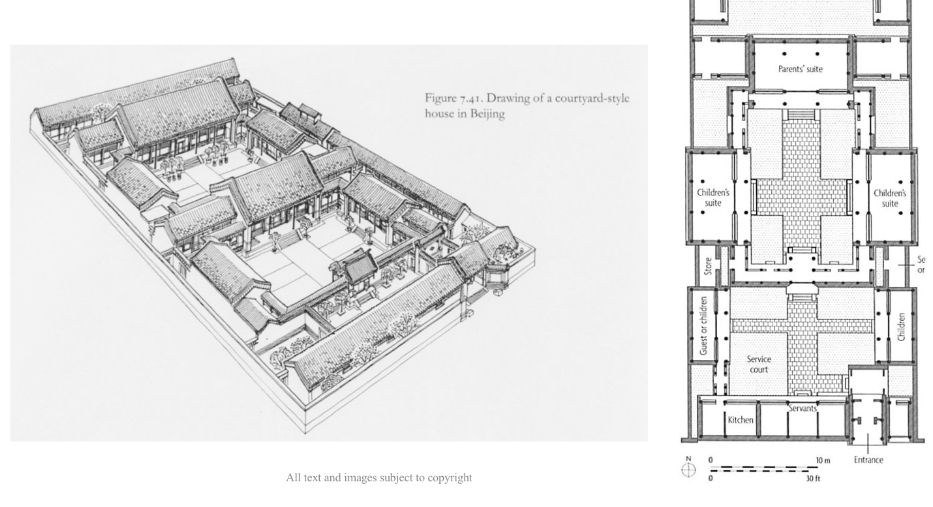
techniques/materials/style
confucian
![<p>[beijing courtyard house] What is significant about the orientation of the building? What is the basic module used in its design.</p><p></p>](https://assets.knowt.com/user-attachments/36d1af2d-4f22-4245-8bb1-c09136fd37be.jpg)
[beijing courtyard house] What is significant about the orientation of the building? What is the basic module used in its design.
most important building @ N end of axis (S(least imp)→N (most imp))
basic module: jian (rectangular room for expansion/repetition)
![<p>[ beijing courtyard house] How does the house design reflect family structure in 15th century Beijing? Who would have lived here?</p>](https://assets.knowt.com/user-attachments/06207734-15a5-49b3-b90b-1f01261d9e95.jpg)
[ beijing courtyard house] How does the house design reflect family structure in 15th century Beijing? Who would have lived here?
wealthy Chinese fam
oldest member lives in principal room/parent’s suite (respect ancestors)
![<p>[beijing courtyard hosue] What does the design have in common with the sequence of halls and open spaces in the Forbidden City?</p>](https://assets.knowt.com/user-attachments/a0248193-6d94-430a-a2dd-e580378ac610.jpg)
[beijing courtyard hosue] What does the design have in common with the sequence of halls and open spaces in the Forbidden City?
emphasize privacy
Confucian principles (respect authority)
S→N (least imp→ most imp)
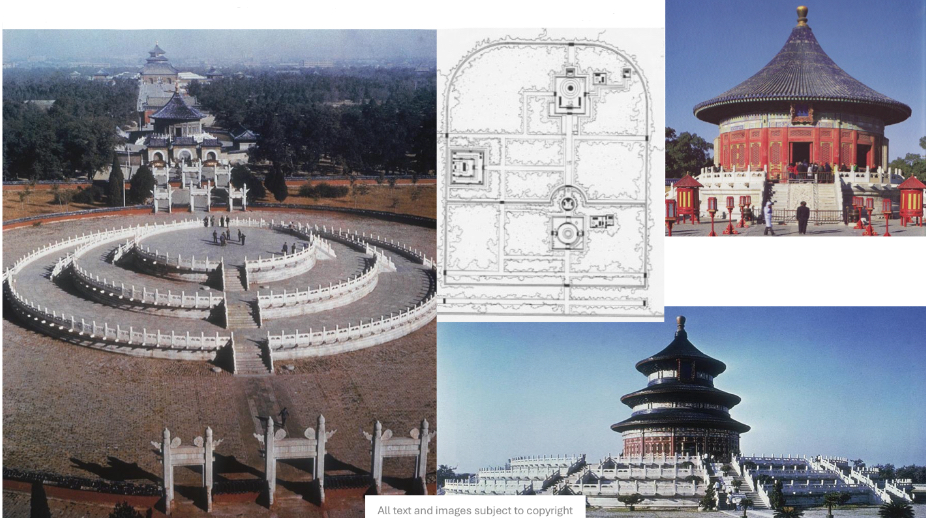
name/location
Temple of Heaven, Beijing, China, 1420 (restored 1530 & 1757)
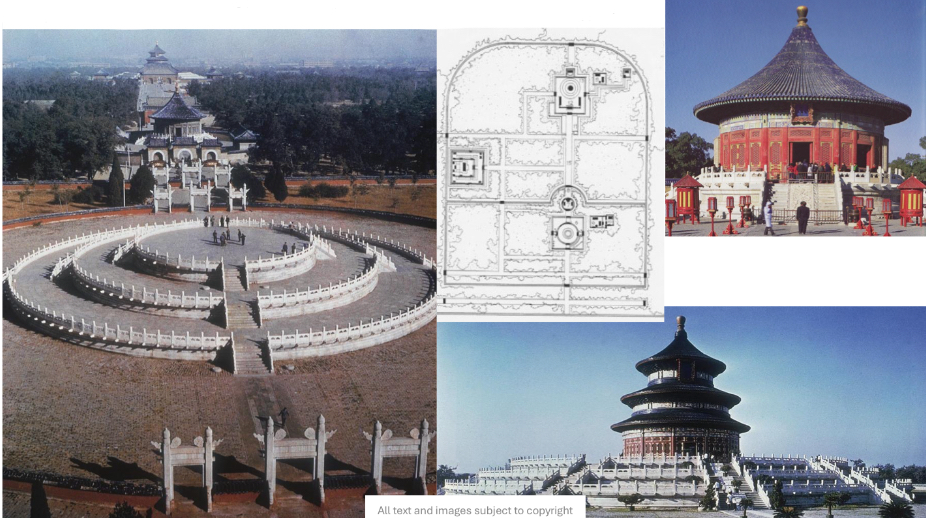
date + culture
1420 (restored 1530 & 1757)
Chinese religious architecture
(Temple of Heaven, Beijing, China)
architect/patron
-
technique/materials
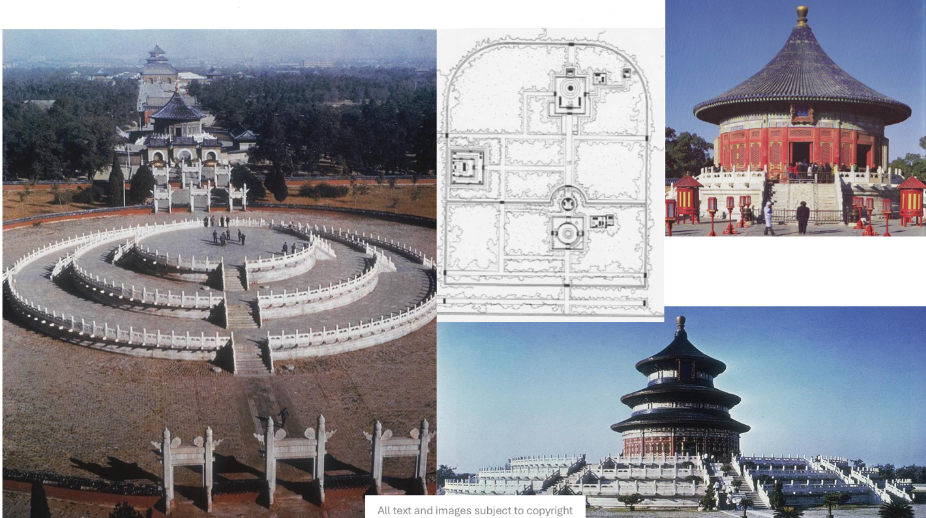
imperial altars built outside Imperial City
Altar of Heaven (SE)
Altar of Agriculture (W)
Altars of Earth, Sun, Moon & Silkworms (N, NE, NW)
What is the purpose of the Temple of Heaven? What activities would take place here and who would participate?
emperor carried out rituals for benefit of the country
winter solstice (burn incense, pray, offerings of jade & silk)
spring: prayers of wellbeing/prosperity of country
![<p>[temple of heaven] How does its design reflect axial planning and spatial sequencing?</p><p></p>](https://assets.knowt.com/user-attachments/63990596-fe50-43b6-be1f-6efe7eceee71.jpg)
[temple of heaven] How does its design reflect axial planning and spatial sequencing?
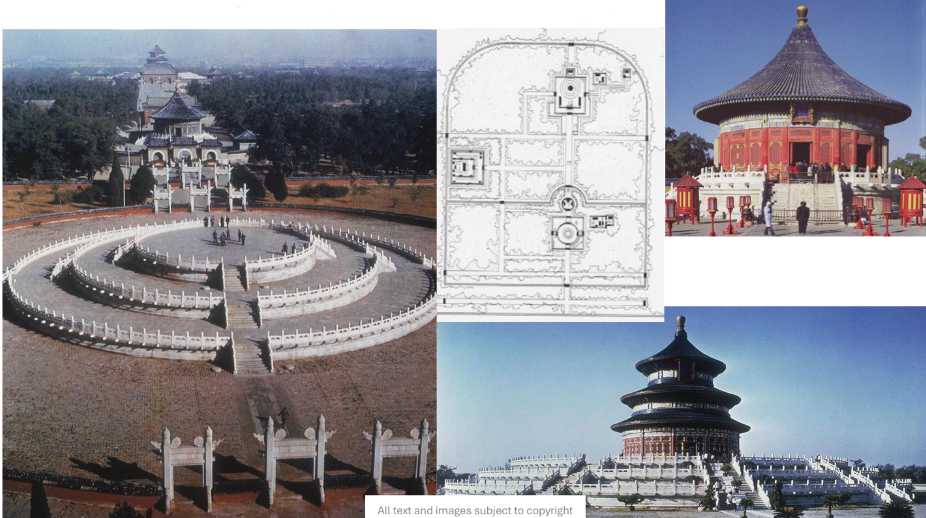
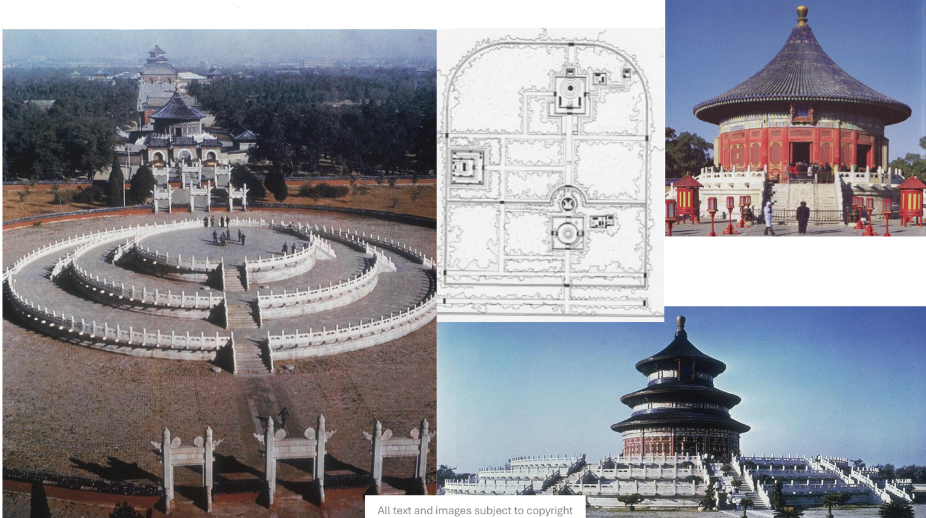
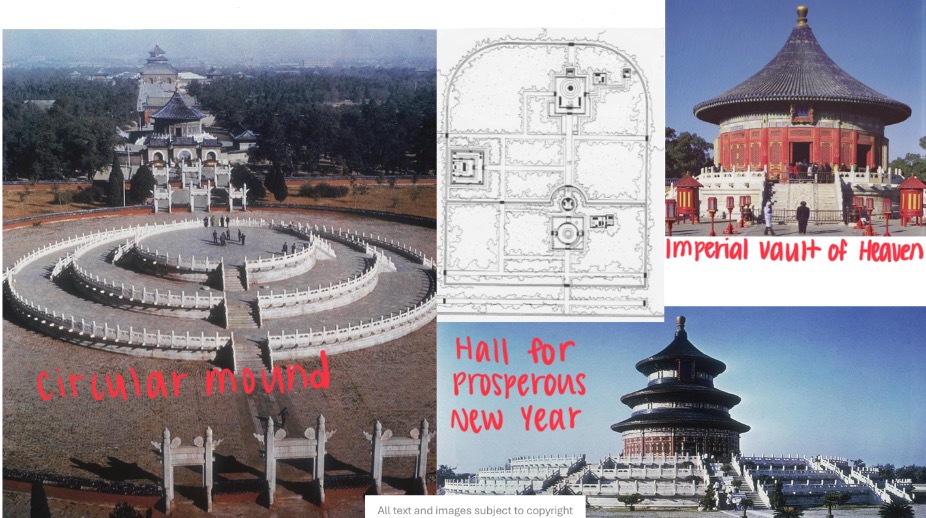
S→N axis (mound → vault of heaven → hall for prosperous yr)
Danbi Bridge (on axis) = elevated ritual procession path
![<p>[temple of heaven] What are the three main buildings found in the complex? What are the architectural, decorative, and</p><p>spatial characteristics that reveal their importance?</p>](https://assets.knowt.com/user-attachments/4eb960bf-45ec-4f81-9e9c-6110de6522ec.jpg)
[temple of heaven] What are the three main buildings found in the complex? What are the architectural, decorative, and
spatial characteristics that reveal their importance?
Circular Mound at south
white marble balustrades & stairs; 3×3=9 symbolizes heaven
Imperial Vault of Heaven
Hall for Prayer of a Prosperous Year
circular building=heaven, square wall=earth
conical roof eaves w dark blue tiles
dragon imagery = emperor
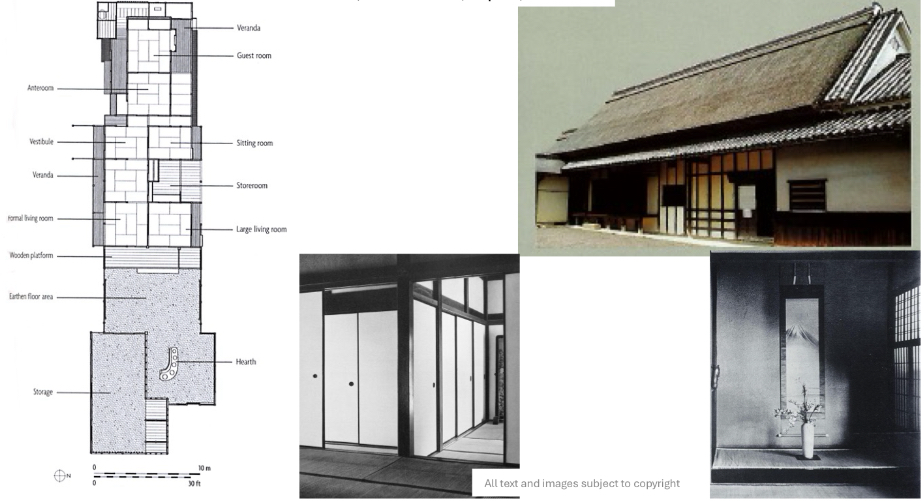
Name/location
Yoshimura house, Osaka, Japan, 1620
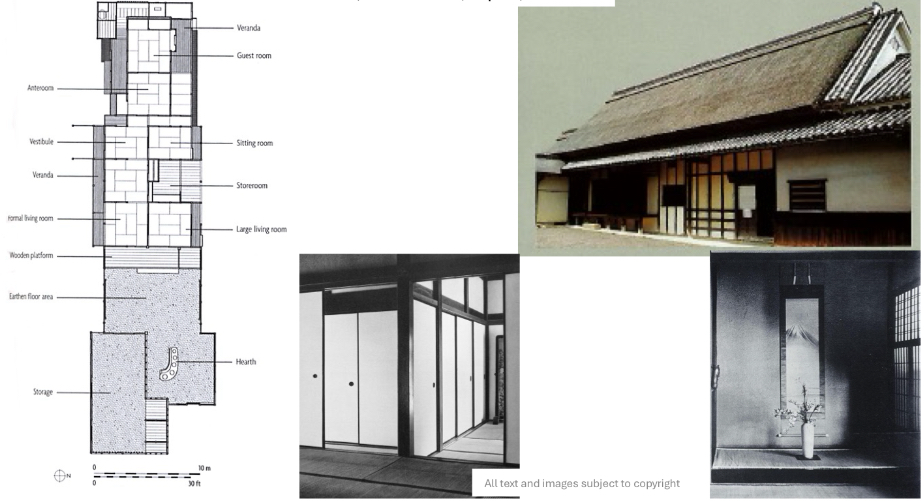
date/culture
1620, Japanese
Yoshimura house, Osaka, japan
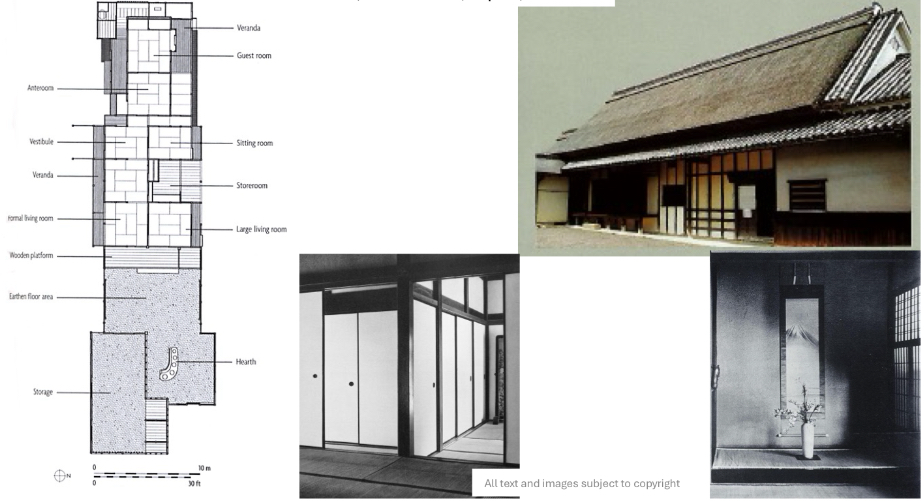
architect/patron
architect: -
patron: Yoshimura family (general supervisors, hosted gov officials)
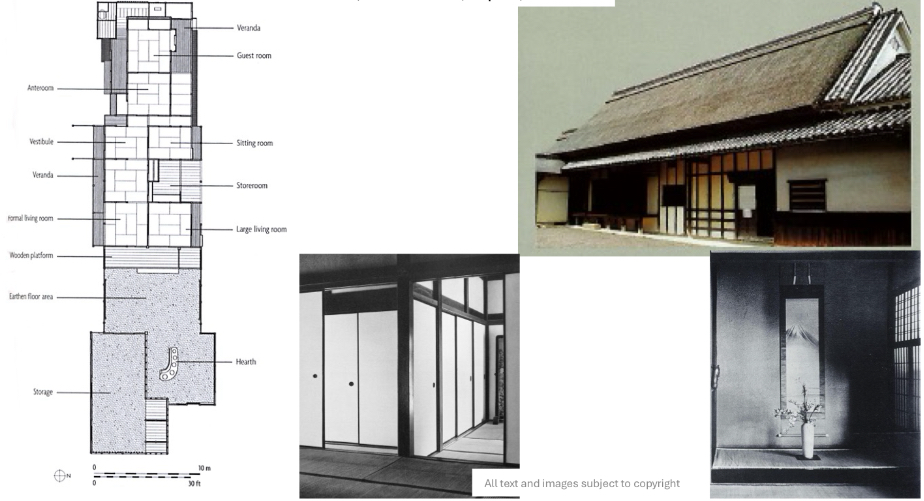
technique/materials
built of wood w steep thatched roofs (sustainable)
plan has 2 parts
area w earth floor (doma) & hearth (irori)
living quarters w raised wood floors (toko), timber framing & sliding walls of paper/plaster
design based on tatami module (rice straw mat)
sliding doors for flexible interior spaces
exterior: opaque paper instead of glass, tatami on floor
![<p>[yoshimura] minka, What are some of the materials and techniques used to build a minka?</p>](https://assets.knowt.com/user-attachments/b6cfcddf-716e-4a9d-be3a-678174ece431.jpg)
[yoshimura] minka, What are some of the materials and techniques used to build a minka?
folk house
wood w steep thatched house, based on tatami rice mat module
![<p>[yoshimura] tatami</p>](https://assets.knowt.com/user-attachments/723caec1-2423-4635-932a-f99127b41ac9.jpg)
[yoshimura] tatami
rice straw mat
BASIC MODULE IN DESIGN
![<p>[yoshimura] fusuma</p>](https://assets.knowt.com/user-attachments/cfb85aad-c801-44b0-945d-0f7308f92a7c.jpg)
[yoshimura] fusuma
sliding screens
![<p>[yoshimura] shoji</p>](https://assets.knowt.com/user-attachments/4996bbca-7340-4f8a-9a0f-6c40649daac9.jpg)
[yoshimura] shoji
screens w paper panels
![<p>[yoshimura] tokonoma</p>](https://assets.knowt.com/user-attachments/e3cb5e9a-5e7e-419f-8cc9-08faaef8dd7b.jpg)
[yoshimura] tokonoma
alcove for displaying art
(@ north end) interior decoration reserved for upper classes
name/loc
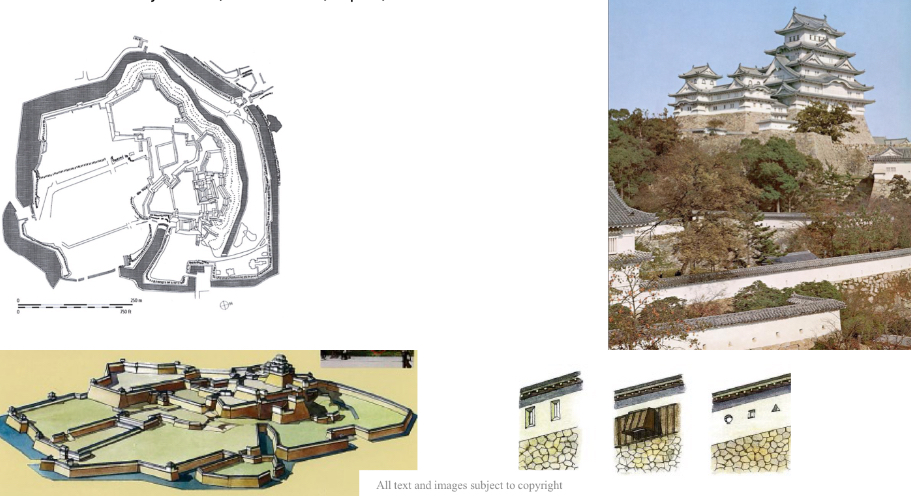
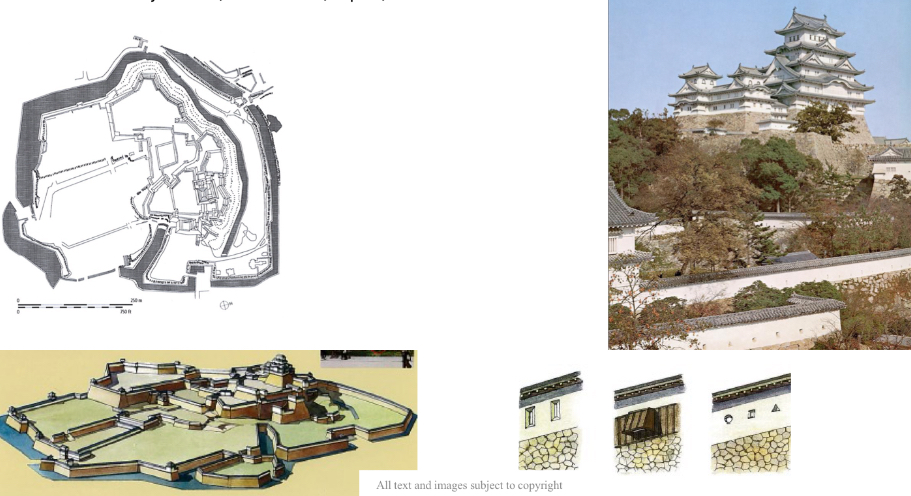
Himeji Castle (Egret’s Castle), (hyogo prefecture) near Osaka, Japan, 1609
date/culture
1609 Japanese
Himeji Castle (Egret’s), Himeji, near Osaka, Japan
architect/patron
patron: local warlords during feudal period
1581: remodeled into castle by General Toyotomi Hideyashi for military base
1601-1609: remodeled by Ikeda Terumasa
building function + style
symbol of military power/pol authority
donjon/tenshu (main tower): residential
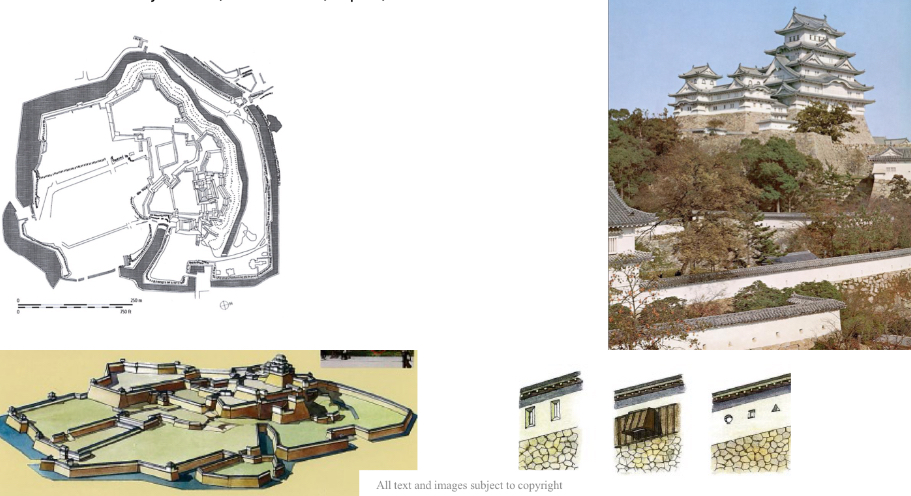
outer ring: townsppl + foot soldiers; 2nd ring: samurai & court retainers; inner castle: admin, shogun & fam
1333 control land route btwn Kyoto & Honshu → 1581 military base → 1601-1609 remodeled
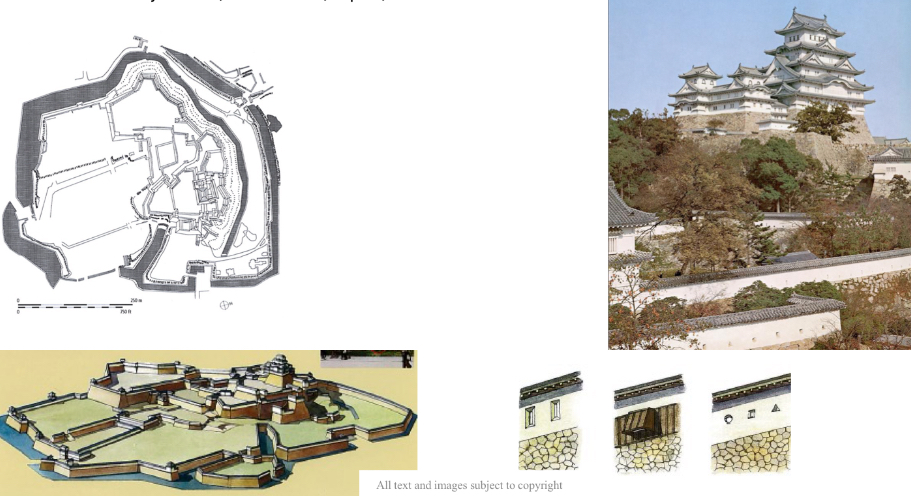
techniques/materials
Donjon/tenshu (main tower) of wood w plaster
7 stories
mortise & tenon joins
tile roof w gables
stone foundations
![<p>[himeji] Who built the great castles in Japan?</p>](https://assets.knowt.com/user-attachments/0582f5c7-f6ab-48a6-bd9b-9798e5b1afcd.jpg)
[himeji] Who built the great castles in Japan?
feudal warlords
![<p>[himeji castle] What are some of the defensive features see here? How does this compare to what is found in medieval European castles?</p>](https://assets.knowt.com/user-attachments/842586ed-b116-4469-b1aa-fa6e31ece137.jpg)
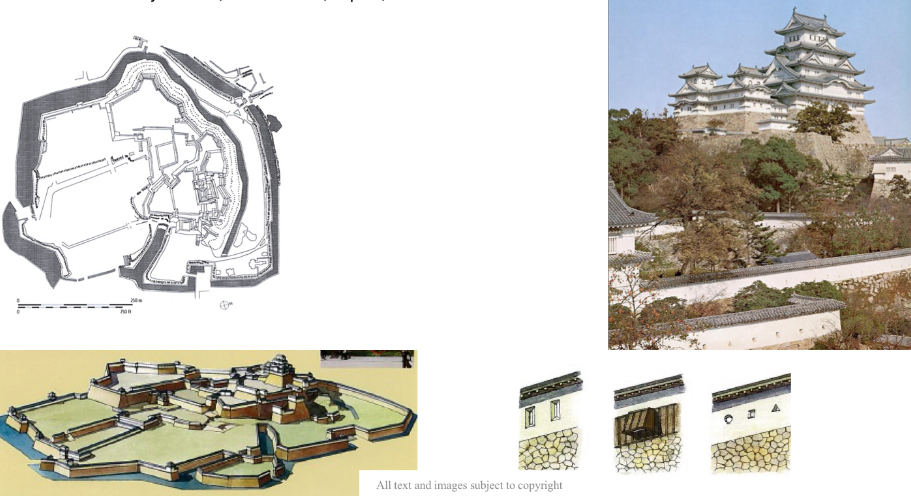
[himeji castle] What are some of the defensive features see here? How does this compare to what is found in medieval European castles?
defensive design to protect vs new weapons (firearms)
Similar to Euro
strategic location
stone foundation
fortification walls + moat
walls w arrow slits, loopholes for shooting, protected gateways
Different from Euro
upper part of Himeji made of wood w fire-resistant sand/plaster coating
maze-like internal passages
gardens to confuse intruders
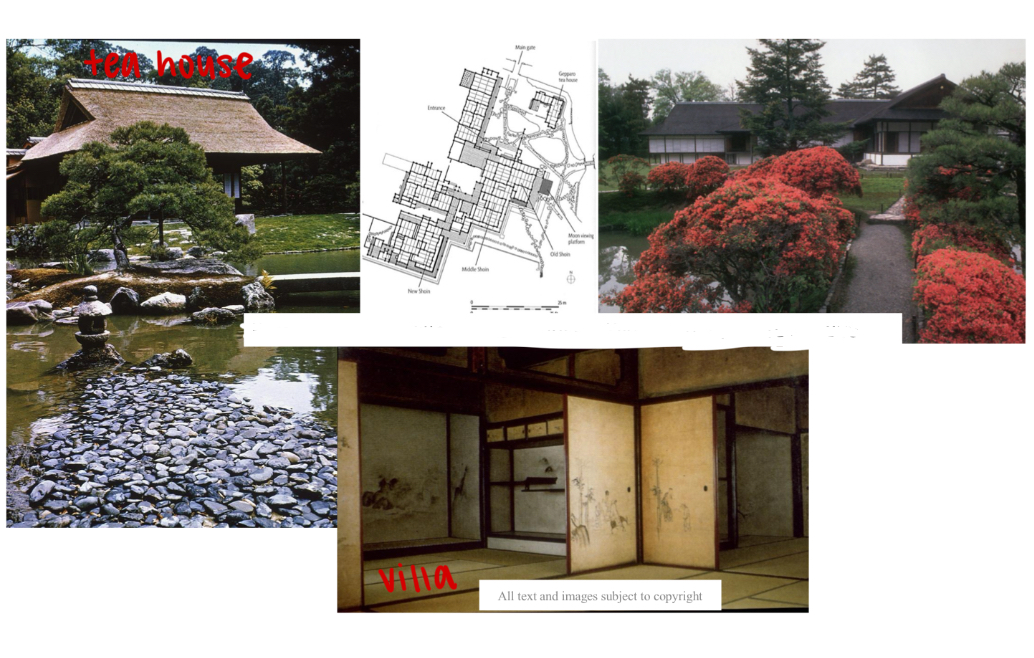
name/location
Katsura Imperial Villa & tea Houses, kyoto, japan, 1616-1660
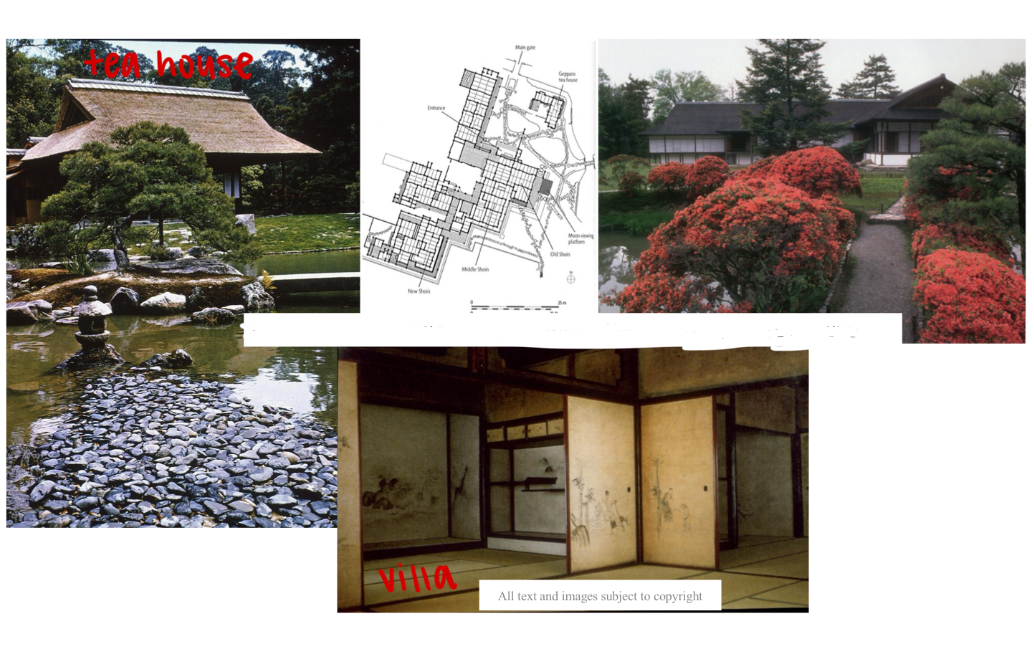
date/culture
1616-1660 Japanese aristocratic
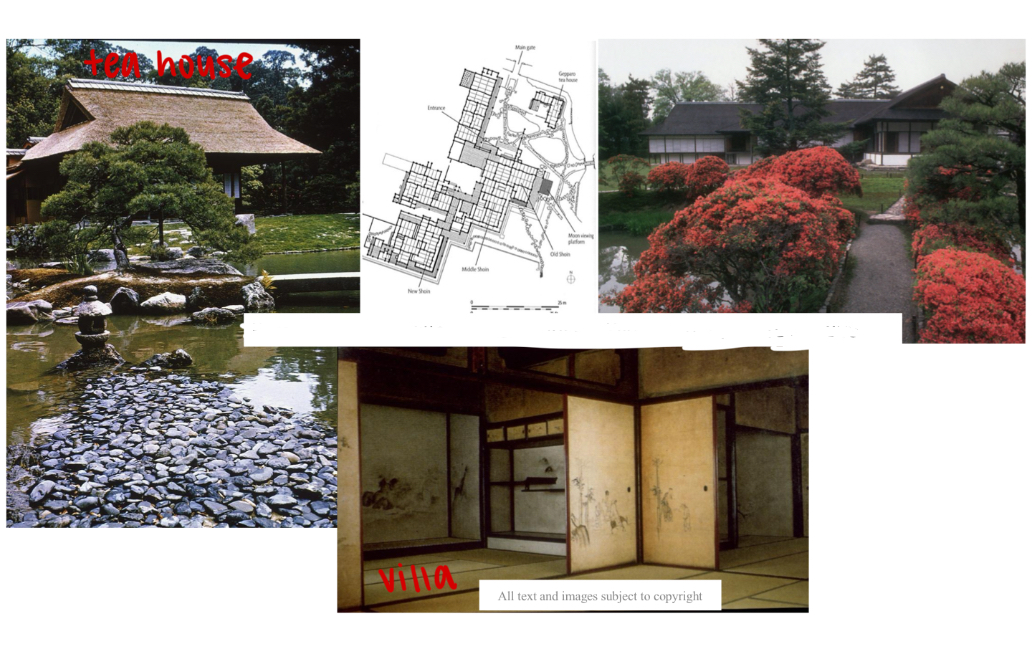
architect/patron
patron: Prince Toshihito & Toshitada
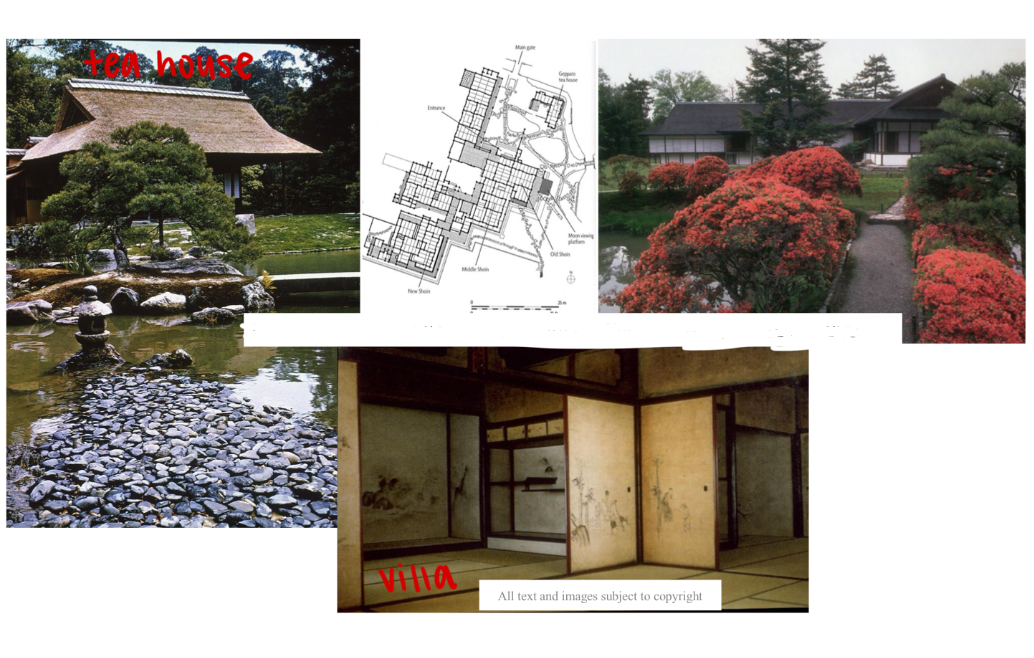
building purpose/style
retreat for imperial family
Shoin style (rustic naturalness)
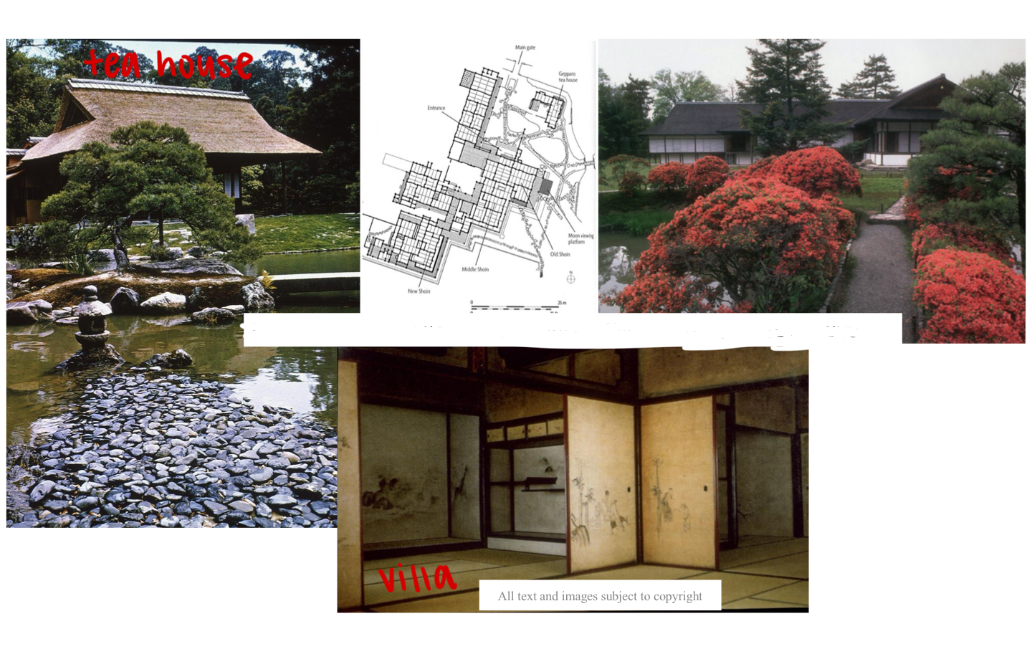
technique/materials
Japanese stroll garden (references immediate surroundings = building blends into landscape)
main house is open timber frame
4 garden pavilions
open air shelter
buddhist chapel
irregularly shaped pond
Moon Viewing Platform: prince & guests write poetry while watching moon’s reflection in pond (seen from within villa)
![<p>[katsura villa + tea house] shoin style</p>](https://assets.knowt.com/user-attachments/954e7d2f-223d-402a-8e1f-9adb8e6040e6.jpg)
[katsura villa + tea house] shoin style
library/study style
rustic w decorated interior
wooden post-lintel, cypress shingled roof & overhanging eaves
influence of Zen buddhism
![<p>[katsura villa + tea house] tea ceremony</p>](https://assets.knowt.com/user-attachments/e8dcbe41-01b5-4ef5-b001-33f59fd67831.jpg)
[katsura villa + tea house] tea ceremony
combines spiritual + natural
symbolizes detached perfection in Zen Buddhist tradition
![<p>[katsura villa + tea house] Who built this complex and what is its purpose?</p>](https://assets.knowt.com/user-attachments/7930074a-ae67-4ae7-8cb2-d43db2643479.jpg)
[katsura villa + tea house] Who built this complex and what is its purpose?
Prince Toshihito & Toshitada
private retreat for hosting tea ceremonies, enjoying art, moon viewing + writing poetry
![<p>[katsura] How does the design of the Katsura villa exemplify the Shoin style of interior (image at bottom center)?</p><p>What are three important characteristics?</p>](https://assets.knowt.com/user-attachments/aa53e1bc-5ec6-4eeb-a21b-d7ce441d715b.jpg)
[katsura] How does the design of the Katsura villa exemplify the Shoin style of interior (image at bottom center)?
What are three important characteristics?
elegant simplicity, rustic naturalness
sliding screens painted by leading artists
tatami mats on floor
tokonoma for art display
![<p>[katsura] What are the most important design characteristics of a Japanese tea house (image at left)? How does its design reflect the interest in nature, principles of Zen Buddhism, and the arts?</p><p></p>](https://assets.knowt.com/user-attachments/ffa35408-5de4-4e6e-b7c7-49f59580d774.jpg)
[katsura] What are the most important design characteristics of a Japanese tea house (image at left)? How does its design reflect the interest in nature, principles of Zen Buddhism, and the arts?
building + garden
isolated
approached by winding path
rustic materials (farmer’s cottage look)
law “crawl door”
alcove for tea prep
tokonoma art display
carefully planned views
“Bridge of Heaven” replicated Kyoto coastline
purpose of a mosque + architectural design requirements
place to gather for worship
characteristics:
house of congregational prayer
oriented towards mecca (qibla wall points to mecca)
place to wash before prayer
covered hall for prayer
minaret
tower for muezzin to call faithful to prayer 5 times a day
mihrab
niche indicating direction of Mecca
Qibla wall
facing mecca
minbar
pulpit for preacher
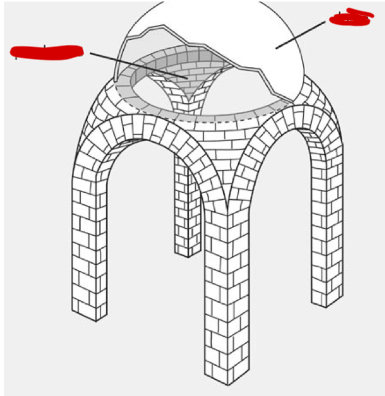
what is this
dome on pendentives (transfers weight of dome onto 4 supports)
kulliye
complex around a mosque for education, charitable activities, lodging (students + travelers), commercial, cemetery
caravanserai
hostel for travelers, their animals + goods
mausoleum
monumental tomb
name/loc/date
Mosque and kulliye of Sultan Suleyman, Istanbul, Turkey 1550-1557
design/techniques
central done, half dome, domes above each bay of courtyard
Who was the patron, and who was the architect of the mosque and külliye of Suleyman?
Architect: Koca Sinan (janissary, royal architect)
Patron: Sultan Suleyman I (patron of Muslim faith)
What kind of mosque is this, and what older building in the same city inspired the architect?
central plan mosque
inspired by Hagia Sophia (dome on pendentives)
Koca Sinan “I will make Mosque of Suleyman more perfect than Hagia Sophia”
What is the building seen at bottom left? What older Islamic building does its design reference and why is this significant?
Mausoleum of Suleyman
inspired by Dome of the Rock, Jerusalem
(octagonal plan w dome on drums)
What are some of the buildings found in an Ottoman külliye? What does this tell us about its function and
contribution to Ottoman society?

