AP Art History: South, East, and Southeast Asia
 Call Kai
 Learn
Learn Practice Test
 Spaced Repetition
 Match
Match Flashcards
 Knowt Play
1/20

There's no tags or description
Looks like no tags are added yet.
Name | Mastery | Learn | Test | Matching | Spaced | Call with Kai |
|---|
No analytics yet
Send a link to your students to track their progress
21 Terms
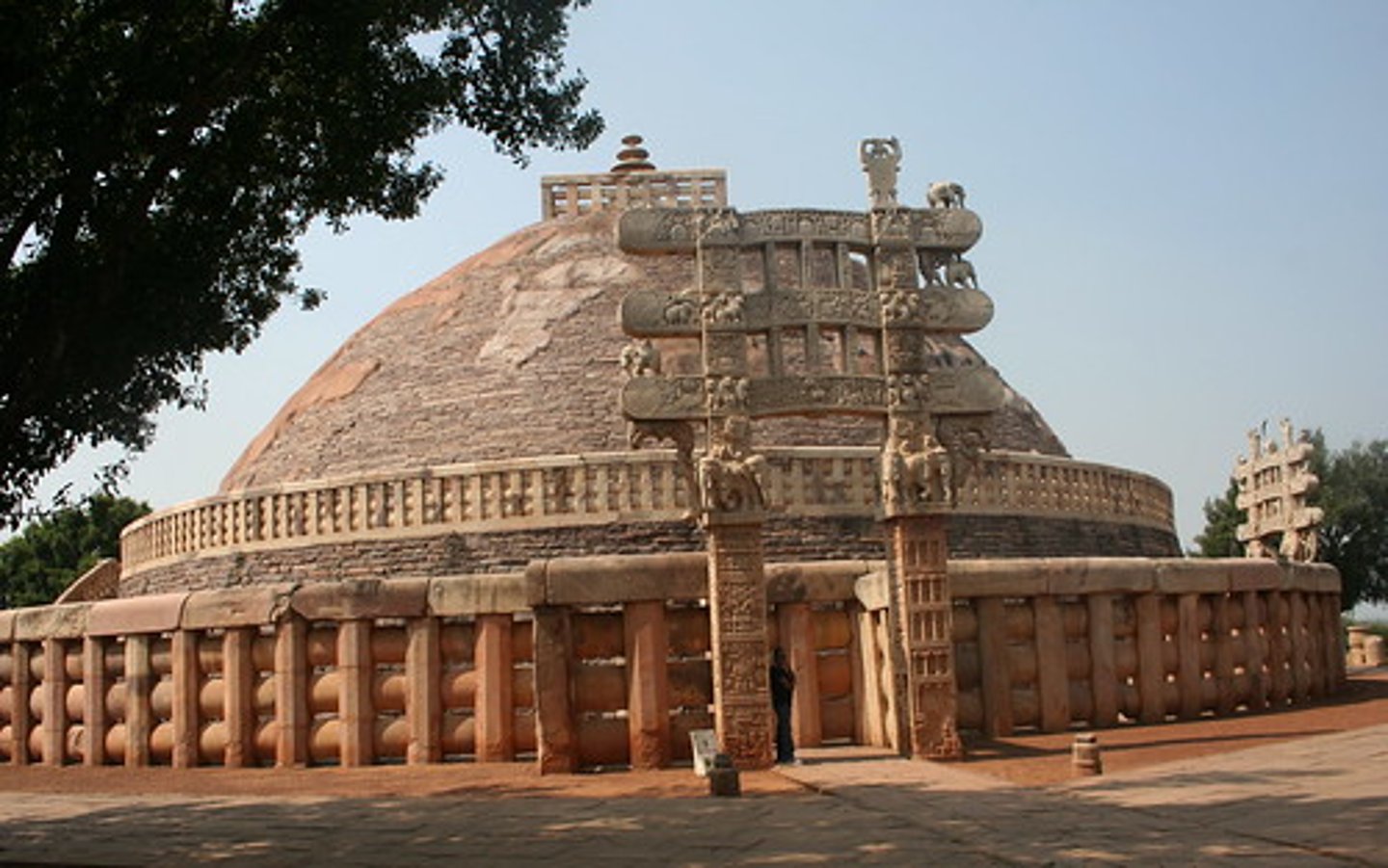
Great Stupa at Sanchi
Location: Madhya Pradesh, India
Type of Art: Buddist
People: Maurya, late Sunga Dynasty
Time Period: 300 B.C.E to 100 C.E
Material: Stone Masonry, Sandstone on dome
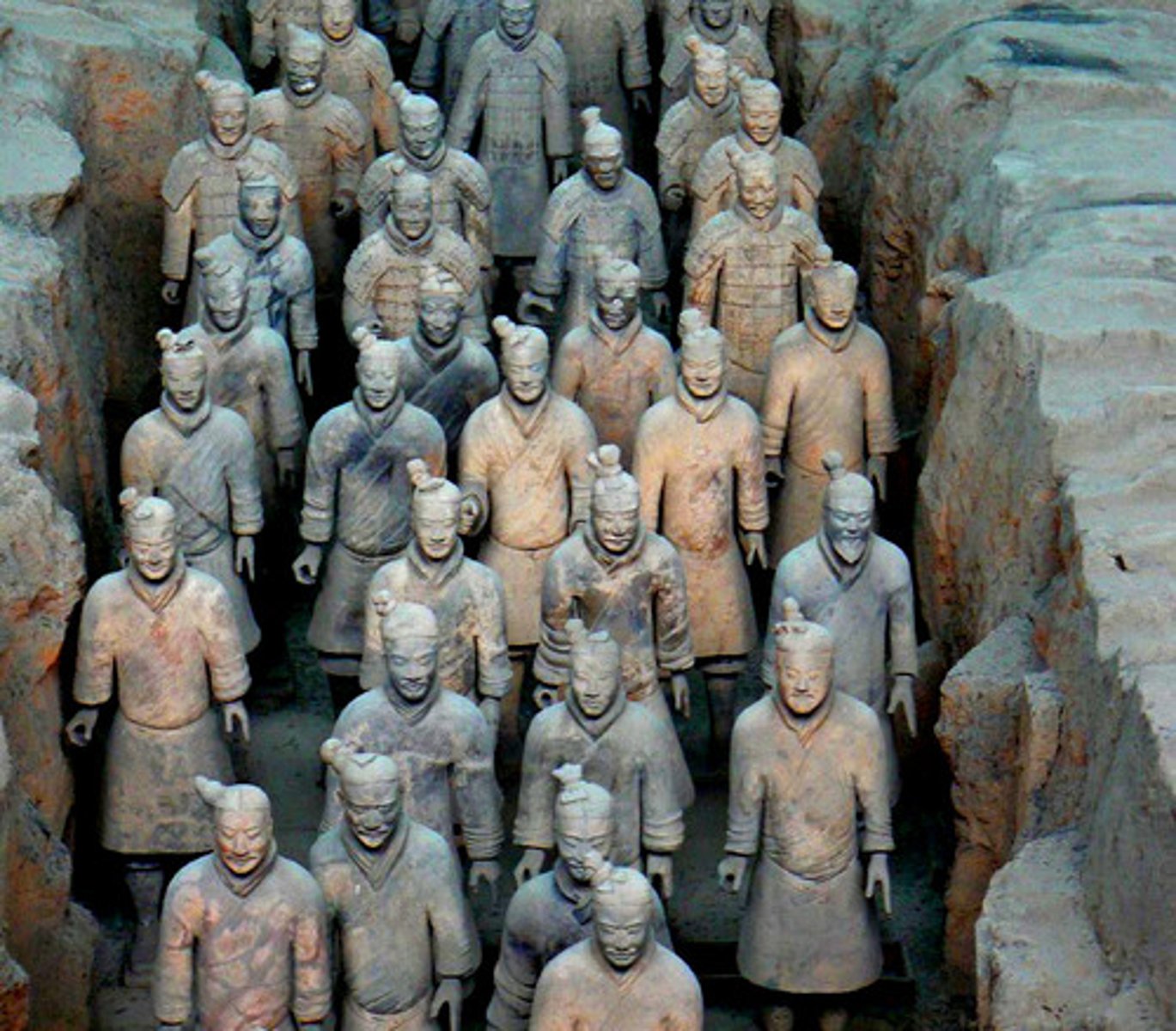
Terra Cotta Warriors
Location: China
People: Qin Dynasty
Time Period: 221-209 B.C.E
Material: Painted Terra Cotta
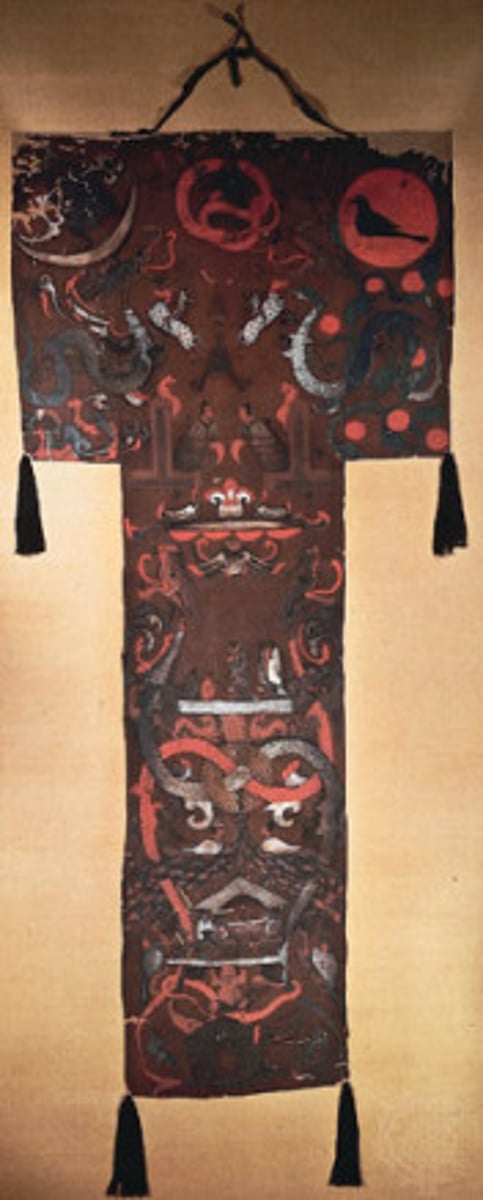
Funeral Banner of Lady Dai (Xin Zhui)
Location: China
People: Han Dynasty
Time Period: 180 B.C.E
Material: Painted Silk
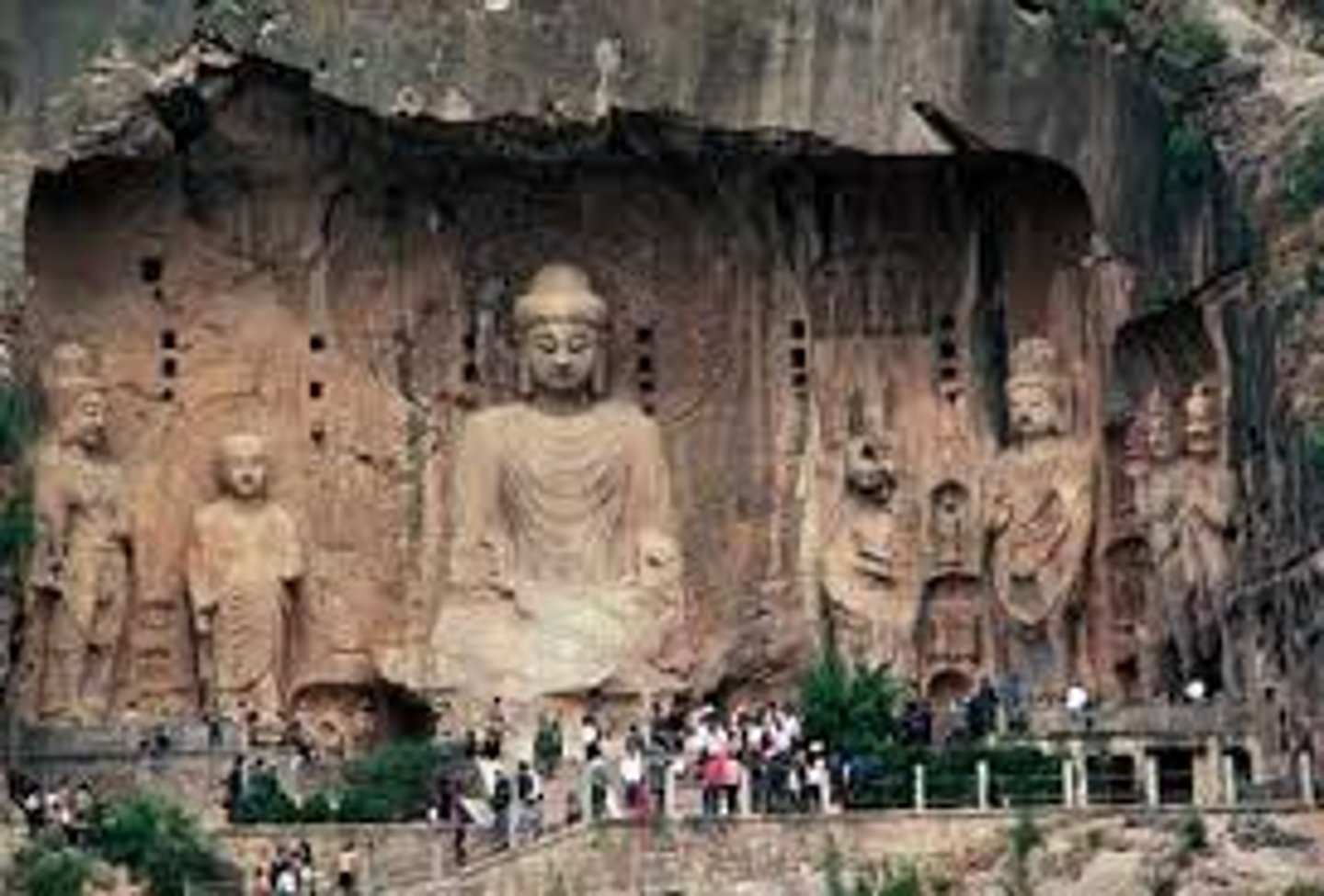
Longmen Caves
Location: Luoyang, China
People: Tang Dynasty
Time Period: 493- 1127 C.E
Material: Limestone
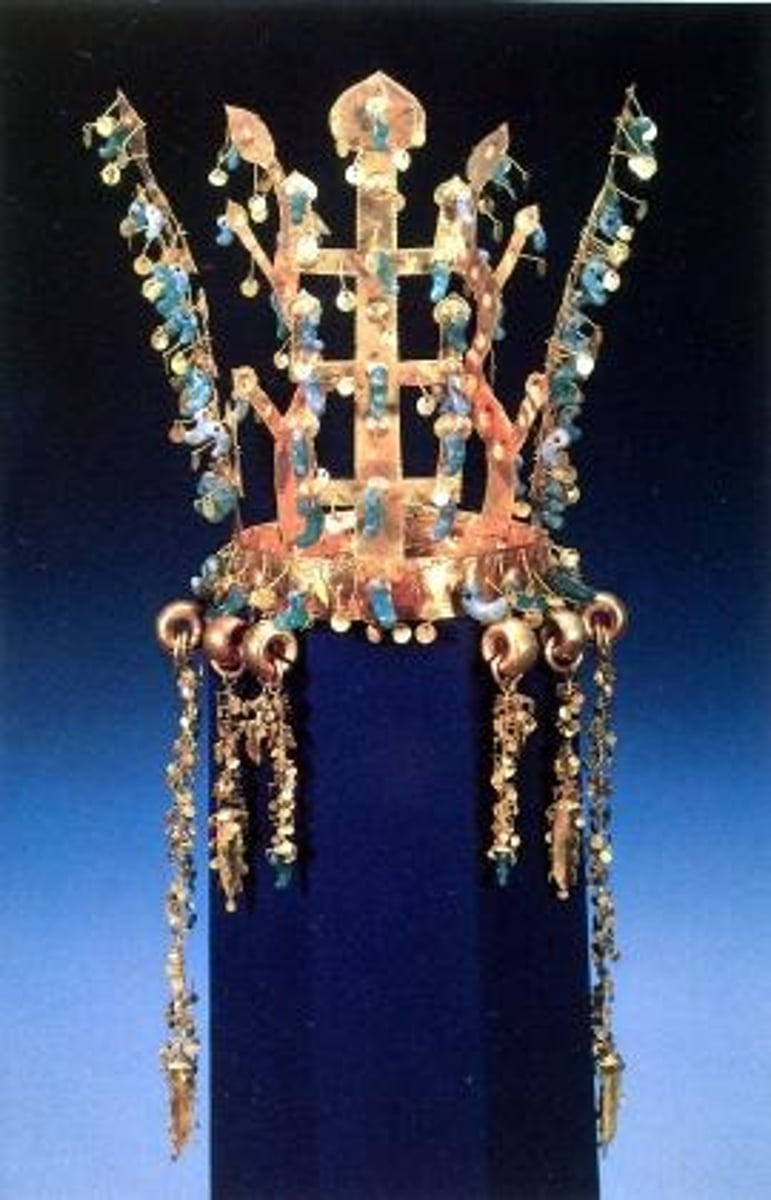
Gold and Jade Crown
Location: Three Kingdoms Period, Silla Kingdom, Korea
People: Unknown
Time Period: 5th to 6th century
Material: Metal Work
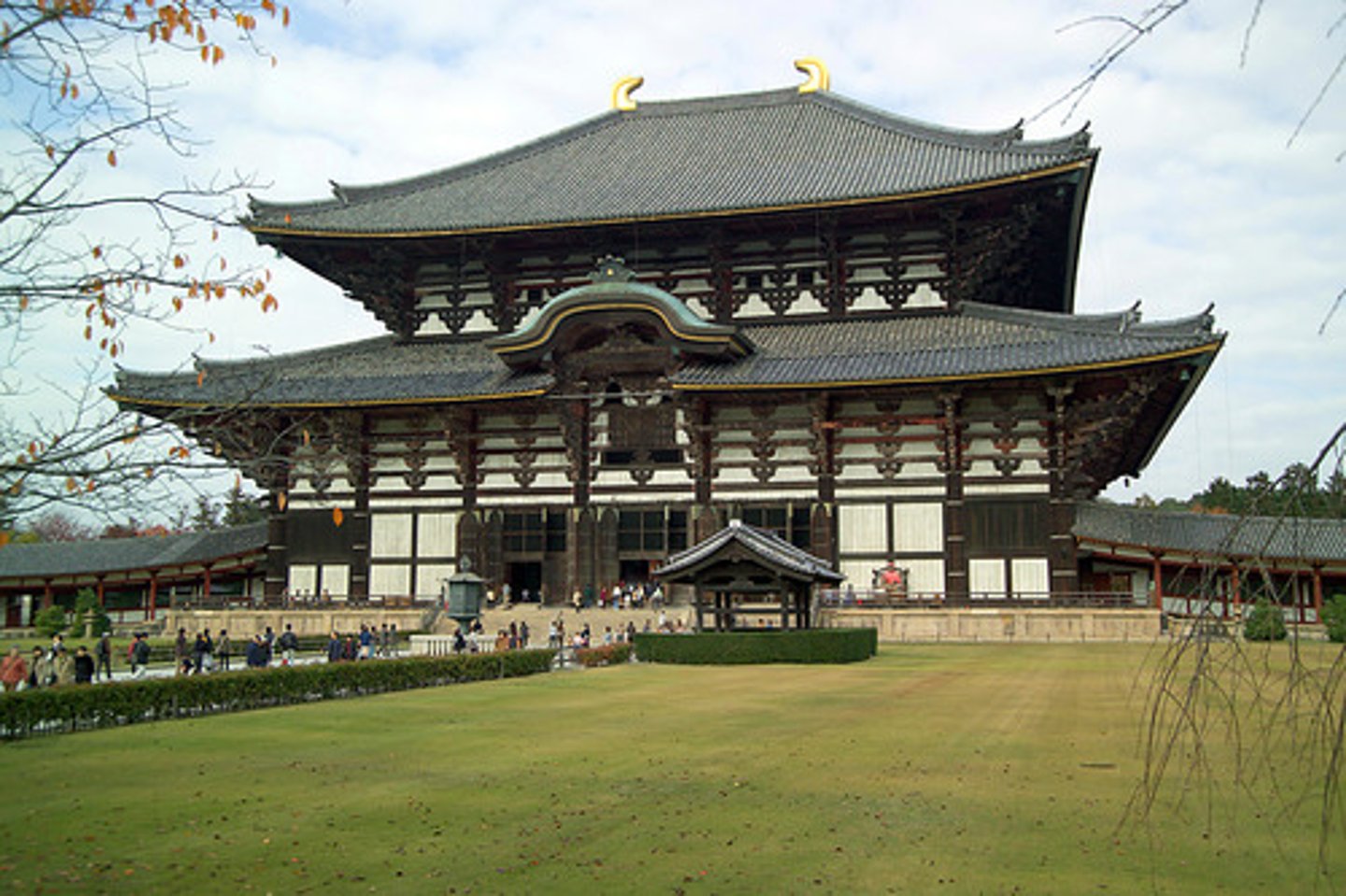
Todai-ji
Location: Nara, Japan
People: Various artists, including sculptors Unkei and Keikei, as well as the Kei school
Time Period: 743 C.E, rebuild in 1700 C.E
Material: Bronze and Wood
nio guardian statues (1200, painted wood) and todai ji gate (wood)
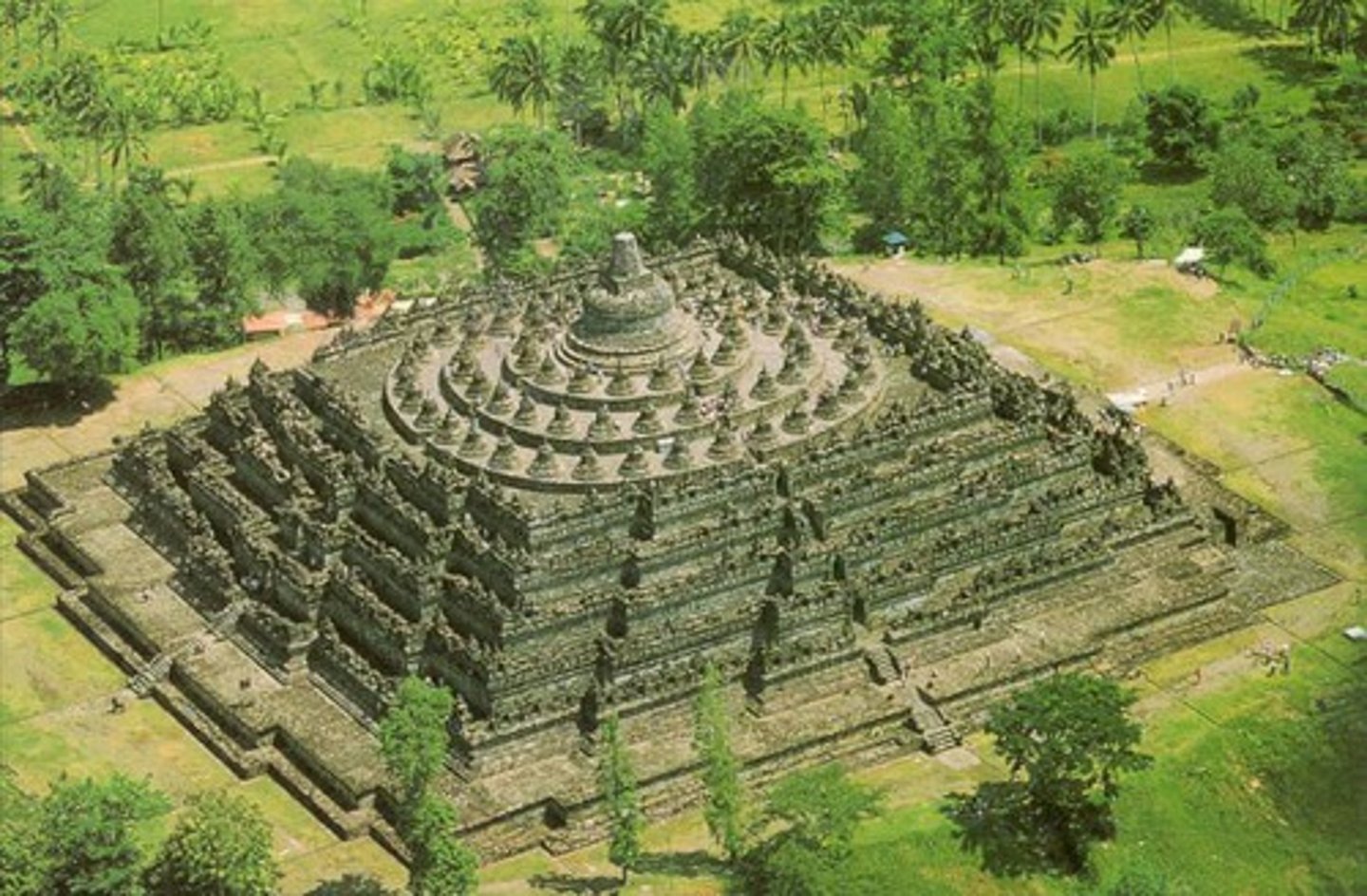
Borobudur Temple
Location: Central Java, Indonesia
People: Sailendra Dynasty
Time Period: 750- 842 C.E
Material: Volcanic-stone masonry
Facts: It was built to resemble a microcosm of the universe and its purpose was to provide a visual image of the teachings of the Buddha and show, in a practical manner, the steps through life that each person must follow to achieve enlightenment.
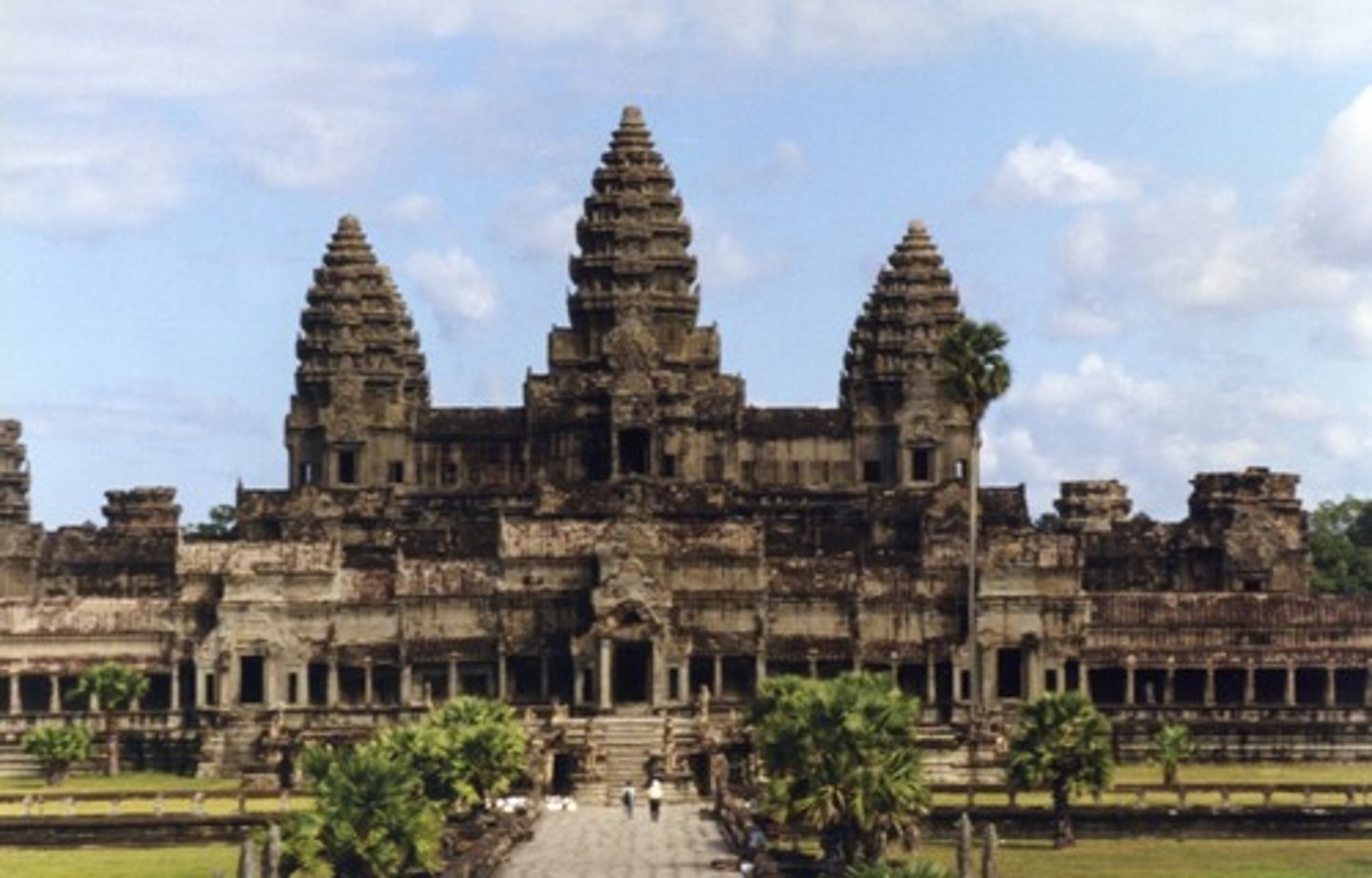
Angkor, the Temple of Angkor Wat, and the city of Angkor Thom
Location: Cambodia
Type of Art: Hindu
People: Angkor Dynasty
Time Period: 800- 1400 C.E
Material:Stone Masonry, sandstone
Facts: Angkor was a centre for administration and for the worship of a divine monarch. The city was planned and constructed on the basis of religious and political conceptions imported from India and adapted to local traditions. From the time of Yashovarman I, who named the city Yashodharapura, Angkor was conceived as a symbolic universe structured according to the model provided by traditional Indian (Hindu) cosmology. The city was oriented around a central mountain or pyramid temple (symbolic of Mount Meru, home of the gods) that was an architectural adaptation and completion of the one natural hill in the area, the Phnom Bakheng.
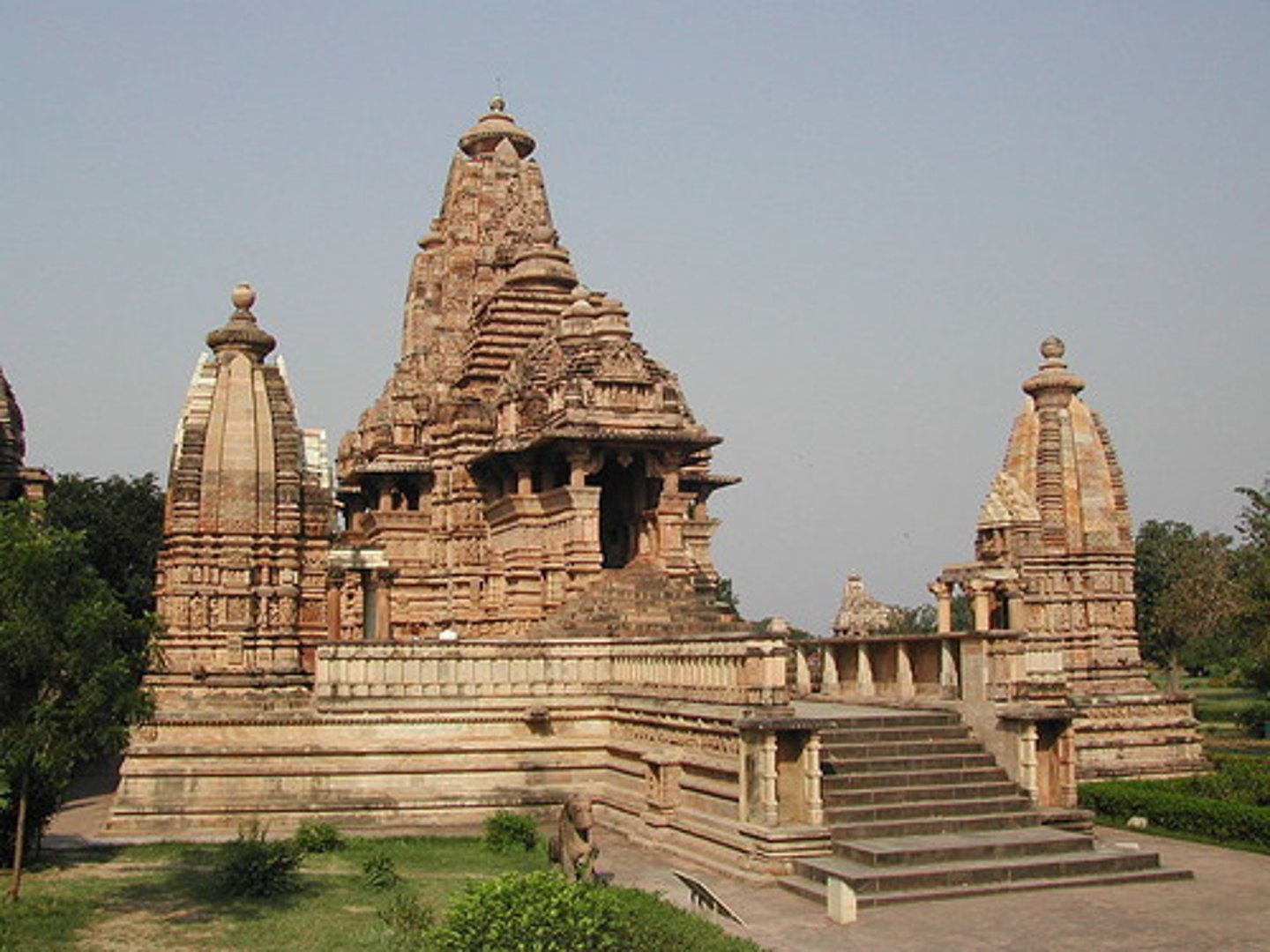
Lakshmana Temple
Location: Khajuraho, India
Type of Art: Hindu
People: Chandella Dynasty
Time Period: 930- 950 C.E
Material: Sandstone
Facts: Lakshmana temple, dedicated to Lord Vishnu, was built from 930-950 AD during the reign of King Yasovarman of the Chandella kingdom. It houses a sacred image of Vaikuntha-Vishnu brought from Tibet. Though the temple is one of the oldest in the Khajuraho fields, it is also one of the most exquistely decorated, covered almost completely with images of over 600 gods in the Hindu Pantheon. The main shrine of the temple, which faces east, is flanked by four freestanding subsidiary shrines at the corners of the temple platform.
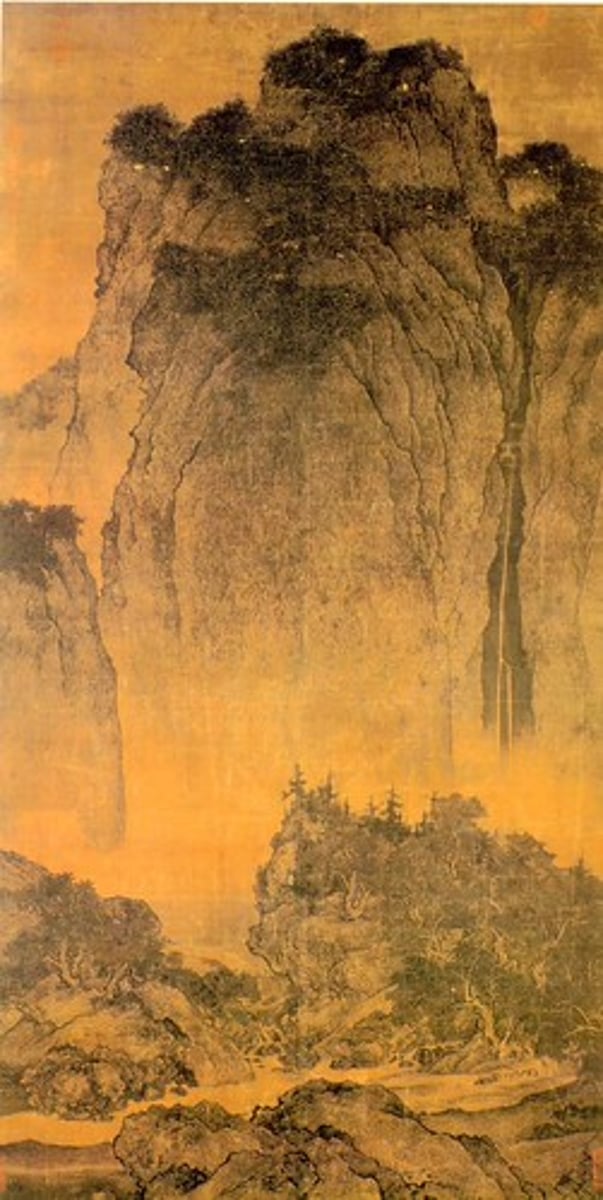
Travelers among Mountains and Streams
Location: China
People: Fan Kuan, Song Dynasty
Time Period: 1000 C.E
Material: Ink and colors on silk
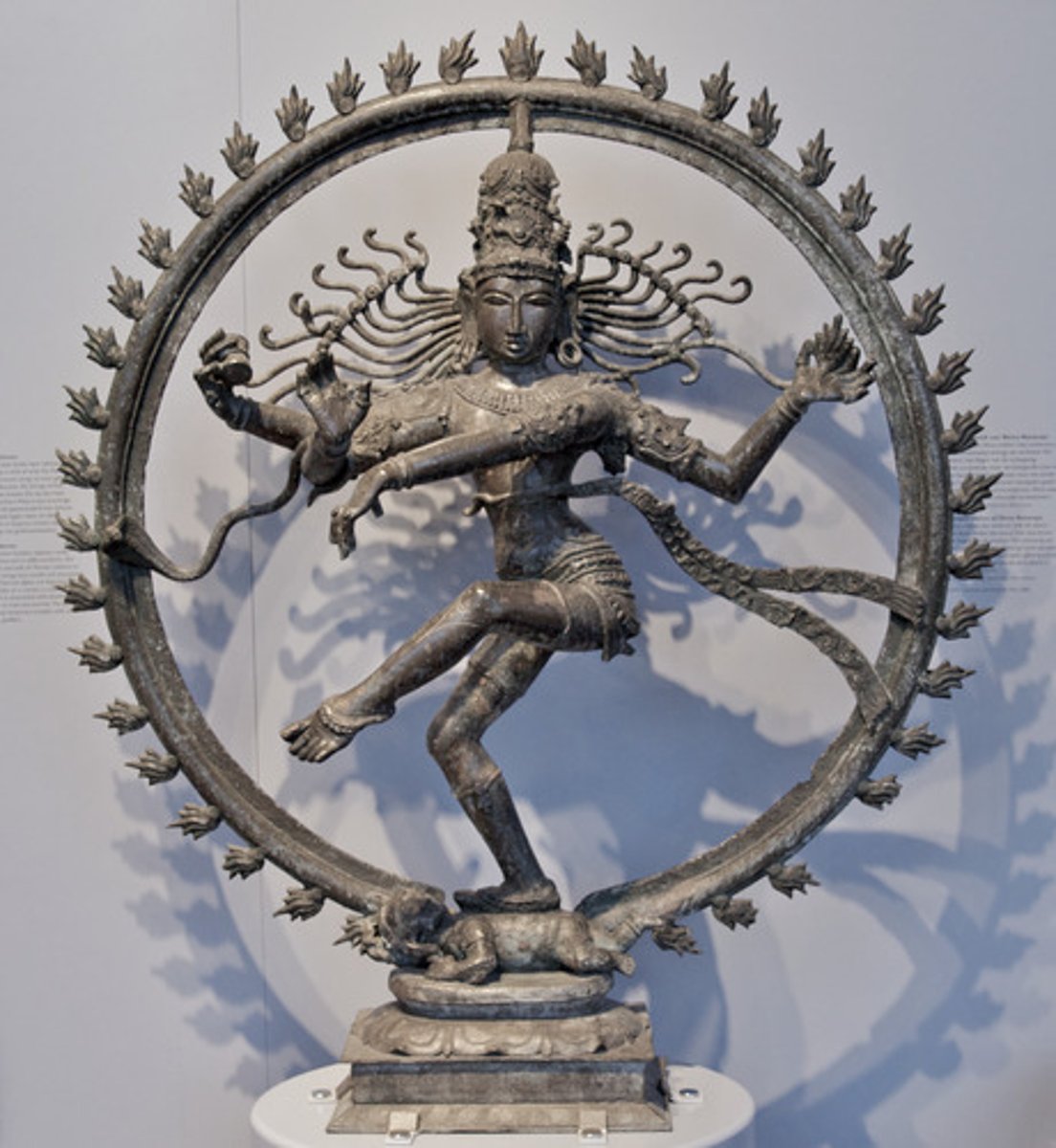
Shiva as Lord of Dance (Nataraja)
Location: India (Tamil Nadu)
Type of Art: Hindu
People: Chola Dynasty
Time Period: 11th Century C.E
Material: Cast Bronze
Facts: As a symbol, Shiva Nataraja is a brilliant invention. It combines in a single image Shiva's roles as creator, preserver, and destroyer of the universe and conveys the Indian conception of the never-ending cycle of time. Although it appeared in sculpture as early as the fifth century, its present, world-famous form evolved under the rule of the Cholas. Shiva's dance is set within a flaming halo. The god holds in his upper right hand the damaru (hand drum that made the first sounds of creation). His upper left hand holds agni (the fire that will destroy the universe). With his lower right hand, he makes abhayamudra (the gesture that allays fear). The dwarflike figure being trampled by his right foot represents apasmara purusha (illusion, which leads mankind astray). Shiva's front left hand, pointing to his raised left foot, signifies refuge for the troubled soul. The energy of his dance makes his hair fly to the sides. The symbols imply that, through belief in Shiva, his devotees can achieve salvation.
Night Attack on the Sanjo Palace
Location: Kamakura Period, Japan
Artist: Unknown
Time Period: 1250-1300 C.E
Material: Handscroll (ink and color on paper)
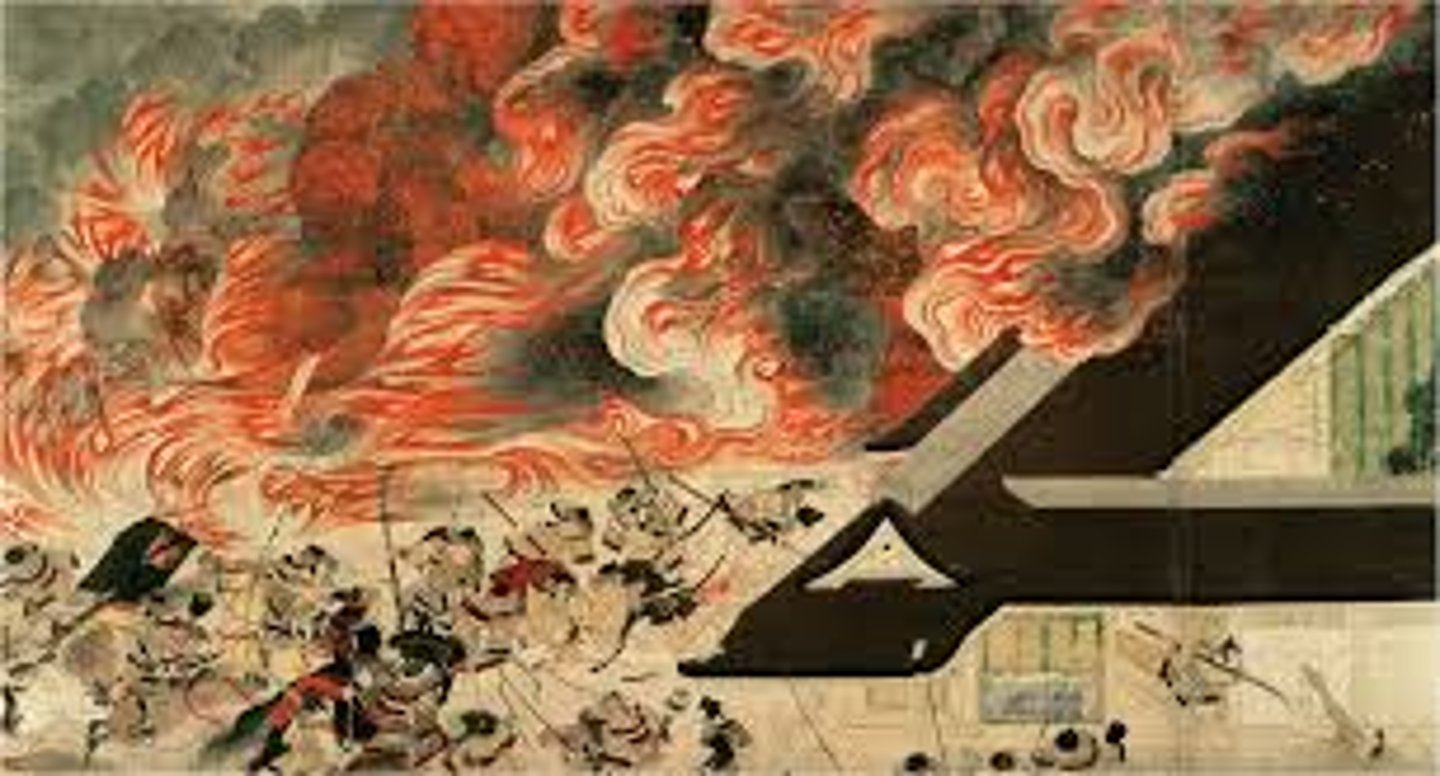
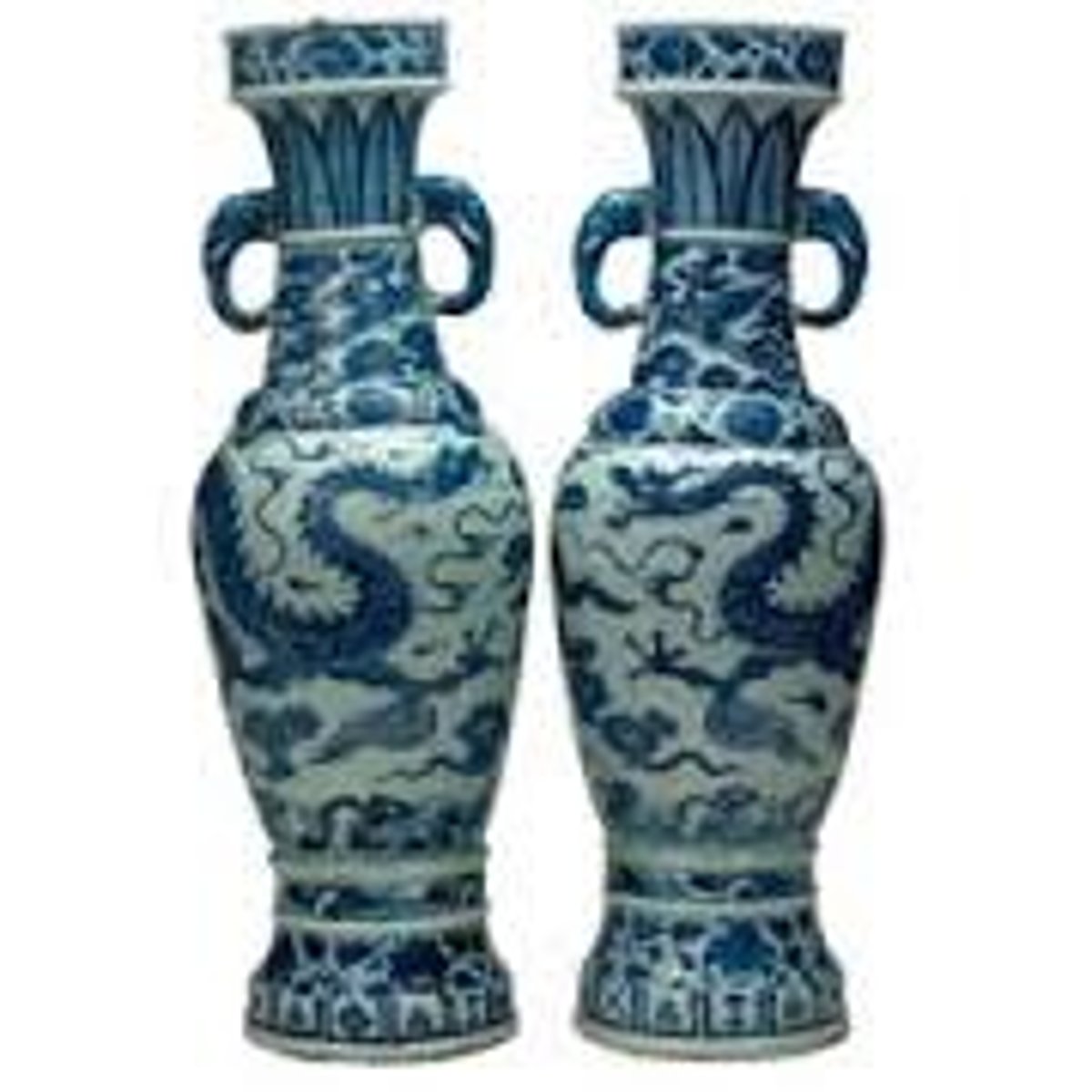
The David Vases
Location: Yuan Dynasty, China
Artist: Unknown
Time Period: 1351 C.E
Material: White porcelain with cobalt-blue underglaze
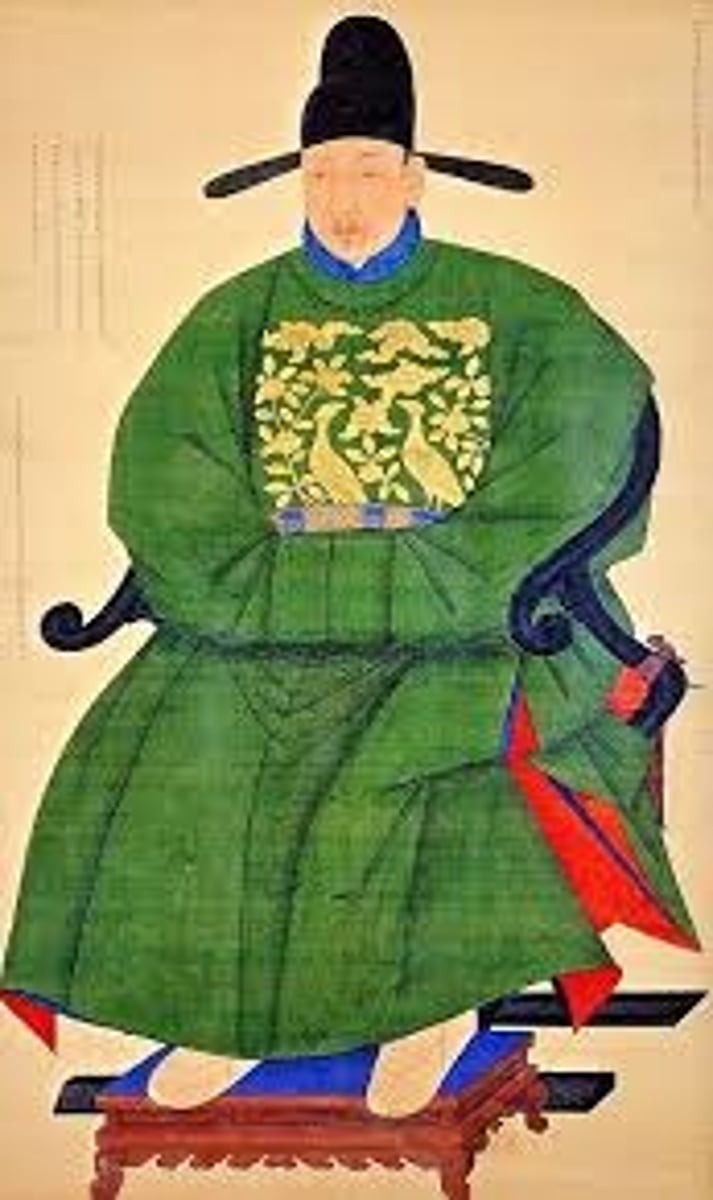
Portrait of Sin Sukju
Location: Korea
Artist: Unknown
Type of Art: Imperial Bureau of Painting
Time Period: 15th Century C.E
Material: Handing scroll (ink and color on silk)
Facts: This painting shows Sin Sukju dressed in his official robes with a black silk hat on his head. In accordance with Korean portraiture conventions, court artists pictured subjects like Sin Sukju seated in a full-length view, often with their heads turned slightly and only one ear showing. Crisp, angular lines and subtle gradations of color characterize the folds of his gown. Here, the subject is seated in a folding chair with cabriole-style arms, where the upper part is convex and the bottom part is concave. Leather shoes adorn his feet, which rest on an intricately carved wooden footstool. In proper decorum, his hands are folded neatly and concealed within his sleeves. He wears a rank badge on his chest.
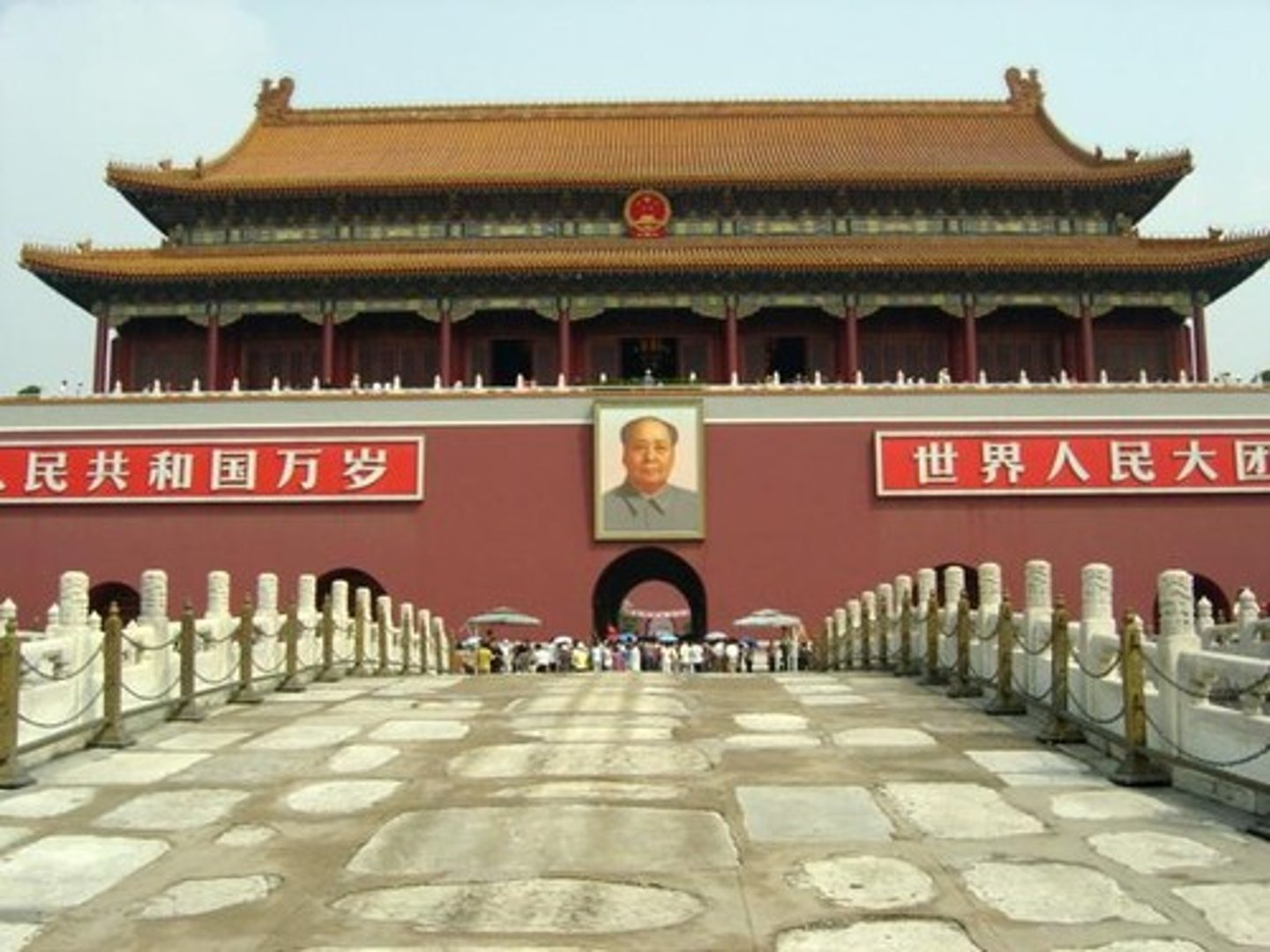
Forbidden City
Location: Beijing, China
Time Period: Ming Dynasty, 15th Century C.E
Materials: Stone Masonry, Marble, Brick, Wood, and Ceramic Tile
Facts: Mainly used to house the Emperors. The Forbidden City complex consists of the "Front Hall" and "Inner Palace", surrounded by high walls. It is also encircled by a moat named Tongzi River. Four turrets were set at the four corners of the city walls. On each side of the city walls, there is a gate, namely, Meridian Gate (Wumen) in the south, Gate of Divine Prowess (Shenwumen) in the north, East Prosperity Gate (Donghuamen) in the east and West Prosperity Gate (Xihuamen) in the west.
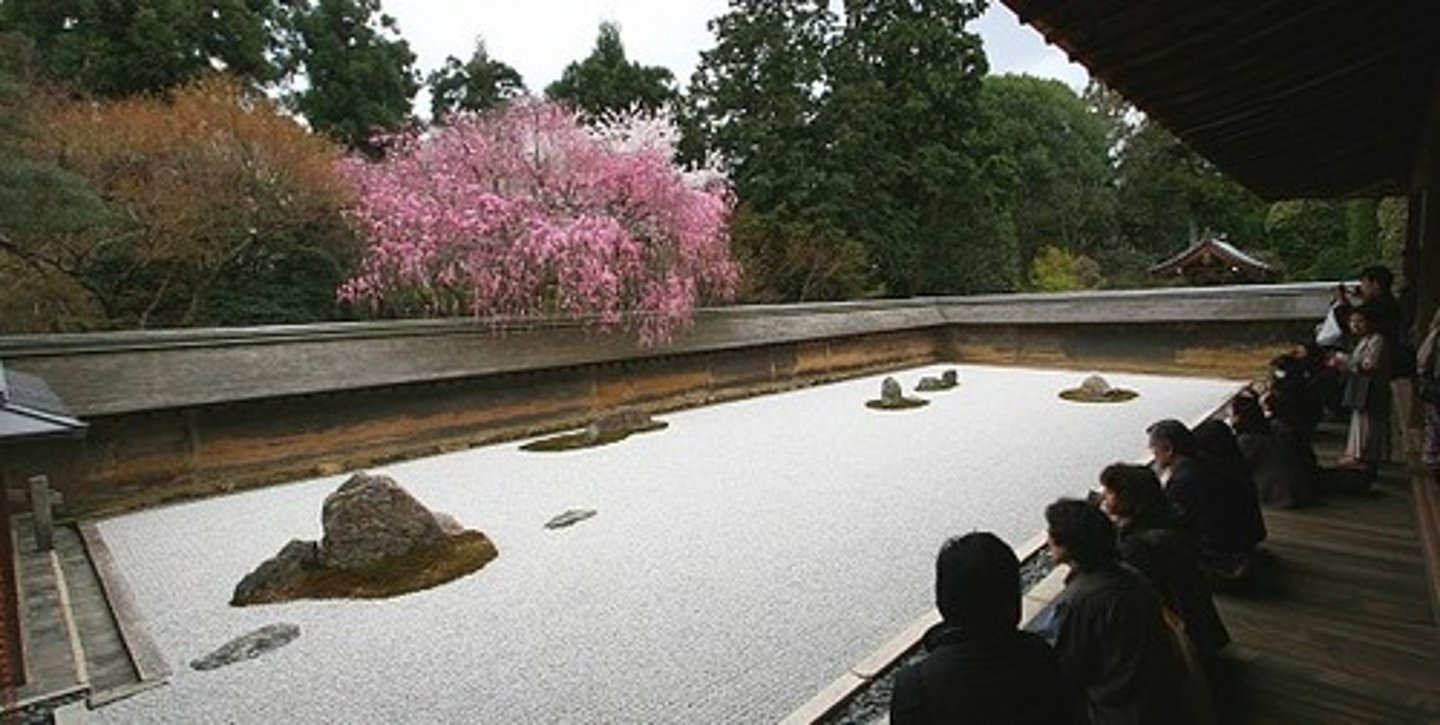
Ryoan-ji (peaceful dragon temple)
Location: Muromachi Period, Japan
Time Period: 1480 C.E
Material: Rock Garden
wet garden
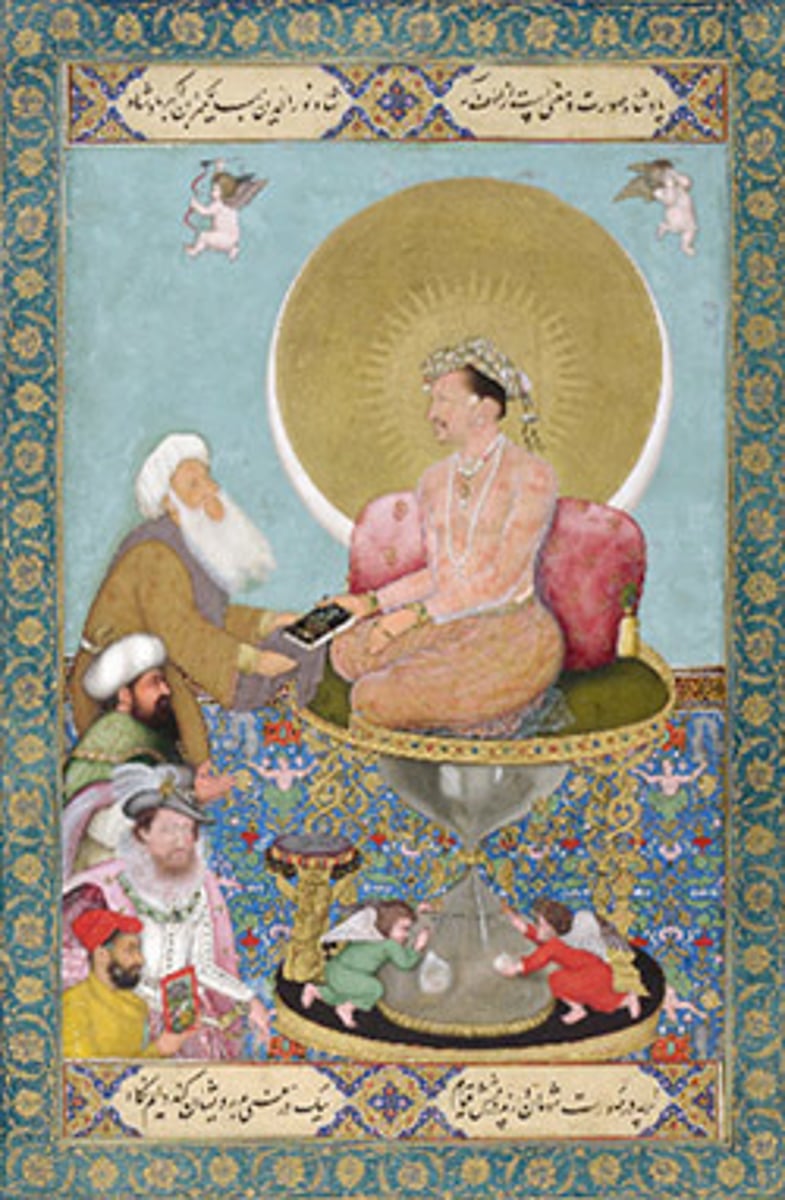
Jahangir Preferring a Sufi Shaikh to Kings
Location: Bichitr
Time Period: 1620 C.E
Material: Watercolor, gold, and ink on paper
Facts: Jahangir is shown seated on an elevated, stone-studded platform whose circular form mimics the disc above. The Emperor is the biggest of the five human figures painted, and the disc with his halo—a visual manifestation of his title of honor—is the largest object in this painting.
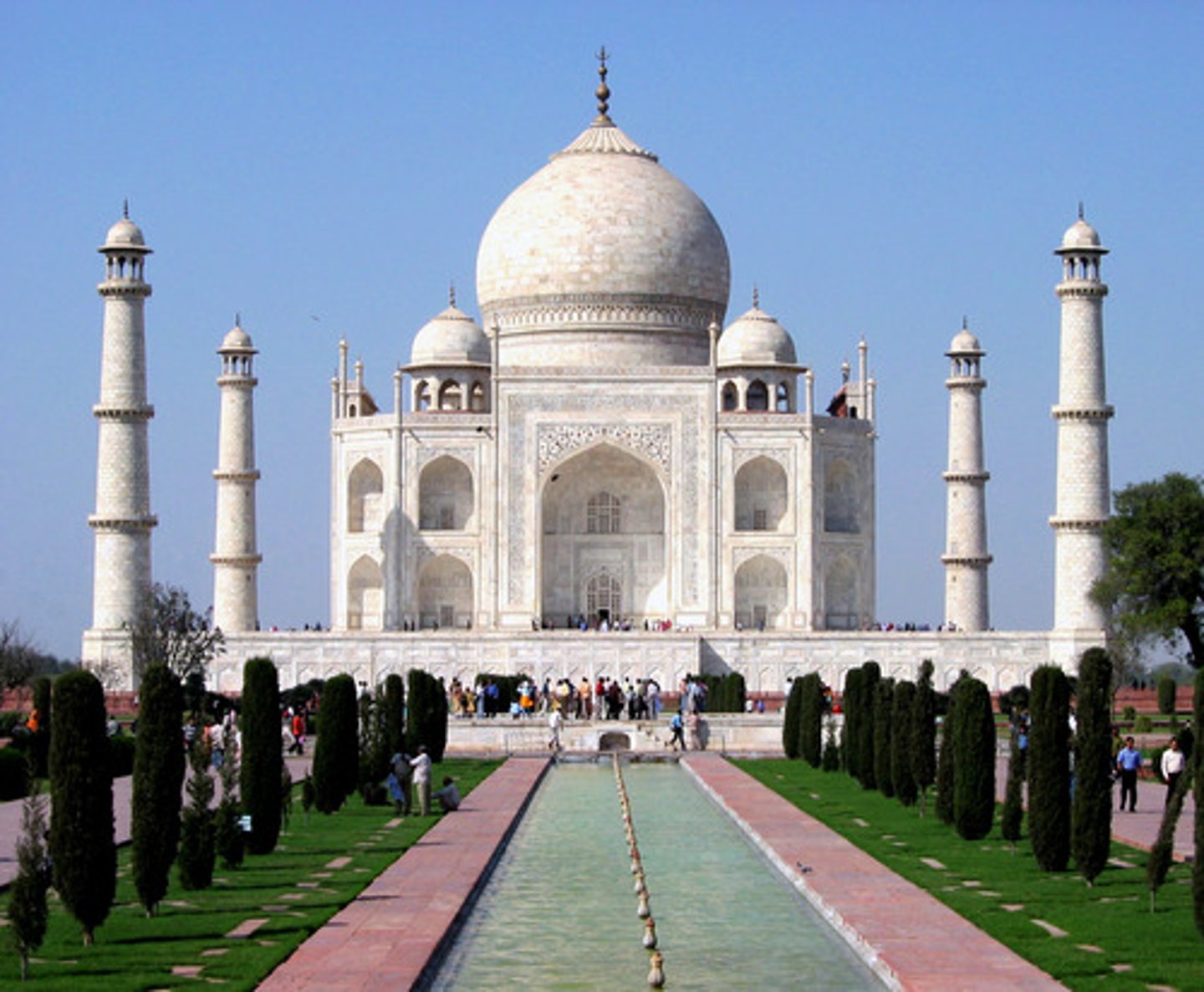
Taj Mahal
Location: Agra, Uttar Pradesh, India
Artists: Masons, marble workers, mosaicists, and decorators working under the supervision of Ustad Ahmad Lahori
Time Period: 1632- 1653 C.E
Material: Stone, Marble
Facts: Basically a Tomb for Shah Jahan's wife, who was the fifth ruler of the Mughal dynasty. Entry to the Taj Mahal complex via the forecourt, which in the sixteenth century housed shops, and through a monumental gate of inlaid and highly decorated red sandstone made for a first impression of grand splendor and symmetry: aligned along a long water channel through this gate is the Taj—set majestically on a raised platform on the north end. The rectangular complex runs roughly 1860 feet on the north-south axis, and 1000 feet on the east-west axis.
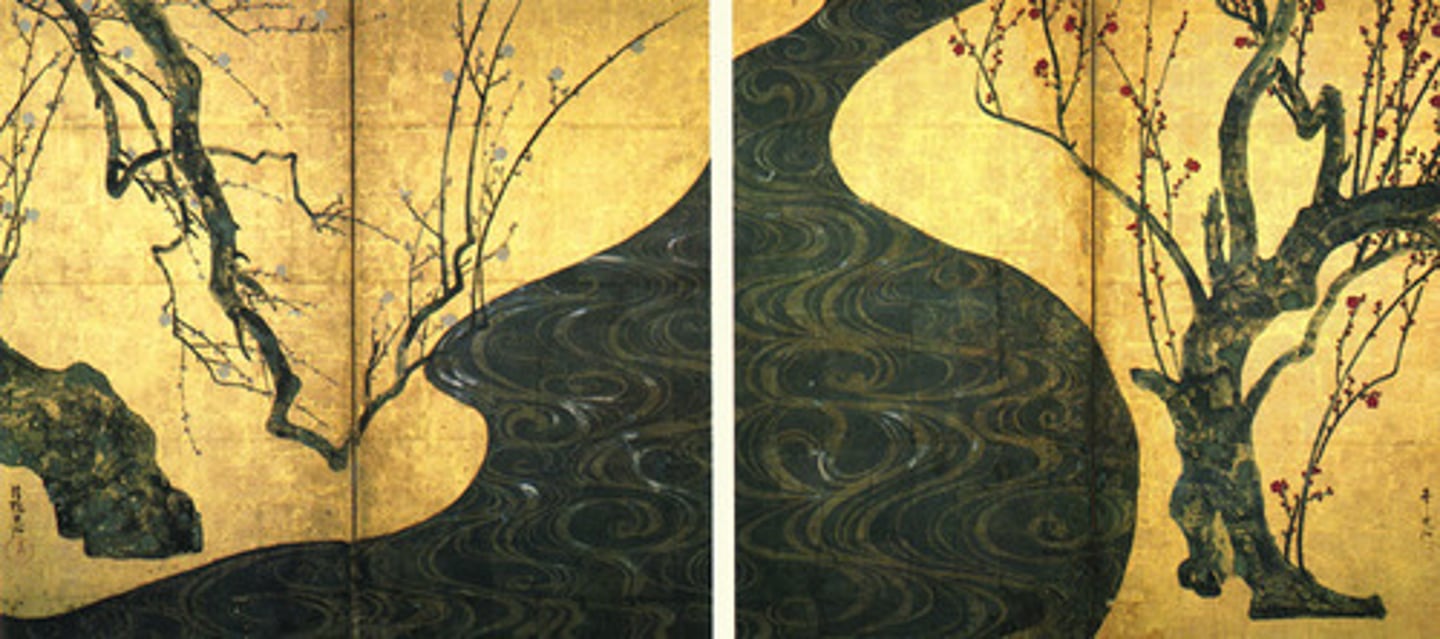
White and Red Plum Blossoms
Location: Japan
Artist: Ogata Korin
Time Period: 1710-1716 C.E
Material: Ink, watercolor, and gold leaf on paper
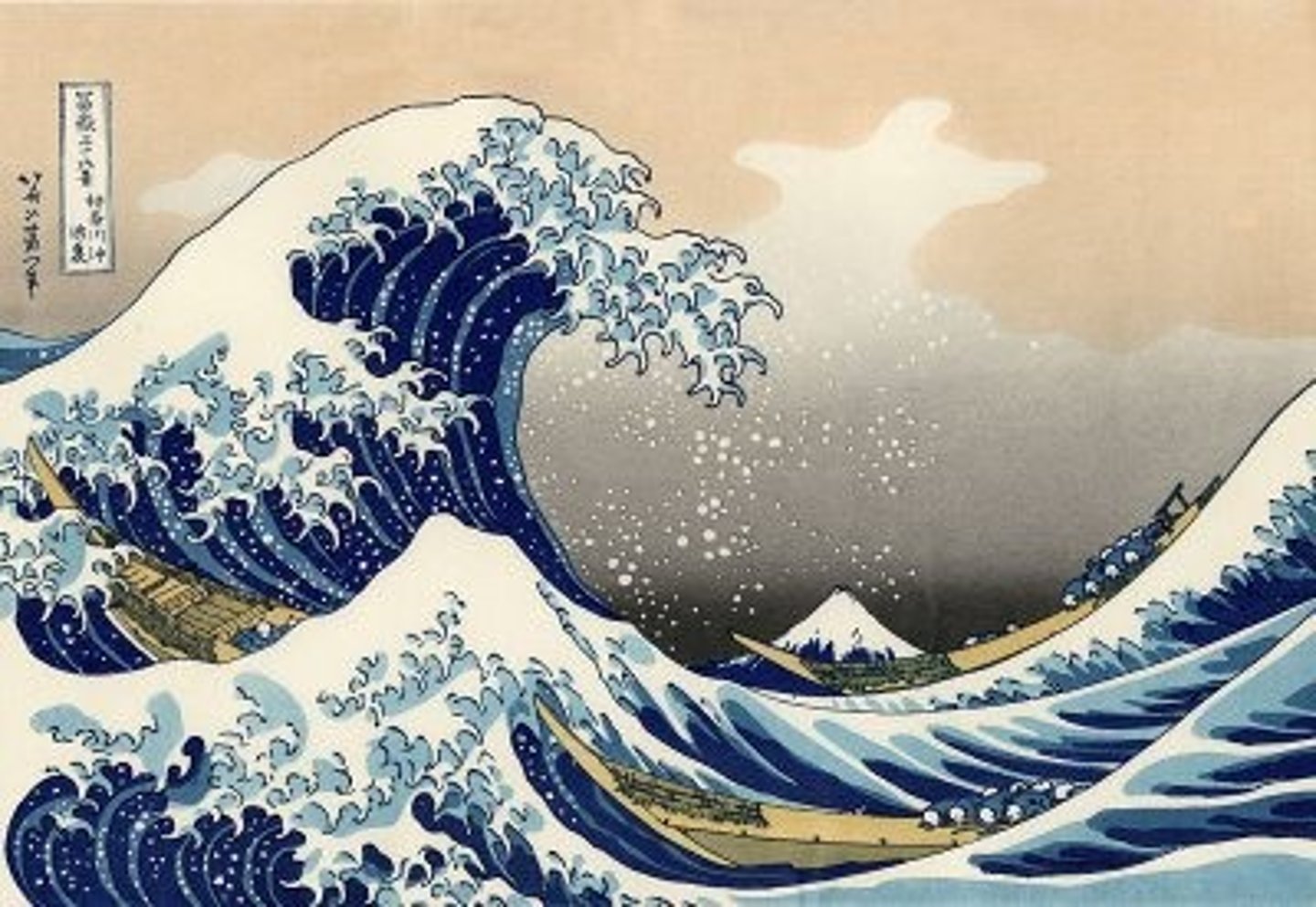
Under the Wave off Kanagawa (The Great Wave)
Location: Japan
Artist: Katsushika Hokusai
Time Period: 1830- 1833 C.E
Material: Polychrome woodblock print. ink and color on paper.
Facts: Painting of a Tsunami over Mount Fuji. Hokusai has arranged the composition to frame Mount Fuji. The curves of the wave and hull of one boat dip down just low enough to allow the base of Mount Fuji to be visible, and the white top of the great wave creates a diagonal line that leads the viewers eye directly to the peak of the mountain top.
Across the thirty-six prints that constitute this series, Hokusai varies his representation of the mountain. In other prints the mountain fills the composition, or is reduced to a small detail in the background of bustling city life.
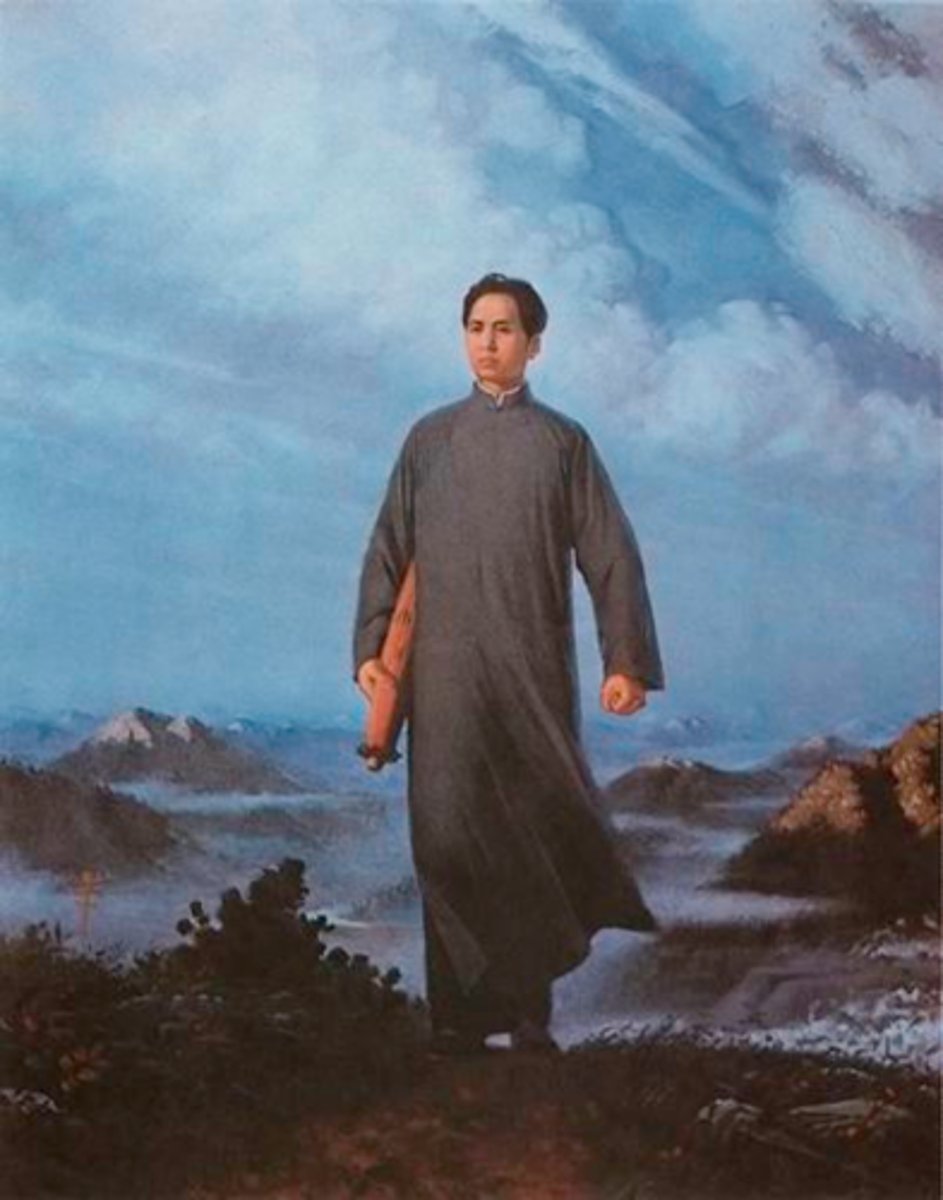
Chairman Mao en Route to Anyuan
Location: China
Artist: Unknown
Time Period: 1969 C.E
Material: Color lithograph
Facts: During the Cultural Revolution (1966-76), artists focused on creating portraits of Mao, or "Mao paintings," which represented Mao's effort to regain his political hold. This movement aimed to correct the disasters of the 1950s, especially the widespread famine and deaths that resulted from Great Leap Forward (an attempt from 1958-61 to rapidly modernize China, transforming it from an agrarian economy into an industrialized, socialist society), and reinvigorate Communist ideology.