AP Bio Unit 10 Cell Communications (Growth Repair, Reproduction)
 Studied by 0 people
 Call Kai
 Learn
Learn Practice Test
 Spaced Repetition
 Match
Match Flashcards
 Knowt Play
1/86

Earn XP
Description and Tags
Mastering Bio Qs + Learning Catalytics
Name | Mastery | Learn | Test | Matching | Spaced | Call with Kai |
|---|
No analytics yet
Send a link to your students to track their progress
87 Terms
In yeast signal transduction, a yeast cell releases a mating factor which _____.
diffuses through the membranes of distant cells, causing them to produce factors that initiate long-distance migrations
acts back on the same cell that secreted the mating factor, changing its development
binds to receptors on the membranes of other types of yeast cells
passes through the membranes of neighboring cells, binds to DNA, and initiates transcription
In the formation of biofilms, such as those forming on unbrushed teeth, cell signaling serves which function?
aggregation of bacteria that can cause cavities
formation of mating complexes
secretion of substances that inhibit foreign bacteria
digestion of unwanted parasite populations
A G-protein receptor with GTP bound to it _____.
will use cGMP as a second messenger
directly affects gene expression
signals a protein to maintain its shape and conformation
is in its active state
One of the major categories of receptors in the plasma membrane reacts by forming dimers, adding phosphate groups, and then activating relay proteins. Which type does this?
receptor tyrosine kinases
G protein-coupled receptors
ligand-gated ion channels
steroid receptors
A major group of G protein-coupled receptors contains seven transmembrane α helices. The amino end of the protein lies at the exterior of the plasma membrane. Loops of amino acids connect the helices either at the exterior face or on the cytosol face of the membrane. The loop on the cytosol side between helices 5 and 6 is usually substantially longer than the others.
Where would you expect to find the carboxyl end?
connected with the loop at H5 and H6
at the exterior surface
between the membrane layers
at the cytosol surface
Which of the following would be inhibited by a drug that specifically blocks the addition of phosphate groups to proteins?
adenylyl cyclase activity
ligand-gated ion channel signaling
receptor tyrosine kinase activity
G protein-coupled receptor binding
The receptors for steroid hormones are located inside the cell instead of on the membrane surface like most other signal receptors. This is not a problem for steroids because _____.
steroids must first bond to a steroid activator, forming a complex that then binds to the cell surface
steroid hormones are lipid soluble, so they can readily diffuse through the lipid bilayer of the cell membrane
the receptors can be readily stimulated to exit and relocate on the membrane surface
steroids do not directly affect cells but instead alter the chemistry of blood plasma
What does it mean to say that a signal is transduced?
The signal is amplified, such than even a single molecule evokes a large response.
The signal triggers a sequence of phosphorylation events inside the cell.
The signal enters the cell directly and binds to a receptor inside.
The physical form of the signal changes from one form to another.
In general, a signal transmitted via phosphorylation of a series of proteins _____.
requires binding of a hormone to an intracellular receptor
results in a conformational change to each protein
activates a transcription event
generates ATP in the process of signal transduction
Protein kinase is an enzyme that _____.
serves as a receptor for various signal molecules
activates or inactivates other proteins by adding a phosphate group to them
produces second messenger molecules
functions as a second messenger molecule
In signal transduction, phosphatases _____.
move the phosphate group of the transduction pathway to the next molecule of a series
inactivate protein kinases and turn off the signal transduction
prevent a protein kinase from being reused when there is another extracellular signal
amplify the second messengers such as cAMP
Consider this pathway: epinephrine → G protein-coupled receptor → G protein → adenylyl cyclase → cAMP. The second messenger in this pathway is _____.
G protein
G protein-coupled receptor
adenylyl cyclase
cAMP
Transcription factors _____.
regulate the synthesis of DNA in response to a signal
transcribe ATP into cAMP
control gene expression
regulate the synthesis of lipids in the cytoplasm
GTPase activity is important in the regulation of signal transduction because it _____.
hydrolyzes GTP to GDP, thus shutting down the pathway
increases the available concentration of phosphate
converts cGMP to GTP
decreases the amount of G protein in the membrane
Why has C. elegans proven to be a useful model for understanding apoptosis?
The nematode undergoes a fixed and easy-to-visualize number of apoptotic events during its normal development.
The animal does not naturally use apoptosis, but can be induced to do so in the laboratory.
While the organism ages, its cells die progressively until the whole organism is dead.
This plant has a long-studied aging mechanism that has made understanding its death just a last stage.
Which of the following describes the events of apoptosis?
The cell's DNA and organelles become fragmented, the cell dies, and it is phagocytized.
The cell dies, it is lysed, its organelles are phagocytized, and its contents are recycled.
The cell's nucleus and organelles are lysed, then the cell enlarges and bursts.
The cell's DNA and organelles become fragmented, the cell shrinks and forms blebs, and the cell's parts are packaged in vesicles that are digested by specialized cells.
Why is apoptosis potentially threatening to the healthy "neighbors" of a dying cell?
Neighboring cells would activate immunological responses.
Lysosomal enzymes exiting the dying cell would damage surrounding cells.
Cell death would usually spread from one cell to the next via paracrine signals.
Bits of membrane from the dying cell could merge with neighboring cells and bring in foreign receptors.
What are the functions of signal transduction pathways?
Select all that apply.
Signal transduction pathways amplify the effect of a signal molecule.
Signal transduction pathways convert a signal on a cell’s surface to a specific cellular response.
Signal transduction pathways allow different types of cells to respond differently to the same signal molecule.
All of the above
Which statement correctly distinguishes the roles of protein kinases and protein phosphatases in signal transduction pathways?
Protein kinases are involved in signal transduction in unicellular eukaryotes such as yeast. Protein phosphatases are involved in signal transduction in multicellular eukaryotes.
Protein kinases activate enzymes by phosphorylating or adding phosphate groups to them. Protein phosphatases dephosphorylate or remove phosphate groups from enzymes, including protein kinases.
Protein kinases are more critical than protein phosphatases to signal transduction enzymes.
Select the statement that correctly distinguishes between relay proteins and second messengers in signal transduction pathways.
Signal transduction pathways are multistep pathways that include relay proteins and small, nonprotein, water-soluble molecules or ions called second messengers.
Relay proteins are the “first messengers,” the extracellular signaling molecules that bind to the membrane receptor. The signal transduction pathways are then formed by the second messengers, which are the relay molecules that respond to the first messengers.
Signal transduction pathways are multistep pathways in which relay proteins and second messengers alternate.
Cyclic GMP, or cGMP, acts as a signaling molecule whose effects include relaxation of smooth muscle cells in artery walls. In the penis, this signaling pathway and the resulting dilation of blood vessels leads to an erection. Select the correct statement about the effect of Viagra on this signaling pathway.
Viagra prevents the formation of cGMP.
Viagra increases the rate of hydrolysis of cGMP to GMP.
Viagra inhibits the hydrolysis of cGMP to GMP.
The cholera bacterium Vibrio cholerae produces an enzyme toxin that chemically modifies a G protein involved in regulating salt and water secretion in intestinal cells. Stuck in its active form, the modified G protein stimulates the production of a high concentration of cAMP, which causes the intestinal cells to secrete large amounts of salts into the intestines, with water following by osmosis. An infected person quickly develops profuse diarrhea and if left untreated can soon die from the loss of water and salts. What is the basic effect of the cholera toxin?
The basic effect of the cholera toxin is premature termination of a signaling pathway.
The basic effect of the cholera toxin is loss of specificity of the response of intestinal cells to a signaling molecule.
The basic effect of the cholera toxin is signal amplification.
In eukaryotic cells, chromosomes are composed of _____.
DNA only
DNA and RNA
DNA and phospholipids
DNA and proteins
Starting with a fertilized egg (zygote), a series of five cell divisions would produce an early embryo with how many cells?
8
32
64
16
The first gap in the cell cycle (G1) corresponds to _____.
the phase between DNA replication and the M phase
normal growth and cell function
the beginning of mitosis
the phase in which DNA is being replicated
The mitotic spindle is a microtubular structure that is involved in _____.
triggering the compaction and condensation of chromosomes
separation of sister chromatids
dissolving the nuclear membrane
splitting of the cell (cytokinesis) following mitosis
Some cells have several nuclei per cell. How could such multinucleated cells be explained?
The cell underwent repeated mitosis, but cytokinesis did not occur.
The cell had multiple S phases before it entered mitosis.
The cell underwent repeated mitosis with simultaneous cytokinesis.
The cell underwent repeated cytokinesis but no mitosis.
Movement of the chromosomes during anaphase would be most affected by a drug that prevents _____.
formation of a cleavage furrow
shortening of microtubules
nuclear envelope breakdown
elongation of microtubules
A cleavage furrow is _____.
a groove in the plasma membrane between daughter nuclei
the space that is created between two chromatids during anaphase
a ring of vesicles forming a cell plate
the separation of divided prokaryotes
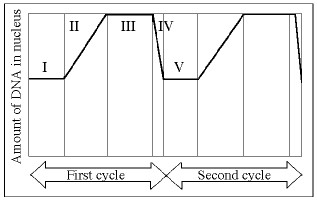
In the figure above, at which of the numbered regions would you expect to find cells at metaphase?
I and IV
II only
III only
IV only
The data were obtained from a study of the length of time spent in each phase of the cell cycle by cells of three eukaryotic organisms designated beta, delta, and gamma.
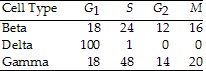
Minutes Spent in Cell Cycle Phases
Of the following, the best conclusion concerning the difference between the S phases for beta and gamma is that _____.
beta and gamma contain the same amount of DNA
gamma contains more DNA than beta
beta cells reproduce asexually
beta is a plant cell and gamma is an animal cell
Nucleotides can be radiolabeled before they are incorporated into newly forming DNA and, therefore, can be assayed to track their incorporation. In a set of experiments, a studentfaculty research team used labeled T nucleotides and introduced these into the culture of dividing human cells at specific times.
Which of the following question might be answered by using the method described?
How many cells are produced by the culture per hour?
When do spindle fibers attach to chromosomes?
How many picograms of DNA are made per cell cycle?
What is the length of the S phase of the cell cycle?
The drug cytochalasin B blocks the function of actin. Which of the following aspects of the cell cycle would be most disrupted by cytochalasin B?
cell elongation during anaphase
cleavage furrow formation and cytokinesis
spindle attachment to kinetochores
spindle formation
MPF is a dimer consisting of _____.
a growth factor and mitotic factor
cyclin and tubulin
cyclin and a cyclin-dependent kinase
ATP synthetase and a protease
Cyclin-dependent kinase (Cdk) is _____.
present only during the S phase of the cell cycle
inactive, or "turned off," in the presence of cyclin
the enzyme that catalyzes the attachment of chromosomes to microtubules
an enzyme that attaches phosphate groups to other proteins
What happens if MPF (mitosis-promoting factor) is introduced into immature frog oocytes that are arrested in G2?
The cells enter mitosis.
Cell differentiation is triggered.
Nothing happens.
The cells undergo meiosis.
Which of the following is released by platelets in the vicinity of an injury?
PDGF
MPF
Cdk
cyclin
Density-dependent inhibition is explained by which of the following?
As cells become more numerous, the cell surface proteins of one cell contact the adjoining cells and they stop dividing.
As cells become more numerous, they begin to squeeze against each other, restricting their size and ability to produce control factors.
As cells become more numerous, the level of waste products increases, eventually slowing down metabolism.
As cells become more numerous, the protein kinases they produce begin to compete with each other, such that the proteins produced by one cell essentially cancel those produced by its neighbor.
Besides the ability of some cancer cells to overproliferate, what else could logically result in a tumor?
inability to form spindles
changes in the order of cell cycle stages
lack of appropriate cell death
inability of chromosomes to meet at the metaphase plate
Anchorage dependence of animal cells in vitro or in vivo depends on which of the following?
response of the cell cycle controls to the binding of cell-surface phospholipids
attachment of spindle fibers to centrioles
the binding of cell-surface phospholipids to those of adjoining cells
response of the cell cycle controls to signals from the plasma membrane
A research team began a study of a cultured cell line. Their preliminary observations showed them that the cell line did not exhibit either density-dependent inhibition or anchorage dependence. What could they conclude right away?
The cells are unable to form spindle microtubules.
They have altered the series of cell cycle phases.
The cells show characteristics of tumors.
They were originally derived from an elderly organism.
If a eukaryotic cell is in the G1 phase of the cell cycle, which statement about the cell’s chromosomes must be correct?
Each chromosome consists of two identical chromatids.
Each chromosome is made of a complex of DNA and associated proteins.
The chromosomes are preparing for DNA synthesis.
Which statement provides the best description of the interphase portion of the cell cycle?
Interphase is a brief period between mitosis and chromosome duplication.
During interphase, a cell is metabolically active.
Interphase is a resting stage prior to cell division.
What is true of all cancers?
They have escaped normal cell cycle controls.
They are caused by chemical carcinogens.
They are inherited.
How do cancer cells differ from normal cells?
Cancer cells may be immortal.
Cancer cells trigger chromosomal changes in surrounding cells.
Cultured cancer cells exhibit anchorage dependence.
The cell cycle control systems of cancer cells differ from those of normal cells. Select the best explanation for this fact.
Genetic changes alter the function of the cancer cell’s protein products.
Cancer cells are immortal.
Cancer cells divide excessively and invade other tissues.
In experiments where researchers suspect that a hormone may be responsible for a certain physiological effect, they may cut the neurons leading to the organ where the effect being studied occurs. What is the purpose of cutting these neurons?
to impair the normal functions of the organ so that the hormonal effect can be more easily studied
to make sure that the organ being affected cannot function unless the researchers stimulate it with an external electrical probe
to make sure that the effect is not occurring through actions in the nervous system
to numb the organ so that it can be probed without inducing pain in the lab animal
Testosterone is an example of a chemical signal that affects the very cells that synthesize it, the neighboring cells in the testis, along with distant cells outside the gonads. Thus, testosterone is an example of _____.
I) an autocrine signal
II) a paracrine signal
III) an endocrine signal
only I and II
only I and III
I, II, and III
only II and III
A cell with membrane-bound proteins that selectively bind a specific hormone is called that hormone's _____.
target cell
secretory cell
regulatory cell
endocrine cell
Steroid and peptide hormones typically have in common _____.
their reliance on signal transduction in the cell
their solubility in cell membranes
their requirement for travel through the bloodstream
the building blocks from which they are synthesized
Which of the following are similar in structure to cholesterol?
leptin and serotonin
testosterone, estradiol, and cortisol
luteinizing hormone and insulin
melanocyte-stimulating hormone and vasopressin
What property of steroid hormones allows them to cross the phospholipid bilayer?
Steroid hormones are lipid soluble and easily cross the phospholipid bilayer.
Steroid hormones act on cells close to where they were produced and very few molecules are required to travel such a short distance to cross the lipid bilayer.
Steroid hormones can act in very small concentrations and very few molecules of steroids need to cross the lipid bilayer.
Steroid hormones act on the same cells in which they are produced and, therefore, are within the cell they are acting upon.
During mammalian labor and delivery, the contraction of uterine muscles is enhanced by oxytocin. This is an example of _____.
a hormone that is involved in a positive feedback loop
signal transduction immediately changing gene expression in its target cells
a hormone that acts in an antagonistic way with another hormone
a negative feedback system
Analysis of a blood sample from a fasting individual who had not eaten for twenty-four hours would be expected to reveal high levels of _____.
insulin
glucose
glucagon
gastrin
An example of antagonistic hormones controlling homeostasis is _____.
epinephrine and norepinephrine in fight-or-flight responses
progestins and estrogens in sexual differentiation
insulin and glucagon in glucose metabolism
thyroxine and parathyroid hormone in calcium balance
Removing which of the following glands would have the most wide-reaching effect on bodily functions of an adult human?
thyroid gland
ovaries (in female) or testes (in male)
adrenal glands
pituitary gland
During a stressful interval, _____.
thyroid-stimulating hormaon (TSH) stimulates the adrenal cortex and medulla to secrete acetylcholine
adrenocorticotropic hormone (ACTH) stimulates the adrenal cortex, and neurons of the sympathetic nervous system stimulate the adrenal medulla
the calcium levels in the blood are increased due to actions of two antagonistic hormones, epinephrine and norepinephrine
the alpha cells of islets secrete insulin and simultaneously the beta cells of the islets secrete glucagon
Melatonin is secreted by the_____.
autonomic nervous system during the winter
pineal gland during the night
hypothalamus during the day
posterior pituitary gland during the day
Group 1 | Group 2 | |
Daily injections of |
|
|
Percentage of rats that |
|
|
In an experiment, rats' ovaries were removed immediately after impregnation and then the rats were divided into two groups. Treatments and results are summarized in the table above. The results most likely occurred because progesterone exerts an effect on the _____.
metabolism of the uterus
gestation period of rats
general health of the rat
number of eggs fertilized
Select the example that accurately illustrates this statement: “The endocrine and nervous systems act together to regulate an animal’s physiology.”
In response to stress, neurosecretory cells in the adrenal medulla release epinephrine and norepinephrine, which mediate various fight-or-flight responses.
Signals to the brain stimulate the hypothalamus to secrete a hormone that stimulates or inhibits release of a particular posterior pituitary hormone. The posterior pituitary hormone then acts on a target endocrine tissue to stimulate secretion of another hormone.
The hypothalamus receives information from hormones throughout the body and brain. In response, it initiates nervous signaling appropriate to environmental conditions.
Vertebrates have two major communication and control systems: the endocrine system and the nervous system. Choose the correct statement describing the coordination of these systems.
The adrenal cortex secretes hormones in response to nervous stimulation.
Epinephrine functions as a hormone in the endocrine system and as a neurotransmitter in the nervous system.
The parathryroid gland is a fused endocrine and neuroendocrine gland.
Select the correct statement about feedback regulation in endocrine systems.
Some homeostatic control systems rely on pairs of negatively regulated hormone pathways, each counterbalancing the other.
A hormone cascade pathway involves the hypothalamus, posterior pituitary, and endocrine gland.
All hormones are regulated by negative feedback loops.
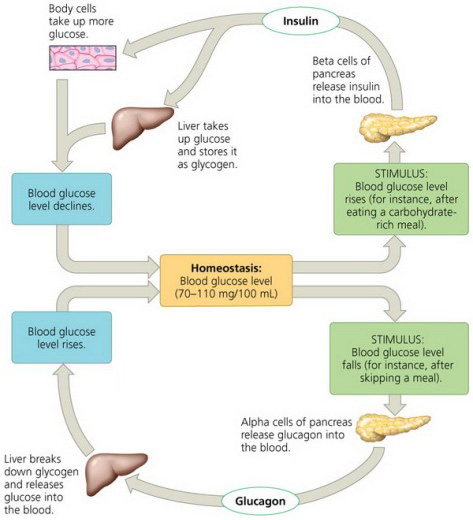
The figure shows how glucose homeostasis is maintained by two antagonistic hormones, insulin and glucagon. Select the correct statement about these hormones.
Each of these hormones operates in a simple endocrine pathway.
The two hormones interact in a hormone cascade pathway.
Each of these hormones operates in a simple neuroendocrine pathway.
Asexual reproduction results in offspring that are genetically identical to their parent. What type of cell process occurs to generate this type of offspring?
mitosis
cell fusion
meiosis
What makes sexually reproduced offspring genetically different from their parents?
genetic recombination during meiosis
crossing over during mitosis
genetic recombination during mitosis
Sexual reproduction does not produce genetically different offspring.
Genetic mutations in asexually reproducing organisms lead to more evolutionary change than do genetic mutations in sexually reproducing ones because _____.
sexually reproducing organisms can produce more offspring in a given time than can asexually reproducing organisms
asexually reproducing organisms, but not sexually reproducing organisms, pass all mutations on to their offspring
more genetic variation is present in organisms that reproduce asexually than is present in those that reproduce sexually
asexually reproducing organisms have more dominant genes than organisms that reproduce sexually
Asexual reproduction results in greater reproductive success than does sexual reproduction when _____.
a species is expanding into diverse geographic settings
pathogens are rapidly diversifying
a species is in stable and favorable environments
there is some potential for rapid overpopulation
Sexual reproduction _____.
guarantees that both parents will provide care for each offspring
enables males and females to remain isolated from each other while rapidly colonizing habitats
allows animals to conserve resources and reproduce only during optimal conditions
can produce diverse phenotypes that may enhance survival of a population in a changing environment
Animals that have external fertilization are most likely to reproduce in which of the following areas?
sand dune
polar ice sheet
shallow lake
tallgrass prairie
In close comparisons, external fertilization often yields more offspring than does internal fertilization. However, internal fertilization typically offers the advantage that _____.
it requires less time and energy to be devoted to reproduction
the smaller number of offspring produced often receive a greater amount of parental investment
it requires expression of fewer genes and maximizes genetic stability
it permits the most rapid population increase
In vertebrate animals, spermatogenesis and oogenesis differ in that _____.
cytokinesis is unequal in oogenesis, whereas it is equal in spermatogenesis
oogenesis produces four functional haploid cells, whereas spermatogenesis produces only one functional spermatozoon
oogenesis ends at menopause, whereas spermatogenesis is finished before birth
oogenesis begins at the onset of sexual maturity, whereas spermatogenesis begins during embryonic development
Mature human sperm and ova are similar in that they _____.
are produced from puberty until death
each have a flagellum that provides motility
are approximately the same size
both have the same number of chromosomes
Which of the following correctly describes a difference between spermatogenesis and oogenesis?
Spermatogenesis results in one mature sperm cell, while oogenesis results in four mature egg cells.
Spermatogenesis results in four mature sperm cells, while oogenesis results in one mature egg cell. In spermatogenesis, mitosis occurs twice and meiosis once, while in oogenesis, mitosis occurs once and meiosis twice.
In spermatogenesis, mitosis occurs twice and meiosis once, while in oogenesis, mitosis occurs once and meiosis twice.
Spermatogenesis results in four mature sperm cells, while oogenesis results in one mature egg cell.
Increasing the temperature of the human scrotum by 2°C (that is, near the normal body core temperature) and holding it there would most likely_____.
reduce the man's sexual interest
reduce the fertility of the man by impairing the production of gonadal steroid hormones
reduce the fertility of the man by impairing spermatogenesis
increase the fertility of the affected man by enhancing the rate of steroidogenesis
A physician finds that a nine-year-old male patient is entering puberty much earlier than is usual. Such a condition is most likely the result of a tumor in the _____.
testes, producing elevated levels of estrogen
anterior pituitary, producing elevated levels of gonadotropin-stimulating hormone
hypothalamus, producing elevated levels of testosterone
anterior pituitary, producing elevated levels of testosterone
In correct chronological order, the three phases of the human ovarian cycle are _____.
proliferative → luteal → ovulation
follicular → ovulation → luteal
menstrual → proliferative → secretory
follicular → luteal → secretory
A reproductive hormone that is secreted directly from a structure in the brain is _____.
gonadotropin-releasing hormone (GnRH)
estradiol
follicle-stimulating hormone (FSH)
progesterone
The primary function of the corpus luteum is to _____.
nourish and protect the egg cell
stimulate the development of the mammary glands
support pregnancy in the second and third trimesters
maintain progesterone and estrogen synthesis after ovulation has occurred
Estrogens found in the environment have raised concerns about effects on reproductive health of animals. Researchers studied the effects that estrogens in the water have on sexual differentiation in zebrafish. They exposed embryo-larval (0-21 days post-hatching), juvenile (21-42 days post-hatching), and adult (over 200 days post-hatching) fish to three concentrations of 17β-estradiol (5, 25, and 100 nanograms/liter) that are within the range of concentrations found in water leaving sewage treatment plants in different countries. They then examined the proportion of males and females when the fish exposed at embryo-larval and juvenile stages reached adulthood. Embryo-larval stage fish that had been exposed to 100 ng/l 17β-estradiol resulted in adult populations that had substantially more females than males compared to control groups. Embryo-larval fish that had been exposed to 5 and 25 ng/l of 17β-estradiol did not show a statistically significant shift in the proportion of females. (Brion, F., C. R. Tyler, X. Palazzi, B. Laillet, J. M. Porcher, J. Garric, and P. Flammarion. 2004. Impacts of 17β-estradiol, including environmentally relevant concentrations, on reproduction after exposure during embryo-larval-, juvenile-, and adult-life stages in zebrafish (Danio rerio). Aquatic Toxicology 68:193-217.)
Refer to the paragraph on the effects of estrogens in the environment. What is the significance of using the concentrations of 5, 25, and 100 ng/l of 17β-estradiol for the dose in this experiment?
These concentrations are similar to those found in many animals.
These concentrations are found in the environment.
These concentrations are standard in toxicology assays.
These concentrations are effective, yet not lethal to the fish.
Which of the following is the most likely explanation for the lack of a filter blocking the passage of alcohol between the maternal and fetal circulations in humans?
The maternal and fetal blood mix directly together in an area with many villi, so a barrier is impossible.
Such a barrier would probably also block important molecules that need to be passed to the fetus.
There has not been enough time to evolve such a barrier.
Alcohol has some positive effects on the fetus, so evolution has resulted in an intermediate level of filtering that blocks all but the worst abuses of alcohol.
Identify the role(s) of follicle-stimulating hormone (FSH) in human reproduction.
Select all that apply.
FSH triggers ovulation.
FSH stimulates the growth of new follicles in the ovary.
FSH promotes the activity of Sertoli cells, which nourish sperm developing within seminiferous tubules.
2 & 3
Which hormone’s secretion is controlled by a positive feedback mechanism?
Progesterone
Oxytocin
Testosterone
Scientists isolate cells in various phases of the cell cycle. They find a group of cells that have 1.5 times more DNA than G1 phase cells. The cells of this group are _____.
in the S phase of the cell cycle
in the M phase of the cell cycle
between the G1 and S phases in the cell cycle
in the G2 phase of the cell cycle
Vinblastine, a drug that inhibits microtubule polymerization, is used to treat some forms of cancer. Cancer cells given vinblastine would be unable to _____.
form cleavage furrows during cell division
maintain the shape of the nucleus
separate chromosomes during cell division
migrate by amoeboid movement
Lipid-soluble signaling molecules, such as testosterone, cross the membranes of all cells but affect only target cells because _____.
only in target cells is testosterone able to initiate the phosphorylation cascade leading to activated transcription factor
only target cells possess the cytosolic enzymes that transduce the testosterone
intracellular receptors are present only in target cells
only target cells retain the appropriate DNA segments
A drug designed to inhibit the response of cells to testosterone would most likely result in _____.
an increase in cytosolic calcium concentration
lower cytoplasmic levels of cAMP
decrease in transcriptional activity of certain genes
decrease in G protein activity
Caffeine is an inhibitor of phosphodiesterase. Therefore, the cells of a person who has recently consumed coffee would have increased levels of _____.
activated G proteins
cAMP
adenylyl cyclase
phosphorylated proteins

