AERO-1010 Test Questions
 Call Kai
 Learn
Learn Practice Test
 Spaced Repetition
 Match
Match Flashcards
 Knowt Play
1/62

There's no tags or description
Looks like no tags are added yet.
Name | Mastery | Learn | Test | Matching | Spaced | Call with Kai |
|---|
No analytics yet
Send a link to your students to track their progress
63 Terms
Identify the aviation pioneers who achieved the first successful powered, sustained, controlled flight of heavier-than-air machine. Provide the complete date (month, day, year) of this historic achievement.
Orville and Wilbur Wright (the Wright Brothers) achieved this milestone at Kitty Hawk, North Carolina. The historic flight took place on December 17, 1903.
Which military aviation advocate conducted bombing demonstrations against naval vessels to prove aircraft effectiveness and championed the creation of an independent Air Force?
William "Billy" Mitchell was the outspoken advocate who sank captured German warships to demonstrate air power. He is often remembered as the "Father of the U.S. Air Force" for his tireless lobbying for an independent branch.
The time span of 1919-1939 is considered the __________ of aviation.
The time span of 1919–1939 is considered the Golden Age of aviation.
Name the individual whose systematic glider experiments and scientific approach to flight earned him the title “Father of Modern Aviation”.
Sir George Cayley is known as the "Father of Modern Aviation" for identifying the four forces of flight (lift, weight, thrust, and drag).
In 1927, which pilot completed the first solo nonstop transatlantic flight from Roosevelt Field in New York to Le Bourgeois Field in Paris, France, flying the aircraft named “Spirit of St. Louis”.
Charles Lindbergh completed this 33.5-hour journey in May 1927. His aircraft was a custom-built Ryan monoplane designed specifically for the long-distance flight.
Define “Blitzkrieg” and explain how the German military strategy integrated aviation with ground forces.
Blitzkrieg, or "lightning war," is a high-speed offensive strategy centered on surprise and overwhelming force. It used the Luftwaffe to provide close air support and destroy communications, clearing the path for rapid mechanized ground units (Panzers).
Describe the primary objectives and outcomes of the 1930 Spoils Conference organized by Postmaster General Brown.
The conference aimed to consolidate the fragmented airmail industry into a few stable, primary transcontinental routes. It resulted in Postmaster General Brown awarding nearly all contracts to three major airlines (the "Big Three"), effectively excluding smaller carriers and sparking the "Airmail Scandal."
On October, 14, 1947, ___________ broke the sound barrier while flying in the Bell X-1 experimental aircraft.
On October 14, 1947, Chuck Yeager broke the sound barrier.
Elaborate on some of the provisions associated with the passage of the Air Commerce Act of 1926.
This act established the Aeronautics Branch (now the FAA) to regulate the safety of civil aviation. It mandated the registration of aircraft, the licensing of pilots, and the establishment of official airways and navigation aids.
Discuss the contributions of aviation pioneer Phoebe Fairgrave Omlie to early American aviation, particularly her role in government programs.
Phoebe Fairgrave Omlie was the first woman to hold a federal aviation post, serving as a special advisor to the NACA and developing the National Air Marking Program. In Tennessee, she established the state’s first vocational aviation school and launched the Tennessee Bureau of Aeronautics to advance regional flight education.
List all current concentration areas available within MTSU Aerospace degree program.
The MTSU Aerospace program offers concentrations in Aviation Management, Flight Dispatch, Unmanned Aircraft, Maintenance, Professional Pilot, and Technology.
This great Italien scientist included concepts such as center of gravity, center of pressure, and streamlining in his manuscripts.
Leonardo da Vinci.
Which of the following brothers created the first hot air balloon, which resulted in the flight of the first living passengers in 1783 (A sheep, a rooster, and a duck)?
Montgolfier Brothers.
Ferdinand von Zeppelin is accredited for
building the world’s first successful rigid dirigible.
The name of the machine designed and attempted to fly by Professor Samuel Pierpont Langley was referred to as
Langley’s Aerodrome.
This person’s major area of contribution to the development of aviation was in his aerodynamic research with gliders, identification of the four forces of flight, and development of the cambered upper wing surface:
Sir George Cayley.
Who was the first person to lose their life in the United States while in powered aircraft flight?
Lt. Thomas Selfridge.
America”s first licensed female pilot and the first woman to fly solo across the English Channel was
Harriet Quimby.
Which of the following statements are true?
Charles Taylor was the Wright Brother’s mechanic and his efforts greatly helped with their first successful flight.
This lengthily patent dispute significantly hindered American aviation development compared to European progress following World War I.
Curtiss- Wright Feud
Obtaining her license from France, ______________ was the first licensed black female pilot.
Bessie Coleman
Who was the first pilot to takeoff, fly, and land an airplane using on instruments, without a view outside the cockpit?
Jimmy Doolittle
The first operational US produced jet fighter was
Lockheed F-40 Shooting Star.
On August 6, 1945, the __________________ “Enola Gay” dropped the first atomic bomb over Hiroshima.
B-29 Superfortress
Which of the following statements are correct?
The DC-3 was the standard commercial airliner for all commercial airlines in the late 1930’s
Which of the following statements are correct?
The Tuskegee Airmen were the first all black male fighter group unit in the Army Air Corps.
During WWII, the _______________________________________ helped with ferrying small aircraft, fighters, and bombers from coast to coast to help the soldiers.
Women’s Airforce Service Pilots (WASPS)
The legit ration that reorganized the U.S. military and established the Air Force as an independent service branch was:
National Security Act of 1947.
Which statement about Wernher von Braun is accurate?
He designed the V-2 rocket system (ballistic missiles) during WWII.
During World War II, _____________________ was the designation of the _______ Air Force.
Royal Air Force (RAF); British
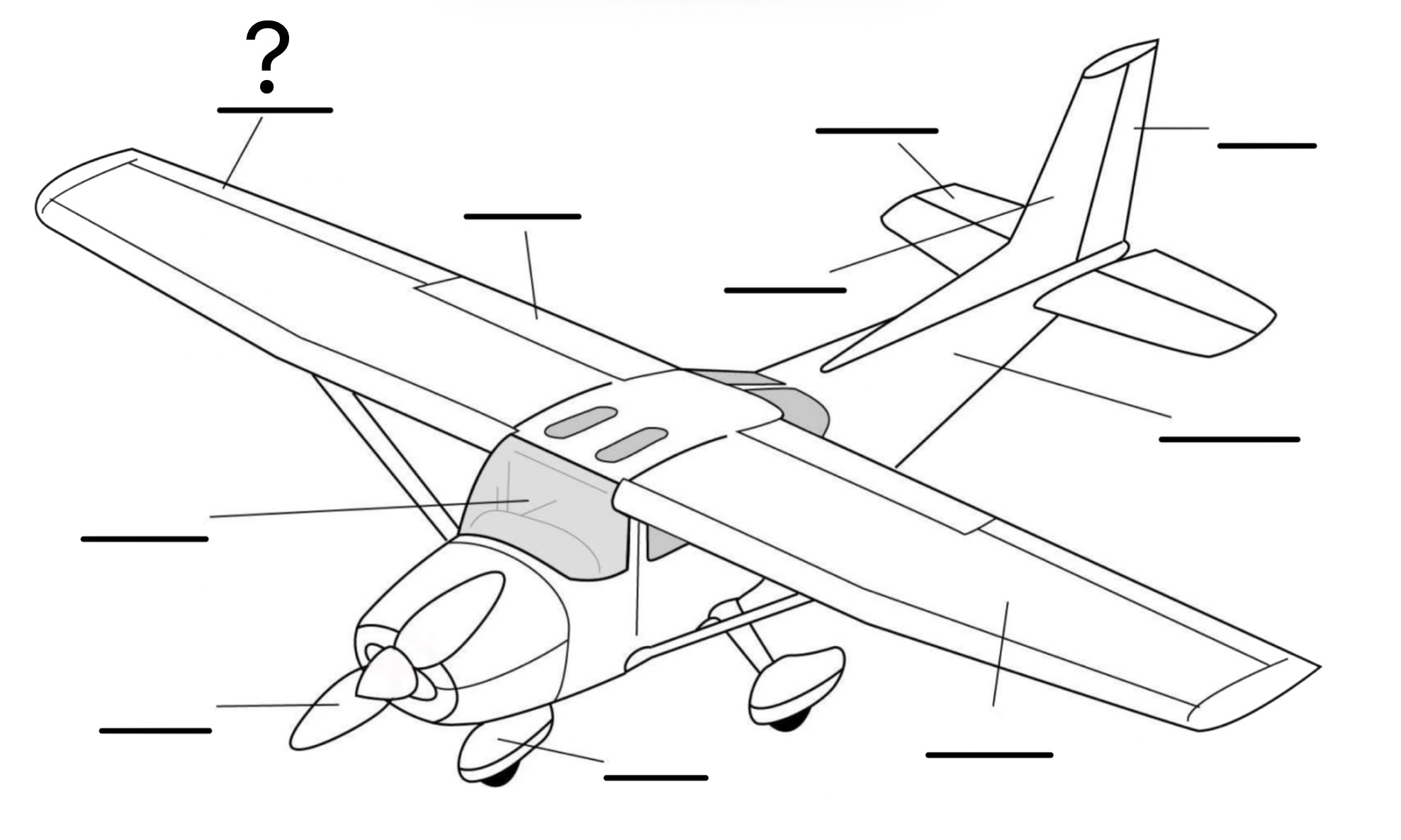
Aileron
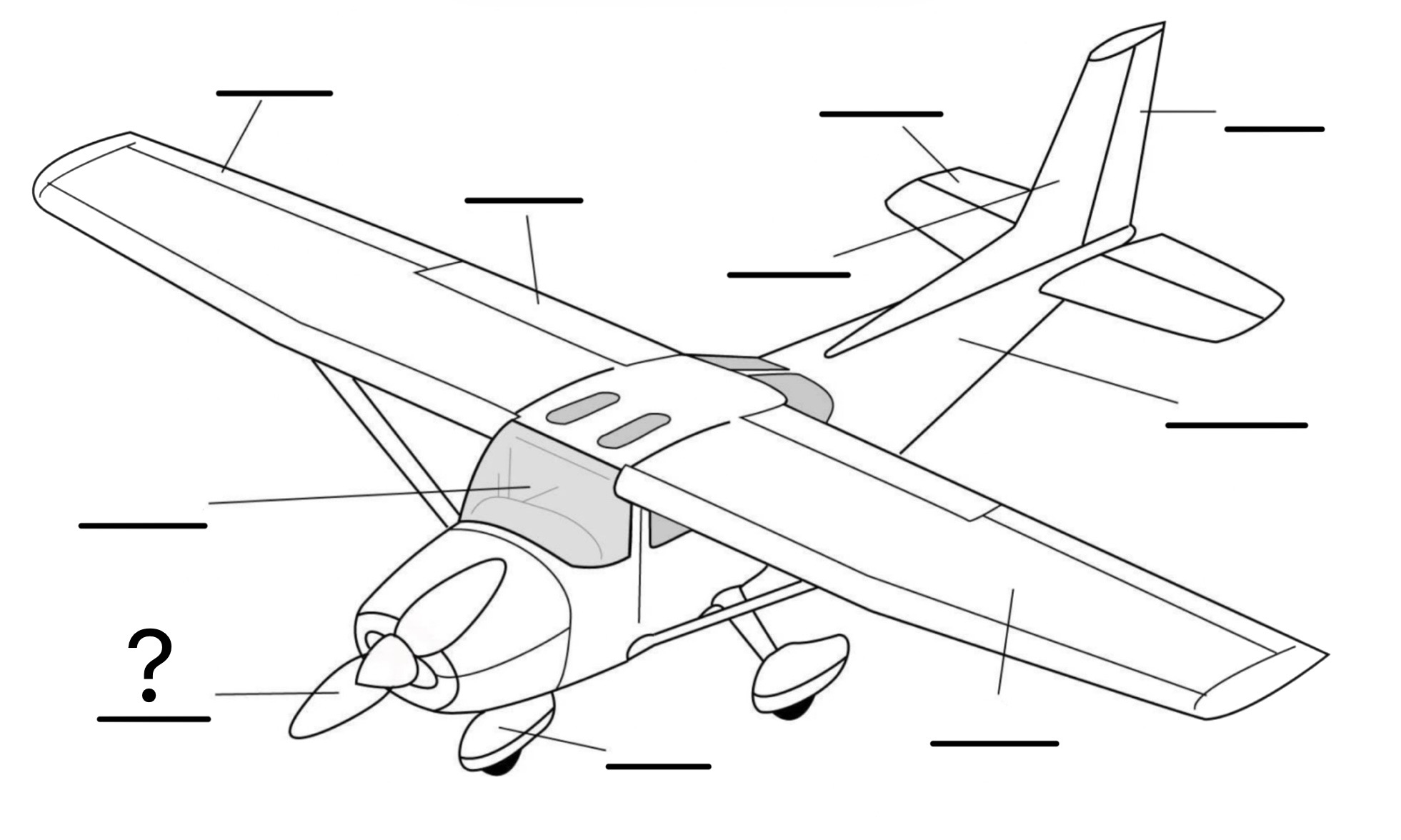
Propeller
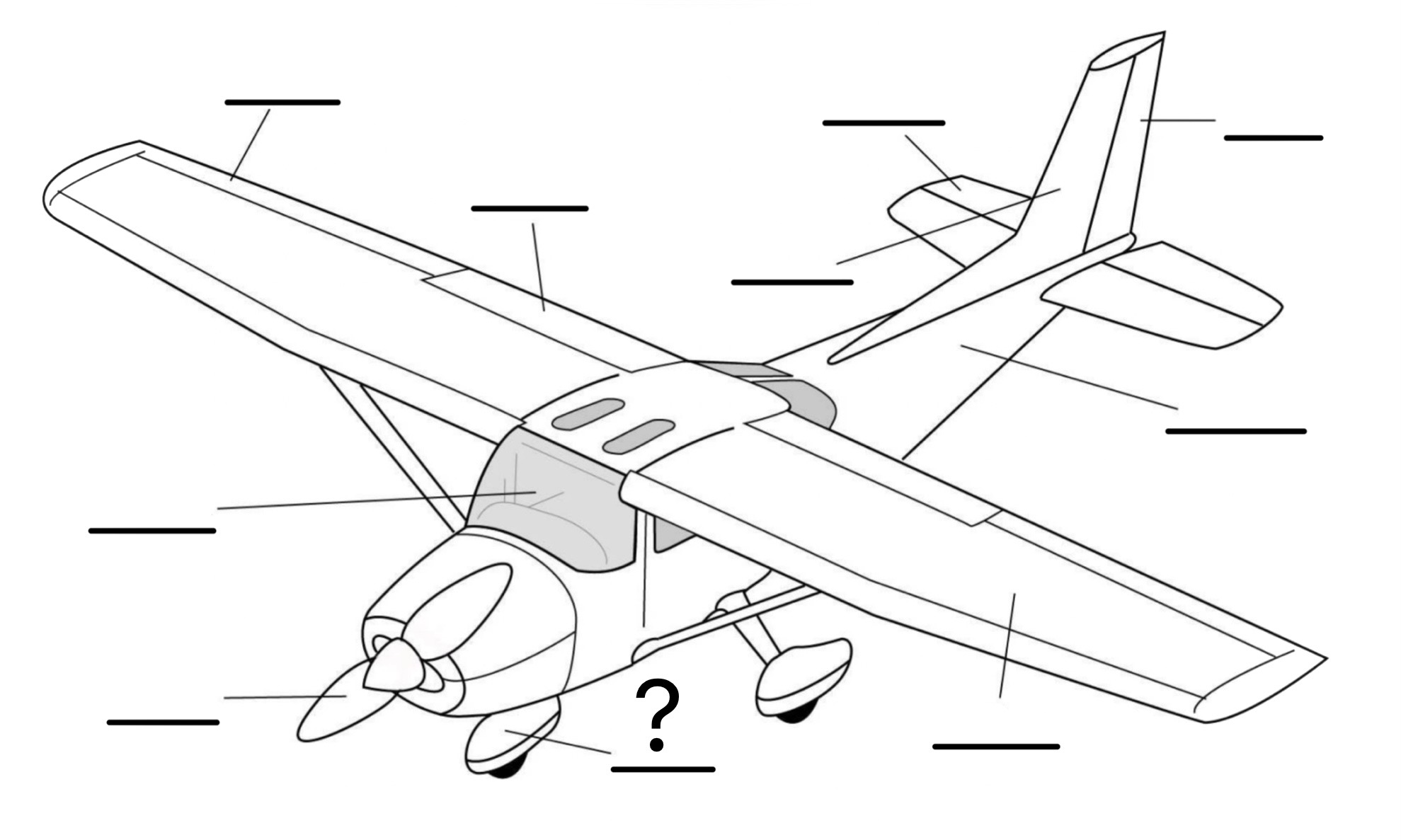
Landing Gear
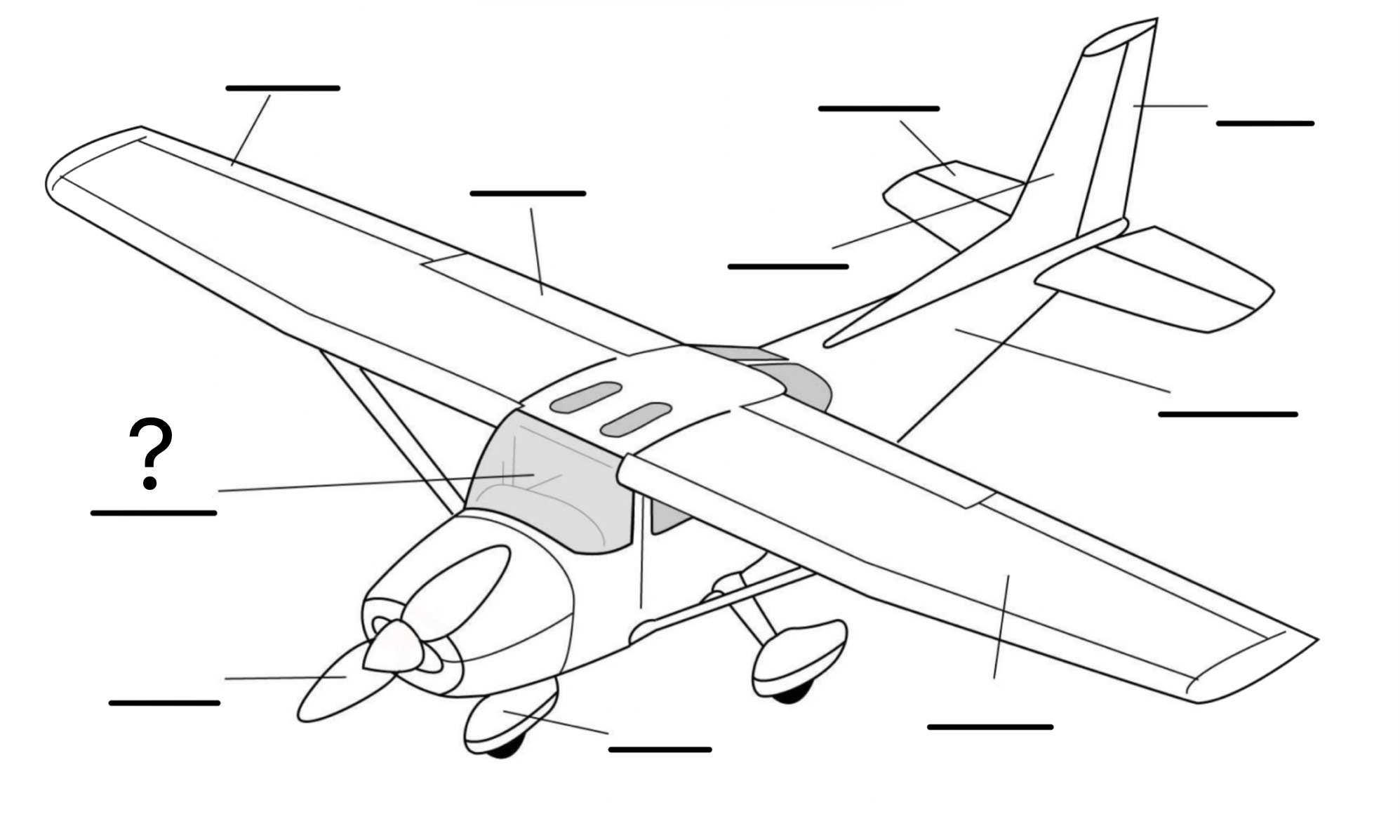
Cockpit
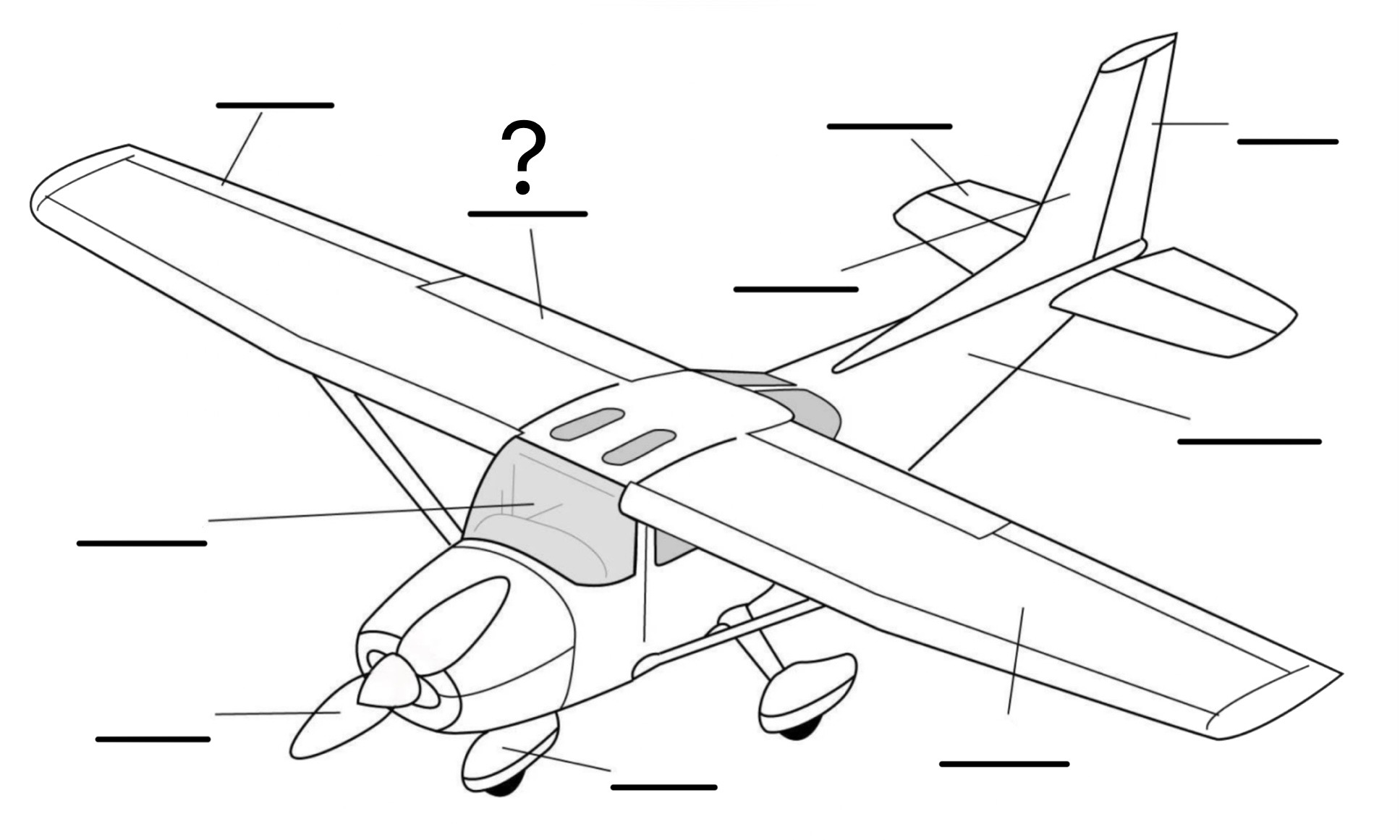
Flap
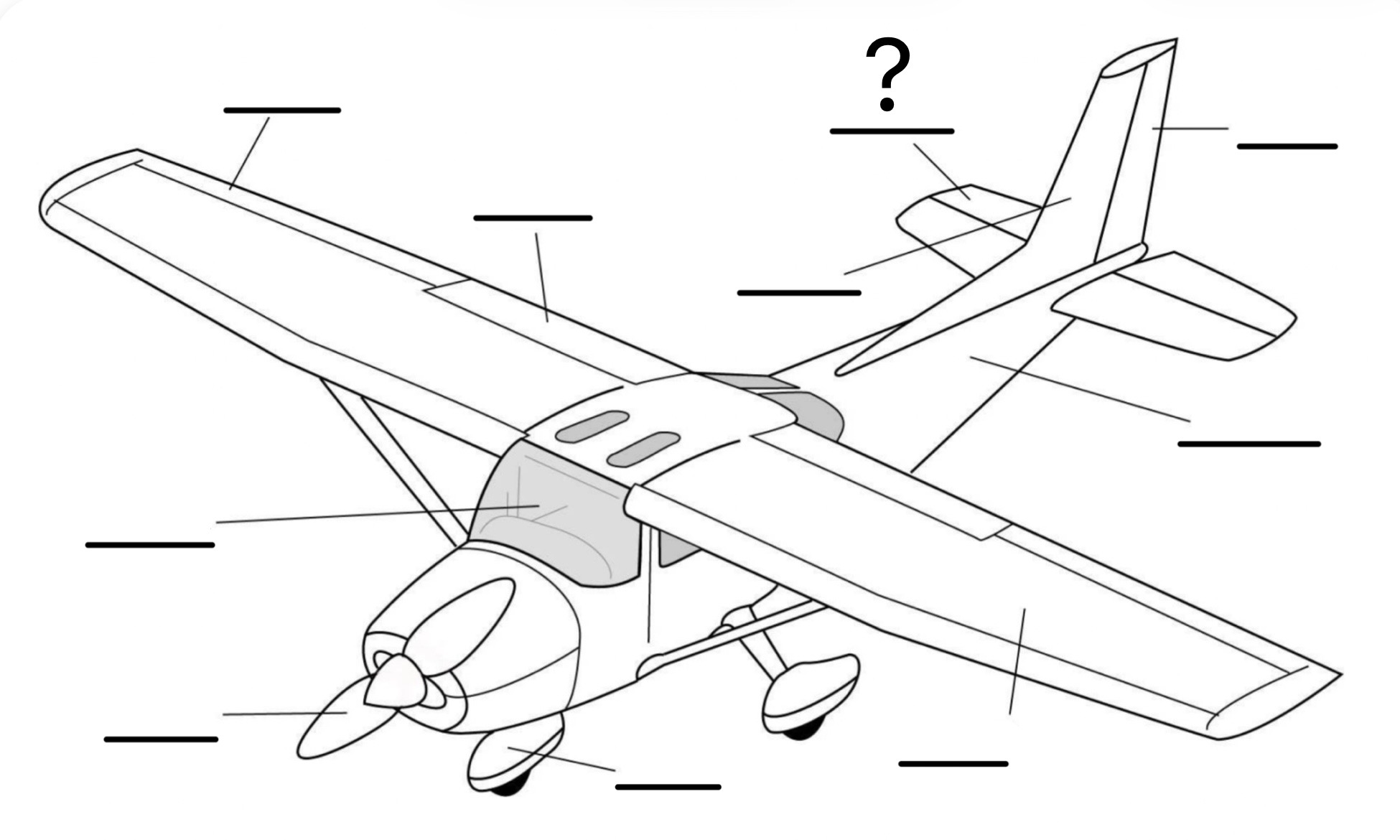
Elevator
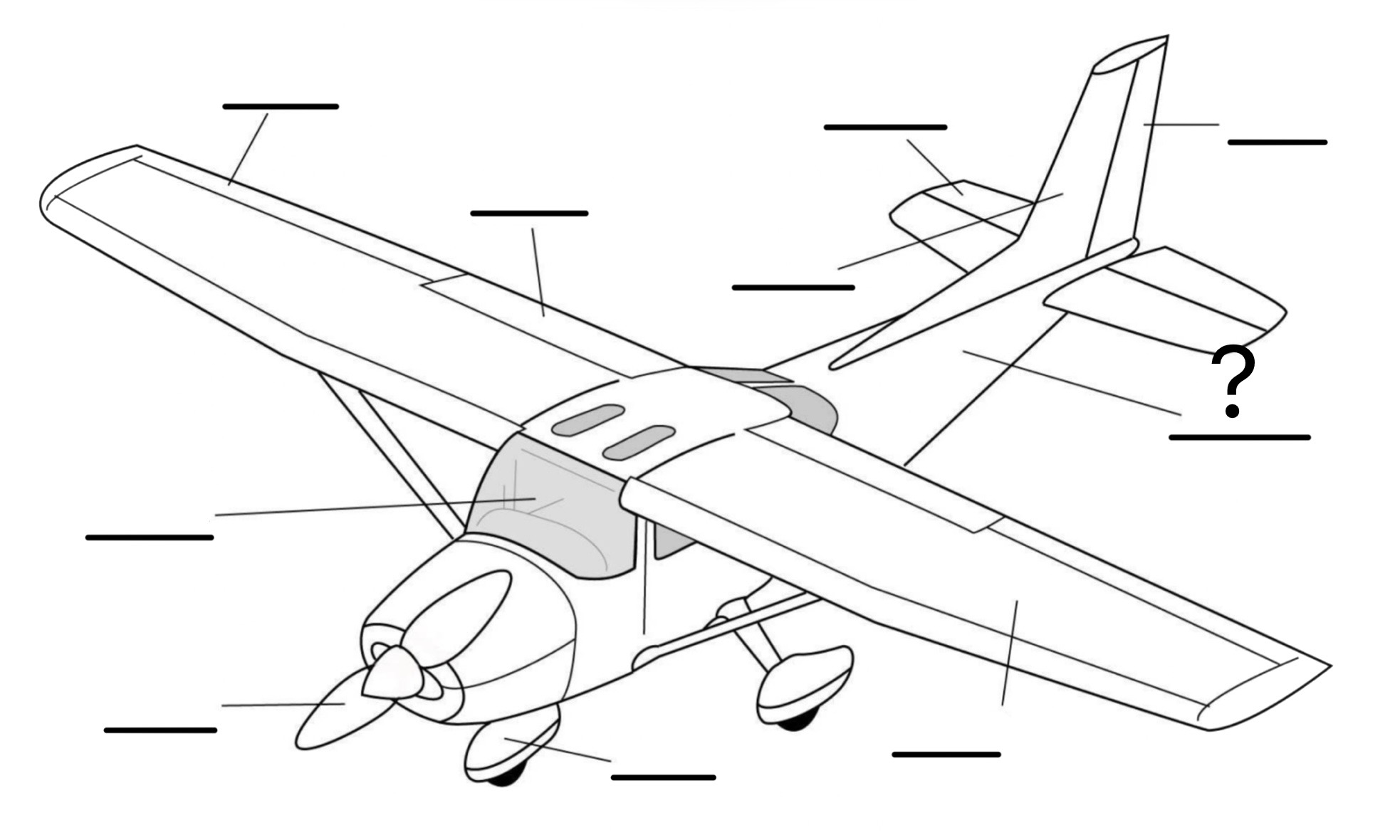
Fuselage
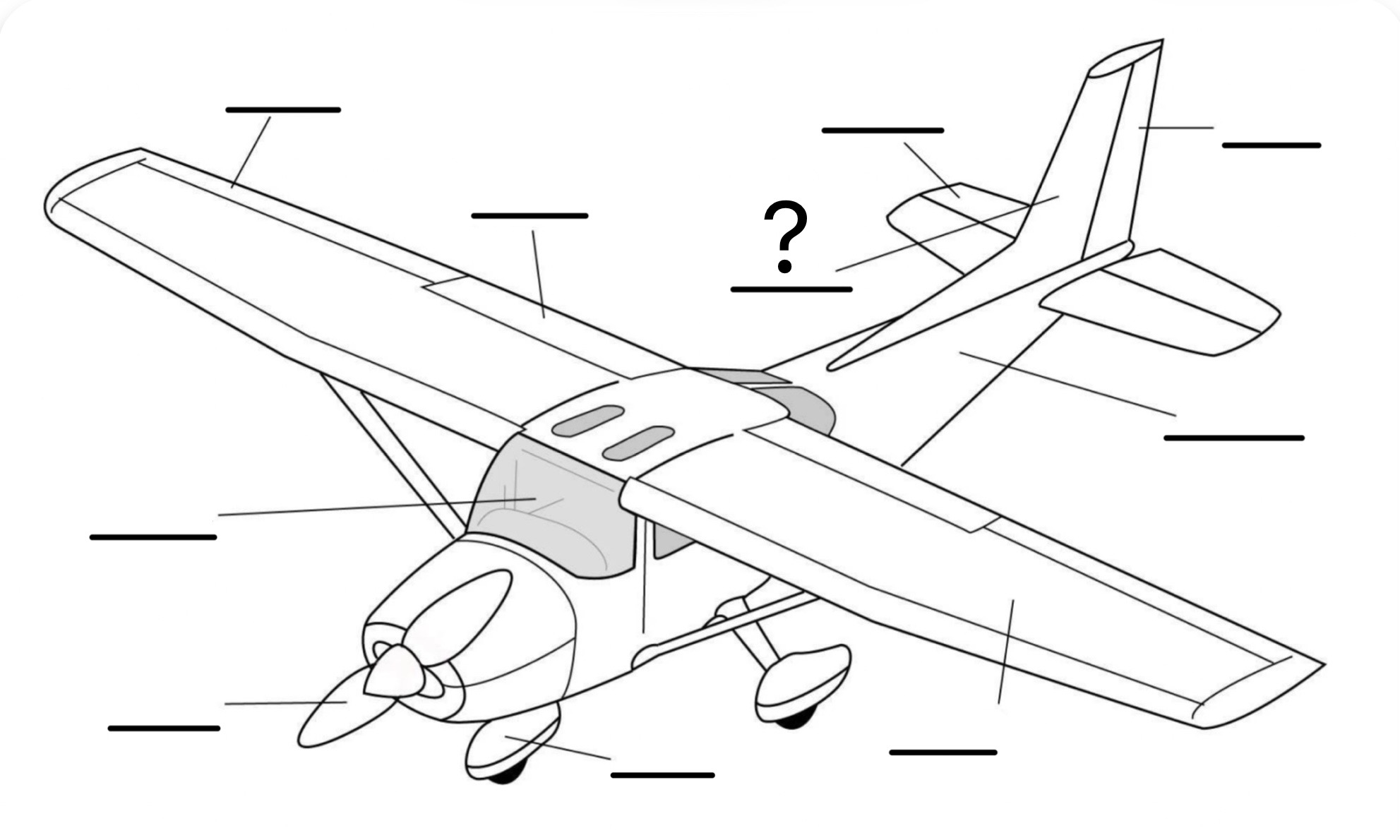
Tail
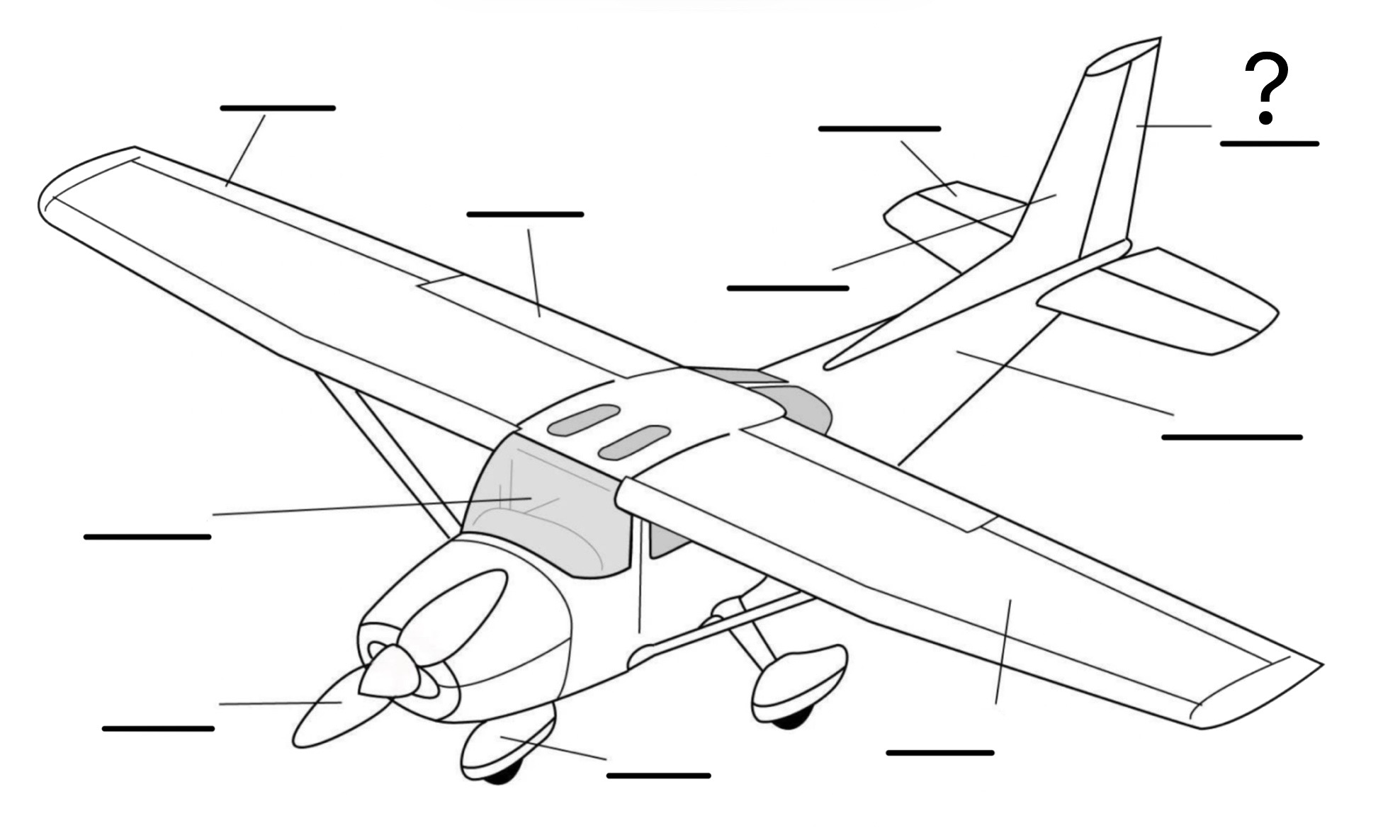
Rudder
What are the forces of flight?
The four forces acting on an aircraft are lift (upward), weight (downward), thrust (forward), and drag (rearward). In steady, unaccelerated flight, these forces are in equilibrium: lift equals weight, and thrust equals drag.
Explain the theory of lift. Provide adequate detail.
Lift is primarily generated by a combination of Bernoulli’s Principle and Newton’s Third Law. As air moves faster over the curved top of an airfoil, it creates lower pressure compared to the bottom (Bernoulli), while the wing simultaneously deflects air downward, creating an equal and opposite upward reaction (Newton).
In proper order, list the basic sections of a turbine engine and explain the operation.
A turbine engine operates through five continuous stages: Inlet (air intake), Compression (increasing air pressure), Combustion (fuel ignition), Turbine (extracting energy to drive the compressor), and Exhaust (high-velocity air release for thrust). This sequence is famously nicknamed "suck, squeeze, bang, and blow."
What are considered the primary flight controls of an aircraft and how are each one of these controls manipulated in flight?
The primary controls are ailerons (roll), elevators (pitch), and the rudder (yaw). Ailerons are controlled by moving the yoke or stick left and right, elevators by moving it forward or backward, and the rudder by pressing the left or right foot pedals.
In normal sequence, list the strokes and events of a reciprocating engine.
The sequence is the Intake stroke (drawing in fuel/air), Compression stroke (squeezing and igniting the mixture), Power stroke(forcing the piston down), and Exhaust stroke (removing spent gases). These four events occur over two revolutions of the crankshaft in a standard four-stroke engine.
What system operates the airspeed indicator and what type of information does it provide to a pilot?
The airspeed indicator is operated by the pitot-static system, which measures the difference between "ram" air pressure from the pitot tube and ambient air pressure from the static port. It provides the pilot with Indicated Airspeed (IAS), representing the aircraft's speed through the air.
What V speed does the red line indicate on the airspeed indicator?
The red line on the airspeed indicator represents VNE, or the Never Exceed Speed. Operating above this speed risks structural damage or catastrophic airframe failure due to aerodynamic loads.
Where can you find airport information?
Detailed data is found in the Chart Supplement (formerly the Airport/Facility Directory), Sectional Charts, and digital flight apps like ForeFlight. Real-time updates regarding closures or hazards are found in NOTAMs (Notices to Air Missions).
The equator represents the zero-degree line of ________.
The equator is the zero-degree line of latitude.
What type of navigation system sends signals in all directions and the aircraft can fly a magnetic heading TO or FROM the station?
This is the VOR (VHF Omnidirectional Range) system. It allows a pilot to select a specific radial to fly a magnetic heading either TO or FROM the station using a cockpit indicator.
For the Murfreesboro airport, what type of airspace is this airport and what is the aircraft identifier?
The identifier for Murfreesboro Municipal Airport is KMBT. It is currently a non-towered airport, meaning it sits in Class G airspace at the surface, typically transitioning to Class E at 700 feet AGL.
What are the ground components of an Instrument Landing System (ILS)?
The primary ground components are the Localizer (horizontal guidance), the Glide Slope (vertical guidance), and Marker Beacons (range information). It often also includes an Approach Lighting System (ALS) to help pilots transition to visual flight.
Movement about an aircraft’s longitudinal axis is referred to as
roll.
Which of the following statements are correct?
The pneumatic system utilizes bleed air form the engines for the thermal anti-icing system and aircraft pressurization system.
Taxiway edge lights are ____.
blue
Generally, the _________ system powers the landing system, brakes, and fight controls (excluding fly-by-wire technology)?
hydraulic
Movement about the ________ axis is referred to as yaw and is controlled by the ______.
vertical, rudder
The angle between the chord line and the oncoming relative wind is known as the
angle of attack.
Which of the following is the standard temperature lapse rate?
Decrease 2 °C per thousand-foot increase in altitude.

