Wounds
 Studied by 0 people
 Call with Kai
 Learn
Learn Practice Test
 Spaced Repetition
 Match
Match Flashcards
 Knowt Play
1/32

There's no tags or description
Looks like no tags are added yet.
Name | Mastery | Learn | Test | Matching | Spaced | Call with Kai |
|---|
No analytics yet
Send a link to your students to track their progress
33 Terms
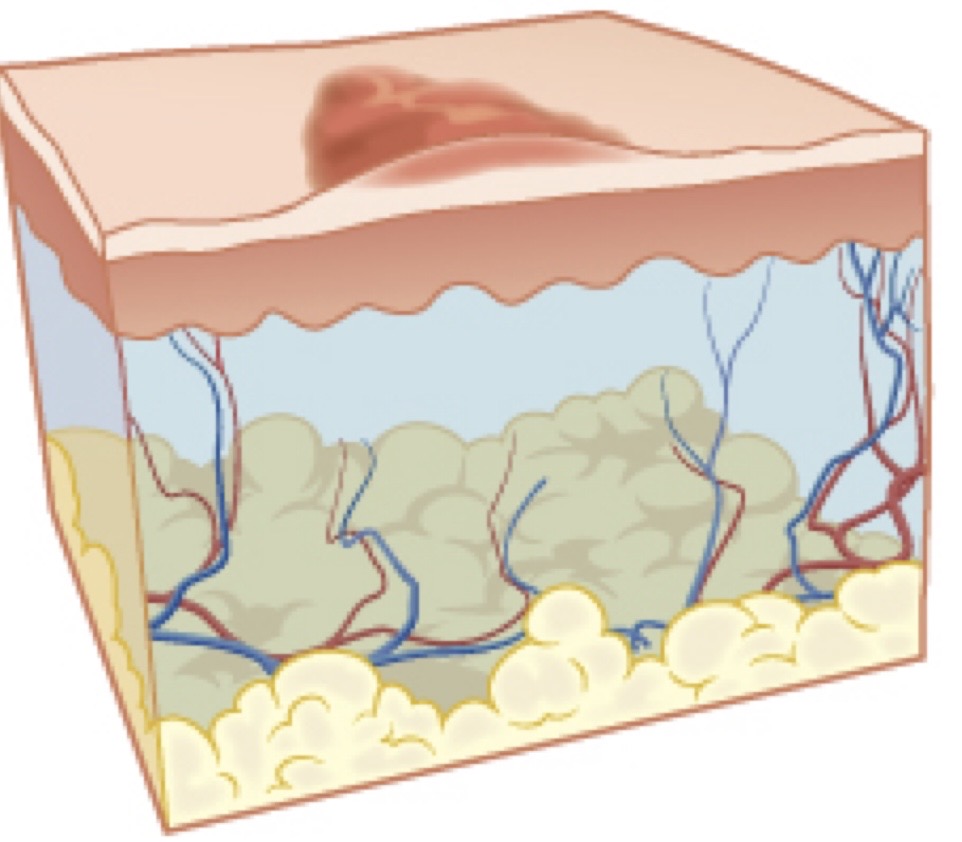
Crust
Dry, raised area cover with a crust or scab
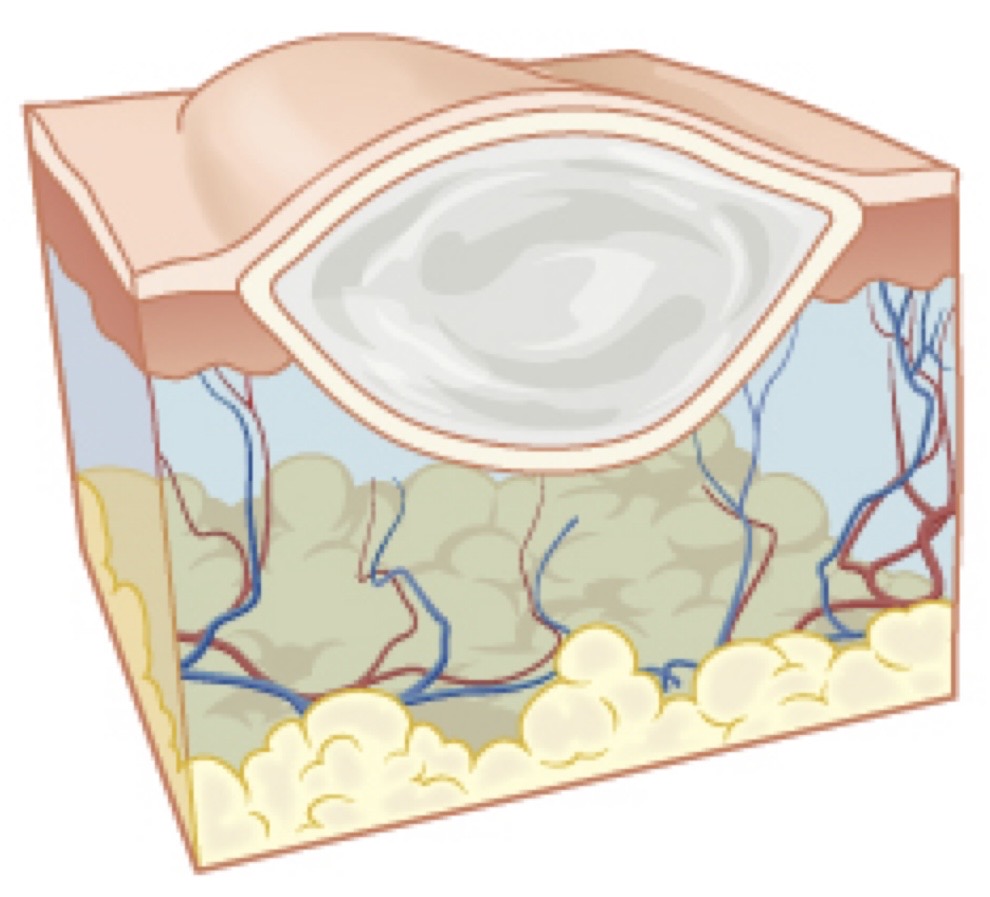
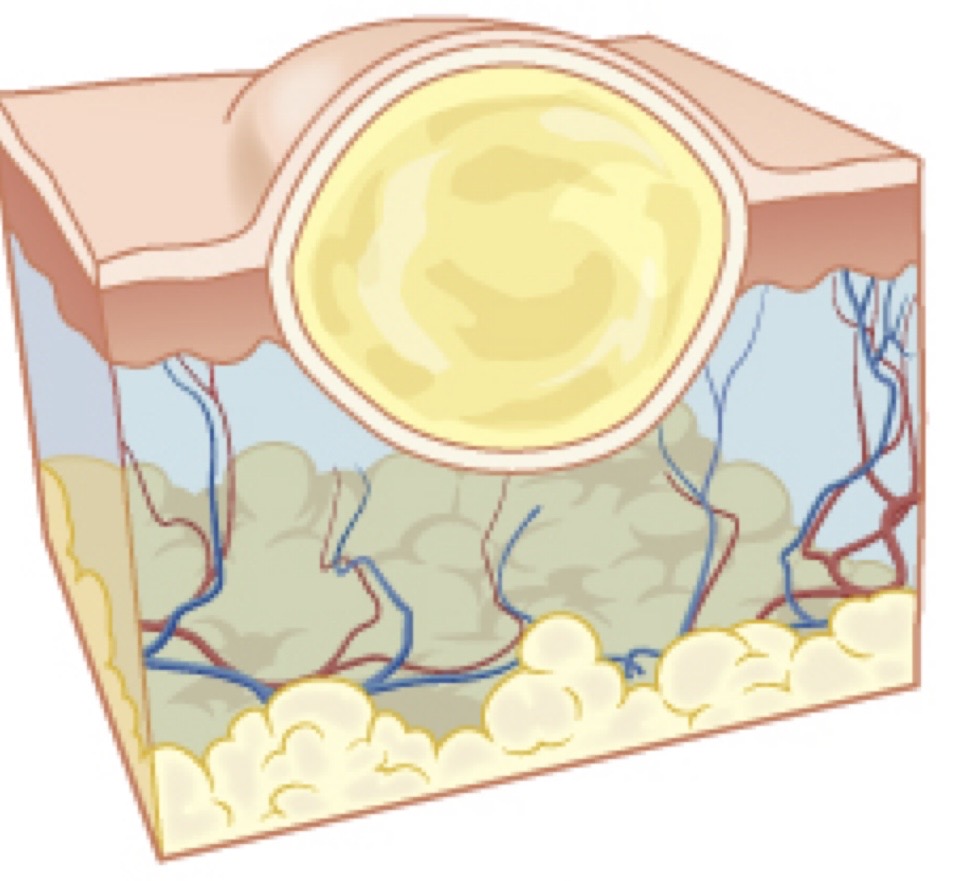
Cyst
Encapsulated sac that forms beneath the skin, typically filled with fluid
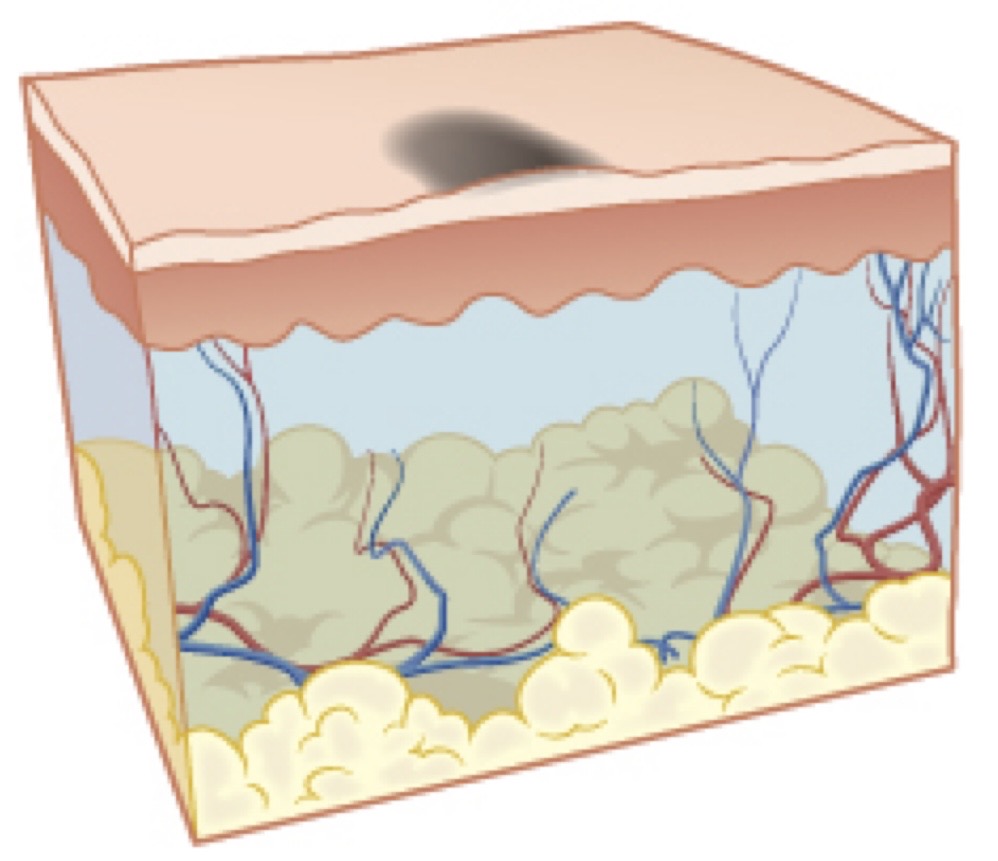
Macule
Flat, smooth spot on the skin that differs in color from the surrounding area
Freckles, flat moles
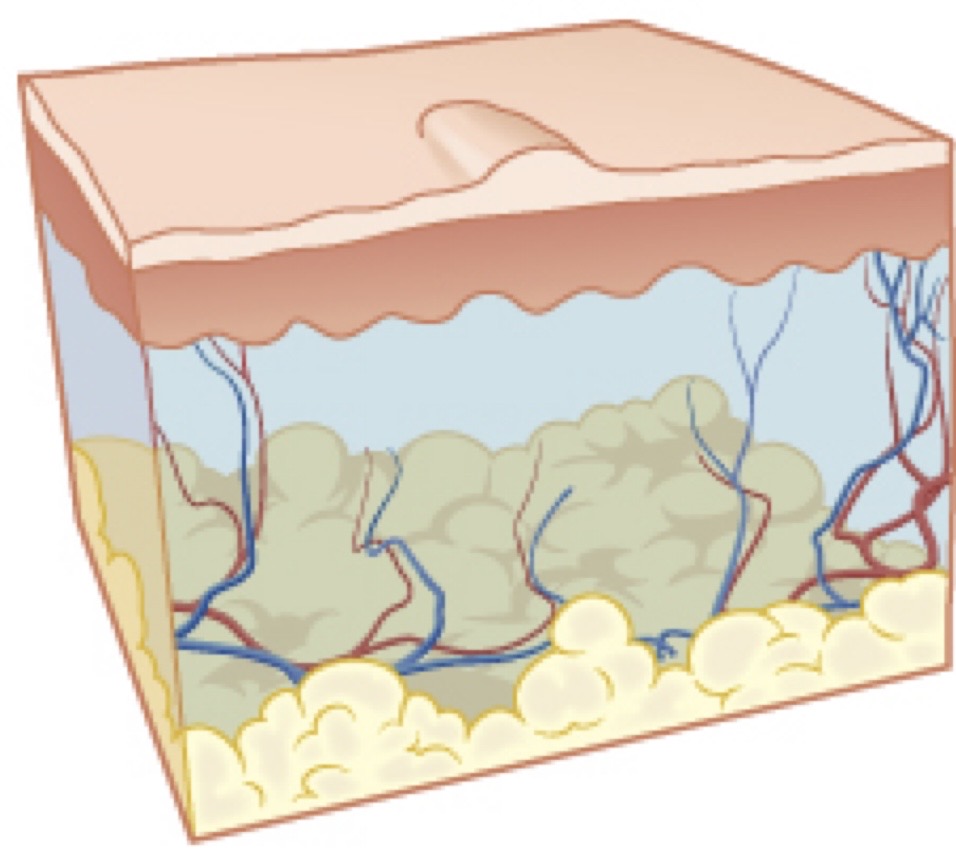
Papules
Small, raised bumps on the skin
Similar to a mosquito bite
Can be firm and a variety of colors
Pustule
Bumps on the skin filled with fluid or pus
In acne
Can be red at the base
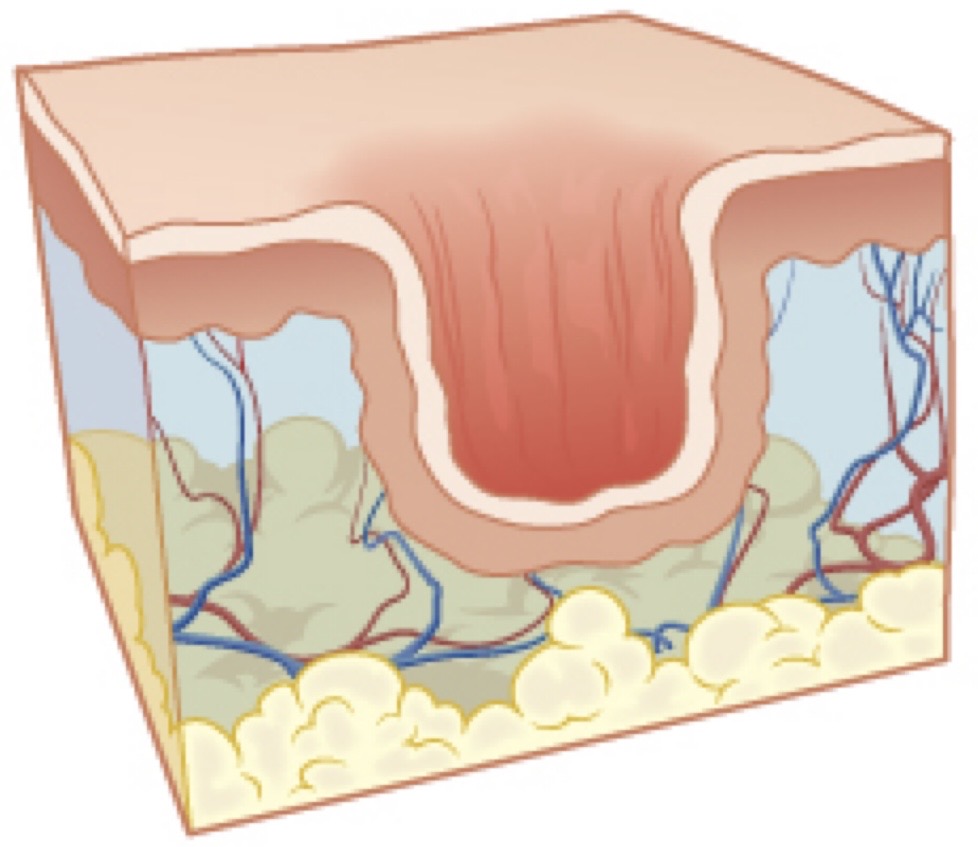
Ulcer
Break in the skin or open sore
Often involve deep layers of skin
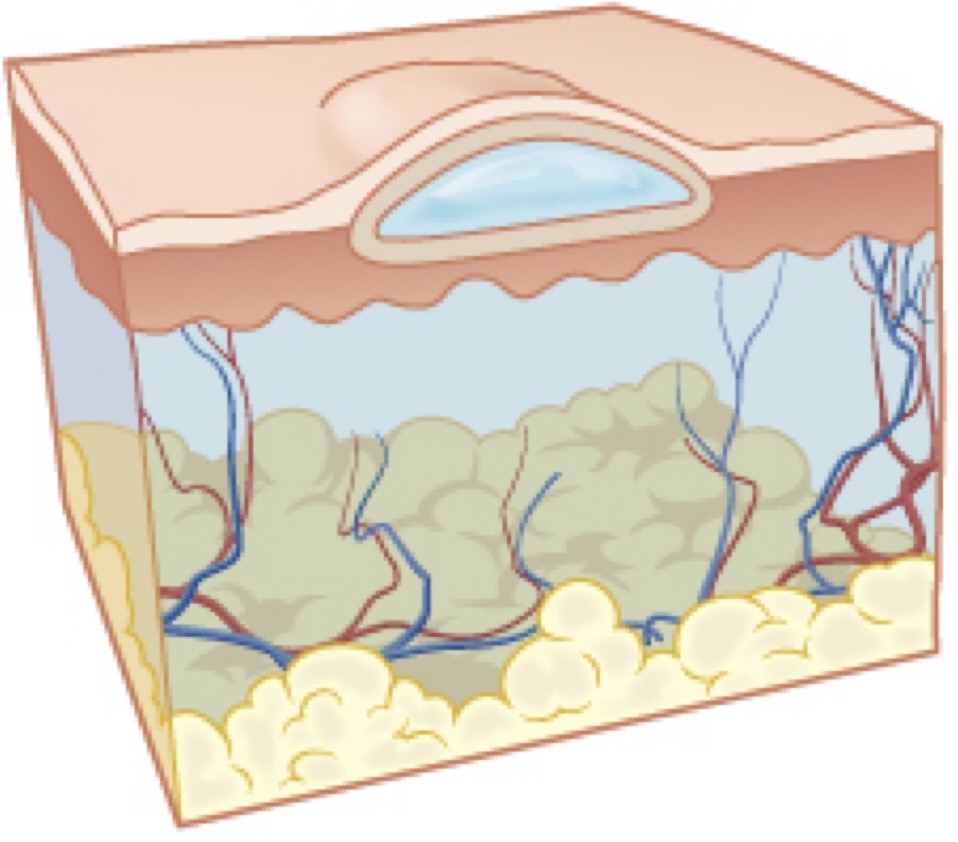
Vesicle
Small, fluid-filled lesions
Blisters like in herpes
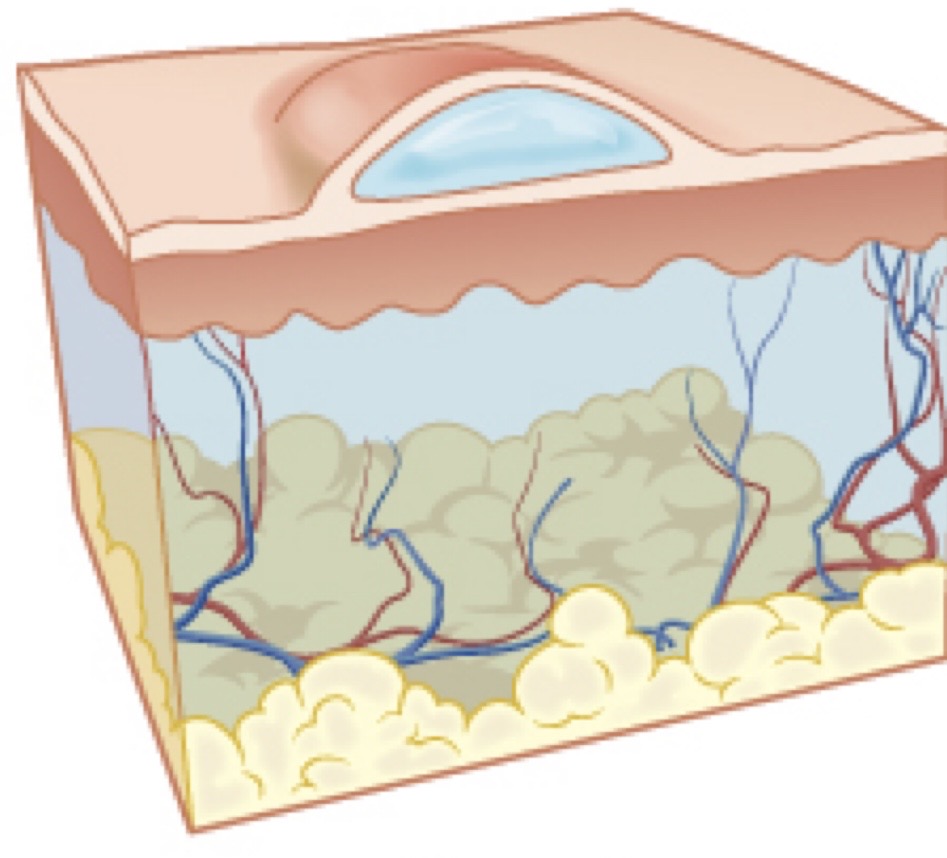
Wheal
Swollen, inflamed areas of skin that often itch or burn
Usually from an allergic reaction
Assessing moles for melanoma
A- asymmetry: even or irregular
B- borders: smooth and even or irregular, ragged or blurred
C- color: single shade of brown or black or multicolored (brown, black, red, white, or blue)
D- diameter: Small or larger then 6 mm
E- evolving: stays the same or changing in size, shape or color
Keloids
Overgrown raised scars that develop after a wound has healed
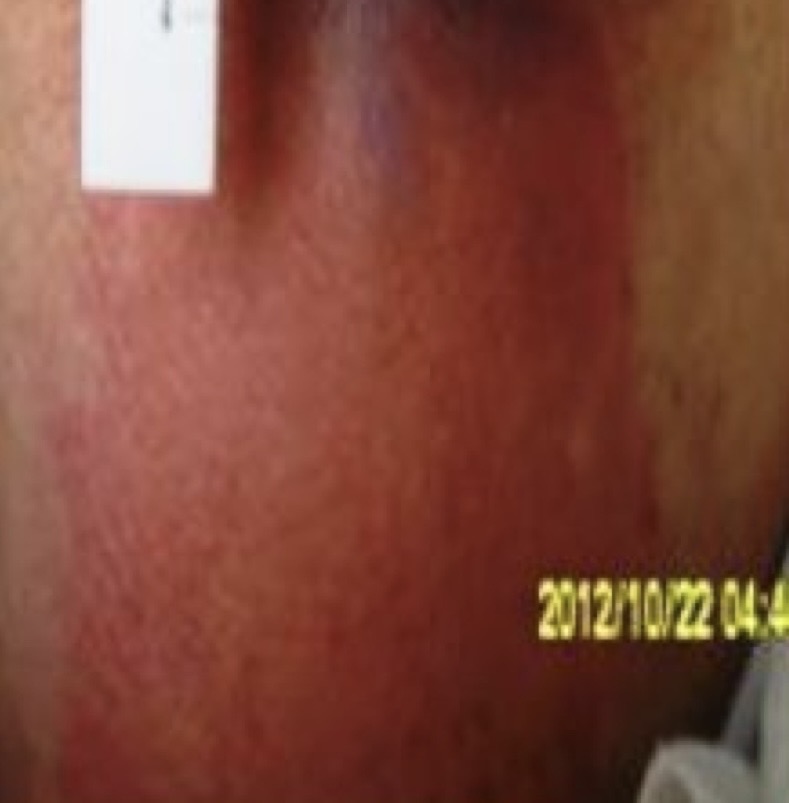
Stage 1
Intact skin with non-blanchable redness over a bony prominence
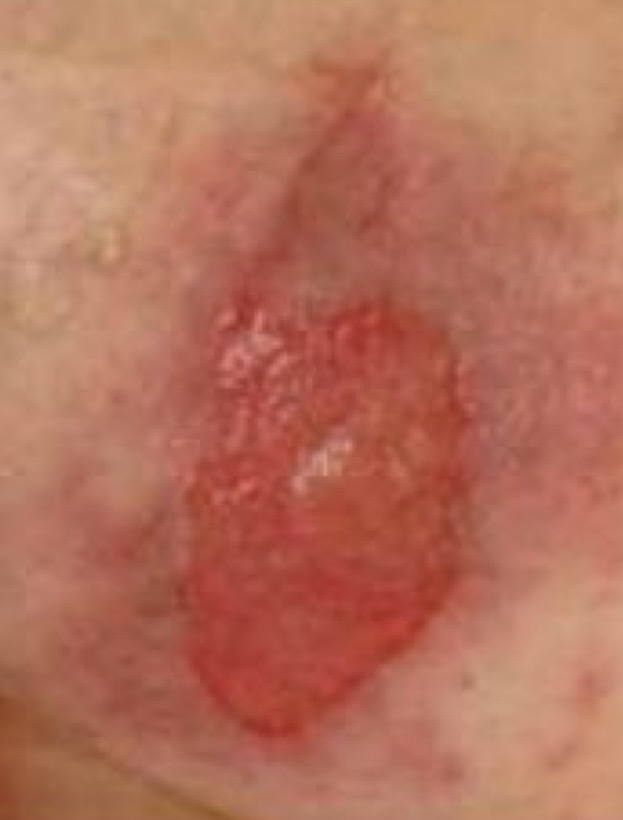
Stage 2
Partial-thickness loss of skin
Can appear as an open ulcer or fluid-filled blister
Wound bed may appear red or pink
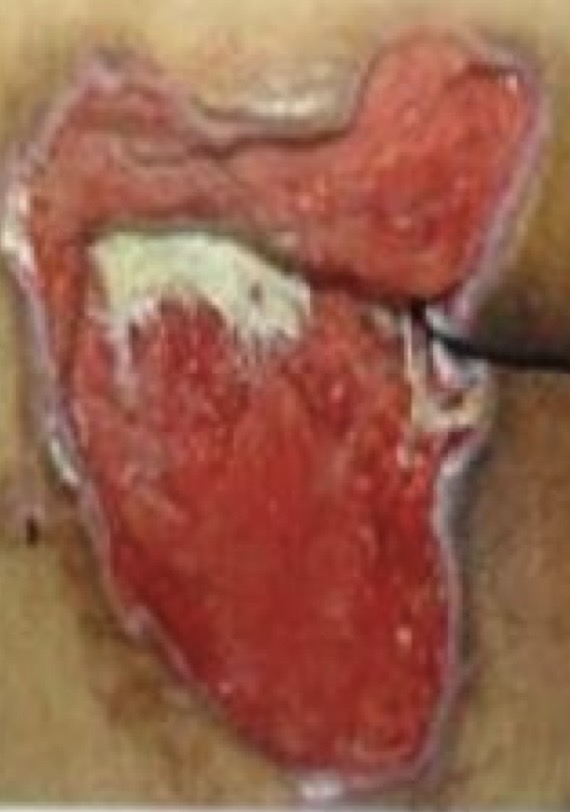
Stage 3
Full-thickness tissue loss, where subcutaneous fat can be seen
Undermining and tunneling may occur
May be slough or eschar
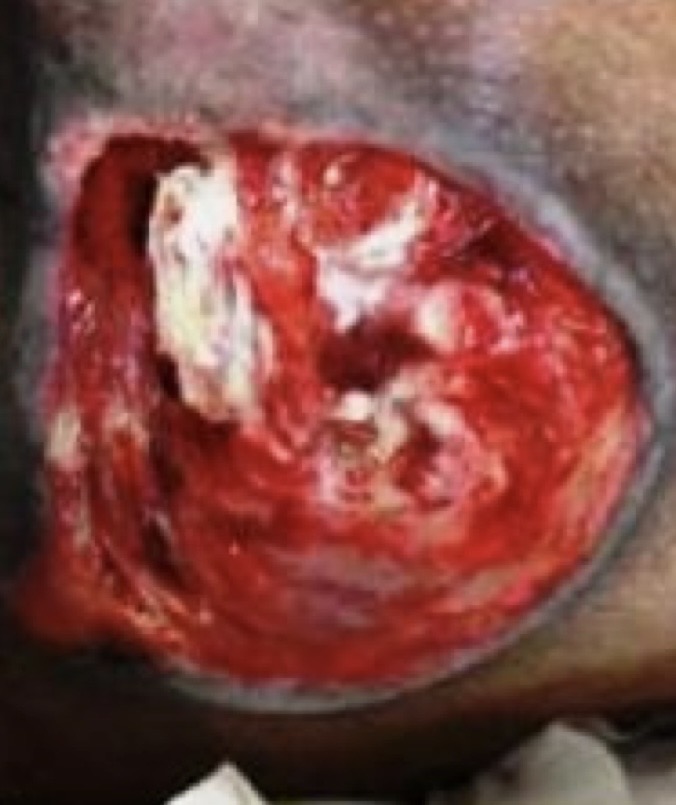
Stage 4
Full-thickness loss with exposed bone, muscle, or tendon
Undermining and tunneling may occur
May be slough or eschar
Unstageable
When slough or eschar is covering the wound so it is undetermined if it is stage 3 or 4
Deep tissue injury
Super deep purple bruise
Plantar wound
Can develop due to neuropathy
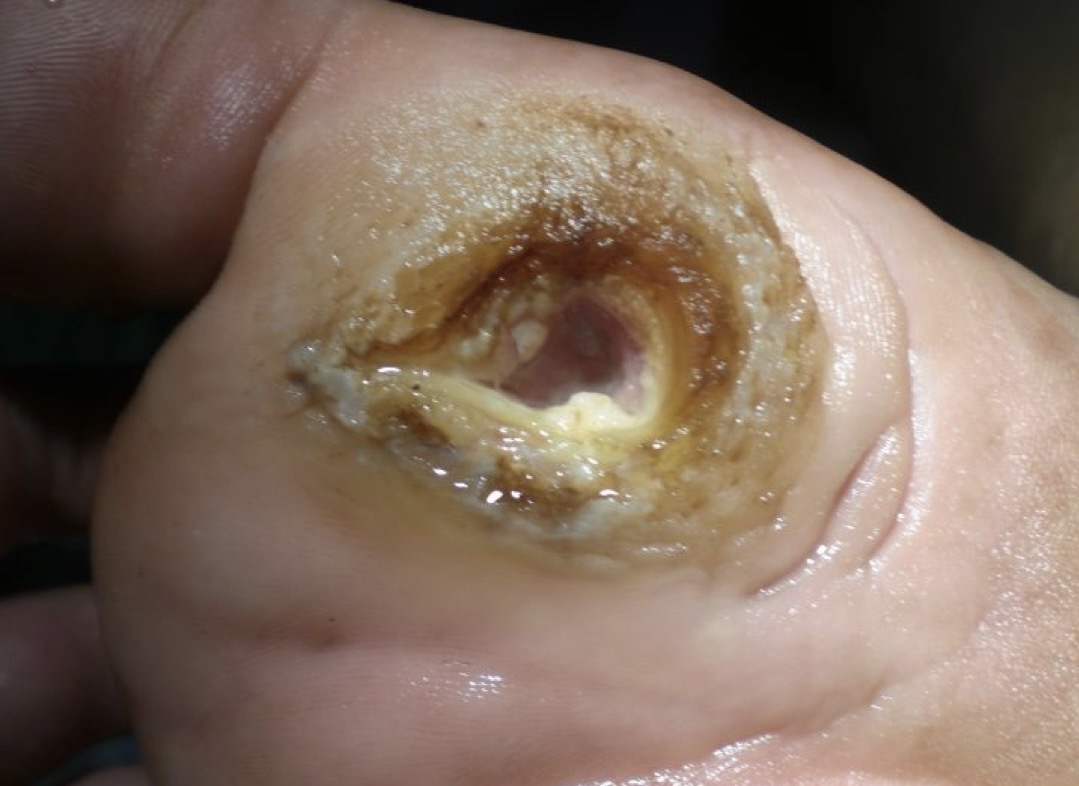
Serous drainage
Clear or light yellow
Thin, watery plasma
Sanguineous drainage
Fresh, bright red bleeding
Serosanguineous drainage
Mix of blood and serous fluid
Typically pink color
Purulent drainage
Thick, opaque, yellow/green/tan color
NEVER NORMAL
No excudate
No drainage on bandage and wound base is dry
Scant excudate
Moist wound base, no measurable amount on bandage
Minimal excudate
Less than 25% of the bandage is covered
Moderate excudate
25-75% of the bandage is covered
Large or copious excudate
More than 75% of the bandage is covered
Hemostasis
Occurs immediately after an injury
Blood vessels constrict and platelets gather at the wound site to form a clot
Inflammatory
Occurs immediately after an injury
Blood vessels constrict and platelets gather at the wound site to form a clotOccurs immediately after an injury
Blood vessels constrict and platelets gather at the wound site to form a clot
Proliferative
Body begins to rebuild tissue
Including these processes:
-Epithelialization: regrowth of skin
-Angiogenesis: formation of new blood vessels
-Collagen formation: which provides stregth
-Contraction
Maturation
Where the newly formed tissue gains strength and flexibility
Primary intention
A healing process where wound edges are brought together, allowing for minimal scarring and faster healing
Secondary intention
A healing process where wounds are left open to heal from the inside out, typically resulting in more scarring and a longer healing time.
Tertiary intention
A healing process used for wounds that are intentionally left open for some time to prevent infection, then closed surgically for improved healing and reduced scarring.
 Note
Note  Flashcards (78)