Eye Anatomy & Physiology - Chapter 16

0.0(0)
studied byStudied by 1 person
0.0(0)
call with kaiCall with Kai
learnLearn
examPractice Test
spaced repetitionSpaced Repetition
heart puzzleMatch
flashcardsFlashcards
GameKnowt Play
Card Sorting

1/55

encourage image

There's no tags or description

Looks like no tags are added yet.

Last updated 9:36 PM on 1/31/26
Name
Mastery
Learn
Test
Matching
Spaced
Call with Kai

No analytics yet

Send a link to your students to track their progress

56 Terms

1
New cards

good luck brotatochip

knowt flashcard image
2
New cards

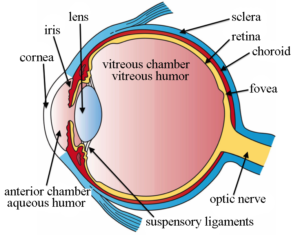
Eyeball

u know where the eye is

<p>u know where the eye is</p>
3
New cards

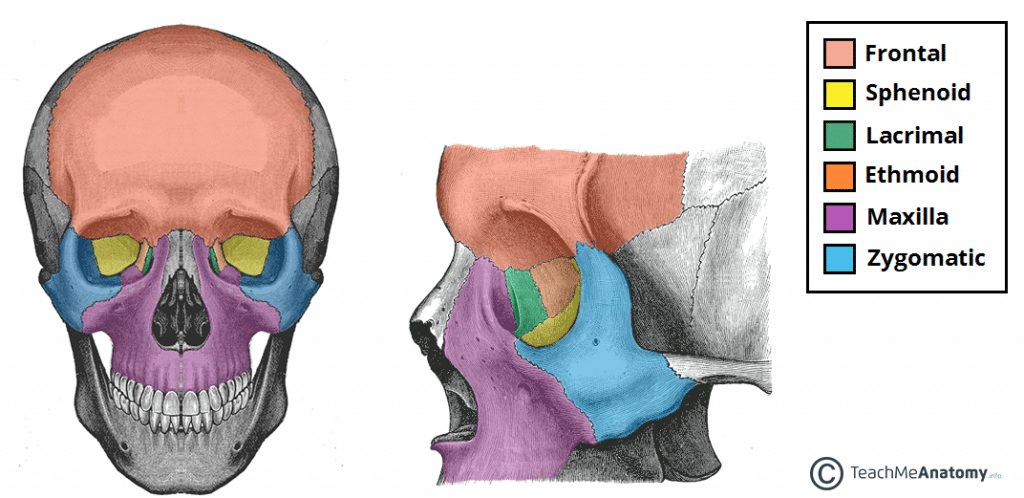
Bones of the Orbital Cavity:

  • Frontal

  • Maxilla

  • Zygomatic

  • Sphenoid

  • Lacrimal

  • Ethmoid

  • Palatine

<ul><li><p>Frontal</p></li><li><p>Maxilla</p></li><li><p>Zygomatic</p></li><li><p>Sphenoid</p></li><li><p>Lacrimal</p></li><li><p>Ethmoid</p></li><li><p>Palatine</p></li></ul><p></p>
4
New cards

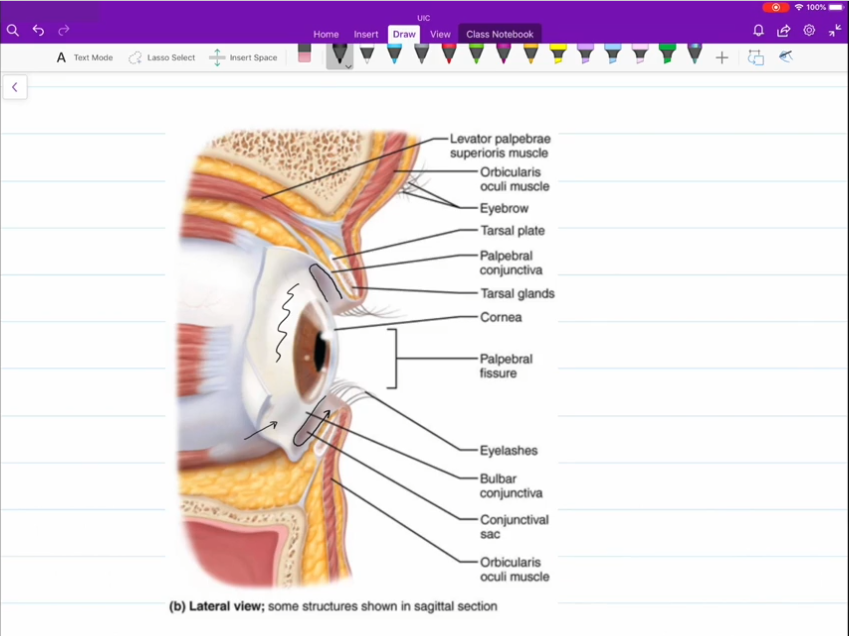
Palpebral

Superior and inferior palpebral are your eyelids
<p>Superior and inferior palpebral are your eyelids</p>
5
New cards

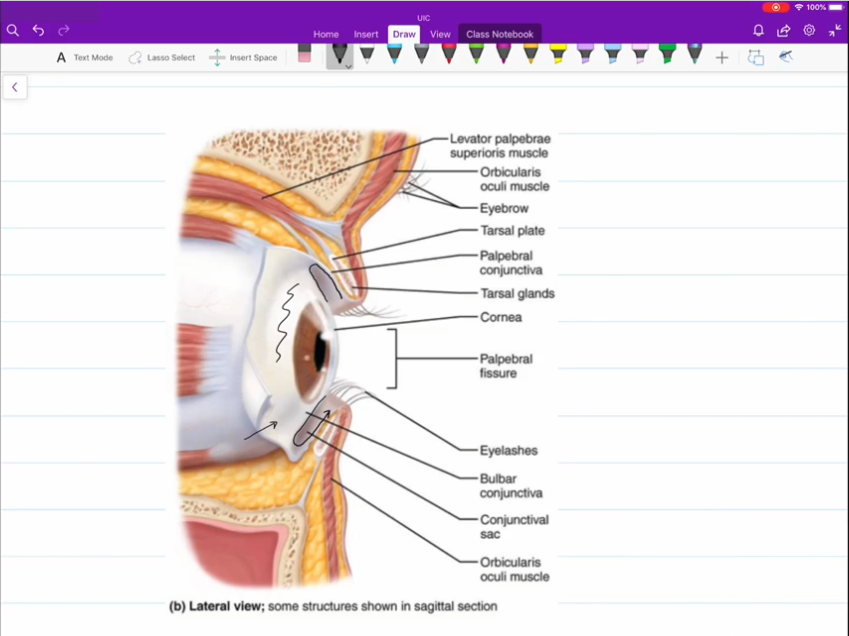
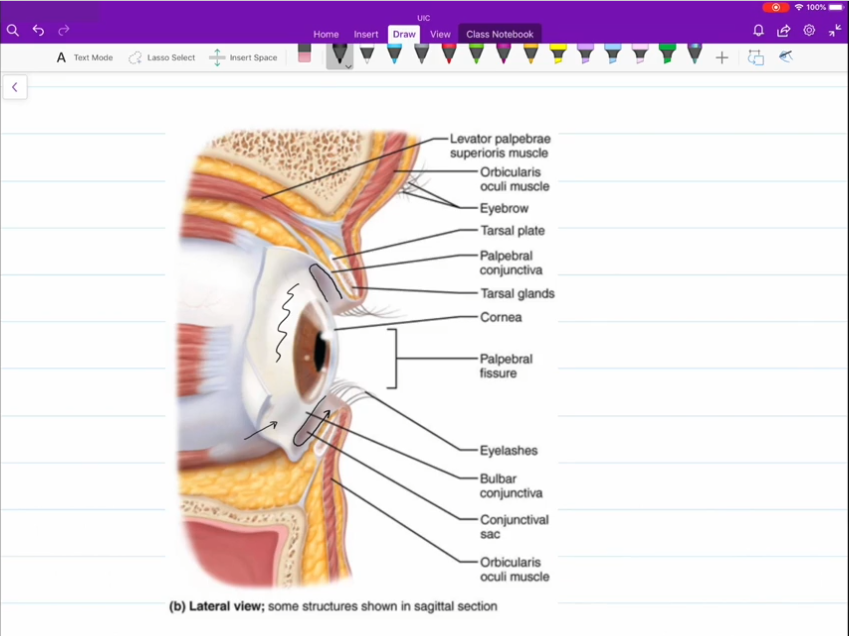
Bulbar Conjunctiva

Covering that sits atop the surface of your eye.
<p>Covering that sits atop the surface of your eye.</p>
6
New cards

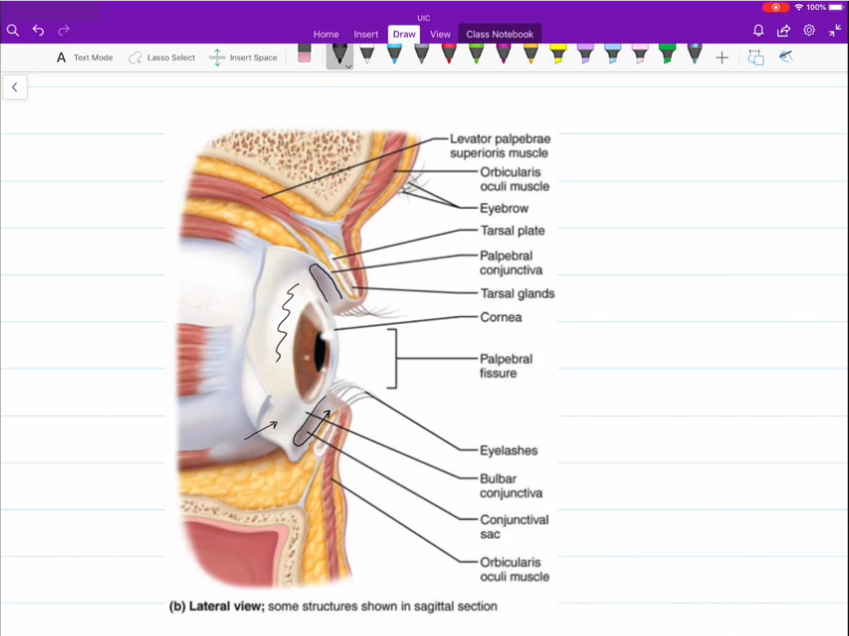
Palpebral Conjuctiva

Covering that rests on the inner surface of the superior and inferior palpebral.
<p>Covering that rests on the inner surface of the superior and inferior palpebral.</p>
7
New cards

Medial and Lateral Commissure

Corner of the eyes
<p>Corner of the eyes</p>
8
New cards

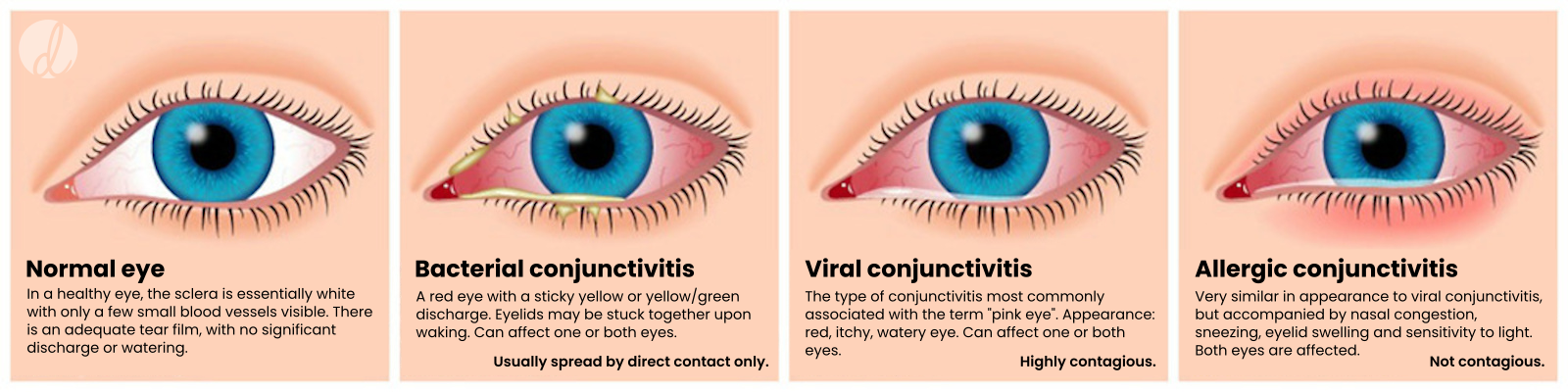
Conjunctivitis

Inflammation of the Conjunctiva
<p>Inflammation of the Conjunctiva</p>
9
New cards

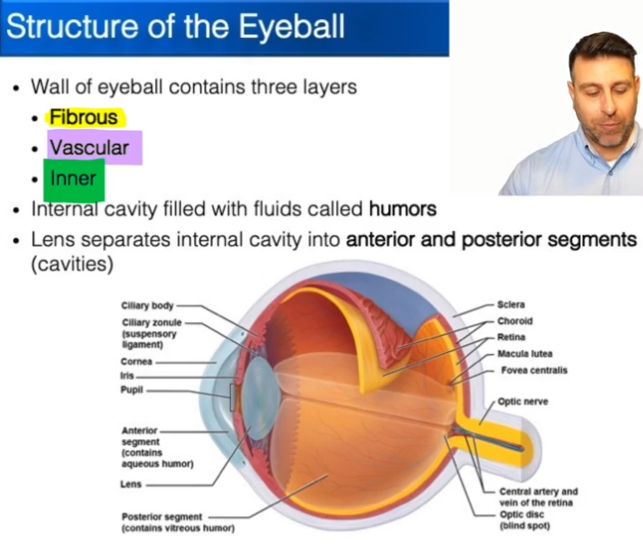
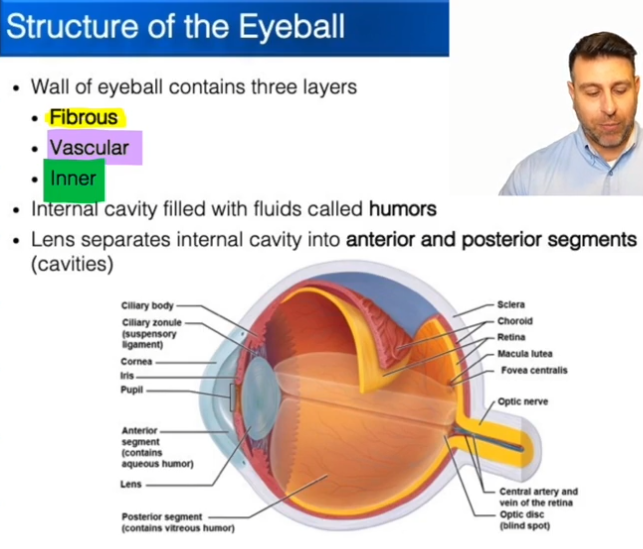
Layers of the Eyeball:

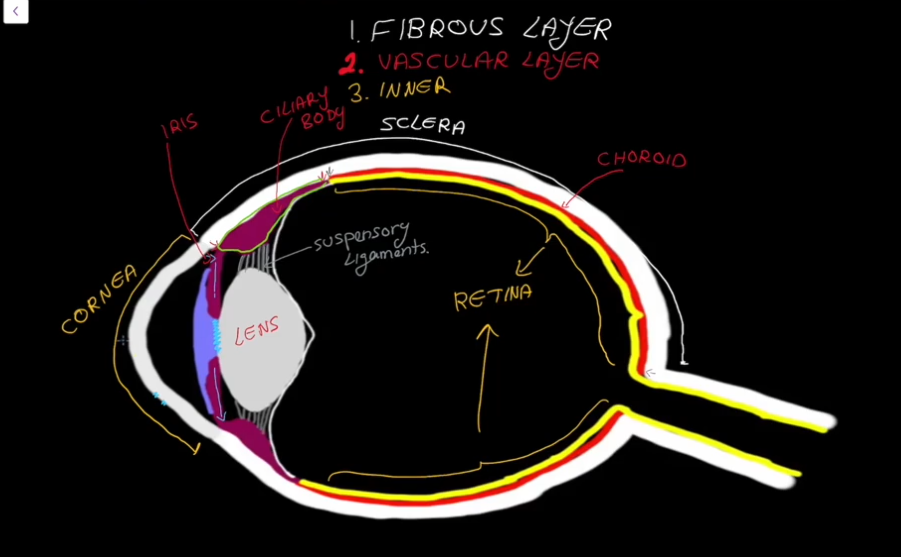
  • Fibrous

  • Vascular

  • Inner

<ul><li><p>Fibrous</p></li><li><p>Vascular</p></li><li><p>Inner</p></li></ul><p></p>
10
New cards

What is a Humor?

Sacs of liquid in the eye that help to keep the shape
<p>Sacs of liquid in the eye that help to keep the shape</p>
11
New cards

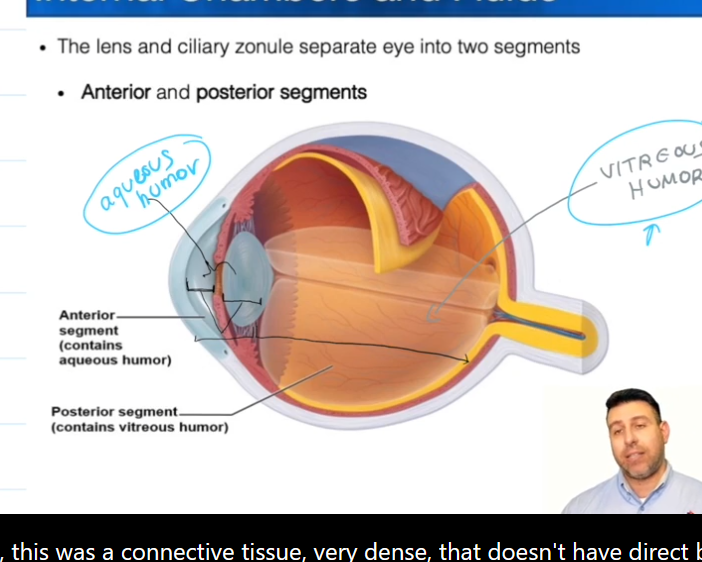
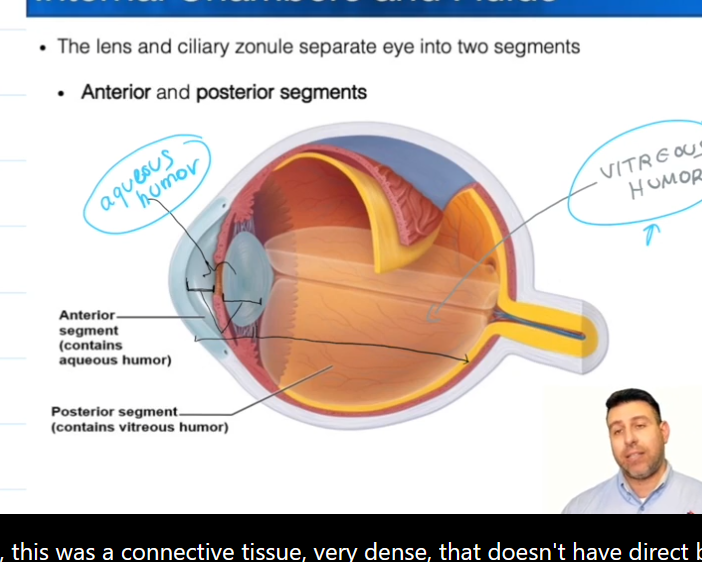
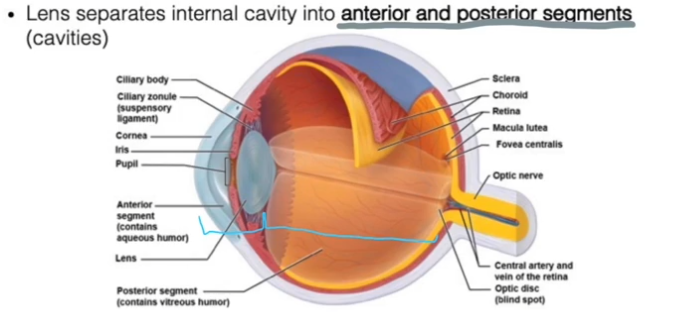
Segments of the eye:

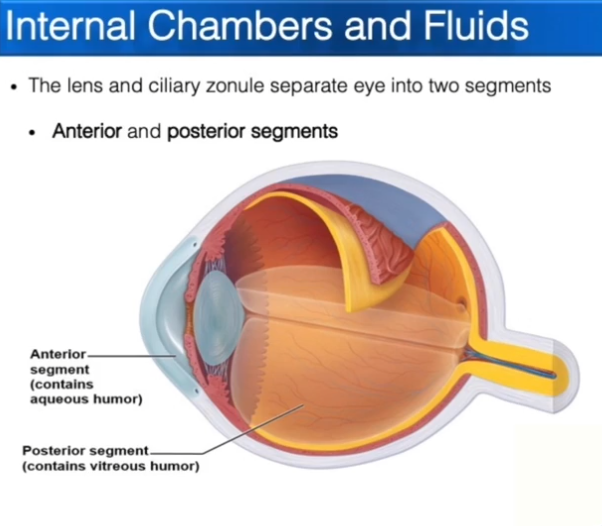
  • Anterior segment is everything in-front of the lens.

  • Posterior segment is everything behind the lens
<ul><li><p>Anterior segment is everything in-front of the lens.</p></li><li><p>Posterior segment is everything behind the lens</p></li></ul><p></p>
12
New cards

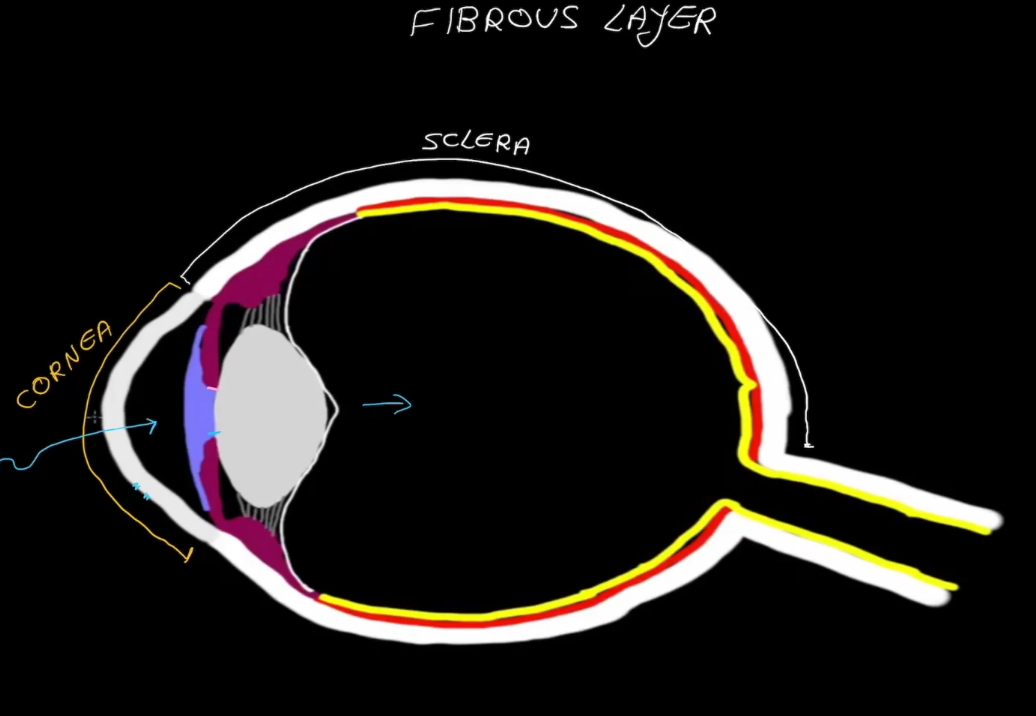
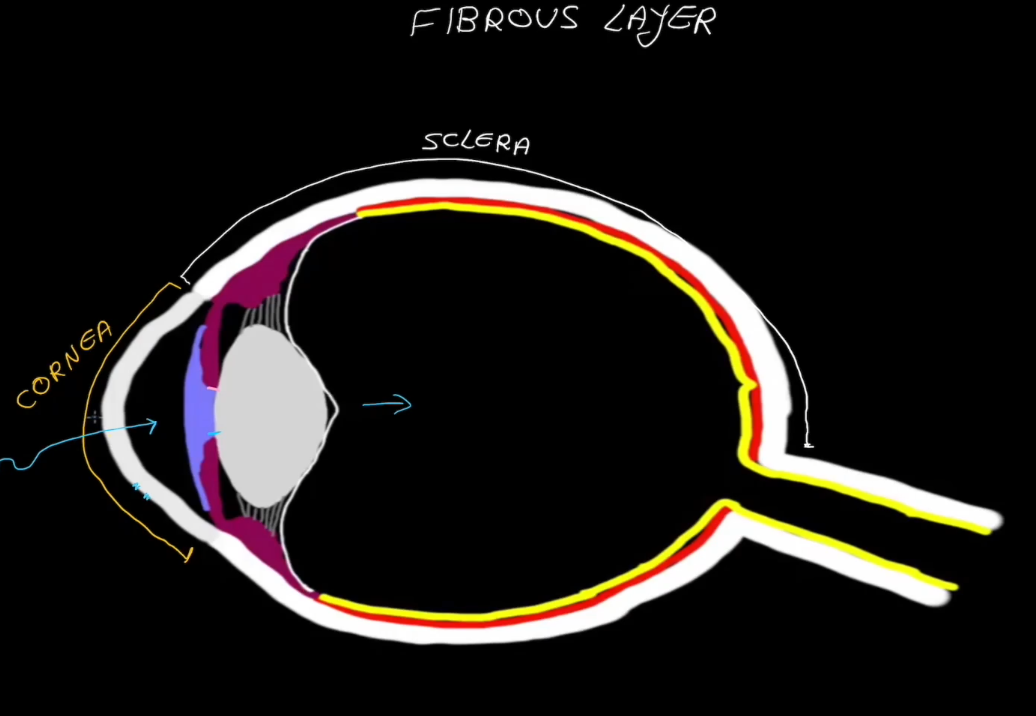
Fibrous Layer Structure:

  • Outermost layer, has no blood supply

  • Contains the Sclera

  • Contains the Cornea

<ul><li><p>Outermost layer, has no blood supply</p></li><li><p>Contains the Sclera</p></li><li><p>Contains the Cornea</p></li></ul><p></p>
13
New cards

Sclera

  • White in color.

  • Dense connective tissue

  • Shapes the eye and is the point of muscle attatchment.
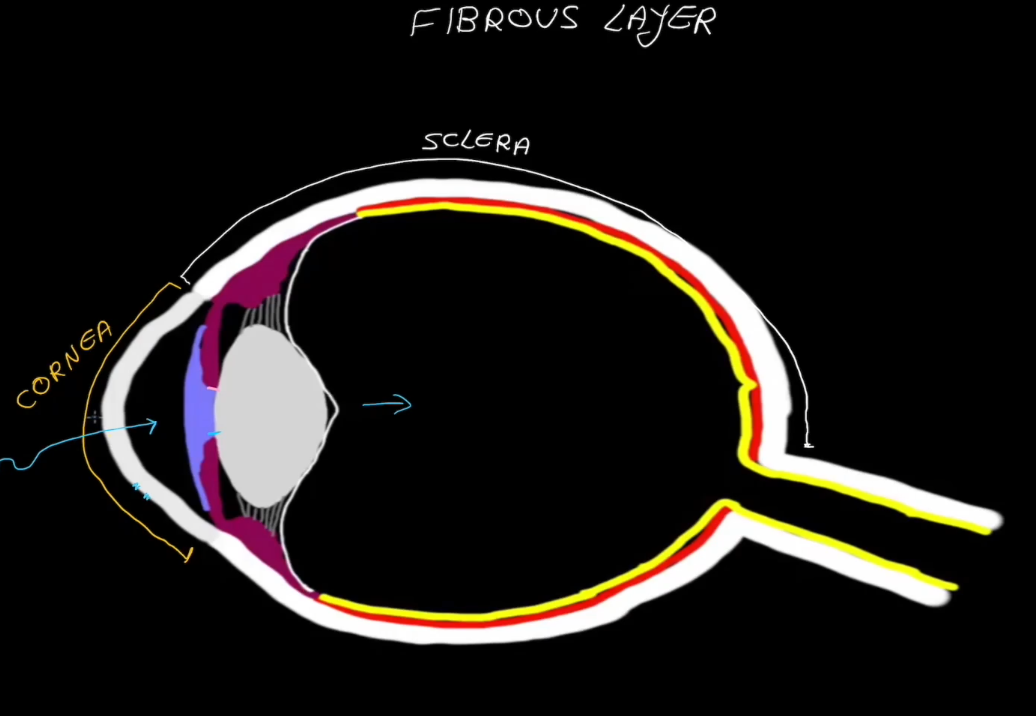
<ul><li><p>White in color.</p></li><li><p>Dense connective tissue</p></li><li><p>Shapes the eye and is the point of muscle attatchment.</p></li></ul><p></p>
14
New cards

Cornea

  • Transparent

  • Dense connective tissue

<ul><li><p>Transparent</p></li><li><p>Dense connective tissue</p></li></ul><p></p>
15
New cards

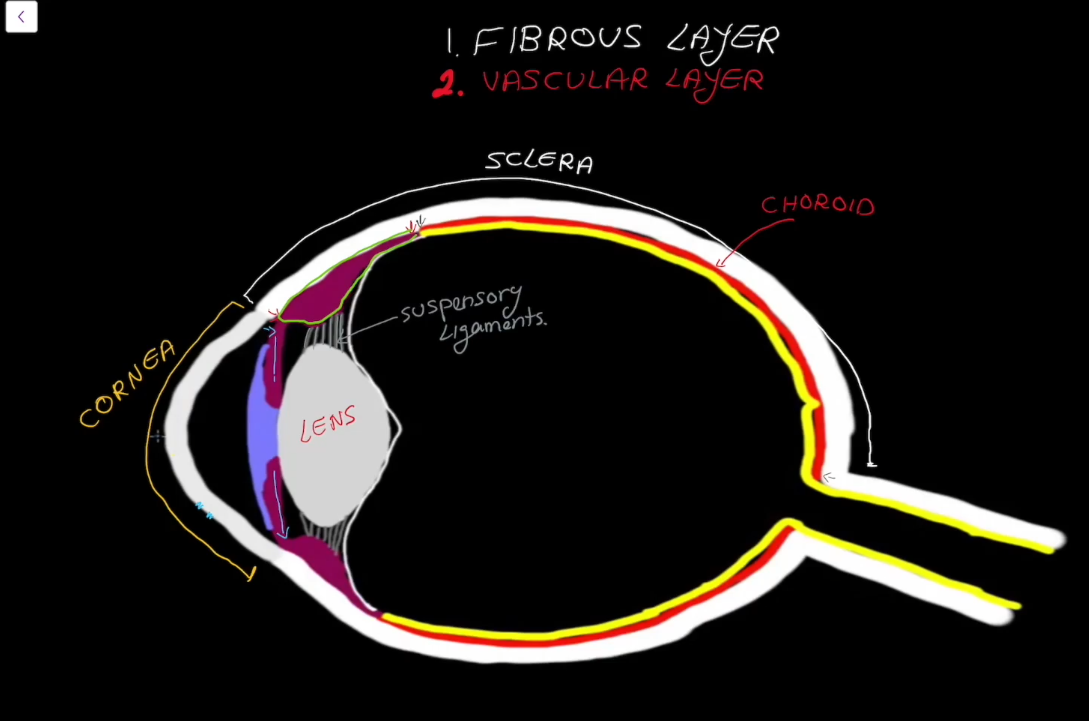
Vascular Layer

  • Contains the choroid

  • Contains the cillary

  • Contains the pupil

  • Contains the Iris

<ul><li><p>Contains the choroid</p></li><li><p>Contains the cillary</p></li><li><p>Contains the pupil</p></li><li><p>Contains the Iris</p></li></ul><p></p>
16
New cards

Choroid Region

  • Supplies blood to the eyes.

  • Contains brown pigment to prevent light from scattering around the eyes.
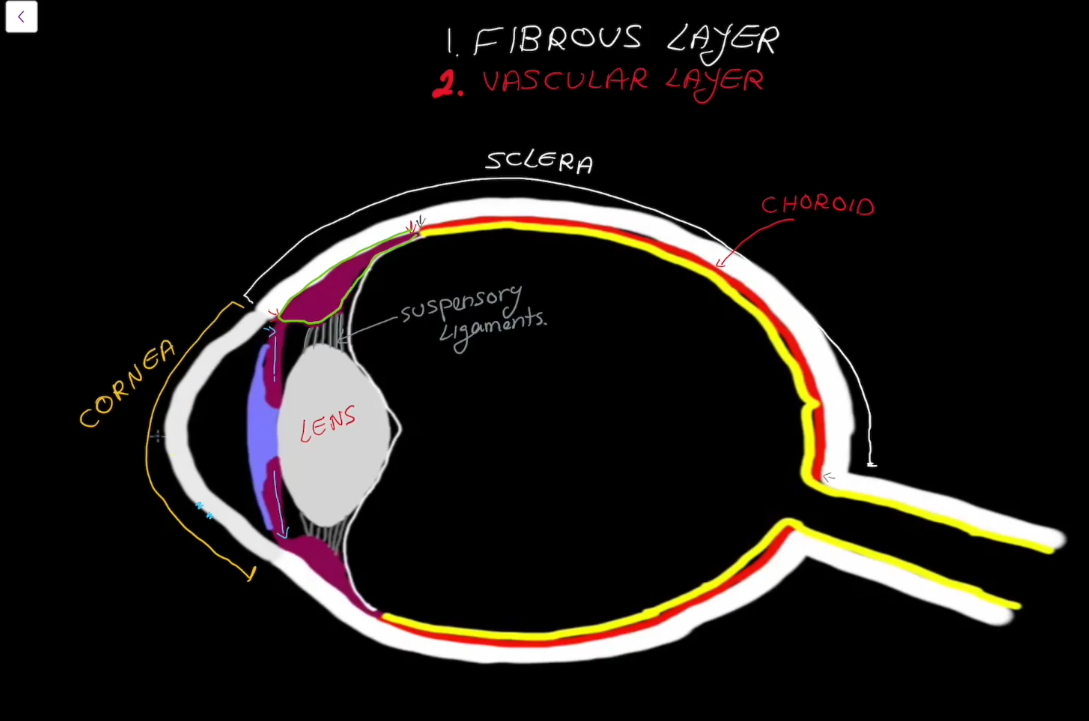
<ul><li><p>Supplies blood to the eyes.</p></li><li><p>Contains brown pigment to prevent light from scattering around the eyes.</p></li></ul><p></p>
17
New cards

Cillary Region

  • Surrounds the lens of the eye.

  • Has suspending ligaments that connect to the lens of the eye.
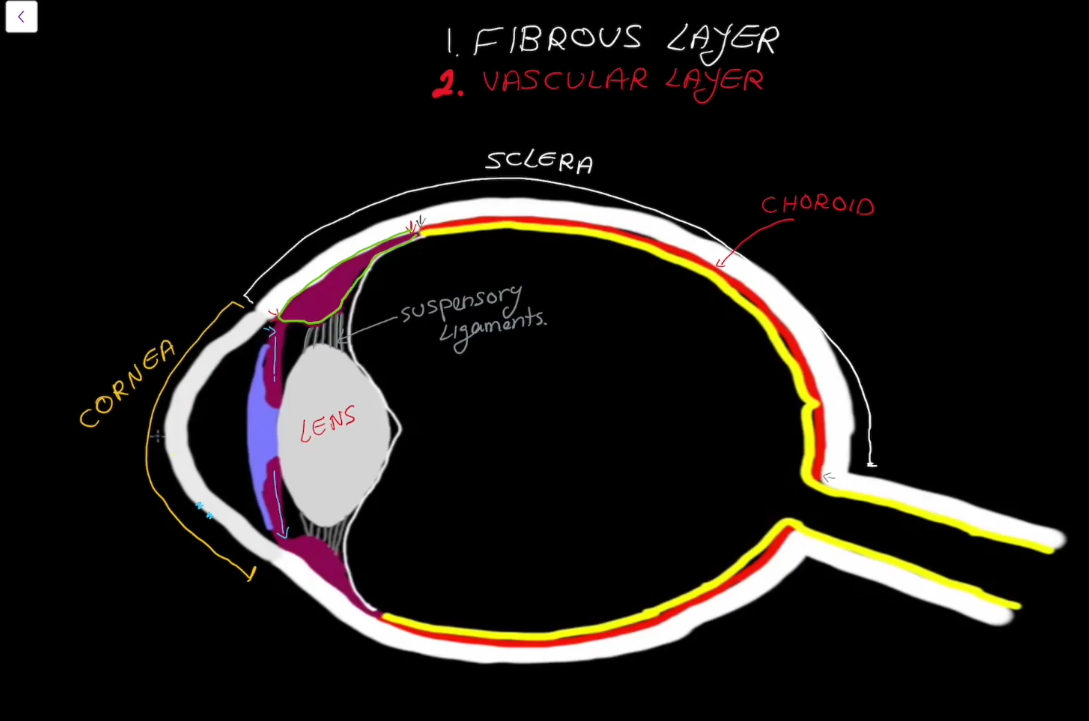
<ul><li><p>Surrounds the lens of the eye.</p></li><li><p>Has suspending ligaments that connect to the lens of the eye.</p></li></ul><p></p>
18
New cards

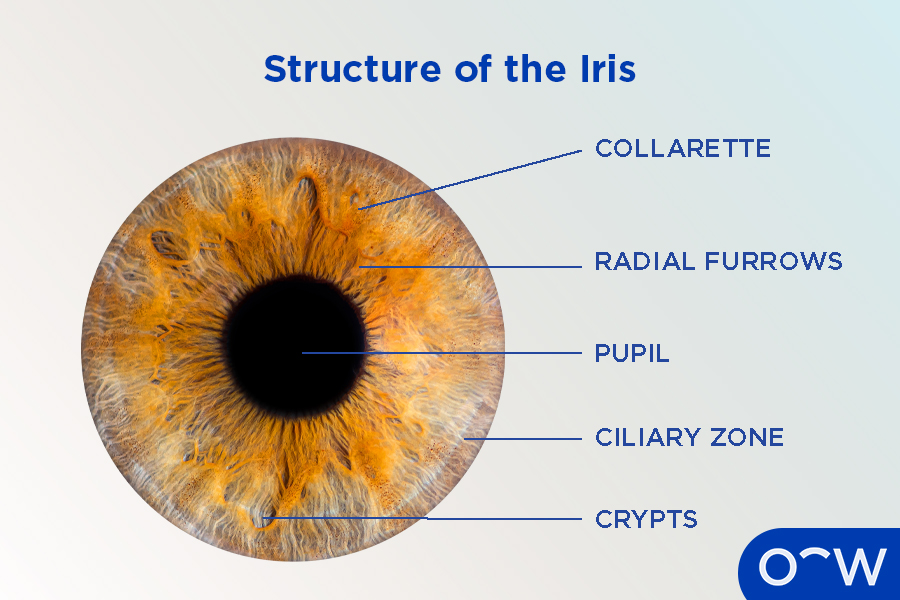
Pupil Gap

Gap for da pupil

<p>Gap for da pupil</p>
19
New cards

Iris

  • Colored part of the eye, contains the pupil.

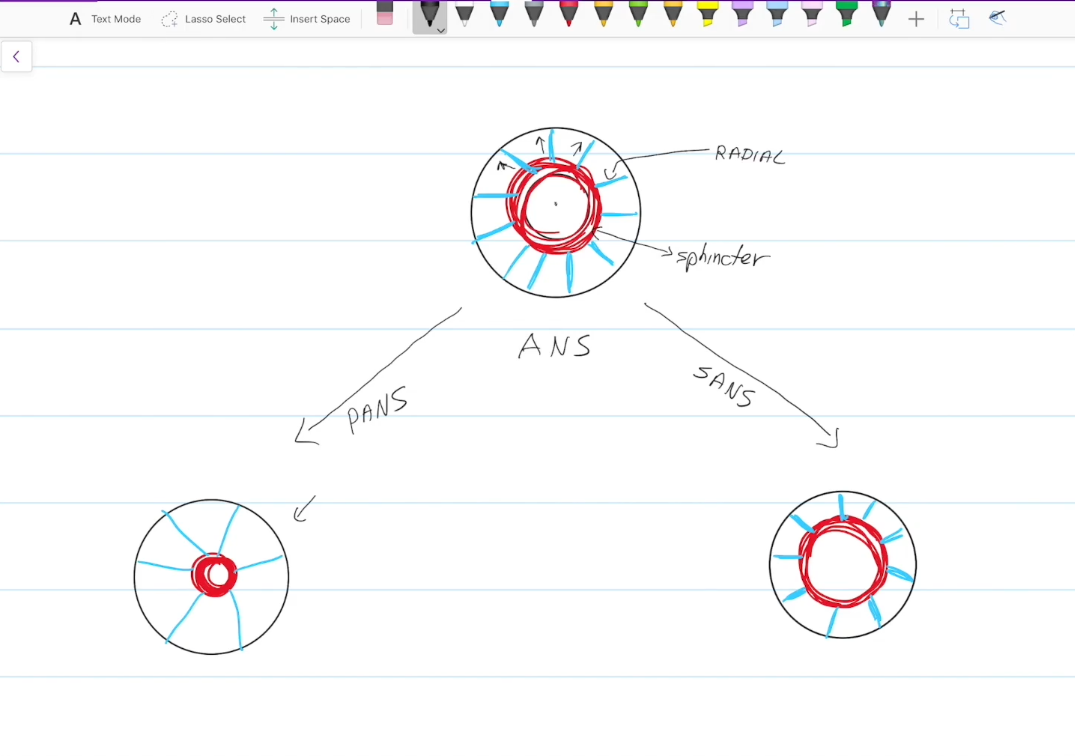
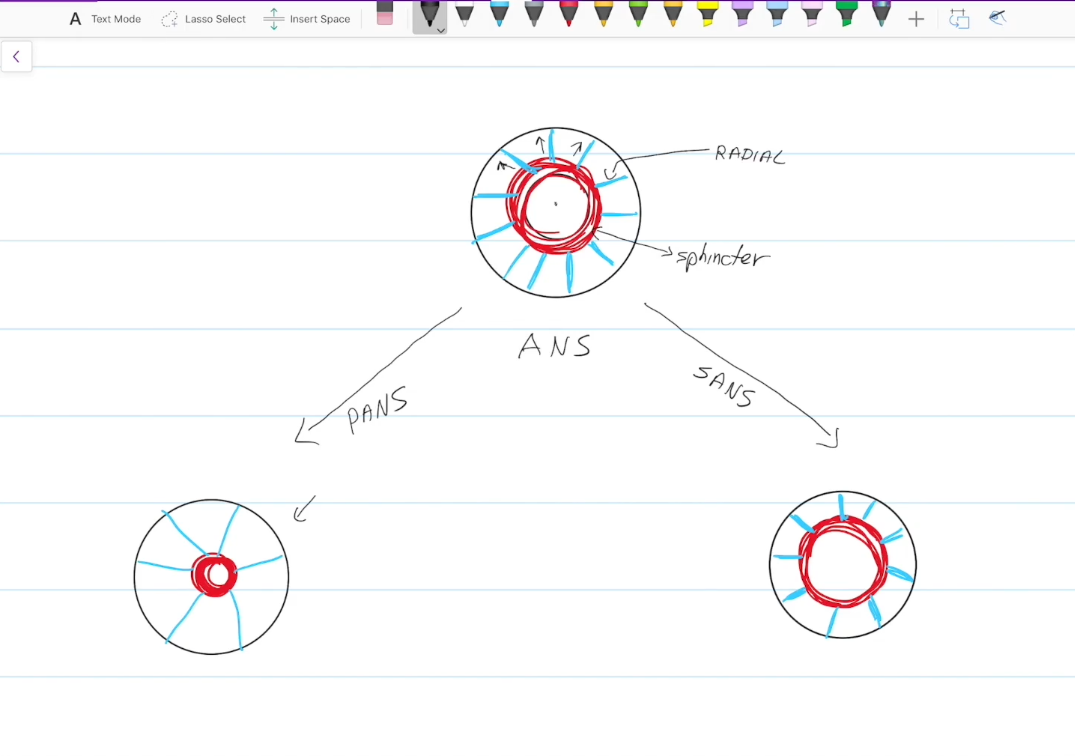
  • Has circular (sphincter) muscles

  • Has straight (radial) muscles

<ul><li><p>Colored part of the eye, contains the pupil.</p></li><li><p>Has circular (sphincter) muscles</p></li><li><p>Has straight (radial) muscles</p></li></ul><p></p>
20
New cards

Sphincter Muscles

  • Controled by the parasympathetic nervous system.

  • Contraction constricts the pupils

<ul><li><p>Controled by the parasympathetic nervous system.</p></li><li><p>Contraction constricts the pupils</p></li></ul><p></p>
21
New cards

Radial Muscles

  • Controlled by the sympathetic nervous system.

  • Contraction dilates the pupils

<ul><li><p>Controlled by the sympathetic nervous system.</p></li><li><p>Contraction dilates the pupils</p></li></ul><p></p>
22
New cards

Inner (Retina) Layer

  • Contains an outer layer (pigament and stores vitamin A)

  • Contains an innter layer

<ul><li><p>Contains an outer layer (pigament and stores vitamin A)</p></li><li><p>Contains an innter layer</p></li></ul><p></p>
23
New cards

Inner (neural) layer of the Retina

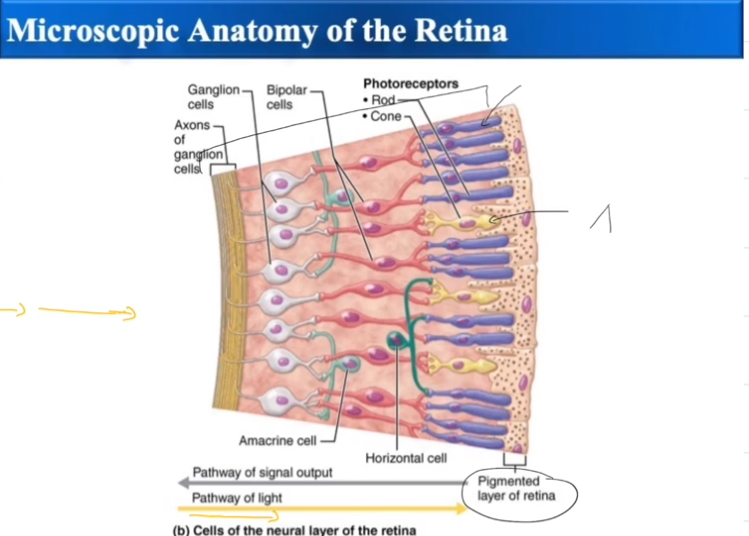
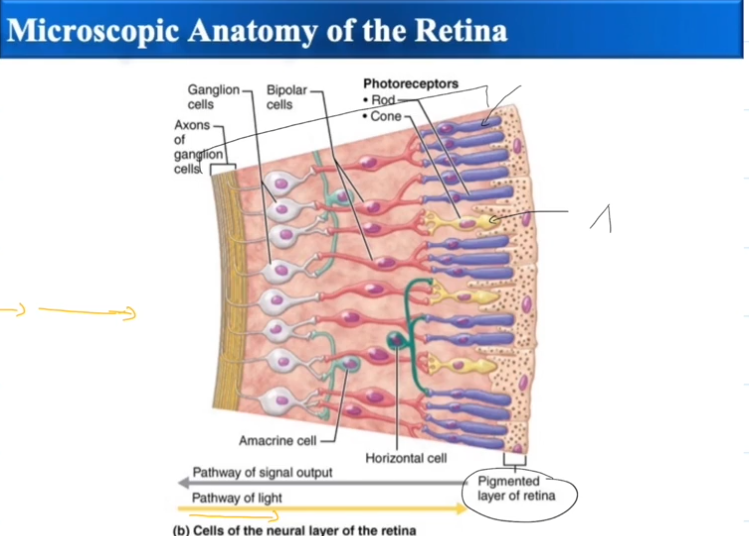
  • Made up of photoreceptors, rods and cones.

  • Has a blindspot where the axons of the photoreceptors meet and form the optic nerve.

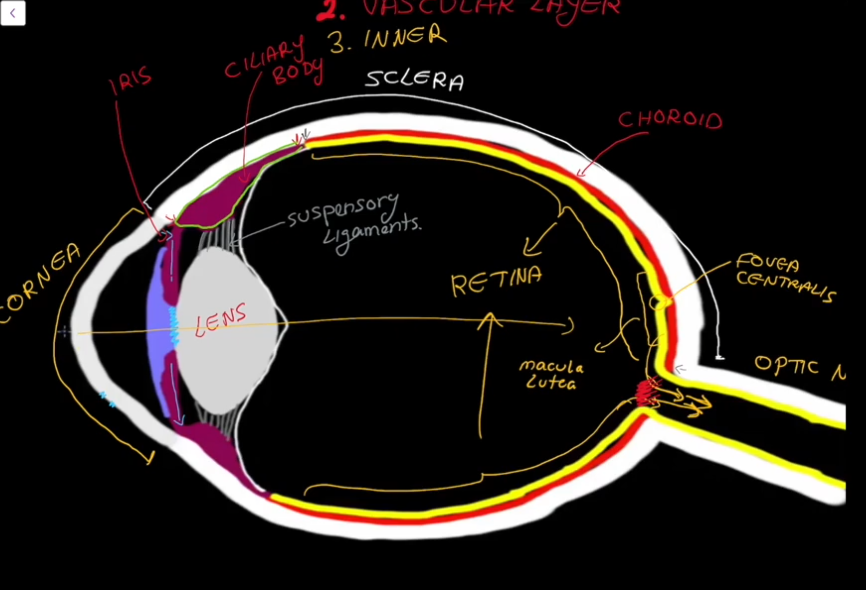
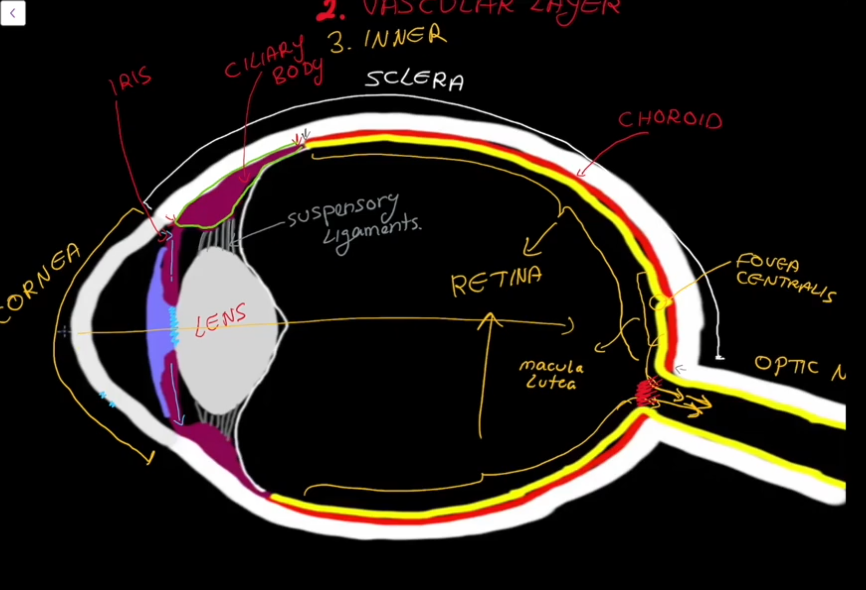
  • Contains the Marcula Lutea, which the contains the Fovea Centrialis
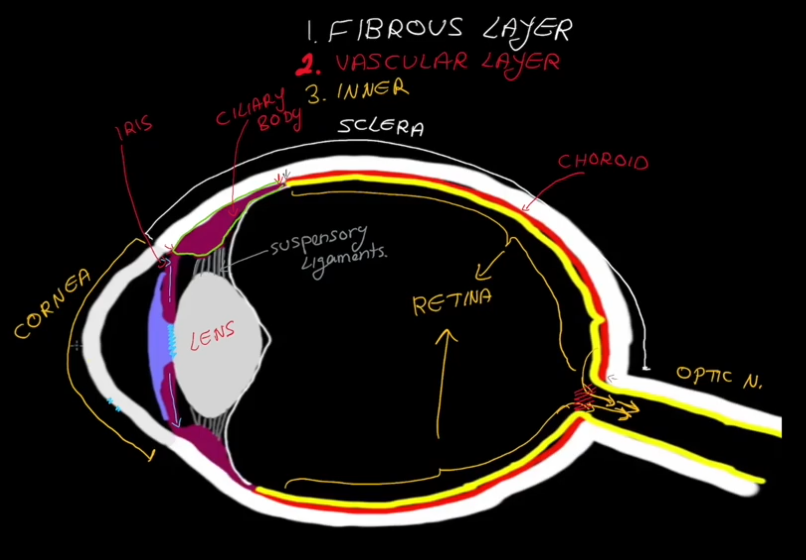
<ul><li><p>Made up of photoreceptors, rods and cones.</p></li><li><p>Has a blindspot where the axons of the photoreceptors meet and form the optic nerve.</p></li><li><p>Contains the Marcula Lutea, which the contains the Fovea Centrialis</p></li></ul><p></p>
24
New cards

Rods

Rods absorb dim light and specialize in peripheral vision
<p>Rods absorb dim light and specialize in peripheral vision</p>
25
New cards

Cones

Cones absorb bright light and specialize in color vision
<p>Cones absorb bright light and specialize in color vision</p>
26
New cards

Macula Lutea

Area in the back of the eyes that contains a lot of Cones
<p>Area in the back of the eyes that contains a lot of Cones</p>
27
New cards

Fovea Centrialis

Area in the macula lutea that only contains cones
<p>Area in the macula lutea that only contains cones</p>
28
New cards

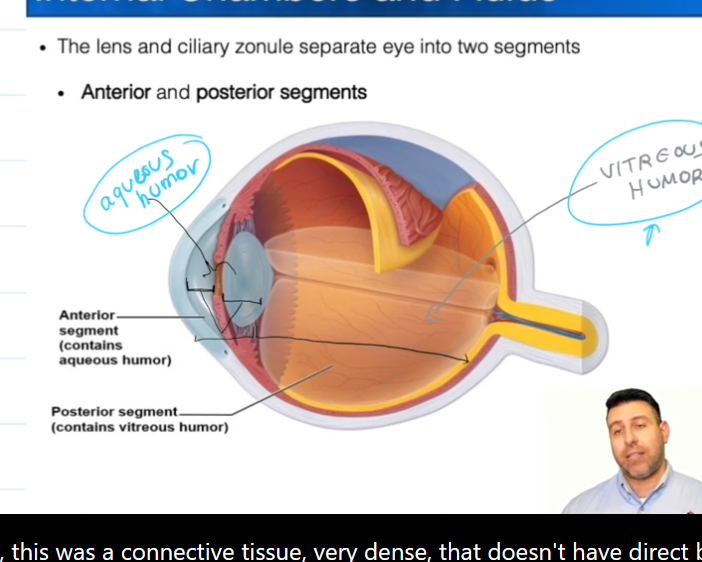
Posterior Segment

  • Contains vitreous humor, which is formed during the embryonic stage of life.

  • Supports the posterior surface of the lense

  • Keeps the neural layer pushed up against the pigmented layer

  • Maintains the shape of the eyeball

<ul><li><p>Contains vitreous humor, which is formed during the embryonic stage of life.</p></li><li><p>Supports the posterior surface of the lense</p></li><li><p>Keeps the neural layer pushed up against the pigmented layer</p></li><li><p>Maintains the shape of the eyeball</p></li></ul><p></p>
29
New cards

Anterior Segment

  • Contains the Posterior and Anterior Chambers

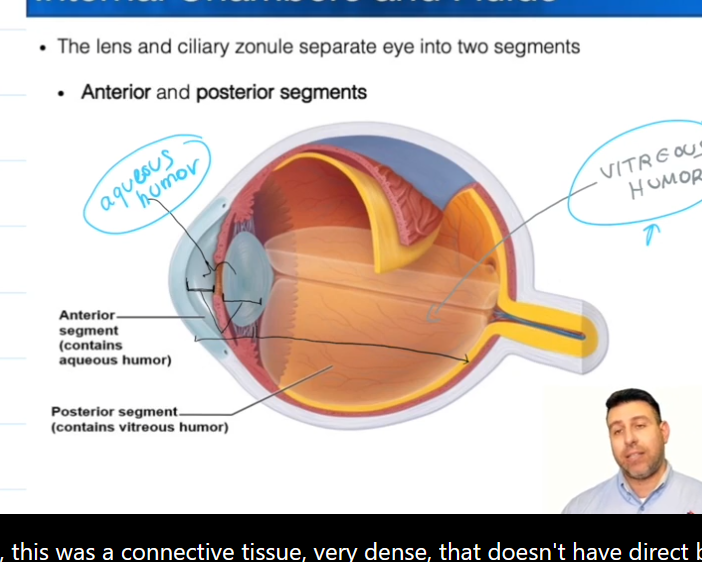
  • Contains Aqueous Humor, which is constantly being made and
<ul><li><p>Contains the Posterior and Anterior Chambers</p></li><li><p>Contains Aqueous Humor, which is constantly being made and </p></li></ul><p></p>
30
New cards

Aqueous Humor

Nourishes the fibrous layer of the eye
<p>Nourishes the fibrous layer of the eye</p>
31
New cards

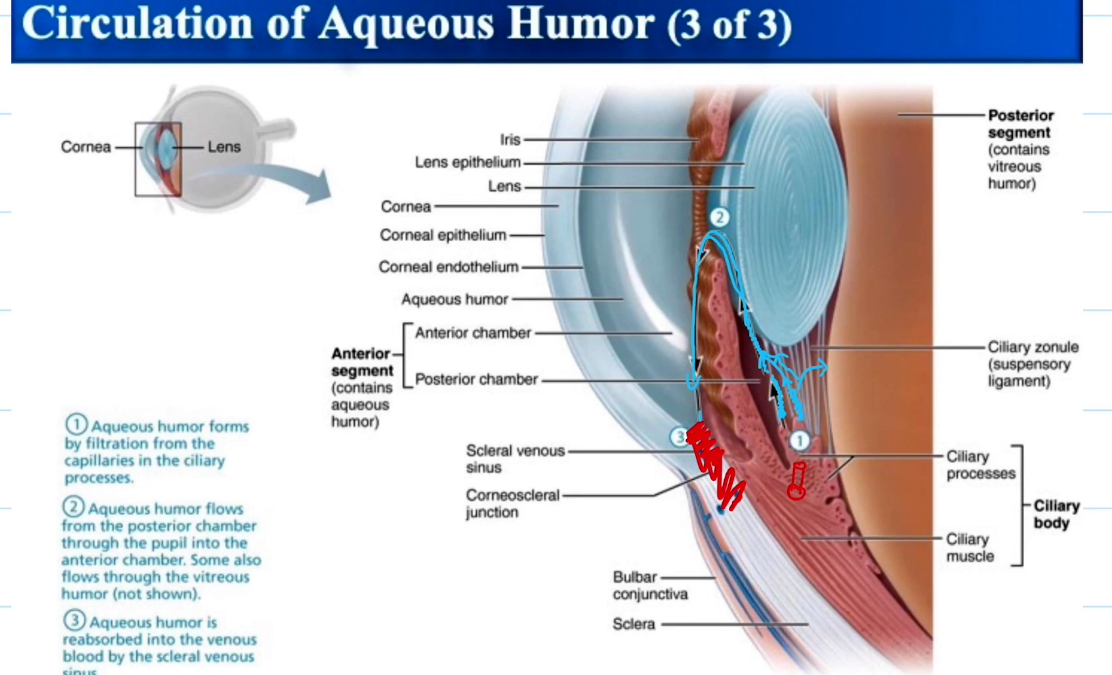
Posterior Chamber

  • Iris to “here”

<ul><li><p>Iris to “here”</p></li></ul><p></p>
32
New cards

Anterior Chamber

  • iris to cornea

<ul><li><p>iris to cornea</p></li></ul><p></p>
33
New cards

Aqueous Humor Pathway

  • Aqueous Humor forms from the filtered blood from the capillaries in the ciliary process

  • aqueous humor flows to other parts of the eye

  • Aqueous humor is reabosbred into vienous blood via the canal of schlemm
<ul><li><p>Aqueous Humor forms from the filtered blood from the capillaries in the ciliary process</p></li><li><p>aqueous humor flows to other parts of the eye</p></li><li><p>Aqueous humor is reabosbred into vienous blood via the canal of schlemm</p></li></ul><p></p>
34
New cards

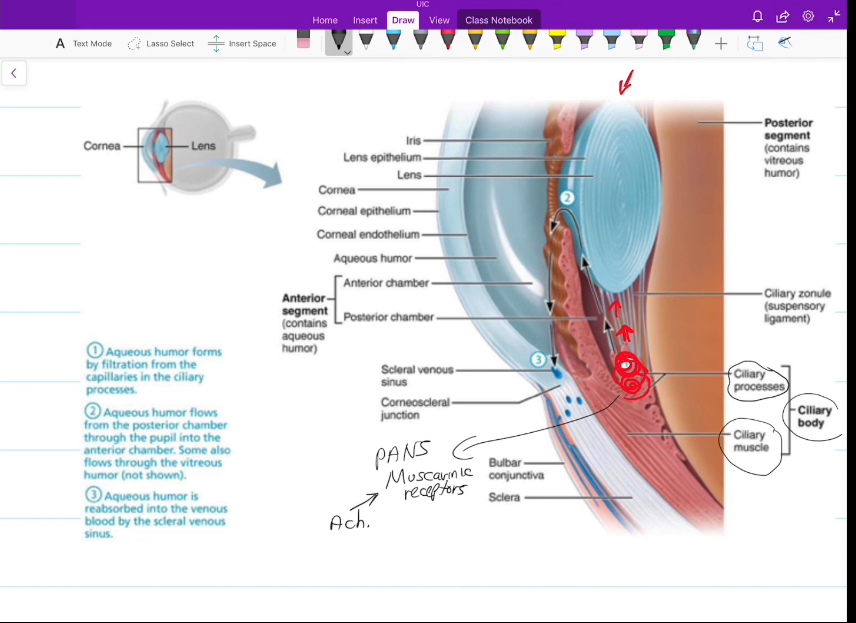
Lens, General Functionality:

  • Focus light onto the retina so we can see
<ul><li><p>Focus light onto the retina so we can see</p></li></ul><p></p>
35
New cards

Lens for seeing close

  • Ciliary body muscles contract and push the ligaments connected to the lens to make it bulge
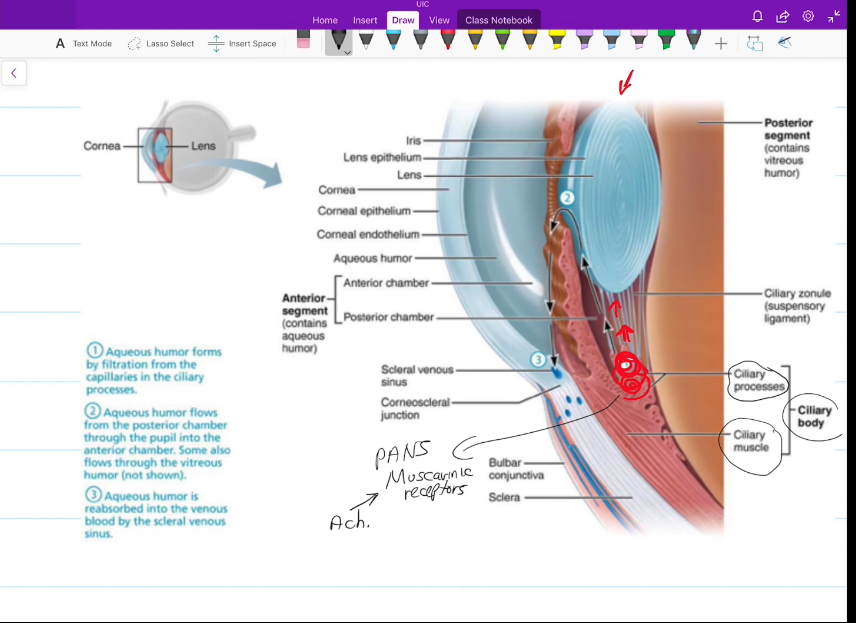
<ul><li><p>Ciliary body muscles contract and push the ligaments connected to the lens to make it bulge</p></li></ul><p></p>
36
New cards

Lens for seeing far

Ciliary body muscles relax and pull the ligaments connected to the lens to make it flat
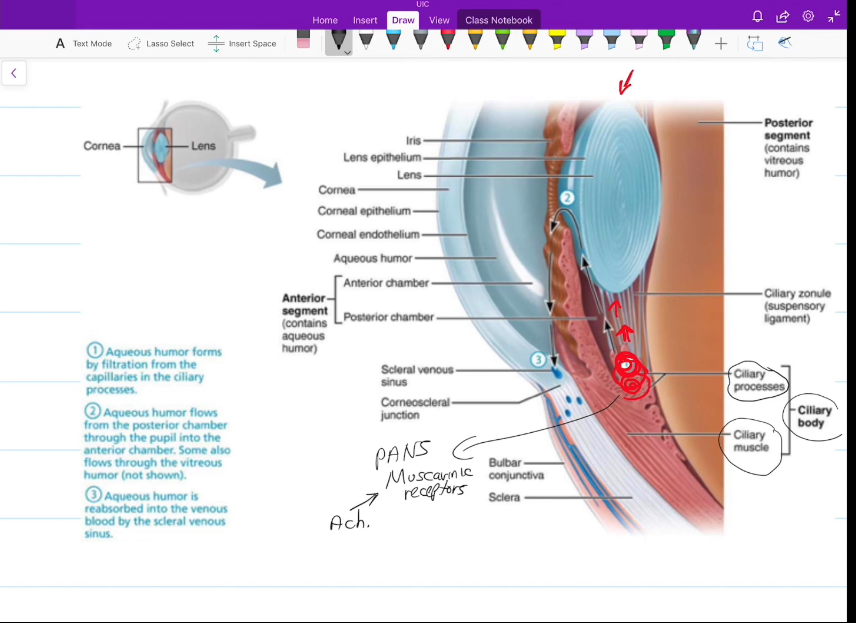
<p>Ciliary body muscles relax and pull the ligaments connected to the lens to make it flat</p>
37
New cards

What happens to the Lens when u age

basically those ligaments go bad and u cant see close no more

<p>basically those ligaments go bad and u cant see close no more</p>
38
New cards

Lacrimal Gland Location:

Lateral side of the eye

<p>Lateral side of the eye</p>
39
New cards

Lacrimal Gland Function:

  • Produce tears.

  • Tears go to lacrimal sac and drain into the nose.

  • If too many tears then they roll down da face
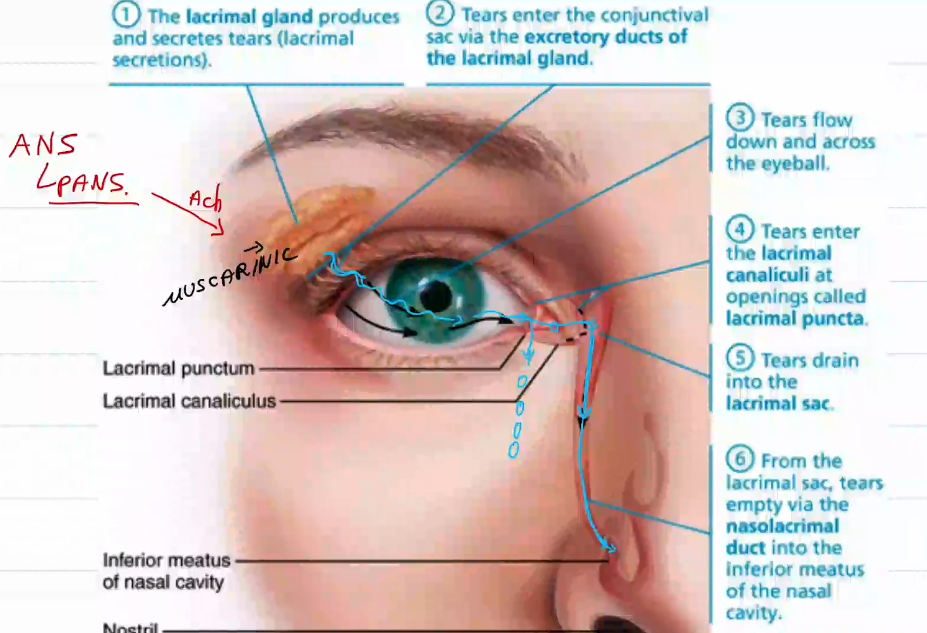
<ul><li><p>Produce tears.</p></li><li><p>Tears go to lacrimal sac and drain into the nose.</p></li><li><p>If too many tears then they roll down da face</p></li></ul><p></p>
40
New cards

What controls the lacrimal gland

  • The ANS

  • more specifically, the parasympathetic division
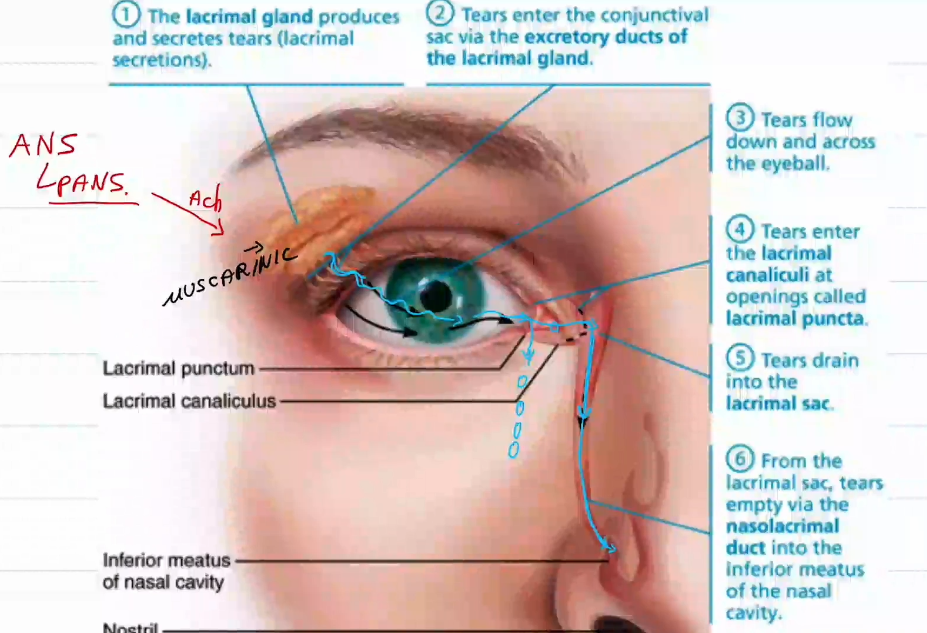
<ul><li><p>The ANS</p></li><li><p>more specifically, the parasympathetic division</p></li></ul><p></p>
41
New cards

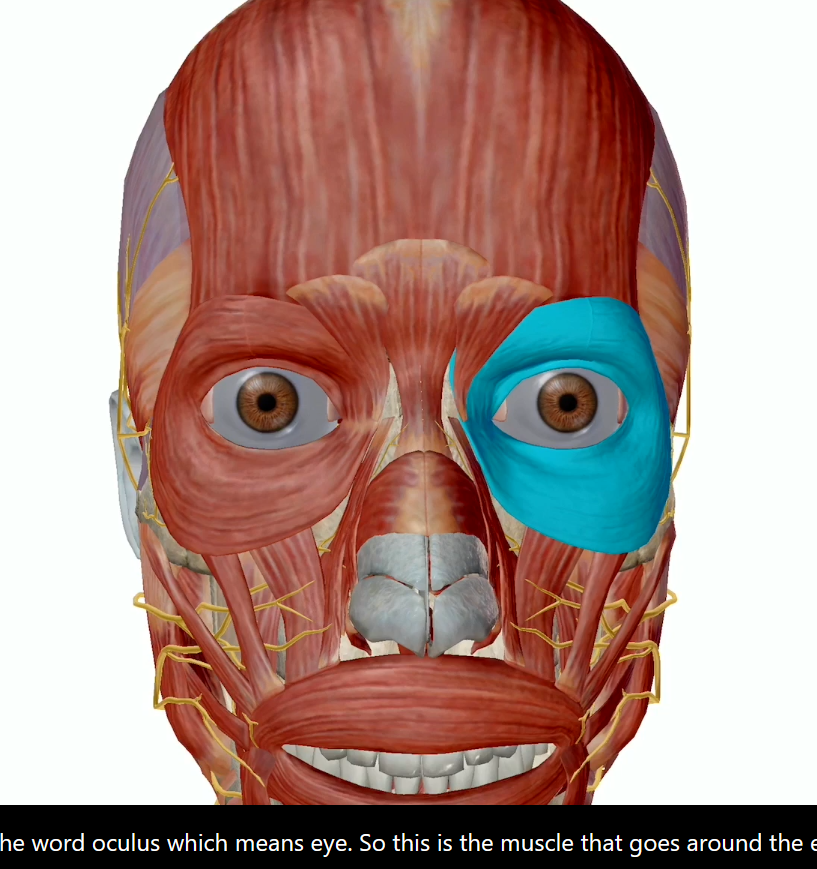
Muscles of the Eyelid:

blow yo shi smoooooove off twin

  • Orbicularis Oculi

  • Levator Palpebrae

  • Extrinsic Eye Muscles (Recuts and Oblique)
<p>blow yo shi smoooooove off twin</p><ul><li><p>Orbicularis Oculi</p></li><li><p>Levator Palpebrae</p></li><li><p>Extrinsic Eye Muscles (Recuts and Oblique)</p></li></ul><p></p>
42
New cards

Orbicularis Oculi

  • Innervated by cranial nerve numero seven (Facial nerve)

  • Closes the eyelids

<ul><li><p>Innervated by cranial nerve numero seven (Facial nerve)</p></li><li><p>Closes the eyelids</p></li></ul><p></p>
43
New cards

Levator Palpebrae

  • Occular Motor Nerve cranial nerve number 3

  • Elevate and retract the eyelid

<ul><li><p>Occular Motor Nerve cranial nerve number 3</p></li><li><p>Elevate and retract the eyelid</p></li></ul><p></p>
44
New cards

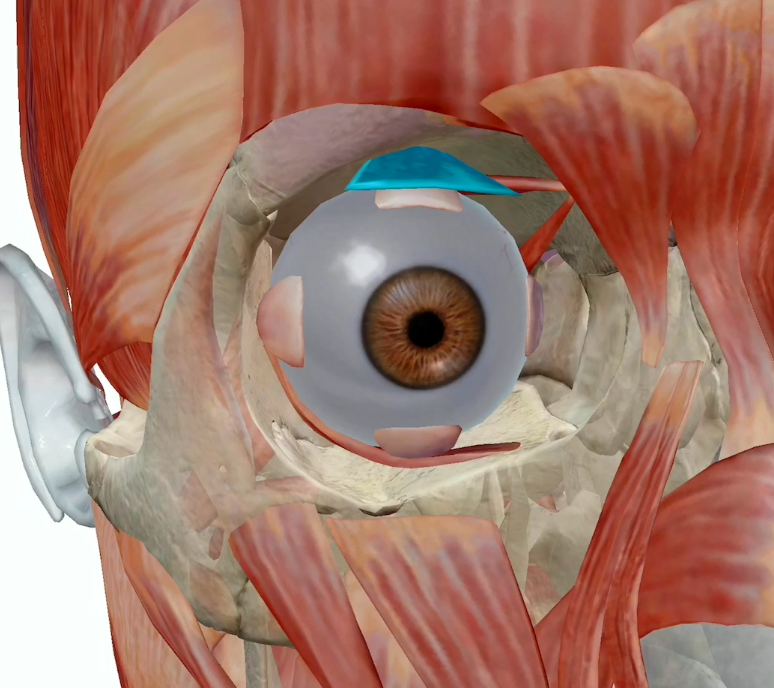
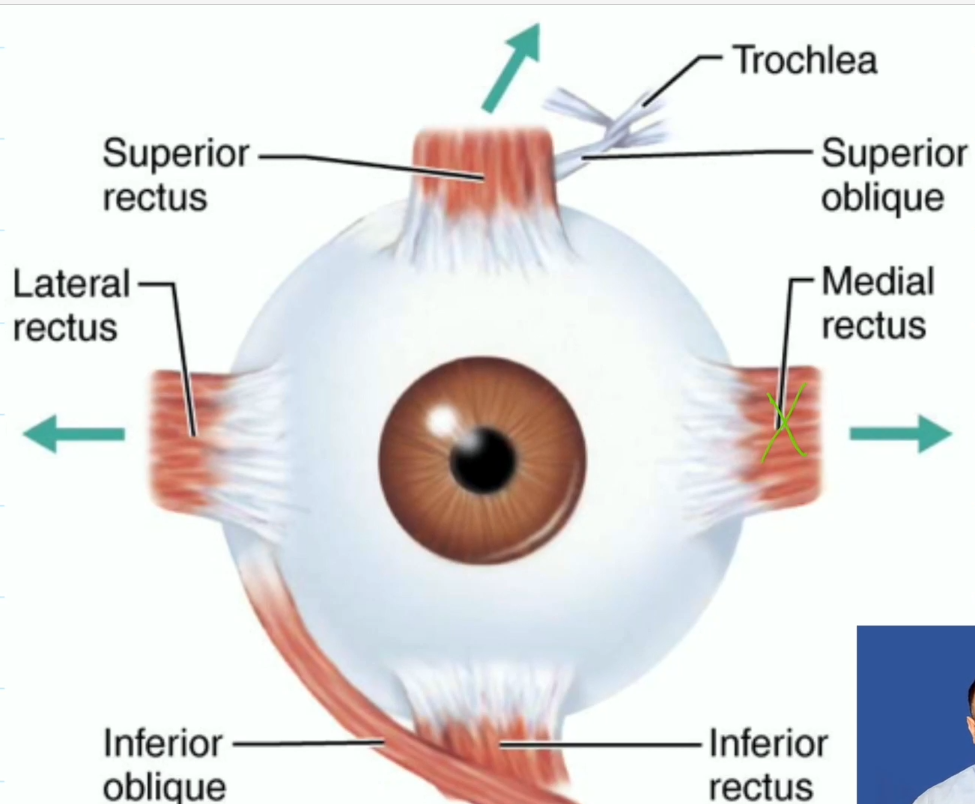
Extrinsic Eye Muscles (6)

  • Six straplike muscles

  • Originate from the bony orbit and insert on eyeball

  • four rectus muscles, superior, inferior, lateral, medial

  • two oblique muscles, superior and inferior oblique
<ul><li><p>Six straplike muscles</p></li><li><p>Originate from the bony orbit and insert on eyeball</p></li><li><p>four rectus muscles, superior, inferior, lateral, medial</p></li><li><p>two oblique muscles, superior and inferior oblique</p></li></ul><p></p>
45
New cards

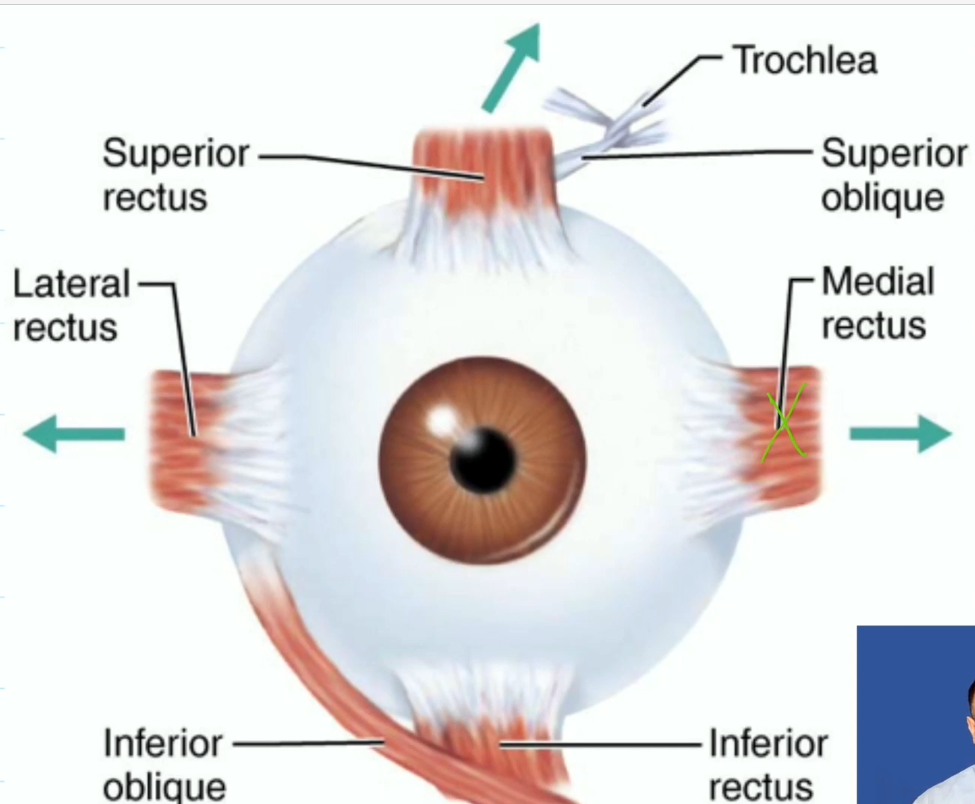
Rectus Muscles

  • Superior Rectus, move eye up, oculomotor (third nerve)

  • Inferior Rectus, move eye down, oculomotor (third nerve)

  • Lateral Rectus, move eye laterally, abducens (sixth nerve)

  • Medial Rectus, move eye medially, oculomotor (third nerve)
<ul><li><p>Superior Rectus, move eye up, oculomotor (third nerve)</p></li><li><p>Inferior Rectus, move eye down, oculomotor (third nerve)</p></li><li><p>Lateral Rectus, move eye laterally, abducens (sixth nerve)</p></li><li><p>Medial Rectus, move eye medially, oculomotor (third nerve)</p></li></ul><p></p>
46
New cards

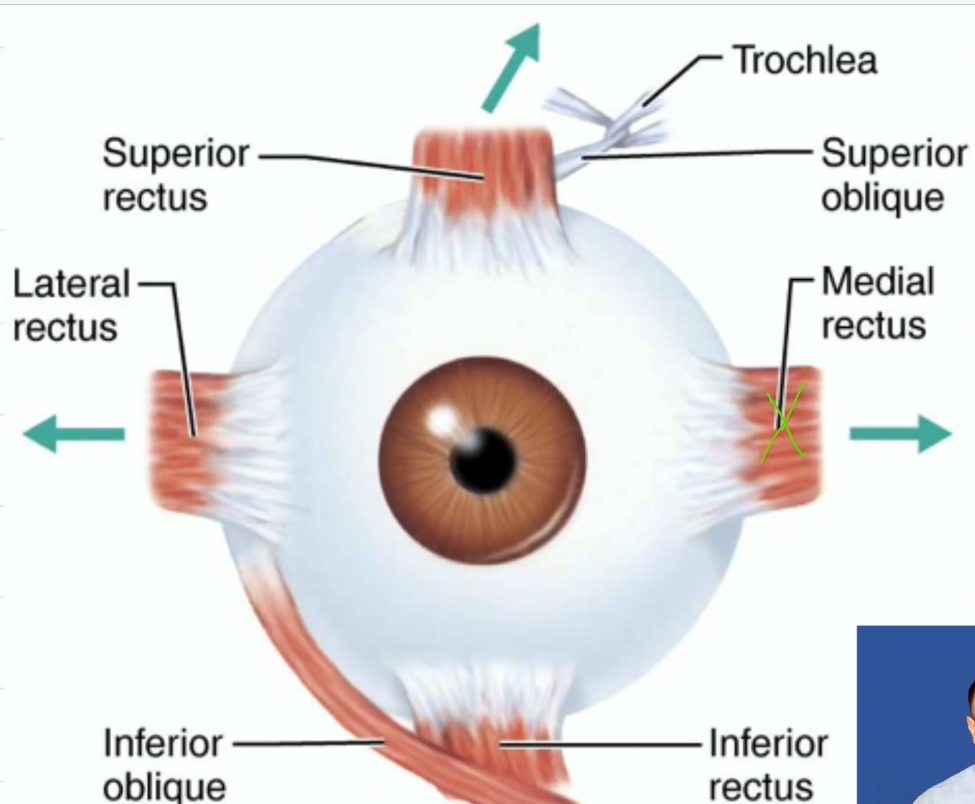
Oblique Muscles

  • Superior Oblique, depress the eye, trochlear (fourth nerve)

  • Inferior Oblique, elevate the eye, oculomotor (third nerve)
<ul><li><p>Superior Oblique, depress the eye, trochlear (fourth nerve)</p></li><li><p>Inferior Oblique, elevate the eye, oculomotor (third nerve)</p></li></ul><p></p>
47
New cards

Refraction:

Light enters into our eye via the cornea, however the light has to be refracted into the eye ball or else it just wont get inside. The issue with this is that if the light comes at an angle, the image will be received as upside down, so then the nervous system has to turn the image around again.

48
New cards

Macroscale Vision Pathway

  • When light hits the Rods, the Rods deactivate.

  • Neurotransmitters that normally inhibit the bipolar cells are no longer released.

  • Bipolar cells activate ganglion cells and sight occurs.
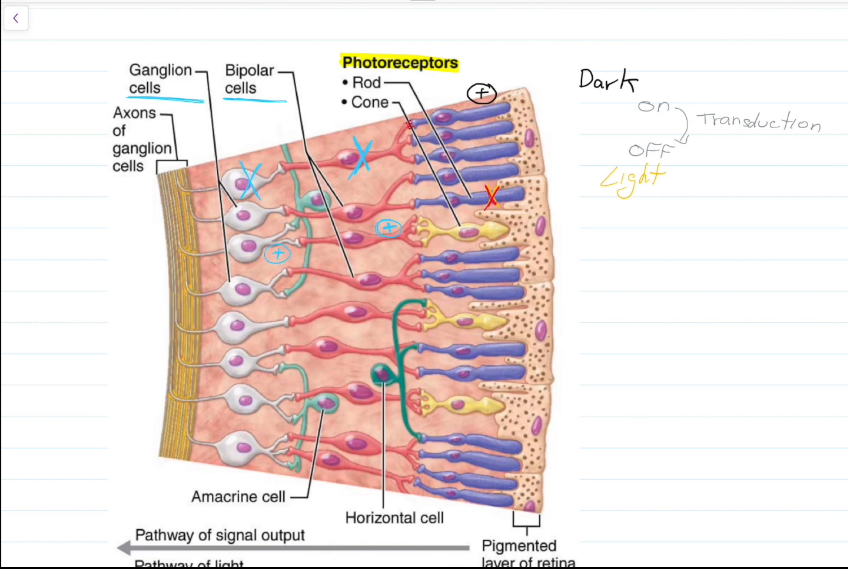
<ul><li><p>When light hits the Rods, the Rods deactivate.</p></li><li><p>Neurotransmitters that normally inhibit the bipolar cells are no longer released.</p></li><li><p>Bipolar cells activate ganglion cells and sight occurs.</p></li></ul><p></p>
49
New cards

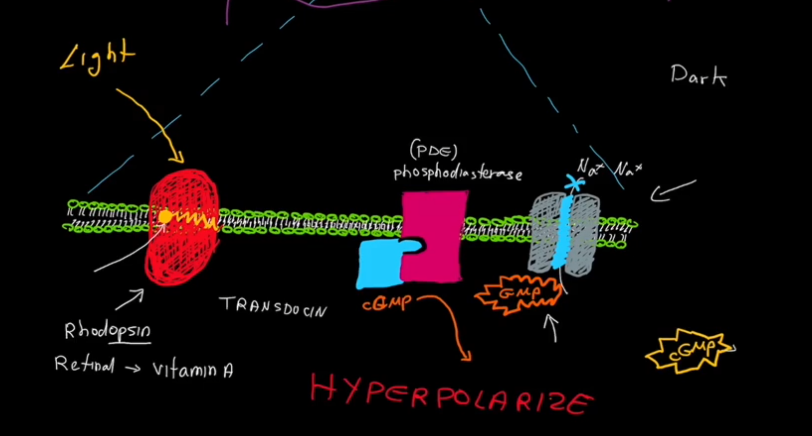
Important Molecule on the rod Disks that causes this whole thing to happen?

Rhodopsin, and its protein Retinal (which is made of vitamin A)
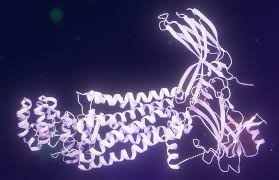
<p>Rhodopsin, and its protein Retinal (which is made of vitamin A)</p>
50
New cards

Microscale Vision Pathway

  1. Cyclic GMP (cGMP) keeps Na+ channels open.

  2. Light hits the rod.

  3. The molecule retinal, within Rhodopsin, loses its bend and becomes straight.

  4. Transducin detatches from Rhodopsin, and attatches to phosphodiasterase (PDE)

  5. PDE turns cGMP into GMP.

  6. cGMP is removed from Na+ channels.

  7. Na+ Channels close.

  8. K+ continues to leave the cell, and the cell becomes hyperpolarized and can no longer fire action potentials.

  9. Bipolar cells are no longer inhibited, and vision occurs.
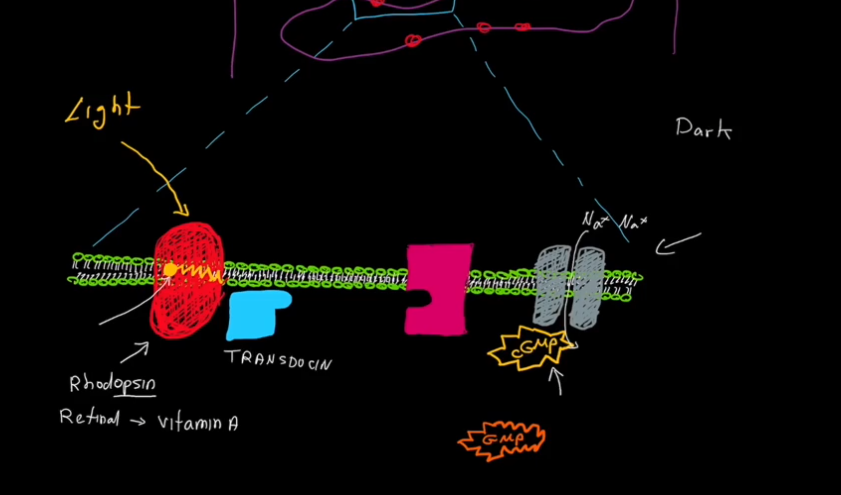
<ol><li><p>Cyclic GMP (cGMP) keeps Na+ channels open.</p></li><li><p>Light hits the rod.</p></li><li><p>The molecule retinal, within Rhodopsin, loses its bend and becomes straight.</p></li><li><p>Transducin detatches from Rhodopsin, and attatches to phosphodiasterase (PDE)</p></li><li><p>PDE turns cGMP into GMP.</p></li><li><p>cGMP is removed from Na+ channels.</p></li><li><p>Na+ Channels close.</p></li><li><p>K+ continues to leave the cell, and the cell becomes hyperpolarized and can no longer fire action potentials.</p></li><li><p>Bipolar cells are no longer inhibited, and vision occurs.</p></li></ol><p></p>
51
New cards

Pathway pic continued

knowt flashcard image
52
New cards

How many rods and cones do we have?

120 million rods, 6 million cones (60% red, 30% green, 10% blue)

53
New cards

Rods Functional Characteristics:

  • Very sensitive to light.

  • Best suited for night and peripheral vision

  • Contains a single pigment.

  • Perceived input in grey tones only

  • Pathways converge, causing fuzzy, indistinct images.
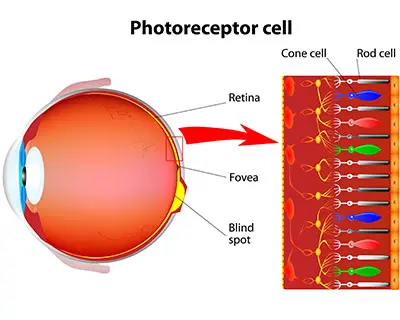
<ul><li><p>Very sensitive to light.</p></li><li><p>Best suited for night and peripheral vision</p></li><li><p>Contains a single pigment.</p></li><li><p>Perceived input in grey tones only</p></li><li><p>Pathways converge, causing fuzzy, indistinct images.</p></li></ul><p></p>
54
New cards

Cones Functional Characteristics:

  • Needs bright light for activation.

  • Reacts more quickly

  • Have one of three pigments for colored view.

  • Non-converging pathways results in detailed, high-resolution vision

  • Color Blindness: Resulting from lack of one or more cone pigments.
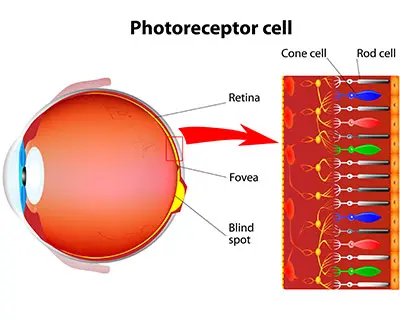
<ul><li><p>Needs bright light for activation.</p></li><li><p>Reacts more quickly</p></li><li><p>Have one of three pigments for colored view.</p></li><li><p>Non-converging pathways results in detailed, high-resolution vision</p></li><li><p><strong>Color Blindness</strong>: Resulting from lack of one or more cone pigments.</p></li></ul><p></p>
55
New cards

The Visual Projection Pathway

  • Each eye has two visual fields: One on the temporal side, the other on the nasal side.

  • The temporal side remains on the side of the brain, and the nasal side switches over.

  • Temporal side handles peripheral vision from the opposing visual field. Nasal side handles direct vision from the correlated visual field.

  • An issue with the optic chasm results in loss of direct vision. An issue with the temporal side results in loss of peripheral vision.
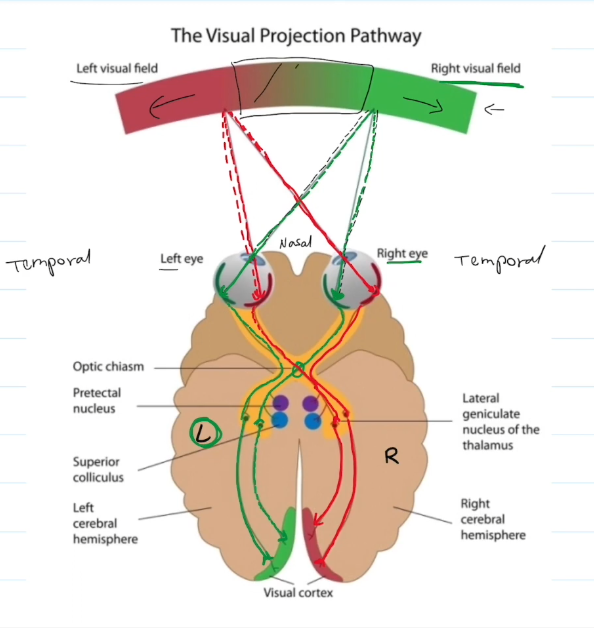
<ul><li><p>Each eye has two visual fields: One on the temporal side, the other on the nasal side.</p></li><li><p>The temporal side remains on the side of the brain, and the nasal side switches over.</p></li><li><p>Temporal side handles peripheral vision from the opposing visual field. Nasal side handles direct vision from the correlated visual field.</p></li><li><p>An issue with the optic chasm results in loss of direct vision. An issue with the temporal side results in loss of peripheral vision.</p></li></ul><p></p>
56
New cards

Pupillary Light Reflex

Basically, if there is too much light, the pupil will constrict to protect the photo-receptors