Lab 6 Muscles
 Call Kai
 Learn
Learn Practice Test
 Spaced Repetition
 Match
Match Flashcards
 Knowt Play
1/33

There's no tags or description
Looks like no tags are added yet.
Name | Mastery | Learn | Test | Matching | Spaced | Call with Kai |
|---|
No analytics yet
Send a link to your students to track their progress
34 Terms
Which muscle helps with frowning?
Depressor anguli oris muscle.
Which muscle helps with blinking?
Orbicularis oculi muscle.
Which muscle helps with smiling?
Zygomaticus major & minor muscles.
Which muscle helps with puckering?
Orbicularis oris muscle.
Which muscle helps with snarling?
Levator labii superioris muscle.

Which muscle helps with wrinkling the forehead?
Epicranius/Occipitofrontalis muscle.
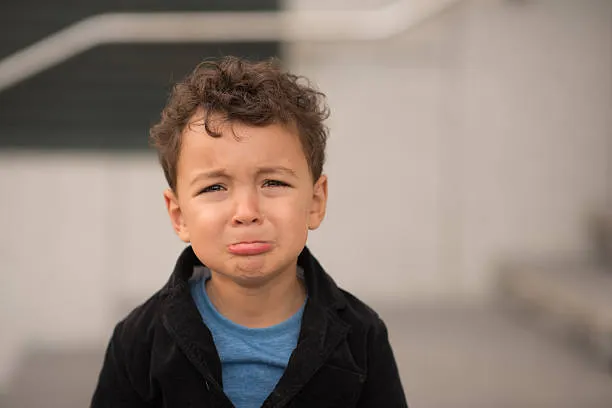
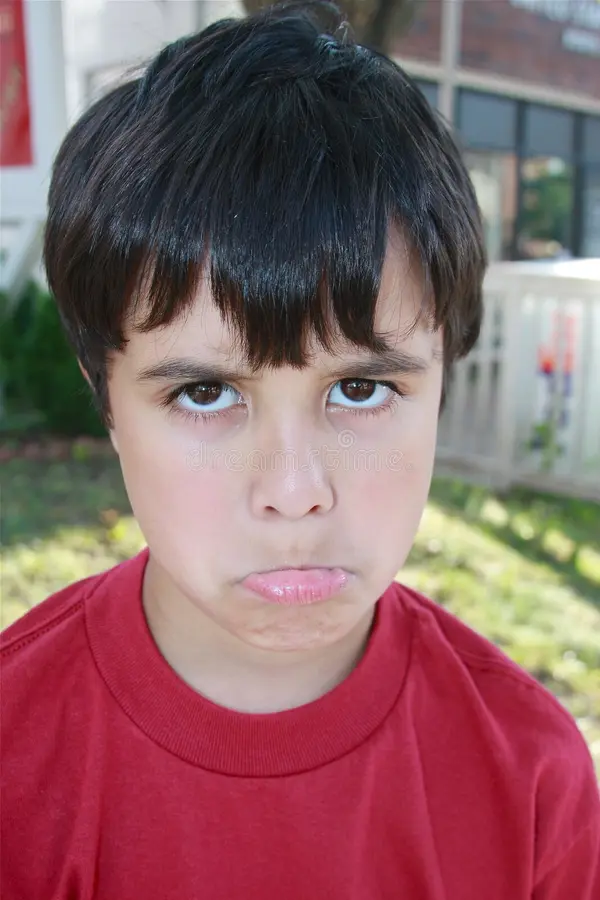
Which muscle helps with pouting?
Mentalis muscle.
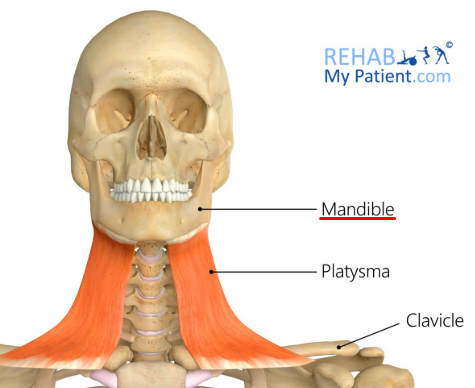
Which muscle helps with tensing the neck?
The platysma muscle.
Which is antagonistic** to depressor anguli oris?
Zygomaticus minor & major muscles.
Which is antagonistic** to the zygomaticus?
Depressor anguli oris (D.A.O) muscle.
Which muscle is antagonistic** to the temporalis?
Digastric muscle.
Medial pterygoid muscle.
Which muscle is antagonistic** to the masseter?
Digastric muscle.
Which muscle is antagonistic to the medial pterygoid?
Digastric muscle.
Which muscle is antagonistic** to the digastric?
Masseter muscle.
Temporalis muscle.
Which muscle is antagonistic** to the sternocleidomastoid?
The splenius capitis muscle.
Which muscle is antagonistic** to the splenius capitis?
The sternocleidomastoid muscle.
What’s the action of the Epicranius?
Moves the scalp anteriorly or posteriorly.
What’s the action of the buccinator?
Compresses cheek, (as in whistling and sucking).
What’s the action of the depressor anguli oris**?
( asterisk* = know antagonist)
Action: draws corners of mouth inferiorly and laterally. (frowning)
Antagonist: zygomaticus minor & major muscles.
What’s the action of the mentalis?
Wrinkles chin; protrudes lower lip. (pouting)
What’s the action of the orbicularis oris?
Closes lips; purses and protrudes lips (kissing/whistling/puckering).
What’s the action of the zygomaticus**?
Action: Raises lateral corners of mouth (smiling muscle).
Antagonist: Depressor anguli oris (D.A.O) muscle.
What’s the action of the Levator labii superioris?
Opens lips; elevates and furrows the upper lip. (snarl)

What’s the action of the depressor labii inferioris?
Depresses lower lip (as in a pout).
What’s the action of orbicularis oculi?
Closes eye aka blinking.
What’s the definition of Origin & Insertion?
Origin: The less movable attachment point of a muscle (usually proximal attachment point).
Insertion: The more movable attachment point of a muscle.
Origin → anchor.
Insertion → produces movement.
What is the insertion and action of the platysma?
Insertion: lower margin of mandible.
Action: Tenses skin of neck.
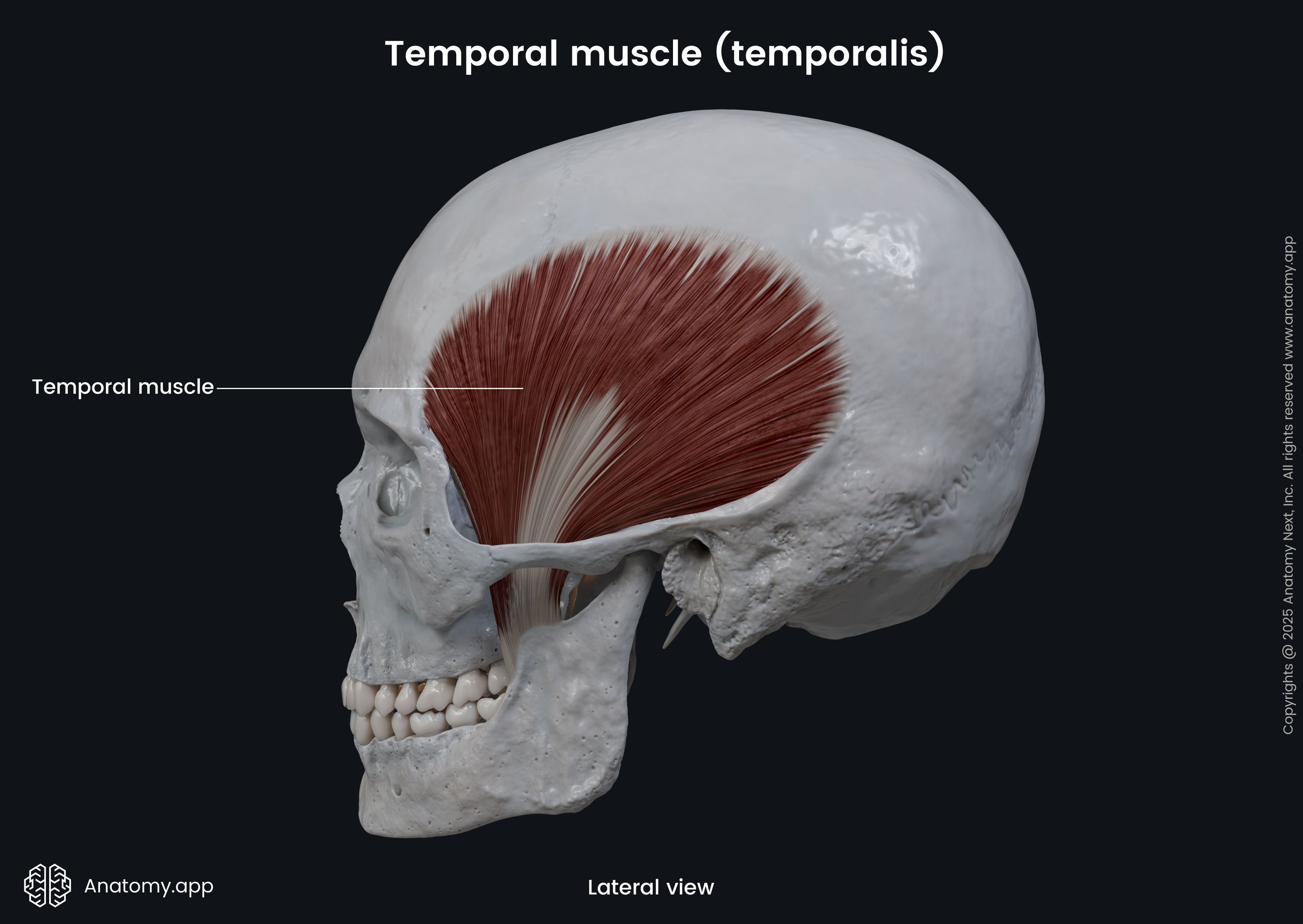
What’s the origin, insertion, and action of the temporalis**?
Origin: Temporal fossa.
Insertion: Coronoid process of mandible.
Action: Closes jaw.
Antagonist: Digastric muscle.
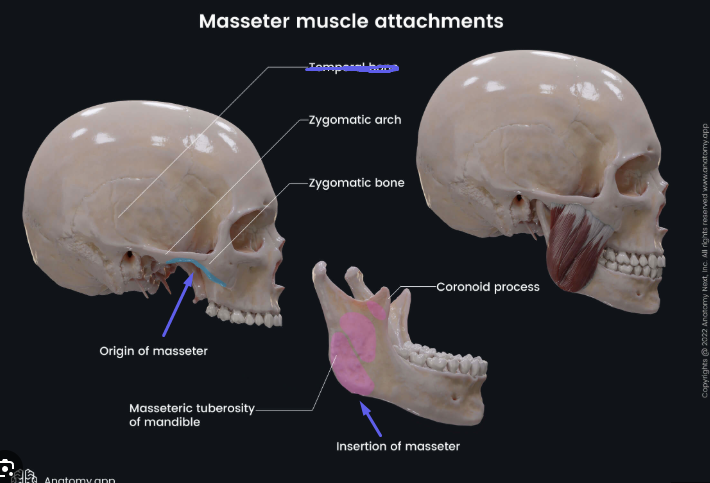
What’s the origin, insertion, and action of the masseter**?
Origin: Zygomatic arch and bone.
Insertion: Angle and Ramus of mandible.
Action: Closes jaw.
Antagonist: Digastric muscle.
What’s the origin, insertion, and action of the medial pterygoid**?
Origin: Pterygoid process.
Insertion: Inner mandibular near angle.
Action: Mandible protraction & grinding/side to side
Synergizes with temporalis which means:
Antagonist: Digastric.
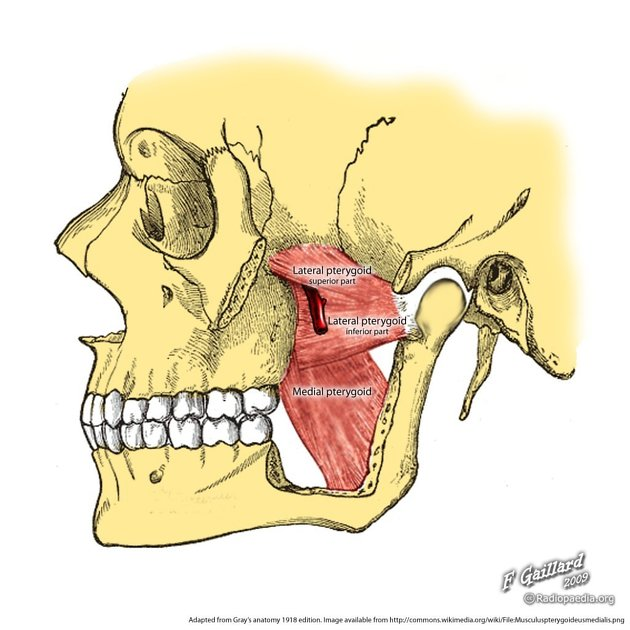
What’s the origin, insertion, and action of the lateral pterygoid?
Origin: Pterygoid process.
Insertion: Mandibular condyle & TMJ.
Action: Protracts mandible & grinding (lower teeth)
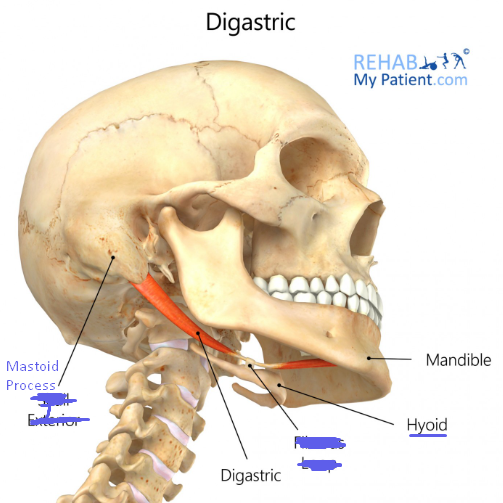
What’s the origin, insertion, and action of the digastric**?
Origin: Mandible & Mastoid process.
Insertion: Hyoid bone.
Action: Depresses (opens) mandible; elevates hyoid.
Antagonist: Masseter or Temporalis muscle.
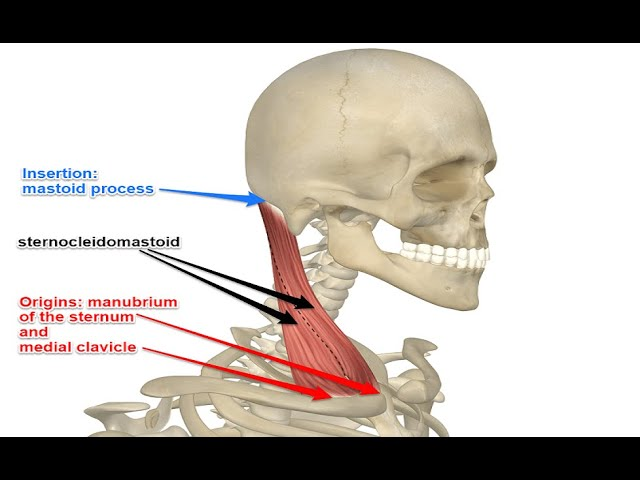
What’s the origin, insertion, and action of the sternocleidomastoid**?
Origin: Sternum/Manubrium & Clavicle.
Insertion: Mastoid process & nuchal line.
Action: Flexes & rotates head.
Antagonist: The splenius capitis muscle.
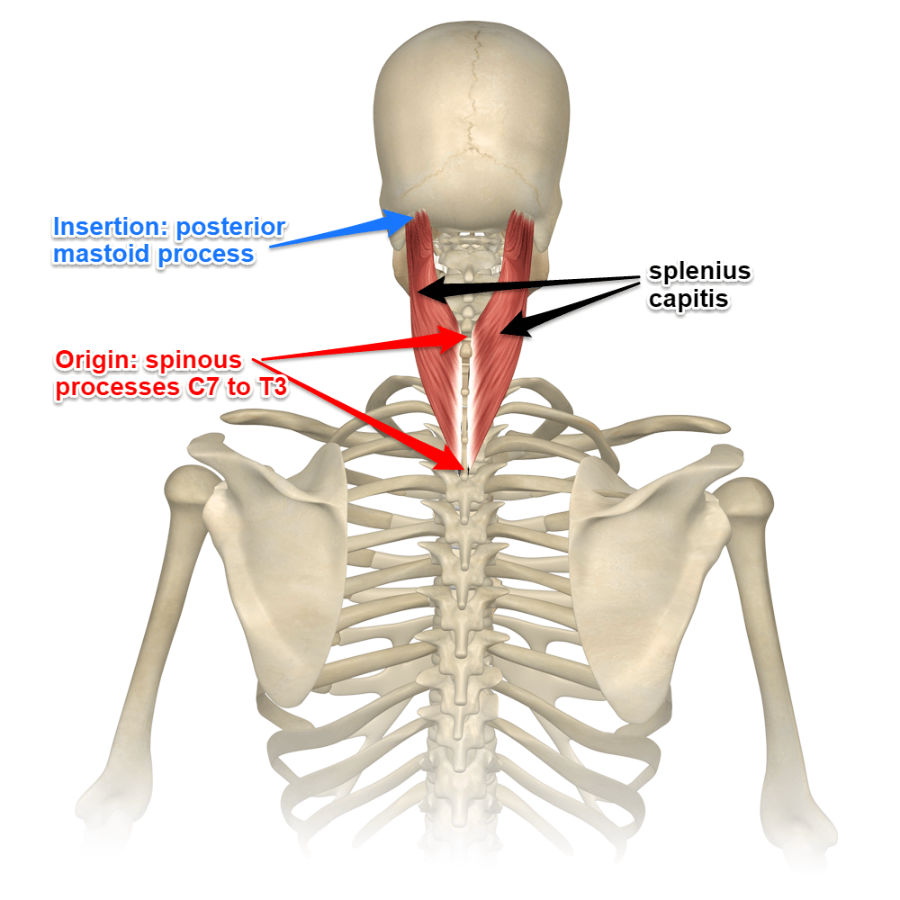
What’s the origin, insertion, and action of the splenius**?
Origin: Spinous processes C7-T3.
Insertion: Posterior mastoid process.
Action: Extends, rotates head.
Antagonist: The sternocleidomastoid muscle.