Lecture 11: 18th Century in Europe Rococo to Neoclassicism
 Studied by 18 people
 Call Kai
 Learn
Learn Practice Test
 Spaced Repetition
 Match
Match Flashcards
 Knowt Play
1/14

There's no tags or description
Looks like no tags are added yet.
Name | Mastery | Learn | Test | Matching | Spaced | Call with Kai |
|---|
No study sessions yet.
15 Terms
18th Century Background
Gets more complicated than ever before, the world is experiencing multiple art movements at once (Rococo & Neoclassicism)
Many questioned divine right and if the God in the Bible & Qu’ran is the original, real, true God
France becomes the dominate centre for art, most wealthy and influential area
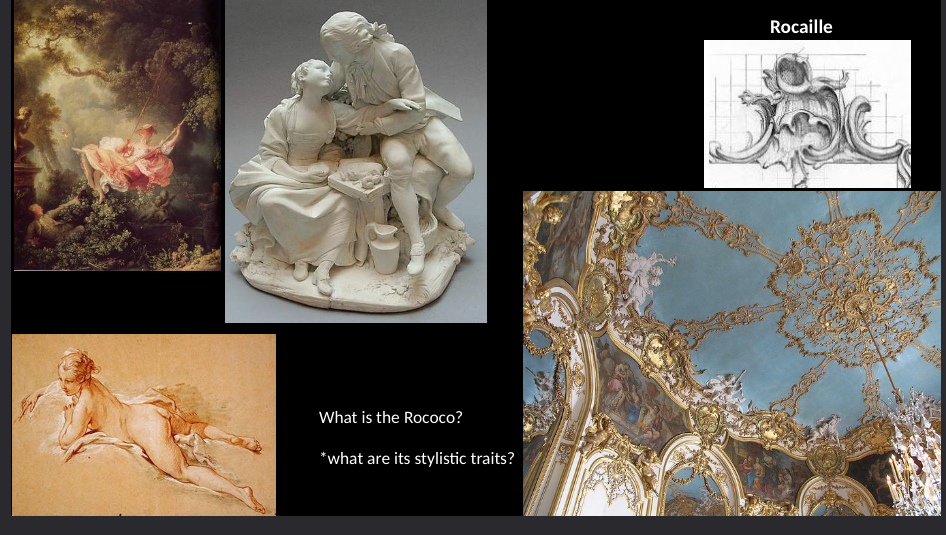
Rococo
Largely comes from France (Paris)
Characteristics: Complex, ornate, deocrative designs, intricate floral patterns, lots of pastel/happy/light shades of colors, “baroque” like but less serious (no killing people and fighting over if they are Protestant/Catholic)
Theme: No religious scenes, shows people having fun
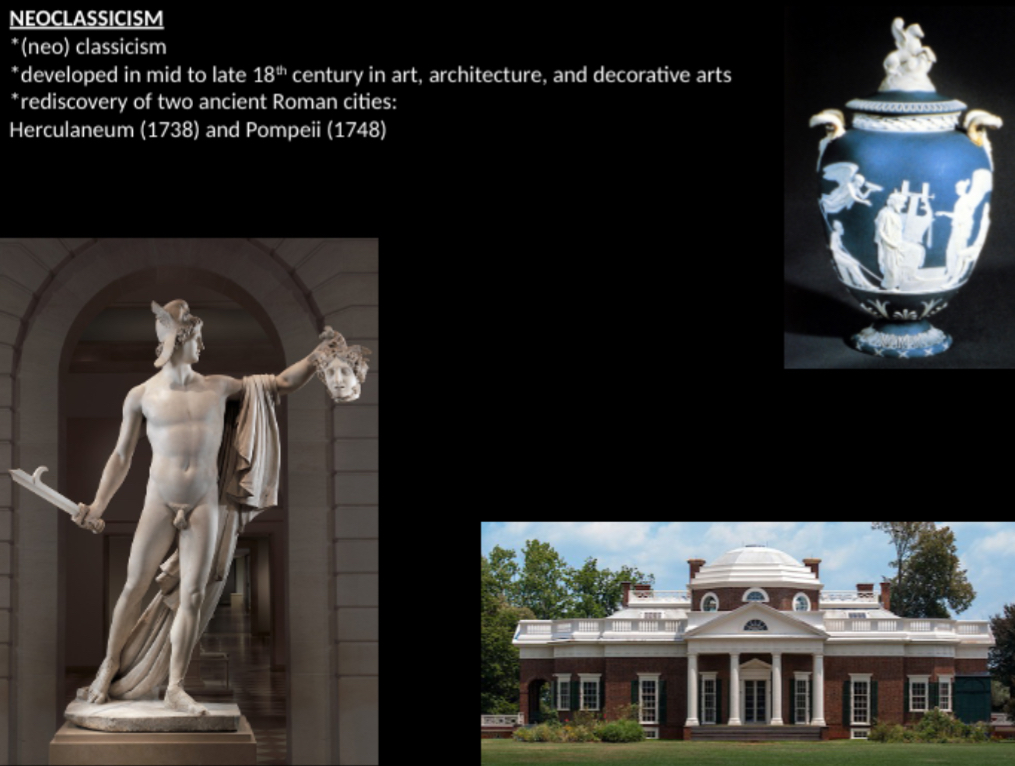
Neoclassicism
Rediscovery of two ancient Roman cities, Herculaneum & Pompeii

Pilgrimage To Cythera
Antoine Watteau
Oil on canvas
1717
Cythera is an ancient island in Greece. Showcases everyday life, couples (pilgrimages) making out on a romantic island, what wealthy people did during their free time aka most of their time. Cupids are flying in the sky.
Pastel colors, loose brushwork which makes painting fuzzy and looks like it’s moving
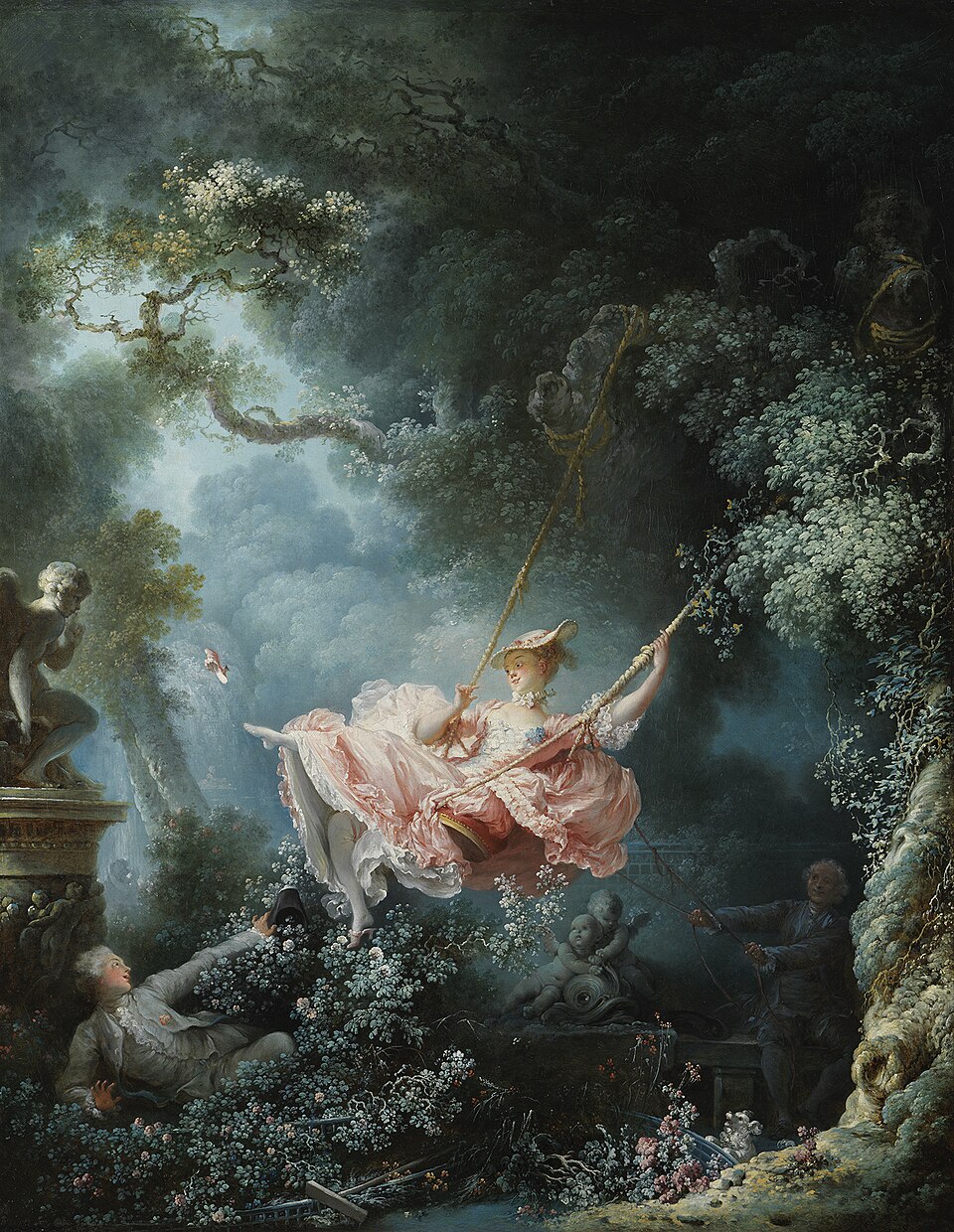
The Swing
Jean Honoré Fragonard
Oil on canvas
1767
Shows a love triangle, Main figure set in a beautiful garden (showcasing what wealthy people do in their free time), wealthy aristocracy woman on the swing having fun as her older clueless is pushing her. Her affair is hiding in the bushes so he can see her skirt being lift up. Ropes on the swing symbolize she’s being held back in getting her affair. Cupid in statue form, is shushing her affair as a way of saying this is our little secret.
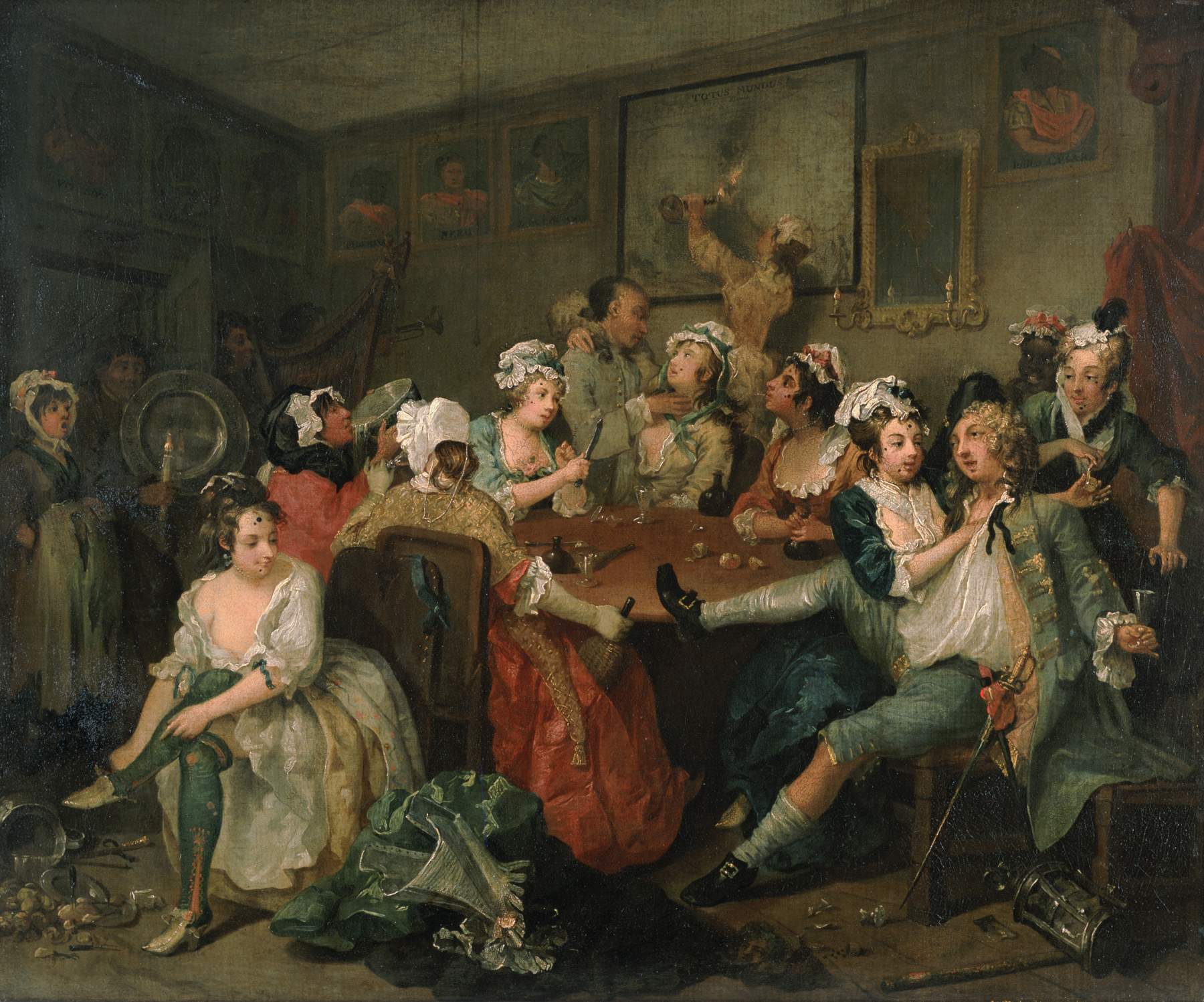
A Rake’s Progress, Plate 3: “The Tavern Scene”
William Hogarth
Print on paper from an engraving
1735
Series of 8 scenes depicting a low class man became wealthy after his wealthy merchant dad died, he inherited his wealth and used it to play around with woman/gambling/ended up going crazy by locking himself in an asylum.
18th century, much larger middle class that before. “Rake”: a fashionable/wealthy man with no morals and is a playboy. Series of 8 scenes that describes this specific man’s life story. Moral: Don’t do what he did, or else you’ll end up like him.
Scene 3 shows him sitting and playing with many woman who are sex workers, holding a glass of wine. Woman in his lap is handing his watch to another woman behind him, stealing it.
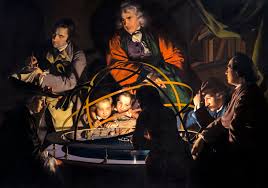
A Philosopher Giving A Lecture At The Orrery
Jospeh Wright of Derby
Oil on canvas
1765
Orrery: mechanical model of solar system that uses clockwork mechanism, bright light in the middle with spheres indicating planets and moons. Students sitting around learning about science and world, paying close attention & taking notes
Philosophy=scientist
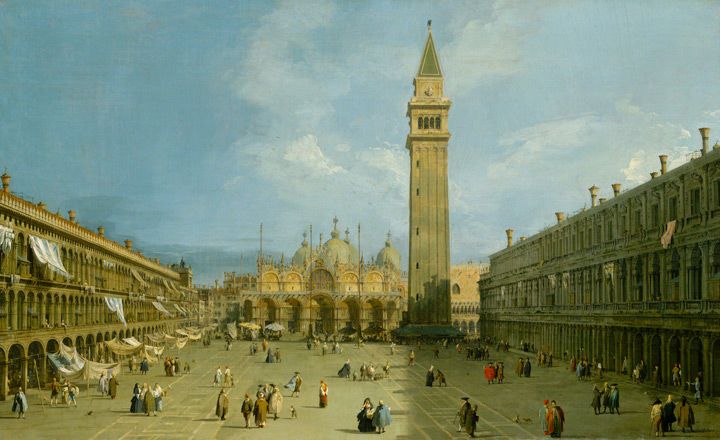
Piazza San Marco
Canaletto
Venice
Oil on canvas
Late 1720s
Marks the start of tourist art. Instead of what would be a postcard today, people had paintings of tourist attractions painted as souvenirs.
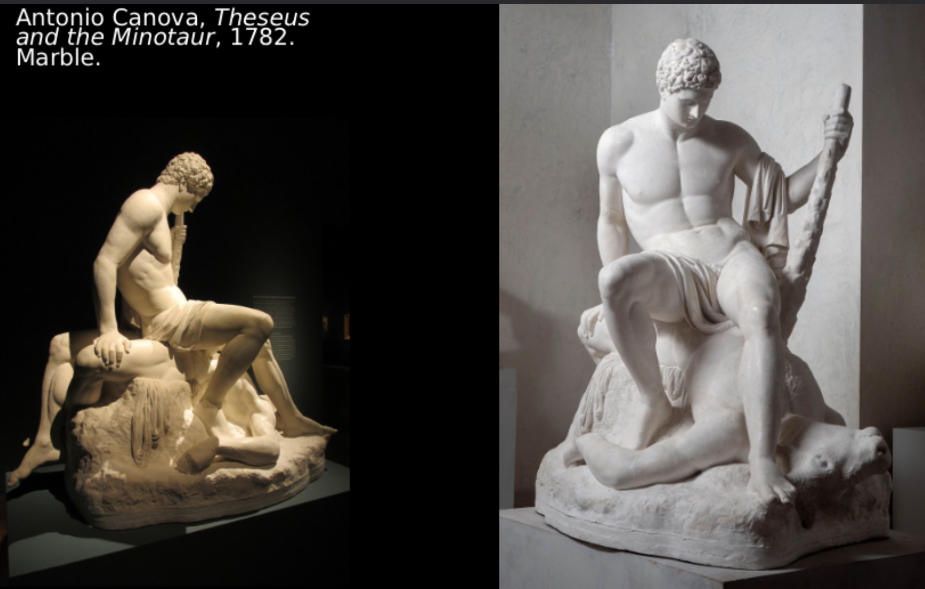
Theseus and the Minotaur
Antonio Canova
Marble
1782
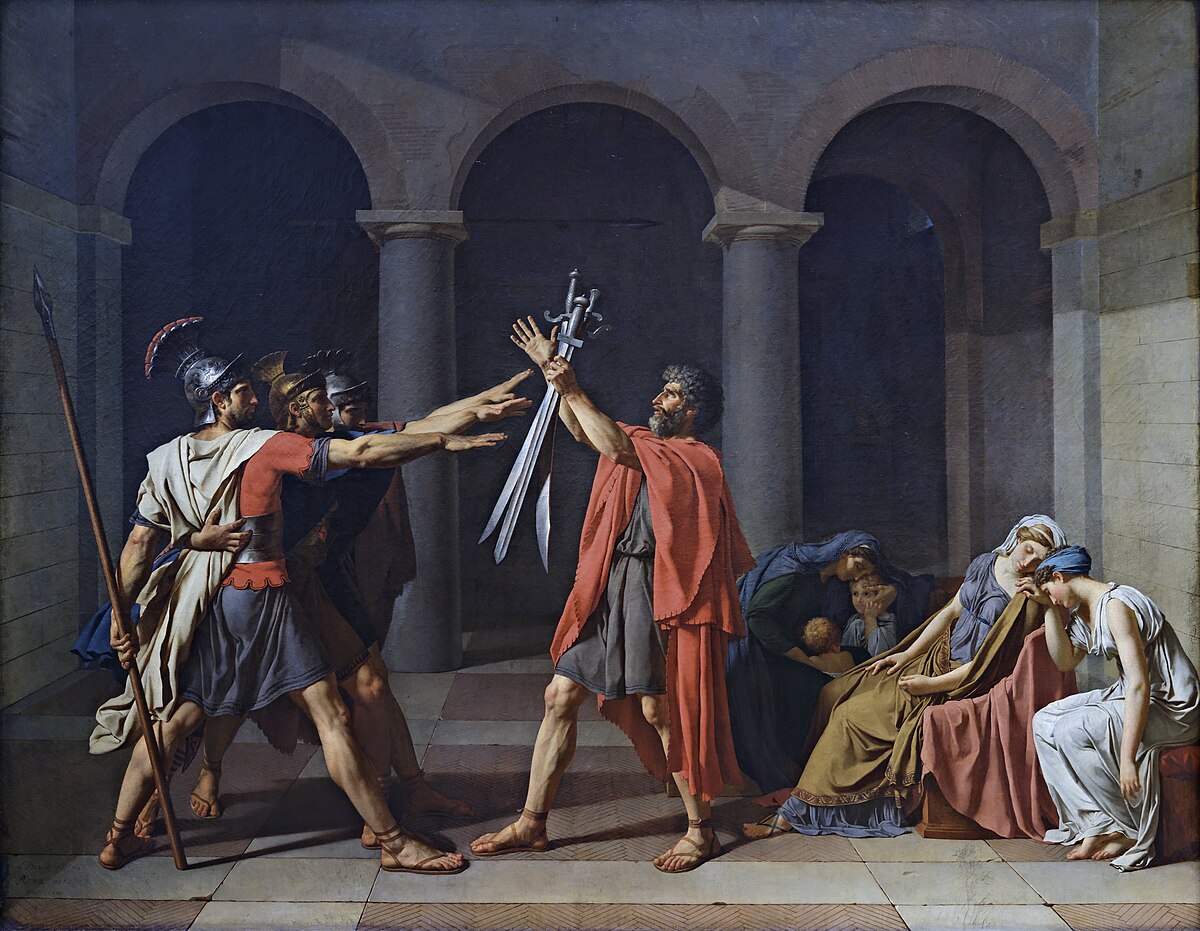
The Oath of the Horatii
Jacques-Louis David
Oil on canvas
1784
This painting embodies neoclassicism. Rome was at war with neighboring town. Instead of fighting a full blown battle, they both agreed to send 3 sets of siblings from both sides and have 3 rounds of duel. Whoever wins would grant whatever the side wished. However, both sides had relations with each other, married into each other’s families/relatives. Woman (most likely wives) are shown in despair as their husbands are fighting one another.
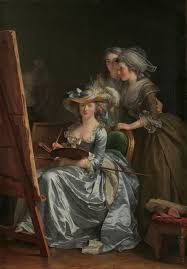
Self-Portrait With Two Pupils
Adélaïde Labille-Guiard
Oil on canvas
1783
More woman were later enrolled in Royal Academy. Artist painted this after she got accepted. In this painting, shows artist teaching other woman how to paint showing that even though the academy is not enrolling that many woman, if more people know how to paint, in the future they should enroll more woman.
The Enlightenment
Age of thinking, An intellectual movement following Renaissance wanting to know more knowledge (discovery, new science discoveries, thinking of the rights of human, humanism)
The Grand Tour
Common recurring theme after students graduated from university, they will take a gap year before getting into their job. They will go somewhere, most likely Italy, to explore its culture, architecture, and literature. After that, they will go back to their daily lives.
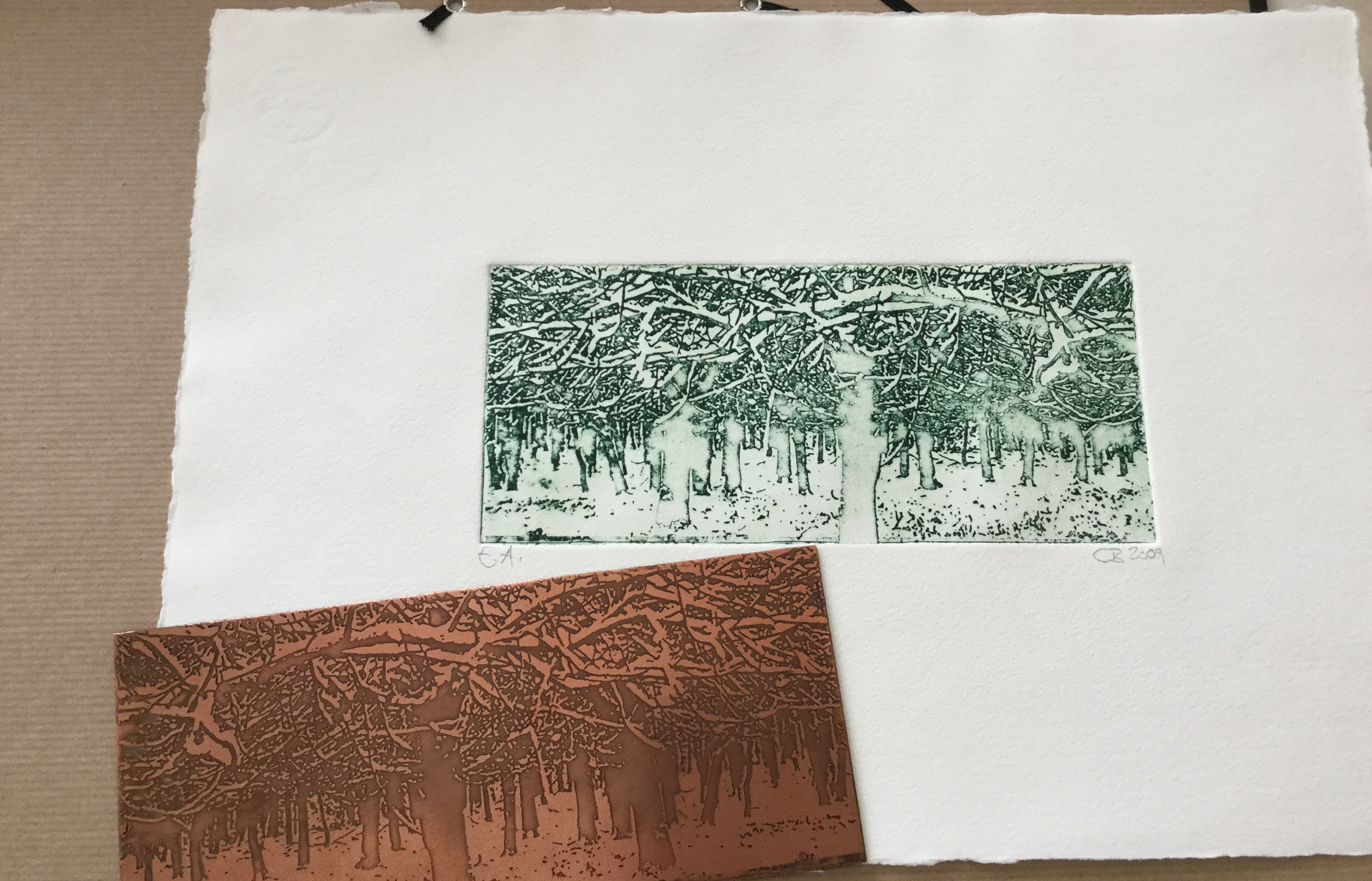
Etching
Printmaking technique that involves using acid to cut into the unprotected parts of a metal surface to create a design. This method allows for intricate and detailed imagery, which became especially significant during the Northern Renaissance, enhancing the development of Flemish painting and German printmaking.
The French Royal Academy of Painting and Sculpture
Established in 1648 under Louis XIV as the prestige academy for art. Artists would display their paintings to public. Hierarchy of paintings from most important to least: history, portraiture, genre/scenes of everyday life, landscape, still life
More woman were later enrolled. They taught other woman how to paint showing that even though the academy is not enrolling that many woman, if more people know how to paint, in the future they should enroll more woman.
 Note
Note  Flashcards (120)