4.1.7 Balance of payments
 Studied by 0 people
 Call with Kai
 Learn
Learn Practice Test
 Spaced Repetition
 Match
Match Flashcards
 Knowt Play
1/8

There's no tags or description
Looks like no tags are added yet.
Name | Mastery | Learn | Test | Matching | Spaced | Call with Kai |
|---|
No study sessions yet.
9 Terms
Components of the balance of payments
Current account
Trade in goods
Trade in services
Investment income (primary income)
Current transfers (secondary income)
Capital account
Some capital goods
Intellectual capital (collective knowledge within an organisation)
Financial account
FDI
Portfolio investment
Hot money
All items could be credit / debit
Credit = money flowing into the country
Debit = money flowing out of the country
Components of the financial account
FDI
Portfolio investment = purchase of shares & bonds in other countries
Hot money flows = short-term money flows in & out of a country driven by speculative purposes (interest rate arbitrage (taking advantage) / currency trading)
Evaluation on why UK’s current account deficit may not be a major concern
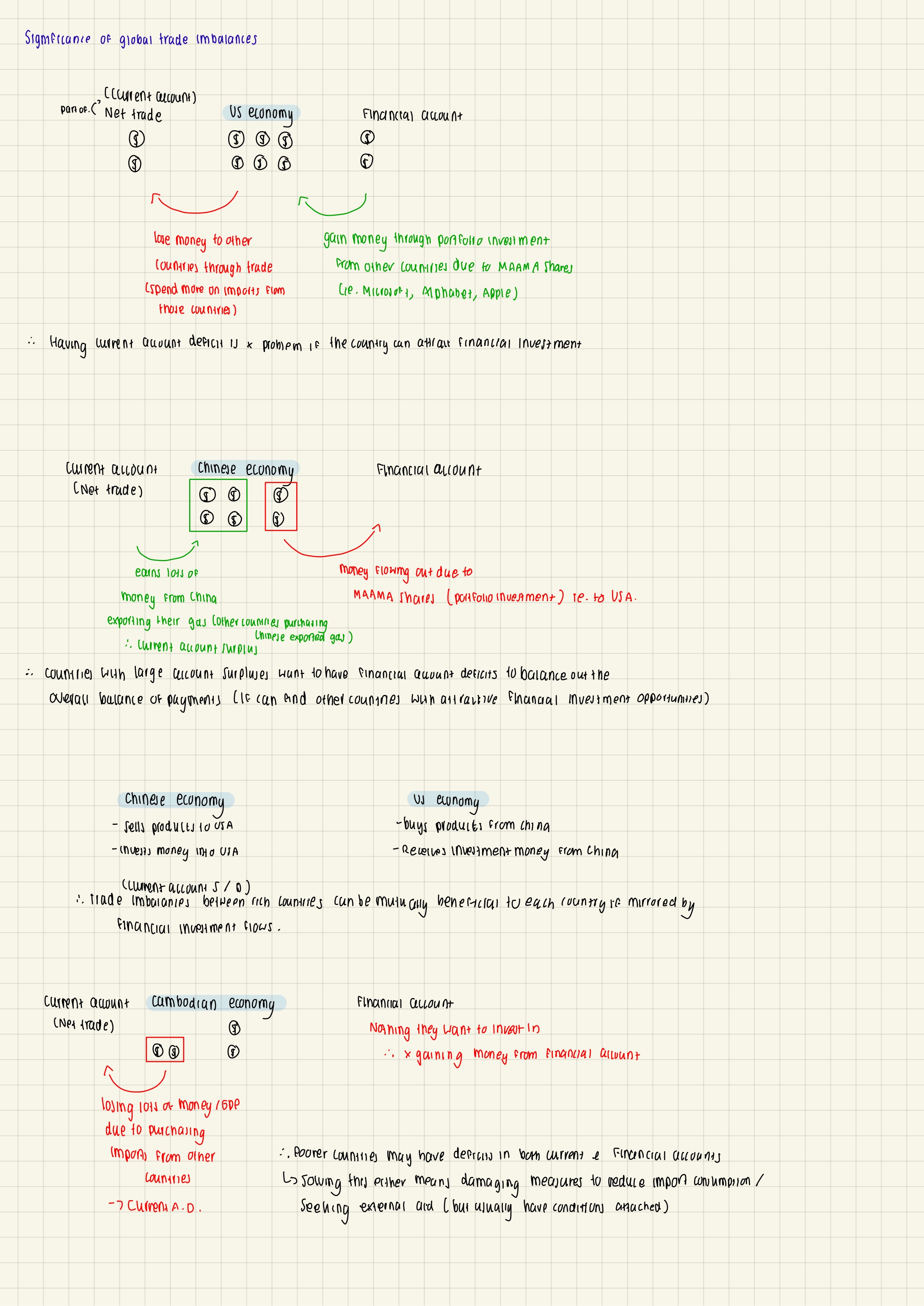
1) UK offsets its current account deficit with financial account surplus
= inflows of investment capital balance out payments for g&s & income flows
2) UK is a global leader in attracting financial investment due to
strong institutions
stable legal framework
London’s position as a financial hub
Causes of current account surplus
Goods & services sold abroad are very competitive due to better quality, lower price, favourable exchange rates = foreign countries want to buy more of your goods → exports increases
Economy in recession
lack of demand for imports & domestic gds
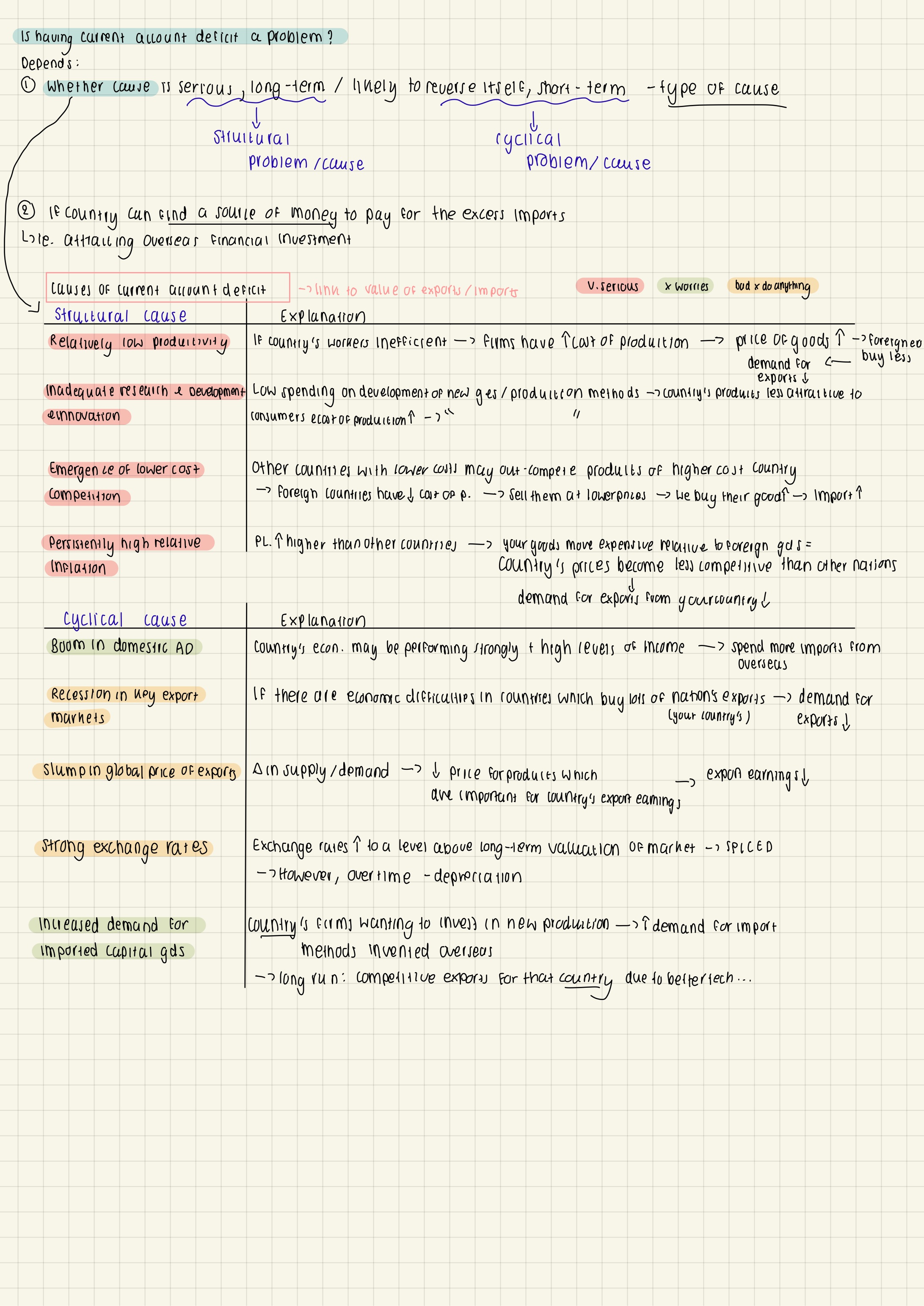
Causes of current account deficit
Measures to reduce a country’s imbalance on the current account
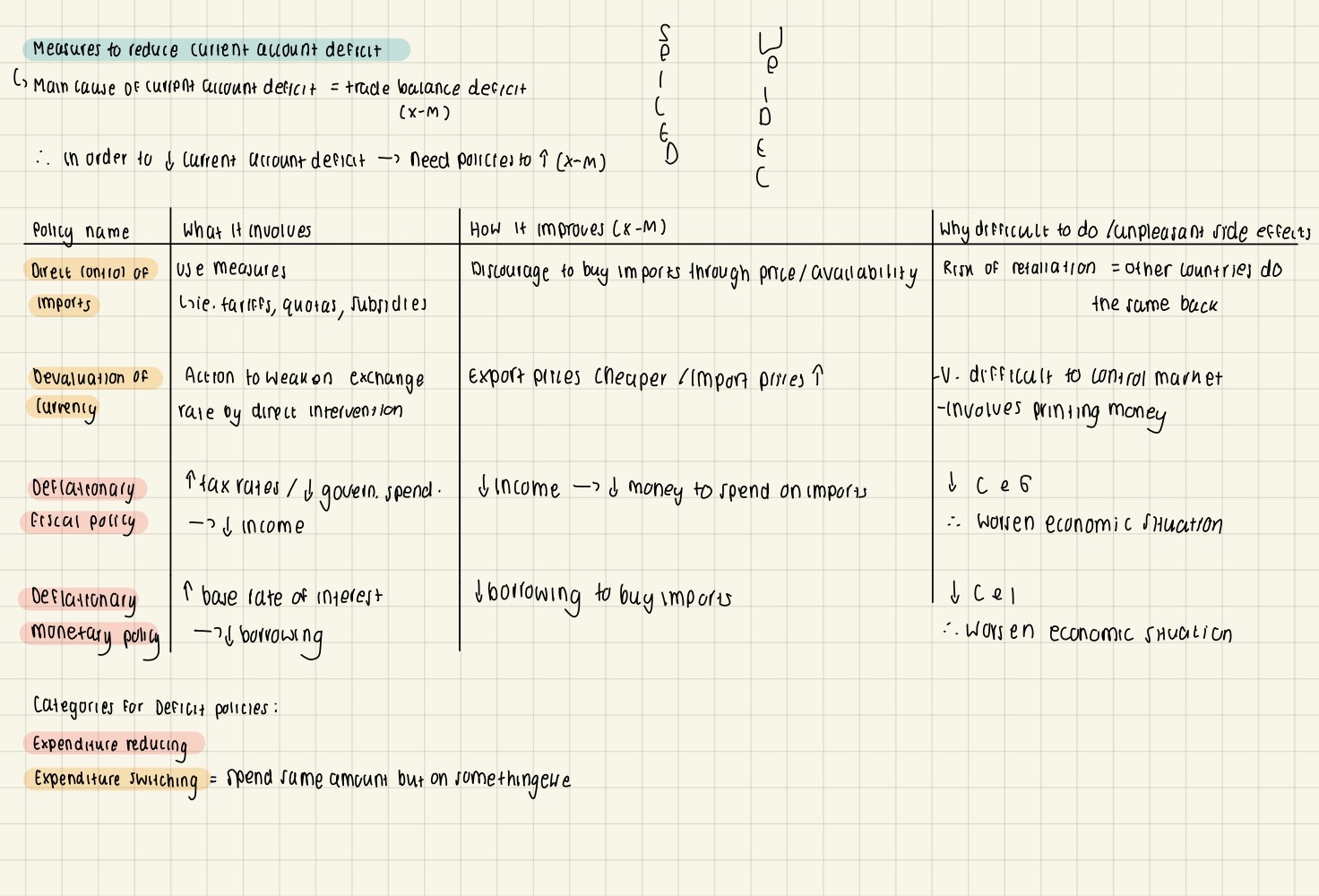
Conclusion for using current account deficit reducing policies
Since deficit reducing policies have negative effects
Current account deficits should be ignored
Unless they have arisen from serious long term reasons (ie. Structural causes)
Even then, alternative type of policy - based on improving productivity - could be better
Ie. Supply-side policies
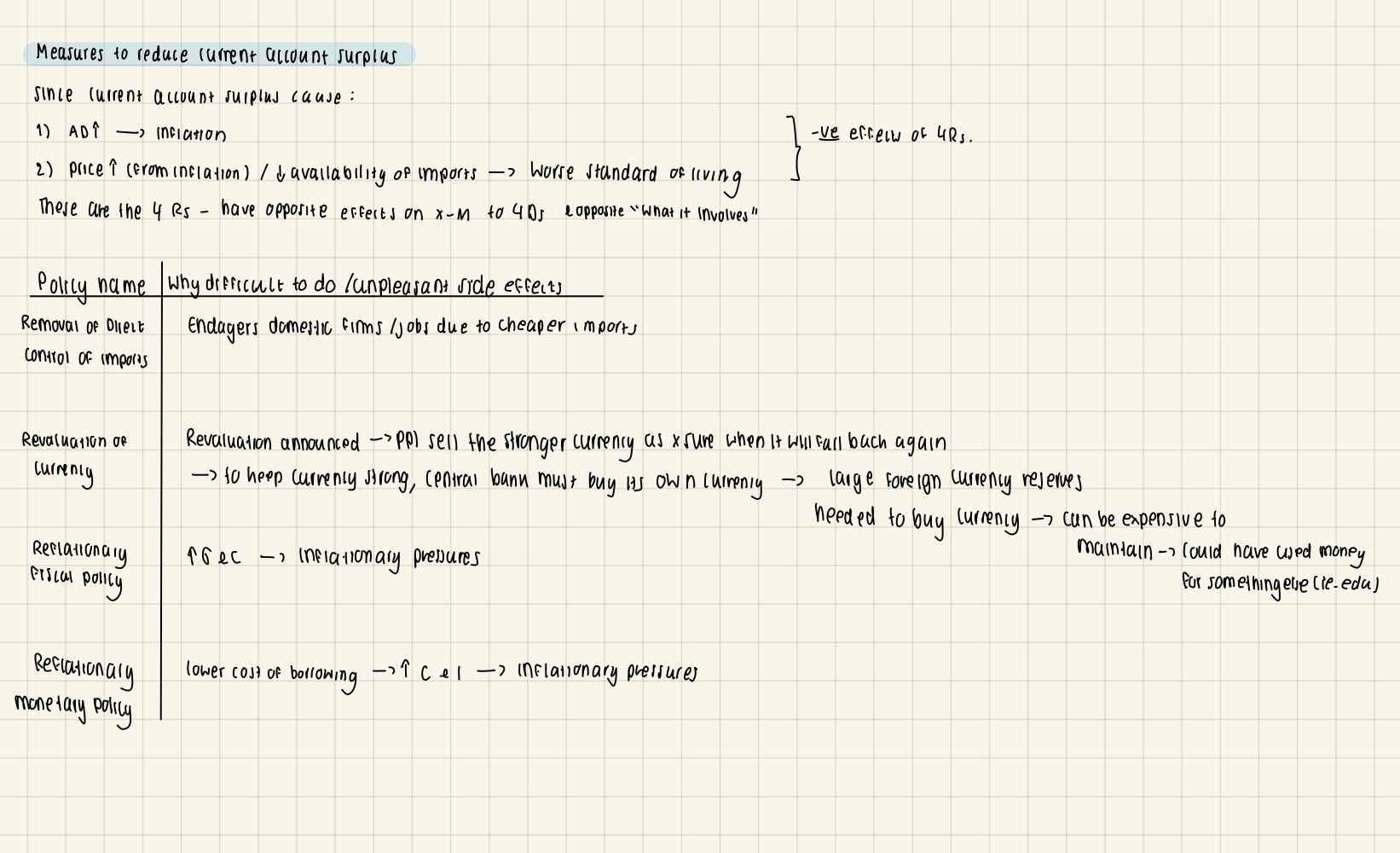
Policies to reduce a current account surplus
Significance of global trade imbalances
 Note
Note  Flashcards (32)