Exam 3: Predation, Parasitism, and Herbivory
 Call Kai
 Learn
Learn Practice Test
 Spaced Repetition
 Match
Match Flashcards
 Knowt Play
1/35

There's no tags or description
Looks like no tags are added yet.
Name | Mastery | Learn | Test | Matching | Spaced | Call with Kai | Chat |
|---|
No analytics yet
Send a link to your students to track their progress
36 Terms
parasitsm
-need hot to complete life cycle/adapted to specific hosts
-can be more than one host
-passive vs. active transmission
-direct host to host transmission
-vector to host transmission
passive transmission
parasite does not travel to host (ingestion)
active transmission
parasites travels or penetrates
direct host to host transmission
an intermediate strategy in which parasites do not leave one host until they encounter another
vector to host transmission
Can be carried from one host to another through organisms
Endoparasites
-inside
-stable environment
-many are pathogens
-host immune system
-parasites adjust immune response, camo or hide
Ectoparasites
-outside
-active transmission
-dont need to evade immune system
-exposed to predation
-hosts have mutualistic relationship
Parasitoids
-use host for reproduction
-kills host
-cannot be too effective at finding hosts
Ecological impacts of parasitism
-directly affecting host population
-directly affecting evolution of host species
-indirectly, reduction of host survival and or reproduction can affect another species the host interacts with
Individual impacts of parasitism
-reduction in survival and or reproduction
-change behavior
strats against herbivory
mechanical
chemical
nutritional
mechanical strat
ex. grow spikes
trade-off more energy used
chemical strat
ex. taste bad
Nutritional strat
ex. does not look good to eat
Impacts of herbivory
-reduce individuals in a pop
-change community composition
-especially likely to impact communities when feed on plant that is strong competitor
-evolution of plant species
Predation strats
stalk, ambush, pursuit, random encounter
predation stages
1. encounter
2. detection
3. iD
4. approach (capture)
5. subjunction (gaining control or killing)
6. consumption
Defenses against predation
1. crypsis (camo) ex. stick bug
2. aposematism (warning colors) ex. poison frog
3. chemical warfare ex. skunk
4. physical barriers ex sea urchin
5. mimicry (mullerian and batesian)
6. behavior strats ex. group defense
Mullerian
the type of mimicry in which the mimic and the model are equally dangerous
Batesian
A type of mimicry in which a harmless species looks like a species that is poisonous
Predator-prey cycling and extinction
-high predation efficiency (a) mixed with high prey production (r) most likely to produce extinction (boom bust)
Why not high predatory efficiency and low prey production?
Predators do not wipe out prey pops because large predators can not be supported by small ones
Assumptions of Lotka-Volterra model
A. No density dependent growth- We ignore limits like food, space, disease, prey growth=proportional to pop
B. Predator and prey meet randomly- we assume a well mixed environment
C. Prey is ONLY food source- predator survival depends on prey
D. Prey is the ONLY cause of prey death- we ignore disease, aging
E. No handling time- simplifies interaction, immediate successful predation
F. No immigration or emigration- closed system (easier model), pop changes only from births/deaths
Functional Response
an increase in animal feeding rate, which eventually levels off, that occurs in response to an increase in food availability
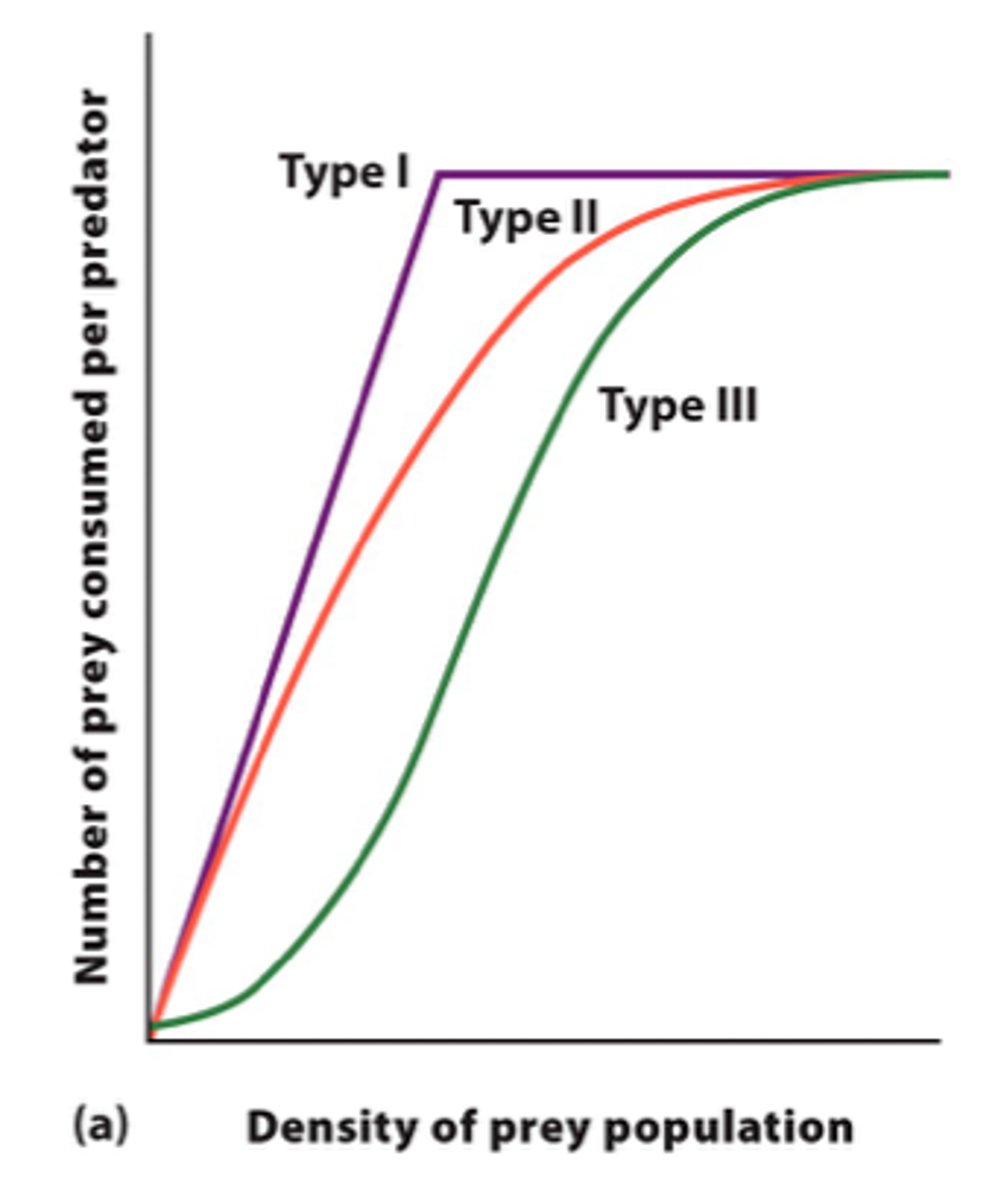
I
If the density of prey doubles, each predator (and pop as a whole) eats twice as many prey
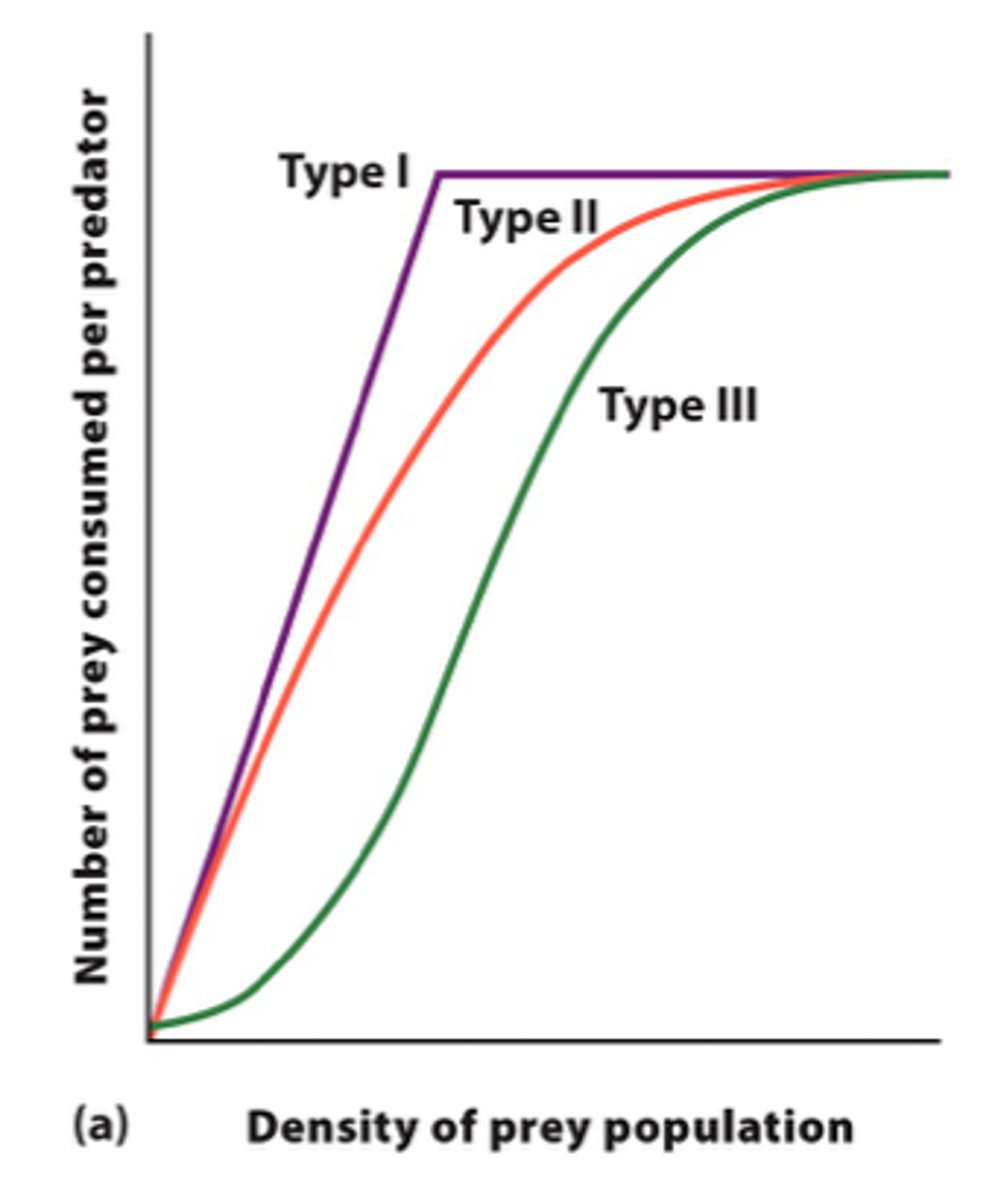
II
As prey increase predator increases and predation rate slows
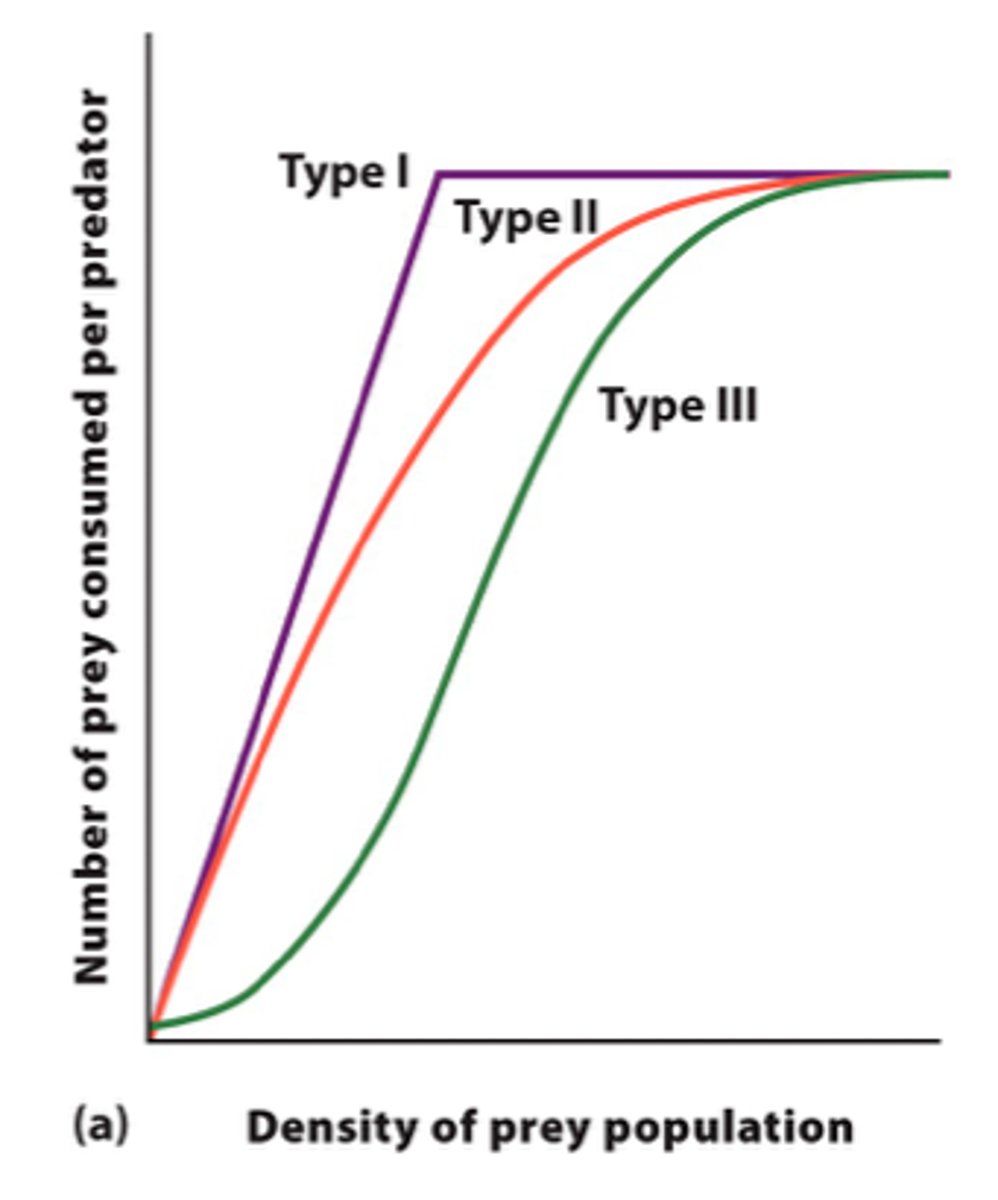
III
Predator ignores prey until a certain density is reached
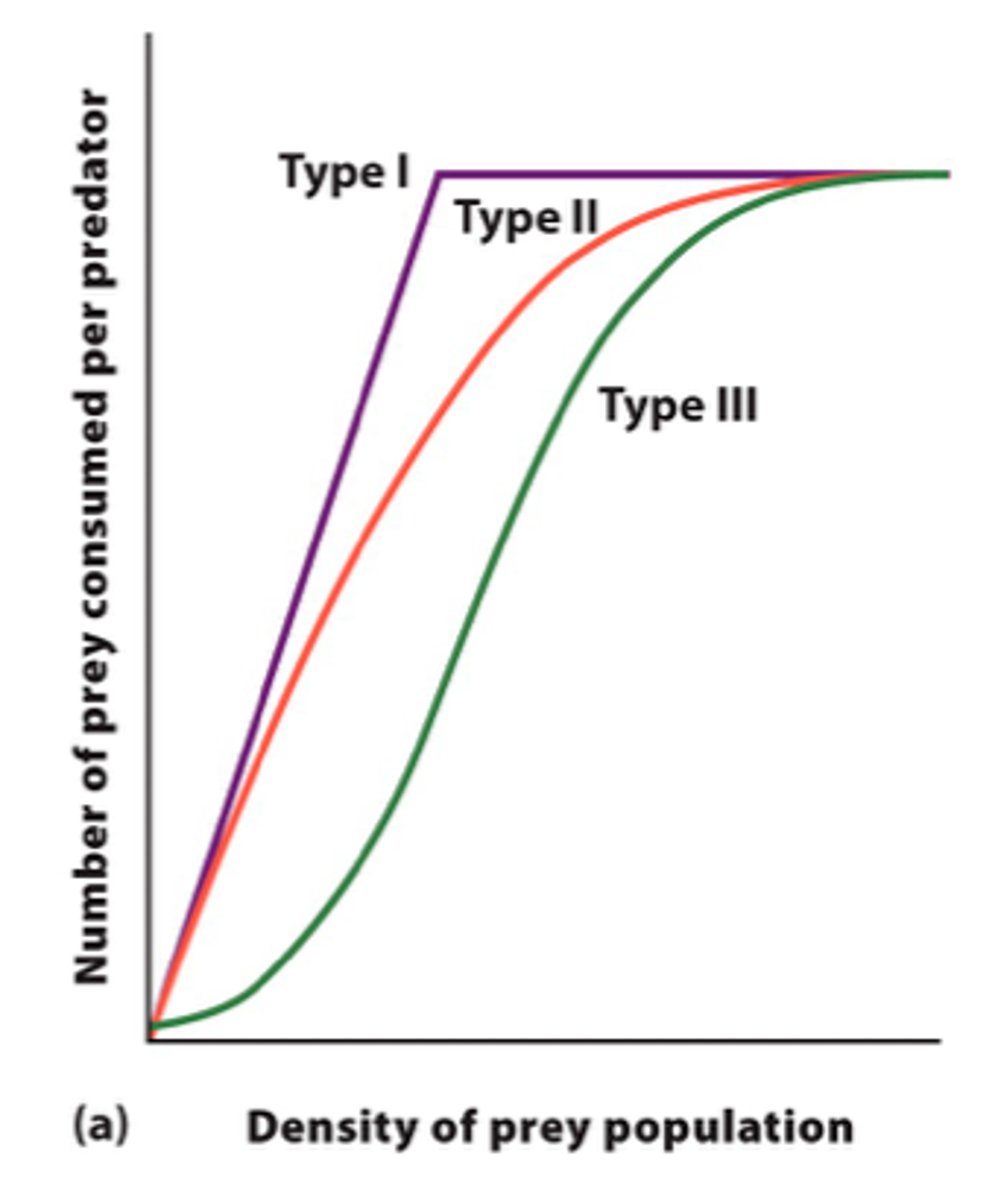
Maximum Rates of predation
the predator population has grown to a point where it can no longer increase due to the limited availability of prey
Optimal Foraging Theory
Views foraging behavior as a compromise between benefits of nutrition and costs of obtaining food
-waiting time
-handling time
waiting time
average time between aencounters with prey
handling time
average time to consume prey
coevolution
-predator and prey
-parasite and host
-pathogens
-diffuse, specific
-traits under selective pressure from coevolution often involve trade-offs
-some alleles that allow individuals to exploit or avoid exploitation may reduce growth survival or reproduction
diffuse
number of species coevolving with response to each other
specific
two species coevolving
Red Queen hypothesis
each species has to run (evolve) as fast as possible just to stay in place -- because predators, competitors, and parasites also continue to evolve
Sexual Selection
when individuals select mates based on heritable traits/"good genes"