Chapter 1 HW
 Studied by 0 people
 Call Kai
 Learn
Learn Practice Test
 Spaced Repetition
 Match
Match Flashcards
 Knowt Play
1/40

There's no tags or description
Looks like no tags are added yet.
Name | Mastery | Learn | Test | Matching | Spaced | Call with Kai |
|---|
No analytics yet
Send a link to your students to track their progress
41 Terms
Which of the following is INCONSISTENT with the cellular basis of life?
a. Viruses are living, acellular parasites.
b. The nuclear and mitochondrial DNA of a cell contains all of the information necessary for cellular reproduction.
c. Cellular function is intimately linked to cellular structure.
d. All anatomical structures and physiological processes of an organism are consequences of emergent properties of cellular structures and cellular processes.
a. Viruses are living, acellular parasites.
Which of the following accurately details the relationship between wavelength of illumination, lens quality, magnification, and the limit of resolution for light microscopy?
a. As shorter wavelength illumination and better-quality lenses are used, magnification will increase and the limit of resolution will decrease.
b. Magnification and limit of resolution are independent of wavelength of illumination and lens quality for light microscopy.
c. As shorter wavelength illumination and better-quality lenses are used, magnification will decrease and the limit of resolution will decrease.
d. As shorter wavelength illumination and better-quality lenses are used, magnification will increase and the limit of resolution will increase.
a. As shorter wavelength illumination and better-quality lenses are used, magnification will increase and the limit of resolution will decrease.
Which of the following statements does NOT correctly validate the three strands that compose modern cell biology?
a. Cellular DNA contains information about the structure and function of cellular proteins.
b. Cellular structure arises from the combined structures of the macromolecules that compose cells.
c. Mutations in the cellular DNA can compromise cellular and macromolecular structure and function.
d. All of the other available answer choices validate the relationships between the three strands that compose modern cell biology.
d. All of the other available answer choices validate the relationships between the three strands that compose modern cell biology.
Which type of microscope can detect density differences and thereby see organelles in living cells?
a. fluorescence
b. TEM
c. phase contrast
d. SEM
c. phase contrast
Radioisotopes have been important in the study of biochemical pathways because they __.
a. allow scientists to trace the fate of specific molecules
b. provide an important energy source for all organisms
c. are major natural components of all cells
d. allow scientists to view individual molecules
a. allow scientists to trace the fate of specific molecules
Which of the following model organisms contributed the most to connecting the genetic strand and the biochemical strand of modern cell biology through the use of genetic techniques and biochemical techniques to show molecules interacting in vivo?
a. Yeast mutants and yeast two-hybrid systems allow for the characterization of genetic mutants and determination of how specific proteins interact within a living cell.
b. Mutants of Drosophila melanogaster allowed for the mapping of genetic traits to particular chromosomes.
c. Pea plants illustrated the behavior of trait inheritance between generations.
d. Yeast was used to isolate enzymes into a cell-free extract that could carry out fermentation.
a. Yeast mutants and yeast two-hybrid systems allow for the characterization of genetic mutants and determination of how specific proteins interact within a living cell.
Which of the following does NOT accurately highlight limitations to using in vitro, in vivo, and in silico systems in applying the scientific method in cell biology?
a. It is impossible to predict and estimate all necessary factors when programing an in-silico experiment.
b. It is difficult to translate in vitro data to whole-organism biology.
c. It is difficult to control variables when using in vivo systems.
d. None of the three systems (in vitro, in vivo, and in silico) can be used to design controlled experiments.
d. None of the three systems (in vitro, in vivo, and in silico) can be used to design controlled experiments.
A scientific hypothesis is __.
a. the same as a theory
b. a theory that has been confirmed
c. a testable explanation of a natural phenomenon
d. a test in which only specific conditions are allowed to vary
c. a testable explanation of a natural phenomenon
For each of the following events, indicate whether it belongs mainly to the cytological, biochemical, or genetic strand in the historical development of cell biology.
Kollicker describes "sarcosomes" (now called mitochondria) in muscle cells (1857).
a. cytological
b. biochemical
c. genetic
a. cytological
Hoppe-Seyler isolates the protein hemoglobin in crystalline form (1864).
a. cytological
b. biochemical
c. genetic
b. biochemical
Haeckel postulates that the nucleus is responsible for heredity (1868).
a. cytological
b. biochemical
c. genetic
c. genetic
Ostwald proves that enzymes are catalysts (1893).
a. cytological
b. biochemical
c. genetic
b. biochemical
Muller discovers that X-rays induce mutations (1927).
a. cytological
b. biochemical
c. genetic
c. genetic
Davson and Danielli postulate a model for the structure of cell membranes (1935).
a. cytological
b. biochemical
c. genetic
a. cytological
Lipmann postulates the central importance of ATP in cellular energy transactions (1940).
a. cytological
b. biochemical
c. genetic
b. biochemical
Avery MacLeod and McCarty demonstrate that bacterial transformation is attributable to DNA not protein (1944).
a. cytological
b. biochemical
c. genetic
c. genetic
Palade Porter and Sjøstrand each develop techniques for fixing and sectioning biological tissue for electron microscopy (1952-1953).
a. cytological
b. biochemical
c. genetic
a. cytological
Lehninger demonstrates that oxidative phosphorylation depends for its immediate energy source on the transport of electrons in the mitochondrion (1957).
a. cytological
b. biochemical
c. genetic
b. biochemical
Define "limit of resolution".
a)The limit of resolution of a microscope is the minimum distance or angular separation between two point objects which allows them to be resolved according to the Rayleigh criterion.
b)The limit of resolution of a microscope is the clearance distance between the closest surface of the cover glass and the objective front lens.
c)The limit of resolution of a microscope is a measure of how close together two points can be and still be distinguished from one another when viewed through the microscope.
d)The limit of resolution of a microscope is the shortest distance between four separate points in a microscopes field of view that can still be distinguished as distinct entities.
c)The limit of resolution of a microscope is a measure of how close together two points can be and still be distinguished from one another when viewed through the microscope.
What was the limit of resolution of Hooke's microscope?
a. 0.83 μm
b. 8.3 μm
c. 83 μm
d. 830 μm
b. 8.3 μm
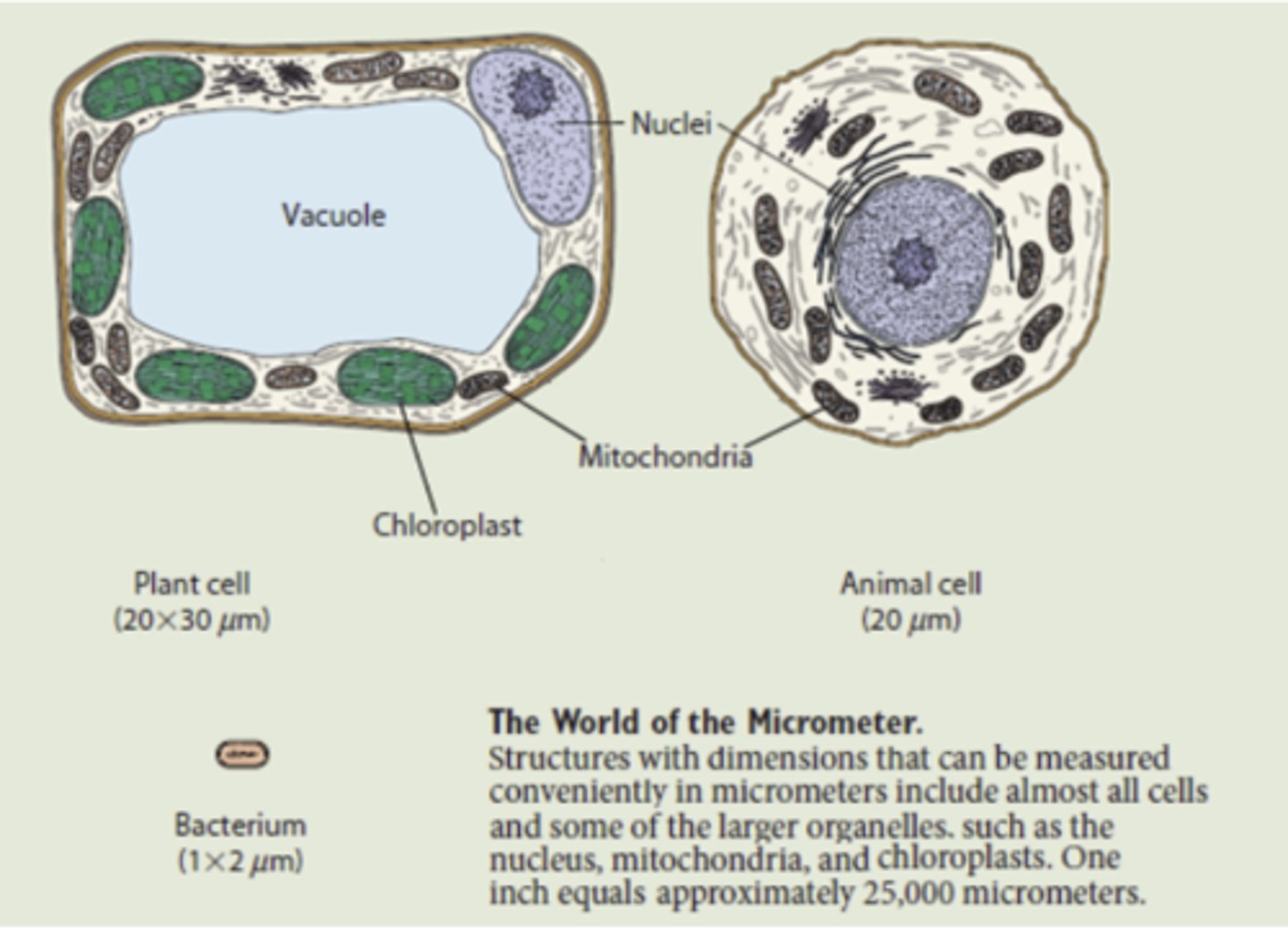
Would he have been able to see any of the structures shown in the figure below? (Hooke)(8.3 μm)
a. Yes, he would
b. No, he wouldn't.
a. Yes, he would (Hooke)
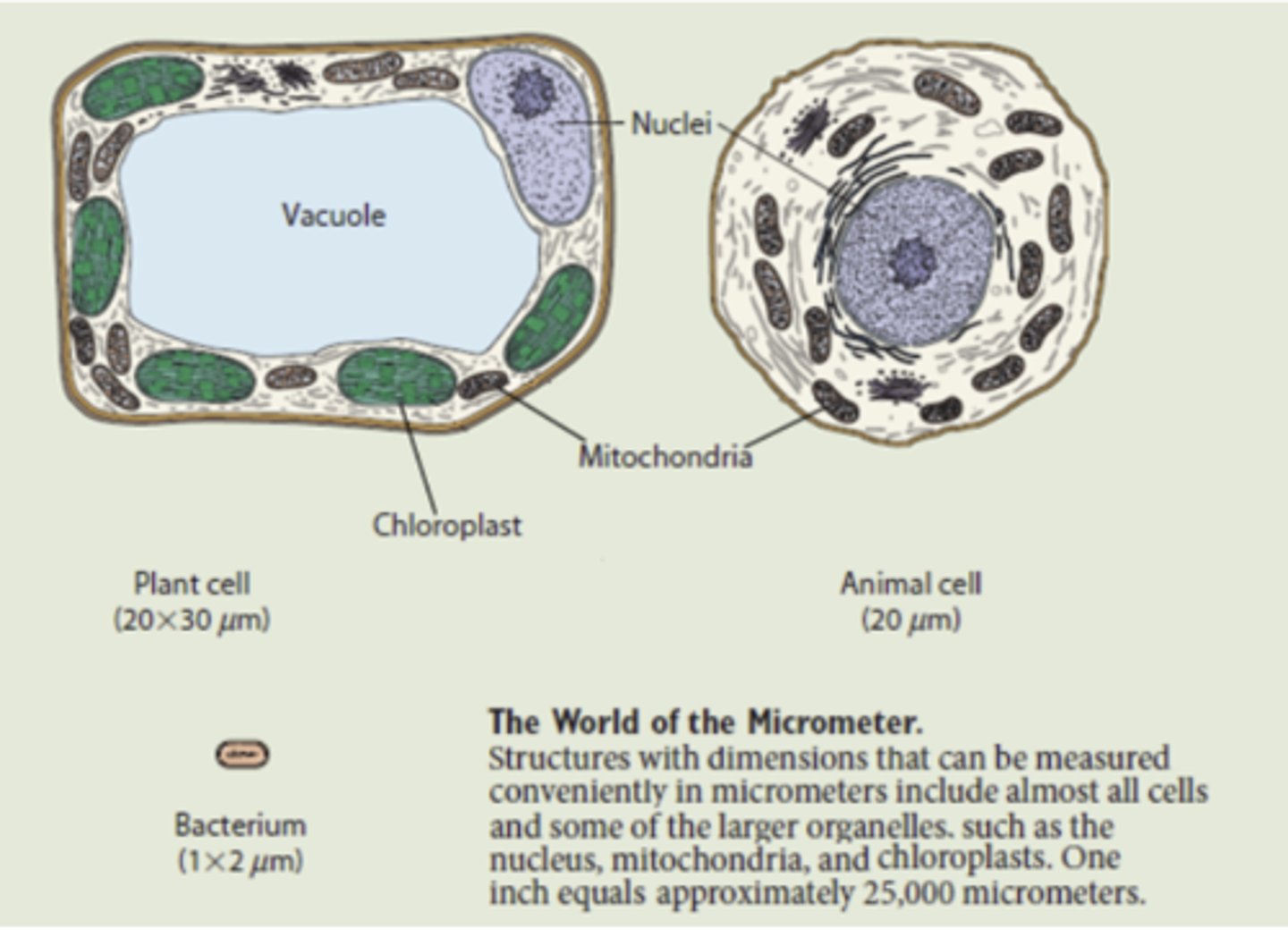
Which of the structures would have been visible under his microscope?(Hooke)(8.3 μm)
Select all that apply
a. animal cells
b. bacteria cells
c. plant cells
a. animal cells
c. plant cells
What was the limit of resolution Leeuwenhoek's microscope?
a. 0.83 μm
b. 8.3 μm
c. 83 μm
d. 830 μm
a. 0.83 μm
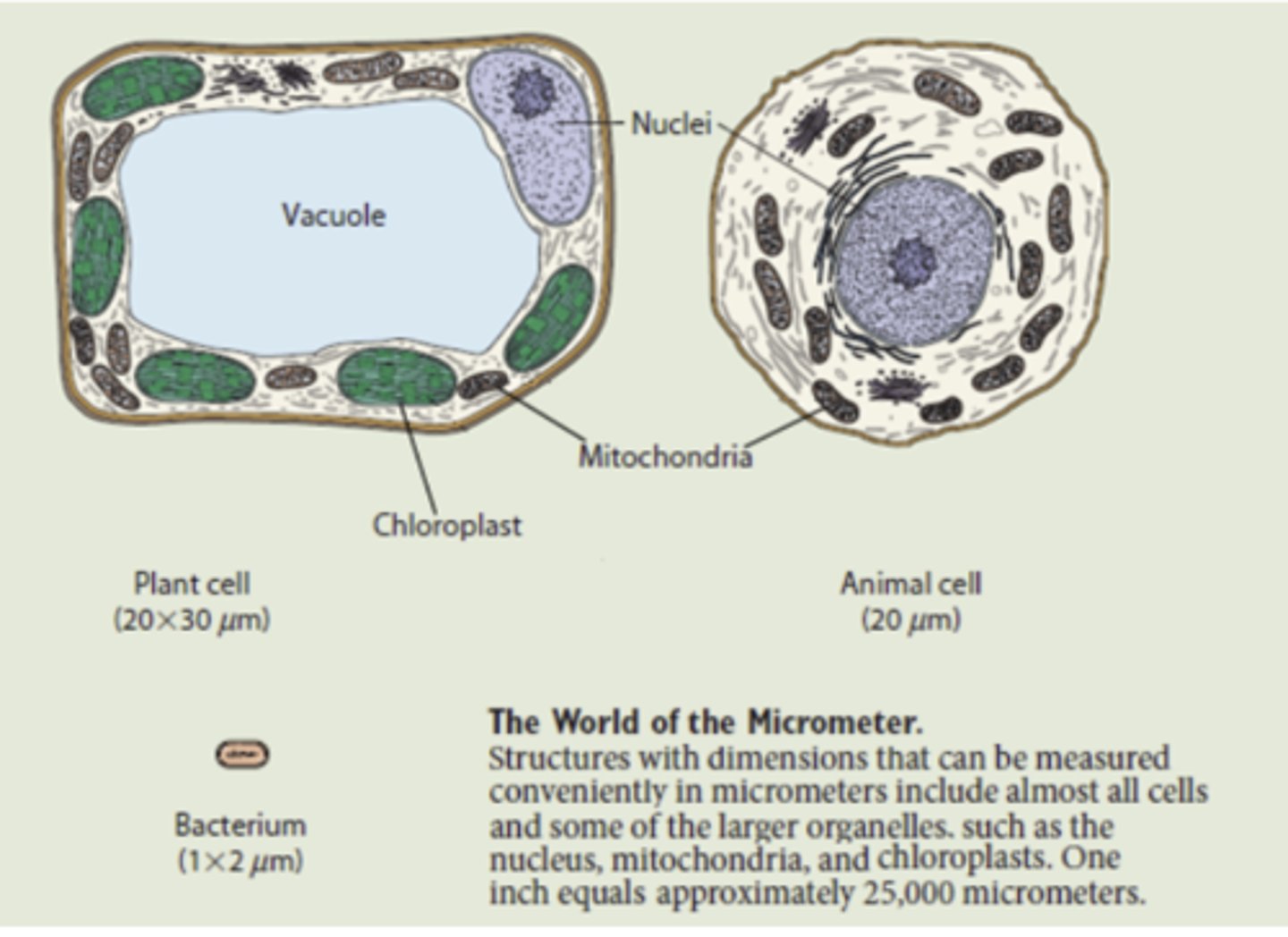
Which of these would his microscope have been able to visualize?(Leeuwenhoek)(0.83 μm)
Select all that apply.
a. animal cells
b. plant cells
c. bacteria cells
a. animal cells
b. plant cells
c. bacteria cells
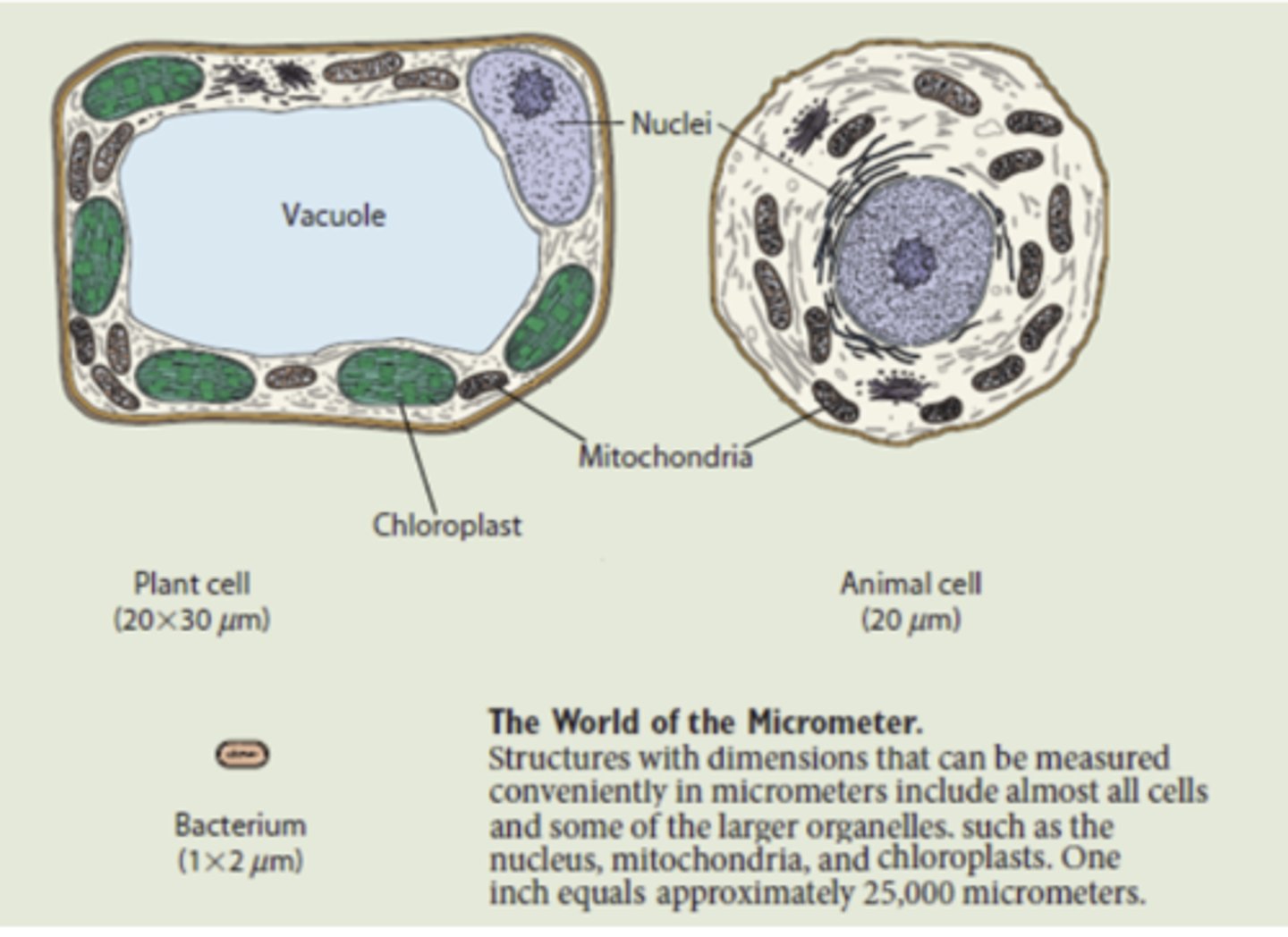
Would he have been able to see any of the structures shown in the figure below?(Leeuwenhoek)(0.83 μm)
a. Yes, he would
b. No, he wouldn't.
a. Yes, he would
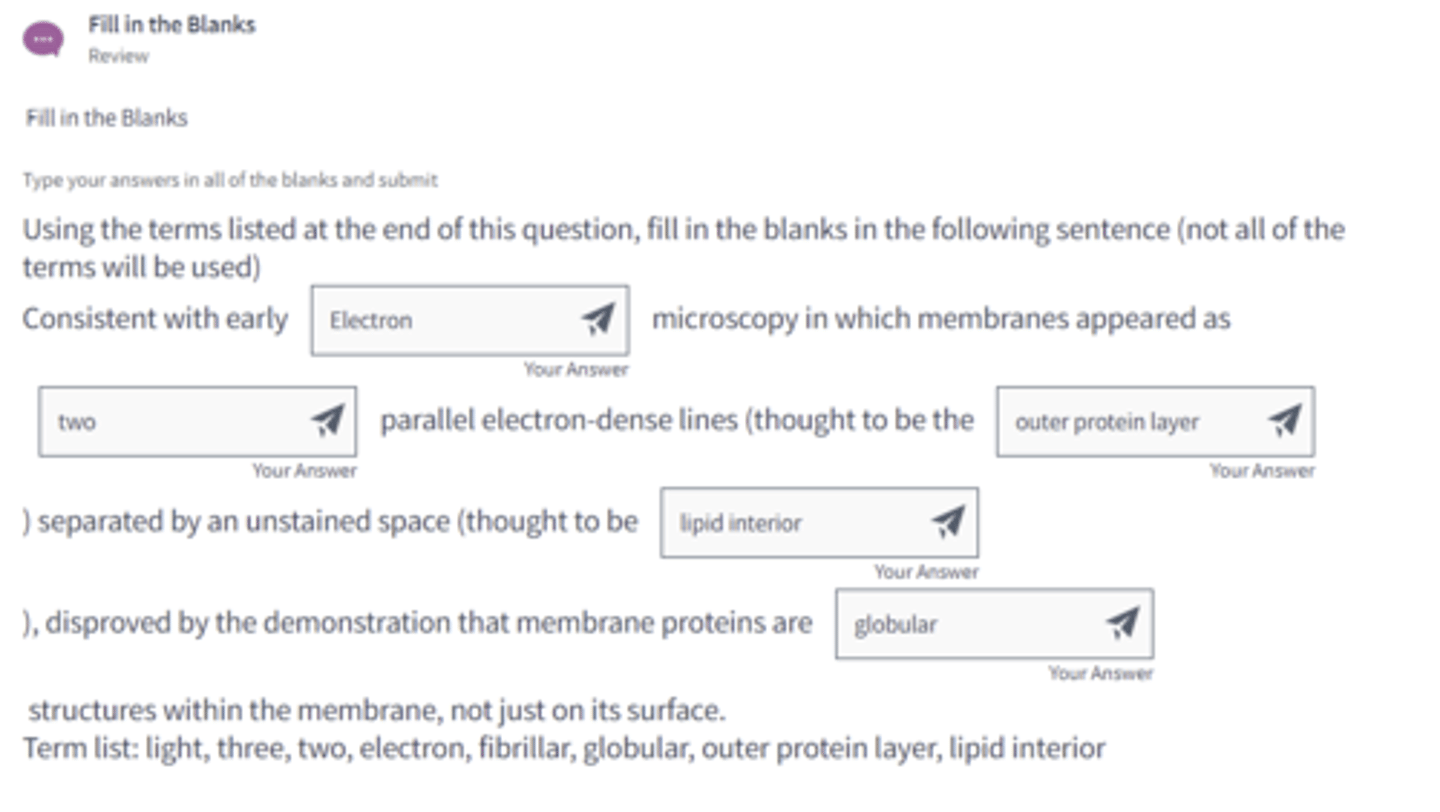
Using the terms listed at the end of this question, fill in the blanks in the following sentence (not all of the terms will be used)
Consistent with early ______________
microscopy in which membranes appeared as _______________
parallel electron-dense lines (thought to be the _______________
) separated by an unstained space (thought to be _______________
), disproved by the demonstration that membrane proteins are _______________
structures within the membrane, not just on its surface.
Term list: light, three, two, electron, fibrillar, globular, outer protein layer, lipid interior
Although the scientific method may sound rather foreign when described in formal terms, you probably use the scientific method frequently without even realizing it. Suppose, for example, that recently you often have heartburn. You realize that the heartburn is most likely to occur on nights after you have eaten your favorite pizza, with pepperoni, anchovies, and onions. You wonder if the heartburn is caused by eating pizza and, if so, which of the ingredients might be the culprit.
Describe how you might begin an experimental process to determine whether the heartburn is due to the pizza.
a. Try to avoid eating pizza, but eat it's ingredients separately.
b. Try to consume pizza on certain nights in different conditions.
c. Eat other pizzas with different ingredients, but containing either pepperoni, or anchovies, or onions.
d. Try to keep track of your eating habits for a few weeks.
b. Try to consume pizza on certain nights in different conditions.
What kind of pizza do you have to eat to know whether pepperoni is the reason of heartburn?Select two that apply.
a. Pizza with pepperoni and onions
b. Pizza without pepperoni anchovies and onions
c. Pizza with anchovies and onions
d. Pizza with pepperoni and anchovies
e. Pizza with pepperoni anchovies and onions
c. Pizza with anchovies and onions
e. Pizza with pepperoni anchovies and onions
Now you should do the similar experiments with other ingredients. On the basis of the data obtained you can make a conclusion about the impact of each component. What experiments should you do to prove your results?
a. Eat pizza in the morning instead of evening.
b. Eat pizza without ingredients.
c. Eat pizza of each kind (including pizza without ingredients) in at least three different days.
d. Eat pizza of each kind (except pizza without ingredients) in at least three different days.
e. Eat three pizzas at a time instead of one.
c. Eat pizza of each kind (including pizza without ingredients) in at least three different days.
Suggest one advantage that the electron microscopy has over the light microscopy.
Electron microscopy is capable of much greater resolution and hence much higher useful magnification.
Suggest one advantage that DNA sequencing has over nucleic acid hybridization.
DNA sequencing makes it possible to determine the order of individual nucleotides along a DNA strand.
Suggest one advantage that bioinformatics has over sequencing of a genome.
Sequencing of a genome simply provides a large amount of data about the DNA present in the genome, whereas bioinformatics uses computer analysis to aid in understanding and interpreting those data in terms of gene numbers and expression.
Suggest one advantage that scanning electron microscopy has over transmission electron microscopy.
Scanning electron microscopy makes it possible to visualize subcellular structures and macromolecules as if in three dimensions.
Suggest one advantage that electrophoresis has over chromatography.
Electrophoresis separates molecules based on charge differences, thereby making it possible to separate molecules that are similar in size, shape, and density.
Which of the following is closest to a micrometer in size?
a typical prokaryotic cell
Which of the following is smallest?
protein
You are working on a project that involves the direct observation of DNA molecules. The microscope that would give you the best information at this time would be the
transmission electron microscope.
Which type of microscopy has the greatest resolving power?
electron microscopy
Melvin Calvin and his colleagues used which of the following to deduce the steps in the Calvin cycle?
radioisotopes
You wish to obtain a purified sample of mitochondria from lysed cells. The best way to obtain this sample would be
centrifugation.
Which of the following biochemical techniques uses an electrical field to separate macromolecules based on their mobility through a semisolid gel?
electrophoresis.
 Note
Note  Flashcards (132)