ANSC 2202 - Proximal Gastrointestinal System
 Studied by 0 people
 Call Kai
 Learn
Learn Practice Test
 Spaced Repetition
 Match
Match Flashcards
 Knowt Play
1/31

Earn XP
Description and Tags
Mouth to stomach
Name | Mastery | Learn | Test | Matching | Spaced |
|---|
No study sessions yet.
32 Terms
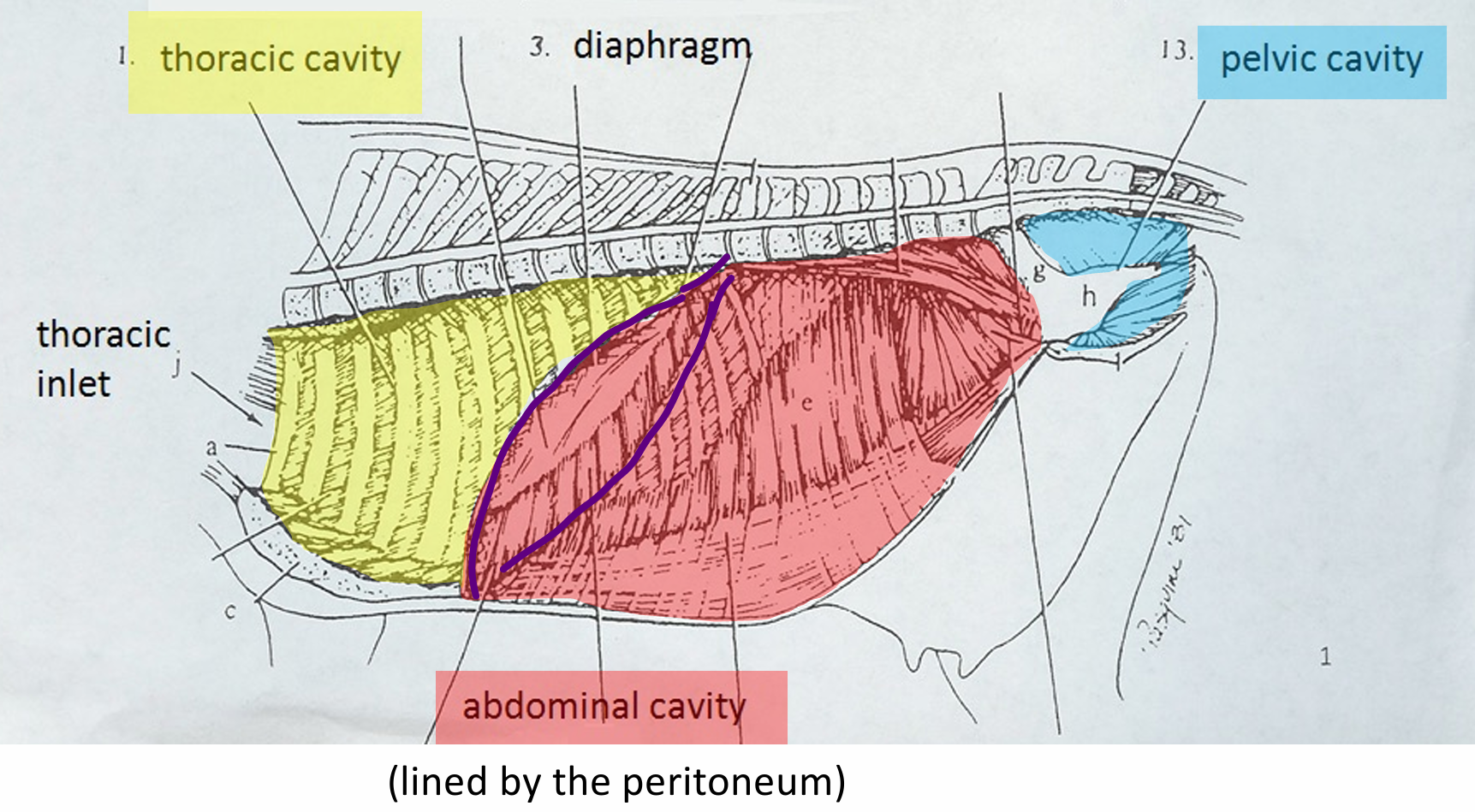
3 Body Cavities and what/where are they?
Thoracic cavity
Abdominal cavity
Thoracic and abdominal are divided by the diaphragm
Pelvic cavity
What is part of the oral cavity?
Lips
Cheeks
Tongue
Teeth
Hard and soft palete
Lips
Very sensitive and mobile
Whiskers help with navigation, finding food, etc; tactile
Prehension
The act of grasping food with the mouth
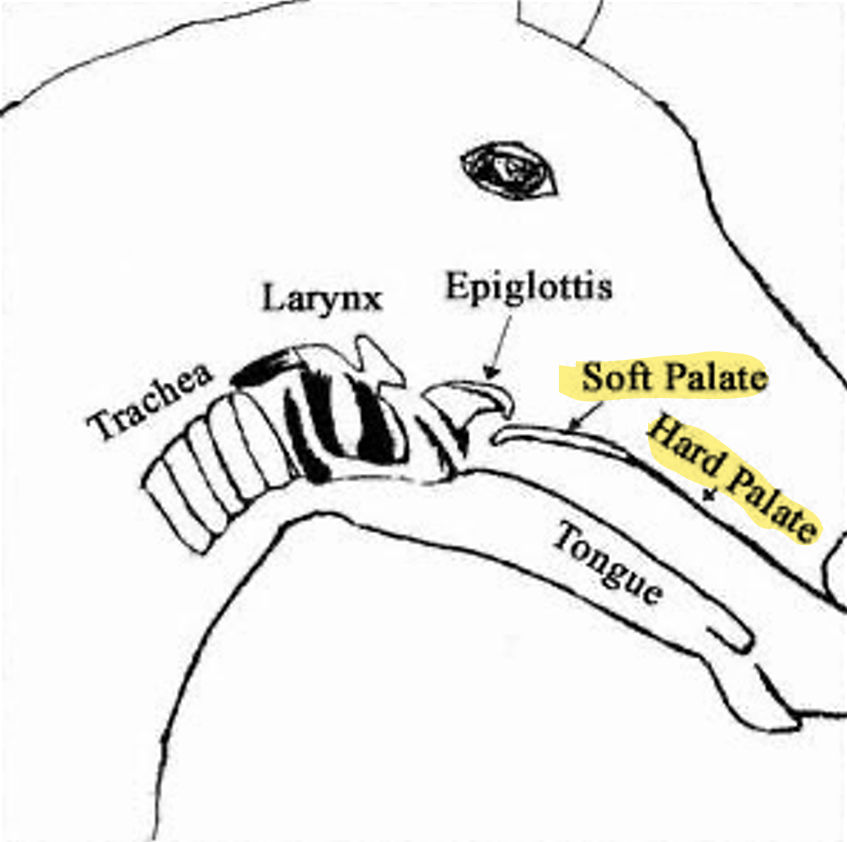
Hard Palate
The upper roof of the mouth
Rostral portion of the palate
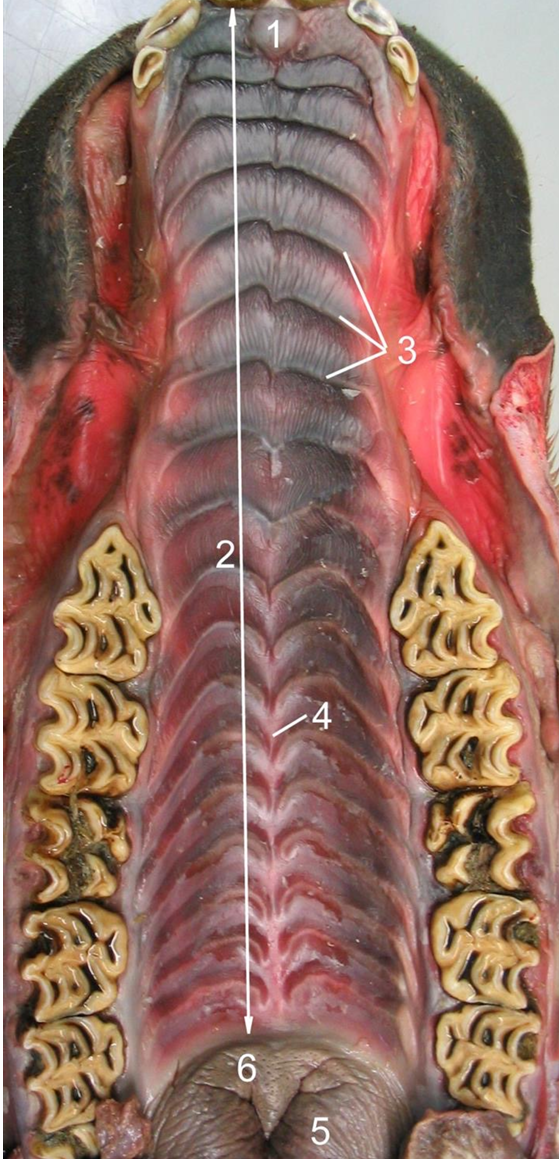
Contains palatine ridges
Palatine Ridges
Ridge-like structures across the hard palate
Also called rugal folds
Soft Palate
The back of the mouth
Caudal portion of the palate
Composed of soft tissues—NO BONE
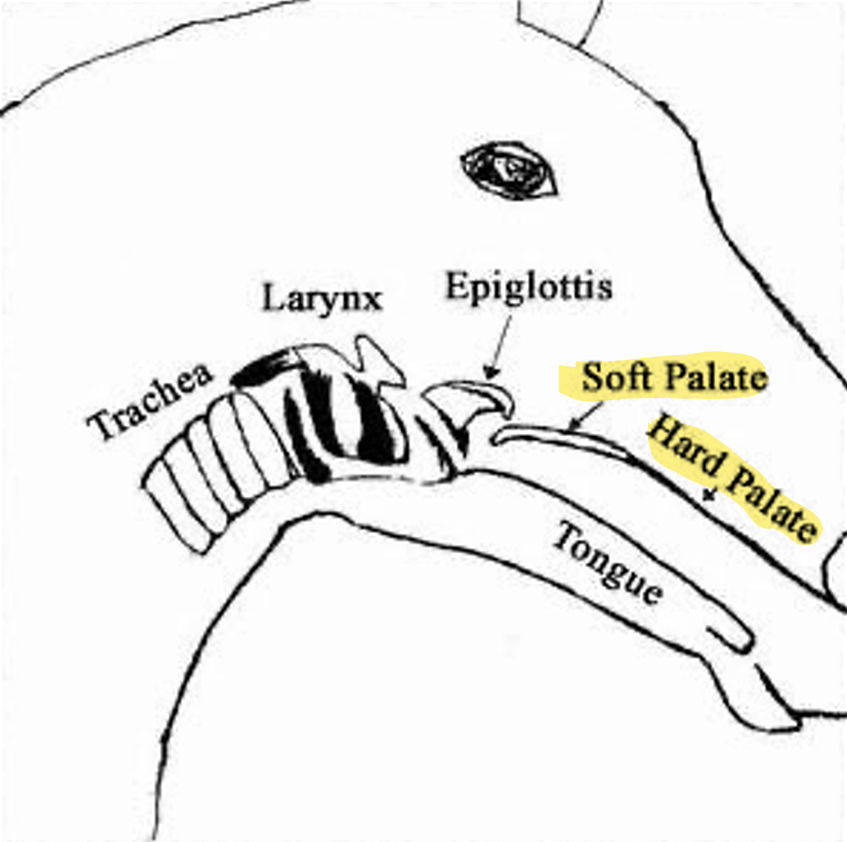
The Tongue
Strongest muscle in the body
Made of 4+ muscles and controlled by 4 nerves
Used to orient grass/manipulate food
Latin word: Lingua
Frenulum Linguae
A fold of tissue that attaches the tongue to the floor of the mouth
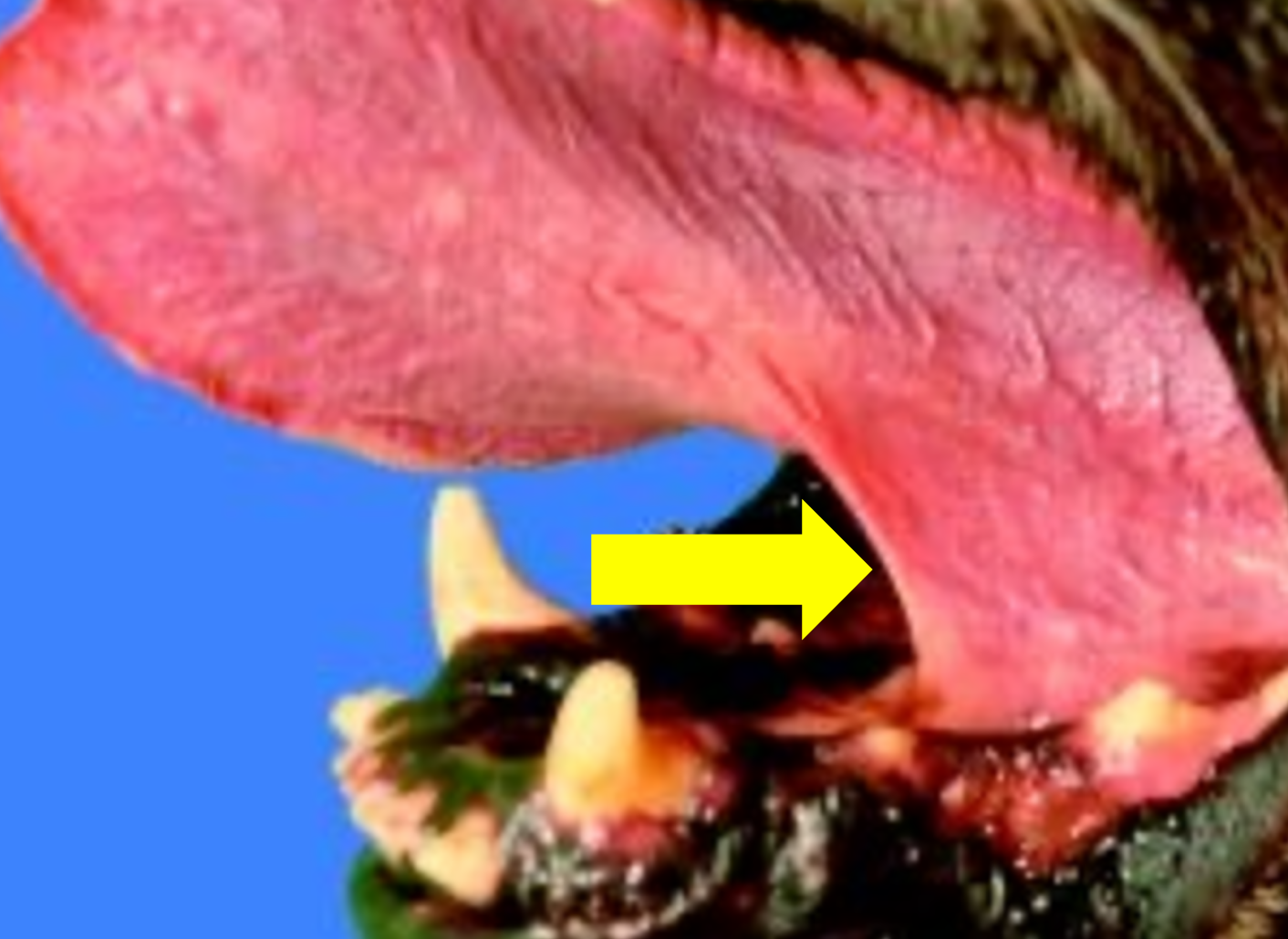
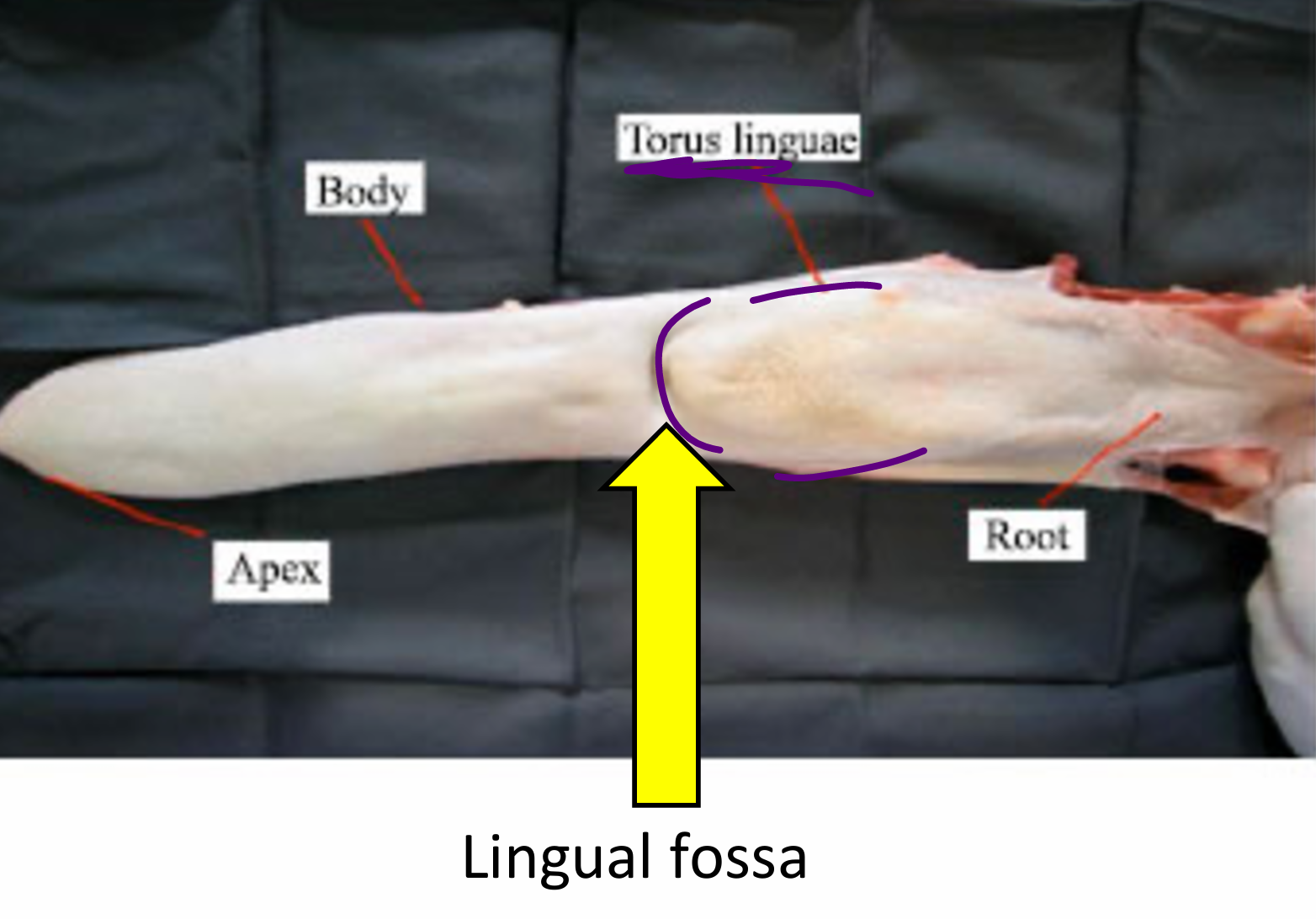
Torus Linguae
A bulging of the caudodorsal surface of the tongue
Aids in rumination (cud) and mastication
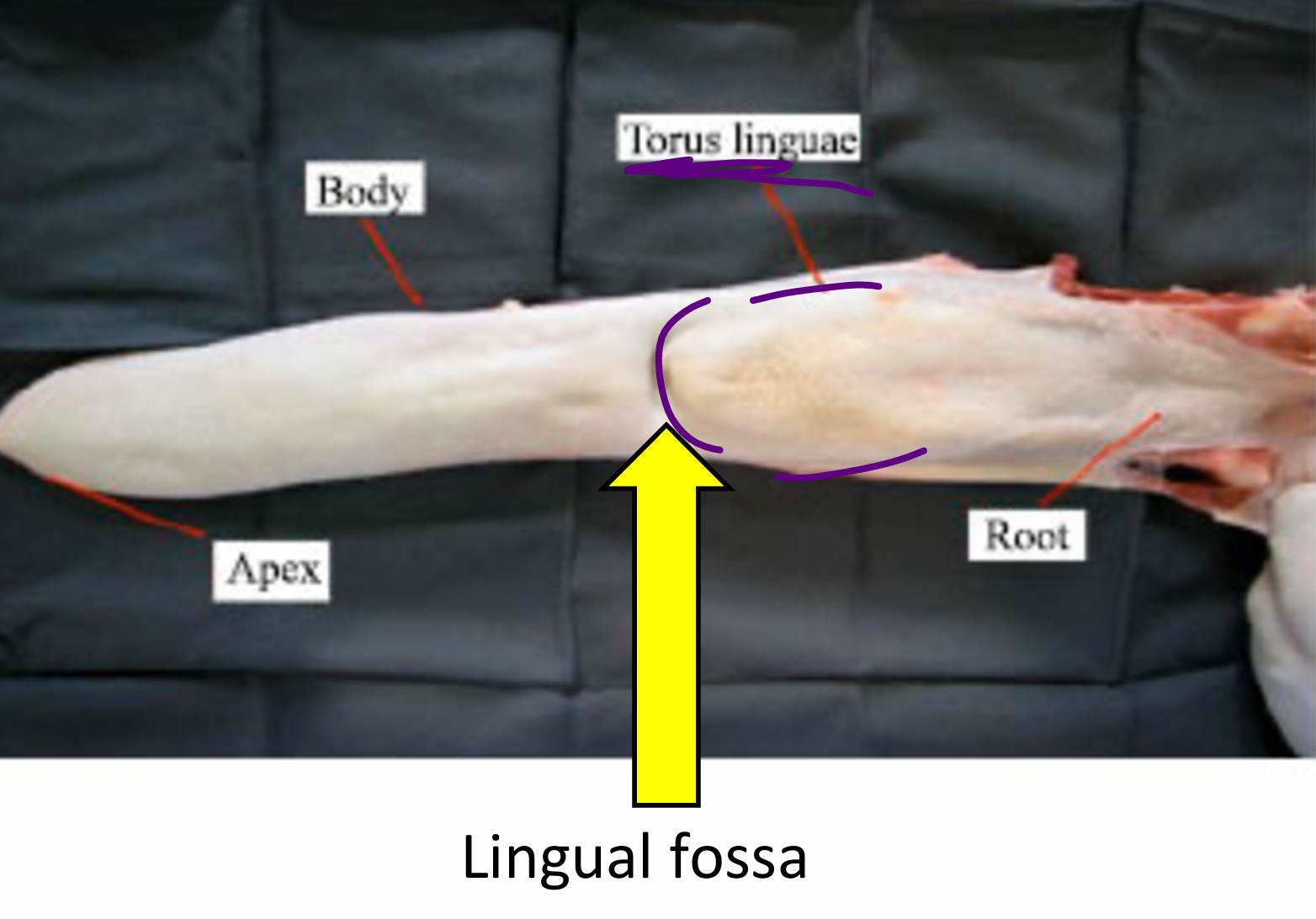
Lingual Fossa
Depression in front of the torus linguae
Salivary Glands
Exocrine glands located outside of the digestive tract
Secrete saliva into the mouth via ducts
Accessory to the digestive system
Parotid Gland
Serous (clear, watery) secretions
Largest in herbivores
Aligning the jaw
Base of the ear
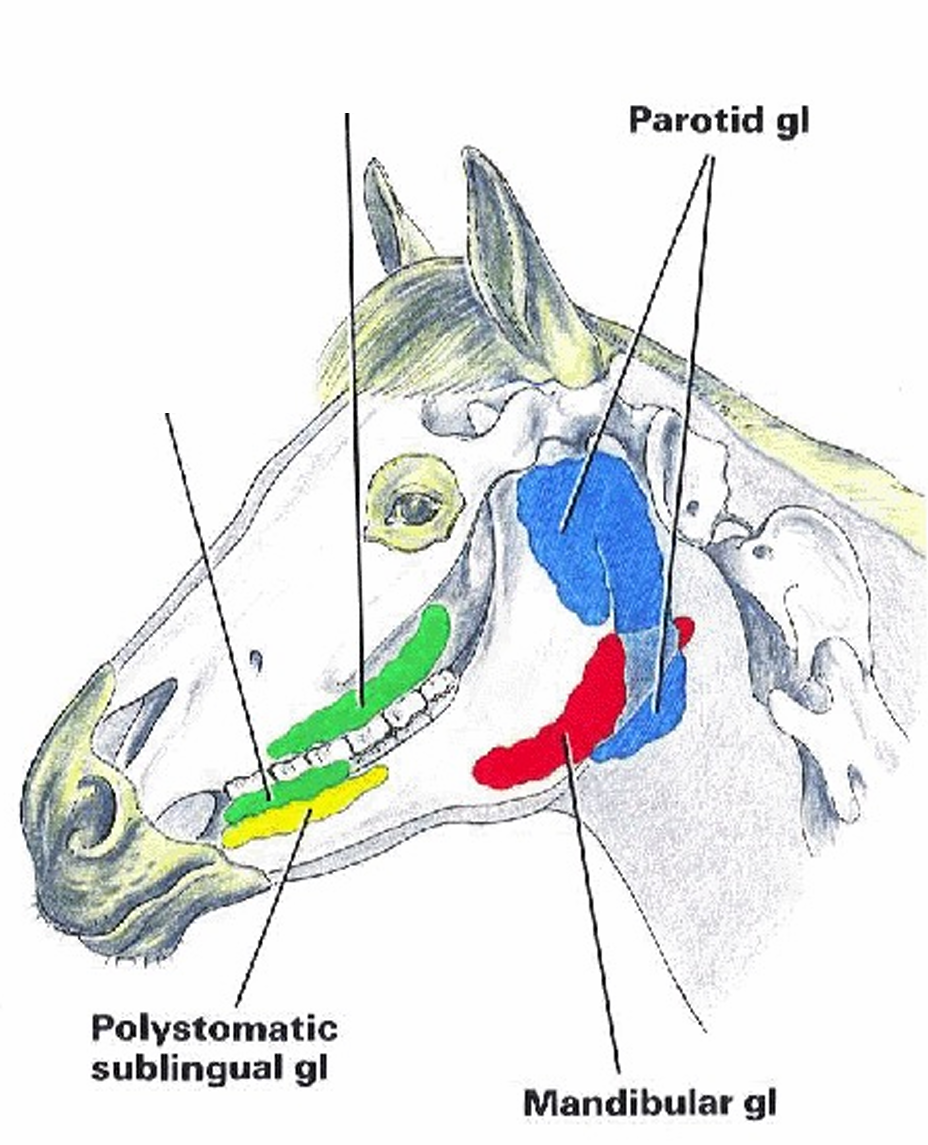
Mandibular Gland
Serous/mucous (thick, sticky) secretions
At ramus (angle of the jaw) of mandible
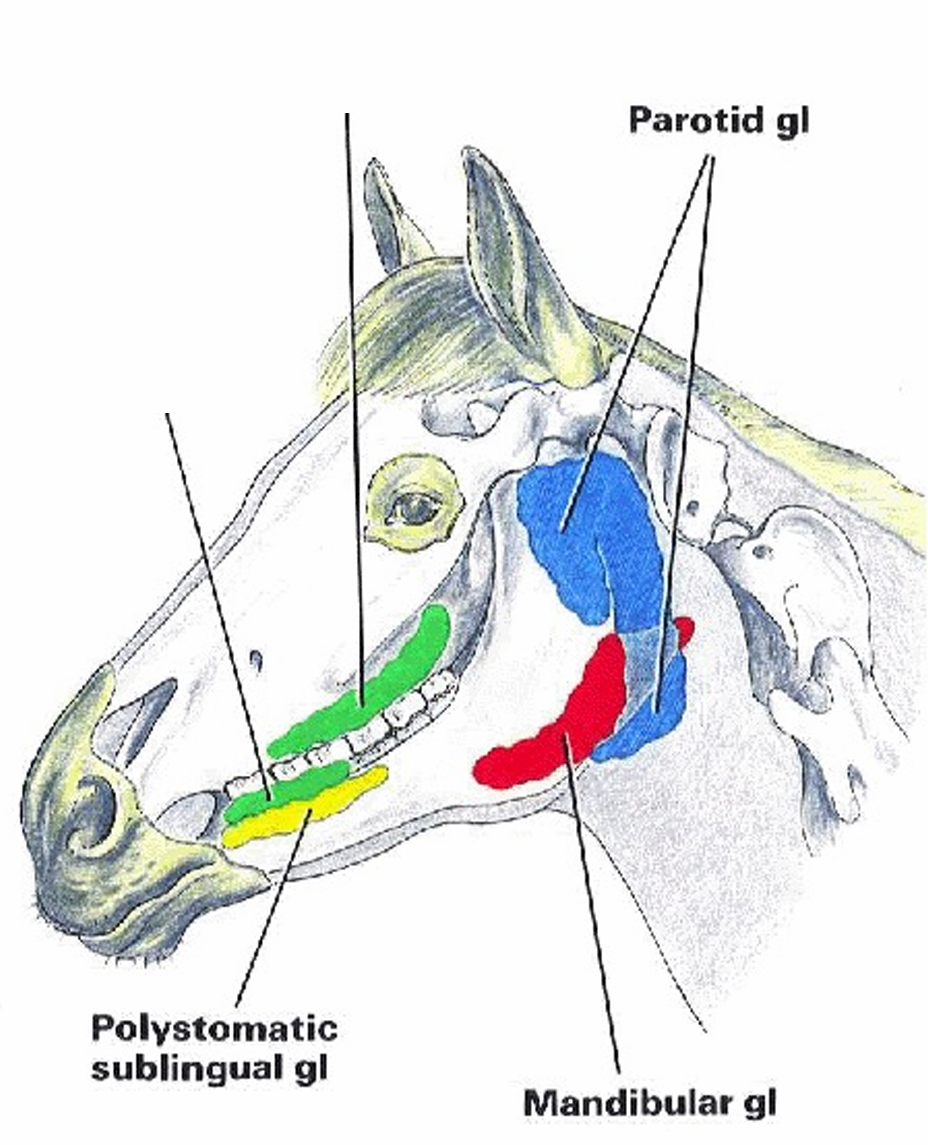
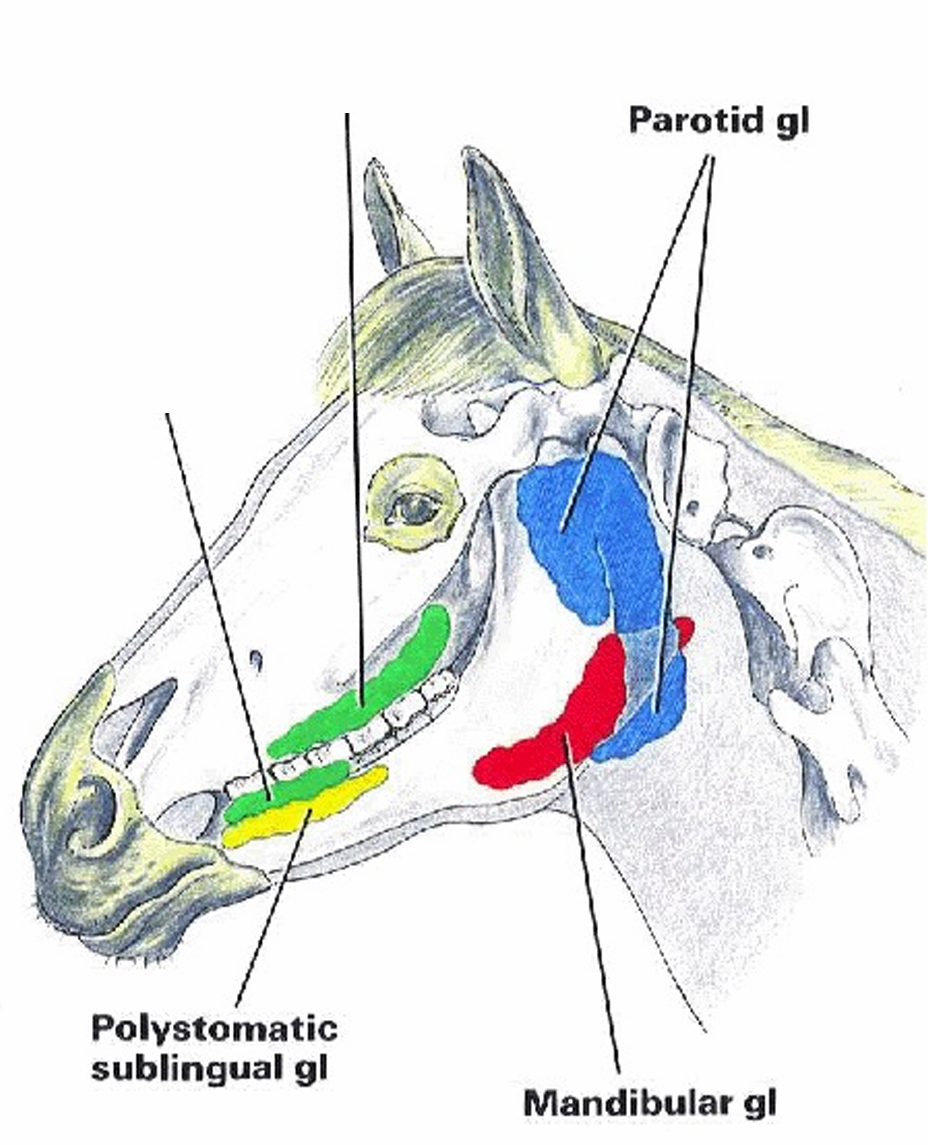
Sublingual Gland
Serous/mucous secretions
Under the tongue
How much saliva do cows produce daily?
10-45 gallons
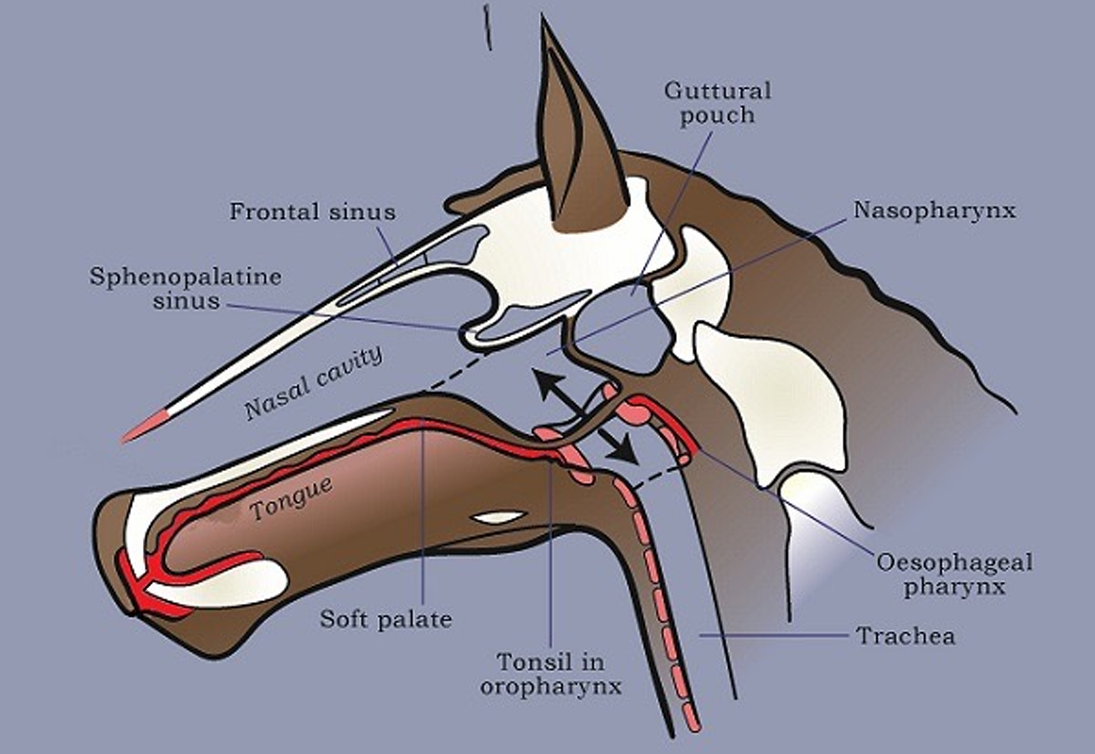
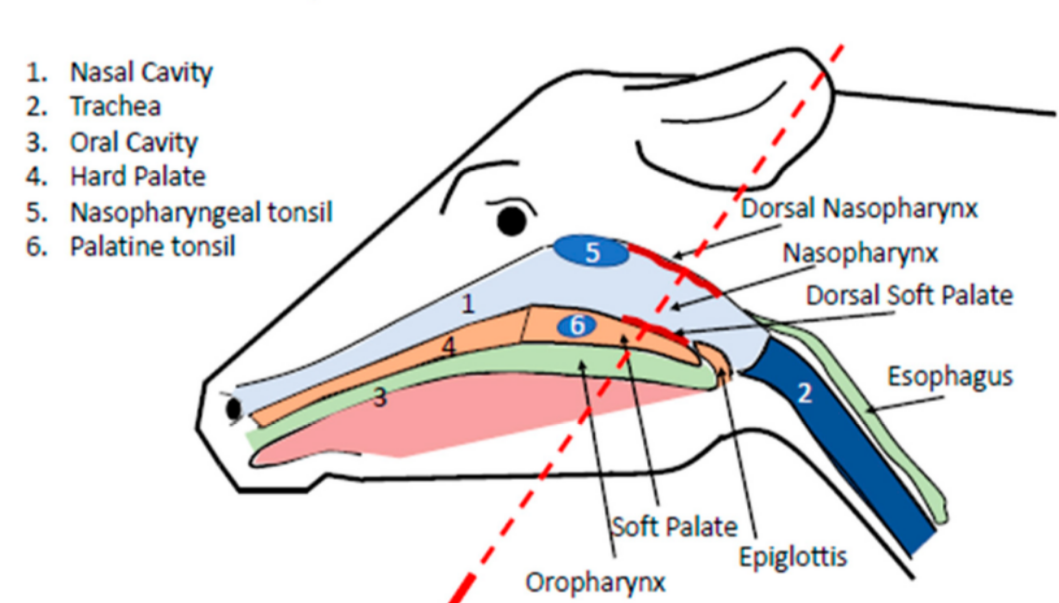
Pharynx
Common passageway leading from the oral and nasal passages to the esophagus and larynx
Larnyx - “voice box”
Esophagus
Carries food from the mouth to the stomach
Opening is dorsal to the larynx
Secretes some mucus
Food is moved toward the stomach via peristalis
Peristalis
A wave-like movement of muscles that moves food through the digestive system
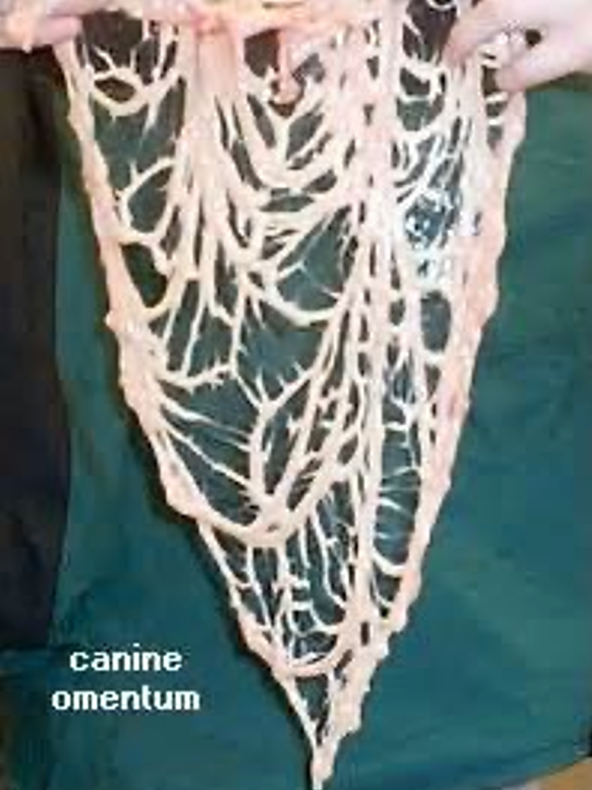
Omentum
Web-like tissue that attaches the stomach to the body wall or other organs
Stomach
Storage
Mixing of food with gastric enzymes
Starts mechanical (peristalsis) and chemical breakdown of food
No nutrients are absorbed in the stomach
Stomach Lining (glandular or not between species)
Carnivores:
Glandular (has digestive glands)
Ruminants, Horses, Pigs:
Composite
Glandular and non-glandular (lacks digestive glands)
Types of Stomachs
Simple
Monogastric = humans, carnivores, horses, pigs
“One Stomach”
Complex
Often 4 compartment stomachs
Ruminants
Allows for digestion of plant-based diet
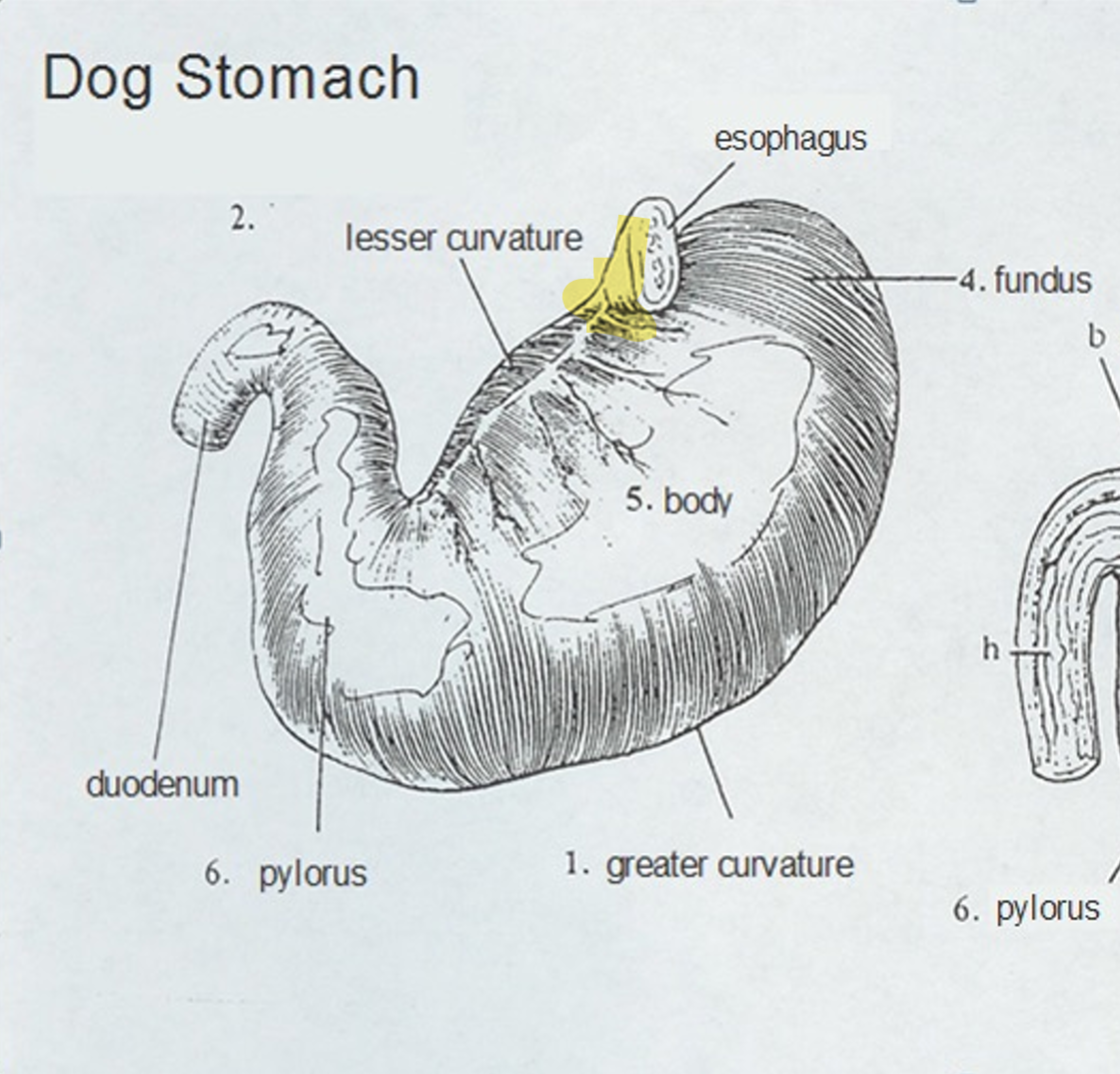
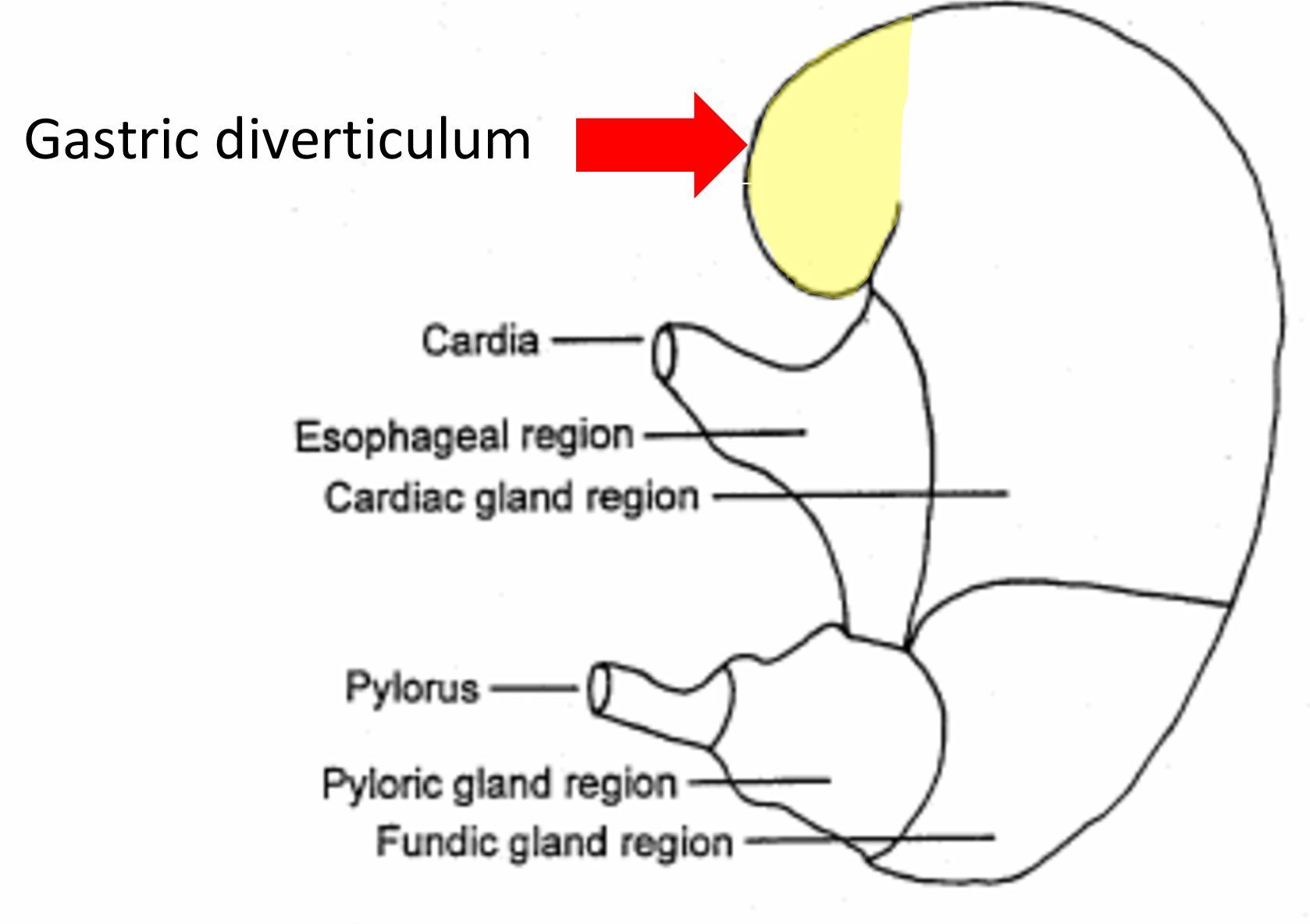
Cardia
Opening into the stomach in which the esophagus is attached
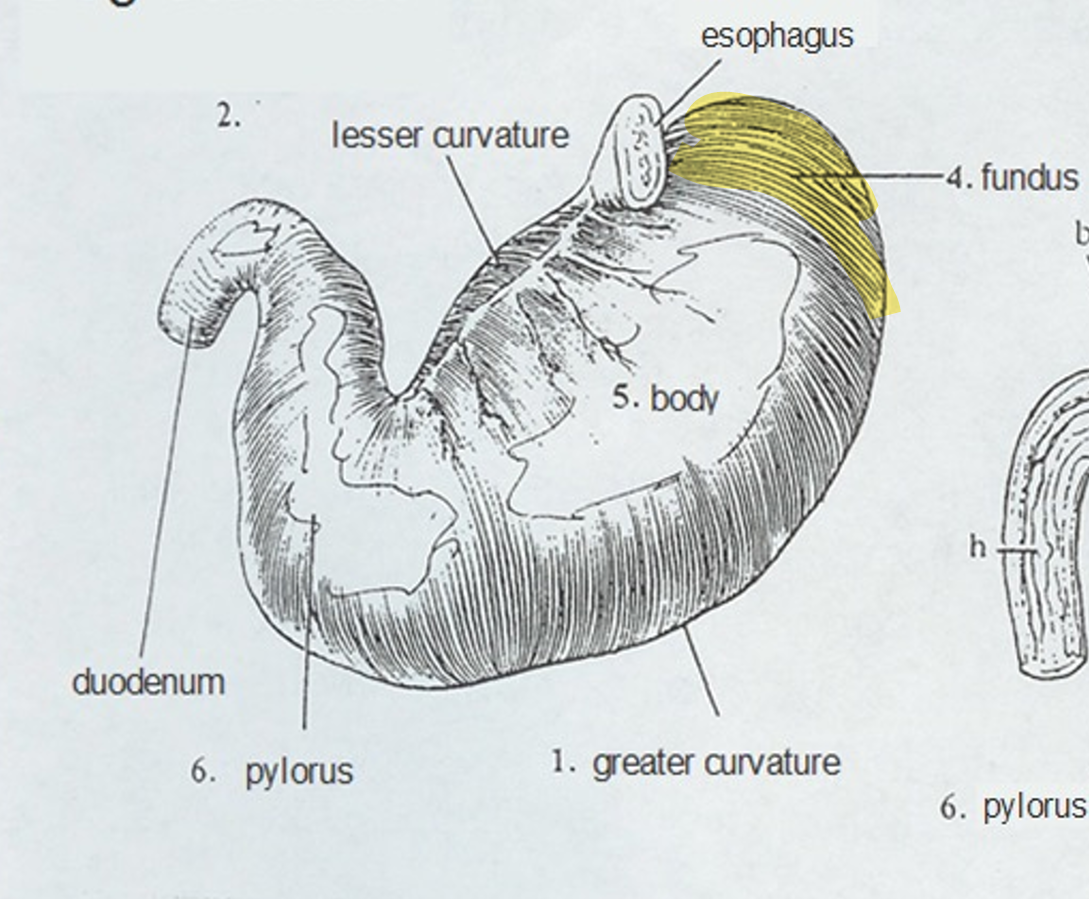
Fundus
Left side of the stomach adjacent to the cardia often expanded with gas
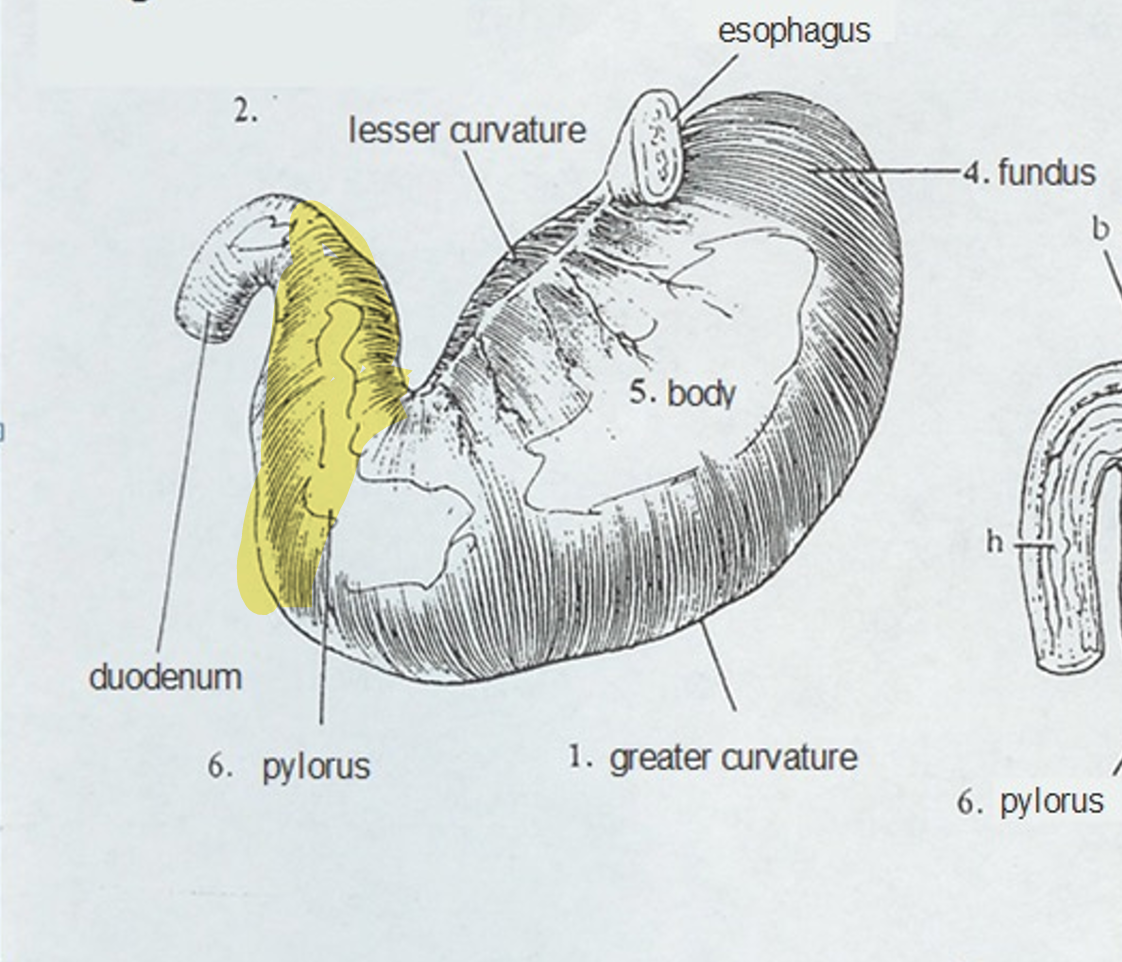
Pylorus
Distal portion of the stomach; connects to the duodenum
Contains a very obvious dividing line between the body and the pylorus of the stomach
Gastric Diverticulum
In pigs only
Conical extension of the fundus
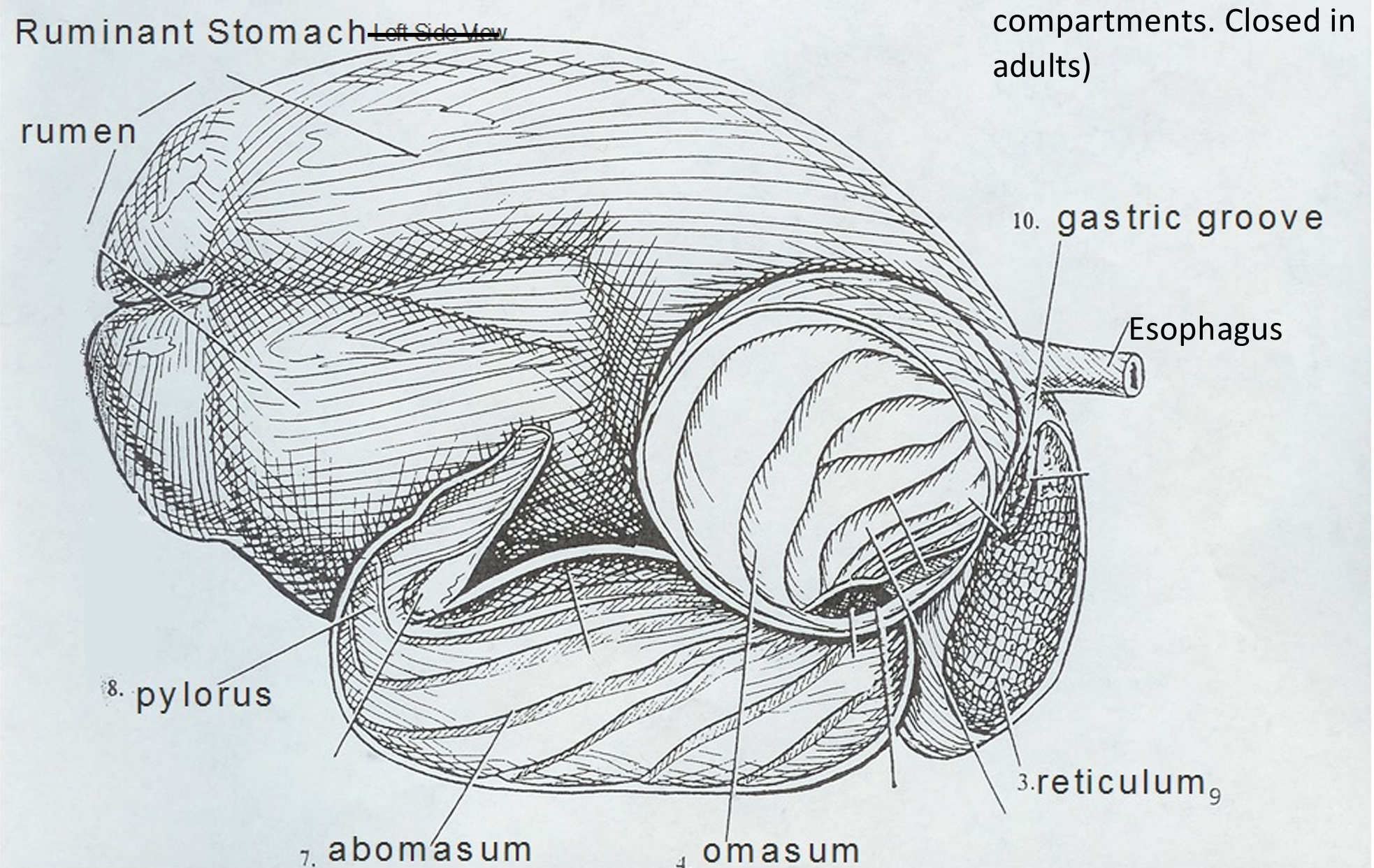
Complex Stomach Compartments (4)
Rumen
Largest, fermentation vat, rug-like
Reticulum
honeycomb, most ventral
Omasum
Akin to book pages, “butchers bible,” absorbs water
Abomasum
“True stomach” - glandular
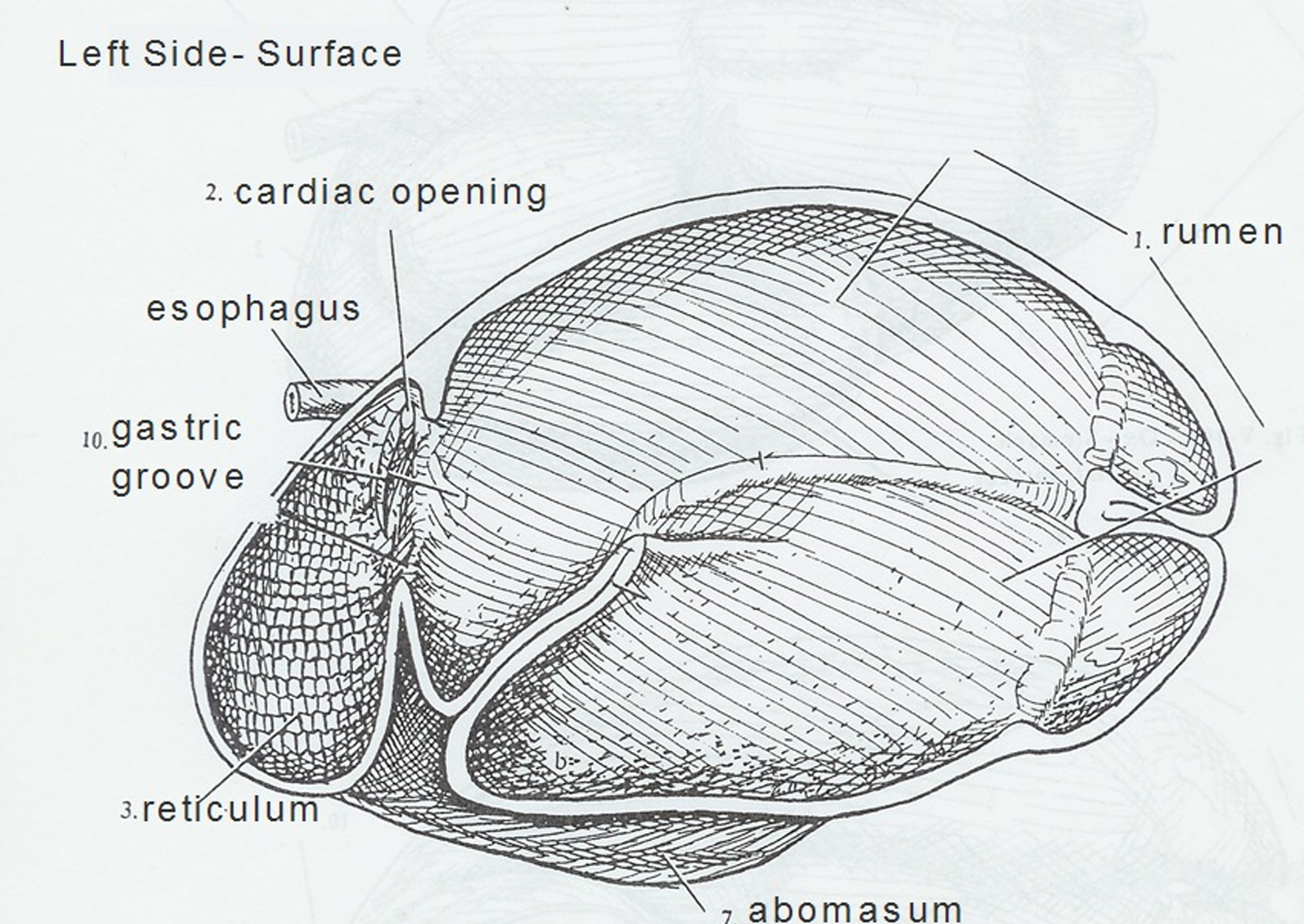
Cows have 4 stomachs
FALSE
Cows have 1 stomach with 4 compartments
Gastric Groove
Tube from cardia to abomasum in neonates (newborns)
Allows milk to bypass the first 3 compartments
Closed in adults
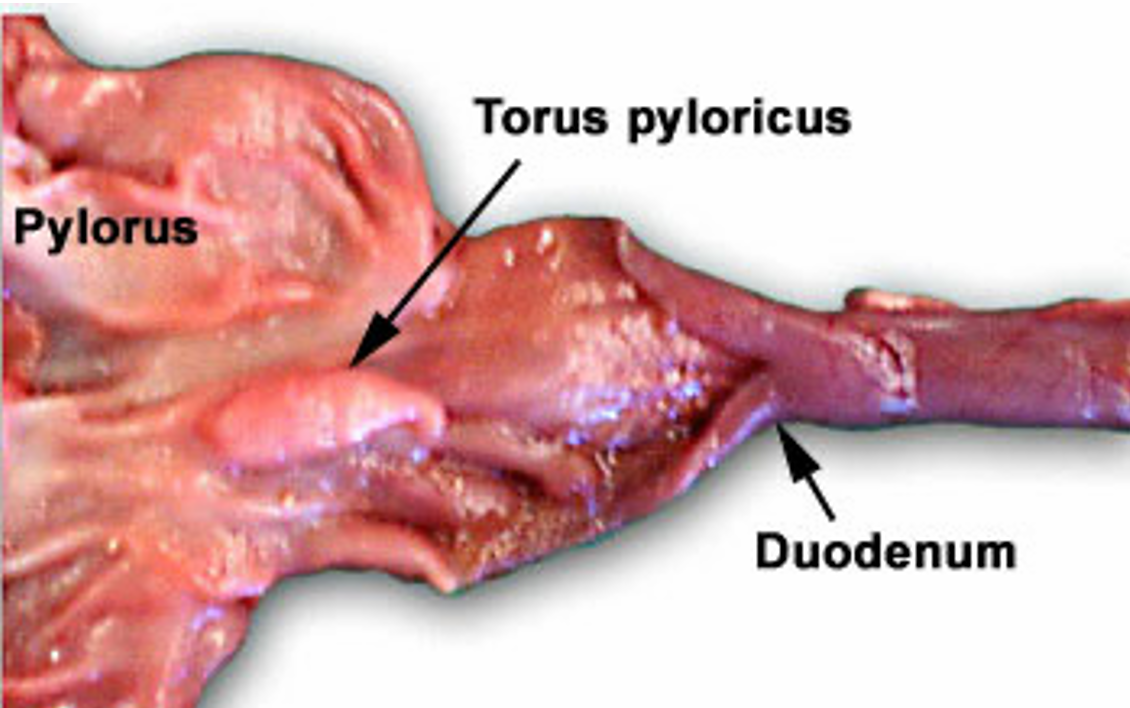
Torus Pyloricus
Small lump of tissue by the pyloris
Found in pigs and ruminants
What is hardware disease and what can it be prevented with?
Caused when ruminants swallow non-digestible matter (screws, wire, etc)
It can be prevented by placing a magnet in the ruminant’s reticulum, where it will remain throughout life
 Note
Note  Flashcards (24)